Water Damage Restoration in Lake Worth Beach, Florida
Bordered by the Lake Worth Lagoon on the east and threaded with LWDD drainage canals to the west, Lake Worth Beach's 1925-1952 historic districts and aging CBS construction face dual saltwater and freshwater flooding threats compounded by 61.75 inches of annual rainfall. Palm Build's Deerfield Beach team responds in 25-35 minutes with truck-mounted extraction, commercial drying, and insurance-ready documentation.
Deerfield Beach — 25-35 Minutes from Lake Worth Beach 25-35 min Response IICRC Certified
Why Lake Worth Beach Faces Unique Water Damage Challenges
Lake Worth Beach's geography, construction era, and climate create a convergence of water
damage risks found in few other South Florida cities. Understanding these factors is the
first step toward protecting your property.
61.75 in
Annual rainfall
Lagoon & Intracoastal Dual Flooding
Lake Worth Beach sits between the Lake Worth Lagoon and the Intracoastal Waterway — exposing properties to saltwater storm surge from the east and freshwater drainage backup from the west. During named storms, both systems overwhelm simultaneously, creating a dual-flood corridor that few South Florida cities experience.
137
Rain days/yr
CBS Stucco Water Intrusion
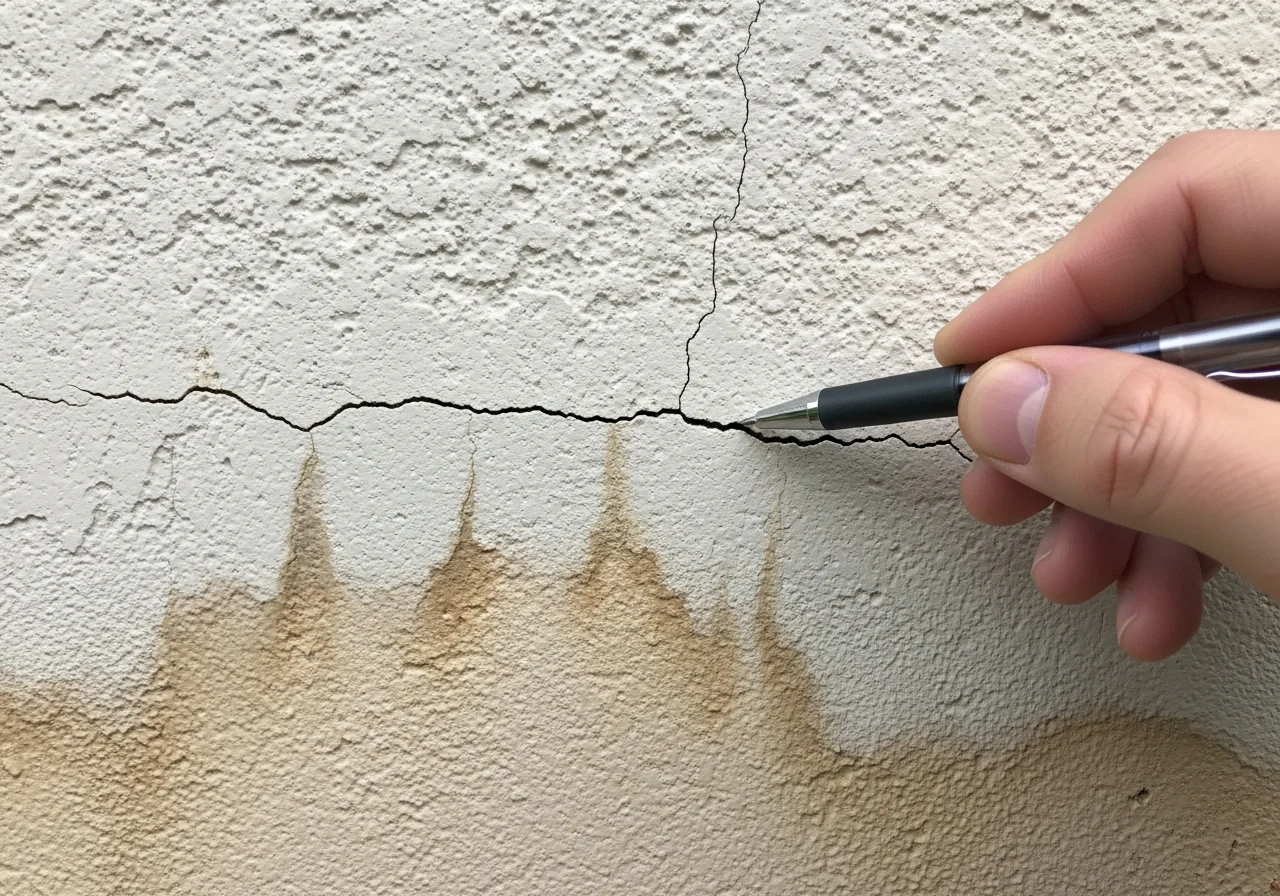
Concrete block stucco (CBS) construction dominates Lake Worth Beach housing stock. Hairline cracks in stucco facades — caused by thermal cycling and settling — trap moisture inside block cavities where it wicks upward unseen. By the time damage is visible inside, mold colonies are already established behind the drywall.
#1 Cause
Of indoor water damage
Year-Round HVAC Condensation
Lake Worth Beach's year-round heat and humidity mean HVAC systems run 10-12 months per year. Condensate drain line clogs are the single most common source of indoor water damage — a slow drip behind the air handler saturates drywall, subfloor, and insulation before homeowners notice.
100+ yrs
Oldest homes
Historic District Aging Infrastructure
College Park (1925-1949) and NE Lucerne (1915-1952) contain some of Palm Beach County's oldest housing stock. Original galvanized and cast-iron supply lines, clay sewer laterals, and aging flat roofs create a constant cycle of plumbing failures and water intrusion events.
Hairline stucco cracks on Lake Worth Beach CBS homes trap moisture inside block cavities
— the leading cause of hidden mold growth in the city's older neighborhoods.
Neighborhood Risk Assessment
Lake Worth Beach Neighborhood-by-Neighborhood Risk Guide
Every Lake Worth Beach neighborhood has its own construction era, building materials, and
proximity to water — all of which determine your specific water damage vulnerabilities.
Neighborhood
Era
Construction
Key Risks
Level
College Park
1925–1949
CBS/Frame, SFH
Galvanized pipe failures, flat roof ponding, foundation settling, original sewer laterals
critical
NE Lucerne
1915–1952
CBS/Frame, SFH
Oldest housing stock in city, cast-iron drain line failures, stucco deterioration, lagoon-adjacent flooding
critical
Old Town
1920s–1960s
Mixed CBS/Frame
Historic structures with non-standard plumbing, limited drainage infrastructure, low elevation near lagoon
critical
South Palm Park
1940s–1960s
CBS, SFH
Aging supply lines, stucco water intrusion, HVAC condensation in retrofitted systems
Flat roof ponding water, shared plumbing risers in condos, HVAC overflow in multi-unit buildings
Don't see your neighborhood? Call (754) 600-3369 and our local team can assess your specific property risks. We service all of Lake Worth Beach
and surrounding communities.
Our Process
6 Steps to Restore Your Lake Worth Beach Home
Every water damage event in Lake Worth Beach follows a proven restoration sequence —
adapted for CBS slab-on-grade construction, historic-district building types, and South
Florida's extreme humidity.
Step 01
Emergency Response
25–35 Minutes
Your call reaches our South Florida team 24/7/365. We dispatch a fully equipped truck from our Deerfield Beach hub to Lake Worth Beach — carrying truck-mounted extractors, commercial dehumidifiers, air movers, and thermal imaging cameras. Response time averages 25-35 minutes.
Step 02
Assessment & Moisture Mapping
Hours 1–3
Using thermal imaging and pin-type moisture meters, we map every affected surface in your Lake Worth Beach home — behind cabinets, inside CBS block cavities, under tile on slab foundations. This moisture map becomes the foundation of your insurance claim and our drying protocol.
Step 03
Water Extraction
Hours 1–6
Truck-mounted extraction removes standing water down to the slab. On Lake Worth Beach's slab-on-grade CBS construction, we focus on wall-slab junctions where moisture wicks upward into block cavities unseen. Portable extractors reach tight spaces — closets, under stairs, and behind built-in furniture.
Step 04
Structural Drying
Days 3–5
Commercial dehumidifiers pulling 15-30 gallons per day and high-velocity air movers create controlled drying conditions inside your home. In Lake Worth Beach's 60-80% ambient humidity, natural drying is impossible — professional equipment is the only path to reaching IICRC target moisture levels.
Step 05
Restoration & Repair
Days 7–21+
Once moisture readings confirm dry conditions, we rebuild — matching your home's existing finishes. For Lake Worth Beach's older homes, this may include custom millwork matching, period-appropriate trim, and ensuring all repairs meet current Florida Building Code requirements.
Step 06
Insurance Documentation
Ongoing
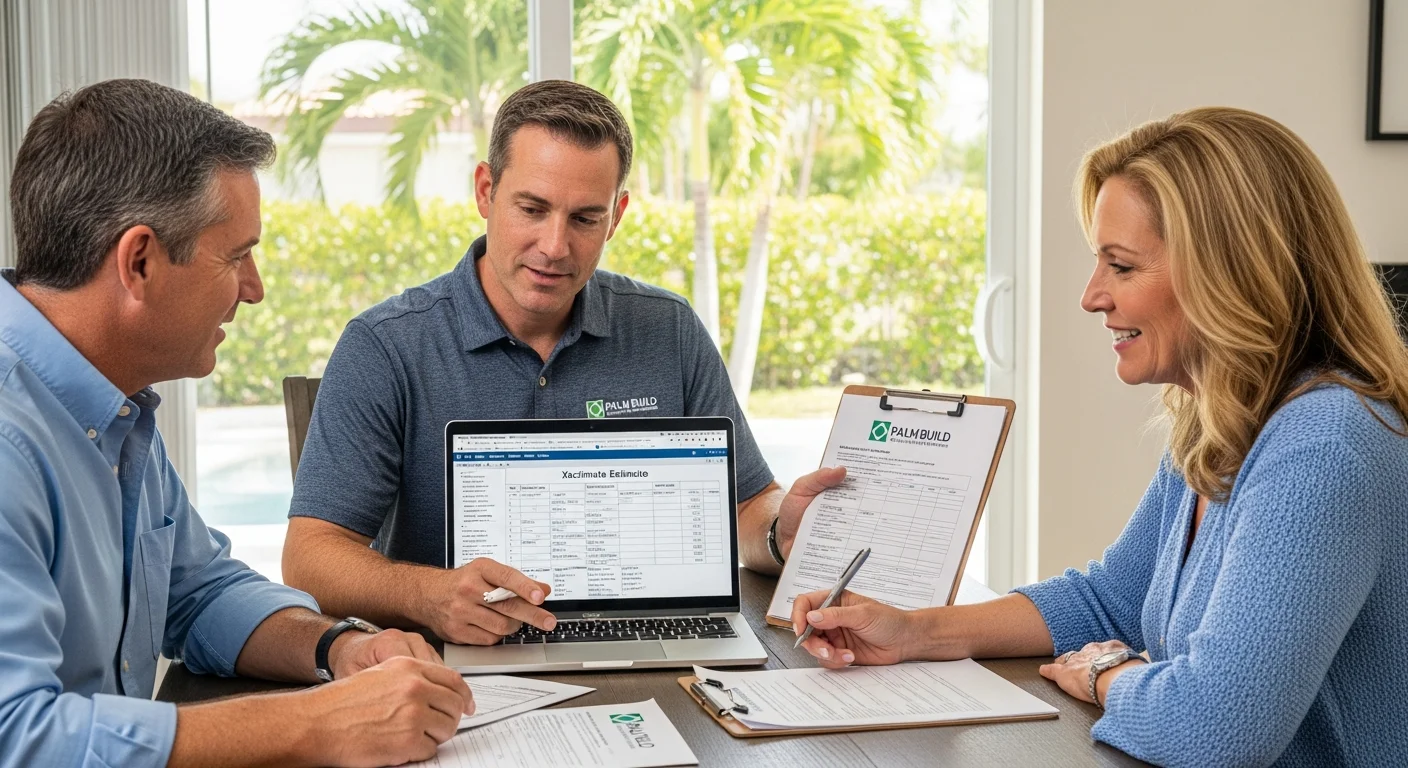
From the first moisture reading to the final walkthrough, every step is documented in Xactimate — the industry standard used by Florida insurers. Photo documentation, moisture maps, equipment placement logs, and detailed scope of loss are formatted for direct carrier submission.
Step 0125–35 Minutes
Emergency Response
Your call reaches our South Florida team 24/7/365. We dispatch a fully equipped truck from our Deerfield Beach hub to Lake Worth Beach — carrying truck-mounted extractors, commercial dehumidifiers, air movers, and thermal imaging cameras. Response time averages 25-35 minutes.
Step 02Hours 1–3
Assessment & Moisture Mapping
Using thermal imaging and pin-type moisture meters, we map every affected surface in your Lake Worth Beach home — behind cabinets, inside CBS block cavities, under tile on slab foundations. This moisture map becomes the foundation of your insurance claim and our drying protocol.
Step 03Hours 1–6
Water Extraction
Truck-mounted extraction removes standing water down to the slab. On Lake Worth Beach's slab-on-grade CBS construction, we focus on wall-slab junctions where moisture wicks upward into block cavities unseen. Portable extractors reach tight spaces — closets, under stairs, and behind built-in furniture.
Step 04Days 3–5
Structural Drying
Commercial dehumidifiers pulling 15-30 gallons per day and high-velocity air movers create controlled drying conditions inside your home. In Lake Worth Beach's 60-80% ambient humidity, natural drying is impossible — professional equipment is the only path to reaching IICRC target moisture levels.
Step 05Days 7–21+
Restoration & Repair
Once moisture readings confirm dry conditions, we rebuild — matching your home's existing finishes. For Lake Worth Beach's older homes, this may include custom millwork matching, period-appropriate trim, and ensuring all repairs meet current Florida Building Code requirements.
Step 06Ongoing
Insurance Documentation
From the first moisture reading to the final walkthrough, every step is documented in Xactimate — the industry standard used by Florida insurers. Photo documentation, moisture maps, equipment placement logs, and detailed scope of loss are formatted for direct carrier submission.
Cost Transparency
Water Damage Restoration Costs in Lake Worth Beach
Restoration costs in Lake Worth Beach reflect the realities of CBS construction, extreme
humidity, and unique flood sources. Here's what to expect — and why professional
restoration pays for itself.
Minor Water Damage
Single room, burst pipe or appliance leak
$1,200 – $3,500
CBS stucco walls require drywall removal to dry block cavities — wood-frame homes in other states dry faster and cost less. Slab-on-grade means no gravity drainage.
Moderate Water Damage
Multiple rooms, HVAC overflow or roof leak
$3,500 – $8,000
South Florida HVAC systems run year-round. Condensation damage often spreads to multiple rooms before detection. Extended drying time in 60-80% ambient humidity adds equipment rental days.
Major / Flooding
Storm flooding, sewage backup, or lagoon surge
$8,000 – $25,000+
Lagoon saltwater flooding is automatically Category 3 — all porous materials below the waterline must be removed. Salt corrosion of metals continues post-drying. Historic district homes with custom finishes add reconstruction cost.
Professional Restoration vs. DIY
Professional Restoration
Thermal imaging moisture detection behind walls
Truck-mounted extraction (100+ gallons/minute)
Commercial dehumidifiers (15-30 gal/day each)
IICRC-certified protocols prevent secondary mold
Xactimate documentation for insurance claims
Antimicrobial treatment on all affected surfaces
Daily moisture monitoring with documented readings
Full reconstruction to match original finishes
DIY Risks
Fans and household dehumidifiers cannot dry wall cavities
No moisture detection behind stucco/CBS walls
Mold colonization begins within 24-48 hours
Insurance may deny claims without professional documentation
Hidden moisture leads to structural deterioration
Slab moisture wicking continues unseen under flooring
No antimicrobial treatment = guaranteed mold growth
DIY "fixes" often cost 3-5x more when professional redo is needed
Most homeowner insurance policies cover professional water damage restoration.
Palm Build documents every step in Xactimate format — giving your insurance carrier
exactly what they need to process your claim. Call (754) 600-3369 for a free assessment.
When Damage Strikes
Lake Worth Beach Seasonal Damage Risk Calendar
Understanding when your property is most vulnerable helps you prepare — and respond faster
when damage occurs. This calendar reflects Lake Worth Beach's actual climate data and our
local service call patterns.
Post-Storm: Mold development, delayed water damage
June through November accounts for 70%+ of Palm Build's Lake Worth Beach emergency calls.
Don't wait for the storm — call (754) 600-3369 to schedule a pre-season inspection.
Dual Flood Risk
Lake Worth Lagoon & Drainage Flood Risk
Lake Worth Beach faces a flooding dynamic unlike most South Florida cities. The city
sits between the Lake Worth Lagoon/Intracoastal Waterway to the east and the LWDD canal
drainage system to the west — creating two simultaneous flood pathways during storm
events.
Saltwater flooding from the lagoon carries a fundamentally different contamination
profile than freshwater canal overflow. Saltwater events require Category 3 protocols —
complete removal of all porous materials below the waterline — while freshwater events
may allow some material salvage with rapid response.
Saltwater Storm Surge
During named storms, the Lake Worth Lagoon and Intracoastal Waterway push saltwater inland through drainage outfalls and over seawalls. Saltwater is automatically classified as Category 3 (black water) — meaning all affected porous materials must be removed, not dried.
King Tide Flooding
October through December king tides raise lagoon levels 1-2 feet above normal. Properties along the lagoon in NE Lucerne and Old Town experience yard flooding and foundation moisture intrusion during these events — even without rain.
Saltwater Corrosion Damage
Even after saltwater is extracted and surfaces dried, salt residue continues corroding metal framing, fasteners, electrical components, and plumbing fixtures for weeks. Professional post-flood remediation includes salt neutralization — a step DIY cleanup always misses.
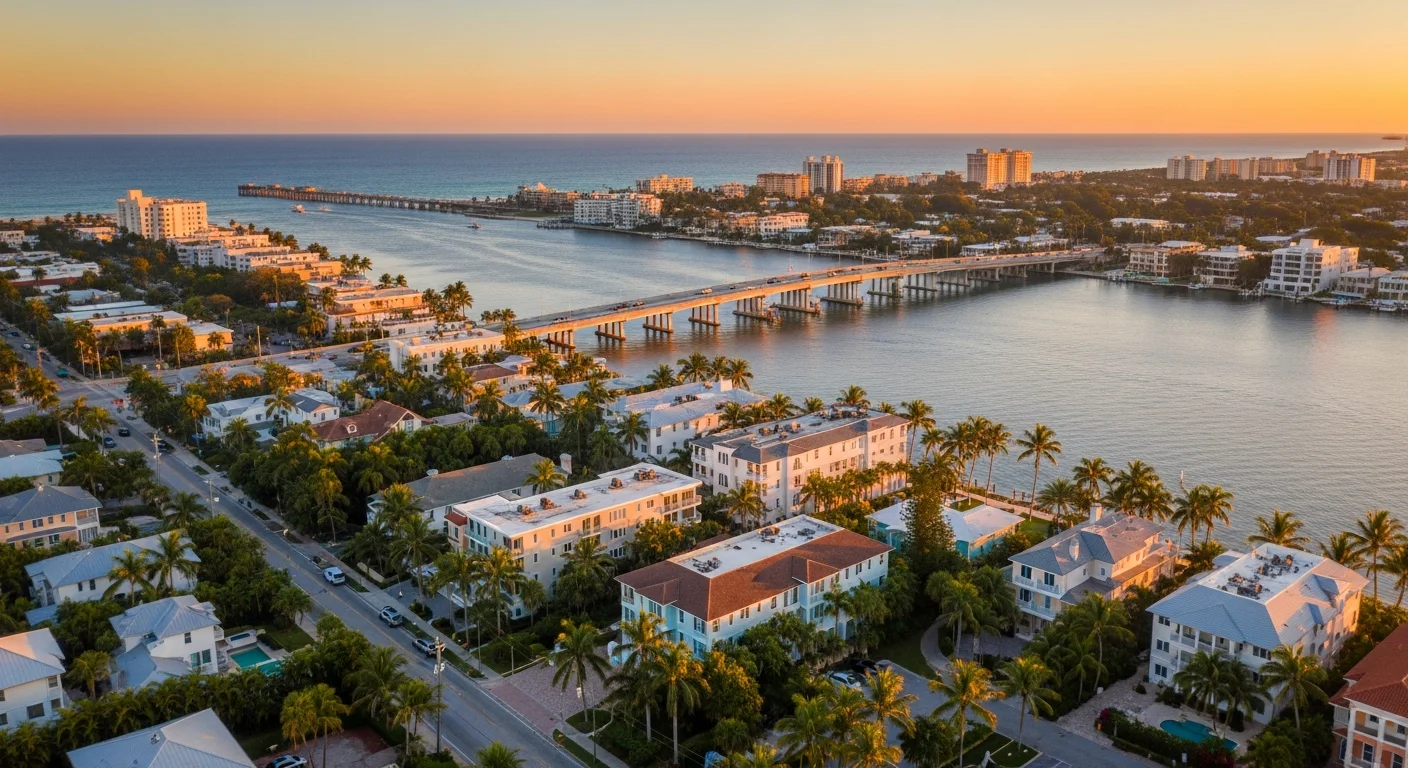
Lake Worth Beach sits between the Lake Worth Lagoon and LWDD canal system — creating
dual flood exposure during storm events.
March 2024: 18th Ave S Flooding
Heavy rainfall in March 2024 overwhelmed drainage infrastructure along 18th Avenue
South, flooding homes and streets in the Lake Worth Beach corridor. The city's pump
stations reached maximum capacity, and standing water persisted for hours after rain
stopped — exposing dozens of properties to prolonged water contact.
This event demonstrated that Lake Worth Beach's drainage infrastructure has capacity limits that can be exceeded during intense rainfall — even outside of hurricane
events. Properties in low-lying areas near 18th Ave S, Lucerne Lakes, and the Lake Worth
Corridor remain at elevated risk.
Insurance Navigation
Navigating Water Damage Insurance in Lake Worth Beach
Florida's insurance landscape is the most complex in the nation. These are the key facts
every Lake Worth Beach homeowner needs to know when filing a water damage claim.
Additional damage discovered during restoration is documented and submitted
As needed
1-Year Filing Deadline
Florida Statute 627.70132 requires property insurance claims to be filed within 1 year of the date of loss. Supplemental claims must be filed within 18 months. Miss these deadlines and your claim is permanently barred — no exceptions.
AOB Reform (Since Jan 2023)
Florida's Assignment of Benefits reform means restoration contractors can no longer receive direct payment from your insurer. All payments flow through you — making thorough documentation and direct communication with your carrier more critical than ever.
Citizens Property Insurance
Many Lake Worth Beach homeowners are insured through Citizens — Florida's insurer of last resort. Citizens claims require specific documentation formats and have stricter supplemental claim timelines. Palm Build formats all documentation to Citizens' requirements.
Hurricane Deductibles: 2-5%
On a Lake Worth Beach home valued at $350,000, your hurricane deductible is $7,000-$17,500 — money you pay before insurance covers anything. This applies only to named storms, not to non-hurricane water damage events like burst pipes or HVAC overflow.
Common Carrier Requirements
Universal, Heritage, Slide, FedNat, and Citizens all require Xactimate-formatted estimates with photo documentation, moisture maps, and detailed scope of loss. Palm Build formats every claim package to match your specific carrier's submission requirements.
Palm Build Documents From Day One
We photograph, moisture-map, and document every affected surface before beginning work. Our Xactimate-formatted estimates match your carrier's preferred format, reducing disputes and accelerating claim settlement.
Palm Build documents every water damage event with photos, moisture readings, and
Xactimate-formatted estimates — formatted to your specific carrier's submission
requirements.
Our Work in Lake Worth Beach
From Emergency to Restoration
Every image below represents a Lake Worth Beach property where Palm Build responded,
extracted, dried, and restored — often within the same week.
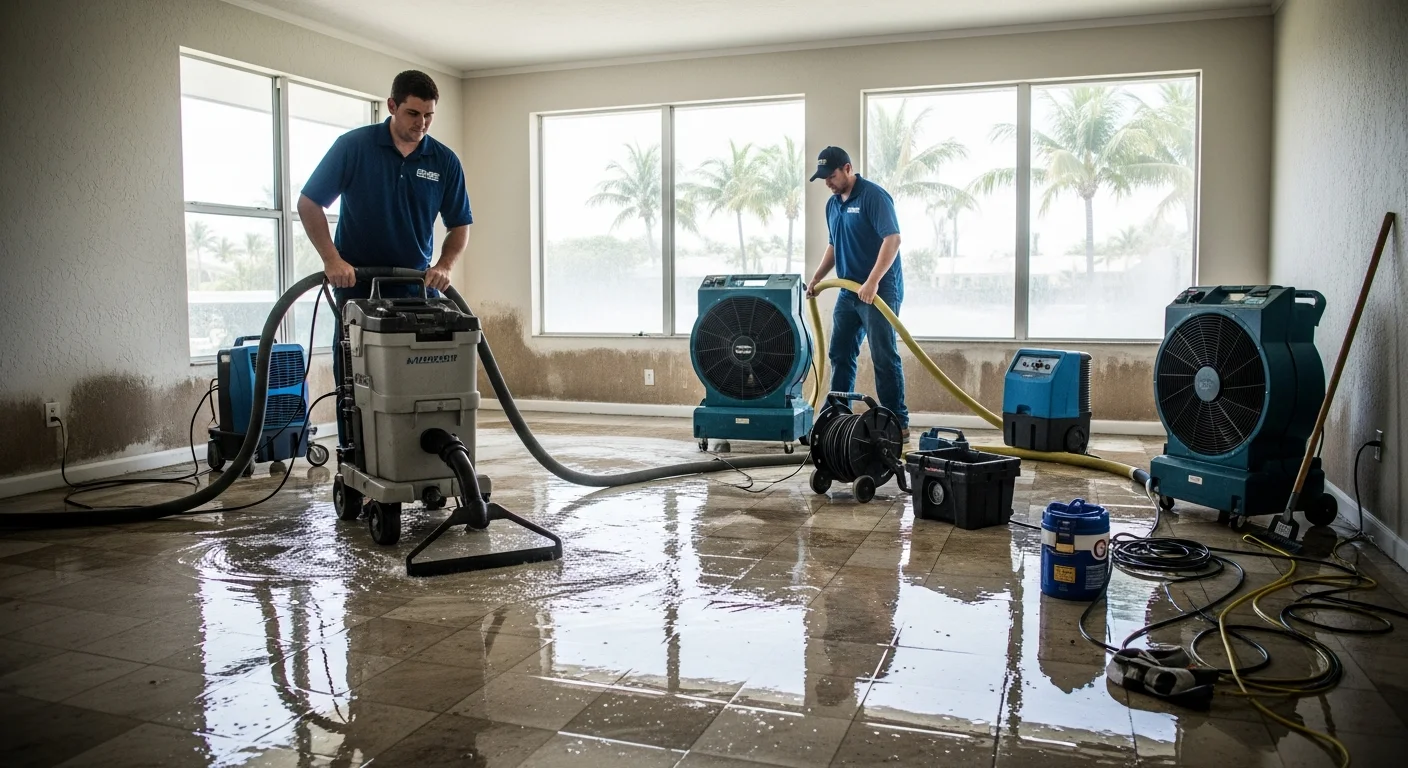
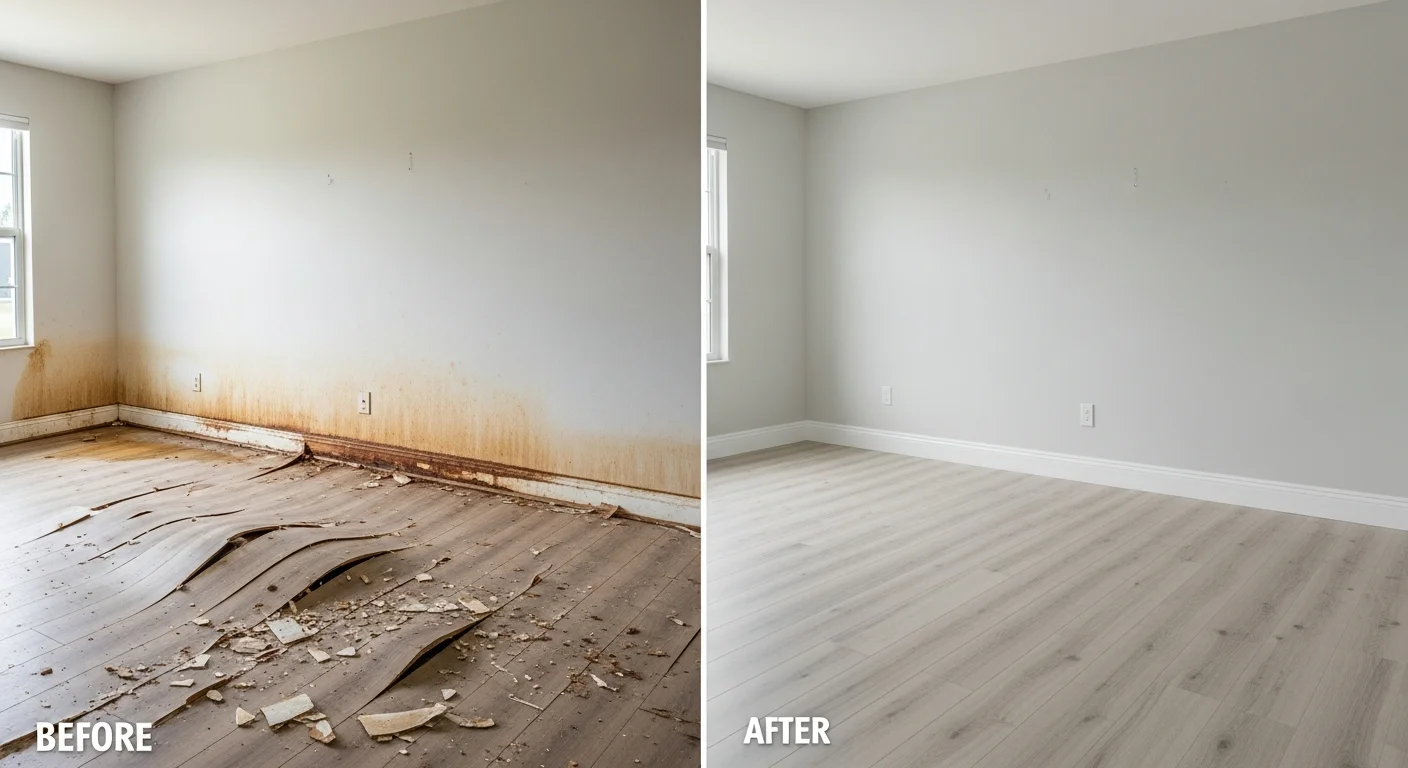
Living room restoration in a Lake Worth Beach CBS home — from standing water and saturated drywall to complete reconstruction with matched finishes and zero trace of damage.
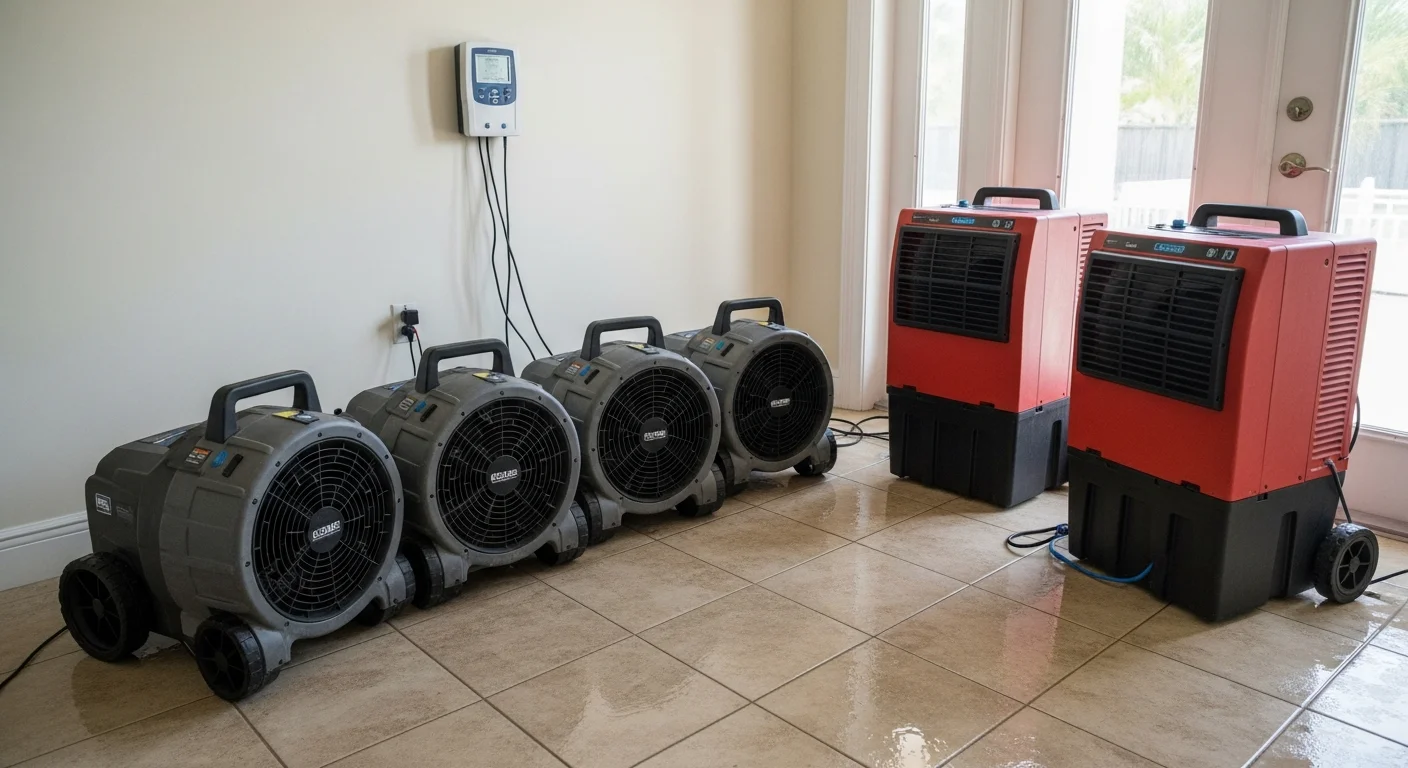
Commercial drying equipment deployed in a Lake Worth Beach home — dehumidifiers pulling 15-30 gallons per day while air movers create targeted airflow across CBS wall cavities.
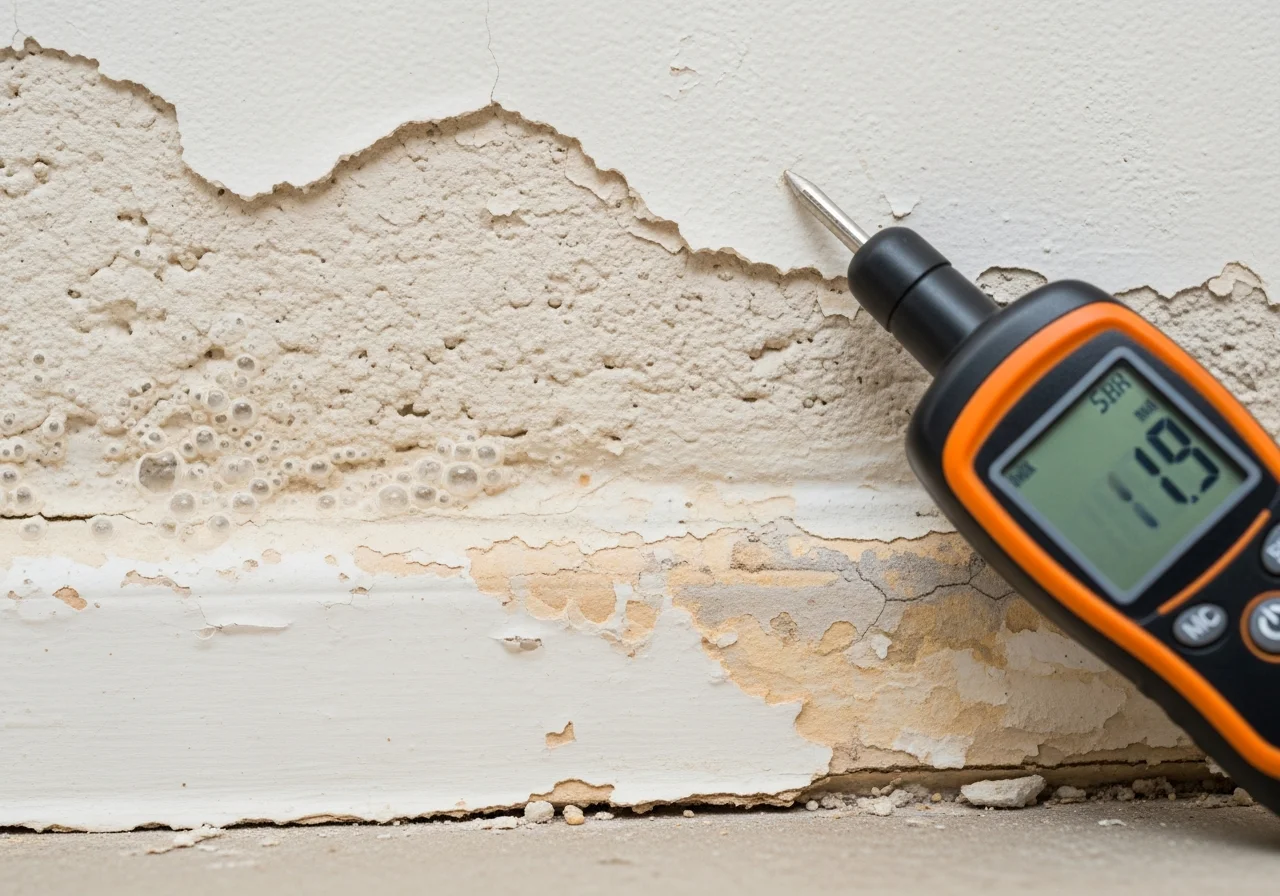
Water damage assessment revealing moisture wicking through CBS block cavities — invisible from the exterior until drywall saturation and mold growth become visible.
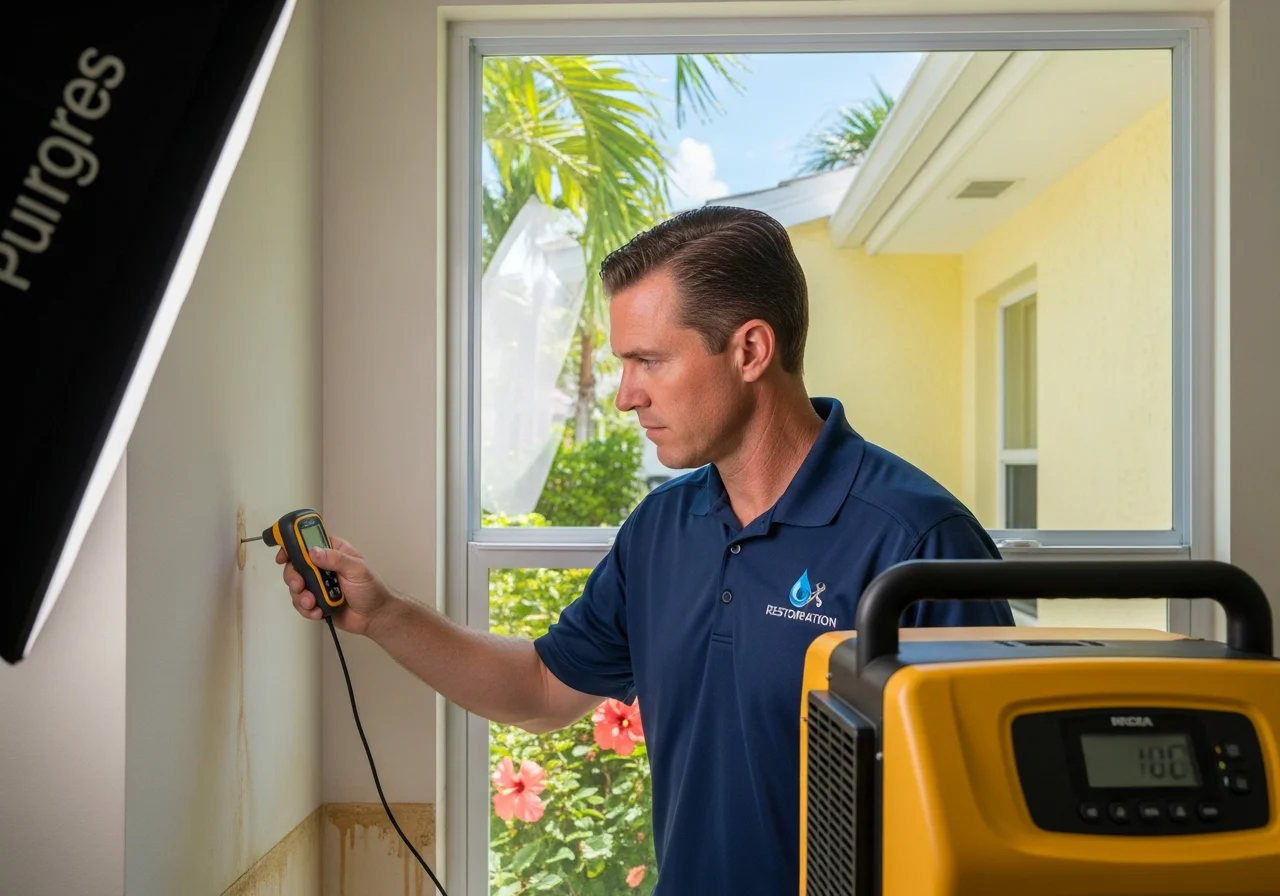
Palm Build technician using pin-type moisture meters and thermal imaging to map hidden moisture behind walls — the foundation of accurate insurance documentation.
Common Damage Sources
Types of Water Damage in Lake Worth Beach
The source of water determines the contamination category, restoration protocol, and cost.
Lake Worth Beach's unique construction types and geography create specific damage
patterns.
Burst Pipes
Lake Worth Beach's older neighborhoods — College Park, NE Lucerne, South Palm Park — contain original galvanized and polybutylene supply lines that fail without warning. Cast-iron drain lines in pre-1970s homes develop cracks and joint failures. A single burst pipe in a CBS home can flood multiple rooms before the shutoff valve is reached.
Storm Flooding
Hurricane season brings wind-driven rain intrusion through stucco cracks, barrel tile displacement, and roof membrane failures. The dual-flood risk from the Lake Worth Lagoon (saltwater) and LWDD canal system (freshwater) means some properties face flooding from two directions simultaneously during named storms.
HVAC Overflow
The #1 cause of indoor water damage in Lake Worth Beach. Year-round HVAC operation means condensate drain lines clog with algae and biofilm. A blocked drain line causes the overflow pan to fill and spill — saturating drywall, subfloor, and insulation behind the air handler. Damage often spreads for days before detection.
Roof Leaks
Flat roofs on older Lake Worth Beach homes are prone to ponding water and membrane failures. Barrel tile roofs on newer CBS homes experience tile displacement from high winds, allowing water intrusion through the underlayment. In the historic district, aging roof structures with non-standard flashing create chronic leak points.
Appliance Failure
Water heaters, washing machines, dishwashers, and refrigerator ice makers are all connected to pressurized supply lines. When supply line hoses fail — which typically happens after 5-8 years — they release pressurized water continuously until discovered. Homes left vacant during snowbird season are especially vulnerable.
Sewage Backup
Aging clay sewer laterals in Lake Worth Beach's older neighborhoods crack, separate at joints, or become root-infiltrated — causing raw sewage backups into homes. This is always Category 3 (black water): all affected porous materials must be removed. The health hazard requires immediate professional response with full PPE protocols.
Every water damage event requires immediate professional assessment.
Mold colonization begins within 24-48 hours in Lake Worth Beach's humidity. Call (754) 600-3369 for 24/7 emergency response.
Why Palm Build
Lake Worth Beach's Trusted Restoration Partner
National franchises send you their nearest available crew. Palm Build sends you a team
that already knows your neighborhood, your construction type, and your insurance carrier's
requirements.
25–35 Minute Response
Our Deerfield Beach operations hub is a short drive from Lake Worth Beach. When you call at 2 a.m., we answer — and a fully equipped truck is rolling within minutes. Average arrival: 25-35 minutes.
IICRC Certified Technicians
Every Palm Build technician holds current IICRC certifications in Water Restoration (WRT), Applied Structural Drying (ASD), and Applied Microbial Remediation (AMRT) — the gold standard in the restoration industry.
CBS Construction Expertise
Lake Worth Beach's concrete block stucco homes require specialized drying protocols. We understand how moisture moves through block cavities, slab-on-grade foundations, and stucco facades — and we have the equipment to dry them properly.
Insurance-Ready Documentation
We format everything in Xactimate — the industry standard used by Florida insurers. Moisture maps, photo documentation, and detailed scope of loss from day one. Your carrier gets exactly what they need to process your claim.
We Know Lake Worth Beach
From College Park's 1920s plumbing to Winston Trails' stucco cracks to NE Lucerne's lagoon-adjacent flooding — we work in these neighborhoods every week and understand each one's specific vulnerabilities.
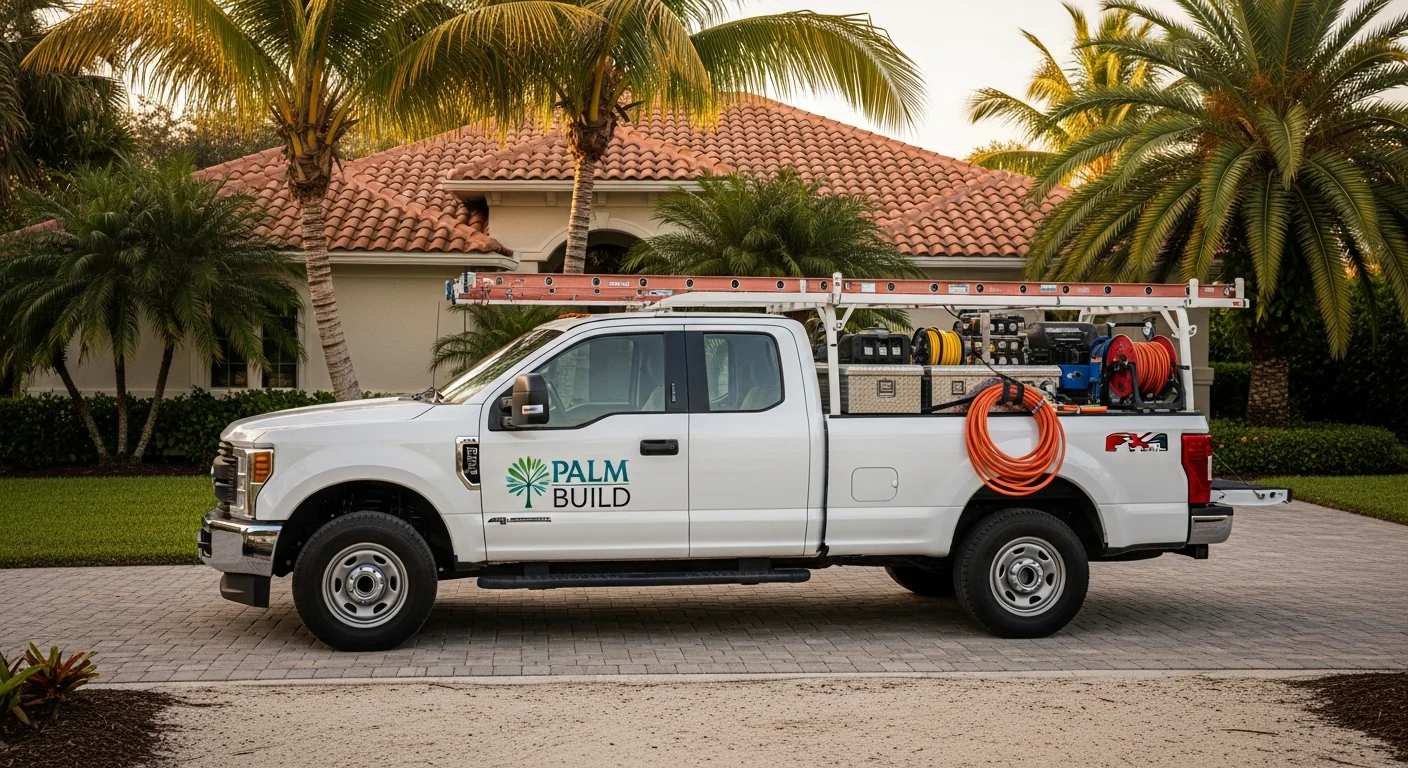
Palm Build's South Florida team arrives at a Lake Worth Beach home within 25-35 minutes
— equipped to begin extraction, drying, and documentation immediately.
Common Questions
Lake Worth Beach Water Damage FAQ
How quickly can Palm Build respond to water damage in Lake Worth Beach?
Our Deerfield Beach operations hub is approximately 25-35 minutes from Lake Worth Beach via I-95. We respond 24 hours a day, 7 days a week. Our trucks carry truck-mounted extraction equipment, commercial LGR dehumidifiers, thermal imaging cameras, and air movers — we begin emergency water removal immediately upon arrival. In Lake Worth Beach's slab-on-grade CBS construction, speed is critical because moisture wicks 12-24 inches laterally through the slab edge before any visible signs appear on the surface.
What are the water damage risks of CBS stucco construction in Lake Worth Beach?
CBS concrete block stucco is the dominant construction type in Lake Worth Beach. While it resists hurricane winds effectively, decades of thermal cycling (90+ degree surface temperatures dropping to 70 degrees nightly) create hairline stucco cracks that allow water into the block wall cavity. On slab-on-grade foundations, this trapped water has no natural drainage path — it wicks laterally, saturating wall cavities and feeding mold growth behind finished surfaces where it remains invisible. Only thermal imaging and professional moisture meters can detect CBS wall cavity saturation before it becomes visible damage.
What is the difference between lagoon flooding and canal flooding in Lake Worth Beach?
Properties east of Dixie Highway face saltwater intrusion from Lake Worth Lagoon storm surge — classified as IICRC Category 3 (grossly contaminated water), requiring complete removal and replacement of all porous materials including drywall, carpet, insulation, and cabinetry. Salt residue continues corroding metals, wiring, and HVAC components for weeks after water recedes. Properties west of I-95 face freshwater flooding from LWDD canal overflow — typically Category 2, allowing more material salvage if addressed within 24-48 hours. During major storms, both flood types occur simultaneously across different parts of the city.
What are the Florida insurance claim deadlines for water damage?
Florida law (Fla. Stat. 627.70132) requires water damage claims within 1 year of the date of loss — not the date of discovery. Supplemental claims must be filed within 18 months. Missing either deadline results in automatic denial. For NFIP flood claims, proof of loss must be filed within 60 days. Hurricane deductibles of 2-5% apply to wind-driven water events, meaning a $350,000 Lake Worth Beach home carries a $7,000-$17,500 deductible. Since Florida's January 2023 AOB prohibition, homeowners must coordinate directly with their insurer — restoration companies can no longer file on your behalf.
Why is HVAC condensation the #1 source of water damage in Lake Worth Beach?
Lake Worth Beach HVAC systems run 10-11 months per year in humidity consistently exceeding 70%. Condensate drain lines clog with algae and biofilm, drip pans crack from constant thermal cycling, and oversized units that short-cycle produce standing water in air handlers. Unlike a burst pipe — which is immediately visible — HVAC condensate overflows into ceiling cavities and wall interiors where damage is undetected for days or weeks. The HVAC system then distributes mold spores throughout the home via ductwork. HVAC-related water damage exceeds all other sources combined in Lake Worth Beach service calls.
How much does water damage restoration cost in Lake Worth Beach?
Standard freshwater water damage restoration (burst pipe, appliance failure) in Lake Worth Beach typically ranges from $5,000 to $15,000 depending on the affected area and materials. Complex projects involving saltwater damage from lagoon surge, extensive CBS wall cavity drying, or concurrent mold remediation range from $20,000 to $60,000+. South Florida's specialized labor requirements, CBS construction complexity, and Florida building code compliance contribute to costs running 25-50% above national averages.
Is my Lake Worth Beach home at risk for polybutylene plumbing failure?
If your Lake Worth Beach home was built between 1978 and 1995, it may contain polybutylene piping — particularly in communities like Winston Trails, Lake Charleston, Lucerne Lakes, and portions of the Lake Worth Corridor. This gray plastic piping degrades from chloramines in Palm Beach County's municipal water supply, developing micro-fractures from the inside out that lead to sudden catastrophic bursts. Unlike slow leaks, polybutylene failures are explosive — a single burst supply line can release 5-8 gallons per minute, flooding an entire floor level in under an hour. If your home has not been re-piped with PEX or CPVC, a plumbing inspection is strongly recommended.
Trusted Vendors
Trusted local pros in Lake Worth Beach
Outside our restoration scope, these are the vetted, licensed contractors we trust
alongside our work. Personally evaluated, reference-checked, and recommended by Palm
Build.
Water Damage in Lake Worth Beach? We're 25 Minutes Away.
Palm Build's Deerfield Beach team responds to Lake Worth Beach water emergencies in 25-35 minutes, 24/7. IICRC certified. CBS stucco specialists. Lagoon and canal flood expertise. Insurance documentation from day one.