LAKE WORTH BEACH FL — DBPR LICENSED MOLD REMEDIATION
Mold Remediation in Lake Worth Beach, Florida
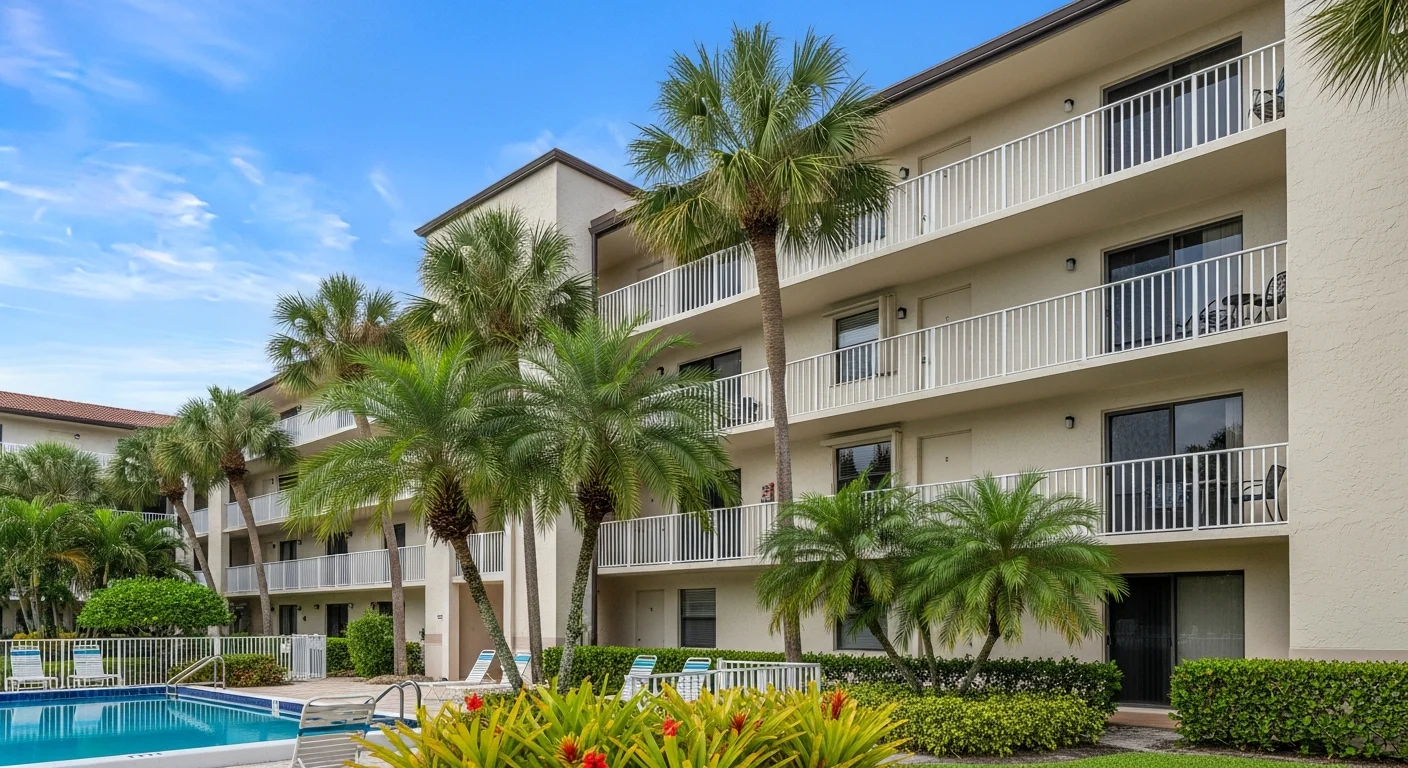
Lake Worth Beach absorbs 61.75 inches of annual rainfall across 137 rain days, with year-round humidity above 70% that routinely exceeds 90% during wet season — and HVAC condensation compounds every moisture event in a city built on CBS stucco and slab-on-grade construction. From the 1920s wood-frame bungalows of the historic downtown to the 2,000+ condo units across Lucerne Lakes, Fountains of Palm Beach, and Poinciana Place, mold pressure in Lake Worth Beach never pauses. Palm Build's DBPR-licensed team delivers professional containment, HEPA-filtered remediation, and insurance-grade documentation from our Deerfield Beach hub — 25 to 35 minutes from your door.
Deerfield Beach — 25-35 Minutes from Lake Worth Beach Same day Response IICRC Certified
Lake Worth Beach: A Perfect Environment for Mold Growth
Lake Worth Beach's subtropical climate, CBS construction, slab-on-grade foundations, and
near-constant AC operation create four overlapping moisture vectors that make mold
growth virtually inevitable without active prevention. Understanding these factors is
the first step toward permanent remediation.
Year-Round Humidity 70%+
70-90%
Year-round RH
Lake Worth Beach sits squarely in Palm Beach County's subtropical humidity belt. Relative humidity routinely holds between 70-90% year-round, with summer months regularly exceeding 85%. Building materials inside homes never fully dry — drywall, insulation, and wood framing absorb ambient moisture continuously, creating the exact conditions mold colonies need to establish and spread.
HVAC Condensation #1 Source
#1 Cause
Hidden mold source
Air conditioning runs approximately 11 months per year in Lake Worth Beach. Every hour of operation generates condensation on evaporator coils and drip pans. When condensate drain lines clog — the single most common HVAC maintenance failure in South Florida — water backs up into the air handler and overflows into ceilings, closets, and wall cavities. This is the #1 hidden mold cause in Lake Worth homes.
CBS Stucco Traps Moisture
61.75"
Annual rainfall
Lake Worth Beach homes built on CBS (concrete block and stucco) construction develop hairline stucco cracks from thermal expansion, settling, and storm vibration. With 61.75 inches of annual rainfall, driving rain pushes water through micro-cracks and traps it between the block wall and interior drywall — feeding invisible mold colonies for months before any visible sign appears.
Slab-on-Grade Moisture Wicking
24-48 hrs
Mold establishes
Like most of South Florida, Lake Worth Beach homes are slab-on-grade construction with no basement. Ground moisture wicks upward through the concrete slab and into baseboards, bottom plates, and flooring materials. Combined with Florida's high water table, this capillary action delivers continuous moisture to the lowest points of every structure — and mold can establish within 24-48 hours.
Know The Signs
Warning Signs of Mold in Lake Worth Beach Homes
Mold in Lake Worth Beach homes rarely announces itself with a dramatic failure. In CBS
stucco construction with central AC running year-round, mold grows silently inside wall
cavities, HVAC systems, and under flooring for weeks or months before health symptoms or
visible damage force a professional inspection.
Musty or Earthy Odor
Most Reported
A persistent musty smell — especially when the AC kicks on — is the most common first sign of hidden mold in Lake Worth Beach homes. Mold colonies inside HVAC systems, wall cavities, or under flooring produce volatile organic compounds (MVOCs) that create this unmistakable odor.
Visible Mold Growth
Advanced
Black, green, or white fuzzy patches on walls, ceilings, baseboards, or around AC registers. In Lake Worth CBS homes, visible mold on interior surfaces typically indicates far more extensive hidden growth behind the drywall on the block wall face.
Water Stains on Walls or Ceilings
Early Warning
Yellow or brown water stains — particularly on ceilings below bathrooms or around AC closets — signal active or recent moisture intrusion. In Lake Worth's humid climate, these wet areas develop mold colonies within 48-72 hours if not dried and treated.
Peeling or Bubbling Paint
Structural
Paint peeling away from walls or ceiling, especially in bathrooms, kitchens, or along exterior-facing CBS walls, indicates moisture trapped behind the surface. This trapped moisture is almost always accompanied by mold growth on the hidden side of the drywall.
Allergic Reactions Indoors
Health Risk
Unexplained sneezing, congestion, itchy eyes, or respiratory irritation that worsens when indoors and improves when you leave. Multiple household members experiencing similar symptoms strongly suggests airborne mold spore contamination circulating through the HVAC system.
Musty Smell from HVAC Vents
Most Reported
A stale or moldy odor blowing from supply registers when the AC runs indicates mold inside the air handler, evaporator coil housing, or ductwork. This is the #1 mold complaint in Lake Worth homes — the AC distributes contaminated air to every room.
Persistent Condensation on Windows
Early Warning
Excessive condensation on interior window glass or frames suggests indoor humidity levels are too high. In Lake Worth homes, this often indicates an undersized or malfunctioning AC system that cannot adequately dehumidify — creating conditions for widespread mold growth.
Warped or Soft Baseboards
Structural
Baseboards that feel soft, spongy, or have pulled away from the wall indicate moisture wicking up from the slab or running down behind drywall. In slab-on-grade Lake Worth homes, this bottom-up moisture path is a primary driver of hidden mold at the wall-floor junction.
When to Call Immediately
If you see mold covering more than 10 square feet, mold on AC registers or inside
air handlers, water staining on multiple walls after storms, or a musty odor from
every vent — do not attempt DIY cleanup. Contact a DBPR-licensed mold remediation professional and document everything for your insurance claim.
IICRC S520 Protocol
Our Lake Worth Beach Mold Remediation Process
Professional mold remediation follows a strict sequence defined by the IICRC S520
standard and Florida DBPR regulations. Here is exactly what happens when Palm Build's
licensed team arrives at your Lake Worth Beach property.
01
Assessment & Testing
Day 1
02
Containment Setup
Day 1-2
03
Air Filtration
Continuous
04
Mold Removal
Days 2-4
05
Cleaning & Sanitizing
Days 4-5
06
Restoration & Prevention
Day 5-7
01
Assessment & Testing
Day 1
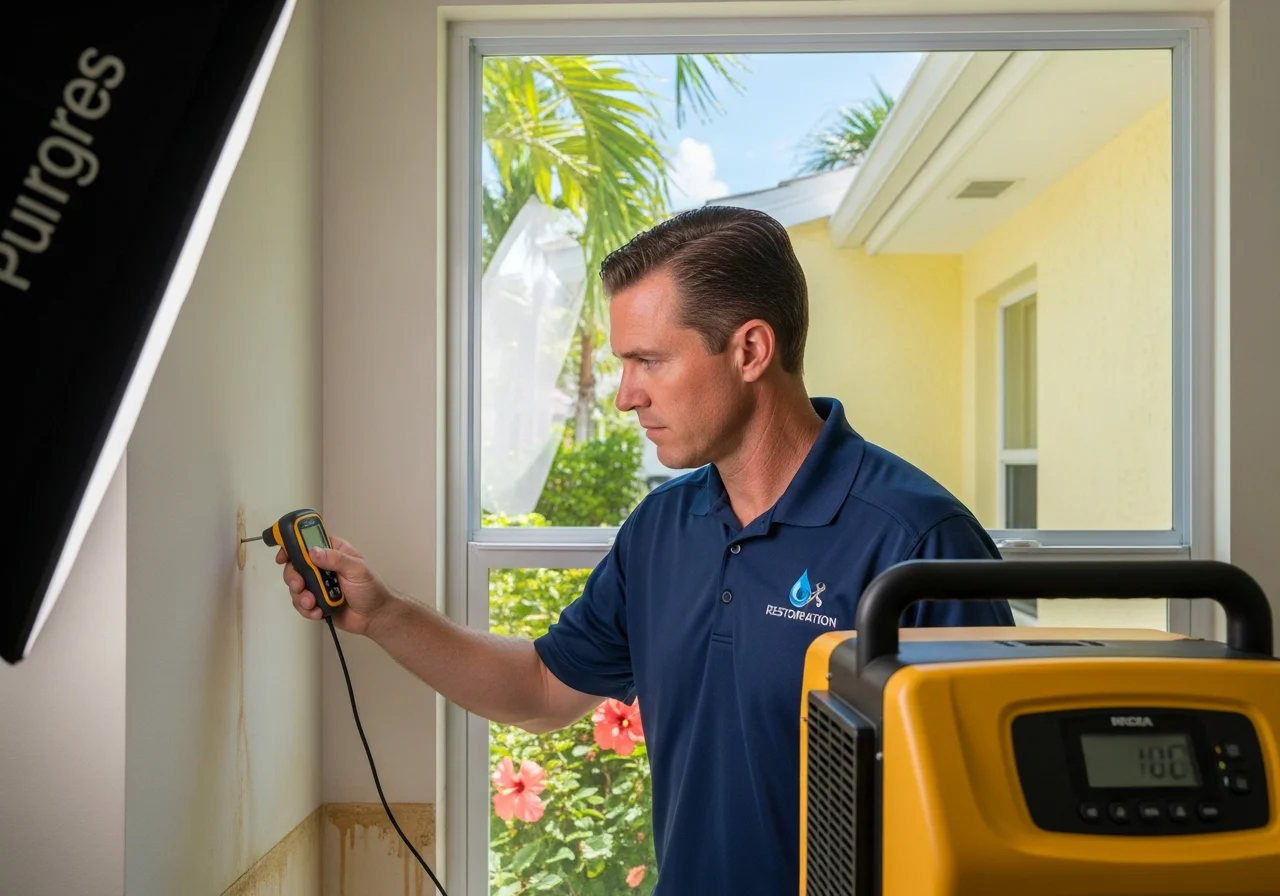
Comprehensive visual inspection, moisture mapping with infrared cameras, and air quality sampling throughout the home. We identify the moisture source — HVAC condensation, stucco intrusion, plumbing failure, or slab wicking — and classify contamination level per IICRC S520. Florida law requires a separate licensed mold assessor for the initial report.
02
Containment Setup
Day 1-2
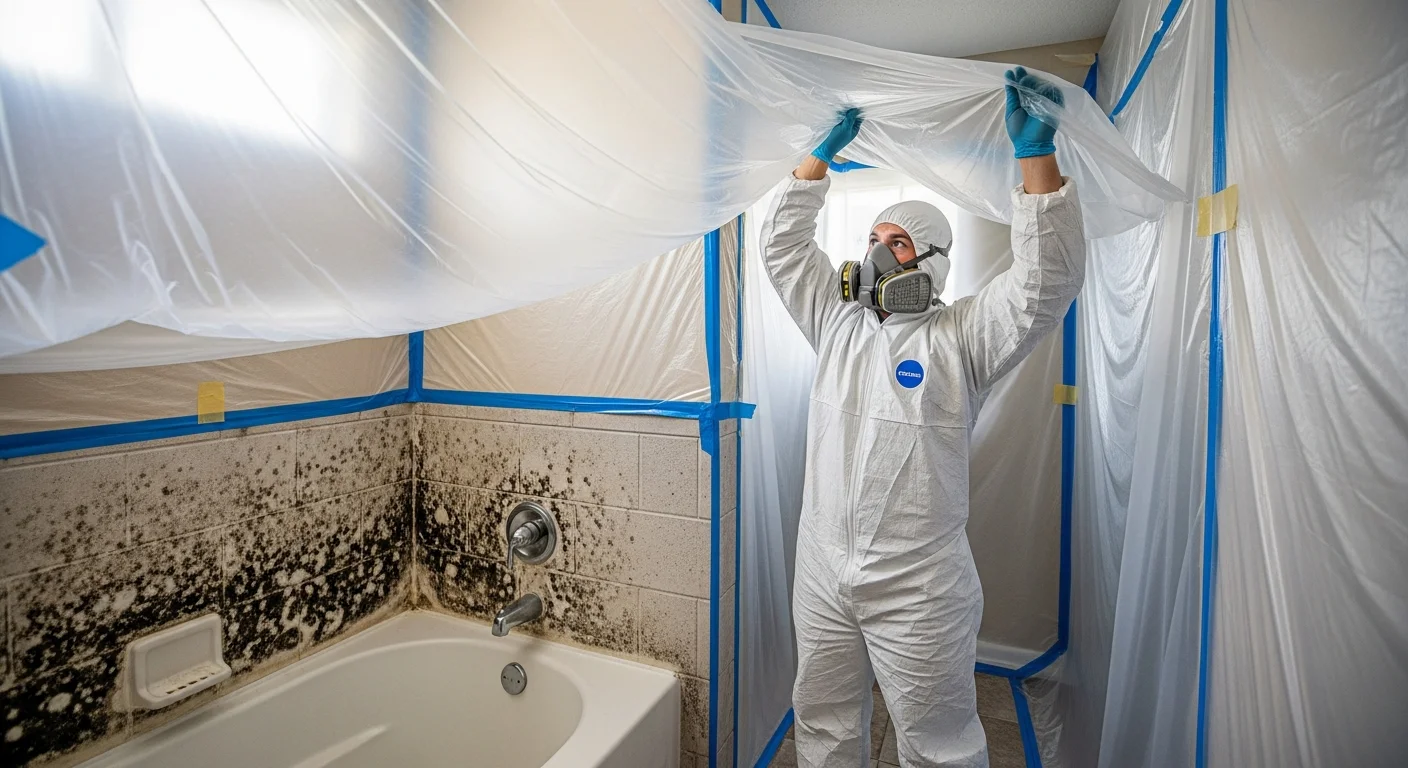
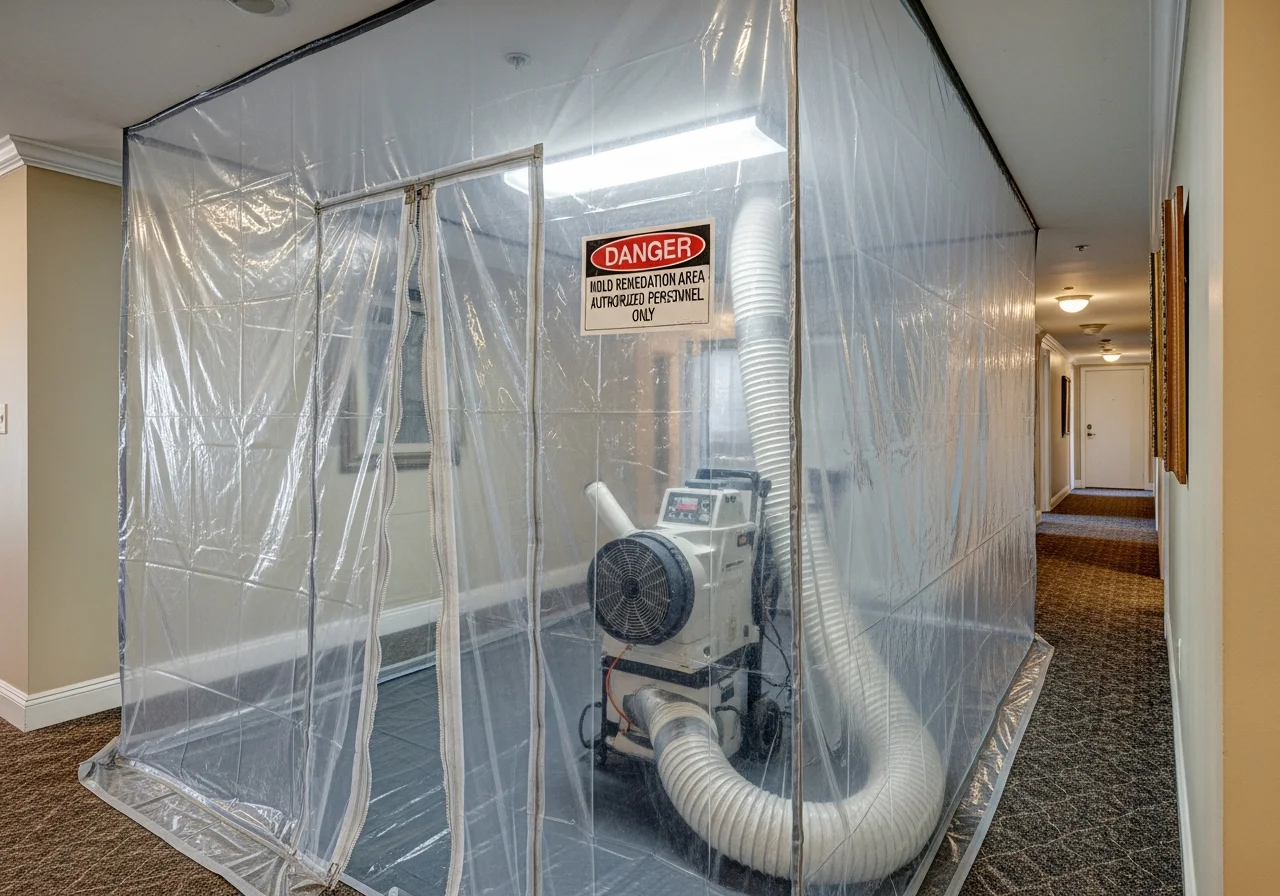
Sealed polyethylene containment barriers isolate affected areas, including CBS wall cavities and HVAC system components. HEPA air scrubbers establish negative air pressure to prevent spore migration to unaffected rooms. Critical path materials and furnishings are protected or relocated.
03
Air Filtration
Continuous
HEPA filtration runs throughout the entire project, capturing airborne spores down to 0.3 microns. In Lake Worth Beach homes with HVAC contamination, the entire duct system is isolated and filtered separately to prevent recontamination of cleaned areas during active remediation work.
04
Mold Removal
Days 2-4
Contaminated materials are removed using controlled demolition techniques. Affected drywall on CBS walls, contaminated HVAC components, and impacted insulation are carefully extracted. Salvageable surfaces are cleaned with HEPA vacuuming and abrasive media blasting. Non-salvageable materials are double-bagged for safe disposal.
05
Cleaning & Sanitizing
Days 4-5
EPA-registered antimicrobial agents are applied to all treated surfaces. For CBS construction, this includes interior block wall faces, window bucks, and areas where stucco moisture intrusion was identified. HVAC components receive specialized coil and duct antimicrobial treatment to eliminate residual contamination.
06
Restoration & Prevention
Day 5-7
Post-remediation air quality testing by an independent DBPR-licensed assessor confirms spore counts have returned to acceptable levels. Florida law requires clearance from a different licensed assessor than the remediator. We then address the root moisture source and restore affected areas to pre-loss condition.
Why Containment Matters in CBS Homes
Disturbing mold without proper containment sends billions of spores airborne — and in
Lake Worth Beach CBS construction, the HVAC system can distribute those spores to
every room within minutes. Our containment protocol ensures mold stays isolated during
removal.
1
Sealed Barriers
Polyethylene sheeting floor-to-ceiling on CBS walls
HVAC Condensation Mold: The Hidden Crisis in Lake Worth Homes
Unlike northern states where basement moisture drives mold, Lake Worth Beach's primary
mold vector is the air conditioning system itself. AC units running 11 months per year
generate constant condensation on evaporator coils and drip pans — and when drainage
fails, that moisture feeds mold inside your air handler, coil housing, and ductwork.
The four most common HVAC mold causes in Lake Worth Beach: clogged condensate drain
lines that back up water into the drip pan, cracked or corroded drip pans from salt air
exposure, oversized AC units that short-cycle and never properly dehumidify, and dirty
evaporator coils that trap organic material where mold feeds. Once established, the
blower fan distributes mold spores to every room through the duct system.
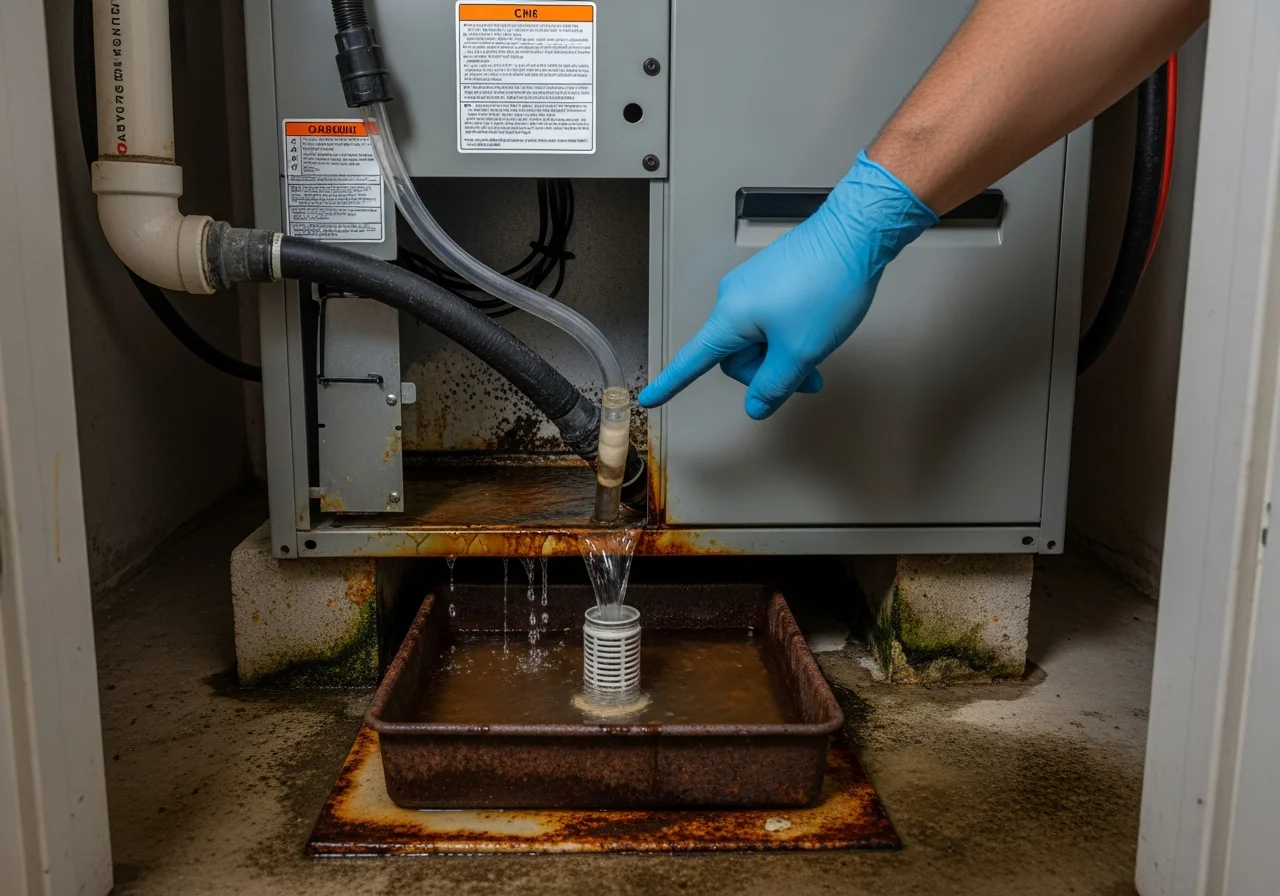
Mold colonization caused by HVAC condensate drain failure — the #1 hidden mold source
in Lake Worth Beach homes
HVAC Maintenance Prevents Mold
Most HVAC mold in Lake Worth Beach is preventable with regular maintenance. The
condensate drain line should be flushed monthly during peak season, drip pans
inspected quarterly, and the entire system professionally serviced at least twice per
year.
Flush condensate drain monthly (vinegar or commercial tablet)
Inspect drip pan for cracks, corrosion, or standing water
Replace air filter every 30-60 days in Florida humidity
Schedule professional coil cleaning twice per year
FL Regulatory Landscape
Florida Mold Licensing: What Lake Worth Beach Homeowners Must Know
Florida has one of the strictest mold regulatory frameworks in the country. Under DBPR Chapter 468, Part XVI, the state requires separate licenses for mold
assessment and mold remediation — and explicitly prohibits the same company from
performing both on the same project within 12 months.
This separation of assessment and remediation prevents conflicts of interest: the
company that finds the mold cannot be the same company that profits from removing it.
Florida mold assessors must carry $1 million in general liability insurance, and mold
remediators must demonstrate proof of financial responsibility. Both licenses require
continuing education.
Verify DBPR mold remediator license before hiring any company
Assessor and remediator MUST be separate licensed entities
Same company cannot assess and remediate within 12 months
Post-remediation clearance must come from a different licensed assessor
Check license status at myfloridalicense.com
Palm Build Credentials
DBPR-licensed mold remediator — Florida compliant
IICRC S520 certified remediation protocols
CBS construction and HVAC mold expertise
Full liability insurance and workers' comp coverage
Works with independent FL-licensed assessors for clearance
Red Flags to Watch For
No DBPR mold license or won't provide license number
Same company offers to assess AND remediate your mold
Offers to "spray and seal" without removing contamination
Won't set up containment barriers or HEPA filtration
Claims "no license needed" in Florida (false)
Lake Worth Beach Pricing
Mold Remediation Costs in Lake Worth Beach
Costs vary by contamination size, materials affected, and whether HVAC system work is
needed. Florida insurance policies often cap mold coverage at $10,000-$25,000 — larger
remediation projects frequently exceed these limits.
Small Area
Bathroom, closet, single wall section, window frame
$500 - $3,000
Medium Area
Multiple rooms, HVAC components, partial CBS walls
$3,000 - $10,000
Large / Full-Home
Extensive contamination, full HVAC, multiple CBS wall cavities, structural
$10,000 - $25,000+
Factors Affecting Your Cost
Total square footage of contaminated area
Whether HVAC system remediation is needed
CBS wall cavity involvement (requires specialized demolition)
Type of materials affected (drywall vs. wood framing vs. concrete)
Accessibility of mold location (behind walls, under slab)
Independent mold assessor fees (required by FL law)
Post-remediation clearance testing costs
South Florida mold remediation costs typically exceed national averages due to CBS
construction requiring specialized demolition techniques, HVAC system contamination adding
air handler and ductwork scope, and Florida's mandatory separate-assessor requirement
adding independent testing costs. However, proper remediation prevents far more expensive
structural damage and health issues.
Insurance Navigation
Mold Insurance Coverage in Lake Worth Beach
Mold coverage in Florida is limited and has become more restrictive following recent
insurance reforms. Understanding your policy's mold sublimits — including post-AOB
reform changes and strict filing deadlines — can save thousands.
Mold resulting from a covered sudden water event (burst pipe, appliance failure, storm damage) is typically covered up to your policy mold sublimits
Florida policies typically cap mold coverage at $10,000-$25,000 — HVAC mold and CBS wall remediation frequently exceed these limits
Mold from gradual moisture, humidity, HVAC condensation buildup, or long-term stucco intrusion is almost always excluded from standard policies
Flood-related mold requires a separate NFIP flood policy — standard homeowners insurance does not cover flood damage or resulting mold
Florida's 1-year claim filing deadline is strictly enforced — delayed reporting of mold discovered after a covered event can void otherwise valid claims
Some Florida carriers offer mold endorsements for additional premium — ask your agent about expanded mold coverage before you need it
Palm Build's Approach to Florida Mold Claims
When mold results from a covered water event, our documentation connects the mold to the
original loss — moisture maps, timeline photos, and remediation scope all formatted for
the adjuster. We understand post-AOB reform requirements and Florida's strict 1-year
claim deadline. For non-covered mold, we provide transparent pricing and flexible
payment options.
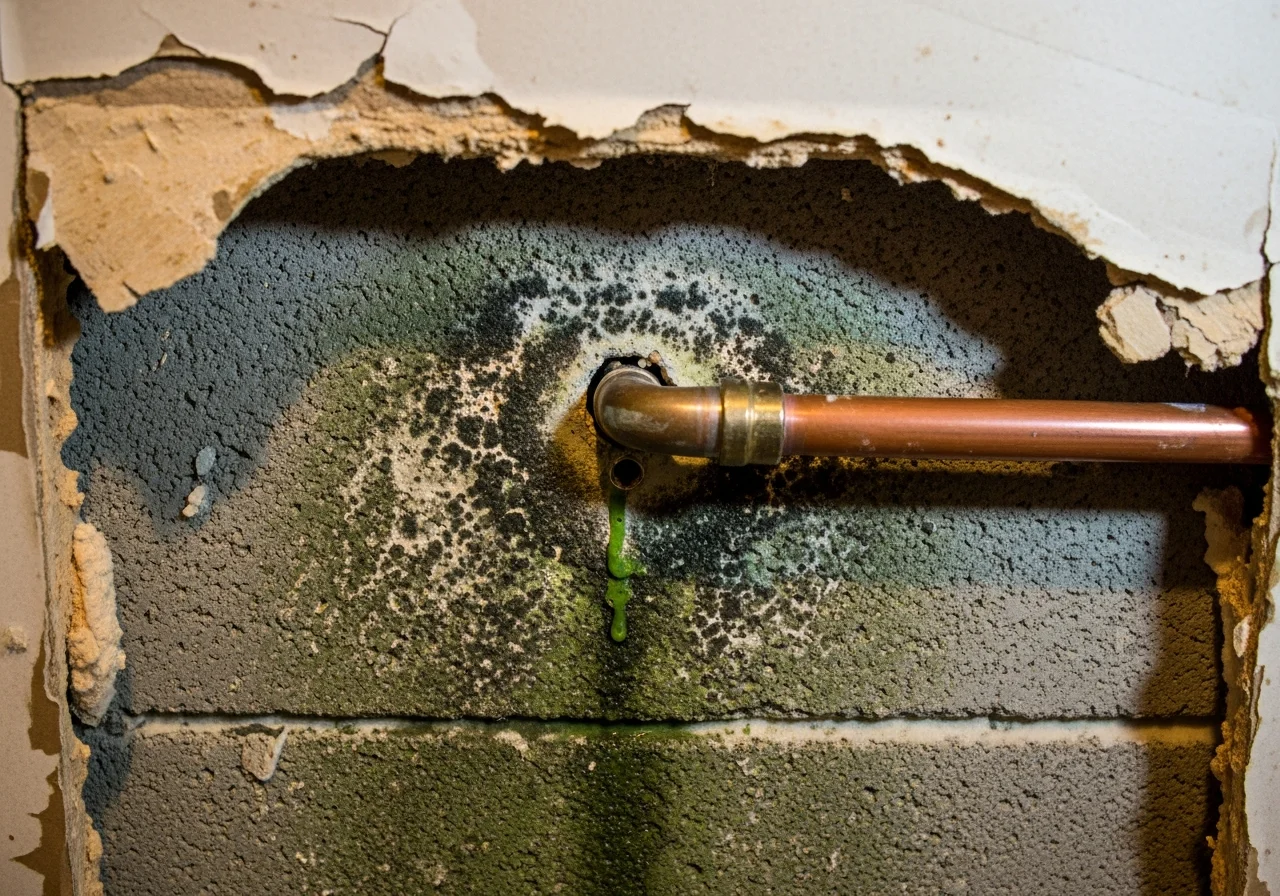
Typical Lake Worth Beach CBS stucco construction — hairline cracks trap rainwater and feed interior mold
The Palm Build Difference
Why Lake Worth Beach Homeowners Choose Palm Build for Mold
DBPR Licensed & IICRC S520 Certified
Palm Build holds a Florida DBPR mold remediation license and every crew lead carries current IICRC Mold Remediation Specialist (MRS) certification. We comply with Florida's strict separation of assessment and remediation requirements — your clearance testing is always performed by an independent licensed assessor.
Lake Worth Beach CBS Construction Experts
We understand Lake Worth Beach's concrete block and stucco homes inside and out — including stucco crack moisture intrusion patterns, CBS wall cavity mold, slab-on-grade moisture wicking, and the specific remediation techniques required for block construction that wood-frame specialists miss.
HVAC Mold Specialists
South Florida's near-constant AC operation makes HVAC mold our most common call in Lake Worth Beach. We remediate air handlers, evaporator coils, and duct systems — then address the root cause (drain line clogs, drip pan failure, or sizing issues) so mold doesn't return.
Independent Clearance Testing
Florida law requires post-remediation clearance from a separate DBPR-licensed assessor. We coordinate with independent assessors for unbiased air quality verification — giving you and your insurance carrier confidence the remediation meets state standards.
FL Insurance Documentation Experts
We understand Florida's post-AOB reform claim requirements, the 1-year filing deadline, and mold coverage sublimits. Our documentation connects mold to the original water event with moisture maps, timeline photos, and remediation scope details formatted specifically for your adjuster.
Common Questions
Lake Worth Beach Mold Remediation FAQ
Does Florida require a license for mold remediation in Lake Worth Beach?
Yes. Florida has one of the strictest mold regulatory frameworks in the country. Under DBPR Chapter 468, Part XVI, mold assessors and mold remediators must hold separate state licenses issued by the Department of Business and Professional Regulation. A conflict-of-interest rule prevents the same licensee from performing both assessment and remediation on the same property within 12 months. Post-remediation clearance must come from a different licensed assessor than the company that performed the remediation. FL Statute § 468.8419 establishes penalties for unlicensed mold work including fines and potential criminal charges. Always verify your contractor's DBPR license at myfloridalicense.com before hiring.
How does HVAC condensation cause mold in Lake Worth Beach homes?
Lake Worth Beach air conditioning systems run 10 to 11 months per year, pulling humid subtropical air across cold evaporator coils and generating gallons of condensation daily. That condensation drains through a PVC condensate line — when that line clogs with algae, cracks from UV exposure, or disconnects at a fitting, water pools silently inside the air handler closet, drips into surrounding drywall, and saturates insulation. In Lake Worth Beach's year-round humidity above 70%, mold colonizes that wet material within 24 to 48 hours. Prevention includes monthly condensate line flushing with diluted vinegar, annual HVAC inspections, and installing a float switch that shuts off the system if the drain pan overflows.
Who is responsible for mold in a Lake Worth Beach condo — the owner or the HOA?
In Florida condominium associations (Chapter 718), the association's master insurance typically covers the building shell — exterior walls, roof, and common elements — while the unit owner's HO-6 policy covers interior improvements and personal property. Mold originating from a common-element failure (roof leak, shared plumbing riser, exterior wall moisture intrusion) is generally the association's responsibility. Mold from an interior source within your unit (HVAC condensate failure, bathroom plumbing leak) is typically yours. However, in Lake Worth Beach communities like Lucerne Lakes and Fountains of Palm Beach, the lines blur when building-wide HVAC or plumbing systems contribute to individual unit problems. Palm Build documents the moisture source, migration path, and affected scope to help both parties file appropriate claims.
Does homeowners insurance cover mold remediation in Lake Worth Beach?
Most Florida homeowners policies limit mold coverage significantly. Standard HO-3 policies typically cap mold at $10,000 — often insufficient for full remediation in CBS construction. Mold resulting from a covered sudden water event (burst pipe, appliance failure, storm damage through a roof breach) has better coverage prospects. Mold from gradual moisture, HVAC condensation, humidity, deferred maintenance, or long-term stucco intrusion is almost always excluded. Some carriers offer mold endorsements for additional premium that raise the cap to $25,000 or $50,000. Florida's 1-year claim filing deadline (FL Statute § 627.70132) is strictly enforced. Palm Build provides the comprehensive documentation — moisture maps, containment protocols, photo evidence, remediation scope — that insurers require to process mold claims.
How does Lake Worth Beach's humidity affect mold remediation?
Lake Worth Beach's year-round humidity above 70% — pushing 90%+ during the June-October wet season — directly impacts every phase of mold remediation. Structural drying takes longer because ambient moisture fights the dehumidification process: CBS block cavities that might dry in 48 hours in a drier climate can take 72 to 96 hours in Lake Worth Beach conditions. We use commercial LGR (low-grain refrigerant) dehumidifiers that can pull moisture in high-humidity environments, and we data-log moisture readings to verify dry standard before any reconstruction begins. Post-remediation, the high ambient humidity means the moisture source must be fully resolved — a stucco crack that lets in trace moisture is enough to restart mold growth within weeks in this climate.
What are the signs of hidden mold in a Lake Worth Beach CBS home?
CBS (concrete block and stucco) homes hide mold behind walls that look perfect from the interior. Warning signs include: a persistent musty or earthy odor especially near exterior walls and closets; unexplained allergy symptoms that improve when you leave the house; dark spots or discoloration at baseboards on exterior walls; peeling paint or bubbling wallpaper on exterior-facing surfaces; water stains on ceilings with no obvious source; and indoor humidity readings above 60% despite normal AC operation. If you notice any of these signs, do not open walls yourself — disturbing mold colonies releases millions of spores into your living space. Call Palm Build at (754) 600-3369 for a professional assessment using thermal imaging and moisture detection equipment.
How much does mold remediation cost in Lake Worth Beach?
Lake Worth Beach mold remediation costs depend on scope and construction type. Single-room remediation (bathroom, closet, air handler area) typically runs $1,500 to $5,000 for the remediation work, plus $300-$800 for independent assessment and $300-$600 for clearance testing. Multi-room remediation involving CBS wall cavity treatment ranges from $5,000 to $18,000, with reconstruction adding $2,000 to $8,000. HVAC system contamination runs $3,000 to $12,000. Multi-unit condo remediation in communities like Lucerne Lakes or Poinciana Place — involving shared-wall work, coordinated containment, and multi-party documentation — can reach $8,000 to $35,000 or more. Most Florida insurance policies cap mold coverage at $10,000 to $25,000.
Trusted Vendors
Trusted local pros in Lake Worth Beach
Outside our restoration scope, these are the vetted, licensed contractors we trust
alongside our work. Personally evaluated, reference-checked, and recommended by Palm
Build.
Palm Build's DBPR-licensed mold remediation team provides same-day assessments, professional HEPA-filtered containment, and complete remediation with documentation your insurance carrier accepts. From our Deerfield Beach hub, we reach every Lake Worth Beach neighborhood in 25 to 35 minutes — from Old Town to Wycliffe.