Water Damage Restoration in Gaffney, South Carolina
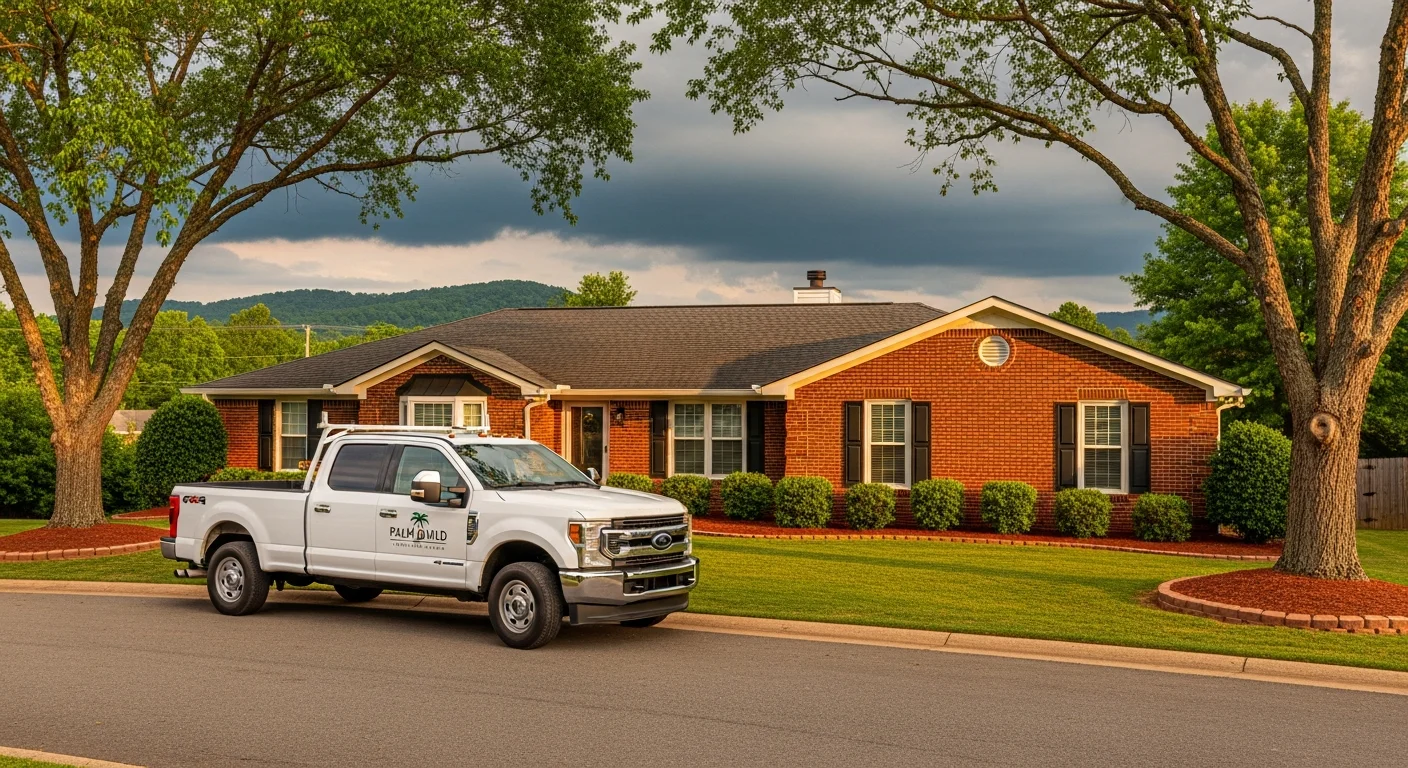
From Northgate brick ranches to East Gaffney crawl spaces, Palm Build responds in 45-60 minutes from our Charlotte hub with truck-mounted extraction, structural drying, and insurance-ready documentation for Cherokee County homeowners.
Charlotte Office — ~55 miles to Gaffney 45-60 min Response IICRC Certified
Gaffney's combination of aging housing stock, intense Piedmont rainfall, and
flash-flood-prone infrastructure creates water damage conditions that differ
fundamentally from newer markets. When moisture enters a Gaffney home, older building
systems work against you — mold can begin growing in 24 to 48 hours.
Aging Housing Stock
1975
Median construction year
Gaffney's median construction year is 1975 — and a meaningful share of the housing stock dates to the pre-1950s. Older homes mean aging galvanized and polybutylene plumbing prone to quiet failure, decades-old crawl space vapor barriers that have long since degraded, and brick veneer assemblies where water migrates behind walls through deteriorating mortar joints and failed flashing. When water enters these older systems, it penetrates deeper and dries slower than in modern construction.
Piedmont Storm Intensity
47.91 in
Annual rainfall
Cherokee County receives 47.91 inches of annual rainfall — nearly four feet — with spring peaks approaching 5 inches per month in March. Severe thunderstorms, straight-line winds, and tropical remnants drive heavy rainfall events that overwhelm aging stormwater infrastructure and push water into homes through roof penetrations, window assemblies, and foundation seepage points. The April 2024 storms brought large hail and damaging winds across Cherokee County, compounding roof vulnerability.
Older Crawl Spaces
40-50 yrs
Average vapor barrier age
Many of Gaffney's 1970s-1980s homes were built with vented crawl space foundations — a design now understood to pull humid Piedmont air directly under the home, where it condenses on cooler surfaces and feeds chronic moisture problems. Vapor barriers installed 40 to 50 years ago have degraded, torn, or shifted, leaving soil moisture free to evaporate into the crawl space. Subfloor mold, joist deterioration, and musty odors are endemic in these older crawl space homes.
Flash Flood Vulnerability
2+ in/hr
Documented rainfall intensity
Gaffney has experienced documented urban flash flooding severe enough to damage public safety facilities — including two inches of rain in approximately one hour that caused roof damage and significant water intrusion at an EMS headquarters. In September 2024, Tropical Storm Helene drove catastrophic flash flooding across Cherokee County. In March 2026, straight-line winds of approximately 75 mph ripped business roofs off in the city. Stormwater overload is a recurring reality here.
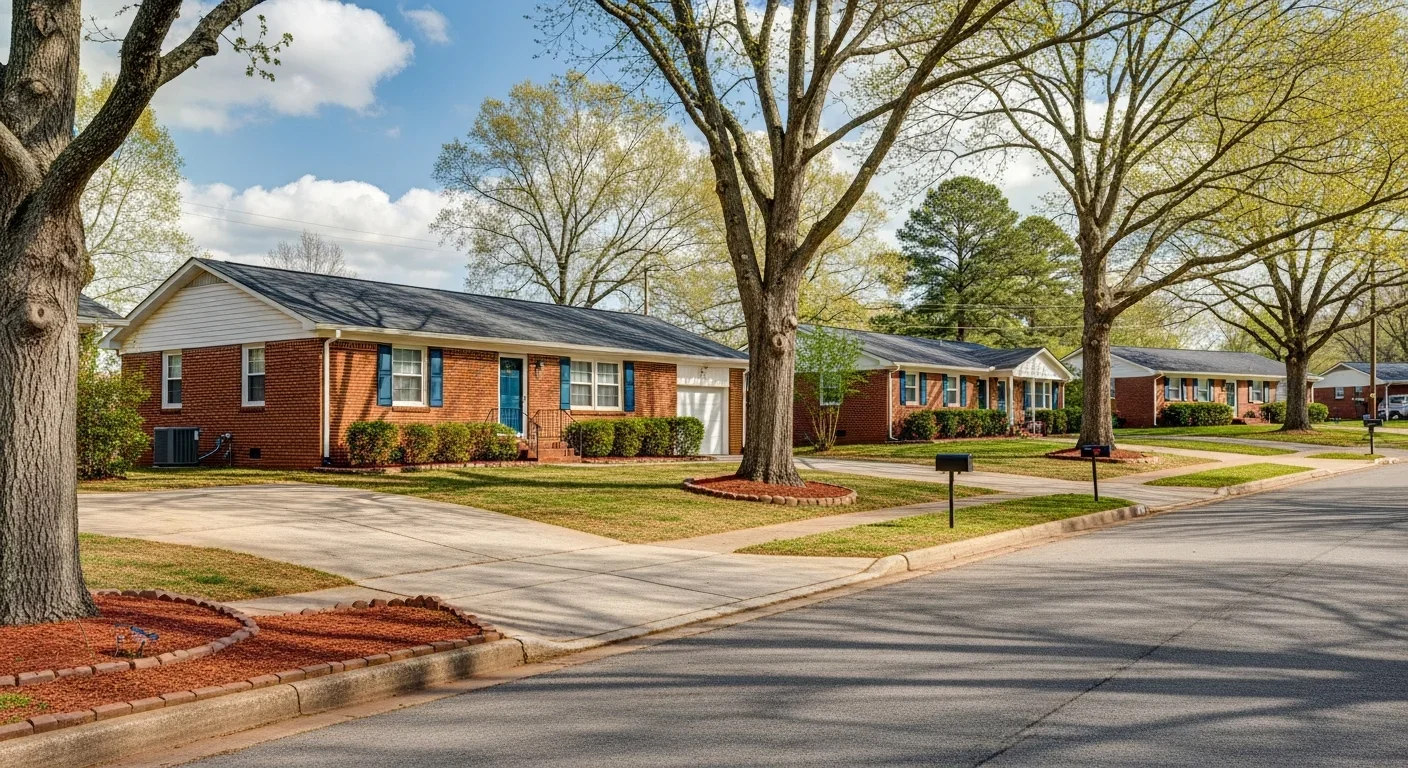
Many of Gaffney's neighborhoods feature 1970s-1980s brick ranch homes — construction
styles that present specific water intrusion vulnerabilities around veneer, crawl
spaces, and aging plumbing.
Neighborhood-Level Intelligence
Gaffney Neighborhood Water Damage Risk Profiles
Water damage patterns in Gaffney are driven by housing age, construction type, proximity
to waterways, and local drainage conditions. Here's what we see across Cherokee County's
communities based on regional construction patterns and documented local risks.
Gaffney City Center
Critical
Built: Pre-1950s to 1970s
Primary risk: Urban flash flooding + older building systems
Common damage: Roof leaks, foundation seepage, repeated moisture cycling in older structures
Common damage: Roof and siding leaks requiring HOA documentation
Cherokee County's Defining Risk
Cherokee County Flood & Stormwater Risk
Gaffney homeowners face three distinct types of water risk: mapped flood hazard areas
along rivers and creeks, flash flooding from intense rain when stormwater systems are
overwhelmed, and non-flood water losses from burst pipes, appliance failures, and roof
damage. All three require immediate professional response — and understanding the
distinction determines which insurance policy responds.
Broad River System Monitoring
Active
NOAA gauges in county
Cherokee County's flood risk is anchored to the Broad River system — actively monitored by NOAA with documented flood impact thresholds. While Gaffney proper isn't on the river itself, the watershed dynamics affect the entire county. Heavy rain events that drive river flooding also overwhelm the city's stormwater infrastructure, producing the urban flash flooding that's been documented multiple times in Gaffney.
Urban Flash Flooding
2+ in/hr
Documented intensity
Flash flooding occurs away from mapped floodplains when stormwater systems are overwhelmed — and this has been documented repeatedly in Gaffney. Two inches of rain in approximately one hour caused significant damage to public safety facilities. In September 2024, Tropical Storm Helene drove catastrophic flash flooding across Cherokee County. In March 2026, approximately 75 mph straight-line winds ripped commercial roofs off in the city.
Lake Whelchel Proximity Effects
Elevated
Humidity near reservoir
Lake Whelchel — Cherokee County's primary reservoir and water source — creates localized moisture conditions for nearby homes. Lake-adjacent properties experience higher ambient humidity, and storm runoff patterns around the reservoir affect crawl spaces and foundations in ways that properties further inland don't experience. If you live near Lake Whelchel, proactive crawl space monitoring is especially important.
City vs. County Stormwater
Split
Jurisdiction responsibility
Stormwater management in the Gaffney area falls across city and county jurisdictions — and maintenance gaps at these boundaries can create localized flooding conditions. City stormwater systems handle urban runoff; Cherokee County manages rural drainage and flood-zone oversight. Properties near jurisdictional boundaries may experience the consequences of infrastructure that neither entity has fully addressed.
Recent Weather Events in Cherokee County
September 2024 — Tropical Storm Helene
Catastrophic flash flooding across Cherokee County — widespread residential damage
March 2026 — Straight-line wind event
Approximately 75 mph winds ripped commercial roofs off in Gaffney
April 2024 — Severe thunderstorms
Large hail and damaging winds impacted Cherokee County structures
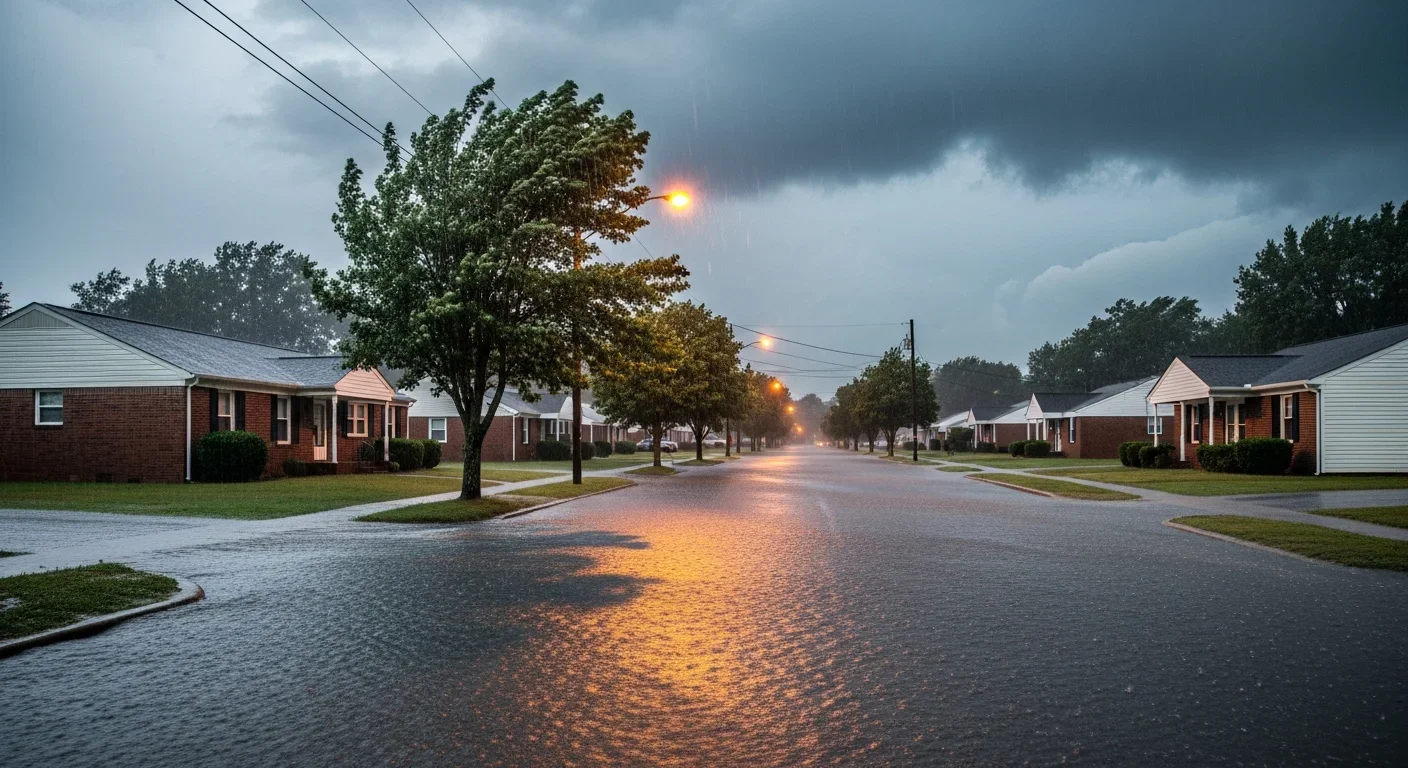
Urban flash flooding in Gaffney has been documented multiple times — stormwater
infrastructure can be overwhelmed during intense rain events, pushing water into homes
and businesses across Cherokee County.
Our Gaffney Process
How We Restore Gaffney Homes After Water Damage
Every water damage event is different, but the science of restoration follows a proven
sequence. Here's exactly what happens when you call Palm Build's Charlotte-based team
for your Gaffney property.
01
Emergency Contact & Triage
45-60 Minutes
02
Damage Assessment & Documentation
First 2 Hours
03
Water Extraction
Hours 2-6
04
Structural Drying
3-5 Days
05
Antimicrobial Treatment
During Drying
06
Restoration & Verification
1-3 Weeks
01
Emergency Contact & Triage
45-60 Minutes
Call (704) 464-0121 any time — 24/7/365. Our dispatcher gathers damage details, categorizes severity, and dispatches our closest available crew from the Charlotte hub via I-85. Typical arrival in Gaffney: 45-60 minutes. No relay through a regional franchise — our team arrives with full truck-mounted extraction and drying equipment on the first trip.
02
Damage Assessment & Documentation
First 2 Hours
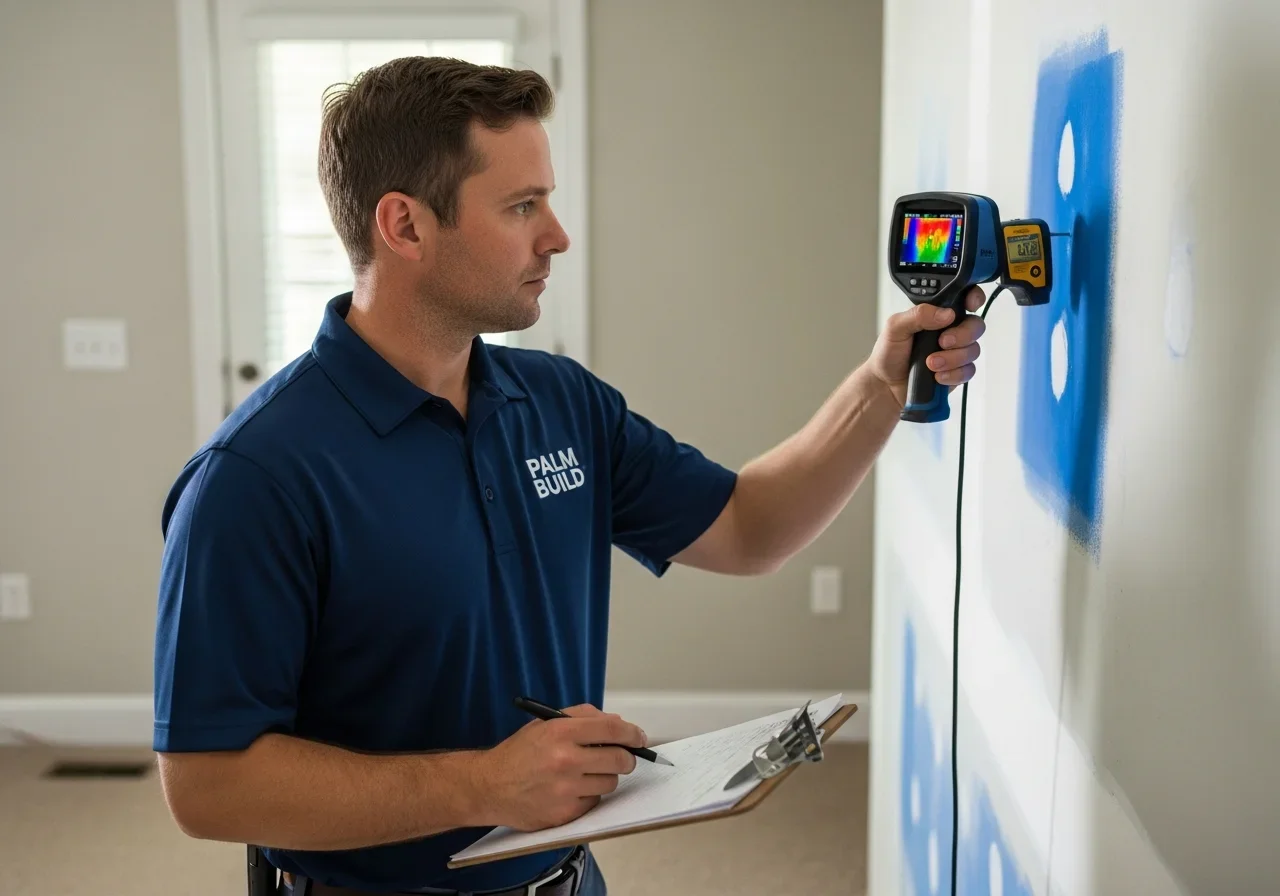
IICRC-certified technicians assess the full extent of water intrusion using infrared thermal imaging cameras and calibrated professional moisture meters. Every reading is documented — this becomes the foundation of your insurance claim file. For Gaffney's brick veneer homes, we specifically check for moisture migration behind wall assemblies that's invisible from inside the living space.
03
Water Extraction
Hours 2-6
Truck-mounted extraction units remove standing water from carpets, hardwood, tile, and subfloor cavities. For crawl space flooding common in Gaffney's older homes, we deploy submersible pumps and portable extraction units designed for confined spaces. Every hour of standing water increases the likelihood of irreversible damage — speed here determines total project cost.
04
Structural Drying
3-5 Days
Commercial LGR dehumidifiers and high-velocity air movers are strategically placed based on psychrometric calculations — not guesswork. For brick veneer homes prevalent in Northgate and surrounding neighborhoods, we use injection drying systems that reach moisture trapped behind wall assemblies. Daily moisture monitoring continues until every material reaches verified dry standard per IICRC S500.
05
Antimicrobial Treatment
During Drying
With Gaffney's humid subtropical climate and nearly 48 inches of annual rainfall, mold prevention starts during active drying — not after. EPA-registered antimicrobial treatments are applied to all affected surfaces. For homes where pre-existing crawl space moisture is common, we document baseline conditions and recommend separate mold remediation scope if needed before reconstruction begins.
06
Restoration & Verification
1-3 Weeks
Once moisture readings confirm dry conditions, we repair or replace damaged materials — drywall, flooring, trim, insulation — to pre-loss condition. Final moisture mapping and photo documentation complete your claim file. Our SC LLR-licensed reconstruction team handles permits, inspections, and any HOA coordination required for communities like Cobblestone Crossing.
Why Our Gaffney Process Works
1
Piedmont Expertise
We understand brick veneer drying challenges, crawl space dynamics, and Cherokee County storm patterns
2
Speed via I-85
45-60 minute response from our Charlotte hub — approximately 55 miles via interstate
3
Scientific Drying
Daily moisture readings until every material reaches dry standard per IICRC S500
4
Insurance-Ready
Documentation formatted for your adjuster — SC policy, any major carrier active in Cherokee County
Gaffney doesn't have a single "water damage season" — different types of damage peak at
different times of year. Understanding this calendar helps you catch problems early and
respond faster when something goes wrong.
January – February
Pipe Freeze Season
Upstate SC temperatures drop below freezing regularly in winter. Exposed pipes in crawl spaces, exterior hose bibs, and uninsulated lines are the most common failure points. Gaffney's older homes with vented crawl spaces — where pipes run through unheated, uninsulated space directly exposed to freezing air — are especially vulnerable to freeze-burst events.
March – May
Spring Storm Peak — Heaviest Rainfall
March averages approximately 4.98 inches of rainfall — the highest monthly total for Gaffney. Severe thunderstorms bring heavy rain, hail, and damaging winds. The April 2024 storms brought large hail and damaging winds to Cherokee County. Roof leaks, window intrusion, and drainage overload peak during this window. This is when the majority of emergency calls come in.
June – August
Humidity and Mold Season
Hot, humid summers push relative humidity above 70% for extended periods. August averages 4.76 inches of rain. Crawl space moisture, HVAC condensate failures, and hidden mold growth accelerate throughout Gaffney's older housing stock. Any unresolved water event from spring becomes a mold problem by summer.
September – October
Tropical Remnants and Flash Floods
Tropical Storm Helene (September 2024) produced catastrophic flash flooding across Cherokee County. Even as inland remnants, tropical systems can dump extreme rainfall on the Upstate. Flash flooding documented at Grassy Pond in Cherokee County during this period. Post-storm mold is typically discovered 2 to 4 weeks after the initial event.
November – December
Heating Season and Holiday Risks
Increased heating system use, holiday cooking, and closed-up homes create conditions for both fire risk and undetected slow leaks. Water heater failures in aging Gaffney homes peak during heavy-use winter months. Many homeowners discover summer water damage during winterization when they enter crawl spaces for the first time since spring.
What We See Most
Water Damage Types We Restore in Gaffney
The IICRC classifies water damage by source contamination level. Understanding these
classifications helps you grasp why our approach differs from job to job — and why some
situations require more aggressive intervention. Gaffney's aging housing stock and storm
exposure create conditions for all three categories.
Category 1
Clean Water
Water from a sanitary source — lowest contamination risk but still requires professional drying to prevent escalation.
Common Gaffney Sources
Burst supply lines
Appliance leaks (dishwasher, ice maker)
Water heater failures
Toilet tank overflow (no solids)
Response Level
Standard extraction and structural drying
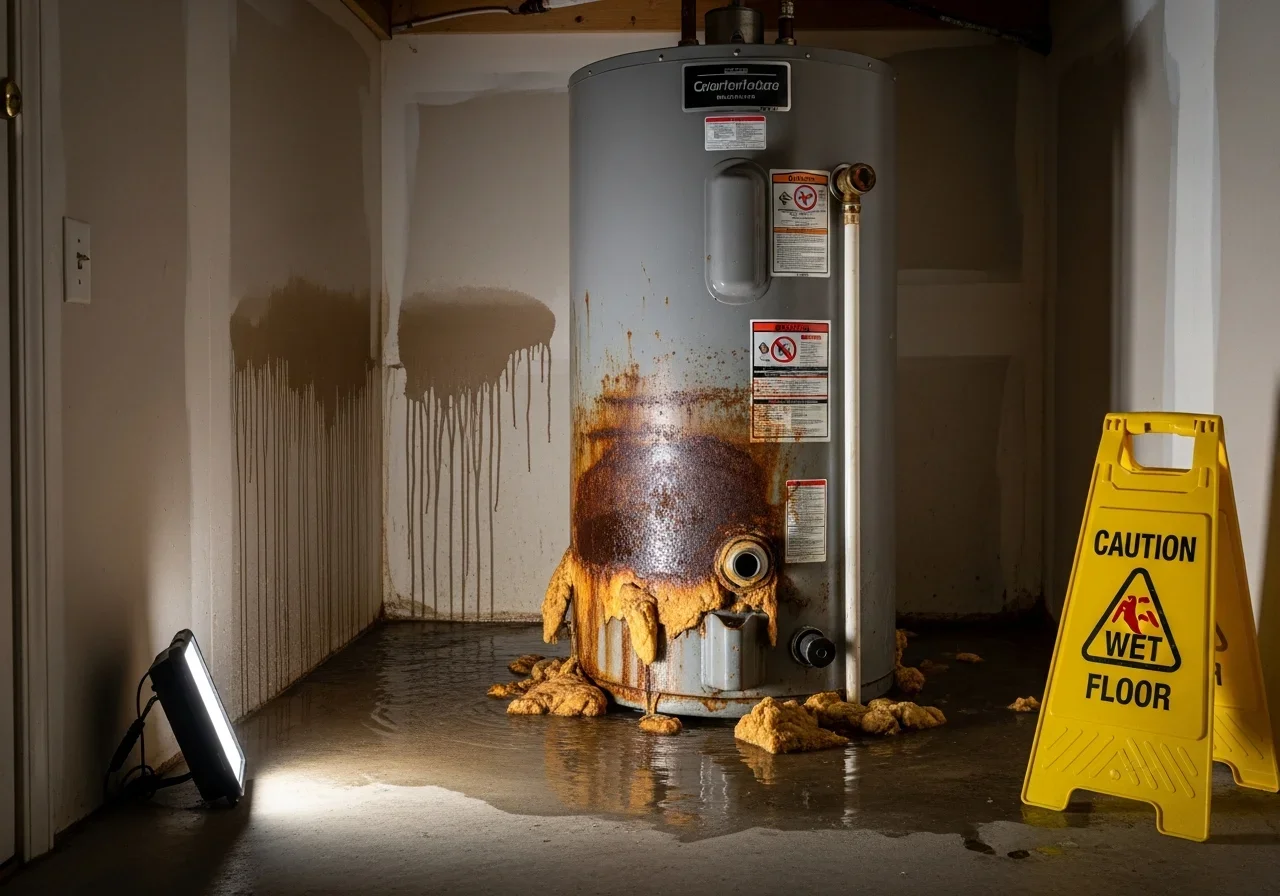
Water heater failures in aging Gaffney homes are the single most common Category 1 loss — tanks installed in the 1990s and 2000s are well past their expected service life.
Category 2
Gray Water
Significant contamination present — requires enhanced extraction, antimicrobial treatment, and selective demolition of affected materials.
HVAC condensate failures peak during Gaffney's extended summer heat — attic-mounted air handlers in older homes can release gallons into ceiling cavities before detection.
Category 3
Black Water
Grossly contaminated, pathogenic — requires full containment, hazmat protocols, and extensive removal and reconstruction.
Common Gaffney Sources
Sewage backup from aging laterals
Storm flooding (Helene-type events)
Standing water over 72 hours
Creek or river overflow
Response Level
Full containment, hazmat protocols, extensive removal and reconstruction
Tropical Storm Helene drove Category 3 conditions across Cherokee County — standing floodwater mixed with sewage, agricultural runoff, and debris contamination.
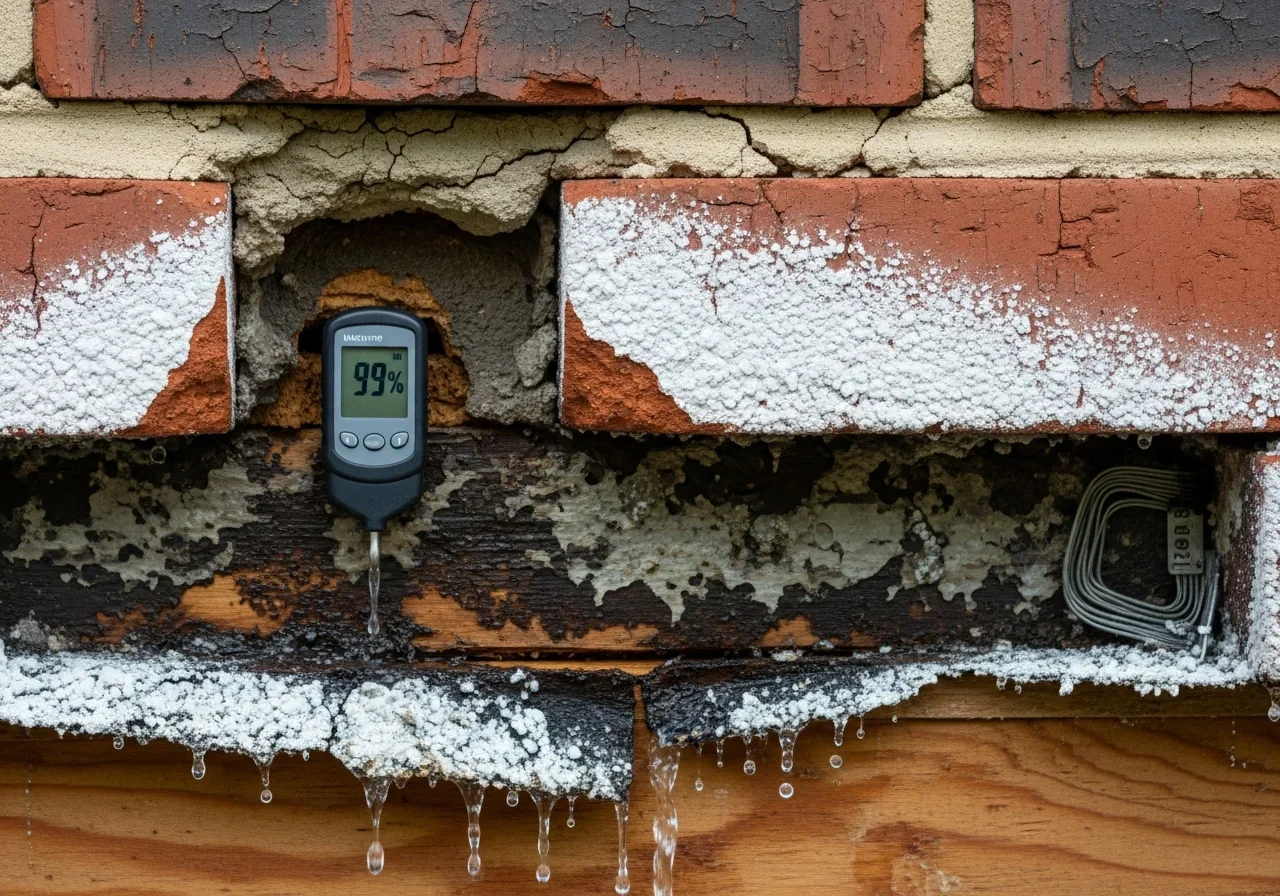
Brick veneer water migration — invisible until damage reaches the interior. Gaffney's
prevalent brick ranch construction makes this a uniquely common damage pattern in
Cherokee County.
Our Work
Gaffney Water Damage: Before and After
Every Gaffney project starts with scientific documentation and ends with a home restored
to pre-loss condition — or better. Here's a look at our team in action across Gaffney
and Cherokee County.
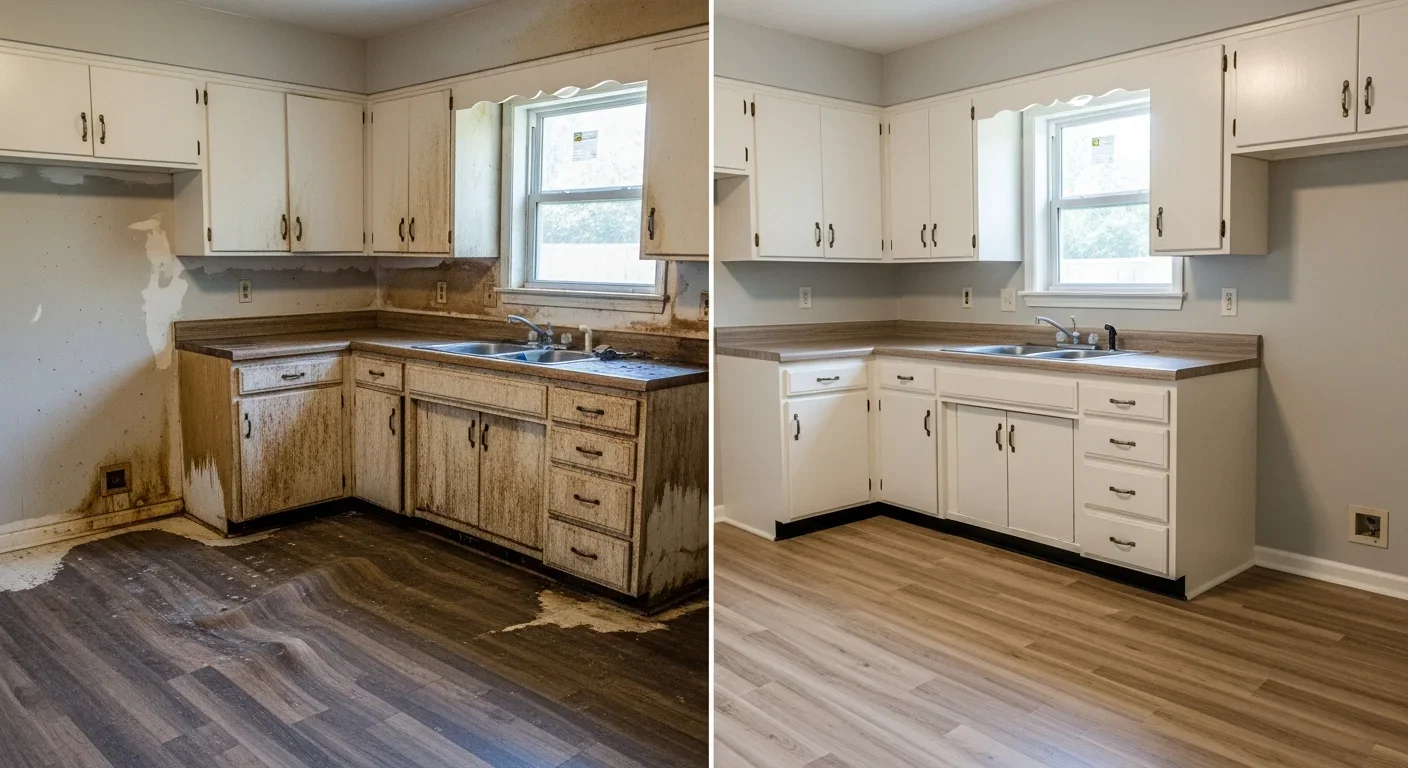
Before and after: complete kitchen water damage restoration in a Gaffney brick ranch — from saturated cabinets and flooring to fully restored space
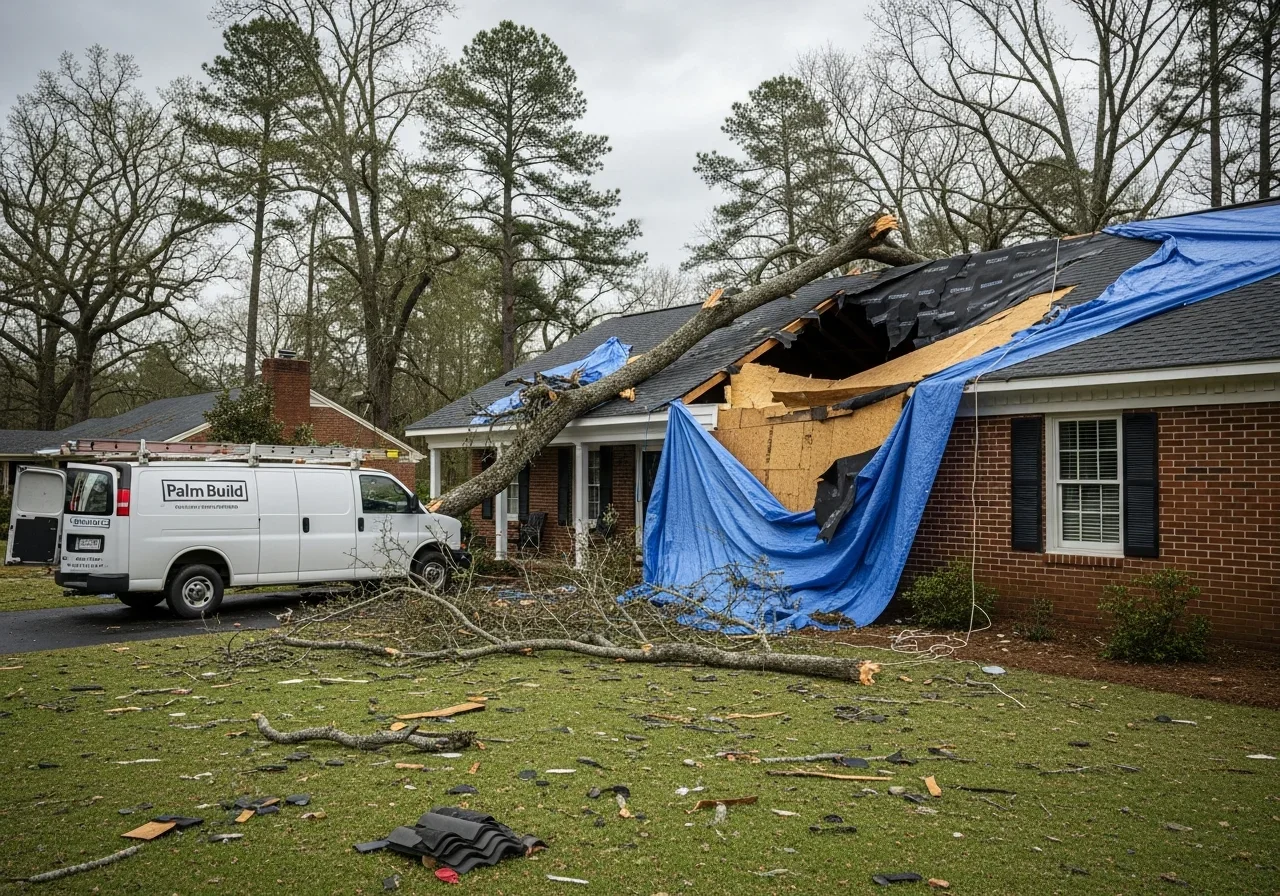
Storm-driven roof damage in Gaffney — wind events and falling debris create immediate water intrusion pathways that require emergency tarping and restoration
Water heater failures in aging Gaffney homes — a common Category 1 loss that requires immediate extraction to prevent subfloor and crawl space damage
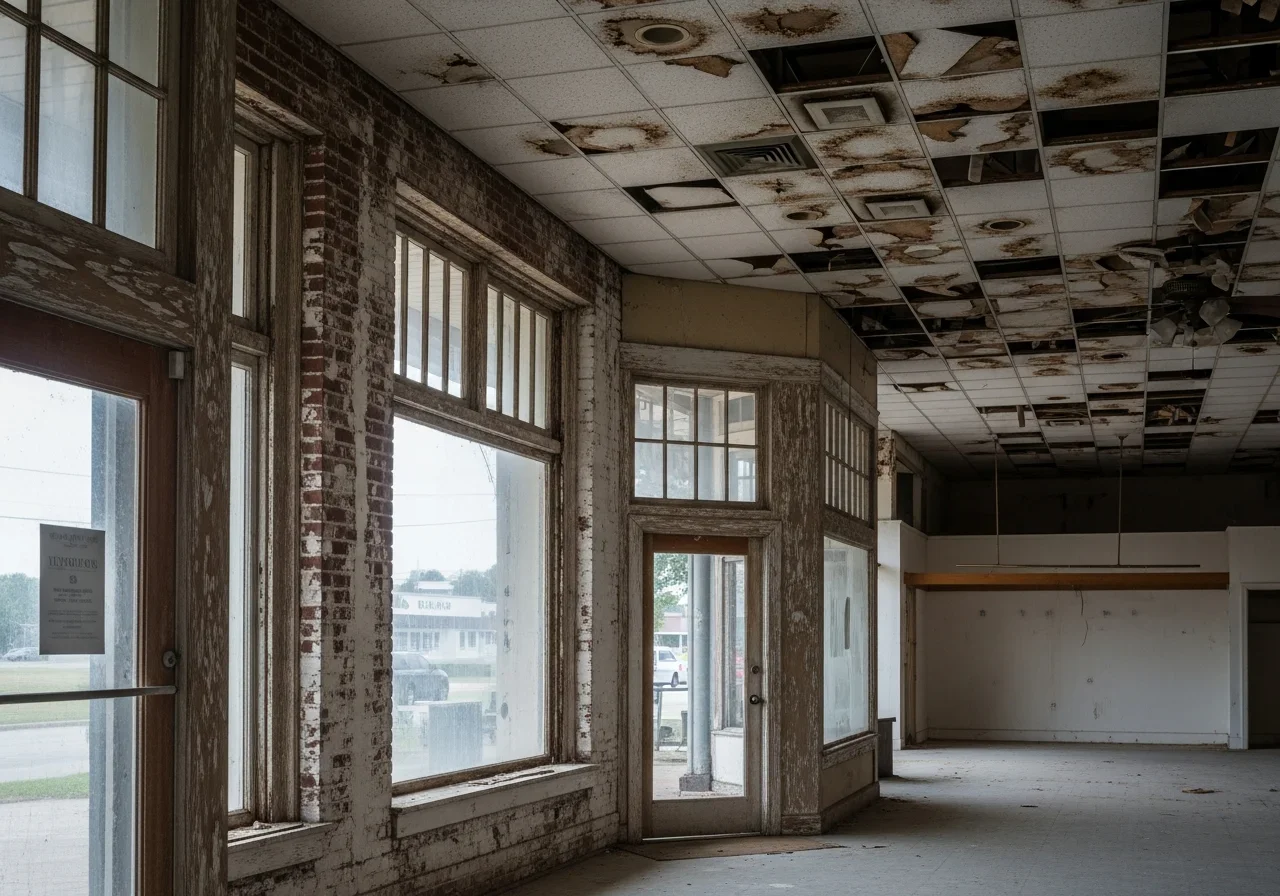
Commercial water damage restoration in downtown Gaffney — older commercial buildings face the same aging-infrastructure risks as residential properties
Gaffney Pricing
Water Damage Restoration Costs in Gaffney
These ranges reflect real-world project costs for Gaffney and Cherokee County properties
— not national averages. With a median home value of approximately $137,700, Gaffney's
older housing stock and prevalent brick veneer construction create restoration scenarios
where crawl space involvement and hidden moisture behind walls can push costs above
initial estimates.
Category 1 — Clean
$1,200 – $3,500
Burst supply line or appliance leak, single room, no structural penetration
2-4 days drying
Category 2 — Gray
$3,500 – $8,000
Delayed clean water or gray water, multiple rooms or crawl space involved, demolition needed
5-7 days + reconstruction
Category 3 — Black
$8,000 – $25,000+
Sewage backup, storm flooding, or standing water over 72 hours, full hazmat protocols
1-3 weeks full restoration
Standard Water Damage
Burst pipe, appliance failure, supply line rupture
Note on Gaffney's housing market: Cherokee County's
median home value of $137,700 means restoration costs represent a larger percentage of home
value than in more expensive markets. Early intervention — calling within the first hour — almost
always reduces total project cost. Delayed response in Gaffney's humid climate escalates Category
1 losses into Category 2 or 3 within days.
Insurance Navigation
Insurance Claims for Water Damage in Gaffney
Insurance carriers operating in Cherokee County — including State Farm, Auto-Owners,
Allstate, and Farmers — each have specific documentation expectations for water damage
claims. Understanding what your policy covers before damage occurs is essential,
especially for homeowners in older neighborhoods with aging plumbing and crawl space
foundations.
Sudden and accidental discharge (burst pipe, appliance failure, supply line rupture) is typically covered under standard SC HO-3 homeowners policies
Flood damage from rising water — including storm flooding and overflowing waterways — requires a separate NFIP or private flood policy. After Tropical Storm Helene, many Cherokee County homeowners discovered this gap
Gradual damage from slow leaks, long-term crawl space moisture, or chronic seepage is almost always excluded — and with Gaffney's aging plumbing, this is a frequent claims dispute
Mold coverage is typically sublimited to $5,000-$10,000 on SC policies — crawl space mold remediation in older Gaffney homes can exceed this amount quickly
Code upgrade costs (bringing pre-1975 Gaffney homes to current code during reconstruction) require an ordinance-and-law endorsement — verify your policy includes this
Sewer backup coverage is available with endorsement — verify your policy includes this, especially in older neighborhoods with aging lateral connections
Flood vs. Water Damage — A Critical Distinction in Cherokee County
Standard homeowners insurance typically does not cover flood damage. After events like
Tropical Storm Helene, many Cherokee County homeowners discovered this gap the hard way.
Flood coverage requires a separate NFIP or private flood policy. Palm Build helps you
understand the distinction and documents your loss correctly from the start — because how
water entered your home determines which policy responds.
Palm Build's Documentation Checklist
We work directly with your insurance adjuster from the first inspection. Our
documentation is formatted for the adjuster workflow used by every major carrier active
in Cherokee County — State Farm, Auto-Owners, Allstate, and Farmers.
Timestamped photos of all affected areas before any work begins
Moisture meter readings mapped by room and material
Equipment placement logs with daily monitoring records
Detailed scope of work aligned with Xactimate pricing standards
Category and class documentation (water source identification)
Daily drying progress reports with psychrometric data
Final dry verification with documented moisture readings
Gaffney's restoration options are limited — national franchise brands serve Cherokee
County from distant hubs with limited familiarity with local construction and storm
patterns. Palm Build's Charlotte proximity, IICRC certification, and Piedmont-specific
expertise provide the level of service your home demands.
IICRC-Certified Technicians
South Carolina does not license mold inspectors or restoration contractors — any company can claim expertise without independent verification. Every Palm Build crew lead holds current IICRC Water Restoration Technician (WRT) certification and follows the S500 standard for water damage restoration. In SC's unregulated restoration market, IICRC certification is the credential that matters, and it's the one your insurance adjuster will reference.
Insurance-Ready Documentation
From the first moisture reading, every data point is captured for your insurance claim. Timestamped photos, moisture maps, daily drying logs, and Xactimate-aligned scope documentation are formatted for the adjuster workflow used by every major carrier active in Cherokee County — State Farm, Auto-Owners, Allstate, and Farmers. Proper documentation from day one reduces delays, disputes, and underpayment.
45-60 Minute Emergency Response
Our Charlotte operations hub is approximately 55 miles from Gaffney via I-85 — a direct interstate route that puts our crews on-site in 45 to 60 minutes with full truck-mounted extraction and drying equipment. No relay through a distant regional franchise, no waiting for equipment to be shipped in. We're typically on-site faster than national franchise brands serving the Cherokee County market.
Local Knowledge That Matters
We understand brick veneer drying challenges specific to Gaffney's prevalent 1970s-1980s ranch construction, crawl space conditions in older Piedmont homes, Cherokee County's documented flash flood patterns, and the aging plumbing systems that quietly fail in pre-1975 housing stock. Generic restoration approaches from companies without local experience miss the conditions that make Gaffney unique.
24/7/365 Availability
Water damage doesn't wait for business hours — and neither do we. Our dispatch line at (704) 464-0121 is staffed around the clock, every day of the year. Whether it's a 2 AM pipe burst, a Sunday morning appliance failure, or a holiday weekend storm, our team mobilizes immediately. Every hour of delay in Gaffney's humid climate increases total restoration cost.
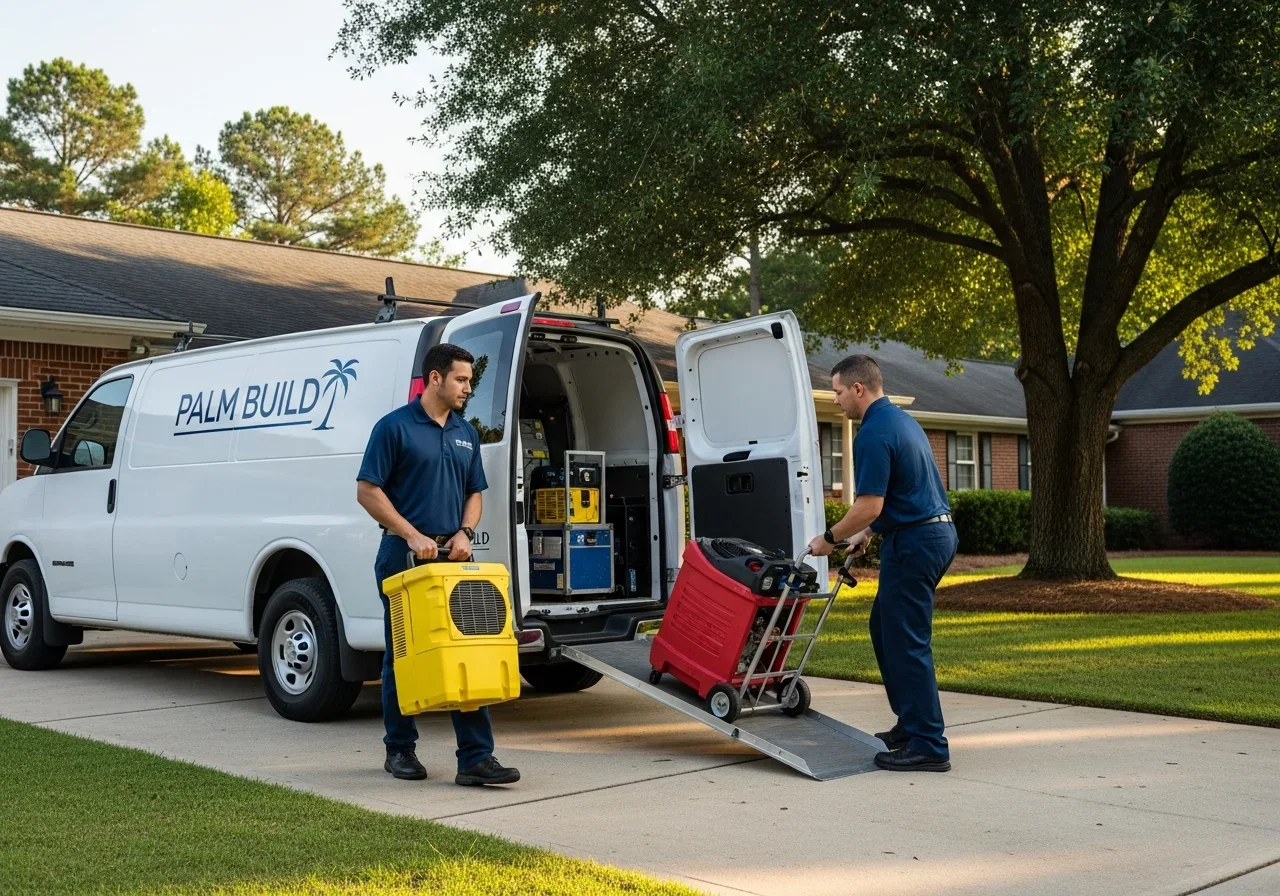
Our Charlotte-based team arrives equipped for full-scale water damage response — no
waiting for equipment to be shipped in from distant warehouses.
Common Questions
Gaffney Water Damage FAQ
How quickly can Palm Build respond to water damage in Gaffney?
Our IICRC-certified team responds from our Charlotte operations hub in approximately 45-60 minutes via I-85. We maintain 24/7/365 dispatch and arrive with truck-mounted extraction, commercial dehumidifiers, and full documentation equipment. No waiting for equipment — we bring everything on the first trip.
What does water damage restoration cost in Gaffney, SC?
Costs depend on damage category and extent. Minor clean-water losses (burst supply line, small area) typically run $1,200-$3,500. Moderate damage involving multiple rooms or crawl spaces ranges $3,500-$8,000. Major flood or sewage damage can reach $8,000-$25,000+. We provide detailed Xactimate-based estimates that align with what insurance carriers expect.
Does homeowners insurance cover water damage in Cherokee County?
Most standard homeowners policies cover sudden and accidental water damage — burst pipes, appliance failures, storm-driven roof leaks. However, flood damage (rising water from storms or overflowing waterways) typically requires a separate flood policy. After events like Tropical Storm Helene, this distinction became critically important for many Cherokee County homeowners. Palm Build documents your loss to support the strongest possible claim under your policy.
Why is water damage worse in older Gaffney homes?
Gaffney's median home construction year is 1975, meaning much of the housing stock predates modern moisture management standards. Older homes have degraded vapor barriers in crawl spaces, aging galvanized or polybutylene plumbing prone to failure, and brick veneer assemblies where water can migrate behind walls invisibly. These conditions mean water events damage deeper, dry slower, and grow mold faster than in newer construction.
What areas of Gaffney does Palm Build serve?
We serve all of Gaffney and Cherokee County including Northgate, East Gaffney, Bent Tree, Creekside Estates, Cobblestone Crossing, Tiffany Park, the Lake Whelchel area, Hampton Place, Laurelwood, and Gaffney City Center. We also serve nearby communities including Blacksburg, Cowpens, and surrounding Cherokee County.
How long does water damage restoration take in Gaffney?
Timeline depends on the severity. Minor Category 1 losses typically dry in 2-4 days. Moderate damage with drywall or flooring removal requires 5-7 days for drying plus reconstruction time. Major losses involving structural drying, mold remediation, and full reconstruction can take 1-3 weeks. Gaffney's humid climate can extend drying times compared to drier regions — we adjust dehumidification capacity accordingly.
Can water damage cause mold in Gaffney homes?
Yes — and Gaffney's humid subtropical climate accelerates the timeline. Mold can begin colonizing surfaces within 24-48 hours of water contact. The combination of nearly 48 inches of annual rainfall and older crawl space construction means moisture problems compound quickly if not addressed. Palm Build applies antimicrobial treatments during the drying process specifically to prevent mold colonization.
What should I do while waiting for Palm Build to arrive?
Safety first: turn off electricity to affected areas if you can do so safely. Stop the water source if possible (main shutoff valve). Move valuables and electronics to dry areas. Do not use household vacuums on standing water. Take photos of the damage for your records. Then call us at (704) 464-0121 — we'll guide you through additional steps during dispatch.
Water Damage in Gaffney? We're 45 Minutes Away.
Palm Build's IICRC-certified team responds from Charlotte via I-85 with everything needed to extract water, dry your property, and build your insurance claim file — 24 hours a day, 365 days a year.