ACT NOW
Standing water or wet flooring anywhere in the home
Call immediately — every hour compounds structural damage and mold risk
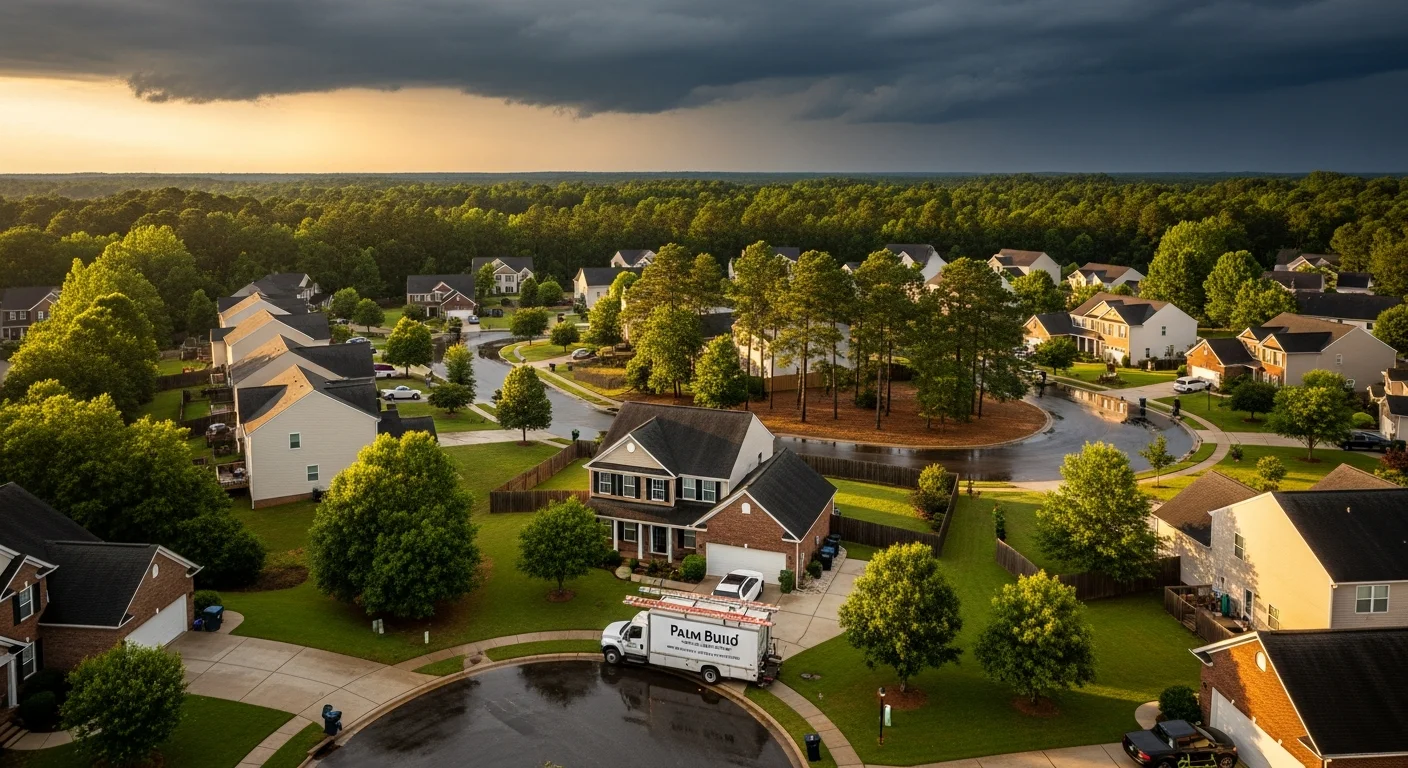
Blythewood's rapid growth, Midlands thunderstorm season, and Richland County's stormwater drainage load create water damage conditions that demand fast, documented response. Palm Build dispatches from our Charlotte operations hub to Blythewood 24 hours a day — with truck-mounted extraction, LGR dehumidifiers, and insurance-ready documentation for Richland County homeowners.
75-90 min
Emergency Response
24/7
Dispatch Available
IICRC
Certified Technicians
Blythewood's summer storm season and stormwater drainage load make fast response critical. The 24-to-48-hour mold window starts the moment water enters your home. Palm Build dispatches from Charlotte with full extraction and drying equipment — call now or request a same-day response.
Blythewood SC — Water Damage Warning Signs
Blythewood's summer thunderstorm season, stormwater drainage load, and humid Midlands climate mean water damage can escalate fast. Recognize the signs early — the difference between a $2,000 dry-out and a $20,000 rebuild is often 24 to 48 hours.
Standing water or wet flooring anywhere in the home
Call immediately — every hour compounds structural damage and mold risk
Water stains on ceilings or walls after a storm
Hidden water may still be migrating through wall assemblies
Buckling, warping, or cupping hardwood floors
Subfloor saturation is often more extensive than surface damage suggests
Musty odor appearing within days of a rain event
Mold can begin growing in 24-48 hours in Blythewood's humid summer climate
Wet or dripping insulation in attic after thunderstorm
Midlands wind-driven rain frequently opens roofs during June-August storm season
HVAC unit or drain pan overflowing in ceiling or closet
Blythewood's high summer humidity load increases HVAC condensate volume significantly
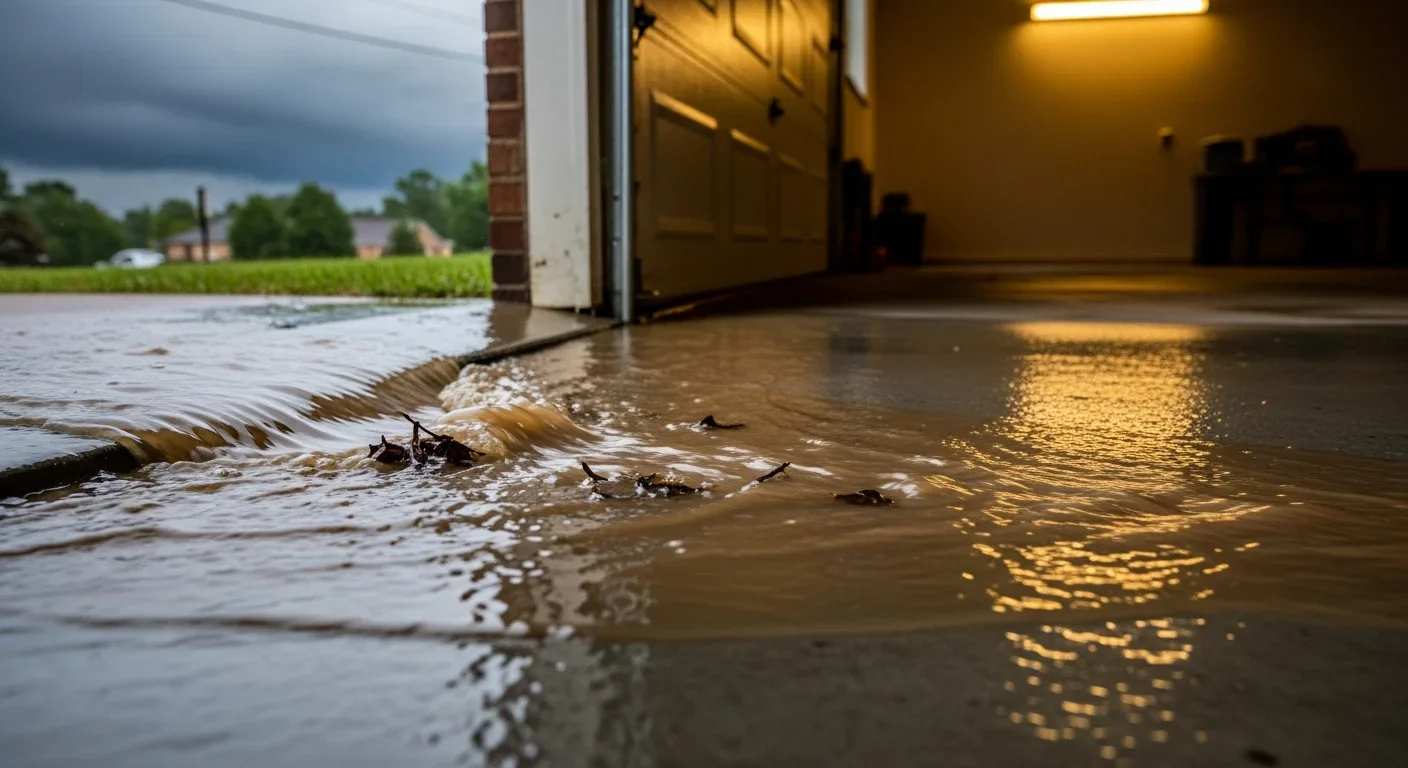
Water entering garage or low entry doors after heavy rain
Stormwater drainage constraints in the 29016 area cause localized flooding
Damp or wet crawl space after rain
Richland County red clay soil retains moisture against foundations for weeks
Efflorescence (white powder) on basement or foundation walls
Indicates persistent moisture migration through concrete block or poured walls
Peeling paint or bubbling drywall near exterior walls
Slow exterior water intrusion often goes undetected until secondary damage appears
Seeing any of these signs?
Don't wait to see if it dries on its own. In Blythewood's summer humidity, mold can establish within 24 hours of a moisture event.
Blythewood SC — Recent Restorations
Every project documented. Every measurement recorded. Here's what proper Richland County water damage restoration looks like from first call to final walkthrough.
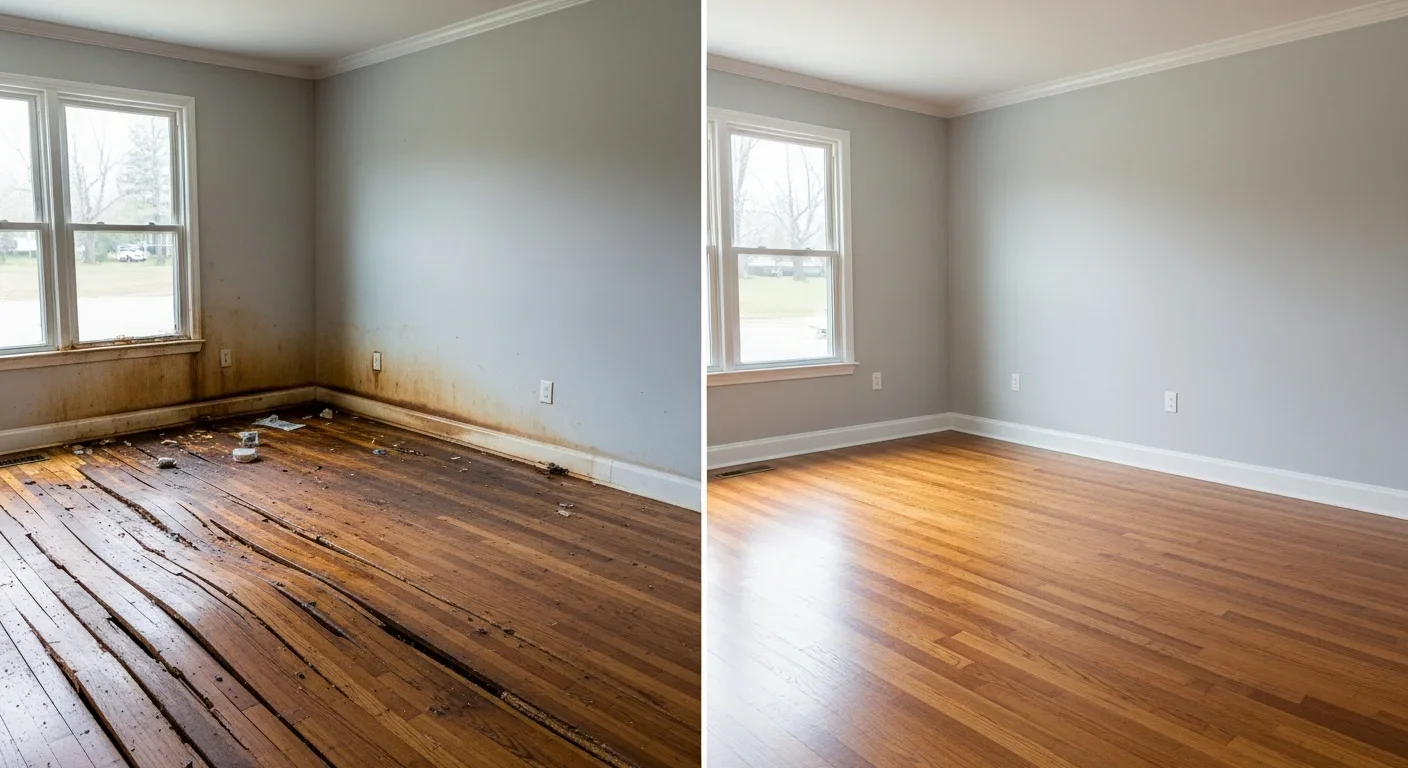
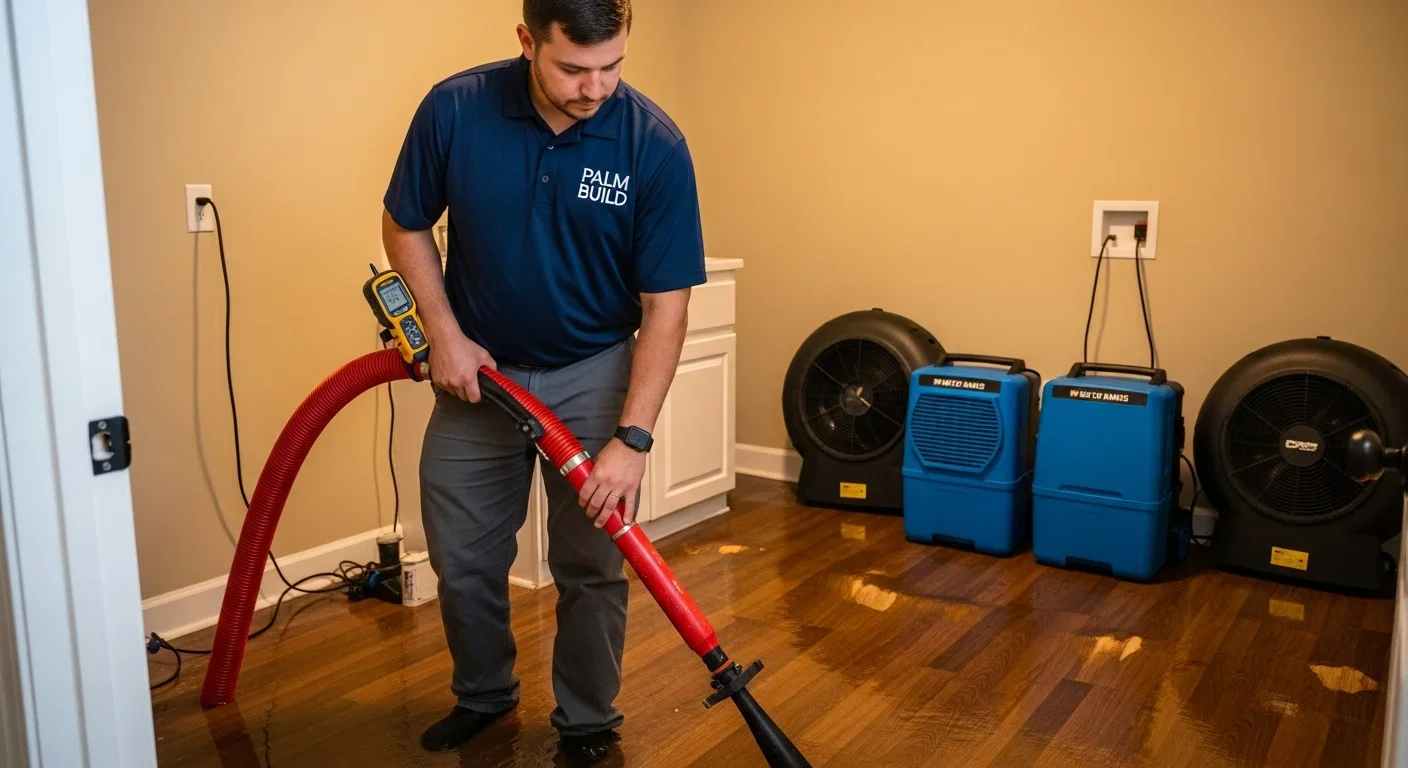
Buckled hardwood floors and water-stained drywall after thunderstorm water entry through a failed window flashing. Full extraction, structural drying, and flooring replacement.
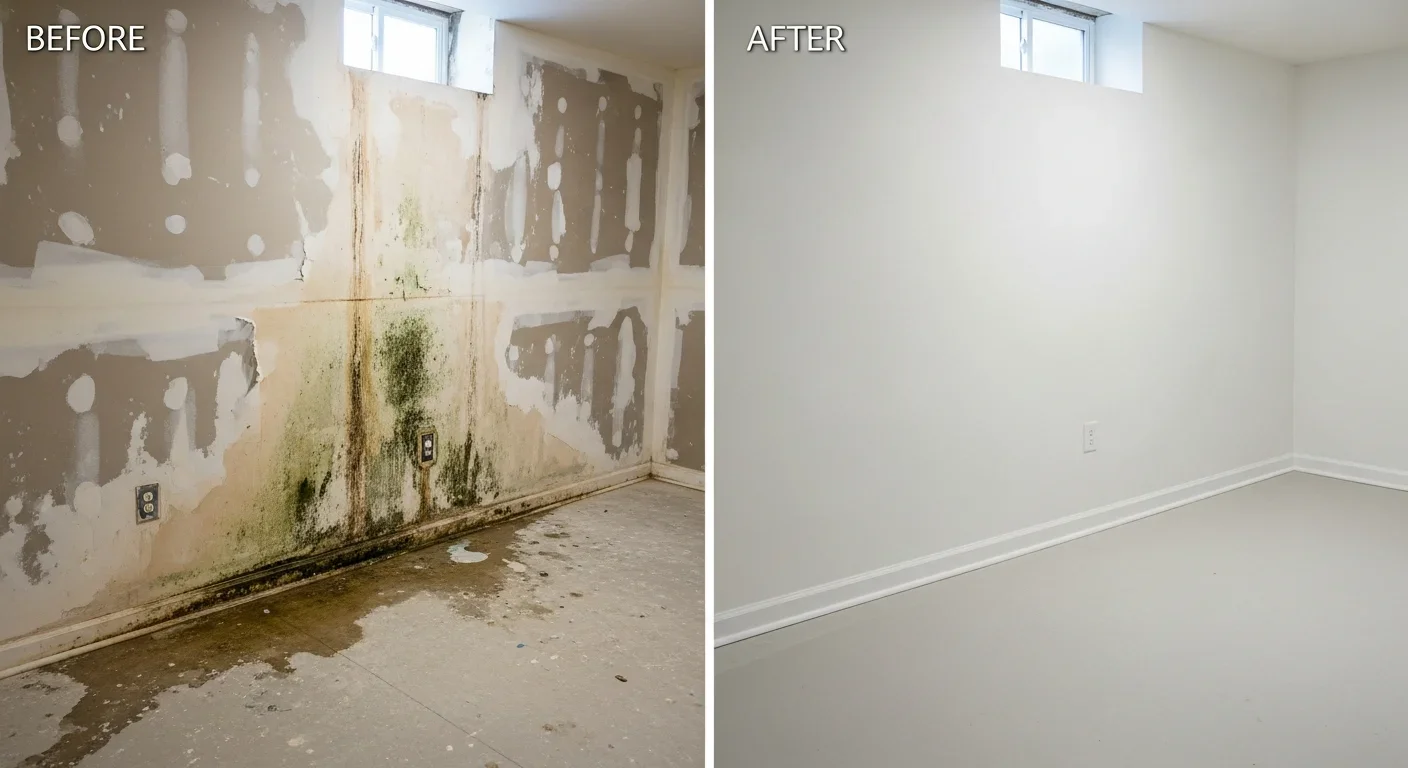
Ceiling and wall damage from a clogged HVAC condensate drain line during peak summer humidity. Drywall removal, cavity drying, and full rebuild with new insulation.
Why Blythewood Has Elevated Water Damage Risk
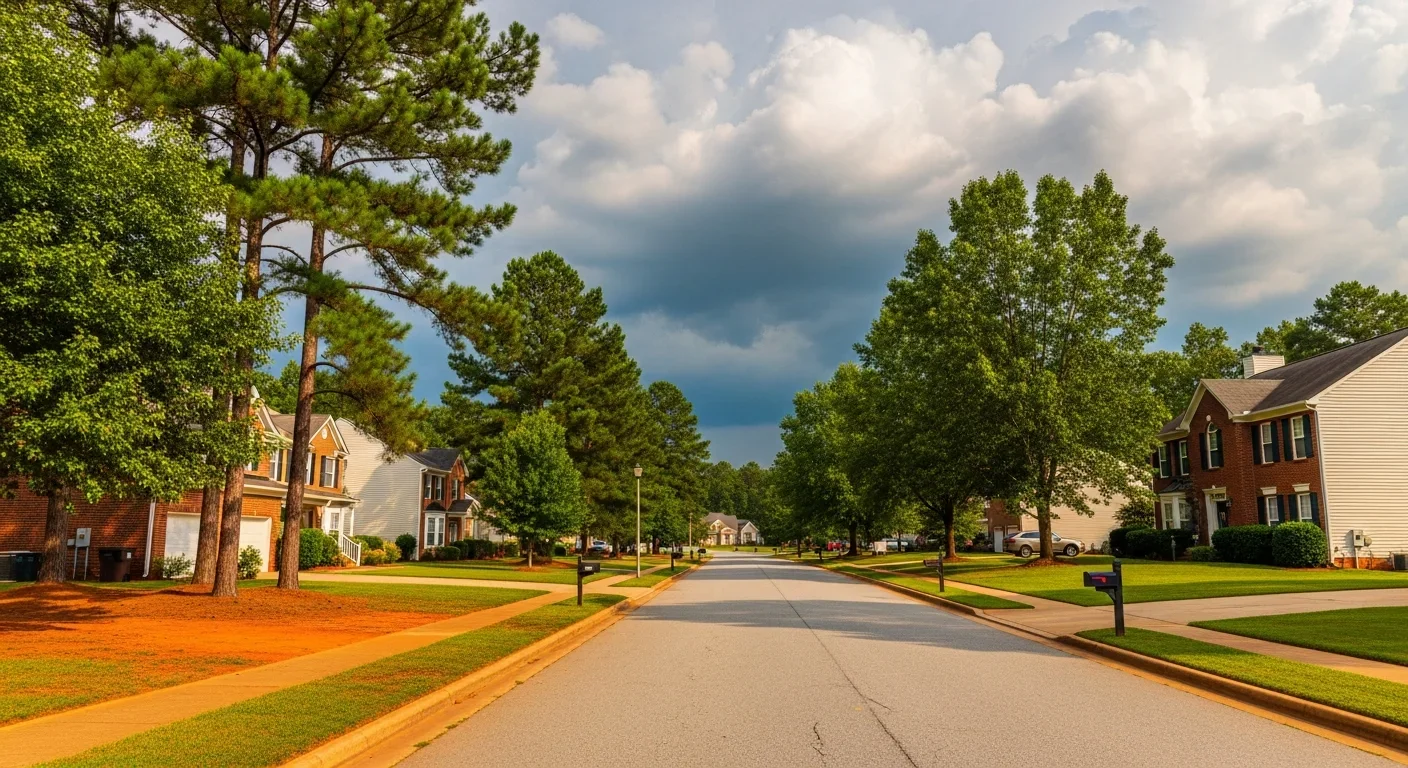
Blythewood's combination of Midlands storm patterns, rapid growth, and stormwater drainage pressure creates water damage scenarios that catch many homeowners off guard — especially those who moved from drier inland markets.
45.24 in
Annual rainfall, Columbia area
Blythewood sits in Richland County's Columbia climate regime — 45.24 inches of annual rainfall with a summer precipitation peak. July is the wettest month (5.35 inches) and June sees the most severe thunderstorm wind events. Afternoon and evening storms routinely bring wind-driven rain, tree impacts, and roof penetrations that send water into attics, walls, and crawl spaces within minutes. The window between storm impact and active water migration is short — extraction within the first few hours prevents cavity saturation.
2020–2026
Rapid growth period in 29016
Blythewood's rapid growth has increased impervious surface significantly across the 29016 area, adding runoff load to existing drainage infrastructure. Local reporting has documented recurring neighborhood flooding concerns as stormwater volumes exceed design capacity during heavy rain events. Low-lying areas, subdivisions near drainage ponds, and homes adjacent to drainage easements face elevated risk of stormwater intrusion into garages, crawl spaces, and lower-level entries during peak summer storms. This type of water intrusion is frequently misclassified as flood — the insurance distinction matters for your claim.
Jun–Sep
Peak HVAC condensate failure season
Blythewood's hot, humid summers push residential HVAC systems near capacity for extended periods. HVAC condensate drain lines that operate fine during mild weather frequently clog or overflow during peak summer humidity — when the system is removing the most moisture from indoor air. A clogged drain line in an attic-mounted air handler can deposit significant water into ceiling drywall and wall cavities before the homeowner notices. The EPA specifically identifies keeping AC drip pans clean and drain lines unobstructed as a key indoor moisture control measure. This is among the most common Blythewood water damage calls from June through September.
$2B
Scout Motors investment in Blythewood area
Scout Motors' $2 billion facility near Blythewood is bringing 4,000+ jobs and accelerating the area's growth trajectory. Rapid residential development creates elevated risk through several pathways: construction punch-list items that create early leaks, contractor-grade materials in fast-built homes that fail under moisture stress, and new subdivisions whose stormwater drainage systems haven't fully settled. Blythewood's newer homes — particularly those in Seaton Ridge, Langford Meadows, and newer Cedar Lakes phases — should have professional water intrusion inspections within the first two to three years.
Blythewood Neighborhood Guide
Different communities in the 29016 area have different risk profiles based on home age, foundation type, and drainage conditions. Know what your neighborhood faces.
Subdivision | Built Era | Foundation | Top Water Risk | Notes |
|---|---|---|---|---|
| Cobblestone Park | 2000s–2010s | Slab & crawl space mix | Stormwater pond overflow, HVAC condensate | Drainage ponds in community increase flood risk during heavy rain events |
| Longcreek Plantation | 1990s–2000s | Crawl space, brick | Crawl space moisture, roof leak accumulation | Older vented crawl spaces; mature tree canopy increases roof debris and moss |
| Cedar Lakes | 2000s–2015s | Slab, brick & vinyl | Stormwater, appliance leaks | Lake proximity can elevate local humidity; drainage easements in lower lots |
| Seaton Ridge | 2010s–2020s | Slab, tight construction | HVAC condensate, construction defects | Newer construction with complex HVAC systems; early leak risk in first 3 years |
| Langford Crossing / Meadows | 2005s–2015s | Slab, suburban | Wind-driven rain, HVAC overflow | Exposed to open lot orientation; storm window and door seals degrade faster |
| Wren Creek | 2000s–2010s | Crawl space & slab mix | Crawl space moisture, stormwater | Creek proximity increases ambient moisture and flooding potential |
| Blythewood Farms | 2000s | Crawl space, older build | Roof leak accumulation, crawl space | Older roofing systems approaching end-of-life; crawl spaces with degraded barriers |
| Amber Creek | 2005s–2015s | Slab & crawl space | Supply line failures, stormwater | Supply line age in older units increases burst pipe risk during temperature swings |
| Stonington | 2010s | Slab, suburban | HVAC, appliance leaks | Single-story floor plans mean attic leaks reach living spaces faster |
| Abney Hills Estates | 1990s–2000s | Crawl space, brick | Crawl space flooding, foundation seepage | Red clay soil retains moisture against foundations; drainage grading issues common |
Don't see your subdivision listed? Call (704) 464-0121 — we serve all Blythewood addresses in the 29016 area.
Richland County Permits — What Blythewood Homeowners Must Know
One of the most overlooked parts of the restoration process in Blythewood. Richland County explicitly warns that permits may be required for repairs — skipping this step can void your insurance coverage and create title problems.
Richland County's official guidance explicitly states that permits may be required for repairs and directs property owners to apply for both floodplain development permits and building permits through the County's online system. Separately, the Richland County Floodplain Overlay District code requires a floodplain development permit for any development in areas subject to that overlay district. South Carolina law also ties residential builder licensing to repair or improvement work when the cost exceeds $5,000.
Trigger
Structural repair after water damage
Permit Type
Building Permit
Notes
Any repair involving floor systems, wall framing, or roof structure after a water event
Trigger
Drywall replacement involving structural elements
Permit Type
Building Permit (often)
Notes
Depends on scope; Richland County advises homeowners that permits may be required for repairs
Trigger
Property in Floodplain Overlay District
Permit Type
Floodplain Development Permit
Notes
Required for any development in areas subject to the County's Floodplain Overlay District code
Trigger
HVAC system replacement or significant repair
Permit Type
Mechanical / Specialty Contractor Permit
Notes
SC law requires specialty contractor licensing for HVAC work exceeding $500
Trigger
Electrical work tied to restoration rebuild
Permit Type
Electrical Permit
Notes
SC residential specialty contractor thresholds apply; requires licensed electrician
Trigger
Roofing repair/replacement over 25% of roof area
Permit Type
Building Permit
Notes
SC roofing contractor licensing required for work exceeding $500; permit typically required for full replacement
Palm Build identifies which permits apply to your Blythewood restoration project, submits applications to Richland County, coordinates inspection scheduling, and ensures all work is completed to code. You don't need to navigate the County permit system alone.
Work completed without required permits can void portions of your homeowners claim — particularly if an adjuster or subsequent inspection reveals unpermitted structural repairs. Palm Build's documentation package includes permit records as part of the complete insurance file we provide at project close.
Questions about permit requirements for your Blythewood property?
Call (704) 464-0121Blythewood SC Damage Risk Calendar
Based on NOAA Midlands climatology data, Columbia-area precipitation normals, and Atlantic hurricane season patterns that affect inland Richland County.
Freeze risk
Rare pipe freeze events during hard freezes; interior supply lines in unconditioned spaces most vulnerable
Freeze events
Late winter freeze potential; inspect crawl space supply lines before spring
Hail season begins
Severe hail season opens; NOAA shows hail events begin in Midlands through March
Spring rain
Increasing rainfall; inspect roof after any hail event before spring storms arrive
Hail peak
Severe hail peaks in May per NOAA Midlands climatology; roof damage = hidden water intrusion risk for weeks
Storm wind peak
Severe thunderstorm wind events peak in June. Highest volume of emergency calls. Hurricane season opens.
Wettest month
July is highest rainfall month (5.35 in average). HVAC condensate load highest. Maximum mold germination risk.
Peak storm + humidity
Sustained high humidity continues. Tropical system remnants begin tracking inland from August onward.
Hurricane season peak
September is statistical peak of Atlantic hurricane season. Inland SC impacts include flooding + tornadoes.
Late hurricane season
Hurricane season continues through November. Slower storms can dump more rain over Richland County.
Season wind-down
Hurricane season ends November 30. Lower rainfall. Good time for crawl space and roof inspection.
Winter dry
Lowest moisture period. Pre-season inspection and HVAC drain line cleaning recommended.
June, July, August: Blythewood's Highest-Risk Window
Three consecutive months of peak rainfall, maximum humidity, and severe thunderstorm activity — combined with Atlantic hurricane season — create Blythewood's most damaging stretch. This is when the 24-hour response window matters most.
Our Process — IICRC S500 Aligned
Every restoration follows the same documented process — from first call to final walkthrough. Blythewood homeowners get transparent daily communication, moisture logs, and a complete documentation package for their insurance carrier.
Call received, truck dispatched within minutes. Our Charlotte team routes to Blythewood via I-77 S — typically 75 to 90 minutes to your door. Dispatch includes truck-mounted extraction, LGR dehumidifiers, air movers, moisture mapping equipment, and thermal camera.
On arrival, we perform a full property inspection using moisture meters, thermal imaging, and visual assessment. We map every wet surface and cavity — including hidden moisture behind walls and under flooring. This documentation becomes the foundation of your insurance claim and our drying plan.
Truck-mounted extraction removes standing water and saturated materials as fast as possible. We remove saturated flooring, baseboard, and drywall that cannot be effectively dried in-place — decisions made based on moisture readings, not guesswork. In Blythewood's summer humidity, extraction speed is the single most critical variable in preventing mold.
LGR dehumidifiers and high-velocity air movers are positioned based on a calculated equipment placement plan. Daily monitoring includes moisture readings at every marked measurement point, equipment logs, and temperature-humidity tracking. We dry to industry standard — not to visual dryness — and document every reading.
Blythewood's summer humidity means mold risk is elevated throughout the drying process. We apply antimicrobial treatment to exposed structural surfaces and perform clearance testing before any rebuild begins. A clearance reading — not a visual inspection — confirms materials have reached dry standard and mold risk is controlled.
Mitigation complete, we coordinate the rebuild phase: Richland County permit applications where required, licensed trade scheduling (drywall, flooring, painting, HVAC), and inspection coordination. Full documentation package delivered at close — moisture logs, equipment records, permit copies, and final photos for your insurance file.
South Carolina Insurance — What Blythewood Homeowners Need to Know
The South Carolina Department of Insurance explicitly states that standard homeowners insurance does not cover flood damage. In Blythewood, where stormwater intrusion and wind-driven rain are common, knowing this distinction before you file protects your claim.
Blythewood stormwater caveat: Water entering your home from backed-up storm drains or overland flow during heavy rain is typically classified as "flood" — not covered by homeowners insurance. However, if wind-driven rain created the opening that allowed water in, that portion may be covered. Palm Build's documentation is structured to make this distinction as clear as possible for your adjuster.
Notify your carrier within 24-48 hours
Most SC policies require prompt notice — delay can give carriers grounds to dispute coverage
Do not discard wet materials before documentation
Palm Build photographs everything before any removal — adjusters need to see original damage
Separate flood from water damage clearly in your description
Using the word "flood" when describing storm water intrusion can send your claim to the wrong policy
Request that mitigation and rebuild be documented separately
Keeps adjuster review clean; Palm Build provides separate scope documents for each phase
Palm Build documents your Blythewood loss the way adjusters need to see it.
We routinely work with State Farm, USAA, Allstate, Travelers, and Liberty Mutual on SC homeowners claims. Our documentation is built around what carriers ask for.
Why Blythewood Homeowners Choose Palm Build
Our Charlotte operations hub runs around the clock — call at 2 AM during a July thunderstorm and a truck rolls immediately. We route via I-77 S for the fastest response to the 29016 area. Time is the most critical variable in preventing a water loss from becoming a mold claim.
Every Palm Build technician is trained to IICRC S500 Water Damage Restoration standards. We use measured drying — daily moisture logs and equipment documentation — not visual assessment. This means your materials are confirmed dry before any rebuild begins, and your insurance carrier has the documentation they need.
Blythewood homeowners shouldn't need to navigate Richland County's permitting system after suffering a major water loss. Palm Build identifies applicable permits, submits applications, coordinates inspections, and delivers permit records as part of your complete project close documentation.
Blythewood's combination of newer fast-built construction in Seaton Ridge and Langford Meadows, older crawl space homes in Longcreek Plantation and Blythewood Farms, and stormwater drainage pressure unique to the Columbia metro means generic restoration approaches don't work here. We understand Richland County construction types and document for the carriers active in this market.
Ready to Restore Your Blythewood Home?
Call now for 24/7 emergency dispatch or to schedule a same-day assessment.
Frequently Asked Questions
Have a question not answered here?
Call (704) 464-0121More Resources