URGENT
Musty or earthy odor that gets stronger after rain or on humid days
The most reliable early indicator — mold produces MVOCs (microbial volatile organic compounds) detectable before visible growth appears
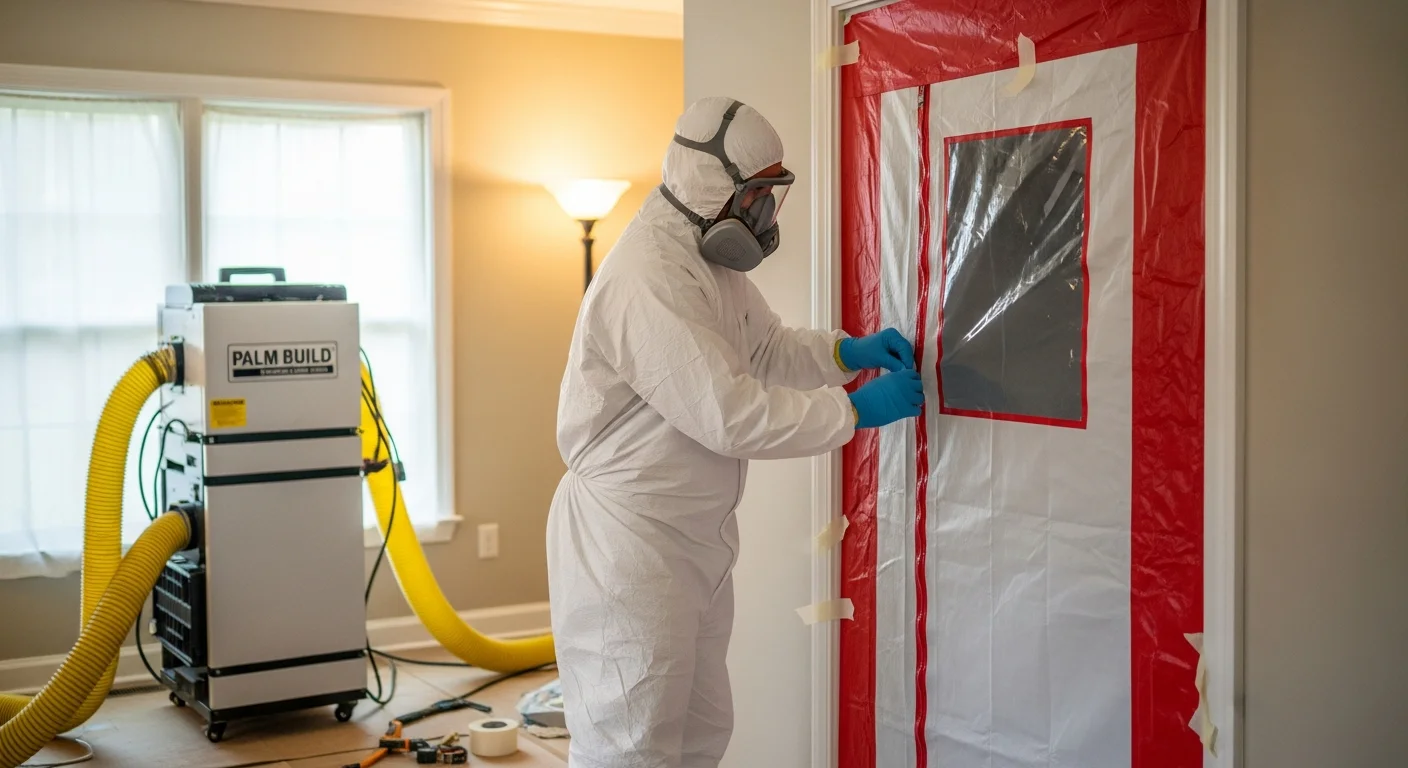
Blythewood sits in Richland County's humid Midlands climate — 45 inches of annual rainfall, a summer moisture load that peaks June through August, and a rapidly growing stock of homes that range from older crawl space construction to new builds with tight enclosures and complex HVAC systems. Palm Build's IICRC S520-certified team provides professional assessment, full remediation, and insurance-ready documentation for homeowners across ZIP 29016 and the broader Blythewood service area.
75-90 min
Emergency Response
24/7
Dispatch Available
IICRC
Certified Technicians
Blythewood's Midlands humidity and summer rainfall create ideal mold conditions year-round. The EPA's 24-to-48-hour window is real — every day without professional drying and treatment allows mold to spread further into your home's structure. Palm Build's IICRC S520-certified team provides same-day assessment and full remediation with insurance-ready documentation.
Blythewood SC — Mold Warning Signs
The EPA states mold can begin growing within 24 to 48 hours of moisture exposure. In Blythewood's hot, humid summer climate — with June, July, and August delivering peak rainfall and near-maximum relative humidity — that window is effectively compressed. Know the warning signs before visible growth appears.
Musty or earthy odor that gets stronger after rain or on humid days
The most reliable early indicator — mold produces MVOCs (microbial volatile organic compounds) detectable before visible growth appears
Visible dark spots or fuzzy growth on walls, ceilings, or flooring
Visible surface mold is almost always a sign of more extensive growth behind the surface — don't assume it's confined to what you can see
Discolored or stained areas on drywall, particularly near windows or exterior walls
In Blythewood homes, wind-driven rain from summer thunderstorms can create slow leaks that grow mold before homeowners notice the water stain
Soft, spongy, or bouncy floor areas — especially hardwood or laminate
Subfloor saturation often indicates a crawl space or slow supply line leak that has been feeding mold growth for weeks
Allergy or respiratory symptoms (sneezing, coughing, itchy eyes) that improve away from home
Especially significant in Blythewood's summer months when homes are closed up and HVAC circulates air continuously
Peeling paint or wallpaper pulling away from walls in bathrooms or near exterior walls
Indicates moisture migration through wall assemblies — often caused by condensation issues in HVAC-heavy Midlands summer conditions
Condensation on interior windows, pipes, or walls during summer months
Persistent condensation signals humidity levels high enough to support mold growth on nearby materials
Rusting, warping, or bubbling on metal or wood fixtures near crawl space access
Ground moisture and exterior humidity entering through vented crawl spaces is a primary mold driver in older Blythewood homes like those in Longcreek Plantation
Recognizing any of these signs?
Waiting to see if mold resolves on its own isn't an option in Blythewood's climate. Professional assessment confirms whether remediation is needed and establishes documentation for your insurance claim.
Why Mold Thrives in Blythewood
Blythewood's combination of Midlands climate, older crawl space construction, rapid new growth, and inland storm exposure creates year-round mold risk that doesn't resolve on its own.
45 in
Annual rainfall, Columbia-area average
Blythewood sits in the Columbia area climate regime where annual precipitation averages 45.24 inches — with the wettest months concentrated in June, July, and August. July averages 5.35 inches alone. During these months, outdoor relative humidity regularly exceeds 90% during and after storm events, which compresses the EPA's 24-to-48-hour mold germination window. Any water event that isn't professionally extracted and dried becomes a mold event in Blythewood's summer climate within days.
1990s–2000s
Construction era of highest-risk crawl space homes
A meaningful portion of Blythewood's housing stock — particularly in older established communities like Longcreek Plantation, Blythewood Farms, and Abney Hills Estates — was built with vented crawl space foundations. This design, now understood to be problematic in humid climates, pulls exterior air with its full moisture load directly under the home. Red clay soil in Richland County retains moisture and continues evaporating into the crawl space for days after rain events. Degraded vapor barriers in homes 20 to 30 years old accelerate this cycle.
$2B
Scout Motors investment driving rapid Blythewood growth
Scout Motors' $2 billion facility near Blythewood is driving rapid residential development across the 29016 area. Newer tight-construction homes in Seaton Ridge, Langford Meadows, and other newer subdivisions have different mold risk profiles than older homes — HVAC condensate management is critical in homes with high ceiling volumes, multiple air handlers, and tight building envelopes. A single clogged condensate line can create a significant mold event in a matter of days during Blythewood's summer peak.
Jun–Nov
Atlantic hurricane season affecting inland SC
Blythewood is not on the coast — but South Carolina's state climate office explicitly documents that inland areas face flooding, heavy rain, high winds, and tornadoes from tropical cyclone remnants. From 1851 to 2024, 45 tropical cyclones have made landfall on the SC coast, with documented inland impacts extending to Richland County. Storm events that penetrate roofing, create attic moisture events, or flood crawl spaces create ideal mold conditions that peak two to four weeks after the original event — when homeowners may not connect the mold to the storm.
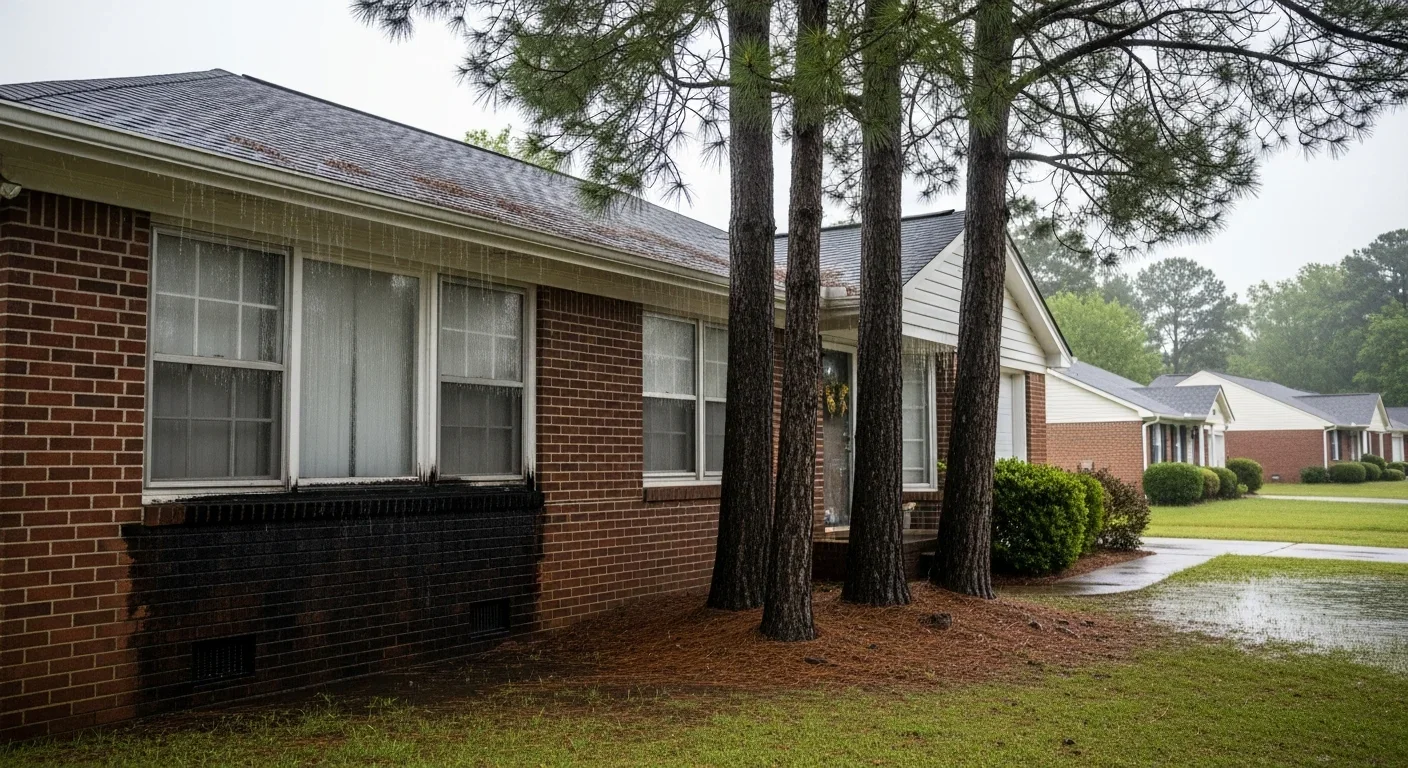
Blythewood Neighborhood Mold Risk Guide
Blythewood's neighborhoods have distinct mold risk profiles based on home age, foundation type, and proximity to drainage features. Find your community below.
Subdivision | Built Era | Foundation | Mold Risk | Primary Mold Source | Notes |
|---|---|---|---|---|---|
| Longcreek Plantation | 1990s–2000s | Crawl space, vented | High | Crawl space wood rot and floor joist mold | Older vented crawl spaces pull full summer humidity under homes; degraded vapor barriers common |
| Blythewood Farms | 2000s | Crawl space mix | High | Attic mold after storm roof damage | Aging roofing systems; mature tree canopy deposits debris that holds moisture against roofing |
| Abney Hills Estates | 1990s–2000s | Crawl space, brick | High | Foundation seepage, crawl space mold | Red clay soil retains moisture against older foundation walls; negative drainage grading common |
| Cobblestone Park | 2000s–2010s | Slab & crawl space mix | Moderate | HVAC condensate, bathroom mold | Well-maintained community; mold often follows HVAC condensate or slow toilet/supply line leaks |
| Cedar Lakes | 2000s–2015s | Slab, suburban | Moderate | Post-storm attic mold, HVAC closet mold | Lake proximity adds localized humidity; large homes with multiple HVAC zones increase condensate risk |
| Wren Creek | 2000s–2010s | Crawl space & slab | Moderate-High | Crawl space mold, stormwater intrusion mold | Creek proximity elevates ambient moisture; properties near drainage easements see elevated crawl space moisture |
| Seaton Ridge | 2010s–2020s | Slab, tight construction | Moderate | HVAC condensate in tight building envelopes | Newer construction with complex HVAC; small condensate leaks in tight homes spread quickly |
| Langford Crossing / Meadows | 2005s–2015s | Slab, suburban | Moderate | Window frame mold, bathroom mold | Exposed orientation to storm winds; window and door seals age faster under repeated storm stress |
| Amber Creek | 2005s–2015s | Slab & crawl space | Moderate | Hidden supply line mold, bathroom wall mold | Aging supply lines in older units increase slow leak risk that often goes undetected for months |
| Stonington / The Maples | 2010s | Slab | Low-Moderate | Bathroom tile mold, laundry room mold | Single-story layouts mean attic leaks reach living spaces faster; grout and caulk maintenance critical |
Don't see your subdivision? Call (704) 464-0121 — Palm Build serves all Blythewood addresses and the broader 29016 area.
A Blythewood-Specific Risk
Homes built in the 1990s and early 2000s in communities like Longcreek Plantation, Blythewood Farms, and Abney Hills Estates were constructed with vented crawl space foundations — a design that pulls Richland County's humid summer air directly under your home.
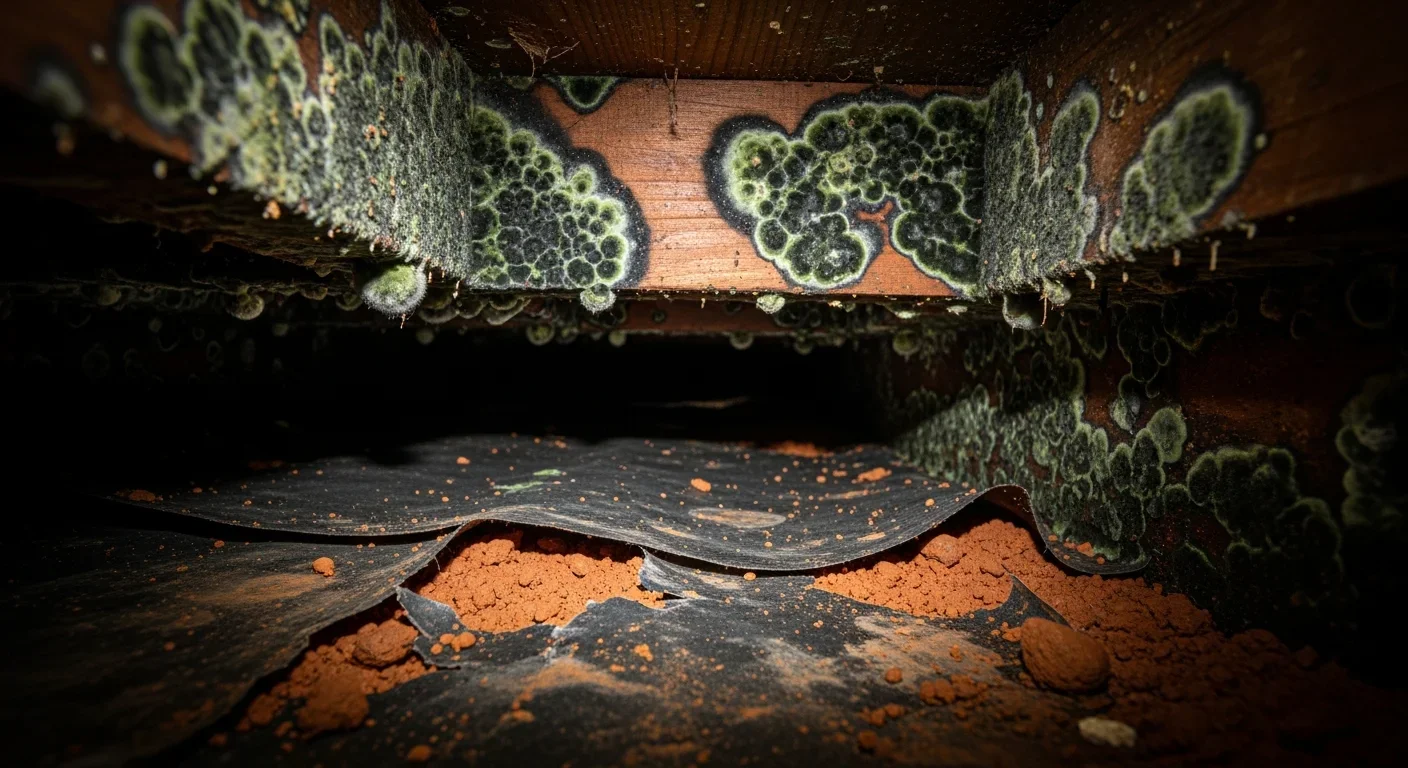
Vented crawl spaces were designed for drier climates. In Blythewood's humid subtropical climate, vents pull exterior air — at 85-95% relative humidity during summer — directly under your home. That air meets cooler surfaces on floor joists and sub-floor sheathing and condenses. Richland County's red clay soil retains moisture and continuously releases water vapor from the ground into the crawl space.
The result: wood surfaces in the crawl space are often running at moisture content levels above 19% — the threshold at which mold and wood decay fungi actively colonize. The older the vapor barrier (or if there is none), the worse this cycle becomes over time.
Full crawl space inspection with moisture mapping
Moisture readings at floor joists, rim joists, and foundation walls. Thermal imaging identifies hidden saturation beyond visual range.
Containment setup if active mold is present
Polyethylene barriers and negative air pressure prevent cross-contamination to living spaces during work.
HEPA vacuuming and physical removal of contaminated materials
Degraded insulation, failed vapor barriers, and heavily contaminated wood may require removal to achieve clearance.
Antimicrobial treatment of wood framing surfaces
HEPA-compatible antimicrobial applied to joists and rim joists after cleaning. Borate treatments for ongoing prevention.
New vapor barrier installation
Heavy-duty 10-20 mil reinforced polyethylene installed and sealed to foundation walls — the primary moisture control for the structure.
Post-remediation verification and clearance
Moisture readings confirm materials are at dry standard. Documentation package for your insurance file and future inspections.
Our Process — ANSI/IICRC S520 Standard
Every Palm Build mold remediation in Blythewood follows ANSI/IICRC S520 — the standard that insurance carriers, property attorneys, and real estate professionals treat as the professional benchmark in South Carolina.
Every Blythewood mold remediation starts with finding and fixing the moisture source — not just cleaning the visible mold. We use moisture meters, thermal imaging, and air quality sampling to map the full extent of contamination and identify whether the underlying moisture problem has been resolved or is still active. Treating mold without fixing moisture is a temporary solution.
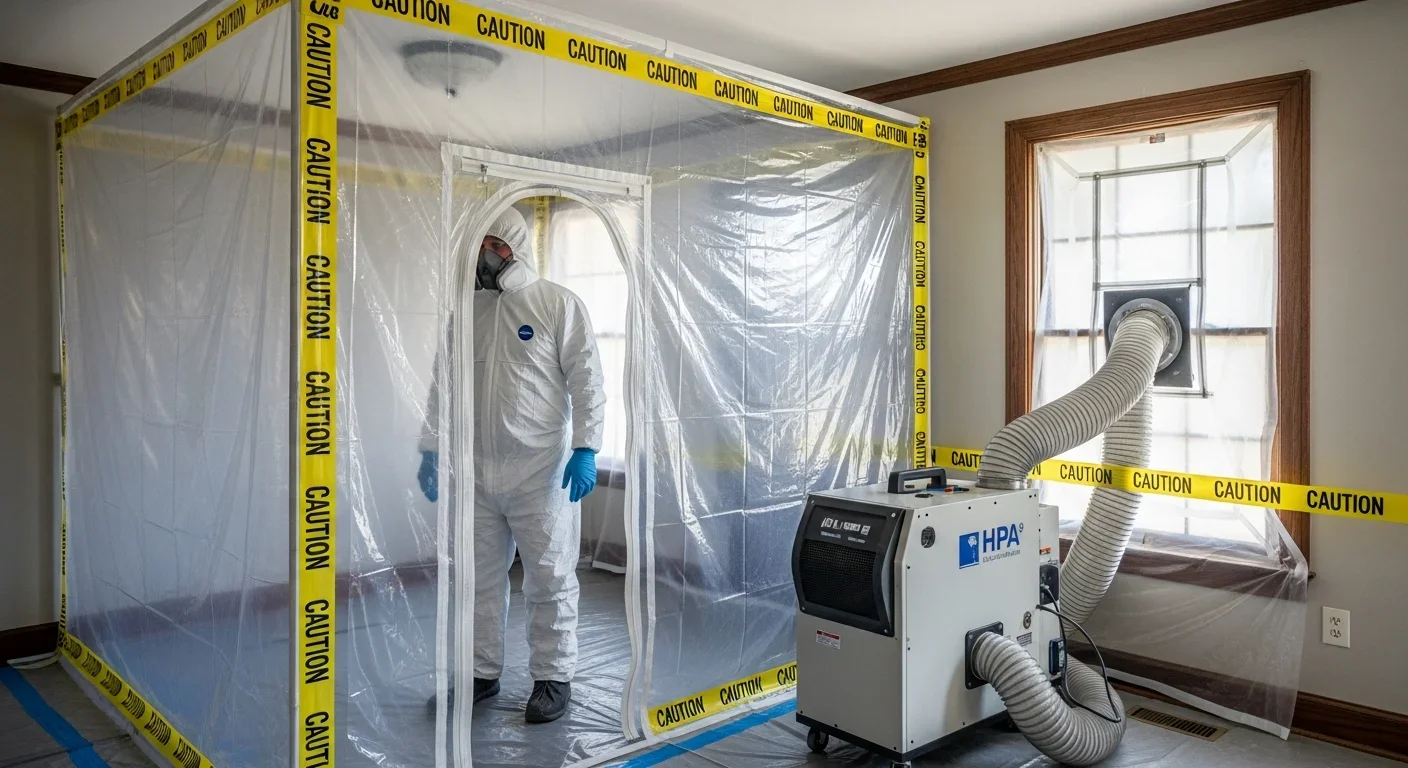
Polyethylene barriers isolate the work area from the rest of your Blythewood home. Negative air pressure is established using HEPA air scrubbers — so contaminated air flows into the contained zone, not out of it. Zipper entry points allow technician access without pressure breaks. Proper containment is the difference between a localized remediation and a whole-home mold event.
HEPA air scrubbers run continuously throughout the remediation process, capturing airborne mold spores down to 0.3 microns. This is especially critical in Blythewood during summer months when open windows or HVAC operation could spread disturbed spores to unaffected areas. Air filtration continues until post-remediation verification confirms clearance.
Contaminated materials that cannot be effectively cleaned are removed and disposed of per IICRC S520 protocols. In Blythewood crawl spaces, this often means removing degraded vapor barriers, heavily contaminated insulation, and in advanced cases, compromised sections of floor sheathing. In above-grade spaces, contaminated drywall and insulation are removed to expose the full extent of growth.
Remaining structural surfaces — floor joists, rim joists, wall framing — are cleaned and treated with EPA-registered antimicrobial agents. For Blythewood crawl spaces, we apply borate-based preservative treatment to framing as a secondary prevention measure. Surface appearance after treatment should not be used to confirm clearance — moisture readings confirm dry standard.
Clearance is confirmed by moisture readings at every original measurement point, visual inspection of treated surfaces, and in recommended cases, post-remediation air sampling. We provide a complete documentation package: inspection photos, treatment records, clearance readings, and for Blythewood homeowners, permit records if any structural work was required by Richland County.
SC Licensing Reality — What Blythewood Homeowners Must Know
South Carolina has no statewide mold inspector or mold remediator licensing requirement. This means any contractor can call themselves a mold remediation company in SC without any formal credential. As of March 2026, the SC legislature has discussed voluntary IICRC S520-aligned certification frameworks in both the 2023-2024 and 2025-2026 sessions — but no mandatory licensing regime exists.
Richland County advises homeowners to verify professional training and certifications through recognized associations when hiring for mold work. The practical standard for insurance claims, real estate transactions, and property disputes in Blythewood is IICRC S520 compliance — regardless of whether a state license exists.
The ANSI/IICRC S520 Standard for Professional Mold Remediation is the industry's accepted benchmark — the standard insurance carriers, property attorneys, and real estate professionals reference when evaluating mold remediation work. Palm Build follows S520 on every Blythewood project.
Always ask your Blythewood mold contractor: Show me your current IICRC credentials. Describe your post-remediation testing process. What documentation will you provide for my insurance carrier? A company that can't answer these questions directly shouldn't be working in your home.
Blythewood SC Mold Remediation Costs
Costs vary based on contamination extent, foundation type, and whether structural work triggers Richland County permit requirements. Every project starts with a professional assessment — no guessing before we've seen the scope.
Small Localized Mold
Bathroom mold, isolated closet or wall cavity, small laundry room areas
Includes
Typical: single bathroom, 10-30 sq ft of contamination
Moderate Contamination
Multiple rooms, partial crawl space, HVAC-distributed mold, post-storm attic events
Includes
Typical: 2-4 rooms or a partial crawl space
Full Crawl Space Remediation
Complete crawl space mold remediation with new vapor barrier and moisture management
Includes
Typical: homes with vented crawl spaces in Longcreek Plantation, Blythewood Farms, and similar 1990s-2000s communities
The most expensive mold project is the one you wait on.
In Blythewood's summer humidity, mold that costs $2,000 to address in week one costs $8,000 to $15,000 in week four. Same square footage — dramatically different scope.
Mold and Insurance in Blythewood SC
South Carolina homeowners policies typically include mold coverage sublimits of $5,000 to $10,000 — numbers that can fall short quickly in Blythewood homes where median values exceed $345,000. Whether your mold is covered depends almost entirely on how it's documented.
Blythewood documentation strategy: The key to maximizing mold coverage in Richland County is connecting the mold discovery to the original moisture event — and documenting the timeline clearly. Palm Build structures every mold remediation report to show the moisture source, the date of the triggering event, the moisture measurements confirming active water activity, and the remediation scope. This documentation is what moves a claim from "denied" to "approved" with carriers including State Farm, USAA, Allstate, Travelers, and Liberty Mutual.
Blythewood SC Mold Projects
Every project documented from start to finish. These are real Richland County jobs — not stock photos.
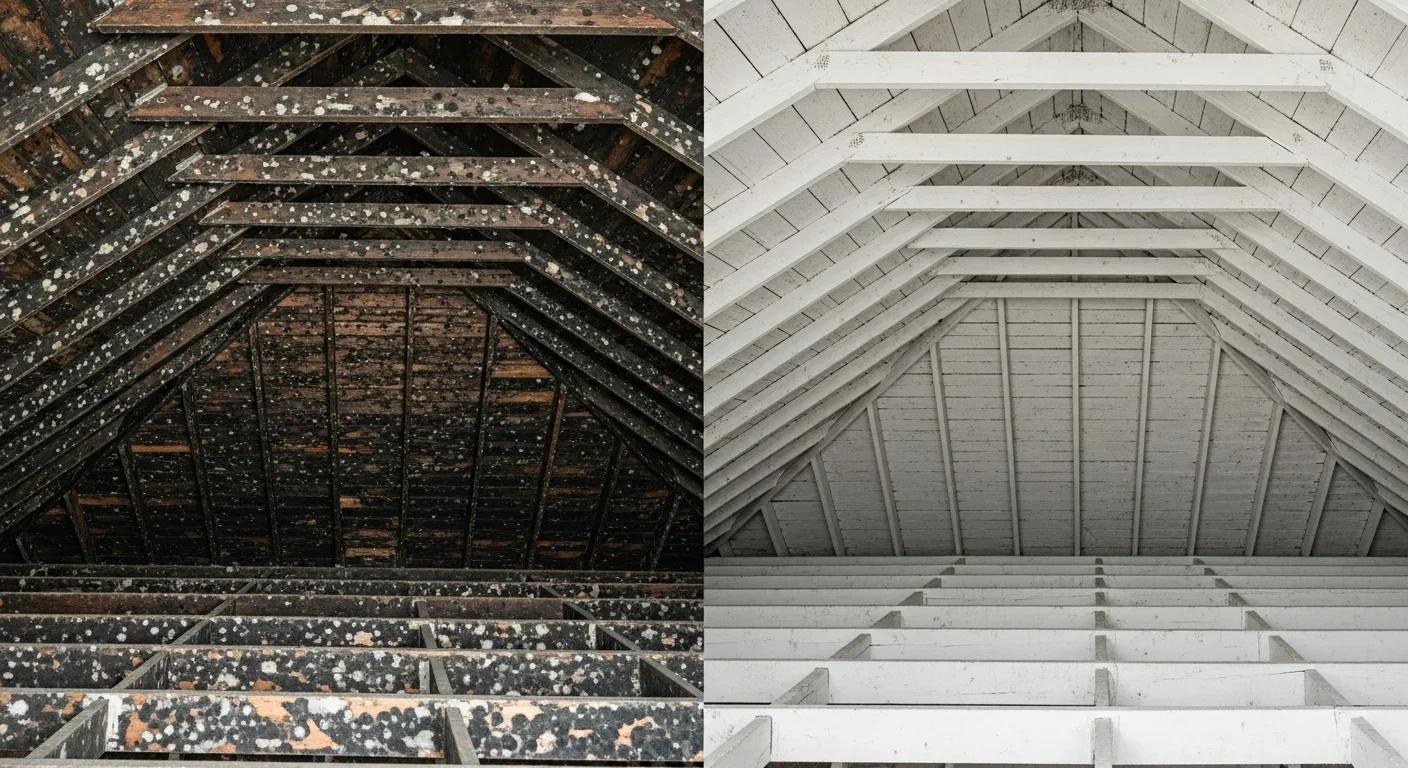
Black mold on roof decking after June thunderstorm roof penetration. Longcreek area home.
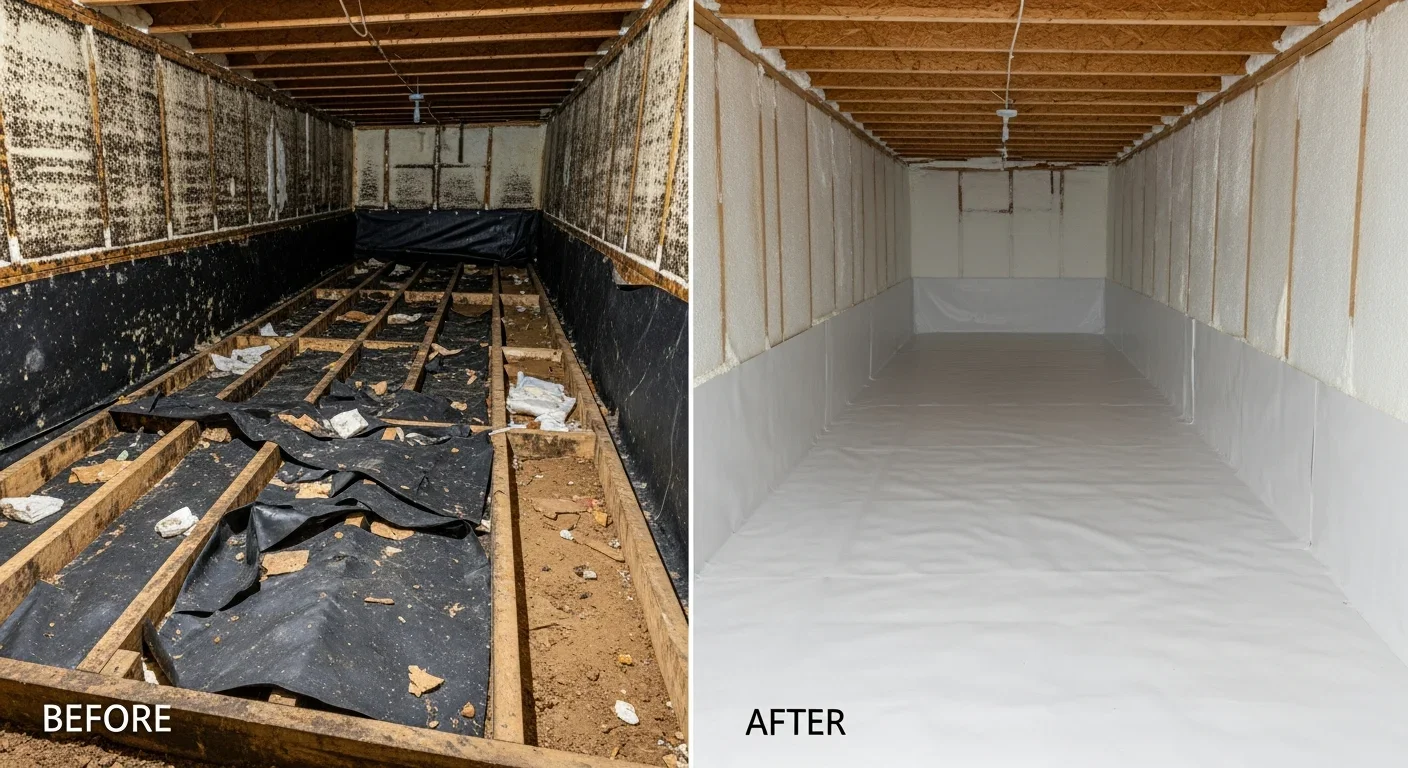
Complete crawl space mold remediation with new vapor barrier. Home built 1998, Blythewood Farms area.
IICRC S520-compliant containment with negative air pressure prevents cross-contamination during remediation.
Extensive joist mold from chronic vented crawl space humidity — a common finding in 1990s-2000s Blythewood homes.
Why Blythewood Homeowners Choose Palm Build
Blythewood mold issues need professional eyes quickly — particularly during summer months when mold spreads faster. Our Charlotte team can reach any 29016 address in 75 to 90 minutes and offers same-day assessment scheduling. Urgent situations are dispatched immediately.
South Carolina has no state mold license — which means the only meaningful credential is IICRC S520 certification. Palm Build's team follows the ANSI/IICRC S520 Standard on every Blythewood project. This matters when you file a claim: State Farm, USAA, Allstate, and other major carriers evaluate mold remediation documentation against S520 standards.
Palm Build structures every mold remediation report to support the insurance claim — connecting the mold discovery to the original moisture event, providing moisture logs, clearance readings, and permit records if structural work is involved. We've documented mold losses for the major carriers active in the SC homeowners market.
The difference between a $3,000 remediation and a $15,000 remediation is often how quickly you act and whether the remediation team understands your home's construction. Older crawl space homes in Longcreek Plantation need different approaches than tight newer construction in Seaton Ridge. We know both — and we know Richland County permit requirements that apply to each.
Ready for a Blythewood Mold Assessment?
Same-day scheduling available. Every assessment includes moisture mapping and a written scope.
Frequently Asked Questions
Question not covered here?
Call (704) 464-0121More Resources