Key takeaways
- Hurricane Helene caused $59.6 billion in damage across North Carolina, affecting 121,000-132,000 homes. Only about 0.5% of impacted properties in Western NC had flood insurance.
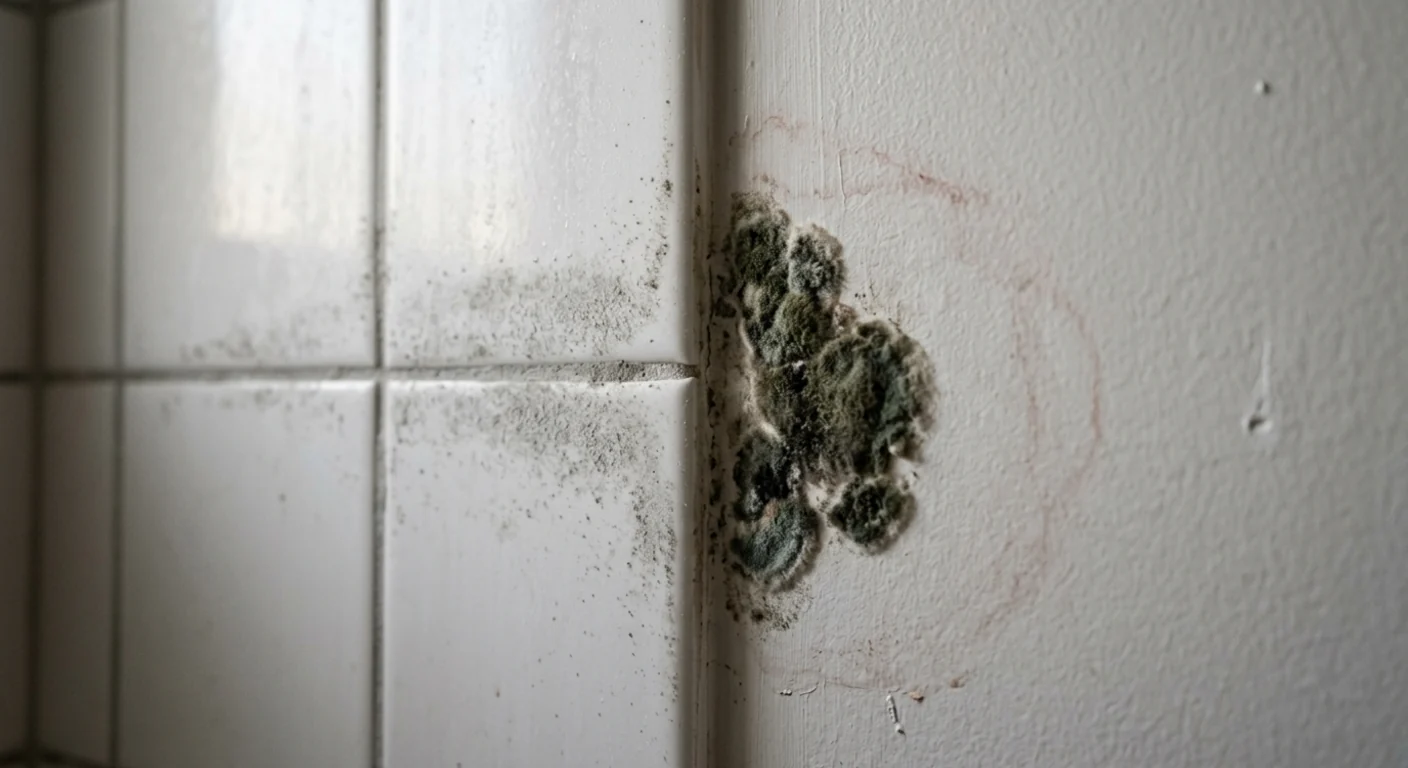
- The 24-48 hour window after floodwater recedes is the most critical period for preventing secondary mold damage. Every hour of delay increases remediation costs significantly.
- FEMA Individual Assistance, SBA disaster loans, and state-level programs provide multiple recovery funding paths, but each has different deadlines and documentation requirements.
- A structured restoration sequence — safety first, then document, dry, remediate, rebuild — prevents the most common and expensive mistakes homeowners make.
- Flood restoration costs range from $3,000-$8,000 for water extraction alone to $150-$275 per square foot for full structural rebuilds, with Western NC demand pushing prices higher than national averages.
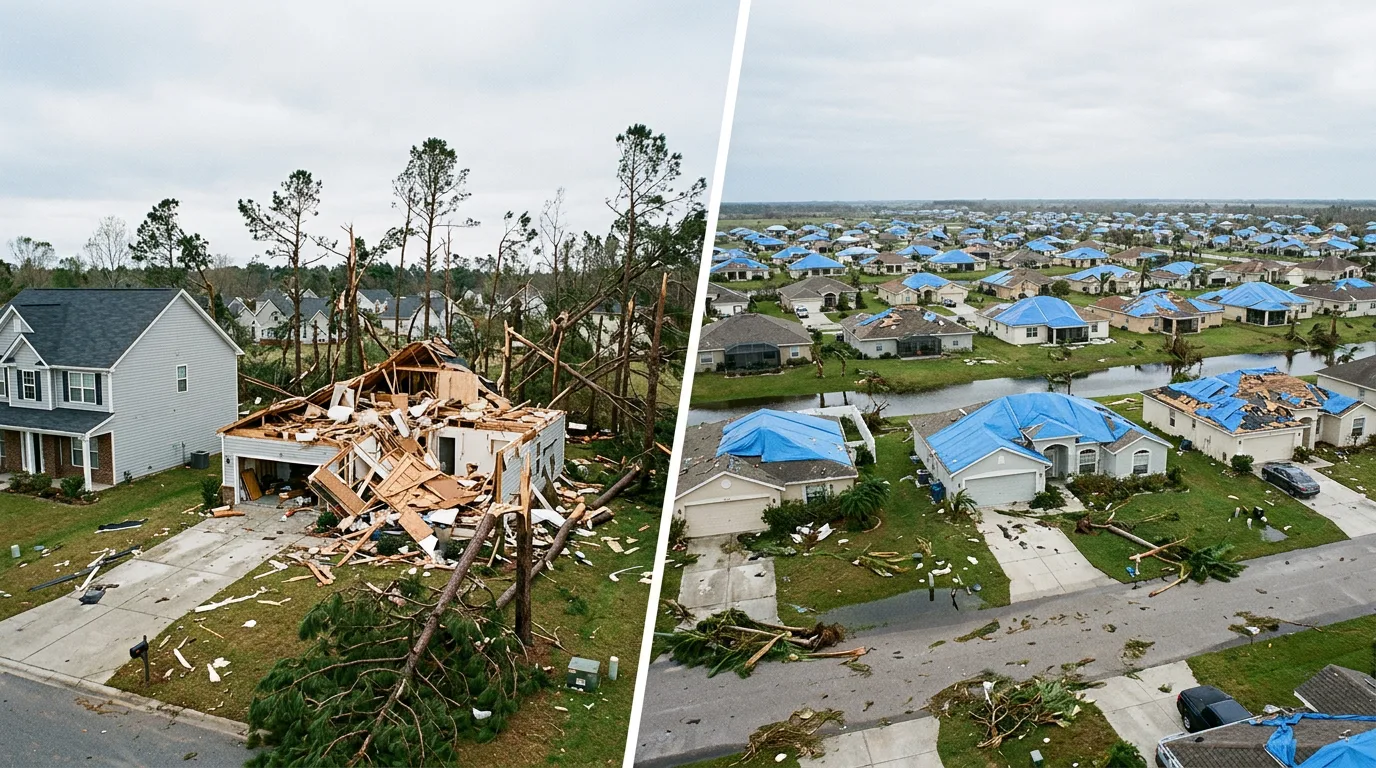
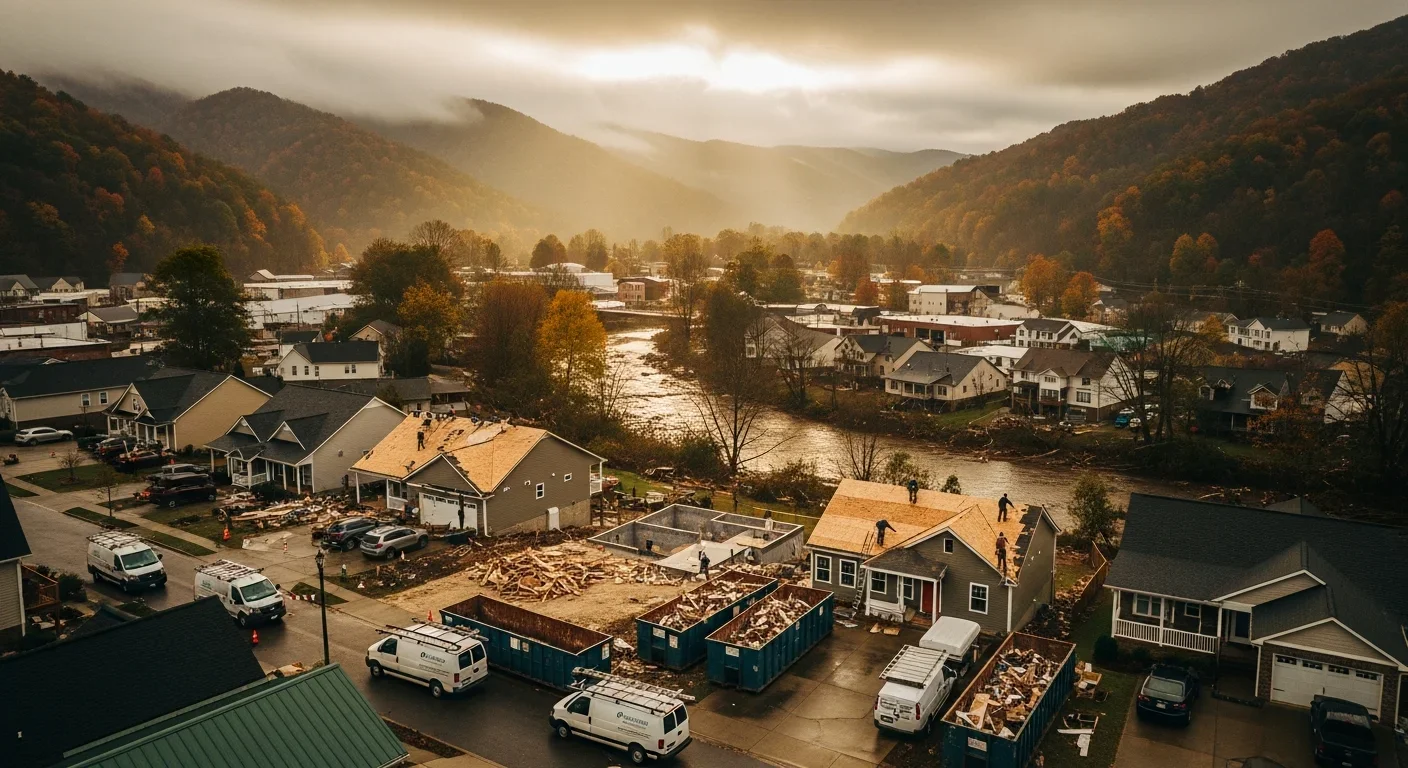
Western North Carolina is still rebuilding from Hurricane Helene because the storm caused catastrophic inland flooding that no one in the region expected. North Carolina estimates $59.6 billion in total damages and recovery needs, with 121,000 to 132,000 homes damaged across the state. If your property flooded, your priorities are straightforward: make it safe, document everything, and start drying and removing wet materials immediately. Mold and mildew can develop within 24-48 hours of water exposure, so delays can turn a manageable cleanup into a major mold remediation and rebuild project. Most households hit by Helene had little or no flood insurance, which means recovery often requires combining insurance claims with FEMA assistance, SBA disaster loans, and local programs. This guide walks you through every step — from emergency water damage restoration through full reconstruction — with verified resources, realistic cost ranges, and the specific challenges facing Western NC homeowners.
Total NC Damage
$59.6B
NC Office of State Budget and Management estimate
Homes Damaged
121,000+
Across North Carolina from Hurricane Helene
Had Flood Insurance
~0.5%
In the hardest-hit Western NC counties
Mold Prevention Window
24-48 hrs
FEMA, CDC, and EPA consensus guideline
Understanding the Scale of Western NC Flood Damage
Hurricane Helene made landfall as a Category 4 hurricane along the Florida Gulf Coast in late September 2024, but its most devastating impact came hundreds of miles inland. The storm's remnants channeled extreme moisture into the Appalachian Mountains, where topography concentrated rainfall into narrow valleys and river corridors. NOAA recorded rainfall exceeding 30 inches in parts of Western North Carolina — a once-in-a-thousand-year statistical event. Rivers like the Swannanoa, French Broad, Pigeon, and Toe crested at levels never previously recorded, turning entire neighborhoods into floodplains overnight.
The destruction hit hardest in Buncombe, Henderson, Rutherford, McDowell, Yancey, and Mitchell counties. Roads washed out, bridges collapsed, water and sewer infrastructure failed, and thousands of homes experienced catastrophic flooding that penetrated well above first-floor levels. NOAA's multi-state damage estimate for Helene reached $79.6 billion with 219 deaths — making it one of the costliest and deadliest U.S. weather disasters in decades. For many Western NC homeowners, the insurance restoration process has been the most frustrating part of recovery because standard homeowners policies do not cover flood damage.
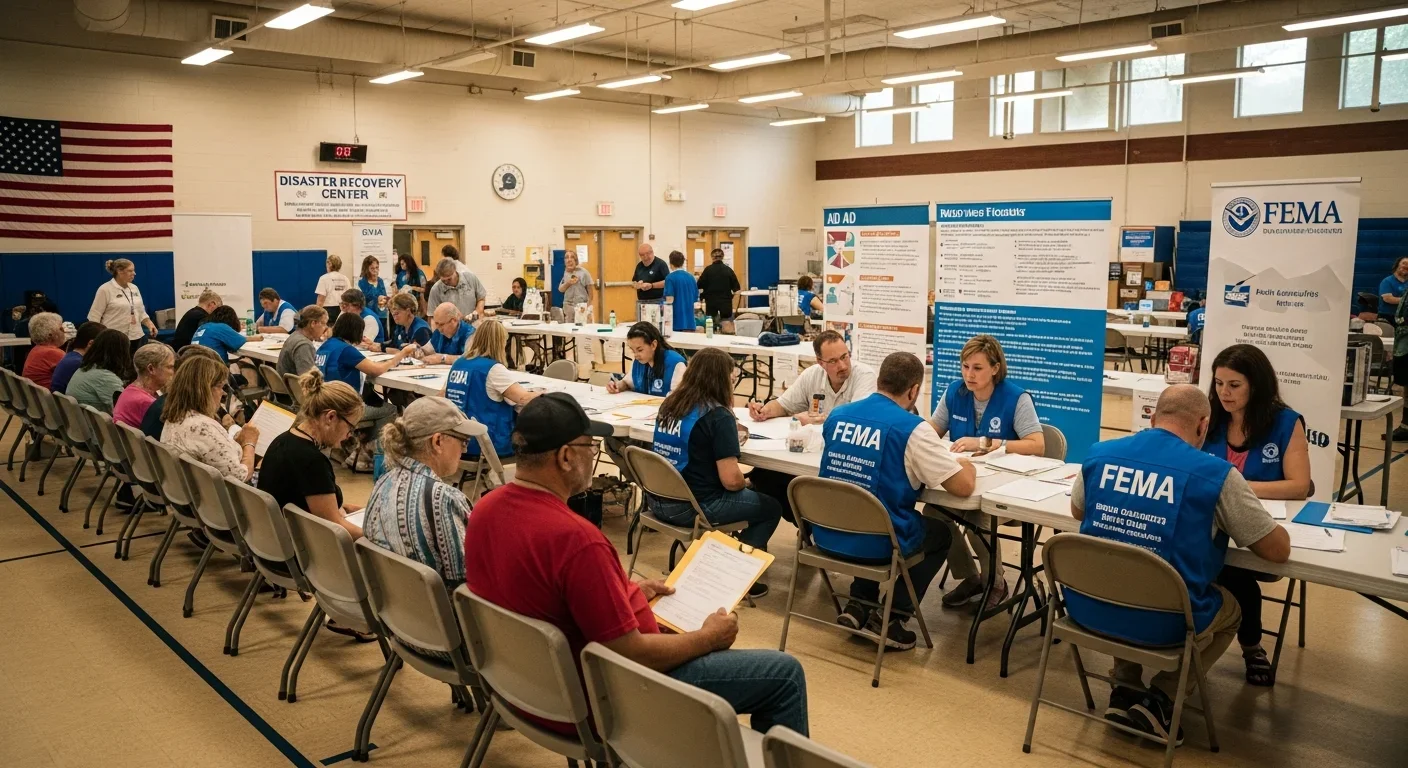
Emergency Response Timeline: What to Do and When
Flood recovery follows a predictable sequence, and knowing what to prioritize at each stage prevents costly mistakes. Whether you are just starting cleanup or already weeks into the process, this timeline helps you understand where you are and what comes next. The most expensive errors happen when homeowners skip steps or try to rebuild before the property is properly dried and remediated.
First 24 Hours
Safety Assessment and Emergency Extraction
Turn off electrical and gas if safe to do so. Do not enter standing floodwater — it may be electrically charged or contaminated. Wear PPE (N95 mask, rubber boots, gloves) if you must enter. Begin photographing and videoing damage immediately. Contact your insurance company to open a claim. Call a professional water damage restoration company for emergency extraction.
24-48 Hours
Water Removal and the Mold Prevention Window
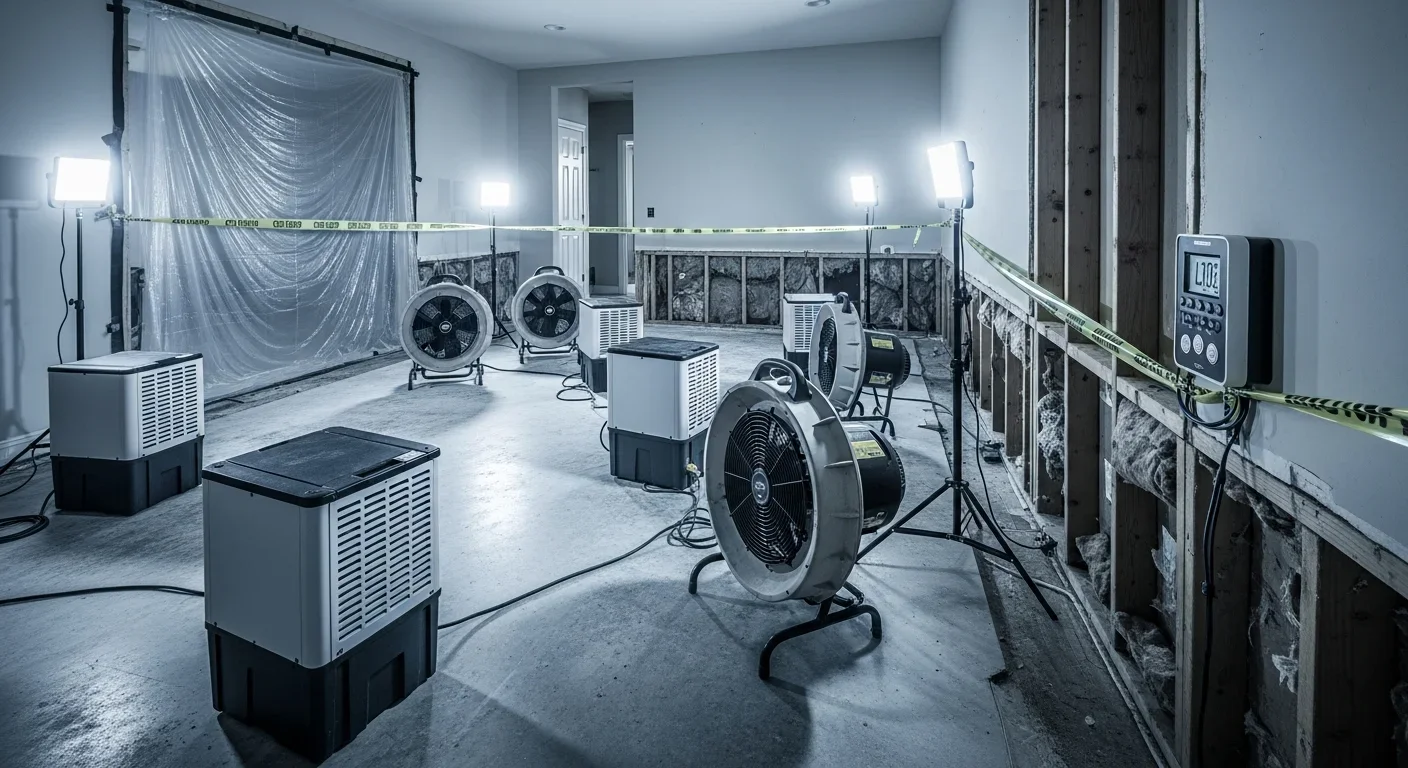
This is the critical window. FEMA, CDC, and EPA all warn that mold can develop within 24-48 hours of water exposure. Professional water extraction should begin immediately. Remove saturated porous materials (carpet, pad, lower drywall, insulation) that cannot be dried in time. Set up commercial dehumidifiers and air movers to begin structural drying.
Days 3-7
Structural Drying, Assessment, and FEMA Registration
Professional moisture mapping determines what can be saved and what must be removed. IICRC water damage categories (especially Category 3 for floodwater) drive demolition scope decisions. Register for FEMA Individual Assistance at DisasterAssistance.gov or by calling 1-800-621-3362. Begin compiling your room-by-room damage inventory with photos and receipts.
Weeks 2-4
Mold Remediation and Contractor Selection
If mold remediation is needed, it must happen before any rebuild work begins. Get multiple written estimates from licensed, IICRC-certified contractors. Apply for SBA disaster loans if FEMA assistance is insufficient. Begin planning your reconstruction scope with a licensed general contractor.
Months 2-6+
Reconstruction and Long-Term Recovery
Obtain necessary building permits. Reconstruction begins once the structure is fully dry and remediated. File insurance supplements for additional damage discovered during reconstruction. Consider flood-resilient building materials and techniques for the rebuild. FEMA appeals must generally be filed within 60 days of a decision letter.
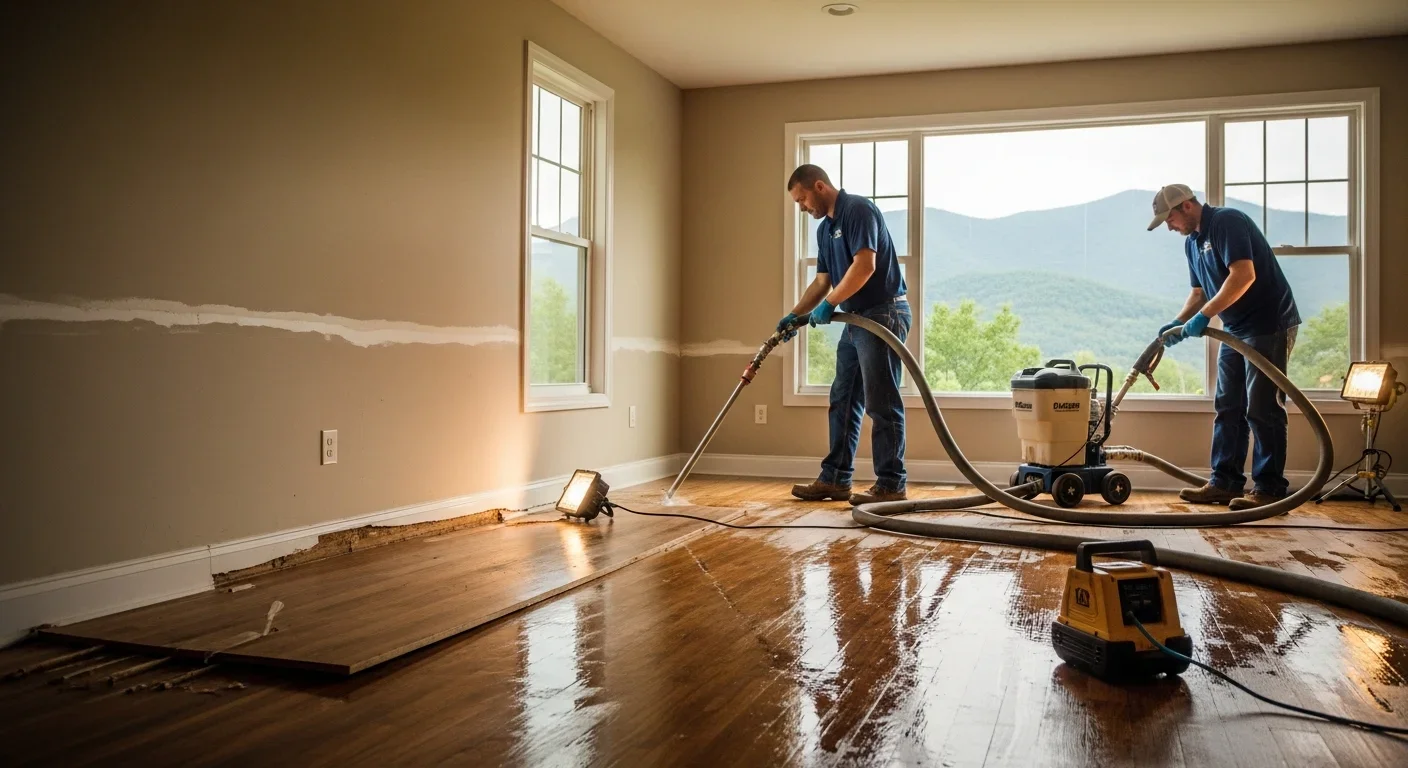
The 5-Step Flood Restoration Plan for Western NC Homes
The restoration sequence matters more than most homeowners realize. Skipping steps or reordering the process is the single most expensive mistake we see in Western NC flood recovery. Each step builds on the previous one, and cutting corners early compounds costs later. If you need a general reference for the first day, our first 24 hours after water damage guide covers the basics. What follows here is specific to the scale and severity of Helene-level flooding.
- 1
Make the Property Safe and Prevent Further Damage
Before touching anything, assess whether the structure is safe to enter. Floodwater can undermine foundations, shift framing, and create collapse hazards that are not obvious from outside. Turn off electricity at the breaker panel only if you can reach it without stepping in water. Turn off natural gas at the meter. Wear an N95 respirator, waterproof boots, and heavy gloves — floodwater carries sewage, chemicals, and debris. If you smell gas or see structural cracking, leave immediately and call your utility company and local emergency services.
- 2
Document Everything for Insurance and Assistance Claims
Thorough documentation is the foundation of every successful insurance claim and FEMA application. Before removing or cleaning anything, photograph and video every room from multiple angles. Capture the waterline height on walls, damaged contents, and serial numbers on appliances. Keep damaged samples of flooring, drywall, and insulation — adjusters may need to see the actual materials. Save every receipt from emergency purchases, temporary housing, and cleanup supplies. Our guide on how to file a water damage insurance claim walks through the documentation process in detail.
- 3
Extract Water and Begin Structural Drying
Professional water damage restoration uses truck-mounted extraction units that remove thousands of gallons per hour — far more effective than shop vacuums or pumps. After extraction, commercial dehumidifiers and high-velocity air movers create the airflow and humidity control needed for structural drying. Technicians use moisture meters and thermal imaging to track drying progress inside walls, under floors, and in crawl spaces. The goal is reaching moisture equilibrium — typically 12-16% moisture content for wood framing — before any rebuild work begins.
- 4
Remediate Mold and Contamination
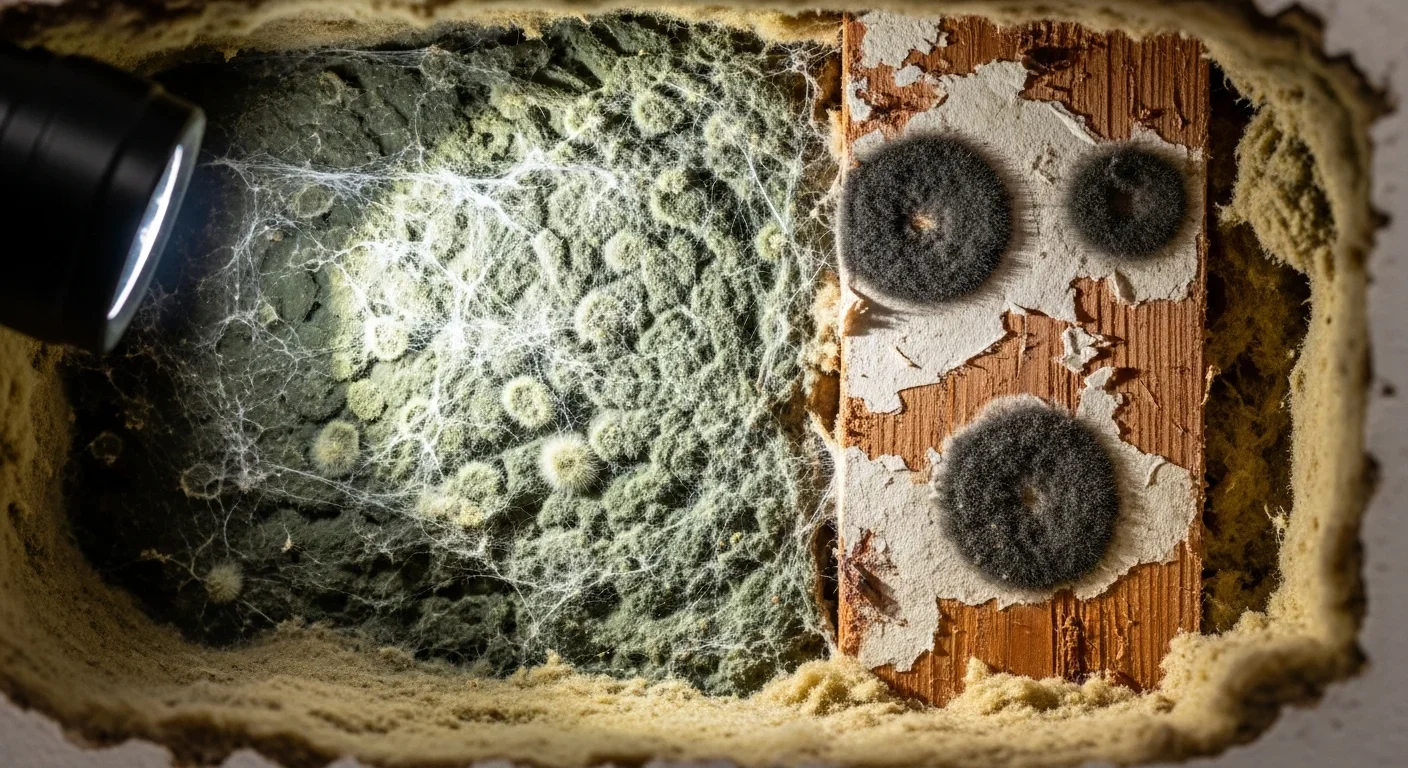
If floodwater sat for more than 48 hours — which was the reality for most Helene-impacted homes — assume mold is present even if you cannot see it yet. Professional mold remediation follows IICRC S520 protocols: containment, air filtration, removal of contaminated materials, antimicrobial treatment, and clearance testing. Our guide on preventing mold after flooding explains why this window matters so much. Do not attempt to paint over, bleach, or encapsulate mold — these are temporary cosmetic fixes that lead to worse problems later.
- 5
Plan and Execute the Rebuild
Reconstruction begins only after the structure is confirmed dry and mold-free. For Helene-damaged homes, rebuild scope often includes new subfloor systems, framing repairs, complete drywall replacement on affected floors, new electrical and plumbing in flood-affected areas, and sometimes foundation work. Get a detailed written scope from a licensed NC general contractor before work begins. Ensure the contractor pulls all required building permits — unpermitted work can void insurance coverage and create legal problems at sale. Consider incorporating flood-resilient building strategies into the rebuild.
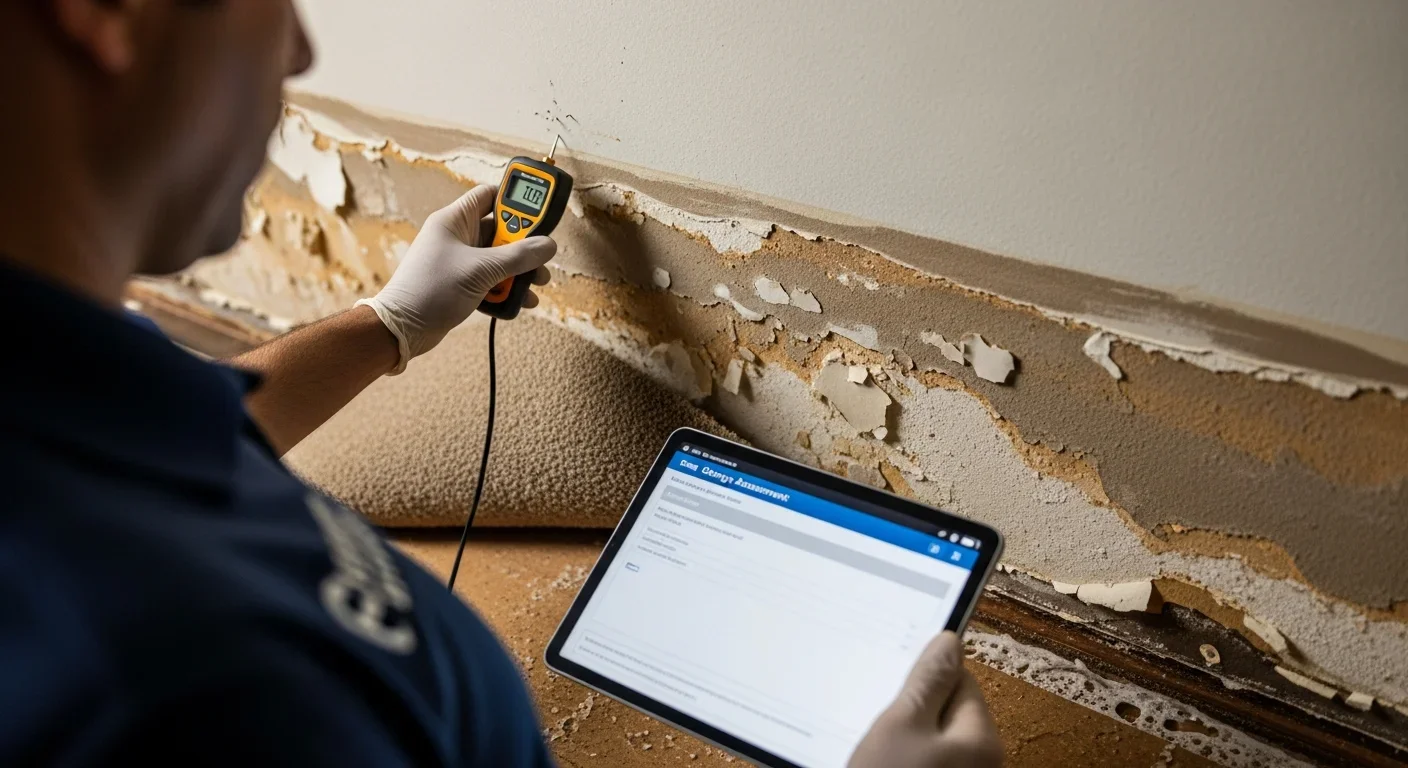
Mold Prevention: The 48-Hour Window After Flooding
Western North Carolina's mountain humidity creates an environment where post-flood mold growth is particularly aggressive. Even after visible water is removed, moisture trapped in wall cavities, subfloor systems, and crawl spaces feeds mold colonies that can spread throughout a home within days. FEMA, the CDC, and the EPA all converge on the same guidance: if wet materials are not dried within 24-48 hours, assume mold growth has begun. Our deep dive on how fast mold grows after water damage covers the science behind this timeline.
- Remove all wet carpet, carpet pad, and any porous flooring within 48 hours — these materials cannot be reliably dried after flood exposure
- Cut out drywall at least 12 inches above the visible waterline to remove hidden moisture wicking up through the paper backing
- Remove wet fiberglass insulation from wall cavities and crawl spaces — it traps moisture against framing and accelerates mold growth
- Run commercial dehumidifiers and air movers continuously until professional moisture readings confirm the structure has reached equilibrium
- Open interior doors and closets to allow airflow through all spaces, but keep windows closed if outdoor humidity exceeds indoor levels
- Check crawl spaces for standing water, saturated vapor barriers, and moisture on floor joists — these are the most commonly overlooked mold incubators after flooding
- Do not turn on the HVAC system until ductwork has been inspected and cleaned — contaminated ducts will spread mold spores throughout the entire home
- Monitor for musty odors in the weeks following cleanup — persistent smell indicates hidden moisture or mold that requires professional assessment
For areas under 10 square feet, the EPA says homeowners may be able to handle cleanup themselves with proper PPE and antimicrobial products. For anything larger — and most Helene flood damage far exceeds this threshold — professional mold remediation with containment, HEPA filtration, and clearance testing is the safe path. North Carolina's public health guidance specifically warns against hiring the same company to both "investigate" and "sell remediation" without independent verification. Our comparison of mold remediation vs. mold removal explains why the distinction matters.
Government Recovery Resources for Western NC Homeowners
Multiple federal, state, and local programs exist to help Helene-impacted homeowners, but navigating them is confusing and the deadlines are unforgiving. The most important thing to understand: FEMA assistance alone will not make you whole. It is designed to provide basic, safe shelter — not to restore your home to pre-storm condition. Most recovery requires combining multiple programs, and each has its own application, documentation, and appeal process.
FEMA Individual Assistance Programs
One of the most persistent misconceptions is that "FEMA only gives $750." The $750 Serious Needs Assistance payment is a one-time, upfront emergency payment to help with immediate needs like food, water, and shelter. It is not the total FEMA can provide. North Carolina's Department of Public Safety has specifically addressed this misinformation on their Ground Truth page. The actual FEMA Individual and Households Program (IHP) can provide significantly more, though it still has caps.
| Program | What It Covers | Maximum Amount | How to Apply |
|---|---|---|---|
| Serious Needs Assistance | Immediate emergency needs (food, water, shelter, medicine) | $750 one-time per household | Automatically considered during FEMA registration |
| IHP Housing Assistance | Home repair, replacement, or temporary rental assistance | Up to $43,600 per household | DisasterAssistance.gov or call 1-800-621-3362 |
| IHP Other Needs Assistance (ONA) | Medical, dental, funeral, childcare, moving, storage, vehicle damage | Up to $43,600 per household | Automatically considered after FEMA registration |
| Disaster Unemployment Assistance | Lost wages due to the disaster for those not eligible for regular UI | Varies by state weekly maximum | Apply through NC Division of Employment Security |
FEMA Individual Assistance Programs for Hurricane Helene
SBA Disaster Loans
SBA disaster loans are often the largest single source of recovery funding available to homeowners. Despite the name, these are personal loans — you do not need to own a business to qualify. Interest rates are low compared to personal loans, and terms extend up to 30 years.
| Loan Type | Maximum Amount | Typical Interest Rate | Maximum Term |
|---|---|---|---|
| Home Physical Disaster Loan | Up to $500,000 for primary residence repair or replacement | Varies (historically 2.5-4%) | Up to 30 years |
| Personal Property Loan | Up to $100,000 for personal property replacement | Varies (historically 2.5-4%) | Up to 30 years |
| Economic Injury Disaster Loan (EIDL) | Up to $2 million for businesses and nonprofits | Varies by applicant type | Up to 30 years |
SBA Disaster Loan Programs
NFIP and Flood Insurance Claims
If you are among the small percentage of Western NC homeowners who carried flood insurance through the National Flood Insurance Program, your NFIP policy provides up to $250,000 in building coverage and up to $100,000 in contents coverage. File your claim immediately and document everything before cleanup begins. Our guide on wind damage vs. flood damage insurance explains how these coverages differ and why the distinction matters for your claim. If you are unsure whether your homeowners policy covers any of your damage, our overview of what homeowners insurance covers for water damage breaks down the typical exclusions.
An important NFIP fact that surprises many homeowners: FEMA's own data shows that more than 20% of flood insurance claims historically come from properties outside designated high-risk flood zones. The assumption that mountain properties do not need flood insurance has been permanently challenged by Helene.
DisasterAssistance.gov
The primary federal portal for FEMA Individual Assistance applications, status checks, and appeals for Hurricane Helene.
SBA Disaster Loan Portal
Apply for SBA disaster loans for home repair, personal property, and business recovery after Hurricane Helene.
NC DPS Ground Truth: Helene Facts
North Carolina Department of Public Safety fact-checking page addressing common misinformation about Helene recovery programs.
NC Department of Insurance: Helene Resources
Insurance claim resources, mediation services, and licensed contractor directories for Helene-impacted North Carolina residents.
NC 211 Helpline
Dial 211 or visit nc211.org for local recovery resources including housing, food assistance, legal aid, and mental health services.
Flood Restoration Costs in Western NC: What to Expect
Cost is one of the most-searched questions for Helene recovery, and the honest answer is that it depends heavily on flood depth, contamination level, home size, and how quickly drying began. The ranges below reflect national benchmarks from industry sources, but Western NC homeowners should expect prices at or above the high end due to contractor demand, access constraints in mountain communities, and permitting backlogs. For a deep dive on water damage pricing, see our 2026 water damage restoration cost guide. For mold-specific pricing, our mold remediation cost guide covers the factors that drive estimates.
| Service | Typical Cost Range | Key Cost Factors |
|---|---|---|
| Water extraction and removal | $3,000 - $8,000+ | Home size, flood depth, contamination level, access difficulty |
| Structural drying (dehumidification) | $2,000 - $6,000+ | Square footage, number of rooms, drying time required, equipment needed |
| Mold remediation | $2,000 - $15,000+ | Affected area size, containment requirements, clearance testing |
| Crawl space remediation | $3,000 - $12,000+ | Crawl space size, moisture levels, insulation replacement, encapsulation |
| Partial rebuild (affected areas only) | $50 - $150 per sq ft | Scope of demo, materials selected, permitting, trade availability |
| Full structural rebuild | $150 - $275 per sq ft | Foundation work, framing, full systems replacement, code upgrades |
Flood Restoration Cost Ranges for Western NC Homes
Choosing a Restoration Contractor in Western NC
The post-disaster contractor landscape in Western NC includes excellent local professionals, reputable regional restoration companies, and unfortunately a significant number of unlicensed operators and storm chasers who follow disasters for quick payouts. North Carolina requires a general contractor license for work exceeding $30,000, and the NC Licensing Board for General Contractors maintains a public lookup tool. IICRC certification matters because it confirms the contractor has been trained specifically in water damage restoration (WRT), mold remediation, and the protocols that insurance companies expect to see in their documentation. Our comparison of restoration companies vs. general contractors explains why this distinction matters for flood recovery specifically.
Green Flags
- Valid North Carolina general contractor license (verify at NCLBGC.org)
- IICRC certifications in water damage restoration (WRT) and applied microbial remediation
- Provides a detailed written scope of work before starting
- Documents moisture readings and drying progress with daily reports
- Has verifiable local references and a physical business presence in NC
- Coordinates directly with your insurance company on documentation and supplements
Red Flags
- No North Carolina general contractor license or refuses to provide the number
- Demands full payment upfront or cash-only before work begins
- No written scope of work — just a verbal estimate or single-line quote
- No moisture documentation, no drying logs, no progress reports
- Out-of-state company with no local office, references, or verifiable history
- Claims they will 'handle everything with insurance' and asks you to sign over benefits
Palm Build holds North Carolina general contractor licensing and IICRC certifications for water damage restoration, mold remediation, and reconstruction. We respond to Western NC and the Charlotte metro area 24/7 and coordinate directly with insurance companies so your claim documentation meets industry standards from day one. If your home was impacted by Helene flooding, our team can provide a detailed assessment and written scope of work at no cost.
Flood Recovery Considerations by State
While this guide focuses on Western NC, Palm Build serves homeowners across three states. Flood recovery guidance differs meaningfully by state due to insurance regulations, licensing requirements, and mold oversight frameworks.
Florida-Specific Flood Recovery Notes
Florida homeowners face unique insurance timelines: under Florida statute, a hurricane insurance claim or reopened claim is generally barred unless notice is given within one year after the date of loss, with supplemental claims having an 18-month notice window. Florida also specifically regulates mold-related services through its licensing framework, requiring education or experience credentials and department-approved examinations. If you own property in both NC and FL and are navigating recovery for either, our guides on Florida mold problems and the 2026 Florida hurricane preparation checklist provide state-specific detail.
South Carolina-Specific Flood Recovery Notes
South Carolina currently has no state or federal laws, regulations, or standards specifically governing mold assessment or indoor air quality, according to the state's environmental guidance. This means homeowner due diligence is even more important when selecting a mold remediation contractor in SC — look specifically for IICRC certifications, clear written scopes, and independent post-remediation verification. There is proposed legislation (introduced February 2026) that would create a mold assessment and remediation certification framework, but it is not law yet. Until formal guardrails exist, IICRC certification and detailed documentation are your best protection.
Rebuilding for Resilience: Long-Term Flood Protection
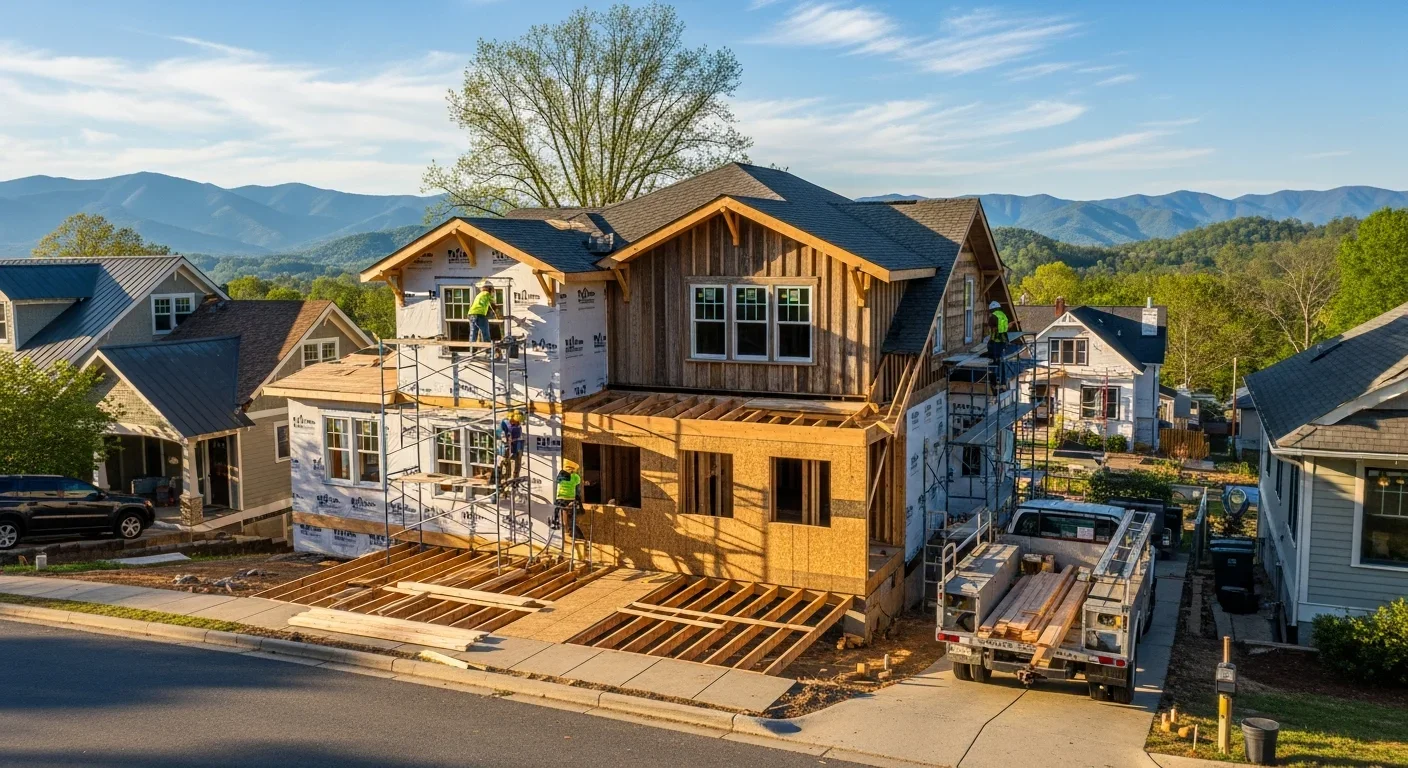
If your Western NC home requires significant reconstruction, the rebuild is an opportunity to incorporate flood-resilient building strategies that reduce future risk. FEMA's substantial improvement rule means that if your repair costs exceed 50% of the structure's pre-damage market value, the rebuild may be required to meet current floodplain management regulations. Even if you are not in a FEMA-designated flood zone, Helene proved that mountain properties face real flood risk.
- Elevate HVAC systems, water heaters, and electrical panels above the documented flood level — these are the most expensive systems to replace after flooding
- Install flood vents in foundation walls and crawl spaces to allow water to flow through rather than build hydrostatic pressure against the foundation
- Use flood-resistant building materials below the flood line: closed-cell spray foam insulation, fiber cement board, concrete or ceramic tile flooring, and pressure-treated or steel framing
- Replace standard drywall with paperless or fiberglass-faced drywall on lower floors — mold feeds on the paper backing of standard drywall
- Install backflow prevention valves on sewer lines to prevent sewage backup during flooding events
- Consider a sump pump system with battery backup for crawl spaces and basements, especially in properties near creek corridors
- Ensure proper grading and drainage around the foundation directs water away from the structure, not toward it
- Purchase flood insurance — even outside designated high-risk zones, NFIP policies are available and Helene demonstrated the real risk to mountain properties
Frequently Asked Questions: Western NC Flood Recovery
How do I apply for FEMA assistance after Hurricane Helene? +
How long does flood restoration take in Western North Carolina? +
Does homeowners insurance cover flood damage from Hurricane Helene? +
How much does flood restoration cost in Western NC? +
When should I start mold remediation after flooding? +
How do I find a licensed restoration contractor in Western NC? +
Can I stay in my home during flood restoration? +
What is the difference between Category 1, 2, and 3 water damage? +
Related Guides and Services
Water Damage Restoration Services
24/7 emergency water extraction, structural drying, and moisture monitoring for flood-damaged homes across NC, FL, and SC.
Mold Remediation Services
IICRC-certified mold remediation with containment, HEPA filtration, antimicrobial treatment, and clearance testing.
Storm & Hurricane Damage Repair
Complete storm damage restoration from emergency tarping and water extraction through full structural reconstruction.
Insurance Restoration Process
We coordinate directly with your insurance company, handling documentation, supplements, and adjuster communication.
First 24 Hours After Water Damage
Step-by-step guide for the critical first day after discovering water damage in your home.
Wind Damage vs. Flood Damage Insurance
Understanding the critical difference between wind and flood insurance coverage for hurricane damage claims.
Flood damage in your Western NC home?
Palm Build holds North Carolina general contractor licensing and IICRC certifications for water damage restoration, mold remediation, and reconstruction. We respond to Western NC, the Charlotte metro, and the NC Piedmont 24/7. Every project is documented to IICRC standards so your insurance claim is supported from day one.
Found this helpful? Send it to someone who needs it.