Gastonia has the highest percentage of aged housing in the Charlotte metro — 48% built before 1970, nearly all on vented crawl space foundations over red Piedmont clay that holds moisture for days. That is not a housing stat. That is a crawl space mold epidemic hiding beneath half the city. Palm Build's IICRC S520-certified team provides professional containment, remediation, and prevention for Gaston County homes — with the documentation your insurance carrier requires.
Approximately 25 miles — Gastonia, NC 45-60 min Response IICRC Certified
Four factors converge in Gaston County to create some of the highest baseline mold risk
in the Charlotte metro. Gastonia's combination of Piedmont red clay, vented crawl space
construction, aging housing stock, and sustained summer humidity turns the space beneath
your home into a mold incubator — mold can begin growing in 24 to 48 hours of sustained moisture.
70-75% Summer Humidity
70-75%
Summer humidity
Gastonia's humid subtropical climate pushes outdoor relative humidity to 70-75% from May through September. Warm, moisture-laden air enters vented crawl spaces, contacts cooler surfaces, and condenses on floor joists, ductwork, and insulation — creating ideal conditions for mold colonization.
Red Clay Soil Moisture
<0.2 in/hr
Clay drainage rate
Gaston County's Cecil and Pacolet series clay soils drain at less than 0.2 inches per hour and hold up to 55% moisture by volume. After a 2-inch rain, this clay holds water against foundations for 3-5 days — feeding crawl space humidity continuously, even weeks after the last storm.
Vented Crawl Space Design
70-90%
Crawl spaces with issues
Most pre-1980 Gastonia homes sit on vented crawl spaces — a design that introduces humid outdoor air directly beneath your home. When that 70-75% humidity contacts cooler crawl space surfaces, condensation forms on floor joists and subflooring. The EPA estimates this design flaw affects the majority of older Southeast homes.
48% Pre-1970 Housing Stock
48%
Homes pre-1970
Nearly half of Gastonia's homes were built before 1970 — full-brick ranch construction on vented crawl space foundations with original plumbing. These homes have had 50+ years of moisture cycling through clay soil, aging vapor barriers, and deteriorating foundation vents. Mold is not a question of if, but when.
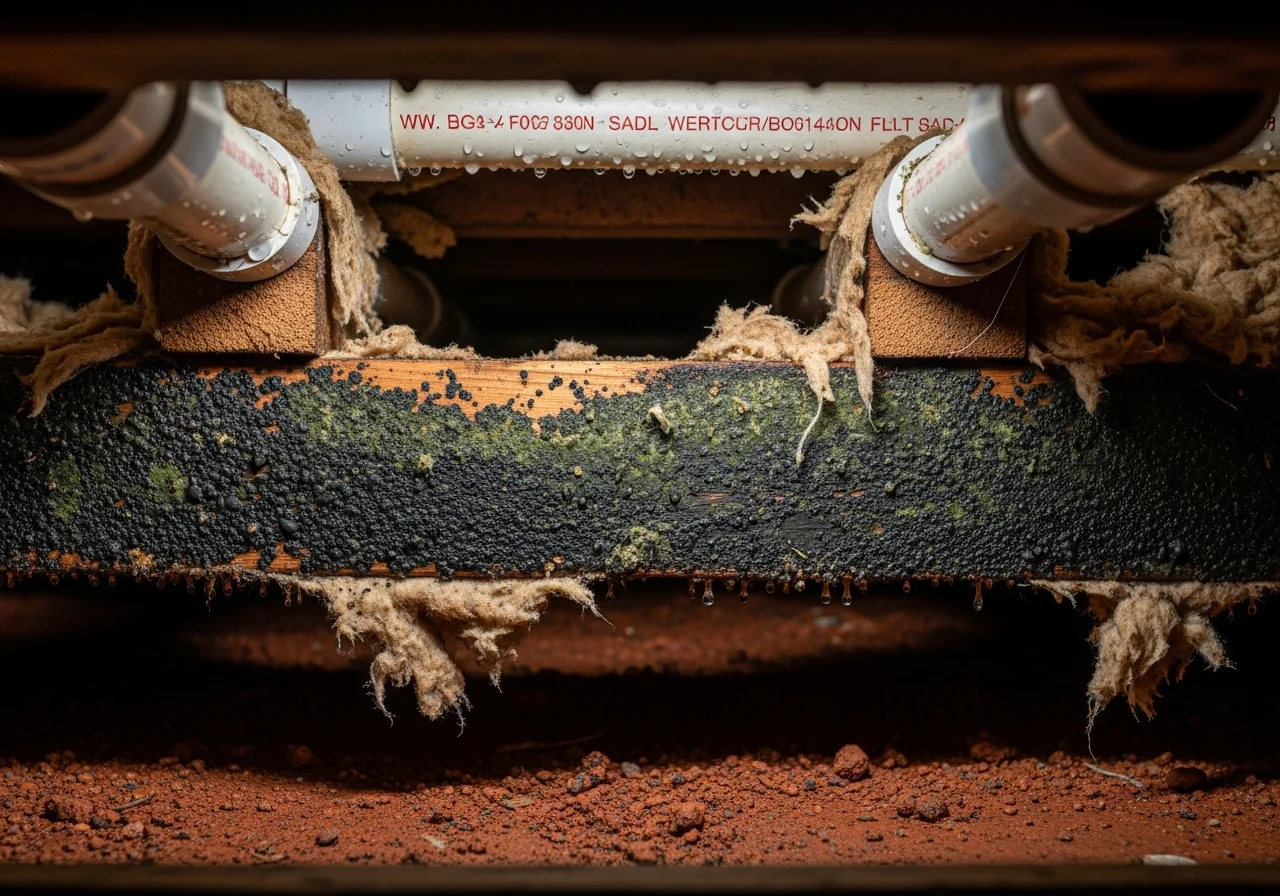
Gastonia's vented crawl spaces over red clay soil create persistent moisture conditions
that drive mold colonization on floor joists, subflooring, and insulation.
Neighborhood-Level Intelligence
Gastonia Neighborhood Mold Risk Profiles
Mold risk in Gastonia follows predictable patterns based on housing age, crawl space
design, proximity to waterways, and soil conditions. Here is what we see across the
neighborhoods where we work most frequently.
Loray Village
High Risk
Built: 1900s-1930s
Primary risk: Historic mill housing, original plumbing, vented crawl spaces on clay
Common damage: Crawl space mold on floor joists, HVAC contamination, subflooring decay
Gardner Park
High Risk
Built: 1920s-1960s
Primary risk: Pre-war construction, aging foundation vents, creek-adjacent lots
Common damage: Chronic crawl space moisture, black mold on framing, insulation contamination
Gastonia sits on Piedmont red clay — Cecil and Pacolet series soils that drain at less
than 0.2 inches per hour and hold up to 55% moisture by volume. After any significant
rain, this clay holds water against your foundation for days. That moisture migrates
upward through the soil and into your crawl space as water vapor.
Now add the vented crawl space design used in nearly every pre-1980 Gastonia home.
Foundation vents were intended to let moisture escape — but in a humid subtropical
climate, they do the opposite. When 70-75% humidity outdoor air enters the crawl space
in summer, it contacts cooler foundation walls and floor joists. The temperature
difference causes condensation — liquid water forming directly on your home's structural
members.
The result is a closed moisture loop: clay pushes moisture up from below, vents pull
humid air in from outside, and condensation forms on every cool surface. Floor joists,
subflooring, HVAC ductwork, and insulation stay perpetually damp — and mold colonizes
within days. North Carolina's building codes now allow closed (encapsulated) crawl
spaces as an alternative, requiring a Class I vapor barrier, mechanical
dehumidification, and a mandatory 3-4 inch termite inspection gap.
Crawl space humidity (vented, summer)70-90% RH
Safe humidity threshold for mold prevention<60% RH
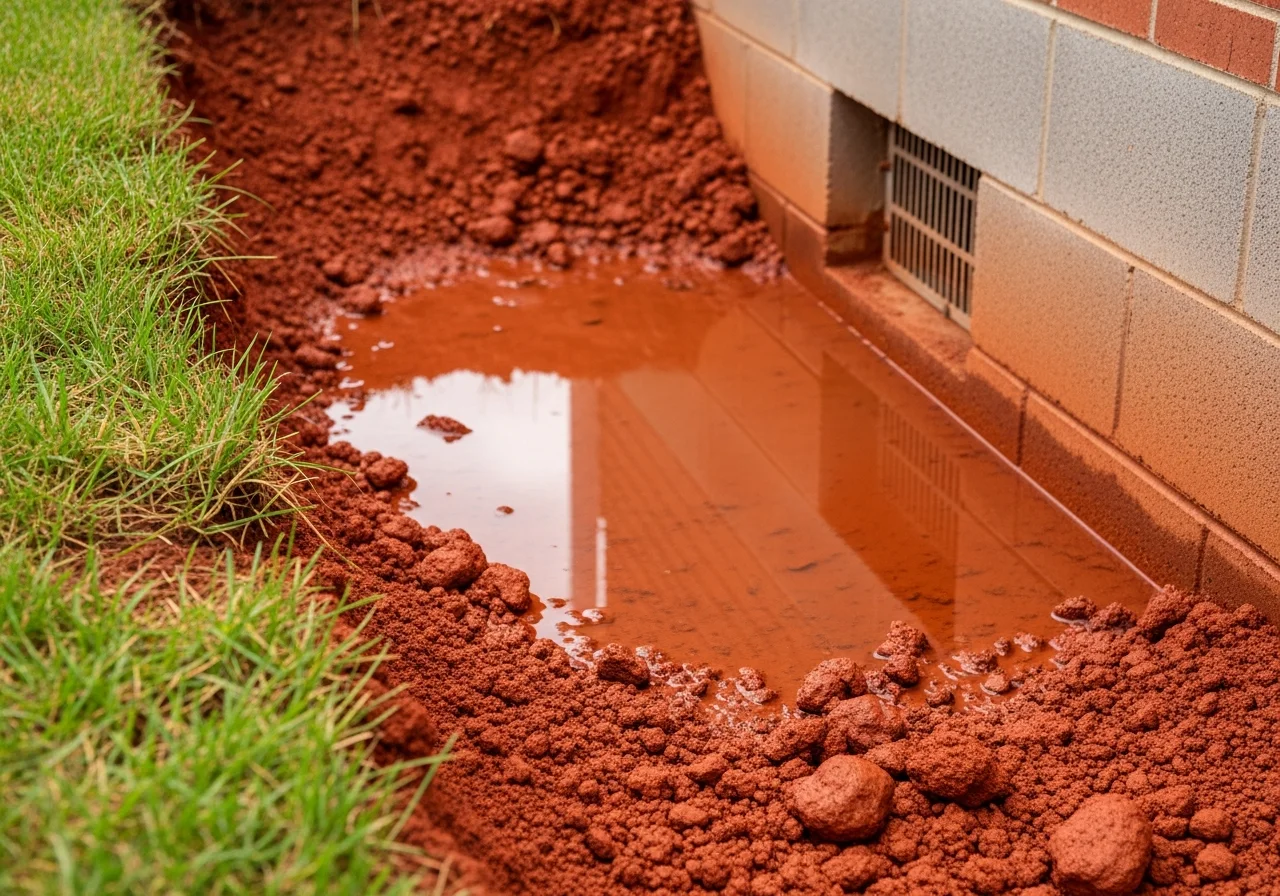
Gaston County's red clay holds moisture against foundations for days — the root cause
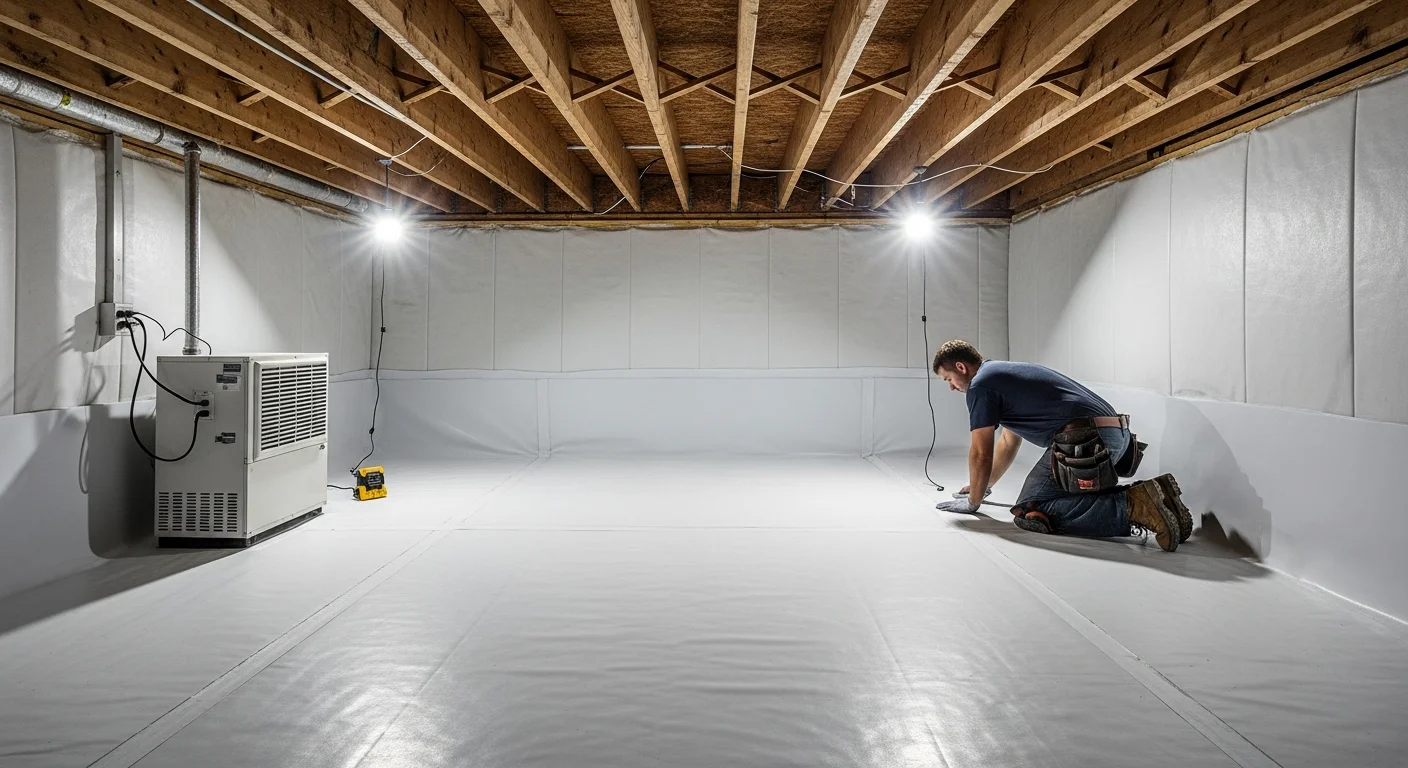
of Gastonia's chronic crawl space mold problem.After: Encapsulated crawl space with vapor barrier and mechanical dehumidification
breaks the moisture cycle permanently.
Radon Warning
Before encapsulating any Gastonia crawl space, test for radon. Gaston County has
elevated radon levels — 123 school rooms across the county tested above the EPA's 4
pCi/L action level. Sealing a crawl space without radon mitigation can trap this
cancer-causing gas inside your home. We always recommend radon testing before
encapsulation and can coordinate mitigation if needed.
IICRC S520 Protocol
Our Gastonia Mold Remediation Process
Professional mold remediation follows a strict sequence defined by the IICRC S520
standard. Here is exactly what happens when Palm Build's certified team arrives at your
Gastonia home.
01
Assessment & Testing
Day 1
02
Containment Setup
Day 1-2
03
HEPA Air Filtration
Continuous
04
Mold Removal
Days 2-4
05
Antimicrobial Cleaning
Days 4-5
06
Clearance & Restoration
Day 5-7
01
Assessment & Testing
Day 1
Comprehensive visual inspection, infrared moisture mapping, and air quality sampling throughout your Gastonia home. We identify the moisture source driving the mold — not just the visible growth — and classify contamination level per IICRC S520.
02
Containment Setup
Day 1-2
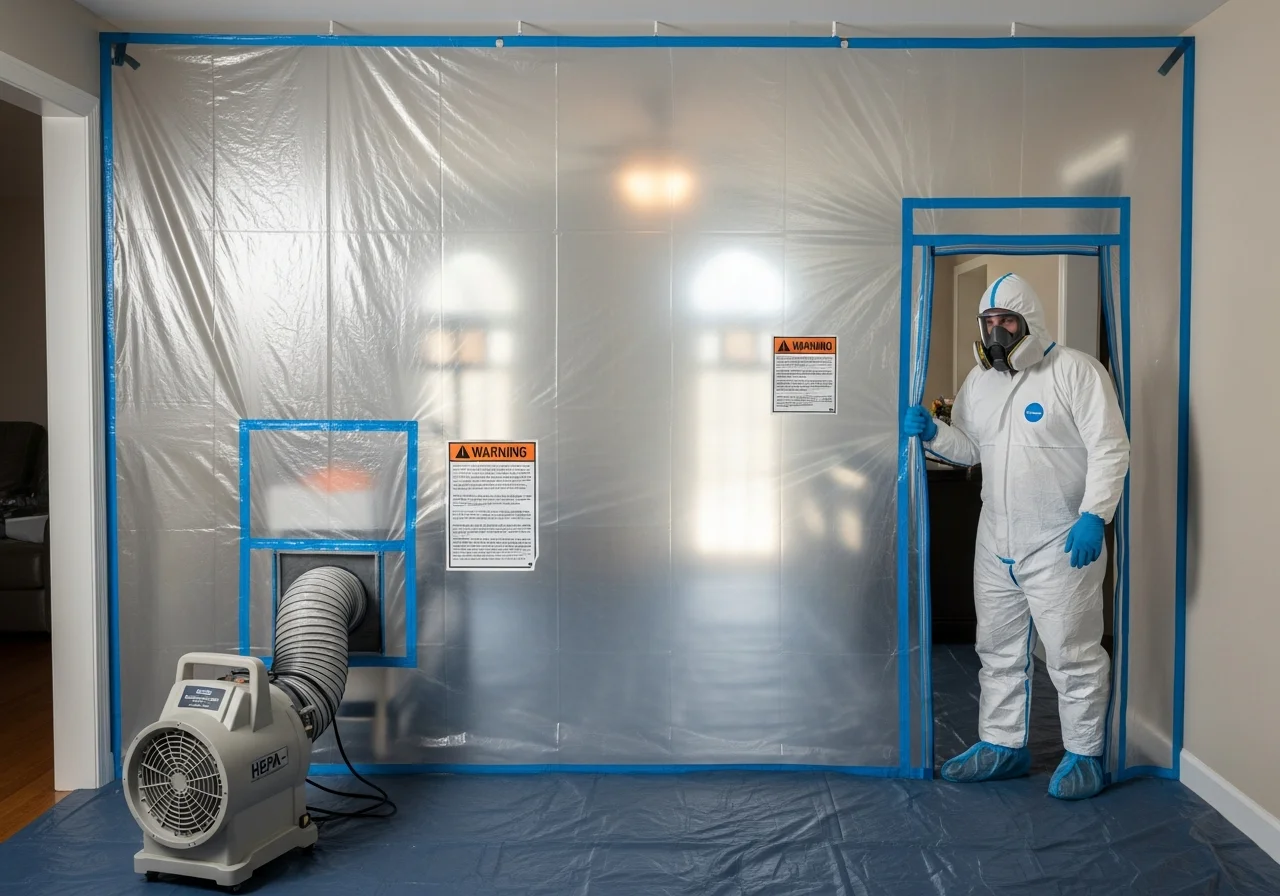
Sealed polyethylene containment barriers isolate affected areas. HEPA air scrubbers create negative air pressure to prevent cross-contamination into clean areas of your home. Critical contents are protected or relocated.
03
HEPA Air Filtration
Continuous
HEPA filtration runs throughout the entire project, capturing airborne spores down to 0.3 microns. This protects both your home and our technicians while maintaining clean air in unaffected areas.
04
Mold Removal
Days 2-4
Contaminated materials are removed using controlled demolition techniques. Salvageable surfaces — common in Gastonia crawl spaces where floor joists are structurally sound — are cleaned with HEPA vacuuming, wire brushing, and media blasting. Non-salvageable materials are double-bagged for disposal.
05
Antimicrobial Cleaning
Days 4-5
EPA-registered antimicrobial agents are applied to all treated surfaces. For Gastonia crawl spaces, this includes joist faces, subfloor panels, sill plates, and foundation walls. The treatment prevents regrowth during the moisture control and reconstruction phases.
06
Clearance & Restoration
Day 5-7
Post-remediation air quality testing by an independent third party confirms spore counts have returned to acceptable levels. Visual inspection verifies all contamination has been addressed. Clearance documentation is provided for your records and insurance claim.
Why Containment Matters
Disturbing mold without proper containment sends billions of spores airborne —
potentially contaminating previously clean areas of your home. Our containment
protocol ensures mold stays isolated during removal.
1
Sealed Barriers
Polyethylene sheeting floor-to-ceiling around work area
2
Negative Pressure
HEPA scrubbers pull contaminated air through containment
3
PPE Protocol
Full Tyvek suits, respirators, and goggles for all crew
4
Air Lock Entry
Decontamination chamber at containment entry/exit point
These ranges reflect real-world project costs in the Gastonia area — not national
averages. Gaston County's prevalence of vented crawl space construction, aging housing
stock, and clay soil moisture all push mold projects toward the higher end. NC standard
insurance policies often cap mold coverage at $5,000-$10,000.
Minor Mold (Under 50 sq ft)
Bathroom, closet, window frame, single wall section
$1,500 - $4,000
Containment and HEPA filtration
Surface cleaning and antimicrobial treatment
Post-remediation air testing
Typically 1-2 day project
Moderate (50-200 sq ft)
Bedroom wall, HVAC ductwork, partial crawl space
$4,000 - $12,000
Full containment with negative air pressure
Material removal and controlled demolition
HVAC cleaning if contaminated
Typically 3-5 day project
Major / Crawl Space
Full crawl space, multiple rooms, structural involvement
$12,000 - $30,000+
Complete crawl space remediation
Structural joist repair if needed
Encapsulation with vapor barrier
Mechanical dehumidification install
Factors That Affect Your Gastonia Mold Project Cost
Contamination size and location
Whether crawl space is involved
Structural damage requiring repair
HVAC system contamination
Type of mold species present
Insurance coverage and sublimits
Need for encapsulation after remediation
Third-party clearance testing
Consumer Protection
NC Mold Licensing: What Gastonia Homeowners Must Know
North Carolina has no state-specific mold remediation license requirement. The NC State University Extension Healthy Homes program confirms: "No federal or
state certification programs exist for companies or individuals providing mold
remediation services."
This means anyone can legally offer mold remediation in Gastonia — regardless of
training, equipment, or experience. The accepted industry benchmark is IICRC
certification, specifically the BSR-IICRC S520 standard for
professional mold remediation procedures and the Mold Remediation Specialist (MRS) certification, which requires verifiable
field experience and a proctored examination.
For Gastonia homeowners, this regulatory gap means you must verify credentials
yourself. The lack of state oversight creates an environment where unqualified
contractors can offer low-cost "mold removal" that fails to address the root moisture
problem — and may actually spread contamination.
Verify IICRC S520 certification for any mold company you hire
Ask for MRS (Mold Remediation Specialist) credentials by name
Confirm containment and HEPA filtration are part of the scope
Structural repair requires separate NC general contractor licensing
Gaston County permits required for any structural work
No IICRC certification or refuses to provide proof
Offers to "spray and seal" without removing contaminated material
No containment barriers or HEPA filtration in scope of work
Same company does mold testing AND remediation (conflict of interest)
Quotes a flat price without inspecting the property first
Insurance Navigation
Mold Insurance Claims in Gastonia
Mold coverage in North Carolina is limited and varies significantly by carrier and
policy. Most Gastonia homeowners discover their coverage gaps only after filing a claim.
Understanding your mold policy provisions before you need them can save thousands.
Mold resulting from a covered sudden water event (burst pipe, appliance failure) is typically covered up to policy sublimits
Gradual moisture damage — long-term crawl space humidity, slow leaks, chronic condensation — is almost always excluded from coverage
NC standard policies often cap mold coverage at $5,000-$10,000 sublimits — Gastonia crawl space remediation frequently exceeds this
Carriers may deny claims if you failed to report water damage within 24-48 hours or did not mitigate promptly
Pre-existing mold discovered during renovation, inspection, or real estate transaction is not covered
Some carriers offer mold endorsements for additional premium — ask your agent about expanded mold coverage before you need it
Common Carriers in Gaston County
State FarmTypically $5,000-$10,000 mold sublimit
NC Farm BureauCommon in Gaston County, varies by policy
When mold results from a covered water event, our documentation connects the mold to the
original loss — moisture maps, timeline photos, air quality testing, and remediation
scope all formatted for the adjuster. For non-covered mold from chronic crawl space
moisture, we provide transparent pricing and can discuss financing options.
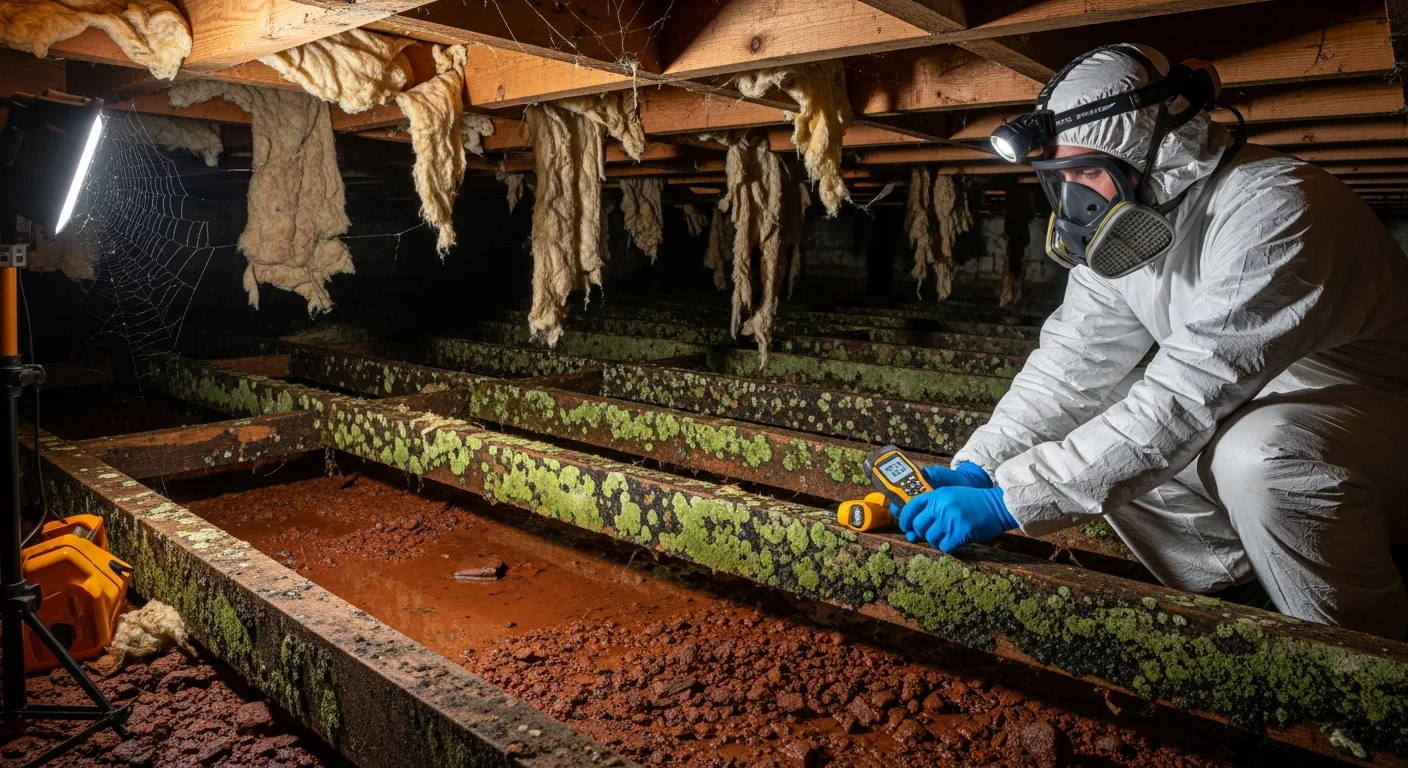
Active mold colonization on floor joists — common in Gastonia vented crawl spaces
After: Encapsulated crawl space with vapor barrier and permanent moisture control
Sealed containment with negative air pressure prevents cross-contamination
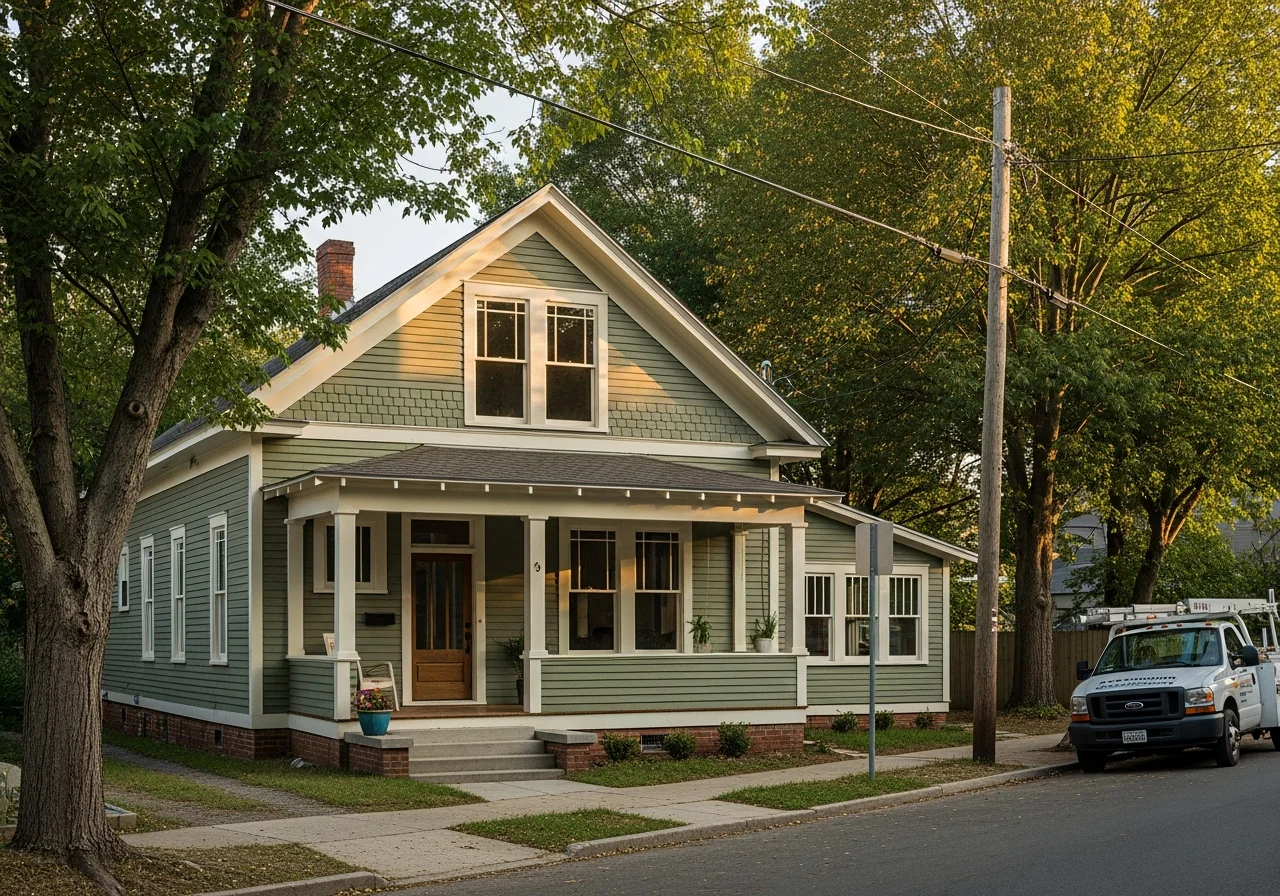
Loray Village's historic homes require specialized remediation respecting original construction
The Palm Build Difference
Why Gastonia Homeowners Choose Palm Build for Mold
In a state with no mold licensing requirement, credentials and local expertise are
everything. National franchises dominate the Charlotte metro market by volume — but none
of them build their protocols around Gaston County's specific clay soils, crawl space
designs, and housing stock.
IICRC S520 Certified
Every crew lead holds current Mold Remediation Specialist (MRS) certification. We follow the S520 standard for containment, removal, and clearance verification — the industry benchmark in a state with no licensing requirement.
45-Minute Emergency Response
When mold is discovered during a water damage event, speed matters. Our Gastonia-area crews can be on site within 45 minutes to begin containment and prevent further spread.
Gastonia Crawl Space Expertise
We understand Gaston County's red clay soil, vented crawl space construction, and the specific mold species common in this region. Our remediation protocols account for Gastonia's unique moisture dynamics.
Licensed NC General Contractor
When mold has damaged structural members — joists, sill plates, subflooring — we handle the structural repair under our NC contractor license. No subcontracting, no handoffs, no gaps.
Insurance Coordination
When mold results from a covered water event, our documentation connects the mold to the original loss. Moisture maps, timeline photos, air quality testing, and scope of work — all formatted for your adjuster.
Mold Prevention Focus
We do not just remove mold — we eliminate the moisture source driving it. Encapsulation, drainage correction, dehumidification, and ventilation upgrades ensure mold does not return after remediation.
Common Questions
Gastonia Mold Remediation FAQ
Does North Carolina require a mold remediation license?
No. North Carolina has no statewide mold remediation licensing requirement. This means any contractor in Gastonia can advertise mold removal services without any training, certification, or regulatory oversight. The IICRC S520 Standard and Reference Guide for Professional Mold Remediation is the accepted industry benchmark — and the IICRC Mold Remediation Specialist (MRS) credential is the only independently verifiable certification available. Palm Build holds current IICRC S520 certification. Always verify your contractor's credentials at iicrc.org before hiring.
Why is crawl space mold so common in Gastonia homes?
Three factors converge in Gastonia to create the Charlotte metro's worst crawl space mold conditions: 48% of homes were built before 1970 with vented crawl space foundations, Gaston County's Cecil and Pacolet red clay soils drain at less than 0.2 inches per hour (keeping ground moisture elevated for 3-5 days after rain), and summer humidity holds at 70-75% — well above the 60% threshold for mold growth. Warm humid air enters through foundation vents, condenses on cooler wood framing, and feeds mold colonies that are active nearly year-round.
Which Gastonia neighborhoods have the highest mold risk?
The highest-risk neighborhoods are those with the oldest housing stock on crawl space foundations: Loray Village (649 mill houses from 1901-1920s with century-old crawl spaces), Gardner Park (1950s-1970s brick ranches), York-Chester and Brookwood (1920s-1960s historic districts with deferred crawl space maintenance), and Quail Ridge (1960s-1980s homes with aging plumbing that feeds crawl space moisture). Newer neighborhoods like Robinson Oaks on slab foundations carry lower crawl space risk but can still develop HVAC-related mold.
How much does mold remediation cost in Gastonia, NC?
Mold remediation in Gastonia typically ranges from $1,500-$5,000 for contained single-area projects, $5,000-$15,000 for crawl space mold remediation with antimicrobial treatment, and $15,000-$35,000+ for extensive crawl space mold requiring structural repair and full encapsulation. Crawl space encapsulation alone ranges from $4,000-$20,000 depending on size and conditions. We provide free on-site assessments with written scope and cost documentation.
Should I test for radon before crawl space encapsulation in Gastonia?
Yes — strongly recommended. Gaston County has documented radon co-occurrence: 123 school rooms in the county tested above the EPA action level of 4.0 pCi/L. The same decomposing granite bedrock that produces red clay also produces radon gas. Encapsulating a crawl space without radon mitigation can trap radon beneath the vapor barrier, increasing indoor levels. Palm Build coordinates radon testing as part of our pre-encapsulation assessment and can integrate a sub-membrane depressurization system into the encapsulation design.
Does homeowners insurance cover mold remediation in Gastonia?
NC standard homeowners policies typically cover mold remediation only when it results from a sudden, covered water event — like a burst pipe or appliance failure. However, most policies have mold sublimits of $5,000-$10,000, which is often insufficient for Gastonia crawl space projects. Gradual moisture, chronic humidity, and deferred maintenance are excluded. Crawl space encapsulation is generally classified as a home improvement, not a covered expense. Palm Build provides thorough documentation to support claims where coverage applies.
How quickly can Palm Build respond to mold emergencies in Gastonia?
Our team arrives in Gastonia within approximately 45 minutes from our Charlotte operations hub at 378 Crompton Street. For mold discovered after a water damage event — where rapid response prevents further colonization — we provide same-day assessment and can begin containment immediately. For non-emergency mold assessments, we schedule within 24-48 hours. Call (704) 464-0121 any time.
Crawl Space Mold in Your Gastonia Home? Get It Assessed Properly.
North Carolina does not require a mold remediation license — but your family's health requires a qualified contractor. Palm Build's IICRC S520-certified team provides professional assessment, containment, remediation, and post-remediation verification for Gastonia homes. We handle everything from crawl space mold to full encapsulation, with documentation your insurance carrier accepts.