GASTONIA NC — LARGE LOSS & DISASTER DECLARATION RESPONSE
Large Loss Handling in Gastonia, North Carolina
In May 2024, two EF-1 tornadoes carved through Gaston County with 110 mph winds, triggering a State Disaster Declaration and damaging hundreds of properties in a single afternoon. Four months later, Hurricane Helene left 60-70% of the county without power and sent the South Fork Catawba River over its banks. When damage exceeds $500,000, spans multiple buildings, or requires catastrophe-level coordination across Gastonia's apartment complexes, HOA communities, and commercial districts, Palm Build's large loss team deploys with the crew depth, equipment, and multi-party project management that Gaston County's most devastating events demand.
Approximately 25 miles — Charlotte, NC 45-60 min Response IICRC Certified
Gastonia's large loss vulnerability is the product of back-to-back disaster
declarations, dense multi-family development, and historic conversion projects that
concentrate hundreds of units under shared infrastructure. When these factors converge —
as they did twice in 2024 — the damage exceeds $500,000 and spans multiple buildings
simultaneously.
May 2024 EF-1 Tornadoes
110 mph
State Disaster Declaration
Two EF-1 tornadoes carved through Gaston County with 110 mph winds, triggering a State Disaster Declaration and damaging hundreds of properties across a miles-wide corridor in a single afternoon. The simultaneous, multi-property scope overwhelmed every residential restoration company in the county within hours.
Hurricane Helene — September 2024
60-70%
County without power
Four months after the tornadoes, Helene's remnants left 60-70% of Gaston County without power and sent the South Fork Catawba River over its banks. Properties still under restoration from the May tornadoes sustained compounding damage — layered insurance claims, extended timelines, and catastrophe-scale coordination that only large loss project management can handle.
Multi-Building Complex Exposure
570+
HOA households at risk
Apple Creek Village concentrates 270 households in one HOA footprint. The Village at Parkside exceeds 300 units. A single storm corridor can damage dozens of structures simultaneously, generating multi-carrier claims involving the association's master policy and individual HO-6 policies across hundreds of units. Standard residential companies cannot coordinate at this scale.
Loray Mill — 190-Unit Historic Conversion
190
Units in single complex
The Loray Mill adaptive reuse project packed 190 apartment units into a single historic textile mill with shared roofing, plumbing risers, and fire suppression systems. A building-wide water event or fire generates a large loss claim involving the property owner, 190 individual renters' insurance carriers, and historic preservation tax credit stakeholders — a complexity level that defines large loss.
Gaston County's back-to-back disaster declarations in 2024 exposed the county's
vulnerability to multi-building catastrophe events that overwhelm standard residential
restoration capacity.
Case Study: May 2024 Tornadoes
State Disaster Declaration Response in Gaston County
When two EF-1 tornadoes struck Gaston County in May 2024 — triggering a State Disaster
Declaration and damaging hundreds of properties across a miles-wide corridor — the
restoration demand arrived as dozens of simultaneous emergency calls from property
managers, HOA boards, commercial building owners, and individual homeowners, all
competing for the same limited pool of qualified restoration crews.
2
Disaster Declarations (2024)
EF-1
Tornado Rating (May 2024)
110 mph
Peak Wind Speed
<6 hrs
Our Deployment Time
1
Pre-Event Staging (Weather Watch Phase)
When the National Weather Service issues severe thunderstorm or tornado watches for Gaston County — or when a tropical system targets the Carolina Piedmont — Palm Build activates pre-positioning protocols. Equipment trailers loaded with truck-mounted extractors, commercial dehumidifier banks, emergency board-up materials, and temporary power generators are staged at our Charlotte hub for immediate westbound deployment on I-85.
2
Immediate Deployment (0-6 Hours Post-Event)
Within hours of a disaster declaration event, our large loss team deploys to Gastonia with multiple crews operating simultaneously. Priority triage: structural stabilization, emergency water extraction, tarping and board-up to prevent secondary damage. We establish on-site coordination with a dedicated project manager who serves as the single point of contact for all affected property stakeholders.
3
Multi-Building Assessment (6-48 Hours)
Our project management team conducts systematic building-by-building assessment across the affected area. Each structure receives individual documentation — moisture mapping, structural evaluation, photo evidence, and preliminary scope of work. For HOA communities like Apple Creek Village, we coordinate directly with the board and property management company to establish assessment priority and access schedules.
4
Sustained Mitigation Operations (Week 1-4)
Large loss mitigation is not a one-day operation. Building-wide drying in a complex like Loray Mill can require 200+ dehumidifiers operating continuously for weeks. Palm Build maintains the equipment inventory, crew rotation schedules, and supply chain relationships to sustain multi-building mitigation operations without interruption — including weekends and holidays.
5
Reconstruction and Closeout (Month 1-12)
Once mitigation is complete, our NC-licensed general contracting team executes reconstruction across all affected structures. For Gastonia large losses, this means coordinating NC building permits for work exceeding $40,000 or involving structural modifications, managing City privilege license requirements, scheduling sequential inspections, and maintaining progress reporting to all insurance stakeholders until final closeout.
The Compounding Effect: Helene Four Months Later
Just four months after the May tornadoes, Hurricane Helene's remnants left 60-70% of
Gaston County without power and sent the South Fork Catawba River over its banks.
Properties still under restoration from the tornado damage sustained additional flooding
and wind damage — creating layered insurance claims with multiple carriers, extended
restoration timelines stretching past 12 months, and catastrophe-scale coordination
demands that only a large loss team with dedicated project management can handle.
Large Loss Timeline
6-Step Large Loss Restoration Process for Gastonia
Large loss restoration follows a structured, phased approach that balances emergency
response urgency with the multi-month coordination Gastonia's catastrophe-scale events
demand. Here is the timeline our team follows for projects exceeding $500,000.
01
Rapid Mobilization
Hours 0-6
02
Command Center Setup
Hours 6-24
03
Multi-Crew Deployment
Days 1-7
04
Phased Restoration
Weeks 2-8
05
Stakeholder Communication
Ongoing
06
Project Closeout
Months 6-12+
01
Rapid Mobilization
Hours 0-6
Multiple crews deploy from our Charlotte Operations Hub via I-85 within hours of the event. Priority: structural stabilization, emergency water extraction, tarping and board-up to prevent secondary damage. Equipment trailers pre-loaded with truck-mounted extractors, commercial dehumidifier banks, and portable generators arrive on-site for immediate deployment across all affected structures.
02
Command Center Setup
Hours 6-24
A dedicated large loss project manager establishes on-site command and begins systematic stakeholder communication with property owners, HOA boards, insurance carriers, and national adjusting firms. The command center coordinates all crew assignments, equipment allocation, and documentation workflows across the multi-building footprint.
03
Multi-Crew Deployment
Days 1-7
Building-by-building assessment with individual documentation packages for each structure. Industrial drying equipment deployed across all affected buildings simultaneously — not sequentially. Daily moisture readings, structural evaluations, and photographic evidence cataloged per unit. For Gastonia HOA communities, we coordinate access schedules with property management to minimize resident disruption.
04
Phased Restoration
Weeks 2-8
Continuous drying and remediation operations across the multi-building footprint. Equipment monitoring and adjustment based on daily psychrometric data. Demolition of contaminated materials, mold remediation where required, and structural repair proceed in coordinated phases. NC building permits filed for reconstruction work exceeding $40,000 or involving structural modifications.
05
Stakeholder Communication
Ongoing
Weekly progress reports formatted for national adjusting firm requirements. Carrier-specific Xactimate scope packages maintained for each insured party. Inspection schedules coordinated so multiple adjusters can review work without delaying the restoration timeline. For HOA large losses, regular board updates and resident communication managed through the dedicated project manager.
06
Project Closeout
Months 6-12+
Unit-by-unit completion and handoff to property managers and individual owners. Final insurance documentation packages submitted to all carriers. Supplemental claims filed where scope exceeded original estimates. Certificate of completion issued for each affected structure. Warranty documentation delivered for all reconstruction work performed.
Coordinating Restoration Across Multiple Buildings in Gastonia
The defining challenge of Gastonia large loss events is not the damage to any single
building — it is the simultaneous coordination across multiple structures, multiple
insurance carriers, and multiple stakeholder groups. Apple Creek Village's 270 units,
Loray Mill's 190 apartments, the FUSE District's connected commercial buildings — each
demands project management infrastructure that standard restoration companies do not
possess.
Simultaneous Multi-Structure Operations
When a storm corridor damages 30 roofs across Apple Creek Village or a building-wide water event hits Loray Mill's 190 units, the response cannot be sequential. Palm Build deploys multiple crews across all affected structures simultaneously — each crew with its own equipment loadout, documentation workflow, and daily reporting structure that feeds into the centralized project management command.
Crew Scheduling and Rotation
Multi-building large losses in Gastonia demand sustained operations over weeks and months — not the 3-5 day timeline of residential work. Palm Build maintains crew rotation schedules that sustain multi-shift operations without burnout, ensuring consistent quality across every structure in the project footprint. Weekend and holiday coverage is standard for disaster declaration events.
Resource Allocation Across Buildings
A 190-unit complex like Loray Mill can require 200+ dehumidifiers, dozens of air movers per floor, and multiple truck-mounted extraction units operating simultaneously. Palm Build allocates equipment building-by-building based on damage severity, drying psychrometrics, and structural priority — not first-come, first-served scheduling that leaves the most damaged units waiting.
Per-Unit Documentation
Every unit, every building, every structure receives its own documentation package — moisture mapping, structural evaluation, photo evidence, Xactimate scope, and progress tracking. For HOA communities with master policies and individual HO-6 coverage, this per-unit documentation separates which damages fall under which policy and prevents the coverage disputes that delay restoration by weeks.
Priority Triage Protocol
Not all buildings in a multi-structure event require the same urgency. Palm Build triages structures by severity: immediate structural danger, active water intrusion requiring emergency intervention, stable damage awaiting full scoping, and minor damage suitable for standard scheduling. This ensures critical properties receive attention first while limited resources prevent the most secondary damage.
Phased Reconstruction Coordination
Reconstruction across multiple buildings requires sequential permitting, inspection scheduling, material procurement, and trade coordination that residential contractors are not structured to manage. Our NC-licensed general contracting team executes phased reconstruction with dedicated project management for each building — coordinating Gastonia building permits, City privilege license requirements, and insurance approval gates across the entire project footprint.
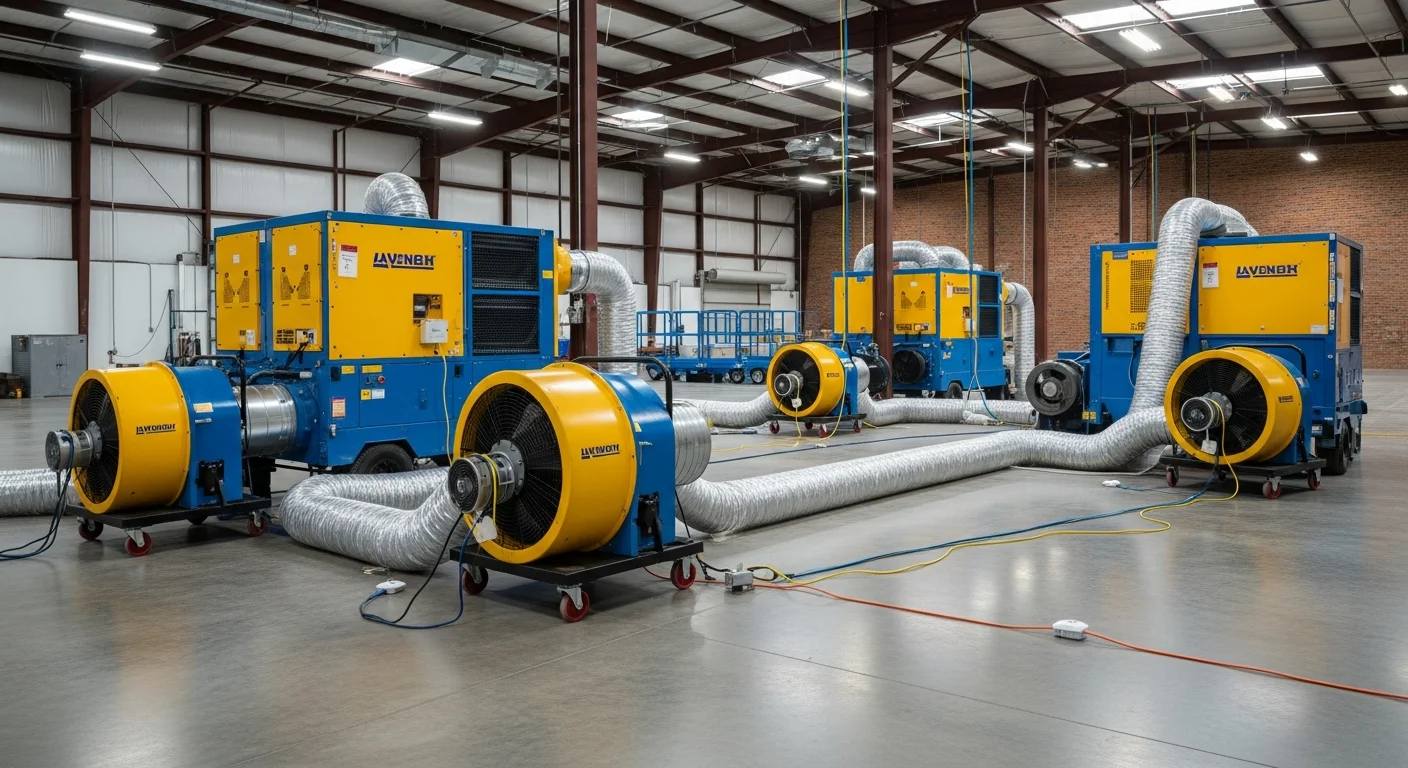
Multi-building large loss operations require industrial-scale equipment deployed across
every affected structure simultaneously — not the sequential, one-truck approach of
residential restoration.
Cost Guide
Large Loss Restoration Costs in Gastonia
Large loss projects bear no resemblance to standard residential restoration costs. The
combination of multi-building scope, multi-party insurance coordination, NC permit
requirements, and sustained operations over months means costs scale with complexity —
not just square footage.
Mid-Size Large Loss
$50,000 - $250,000
Single building, multiple units affected
5-15 crew members deployed
2-4 month restoration timeline
Single carrier or dual-carrier coordination
NC building permits required for structural work
Dedicated project manager assigned
Gastonia Example
Multi-unit water event at an apartment complex or townhome community
Large Loss
$250,000 - $1M
Multiple buildings or entire complex affected
15-30+ crew members across multiple shifts
4-8 month restoration timeline
National adjusting firms involved
HOA master policy + individual HO-6 coordination
Senior project manager with assistant PM
Gastonia Example
Storm corridor damage across Apple Creek Village or Loray Mill building-wide event
Catastrophic Loss
$1M+
Multi-building, multi-block, or district-wide
30+ crew members with mutual aid partners
8-12+ month restoration timeline
Multiple national adjusting firms, FEMA coordination
Dozens of simultaneous insurance claims
Full project management team with dedicated support
Gastonia Example
Disaster declaration event — tornado corridor or hurricane flooding across Gaston County
Every Gastonia large loss project receives a detailed preliminary scope within 48 hours of
assessment. Final costs are documented line-by-line in Xactimate, cross-referenced to
industry pricing databases, and submitted with carrier-specific formatting for each
insurance party involved.
Where Catastrophe Concentrates
Gastonia's Large Loss Property Types
Large loss events do not distribute randomly across Gastonia. They concentrate at
properties where structural density, shared infrastructure, high occupancy, or flood
exposure create the conditions for catastrophic-scale damage from a single triggering
event. These are the properties where Palm Build maintains pre-planned response
protocols.
270-300+ units
Multi-Family Complexes
Apple Creek Village (270 units), Village at Parkside (300+ units)
Storm corridor damage affecting dozens of structures simultaneously, shared drainage infrastructure, HOA master policy + individual HO-6 policy coordination across hundreds of units
190 units
Historic Adaptive Reuse
Loray Mill Apartments (190 units)
Building-wide water event through shared plumbing risers, fire in shared historic structure, historic preservation tax credit compliance during restoration, single-complex large loss exposure
Shared-wall fire spread between connected buildings, multi-tenant water events, business interruption claims, aging infrastructure failure, code compliance complexity
Hundreds of homes
South Fork Corridor Properties
Cramerton, Belmont, South Fork Catawba River communities
Repetitive flooding from South Fork Catawba River — February 2020, March 2021, September 2024 during Helene. Multi-property flood claims requiring synchronized mitigation across all affected structures
Multi-structure
HOA Campus Communities
Planned communities across Gaston County
Dense residential footprint where a single wind corridor damages dozens of structures simultaneously. Association master policies and individual homeowner coverage create overlapping claims that require coordinated documentation
Complex Claims Management
Large Loss Insurance Complexity in Gastonia
A single large loss event in Gastonia can involve a dozen or more insurance parties —
national adjusting firms, HOA master policies, individual HO-6 carriers, commercial
policies, FEMA programs, and public adjusters — each with different documentation
requirements, coverage scopes, and approval timelines.
Multi-Carrier, National Adjusting Firms
When national catastrophe adjusting firms like Crawford, Sedgwick, or Engle Martin deploy to Gaston County after a disaster declaration, they bring standardized large loss documentation requirements that exceed what standard residential restoration companies produce. Palm Build generates carrier-specific scope packages, maintains separate photo documentation per insured party, and provides daily progress reports formatted for national adjusting firm requirements.
HOA Master Policy + HO-6 Coordination
For Gastonia HOA large losses — where the association's master policy and individual homeowner HO-6 policies create overlapping coverage — Palm Build documents which damages fall under which policy. Apple Creek Village's 270 households and Village at Parkside's 300+ units each create scenarios where a single storm event generates the association's master claim plus dozens of individual HO-6 claims simultaneously.
FEMA Assistance After Disaster Declarations
After Gaston County's 2024 disaster declarations, many property owners discovered their standard homeowner's insurance did not cover the full scope of damage — particularly flooding from the South Fork Catawba River, which requires separate flood insurance. FEMA Individual Assistance, SBA disaster loans, and state emergency programs each have different application processes, documentation requirements, and funding timelines. Palm Build provides the technical documentation these programs require.
Loss Adjusters vs. Public Adjusters
For large loss claims exceeding $500,000, many Gastonia property owners retain public adjusters to represent their interests with insurance carriers. Palm Build coordinates with both the carrier-appointed loss adjuster and the public adjuster, preparing documentation that supports fair claim settlement without creating the friction that delays restoration. Our experience with national adjusting firms means our Xactimate scopes meet the documentation standards both sides require.
Ordinance & Law Coverage
Large loss reconstruction in Gastonia frequently triggers code upgrade requirements. NC building code for work exceeding $40,000 mandates current code compliance — not just restoring pre-loss condition. Electrical panels, plumbing, energy efficiency, and structural reinforcement may all require upgrades. Palm Build's estimators identify ordinance-and-law scope as separate line items so your coverage applies correctly.
Large loss claims in Gastonia involve national adjusting firms, multiple carriers, and
months-long documentation cycles — Palm Build manages the entire coordination process.
Our Work in Gastonia
Large Loss Restoration Across Gaston County
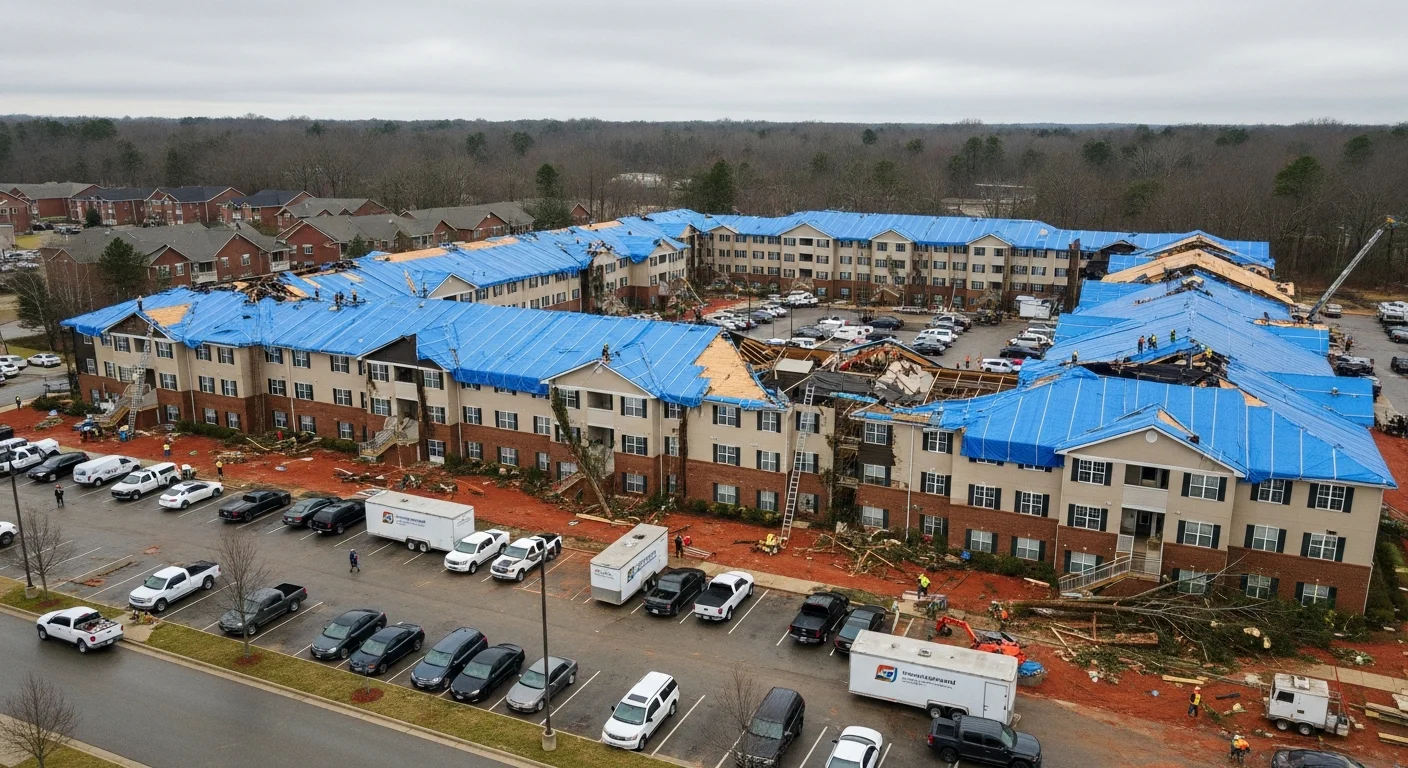
Aerial assessment: mapping the full scope of multi-building damage
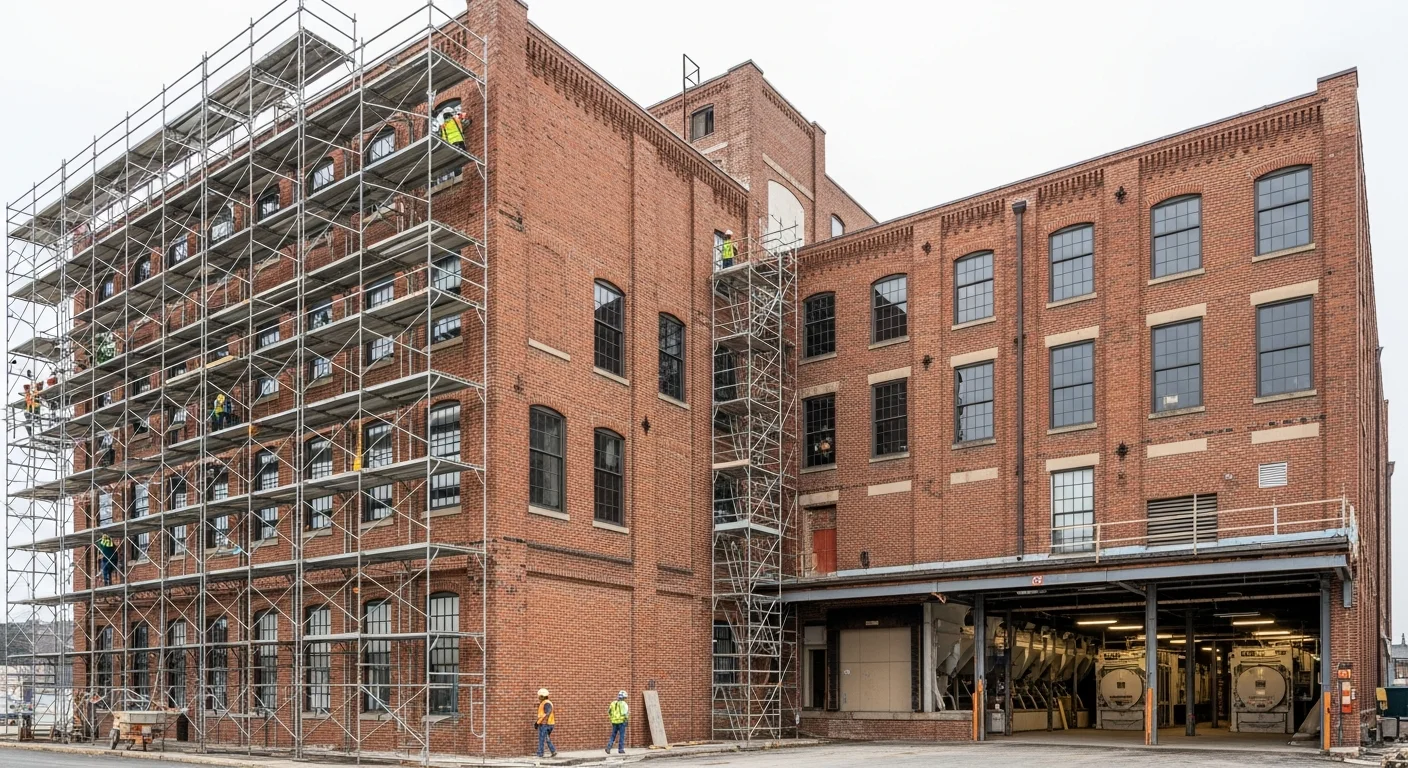
FUSE District commercial large loss — shared-wall restoration coordination
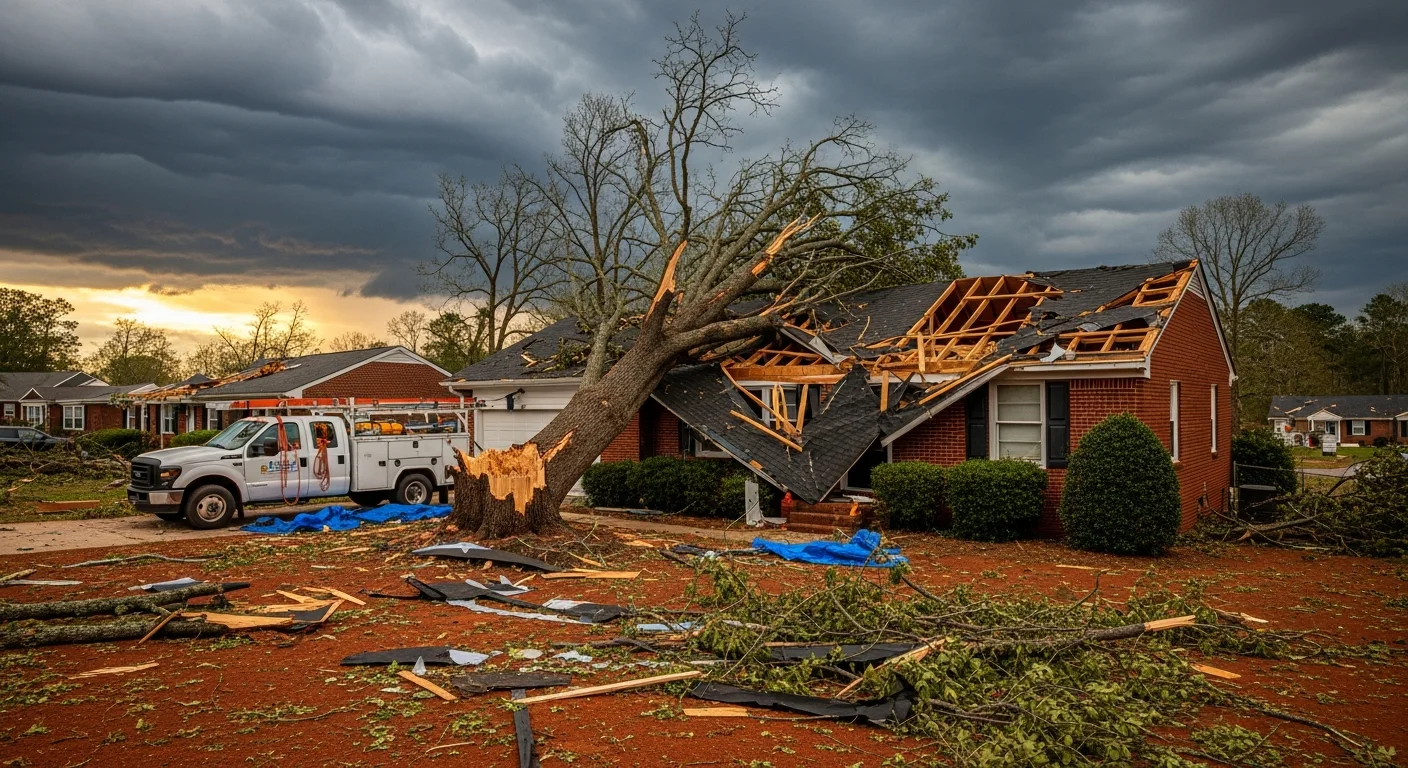
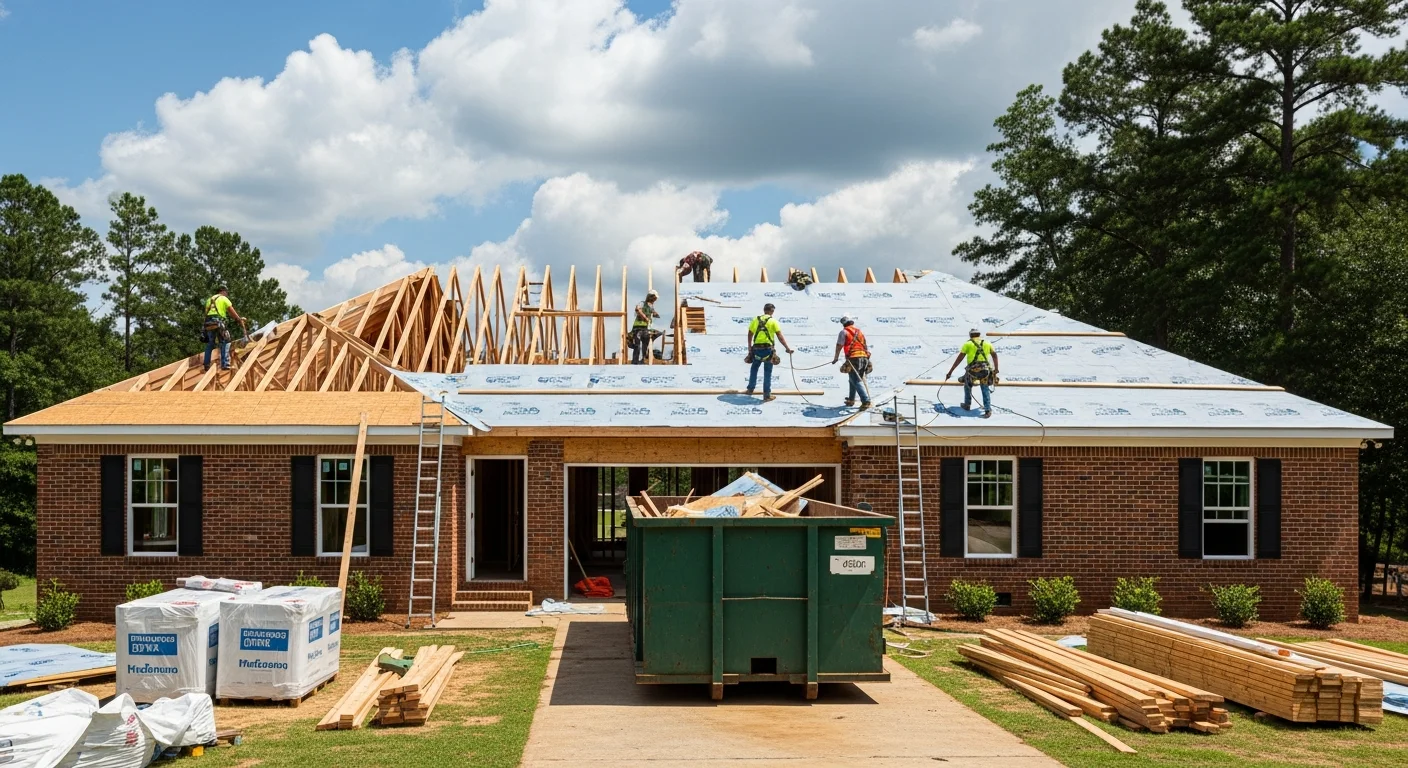
NC-licensed reconstruction — from roof systems to interior finishes
The Palm Build Difference
Why Gastonia Property Owners Choose Palm Build for Large Loss
Large loss events expose the difference between restoration companies built for
residential work and those built for catastrophe-scale response. When your project exceeds
$500,000, spans multiple buildings, or requires disaster declaration coordination, the
company you choose determines whether recovery takes months or years.
Multi-Crew Capacity
Palm Build deploys multiple crews simultaneously across multi-building footprints — the crew depth that Gastonia disaster declaration events demand, not the one-truck approach of residential companies.
NC Licensed General Contractor
Full NC GC licensing for projects exceeding $30,000, Gastonia City privilege license, and building permit coordination — virtually every large loss project requires this and most residential companies don't hold it.
Disaster Declaration Experience
We've responded to disaster declaration events across North Carolina and Florida, including Hurricane Helene and Gaston County's 2024 tornado aftermath. Our catastrophe protocols are tested, not theoretical.
Commercial-Grade Equipment
Trailer-mounted desiccant dehumidifiers, truck-mounted extractors, portable generator power, and large-format HEPA air scrubbers — industrial equipment for industrial-scale events.
Dedicated Project Management
Every Gastonia large loss receives a dedicated project manager who coordinates all trades, manages multi-party insurance communication, and provides weekly progress reports to all stakeholders.
Single Point of Contact
From emergency deployment through final closeout — one company, one project manager, one phone call. No subcontractor handoffs, no communication gaps, no accountability voids.
Multi-crew deployment, NC-licensed, disaster declaration experienced — the crew depth
Gaston County's most devastating events demand.
Common Questions
Gastonia Large Loss FAQ
What qualifies as a 'large loss' in Gastonia?
In Gastonia, large loss refers to any restoration project exceeding $500,000, involving multiple structures or buildings, requiring more than 10 crew members operating simultaneously, or involving complex multi-party insurance coordination with national adjusting firms. Gastonia-specific examples include building-wide water or fire events at the 190-unit Loray Mill apartments, storm corridor damage across Apple Creek Village's 270 households or the Village at Parkside's 300+ units, multi-building commercial losses in the FUSE District, and South Fork Catawba River flood events affecting multiple properties along the Cramerton-Belmont corridor simultaneously.
How does Palm Build respond to disaster declaration events in Gaston County?
When Gaston County receives a State Disaster Declaration — as it did after the May 2024 EF-1 tornadoes and again during Hurricane Helene in September 2024 — Palm Build activates our catastrophe response protocol. We deploy multiple crews simultaneously from our Charlotte Operations Hub on I-85, establish on-site project management with a dedicated large loss coordinator, and activate mutual aid agreements with other IICRC-certified restoration companies for supplemental labor. Our equipment inventory includes trailer-mounted desiccant dehumidifiers, truck-mounted extractors, portable generator power, and emergency board-up materials pre-staged for rapid Gaston County deployment.
How does insurance work for large loss events affecting multiple Gastonia properties?
Large loss events in Gastonia typically involve specialized national adjusting firms — Crawford, Sedgwick, or Engle Martin — rather than standard local adjusters. For HOA communities like Apple Creek Village, the claim involves both the association's master policy covering common elements and individual homeowner HO-6 policies covering unit interiors. For multi-family complexes like Loray Mill, the property owner's policy and dozens of individual renter's insurance carriers must be coordinated simultaneously. Palm Build generates separate documentation packages for each insured party, maintains carrier-specific Xactimate scopes, and coordinates inspection schedules so multiple adjusters can review work without delaying the restoration timeline.
What was the impact of the May 2024 tornadoes and Hurricane Helene on Gastonia?
The May 2024 EF-1 tornadoes struck Gaston County with 110 mph winds, triggering a State Disaster Declaration and damaging properties across a miles-wide corridor. Just four months later, Hurricane Helene's remnants left 60-70% of Gaston County without power and sent the South Fork Catawba River over its banks, flooding residential and commercial properties along the Cramerton-Mount Holly corridor. The back-to-back events compounded damage — properties still under restoration from the tornadoes sustained additional Helene damage, creating layered insurance claims and extended restoration timelines that only large loss project management can coordinate effectively.
How long do large loss projects take in Gastonia?
Large loss timelines in Gastonia vary dramatically by scope. Multi-unit apartment water events at complexes like Loray Mill: 6-12 weeks for mitigation, 3-6 months including reconstruction. HOA community storm damage across Apple Creek Village or Village at Parkside: 4-8 months for full community recovery. Disaster declaration events affecting multiple properties county-wide: 6-12+ months. Timelines extend due to multi-party insurance coordination, NC building permit requirements for work exceeding $40,000, sequential inspection processes across multiple structures, and material supply constraints during region-wide catastrophe events.
Does Palm Build hold the NC licenses required for large loss work in Gastonia?
Yes. North Carolina requires a general contractor license for any restoration or reconstruction project exceeding $30,000 — virtually every large loss project. The City of Gastonia requires building permits for work exceeding $40,000 or involving structural modifications, and contractors must hold a City privilege license to operate within Gastonia limits. Palm Build maintains full NC GC licensing, coordinates all Gastonia building permit requirements, and holds the City privilege license. For large loss projects involving historic properties like Loray Mill, we coordinate with applicable historic preservation requirements as well.
Why can't a standard residential restoration company handle a Gastonia large loss?
Standard residential restoration companies are equipped for single-property, single-carrier claims — one truck, two technicians, one adjuster. Large loss events in Gastonia require simultaneous multi-crew deployment across multiple structures, trailer-mounted industrial equipment that residential companies do not own, dedicated project managers who coordinate with national adjusting firms and multiple insurance carriers, NC general contractor licensing for reconstruction scopes that routinely exceed $500,000, and the logistical capacity to sustain operations for months without interruption. When a disaster declaration event generates dozens of simultaneous emergency calls, residential companies are overwhelmed within hours.
Large-Scale Damage in Gastonia? We Deploy at Catastrophe Scale.
Palm Build's large loss team responds to Gaston County's most devastating events with multi-crew deployment, industrial equipment, dedicated project management, and the multi-party insurance coordination that disaster declaration events demand. From Loray Mill to Apple Creek Village, from the FUSE District to the South Fork flood corridor — we scale with the scope.