Commercial Restoration in Gastonia, North Carolina
From the FUSE District's Atrium Health Ballpark revitalization and Loray Mill's adaptive reuse to Franklin Square Shopping Center and Downtown Gastonia's historic brick storefronts, Palm Build delivers 24/7 commercial restoration with phased occupancy planning, insurance documentation, and NC-licensed crews — dispatched from our Charlotte operations hub within 45 to 60 minutes.
Approximately 25 miles — Gastonia, NC 45-60 min Response IICRC Certified
Why Gastonia's Commercial Properties Face Unique Restoration Challenges
Gastonia is transforming from a textile manufacturing hub into a diversified commercial
center — but that transformation means modern businesses occupy buildings with legacy
infrastructure. From the FUSE District revitalization to the Loray Mill conversion,
commercial restoration in Gastonia requires understanding both what these buildings were
and what they are becoming.
FUSE District Revitalization
$200M+
District investment
Gastonia's FUSE District — the city's ambitious downtown transformation — is converting historic textile infrastructure into mixed-use commercial space. The Franklin Urban Sports & Entertainment district brings restaurants, retail, offices, and entertainment venues into buildings that were never designed for modern commercial occupancy. These adaptive-reuse structures combine century-old masonry walls with new HVAC, plumbing, and electrical systems — creating unique restoration challenges where historic preservation requirements intersect with modern building codes and commercial insurance policies.
Loray Mill Conversion & Textile Heritage
600K
Sq ft Loray Mill
The Loray Mill — once the largest textile mill under one roof south of the Potomac — is being converted into 200+ apartments, retail space, and commercial offices. This 600,000-square-foot landmark represents Gastonia's broader pattern: historic mill buildings across Gaston County are being repurposed for modern commercial use. These conversions retain original heavy timber framing, brick load-bearing walls, and multi-story open floor plans that create complex water migration pathways and require specialized drying approaches that residential contractors cannot provide.
Aging Commercial Building Stock
40-70
Years avg. building age
Gastonia's commercial corridors — Franklin Boulevard, Cox Road, New Hope Road, and the I-85 interchange areas — are dominated by buildings constructed during the textile boom of the 1950s through 1980s. These commercial structures feature flat built-up roofs prone to ponding, aging HVAC systems with deteriorating condensate lines, and original plumbing systems that have exceeded their designed service life. When water damage occurs in these aging buildings, the scope is almost always larger than it appears because moisture travels through deteriorated materials faster than through modern construction.
Modern Economy, Legacy Infrastructure
#1
Growing Gaston County
As Gastonia transitions from textile manufacturing to healthcare, logistics, and professional services, new tenants occupy buildings designed for different purposes. Medical offices in former retail spaces, tech companies in converted warehouse districts, and restaurants in repurposed storefronts all create commercial restoration scenarios where the current use dictates restoration requirements that exceed the original building's design capacity. A water event in a medical office occupying a 1970s strip mall bay requires healthcare-grade remediation in a building with residential-grade waterproofing.
Commercial-scale restoration deployment in Gastonia — from historic mill conversions to
modern retail centers along Franklin Boulevard.
Property Expertise
Commercial Property Types We Restore in Gastonia
Each commercial property type in Gastonia has specific structural, regulatory, and
operational requirements that inform the restoration approach. From historic mill
conversions to modern industrial facilities, here is our Gaston County-specific
expertise.
Historic Mill Buildings
Gaston County was once home to more than 100 textile mills — and many of these heavy timber and brick masonry structures are being converted into commercial, residential, and mixed-use space. The Loray Mill is the headline example, but smaller mill conversions across Gastonia and Belmont face the same restoration challenges: original heavy timber framing absorbs and retains moisture differently than modern dimensional lumber, multi-story open floor plans allow water to cascade through entire buildings, and historic preservation requirements restrict demolition approaches. Restoring water or fire damage in a converted mill building requires structural engineering assessment, selective demolition that preserves character-defining features, and drying protocols calibrated for massive timber members that can retain moisture for weeks.
Retail Centers & Franklin Square
Franklin Square Shopping Center, Eastgate Mall, and the retail corridors along Franklin Boulevard and Cox Road anchor Gastonia's retail economy. These multi-tenant retail centers — predominantly built in the 1970s through 1990s — feature shared flat roofs, common HVAC systems, and interconnected plumbing. When water damage occurs in one tenant space, it migrates through shared ceiling plenums and common walls into adjacent units. Each tenant has a separate insurance policy, the landlord has a master policy, and coordination between 3-8 tenants and their respective carriers requires experienced multi-stakeholder project management that residential restoration companies simply cannot provide.
Multi-Family & Apartment Complexes
Gastonia's growing population is driving multi-family development — from new construction apartment communities near I-85 to converted historic buildings downtown. Multi-family restoration is among the most complex commercial work: water travels vertically through plumbing chases and stairwells, affecting multiple units simultaneously. Each resident has personal property at risk. Property management companies need units returned to rentable condition on aggressive timelines to minimize vacancy loss. Fire events in multi-family buildings require coordination with displaced residents, Red Cross, and local emergency management while restoration proceeds across multiple units with varying damage levels.
Office Parks & Professional Suites
Professional office space along Franklin Boulevard, Garrison Boulevard, and the I-85 corridor houses healthcare practices, legal offices, financial services, and technology companies. Office restoration requires protecting sensitive equipment — servers, medical devices, legal documents — while maintaining operations in unaffected areas. Medical and dental offices face additional regulatory complexity: HIPAA-compliant document handling during water events, specialized equipment decontamination, and North Carolina Department of Health re-certification. Multi-tenant office buildings require separate insurance documentation per tenant and phased restoration to keep unaffected suites operational.
Industrial & Warehouse Facilities
Gastonia's industrial base — centered along I-85, US-321, and the railroad corridors — includes manufacturing facilities, distribution warehouses, and flex-industrial buildings. These large-footprint structures with expansive flat roofs can experience catastrophic inventory damage from a single roof membrane failure. Industrial equipment requires specialized decontamination protocols. High-bay racking systems create unique drying challenges with equipment that must reach 20-30 feet. OSHA compliance, hazardous material handling, and fire suppression system coordination add regulatory layers to every industrial restoration project in Gaston County.
Commercial Process
Our Gastonia Commercial Restoration Process
Commercial restoration requires larger equipment, faster timelines, and
multi-stakeholder coordination. Here is how we manage the process from emergency call
through business reopening — with business continuity as the driving priority.
01Hours 1-4
Emergency Mitigation
Immediate deployment of commercial-scale equipment from our Charlotte operations hub — on-site in Gastonia within 45 minutes. Truck-mounted extractors, industrial dehumidifiers, and large-format air scrubbers deployed within the first hour. Board-up and tarping for roof or storm exposure. Utilities assessment including gas, water, and electrical safety. For Gastonia's aging commercial buildings with flat roofs, we deploy roof-specific containment to prevent ongoing water intrusion while interior mitigation begins simultaneously. Initial damage documentation starts the moment we arrive.
02Hours 4-12
Business Continuity Plan
Before full-scale restoration begins, we develop a business continuity plan with property managers and tenants. For multi-tenant retail centers along Franklin Boulevard, this means identifying which bays can remain operational while adjacent bays are restored. For FUSE District restaurants, it means determining if partial service can continue. For industrial facilities along I-85, it means mapping which production zones need priority drying. This plan drives every subsequent restoration decision — the goal is minimum viable operation, not just minimum viable restoration.
03Days 1-5
Large-Scale Extraction & Drying
Commercial-grade water extraction using truck-mounted units capable of removing thousands of gallons per hour. Structural drying with industrial LGR dehumidifiers and high-volume air movers — deployed at densities calculated for Gastonia's commercial building types. For historic mill buildings with heavy timber framing, we use extended drying protocols calibrated for massive wood members that retain moisture far longer than modern dimensional lumber. Daily moisture mapping with thermal imaging and pin-less meters tracks progress across every zone.
04Days 2-7
Structural Assessment
Full documentation using thermal imaging, moisture mapping, and room-by-room photography. For Gastonia's older commercial buildings, structural assessment includes evaluation of load-bearing masonry walls, roof deck integrity, and foundation systems. We develop zone-based restoration plans for multi-tenant buildings, identify areas safe for continued occupancy during restoration, and create a phased restoration timeline. For converted mill buildings, structural engineering assessment determines whether water damage has compromised historic timber connections.
05Ongoing
Tenant Coordination
Multi-tenant commercial properties require coordination that goes far beyond the physical restoration. We manage separate documentation per tenant for individual insurance claims, coordinate access scheduling with property management, maintain containment barriers between affected and operational units, and provide weekly progress updates to all stakeholders. For Gastonia retail centers, we schedule disruptive work during off-hours. For office parks, we phase work around business operations. Every tenant receives a scope-of-work summary and timeline estimate.
06Weeks 2-12
Full Restoration & Reconstruction
Complete commercial reconstruction including tenant improvements, ADA compliance, North Carolina Building Code requirements, and fire code compliance. Gaston County building department permitting and inspections for all structural work. As a licensed North Carolina general contractor, we handle everything from demolition through final finish — no subcontractor delays, no finger-pointing between trades. Post-restoration monitoring confirms dry standard maintenance. We do not consider any commercial project complete until the business is operational.
01
Emergency Mitigation
Hours 1-4
Immediate deployment of commercial-scale equipment from our Charlotte operations hub — on-site in Gastonia within 45 minutes. Truck-mounted extractors, industrial dehumidifiers, and large-format air scrubbers deployed within the first hour. Board-up and tarping for roof or storm exposure. Utilities assessment including gas, water, and electrical safety. For Gastonia's aging commercial buildings with flat roofs, we deploy roof-specific containment to prevent ongoing water intrusion while interior mitigation begins simultaneously. Initial damage documentation starts the moment we arrive.
02
Business Continuity Plan
Hours 4-12
Before full-scale restoration begins, we develop a business continuity plan with property managers and tenants. For multi-tenant retail centers along Franklin Boulevard, this means identifying which bays can remain operational while adjacent bays are restored. For FUSE District restaurants, it means determining if partial service can continue. For industrial facilities along I-85, it means mapping which production zones need priority drying. This plan drives every subsequent restoration decision — the goal is minimum viable operation, not just minimum viable restoration.
03
Large-Scale Extraction & Drying
Days 1-5
Commercial-grade water extraction using truck-mounted units capable of removing thousands of gallons per hour. Structural drying with industrial LGR dehumidifiers and high-volume air movers — deployed at densities calculated for Gastonia's commercial building types. For historic mill buildings with heavy timber framing, we use extended drying protocols calibrated for massive wood members that retain moisture far longer than modern dimensional lumber. Daily moisture mapping with thermal imaging and pin-less meters tracks progress across every zone.
04
Structural Assessment
Days 2-7
Full documentation using thermal imaging, moisture mapping, and room-by-room photography. For Gastonia's older commercial buildings, structural assessment includes evaluation of load-bearing masonry walls, roof deck integrity, and foundation systems. We develop zone-based restoration plans for multi-tenant buildings, identify areas safe for continued occupancy during restoration, and create a phased restoration timeline. For converted mill buildings, structural engineering assessment determines whether water damage has compromised historic timber connections.
05
Tenant Coordination
Ongoing
Multi-tenant commercial properties require coordination that goes far beyond the physical restoration. We manage separate documentation per tenant for individual insurance claims, coordinate access scheduling with property management, maintain containment barriers between affected and operational units, and provide weekly progress updates to all stakeholders. For Gastonia retail centers, we schedule disruptive work during off-hours. For office parks, we phase work around business operations. Every tenant receives a scope-of-work summary and timeline estimate.
06
Full Restoration & Reconstruction
Weeks 2-12
Complete commercial reconstruction including tenant improvements, ADA compliance, North Carolina Building Code requirements, and fire code compliance. Gaston County building department permitting and inspections for all structural work. As a licensed North Carolina general contractor, we handle everything from demolition through final finish — no subcontractor delays, no finger-pointing between trades. Post-restoration monitoring confirms dry standard maintenance. We do not consider any commercial project complete until the business is operational.
Minimizing Downtime
Business Interruption: Every Hour Costs Revenue
For Gastonia businesses, every day of closure costs revenue that can never be recovered.
Palm Build's commercial restoration approach is engineered around one principle: get you back to business as fast as possible while ensuring restoration quality prevents secondary damage and claim disputes.
Helene Aftermath: 60-70% Without Power
Hurricane Helene left 60-70% of Gaston County without power — and commercial properties without power face cascading damage. Refrigeration-dependent businesses lost inventory within hours. Sump pumps failed, flooding basements and crawl spaces. Security systems went offline, creating liability exposure. HVAC systems stopped, allowing humidity to drive mold growth in already-compromised buildings. Palm Build deployed emergency generators, temporary dehumidification, and emergency board-up services to Gastonia commercial properties within hours of the storm passing — because the first 24 hours after a major weather event determine the difference between a manageable restoration and a total loss.
Revenue Protection During Restoration
Every restoration decision we make is filtered through a revenue protection lens. Can we dry this retail bay in 3 days instead of 5 by adding equipment? The extra equipment cost is $2,000 — but 2 fewer days of closure saves $5,000+ in revenue. Should we work Saturday and Sunday to hit a Monday reopening? Overtime costs $3,000 — but a full week of Monday-through-Friday operation recovers $10,000+. We present these trade-offs to Gastonia business owners with clear cost-benefit analysis, letting you make informed decisions about restoration pace and investment.
Phased Restoration for Continuous Operation
Multi-tenant buildings along Franklin Boulevard and Cox Road do not need to close entirely during restoration. We create containment barriers, negative air pressure zones, and controlled access paths that allow unaffected tenant bays to continue operating while damaged bays undergo restoration. For FUSE District restaurants, we phase work around service hours — demolition and loud equipment during closed hours, finish work during prep time. The goal is always to maintain revenue in every possible square foot.
Business Interruption Documentation
Business interruption coverage is the most valuable — and most frequently under-documented — component of commercial insurance claims. From the first hour, we create a documented timeline: when damage occurred, when mitigation began, when each zone was cleared for occupancy, and when full operations resumed. We document extra expense items — temporary relocation, expedited materials, overtime labor, equipment rental — that are covered under most commercial policies but go unclaimed in 40-50% of commercial losses because the documentation was never created.
After-Hours Emergency Service
Commercial emergencies do not wait for business hours — and neither do we. Palm Build provides true 24/7/365 emergency response for Gastonia commercial properties, with crews and equipment staged for immediate deployment. Weekend pipe burst at a Franklin Square retail bay? We are on-site within 45 minutes. Overnight roof leak at an industrial facility on US-321? Our commercial emergency team mobilizes before sunrise. After-hours response prevents small incidents from becoming catastrophic losses — and saves businesses from losing additional operating days waiting for Monday morning.
Commercial-grade drying equipment deployed in a Gastonia commercial space — industrial
LGR dehumidifiers and high-volume air movers accelerate structural drying to minimize
business downtime.
Commercial restoration costs depend on property type, damage scope, and how quickly
mitigation begins. Here is what Gastonia commercial property owners typically see.
Minor Commercial Damage
$5,000 – $25,000
Single tenant space affected
Category 1 clean water
Quick response within 24 hrs
No structural damage
1-5 day drying time
Minimal business interruption
Moderate Commercial Damage
$25,000 – $100,000
Multiple tenant spaces affected
Structural drying required
Roof or HVAC source repair needed
Tenant relocation possible
5-14 day restoration timeline
Business interruption documentation
Major Commercial Loss
$100,000 – $500,000+
Entire building or multi-building
Category 2 or 3 water
Full reconstruction required
Extended tenant displacement
2-12 week restoration timeline
Complex insurance coordination
Property Type Drives Cost
Commercial restoration costs in Gastonia vary dramatically by property type. Strip mall retail bays typically run $10,000-$50,000 for water damage depending on affected area. Historic mill conversion restoration ranges $50,000-$250,000+ due to specialized timber drying, preservation requirements, and complex structural assessment. Industrial warehouse restoration costs are driven by square footage and inventory loss — a 20,000 sq ft facility with compromised roofing can exceed $200,000. Office restoration ranges $20-$80 per square foot depending on tenant improvement complexity.
The Compounding Cost of Delay
Business interruption costs are the hidden multiplier in commercial restoration. A Gastonia restaurant losing $1,500-$5,000 per day in revenue faces $20,000-$75,000+ in lost income during a 2-3 week restoration. A retail bay in a Franklin Boulevard center loses $800-$3,000 daily. But the real damage is compounding: employees find other jobs, suppliers redirect accounts, and regular customers develop new habits. Insurance business interruption coverage can reimburse lost revenue — but only if documented correctly from day one.
Cutting Corners Costs More
Choosing the cheapest restoration bid — or worse, attempting DIY commercial restoration — virtually guarantees higher total costs. Incomplete drying in Gastonia's humid Piedmont climate produces mold growth within 48-72 hours, turning a $25,000 water damage job into a $100,000+ mold remediation. Inadequate documentation results in underpaid insurance claims — 60-70% of commercial claims require supplements, and without proper documentation, those supplements are denied. Every dollar saved on restoration costs $3-$5 in delayed reopening and secondary damage.
Commercial-Grade Equipment
Equipment Built for Commercial Scale
Commercial restoration demands equipment that residential companies simply do not carry.
Palm Build maintains a fleet of commercial-grade extraction, drying, and air quality
equipment sized for Gastonia's largest commercial properties.
10,000+ GPH
Extraction capacity
Truck-Mounted Extraction
Our truck-mounted water extraction units are built for commercial-scale emergencies — removing thousands of gallons per hour from flooded retail centers, warehouses, and multi-tenant buildings. Unlike portable extractors that residential companies use, truck-mounted systems provide continuous extraction without stopping to empty tanks. For Gastonia commercial properties with large footprints — industrial facilities along I-85, retail centers on Franklin Boulevard — this extraction capacity is the difference between a 2-day dry-down and a 2-week disaster. Each unit deploys with 200+ feet of supply hose to reach any area of a commercial building.
30+ Units
Fleet capacity
Commercial Dehumidifiers
Our commercial LGR (Low Grain Refrigerant) dehumidifiers remove 15-30 gallons of moisture per day per unit — and we deploy them in clusters calibrated for commercial space volumes. A 5,000 sq ft retail bay might need 4-6 units. A 20,000 sq ft warehouse requires 12-20. For Gastonia's historic mill conversions with high ceilings and exposed heavy timber, we position dehumidifiers to create drying circuits that address the unique moisture retention characteristics of century-old wood. Standard residential dehumidifiers cannot generate the grain depression needed for commercial structural drying in Piedmont humidity.
99.97%
Particle removal
HEPA Air Scrubbers
Commercial air scrubbers with HEPA filtration remove 99.97% of airborne particulates down to 0.3 microns — critical for commercial properties where employee health, customer safety, and regulatory compliance are non-negotiable. During commercial restoration in Gastonia, we deploy air scrubbers to create negative air pressure in affected zones, preventing contaminated air from migrating into operational tenant spaces. For fire and smoke restoration, HEPA air scrubbing is combined with activated carbon filtration to remove both particulates and volatile organic compounds from commercial spaces.
50,000+ sq ft
Survey capacity/day
Thermal Imaging for Large Spaces
Commercial-grade FLIR thermal imaging cameras detect temperature differentials that indicate hidden moisture behind walls, above ceilings, and beneath floors — across tens of thousands of square feet in a single survey. In Gastonia's multi-tenant commercial buildings, thermal imaging reveals water migration paths through shared ceiling plenums, common walls, and plumbing chases that are invisible to the naked eye. For historic mill buildings with multiple stories and complex internal structures, thermal imaging maps moisture infiltration patterns without invasive exploration — preserving historic materials while ensuring complete identification of affected areas.
Commercial Coverage
Commercial Insurance Coverage for Gastonia Businesses
North Carolina's commercial insurance landscape requires specialized claims knowledge —
from business interruption documentation to loss of income calculations for multi-tenant
properties. Palm Build's commercial claims team ensures every applicable coverage is
activated and documented — including business interruption and extra expense items that
are frequently left on the table.
Building coverage — structural damage repair and reconstruction to current North Carolina Building Code standards
Business personal property — furniture, equipment, inventory, fixtures, point-of-sale systems, and tenant improvements
Business interruption — lost revenue during restoration period, documented from day one with daily timeline evidence
Extra expense — temporary relocation, expedited materials, overtime labor costs, and temporary equipment rental
Equipment breakdown — specialized equipment repair or replacement including commercial kitchen, HVAC, medical devices, and industrial machinery
Ordinance and law — code upgrades triggered when restoration costs exceed substantial improvement thresholds
Tenant improvements — custom buildout restoration for leased spaces, documented separately from building structure
Loss of income — documented revenue loss for multi-tenant properties where individual tenants cannot operate
Spoilage coverage — perishable inventory loss for restaurants, food service, and medical facilities with temperature-sensitive storage
We Work With Your Adjuster
Palm Build provides detailed, timestamped documentation — moisture mapping data, photo
evidence, and itemized scope of work — the exact information adjusters from State
Farm, NC Farm Bureau, Nationwide, Erie, Hartford, and all commercial carriers need to
process your Gastonia claim efficiently.
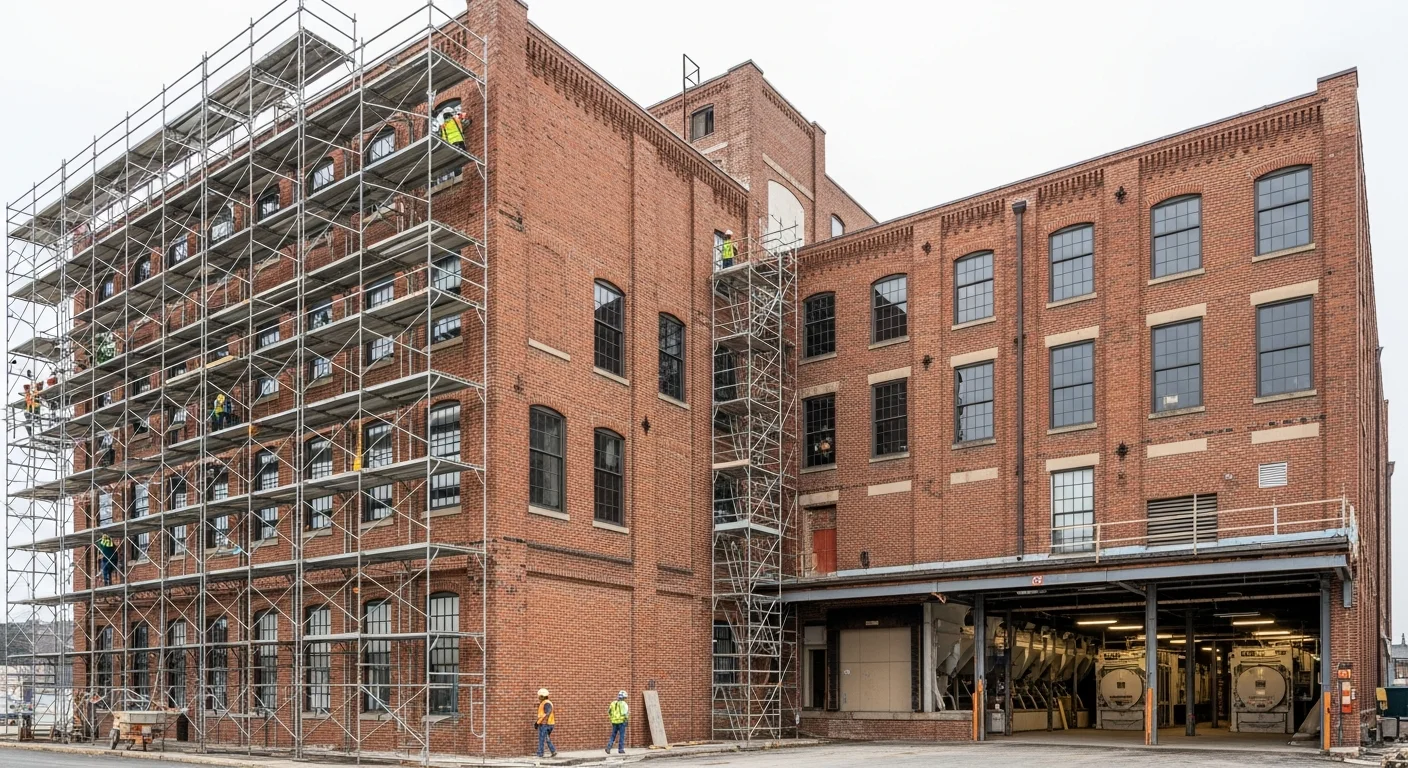
Commercial-scale restoration deployment at a Gastonia commercial property — truck-mounted extractors and industrial dehumidifiers address water damage across multiple tenant spaces.
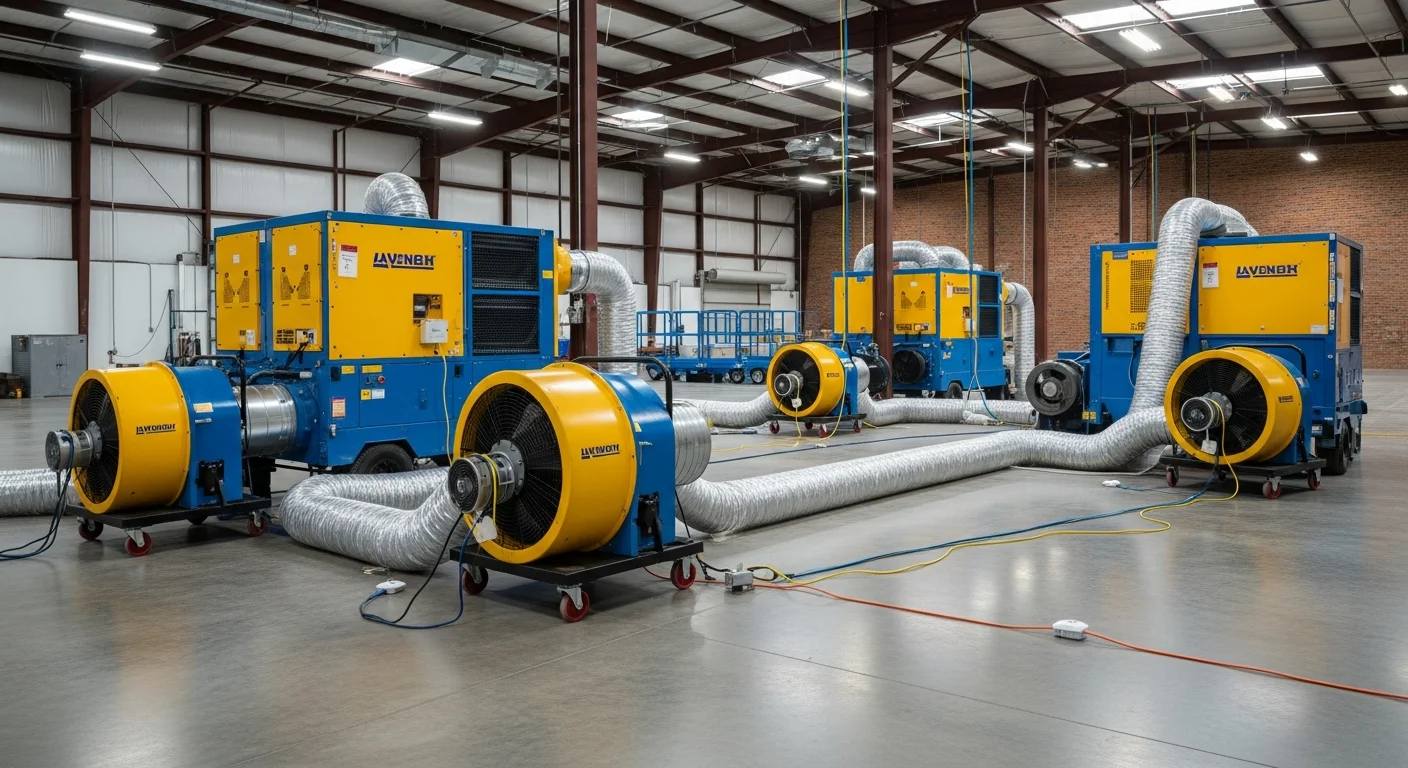
Industrial drying setup in a Gastonia commercial bay — LGR dehumidifiers and high-volume air movers create optimal drying conditions for commercial-scale structural drying.
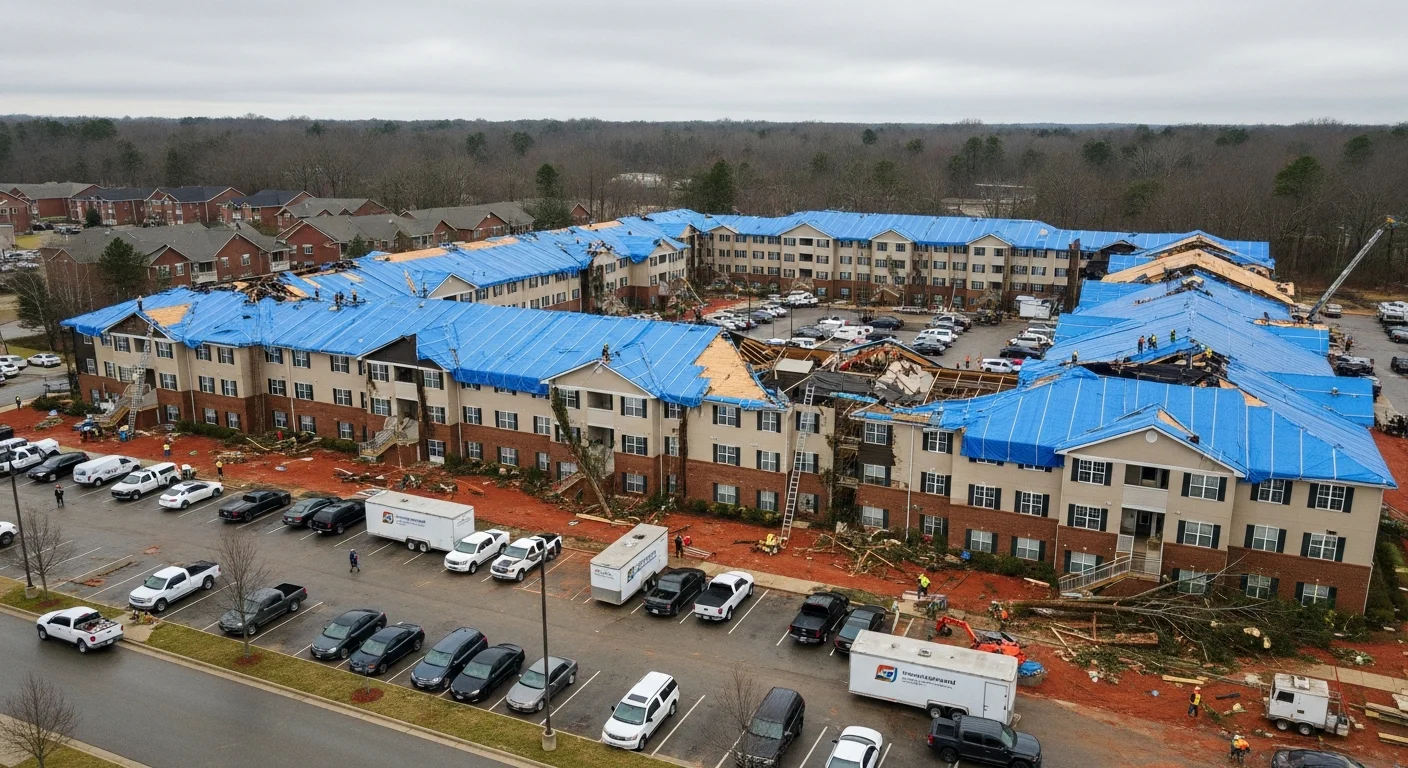
Aerial documentation of a large-loss commercial restoration project in Gaston County — comprehensive damage assessment from every angle supports thorough insurance claims.
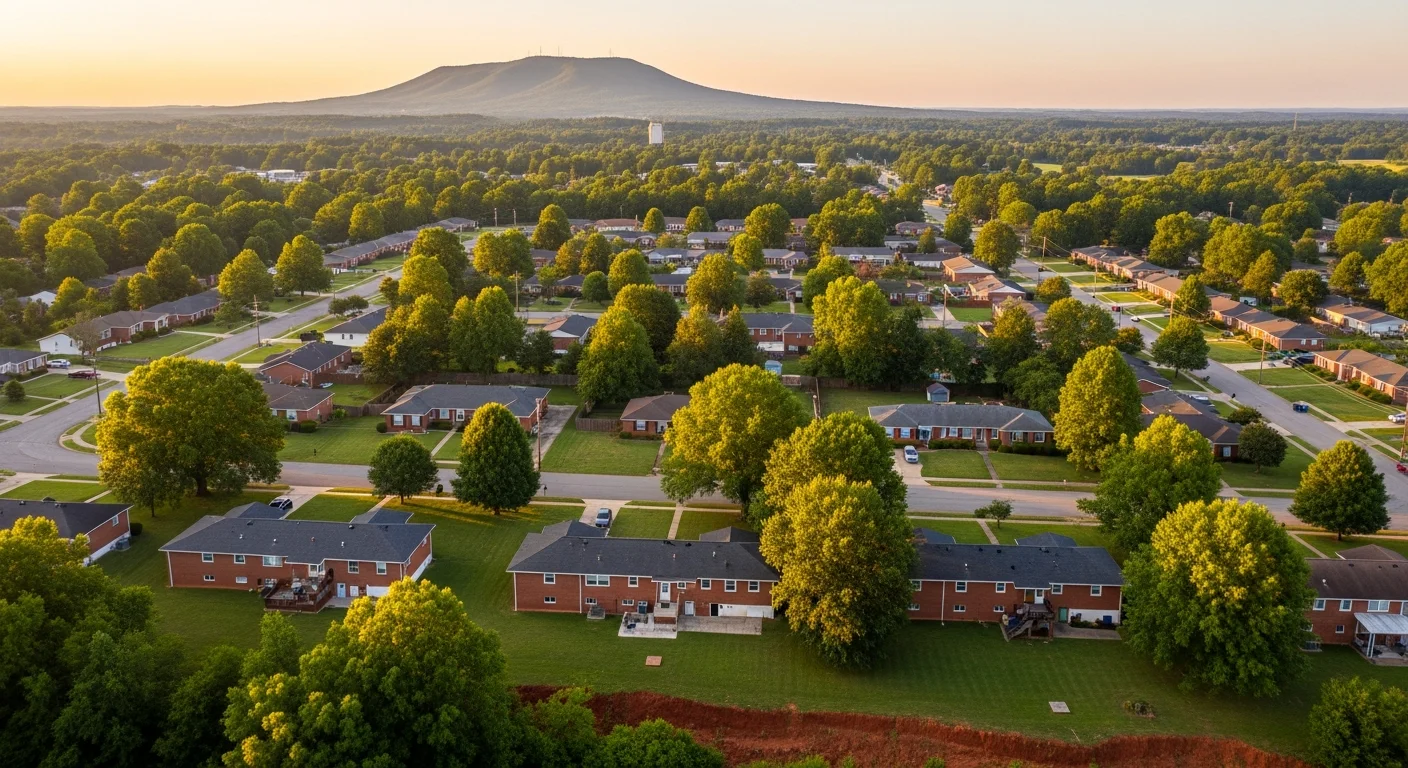
Gastonia's commercial landscape — from historic downtown buildings to modern retail corridors along Franklin Boulevard and the I-85 interchange.
The Palm Build Difference
Why Gastonia Businesses Choose Palm Build
Commercial-Scale Equipment Fleet
Palm Build maintains a dedicated fleet of commercial-grade restoration equipment — truck-mounted extractors, industrial LGR dehumidifiers, commercial air scrubbers, and thermal imaging systems — sized for Gastonia's largest commercial properties. We do not scale up residential equipment for commercial jobs. Our commercial fleet deploys from our Charlotte operations center with 30+ dehumidifiers, multiple truck-mounted extraction units, and enough air movers to dry a 50,000 sq ft facility. This equipment depth means we never delay a commercial project waiting for equipment availability.
NC General Contractor Licensed
As a licensed North Carolina general contractor, Palm Build handles every phase of commercial restoration in-house — from emergency mitigation through final reconstruction. No subcontractor delays, no finger-pointing between trades, no waiting for separate contractors to schedule reconstruction after mitigation is complete. For Gastonia commercial properties requiring reconstruction exceeding $30,000, our GC license means one contract, one point of contact, and one company responsible for the entire project from emergency call through certificate of occupancy.
Multi-Site Coordination
Major weather events like Hurricane Helene do not affect a single building — they impact entire commercial corridors. Palm Build has the personnel depth and equipment fleet to coordinate restoration across multiple Gastonia properties simultaneously. When a storm damages retail centers on Franklin Boulevard, office parks on Garrison Boulevard, and industrial facilities along I-85 at the same time, we deploy dedicated project managers and crews to each site while maintaining coordination across all projects for equipment sharing and priority triage.
24/7 Emergency Response
True 24/7/365 emergency response for Gastonia commercial properties — not an answering service that dispatches someone in the morning. Our commercial emergency team deploys from the Charlotte hub and arrives on-site in Gastonia within approximately 45 minutes, day or night, weekends and holidays. For commercial properties, every hour of delay means additional damage, additional business interruption, and additional insurance claim complexity. Our after-hours response capability is the difference between a containable incident and a catastrophic loss.
Commercial Insurance Expertise
Commercial insurance claims are fundamentally different from residential claims — business interruption, extra expense, tenant improvements, equipment breakdown, ordinance-and-law, and loss of income coverages all require specialized documentation. Palm Build's commercial claims team creates Xactimate estimates formatted specifically for commercial claims processing, documents business interruption timelines from hour one, and coordinates with commercial adjusters from State Farm, Hartford, Travelers, Nationwide, and all major commercial carriers serving the Gastonia market.
IICRC Certified Commercial Restoration
Every Palm Build technician is trained to ANSI/IICRC S500 (water damage), S520 (mold), and S540 (trauma/crime scene) standards — the industry's commercial restoration benchmarks. We maintain commercial WRT (Water Restoration Technician), ASD (Applied Structural Drying), and FSRT (Fire & Smoke Restoration Technician) certifications. For Gastonia commercial properties, certified technicians mean defensible restoration decisions, proper documentation methodology, and restoration outcomes that withstand insurance scrutiny and regulatory inspection.
Common Questions
Gastonia Commercial Restoration FAQ
How quickly can Palm Build respond to a commercial emergency in Gastonia?
Our Charlotte operations hub on Crompton Street is approximately 25 miles from Gastonia, putting our commercial team on-site within 45 to 60 minutes for most emergencies. For large-scale losses — a fire at a Franklin Boulevard retail center, a burst sprinkler line at Loray Mill, or storm damage across multiple FUSE District properties — we activate our catastrophic response protocol with additional crews and industrial-scale equipment. Commercial damage costs revenue by the hour, and our response time reflects that urgency.
Can you restore historic textile mill buildings like Loray Mill?
Yes. Gastonia's converted textile mills present unique restoration challenges that generic commercial contractors are not equipped to handle. Load-bearing brick masonry requires controlled drying protocols — aggressive dehumidification can deteriorate century-old mortar joints and cause structural problems worse than the original water damage. Heavy timber framing absorbs moisture deep into the grain and requires extended monitoring. Palm Build's teams are experienced with adaptive reuse buildings where historic materials and modern systems coexist, and we coordinate with the City of Gastonia on any permitting requirements for work on historically significant structures.
What NC licensing and permits are required for commercial restoration in Gastonia?
North Carolina requires a general contractor license for commercial projects exceeding $30,000 — and most commercial restoration losses exceed that threshold. The City of Gastonia also requires a privilege license for contractors working within city limits, and building permits are required through the Development Services Department for structural, electrical, mechanical, and plumbing work. For properties in unincorporated Gaston County, permits run through County Code Enforcement. Palm Build holds all required licensure and coordinates permit pulls so your project stays compliant from start to finish.
How do you handle multi-tenant commercial properties with multiple insurance carriers?
Multi-tenant commercial losses in Gastonia — common in shopping centers like Franklin Square, downtown shared-wall buildings, and mixed-use developments like Loray Mill — involve a property owner's policy, individual tenant BOP or commercial property policies, and sometimes a property management company with separate coverage. Palm Build manages documentation and communication across all parties, ensuring each carrier receives the correct scope, each tenant's business personal property and interruption is properly documented, and the project timeline reflects the complexity of coordinating multiple stakeholders with different coverage and priorities.
Can you work around business hours to minimize disruption at retail and restaurant locations?
Yes. Franklin Boulevard retail centers, FUSE District restaurants, and Downtown Gastonia professional offices all depend on foot traffic and customer access during operating hours. We routinely perform commercial restoration during off-hours — evenings, weekends, and holidays — to keep as much of the property operational as possible during the restoration process. For phased work, we coordinate scheduling directly with property managers and individual tenants so that noisy or disruptive tasks happen when the business impact is lowest.
How did Tropical Storm Helene affect Gastonia's commercial properties?
Helene's remnants in September 2024 left 60 to 70 percent of Gaston County without power for an extended period. For commercial properties, the extended power loss caused damage beyond the storm itself: restaurants lost refrigerated inventory worth thousands, office server rooms overheated without HVAC, sump pumps in below-grade spaces stopped running, and humidity-sensitive inventory was compromised. Many commercial property owners who thought they escaped the storm discovered secondary damage days later. Palm Build responded to multiple commercial losses across Gaston County during the Helene aftermath — including properties that did not realize they had damage until power was restored.
Do you provide pre-loss planning for Gastonia commercial properties?
Yes. For commercial property owners and managers in Gastonia, we offer pre-loss planning consultations that establish an emergency response protocol before disaster strikes. This includes documenting your building's construction type and utility shutoff locations, identifying the fastest access routes for our crews, establishing after-hours contact procedures, and reviewing your commercial insurance coverage for gaps. Properties in Gaston County's CRS-rated flood zone receive a 10% NFIP premium reduction — but only if the policy is in place before a flood event. Pre-loss planning turns a chaotic emergency into a coordinated response.
Commercial Damage in Gastonia? Every Hour Closed Costs Revenue.
Palm Build's commercial restoration team dispatches from Charlotte in 45-60 minutes with industrial-scale equipment, NC-licensed crews, and a phased restoration plan built to minimize business interruption. From Loray Mill's historic brick to Franklin Square's modern retail — we restore it all. Nights, weekends, and holidays.