Storm, Wind & Hurricane Damage Restoration in Gastonia, NC
On May 8, 2024, two EF-1 tornadoes with 110 mph winds carved through Gaston County — triggering a State Disaster Declaration signed by the Governor on May 23. Four months later, Tropical Storm Helene's remnants left 60-70% of the county without power and flooded the South Fork Catawba corridor. With 59 severe weather warnings and 67 Doppler-detected hail events in the past 12 months alone, Gastonia doesn't just get storms — it gets hammered. Palm Build's Charlotte team responds in 45-60 minutes with emergency tarping, water extraction, structural stabilization, and insurance documentation from the first call.
Approximately 25 miles — Gastonia, NC 45-60 min Response IICRC Certified
Four converging factors make Gastonia one of the most storm-vulnerable cities in the
Charlotte metro — and the data from the past 12 months proves it.
59 Severe Weather Warnings
59
Warnings in 12 months
Gaston County recorded 59 severe weather warnings in the past 12 months alone — an average of more than one per week. This relentless pace of severe weather batters Gastonia's aging brick ranch roofs, mature tree canopy, and vented crawl space foundations with a frequency that few Piedmont communities match.
67 Doppler-Detected Hail Events
67
Hail events detected
Hail is Gaston County's single most frequent severe weather hazard. With 67 Doppler-detected hail events in the past year, Gastonia homeowners face near-constant bombardment during spring and fall storm seasons. Even quarter-sized hail fractures asphalt shingle granules — invisible from the ground but degrading waterproofing integrity with each subsequent rain.
EF-1 Tornadoes — May 2024
110 mph
EF-1 tornado winds
On May 8, 2024, two EF-1 tornadoes with winds reaching 110 mph carved through Gaston County in rapid succession — ripping roofs from brick ranches, snapping mature hardwoods across power lines, and triggering a State Disaster Declaration signed by the Governor on May 23. This was not an isolated event but part of Gastonia's escalating severe weather pattern.
Tropical Storm Remnants
60-70%
County lost power (Helene)
Tropical Storm Helene's remnants swept through Gaston County on September 27-30, 2024, dumping 3 to 6 inches of rain while sustained winds gusted above 60 mph. Duke Energy reported 60 to 70 percent of Gaston County lost power — some for days. The South Fork Catawba flooded for the third time in five years.
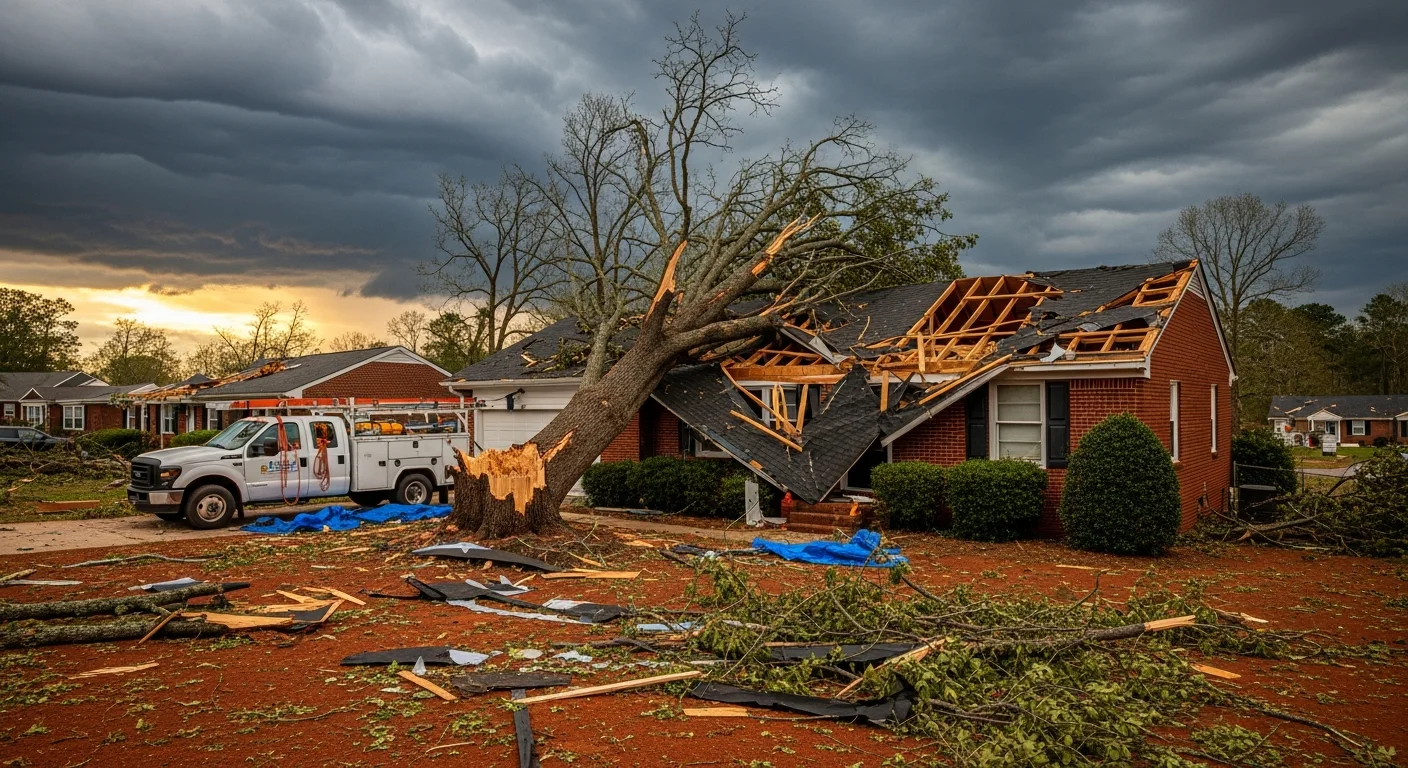
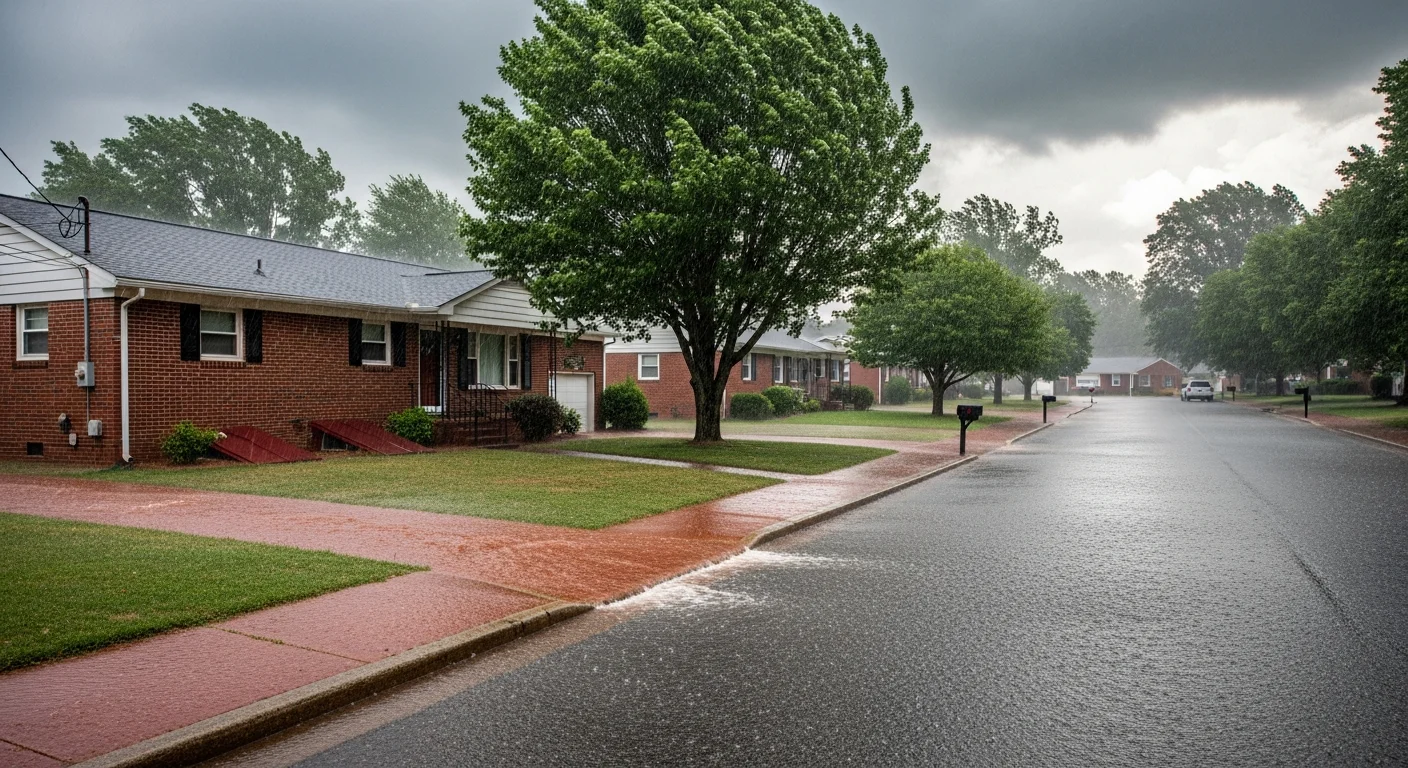
Gaston County's 59 severe weather warnings in 12 months — Gastonia's red brick ranch
homes and mature tree canopy are uniquely vulnerable to wind and hail damage.
2020 - 2024 Storm Timeline
Gastonia's Escalating Pattern of Severe Weather Damage
The last five years document a pattern of escalating severe weather events that have
tested Gaston County's infrastructure, housing stock, and emergency response capacity —
each one revealing new vulnerabilities.
February 2020Catastrophic
Historic South Fork Catawba River Flood
One of the worst flood events in Gaston County history. The South Fork Catawba River crested well above flood stage, inundating homes along the river corridor from Lowell through Cramerton and McAdenville. Emergency evacuations were ordered, and dozens of homes sustained major flood damage. Properties in the floodplain that had survived decades without flooding were overwhelmed.
March 2021Significant
Cramerton Flooding Recurrence
Just thirteen months after the 2020 flood, the South Fork corridor flooded again — hitting many of the same Cramerton and Lowell properties that had just completed restoration. Repetitive loss properties along this corridor began facing dramatically higher insurance premiums and questions about long-term habitability.
May 8, 2024Catastrophic
Twin EF-1 Tornadoes — State Disaster Declaration
Two EF-1 tornadoes with winds reaching 110 mph struck Gaston County in rapid succession during a late-afternoon severe thunderstorm outbreak. The tornadoes damaged homes, downed trees and power lines, and destroyed outbuildings across a multi-mile path from Dallas through the Gastonia metro area toward Lowell. Governor Roy Cooper signed a State Disaster Declaration for Gaston County on May 23, 2024.
September 27-30, 2024Catastrophic
Tropical Storm Helene Devastates County
The remnants of Tropical Storm Helene tracked directly through the western North Carolina Piedmont, dumping 3 to 6 inches of rain across Gaston County while sustained winds gusted above 60 mph. Duke Energy reported 60 to 70 percent of Gaston County customers lost power — some for days. The South Fork Catawba River flooded for the third time in five years.
December 29, 2024Moderate
Severe Thunderstorm with Tornado-Capable Rotation
A severe thunderstorm tracked through the Lowell and eastern Gastonia corridor with Doppler-confirmed tornado-capable rotation and wind gusts measured at 60 mph. While no tornado touchdown was confirmed, the storm caused tree damage, power outages, and roof damage — a reminder that Gaston County's severe weather threat extends well beyond the traditional spring tornado season.
Repetitive Loss Corridor: South Fork Catawba
Properties along the South Fork Catawba River from Lowell through Cramerton and
McAdenville have now flooded three times in five years (2020, 2021, 2024). FEMA
classifies properties that sustain two or more flood losses exceeding $1,000 within any
10-year period as Repetitive Loss Properties — triggering dramatically higher NFIP
premiums and potential buyout eligibility.
Neighborhood Risk Profiles
Storm Damage Risk by Gastonia Neighborhood
Storm damage risk in Gastonia is not uniform. Mature trees in older neighborhoods become
falling hazards during high winds, while newer HOA communities face roof and siding
damage from hail and straight-line gusts.
South Fork Corridor (Cramerton, Lowell, McAdenville)
River floodingFEMA flood zone, repetitive loss properties
Flooded in 2020, 2021, and 2024 (Helene)
Critical
Gardner Park
Wind + tree damageMature canopy over pre-1960s ranch homes
Tornado corridorIn path of May 2024 EF-1 tornadoes
Direct tornado damage, State Disaster Declaration
High
Quail Ridge / Catawba Hills
Hail + wind1960s-1980s shingles past rated life
Recurring hail claims, granule loss damage
Moderate
Robinson Oaks / Bethesda Oaks
Storm drainage floodingNewer construction on regraded land
Post-storm runoff overwhelms subdivision drainage
Moderate
Bessemer City / Cherryville
Isolated tornadoes + windRural exposure, mobile homes
Higher vulnerability to wind events
Moderate
Storm Restoration Process
How We Restore Gastonia Homes After Storm Damage
Every Gastonia storm damage project follows our proven restoration protocol — adapted to
the specific vulnerabilities of Gaston County construction, the South Fork flood
corridor, and local insurance documentation requirements.
01
Emergency Tarping & Board-Up
Hours 1-4
02
Damage Assessment & Documentation
Days 1-3
03
Water Extraction & Structural Drying
Days 1-7
04
Structural Repair & Roofing
Weeks 2-8
05
Reconstruction & Finish Work
Weeks 4-12
06
Final Inspection & Claim Closeout
Week 12+
01
Emergency Tarping & Board-Up
Hours 1-4
Heavy-duty UV-resistant tarps are mechanically secured to roof decking — not draped loosely over damaged areas. For window and wall breaches, we install structural board-up systems that seal against wind-driven rain. This stops the damage cascade immediately and satisfies your insurance policy's duty to mitigate further loss.
02
Damage Assessment & Documentation
Days 1-3
Comprehensive documentation of all storm damage — thermal imaging for hidden moisture, drone inspection for roof damage mapping, and detailed room-by-room cataloging. We classify damage by cause (wind vs. flood, covered vs. excluded) to ensure each portion of your claim is filed correctly with the appropriate carrier.
03
Water Extraction & Structural Drying
Days 1-7
Truck-mounted extraction removes standing water at 25+ gallons per minute. For Gastonia's crawl space homes where storm water has migrated below the living space, we deploy submersible pumps and crawl space extraction systems. Commercial dehumidifiers and air movers establish controlled drying conditions monitored with daily moisture readings.
04
Structural Repair & Roofing
Weeks 2-8
From roof replacement and soffit/fascia repair to interior drywall, insulation, and finish work. Gastonia's pre-1970 brick ranch homes often need complete roof system replacement after major hail or wind events. All reconstruction meets current NC building code regardless of your home's original construction date.
05
Reconstruction & Finish Work
Weeks 4-12
Complete interior and exterior reconstruction: siding replacement, window installation, drywall, flooring, painting, and finish work. Palm Build holds NC general contractor licensing for projects exceeding $30,000, eliminating subcontractor delays and coordination gaps between mitigation and rebuild phases.
06
Final Inspection & Claim Closeout
Week 12+
Gaston County building inspections verify all structural, electrical, mechanical, and plumbing work meets current code. We conduct a final walk-through with you and coordinate directly with your insurance adjuster for claim closeout — every restoration item documented against the original scope of work.
Gastonia Pricing
Storm Damage Restoration Costs in Gastonia
Storm restoration costs vary based on damage severity, roof age, tree involvement, and
whether flooding from the South Fork corridor is included. Wind and hail damage is
covered by standard NC homeowners insurance. After major events, contractor demand and
material supply constraints can extend timelines.
Minor Storm Damage
$2,000 - $8,000
Missing shingles, minor siding damage
Small tree limb on roof
Wind-driven rain through single opening
Emergency tarping + minor repair
1-2 week restoration
Moderate Storm Damage
$8,000 - $25,000
Partial roof replacement needed
Tree on structure with penetration
Multiple rooms with water intrusion
Crawl space water extraction required
4-8 week restoration
Major Storm / Hurricane
$25,000 - $100,000+
Full roof replacement
Structural damage from tree or tornado
Flood damage from South Fork corridor
Complete reconstruction required
8-16 week restoration
Seasonal Risk
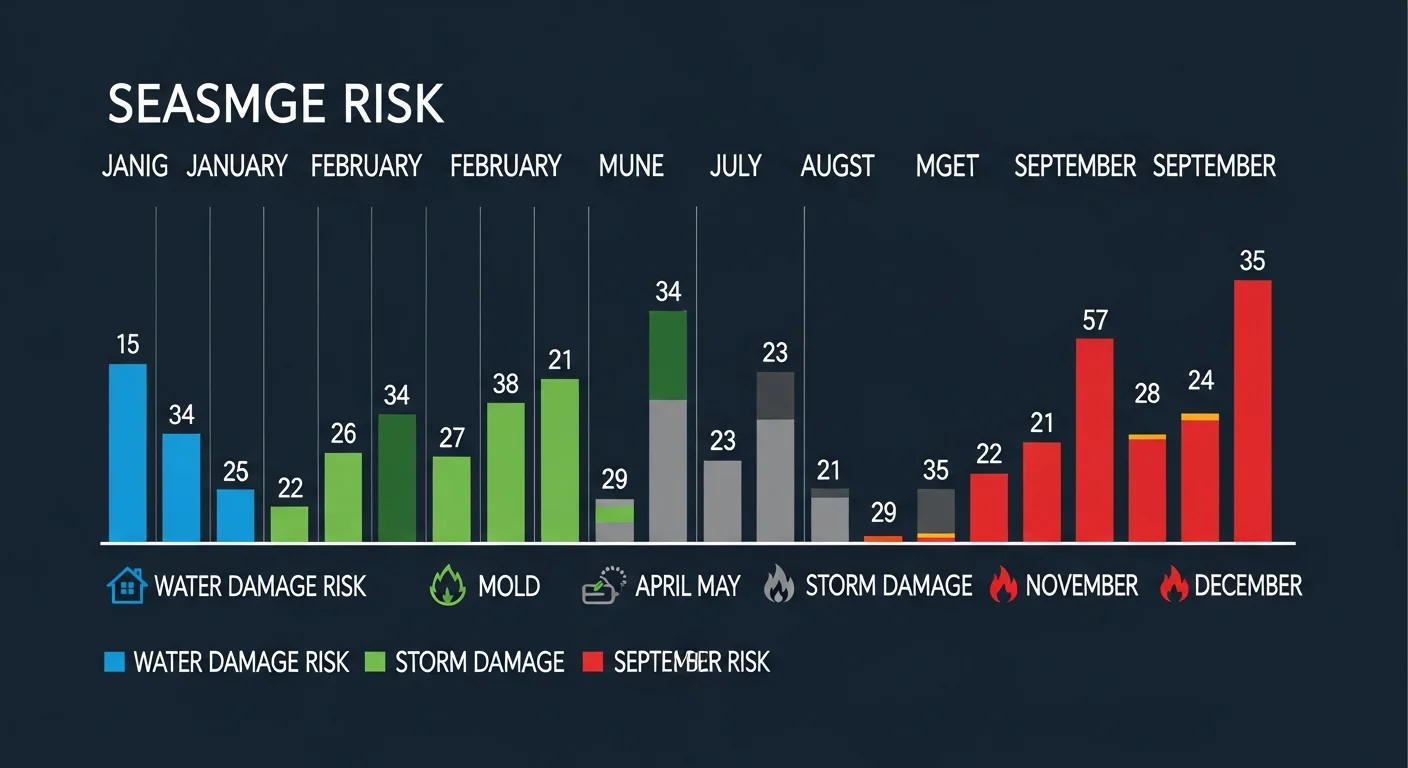
Gastonia Seasonal Storm Damage Calendar
Storm damage in Gastonia follows two distinct peak seasons — spring severe weather from
April through May, and hurricane remnant season from September through October — but
damaging storms occur in every month of the year.
Jan - Mar
Winter Storms & Freezing Rain
Ice storms load mature hardwood limbs beyond their structural limits. Gardner Park and Loray Village see the worst tree-on-structure damage. Freezing rain can collapse weakened outbuildings and damage siding. March brings increasing thunderstorm activity with early-season hail.
Apr - May
Peak Severe Weather — Tornadoes & Hail
The most dangerous window for Gastonia. Gulf moisture collides with Piedmont cold fronts, producing supercell thunderstorms with large hail, 60+ mph winds, and tornadoes. May 8, 2024's twin EF-1 tornadoes struck during this exact pattern. Hail events peak in frequency during this two-month window.
Jun - Aug
Afternoon Thunderstorms & Microbursts
Daily convective thunderstorms produce localized but intense wind and hail events. Microbursts — concentrated downdrafts hitting the ground at 60 to 80 mph — are a particular risk for Gastonia's tree-heavy neighborhoods. Atlantic hurricane season begins June 1.
Sep - Oct
Hurricane Remnants & Tropical Flooding
Peak window for tropical storm remnants. These systems deposit 3 to 6+ inches of rain while maintaining 40 to 70 mph winds. Tropical Storm Helene struck Gaston County September 27, 2024 — 60 to 70 percent lost power and the South Fork Catawba flooded for the third time in five years.
Nov - Dec
Late-Season Severe Thunderstorms
The secondary severe weather window. Gaston County remains vulnerable to strong thunderstorms well into December — the December 29, 2024 storm near Lowell with tornado-capable rotation and 60 mph gusts proved there is no true off-season.
Year-Round
Hail — Most Frequent Hazard
67 Doppler-detected hail events in 12 months make hail the single most frequent severe weather hazard in Gaston County. Even quarter-sized hail fractures asphalt shingle granules — invisible from the ground but degrading waterproofing integrity over subsequent rain events.
Gastonia's storm damage peaks in April-May and September-October — but December 2024
proved there is no true off-season.
Insurance Guide
Storm Damage Insurance Claims in Gastonia
The average Gastonia homeowner pays approximately $2,205/year for insurance — but
critical gaps in standard HO-3 policies can leave you exposed during storm claims,
especially with Gaston County's hail frequency and South Fork flood corridor.
Wind damage to roof, siding, windows, and structure is covered under standard NC homeowners policies (HO-3)
Hail damage to roofing materials and exterior surfaces — requires professional inspection to document invisible granule loss
Fallen tree removal and structural damage from wind-thrown trees when caused by a named peril
Emergency tarping and board-up costs are covered as mitigation expenses — your policy requires you to prevent further damage
Flood damage from the South Fork Catawba River, creeks, or rising water requires separate NFIP or private flood insurance
Sewer and drain backup from storm overload requires a separate endorsement — excluded from most standard policies
Mold damage resulting from delayed storm response is sublimited or denied if you waited more than 24-48 hours to begin mitigation
Cosmetic hail damage (dents without functional impairment) may be excluded under some NC carrier endorsements
Wind Damage vs. Flood Damage: Why It Matters
Many Gastonia homeowners experience both wind damage (covered by homeowners policy)
and flood damage (requires separate flood insurance) from the same storm event — as
Tropical Storm Helene demonstrated in September 2024. Without cause-specific
documentation, insurers may attribute water damage to flooding rather than
wind-driven rain entry. Palm Build documents every damage element by cause so that
your wind claim and flood claim are each filed correctly with the appropriate
carrier.
We Work With Your Adjuster
Palm Build provides detailed, timestamped documentation — thermal imaging, drone roof
mapping, cause-specific damage classification, and itemized scope of work — the exact
information adjusters from State Farm, NC Farm Bureau, SageSure, Nationwide, and Erie
need to process your Gastonia storm claim.
Storm Damage in Gastonia
What Storm Damage Looks Like in Gaston County
Wind and tree damage across Gastonia neighborhoods after severe thunderstorm event
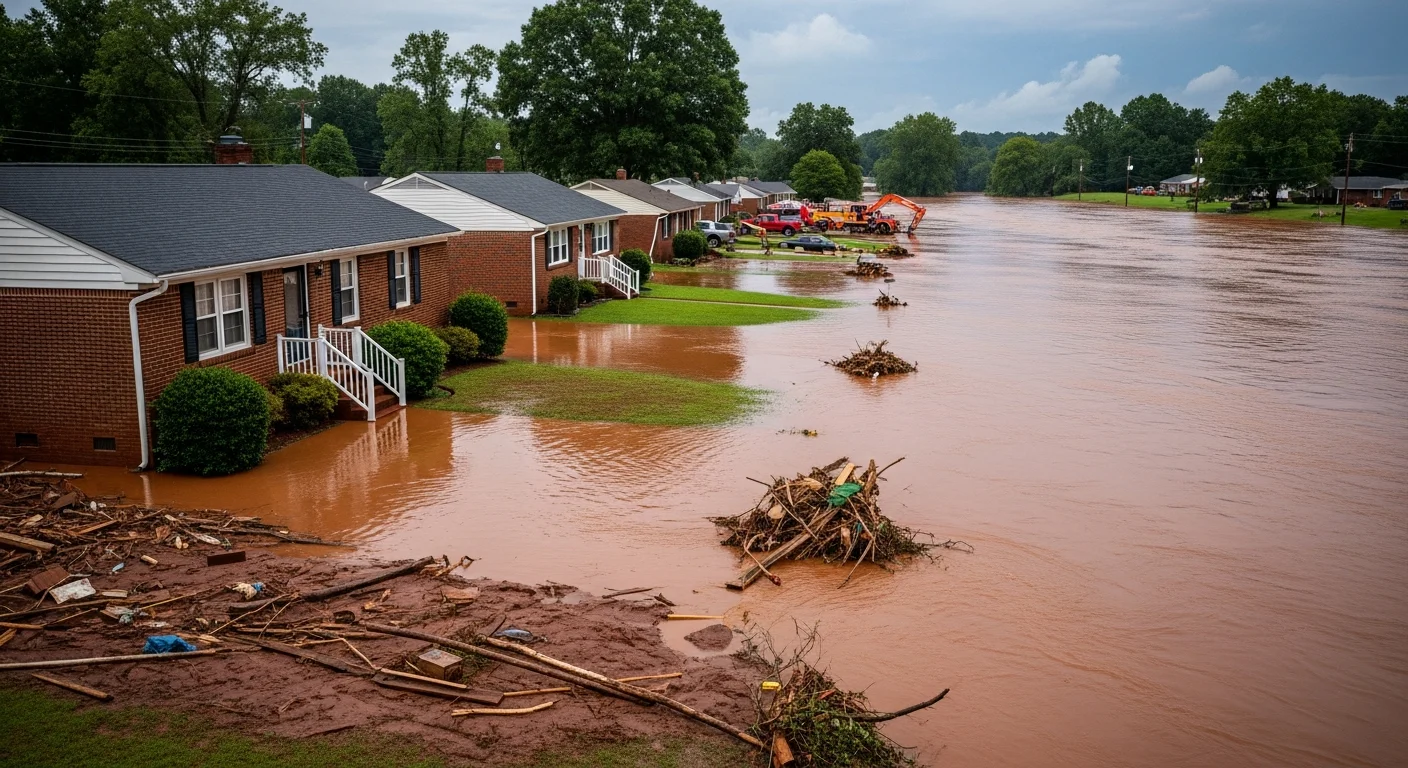
South Fork Catawba corridor flooding — three major events in five years (2020, 2021, 2024)
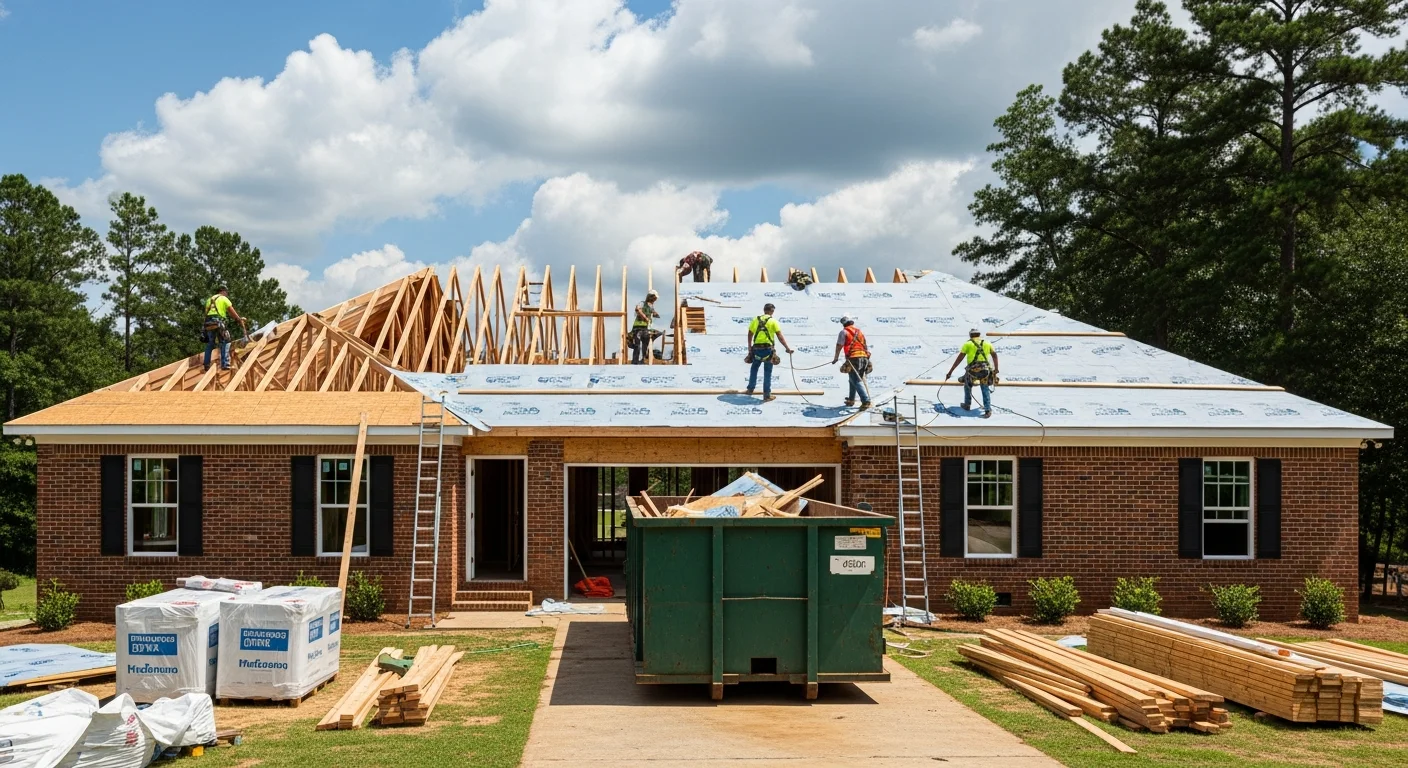
Complete roof system replacement on pre-1970 brick ranch after hail and wind damage
Why Gastonia Homeowners Choose Palm Build After Storms
45-60 Minute Rapid Tarp Response
Our Charlotte hub dispatches emergency crews to Gastonia within 45-60 minutes — 24/7/365. During major events, we activate catastrophe response with additional crews from our Florida operations center.
NC Licensed General Contractor
NC general contractor licensing for restoration and reconstruction projects exceeding $30,000 — no subcontractor delays or coordination gaps between mitigation and rebuild phases.
IICRC WRT & FSRT Certified
Every crew lead holds current IICRC Water Restoration Technician and Fire/Smoke Restoration Technician certifications. Storm damage crosses both specialties — wind, water, and sometimes fire from lightning.
Gaston County Storm Experience
We know Gastonia's specific vulnerabilities: aging brick ranch roofs, South Fork flood corridor, red clay drainage challenges, and the mature tree canopy hazards that make every wind event a structural risk.
Insurance Coordination
Direct work with State Farm, NC Farm Bureau, SageSure, Nationwide, Erie, and all major NC carriers. Cause-specific damage documentation ensures wind claims and flood claims are each filed correctly.
One Company, Start to Finish
Emergency tarping through final reconstruction — all under one roof, one point of contact. No handoffs between mitigation and rebuild contractors that delay your restoration and complicate your claim.
IICRC certified, NC licensed, experienced with Gaston County's storm damage patterns and
South Fork flood corridor.
Common Questions
Gastonia Storm Damage FAQ
How quickly can Palm Build respond after a storm in Gastonia?
Our emergency team dispatches from our Charlotte operations hub at 378 Crompton Street and reaches Gastonia properties within 45 to 60 minutes — 24 hours a day, 7 days a week, including during active weather events. For wide-area storm events affecting multiple Gaston County properties simultaneously, we activate catastrophe response protocols with additional crews from our Florida operations center. Call (704) 464-0121 for immediate dispatch.
What happened during the May 2024 tornadoes in Gaston County?
On May 8, 2024, two EF-1 tornadoes touched down in Gaston County with winds reaching 110 mph during a late-afternoon severe thunderstorm outbreak. The tornadoes carved a multi-mile damage path from Dallas through the Gastonia metro area toward Lowell — ripping roofs from homes, snapping mature hardwood trees across power lines, and destroying outbuildings. The damage was extensive enough that Governor Roy Cooper signed a State Disaster Declaration for Gaston County on May 23, 2024, authorizing state emergency resources and recovery funding for affected homeowners and businesses.
Does insurance cover storm and tornado damage in Gastonia?
Yes — wind damage, tornado damage, hail damage, and storm-driven rain intrusion are all covered perils under standard North Carolina homeowners policies (HO-3 form). However, flood damage from the South Fork Catawba River or rising water requires a separate NFIP or private flood insurance policy. This distinction is critical in Gastonia: the May 2024 tornadoes caused wind damage (covered), while Tropical Storm Helene in September 2024 caused both wind damage (covered) and river flooding (not covered without flood insurance). Palm Build documents damage by cause so each portion of your claim is filed correctly and maximizes your coverage.
Is my Gastonia home in the South Fork Catawba flood zone?
Properties along the South Fork Catawba River corridor — particularly in Cramerton, Lowell, McAdenville, and portions of eastern Gastonia near Mount Holly — may be located in FEMA-designated Special Flood Hazard Areas. This corridor has flooded three times in five years (February 2020, March 2021, September 2024), and properties with two or more losses exceeding $1,000 in a 10-year period are classified as FEMA Repetitive Loss Properties. Check your specific flood zone at msc.fema.gov. Any restoration work in a mapped flood hazard area requires a Gaston County Floodplain Development Permit before construction begins.
Should I get emergency tarping the same night as the storm?
Yes — and your insurance policy requires it. Your HO-3 policy includes a duty to mitigate further damage after a covered loss. Leaving a damaged roof or broken window exposed to subsequent rain events allows secondary water damage that your carrier can deny as failure to mitigate. Emergency tarping and board-up costs are covered as part of your standard claim. Palm Build provides 24/7 emergency tarping with heavy-duty UV-resistant tarps mechanically secured to the roof deck — not just draped over the damage — to withstand additional storms. Call (704) 464-0121 immediately after damage occurs.
How does hail damage affect my Gastonia roof even if I don't see leaks?
Gaston County recorded 67 Doppler-detected hail events in the past 12 months — the most frequent severe weather hazard in the area. Hail as small as one inch in diameter fractures the granule layer on asphalt shingles without creating visible holes. This damage is invisible from the ground but degrades waterproofing integrity progressively with each subsequent rain and UV exposure cycle. Within 6 to 18 months, micro-fractures develop into active leaks. A professional roof inspection after any hail event — using a ladder, not just binoculars from the driveway — documents damage while it's still attributable to a specific storm date for insurance purposes.
What is the difference between a wind damage claim and a flood claim in Gastonia?
This distinction is critical and affects which insurance policy pays. Wind damage — roof shingles stripped, siding torn, trees blown onto structures, windows broken by debris — is filed through your standard homeowners policy. Flood damage — water rising from the South Fork Catawba River, creek overflow, or ground saturation pushing water up through foundations — is filed through your separate NFIP or private flood policy. Many Gastonia homeowners experience both during the same storm event, as Tropical Storm Helene demonstrated in September 2024. Palm Build documents every damage element by cause so that your wind claim and flood claim are each filed correctly with the appropriate carrier.
Storm Damage in Gastonia? Don't Wait for the Next Cell to Hit.
With 59 severe weather warnings in the past 12 months and the South Fork Catawba flooding three times in five years, Gastonia's storm damage threat is not theoretical — it's recurring. Palm Build's Charlotte team provides emergency tarping, water extraction, structural stabilization, and full reconstruction with insurance documentation from the first call. 24/7, 365 days a year.