Quick Answer
A crawl space dehumidifier controls moisture at its source — the foundation, soil, and ground vapor — while a whole-house dehumidifier conditions living-space air that has already entered your home. They solve different problems in different zones. A crawl space must be encapsulated or at least sealed with a vapor barrier first, or running a dehumidifier there is like cooling a house with the windows open.
Key takeaways
- A crawl space dehumidifier controls moisture at its source (foundation, soil, ground vapor). A whole-house dehumidifier conditions the living-space air that has already entered your home via the stack effect. They solve different problems in different zones.
- Running a dehumidifier in an open, vented crawl space is like running the AC with every window open. Encapsulation (or at minimum a sealed vapor barrier) is the prerequisite for effective crawl space dehumidification, not an optional upgrade.
- Research shows up to 50% of the air you breathe in a living space originates in the crawl space. A crawl space at 75% relative humidity is not just a structural concern — it actively degrades indoor air quality upstairs.
- EPA indoor humidity guidance is 30–60% RH. ASHRAE recommends keeping RH below 65% to reduce microbial growth. Building Science Corporation identifies 60% RH as the "do not cross" line. Target 45–55% for crawl spaces in humid Southeast states.
- Typical installed cost: $1,500–$14,000 for a crawl space system (averaging $3,000–$7,000) and $1,500–$3,800 for whole-house. Many Florida, North Carolina, and South Carolina homes genuinely need both, so budget accordingly.
If your crawl space stays damp, musty, or reads above 60% relative humidity, a crawl space dehumidifier handles moisture at the source — before it migrates upward through the stack effect into your living space. If the air throughout your home feels humid, sticky, or musty even with the AC running, a whole-house dehumidifier manages moisture across every room through your HVAC system. These are two different tools solving two different problems. Across Florida, North Carolina, and South Carolina — where outdoor humidity regularly exceeds 80% — many homes genuinely need both. Our crawl space cleanup and moisture control services size and install the right combination as part of a complete system, so you invest once instead of discovering later that one approach alone cannot reach the EPA's 30–60% target range.
EPA target indoor humidity
30–60% RH
60% is the hard ceiling before mold risk rises sharply
Crawl space air in living space
Up to ~50%
Stack effect pulls moisture, spores, and odors upward
Crawl space system cost
$1,500–$14,000
Average $3,000–$7,000 professionally installed
Quality unit lifespan
10–20 years
With proper filters, drainage, and encapsulation
What Each Type of Dehumidifier Actually Does
Crawl space dehumidifier
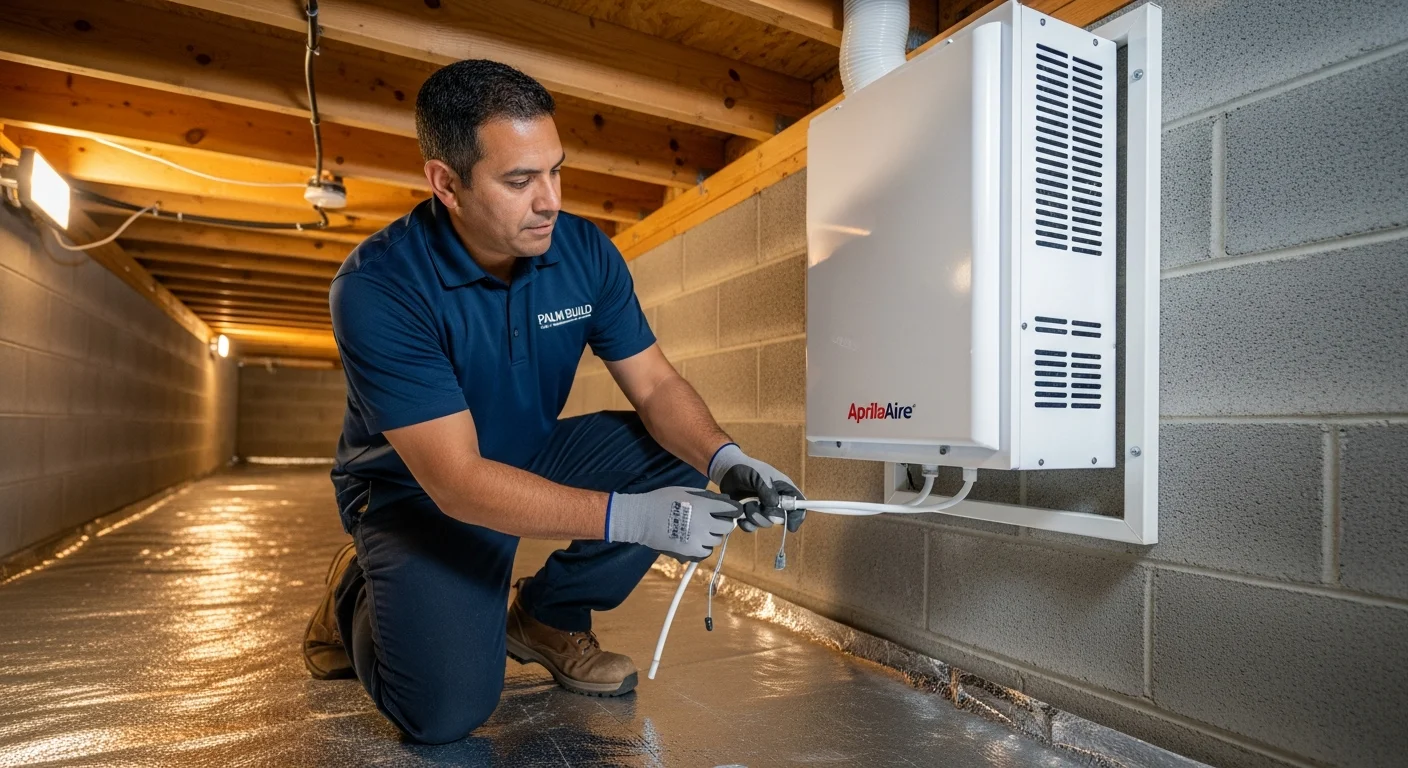
A crawl space dehumidifier is a standalone unit engineered specifically for the harsh conditions under your home: low clearance, limited airflow, cooler temperatures, and continuously high humidity. Unlike standard portable dehumidifiers sold at home improvement stores, these units are designed to run continuously, handle humidity levels far above what residential units can manage, and function at temperatures that would cause a typical consumer compressor to freeze up or shut down.
The best crawl space dehumidifiers — AprilAire E-series and Santa Fe Oasis are two common professional lines — mount to walls or hang from floor joists to conserve floor space, include built-in condensate pumps for automatic drainage, and carry humidistats that maintain a target humidity without manual adjustment. They draw in humid crawl space air, pass it over refrigerant coils that cause moisture to condense and drain away, and exhaust drier air back into the space. Ground vapor, soil saturation, and humid outdoor air intrusion are all addressed before that moisture ever migrates upward into your floors and walls.
Whole-house dehumidifier
A whole-house dehumidifier integrates directly with your existing HVAC system, typically installed inline with the return air duct. When the air handler runs, air passes through the dehumidifier, which extracts moisture and returns conditioned air to every room in the home simultaneously. These systems are designed for living spaces — bedrooms, kitchens, living rooms, and hallways — where humidity comfort and indoor air quality matter most.
Whole-house units are especially effective in large homes where portable room dehumidifiers cannot keep pace with the total moisture load, or in homes where the air conditioner is oversized and short-cycles without pulling enough humidity out of the air. But whole-house dehumidifiers do not address crawl space moisture directly. They manage air that has already entered your living areas. If the crawl space is the source, the whole-house unit will run constantly chasing a problem it cannot reach.
Side-by-Side Comparison
| Feature | Crawl space dehumidifier | Whole-house dehumidifier |
|---|---|---|
| Coverage area | Crawl space or basement only | Entire home via HVAC ductwork |
| Installation | Standalone, mounts in crawl space | Integrated with HVAC return |
| Professional install recommended? | Yes — electrical and drainage required | Yes — licensed HVAC tech required |
| Typical installed cost | $1,500–$14,000 (avg $3,000–$7,000) | $1,500–$3,800 |
| Monthly energy cost | ~$11–$34 depending on runtime | ~$15–$25 (cycles with HVAC) |
| Moisture source targeted | Soil vapor, foundation, crawl space air | Living-space air only |
| Best for | Damp crawl spaces, musty odors, wood rot risk | Whole-home comfort, allergy management |
| Works without encapsulation? | No — overwhelmed by outside air | Yes, but not a substitute for source control |
| Typical lifespan | 5–10 years; up to 20 with quality unit | 5–10 years |
| Primary failure mode | Filter neglect, active water intrusion | HVAC short-cycling, refrigerant issues |
Crawl space dehumidifier vs. whole-house dehumidifier at a glance
When You Need a Crawl Space Dehumidifier
The clearest signal is moisture originating below your living floor. If the problem starts in the crawl space, that is where you need to treat it. Managing the effects upstairs without fixing the source is the most common (and most expensive) mistake homeowners make.
Warning signs in your crawl space
Watch for these indicators — they rarely appear alone. When one shows up, others are usually close behind. Our full guide to the signs of crawl space problems walks through each in detail.
- Relative humidity in the crawl space consistently above 60%
- Musty or earthy odors that seem to seep through the floor
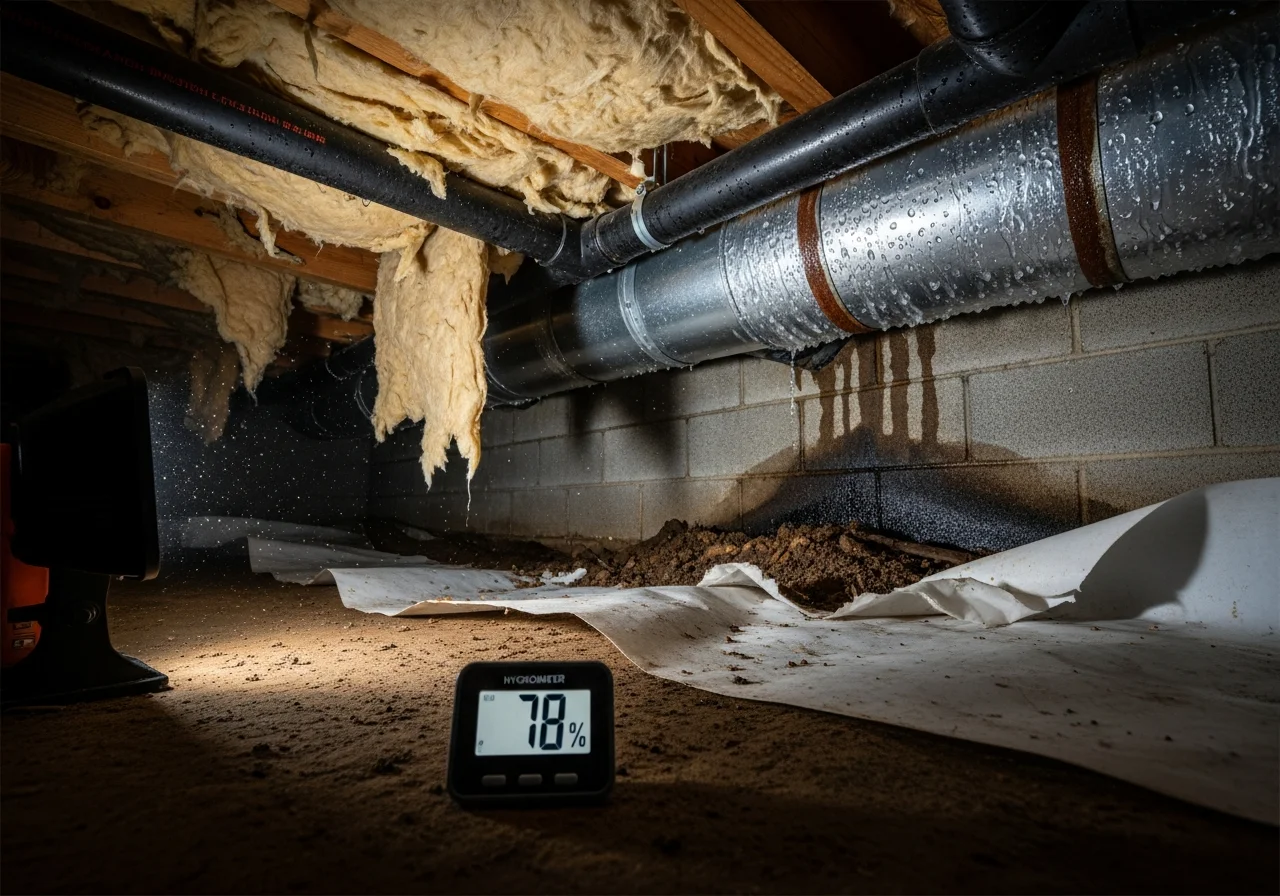
- Visible condensation on pipes, ductwork, or floor joists
- Sagging, wet, or fallen fiberglass insulation
- Rust on metal brackets, duct straps, or HVAC components
- Visible mold or mildew on wood framing or the vapor barrier
- Soft, spongy, or bouncy floors above the crawl space
- Increased pest activity — termites and rodents favor damp crawl spaces
- Swelling or sticking doors and windows on the first floor
The stack effect: why crawl space moisture becomes your problem
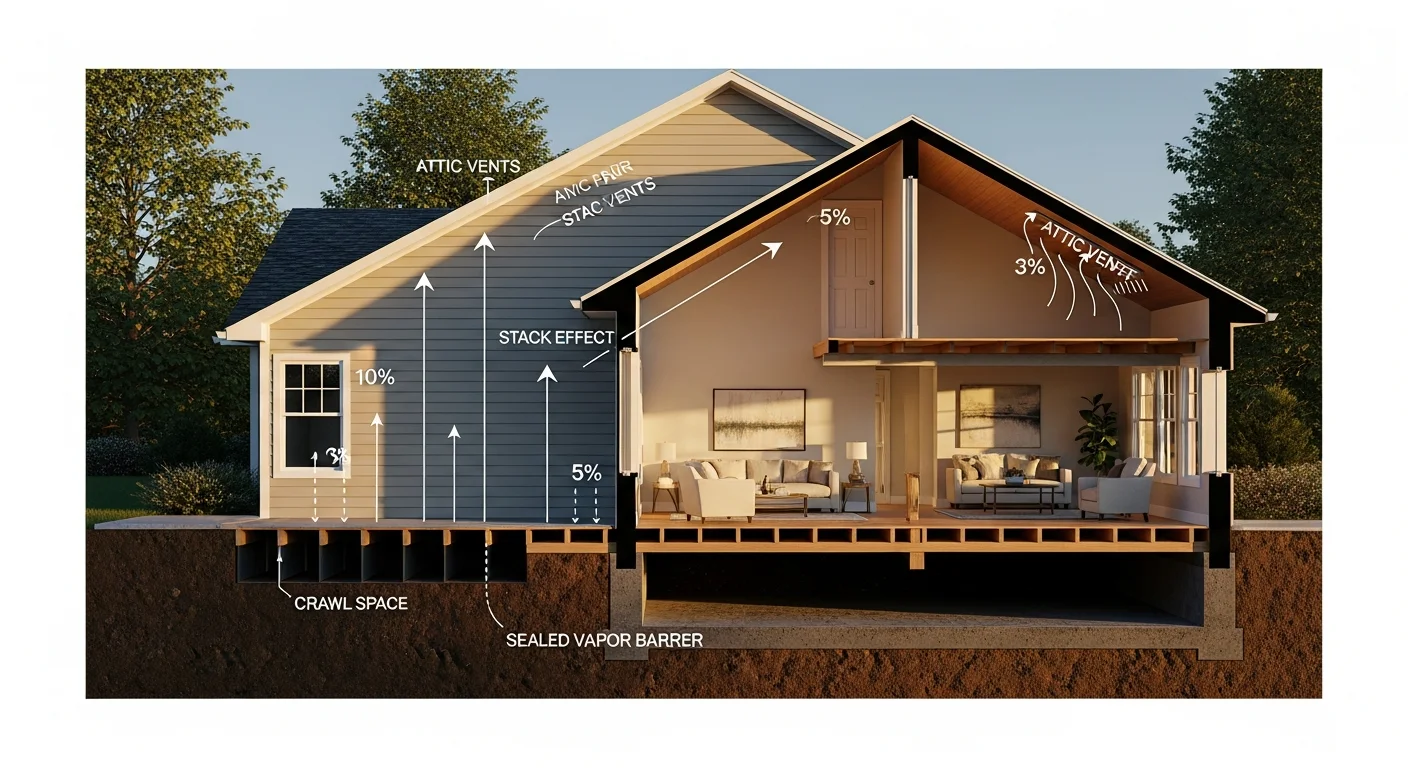
Research consistently shows that up to 50% of the air you breathe inside your home originates in the crawl space. The mechanism is the stack effect: as warm air rises and escapes through the upper levels, it pulls replacement air upward from the crawl space. That rising air carries with it whatever is living in your crawl space — humidity, mold spores, VOCs, dust mites, insulation fibers, and odors.
A crawl space running at 75% relative humidity is not just a structural concern. It actively degrades indoor air quality, forces your HVAC system to work harder chasing the extra humidity, and can trigger respiratory symptoms in sensitive occupants. Addressing crawl space moisture at the source — not just managing its effects in the living space with a whole-house dehumidifier — is the more effective long-term strategy. If visible mold is already established on joists, subfloor, or the vapor barrier, professional mold remediation must happen before any moisture control system goes in. Our crawl space mold removal guide walks through the remediation sequence.
When You Need a Whole-House Dehumidifier
A whole-house system makes sense when the humidity problem has already reached your living spaces and is not solely sourced from below — or when crawl space controls are already in place and additional comfort control is needed upstairs. Common triggers:
- Indoor humidity consistently above 50–55% even with the AC running
- Condensation forming on the **inside** of windows during summer
- A clammy, sticky feeling in multiple rooms
- Persistent allergy or respiratory symptoms that ease outside the home
- Mold appearing in closets, bathrooms, or on exterior walls
- Large square footage, multiple stories, or significant indoor moisture sources like a pool, spa, or aquarium
Homes in extremely humid climates — all of South Florida and coastal South Carolina especially — often run whole-house dehumidifiers year-round as a complement to the HVAC system, because the AC alone cannot keep pace with the moisture load during peak summer months. An oversized AC unit that cools a room quickly and short-cycles before removing much humidity is a classic trigger for whole-house dehumidification, even in homes without crawl space issues.
Can You Use Both? (Often the Answer Is Yes)
For most homes in Florida, North Carolina, and South Carolina, the optimal solution is a crawl space dehumidifier **and** a whole-house dehumidifier working in tandem. Think of it as defense in layers — and look at where each approach alone leaves gaps.
Crawl space dehumidifier alone
- Controls moisture at its primary source before stack-effect migration
- Protects foundation wood, insulation, ductwork, and plumbing
- Reduces musty odors and air-quality impact upstairs
- Gap: no direct humidity control in bedrooms, closets, or bathrooms
- Gap: does not handle moisture from cooking, bathing, or occupants
- Gap: cannot offset short-cycling AC in very humid peak months
Whole-house dehumidifier alone
- Manages living-space comfort and reduces allergy triggers
- Protects hardwood floors, furniture, and stored items
- Runs year-round when AC is off (spring, fall, mild winter days)
- Gap: crawl space still running at 75–85% RH feeding the stack effect
- Gap: structural wood rot and insulation failures continue below
- Gap: long-term the whole-house unit overworks chasing foundation moisture
A layered approach fixes this. The crawl space dehumidifier handles the foundation source. The whole-house dehumidifier handles living-space comfort and the residual load. Neither is working against an overwhelming deficit, and both units run less, last longer, and use less energy than a single overworked system trying to do both jobs. An IICRC-certified moisture control professional can assess your specific home, measure humidity in both zones, and tell you whether one or both systems make sense — and in what order.
Crawl Space Dehumidifier Sizing Guide
Sizing a crawl space dehumidifier depends on three variables: square footage, humidity severity, and how well the space is sealed. Get this wrong and even a quality unit will either short-cycle (too big), run continuously without ever reaching target humidity (too small), or burn out its compressor trying to keep up.
- 1
Step 1 — Measure the crawl space
Multiply length × width for total square footage. For irregular spaces, calculate each section separately and add together. Include any sealed-off storage alcoves that share air with the main crawl space.
- 2
Step 2 — Assess the humidity
Use an inexpensive digital hygrometer to take readings at different times over several days. Above 70% is severe; 60–70% is high; 55–60% is borderline. Take readings in the hottest part of summer to size for worst-case conditions, not shoulder-season averages.
- 3
Step 3 — Factor in sealing
An encapsulated (sealed) crawl space requires a smaller unit because outside humidity is blocked. A loose or vented crawl space needs significantly more dehumidification capacity to overcome continuous air infiltration. Sealing first often saves $500–$1,000 on the unit itself.
| Humidity / Area | 300 sq ft | 500 sq ft | 800 sq ft | 1,200 sq ft | 1,500 sq ft |
|---|---|---|---|---|---|
| 50–60% RH | 20 pint | 30 pint | 40 pint | 50 pint | 60 pint |
| 60–70% RH | 30 pint | 45 pint | 60 pint | 70 pint | 80 pint |
| 70–80% RH | 45 pint | 50 pint | 65 pint | 80 pint | 90 pint |
| 80–90%+ RH | 45 pint | 60 pint | 70 pint | 90 pint | 100 pint |
Sizing by square footage and humidity level (capacity in pints per day)
| Crawl space condition | 40–60 pint | 60–80 pint | 80–100 pint | 100–120 pint |
|---|---|---|---|---|
| Loosely sealed / vented | Up to 1,000 sq ft | Up to 1,600 sq ft | Up to 2,200 sq ft | Up to 2,800 sq ft |
| Moderately sealed | Up to 1,400 sq ft | Up to 2,000 sq ft | Up to 2,600 sq ft | Up to 3,200 sq ft |
| Tightly sealed / encapsulated | Up to 1,800 sq ft | Up to 2,400 sq ft | Up to 3,000 sq ft | Up to 3,600 sq ft |
Sizing by sealing level (max square footage per capacity class)
How encapsulation changes the sizing math
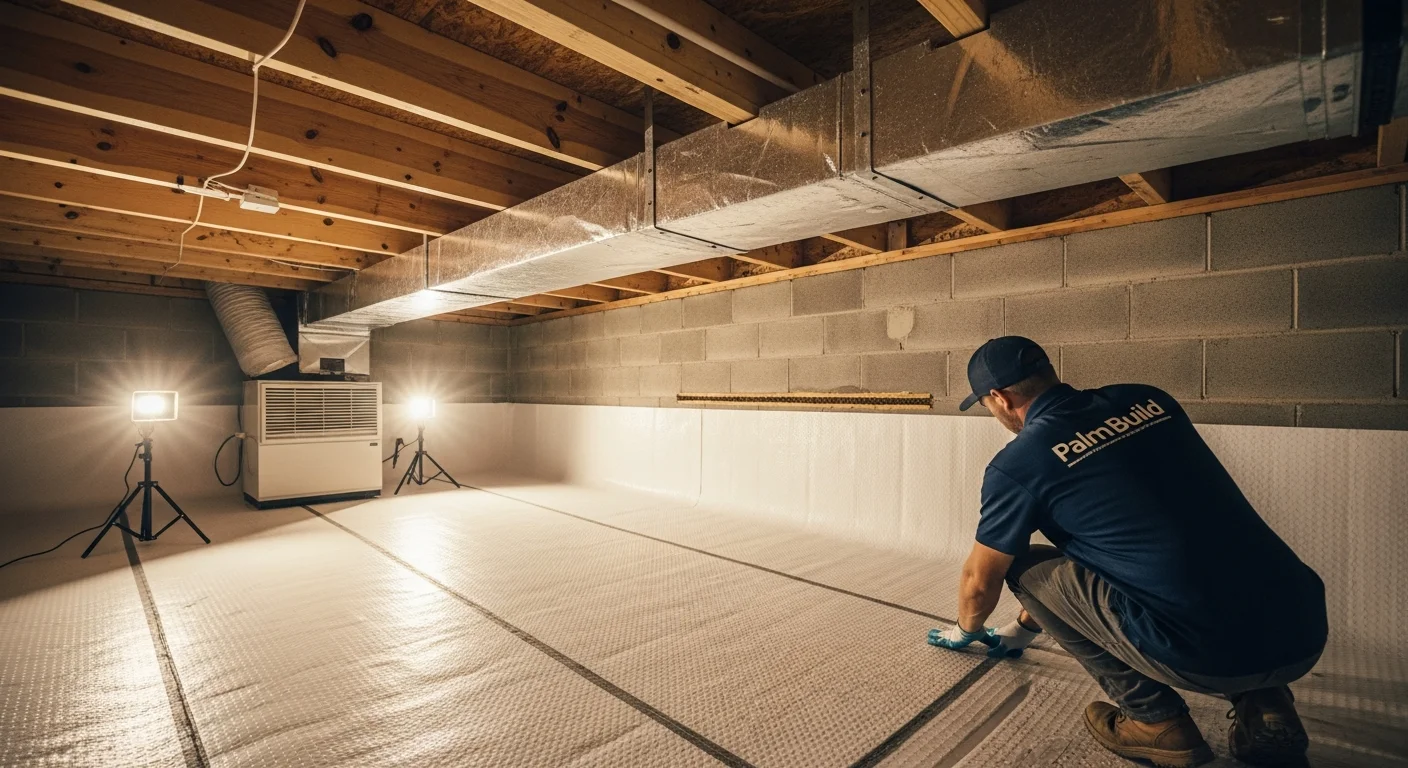
Encapsulating a crawl space before installing a dehumidifier is not optional — it is the prerequisite for effective performance. Running a dehumidifier in an open, vented crawl space is comparable to running air conditioning with every window open: outside air enters faster than the unit can process it. Encapsulation also allows you to size down, potentially saving $500–$1,000 on the unit itself plus reducing monthly energy costs. Our full encapsulation cost guide breaks down what the sealing project itself looks like by size and scope.
Cost Guide: Crawl Space vs. Whole-House
Crawl space dehumidifier cost by space size
| Crawl space size | Recommended capacity | Unit cost | Installed (avg) |
|---|---|---|---|
| Up to 1,500 sq ft | 30–50 pint | $150–$600 | $1,500–$3,500 |
| 1,500–2,500 sq ft | 50–70 pint | $450–$1,400 | $2,500–$5,000 |
| 2,500–3,500 sq ft | 70–120 pint | $1,400–$2,500 | $4,000–$8,000 |
| 3,500+ sq ft | 120+ pint or dual units | $2,500–$4,000 | $6,000–$14,000 |
Crawl space dehumidifier cost tiers (unit + professional install)
Professional-grade brands like AprilAire and Santa Fe typically run $1,499–$1,849 for the unit alone. Contractor installation adds $500–$1,200 depending on access difficulty, drain routing, and electrical requirements. Annual filter replacement costs $40–$120 per year. Electricity for a 50-pint unit running continuously runs approximately $34/month at national average rates, less in encapsulated spaces where the unit cycles on and off.
Whole-house dehumidifier installed cost breakdown
| Component | Cost range |
|---|---|
| Unit (equipment only) | $1,100–$2,500 |
| Labor (installation) | $500–$1,500 |
| New ductwork (if needed) | $1,000–$2,700 |
| Electrical permit | $50–$200 |
| Condensate pump | $150–$500 |
| Typical total installed | $1,500–$3,800 |
Whole-house dehumidifier cost by component
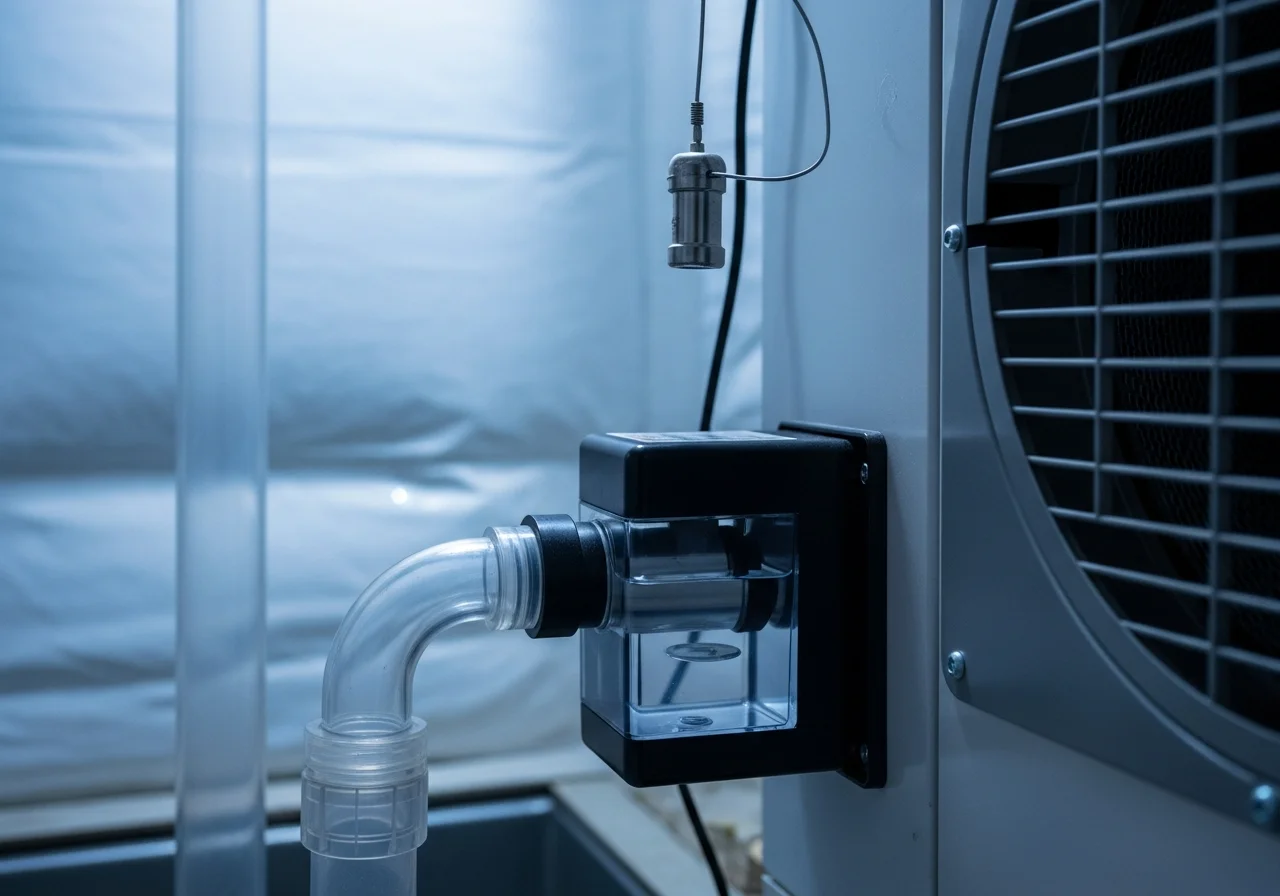
State-Specific Guidance
Florida — where a crawl space dehumidifier is essential, not optional
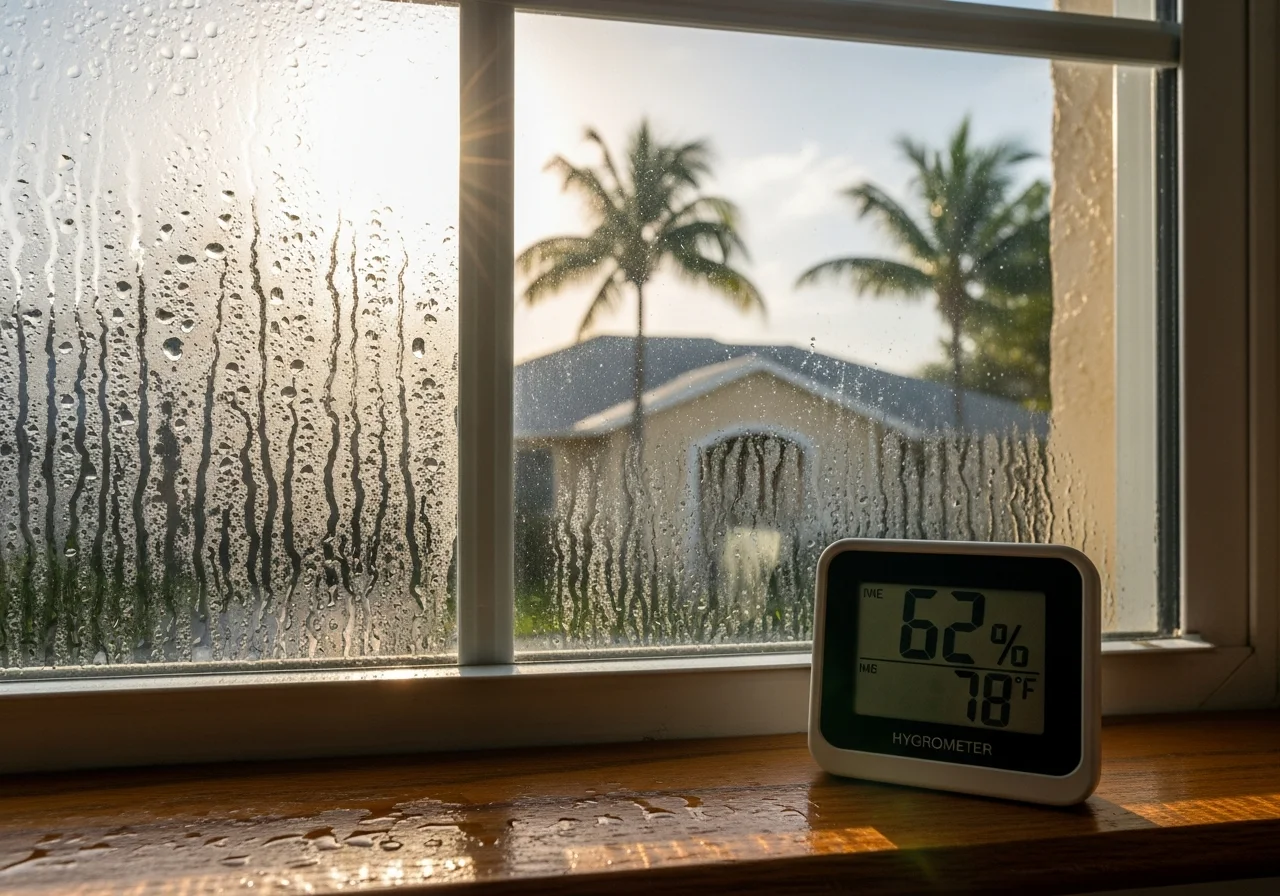
Florida's humidity is among the most persistent in the continental United States. Average daily relative humidity across the state runs 73–76%, with morning readings regularly reaching 83–91%. Fort Lauderdale, Tampa, Miami, and Orlando all experience morning humidity above 84% on average year-round.
For Florida homeowners with crawl spaces, a dehumidifier is not optional — it is essential. Ground moisture evaporation is continuous throughout the year, and even a well-maintained vapor barrier cannot eliminate 100% of soil moisture in South Florida's high water table conditions. Indoor target humidity for Florida homes should be maintained between 45–55% — lower than the 60% EPA upper limit because the heat index effect makes even moderate humidity feel oppressive at Florida temperatures. Florida homes often assume the AC handles humidity. It partially does, but a properly sized AC unit removes humidity as a byproduct of cooling, not as a primary function. When the system short-cycles, is oversized, or runs intermittently (winter, shoulder seasons), humidity control gaps emerge. A whole-house dehumidifier fills that gap in the living space; a crawl space unit addresses the foundation source.
North Carolina — code requires active moisture control
North Carolina presents a uniquely challenging environment because the state's climate varies dramatically from humid coastal plain to piedmont to mountains — yet crawl space moisture is a problem across all three zones. During April through October, outdoor dew points regularly exceed 65°F, and Advanced Energy field research found that vented NC crawl spaces exceed 80% relative humidity for most of spring and summer, while sealed crawl spaces in the same study maintained humidity below 65%.
NC building code requires active moisture control in closed (encapsulated) crawl spaces. The three code-compliant options are a permanently installed commercial dehumidifier, ducted conditioned supply air from the HVAC system, or a continuous mechanical exhaust fan. For most NC homes — particularly older construction with no existing HVAC ductwork in the crawl space — a dedicated crawl space dehumidifier is the most practical and reliable solution. One NC-specific consideration: 77 of 100 North Carolina counties have elevated radon risk, and radon testing should be completed before sealing a crawl space, because encapsulation changes the air dynamics that affect radon infiltration. A properly encapsulated NC crawl space with a commercial dehumidifier can reduce relative humidity from above 80% to below 60% and cut home energy costs by up to 15%. For deeper NC-specific coverage of North Carolina crawl space challenges, including seasonal patterns and code nuance, see our dedicated guide.
South Carolina — coastal corrosion changes equipment spec
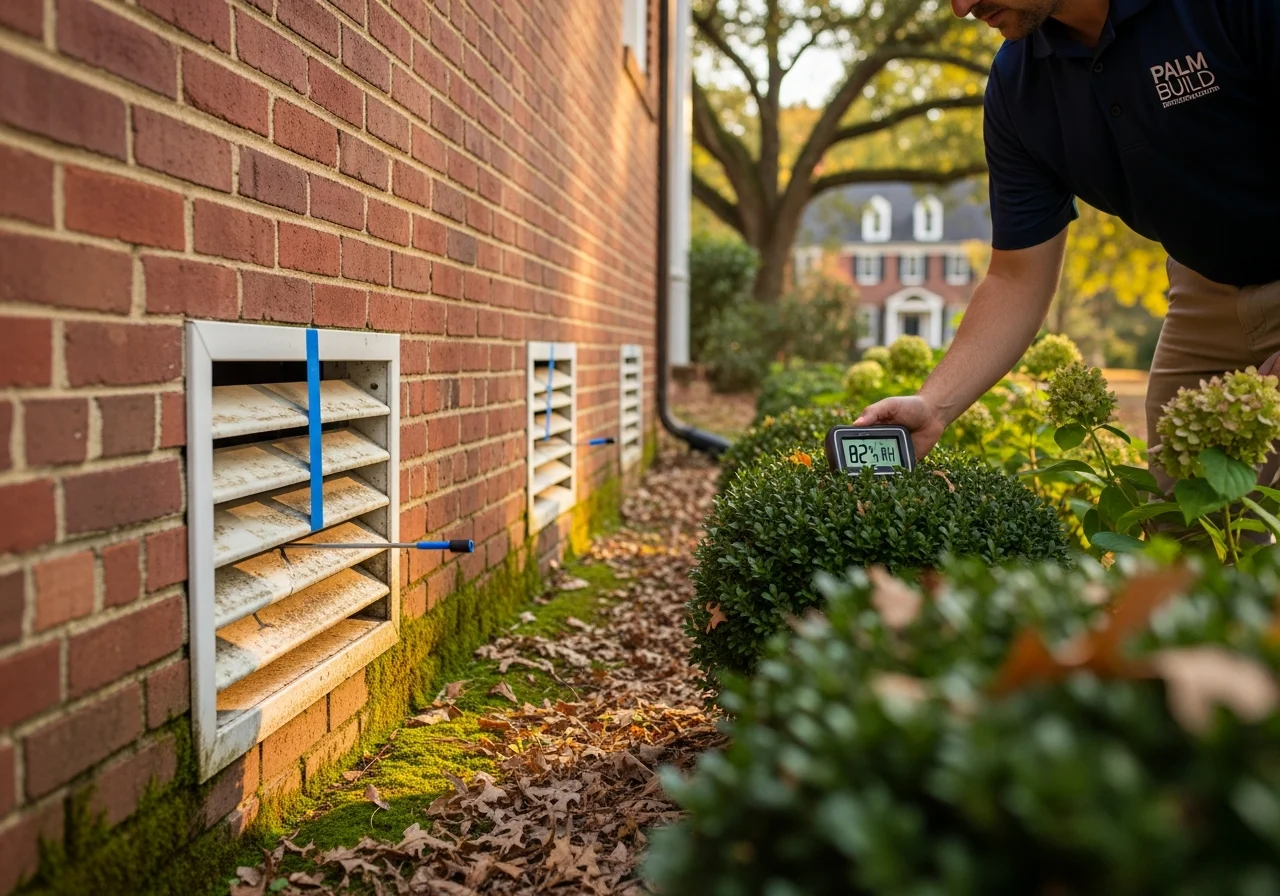
South Carolina faces year-round humidity pressure from hot, humid summers and relatively mild winters that rarely allow a crawl space to fully dry out between seasons. Spring heavy rainfall raises groundwater levels and introduces moisture through poorly graded soil around foundation walls. Summer brings peak humidity, when hot, damp outdoor air enters through any opening and condenses on cooler surfaces — ductwork, insulation, and floor joists.
The recommended target in North and South Carolina is 30–60% RH, with a preferred operating range closer to 50%. For SC homes on a conditioned slab with a separate mechanical room or basement, the priorities shift — but for crawl space homes (a substantial portion of SC's residential stock), encapsulation and dehumidification are the standard of care. South Carolina's coastal areas (Charleston, Myrtle Beach, Hilton Head) face additional moisture loading from salt air and higher average humidity, which accelerates corrosion of standard dehumidifier components. Specifying a unit with corrosion-resistant coils and stainless hardware matters considerably more in these coastal zones than it does inland.
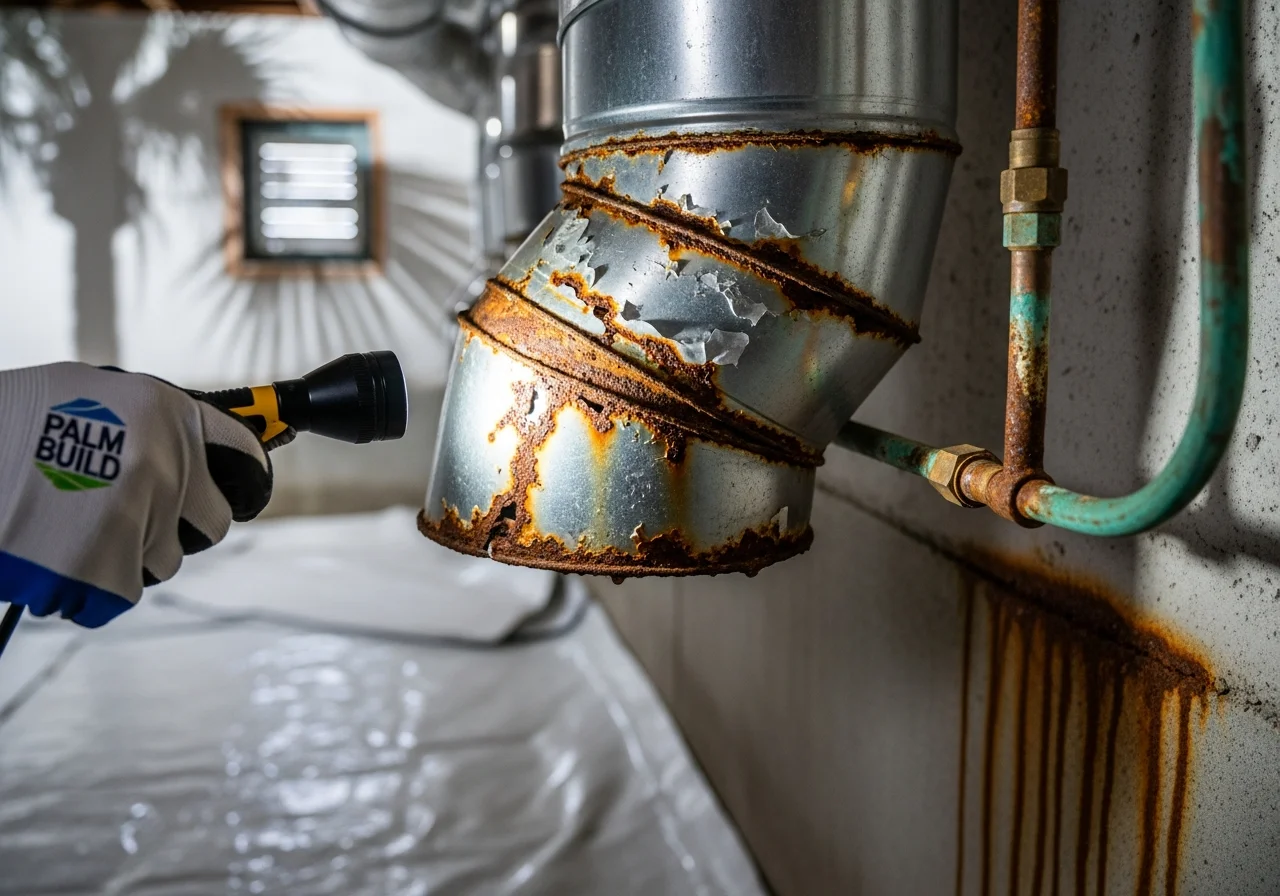
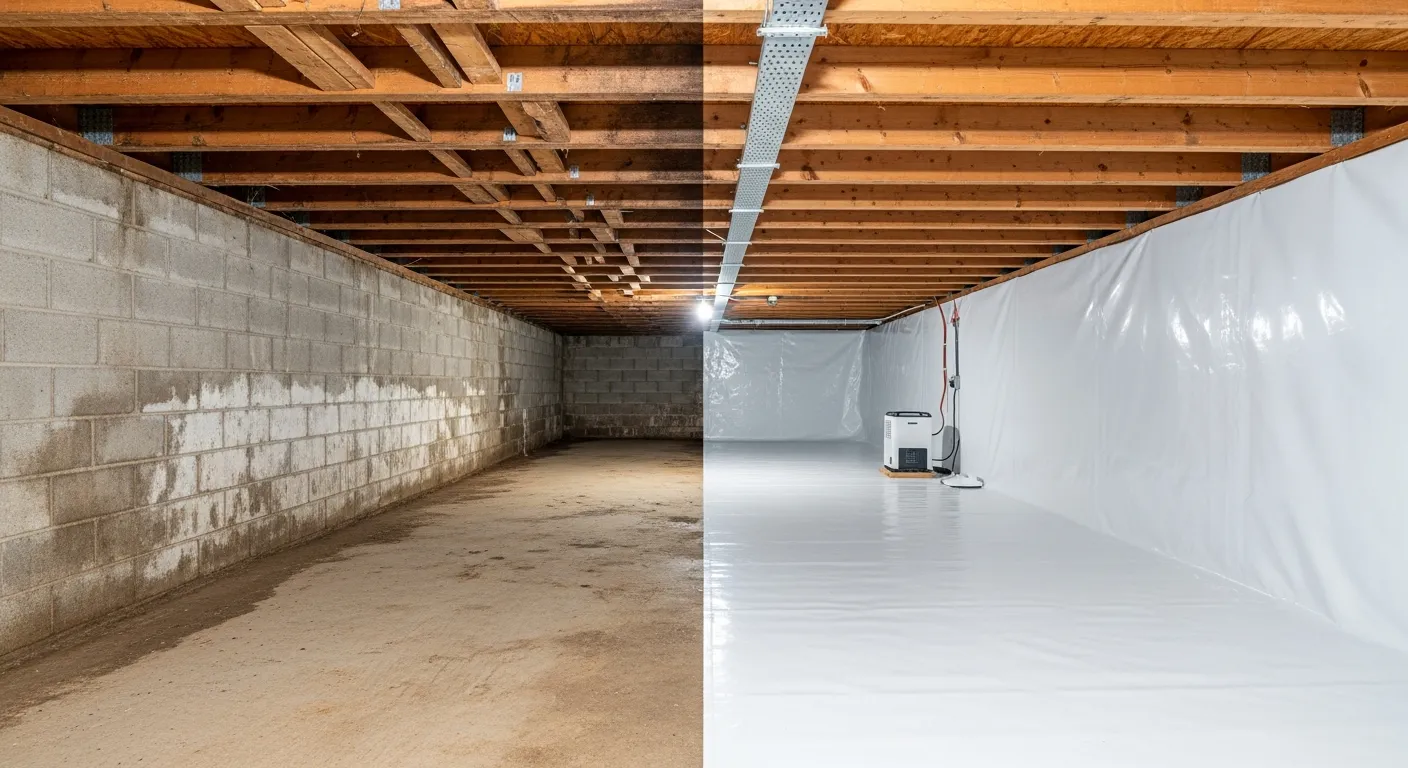
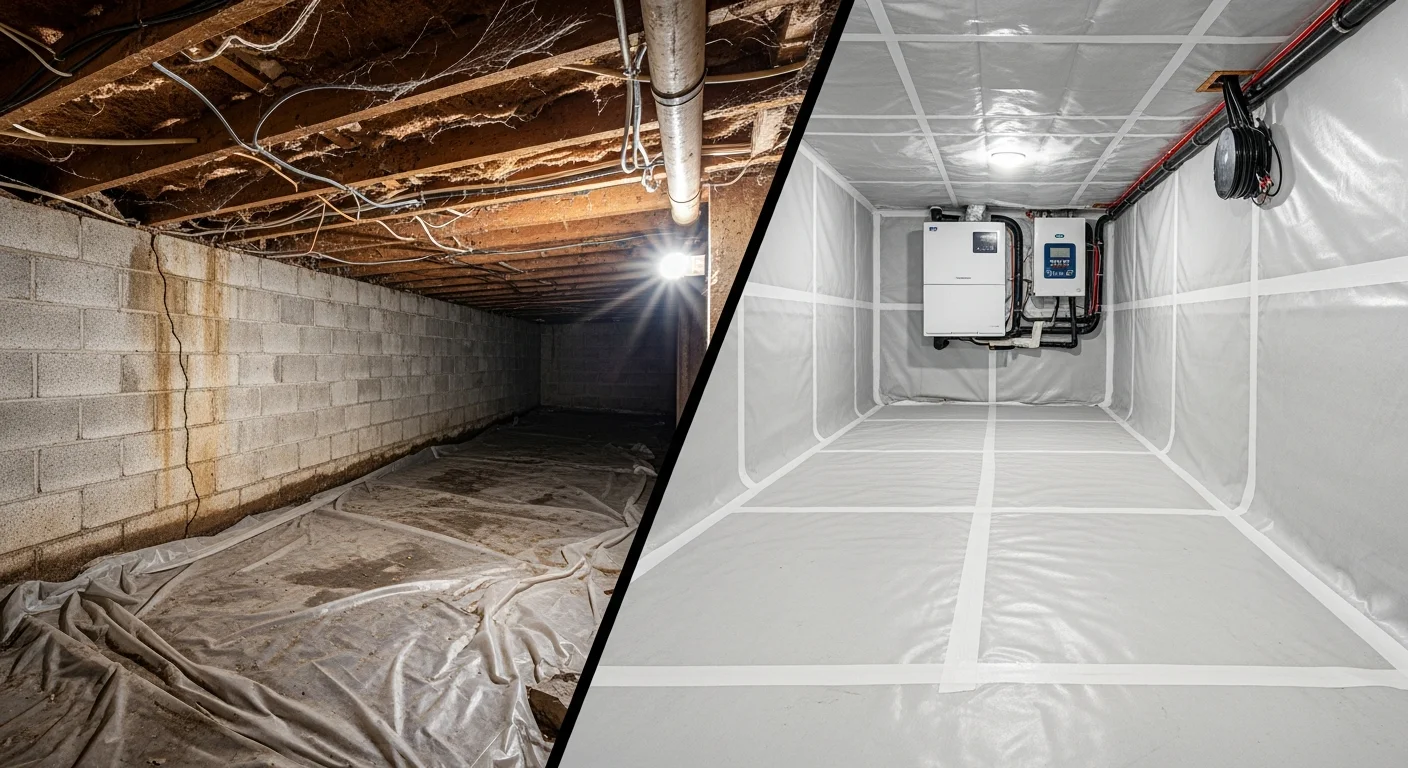
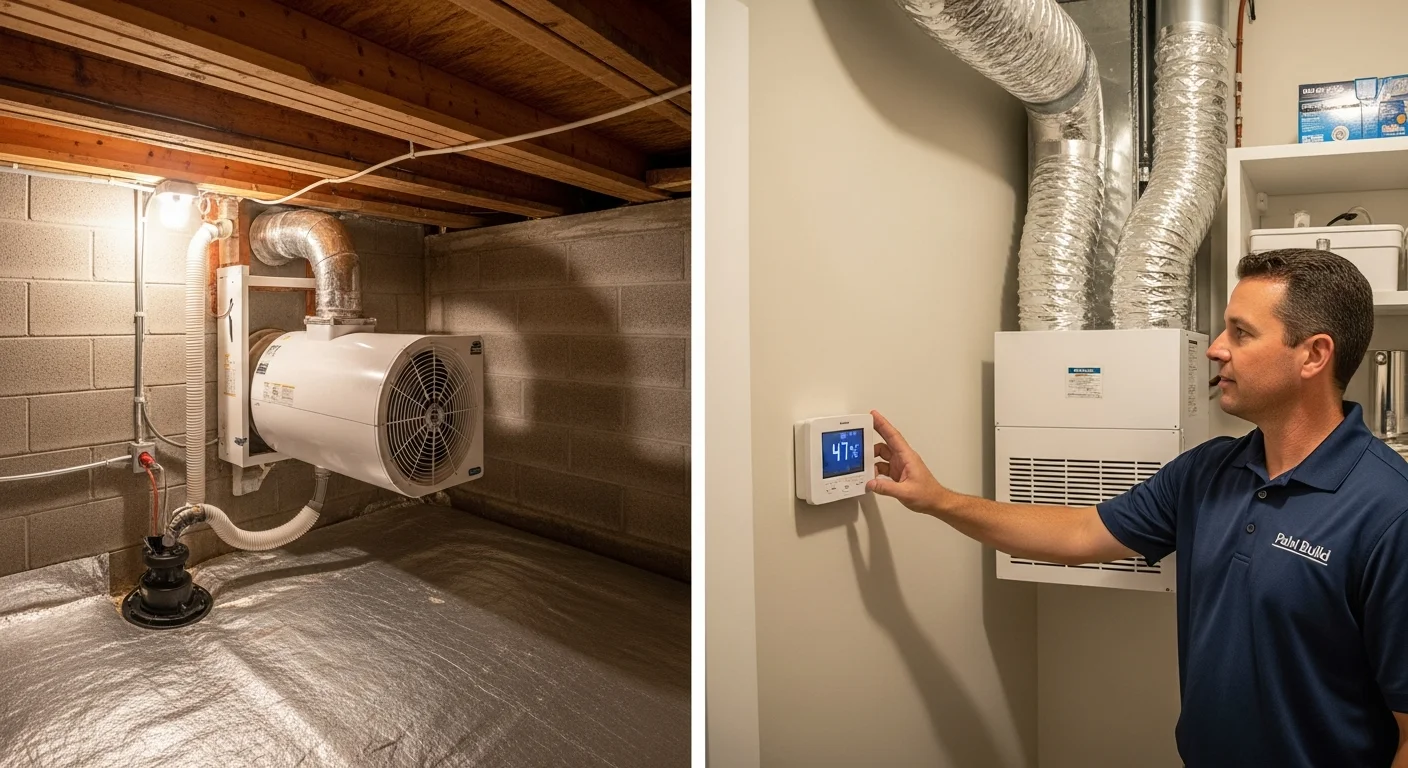
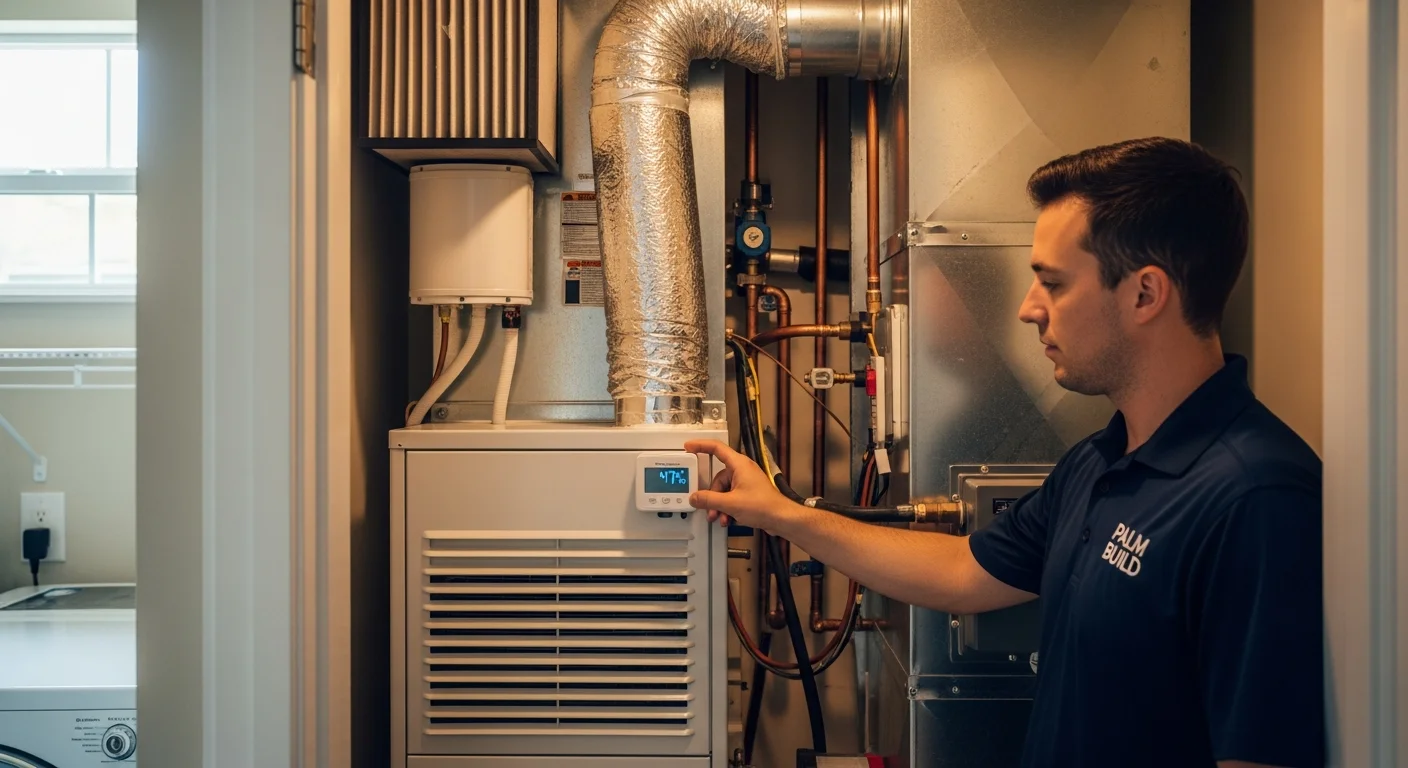
Inside a Professional Installation
What a complete moisture control system looks like — from the condition it replaced, through the finished envelope, to the diagnostic tools that keep it performing.
When to Call a Professional
A dehumidifier purchase is not the first step. It is the last step in a properly sequenced moisture control process. Before any dehumidifier goes in, a certified professional should assess and resolve each of the following:
- Active water intrusion — standing water, plumbing leaks, or drainage failures must be resolved first. Water damage restoration and emergency extraction come before any moisture control decisions.
- Vapor barrier condition — a torn, absent, or improperly installed vapor barrier leaves the ground moisture source wide open; a dehumidifier cannot overcome it.
- Encapsulation status — open foundation vents or gaps mean outside humidity enters continuously, overwhelming even an oversized unit.
- Mold presence — if mold is already established on joists or the vapor barrier, it requires professional remediation before moisture control is installed. Sealing over active mold makes the problem worse.
- Structural damage — compromised joists, beams, or insulation need repair alongside (not after) the dehumidifier; dry wood that is still rotted has no structural value.
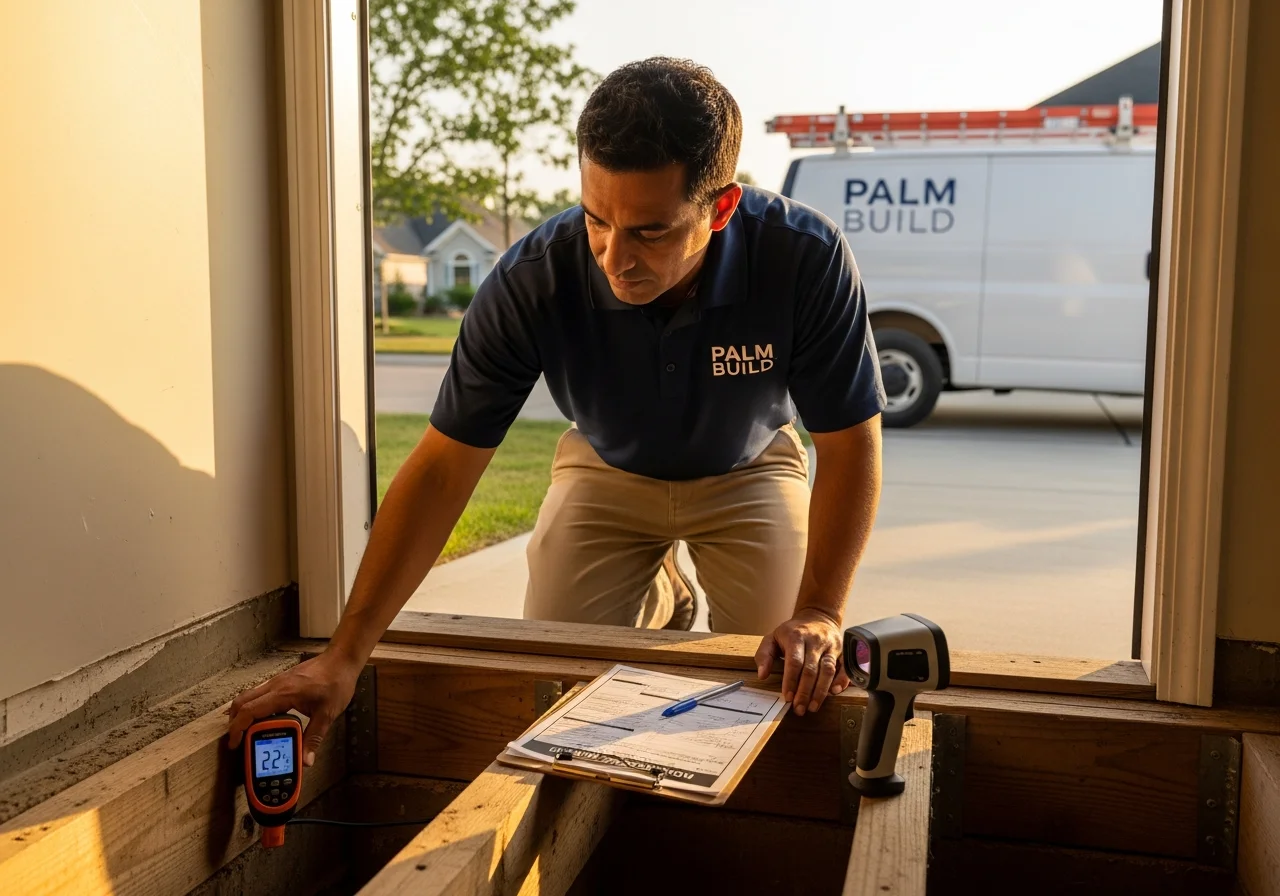
Palm Build's IICRC-certified technicians assess all five conditions as part of a complete crawl space evaluation. Rather than selling a dehumidifier into a problem it cannot fix, the process starts with understanding moisture source, extent, and structural impact — then recommends the correctly sized, correctly installed solution. Damage tied to a covered peril sometimes qualifies for coverage; our insurance restoration process guide covers what to document when filing. If your home is showing any of the warning signs described above — in Florida, North Carolina, or South Carolina — a crawl space inspection is the appropriate starting point, and our crawl space cleanup services handle the full scope.
Crawl Space Cleanup & Moisture Control
Full-scope crawl space assessment, vapor barriers, encapsulation, dehumidifier installation, and mold remediation across Florida, North Carolina, and South Carolina.
Crawl Space Encapsulation Cost Guide (2026)
Full pricing tables by size, scope, and region for the sealing project that makes dehumidification work.
Vapor Barrier vs. Crawl Space Encapsulation
Side-by-side comparison with decision rules, humidity thresholds, and state code specifications.
Crawl Space Mold Removal
Causes, costs, and the remediation sequence for mold in crawl spaces before any moisture control system is installed.
Signs of Crawl Space Problems
Eight visible warning signs that indicate moisture, mold, or structural issues worth a professional inspection.
North Carolina Crawl Space Problems
NC-specific patterns, code requirements, seasonal humidity data, and the radon consideration unique to 77 of 100 NC counties.
Professional Mold Remediation
IICRC-certified mold inspection, containment, removal, and post-remediation verification.
Frequently Asked Questions
Can a crawl space dehumidifier replace a whole-house dehumidifier? +
Do I still need a dehumidifier if I encapsulate my crawl space? +
What size dehumidifier do I need for my crawl space? +
What humidity level should a crawl space be? +
Can I use a regular store-bought dehumidifier in my crawl space? +
How much does crawl space dehumidifier installation cost? +
How long does a crawl space dehumidifier last? +
Should I DIY or hire a professional for crawl space dehumidifier installation? +
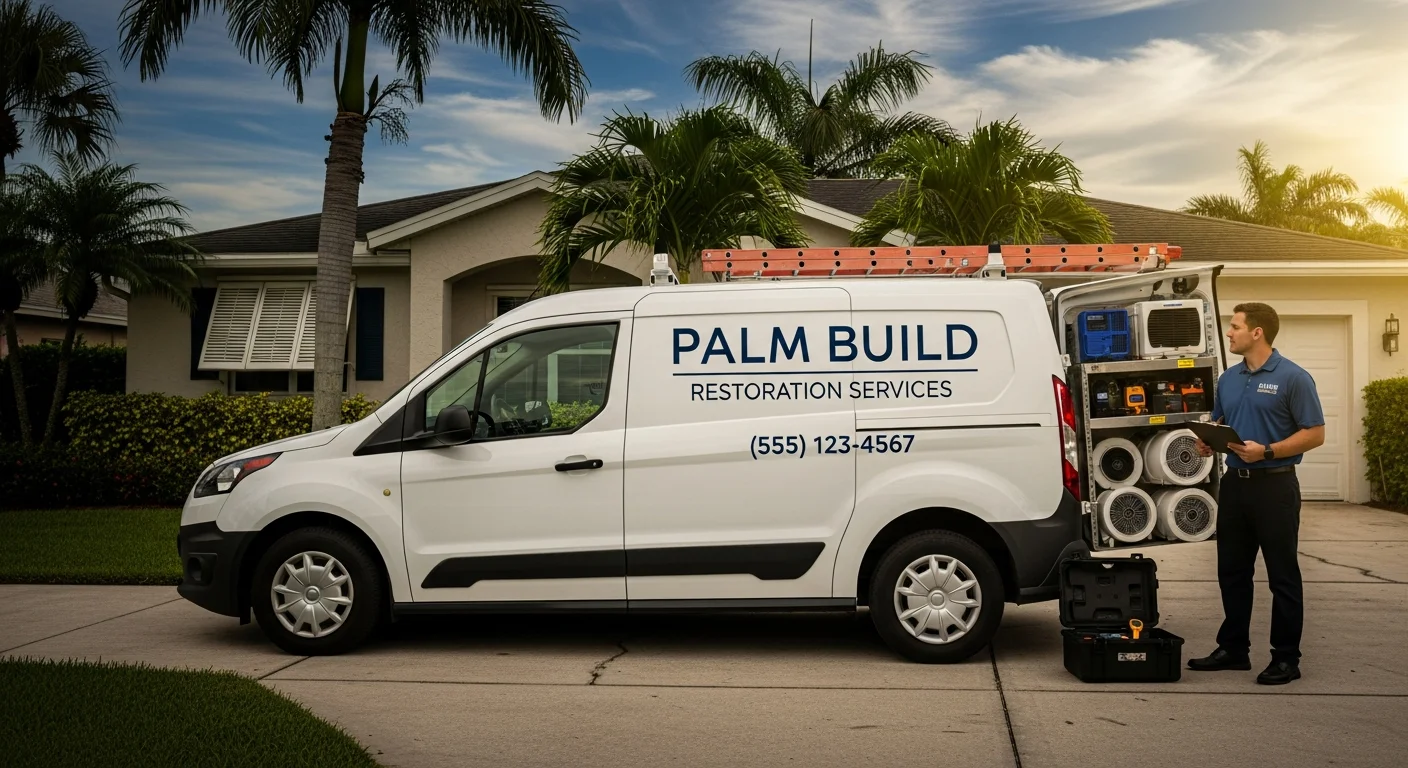
Not sure whether you need a crawl space, whole-house, or both?
Palm Build's IICRC-certified technicians measure humidity in both zones, inspect your crawl space for active water and mold, evaluate encapsulation condition, and size the right combination for your home. We install vapor barriers, full encapsulation, crawl space dehumidifiers, and whole-house dehumidifiers across Florida, North Carolina, and South Carolina — and we respond 24/7 for emergencies.
Found this helpful? Send it to someone who needs it.