Key takeaways
- The 8 most common crawl space warning signs are musty odors, sagging floors, condensation on pipes, standing water, visible mold, wet insulation, pest activity, and unexplained energy bill spikes.
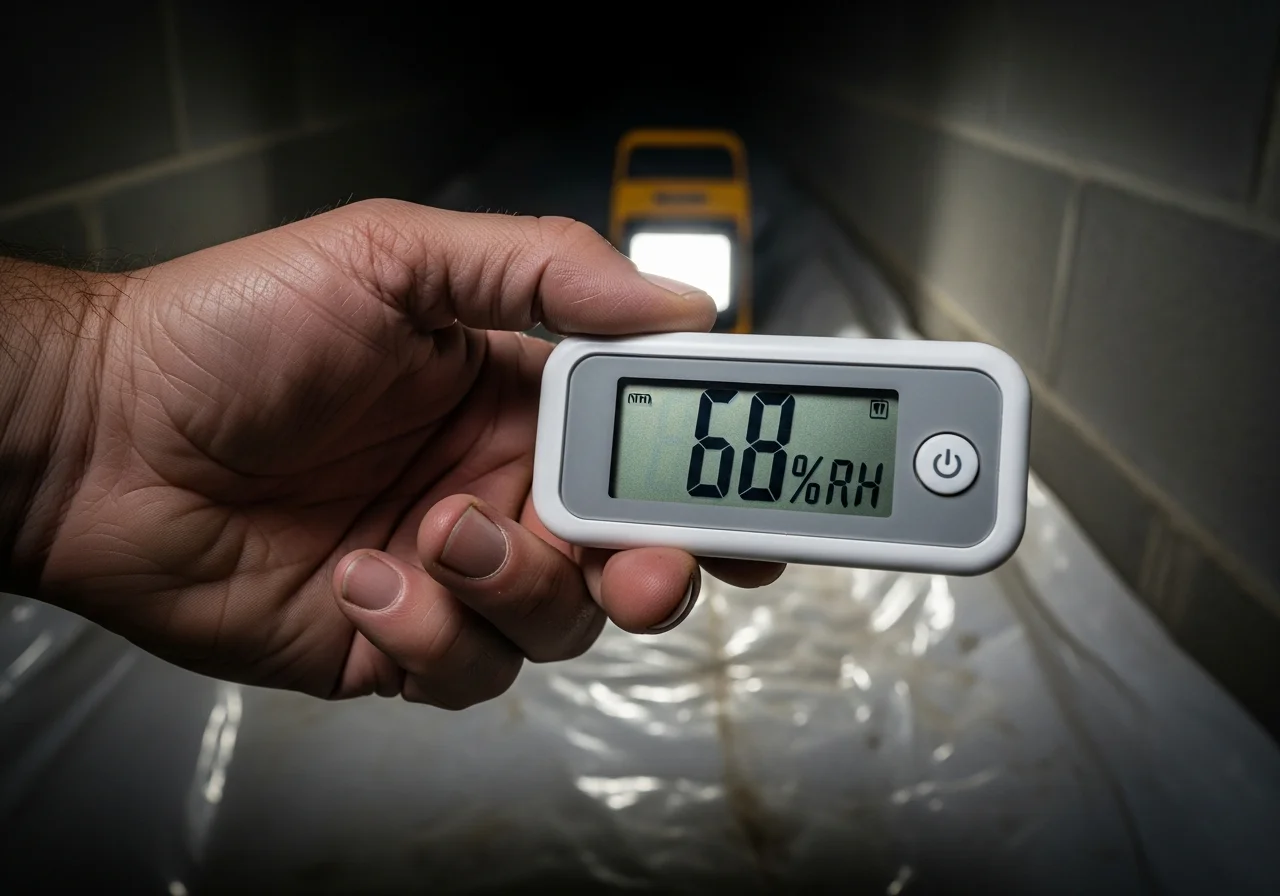
- Crawl space humidity should stay below 60% RH — ideally between 30% and 50%. Anything higher creates conditions where mold can start growing within 24 to 48 hours.
- Not all signs require an emergency call, but standing water and visible mold should be treated as high-urgency — both can escalate quickly in Florida, North Carolina, and South Carolina's humid climates.
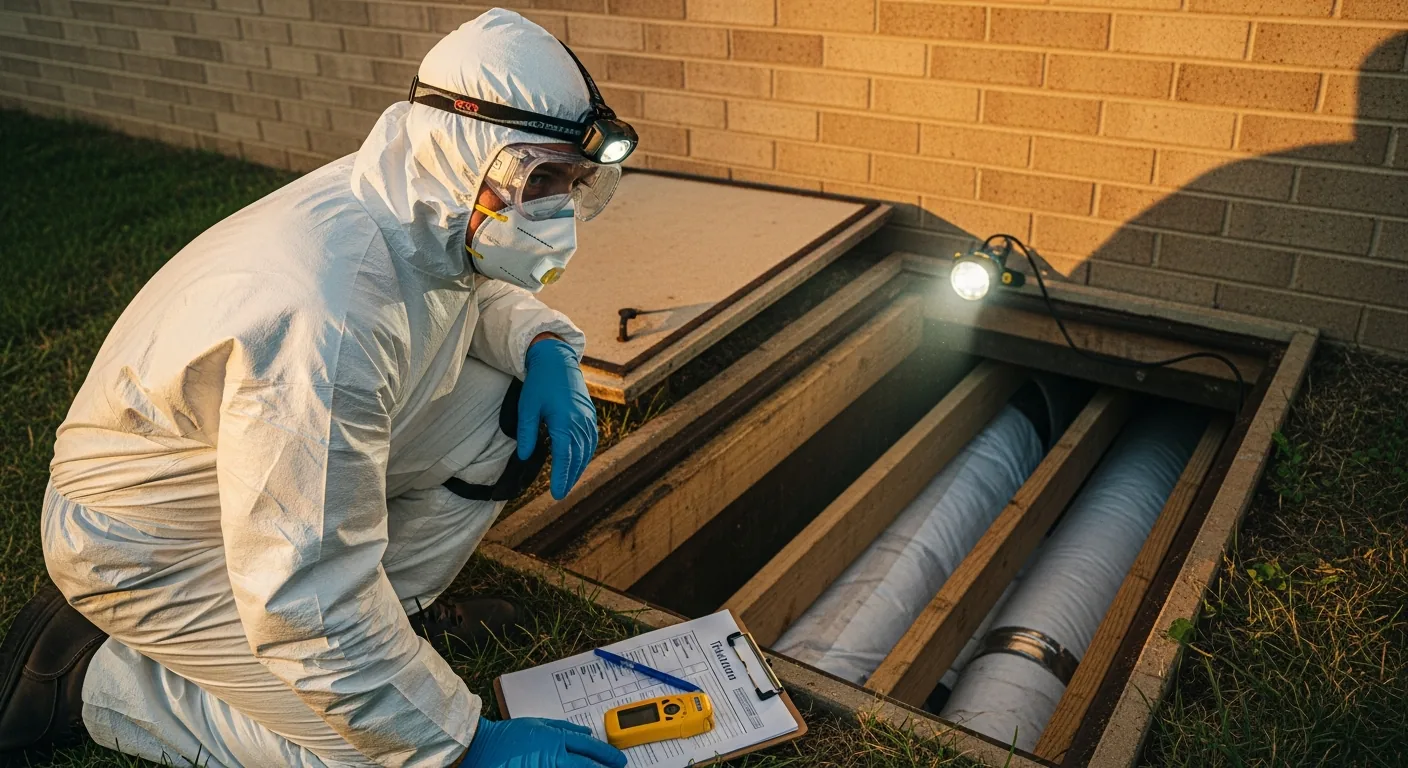
- A cheap digital hygrometer (under $20) is the single most useful tool for homeowners doing a first-pass crawl space check.
- Standard homeowners insurance does not cover flood-related crawl space damage — separate flood insurance is required.
Eight signs tell you your crawl space has a problem: a persistent musty smell in the house, floors that feel springy or uneven, condensation forming on pipes or ductwork, standing water or mud after rain, visible mold or dark staining on wood joists, insulation that has fallen or looks wet, pest signs including termite mud tubes, and unexplained spikes in your energy bills or indoor humidity. Crawl space humidity should be kept below 60% relative humidity — ideally between 30% and 50% — because above that threshold condensation forms on framing and mold colonies can begin growing within 24 to 48 hours. The good news: most of these signs appear before major structural damage sets in, and catching them early keeps repair costs manageable.
Mold growth window
24–48 hrs
Mold colonies can start on damp surfaces within 24 to 48 hours — EPA and FEMA guidance
Safe RH threshold
< 60%
Keep crawl space relative humidity below 60% to reduce mold and condensation risk
Avg mold remediation
$2,364
Average homeowner cost for mold remediation — Angi, 2024
Annual termite damage
$5B+
Subterranean termites cause billions in U.S. property damage each year — NPMA
Why Crawl Space Problems Show Up Upstairs
Your crawl space and your living area are not separate systems — they share air. The stack effect, sometimes called the chimney effect, describes how warm air rises through a home and exits at the top, pulling cooler air from below to replace it. In a home with an unencapsulated or poorly ventilated crawl space, that replacement air comes from the crawl space itself, carrying moisture, mold spores, soil gases, and pest odors directly into the rooms where your family lives. Research from Building Science Corporation and U.S. Department of Energy Building America programs estimates that between 25% and 40% of the air in a home's living area can originate from the crawl space if the building envelope is not properly sealed. This is why crawl space problems rarely stay in the crawl space — they eventually migrate upward and show up as symptoms you can feel, smell, or see inside your home.
The 8 Warning Signs of Crawl Space Problems
Sign 1 — Musty Smell Near Floor Vents, Basement Stairs, or at Floor Level
A persistent musty or earthy odor that seems to rise from the floor or comes through your HVAC vents is one of the earliest indicators that your crawl space has elevated moisture or early microbial activity. The smell itself doesn't always confirm active mold — it more reliably confirms that moisture control is failing and conditions are becoming favorable for mold growth. The practical first check: buy an inexpensive digital hygrometer (under $20 at most hardware stores) and take a reading in your living space at floor level, then compare it to a reading near the crawl space access. If indoor RH is consistently above 55% at floor level, or if you detect a sharp spike between the access point and the main living area, you have a moisture pathway worth investigating. Connecting this early to crawl space cleanup and moisture control before odor progresses to visible growth is significantly cheaper than remediating established mold.
Sign 2 — Sagging, Bouncy, or Uneven Floors
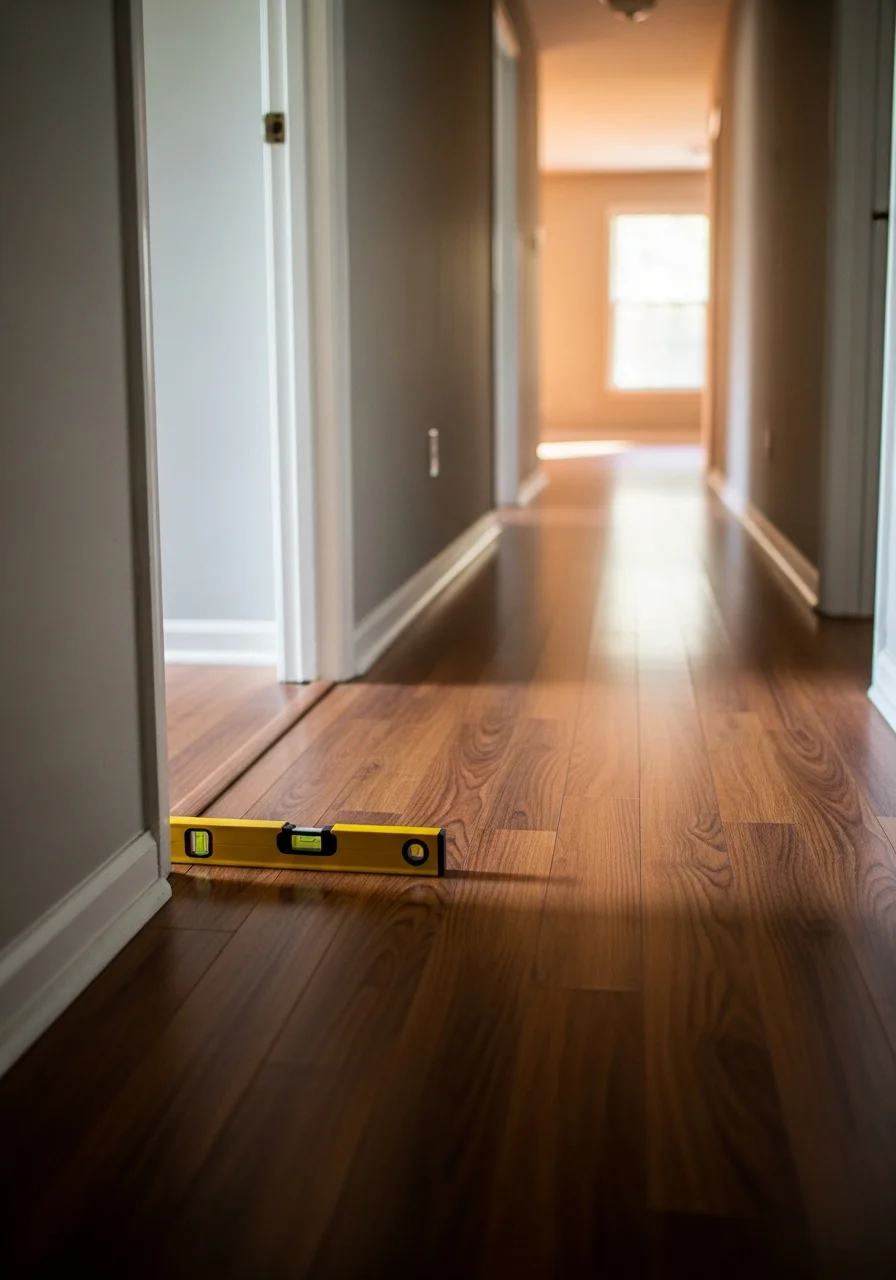
Floors that feel springy underfoot, that have a visible dip in a specific area, or that creak and flex more than they used to are telling you that something has changed in the structural members below. In most cases, the culprit is moisture. Wood floor joists that stay wet for extended periods lose structural integrity — fungi that cause wood decay can reduce a joist's load-bearing capacity by 10% to 40% before visible damage appears, according to USDA Forest Products Laboratory research. Bounce and sag can also result from pest damage (termite activity in floor framing is common in the Carolinas and Florida) or from support posts that have shifted due to soil settlement in wet conditions. The safe homeowner check: walk the affected area and note whether it feels worse after extended wet weather. Place a marble or level on the floor — significant tilt or roll is a structural flag. If movement is worsening week to week or cracks are forming in adjacent drywall, treat it as urgent and have a professional assess the framing.
Sign 3 — Condensation on Pipes, HVAC Ductwork, or Metal Surfaces
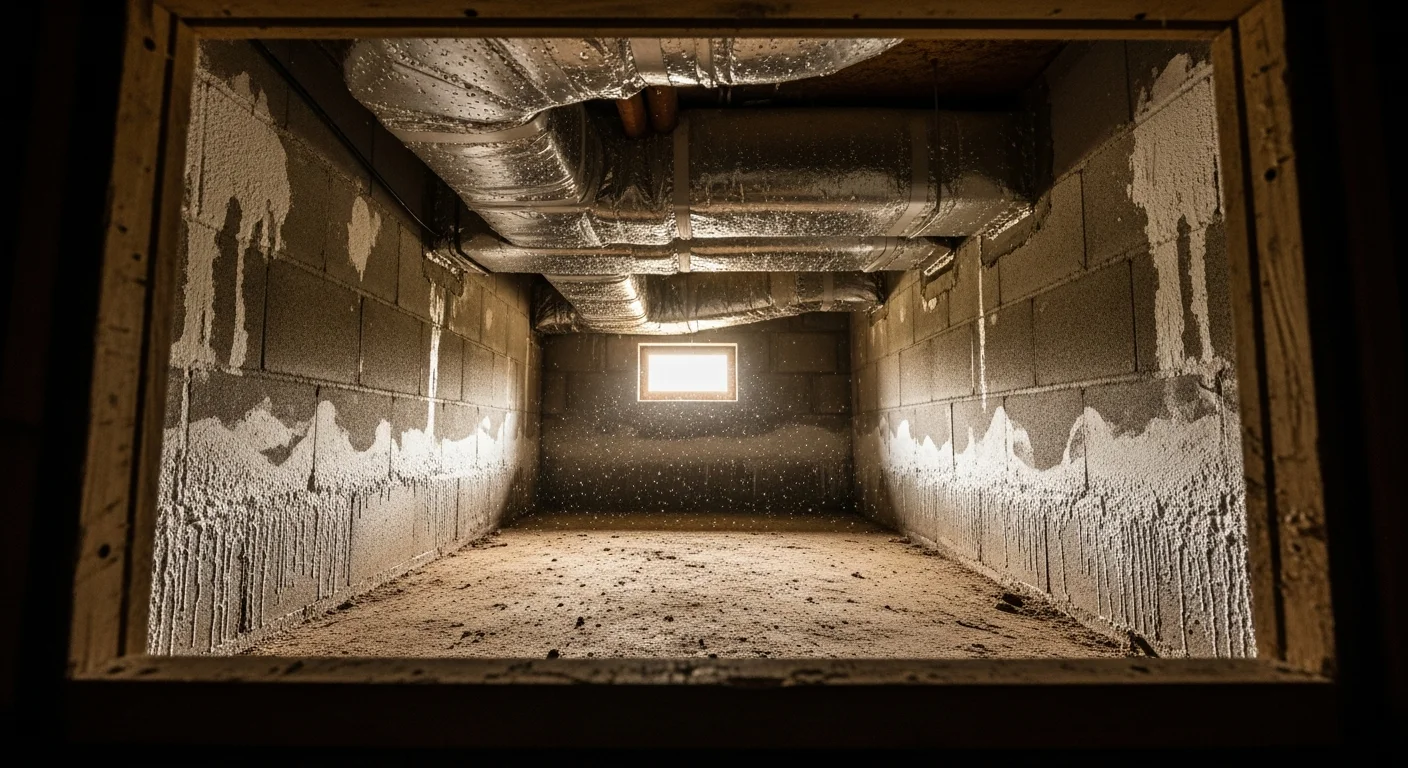
When warm, humid air meets a cooler surface — a cold water pipe, a metal duct, a vapor barrier edge — moisture in that air condenses into liquid water. If you can see water droplets forming on pipes, rust streaks running down metal hangers, or a persistent wet sheen on any metal surface in or near your crawl space, the crawl space air is significantly more humid than those surfaces. This is a humidity control problem, not a plumbing leak. The condensation itself becomes a secondary moisture source: it drips onto framing, insulation, and the ground, keeping the environment chronically wet. The condensation pattern can also help you diagnose the source — if it concentrates near foundation vents, outdoor humid air entering the crawl space is the likely driver, which is especially common in vented crawl space designs in hot-humid climates like coastal Florida, the NC piedmont, and coastal South Carolina.
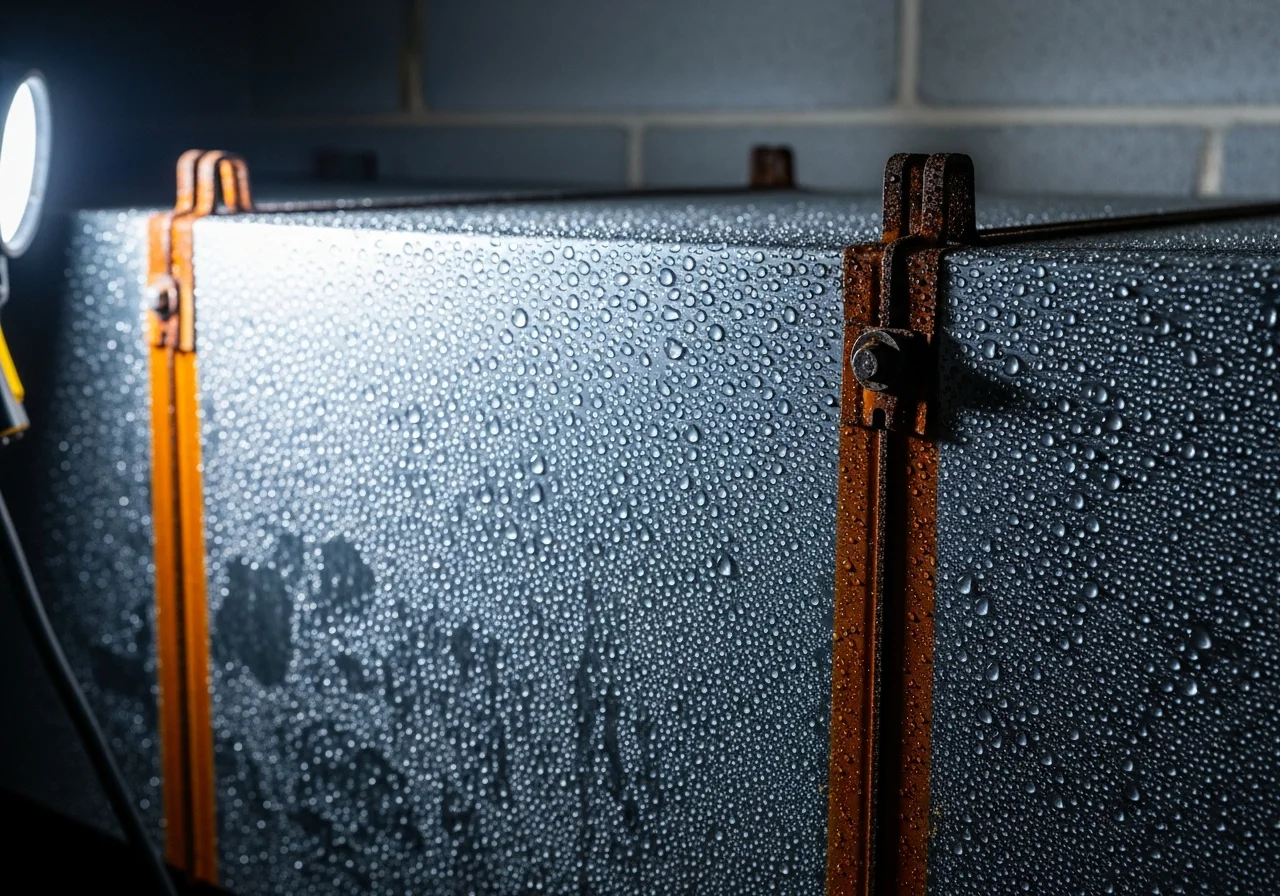
Sign 4 — Standing Water, Mud, or Recurring Puddles After Rain
Water that accumulates on the crawl space floor after rain events can come from several sources: surface water migrating through foundation vents or gaps, groundwater rising through the soil, poor site grading that directs runoff toward the foundation, downspouts that discharge too close to the house, or an active plumbing leak. Each source has a different fix, which is why the first diagnostic step is to check the outside of the home first — walk the perimeter after rain and look for downspouts discharging against the foundation, low spots in the grading that pool water near the house, and any foundation cracks or gaps at grade level. If the outside looks clean and water still accumulates, you're likely dealing with groundwater intrusion or a subsurface drainage issue. For acute water intrusion, water extraction and structural drying needs to start quickly — wet wood begins losing structural integrity and mold risk begins within hours, not days.
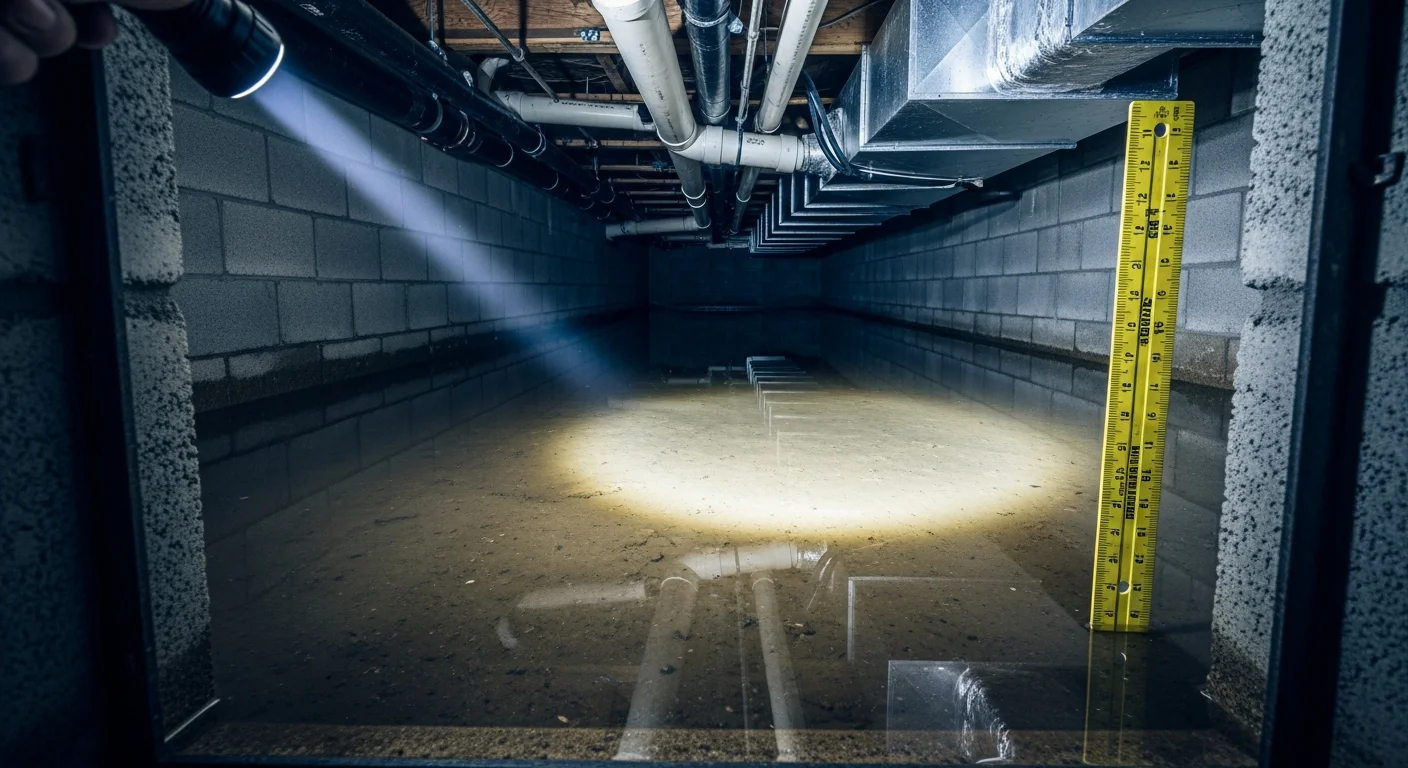
Sign 5 — Visible Mold or Dark Staining on Wood Framing
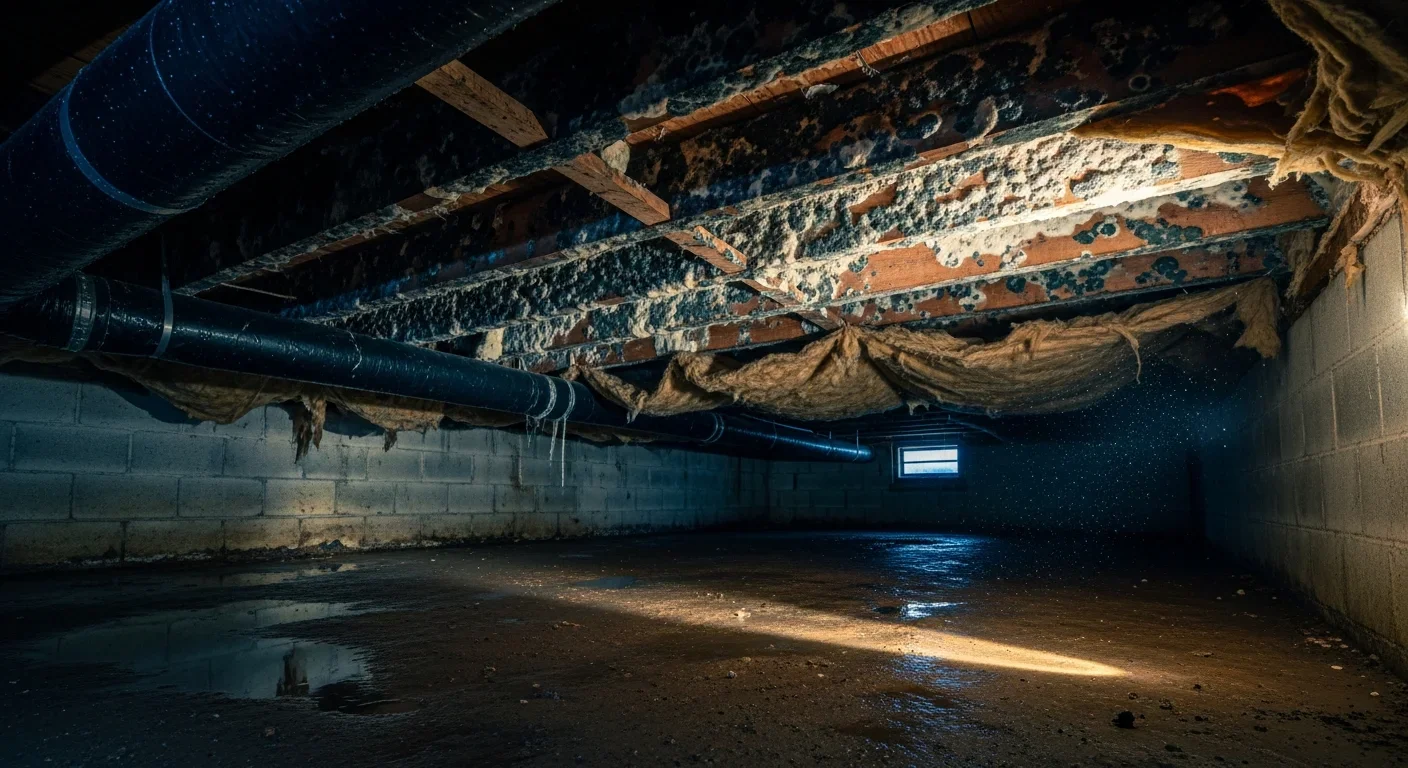
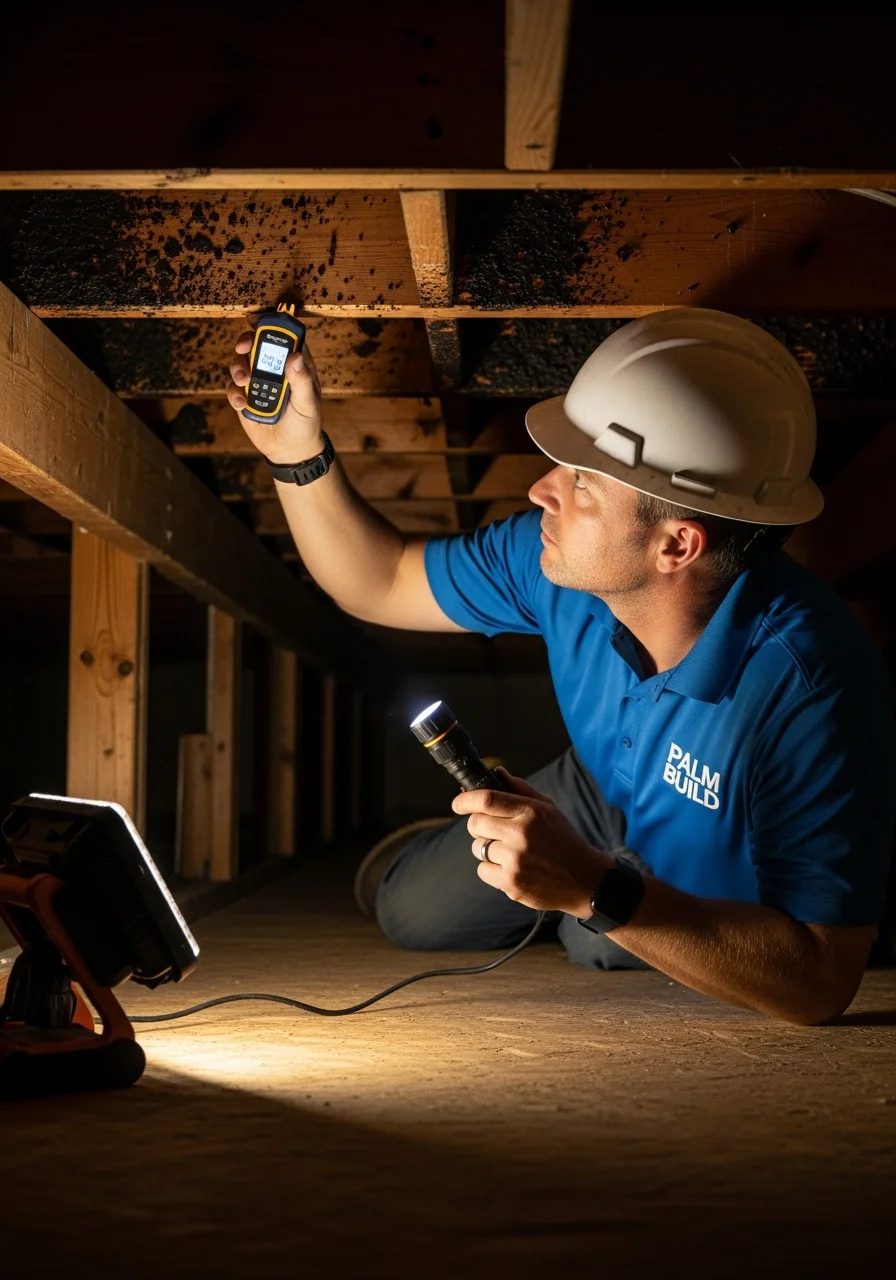
Gray, black, green, or white fuzzy growth on floor joists, subfloor sheathing, or sill plates is visible mold — a sign that moisture has been present long enough and consistently enough for fungal colonies to establish. Dark staining on wood without obvious fuzzy growth can be mold that has dried out (and is dormant, not dead), early-stage growth that isn't yet visible to the naked eye, or wood-staining fungi that don't cause structural decay but do indicate prior moisture exposure. The critical rule: do not try to eliminate crawl space mold with bleach, foggers, or spray-on sealers. These approaches treat the surface, not the source, and they can disturb spores without killing the colony. The moisture source driving growth must be identified and corrected first, and the contaminated materials need to be handled using containment practices aligned with professional remediation standards. Professional mold remediation in a crawl space typically involves source correction, containment, removal of contaminated materials, HEPA vacuuming, antimicrobial treatment, and clearance verification.
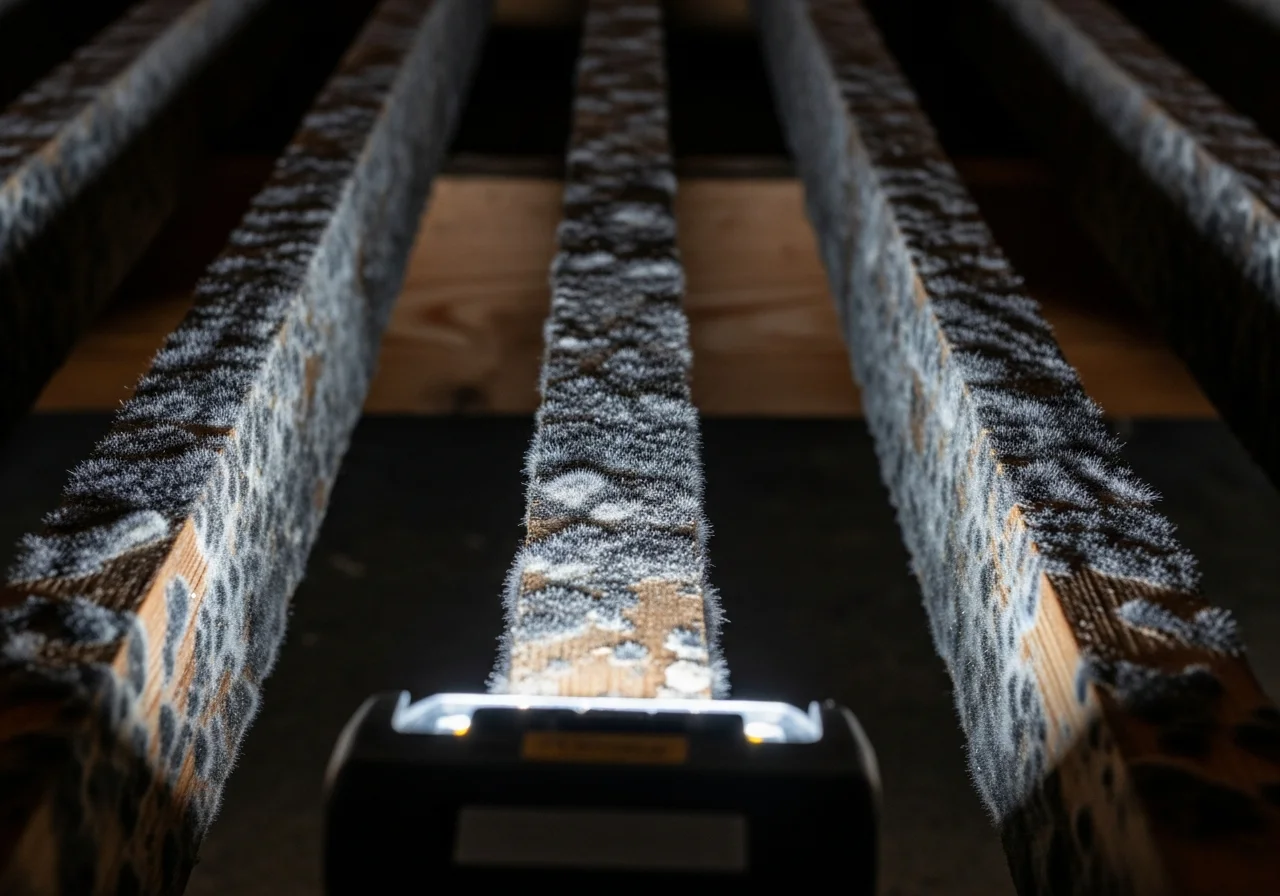
Sign 6 — Wet, Fallen, or Sagging Fiberglass Insulation
Fiberglass batt insulation installed between floor joists in a crawl space can absorb and hold water, becoming heavy enough to pull away from the joist bay and fall to the ground. Once wet, fiberglass insulation loses its thermal value almost entirely — R-19 batts that have been soaked provide very little insulation — and the wet material becomes a long-term moisture reservoir sitting directly against your floor framing. Fallen batts are a strong indicator that bulk water intrusion or chronic high humidity has been present for an extended period, because fiberglass doesn't fall from properly installed positions unless weight from moisture saturation has exceeded the friction-fit holding it in place. When you see fallen or visibly wet insulation during an inspection, also look up at the subfloor above the gaps — chronic moisture and insulation failure often coincide with early-stage wood staining and decay. Replacing wet insulation without correcting the moisture source is a repair that will fail again within the same season.
Sign 7 — Pest Activity: Droppings, Scratching Sounds, or Mud Tubes
A damp, dark crawl space is an ideal habitat for a wide range of pests — rodents, cockroaches, and wood-destroying insects including subterranean termites. Of these, subterranean termites are the most financially significant concern: the National Pest Management Association estimates they cause more than $5 billion in property damage annually in the United States, and they are particularly prevalent in warm, humid states including Florida, North Carolina, and South Carolina. The most reliable visual indicator of subterranean termite activity is mud tubes — pencil-width tubes of soil and termite saliva that run from the ground up foundation walls, piers, or wood members. These tubes protect termites from desiccation as they move between their underground colonies and the wood they're consuming. Finding a mud tube does not necessarily mean active infestation, but it requires immediate professional assessment. For other pests, look for droppings (mice leave small dark pellets near wall edges), gnawed insulation or wiring, and nesting material in corners. Pest pressure and moisture problems almost always go together — address the moisture and pest pressure typically decreases.
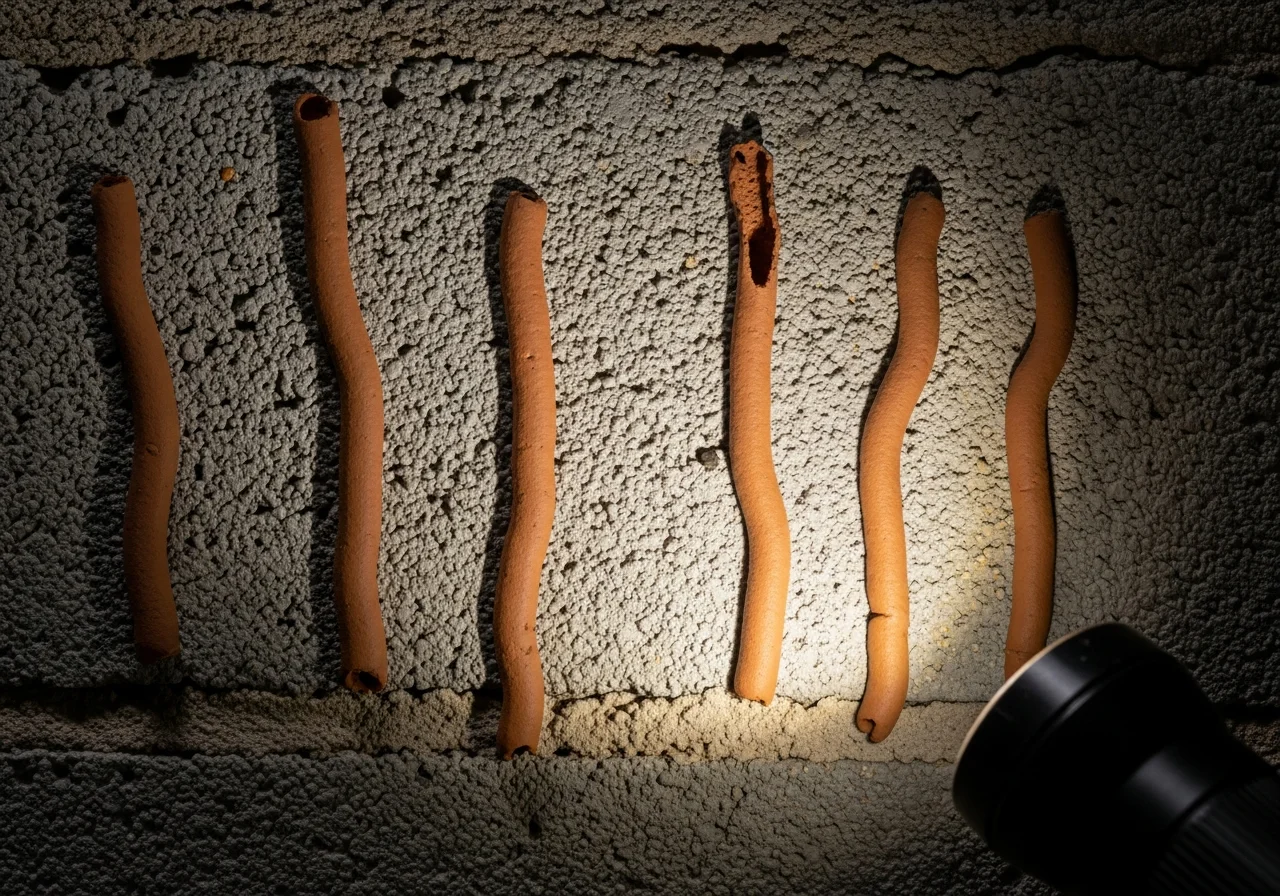
Sign 8 — Higher Energy Bills, Cold Floors, or Persistent Indoor Clamminess
If your heating and cooling bills have increased without a clear explanation, if floors feel cold even when the heat is running, or if your home feels clammy and hard to keep comfortable year-round, the crawl space building envelope is likely part of the problem. Air leakage paths — gaps around plumbing penetrations, unsealed foundation vents, missing or damaged insulation — allow conditioned air to escape and unconditioned crawl space air to enter. ENERGY STAR estimates that air sealing and insulating floors over crawl spaces can save typical homeowners 10% to 20% on heating and cooling costs, and the Department of Energy's Building America program has documented similar ranges in humid-climate housing studies. High indoor humidity on the ground floor — that clammy feeling — is a particularly reliable indicator because it reflects the stack effect pulling humid crawl space air upward into the living space. If your dehumidifier runs constantly at floor level but rarely at the second floor, moisture is entering from below, not from outside through windows.
Diagnostic Summary: All 8 Signs at a Glance
| Warning Sign | Likely Cause | Urgency | Safe Homeowner Check |
|---|---|---|---|
| Musty smell at floor level or through vents | Elevated humidity, early microbial activity | Medium | Measure RH at floor level with a hygrometer; compare to crawl space access reading |
| Sagging, bouncy, or uneven floors | Moisture-weakened joists, pest damage, or settlement | High | Walk the area after wet weather; use a level to confirm tilt; watch for worsening over time |
| Condensation on pipes, ducts, or metal | Crawl space RH likely above 60% | Medium | Photograph condensation; measure RH if safe to access; look for rust streaks on hangers |
| Standing water, mud, or recurring puddles | Drainage failure, groundwater, plumbing leak, or grading | High | Check downspouts and exterior grading first; photograph from hatch — do not enter |
| Visible mold or dark staining on wood | Chronic moisture meeting organic material | High | Photograph from outside; do not bleach or fog; source moisture must be corrected first |
| Wet, fallen, or sagging insulation | Bulk water intrusion or chronic high humidity | Medium | Photograph from access; check subfloor above gaps for staining or softness |
| Mud tubes, droppings, scratching, or gnawed material | Pest activity, possibly subterranean termites | Medium–High | Look for mud tubes on foundation walls and piers; note location and photograph |
| High energy bills, cold floors, indoor clamminess | Air leakage paths and insulation gaps | Medium | Compare ground-floor vs. upper-floor humidity; check dehumidifier run time at floor level |
Crawl space warning signs, likely causes, urgency level, and safe homeowner checks
What to Do When You Spot a Crawl Space Problem
What you do in the first hours after discovering a crawl space problem significantly affects how much the repair will cost and how far the damage spreads. The right sequence depends on what you found — but the following steps apply regardless of which sign you're responding to.
- 1
Stop the water source if it's safe to do so
If the problem is an active plumbing leak, shut off the supply to the affected fixture or the main if necessary. If it's surface water from rain, check downspouts and grading, but don't attempt to redirect water into a crawl space with standing water. If the source is groundwater or unclear, document and move to step 2.
- 2
Document with photos and measurements before disturbing anything
Photograph from the access hatch before entering. Use your hygrometer to record RH readings. If you have a non-contact moisture meter, probe accessible floor framing from above. Timestamped photos and moisture readings become critical for insurance documentation. Write down what you see, the date, and recent weather events.
- 3
Avoid entering unsafe conditions
Standing water, visible structural instability, strong sewage odors, or widespread mold are conditions that require professional equipment and personal protective gear. Do not enter a crawl space with active water present. If you do inspect a dry crawl space, wear an N95 or P100 respirator, gloves, and eye protection. Crawl space atmospheres can contain mold spores, pest waste, and soil gases at concentrations not safe to breathe without protection.
- 4
Start humidity control and ventilation as a first-response measure
If no active water is present but RH is elevated, running a dehumidifier — placed at the crawl space access if you can't safely enter — begins pulling moisture down. Do not open foundation vents to 'dry it out' in humid climates like Florida, North Carolina, or South Carolina. In hot-humid climates, outdoor air is typically more humid than interior air, and opening vents often makes conditions worse, not better.
- 5
Get a professional inspection if signs persist or if urgency is high
High-urgency signs — standing water, visible mold, sagging floors, or termite mud tubes — warrant a professional assessment within 24 to 48 hours, not weeks. Mid-urgency signs like elevated RH, condensation, and odor can typically wait for a scheduled inspection, but should not be ignored for months. A qualified inspector will use moisture mapping equipment, thermal imaging, and wood moisture meters to identify sources that aren't visible from the access hatch.
Cost Guide: What Common Crawl Space Fixes Actually Cost
Crawl space repairs range from a few hundred dollars for a targeted vapor barrier patch to $15,000 or more for a full encapsulation system with drainage, dehumidification, and mold remediation. The ranges below reflect typical national pricing — your actual cost will depend on crawl space size and access difficulty, the water source and category, how much debris and standing water is present, and whether structural repairs to joists or posts are needed.
| Service | Typical Cost Range | What to Know |
|---|---|---|
| Full crawl space encapsulation | $5,000–$15,000 (avg $2–$10/sq ft) | Complete system: drainage matting, 20-mil vapor barrier, sealed vents, dehumidifier, and humidity control. Not just plastic on the floor. |
| Vapor barrier installation only | $1,000–$3,000 (avg $0.50–$0.70/sq ft materials) | Appropriate for mild moisture issues without active water. Floor prep, seam taping, and wall laps affect durability significantly. |
| Mold remediation | $1,223–$3,749 (avg $2,364 per Angi) | Professional remediation follows IICRC S520 standards: containment, removal, HEPA vacuuming, antimicrobial treatment, clearance test. |
| Crawl space dehumidifier (installed) | $1,500–$14,000 | Wide range reflects whether electrical work, drainage, and sealing are included. Standalone unit vs. complete humidity management system. |
| Sump pump installation | $650–$1,500 | Addresses active groundwater intrusion. Pair with discharge routing away from foundation and a drainage strategy. |
| Crawl space insulation (installed) | $0.55–$7.25/sq ft | Insulation type (fiberglass batts, rigid foam, spray foam) and labor drive costs. Insulation alone does not fix bulk water issues. |
| Structural joist repair | $1,500–$5,000+ | Sistering damaged joists or replacing rotted sill plates. Cost scales with extent of damage and access difficulty. |
Typical cost ranges for common crawl space repairs (national averages, 2024–2025)
Florida, North Carolina, and South Carolina: What's Different in Your State
Climate, Humidity, and Storm Season
All three states share hot-humid summer conditions that make crawl space moisture management a year-round concern — not just a rainy-season issue. Florida's climate data from the Florida Climate Center shows many locations maintain average morning relative humidity above 80% across multiple months of the year, meaning outdoor air entering a vented crawl space is consistently more humid than the crawl space itself. South Carolina Department of Natural Resources climate data reports average RH around 69% in the Upstate and 73% along the coast. North Carolina's state climate summary characterizes the state as humid with strong coastal exposure to hurricanes and heavy rainfall. NOAA defines Atlantic hurricane season as June 1 through November 30, and storm surge, flooding, and severe rainfall events during that window are among the most common triggers for acute crawl space flooding across all three states. If your crawl space takes on water after a storm, treat it with the same urgency as an indoor flood — the crawl space is part of your building envelope, and wet framing doesn't care whether the water came through the front door or the foundation vent.
Mold Contractor Licensing and Consumer Guidance
**Florida:** The Florida Department of Business and Professional Regulation (DBPR) administers a mold-related services licensing program that requires individuals performing mold assessment or mold remediation to hold a valid license, including examination requirements. When hiring a mold contractor in Florida, verify their DBPR mold assessor or remediator license before signing a contract. **North Carolina:** The NC Department of Health and Human Services publishes public education materials on mold emphasizing humidity control and provides consumer guidance on selecting consultants, including recommending that contractors follow recognized remediation standards. **South Carolina:** The SC Department of Environmental Services states that it does not regulate mold and cannot inspect homes for mold because there are no state or federal standards for mold or indoor air quality in residential buildings. This means South Carolina homeowners have no state licensing framework to verify against — your protection is selecting contractors who follow IICRC S520 standards and carry appropriate insurance. Note: South Carolina proposed legislation (H.5109, introduced February 5, 2026) that would create a certification framework for mold assessors and remediators — verify current requirements at time of hire.
Flood Insurance: What Your Policy Actually Covers
Standard homeowners insurance policies in Florida, North Carolina, and South Carolina do not cover flood damage — this is a consistent point made by the North Carolina Department of Insurance, the Florida Office of Insurance Regulation, and the South Carolina Department of Insurance. If your crawl space flooded because of storm surge, rising groundwater, or overland water flow from a storm event, a standard homeowners policy will typically deny the claim. Flood coverage requires a separate policy — either through the National Flood Insurance Program (NFIP) or a private flood insurer. The SC Department of Insurance has noted that even one inch of water can cause significant property damage, which is a useful framing for understanding why flood insurance is worth investigating if you're in a flood zone or low-lying area. For crawl space water that originates from a plumbing failure (burst pipe, supply line failure) rather than external flooding, standard homeowners coverage generally applies — but document the source thoroughly. For more guidance on the insurance restoration process, including how to document damage for a claim, Palm Build's team works directly with adjusters across all three states.
Crawl Space Cleanup and Moisture Control
Palm Build's full crawl space service: moisture assessment, drainage correction, encapsulation, and dehumidification across FL, NC, and SC.
Crawl Space Encapsulation Cost Guide (2026)
Full pricing breakdown for encapsulation systems: per sq ft costs, component breakdowns, and FL/NC/SC regional factors.
NC Crawl Space Problems: Homeowner Guide
North Carolina-specific crawl space guidance: clay soil drainage issues, NC licensing notes, radon considerations, and 48-hour emergency response.
Professional Mold Remediation
IICRC-certified mold remediation services — containment, removal, and clearance verification for crawl spaces, living areas, and commercial buildings.
Frequently Asked Questions
Does a musty smell always mean there's mold in my crawl space? +
What humidity level is too high for a crawl space? +
How fast can mold grow after my crawl space floods or gets wet? +
Is full encapsulation worth it, or is a vapor barrier enough? +
Should I open my crawl space vents to dry it out after rain? +
Can crawl space problems affect my indoor air quality, allergies, or asthma? +
If my crawl space flooded from a storm, will homeowners insurance cover it? +
Think your crawl space might have a problem?
Palm Build's IICRC-certified inspection teams operate 24/7 across Florida, North Carolina, and South Carolina. We identify moisture sources, map damage, and provide a clear repair plan — no pressure, no guesswork.
Found this helpful? Send it to someone who needs it.