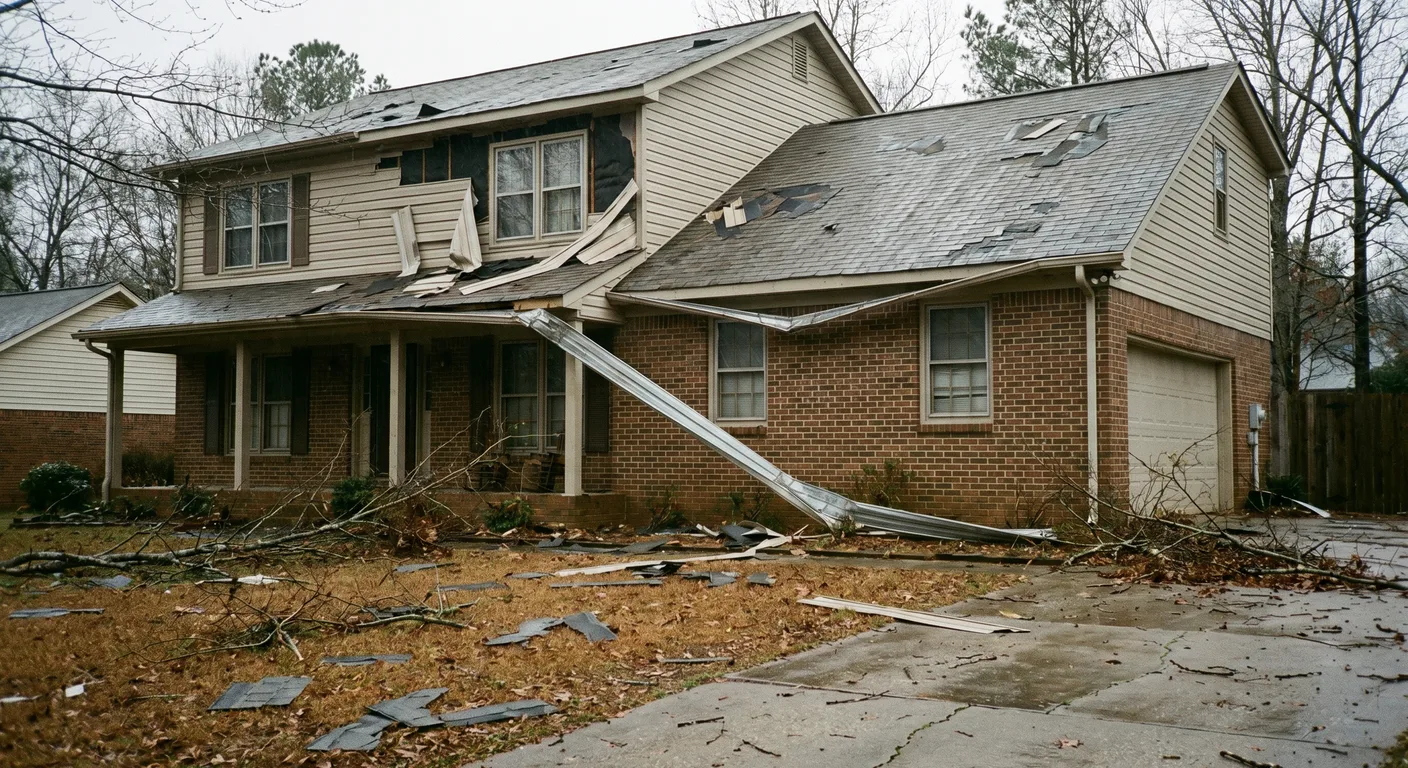
Raleigh is an inland Piedmont city — and it still takes direct hits from tornadoes, hurricane-force wind, and creek flooding. The 2011 EF-3 tracked 65 miles through Wake County. Hurricane Fran brought hurricane-force gusts all the way to RDU in 1996. Palm Build's IICRC-certified crews handle 24/7 emergency tarping, structural drying, tree removal, and full rebuild across the Triangle.
Serving Raleigh from Charlotte, NC Same-day Response IICRC Certified
Raleigh is an inland Piedmont city — and that does not mean safe from tornadoes,
hurricane-force winds, or widespread flooding. The Triangle sits in North Carolina's
tornado corridor, saw direct hurricane wind from Fran in 1996, and watches Crabtree
Creek and the Neuse River rise with every major tropical remnant. These are the events
that have shaped Raleigh's storm restoration landscape.
EF-3 Sanford–Raleigh Tornado
Catastrophic
April 16, 2011
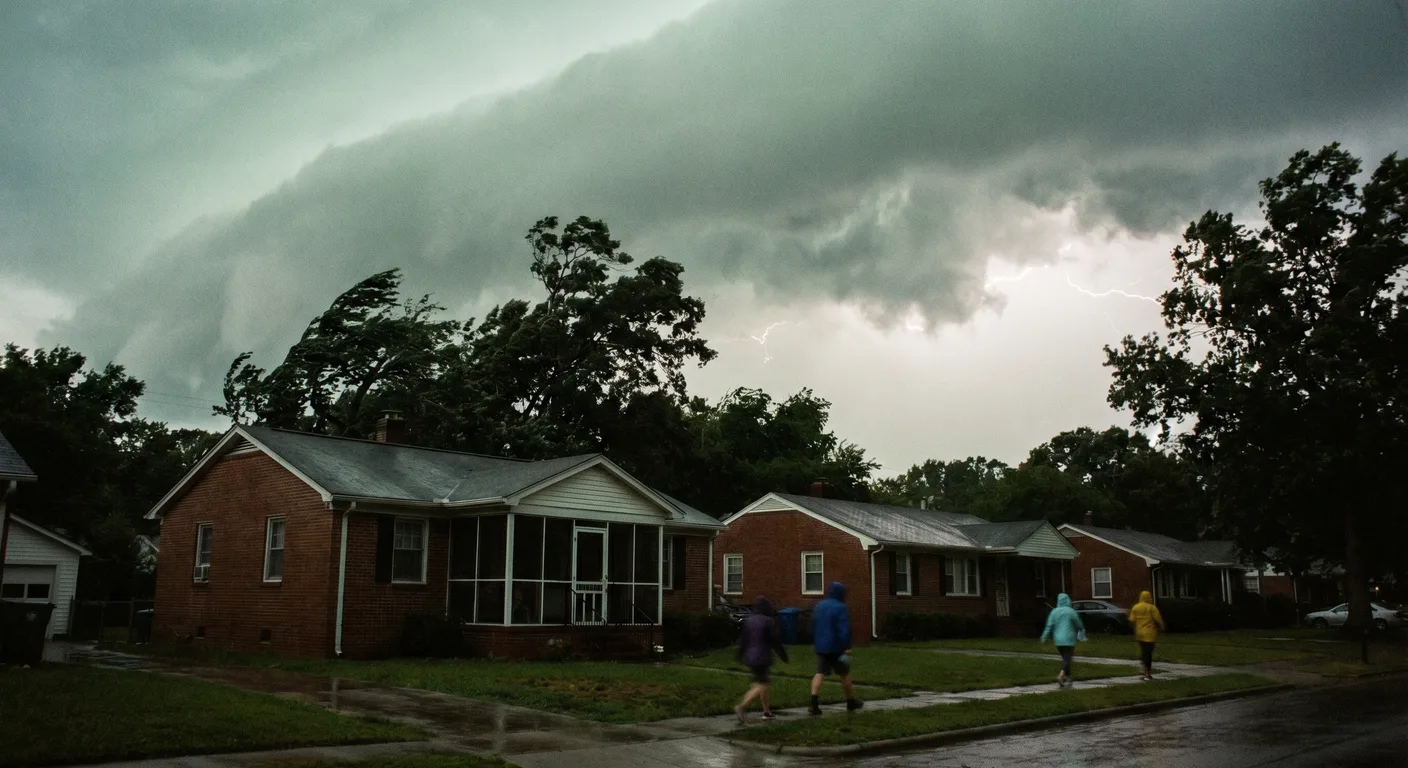
The most significant tornado event in modern NC history arrived on April 16, 2011, when 30 tornadoes struck the state in a single day. The Sanford–Raleigh EF-3 tracked continuously on the ground for approximately 65 miles from Lee County through Wake County with maximum winds of 136–165 mph. The National Weather Service issued a Tornado Emergency for the City of Raleigh — a rare product reserved for confirmed catastrophic events. Four people died in Wake County. The outbreak established Raleigh's position within North Carolina's tornado corridor and remains the benchmark event for every storm preparedness plan in the Triangle.
Hurricane Fran — Hurricane-Force Winds Inland
Catastrophic
September 5–6, 1996
Hurricane Fran made landfall as a Category 3 near Cape Fear and tracked directly through the heart of North Carolina, delivering hurricane-force wind gusts all the way to Raleigh — among the farthest inland penetration of hurricane-force winds in modern NC history. Wake County recorded more than $900 million in damage. Virtually all of Wake County lost power for more than a week, and 3.5 million cubic yards of debris were generated within the county. Four people died in Wake County. Fran was the worst economic disaster in NC history at the time and remains the proof that inland Raleigh is not shielded from direct hurricane-force wind.
Helene Remnants on Record-Wet Ground
Significant
September 27, 2024
Hurricane Helene tracked inland on September 27, 2024, delivering heavy rain and wind to the Raleigh/Wake County area. The catastrophic flooding was concentrated in western NC's mountain communities — not in the Piedmont. What made the Raleigh impact significant was context: the July–September 2024 period was the wettest three-month stretch in recorded history for Raleigh, with 31.05 inches of total precipitation. Helene's remnants fell on already saturated ground, sending Crabtree Creek and Walnut Creek into flood stage and driving water into crawl spaces and low-lying structures across the Triangle.
Tropical Storm Michael — 54–56 mph Gusts at RDU
Significant
October 11–12, 2018
Tropical Storm Michael tracked just south and then north of Raleigh in October 2018, bringing 54–56 mph wind gusts at Raleigh-Durham Airport and 2–6 inches of rain across central NC. Nearly 500,000 NC customers lost power — the worst wind damage from a tropical system in the western Piedmont in nearly 30 years at that time. Capital Boulevard in Raleigh experienced localized road flooding. The event reinforced that late-season tropical storms remain a real hazard in the Triangle even when they degrade well before reaching the Piedmont.
Raleigh's severe weather season spans spring tornado season (April–May) through
late-summer tropical remnants (August–October).
Types of Storm Damage
How Storms Damage Raleigh Homes
Severe weather damages Raleigh homes in six distinct ways — and most major storms
trigger multiple damage types simultaneously. Understanding the full scope of storm
damage is critical for both emergency response and insurance claims, because different
damage types may be covered by different policies.
Roof Wind Damage
High winds peel shingles, lift flashing, and crack ridge vents — creating entry points for water that may not become visible for days or weeks. Raleigh's older homes with asphalt-shingle roofs from the 1990s and early 2000s are approaching the end of their 20–25 year warranty period, making them more vulnerable to wind lift. Even winds below hurricane threshold (74 mph) can damage aging roofing materials, especially at edges and valleys where installation quality varies. Hurricane Fran (1996) and Tropical Storm Michael (2018) both produced damaging gusts at RDU.
Fallen Trees and Limb Damage
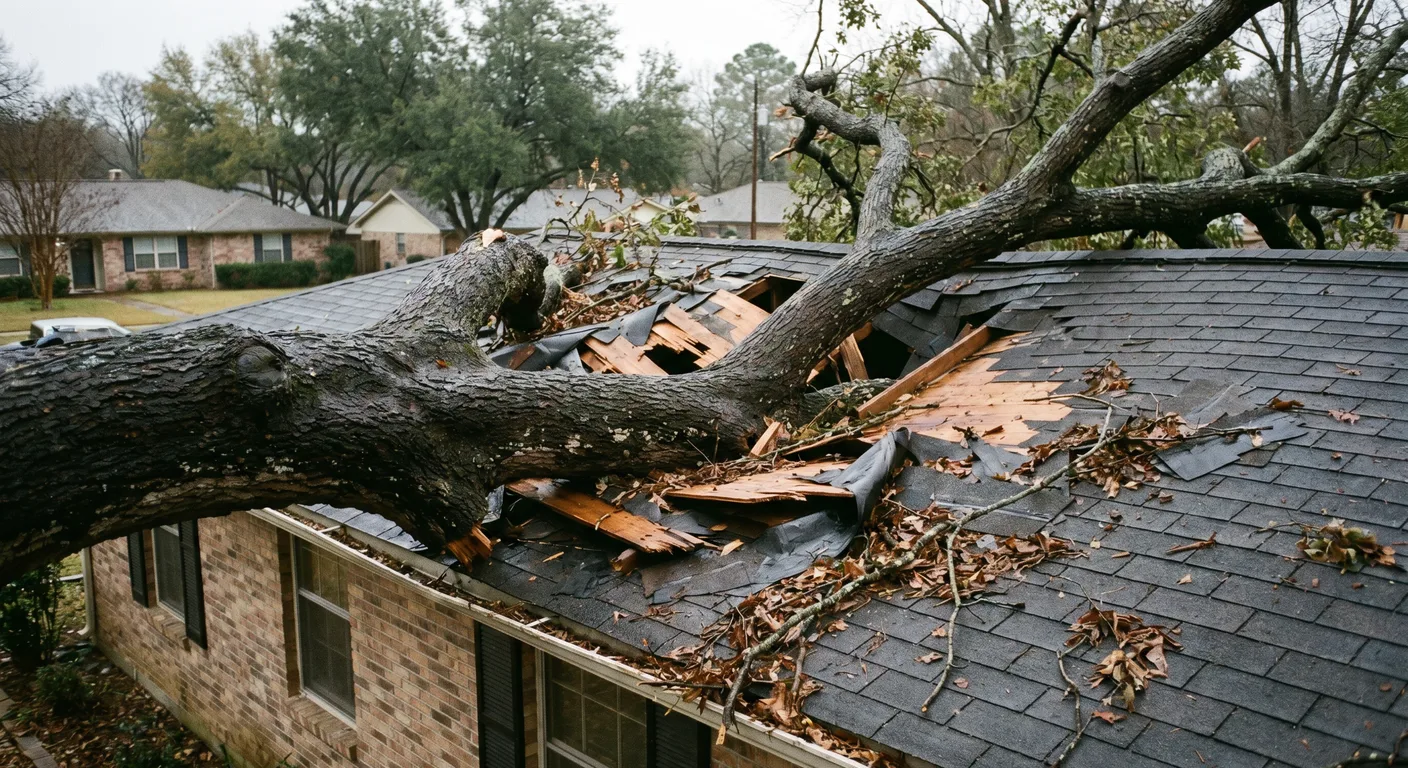
Raleigh's mature oak and willow oak canopy — the signature of established neighborhoods like Boylan Heights, Oakwood, North Hills, and Hayes Barton — becomes a liability during severe storms. A single mature oak can weigh 10,000 to 20,000 pounds. When root systems fail in saturated Piedmont clay soil, the entire tree topples onto homes, vehicles, and power lines. The 2011 EF-3 tornado demonstrated just how dramatically high winds weaponize an urban tree canopy.
Crabtree Creek and Neuse River Flooding
Raleigh's creek system — Crabtree Creek, Walnut Creek, and the Neuse River — turns from greenway features into flood threats during severe storms. FEMA-mapped floodplains cover more than 23 square miles within Raleigh's jurisdictional area. Flash flooding sends water into crawl spaces, ground-level entries, and ground-floor interiors. Updated FEMA modeling is revising some Raleigh floodplain boundaries, but saturated-soil conditions mean effective flood risk during wet years extends beyond officially mapped zones.
Siding and Window Damage
Wind-driven rain penetrates through damaged vinyl siding, cracked window seals, and compromised flashing. In Raleigh's mix of brick-veneer and vinyl-sided homes, strong winds can peel siding away entirely, exposing house wrap and sheathing to direct water contact. Hail accompanying severe thunderstorms cracks vinyl siding and can damage fiber cement board, creating long-term water infiltration paths that lead to hidden mold growth behind exterior walls.
Lightning and Electrical Damage
Raleigh's position in the Southeast thunderstorm corridor means frequent lightning strikes. Direct strikes to homes can cause fires, destroy electrical panels, fry HVAC systems, and damage wiring throughout the structure. Even nearby strikes create power surges that damage electronics and appliances. The secondary effect — power outages causing sump pump failure — can lead to basement and crawl space flooding during the same storm that caused the outage.
Structural Wind Load Damage
Sustained high winds create uplift pressure on roof structures and lateral pressure on walls. Raleigh's older brick ranch homes with simple truss construction are generally more wind-resistant than newer light-frame construction, but aging mortar joints and deteriorating roof connections can fail under extreme loads. The 2011 EF-3 tornado — with maximum winds of 136–165 mph — caused structural damage across a 65-mile track from Lee County to Wake County, confirming that tornado-strength winds are a real hazard in the Raleigh metro.
Raleigh's mature oak canopy is its signature feature — and its greatest storm liability.
A single tree can cause $50,000+ in structural damage.
Case Study: September 2024
Helene Remnants and Raleigh: Saturated Ground, Rising Creeks
Hurricane Helene's catastrophic flooding struck western North Carolina's mountain
communities in September 2024 — not the Piedmont. What Helene did to Raleigh was more
subtle but still costly: the remnants moved through on September 27, 2024, dropping
heavy rain and driving wind on ground that was already completely saturated from the
wettest July–September stretch in recorded Raleigh history (31.05 total inches over
three months).
Crabtree Creek and Walnut Creek — Raleigh's two principal urban flood corridors — rose
rapidly. Crawl spaces in homes along floodplain corridors took on water even at sites
with modest total Helene rainfall totals, because the soil had no absorption capacity
left. Homes that might have managed three inches of rain in July were overwhelmed by the
same amount in late September after months of continuous saturation.
The lesson for Raleigh homeowners: your flood risk is not fixed. A wet season
dramatically expands the effective floodplain — especially along Crabtree Creek, where
updated FEMA modeling is already removing properties from mapped zones, but storm
behavior on saturated soil tells a different story.
31.05"
Record Jul–Sep 2024 rainfall
54–56 mph
Peak gusts at RDU (TS Michael 2018)
>23 sq mi
FEMA-mapped floodplain within Raleigh
65 miles
2011 EF-3 tornado track (Lee → Wake)
Saturated-Ground Flood Risk
Standard FEMA flood zone maps assume average antecedent soil conditions. After a
record-wet summer, homes outside the mapped AE zone can still take on groundwater and
creek overflow because the soil is already at capacity. If you live near Crabtree
Creek, Walnut Creek, or the Neuse River floodplain, your real wet-year risk is higher
than your flood zone designation suggests. Flood insurance is available even in Zone
X.
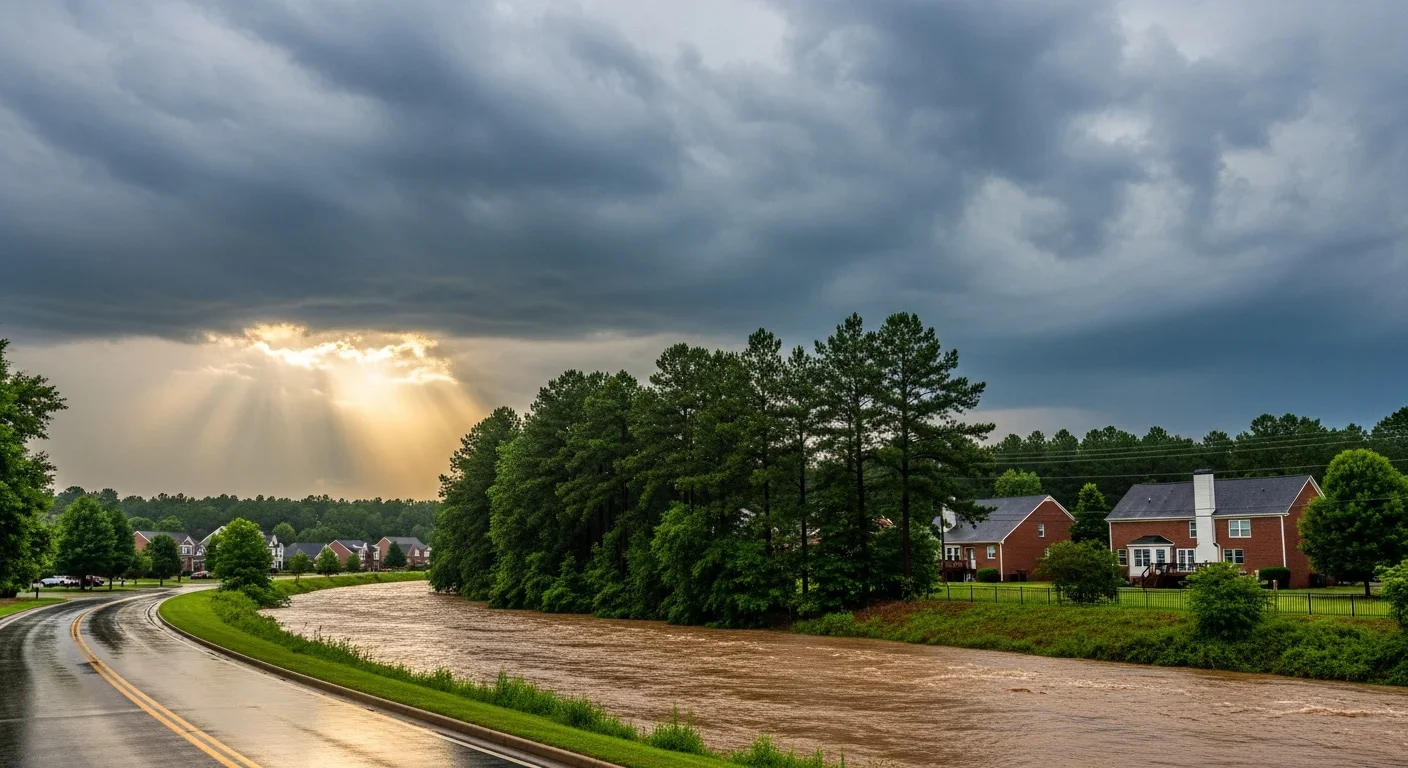
Crabtree Creek is Raleigh's principal urban flood corridor — rising quickly in heavy
rain events
Post-Storm Action Items for Raleigh Homeowners
Review your flood insurance regardless of FEMA zone classification
Inspect your crawl space after any heavy rain — water intrusion is common along creek
corridors
Document your home's pre-storm condition with photos and video annually
Establish a restoration relationship before storm season — response times spike during
major events
Storm Vulnerability Map
Raleigh's Most Storm-Vulnerable Areas
Storm damage in Raleigh concentrates in predictable corridors based on creek proximity,
floodplain location, tree canopy density, and development patterns. Knowing your area's
specific vulnerability helps you prepare before storm season and respond faster when
damage occurs.
Crabtree Creek Corridor
Critical
Primary urban flood risk corridor through northwest and central Raleigh; FEMA Zone AE; saturated-soil conditions expand effective floodplain in wet years
Walnut Creek / Southeast Raleigh
Critical
FEMA-mapped floodplain; residential flooding documented in multiple storm events; crawl space water intrusion common after heavy rain
Neuse River / East Raleigh and Wake County
High Risk
Neuse River Riparian Buffer Rules restrict vegetation removal; river backs up into adjacent communities during tropical remnants; Hurricane Floyd (1999) demonstrated basin risk
Boylan Heights / Oakwood Historic Districts
High Risk
Local historic districts require Certificate of Appropriateness for reconstruction; mature tree canopy creates elevated wind-throw risk; older roof systems approaching end of life
North Hills / Brier Creek
High Risk
Rapid suburban development; impervious surface runoff exceeds original drainage design; tree-on-roof risk from large residential lots with mature hardwoods
Hayes Barton / Cameron Park
Moderate
National Register of Historic Places neighborhoods; dense mature canopy; older home construction vulnerable to sustained wind loads; not in local historic district but vintage roofs near life expectancy
Capitol Square / Moore Square / Downtown
Moderate
Urban heat island extends severe thunderstorm season; flat commercial roofing vulnerable to wind and standing water; older structures with brick masonry
Hedingham / Rochester Heights / Biltmore Hills
Moderate
East Raleigh neighborhoods in the broader Neuse watershed; Walnut Creek tributary exposure; tree canopy varies by subdivision age
Storm Restoration Process
How We Restore Raleigh Homes After Storm Damage
Storm restoration requires coordinating emergency response, water mitigation, structural
repair, and insurance claims simultaneously. Here is our proven process from the first
call through final closeout.
01
Emergency Tarping & Board-Up
Hours 1-4
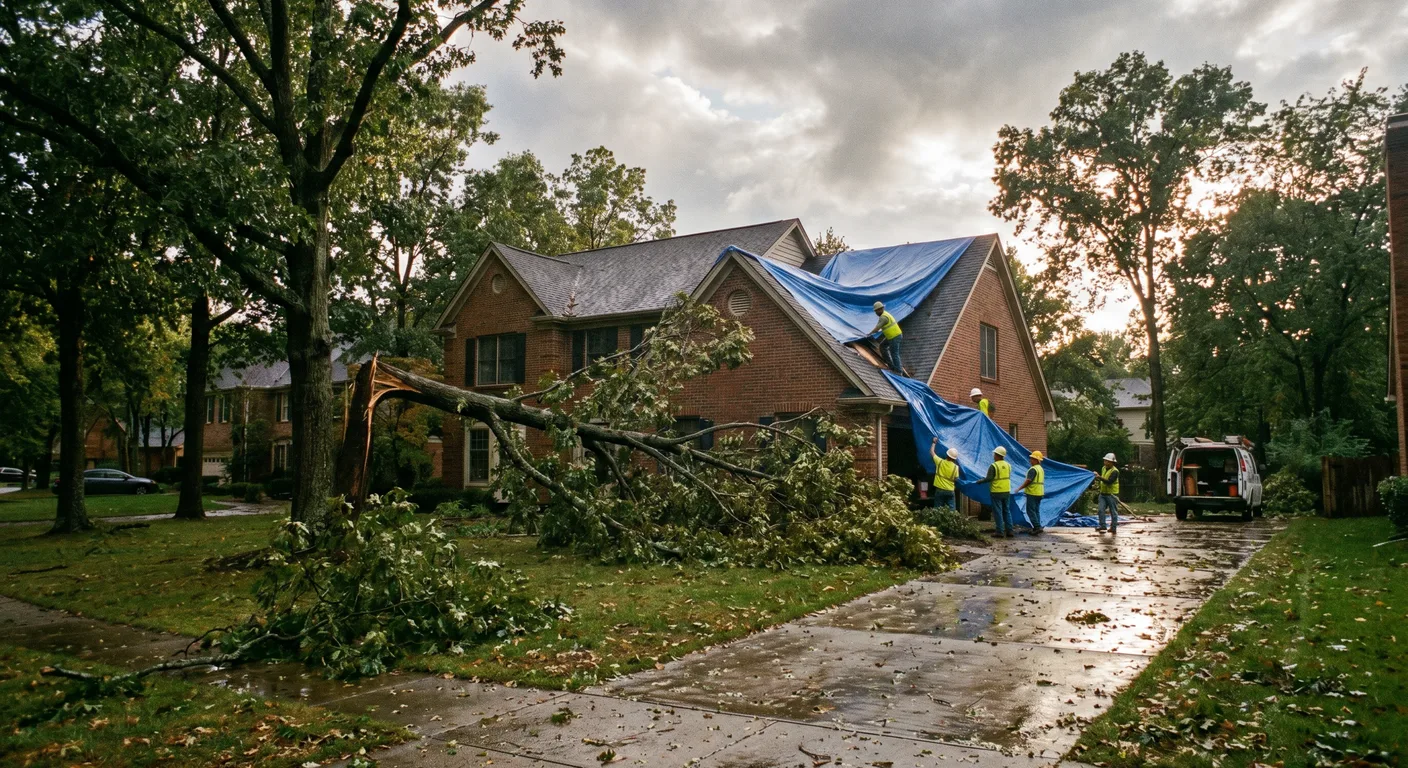
We secure your Raleigh home against further weather damage and intrusion. Damaged roof sections are tarped with reinforced polyethylene, broken windows are boarded, and exposed openings are sealed. This is covered by your insurance policy as part of your duty to mitigate further damage — and it is critical before Raleigh's next afternoon thunderstorm or overnight rain can compound the original loss.
02
Damage Assessment & Documentation
Days 1-3
Comprehensive documentation of all storm damage — wind, water, fallen trees, structural, and contents. We photograph every affected area, map moisture intrusion with thermal cameras, classify damage by cause (wind vs. flood, covered vs. excluded), and create a detailed scope of work. This cause-specific documentation is essential for filing separate wind and flood claims correctly under your NC policies.
03
Water Extraction & Structural Drying
Days 1-7
Storm damage almost always includes water intrusion — through damaged roofs, broken windows, or creek flooding. We extract standing water, set up commercial dehumidifiers and air movers, and monitor drying daily. For Raleigh homes with crawl spaces — which is the predominant foundation type in the Piedmont — we address sub-floor water simultaneously to prevent secondary mold growth in the 24–48 hour critical window.
04
Tree Removal & Debris Clearing
Days 2-7
Fallen trees are removed from structures using cranes and rigging when necessary. We coordinate with arborists for trees that are damaged but still standing. Debris is cleared and hauled. For Raleigh homes in local historic districts like Boylan Heights and Oakwood, we work within city Certificate of Appropriateness requirements even during emergency situations.
05
Structural Repair & Reconstruction
Weeks 2-12
Once the property is dried, secured, and cleared, we begin full reconstruction: roof replacement, siding repair, window installation, drywall, flooring, painting, and finish work. All structural repairs meet 2018 NC Residential Code requirements (current in Raleigh through at least early 2027). Raleigh permits are pulled through City of Raleigh / Wake County Development Services.
06
Final Inspection & Closeout
Week 12+
Wake County inspections verify all structural, electrical, mechanical, and plumbing work meets current building code. We perform a final walk-through with the homeowner and provide complete documentation for insurance closeout. Warranty information for all materials and workmanship is provided.
Critical Insurance Distinction
Wind Damage vs. Flood Damage: Why It Matters for Your Claim
This is the single most important insurance concept for Raleigh storm damage. Wind
damage and flood damage from the same storm are covered by different policies, filed as
separate claims, and often adjusted by different adjusters. Documenting damage by cause
— not just by room — is critical for maximizing your coverage. Palm Build's
documentation process classifies every item of damage by its cause to ensure correct
claim filing.
Wind Damage (Homeowners Policy)
Roof damage from wind, fallen trees, flying debris
Siding, window, and door damage from wind pressure
Rain water entering through wind-created openings
Structural damage from wind load or fallen trees
Emergency tarping and board-up costs
Temporary living expenses if home is uninhabitable
Flood Damage (Separate Flood Policy)
Rising water from creeks, rivers, or overwhelmed storm drainage
Creek overflow into crawl spaces and ground-floor areas
Groundwater entering through foundation or crawl space floor
Sewer backup from overwhelmed storm systems (requires endorsement)
Mud and debris flow from saturated hillsides
NOT covered by standard homeowners — requires NFIP or private flood policy
The Overlap Problem in NC
During events like Helene's remnants in 2024, Raleigh homes experienced both wind
damage (covered by homeowners) and flood damage from Crabtree Creek overflow (not
covered without a separate flood policy) in the same storm. Without cause-specific
documentation, insurers may attribute water damage to flooding rather than wind-driven
rain entry — denying coverage that should have been approved. In North Carolina,
prompt notice of loss is required, and a signed and sworn proof of loss must be
submitted within 60 days (NC Gen. Stat. Ch. 58, §58-3-40 forms-on-request). Palm
Build's damage assessment specifically documents which water entered through
wind-created openings (covered) versus which entered as rising creek water (flood
policy). This documentation approach has helped Raleigh homeowners recover
significantly more from their claims.
Storm restoration costs vary dramatically based on damage severity, roof age, tree
involvement, and whether flooding is included. Wind damage is well-covered by standard
homeowners insurance in North Carolina. After major events, contractor demand and
material supply constraints can increase costs and extend timelines across the Triangle.
Minor Storm Damage
Missing shingles, siding damage, minor tree limb
$2,000 – $10,000
Moderate Storm Damage
Partial roof replacement, tree on structure, water intrusion
$10,000 – $50,000
Major Storm / Tornado
Full roof replacement, structural damage, flooding
$50,000 – $250,000+
Storm Damage in Raleigh
What Storm Damage Looks Like in Raleigh
Mature oak downed by saturated clay root system during high winds
Emergency tarping secures exposed roof sections within hours
Wind-peeled siding exposes house wrap to direct water contact
Crabtree Creek rising rapidly during heavy rain — Raleigh's principal flood corridor
Before the Storm
Storm Preparedness for Raleigh Homeowners
The most expensive storm damage is the damage you could have prevented or documented
before it happened. These five steps, taken before storm season, can save Raleigh
homeowners thousands in unrecovered losses and weeks of extended displacement.
Document Your Home Annually
Walk through your entire property — inside and out — and photograph every room, the roof, siding, crawl space, and landscaping. Include timestamps. This pre-loss documentation is your strongest asset when filing a claim. Without it, you are relying on your adjuster's estimate of pre-storm condition.
Review Your Insurance Coverage
Confirm your homeowners policy limits, deductible (NC policies may carry a separate wind/hail deductible), and whether you have an ordinance-and-law endorsement for building code upgrades during reconstruction. If you are near Crabtree Creek, Walnut Creek, or the Neuse River corridor, get a private flood insurance quote — standard homeowners does not cover rising water.
Address Tree Risk
Have a certified arborist assess mature trees near your home for structural defects, root damage, and lean. Raleigh's Piedmont clay soil becomes saturated during prolonged rain, weakening root anchoring. A proactive tree removal costs $1,000–$5,000. An emergency removal after it falls on your home costs $5,000–$15,000 plus structural damage.
Secure Vulnerable Entry Points
Inspect roof flashing, valley seams, and ridge vents for deterioration. Replace cracked or missing caulk around windows and door frames. Ensure your garage door can withstand wind pressure — it is often the first failure point in high winds, leading to catastrophic pressurization of the home interior.
Establish a Restoration Relationship
After a major storm, every restoration company in the Triangle is overwhelmed simultaneously. Response times that are normally same-day can stretch significantly during widespread events. Homeowners who have an existing relationship with a restoration company get prioritized. Contact Palm Build before storm season to establish your account.
The Palm Build Difference
Why Raleigh Homeowners Choose Palm Build After Storms
Same-Day Raleigh Response
Our North Carolina Operations Hub dispatches emergency crews to Raleigh and across Wake County. During major events, we activate catastrophe response with additional crews. Pre-storm clients receive priority dispatch ahead of the general queue.
IICRC WRT & FSRT Certified
Every crew lead holds current IICRC Water Restoration Technician and Fire/Smoke Restoration Technician certifications. Storm damage crosses both specialties — wind, water, and sometimes fire from lightning or downed power lines.
Cause-Specific Documentation
Our damage assessment classifies every item by cause — wind vs. flood vs. tree impact vs. lightning — ensuring each claim is filed with the correct policy. This documentation approach recovers significantly more for Raleigh homeowners than generic damage reports, and it satisfies the prompt-notice and proof-of-loss requirements under NC Gen. Stat. Ch. 58.
Multi-Phase Project Management
Storm restoration involves emergency response, water mitigation, tree removal, structural repair, and reconstruction — often managed simultaneously. Palm Build coordinates all phases as a single project with one point of contact.
Full Reconstruction Capability
From emergency tarping through final punch list, one company handles everything. For Raleigh homes in local historic districts like Boylan Heights and Oakwood, we navigate Certificate of Appropriateness requirements and source period-appropriate materials during reconstruction.
Common Questions
Raleigh Storm Damage FAQ
How quickly can Palm Build respond after a storm in Raleigh?
Palm Build dispatches to Raleigh from our North Carolina Operations Hub, providing same-day response for storm emergencies across Wake County. After major regional events — such as a tornado outbreak or widespread wind event — we activate catastrophe response protocols, and pre-storm clients receive priority dispatch ahead of the general queue. Call (704) 464-0121 any hour, any day.
Is Raleigh really at risk from tornadoes?
Yes. Wake County and the Triangle are in North Carolina's tornado corridor — the central Piedmont sees a higher frequency of tornadoes than the mountains, though lower than the immediate coastal plain. Tornadoes can occur any time of year but peak in spring (April–May) and again during late-summer and fall tropical passages. The April 16, 2011 EF-3 tornado tracked 65 miles from Lee County through Wake County with maximum winds of 136–165 mph, killing 4 people in Wake County and prompting a rare NWS Tornado Emergency for the City of Raleigh.
What is the difference between wind and flood coverage for a Raleigh storm claim?
Wind damage — roof, siding, windows, fallen trees, and rain that enters through wind-created openings — is covered by your North Carolina homeowners policy. The policy may carry a separate wind or hail deductible. Flood damage from rising water (Crabtree Creek overflow, Walnut Creek or Neuse River flooding, groundwater through the crawl space) is not covered by a standard homeowners policy — it requires separate NFIP or private flood insurance. When both happen in the same storm, you may have two separate claims. Palm Build documents every item by cause to ensure correct filing.
What should I do immediately after storm damage in Raleigh?
Get everyone to safety first. Then prevent further damage: tarp exposed roof areas, board broken openings, and move valuables out of wet areas. Photograph and video everything before any cleanup — this protects your claim. Call Palm Build for emergency tarping and water extraction. Notify your insurer promptly, as North Carolina law requires prompt notice of loss (NC Gen. Stat. Ch. 58), with a signed and sworn proof of loss submitted within 60 days under §58-3-40.
Do you handle tree-impact and roof damage in Raleigh?
Yes. Fallen trees and large limbs are among the most common storm losses in Raleigh — the city's mature oak canopy is its signature feature and its greatest wind liability. We provide emergency tree and debris removal from structures, tarp and dry the affected areas to stop secondary water damage, and handle full repair of the asphalt-shingle roof, siding, fascia, and any interior damage. All structural work meets 2018 NC Residential Code, currently in force in Raleigh. For homes in local historic districts (Boylan Heights, Oakwood), we comply with Certificate of Appropriateness requirements.
How much does storm damage restoration cost in Raleigh?
Minor storm damage — missing shingles, a damaged siding section, or a small limb — typically runs $2,000–$10,000. Moderate damage including partial roof replacement, a tree on a structure, and water intrusion drying generally runs $10,000–$50,000. Major damage from a direct tornado strike or large-tree collapse requiring full roof replacement and structural rebuild can run $50,000–$250,000 or more. After major events, contractor demand across the Triangle increases costs and extends timelines. Wind damage is covered by homeowners insurance; rising-water flood damage requires a separate flood policy.
Can you repair damage from a tornado in Raleigh?
Yes. Tornado damage combines roof loss, wall breaches, broken glass, flying debris impact, and water intrusion all at once. Palm Build stabilizes the structure, applies emergency tarping and board-up, performs commercial drying of all affected areas, clears debris, and then rebuilds to current 2018 NC Residential Code standards. We coordinate with your homeowners insurance carrier throughout the process, documenting damage by type for correct claim filing.
Does Palm Build handle insurance claims for Raleigh storm damage?
Yes. Palm Build documents all storm damage by cause — separating wind (homeowners policy) from rising-water flood (NFIP or private flood policy) — so each loss is filed against the correct coverage. We coordinate with your carrier and adjuster from the first call, provide a detailed scope and photo documentation that satisfies NC proof-of-loss requirements, and keep the restoration on schedule while your claim is processed.
Storm or Tornado Damage in Raleigh? Act Before the Next Rain.
Wind-driven rain, downed trees, and exposed roofs cause escalating water and mold damage within hours. Palm Build's crews provide same-day emergency tarping, debris removal, and structural stabilization across Wake County — with insurance documentation from the first call.