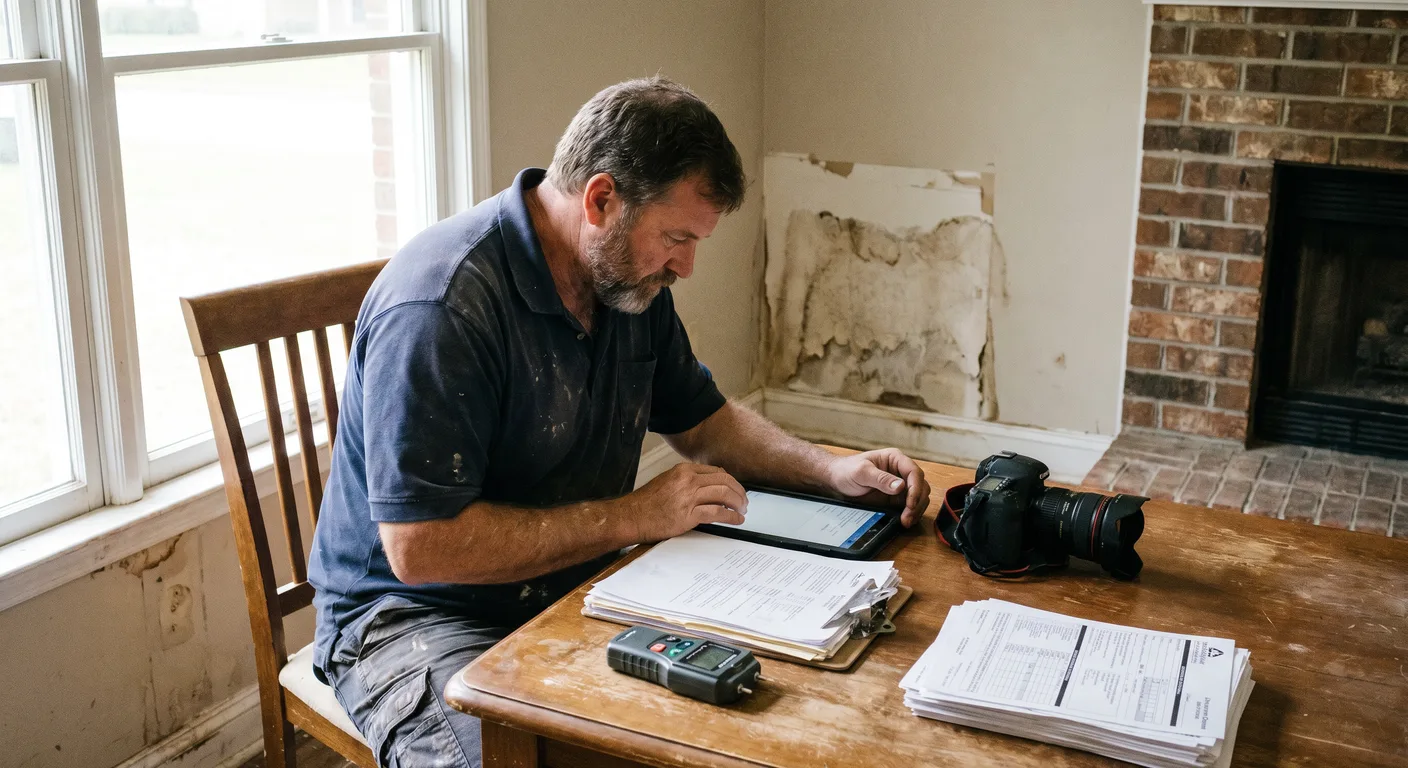
Filing a restoration claim should not be harder than the damage itself. Palm Build navigates the entire insurance process for Raleigh homeowners — documentation, adjuster coordination, supplement negotiation, and scope approval — so you get the coverage you have been paying for, under NC Gen. Stat. Chapter 58 rules that differ significantly from other states.
Serving Raleigh from Charlotte, NC Same-day Response IICRC Certified
The Raleigh Insurance Landscape: What You're Paying For
Raleigh homeowners are paying more for insurance than ever — and many don't fully
understand what their policy covers until they need to file a claim. North Carolina's
homeowners insurance market has seen significant premium increases, driven by severe
weather events, rising building material costs, and higher reinsurance expenses. The NC
Rate Bureau secured statewide average increases of 7.5% effective June 2025 and another
7.5% effective June 2026 — after initially requesting 42.2% (which was rejected). As
rates rise across Wake County, thorough claim documentation matters more than ever to
ensure you receive every dollar your policy entitles you to.
+7.5%
Rate increase effective June 2025
NC DOI settlement — statewide average; another +7.5% follows June 2026
$777M
Consumer savings from settlement
NC Rate Bureau originally requested 42.2% statewide; the DOI-negotiated settlement capped increases far lower
35%
Single-territory combined cap
Maximum combined increase across both years in any territory; no new rate filing allowed until June 2027
60 days
NC proof-of-loss deadline
Signed/sworn proof of loss must be submitted within 60 days of loss under NC Gen. Stat. Ch. 58 (§58-3-40)
The Claims Process
How the Insurance Restoration Process Works in Raleigh
From the first phone call through final claim closeout, here's exactly what happens
during a Raleigh insurance restoration claim — and how Palm Build manages each step so
you don't have to.
01
Report the Loss & Call Palm Build
Day 1
Call your insurance company to open a claim and call Palm Build simultaneously. Your policy requires you to mitigate further damage immediately — waiting for an adjuster before starting mitigation can result in secondary damage that complicates your claim. We begin emergency response and documentation while you file. Our team captures the initial damage condition with photos, video, and moisture readings before any cleanup begins — this pre-mitigation documentation is the foundation of your entire claim.
02
Initial Documentation & Emergency Mitigation
Days 1-3
Palm Build's IICRC-certified technicians document every affected area using thermal imaging, pin-type moisture meters, and comprehensive photography. We classify the damage by cause (critical for wind vs. flood distinction in storm claims), category, and class per IICRC standards. Simultaneously, emergency mitigation begins — water extraction, structural drying, board-up, soot stabilization, or mold containment depending on the loss type. Daily drying logs with data-logged moisture readings create the evidence trail your adjuster will reference.
03
Adjuster Inspection & Scope Development
Days 3-14
Your insurance company assigns a field adjuster — either a staff adjuster or an independent adjuster from a firm like Crawford, Sedgwick, or ESIS. We coordinate the inspection timing, walk the property with the adjuster, and provide our documentation package. Our Xactimate estimate is submitted alongside the adjuster's assessment. For Raleigh claims, we ensure the adjuster understands local factors like crawl space moisture from Piedmont clay soils, Wake County flood zone mapping along Crabtree and Walnut creeks, and historic district reconstruction requirements in districts like Boylan Heights and Oakwood.
04
Supplement Negotiation (If Needed)
Days 14-30
Initial adjuster estimates often miss hidden damage that's only discovered during demolition — water behind walls, mold in crawl spaces, fire damage in concealed spaces, structural issues revealed when finishes are removed. Palm Build documents supplemental damage as it's discovered and submits supplement requests with photographic evidence, moisture data, and updated Xactimate line items. Approximately 60-70% of Raleigh restoration projects require at least one supplement. Our documentation approach resolves most supplements within one revision cycle.
05
Reconstruction & Progress Documentation
Weeks 2-12
Once mitigation is complete and the reconstruction scope is approved, we begin rebuilding. Throughout reconstruction, we document progress at each major milestone — rough-in completion, inspection passage, material installation, and finish work. This ongoing documentation supports any remaining supplements and provides your carrier with evidence that the approved scope is being executed correctly. For Raleigh projects requiring City of Raleigh or Wake County permits, we include inspection records in the documentation package.
06
Final Walkthrough & Claim Closeout
Project Completion
We conduct a final walkthrough with the homeowner to confirm every scope item has been completed satisfactorily. A completion certificate is provided to your insurance carrier along with final photos, inspection records, and a summary of all work performed. Your carrier releases final payment (typically held as a recoverable depreciation holdback until work is verified complete). The claim closes when both you and your carrier agree the work meets the approved scope.
Documentation That Wins Claims
The Six Types of Documentation Your Adjuster Needs
Insurance claims are won or lost on documentation. Your adjuster makes coverage
decisions based on the evidence provided — and the format matters as much as the
content. Here are the six documentation types that Palm Build produces on every Raleigh
restoration project, and why each one matters for your claim.
Pre-Mitigation Photography
Complete photo and video documentation of all damage before any cleanup begins. This establishes the baseline condition your adjuster will reference for the entire claim. Without it, disputes over pre-existing vs. loss-related damage become difficult to resolve in your favor.
Moisture Mapping & Thermal Imaging
Infrared thermal cameras reveal moisture behind walls, under floors, and in ceilings that isn't visible to the naked eye. Pin-type and non-invasive moisture meters quantify the moisture content of every affected material. This data determines the drying scope — and proves to your adjuster exactly how far water traveled, preventing under-scoping of the claim.
Daily Drying Logs
Data-logged moisture readings taken every 24 hours during the drying process. These logs prove that professional drying was necessary, show progressive moisture reduction, and verify when materials reached their dry standard. Without daily logs, adjusters may question whether the drying timeline (and associated equipment charges) was justified.
Xactimate Scope & Estimate
Line-item estimates written in the same software and pricing database your insurance carrier uses. Every damaged item is measured, described, and priced per Xactimate's localized cost database for the Raleigh NC market. This format eliminates the back-and-forth that occurs when contractors submit estimates in different formats.
Cause-of-Loss Classification
Each item of damage is classified by its cause — wind, flood, fire, water discharge, mold — because different causes are covered by different policies or have different sublimits. For Raleigh storm claims, this distinction between wind damage (homeowners policy) and flood damage (flood policy) can mean the difference between full coverage and denial.
Progress & Completion Photos
Photography at every major milestone — demolition, rough-in, inspection, material installation, and final completion. This ongoing documentation supports supplement requests for hidden damage discovered during demolition and provides your carrier with evidence that the approved scope was executed correctly.
Know Your Coverage
What's Covered by Peril Type in Raleigh
Different damage types have different coverage rules under NC homeowners policies.
Understanding these distinctions before filing helps you avoid surprises and ensures
your claim is filed correctly from the start.
Flood from rising water (requires separate flood policy)
Wind & Storm
Covered (Separate Deductible)
Roof, siding, window damage from wind
Rain water entering through wind-created openings
Fallen tree removal and structural damage
Flood from rising water, creek overflow, dam release
NC may have separate wind/hail deductible (1-5% of dwelling value)
Common Pitfalls
Common Insurance Denials Raleigh Homeowners Face
These are the four most common reasons Raleigh restoration claims are partially or fully
denied — and how proper documentation and policy awareness can prevent each one.
Gradual Damage Exclusion
Most NC policies exclude "seepage, leakage, or slow discharge" of water. This means long-term crawl space moisture, slow pipe leaks behind walls, and gradual foundation water infiltration are commonly denied — even when the damage is significant. The key for Raleigh homeowners: if you discover a slow leak, document when you first noticed it. If it can be tied to a specific failure event (pipe joint failure, condensate line crack), it may still qualify as "sudden and accidental." Palm Build's documentation establishes the cause-of-loss timeline clearly.
Prevention: Document when damage was first noticed. Tie damage to a specific failure event when possible.
Mold Sublimit Exhaustion
NC standard policies typically cap mold coverage at $5,000 to $10,000. Raleigh crawl space mold remediation frequently costs $15,000 to $50,000+ given the Piedmont's humid summers. When the sublimit is exhausted, remaining costs fall to the homeowner. However, when mold results from a covered sudden water event (burst pipe), the mold remediation may be covered as part of the water damage claim rather than under the mold sublimit. Palm Build's documentation connects mold to the original covered loss when applicable — potentially bypassing the sublimit entirely.
Prevention: Ask your agent about enhanced mold endorsements. Document the moisture source that caused mold growth.
Wind vs. Flood Misclassification
During severe storm events — tropical systems, nor'easters, or strong squall lines moving through the Piedmont — Raleigh homes can experience both wind damage (covered by homeowners) and flood damage from creek overflow (requires separate flood policy). Without cause-specific documentation, insurers may attribute water intrusion to flooding (excluded) rather than wind-driven rain entry (covered). This single classification decision can mean the difference between a $50,000 approved claim and a denial. Palm Build documents damage by entry point — water entering through a wind-damaged roof opening is wind damage, not flood damage.
Prevention: Ensure your restoration company documents damage by cause, not just by room or material.
Code Upgrade Denial
Raleigh requires reconstruction to meet current building code, not original code. For a 1960s brick-veneer ranch on a crawl space, this can mean $5,000–$15,000 in mandatory electrical, insulation, and safety upgrades. Without an ordinance-and-law endorsement on your policy, these costs are excluded. Many Raleigh homeowners discover this gap only after reconstruction begins and the code-required upgrades are already underway.
Prevention: Confirm you have an ordinance-and-law endorsement on your policy. Add it before you need it — the cost is minimal.
Industry-Standard Estimating
Why Xactimate Estimates Get Your Claim Approved Faster
Xactimate is the industry-standard estimating software used by virtually every
insurance carrier in North Carolina to price restoration work. When a restoration
company submits an estimate in a different format — a handwritten bid, a generic
spreadsheet, or a competing software — the adjuster must manually translate every line
item into Xactimate for comparison. This adds days to weeks of processing time and
creates opportunities for items to be missed, misinterpreted, or disputed.
Palm Build writes every estimate in Xactimate using the same pricing database,
line-item codes, and measurement standards that your Raleigh-area adjuster uses. When
our estimate arrives, the adjuster can approve it line-by-line without conversion —
dramatically reducing the time between scope submission and claim approval.
Benefits of Xactimate-Based Estimates
Eliminates format-based disputes — your estimate speaks the adjuster's language
Uses localized Raleigh NC pricing database reflecting actual local labor and material costs
Line-item detail matches the granularity adjusters use for approval decisions
Supplements are submitted in the same format — no conversion or re-entry needed
Reduces approval timeline from weeks to days for straightforward claims
Creates an auditable record that protects both you and the carrier
We Work With Every Carrier
Raleigh Insurance Carriers We Work With
Palm Build works with every major insurance carrier writing homeowners policies in the
Raleigh and Wake County market. Our Xactimate-based documentation and estimating process
is designed to work with any carrier's claims workflow.
State Farm
Nationwide
Allstate
USAA
Erie Insurance
Auto-Owners Insurance
Liberty Mutual
Travelers
Progressive
SageSure
Safeco
Homeowners of America
Amica Mutual
NFIP (National Flood Insurance Program)
The Palm Build Difference
Why Raleigh Homeowners Choose Palm Build for Insurance Claims
Xactimate-Native Estimating
Every estimate, supplement, and change order is written in the same software and pricing database your carrier uses. No format translation, no re-entry errors, no weeks of back-and-forth over estimate structure. This single capability accelerates Raleigh claim approvals more than any other factor.
No Out-of-Pocket Insurance Coordination
Our insurance coordination, documentation, adjuster meetings, and supplement negotiation are included in the restoration scope and paid by your carrier — not out of your pocket. Your only direct cost is your policy deductible.
Direct Adjuster Communication
We meet with your adjuster on-site, walk the property together, and provide our documentation package directly. This face-to-face coordination resolves questions faster than email chains and phone tag. For Raleigh's high-volume adjusters managing dozens of claims simultaneously, a well-organized contractor who speaks their language gets priority attention.
Supplement Resolution in One Cycle
Approximately 60-70% of Raleigh restoration projects require at least one supplement for hidden damage discovered during demolition. Our supplemental documentation includes photos, moisture data, and updated Xactimate line items submitted within 48 hours of discovery. Most Palm Build supplements resolve in one revision cycle.
Cause-Specific Documentation
We classify every item of damage by its cause — wind, flood, sudden water, fire, mold. This protects Raleigh homeowners from incorrect coverage determinations, especially during storm events where wind damage (covered) and flood damage (separate policy) may coexist. No other local restoration company documents at this level of cause-specificity.
Common Questions
Raleigh Insurance Claims FAQ
Does Palm Build work with my insurance company in Raleigh?
Yes — we work with every major carrier writing homeowners policies in the Raleigh and Wake County market, including State Farm, Nationwide, Allstate, USAA, Erie Insurance, Auto-Owners Insurance, Liberty Mutual, Travelers, and SageSure. We also coordinate with NFIP and private flood carriers for flood-related damage along Crabtree Creek, Walnut Creek, and Neuse River floodplains. Our Xactimate-based documentation works with any carrier's claims workflow.
What are NC's deadlines for filing a restoration insurance claim?
North Carolina requires prompt notice of loss to your insurer — typically as soon as practicable after discovery. Within 60 days of the loss, you must submit a signed and sworn proof of loss form. Your insurer is required to furnish proof-of-loss forms upon request under NC Gen. Stat. §58-3-40; if the insurer does not provide forms within 15 days of request, the 60-day deadline is waived. During declared disasters, proof-of-loss deadlines are stayed for the duration of the proclamation. NC has no equivalent to Florida's one-year hurricane notice statute — the NC framework is prompt notice plus the 60-day sworn proof of loss.
Should I call my insurance company or Palm Build first?
Call Palm Build first — or simultaneously. Your policy requires immediate mitigation to prevent further damage, and documenting the initial damage before any cleanup begins is critical for your claim. Raleigh's humid Piedmont summers mean that delaying mitigation by even 24–48 hours can allow mold growth to begin in crawl spaces, walls, and subfloor cavities, complicating your claim and potentially triggering the mold sublimit. We begin emergency response and documentation while you open your claim with your carrier.
What if part of my claim is denied?
Partial denials are common — especially for mold remediation (sublimited at $5,000–$10,000 in most NC policies), code upgrades (excluded without an ordinance-and-law endorsement), gradual damage (excluded), and sewer/drain backup without an endorsement. Palm Build documents covered items thoroughly to prevent incorrect denials, ties mold remediation to the original covered water event when applicable to avoid the sublimit, and files supplements with cause-specific evidence when legitimate items are initially denied.
What is Xactimate and why does it matter for my Raleigh claim?
Xactimate is the industry-standard estimating software used by virtually every insurance carrier in North Carolina to price restoration work. When a restoration company submits estimates in a different format, the adjuster must manually translate every line item — adding days to weeks of processing time and creating opportunities for items to be missed. Palm Build writes every estimate in Xactimate using the localized Raleigh NC pricing database, matching the exact format and pricing database your adjuster uses. This accelerates approval and eliminates format-based disputes.
Is sewer backup covered by my homeowners policy in Raleigh?
No — water and sewer backup is excluded from standard NC homeowners policies (HO-3). It is not covered under the base policy. Most NC carriers offer a water/sewer backup endorsement (add-on rider) that covers backup from sewers, drains, or sump pump failure, typically for around $25 per year. Homeowners must proactively request this coverage — it is not automatically included at purchase. Sewer backup events are a common source of Category 2 gray water damage; without the endorsement, homeowners bear the full restoration cost out of pocket.
What about flood damage along Crabtree Creek or the Neuse River?
Flood damage from rising water is excluded from all NC homeowners policies — it is not covered by your standard HO-3 policy regardless of the cause. Properties in FEMA-mapped flood zones along Crabtree Creek, Walnut Creek, and the Neuse River floodplain may be required by mortgage lenders to carry NFIP (National Flood Insurance Program) coverage. Private flood insurance is also available and may offer higher limits. Palm Build documents storm damage by cause — water entering through a wind-damaged roof opening is covered wind damage, while water from creek overflow requires a separate flood policy — ensuring each event is filed under the correct policy.
How long does the insurance claims process take in Raleigh?
For straightforward covered losses (a burst pipe or kitchen fire): typically 2–4 weeks from filing to scope approval. Complex claims — storm events with both wind and flood components, disputed coverage, or large losses — can take 6–16 weeks. Severe weather events affecting Wake County, such as heavy tropical rainfall or significant windstorms, can create claims backlogs. NC's statutory framework provides structure, but carrier compliance on investigation timelines varies. Palm Build keeps your claim moving with organized, adjuster-ready documentation from day one.
Need Help With a Restoration Insurance Claim in Raleigh?
Palm Build handles the entire insurance process — documentation, adjuster coordination, supplement negotiation, and NC Chapter 58 compliance — so you can focus on getting your home back. We work with every carrier in the Raleigh and Wake County market.