Palm Build mold remediation technician in full PPE standing at a brick bungalow in Raleigh, North Carolina, humid foggy morning with mature oak trees and crawl space vents visible at foundation
RALEIGH NC — IICRC S520 CERTIFIED MOLD REMEDIATION

Mold Remediation in Raleigh, North Carolina

Raleigh sits in a humid subtropical climate with 46 inches of annual rainfall, heavy clay soil that keeps foundations damp, and widespread crawl space construction across neighborhoods from Boylan Heights to Brier Creek. North Carolina has no state mold remediation licensing requirement — Palm Build's IICRC S520-certified team provides the containment, remediation, and documentation that Wake County homeowners and their insurance carriers can rely on.

Serving Raleigh from Charlotte, NC Same-day Response IICRC Certified

Same-day

Emergency Response

24/7

Dispatch Available

IICRC

Certified Technicians

Why Raleigh NC

Why Mold Is So Common in Raleigh NC Homes

Raleigh sits at the intersection of four mold-driving forces that make Wake County homes more vulnerable than the national average — and more vulnerable than most of your competitors will explain.

Humid Subtropical Climate

46"

Annual rainfall (KRDU normals)

Raleigh averages 46 inches of rainfall annually with a peak from July through September — the wettest month reaches over 5 inches. Summer relative humidity runs 70-90%, creating sustained conditions where porous materials stay at elevated moisture content between rain events. NC State Extension sets the threshold at 60% indoor humidity: above that, mold growth becomes likely.

Piedmont Clay Soil

23+ mi²

Wake County floodplain area

Wake County sits on Cecil-series Piedmont clay soils that drain slowly after rainfall. Water pools at foundations and wicks upward into crawl spaces continuously — not just during flood events. Even a modest rain can keep your foundation damp for days, and that persistent ground moisture is the primary driver of crawl space mold in Raleigh's established neighborhoods.

Widespread Crawl Space Construction

60%+

Raleigh homes with crawl spaces

A large portion of Raleigh homes — especially those built before 1990 — sit on vented crawl space foundations. Building science research, including NC-focused guidance from Advanced Energy, documents that vented crawl spaces routinely become wet environments in mixed-humid climates like Raleigh. Wood floor joists, insulation, and subfloor materials absorb ground vapor continuously, often without visible signs until mold is well established.

Research Triangle Growth Pressure

+15.8%

Raleigh population growth 2010-2020

Raleigh's rapid growth — from 404,000 residents in 2010 to nearly 492,000 by 2024 — means a large share of housing stock built in the 1980s and 1990s is now aging into the window where supply lines, HVAC systems, and roofing begin to fail. The single largest decade of construction in Raleigh was 2000-2009 (25% of housing units), meaning thousands of homes are now entering the 15-25 year zone where appliance and plumbing failures accelerate.

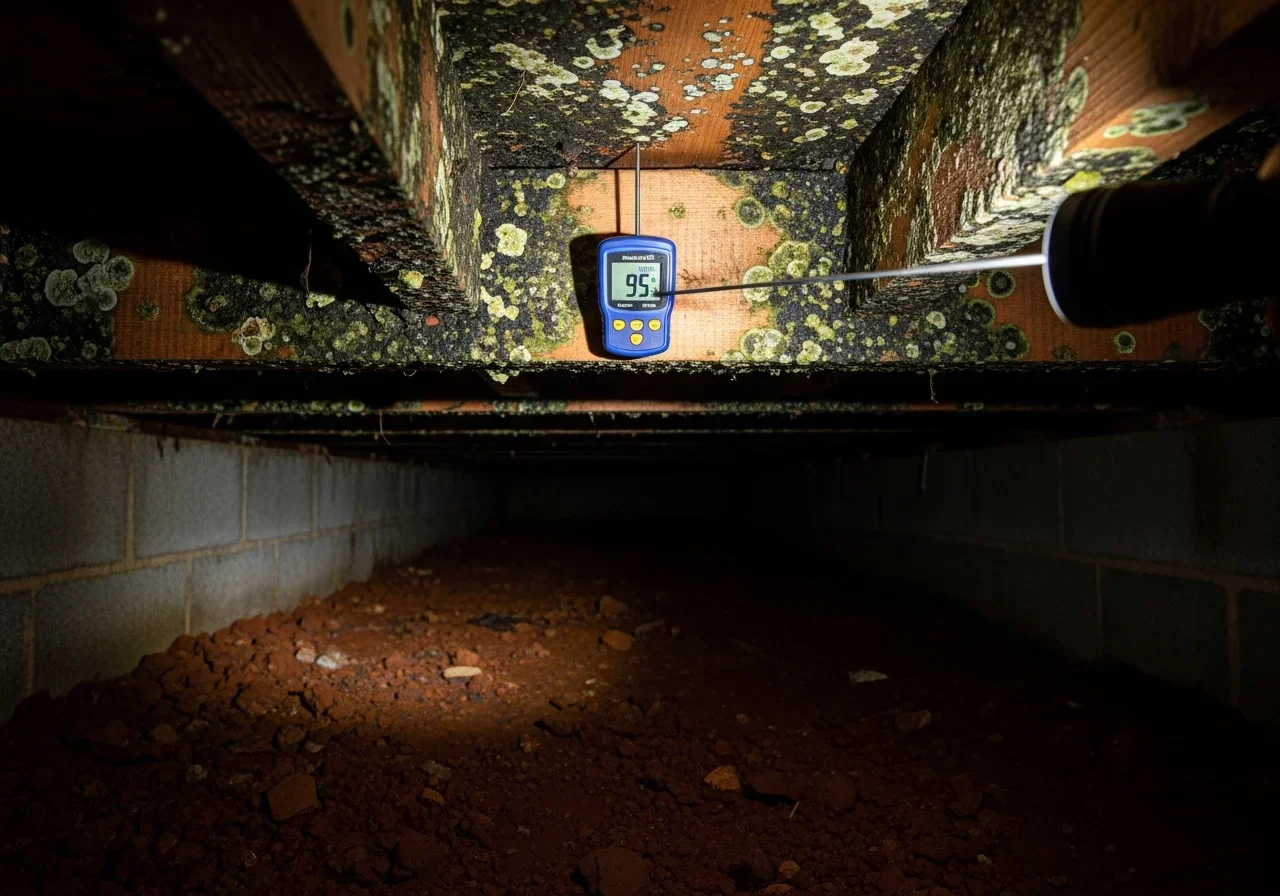
Mold colonies on floor joists in a Raleigh NC crawl space, moisture meter showing high humidity reading
Mold on crawl space floor joists in a Raleigh NC home — vented crawl space design + clay soil moisture + summer humidity creates ideal colonization conditions.

Know the Signs

8 Mold Warning Signs in Raleigh NC Homes

Raleigh's humid subtropical climate means mold rarely announces itself clearly until structural wood or your health is already affected. Know what to look for.

NC State Extension recommends drying wet materials within 24 to 48 hours to prevent mold colonization. If you're seeing any of these signs, time matters.

Musty odor that intensifies after rain or in humid weather

Especially common in Boylan Heights, Glenwood, and Cameron Park homes. The odor intensifies in summer when Raleigh humidity peaks and outdoor air warms the crawl space, releasing VOCs from active mold colonies below.

Cupping or warping hardwood floors

When crawl space moisture wicks into wood subfloor and hardwood above, boards cup upward at the edges. This is a late-stage warning that moisture has been present long enough to affect structural wood.

Dark staining on crawl space floor joists

Visible with a flashlight through the crawl space access hatch. Green, gray, or black staining on wood joists and subfloor indicates active or recent mold growth. Any discoloration on structural wood warrants professional assessment.

Allergy or respiratory symptoms that improve when away from home

Mold spores circulate through HVAC systems and floor gaps from crawl spaces into living areas. If your symptoms follow a pattern tied to time spent at home — particularly in older Raleigh neighborhoods — mold in the crawl space or walls is a common culprit.

Condensation on interior windows in summer

Counterintuitively, summer condensation on windows often indicates high indoor humidity rather than cold — a sign that moisture load from a leaking crawl space or HVAC system is exceeding the home's ability to manage it.

Visible mold in bathrooms or around HVAC vents

Surface mold in bathrooms or around ceiling registers is often a symptom of a larger moisture problem — particularly in Raleigh homes where bathroom exhaust vents were never extended outside the attic.

Recent water event that was not fully dried within 48 hours

If your home experienced any water intrusion — a burst pipe, roof leak, or flooding from Crabtree Creek or Walnut Creek — and materials weren't dried professionally within 24 to 48 hours, mold colonization has likely already begun on porous surfaces.

Staining on walls or ceiling below a bathroom

Yellow or brown staining on walls or ceilings beneath bathrooms indicates a slow drain or supply line leak. In Raleigh homes built before 1990, polybutylene supply lines and cast-iron drain pipes are common failure points.

Take Action

Seeing any of these signs in your Raleigh home?

Don't wait — mold grows faster in Raleigh's summer humidity than anywhere else in the Charlotte metro. A same-day professional assessment costs nothing compared to structural remediation of ignored mold.

Call (704) 464-0121 — Same-Day Assessment
Mold growing on wood floor joists in a Raleigh NC crawl space, moisture meter showing high reading
Raleigh crawl space mold — the combination of clay soil vapor, vented crawl design, and humid subtropical climate creates ideal conditions year-round.

Building Science

Why Raleigh Crawl Spaces Keep Getting Moldy

The underlying mechanisms are specific to Raleigh's climate and soil. Understanding them explains why a single remediation without addressing root causes leads to recurrence.

Step 01

Ground Vapor Migration

Wake County's clay-heavy Piedmont soils release water vapor continuously — not just after rain events. In a vented crawl space, this moisture has no way out except upward into your floor assembly. Building Science Corporation research specifically identifies mixed-humid climates like Raleigh as regions where vented crawl spaces routinely get wetter, not drier.

Step 02

The Stack Effect

In summer, warm humid outdoor air flows into vented crawl spaces through foundation vents. When that warm air hits cooler surfaces (joists, subfloor), it deposits moisture — the opposite of what homeowners expect vents to do. In Raleigh, where summer humidity runs 70-90%, this effect runs continuously from May through October.

Step 03

The 24-48 Hour Window

NC State Extension and DHHS both reference the 24 to 48 hour threshold: once porous building materials (wood, insulation, drywall) reach elevated moisture content, mold colonization can begin within that window. In Raleigh, the combination of ambient humidity and clay-soil wicking means this window is perpetually open in neglected crawl spaces.

Step 04

The Encapsulation Solution

Modern building science — reinforced by Advanced Energy's NC-specific crawl space research — recommends converting vented crawl spaces to conditioned or sealed spaces with a continuous vapor barrier. This eliminates ground vapor migration, removes the stack-effect moisture pathway, and dramatically reduces the mold-driving conditions specific to Raleigh's climate.

Raleigh-Specific Guide

What Era Is Your Raleigh Home? Your Mold Risk Profile

Raleigh's housing stock spans over a century of construction — from 1907 bungalows in Boylan Heights to 2010s Brier Creek subdivisions. Each era carries distinct moisture vulnerabilities and mold risk patterns.

1907–1930s

Historic Districts

Boylan HeightsGlenwoodCameron ParkHayes Barton

Foundation

Vented crawl space — original construction

Common Leak Sources

  • Retrofitted supply lines (often copper over original lead)
  • Attic moisture from poor ridge vent coverage
  • Layered renovations masking old water paths
  • Cast-iron drain lines approaching end of life

Drying Challenges

Low-clearance crawl spaces (sometimes under 24 inches), original plaster walls that hold moisture, older hardwood floors requiring careful drying to avoid warping.

Mold Risk Profile

Highest long-term risk. Homes in these districts have been through multiple renovation cycles that can hide chronic moisture pathways. Musty odors are common and often misattributed to "old house smell."

1960s–1989

Mid-Century Suburbs

North Hills (older phases)Biltmore HillsSouth ParkEast Raleigh

Foundation

Mix of crawl space and slab

Common Leak Sources

  • HVAC condensate drainage failures
  • Original polybutylene supply lines (major failure risk)
  • Attic moisture from inadequate ventilation
  • Slow-draining cast-iron or ABS drain lines

Drying Challenges

Multifamily North Hills buildings present shared-wall water migration challenges. Slab-on-grade homes require specialized equipment for under-slab drying.

Mold Risk Profile

Moderate to high risk depending on construction type. Polybutylene supply lines — installed widely in NC from the 1970s through mid-1990s — are a known failure source. HVAC condensate issues amplify summer mold risk.

2000s–Present

New Growth Areas

Brier CreekNorth Hills (newer)HedinghamMidtown Raleigh

Foundation

Mix: slab dominant, some crawl space

Common Leak Sources

  • Appliance supply line failures (dishwasher, refrigerator, washing machine)
  • HVAC condensate overflows
  • Roof flashing failures in newer home styles
  • Storm-driven water intrusion at window assemblies

Drying Challenges

Engineered lumber products (LVL beams, OSB subfloor) are more vulnerable to moisture damage than older solid lumber. OSB swells rapidly and requires prompt drying.

Mold Risk Profile

Lower structural risk than historic districts, but not zero. Modern construction uses more moisture-sensitive materials. Growth-area homes are more likely to be in NFIP-participating flood zones mapped in the 2022 update.

Not sure which era your home belongs to? Call (704) 464-0121 — we'll assess your home's specific risk profile during a same-day inspection.

Raleigh Floodplain Reality

Every Raleigh Flood Event Is a Mold Timer

Raleigh's three major creek systems create flood risk across Wake County neighborhoods. Once water enters your home, NC State Extension's 24-to-48-hour mold activation window begins immediately — and Raleigh's ambient humidity keeps that window open longer than in drier climates.

Crabtree Creek

North & Central Raleigh

Roadway inundation at Anderson Drive during high-stage events (NOAA gauge data). Suburban neighborhoods near the creek experience rapid rises during short-duration intense rainfall.

Mold risk: High

Walnut Creek

South Raleigh

Documented nuisance flooding in Rochester Heights, Biltmore Hills, and surrounding South Raleigh neighborhoods. Creek flooding combined with clay soil drainage creates multi-day moisture intrusion periods.

Mold risk: High

Neuse River

East Raleigh & Wake County

Primary watershed for Raleigh. The City of Raleigh manages over 23 square miles of floodplain within its jurisdiction tied to the Neuse River system. FEMA SFHA designations apply to hundreds of properties along the corridor.

Mold risk: Moderate–High

Raleigh Floodplain Map Update — July 2022

The City of Raleigh adopted new FEMA flood maps effective July 19, 2022. Some Wake County properties changed flood zone designations, and the City manages over 23 square miles of floodplain within its jurisdiction — including areas not designated on federal maps.

Critical homeowner note: The City of Raleigh's stormwater guidance explicitly states that some flood-susceptible areas may not appear on FEMA maps. Your home may be at risk even if you're not in a designated Special Flood Hazard Area.

1.

FEMA SFHA — designated 100-year floodplain

2.

City drainage-basin study maps — Raleigh's own stricter mapping

3.

Flood hazard soils — clay-based soil zones with standing water risk

4.

Future-conditions hazard areas — mapped for anticipated development impacts

After Flooding: The Mold Activation Timeline

0-6 hrs

Water Intrusion

Immediate extraction critical. Every hour of standing water expands affected area.

6-24 hrs

Deep Saturation

Porous materials (drywall, insulation, wood) reach dangerous moisture levels. Structural drying must begin.

24-48 hrs

Mold Activation Window

NC State Extension threshold. Mold colonies can begin establishing on saturated porous materials. IICRC S520 protocol must be engaged.

48-72 hrs

Active Growth

Mold growth visible on surfaces. Air quality begins degrading. Remediation cost and scope increase significantly.

72+ hrs

Structural Risk

Structural wood softening in crawl spaces. Mold established in wall cavities. Full remediation now required beyond surface treatment.

Timeline based on NC State Extension and IICRC S520 moisture-to-mold guidance. Raleigh's summer humidity (70-90%) compresses these windows compared to drier climates.

North Carolina Licensing Reality

NC Has No Mold Remediation License. Here's What That Means for You.

North Carolina does not have a statewide mold remediation licensing program. NC DHHS Occupational and Environmental Epidemiology states plainly: there is no state oversight of certified mold inspectors or certified mold remediation contractors, and no federal certification programs exist in this field.

NC State University Extension reinforces this, advising homeowners to vet contractor experience and competence independently — because no license exists to verify.

What this means in practice:

Anyone can legally call themselves a mold remediation contractor in North Carolina. The only objective quality signal is voluntary certification — specifically the IICRC S520 Standard, which NC DHHS references as the accepted industry benchmark when consumers ask what standard to look for.

Palm Build holds current IICRC S520 certification. Every remediation project follows IICRC protocol: proper containment, HEPA air filtration, material removal, antimicrobial treatment, and independent post-clearance testing. Not because we're required to — but because Raleigh homeowners and their insurers deserve the standard.
How to Vet Any Mold Contractor in Raleigh

Ask for IICRC S520 Certification

The IICRC Standard for Professional Mold Remediation (S520) is the benchmark NC DHHS references when consumers ask about contractor quality. Request the technician's current credential number and verify it at iicrc.org.

Request a Written Scope of Work

Any legitimate mold remediation company should provide a written scope before work begins — containment plan, removal method, treatment products, disposal plan, and post-remediation testing protocol. Verbal estimates without documentation are a red flag.

Insist on Independent Clearance Testing

Post-remediation clearance testing should be performed by a third-party industrial hygienist — not the same company that did the remediation. This creates an objective record your insurer and any future buyer will accept.

Avoid Bleach-and-Paint Approaches

Surface bleach treatment without containment, HEPA filtration, and material removal does not meet IICRC S520 protocol. It kills surface mold temporarily while leaving spores and organic matter that allow regrowth within weeks.

How We Work

Our Mold Remediation Process for Raleigh NC Homes

Every Palm Build remediation follows the IICRC S520 standard — the benchmark NC DHHS references for professional mold work. Here is what that means in practice for your Raleigh home.

01

Inspection & Moisture Mapping

Same day

We use calibrated moisture meters, thermal imaging cameras, and air quality sampling to map the full extent of contamination — including hidden mold behind walls and in crawl spaces. In Raleigh homes, we always check the crawl space regardless of where the visible problem presents.

02

Containment Setup

Before work begins

IICRC S520-compliant containment barriers isolate the work area using polyethylene sheeting and negative air pressure machines. This prevents cross-contamination of clean areas — critical in Raleigh homes where HVAC systems connect multiple floors.

03

HEPA Air Filtration

Throughout project

HEPA-rated negative air machines run continuously throughout remediation, capturing mold spores as small as 0.3 microns. Given Raleigh's summer humidity, we often run supplemental dehumidification simultaneously to prevent re-amplification during the process.

04

Material Removal & Treatment

1-5 days

Mold-affected materials (drywall, insulation, wood) are removed per IICRC S520 protocol and double-bagged for disposal. Structural wood surfaces that cannot be removed are treated with EPA-registered antimicrobial products and HEPA-vacuumed.

05

Structural Drying

3-7 days

For mold caused by water intrusion, we complete structural drying of all affected materials before clearance testing. In Raleigh, this step is particularly important — ambient humidity requires continuous dehumidification to reach dry standard.

06

Independent Clearance Testing

After completion

Post-remediation testing is conducted by a third-party industrial hygienist — not our own team. This independent clearance report documents that mold levels have returned to normal background concentrations. It is the record your insurance carrier accepts and that future buyers will request.

Pricing Guidance

Mold Remediation Costs in Raleigh, NC

Raleigh cost ranges reflect the Triangle market, IICRC S520-compliant protocols, and Wake County-specific factors like clay soil moisture recurrence and historic home construction challenges.

Small Area

$1,200 – $3,500

Single bathroom, closet, or isolated wall cavity

  • Surface sampling and moisture mapping
  • Contained remediation with HEPA filtration
  • Antimicrobial treatment
  • Independent clearance test

Typical Scenario

Bathroom mold from exhaust venting failure; isolated closet mold; single wall cavity near a pipe leak

Moderate Contamination

$3,500 – $9,000

Multiple rooms, partial crawl space, or attic

  • Full pre-remediation air and surface sampling
  • Multi-room containment protocol
  • Material removal (drywall, insulation)
  • Structural drying if water-event related
  • Independent post-clearance testing

Typical Scenario

Mold spread from a burst pipe affecting 2-3 rooms; partial crawl space colonization; attic mold from inadequate ventilation

Most Common in Raleigh

Full Crawl Space

$9,000 – $22,000

Whole crawl space remediation with moisture management

  • Full crawl space assessment and air sampling
  • Complete joist and subfloor treatment
  • Insulation removal and replacement
  • Vapor barrier installation
  • Optional: drainage improvements
  • Independent post-clearance testing

Typical Scenario

Widespread joist colonization from chronic clay-soil moisture; post-Walnut Creek or Crabtree Creek flooding; mold discovered during home inspection in Boylan Heights or Cameron Park historic homes

Raleigh-Specific Cost Factors

Historic home finishes: Careful contents handling adds time and cost in Hayes Barton, Boylan Heights homes with original hardwood, plaster, and millwork.
Low-clearance crawl spaces: 1900s-era Raleigh homes often have crawl spaces under 24 inches — requiring hand-work and adding labor hours.
Clay soil recurrence risk: Without encapsulation or drainage improvement, Raleigh clay soil continuously re-wets remediated areas. May add $2,000-$5,000 for moisture management.
Post-flood scope expansion: Mold following Crabtree Creek or Walnut Creek flooding often extends further than visible inspection shows. Pre-remediation sampling is essential for accurate scoping.

All estimates are ranges for Raleigh market 2026. Actual cost requires on-site assessment. Call (704) 464-0121 for a same-day quote.

Insurance Guidance

Mold Remediation Insurance in Raleigh NC

NC homeowner policies are raising rates significantly in 2025–2026. Raleigh homeowners are more cost-conscious about claims than ever. Here is what to know about mold coverage before you call anyone.

Raleigh Rate Context: 2025–2026

North Carolina's phased rate settlement is raising base homeowner premiums approximately 7.5% in 2025 and another 7.5% in mid-2026 — with Raleigh and Durham specifically named in state reporting. Your carrier is scrutinizing documentation and cause-of-origin more carefully. Connecting mold to a covered originating event with professional documentation is now more valuable than ever.

Generally Covered

  • Mold caused by a burst pipe or appliance failure (sudden and accidental)
  • Mold caused by a storm-driven roof leak or wind-driven rain intrusion
  • Mold caused by a covered water event that was addressed promptly
  • Cleanup costs up to the policy's mold sublimit (typically $5,000–$10,000 in NC)

Typically Not Covered

  • Mold from gradual crawl space moisture or chronic dampness (wear and tear)
  • Mold from long-term plumbing leaks that were not promptly addressed
  • Flood-driven mold (requires separate NFIP or private flood insurance)
  • Mold beyond the policy sublimit — often the most expensive scenario in Raleigh crawl spaces

How Palm Build Supports Your Claim

We document the cause-and-origin connection between mold and the originating water event wherever the history supports it. Our inspection reports include:

  • Moisture meter readings across affected areas
  • Moisture intrusion pathway documentation
  • Timeline establishing connection to triggering water event
  • Pre- and post-remediation air sampling
  • Independent clearance testing by third-party industrial hygienist

Raleigh NC Work

Mold Remediation in Wake County Homes

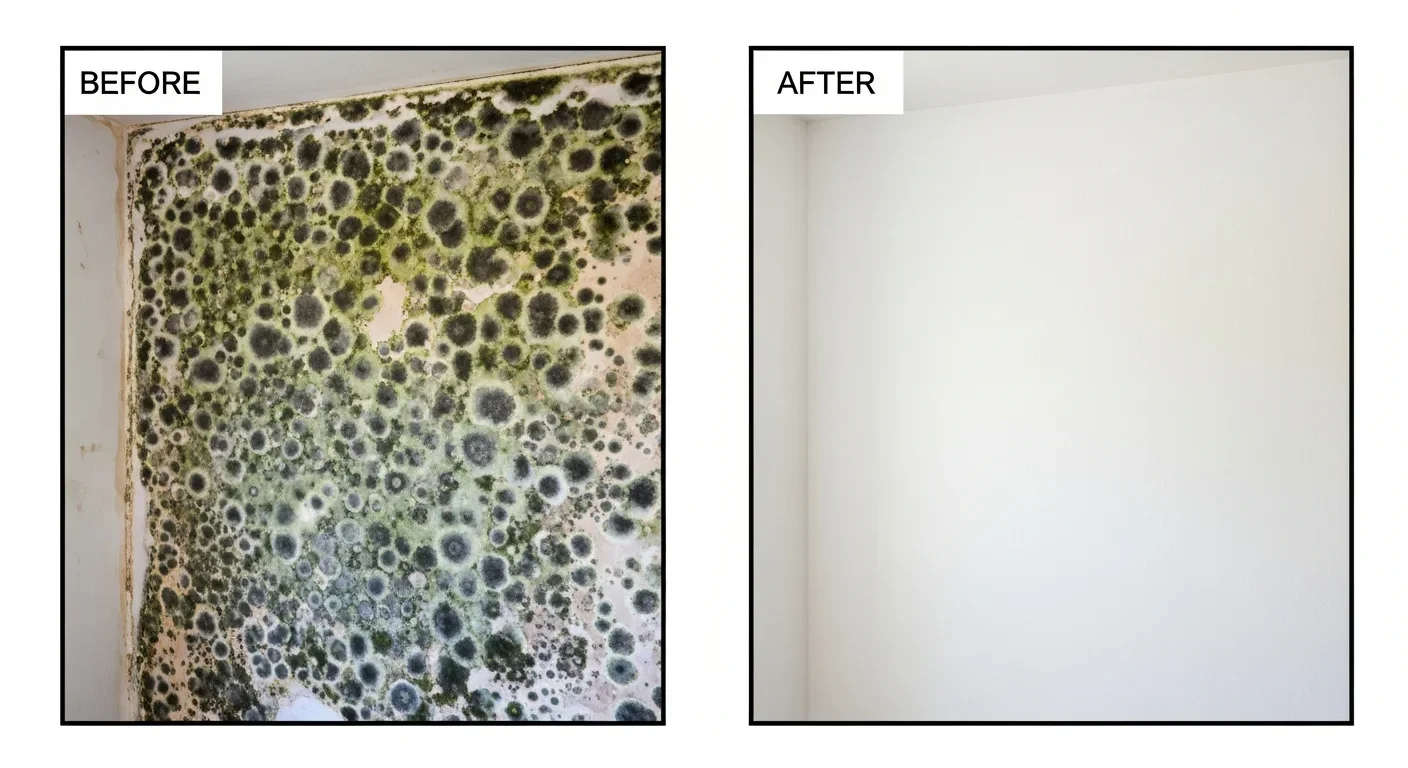
Before and after mold remediation in a Raleigh NC home — dark mold on drywall transformed to clean white wall
Before & After — Raleigh NC mold remediation restoring drywall to clean condition
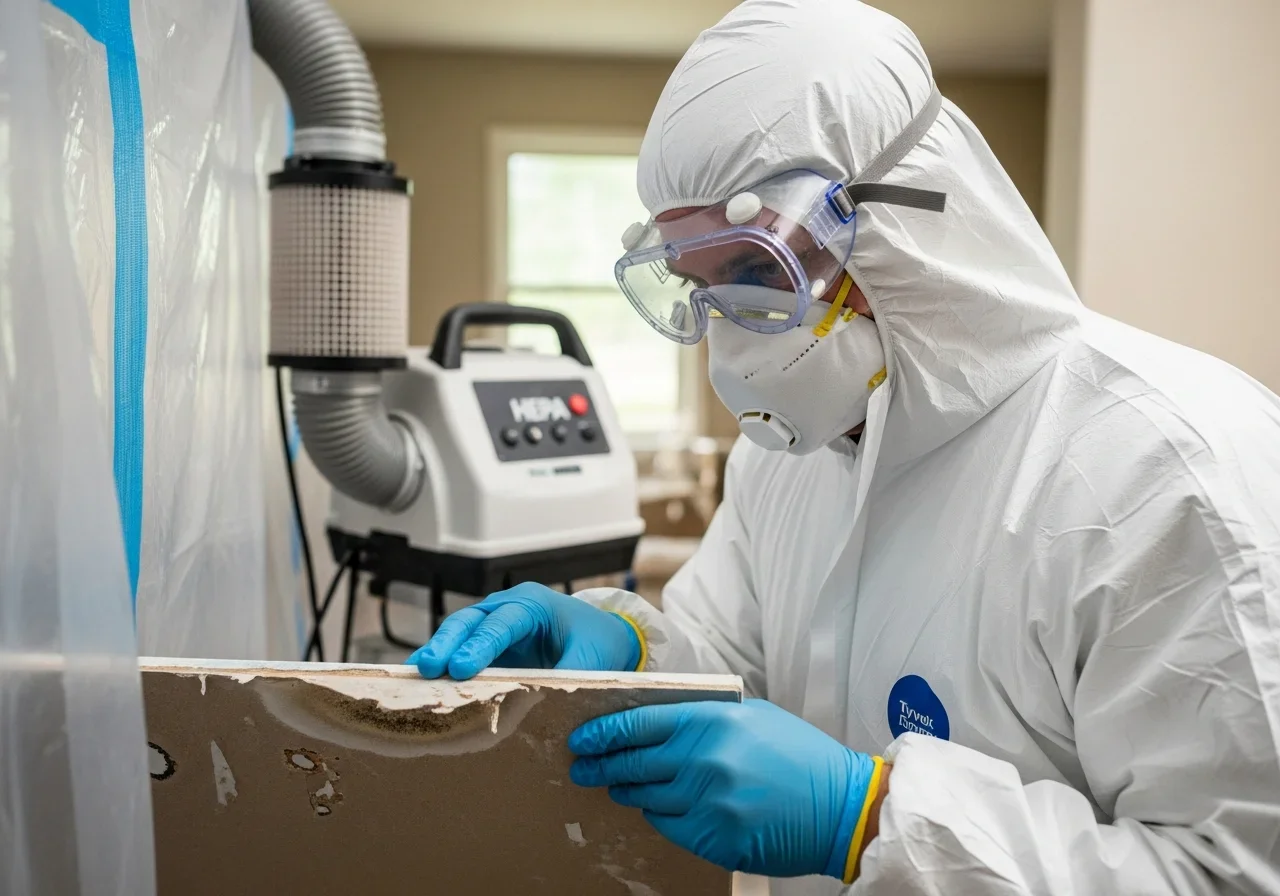
Palm Build technician in full PPE performing mold remediation in a Raleigh North Carolina home
Full IICRC S520 protocol: containment, HEPA filtration, proper PPE — every Raleigh job
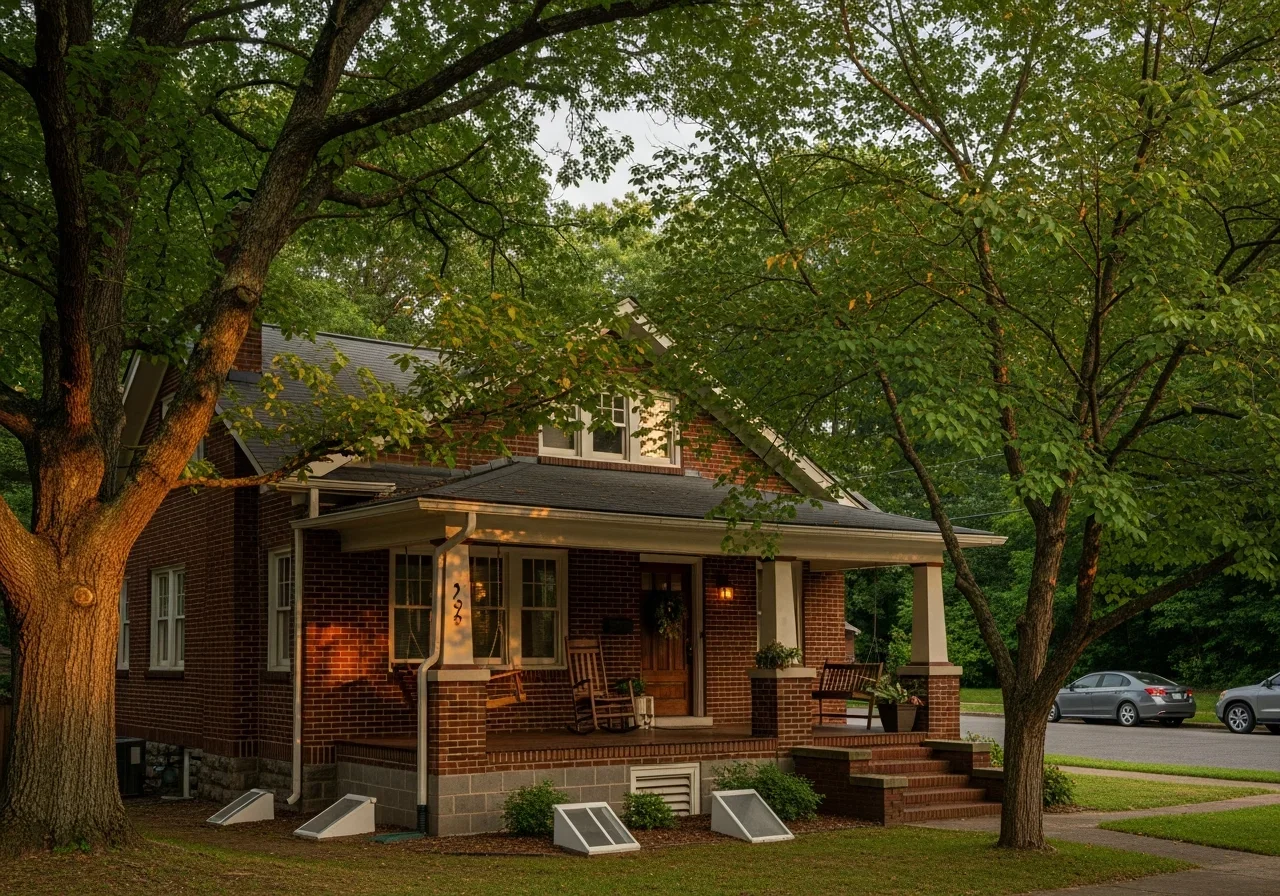
Historic Boylan Heights bungalow in Raleigh NC — 1920s brick construction with crawl space foundation
Boylan Heights 1920s bungalows — Raleigh's historic districts carry the highest mold risk from older plumbing and original crawl spaces

Why Palm Build

Raleigh NC Deserves IICRC-Certified Mold Remediation

In a state with no mold licensing, your only protection is choosing a contractor with verifiable credentials, documented protocol, and genuine knowledge of Wake County's specific moisture conditions.

IICRC S520 Certified — NC Has No License

North Carolina has no mold remediation licensing requirement. That makes your contractor's voluntary credentials the only objective quality signal available. Palm Build holds current IICRC S520 certification — the standard NC DHHS references when homeowners ask what benchmark to look for. Every project follows documented protocol, not a bleach-and-repaint approach.

Same-Day Assessments for Raleigh

We schedule same-day inspections for Raleigh, NC. Given that NC State Extension cites a 24-to-48-hour mold activation window and Raleigh's summer humidity keeps that window perpetually open, we take response time seriously. Every day of delay after a water event expands scope and cost.

Independent Post-Clearance Testing

We test after remediation using a third-party industrial hygienist — not our own in-house testing. This independent clearance report is what your NC homeowner insurance carrier accepts and what any future buyer or their inspector will request. It proves the job was done right, permanently on record.

Research Triangle Local Knowledge

We understand Wake County's specific moisture drivers: Piedmont clay soil that wicks continuously, creek-corridor flood risk from Crabtree and Walnut Creek, the historic district construction realities of Boylan Heights and Cameron Park, and the difference in risk profiles between 1920s bungalows and 2000s Brier Creek subdivisions. This specificity shows in our scopes.

Frequently Asked

Mold Remediation Questions — Raleigh NC

Mold in Your Raleigh NC Home? Get a Same-Day Assessment.

Wake County's humid climate, clay soils, and crawl space foundations create year-round mold risk from Boylan Heights to Brier Creek. Palm Build's IICRC S520-certified team provides same-day inspections, professional containment, and complete remediation with documentation your insurance carrier accepts.

Same-day Response IICRC Certified