Commercial Restoration in Greensboro, North Carolina
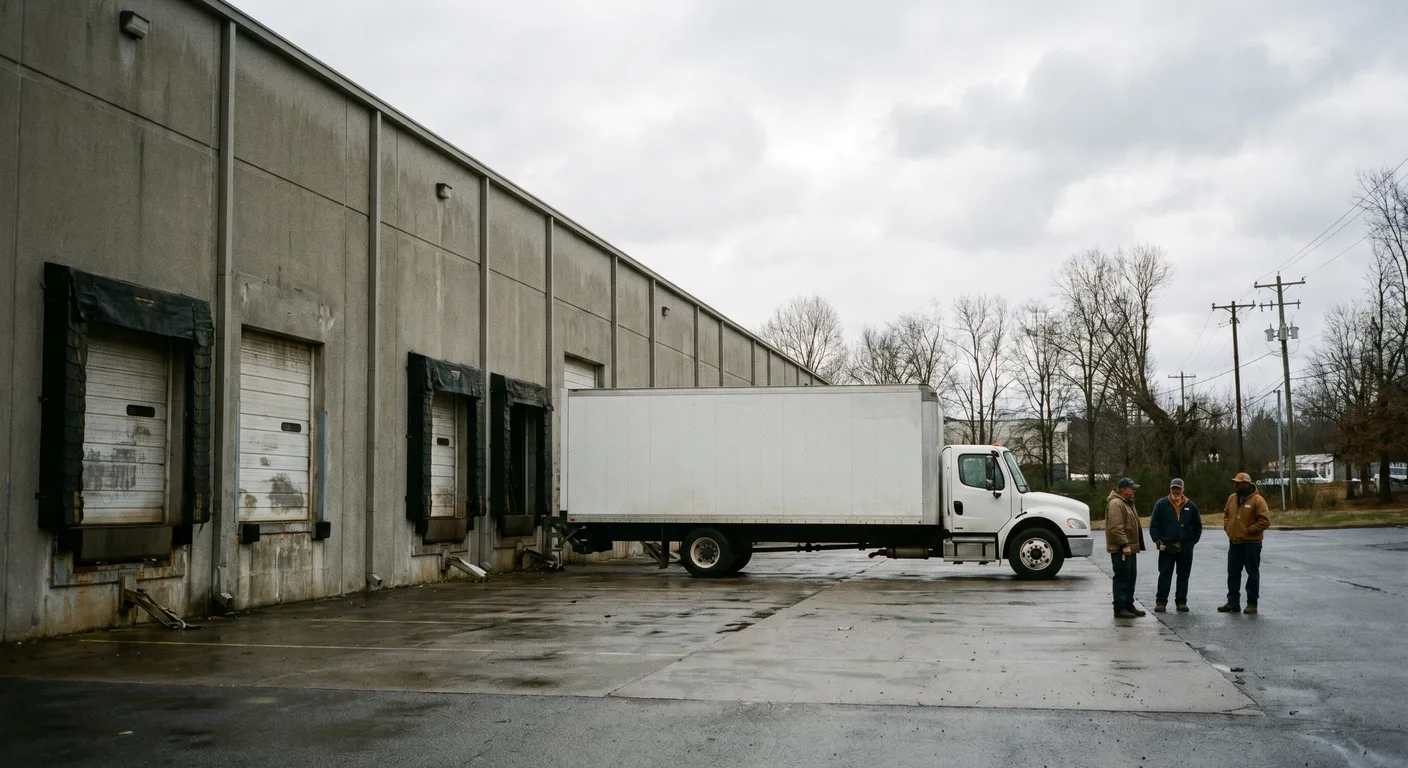
Greensboro sits at the I-40/I-85/I-73 crossroads — home to PTI Airport's FedEx Mid-Atlantic hub, Revolution Mills and Cone Mills textile-legacy adaptive-reuse buildings, Downtown Greensboro offices, UNCG and NC A&T campus-adjacent properties, and Friendly Center retail. When water, fire, or storm damage shuts down a logistics facility, a warehouse, or a multi-tenant office, every hour offline costs revenue. Palm Build deploys 24/7 commercial restoration across Greensboro and Guilford County with industrial-scale equipment and insurance documentation built for commercial property managers.
Charlotte — approximately 90 miles from Greensboro ~90 min Response IICRC Certified
Why Commercial Restoration Requires a Different Approach
Commercial property damage in Greensboro is not "residential restoration at a bigger
scale." It's a fundamentally different discipline with different urgency, stakeholders,
equipment, and insurance structures. Here's why choosing a restoration company with
genuine commercial experience matters more than any other factor.
Revenue Loss Every Hour
Residential damage is stressful but commercial damage is financially catastrophic. A flooded Greensboro warehouse can halt a distribution run worth tens of thousands of dollars. A water-damaged Downtown office forces remote work for dozens of employees, disrupting client deliverables. A fire-damaged restaurant on Battleground Avenue loses revenue during peak months that can never be recovered. Commercial restoration must prioritize speed-to-reopening above all else — and the restoration approach, equipment scale, and crew deployment reflect that urgency.
Multi-Stakeholder Coordination
Commercial projects involve property owners, tenants, property managers, commercial insurance carriers (often multiple policies), City of Greensboro and Guilford County inspectors, health departments, and sometimes regulatory agencies. Each stakeholder has different interests, timelines, and documentation requirements. Residential projects have one homeowner and one adjuster. Commercial projects may have a dozen decision-makers who all need to be informed and coordinated throughout the restoration process.
Scale and Complexity
Commercial buildings have larger HVAC systems that spread contaminants further, multi-floor water migration through elevator shafts and stairwells, fire suppression systems that discharge thousands of gallons, specialized equipment (commercial kitchens, server rooms, manufacturing machinery), and occupancy loads that create safety concerns during restoration. Greensboro's textile-legacy and adaptive-reuse buildings add timber-beam and masonry complexities absent from newer construction. The equipment, crew size, and project management required for commercial work is fundamentally different from residential restoration.
Commercial Insurance Structures
Commercial property policies (CP, BOP, umbrella) have different coverage structures than residential homeowners policies. They include business interruption, extra expense, business personal property, equipment breakdown, and ordinance-and-law coverages that must be coordinated separately. North Carolina commercial policies are governed by NC Gen. Stat. Ch. 58 — proof of loss is due in signed, sworn form within 60 days of your insurer's request. The claims process involves commercial adjusters who expect different documentation formats than residential adjusters.
Local Market Knowledge
Greensboro's Commercial Corridors
Greensboro's commercial districts range from PTI Airport logistics hubs and
textile-legacy adaptive-reuse buildings to Downtown offices and UNCG campus-adjacent
properties. Our team knows the specific building types, regulatory requirements, and
operational pressures of each corridor.
Logistics & PTI Airport Hub
Types: Warehouses, distribution centers, cold storage, industrial parks
Key challenges: Large-scale inventory documentation, specialized fire suppression cleanup (dry chemical, foam), OSHA compliance, tight distribution-schedule coordination during phased restoration
Key challenges: Historic masonry and timber-beam construction, century-old building envelopes, multi-tenant lease complexity, specialty fire restoration for heavy-timber and brick structures
Downtown Greensboro
Types: Class A/B offices, government, mixed-use, civic
Key challenges: Multi-floor water migration through older building systems, high-density occupancy coordination, freight access logistics, phased work to keep unaffected floors operational
Key challenges: Academic-year scheduling constraints, high foot traffic, research lab and IT room moisture sensitivity, health-department compliance for food service tenants
Friendly Center / Retail Corridors
Types: Retail, restaurants, service businesses, big-box
Key challenges: Seasonal revenue pressure, inventory documentation for contents claims, health department clearance for food service, high-finish retail standards for premium brands
Key challenges: High-value furniture and fixtures inventory salvage, Market-season scheduling sensitivity, specialized climate control during drying to protect finish goods
Commercial Process
Our Greensboro Commercial Restoration Process
Commercial restoration requires larger equipment, faster timelines, and
multi-stakeholder coordination. Here's how we manage the process from emergency call
through business reopening for Guilford County properties.
01
Emergency Response & Stabilization
Hours 1-4
Immediate deployment of commercial-scale equipment: truck-mounted extractors, industrial dehumidifiers, large-format air scrubbers. Board-up and tarping for weather exposure. Utilities assessment (gas, water, electrical safety). Initial damage documentation begins simultaneously. For Greensboro logistics properties near PTI, we coordinate loading dock access and equipment logistics. For adaptive-reuse and historic buildings, we assess masonry cavities and timber framing for hidden moisture pathways on arrival.
02
Damage Assessment & Scope Development
Days 1-3
Comprehensive documentation using thermal imaging, moisture mapping, and room-by-room photography. We develop corridor-based drying plans for multi-unit buildings, identify areas that can be occupied during restoration vs. areas requiring full evacuation, and create a phased restoration timeline that minimizes business interruption. For Greensboro's multi-tenant office and adaptive-reuse properties, we map damage by tenant for separate insurance documentation.
03
Mitigation & Active Restoration
Days 1-14
Industrial-scale water extraction, structural drying, soot removal, mold containment, or debris clearing depending on loss type. For Greensboro commercial properties — whether a Downtown office, a Revolution Mills-area mixed-use building, or a PTI-area warehouse — we deploy during off-hours when possible: nights and weekends for restaurants and retail, after-business-hours for offices, off-shift windows for logistics facilities. Daily progress reports are provided to property managers, owners, and insurance adjusters.
04
Reconstruction & Tenant Coordination
Weeks 2-12
Full commercial reconstruction including tenant improvements, ADA compliance, fire code compliance, health department requirements (food service), and building code upgrades per the 2018 NC Residential Building Code. For properties in Greensboro's local historic districts (Fisher Park, College Hill, Dunleath), work in designated areas must comply with Certificate of Appropriateness requirements from the City of Greensboro's Historic Preservation Commission. We coordinate with each tenant's schedule, manage phased occupancy during reconstruction, and handle City of Greensboro and Guilford County permitting and inspections.
05
Final Inspection & Business Reopening
Project Completion
All regulatory inspections completed (building, fire, health department as applicable). Certificate of occupancy or re-occupancy confirmed. Business reopening coordination with tenants, property management, and insurance carriers. Final documentation package provided for claim closeout including business interruption timeline evidence. For food service tenants, Guilford County Environmental Health re-inspection is included in the scope.
Protecting Revenue
Business Interruption: The Hidden Cost of Commercial Damage
~90 min
Initial response from Charlotte hub to Greensboro
2-8 weeks
Average commercial restoration timeline
60 days
NC sworn proof-of-loss deadline after insurer request (§58-3-40)
Business interruption coverage is one of the most valuable — and most under-documented
— portions of commercial insurance claims. Your NC commercial property policy likely
includes BI coverage that pays for lost revenue during the period your business cannot
operate due to a covered loss. But the coverage only pays what you can prove. Without
detailed timeline documentation showing exactly when the damage occurred, when
mitigation began, when partial occupancy was restored, and when full operations
resumed, your BI claim is based on your adjuster's estimate rather than documented
fact.
Palm Build provides detailed restoration timelines specifically designed to support
business interruption claims under North Carolina commercial property policies. Our
daily progress reports, milestone documentation, and phased occupancy tracking create
the evidence trail that commercial adjusters need to approve BI payments. We also
document "extra expense" items — temporary relocation costs, expedited shipping for
replacement equipment, overtime labor for accelerated restoration — that are covered
under most NC commercial policies but often go unclaimed.
Commercial Property Types We Restore in Greensboro
Each commercial property type has specific regulatory, safety, and operational
requirements that inform the restoration approach. Here's our Greensboro-specific
expertise across the major commercial property categories in Guilford County.
Logistics, Warehouse & Industrial
Greensboro's position at the I-40/I-85/I-73 crossroads makes it a Piedmont Triad logistics hub — PTI International Airport hosts a FedEx Mid-Atlantic hub and adjacent industrial parks serve regional distribution. These properties carry specialized fire suppression systems (dry chemical, foam, clean agent) that require specific cleanup protocols, high-value inventory that needs rapid documentation and salvage assessment, and operational equipment that may require professional cleaning and testing before restart. We coordinate OSHA compliance throughout the restoration and work with shift supervisors to phase work around distribution schedules.
Office Buildings & Corporate
Greensboro's office market includes Downtown high-rises, mid-rise office parks on New Garden Road and Wendover Avenue, and the adaptive-reuse creative offices at Revolution Mills and similar textile-legacy buildings. Historic adaptive-reuse structures present timber-beam and brick-masonry complexities absent from modern office construction — water migrates through masonry cavities and soaks heavy-timber framing in ways that require extended drying plans and moisture monitoring. Multi-tenant lease configurations require separate damage documentation per occupancy.
Restaurants & Food Service
Greensboro's restaurant scene spans downtown eateries, Friendly Center and Battleground Avenue chain and independent dining, and campus-adjacent food service near UNCG and NC A&T. Commercial kitchens have grease-laden exhaust systems that complicate fire restoration, walk-in coolers and freezers that must maintain temperature during water events, and health department clearance requirements before reopening. Guilford County Environmental Health requires post-restoration inspection for any food service establishment affected by water, fire, or mold. Palm Build coordinates this inspection as part of our commercial restoration scope.
Medical & Healthcare
Greensboro's healthcare sector includes Cone Health and Wake Forest Baptist Health facilities, private practices, dental offices, urgent care centers, and specialty clinics across Guilford County. Healthcare restoration involves patient record protection (HIPAA compliance during document handling), medical equipment salvage assessment, pharmaceutical storage integrity, and infection control during restoration work in clinical spaces. Air quality and sterilization requirements for healthcare spaces exceed standard commercial standards.
Retail & Shopping Centers
From Friendly Center to Four Seasons Town Centre and the mixed-use retail corridors on Battleground Avenue and New Garden Road, Greensboro retail faces seasonal revenue pressure that makes restoration timing critical. A water-damaged anchor tenant or a fire-damaged restaurant during peak holiday or back-to-school season can lose sales representing 25-40% of annual revenue. Palm Build prioritizes getting the sales floor operational first while continuing back-of-house and storage restoration in parallel, and handles inventory documentation for contents claims.
Houses of Worship & Community
Greensboro's churches, mosques, synagogues, and community centers often have irreplaceable architectural features — stained glass, custom millwork, pipe organs, historic masonry — that require specialized restoration techniques. The Fisher Park and College Hill historic districts include significant congregational properties with local Historic District designation, meaning restoration must comply with Certificate of Appropriateness requirements from the City of Greensboro's Historic Preservation Commission. Palm Build works within these historic district requirements while meeting modern restoration standards.
Commercial Coverage
Commercial Insurance Coverage for Greensboro Businesses
Commercial property policies cover more than most business owners realize. Palm Build's
commercial claims team ensures every applicable coverage is activated and documented —
including business interruption and extra expense items that are frequently left on the
table. NC commercial policies are governed by NC Gen. Stat. Ch. 58; sewer backup and
flood are excluded and require separate endorsements or NFIP/private flood coverage.
Building coverage — structural damage repair and reconstruction
Business personal property — furniture, equipment, inventory, fixtures
Business interruption — lost revenue during the restoration period (NC Gen. Stat. Ch. 58)
Extra expense — temporary relocation, expedited restoration costs
Equipment breakdown — specialized equipment repair or replacement
Ordinance and law — building code upgrades during reconstruction
Debris removal — commercial-scale demolition and disposal
Tenant improvements — custom buildout restoration for leased spaces
The Palm Build Difference
Why Greensboro Businesses Choose Palm Build
~90 Min Commercial Response
Our Charlotte operations hub deploys commercial-scale equipment — truck-mounted extractors, industrial dehumidifiers, large air scrubbers — to Greensboro in approximately 90 minutes on I-85/I-40. For major commercial losses, we activate additional crews to accelerate deployment. We work nights, weekends, and holidays to minimize your business interruption in Guilford County.
Multi-Property-Type Experience
We've restored Greensboro offices, logistics warehouses, restaurants, medical facilities, retail, adaptive-reuse buildings, and houses of worship. Each property type has specific regulatory, safety, and operational requirements — from health department clearance for food service to HIPAA compliance for healthcare to OSHA requirements for industrial and distribution properties.
Multi-Stakeholder Coordination
Commercial projects involve property owners, tenants, property managers, multiple insurance carriers, City of Greensboro and Guilford County inspectors, and regulatory agencies. We manage all stakeholder communication, provide separate documentation packages per carrier, and coordinate restoration scheduling across all parties — including Historic Preservation Commission requirements for properties in designated local districts.
Commercial Claims Expertise
NC commercial property policies have different coverage structures than residential homeowners policies. We understand building vs. contents, business interruption, extra expense, tenant improvements, and equipment breakdown coverages. Our Xactimate estimates are formatted for commercial claims processing, and we document sworn proof-of-loss evidence to meet NC Gen. Stat. §58-3-40 deadlines.
Off-Hours & Phased Restoration
We routinely perform commercial work during nights, weekends, and off-shift windows to keep businesses operational. For PTI-area logistics facilities, we phase restoration around distribution schedules. For Greensboro restaurants and retail, we coordinate health department re-inspection as part of the restoration scope — returning the space to compliant operation faster.
How quickly can Palm Build respond to a commercial emergency in Greensboro?
Palm Build's Charlotte operations hub is approximately 90 miles from Greensboro — roughly 90 minutes on I-85/I-40 under normal conditions. We dispatch commercial-scale equipment immediately and operate 24/7/365. For large commercial losses in Guilford County, we activate additional crews to accelerate deployment. Our NC commercial line is (704) 464-0121. We understand that for a PTI-area logistics facility or a Downtown office property, every hour of business interruption costs money — our response reflects that urgency.
Can you work around our business hours to minimize disruption?
Yes. We routinely perform commercial restoration during off-hours — nights, weekends, and holidays — to minimize disruption to operations. For Greensboro's warehouse and logistics clients near PTI, we schedule noisy and disruptive work during non-peak shifts. For Downtown offices, UNCG-adjacent properties, and Friendly Center retail tenants, we coordinate with property management to keep unaffected areas open and operational during restoration.
Do you handle multi-tenant commercial buildings in Greensboro?
Yes. Multi-tenant properties — including the adaptive-reuse office buildings at Revolution Mills and mixed-use developments in Downtown Greensboro — require coordination between owners, tenants, property managers, and multiple insurance carriers. Palm Build manages this coordination, documents each party's responsibilities separately, and provides each carrier the documentation it needs for its portion of the loss.
What types of commercial properties does Palm Build restore in Greensboro?
We restore all commercial property types in Greensboro and Guilford County including warehouses and logistics distribution facilities near PTI International Airport, textile-legacy and adaptive-reuse buildings like those at Revolution Mills, Downtown offices, Class A and B office parks, UNCG and NC A&T campus-adjacent properties, retail at Friendly Center and surrounding corridors, medical and healthcare facilities, restaurants and food service, houses of worship, and industrial manufacturing facilities. Each property type has specific regulatory, safety, and operational requirements that shape our restoration approach.
How do you handle business interruption documentation for Greensboro commercial claims?
Business interruption coverage under North Carolina commercial property policies only pays what you can prove. Palm Build provides detailed timelines showing when damage occurred, when mitigation began, when partial occupancy was restored, and when full operations resumed. That timeline, combined with our Xactimate scope, supports your BI and extra-expense claim with the evidence your carrier needs. North Carolina commercial policies are governed by NC Gen. Stat. Ch. 58 — proof of loss must be provided in signed, sworn form within 60 days of your insurer's request under §58-3-40.
What about building code compliance during commercial restoration in Greensboro?
Commercial restoration in Greensboro must comply with the 2018 NC Residential Building Code (the 2024 cycle is delayed until at least March 2027 for most jurisdictions). Permits are issued by the City of Greensboro and Guilford County. Properties in mapped FEMA flood zones — including areas near North and South Buffalo Creek — may require a floodplain development permit from the city's Water Resources department. Our commercial crews handle ordinance-and-law upgrades triggered during reconstruction and coordinate with Guilford County inspectors.
Do you work with NC commercial insurance policies?
Yes. Commercial property policies (CP, BOP, and similar) have different coverage structures than residential NC homeowners policies. We understand commercial coverage including building vs. contents, business personal property, business interruption, extra expense, ordinance-and-law, and equipment breakdown. Our Xactimate estimates are formatted for commercial claims processing. North Carolina insurance is governed by NC Gen. Stat. Ch. 58 — there is no mandatory 1-year claim deadline like Florida's statute; the standard in NC is prompt notice followed by sworn proof of loss within 60 days of insurer request. Sewer and drain backup and flood are excluded from standard commercial property policies and require separate endorsements or NFIP/private flood coverage.
Can you restore a logistics warehouse or distribution facility near PTI without shutting it down?
In most cases, yes. Logistics and warehouse properties near Piedmont Triad International Airport operate on tight distribution schedules, so we build a phased plan that isolates the affected zone, installs containment, and runs commercial drying behind temporary barriers while adjacent bays remain operational. For facilities with specialized fire suppression systems — common in large logistics buildings — we manage the cleanup of dry chemical, foam, or clean agent discharge as part of the restoration scope.
Commercial Damage in Greensboro? Every Hour Costs Revenue.
Palm Build's commercial restoration team deploys to Greensboro and Guilford County with industrial-scale equipment and a plan built to minimize your business interruption. We work nights, weekends, and holidays to keep properties operating.