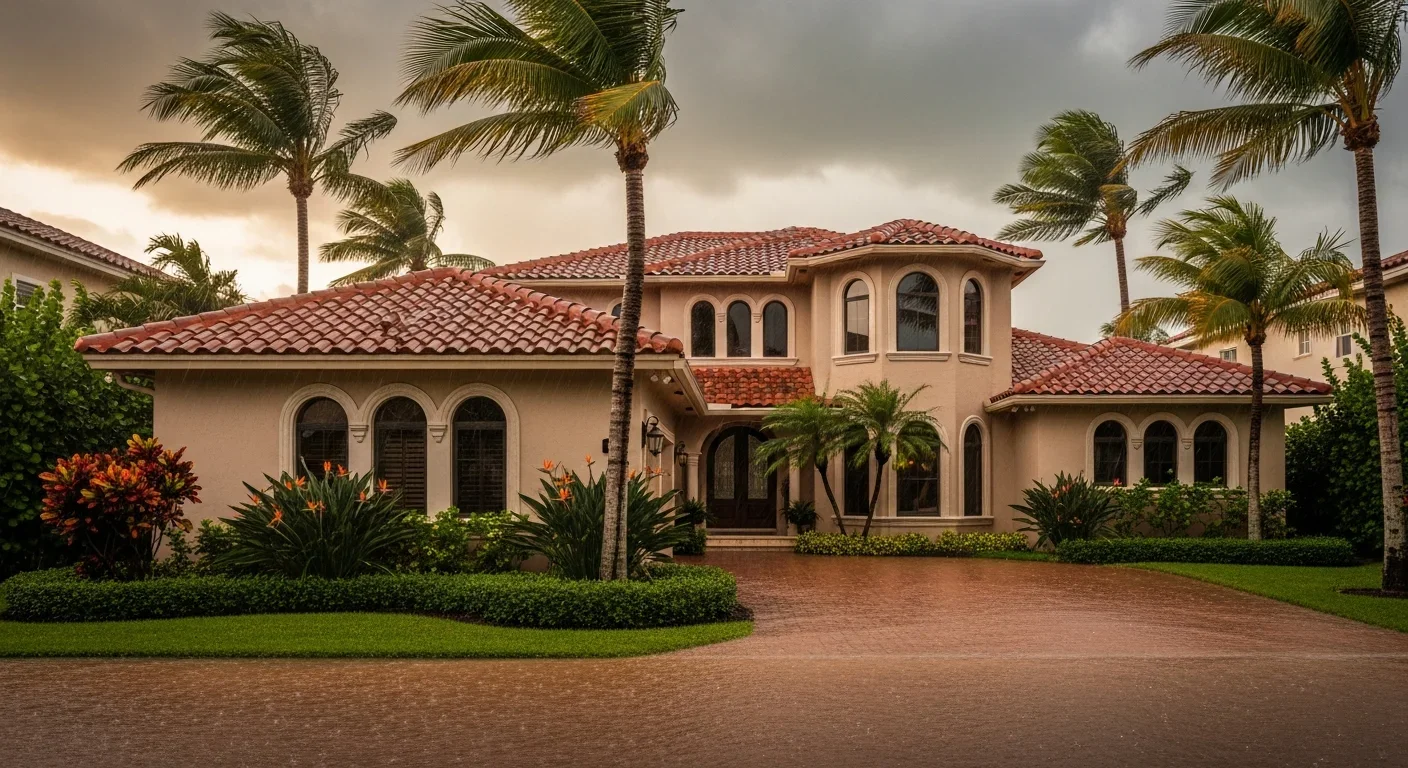
Key takeaways
- Fort Lauderdale's 1–in–1,000-year rainfall event on April 12–13, 2023 dropped 25.91 inches of rain in roughly 12 hours and caused major damage to 766 homes and some damage to 1,121 total — and the mold that followed was worse than the flooding itself.
- Roughly 62 percent of Fort Lauderdale's residential housing was built before 1980. CBS-with-stucco construction on slab foundations means wet drywall has nowhere to drain — the moisture wicks upward through the slab and outward through the wall cavity.
- Relative humidity in Fort Lauderdale sits above 80 percent during rainy season and never drops below the mold-growth threshold of 60 percent for any meaningful length of time. The 24–48 hour mold window you read in national guides is the upper bound here, not the expected one.
- HVAC condensation is Fort Lauderdale's #1 mold source — air conditioning runs 10 to 11 months a year, and clogged condensate lines, salt-corroded drip pans, oversized short-cycling units, and dirty evaporator coils distribute spores through the ductwork before any visible sign appears.
- Florida hurricane deductibles run 2 to 5 percent of dwelling coverage — not the standard $1,000. On the $617K Fort Lauderdale median home, that is roughly $12,340 to $30,850 out-of-pocket before any named-storm coverage activates.
- Florida's High Velocity Hurricane Zone (HVHZ) Building Code and the post-Surfside 40-Year Building Recertification capture roughly 62 percent of Fort Lauderdale's housing stock and add 15 to 25 percent to reconstruction costs east of the Coastal Construction Control Line.
- Florida law (Fla. Stat. § 627.70132) gives you only 1 year to file a new property insurance claim from the date of loss. Supplemental claims must be filed within 18 months. These deadlines are strict and non-negotiable.
- Florida requires DBPR licensing for mold assessors and mold remediators under Chapter 468 Part XVI — and the same licensee cannot legally do both assessment and remediation on the same property. Verify every credential at myfloridalicense.com before you hire.
The number most homeowners have heard is 48 hours — the point after water intrusion when mold begins establishing on wet structural materials according to IICRC S500 and S520 guidance. That number was developed as an average across American climate zones. In Fort Lauderdale it is the outer edge, not the expected outcome. Every environmental factor that slows mold growth in a drier or cooler city is either missing or actively working in the opposite direction here. The humidity floor never drops below the mold-growth threshold. The slab foundation means water has no downward escape path. The stucco wall system absorbs moisture before drywall even knows it is wet. The year-round warmth means mold colonies never face a dormant winter. And the salt air environment corrodes the HVAC systems that would otherwise be your dehumidification backstop. This guide is about what actually happens inside a Fort Lauderdale home during the 48 hours after water intrusion, why that window is tighter here than almost anywhere in Florida, and the specific decisions that separate a clean dry-out from a full-scale mold remediation project.
Annual rainfall
66.5 in
The wet season (June–October) accounts for 62% of it — June averages 9.81 inches alone
Wet season humidity
80%+
Relative humidity regularly exceeds 80% from May through October
Pre-1980 housing
~62%
Majority of Fort Lauderdale homes are older CBS-with-stucco construction on slabs
FL claim deadline
1 year
Fla. Stat. § 627.70132 — new property insurance claims must be filed within 365 days of loss
Why the 48-Hour Mold Window Is Tighter in Fort Lauderdale
The 24 to 48 hour guidance that appears in every water damage article is a generalized threshold. In Phoenix, where indoor humidity might be 25 percent, that window stretches further before mold colonies establish. In Denver, the window is wider still. In Fort Lauderdale, the window compresses. Outdoor relative humidity during the wet season regularly exceeds 80 percent, and the indoor environment inside a home where the HVAC is struggling — or off — can match it within an hour. IICRC S520 identifies 60 percent relative humidity as the ceiling above which wet materials support active mold growth; Fort Lauderdale lives above that ceiling for months at a time. What this means in practice is that a Fort Lauderdale homeowner who leaves for a weekend after a water event, thinking they will handle the cleanup on Monday, is almost always returning to a mold remediation project rather than a drying job.
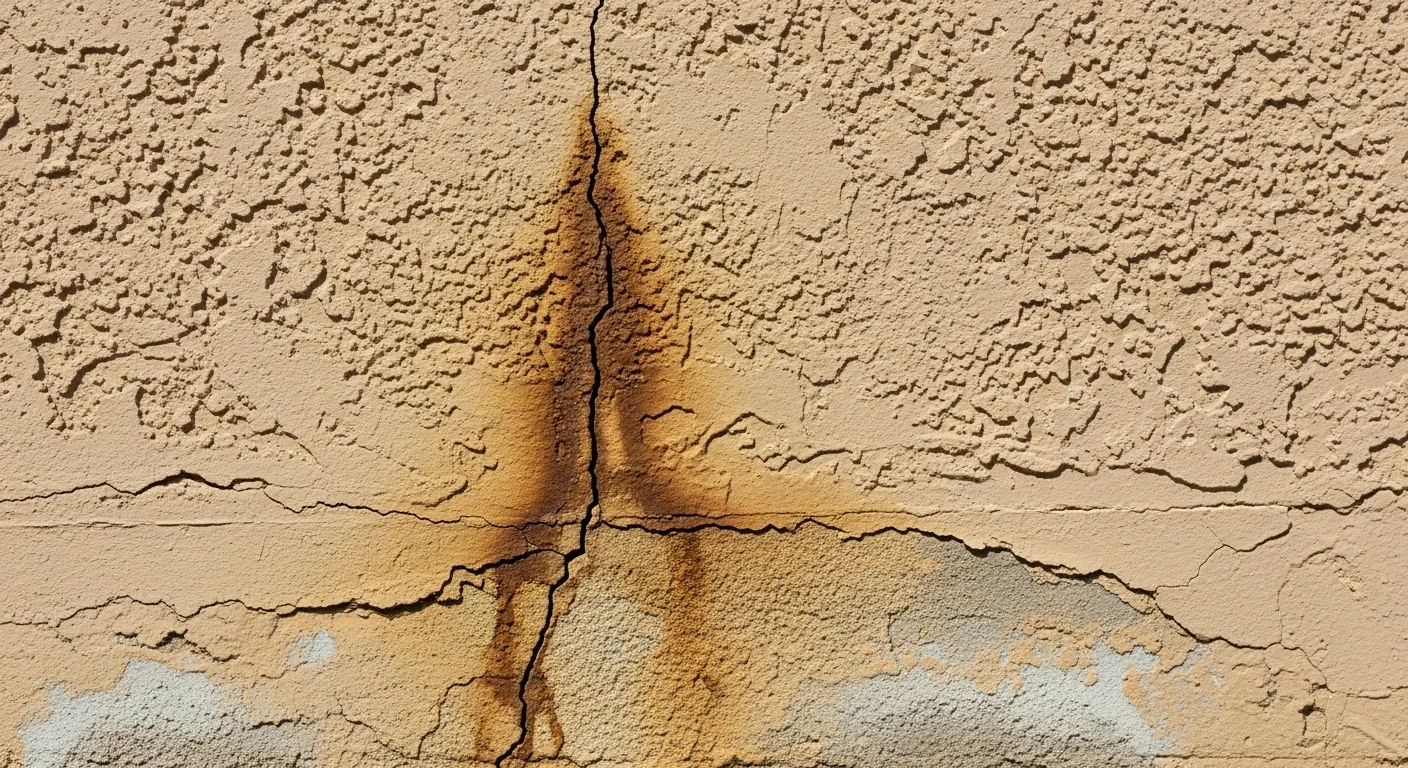
The housing stock compounds the problem. Roughly 62 percent of Fort Lauderdale's residential units were built before 1980, dominated by mid-20th-century CBS (concrete block structure) construction with stucco exteriors on slab foundations. CBS does not rot the way wood framing rots — which is one of the reasons insurance carriers prefer it — but it does wick moisture through the block, through hairline stucco cracks that are essentially invisible from the curb, and through slab capillary action from the notoriously high South Florida water table. When water enters through a stucco crack, it moves behind the exterior wall and collects against the interior drywall. The outside of the house looks perfectly normal. The inside of the wall cavity is a saturated moisture sponge. By the time a ceiling stain or a baseboard stain becomes visible, the mold colony on the back of the drywall has been alive for days.
HVAC condensation: Fort Lauderdale's #1 mold source
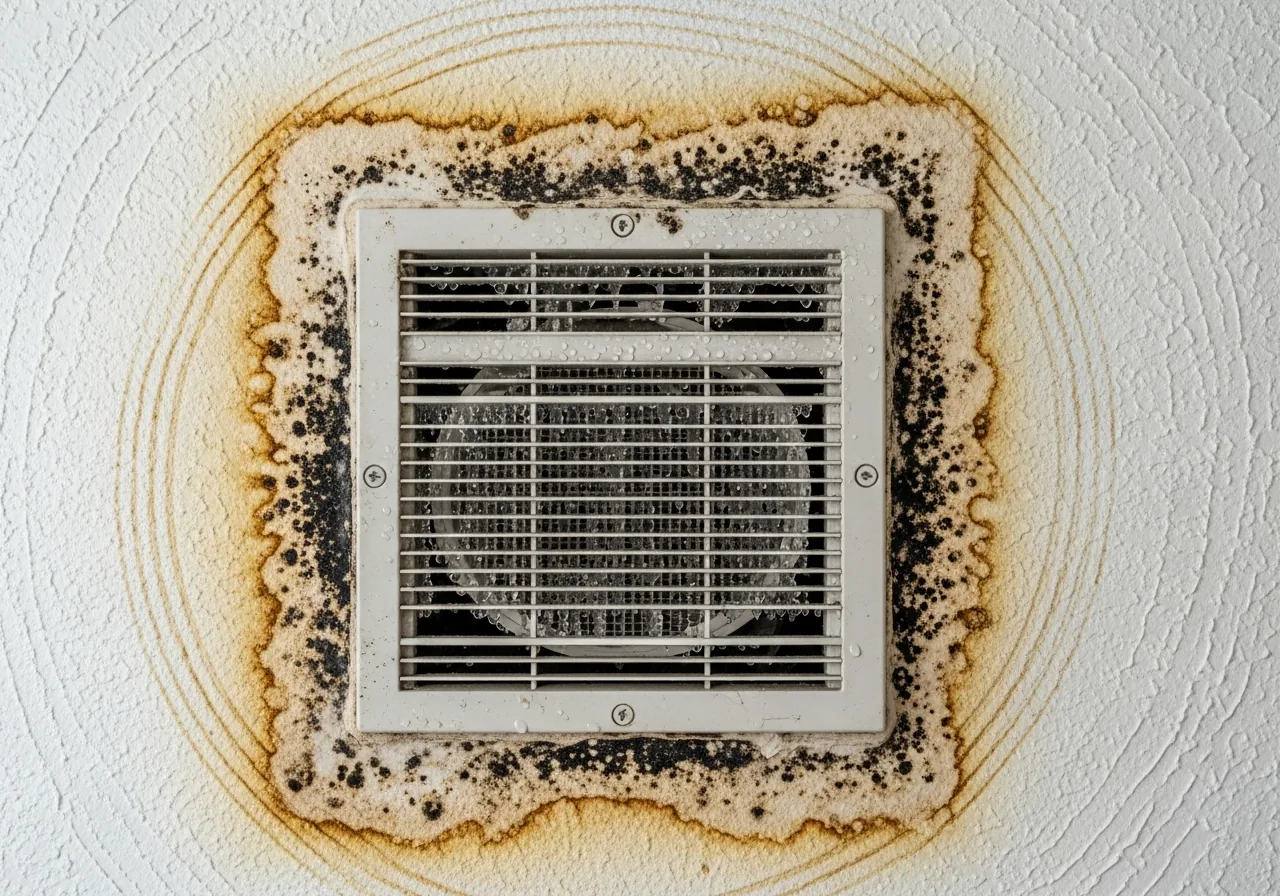
More mold remediation calls in Fort Lauderdale start with the air handler than with any rain event. Air conditioning runs 10 to 11 months a year here, and that means the HVAC system is generating moisture every day that something else does not. Four failure modes drive the call volume: clogged condensate drain lines back up water into the drip pan and out into the air handler closet, salt-corroded drip pans crack and leak directly onto framing or ceiling drywall below, oversized AC units short-cycle on temperature without ever running long enough to dehumidify, and dirty evaporator coils trap the organic film that mold colonies feed on. The cruel part of the failure pattern is the distribution: once a colony establishes inside the air handler, the blower fan pushes spores through the supply ductwork into every room of the house — often before any visible sign appears at the wall, ceiling, or vent register.
Fort Lauderdale's Storm History: From Andrew to the Rain Bomb
Fort Lauderdale's modern building code, hurricane deductible, post-Surfside reforms, and even the way an adjuster looks at a water claim all trace back to specific storms. The timeline below is not a weather list — it is the regulatory and insurance backstory every Fort Lauderdale homeowner is living inside today, whether they know it or not.
August 24, 1992
Hurricane Andrew — Category 5 landfall in Miami-Dade
Andrew came ashore as a Category 5 in southern Miami-Dade with sustained winds of 165 mph, destroyed 63,500 homes, and damaged 124,000 more. The storm exposed the failure of pre-1992 South Florida construction so completely that the state rewrote the building code from scratch. The result was the modern Florida Building Code and the High Velocity Hurricane Zone (HVHZ) overlay covering all of Broward and Miami-Dade — the strictest wind-loading code in the United States, and the reason any reconstruction in Fort Lauderdale runs 15 to 25 percent higher than equivalent work elsewhere in Florida.
October 24, 2005
Hurricane Wilma — 14-day power outage and the mold incubator
Wilma made landfall as a Category 3 in Collier County and crossed the peninsula into Broward, knocking out power for up to 14 days in some Fort Lauderdale neighborhoods. The wind damage was significant; the mold damage was worse. Two weeks of August-equivalent humidity inside homes with no air conditioning produced the largest single mold remediation surge Broward County had seen at the time. Wilma is the storm that taught the South Florida insurance market what a multi-week post-storm mold wave actually costs.
September 10, 2017
Hurricane Irma — 87 mph sustained in Fort Lauderdale, 115 major-damage homes
Irma made landfall as a Category 4 at Cudjoe Key and tracked up the spine of Florida. Fort Lauderdale recorded 87 mph sustained winds with gusts to 104 mph. 115 homes in the city took major damage and 855 were rendered uninhabitable in neighboring Davie. The damage pattern was wind-driven rain through stucco cracks and roof underlayment failures — the failure mode the HVHZ code was designed to prevent — and exposed how many older Fort Lauderdale homes had never been retrofitted to current code.
September 28, 2022
Hurricane Ian — north of the eyewall, multi-day rain
Ian made landfall on Florida's Gulf Coast as a Category 4 and crossed the state. Fort Lauderdale sat north of the eyewall, but the multi-day rain bands and Intracoastal surge produced widespread water-intrusion claims along the canal corridor. Ian was the dress rehearsal for what came seven months later.
April 12–13, 2023
The Rain Bomb — 25.91 inches in 12 hours, 1-in-1,000-year event
Fort Lauderdale received 25.91 inches of rain in roughly 12 hours, classified by the National Weather Service as a 1-in-1,000-year event. Fort Lauderdale-Hollywood International Airport closed. The state of emergency was declared. Edgewood required water rescues. 766 homes had major damage with 18 inches of water or more inside, and 1,121 homes had some measurable damage. The mold wave that followed hit every affected home on roughly the same timeline because the underlying conditions were identical — and is the reason Fort Lauderdale homeowners now know the term 'rain bomb' as a regulatory category, not a weather forecast.
The April 2023 Rain Bomb: Fort Lauderdale's Clearest Mold Lesson
On April 12–13, 2023, Fort Lauderdale received 25.91 inches of rain in roughly 12 hours. The National Weather Service classified it as a 1-in-1,000-year rainfall event. Fort Lauderdale-Hollywood International Airport closed. The state of emergency was declared. Water rescues were required in the Edgewood neighborhood and elsewhere. When the water finally receded, 766 homes had major damage with 18 inches of water or more inside, and an additional 1,121 homes had some measurable damage. What happened over the next two weeks was the second wave — the mold wave — and it hit every single affected home on roughly the same timeline because the underlying conditions were identical. Hot outdoor temperatures. High humidity. No power in many areas (meaning no HVAC, no dehumidification). Wet drywall and wet cabinetry pressed against slab bases. The homes that came out of that event in the best condition were the ones that had a professional crew extracting, drying, and dehumidifying within the first 24 hours. The homes that waited three days ended up gutted.
Fort Lauderdale Neighborhoods by Flood and Mold Risk
Fort Lauderdale's risk is uneven across neighborhoods. Canal-adjacent homes face direct flood exposure during storm surge and heavy rainfall. Older neighborhoods with the earliest construction face the highest mold risk because their stucco, roofing, and vapor barriers have aged the longest. And any property east of the Coastal Construction Line is categorically in a Special Flood Hazard Area with mandatory flood insurance.
| Neighborhood | Built | Primary Risk | What It Means For Mold Response |
|---|---|---|---|
| Las Olas Isles | 1950s–2000s | Canal flood, saltwater intrusion, premium contents | Category 3 water (saltwater) requires full demo of affected materials and corrosion replacement |
| Seven Isles | 1960s–1990s | 315 waterfront homes on the Intracoastal; storm surge and canal overflow | Storm surge protocol — drywall, cabinetry, and insulation demo to clear levels |
| Harbor Beach | 1960s–1980s | Gated coastal enclave, storm surge, saltwater flood | Premium finishes, complex claims — document contents before any remediation |
| Rio Vista | 1930s–1960s | Oldest housing stock, aging plumbing, New River flood, mold in older materials | Historic plaster and millwork require specialized moisture control |
| Coral Ridge | 1950s–1980s | Canal frontage, aging roofs, Middle River and Cypress Creek flood | Roof underlayment failures drive hidden attic mold discovered weeks later |
| Victoria Park | 1940s–1970s | Older plumbing, heavy tree canopy, aging stucco | Stucco hairline cracks = hidden wall cavity mold behind intact interior paint |
| Colee Hammock | 1920s–1950s | Historic district, oldest stock, Mediterranean Revival | Preservation requirements may affect exterior remediation work |
| Sailboat Bend | 1940s–1970s | Near New River, repetitive flooding | Frequent water events = cumulative moisture damage in wall assemblies |
| Nurmi Isles / Idlewyld | 1940s–1980s | Finger-island and enclosed peninsula, tidal flooding, FEMA Zone AE | Mandatory flood insurance zones — file both flood and HO claims on different tracks |
Fort Lauderdale neighborhoods by water damage and mold risk profile
Hurricane evacuation zones A and B
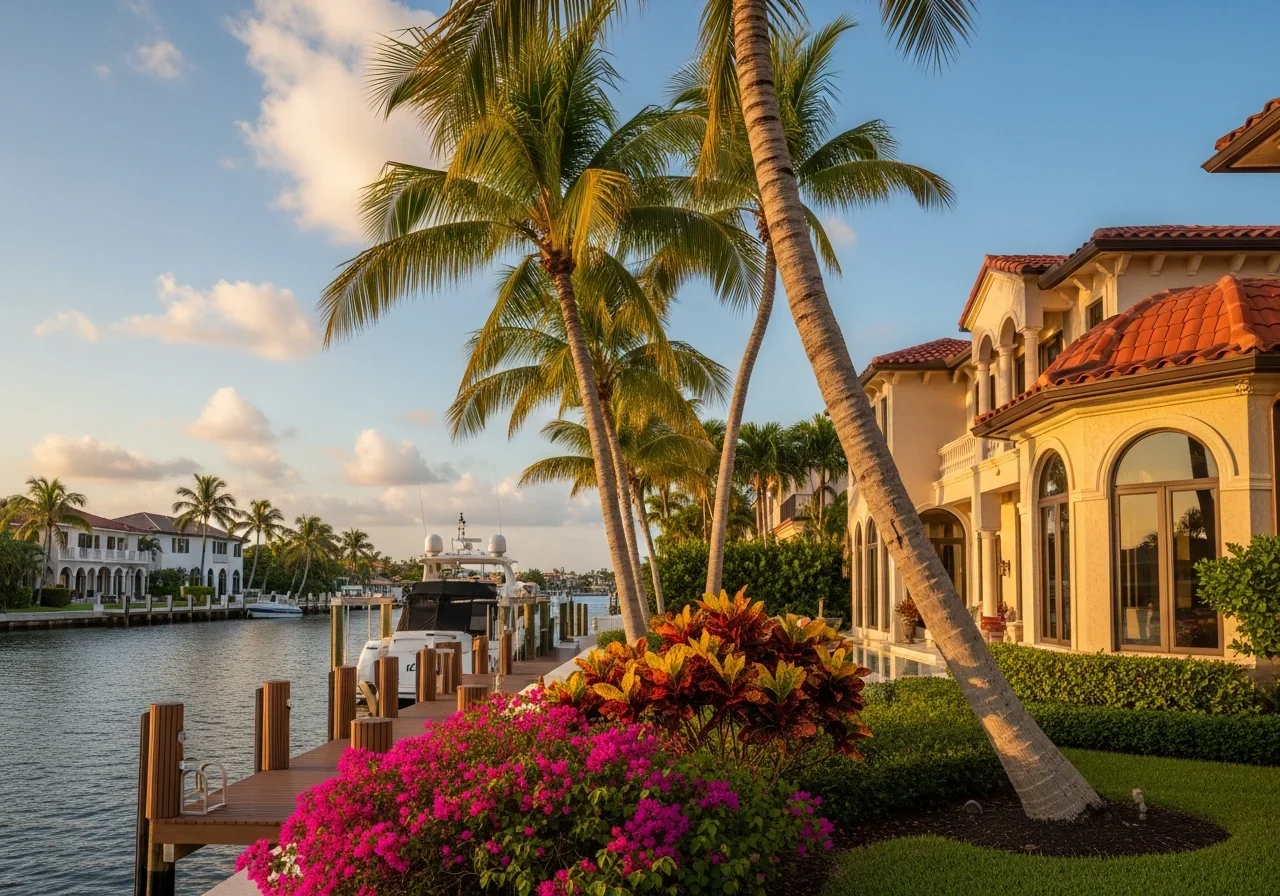
Broward County splits Fort Lauderdale into two evacuation tiers, and which tier you sit in changes the post-storm response window in ways most homeowners never consider until the road is closed. Plan A (Cat 1–2) covers everything east of the Intracoastal, mobile homes, and low-lying areas — including Las Olas Isles, Harbor Beach, Seven Isles, Nurmi Isles, Idlewyld, and the Fort Lauderdale Beach corridor. Plan B (Cat 3+) adds everything east of US 1 (Federal Highway) — Victoria Park, Coral Ridge, parts of Flagler Village. The practical consequence: in any meaningful storm event, Zone A homes are inaccessible for 24 to 48 hours after re-entry restrictions lift, and Zone B is often delayed almost as long. That window is the same window the mold colony is using to establish on saturated drywall. The math is not subtle — restoration that does not start until day three is no longer mitigation, it is reconstruction.
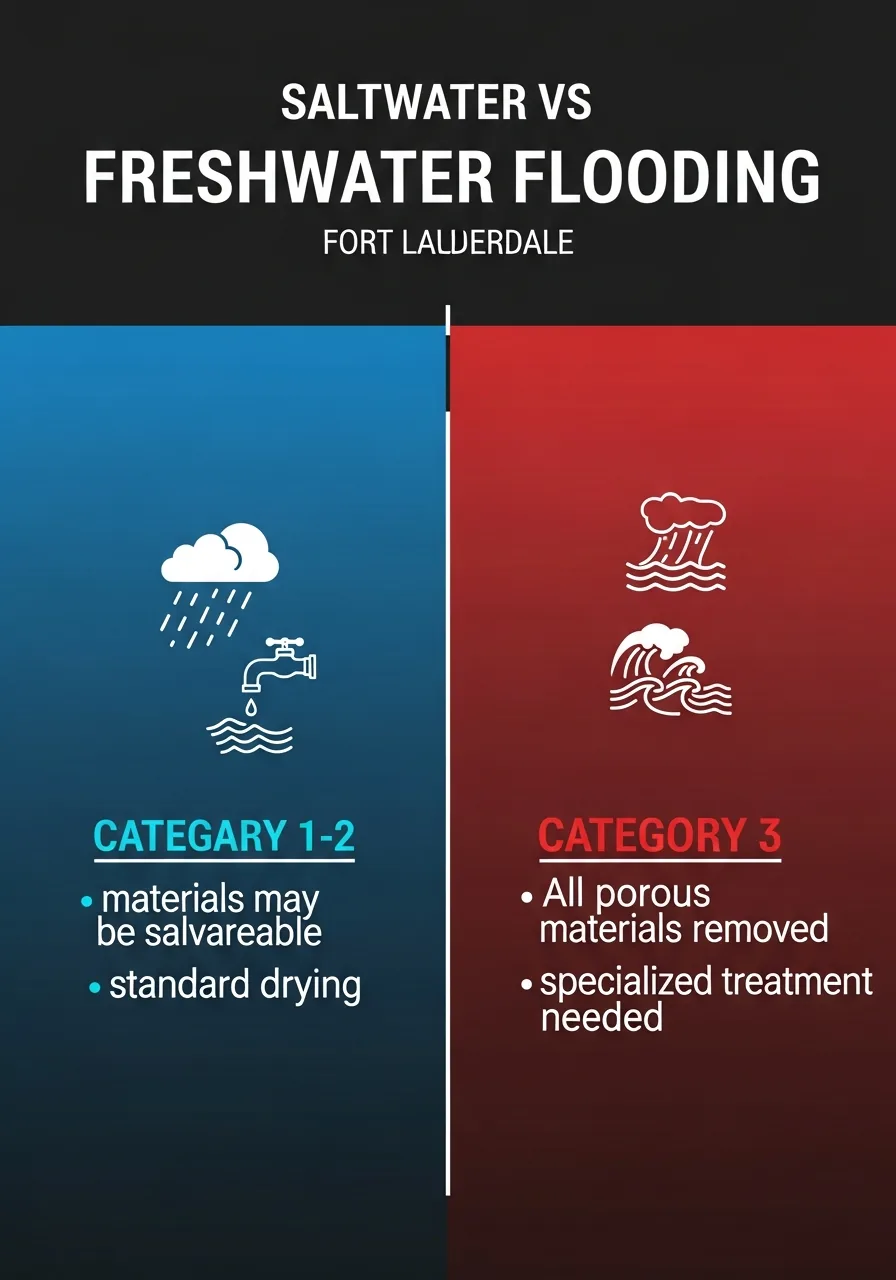
Saltwater vs. Freshwater: Category 3 Protocol in Coastal Florida
This is the distinction that changes the remediation scope more than any other single factor. IICRC S500 classifies water losses into three categories based on contamination level. Category 1 is clean water from a supply line or a sanitary fixture. Category 2 is grey water with some level of contamination — a washing machine overflow, a dishwasher discharge. Category 3 is black water — sewage, floodwater, storm surge, or any water that has been in contact with unsanitary sources or that has the potential to carry harmful contaminants. When seawater enters a Fort Lauderdale home through canal overflow or storm surge, it is automatically Category 3 under IICRC protocol. That designation triggers a dramatically more aggressive remediation scope: affected drywall, cabinetry, insulation, and flooring are typically removed rather than dried, antimicrobial treatment is required, and any corroded metal components (HVAC coils, electrical, fasteners) must be addressed as well.
Saltwater intrusion (Category 3)
- Storm surge or canal overflow east of the Intracoastal — automatically Category 3 under IICRC S500
- Drywall, cabinetry, insulation, and flooring removed to clear levels — drying-in-place is not on the table
- Antimicrobial treatment required on every affected substrate before reconstruction begins
- HVAC coils, electrical, fasteners, and any structural metal must be inspected for chloride corrosion
- NFIP or private flood policy is what pays — standard HO-3 will not cover one dollar of it
- Reconstruction to HVHZ Code if east of the CCCL — typical scope runs 15 to 25 percent above non-coastal pricing
Freshwater intrusion (Category 1 or 2)
- Burst supply line, appliance failure, slab leak, HVAC condensate overflow — sudden and accidental
- Drying-in-place is the default scope when professional extraction starts inside the 24-hour window
- Spot antimicrobial treatment instead of full removal — drywall and cabinetry typically saved
- HVAC inspection limited to condensate and air handler — no chloride corrosion concern
- Standard Florida HO-3 typically covers it — sub-limits and mold caps still apply
- Repair scope tracks Xactimate regional pricing — no HVHZ overlay unless original construction is east of CCCL
The First 24 Hours in a Fort Lauderdale Water Event
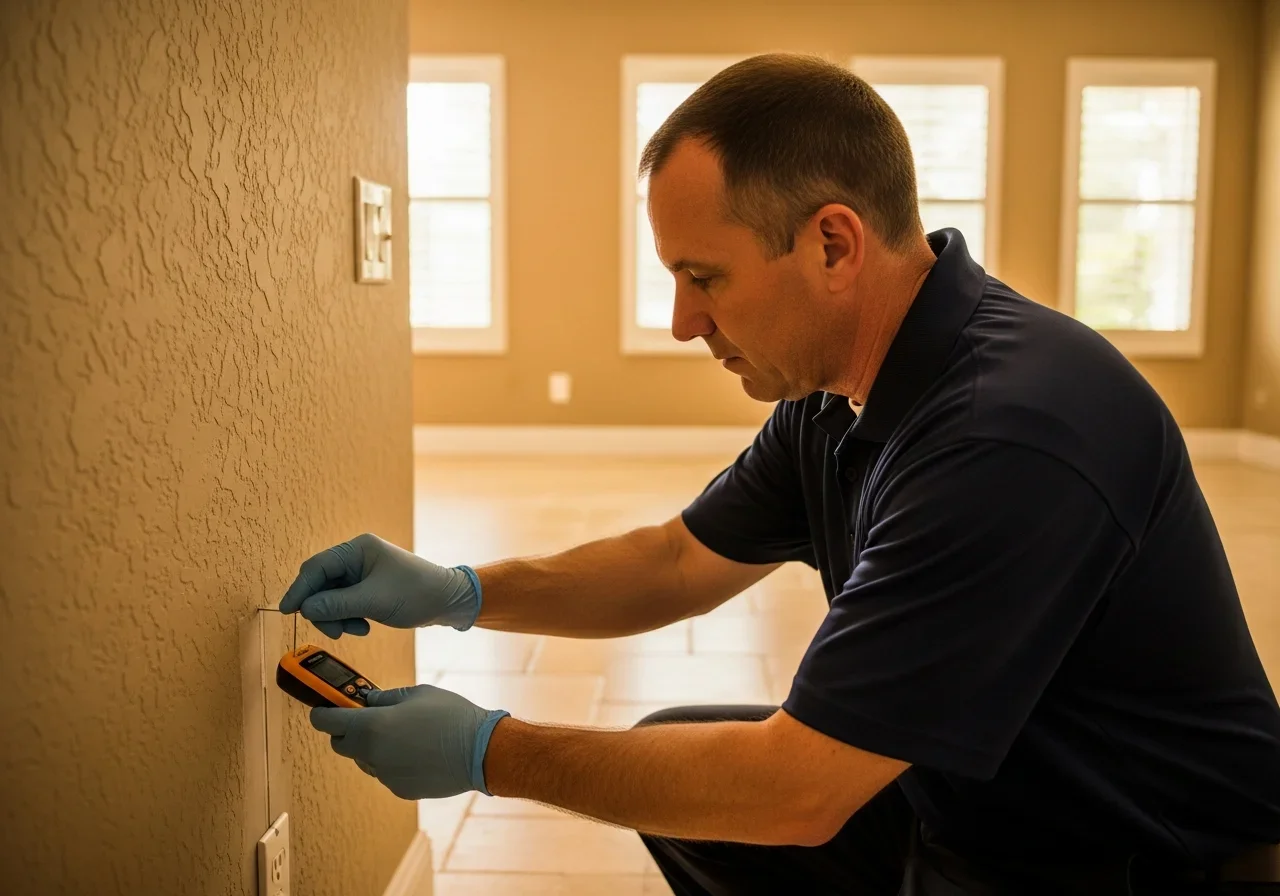
Response time in Fort Lauderdale is measured against the humidity-compressed mold window, not against a national average. A homeowner who gets professional water extraction, commercial dehumidification, and moisture monitoring started within the first 24 hours has a realistic path to drying the structure in place. A homeowner who waits 72 hours is almost always looking at drywall demo, insulation removal, cabinet base removal, and a full antimicrobial treatment scope instead. The financial difference between those two outcomes is usually five to ten times.
- If standing water contacts any outlet, appliance cord, or extension cord, shut off power to the affected zone at the breaker panel before you enter the area
- Call a DBPR-licensed water damage and mold remediation company — verify the license at myfloridalicense.com before they arrive
- Photograph and video every affected room, wall, baseboard, and piece of standing water before you move anything. Florida adjusters scrutinize documentation more than almost any other state
- If you are in a canal-adjacent neighborhood (Las Olas Isles, Seven Isles, Nurmi Isles, Idlewyld, Harbor Beach) and the water is from outside, treat it as Category 3 until proven otherwise
- Do not run your HVAC system to dry the space — it spreads moisture and potential contaminants through every room in the house and accelerates mold in unaffected zones
- If you live in a condo or HOA community — which is most of Fort Lauderdale — notify your association in writing immediately. Condo restoration involves both the unit owner policy and the HOA master policy on separate claim tracks
- Open a claim with your homeowners insurance carrier. Fla. Stat. § 627.70132 gives you 1 year from the date of loss to file a new claim and 18 months for supplemental claims. These deadlines are strict
- If flood water entered from outside, open a separate flood insurance claim — standard HO policies do not cover flood in Florida, and the NFIP or private flood policy is what applies
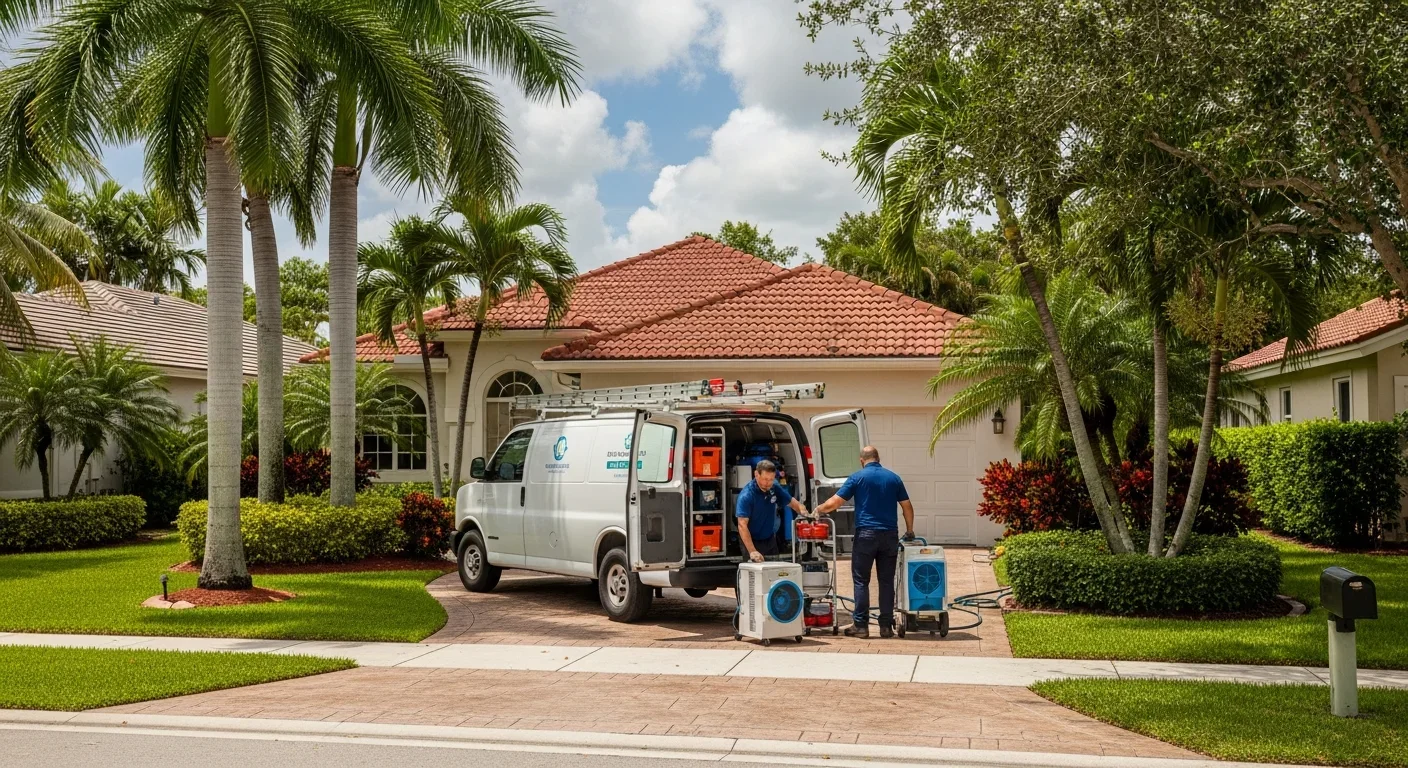
Palm Build's first-24-hours response process
What a homeowner can do in the first 60 minutes and what a professional crew does in the first 24 hours are different jobs. The sequence below is the IICRC-compliant scope every Palm Build Fort Lauderdale dispatch runs, in the order it actually happens on site.
- 1
Hour 0–1 — Dispatch and safety stabilization
Call answered 24/7 at the Florida dispatch line. Crew lead arrives, confirms the breaker panel is locked out for any zone in standing water, identifies any electrical, structural, or biohazard risk, and establishes a single secure entry path to the affected area. Photo and video documentation begins before any item is moved.
- 2
Hour 1–4 — IICRC categorization and source isolation
Water source identified and shut off (supply line, appliance, slab leak, canal, roof). Water classified Category 1, 2, or 3 under IICRC S500. Class 1 through 4 designation determined based on the volume of wet material and porosity. Initial moisture readings logged on drywall, baseboards, framing, slab, and any cabinetry. The category and class drive everything that comes next.
- 3
Hour 1–6 — Commercial extraction
Truck-mounted vacuum extraction on hard floors. Submersible pumps where standing water exceeds 2 inches. Wet-vac extraction in confined spaces and behind cabinetry. Carpet and pad lifted and assessed for restoration vs. removal. The goal of this window is to get standing water out before it migrates further into the slab and wall assemblies.
- 4
Hour 4–24 — Drying chamber setup and psychrometric monitoring
Air movers and LGR or desiccant dehumidifiers placed at calculated CFM and grain-depression targets per IICRC S500. Containment plastic installed where required. Initial relative humidity, dew point, and material moisture content logged. The drying chamber runs continuously — 24 hours a day — with daily moisture readings recorded against drying targets.
- 5
Hour 12–24 — Insurance documentation and DBPR scope
Written scope of work prepared in Xactimate format for the carrier. Photos and video catalogued by room. Moisture log started. If a mold remediation scope is required, the project hands off to the DBPR-licensed mold remediator under Chapter 468 Part XVI — and the assessment is performed by a separate licensed assessor per the Florida conflict-of-interest rule.
- 6
Day 2–5 — Monitoring, drying to target, and clearance
Daily moisture readings continue until structural materials hit IICRC drying goals (typically 12–16 percent moisture content for wood, dry standard for drywall and concrete). Equipment removed only after targets are confirmed and documented. Independent licensed mold assessor performs post-remediation verification and clearance testing where mold scope was triggered — not the same firm that performed the work.
"Conditions favorable to mold growth on wet structural materials may be present within 24 to 48 hours of a water intrusion event. The best defense against secondary microbial damage is the rapid initiation of professional drying and the verification of moisture content below growth thresholds."
Florida Mold Licensing: Not Optional, Not Symbolic
Florida is one of the few states that actually licenses mold assessors and mold remediators at the state level. Under Florida Statutes Chapter 468 Part XVI, administered by the Department of Business and Professional Regulation, any person performing mold assessment or mold remediation must hold a valid state license. The requirements include completion of approved training, passing a state-approved national examination, fingerprinting and a criminal background check, required insurance coverage, and a two-year renewal cycle. Full enforcement has been in place since July 1, 2011, and violations can trigger administrative fines up to 5,000 dollars per offense, license suspension, or revocation. For homeowners, the practical implication is simple: verify the license before you hire. The DBPR lookup at myfloridalicense.com takes less than two minutes and is the only credential that actually matters in Florida.
Fort Lauderdale Construction Hazards: Chinese Drywall, Polybutylene, and the HVHZ Code
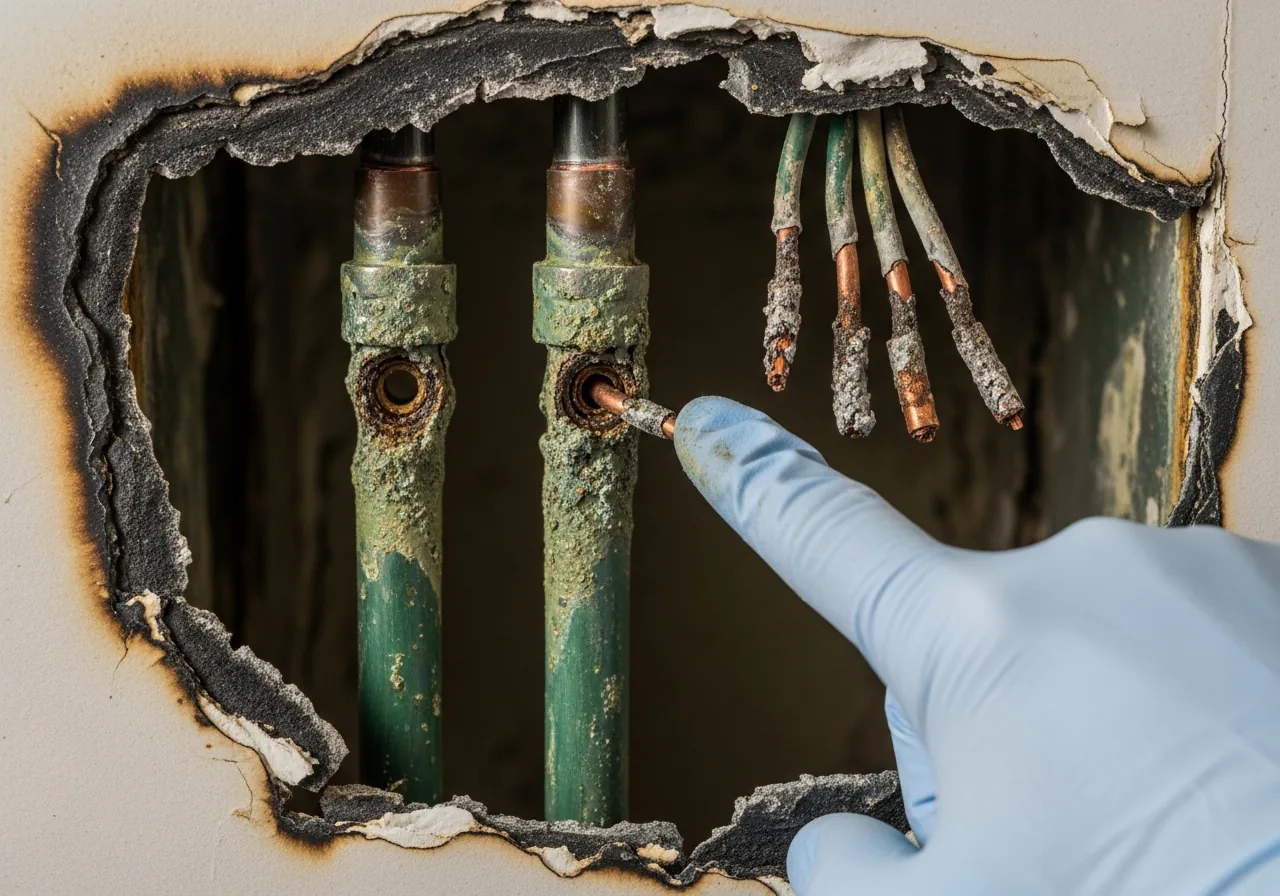
Beyond rainfall and storm surge, Fort Lauderdale homes carry three construction-era hazards that drive water and mold call volume year-round: defective Chinese drywall in 2001–2008 builds and renovations, polybutylene plumbing in 1978–1995 homes, and the High Velocity Hurricane Zone (HVHZ) code overlay that governs every reconstruction project east of US 1. None of the three is hypothetical. All three change the cost, the scope, and sometimes the outcome of a water claim — and they almost never appear on the same line item in an adjuster's first scope.
Polybutylene plumbing (1978–1995): the slow-failure plumbing system
Polybutylene is a polymer plumbing material installed in millions of South Florida homes between 1978 and 1995. The material reacts with chlorinated municipal water and degrades from the inside out. The failure pattern is not the slow drip homeowners associate with old copper — it is sudden, catastrophic fitting failure that floods a slab home overnight. Imperial Point, Coral Ridge, Victoria Park, and Lauderdale Manors are the Fort Lauderdale neighborhoods where the bulk of 1978–1995 polybutylene stock still exists. The class action settlement that funded re-piping for decades has been closed since 2009, which means anyone discovering polybutylene in their Fort Lauderdale home today is funding the re-pipe themselves — and homeowners who learn about it from a 3 a.m. burst fitting are simultaneously funding the water damage scope and the re-pipe.
The 2023 Florida Insurance Environment: What Changed and Why It Matters
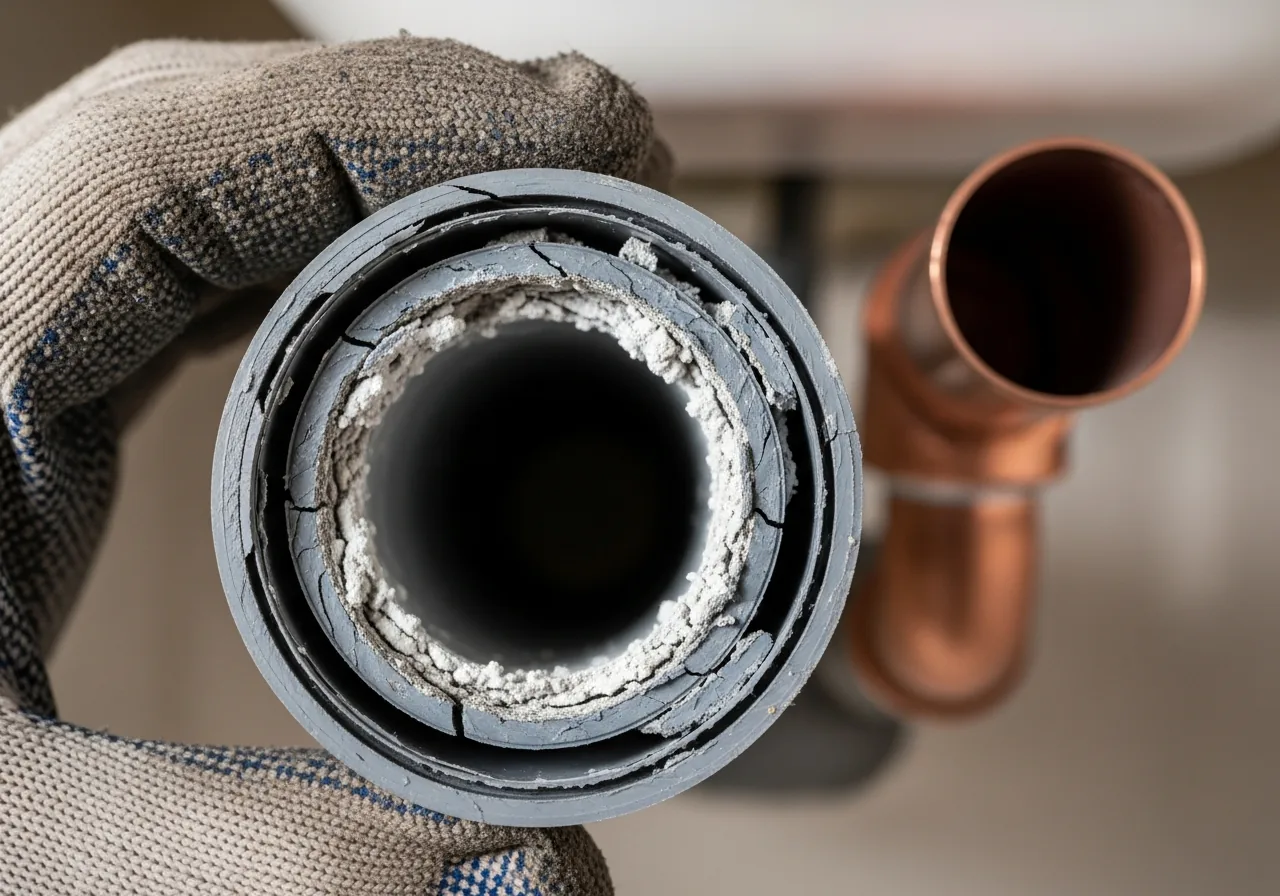
Florida's homeowners insurance market has been through the most turbulent five years in state history. Multiple private carriers have exited or restricted underwriting. Citizens Property Insurance — the state's insurer of last resort — has averaged roughly 27,898 dollars per year for 300,000 dollars of dwelling coverage in Fort Lauderdale, and while Citizens' active policy count has dropped as the market slowly stabilizes, premiums for private carriers still run 4,000 to 17,000 dollars per year depending on location, home age, and coverage. Two legal changes are especially important for water damage and mold claims. First, Fla. Stat. § 627.70132 tightened claim deadlines — new claims must be filed within 1 year of the date of loss, supplemental claims within 18 months, and reopened claims within 1 year. These are strict notice requirements; miss them and recovery is barred regardless of claim merit. Second, Florida's Assignment of Benefits reform, effective January 1, 2023, prohibits policyholders from assigning post-loss benefits of a residential property insurance contract to a restoration company. The practical effect is that homeowners now manage the claim themselves — restoration companies bill the homeowner, and the homeowner is reimbursed by the carrier. Many Fort Lauderdale homeowners are unprepared for the administrative load this creates.
Decoding the credentials: a Fort Lauderdale homeowner's glossary
- DBPR
- Florida Department of Business and Professional Regulation. Issues mold assessor and mold remediator licenses under Chapter 468 Part XVI. Verify any Fort Lauderdale mold company at myfloridalicense.com before you hire.
- HVHZ
- High Velocity Hurricane Zone. Florida Building Code §1626 overlay covering Broward and Miami-Dade counties — the strictest wind-loading code in the United States. Adds typically 15 to 25 percent to reconstruction cost compared to non-HVHZ Florida.
- AOB reform
- Florida's Assignment of Benefits reform, effective January 1, 2023. Prohibits policyholders from assigning post-loss benefits of a residential property insurance contract to a restoration company. Homeowners now manage the claim directly and are reimbursed by the carrier.
- CBS
- Concrete Block Structure. The dominant Fort Lauderdale construction method — concrete masonry units with stucco exterior on a slab foundation. Does not rot like wood framing, but wicks moisture through block, hairline stucco cracks, and slab capillary action.
- Slab-on-grade
- The foundation type used in virtually every Fort Lauderdale home. No basement, no crawl space. Water on a slab has no downward escape path — it migrates laterally through wall assemblies and wicks upward into drywall by capillary action.
- Polybutylene (PB)
- Polymer plumbing material installed in 1978–1995 South Florida homes. Degrades from chlorinated municipal water and fails catastrophically at the fittings. Imperial Point, Coral Ridge, Victoria Park, and Lauderdale Manors carry the heaviest legacy stock; the class action settlement closed in 2009.
- Chinese drywall (CDW)
- Defective imported drywall installed in 2001–2008 South Florida builds and renovations. Emits hydrogen sulfide gas that corrodes copper plumbing, A/C coils, and electrical components. Florida accounted for over 60 percent of U.S. CPSC complaints. Remediation requires full wall demo, not surface treatment.
- Coastal Construction Control Line (CCCL)
- A Florida-defined line east of which a stricter overlay of the Florida Building Code applies — additional anchorage, foundation, and design wave-loading requirements. Triggers reconstruction cost increases above the standard HVHZ overlay.
- NFIP
- National Flood Insurance Program — the federal flood insurance program. Mandatory in Zone AE, AO, AH, and VE for any property with a federally backed mortgage. Standard Florida HO-3 does not cover flood, no matter how the water arrived.
- IICRC S500 / S520
- The industry-standard protocols for professional water damage restoration (S500) and professional mold remediation (S520). Define water categories, drying classes, containment, and clearance testing — and are the specifications every reputable Fort Lauderdale restorer follows.
- Hurricane deductible (FL)
- A separate deductible on Florida homeowners policies, calculated as 2 to 5 percent of dwelling coverage rather than a flat dollar amount. On a $617K Fort Lauderdale home, that is roughly $12,340 to $30,850 out-of-pocket before any named-storm coverage activates.
- 40-year recertification
- Broward County requirement that any structure 40 years or older pass a structural and electrical recertification, repeated every 10 years thereafter. Post-Surfside reform added milestone inspections at 25 and 40 years for condos over 3 stories. Captures roughly 62 percent of Fort Lauderdale's housing stock.
Fort Lauderdale in pictures: canals, construction hazards, and what restoration looks like
Frequently Asked Questions: Mold & Water Damage in Fort Lauderdale, FL
How fast does mold grow in a Fort Lauderdale home after water damage? +
Does homeowners insurance cover water damage in Fort Lauderdale? +
What is the Florida 1-year claim deadline and when does it start? +
Do mold remediation companies in Fort Lauderdale need a license? +
Which Fort Lauderdale neighborhoods are at the highest mold risk? +
What did the April 2023 'rain bomb' mean for Fort Lauderdale homes? +
Can I handle mold remediation myself in my Fort Lauderdale home? +
What is HVAC condensation mold and why is it Fort Lauderdale's #1 mold source? +
What is Chinese drywall and does my Fort Lauderdale home have it? +
What does Florida's hurricane deductible actually cost on a Fort Lauderdale home? +
Which Fort Lauderdale neighborhoods are in hurricane evacuation Zone A or Zone B? +
Mold Remediation in Fort Lauderdale, FL
Palm Build's DBPR-licensed mold remediation services for Fort Lauderdale and Broward County, following IICRC S520 protocol.
Water Restoration in Fort Lauderdale, FL
24/7 Fort Lauderdale water damage extraction, structural drying, and dehumidification for canal-front, slab, and condo properties.
Storm, Wind & Hurricane Damage in Fort Lauderdale
Storm surge and hurricane restoration for Broward County homeowners and HOAs.
Post-Storm Mold: The 48-Hour Window
Why mold starts establishing 48 hours after water recedes and the biology behind the window.
Humidity and Mold Risk in FL, NC, and SC
How Florida's humidity floor compresses the mold window across the Southeast.
Florida Mold Problems: A Homeowner Guide
The full Florida mold picture — what drives it and what stops it.
Wilton Manors Water Damage & Island City Flooding
Neighboring Wilton Manors mold and flood risk — paired with Fort Lauderdale's canal corridor.
Charlotte NC Emergency Water Damage Neighborhood Guide
Sibling guide covering Charlotte's creek corridors, Mountain Island Lake dam-release flooding, and the Piedmont mold window.
Fort Mill SC Water Damage and Crawl Space Guide
Sibling guide covering Fort Mill's crawl space mold pattern, Catawba River flood corridor, and Carolinas claim playbook.
Florida Homeowners Insurance Crisis: Water Damage Claims 2026
How AOB reform, the 1-year deadline, and Citizens premiums are reshaping the Florida claim playbook.
Water damage or mold in your Fort Lauderdale home?
Palm Build holds Florida DBPR licensing and IICRC certification, and we respond to Fort Lauderdale, Broward County, and the South Florida coast 24/7. Every job is documented to IICRC standards so your mold remediation claim is supported from day one. Call our Florida team now.
Found this helpful? Send it to someone who needs it.