Key takeaways
- Charlotte is the 6th fastest-growing U.S. city. Population is near 977,740 and climbing — tens of thousands of new homeowners each year who have never dealt with Piedmont clay, vented crawl spaces, or the creek corridors that cut through the city.
- Hurricane Helene flooded 89 homes along Mountain Island Lake in September 2024. Four were swept completely off their foundations. Duke Energy's upstream dam releases on the Catawba-Wateree chain are a risk factor most Charlotte buyers never consider.
- Charlotte-Mecklenburg Storm Water Services holds FEMA Community Rating System Class 2 — one of the highest ratings in the Southeast. That translates into up to a 40% discount on NFIP flood insurance inside the SFHA and a 10% discount outside it.
- Roughly one-third of all federal flood disaster claims come from FEMA Zone X — the moderate-to-minimal risk zone where most of Charlotte sits. Standard homeowners insurance does not cover that water.
- NC homeowners insurance rates rose 9.3% in 2025 and another 9.2% in 2026 — cumulative 44.4% since 2020. Documentation quality on water damage claims has never mattered more.
- Different Charlotte neighborhoods fail in different ways. A restoration company that treats a Myers Park Briar Creek flood the same as a Ballantyne slab leak will make expensive mistakes in both directions.
Charlotte does not have one water damage problem. It has roughly seven, and the one that applies to you depends almost entirely on what neighborhood you live in. A Dilworth craftsman bungalow from 1925 on a vented crawl space fails very differently from a 2008 Ballantyne slab home on engineered wood subfloor, which fails very differently again from a Mountain Island Lake property sitting 40 feet below the level Duke Energy can legally release from Lake Wylie. The standard national water damage article you find on page one of Google treats all of these identically. That is one of the reasons so many Charlotte homeowners end up with a mold problem on top of their original water problem. This guide walks through what actually happens in each major Charlotte neighborhood during the first 24 hours of a water damage event, which creek corridors carry the highest flood exposure, how the January 2025 NC Rate Bureau settlement is reshaping claims, and the specific actions that separate a clean drying job from a gut renovation.
Charlotte population
977,740
6th fastest-growing U.S. city — 23,000+ new residents in a single year
CRS flood discount
Up to 40%
Charlotte holds FEMA Community Rating System Class 2 — one of the Southeast's highest
Annual precipitation
43.57 in
August is the wettest month at 4.35 inches — peak flash flood season
NC rate increase
+44.4%
Cumulative homeowners insurance increase since 2020 — documentation matters more than ever
Why Water Damage in Charlotte Is Not One Thing
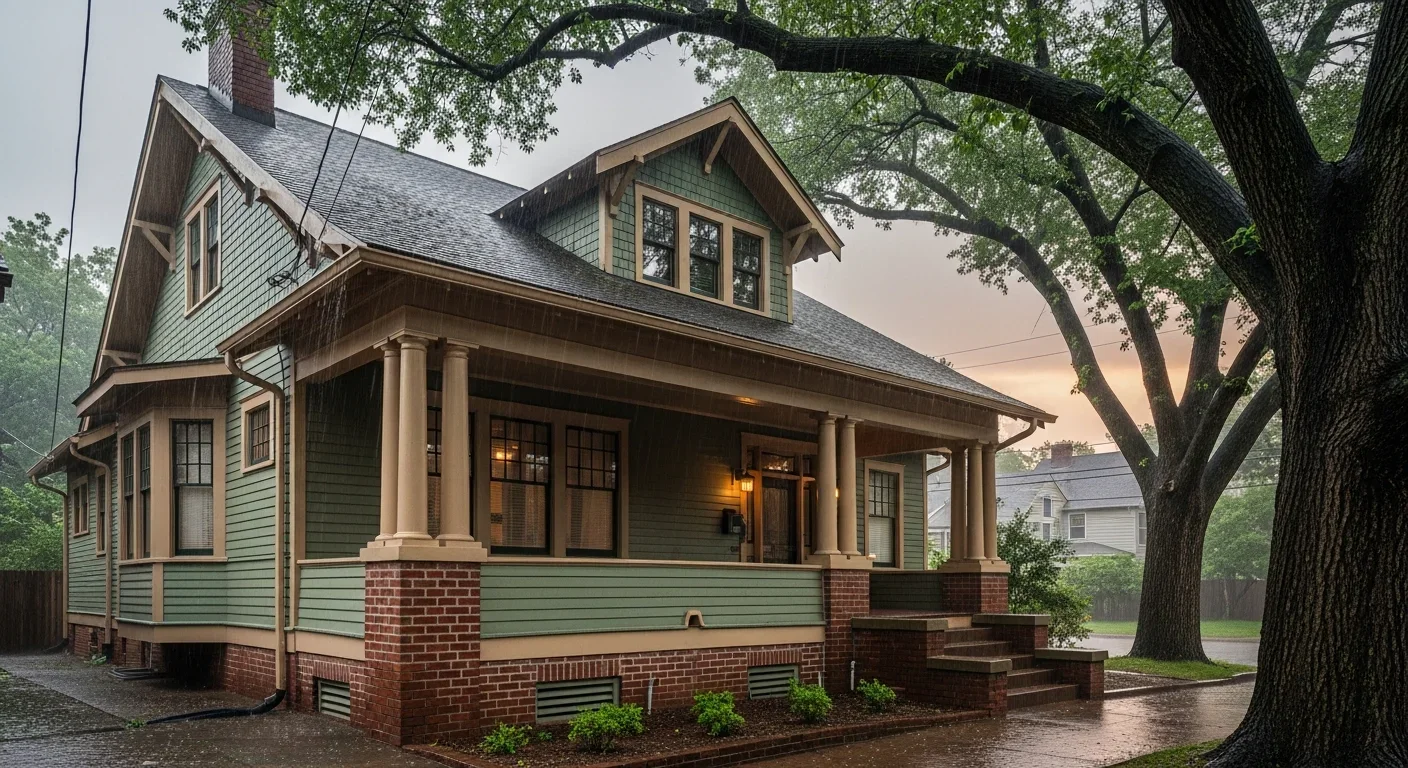
Charlotte's housing stock spans almost a full century of construction, and the failure modes track the decade almost perfectly. Pre-1940 homes in Fourth Ward and the older sections of Dilworth and Myers Park sit on crawl spaces with original galvanized plumbing and lead-soldered copper joints that have been patched and re-patched over four generations. The 1950s–1970s brick ranch — Charlotte's most distinctive vernacular — is a one-story, roughly 1,200 square foot home on a vented crawl space over Piedmont red clay, which is the single highest-risk category for chronic crawl space mold in the entire city. The 1990–2005 Ballantyne and Steele Creek subdivisions shifted to slab foundations and engineered wood subfloors that are fast and efficient to build but unforgiving once water gets under them. And the 2005-and-newer craftsman farmhouses across Mint Hill, Weddington, and Huntersville are close enough to new construction that the warranty periods are still active — which means any water intrusion is a multi-party claim conversation before anyone even starts drying.

Climate is the common thread. Charlotte's humid subtropical climate averages 43.57 inches of rain per year, and the wettest month by volume is August at 4.35 inches — squarely inside tropical storm remnant season. Summer humidity regularly sits between 70 and 90 percent. Together those two numbers mean that wet structural materials reach the mold-growth threshold faster in Charlotte than they do in Phoenix or Denver, and a homeowner who tries to dry a flooded laundry room over a long weekend with household fans is almost always returning to a mold remediation scope on Monday. The 24 to 48 hour window everyone cites in water damage guides is the upper bound in Charlotte, not the expected one.
September 22, 1989
Hurricane Hugo — 87 mph gusts hit inland Charlotte
Hugo made landfall near Charleston as a Category 4 and tracked inland through Mecklenburg overnight. Wind gusts of 87 mph were recorded in Charlotte — at the time, the strongest non-coastal hurricane winds ever measured in the United States. Roof damage, downed oak canopy through Myers Park and Plaza Midwood, and multi-week power outages set the modern Charlotte storm benchmark. Many of the 1950s–70s brick ranches still standing today were re-roofed in the year that followed.
September 14, 2018
Hurricane Florence — multi-day Piedmont rainfall
Florence stalled over the Carolinas as a slow-moving tropical system, dropping multi-day rainfall across the Piedmont. Briar Creek, Little Sugar Creek, and McAlpine Creek all reached action stage. The event reshaped how Charlotte-Mecklenburg Storm Water Services approached creek-corridor mapping, with FEMA FIRM panel updates following in the years afterward.
August 5–9, 2024
Tropical Storm Debby — Little Sugar Creek flash floods
Debby's outer bands brought several inches of rain to Charlotte over multiple days. Flash flood warnings were issued for Mecklenburg County. Little Sugar Creek flooded near Park Road and Freedom Park; properties along the greenway corridor saw their first water intrusion in years. Debby was the dress rehearsal for what came seven weeks later.
September 27, 2024
Hurricane Helene — 89 Mountain Island Lake homes flooded
Helene moved through the Charlotte area on September 27, 2024, with wind gusts of 57 knots (66 mph) recorded at Charlotte Douglas International Airport. Duke Energy's Catawba-Wateree dam system released floodwater downstream, and 89 homes in Mecklenburg County along the Mountain Island Lake and Lake Wylie corridor flooded. Four were swept completely off their foundations. Statewide NC damage totaled $59.6 billion — the deadliest Atlantic hurricane since Maria in 2017. Many affected homeowners discovered their standard policies did not cover dam-release flooding.
March 15, 2026
EF-0 tornado — 1.5 miles through central Charlotte
The National Weather Service confirmed an EF-0 tornado tracked 1.5 miles through central Charlotte on March 15, 2026, including a large tree that fell on a home near Freedom Park in South Charlotte. Local damage in Sedgefield and the Park Road corridor — a reminder that severe weather risk in Charlotte is not seasonal but year-round.
Charlotte's Water Damage Risk by Neighborhood
The list below is not exhaustive — Charlotte has more than 200 recognized neighborhoods — but these are the areas where our water damage call volume concentrates and where the failure patterns are most distinct. If your neighborhood is not listed, the closest match by construction era and foundation type will usually tell you what to expect.
| Neighborhood | Built | Foundation | Primary Risk Pattern |
|---|---|---|---|
| Myers Park / Eastover | 1911–1960s | Crawl space | Briar Creek flood exposure (19.1% of properties), aging galvanized plumbing, high-value contents — 12.9-foot Briar Creek record in 2024 |
| Dilworth | 1890s–1930s | Crawl space | Little Sugar Creek flooding at 7th Street and East Boulevard, narrow lots mean lateral water migration between properties, infill construction drainage disruption |
| Plaza Midwood | 1903–1950s | Crawl space | Briar Creek on the eastern edge, original cast-iron and galvanized plumbing, winter freeze-thaw burst pipe risk |
| SouthPark / Cotswold | 1970s–1990s | Slab and crawl space mix | Inadequate storm drainage backing up during heavy rain; high-value homes in Morrocroft Estates and Challis Farm create complex claims; aging mid-century AC condensate failures |
| Ballantyne / Piper Glen | 1990–2015 | Slab | Engineered wood subfloor moisture intrusion, polybutylene pipe legacy issues, stormwater runoff strain from growth |
| Steele Creek | 1990s–present | Slab and mobile home mix | June 2025 flash flooding forced mobile home park rescues; Catawba tributary exposure; downstream from Duke Energy releases |
| Mountain Island Lake / Riverside Dr | Mixed | Mixed (some basements) | Highest flood risk in Mecklenburg — 89 homes flooded during Hurricane Helene in 2024, four swept off foundations; basement flooding from dam releases |
| NoDa (North Davidson) | Historic mill conversions | Slab over original mill concrete | Century-old masonry water infiltration, shared-wall loft propagation, specialized historic restoration required |
| Fourth Ward | 1800s | Crawl space / basement | Some of Charlotte's oldest residential structures; original plumbing and storm drainage connections fail silently |
| Huntersville / Cornelius / Davidson | 1990s–2010s | Slab and crawl space mix | Lake Norman waterfront exposure, rapid suburban growth has outpaced site drainage; storm-surge risk on the lake |
Charlotte neighborhoods by primary water damage and mold risk
Mountain Island Lake deserves special attention because it is the Charlotte water damage case study that most homeowners outside that corridor have never heard. When Hurricane Helene moved through the Southeast in late September 2024, Duke Energy's Catawba-Wateree dam system had to release floodwater downstream. Mountain Island Lake has a small storage capacity compared to Lake Norman upstream, so the release cascaded into the downstream residential corridor along Riverside Drive, Lake Drive, and Riverhaven Drive. Eighty-nine homes in Mecklenburg County along that corridor flooded. Four were swept completely off their foundations. Statewide, Helene caused $59.6 billion in damage in North Carolina, and the dam-release mechanism by which it affected Charlotte homeowners is a risk that never appears in a standard FEMA flood zone lookup.
Charlotte's gated and HOA-governed communities
A meaningful portion of Charlotte's premium inventory sits inside gated or strongly HOA-governed communities, and the restoration mechanics there are different from the start. Master policy versus HO-6 split is the central question on every shared-wall claim. Board approval letters are routinely required before any exterior or shared-wall work begins, and Mecklenburg LUESA will not always issue building permits for covered restoration scope until that letter is on file.
- **Morrocroft Estates** (SouthPark) — 24-hour guard-gated, $800K–$13M custom estates bordered by six-foot brick walls; restoration here regularly runs into matched-finish requirements that double standard scope
- **Challis Farm** (SouthPark) — private lake, Carmel Country Club access, $700K–$3M; lake-adjacent properties carry surface-water exposure that standard HO-3 will not pay
- **Heydon Hall** (South Charlotte) — built 2002–2023, $800K–$3M; 3,000–8,000 sq ft estates with high-end finishes and Chubb-tier underwriting
- **Seven Eagles** (South Charlotte) — $2M–$8M estates; the highest per-claim restoration costs in the Charlotte market
- **The Palisades** (Lake Wylie corridor) — $300K–$3M; downstream from Mountain Island Lake on the same Catawba-Wateree dam system
- **Piper Glen** (Ballantyne area) — $500K–$3M; aging-plumbing window meets premium finish work
- **Whitehall** (west Charlotte) — $1M–$2M
- **Park South Station** (SouthPark) — $500K–$1M townhomes and condos with shared-wall water propagation risk
- **Cresswind** (active adult, south Charlotte) — $300K–$1M; insurance advocacy on slab leaks matters most where homeowners live on a single floor
The First 24 Hours: What To Do When Water Enters Your Charlotte Home
The first hour decides most of what happens in the next three weeks. Not because of heroic intervention, but because of three very specific failures that homeowners make in the first hour and cannot undo later. First, they wait. Second, they move contents incorrectly and break the chain of evidence for their insurance claim. Third, they run their HVAC system to dry the space, which pushes moisture and potentially contaminated air into every room of the house that is currently unaffected. All three of these are recoverable individually. All three together will usually turn a manageable water damage job into a mold remediation project that costs four to six times more.
- If standing water is in contact with any electrical outlet, appliance cord, or extension cord, shut off power to the affected zone at the breaker panel before you enter the area
- Call a licensed North Carolina restoration company with IICRC certification — not a generic handyman or a company whose license is issued in another state
- Photograph and video every affected room, wall, ceiling stain, and piece of standing water before you move anything. Insurance claim outcomes track directly with the quality of pre-remediation documentation
- Shut off the HVAC zone serving the affected rooms — do not run your central air to dry the space
- Move valuable contents to a dry staging area, photographing what you move as you go
- If you live in a gated community — Morrocroft Estates, Challis Farm, Piper Glen, Heydon Hall, Seven Eagles, Whitehall, Park South Station — notify your HOA in writing as soon as possible. Most require notification before exterior or shared-wall restoration work begins
- Open a claim with your homeowners insurance carrier. Note the date, time, weather event, and apparent source of water entry. Confirm whether your policy has a sewer and drain backup endorsement
- If water entered from outside — creek overflow, surface runoff, or a Duke Energy release on the Catawba chain — notify your flood insurance carrier as a separate claim. These are two different policies with two different adjusters

"Mold growth on wet structural materials can occur within 24 to 48 hours under conditions favorable to growth. The timing of professional drying and the verification of moisture content below growth thresholds are the most important factors in preventing secondary microbial damage after a water intrusion event."
The Creek Corridors That Flood: Little Sugar, Briar, Steele, McAlpine
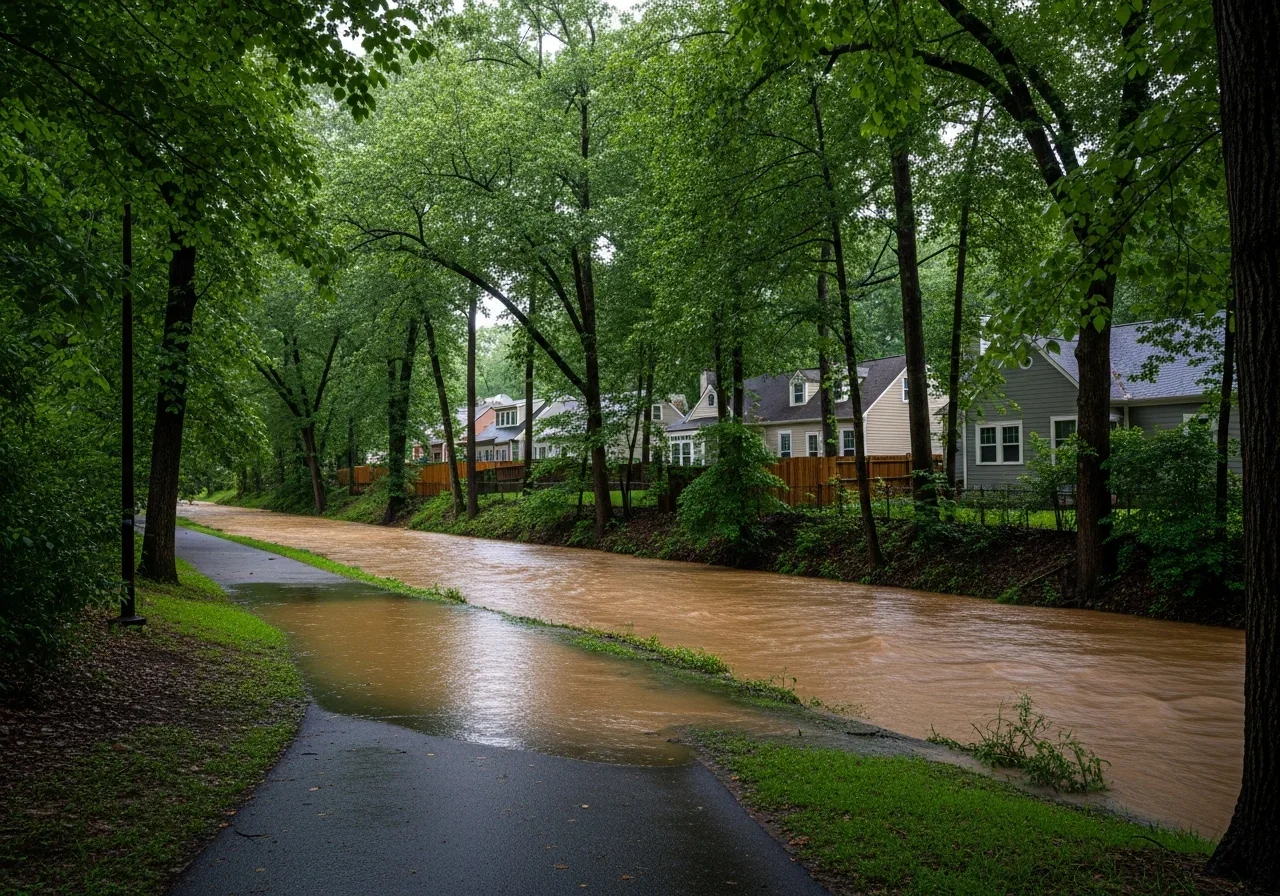
Charlotte's creek system is the single biggest driver of inland flood risk in the county. Mecklenburg has nearly 20,000 acres of regulated floodplain — roughly 5.8 percent of all county land — with more than 2,700 residential and commercial structures sitting inside the mapped flood hazard area. Since 1978, Mecklenburg has recorded 2,881 NFIP flood insurance claims totaling more than 60 million dollars, with 2008 alone accounting for 425 claims and 11.2 million in payouts. The creeks that cause this are all familiar: Little Sugar Creek cuts through Uptown, Dilworth, and Myers Park and has a documented flooding history near 7th Street and East Boulevard. Briar Creek runs through the Myers Park-Plaza Midwood greenway and hit an all-time record crest of 12.9 feet during an event Charlotte Stormwater has been modeling ever since. Steele Creek, McAlpine Creek, and Irwin Creek each carry their own flooding histories in the neighborhoods they touch.
Two kinds of water, two kinds of insurance, two totally different outcomes
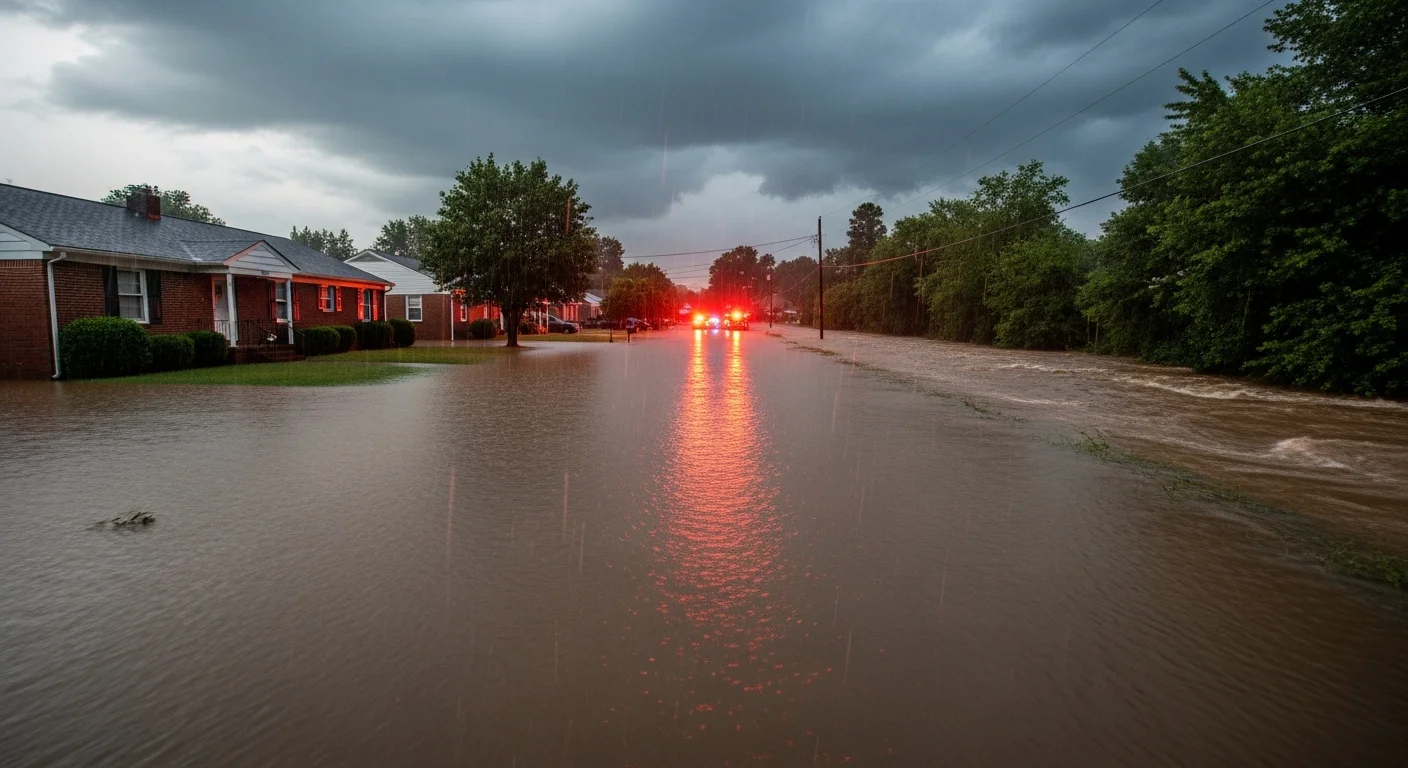
Creek overflow or surface runoff
- Classified as flood damage — not covered by standard NC homeowners insurance
- Requires a separate NFIP or private flood policy
- Charlotte's CRS Class 2 rating unlocks up to 40% discount on NFIP premiums in the SFHA
- Outside the SFHA, CRS still gives a 10% discount — worth pricing even if you are in Zone X
- Roughly one-third of all federal flood disaster claims come from Zone X — the zone most of Charlotte sits in
- Water is treated as potentially contaminated — full Category 3 protocol under IICRC S500
Burst pipe, appliance failure, HVAC overflow
- Classified as sudden and accidental water damage — typically covered by HO-3 homeowners
- Often a Category 1 or Category 2 loss under IICRC S500 — less aggressive remediation
- Sewer and drain backup is a separate endorsement — verify with your carrier before you need it
- Gradual leak claims are frequently denied — document immediately when you spot a stain
- Slab leaks in Ballantyne and Steele Creek sometimes include access excavation as a separate coverage question
Duke Energy's Catawba-Wateree Dam System and the Mountain Island Lake Risk
Charlotte's western flood risk is shaped less by FEMA flood maps than by Duke Energy's management of 11 reservoirs on the Catawba-Wateree chain, spanning over 225 river miles. When upstream rainfall saturates the system — as it did during Hurricane Helene in September 2024 — Duke must release floodwaters downstream through dam floodgates. Mountain Island Lake has a small storage capacity compared to Lake Norman immediately upstream, which creates a 'bathtub-into-teacup' dynamic: large inflows from Lake Norman instantly overwhelm Mountain Island Lake and release into Lake Wylie and the downstream Mecklenburg shoreline. Homeowners along Riverside Drive, Lake Drive, and Riverhaven Drive experienced this firsthand in 2024. This is a documented flood risk factor that does not appear on any standard FEMA FIRM panel.
The 2026 Insurance Reality for Charlotte Homeowners
North Carolina's January 2025 rate settlement fundamentally reshaped the claim environment. The NC Rate Bureau had requested a statewide 42.2 percent increase — it was rejected — and the Department of Insurance instead settled on 7.5 percent effective June 1, 2025 and another 7.5 percent effective June 1, 2026. Charlotte-specific numbers ran slightly higher: 9.3 percent in 2025 and 9.2 percent in 2026, tracking Charlotte's higher property values and heavier severe weather exposure. Cumulatively, NC homeowners insurance rates are up 44.4 percent since 2020. What this means for anyone facing a water damage claim in Charlotte right now is simple: carriers are scrutinizing claims harder, building material costs are running between 180 and 250 dollars per square foot, and the homeowners who arrive at an adjuster meeting with time-stamped photos, written moisture readings, and a professional scope consistently receive better outcomes than homeowners who describe damage from memory.
| Loss Type | Standard HO-3 | NFIP Flood | Notes |
|---|---|---|---|
| Burst supply line (washer, fridge, ice maker) | Covered | Not applicable | Classic sudden and accidental claim |
| HVAC condensate line overflow | Often covered | Not applicable | Some carriers exclude slow leaks — verify with your agent |
| Slab leak from pressurized line | Typically covered | Not applicable | Access and repair may be separate from water damage coverage |
| Briar Creek or Little Sugar Creek overflow | Not covered | Covered | Classic flood peril — NFIP or private flood policy required |
| Surface water from a heavy August thunderstorm | Not covered | Covered | Classified as flood even when no creek is nearby — common Zone X surprise |
| Sewer or drain backup | Not covered (base policy) | Not covered (base policy) | Requires an added endorsement on your HO policy — worth every dollar |
| Mold from a gradual leak | Often excluded or sub-limited to $5,000–$10,000 | Very limited | Document immediately — sub-limits vary widely between carriers |
| Mountain Island Lake basement flooding from a Duke Energy release | Not covered | Covered with NFIP | Riverside Drive corridor — flood insurance is effectively mandatory regardless of FEMA zone |
| Code upgrades during repair (older Dilworth and Plaza Midwood homes) | Excluded without endorsement | Limited | Add an Ordinance or Law endorsement before you need it |
Coverage comparison: NC homeowners insurance vs. NFIP flood insurance
Charlotte Restoration Costs and What Drives the Range
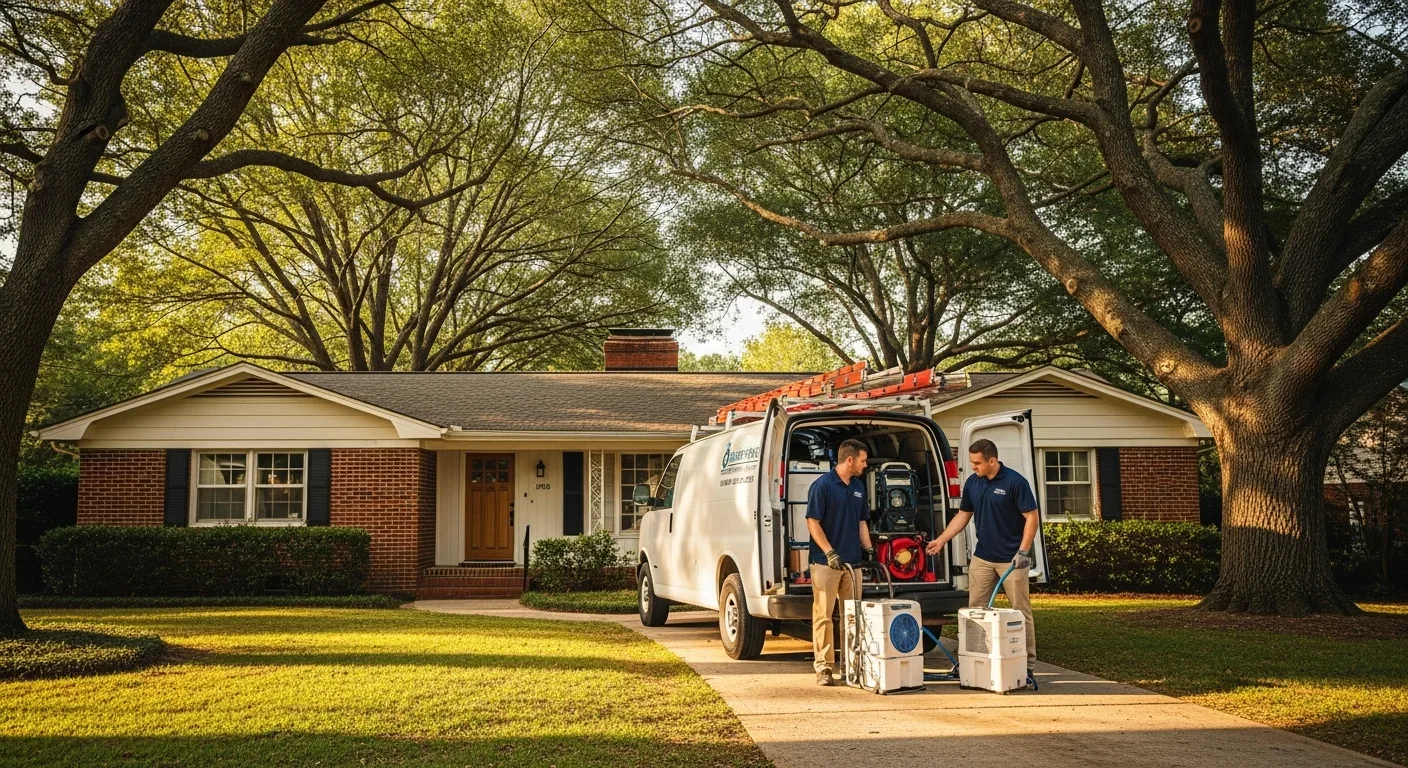
Charlotte restoration costs land where they do for three reasons that have very little to do with the restoration company itself. First, premium home values — a $431,450 median home value tracking 6.8 percent over three years — mean the average claim involves higher-grade finishes than the U.S. average. Second, North Carolina building code requires a Class I vapor barrier in any encapsulated crawl space plus mechanical dehumidification or conditioned air supply, which adds material and labor cost compared to older vented designs. Third, Mecklenburg County permitting and HOA approval letter coordination — required on most communities — adds project management overhead that does not show up in a one-line quote. The ranges below are written against the Xactimate-software pricing standard that every major NC carrier uses, which is also what Palm Build writes estimates in by default.
| Project type | Typical range | Notes |
|---|---|---|
| Standard water damage restoration | $7,000 – $24,000 | Extraction, structural drying (3–5 days), mold prevention treatment, drywall and flooring repair on a single-room loss |
| Complex / multi-room or multi-floor water loss | $14,000 – $60,000+ | Crawl space remediation, mold remediation if present, structural joist or slab repair, encapsulation; typical for older Dilworth, Plaza Midwood, and Myers Park homes |
| Crawl space — basic vapor barrier package | $5,000 – $7,000 | Class I vapor barrier, vent sealing, dehumidifier; assumes no active mold; 2–4 days install |
| Crawl space — full encapsulation | $12,000 – $25,000 | Drainage correction, sealed perimeter, conditioned air supply, mechanical dehumidification, insulation replacement |
| Encapsulation with mold remediation | $12,000 – $50,000+ | Adds containment, IICRC S520 remediation protocol, post-remediation clearance testing before encapsulation goes in |
| Mountain Island Lake basement flood (Cat 3) | $25,000 – $150,000+ | Catastrophic flood loss with extensive contents replacement, structural drying of concrete, antimicrobial treatment, full reconstruction |
Charlotte restoration cost ranges (Xactimate-aligned, current NC regional pricing)
Mecklenburg County Permits and the Accela Hurdle Most Homeowners Hit
Charlotte-Mecklenburg uses the Accela online portal for all building, mechanical, plumbing, and electrical permits. The system is comprehensive and notoriously complex for the average homeowner. Most structural restoration work in Charlotte triggers permit requirements: drywall replacement above a certain scope, any structural framing repair, electrical panel work, plumbing repair beyond a single fixture, and most crawl space encapsulation projects. Permits expire if work is not started within 180 days or is discontinued for 365 days. Restoration scope in Charlotte's eight Local Historic Districts — Hermitage Court, portions of Myers Park, Plaza Midwood, Dilworth, Fourth Ward, Wesley Heights, Optimist Park, and others — must additionally comply with Charlotte-Mecklenburg Historic Landmarks Commission standards on top of standard building code. A licensed NC restoration contractor familiar with Mecklenburg LUESA permitting should handle this paperwork end-to-end, not leave it to the homeowner.
Decoding the credentials: a Charlotte homeowner's glossary
- IICRC S500
- The Institute of Inspection, Cleaning and Restoration Certification standard for professional water damage restoration. Defines water damage categories, classes, drying targets, and documentation requirements that every reputable Charlotte restorer follows.
- IICRC S520
- The IICRC standard for professional mold remediation. Defines containment, removal, post-remediation verification, and clearance testing — and in NC (a state with no mandatory mold license), it is the only credential a homeowner can meaningfully verify.
- WRT
- Water Damage Restoration Technician — the entry-level IICRC technician credential for water work. Required for any water mitigation crew lead.
- ASD
- Applied Structural Drying — the IICRC credential covering psychrometric monitoring, dehumidifier sizing, and the drying-to-target-moisture-content workflow that decides whether a job avoids mold or grows it.
- AMRT
- Applied Microbial Remediation Technician — the IICRC mold credential. Required for anyone scoping or executing mold remediation under S520 protocol.
- NCLBGC
- North Carolina Licensing Board for General Contractors. Issues the General Contractor license required for any restoration project where the cost of labor and materials is $40,000 or more on a single project.
- Mecklenburg LUESA
- Mecklenburg County Land Use and Environmental Services Agency — the local code enforcement and permitting authority for restoration work, accessed through the Accela online portal.
- Accela portal
- The online permitting system Charlotte-Mecklenburg uses for all building, mechanical, plumbing, and electrical permits. Notoriously complex for first-time homeowners — a licensed restoration contractor should handle this end-to-end.
- FEMA Zone AE
- FEMA Special Flood Hazard Area — properties with a 1% annual chance of flooding (the '100-year floodplain'). Includes parts of Mountain Island Lake corridor, Riverside Drive, and creek-adjacent properties along Briar Creek and Little Sugar Creek. Mortgage lenders typically require flood insurance in Zone AE.
- FEMA Zone X
- Moderate-to-minimal flood risk — where most of Charlotte sits. Flood insurance is not federally required, but roughly one-third of all federal flood disaster claims come from Zone X properties.
- CRS Class 2
- Charlotte-Mecklenburg Storm Water Services' rating under FEMA's Community Rating System — one of the highest in the Southeast. Translates into up to a 40% discount on NFIP premiums inside the SFHA and 10% outside it.
- Catawba-Wateree chain
- Duke Energy's network of 11 reservoirs and dams spanning 225 river miles, including Lake Norman, Mountain Island Lake, and Lake Wylie. Upstream rain events cascade through dam releases — the mechanism that flooded 89 Mecklenburg homes during Hurricane Helene in 2024.
- NFIP
- National Flood Insurance Program — the federal flood insurance program. Required in Zone AE, optional but worth carrying in Zone X. Private flood policies through Chubb, USAA, and Travelers are an alternative for higher-value Charlotte homes.
- HO-3
- The standard North Carolina homeowners insurance form. Covers sudden and accidental water damage from inside the home. Excludes flood, gradual leaks, and most mold beyond a small sublimit.
- Mold sublimit
- A coverage cap inside an HO-3 policy that limits payment for mold remediation — typically $5,000–$10,000 in NC. Easily exceeded on a Plaza Midwood or Dilworth crawl space remediation.
- Sewer/drain backup endorsement
- An optional rider added to an HO-3 policy that covers water damage from a backed-up sewer or drain line. Excluded from the base policy. The single most underbought endorsement in Mecklenburg County — worth every dollar.
- Ordinance or Law endorsement
- An optional rider that covers code-required upgrades during restoration. Critical for homes in Charlotte's eight Local Historic Districts (Dilworth, Fourth Ward, Plaza Midwood, etc.) where restoration must comply with current code, not original code.
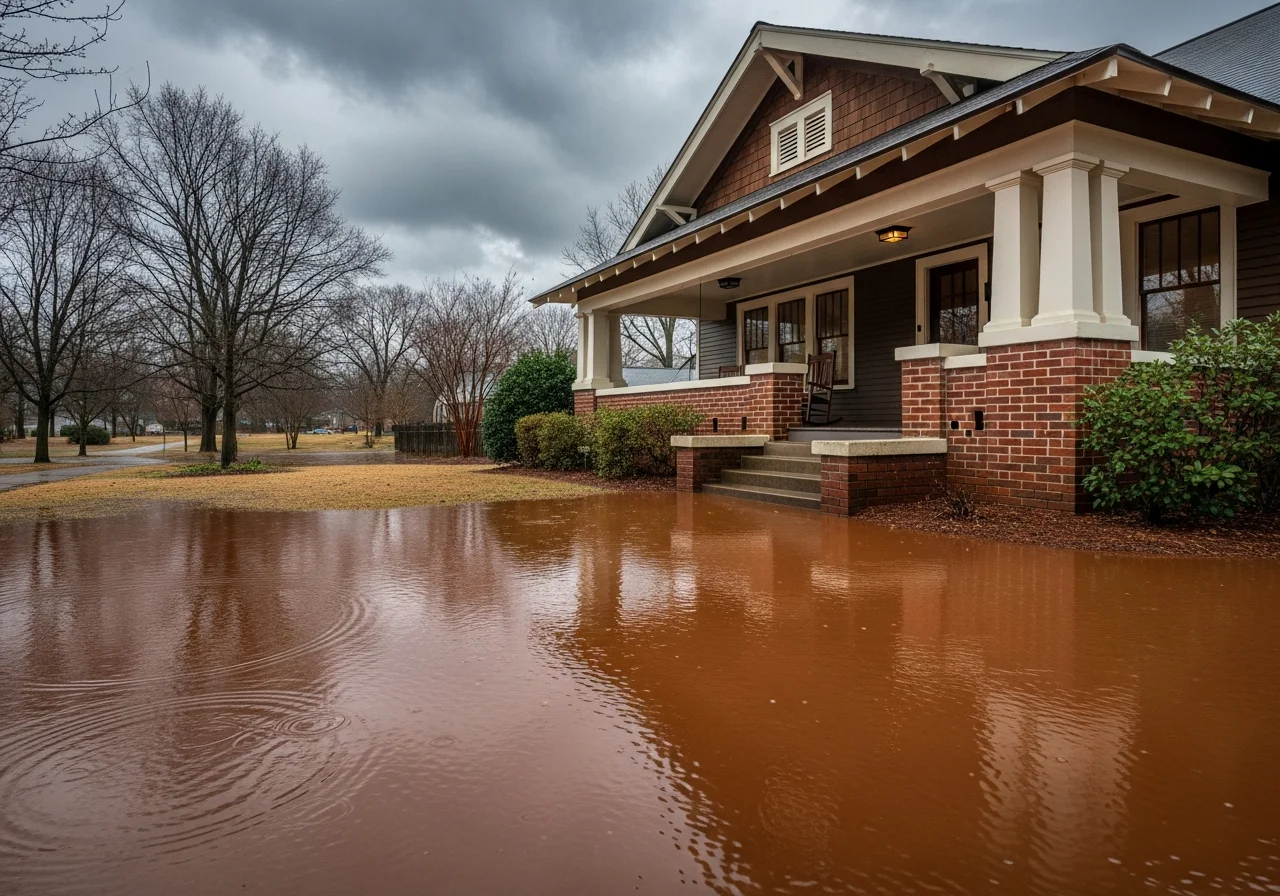
Charlotte in pictures: neighborhoods, weather, and what damage actually looks like
Frequently Asked Questions: Emergency Water Damage in Charlotte, NC
Who do I call for emergency water damage cleanup in Charlotte NC? +
How is flood damage handled differently from water damage in Charlotte NC? +
Does homeowners insurance cover water damage in Charlotte? +
How do I handle basement flooding in Charlotte NC, especially near Mountain Island Lake? +
Which Charlotte neighborhoods flood most often? +
How fast does mold grow in a Charlotte home after water damage? +
Why are Charlotte crawl spaces so prone to mold? +
What is Charlotte's CRS Class 2 rating and does it affect my flood insurance? +
Did Hurricane Helene affect Charlotte homes in 2024? +
Did the 2024 hurricane season cause damage in Ballantyne or Steele Creek NC? +
Do I need a permit for water damage repairs in Charlotte? +
Does North Carolina require a mold remediation license? +
Water Restoration in Charlotte, NC
Palm Build's Charlotte water damage extraction, drying, and restoration services with IICRC certification and 24/7 dispatch.
Mold Remediation in Charlotte, NC
IICRC S520-standard mold remediation for Charlotte's crawl spaces, historic homes, and storm-affected neighborhoods.
Crawl Space Cleanup in Charlotte, NC
Vapor barrier replacement, encapsulation, and crawl space moisture management for Piedmont clay conditions.
First 24 Hours After Water Damage
Hour-by-hour action plan for the critical first day of any water damage event.
Property Manager Emergency Water Damage Protocol
A playbook built for Charlotte property managers coordinating multi-unit water damage response.
Humidity and Mold Risk in NC, FL, and SC
Why the Piedmont humidity floor makes Charlotte mold grow faster than in drier climates.
North Carolina Crawl Space Problems
The Piedmont clay, vented crawl space, and humidity floor failure pattern that defines Charlotte's housing stock.
Western NC Flood Recovery Resources
Companion guide for Helene-affected homeowners across western North Carolina with emergency response and claims resources.
Water Damage Categories and Classes Explained
The IICRC S500 framework — Categories 1, 2, 3 and Classes 1 through 4 — that every adjuster references when scoping your claim.
Water damage in your Charlotte home?
Palm Build holds North Carolina licensing and IICRC certification, and we respond to Charlotte, Mecklenburg County, and the greater Piedmont 24/7. Every claim is documented to IICRC standards so your emergency water damage cleanup is supported from day one. Call our Charlotte team now.
Found this helpful? Send it to someone who needs it.