South Carolina has no state mold license — meaning anyone can call themselves a mold remediator. Palm Build's IICRC-certified specialists bring containment protocols, HEPA filtration, and deep knowledge of York's Piedmont crawl-space homes to every remediation project, from historic downtown properties to growing subdivisions like Monterey Park and Austen Lakes.
Charlotte Office — ~35 minutes to York 45-75 min Response IICRC Certified
York's combination of a humid subtropical climate, heavy annual rainfall, slow-draining
clay soil, and an older housing stock with crawl spaces and plaster walls creates some
of the highest baseline mold risk in the greater Charlotte metro. Understanding these
local factors is the first step toward lasting remediation.
Humid Subtropical Climate
80%+
Summer humidity
York's humid subtropical climate drives summer humidity above 80% for months at a stretch. Combined with average highs in the 90s from June through August, crawl spaces and interior wall cavities become ideal incubators for mold growth that can begin within 24-48 hours of sustained moisture.
45+ Inches Annual Rainfall
45+"
Annual rainfall
York County receives over 45 inches of rain per year, with the heaviest downpours concentrated in late summer. This persistent moisture feeds groundwater that seeps into crawl spaces and saturates foundations — especially in low-lying areas near Fishing Creek and Turkey Creek.
Clay Soil Moisture Retention
55%
Clay moisture capacity
York sits on Piedmont red clay that holds moisture like a sponge and drains at less than 0.2 inches per hour. After heavy rains, this slow-draining soil keeps crawl space humidity elevated for weeks — feeding mold colonies long after the storm passes.
Historic Homes & Crawl Spaces
100+ yrs
Oldest housing stock
Many York homes date to the early-to-mid 1900s with original plaster-and-lath walls, vented crawl spaces, and no vapor barriers. Plaster absorbs and holds moisture far more readily than modern drywall, creating hidden mold reservoirs behind walls that can go undetected for years.
Neighborhood Risk Profiles
York, SC Mold Risk by Neighborhood
Different York neighborhoods face different mold risk factors based on age, construction
style, drainage, and proximity to waterways. Here's what our remediation teams see most
often in each area.
Historic Downtown Core
Very High Risk
Pre-1950s homes with original plaster-and-lath walls that absorb and hold moisture far more readily than modern drywall. Most lack vapor barriers entirely. Original pier-and-beam foundations with open crawl spaces allow persistent ground moisture to wick into floor joists and subfloor. Plumbing upgrades often leave hidden penetrations behind walls.
Located in a designated flood zone area near Turkey Creek, these homes face recurring moisture intrusion during heavy rains. Even without visible flooding, elevated water tables push moisture through foundation slabs and into crawl spaces. Post-storm humidity can sustain mold growth for weeks without intervention.
Flood zone proximityElevated water tablePost-storm moisture retentionCreek-adjacent grading
Monterey Park / Austen Lakes / Abrial Ridge
Moderate-High Risk
Newer construction built during rapid development periods. While materials are modern, many homes were closed up and conditioned before construction moisture fully dried. Unconditioned spaces like garages, attic areas above bonus rooms, and unfinished basements trap humidity that feeds mold growth in hidden cavities.
New-build trapped humidityUnconditioned spacesConstruction moistureFast-track building schedules
Spring Lake Area
Moderate-High Risk
Established homes from the 1980s-2000s with aging HVAC systems that struggle to manage humidity effectively. Oversized or undersized units short-cycle, failing to dehumidify properly. Original ductwork in crawl spaces may have degraded insulation and condensation issues that go unnoticed until mold is widespread.
Professional mold remediation follows a strict sequence defined by the IICRC S520
standard. Here's exactly what happens when Palm Build's certified team arrives at your
York home.
01
Inspection & Testing
Day 1
02
Containment Setup
Day 1-2
03
HEPA Air Filtration
Continuous
04
Mold Removal
Days 2-4
05
Antimicrobial Treatment
Days 4-5
06
Post-Remediation Verification
Day 5-6
01
Inspection & Testing
Day 1
Comprehensive visual inspection of your York home including crawl space, attic, and wall cavities. Moisture mapping with infrared cameras identifies hidden moisture sources. Air quality sampling establishes baseline spore counts. We classify contamination level per IICRC S520 standards.
02
Containment Setup
Day 1-2
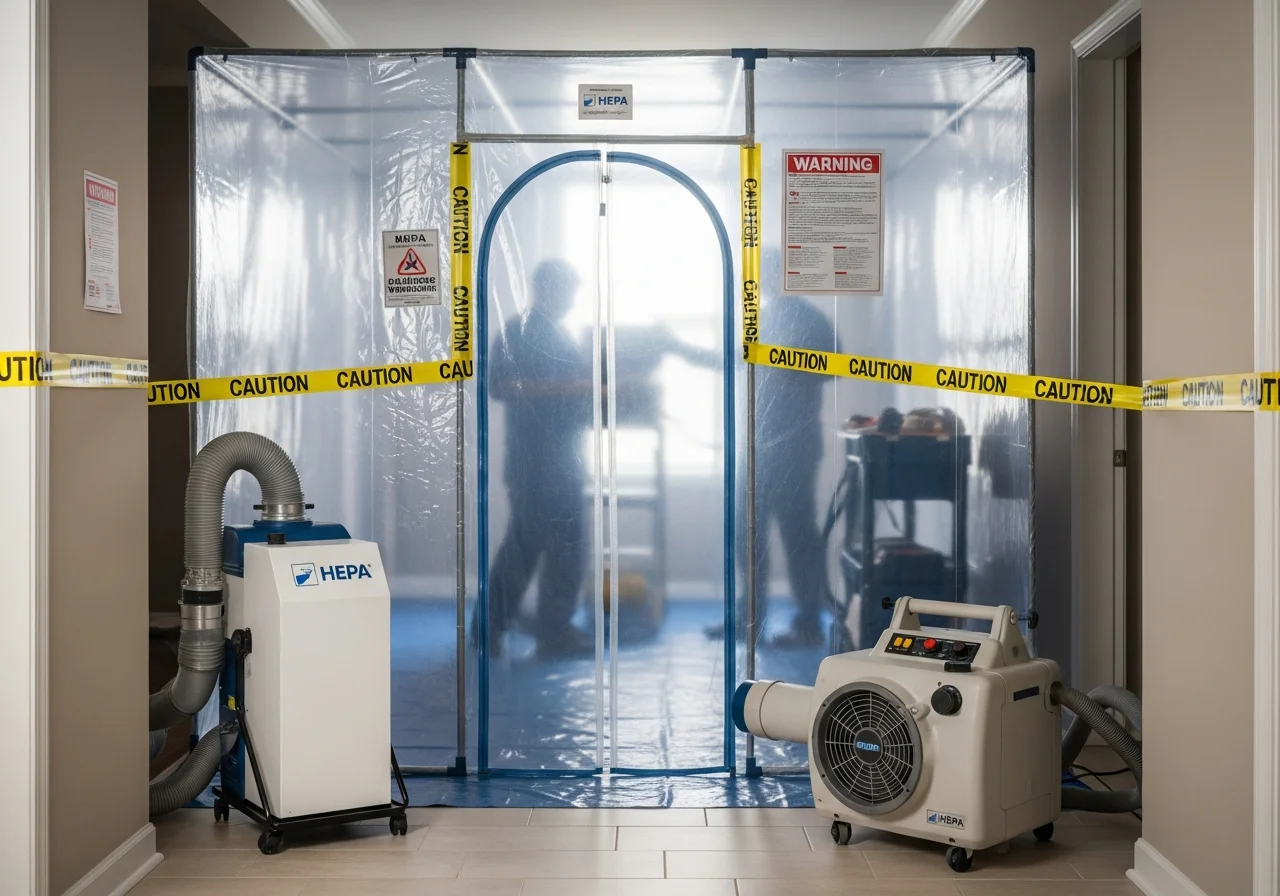
Sealed polyethylene containment barriers isolate affected areas from the rest of your home. HEPA air scrubbers create negative air pressure inside the containment zone to prevent cross-contamination. Critical path materials and furnishings are protected or relocated.
03
HEPA Air Filtration
Continuous
HEPA filtration runs throughout the entire project, capturing airborne spores down to 0.3 microns. This protects both your York home and our technicians while maintaining clean air quality in unaffected living spaces during the remediation process.
04
Mold Removal
Days 2-4
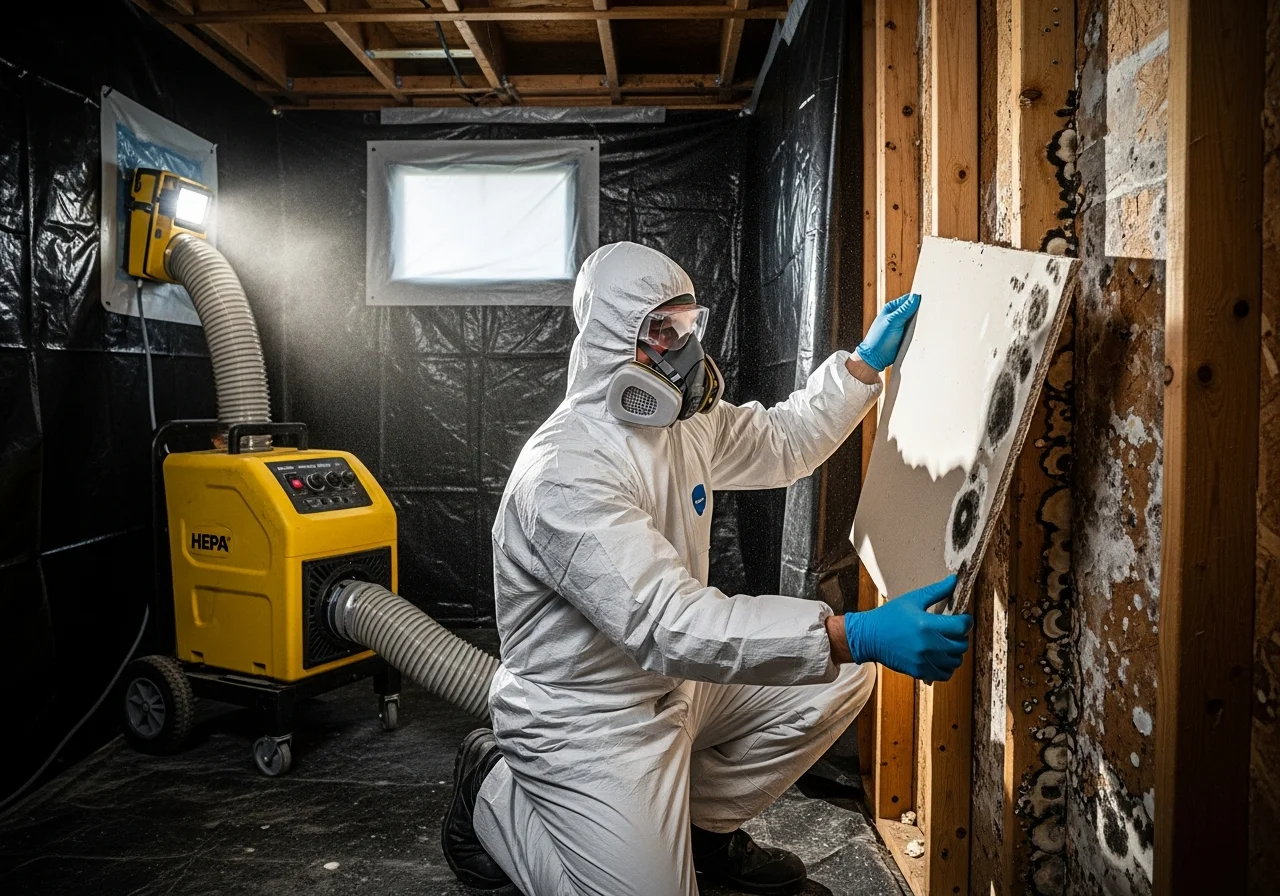
Contaminated materials are removed using controlled demolition techniques. Salvageable surfaces are cleaned with HEPA vacuuming, wire brushing, and media blasting as appropriate. Non-salvageable materials — common in older York homes with plaster walls — are double-bagged for disposal.
05
Antimicrobial Treatment
Days 4-5
EPA-registered antimicrobial agents are applied to all treated surfaces. For York crawl spaces, this includes joist faces, subfloor panels, and foundation walls. The treatment creates a protective barrier that prevents regrowth during reconstruction.
06
Post-Remediation Verification
Day 5-6
Post-remediation air quality testing confirms spore counts have returned to acceptable levels. Visual inspection verifies all contamination has been addressed. Clearance documentation is provided for your records, insurance claim, and future home sale disclosures.
Why Containment Matters in York Homes
Disturbing mold without proper containment sends billions of spores airborne —
potentially contaminating previously clean areas of your home. In older York homes
with plaster walls and open floor plans, cross-contamination spreads faster than in
modern sealed construction. Our containment protocol ensures mold stays isolated.
Mold isn't just a property issue — it's a health hazard. York's humid climate and older
housing stock create conditions where mold colonies can grow undetected for months,
exposing your family to harmful spores every day.
Respiratory Issues
Respiratory
Mold spores irritate airways and can trigger asthma attacks, chronic coughing, wheezing, and shortness of breath. Prolonged exposure in York homes with poor ventilation compounds the risk significantly.
Allergic Reactions
Most Reported
Nasal congestion, sneezing, itchy or watery eyes, and skin rashes are common allergic responses to mold. The CDC notes that mold exposure affects people differently — some react immediately while others develop sensitivity over time.
Neurological Symptoms
Serious Risk
Certain mold species produce mycotoxins linked to headaches, difficulty concentrating, memory problems, and chronic fatigue. Black mold (Stachybotrys chartarum) is particularly associated with these effects in water-damaged buildings.
Immune System Suppression
Serious Risk
Immunocompromised individuals, young children, and the elderly face elevated risk from mold exposure. Aspergillus species can cause serious lung infections in people with weakened immune systems, making professional remediation critical.
South Carolina Does Not License Mold Inspectors Statewide
Unlike some states, South Carolina has no statewide licensing requirement for mold
inspectors or remediators. This means anyone can claim to be a mold professional. We
strongly recommend hiring only IICRC-certified mold remediation specialists who follow S520 protocols. Palm Build's technicians hold
current IICRC certifications and carry full liability insurance for every York, SC project.
Mold Warning Signs Checklist for York Homeowners
Persistent musty or earthy smell in any room
Visible dark spots or discoloration on walls, ceilings, or grout
Unexplained allergy symptoms that worsen indoors
Condensation on windows, pipes, or ductwork
Peeling or bubbling paint or wallpaper
Warped or discolored baseboards
Sagging or soft spots in floors above crawl spaces
Recent water damage or plumbing leak (even if "dried")
York's Hidden Mold Problem
Crawl Space Mold in York, SC: What Every Homeowner Needs to Know
A large majority of York homes — especially those built before the 1990s — sit on vented
crawl spaces over Piedmont clay soil. This combination creates a chronic moisture
factory: warm, humid outdoor air enters through foundation vents, contacts cooler crawl
space surfaces, and condenses on floor joists, ductwork, and insulation.
York's clay soil holds up to 55% moisture by volume and drains at less than 0.2 inches
per hour. Even weeks after the last rain, this slow-release ground moisture continues to
feed crawl space humidity. The result: persistent relative humidity above 70% — well
beyond the 60% threshold where mold growth becomes inevitable.
Vented vs. Encapsulated Crawl Spaces
Vented crawl space humidity (York avg.)70-90% RH
Safe mold growth threshold<60% RH
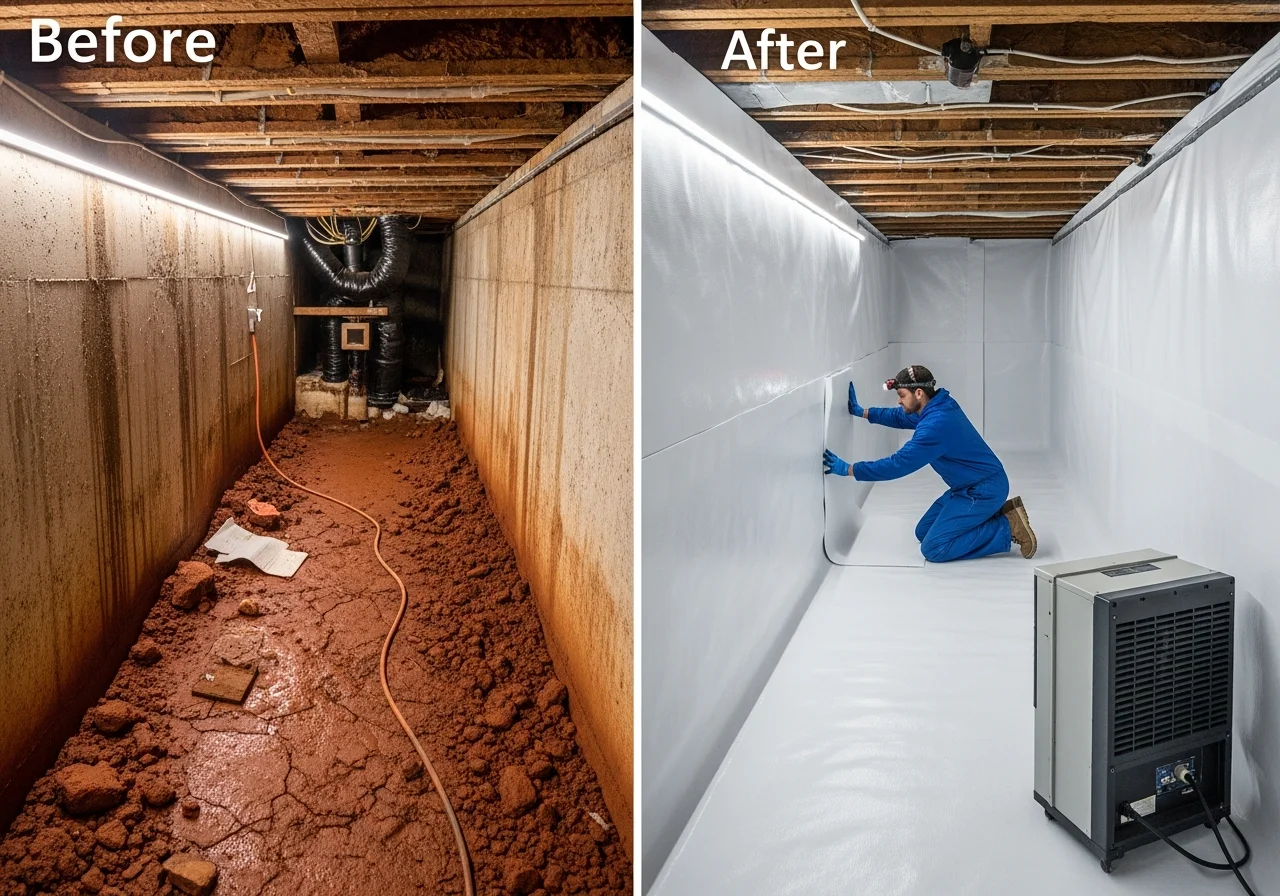
After encapsulation + dehumidification45-55% RH
Dehumidification Is Non-Negotiable
Encapsulation without mechanical dehumidification is incomplete. South Carolina's
building codes allow closed crawl spaces as an alternative to vented construction, but
require a Class I vapor barrier and conditioned air supply or dehumidifier. Palm Build
installs commercial-grade dehumidifiers rated for York's climate conditions.
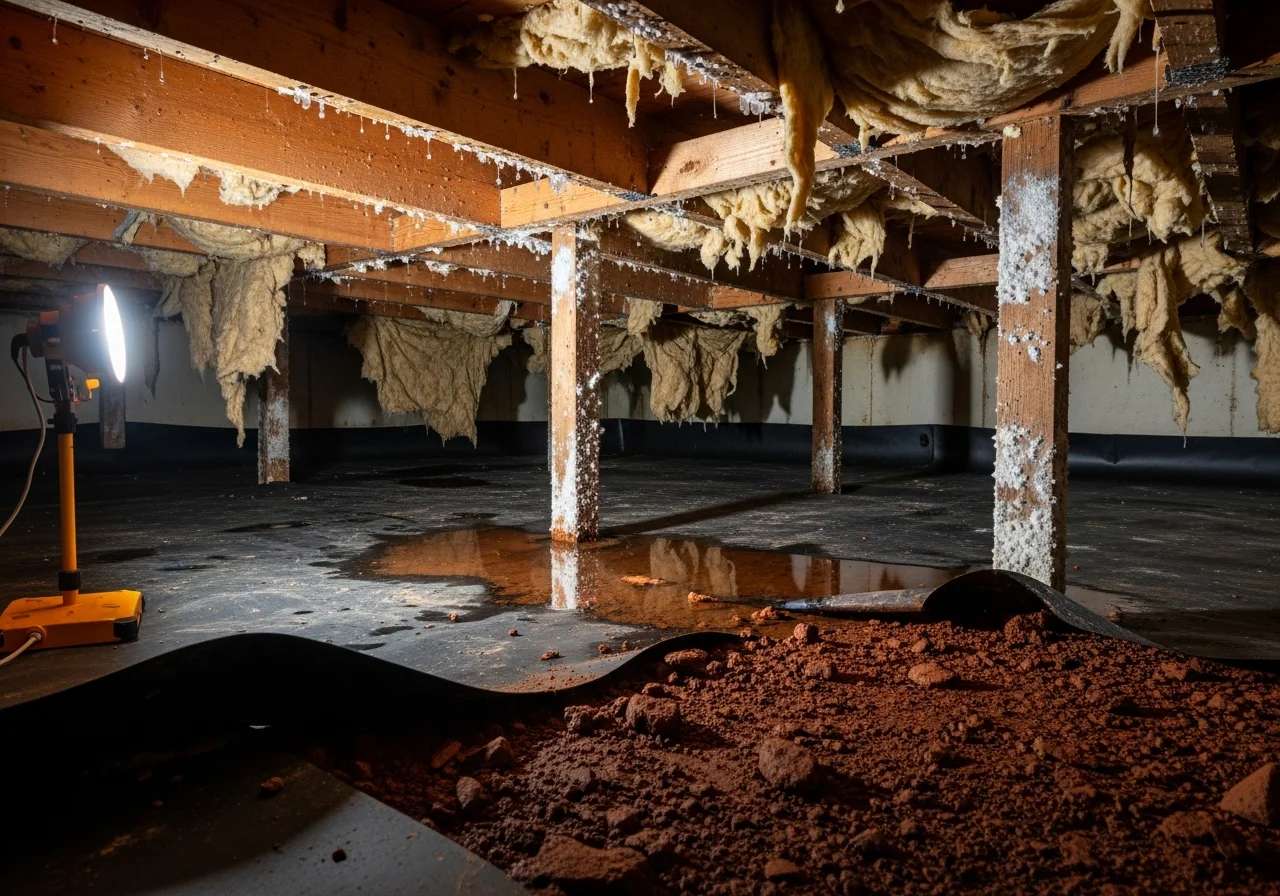
Before: Active mold on floor joists and moisture-damaged insulation in a vented York,
SC crawl spaceAfter: Fully encapsulated crawl space with vapor barrier and mechanical
dehumidification in York, SC
Our Work
York, SC Mold Remediation in Action
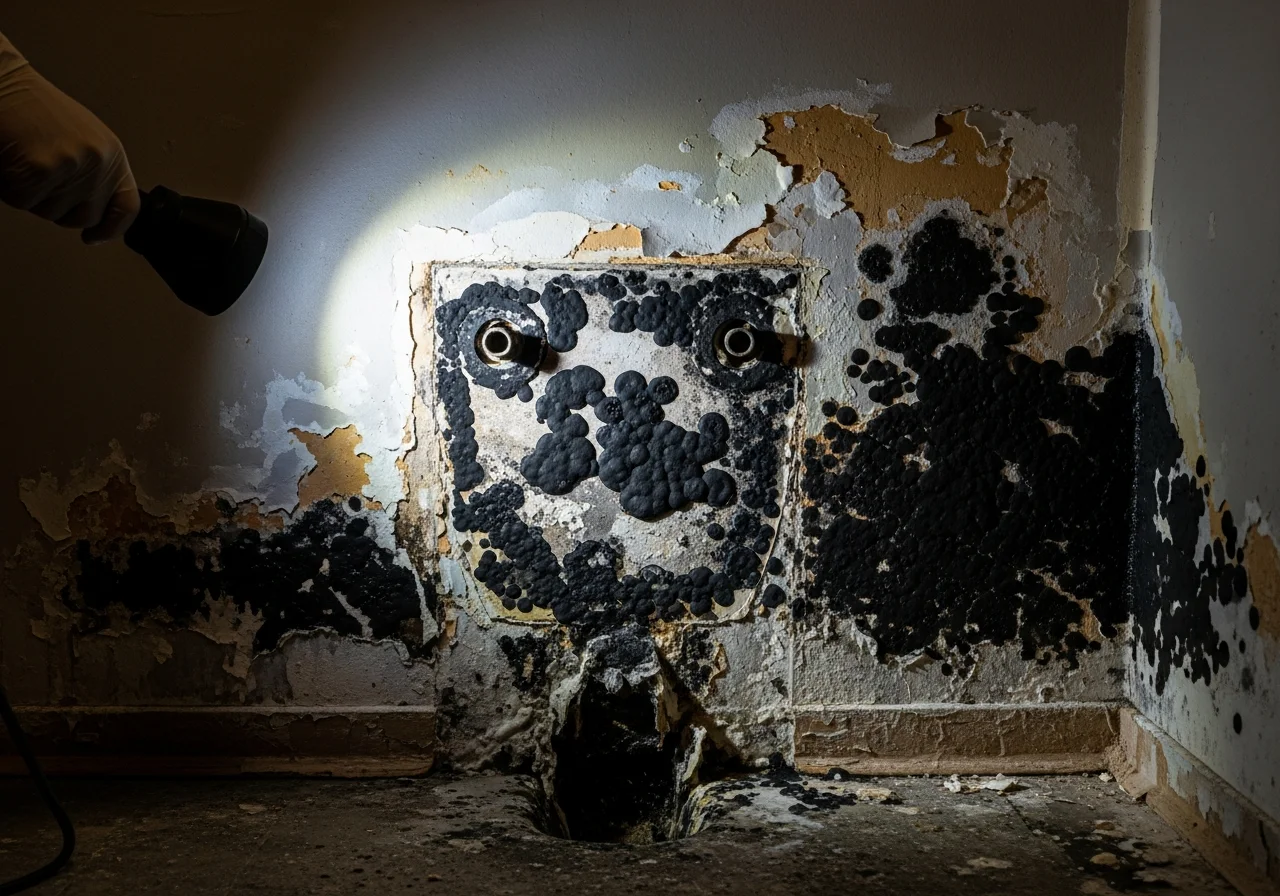
Black mold colonization in a York bathroom — moisture from poor ventilation
Sealed containment with negative air pressure prevents cross-contamination
IICRC-certified technician performing mold removal in full PPE
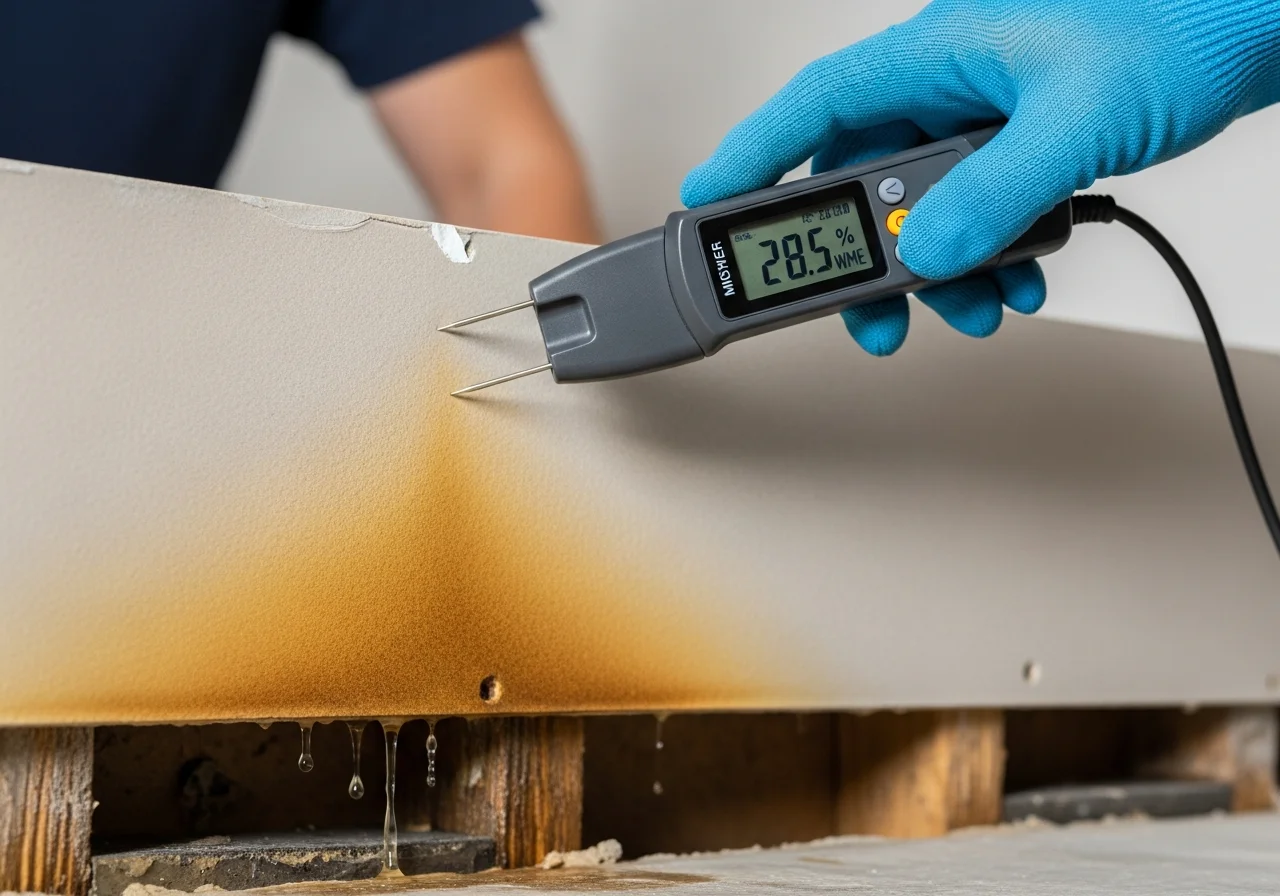
Moisture meter inspection identifies hidden moisture sources behind walls
Common Questions
York, SC Mold Remediation FAQ
Does South Carolina require a mold remediation license?
No. South Carolina does not require any state license, certification, or training to perform mold remediation. SC House Bill 3203 proposed voluntary standards aligned with the IICRC S520 protocol, but it remains unpassed. This means anyone can legally market themselves as a mold remediator in York. The IICRC Mold Remediation Specialist (MRS) certification is the only industry-standard credential that verifies training, field experience, and competency — and every Palm Build mold crew lead holds it.
How quickly can Palm Build reach York SC for a mold emergency?
Our Charlotte operations hub is approximately 27 miles from York — about 35 minutes via I-77 and SC-5. For emergency mold containment (such as a colony discovered during renovation or after a water event), we typically arrive within 45-75 minutes. For scheduled mold assessments, we offer same-day or next-business-day inspections.
How do I know if my York home has mold?
Common indicators include persistent musty odors (especially noticeable when you return home after being away), elevated indoor humidity above 60%, soft or buckling hardwood floors, visible discoloration on walls or ceilings, condensation on windows, and allergy symptoms that worsen at home. In York's older homes with crawl spaces, mold often grows on floor joists and subfloor sheathing where homeowners never see it. Professional inspection with moisture mapping and crawl-space entry is the only reliable confirmation method.
Does insurance cover mold remediation in York SC?
Mold resulting from a covered water damage event (burst pipe, appliance failure) is typically covered up to your policy's mold sublimit — usually $5,000-$10,000 on standard SC policies. Mold from gradual moisture, chronic crawl-space humidity, or deferred maintenance is almost always excluded. Post-storm mold may be covered under the original storm claim if documented as a direct consequence. Palm Build's documentation specifically establishes the causal chain from the original event to the current mold colony.
How much does mold remediation cost in York SC?
Small contained areas (bathroom, utility closet) typically cost $1,500-$4,000. Crawl-space remediation without structural damage runs $3,000-$8,000. Projects with joist or subfloor damage range from $8,000-$18,000+. Post-storm hidden mold in wall cavities or attics costs $5,000-$15,000. York's mix of historic homes with plaster walls and newer construction means costs vary based on materials, accessibility, and the extent of colonization.
Will mold come back after remediation in my York home?
Mold will return if the underlying moisture source is not eliminated. For York homes with vented crawl spaces over Piedmont clay soil, we recommend encapsulation — sealing the crawl space with a heavy-duty vapor barrier, closing vents, and installing a dehumidifier to maintain humidity below 50%. Without addressing the moisture source, York's humid subtropical climate and clay soil drainage will recreate the conditions for mold growth within months.
What types of mold are common in York SC homes?
The most common types we find in York homes are Aspergillus and Penicillium species on crawl-space floor joists and subfloor sheathing, Stachybotrys chartarum (black mold) on chronically wet drywall and cellulose materials, Cladosporium on HVAC components and bathroom surfaces, and Chaetomium on water-damaged drywall paper facing. Species identification requires laboratory testing — visual identification alone is not reliable.
Suspect Mold in Your York Home?
In a state with no mold license, credentials matter. Palm Build's IICRC-certified mold specialists bring containment protocols, HEPA filtration, and the Piedmont crawl-space expertise your York home demands. Call now or request a free assessment.