(888) 245-5155
Call Now 24/7
Storm damage to a residential home in York SC showing a fallen tree across the roof with damaged shingles and exposed decking requiring emergency tarping and restoration
YORK SC — 24/7 STORM & WIND DAMAGE RESPONSE

Storm & Wind Damage Restoration in York, SC

York sits 150 miles inland but takes the full force of Piedmont severe weather — straight-line thunderstorm winds, tropical remnants like Debby that dumped 4+ inches on York County in August 2024, frequent hail, and the occasional tornado-warned cell rolling off the Blue Ridge foothills. With 45+ inches of annual rainfall, mature oaks and pines towering over established neighborhoods like Cannon Village and Monterey Park, and new subdivisions with exposed rooflines and immature root systems, storm damage is a year-round reality in this York County seat. Palm Build responds from Charlotte in 45 to 75 minutes with emergency tarping, water extraction, structural stabilization, and insurance documentation from the first call.

Charlotte Office — ~35 minutes to York 45-75 min Response IICRC Certified

45-75 min

Emergency Response

24/7

Dispatch Available

IICRC

Certified Technicians

Storm Vulnerability Profile

Why York, SC Faces Serious Storm Damage Risk Despite Being Inland

York doesn't face direct hurricane landfalls, but the Piedmont's severe weather pattern delivers punishing storms that cause widespread property damage every year. Straight-line winds from convective thunderstorms, tropical remnants that dump inches of rain in hours, frequent hail events, and a mature tree canopy over aging housing stock create a storm damage environment that demands rapid response and local expertise.

Palm Build serves York and York County with 24/7 emergency storm response. When a thunderstorm system crosses the county or tropical remnants stall over the Piedmont, our crews are ready to secure damaged properties, extract water, and begin the restoration process before secondary damage sets in.

4+"

Rain from Debby (2024)

60+ mph

Straight-line wind gusts

24/7

Emergency response

<45 min

Response to York

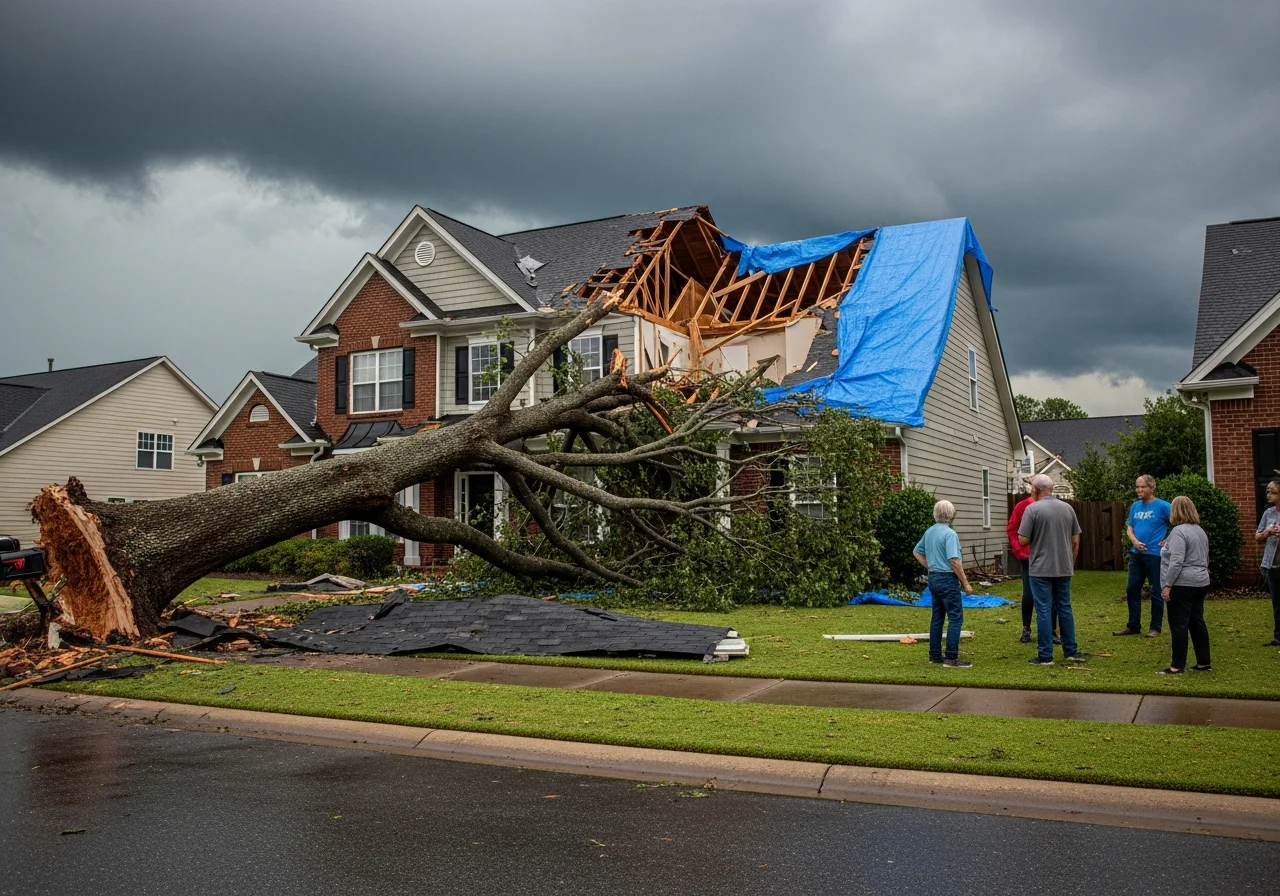
Storm damage from fallen tree on a York SC home roof showing structural impact and debris
Mature trees in York's residential neighborhoods create significant treefall risk during severe thunderstorms and tropical remnant events

Straight-Line Winds & Microbursts

York sits in the Piedmont corridor where severe thunderstorms frequently produce straight-line winds exceeding 60 mph — powerful enough to peel shingles, snap mature pines, and drive debris through siding. Unlike coastal hurricanes that build gradually with days of warning, these convective windstorms develop rapidly over upstate South Carolina and strike with little lead time. York's mix of older ranch homes and newer subdivisions means building codes and wind resistance vary dramatically from block to block.

Tropical Remnants & Heavy Rainfall

When tropical systems make landfall on the Gulf or Atlantic coast, remnant moisture funnels directly through the Piedmont — and York absorbs the worst of it. Tropical Storm Debby in August 2024 dumped over 4 inches of rain on York County in under 48 hours, overwhelming Bullock Creek and Turkey Creek drainage systems and flooding low-lying areas across town. These remnant events combine sustained rainfall with gusty winds that weaken already-saturated trees, creating compound damage that taxes the entire building envelope.

Severe Thunderstorms & Hail

The Piedmont's warm-season convective pattern generates frequent severe thunderstorms from April through September. York County averages multiple NWS severe thunderstorm warnings each season, with damaging hail, lightning, and wind gusts routinely reported. Hail events are particularly damaging to York's roofing stock — both the aging asphalt shingles on 1970s-1990s ranch homes and the architectural shingles on newer construction lose granule coverage with each impact, shortening roof life and creating leak pathways.

Tree Density & Treefall Risk

York's residential neighborhoods are canopied by mature oaks, sweetgums, and loblolly pines — many predating the homes they shade. During severe storms, saturated Piedmont clay soil loses its grip on root systems, and trees that have stood for decades come down on roofs, vehicles, fences, and power lines. Pine trees are especially hazardous because their shallow root plates pull free in wet clay, and their height-to-base ratio makes them prone to snapping at mid-trunk in straight-line winds.

York County Storm History

Recent Storm Events That Damaged York, SC Properties

York County's storm history proves that inland Piedmont communities face real and recurring severe weather threats. These events document the specific damage patterns that York homeowners need to prepare for — and that Palm Build responds to year after year.

August 2024

Tropical Storm Debby

Major

Tropical Storm Debby made landfall on the Gulf Coast and tracked northeast through the Carolinas, dumping over 4 inches of rain on York County in under 48 hours. The sustained rainfall overwhelmed Bullock Creek and Turkey Creek drainage systems, causing flash flooding in low-lying residential areas across York. Wind gusts accompanied the heavy rain, toppling weakened trees onto homes and power lines. Hundreds of York County properties reported water intrusion, roof damage, or tree impacts from this single event.

Key Impacts

4+ inches of rainfall in 48 hours
Flash flooding along Bullock Creek corridor
Widespread tree falls on saturated clay soil
Extended power outages across York County

August 2025

Flash Flood Warning — Bullock Creek

Significant

The National Weather Service issued a Flash Flood Warning specifically naming Bullock Creek in York County after heavy thunderstorms produced rapid rainfall that exceeded drainage capacity. Areas along the creek corridor experienced rising water that entered crawl spaces, flooded streets, and damaged properties in flood-prone zones. This event confirmed that the Bullock Creek watershed remains one of York's most vulnerable drainage systems during intense rainfall.

Key Impacts

NWS Flash Flood Warning naming Bullock Creek
Crawl space flooding in creek-adjacent homes
Road closures in low-lying areas
Sump pump failures from extended saturation

Recurring — April through September

Severe Thunderstorm Season

Recurring

York County experiences multiple severe thunderstorm events each warm season, with the NWS issuing warnings for damaging winds, large hail, and dangerous lightning. These convective storms develop rapidly along the Piedmont and produce straight-line winds that exceed 60 mph, hail up to golf-ball size, and torrential downpours that trigger localized flooding. Individual storms may cause scattered damage, but the cumulative effect across a full season — repeated wind stress, hail impacts, and water intrusion — degrades roofing materials and building envelopes over time.

Key Impacts

Multiple NWS severe thunderstorm warnings per season
Straight-line winds exceeding 60 mph
Hail damage to roofing and siding
Cumulative building envelope degradation

Variable — Post-Tropical Systems

Tropical Remnant Flooding Events

Periodic

Beyond Debby, York County has experienced repeated flooding from tropical remnants that track through the Piedmont — including impacts from Hurricanes Florence (2018) and Michael (2018). These post-tropical systems deliver sustained, heavy rainfall over 24-72 hours that saturates clay soil, overwhelms creeks and stormwater systems, and creates flooding in areas that don't typically see standing water. The combination of wind and prolonged rain from these events produces compound damage: wind opens the envelope, and days of rain enter through the openings.

Key Impacts

Sustained heavy rainfall over 24-72 hours
Creek flooding beyond mapped flood zones
Compound wind + water damage patterns
Secondary mold growth from prolonged moisture

Types of Storm Damage

How Storms Damage York, SC Homes

Severe weather damages York homes in six distinct ways — and most major storms trigger multiple damage types simultaneously. Understanding the full scope is critical for both emergency response and insurance claims, because different damage types may be covered under different policies or deductibles.

Roof Damage — Shingles & Flashing

Straight-line winds and hail are the primary drivers of roof damage in York. Wind lifts shingle tabs, breaks flashing seals at valleys and penetrations, and loosens ridge caps — creating water entry points that may not leak until the next rain event. York's housing stock includes a wide range of roofing conditions: older ranch homes from the 1970s-1990s with aging three-tab shingles that have lost flexibility, and newer subdivision homes with architectural shingles that resist wind better but still suffer hail bruising and granule loss. Every storm season adds cumulative stress to roofing materials.

Tree & Limb Impact Damage

York's mature tree canopy — oaks, sweetgums, and loblolly pines throughout residential neighborhoods — creates the town's character and its greatest storm liability. Loblolly pines in particular have shallow root systems that pull free from saturated Piedmont clay, and their height makes them prone to mid-trunk snapping in straight-line winds. A single fallen tree can crush a roof section, sever power lines, destroy fencing, and create immediate water intrusion exposure. Even large limbs from hardwoods can puncture shingles and damage gutters.

Wind-Driven Rain Intrusion

During severe storms, wind drives rain horizontally into gaps around windows, doors, soffits, and any compromise in the building envelope. In York's older homes, aged caulking and weatherstripping provide diminished protection. In newer construction, improperly flashed windows and transitions between siding materials create vulnerable points. Wind-driven rain enters wall cavities where it wicks into insulation and drywall, causing hidden moisture damage that doesn't become visible until mold growth begins days or weeks later.

Hail Damage

York County's severe thunderstorms frequently produce hail ranging from pea-size to golf ball. Even small hail damages roofing materials — bruising asphalt shingles, dislodging granules, and denting soft metals like aluminum gutters, fascia, and HVAC condensers. Hail damage to shingles often isn't visible from the ground but shows clearly in a roof inspection as circular impact marks and bare spots where protective granules have been knocked free. These compromised areas become leak points during subsequent rain events.

Flash Flooding & Creek Overflow

Intense rainfall overwhelms York's stormwater systems and causes Bullock Creek, Turkey Creek, and their tributaries to rise rapidly. Properties near creek corridors, in low-lying areas, or with poor lot grading experience water intrusion through foundations, crawl space vents, and basement openings. Flash flooding deposits contaminated water — carrying sediment, sewage, and debris — into living spaces and crawl spaces. Flood damage requires different insurance coverage than wind damage and demands immediate extraction to prevent structural compromise.

Power Outage Secondary Damage

Severe storms knock out power across York for hours or days — and for homes that depend on electric sump pumps, the timing is catastrophic. Sump pump failure during heavy rain allows groundwater to flood crawl spaces and basements exactly when water levels are highest. Extended outages also cause freezer and refrigerator loss, HVAC shutdown during extreme temperatures, and security system failure. Homes with well water lose water pressure entirely. These secondary damages compound the direct storm damage and create additional insurance claim complexity.

Emergency Response Process

How We Restore York Homes After Storm Damage

Storm restoration requires coordinating emergency tarping, water mitigation, tree removal, structural repair, and insurance claims simultaneously. Here's our proven process from the first call through final closeout.

01

Emergency Board-Up & Tarping

Hours 1-4

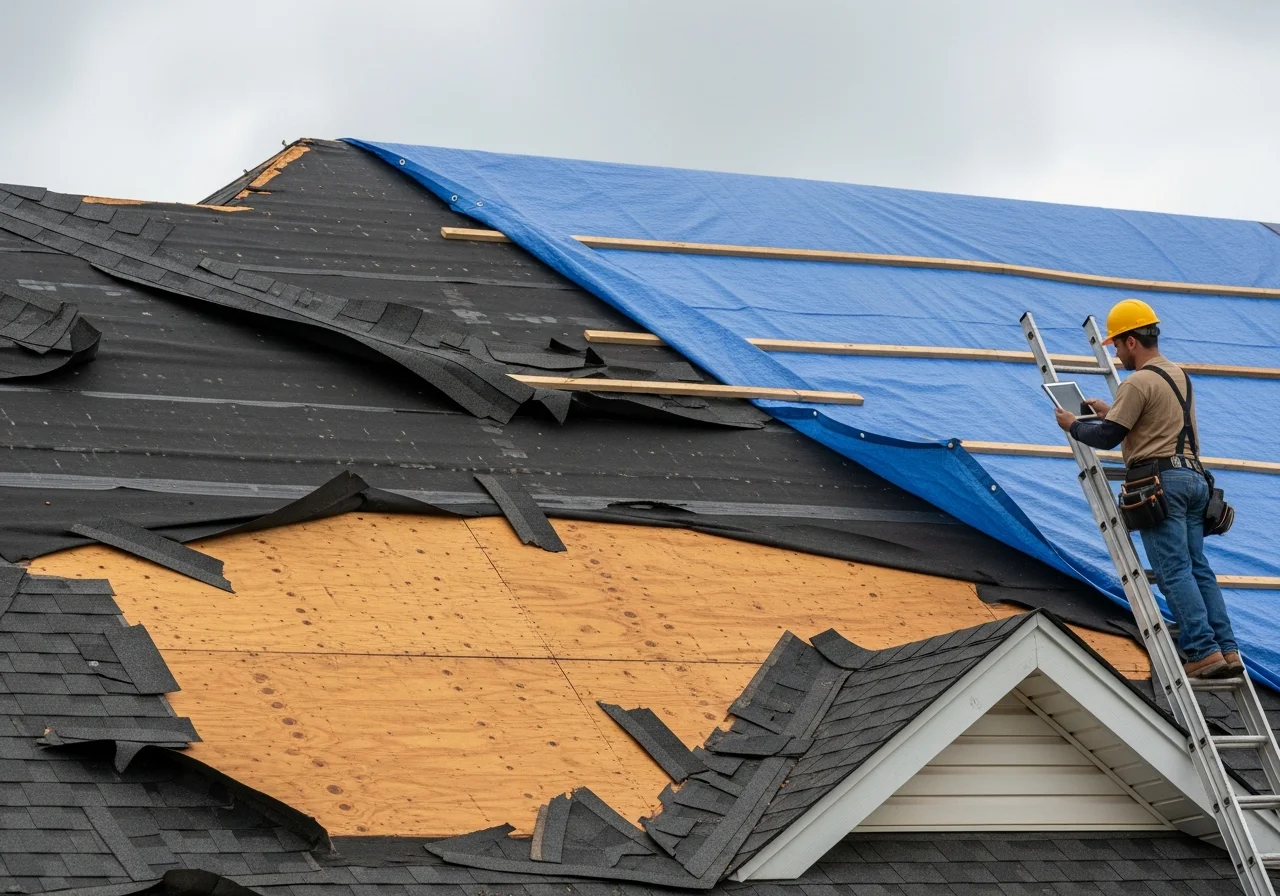
We secure your York home against further weather damage within hours of your call. Damaged roof sections are tarped with reinforced polyethylene, broken windows and doors are boarded, and exposed structural openings are sealed. In York's storm pattern — where a severe thunderstorm can be followed by another system within 24-48 hours — preventing secondary water intrusion is critical. Emergency tarping and board-up costs are covered by your insurance policy as part of your duty to mitigate further damage.

02

Water Extraction & Emergency Drying

Hours 2-24

If wind-driven rain, tree impact, or flash flooding has allowed water into your home, we begin extraction immediately — often while tarping is still in progress. Standing water is removed with truck-mounted extractors, and commercial-grade dehumidifiers and air movers are deployed to begin structural drying. For York homes with crawl spaces on Piedmont clay soil, we address sub-floor water simultaneously to prevent the moisture from wicking up through the floor system and creating secondary mold conditions within the 24-48 hour critical window.

03

Structural Assessment

Days 1-3

Once the property is secured and water extraction is underway, we perform a comprehensive structural assessment. This includes roof inspection for wind and hail damage, siding and window evaluation, thermal imaging to map hidden moisture migration through wall cavities, and structural integrity checks for areas affected by tree impact or wind load. For York's older ranch homes, we pay particular attention to roof trusses, load-bearing walls, and foundation connections that may have been stressed by the storm event.

04

Insurance Documentation & Claim Filing

Days 1-5

We photograph and catalog every item of damage, classify each by cause — wind damage covered under homeowners policy versus flood damage requiring separate flood coverage — and create a detailed Xactimate scope of work that speaks the insurance adjuster's language. For York storm damage claims, we document hail impacts with close-up photography showing granule loss patterns, measure wind damage patterns to establish directionality, and separate tree damage responsibilities between property owner and adjacent property trees.

05

Debris Removal & Tree Clearing

Days 2-10

Fallen trees are removed from structures using cranes and rigging when necessary — cutting a tree off a roof requires precision to avoid compounding structural damage. Leaning or hanging trees that pose continued risk are assessed and removed. Storm debris including broken siding, shingle material, downed limbs, and damaged personal property is cleared and hauled. For York properties with multiple fallen trees, we coordinate the removal sequence to protect remaining structures and utilities.

06

Reconstruction & Full Restoration

Weeks 2-12

Once the property is dried, secured, and cleared, we begin full reconstruction: roof replacement or repair, siding restoration, window installation, drywall, flooring, painting, and finish work. All structural, electrical, mechanical, and plumbing work meets current South Carolina building code requirements and passes York County inspection. We coordinate directly with your insurance adjuster throughout reconstruction to ensure the approved scope covers the full extent of needed repairs, and we handle supplemental claims when additional damage is discovered during the restoration process.

Storm Damage Insurance Claims

Navigating Storm Damage Claims in York, SC

The most important insurance concept for York storm damage: wind damage and flood damage from the same storm are covered by different policies. Documenting damage by cause — not just by room — is critical for maximizing your coverage. Palm Build's documentation process classifies every item of damage by its cause to ensure correct claim filing.

Wind Damage (Homeowners Policy)

Roof damage from wind, fallen trees, flying debris
Siding, window, and door damage from wind pressure
Rain water entering through wind-created openings
Structural damage from wind load or fallen trees
Emergency tarping and board-up costs
Temporary living expenses if home is uninhabitable

Flood Damage (Separate Flood Policy)

Rising water from Bullock Creek, Turkey Creek overflow
Groundwater entering through foundation or crawl space
Surface water accumulation from overwhelmed storm drains
Sewer backup from overwhelmed stormwater systems
Flash flood water entering through doors and vents
NOT covered by standard homeowners — requires NFIP or private flood
Palm Build restoration specialist reviewing storm damage insurance documentation with a York SC homeowner
Palm Build's detailed documentation process classifies every damage item by cause to ensure correct claim filing and maximize coverage

Hail Documentation Protocol

Hail damage claims require specific photographic evidence to meet adjuster standards. We document hail impacts with close-up photography showing circular bruise marks and granule displacement patterns, measure impact density per 10x10 test square on the roof, photograph collateral hail damage on gutters, downspouts, window screens, and HVAC condensers to establish hail size and directionality, and correlate damage patterns with NWS storm reports for the specific date and time.

Tree Damage Coverage

Tree damage claims in York depend on where the tree originated. Your homeowners policy covers damage from trees on your property and your neighbor's trees that fall onto your home. However, debris-only removal — a tree that falls in your yard without hitting a structure — typically has limited coverage (often capped at $500-$1,000). When a neighbor's tree damages your property, you file with your own insurer, who may subrogate against the neighbor's carrier if the tree was dead or clearly hazardous before the storm.

SC Wind/Hail Deductible Warning

Many South Carolina homeowners policies include a separate wind/hail deductible — typically 1-2% of the dwelling coverage amount — which is significantly higher than the standard deductible. For a York home insured at $300,000, a 2% wind/hail deductible means $6,000 out-of-pocket before coverage begins. Check your declarations page before storm season. Palm Build's detailed documentation helps ensure every covered item is captured in the claim scope to maximize recovery above the deductible.

Insurance claims guide

Storm Damage in York

Storm Damage & Restoration in York, SC

Storm damage from fallen tree crushing a residential roof in York SC showing structural impact and exposed framing
Mature pine treefall on a York home — saturated Piedmont clay loses grip on shallow root systems during severe thunderstorms, making treefall York's most destructive storm damage pattern
Palm Build technician inspecting wind damage to roof shingles on a York SC home after severe thunderstorm
Post-storm roof inspection reveals missing shingles, lifted flashing, and hail bruising — damage patterns that may not be visible from ground level
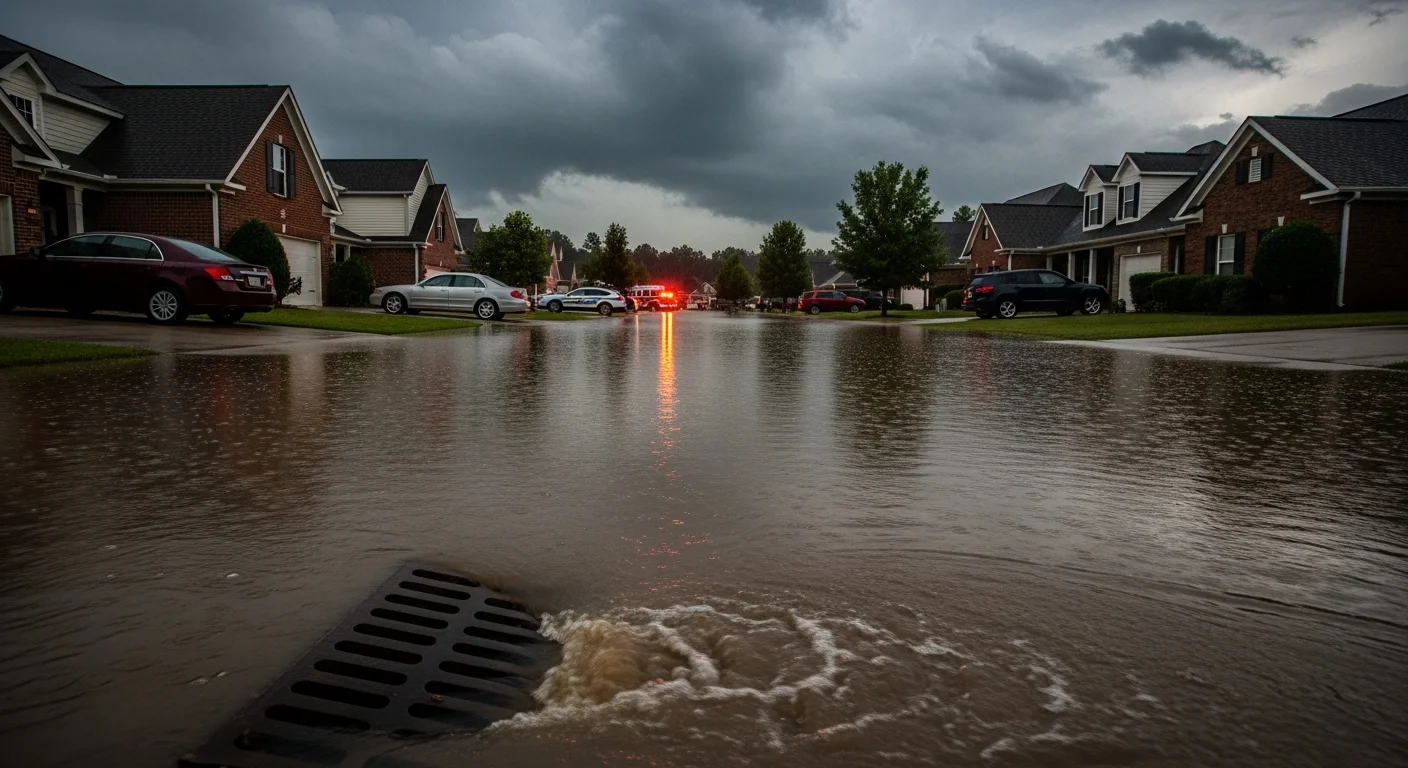
Flash flooding on a residential street in York SC during heavy rainfall with water approaching homes
Flash flooding overwhelms York stormwater systems during heavy rainfall events — Bullock Creek and Turkey Creek corridors are especially vulnerable
Reconstruction framing in progress on a York SC home after storm damage showing new structural lumber and roof system
Full structural reconstruction after storm damage — new framing, roof system, and building envelope restored to current South Carolina building code

Common Questions

York, SC Storm Damage FAQ

How quickly can Palm Build respond to storm damage in York SC?
Our Charlotte-based team typically arrives in York within 45 to 75 minutes from our Crompton Street operations hub — approximately 27 miles via I-77 South and SC-5. We dispatch 24/7/365, including during active storm events. During major weather events with widespread damage across the Charlotte metro and York County, we activate our catastrophe response protocol with additional crews from our multi-state network. Call (704) 464-0121 any time.
Does homeowners insurance cover storm damage in York SC?
Wind and storm damage are covered perils under standard South Carolina homeowners policies. However, flood damage from rising water — including Langham Branch or Bullock Creek overflow and drainage system overwhelm — requires separate NFIP or private flood insurance. This distinction matters in York: wind-driven rain that enters through a storm-damaged roof is covered under your wind claim, but ground-level water intrusion from drainage failure during the same storm requires separate flood coverage. Palm Build documents damage by source and entry point to ensure each claim is filed under the correct policy.
What types of storms cause the most damage in York?
York experiences three primary storm damage patterns: severe thunderstorms from May through August that produce damaging straight-line winds exceeding 60 mph, heavy downpours, and hail large enough to damage composition shingle roofs; tropical remnants from August through October — like Tropical Storm Debby in August 2024, which dropped 4+ inches on the York County area; and winter straight-line wind events from January through March that exploit aging roof systems weakened by freeze-thaw cycles. York County's NWS hazard profile specifically highlights severe thunderstorm wind and hail as the most frequent categories.
Why is tree damage such a major concern in York?
York's established neighborhoods — the historic district, Cannon Village, Spring Lake Country Club area — feature mature oaks, hickories, and loblolly pines that have grown for 50 to 100+ years. These trees are rooted in clay-heavy Piedmont soil that provides less anchorage than homeowners assume. When multi-inch rainfall saturates the clay and then 60 mph thunderstorm gusts arrive, the combination produces tree failures that drive the largest insurance claims in York. Conversely, new subdivisions like Monterey Park have the opposite problem: immature landscaping provides no windbreak for exposed rooflines.
Are new subdivision homes in York vulnerable to storm damage?
Yes — and in ways that differ from older homes. York's rapidly growing subdivisions like Monterey Park, Austen Lakes, and Abrial Ridge have exposed rooflines with no mature tree windbreak, freshly graded drainage systems that have not been tested by multiple severe storms, and building envelope transitions that have not yet weathered through a full cycle of Piedmont freeze-thaw and storm stress. Immature root systems on newly planted trees provide virtually no wind resistance. The first major wind event is often the first real test of the entire construction.
What is the York County Floodplain Manager's role after storm damage?
The York County Floodplain Manager administers post-storm compliance requirements for properties in or near FEMA-designated flood zones — particularly along Langham Branch and Bullock Creek corridors. If repair costs for a substantially damaged structure exceed 50% of its pre-storm market value, the structure must be brought into compliance with current floodplain regulations before reconstruction can proceed. Palm Build coordinates directly with the Floodplain Manager during the permitting process to ensure your reconstruction meets all requirements and avoids costly rework or delays.
Should I get emergency tarping before filing an insurance claim?
Yes — and you should do it immediately. Your South Carolina homeowners insurance policy contractually requires you to mitigate further damage after a loss event. Delaying tarping after roof damage allows wind-driven rain to enter the structure, causing secondary water damage to ceilings, walls, insulation, and flooring that dramatically increases total claim cost. Emergency tarping and board-up expenses are covered as part of your storm damage claim. Call Palm Build at (704) 464-0121 for 24/7 emergency tarping — we reach York in 45-75 minutes.

Storm Damage in York?

An exposed roof or broken window turns wind damage into water damage — and water damage into mold damage. Palm Build's Charlotte team responds to York in 45-75 minutes with emergency tarping, water extraction, and structural stabilization. Insurance documentation starts from our first call.

45-75 min Response IICRC Certified