(888) 245-5155
Call Now 24/7
Palm Build IICRC-certified mold remediation technician in full PPE inspecting crawl space mold growth under a Rock Hill SC brick ranch home
ROCK HILL SC — IICRC-CERTIFIED MOLD REMEDIATION

Mold Remediation in Rock Hill, South Carolina

South Carolina does not license mold remediators — anyone can call themselves one. Palm Build's IICRC-certified specialists bring the credentials, containment protocols, and Piedmont-specific expertise that Rock Hill's crawl-space homes demand.

Charlotte Office — 25 min to Rock Hill via I-77 45-60 min Response IICRC Certified

45-60 min

Emergency Response

24/7

Dispatch Available

IICRC

Certified Technicians

Local Mold Risk Factors

Why Rock Hill Has a Mold Problem No One Is Talking About

Rock Hill's Piedmont climate, clay-heavy soil, and aging crawl-space housing stock create a year-round mold environment — and South Carolina's complete lack of mold licensing means there's no regulatory barrier keeping unqualified operators out of your home. Understanding these risks is the first step toward protecting your family's indoor air quality.

No State Mold License Required

Zero

SC mold licenses required

South Carolina does not require a state-issued mold remediation license. Anyone can legally call themselves a mold remediator in Rock Hill — creating a trust vacuum where unqualified operators flood the market. SC House Bill 3203 proposed voluntary IICRC-aligned standards, confirming what the industry already knows: the IICRC S520 Standard is the benchmark. Palm Build's IICRC-certified technicians operate to the standard SC legislators identified as the gold standard.
Piedmont Humidity Crisis

60%+

Summer humidity levels

Rock Hill receives 44 inches of rain annually with no dry season. Summer humidity regularly exceeds 60% — the threshold where mold spore germination accelerates significantly. The combination of near-constant moisture and warm temperatures from June through September means your crawl space and building materials never fully dry out between rain events. This isn't coastal humidity — it's Piedmont inland humidity trapped by clay soil and vented foundations.

Crawl Space Mold Epidemic

50%

Indoor air from crawl space

A very high proportion of Rock Hill's pre-2000 housing stock sits on traditional vented crawl spaces. The stack effect draws humid crawl-space air upward through the home — up to 50% of the air you breathe inside originates from your crawl space. Charlotte transplants who buy older homes in Southside or College Downs are often completely unaware that their crawl space is actively feeding mold spores into their living space.

IICRC as the Only Differentiator

IICRC MRS

Gold standard credential

Without a state licensing requirement, the IICRC Mold Remediation Specialist (MRS) certification is the only meaningful credential in South Carolina. It requires a minimum of one year of verified field experience plus a rigorous examination. York County's Department of Environmental Health advises homeowners to verify professional training through industry associations like the IICRC — making visible certification a decisive trust signal.

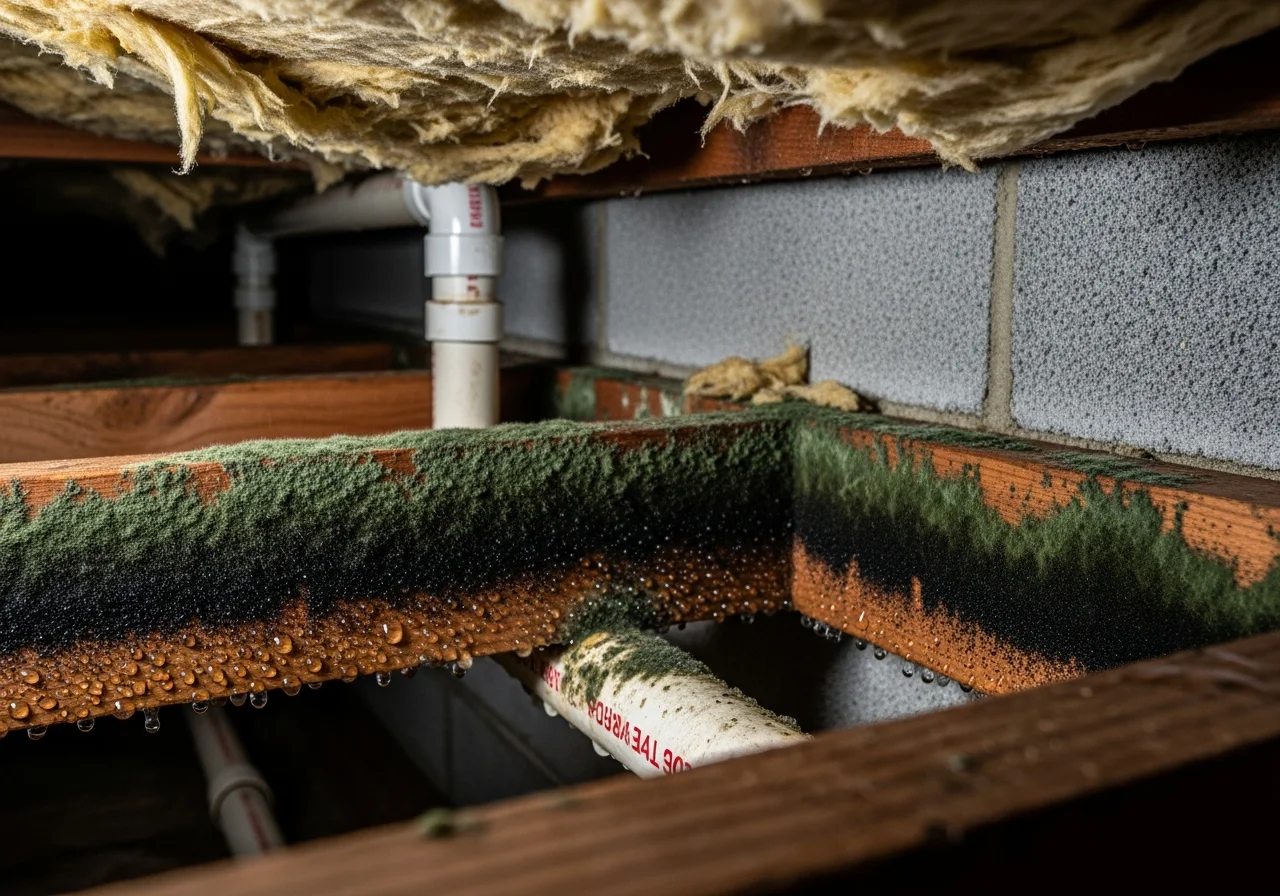
Mold growth discovered in a Rock Hill SC crawl space during professional inspection
Mold thriving in a Rock Hill crawl space — vented foundations and Piedmont humidity create ideal conditions for year-round mold colonization.

Neighborhood-Level Intelligence

Mold Risk by Rock Hill Neighborhood

Mold risk in Rock Hill varies dramatically by neighborhood — driven by housing age, foundation type, drainage infrastructure, and proximity to waterways. No competitor publishes this level of local detail.

College Downs

Critical
Built: 1950s-1970s Foundation: Vented crawl space

Mold profile: Chronic flooding since 1969 creates persistent crawl space moisture. Original plumbing failures compound the problem.

Southside

Critical
Built: 1940s-1970s Foundation: Vented crawl space

Mold profile: April 2024 hail compromised roofs; Helene in September drove water into wall cavities. Compound damage producing mold calls into 2026.

South Central / Flint Hill

Critical
Built: 1940s-1970s Foundation: Vented crawl space

Mold profile: Undersized culverts flood 90+ homes regularly. Crawl spaces in this area rarely fully dry between rain events.

Old Town / Downtown

High Risk
Built: 1890s-1950s Foundation: Crawl space, stone/brick

Mold profile: Century-old foundations with no vapor barriers. Original plumbing failures create hidden moisture behind plaster walls.

Winthrop University Area

High Risk
Built: 1920s-1980s Foundation: Crawl space

Mold profile: Rental properties with deferred maintenance. Mold complaints common in crawl spaces and bathrooms of older bungalows.

Millwood Plantation

Moderate
Built: 1990s-2000s Foundation: Mixed crawl/slab

Mold profile: Vented crawl space design from 1990s era. Aging roofs (25-35 years) now allowing moisture intrusion.

Sweetwater Plantation

Moderate
Built: 2008-2019 Foundation: Primarily slab

Mold profile: Post-hail moisture intrusion through compromised building envelope. HVAC condensation issues in summer.

Riverwalk

Moderate
Built: 2012-2022 Foundation: Mixed slab/crawl

Mold profile: Catawba River proximity increases ambient humidity. Newer construction but waterfront lots face elevated moisture exposure.

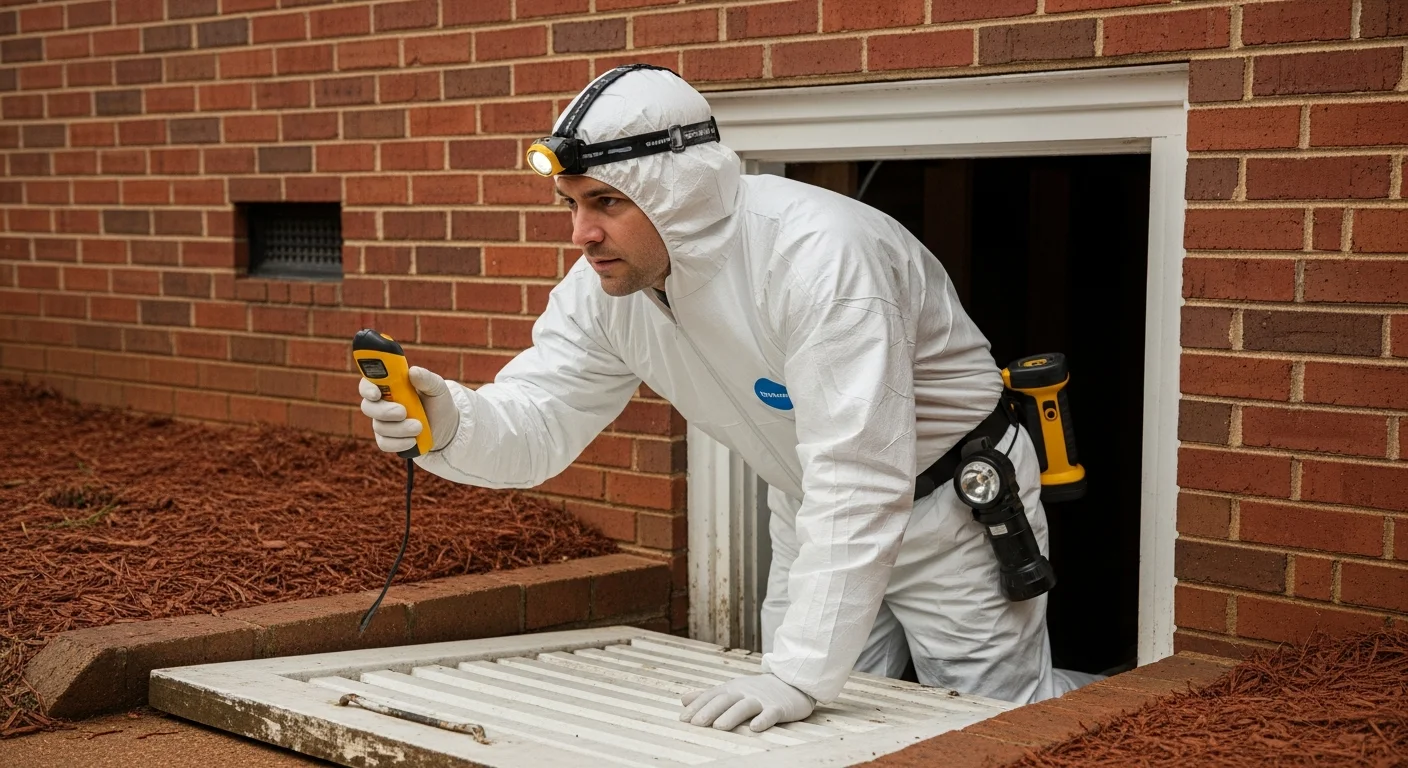
Palm Build technician inspecting a crawl space for mold in a Rock Hill SC brick ranch home
Crawl space inspection in a Rock Hill brick ranch — the vented crawl space design common in pre-2000 homes is a primary driver of chronic mold in this market.

Our Process

Rock Hill Mold Remediation: Our IICRC S520 Process

Every mold remediation project follows the IICRC S520 standard — the same benchmark that SC legislators referenced in House Bill 3203. Here's exactly what happens when you call Palm Build for mold in Rock Hill.

01

Initial Consultation & Assessment

Call (704) 464-0121 to schedule a mold assessment. Our IICRC-certified technicians inspect your property using moisture meters, thermal imaging, and visual assessment. For Rock Hill crawl spaces, we always inspect below the home — surface mold in the living space almost always originates from the crawl space underneath.

02

Testing & Scope Documentation

We collect air samples and surface swabs following the IICRC S520 protocol. Third-party laboratory analysis identifies mold species, spore concentrations, and the extent of contamination. This documentation is critical for insurance claims — especially in SC where there is no state licensing framework to validate scope.

03

Containment Setup

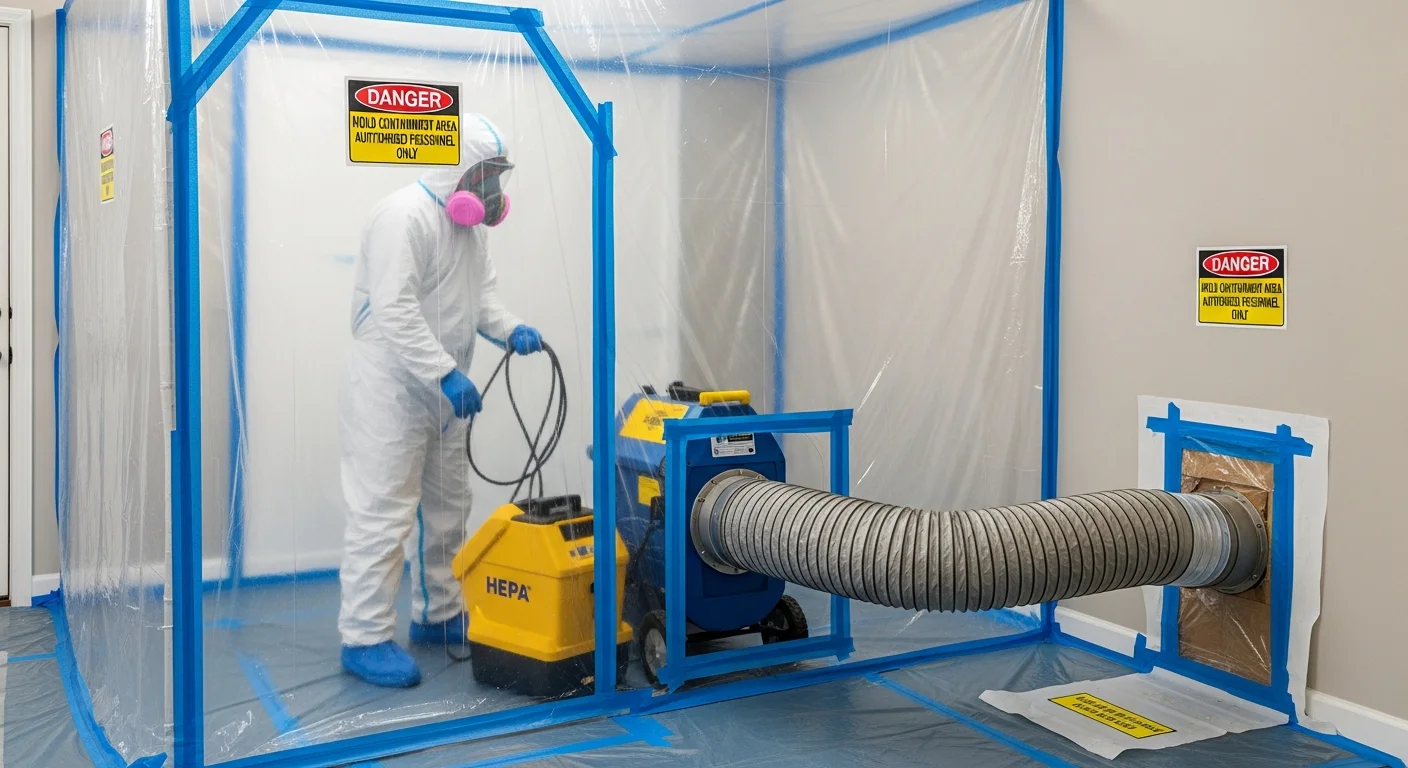
Before any remediation begins, we establish negative-pressure containment using 6-mil polyethylene sheeting and HEPA-filtered air scrubbers. This prevents cross-contamination during removal. In Rock Hill crawl spaces, containment is especially critical because the stack effect will pull disturbed spores directly into the living space above.

04

Remediation & Removal

Affected materials are removed following IICRC S520 protocols. Structural elements like floor joists — which cannot be replaced — are media-blasted or soda-blasted to bare wood, then treated with EPA-registered antimicrobial agents. All waste is bagged, sealed, and disposed of according to OSHA standards.

05

Post-Remediation Verification

After remediation, a second round of air and surface sampling confirms spore counts have returned to acceptable levels. We do not perform our own clearance testing — independent third-party verification ensures objectivity. Your clearance report becomes part of the insurance file and your property record.

06

Prevention & Encapsulation

For crawl space mold — the most common scenario in Rock Hill — we recommend crawl space encapsulation: sealing vents, installing a vapor barrier, and adding a commercial dehumidifier. This addresses the root cause rather than just treating symptoms. See our crawl space cleanup service for the full encapsulation process.

The Hidden Crisis

Rock Hill's Vented Crawl Space Mold Problem

Most Charlotte transplants who buy a 1960s brick ranch in College Downs or Southside have no idea that the air they breathe inside is being pulled directly from a mold-laden crawl space below. Here's how the stack effect turns a vented crawl space into a whole-house air quality crisis.

Ground Level

Rock Hill's Piedmont clay soil retains moisture and drains at less than 0.2 inches per hour. Water pools against your foundation and saturates the ground beneath your crawl space — keeping relative humidity above 70% year-round.

Crawl Space

Traditional vented crawl spaces were designed to let moisture escape — but in the humid Piedmont climate, they do the opposite. Vents pull hot, humid outside air INTO the crawl space, where it condenses on cooler surfaces like floor joists and subfloor. Mold colonizes these surfaces within 48 hours.

Stack Effect

Warm air rises through gaps in the subfloor, around plumbing and HVAC penetrations, and through ductwork joints. This stack effect pulls crawl space air — now carrying mold spores — directly into your living space. Up to 50% of the air you breathe inside originates from the crawl space below.

Living Space

Mold spores circulate through the HVAC system, settling on surfaces, aggravating allergies, and producing the musty odor many Rock Hill homeowners attribute to "old house smell." The real source is beneath their feet — and no amount of air freshener addresses the root cause.

The Solution: Crawl Space Encapsulation

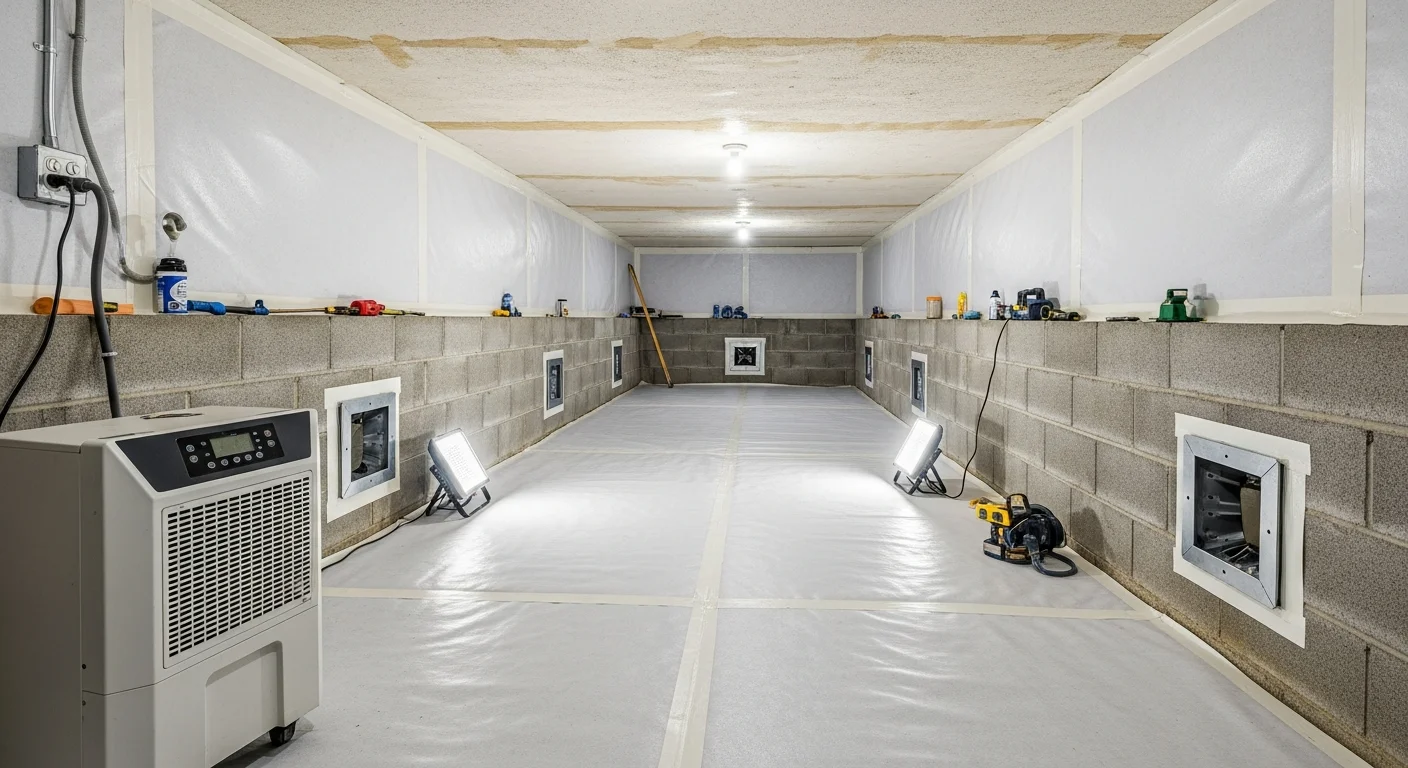
The only permanent fix is to seal the vented crawl space entirely: close all foundation vents, install a 20-mil reinforced vapor barrier across the floor and walls, seal all penetrations, and add a commercial-grade dehumidifier to maintain humidity below 50%. This eliminates the moisture source that feeds mold growth — and dramatically improves indoor air quality throughout the home. Learn more about our crawl space cleanup and encapsulation service.

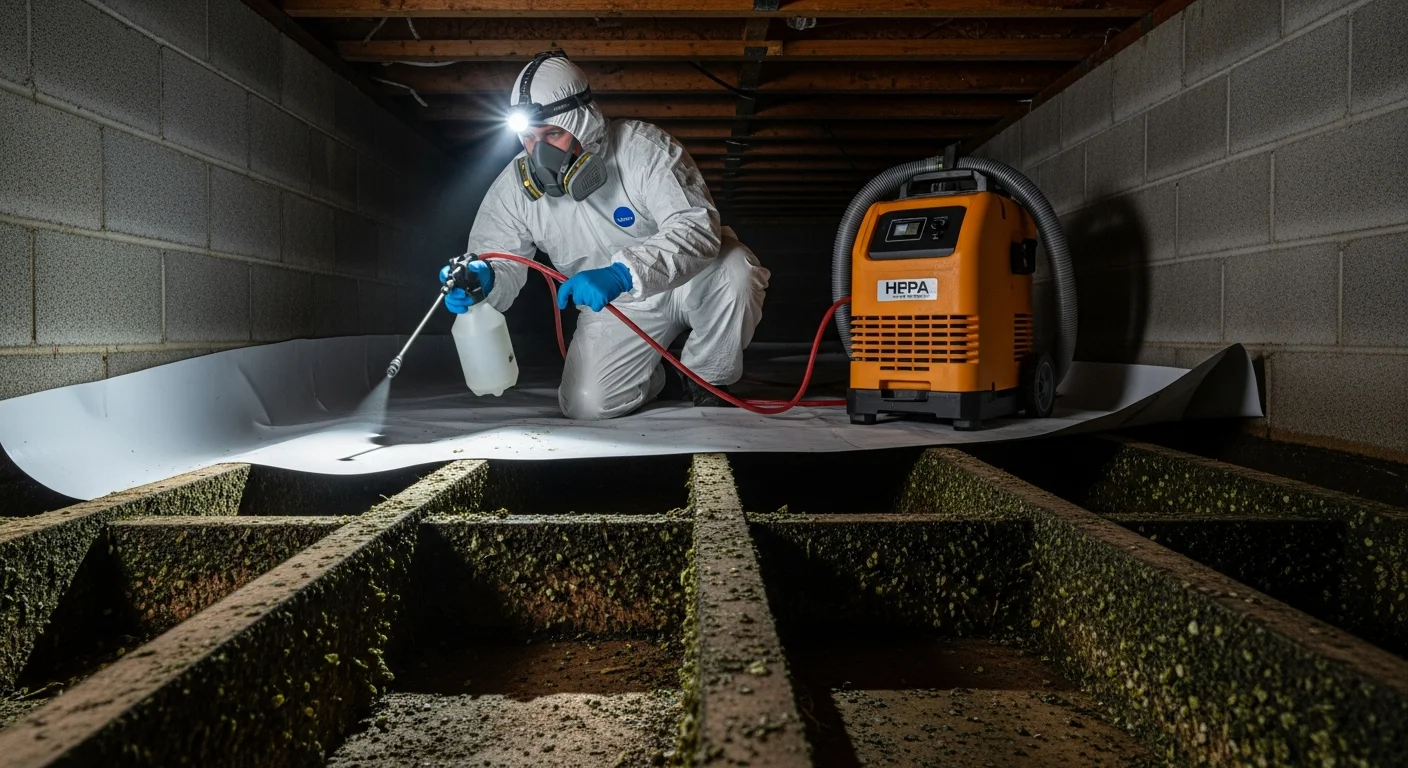
Close-up of mold growth on floor joists in a Rock Hill SC crawl space
Mold colonization on floor joists in a Rock Hill crawl space — the stack effect pulls these spores directly into the living space above.

Cost Transparency

Mold Remediation Costs in Rock Hill

These ranges reflect real-world project costs in York County. Rock Hill's prevalence of crawl space construction and post-storm compound mold significantly affect pricing compared to national averages.

Standard Mold Remediation

Mold inspection & testing $300 - $800
Small area remediation (< 100 sq ft) $1,500 - $4,000
Moderate remediation (100-300 sq ft) $4,000 - $8,000
Antimicrobial treatment $500 - $2,000
Post-remediation clearance testing $300 - $600
Typical project range $2,500 - $12,000

Crawl Space Mold + Encapsulation

Crawl space mold remediation $4,000 - $15,000
Joist repair / sistering $1,500 - $7,000
Vapor barrier installation $1,500 - $4,000
Full encapsulation system $5,000 - $15,000
Commercial dehumidifier $800 - $2,000
Total crawl space range $8,000 - $35,000+

Insurance Navigation

Mold Insurance Coverage in Rock Hill

Rock Hill homeowners pay approximately $1,157-$1,342 annually for standard coverage. But mold claims in South Carolina are uniquely complicated — the state has no mold licensing requirement, which means insurers often scrutinize the credentials of the remediation company before approving payment.

Mold resulting from a covered peril (e.g., burst pipe) is typically covered — but subject to sublimits

Mold sublimits of $5,000-$10,000 are standard in York County policies — crawl space mold projects often exceed $15,000

Mold from long-term humidity, condensation, or deferred maintenance is excluded as a gradual condition

Pre-existing mold discovered during a water damage claim may be excluded if the insurer argues it preceded the covered event

Crawl space encapsulation — the permanent fix — is almost never covered by insurance as it is considered a home improvement

Mold from post-hail roof damage may face separate wind/hail deductibles of 1-2% of dwelling coverage before any payout

Why IICRC Certification Matters for Your Mold Claim

Because South Carolina does not license mold remediators, insurance adjusters in York County increasingly verify that the remediation company holds IICRC certification before approving claims. Using an uncertified company can result in claim denial or reduced payout. Palm Build's IICRC-certified technicians operate to the ANSI/IICRC S520 standard — the same benchmark referenced in SC House Bill 3203.

Documentation That Maximizes Your Payout

Our mold assessment reports include laboratory analysis, moisture mapping, photo documentation, and scope-of-work estimates formatted for the adjuster workflow. For guidance on the full claims process, see our insurance restoration process guide.

Our Work

Rock Hill Mold Remediation: Before and After

Mold growth on crawl space surfaces in a Rock Hill SC home before remediation
Before: Active mold colonization in a Rock Hill crawl space
Completed crawl space encapsulation with vapor barrier in Rock Hill SC
After: Full crawl space encapsulation with 20-mil vapor barrier
Professional mold containment setup with polyethylene sheeting in Rock Hill SC home
Containment: Negative-pressure isolation prevents cross-contamination during removal
Close-up of mold growth on floor joists in a Rock Hill SC crawl space
Floor joist mold — the most common finding in Rock Hill crawl space inspections

Why Palm Build

Why Rock Hill Homeowners Choose Palm Build for Mold

The Rock Hill mold remediation market is flooded with uncertified operators exploiting South Carolina's lack of licensing. Not one competitor publishes Rock Hill-specific mold risk data or explains the crawl space crisis unique to Piedmont construction.

IICRC-Certified in a License-Free State

South Carolina doesn't license mold remediators. Our IICRC Mold Remediation Specialist certification is the only meaningful credential in the state — and the one York County health officials advise homeowners to look for.

25 Minutes from Rock Hill

Our Crompton Street office in Charlotte puts us on-site in Rock Hill within 25 minutes via I-77. We're not a franchise dispatching from hours away — we know your neighborhoods, your crawl spaces, and your clay soil.

Crawl Space Mold Specialists

We've remediated hundreds of crawl spaces in the Piedmont region. We understand the stack effect, the role of vented foundations, and why surface mold treatment without encapsulation is a temporary fix.

Third-Party Clearance Testing

We never perform our own post-remediation clearance. Independent third-party labs verify that spore counts meet standards — providing objective proof for insurance adjusters and your peace of mind.

Remediation + Encapsulation + Rebuild

One company handles the full scope: mold removal, crawl space encapsulation, and any reconstruction needed. No coordinating three contractors. We handle Rock Hill's building permit process so you don't have to.

Common Questions

Rock Hill Mold Remediation FAQ

Does South Carolina require a mold remediation license?
No. South Carolina has no state mold license. The IICRC Mold Remediation Specialist certification is the only industry-standard credential that verifies competency.
How do I know if my Rock Hill crawl space has mold?
Common signs include musty odors, elevated indoor humidity, soft or buckling floors, and allergy symptoms that worsen at home. Professional inspection with crawl-space entry is the only way to confirm.
Does insurance cover mold remediation in Rock Hill?
Mold from a covered water event is typically covered up to your mold sublimit ($5,000-$10,000 on most SC policies). Gradual moisture mold is almost always excluded.
How fast can Palm Build respond to mold in Rock Hill?
We typically arrive within 45-60 minutes from our Charlotte hub. Same-day or next-business-day mold assessments are usually available.
How long does mold remediation take?
Small projects take 1-2 days. Crawl-space remediation takes 2-5 days. Whole-home projects with structural damage can take 2-4 weeks.
Will mold come back after remediation?
Not if the moisture source is eliminated. For Rock Hill crawl-space homes, we recommend encapsulation to permanently control humidity below the mold growth threshold.
How much does mold remediation cost in Rock Hill?
Crawl-space remediation without structural damage typically runs $3,000-$8,000. Projects with joist or subfloor damage range from $8,000 to $18,000 or more.
Is post-hailstorm mold covered by insurance?
Post-storm mold may be covered under the original storm claim if documented as a direct consequence. Palm Build's documentation builds the causal chain from the storm event to the current mold growth.

Mold in Your Rock Hill Home? Trust IICRC-Certified Experts.

In a state with no mold license, credentials matter. Palm Build's IICRC-certified mold specialists bring containment protocols, HEPA filtration, and the Piedmont crawl-space expertise your Rock Hill home needs. Call now for a professional assessment.

45-60 min Response IICRC Certified