(888) 245-5155
Call Now 24/7
Palm Build fire damage restoration technician assessing smoke and soot damage inside a Rock Hill SC home with thermal imaging equipment
ROCK HILL SC — 24/7 FIRE & SMOKE DAMAGE RESPONSE

Fire & Smoke Damage Cleanup in Rock Hill, South Carolina

From Old Town's knob-and-tube wiring to Southside's aging brick ranches, Palm Build responds to Rock Hill fire emergencies with structural assessment, smoke and soot removal, odor elimination, and full reconstruction — one team, one company, start to finish.

Charlotte Office — 25 min to Rock Hill via I-77 45-60 min Response IICRC Certified

45-60 min

Emergency Response

24/7

Dispatch Available

IICRC

Certified Technicians

Local Fire Risk Profile

Why Rock Hill's Older Homes Face Elevated Fire Risk

Rock Hill's housing stock spans from 1890s mill cottages with knob-and-tube wiring to 1960s brick ranches with aluminum branch circuits. This aging electrical infrastructure, combined with winter space heater dependence, creates a fire risk profile that differs significantly from newer Charlotte suburbs.

Knob-and-Tube Wiring in Old Town

130+ yrs

Oldest homes in Rock Hill

Rock Hill's historic core — Old Town, Boyd Hill, Crawford Road — contains homes dating to the 1890s through 1950s with original knob-and-tube electrical wiring. This antiquated system was never designed for modern electrical loads. When homeowners add space heaters, window AC units, or kitchen appliances, the risk of electrical fire increases dramatically. Historic preservation requirements can complicate rewiring projects.
Aging Electrical Infrastructure

60-70 yrs

Post-war home electrical age

Even beyond the oldest homes, Rock Hill's 1950s-1970s brick ranches in College Downs, Southside, and South Central were wired with aluminum branch wiring or undersized copper — both of which develop connection failures over decades. These neighborhoods are the source of a disproportionate share of residential electrical fire calls in York County.

Space Heater Fire Season

31°F

January average low

Rock Hill's January average low of 31 degrees Fahrenheit drives heavy space heater use — particularly in older homes with inadequate HVAC systems. Space heaters placed near combustible materials in crawl-space homes with original insulation create the most common residential fire scenario in the Piedmont region during winter months.

Compound Fire + Water Damage

48 hrs

Mold risk after fire suppression

Fire suppression in Rock Hill creates immediate secondary water damage. A house fire in a crawl-space home means thousands of gallons of fire hose water flowing through the structure and pooling in the crawl space below. Without rapid extraction, this compound damage produces mold within 48 hours — requiring both fire restoration and water damage remediation simultaneously.

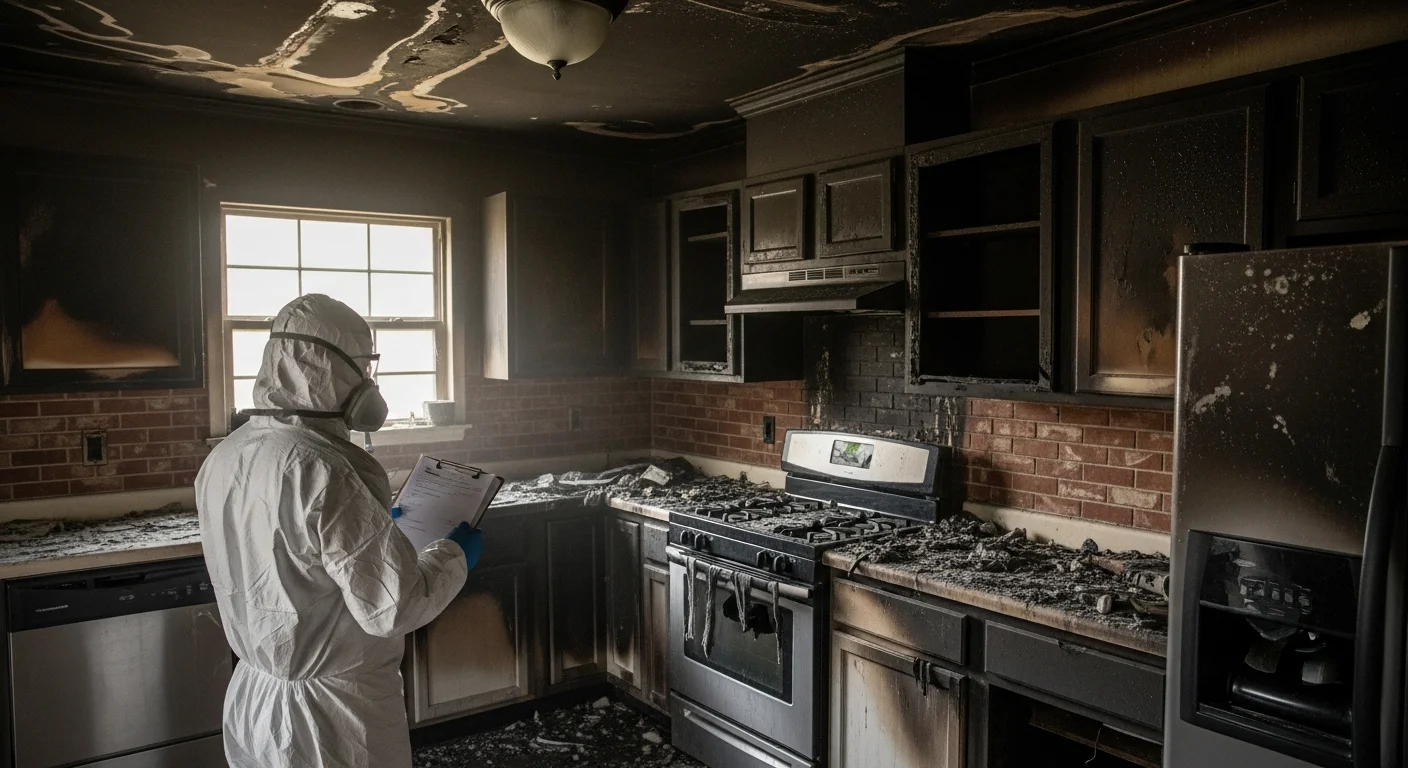
Palm Build technician assessing fire and smoke damage in a Rock Hill SC home
Fire and smoke damage assessment in a Rock Hill home — aging electrical systems in pre-1970 construction are a leading cause of residential fires in York County.

Damage Categories

Types of Fire & Smoke Damage in Rock Hill Homes

Fire damage extends far beyond what flames touch. Understanding the four categories of damage helps Rock Hill homeowners grasp why professional restoration requires multiple disciplines — and why cutting corners leads to long-term problems.

Structural Fire Damage

Direct flame contact with framing, drywall, flooring, and roofing materials. Rock Hill's older brick ranches with original lumber framing are particularly vulnerable — the dried-out wood ignites faster and burns more completely than modern engineered lumber.

Common signs: Charred framing, collapsed roof sections, destroyed flooring, compromised load-bearing walls

Smoke & Soot Damage

Smoke travels far beyond the fire origin, penetrating every porous surface through HVAC ductwork. In Rock Hill homes with crawl spaces, smoke infiltrates the subfloor and crawl space — requiring below-home treatment that many restoration companies miss entirely.

Common signs: Discolored walls and ceilings, smoke-saturated insulation, contaminated HVAC systems, lingering odor in fabrics

Fire Suppression Water Damage

Fire departments use thousands of gallons to suppress residential fires. In crawl-space homes — the dominant construction type in Rock Hill's older neighborhoods — this water flows through the structure and pools beneath the home, creating immediate mold risk within 48 hours.

Common signs: Saturated subfloors, crawl space flooding, waterlogged insulation, secondary mold growth

Chemical & Residue Damage

Modern synthetic materials produce toxic residues when burned. Protein fires (kitchen) leave invisible alkaline films that corrode metal surfaces. Burning vinyl siding — widespread in newer Rock Hill subdivisions — produces hydrochloric acid vapor that attacks electronic components and metal fixtures.

Common signs: Corroded appliances, etched glass surfaces, damaged electronics, toxic residue on contents

Our Process

Rock Hill Fire & Smoke Restoration Process

Fire restoration requires simultaneous management of structural damage, smoke contamination, water damage, and insurance documentation. Here's our proven sequence for Rock Hill properties.

01

Emergency Response (45-60 Minutes)

Call (704) 464-0121 any time — fire damage does not wait for business hours. Our crew arrives from the Charlotte hub via I-77 with board-up materials, industrial air scrubbers, and smoke damage assessment equipment. We secure your property and begin documentation immediately.

02

Damage Assessment & Documentation

Before cleanup begins, we document every category of damage: structural char, smoke migration paths through HVAC systems, water damage from fire suppression, and chemical residue from burned synthetics. This comprehensive documentation is essential for maximizing your insurance claim.

03

Board-Up & Tarping

Compromised roofs, windows, and walls are secured against weather and unauthorized entry. In Rock Hill, where rain can arrive any day of the year with 44 inches annually, rapid board-up prevents secondary water damage to fire-weakened structures.

04

Smoke & Soot Removal

We use dry sponge techniques for light soot, media blasting for heavy char on structural elements, and hydroxyl generator technology for molecular-level odor elimination. For Rock Hill crawl-space homes, we treat the subfloor and crawl space where smoke has infiltrated — a step most competitors skip.

05

Water Extraction & Drying

Fire suppression water is extracted and structural drying begins immediately. In crawl-space homes, we address the crawl space directly — standing water from fire hoses will produce mold within 48 hours in Rock Hill's humid Piedmont climate.

06

Reconstruction

Once the structure is clean, dry, and verified safe, we handle the full rebuild: framing, drywall, flooring, electrical, plumbing, and painting. Rock Hill requires building permits for all structural repairs with a 10-business-day plan review — we manage the entire permitting process.

Historic Home Fire Risks

Old Town Rock Hill: Fire Risks in Historic Homes

Rock Hill's historic core contains some of the most fire-vulnerable residential construction in York County. Understanding these specific risks helps homeowners in Old Town, Boyd Hill, and Crawford Road take preventive action — and know what to expect when restoration is needed.

Knob-and-Tube Wiring

Homes in Old Town, Boyd Hill, and Crawford Road built before 1940 may still have original knob-and-tube electrical wiring. This system uses open-air conductors separated by ceramic knobs and tubes — with no ground wire. Modern appliance loads cause these connections to overheat, and insulation blown over the wires traps heat that can ignite surrounding materials.

Original Lath and Plaster

Historic Rock Hill homes used wood-lath and plaster wall construction. Fire can travel unseen through the air gaps between lath strips and spread through balloon-framed walls from basement to attic before visible flames appear on the surface. This hidden fire spread complicates both suppression and restoration.

Historic Preservation Complexity

Several Old Town streets are surveyed for the National Register of Historic Places. Fire restoration in these homes requires sensitivity to original materials, trim profiles, plaster techniques, and architectural details that cannot simply be replaced with modern materials. Restoration must balance safety with preservation.

The Knowledge Park Connection

The $106 million Thread redevelopment converted the historic Bleachery textile mill into mixed-use space. The adaptive reuse of century-old industrial buildings into residential and commercial occupancy creates fire-life-safety challenges that require restoration professionals who understand both historic construction and modern fire codes.

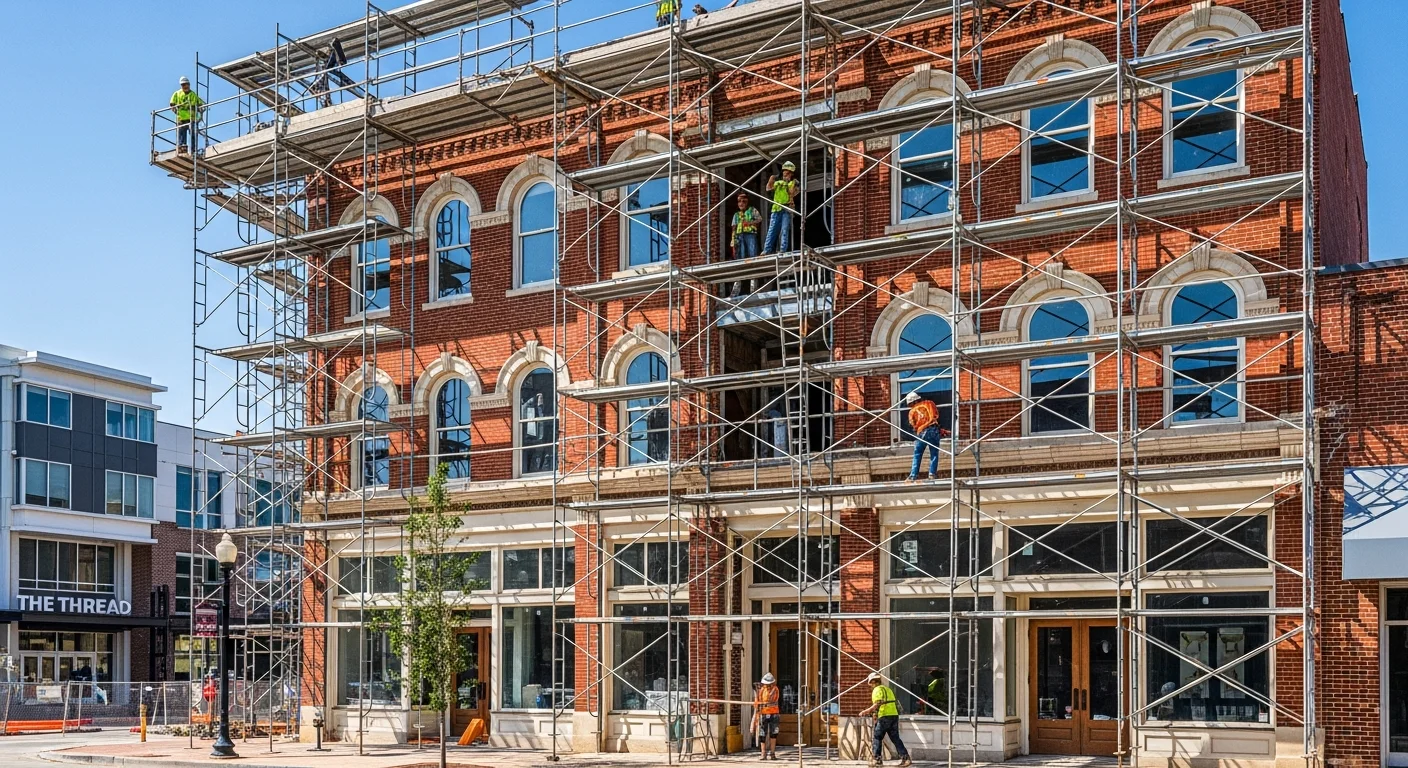
Downtown Rock Hill SC commercial renovation showing historic brick architecture
Rock Hill's historic downtown — where century-old construction meets modern fire safety challenges requiring specialized restoration expertise.

Cost Transparency

Fire & Smoke Restoration Costs in Rock Hill

Fire restoration costs vary dramatically based on the extent of structural damage, smoke migration, and secondary water damage. These ranges reflect York County project costs including the added complexity of crawl-space homes.

Smoke & Soot Damage

Emergency board-up & tarping $800 - $3,000
Smoke & soot cleanup (per room) $1,500 - $4,500
Odor elimination (hydroxyl/ozone) $600 - $2,500
HVAC duct cleaning & sanitization $400 - $1,200
Contents cleaning & restoration $1,000 - $5,000
Typical smoke damage range $5,000 - $18,000

Major Structural Fire

Structural fire remediation $15,000 - $50,000
Fire suppression water extraction $2,000 - $8,000
Crawl space water/mold treatment $4,000 - $15,000
Full reconstruction (framing to finish) $25,000 - $100,000+
Electrical rewiring (if required) $5,000 - $15,000
Total major fire range $50,000 - $200,000+

Insurance Navigation

Fire Damage Insurance Claims in Rock Hill

Fire claims are typically the best-covered peril in homeowners insurance, but Rock Hill homeowners with older homes often encounter unexpected gaps — especially around code upgrades and secondary water/mold damage from fire suppression.

Structural fire damage is covered under standard homeowners policies (dwelling coverage)

Additional living expenses (ALE) cover temporary housing while your Rock Hill home is restored

Contents damaged by fire and smoke are covered under personal property coverage (subject to limits)

Electrical system upgrades required by current code may exceed your policy's ordinance/law coverage

Older roofs settled at Actual Cash Value (ACV) — depreciation subtracted from fire-damaged roof replacement

Secondary mold from fire suppression water may face separate sublimits of $5,000-$10,000

Complete fire documentation from day one

Our fire damage documentation includes structural assessment, smoke migration mapping, water damage from suppression, contents inventory with pre-loss values, and daily progress reporting — all formatted for the adjuster workflow used by State Farm and every major carrier in York County. See our insurance restoration process guide.

Our Work

Rock Hill Fire Restoration: Before and After

Fire and smoke damage assessment in a Rock Hill SC residential property
Before: Comprehensive fire and smoke damage assessment in Rock Hill
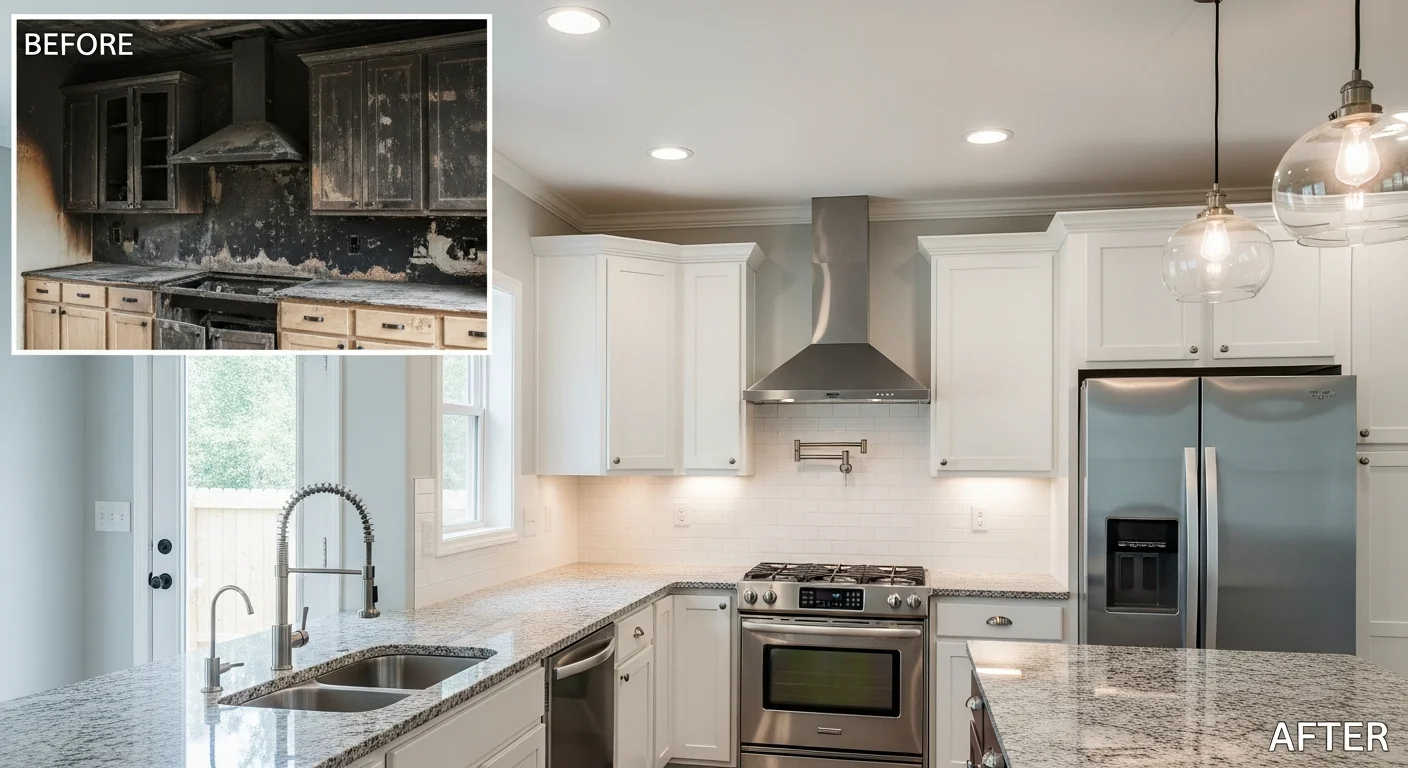
Beautifully reconstructed kitchen in Rock Hill SC after fire damage restoration
After: Complete kitchen reconstruction following fire damage
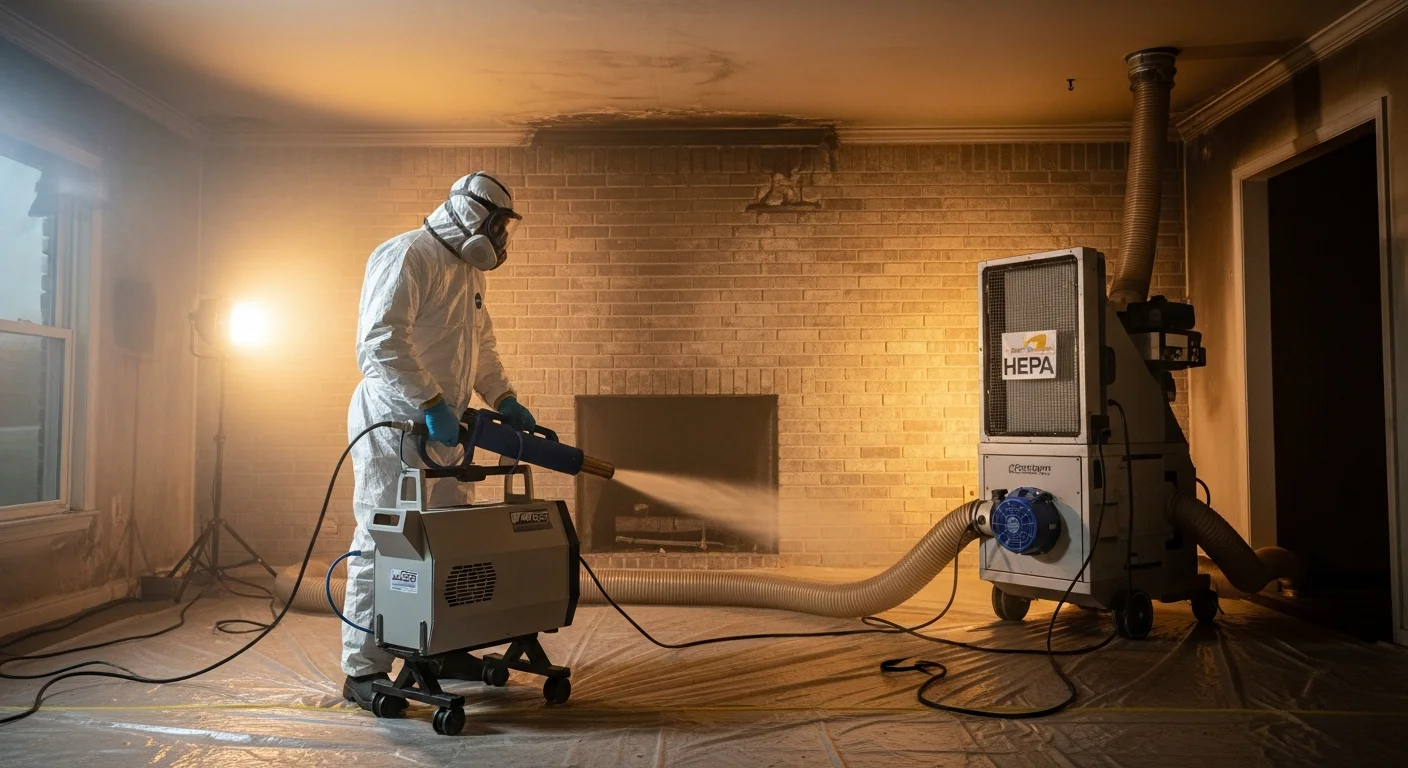
Professional smoke and soot cleanup treatment in a Rock Hill SC home
Smoke cleanup: Industrial soot removal and surface treatment in progress
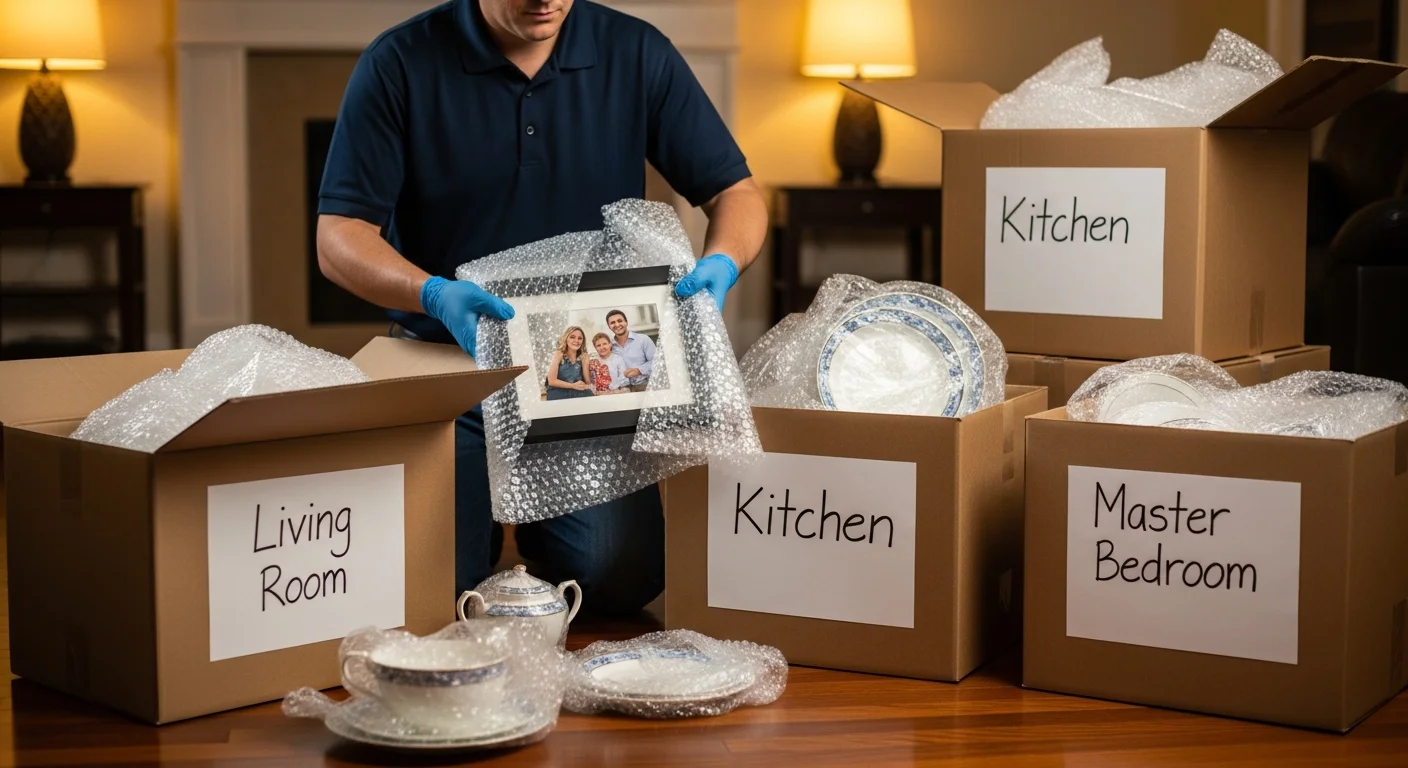
Contents packout and inventory for fire-damaged personal belongings in Rock Hill SC
Contents packout: Careful inventory and off-site restoration of personal items

Why Palm Build

Why Rock Hill Homeowners Choose Palm Build for Fire Restoration

Fire restoration requires a company that can manage structural damage, smoke contamination, water extraction, and mold prevention simultaneously. No competitor in Rock Hill addresses the unique challenges of restoring older construction types prevalent in this market.

25 Minutes via I-77

Our Crompton Street office puts us on-site in Rock Hill faster than any franchise dispatching from a regional hub. Fire damage compounds every hour — smoke residue becomes harder to remove and water from fire suppression feeds mold growth.

IICRC Fire & Smoke Certified

Our technicians hold IICRC Fire and Smoke Restoration certification. In a market dominated by franchise operations using generic cleanup protocols, our training covers the specific challenges of Rock Hill's older construction — including crawl-space water extraction after suppression.

Multi-Discipline Restoration

Fire damage in Rock Hill is never just fire damage. It's fire + smoke + water + mold. We manage all four disciplines under one project manager, eliminating the coordination failures that happen when homeowners hire separate companies.

Insurance Documentation Expertise

Fire claims involve dwelling coverage, contents coverage, and ALE. Our documentation includes structural assessment, contents inventory with pre-loss valuation, and daily progress reporting — formatted for State Farm and every major York County carrier.

Cleanup Through Reconstruction

From emergency board-up through final paint, one company handles the entire project. We manage Rock Hill's building permit process, coordinate inspections, and deliver turnkey restoration.

Common Questions

Rock Hill Fire & Smoke Restoration FAQ

How fast can Palm Build respond to a fire in Rock Hill?
We arrive within 45-60 minutes from our Charlotte operations hub. We dispatch 24/7/365 — call (704) 464-0121.
Is fire damage covered by insurance in Rock Hill?
Yes. Fire damage is generally the most well-covered peril on standard homeowners policies, including dwelling, personal property, smoke damage, and additional living expenses.
How long does fire restoration take?
Kitchen fires with smoke damage: 2-4 weeks. Significant structural fires: 3-6 months. Add 10 business days for Rock Hill's building permit plan review.
Can smoke odor be fully eliminated?
Yes, with professional thermal fogging, hydroxyl generators, and ozone treatment. Standard household cleaning will not eliminate smoke odor at the molecular level.
Will I need to move out during fire restoration?
For anything beyond a minor fire, yes. Your insurance policy's Additional Living Expenses coverage pays for temporary housing during restoration.
Does fire suppression water cause additional damage?
Yes. Suppression water soaks into floors, walls, and crawl spaces. In Rock Hill's humid climate, mold can begin growing on wet materials within 24-48 hours if not extracted promptly.
Does Palm Build handle commercial fire restoration?
Yes. We serve Knowledge Park, The Thread, Winthrop University, and downtown Rock Hill commercial properties with the scale and expertise commercial fire restoration requires.
What areas does Palm Build serve from Rock Hill?
All of Rock Hill and York County including Fort Mill, Tega Cay, Clover, Indian Land, Lake Wylie, and the broader Charlotte metro area.

Fire or Smoke Damage in Rock Hill? Every Hour Matters.

Soot etching becomes permanent within 72 hours. Suppression water triggers mold in 24-48. Palm Build responds to Rock Hill fire emergencies in under an hour with the equipment, certifications, and insurance process to restore your home from fire to finish.

45-60 min Response IICRC Certified