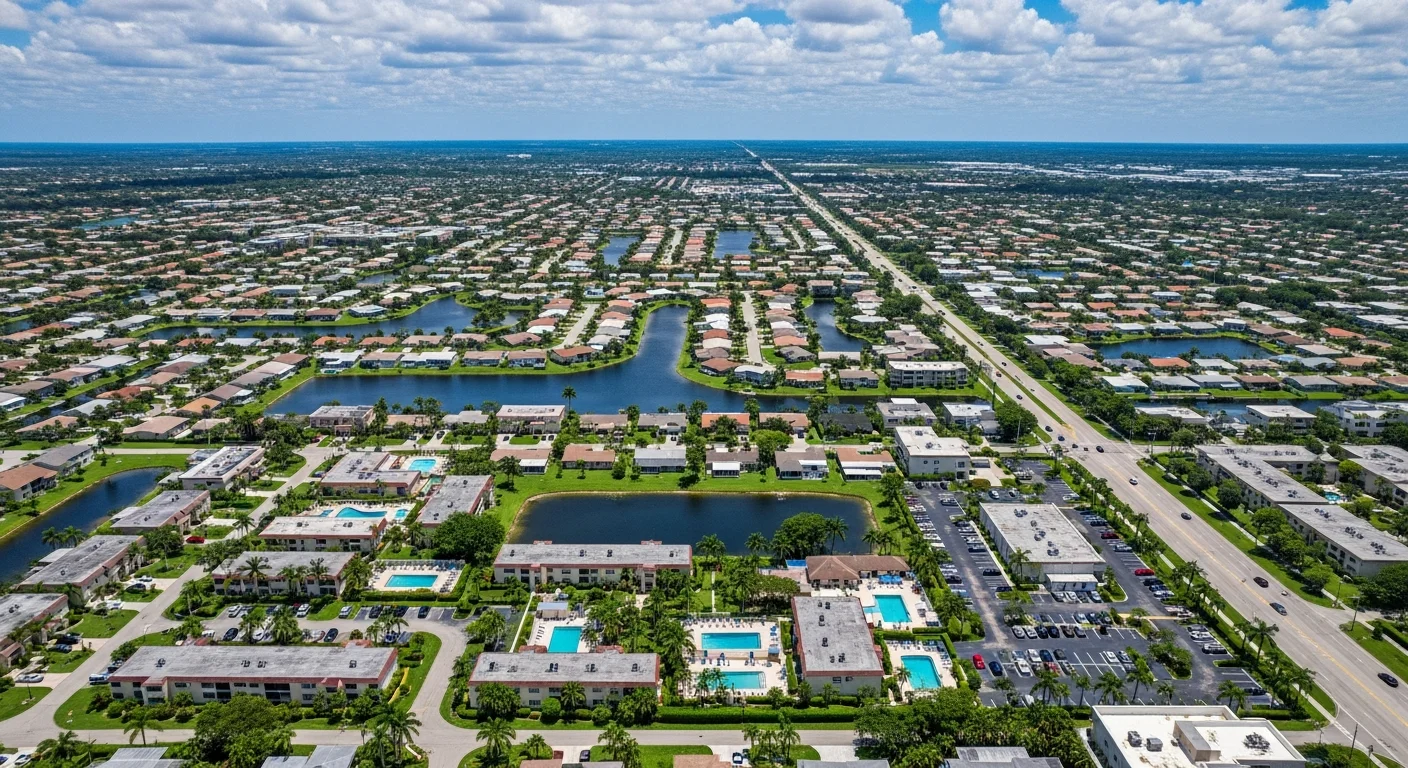
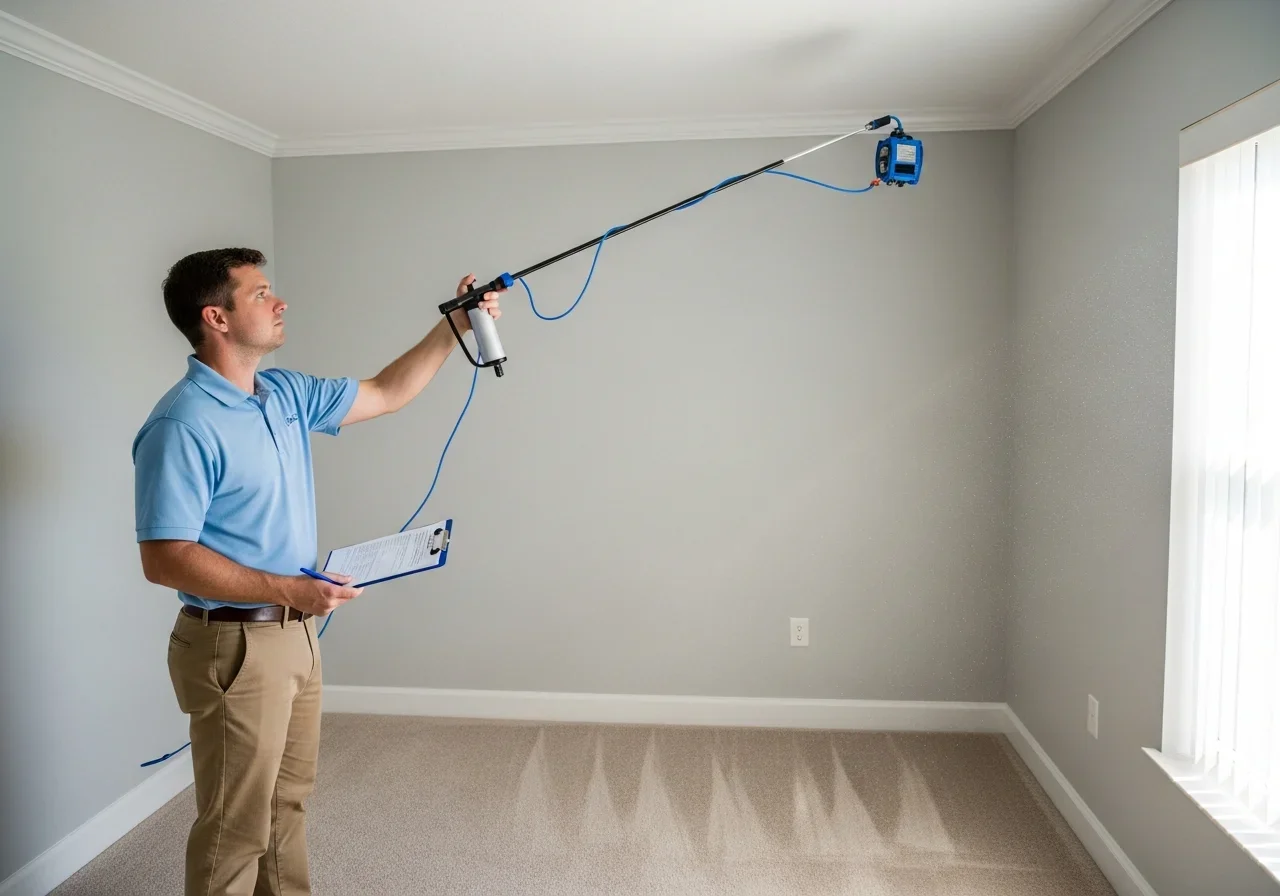
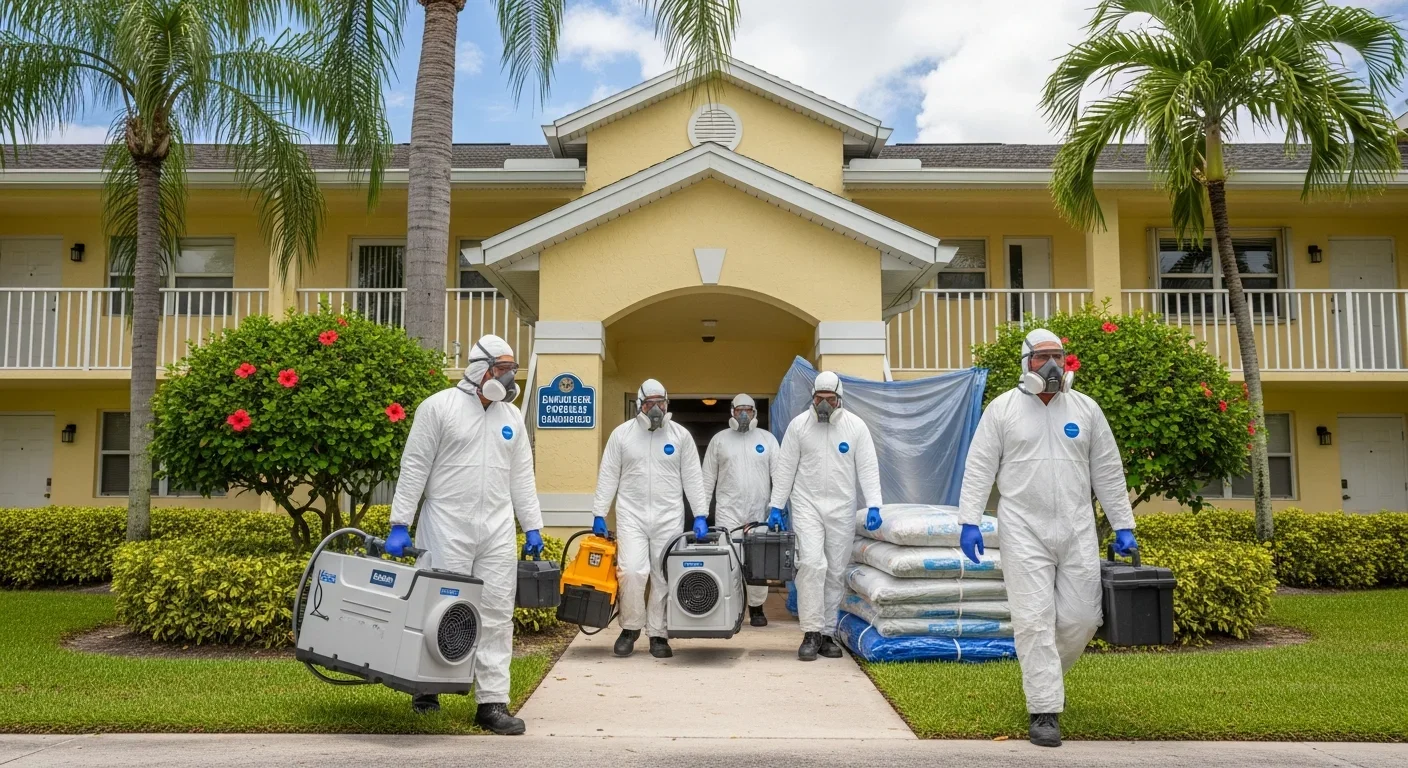
From HVAC condensate mold in Castle Gardens 55+ condos to hidden growth behind shared CBS walls in International Village, Palm Build's Florida-licensed remediators bring professional containment, HEPA filtration, and independent clearance testing to Lauderhill's Inverrary-area condo communities and single-family neighborhoods.
Deerfield Beach Office — ~15 miles to Lauderhill Same day Response IICRC Certified
Dense Inverrary condo communities with HOA delays, 1970s-era CBS construction trapping
moisture in wall cavities, Florida's strict licensing requirements, and relentless
subtropical humidity combine to make Lauderhill one of inner Broward's highest mold-risk
cities. Understanding why is the first step toward permanent remediation — not just
cosmetic cleanup.
Inverrary Condo HOA Delays
HOA
Access delays
Lauderhill's Inverrary corridor — International Village, Castle Gardens, Environ, and Lakes of Inverrary — houses thousands of condo units where HOA access, board approval, and insurance disputes create days-long delays before remediation can begin. During those delays, subtropical humidity accelerates mold colonization in closed units. Castle Gardens' 55+ community has an especially high proportion of seasonal residents, meaning leaks go unreported for weeks while units sit unoccupied and humid.
CBS Moisture Traps
1976
Median year built
With a median build year of 1976, Lauderhill's housing stock is predominantly CBS (concrete block and stucco) construction built without modern vapor retarders. Fifty years of thermal cycling has created hairline stucco cracks that funnel seasonal rainfall into wall cavities between the exterior block and interior drywall. These dark, humid pockets become invisible mold incubators. By the time musty odors or paint bubbling appear on interior surfaces, CBS cavity contamination is typically extensive — requiring FLIR thermal imaging to fully map.
FL Mold Licensing Required
Required
Ch 468 XVI
Florida is one of the few states that requires separate licensing for mold assessment and mold remediation under Chapter 468, Part XVI (DBPR). The same company cannot perform both on the same project within 12 months — preventing conflicts of interest where the company finding the mold profits from removing it. This regulatory framework protects Lauderhill homeowners, but only if you verify your contractor's license at myfloridalicense.com before work begins.
Year-Round HVAC Condensate Risk
80%+
Wet season RH
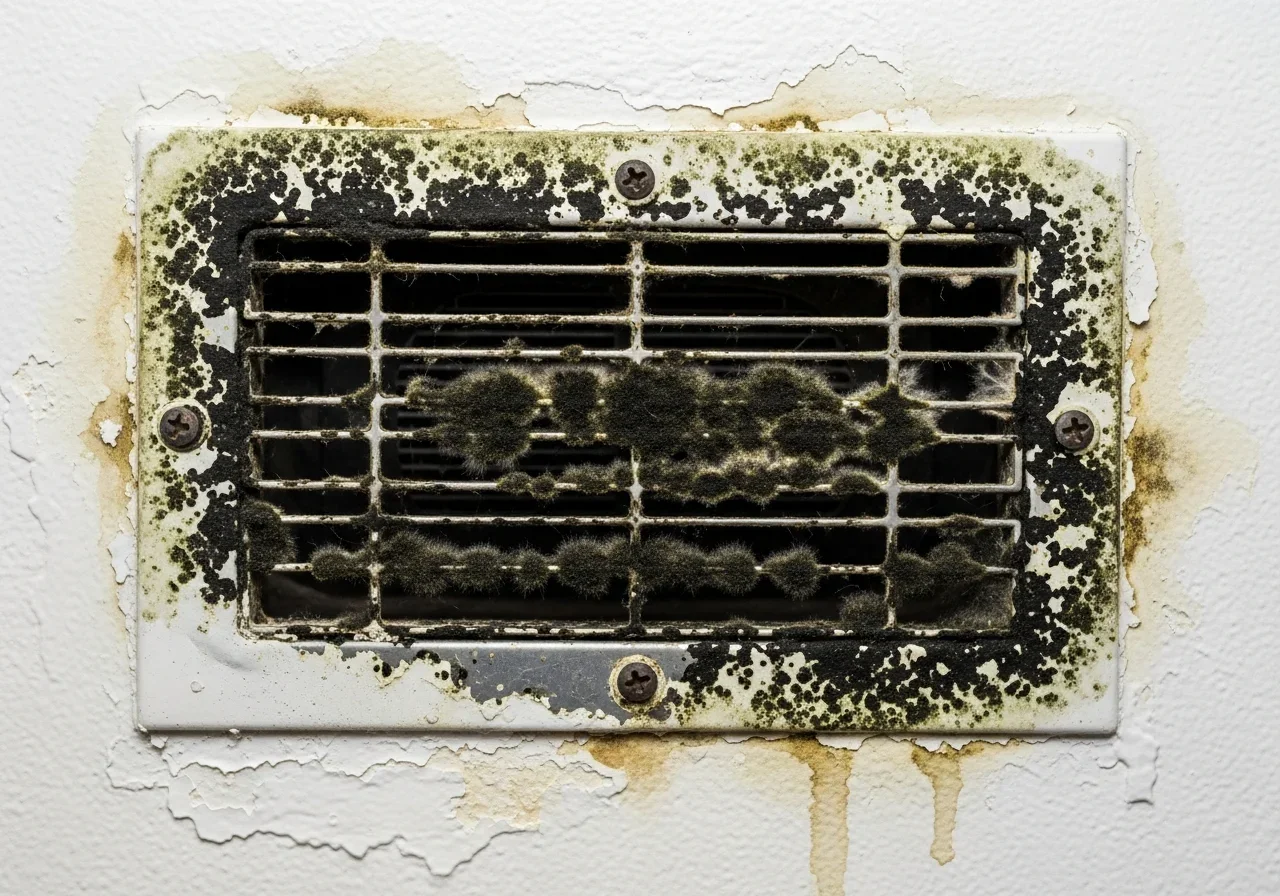
Lauderhill sustains relative humidity above 60% — the threshold where mold colonization accelerates — for the majority of the year. The pronounced wet season (June through October) brings daily afternoon thunderstorms and 80%+ outdoor humidity that saturates building materials already compromised by aging CBS construction. Year-round HVAC operation generates constant condensation on evaporator coils and drip pans, making clogged condensate drain lines one of the most common mold triggers in the city's Inverrary-era condo communities.
HVAC condensation mold — one of the most common mold sources in Lauderhill's
Inverrary-era condo communities where systems run year-round.
Mold risk in Lauderhill follows predictable patterns based on building type,
construction era, plumbing age, and HOA responsiveness. Here is what we see across the
communities where we work most frequently.
International Village (Inverrary)
Critical
Built: 1970s–1980s
Primary risk: Dense multi-story condos with shared riser plumbing and HVAC chases
Common damage: HVAC closets, shared wall cavities, ceiling assemblies between floors
Common damage: Behind kitchen and bathroom walls at supply connections, under-sink areas
Cricket Club
Moderate
Built: 1980s
Primary risk: Post-storm moisture intrusion not dried promptly in older condo buildings
Common damage: Roof-wall transitions, window edges, ceiling corners, HVAC closets
Park Central
Moderate
Built: 1980s–1990s
Primary risk: Condensate overflow from aging window-unit and split-system ACs
Common damage: Around AC penetrations, under units, adjacent wall assemblies
West Sunrise
Moderate
Built: 1980s–1990s
Primary risk: Seasonal rain intrusion through roof edge flashing failures
Common damage: Attic insulation, ceiling drywall, top-of-wall assemblies
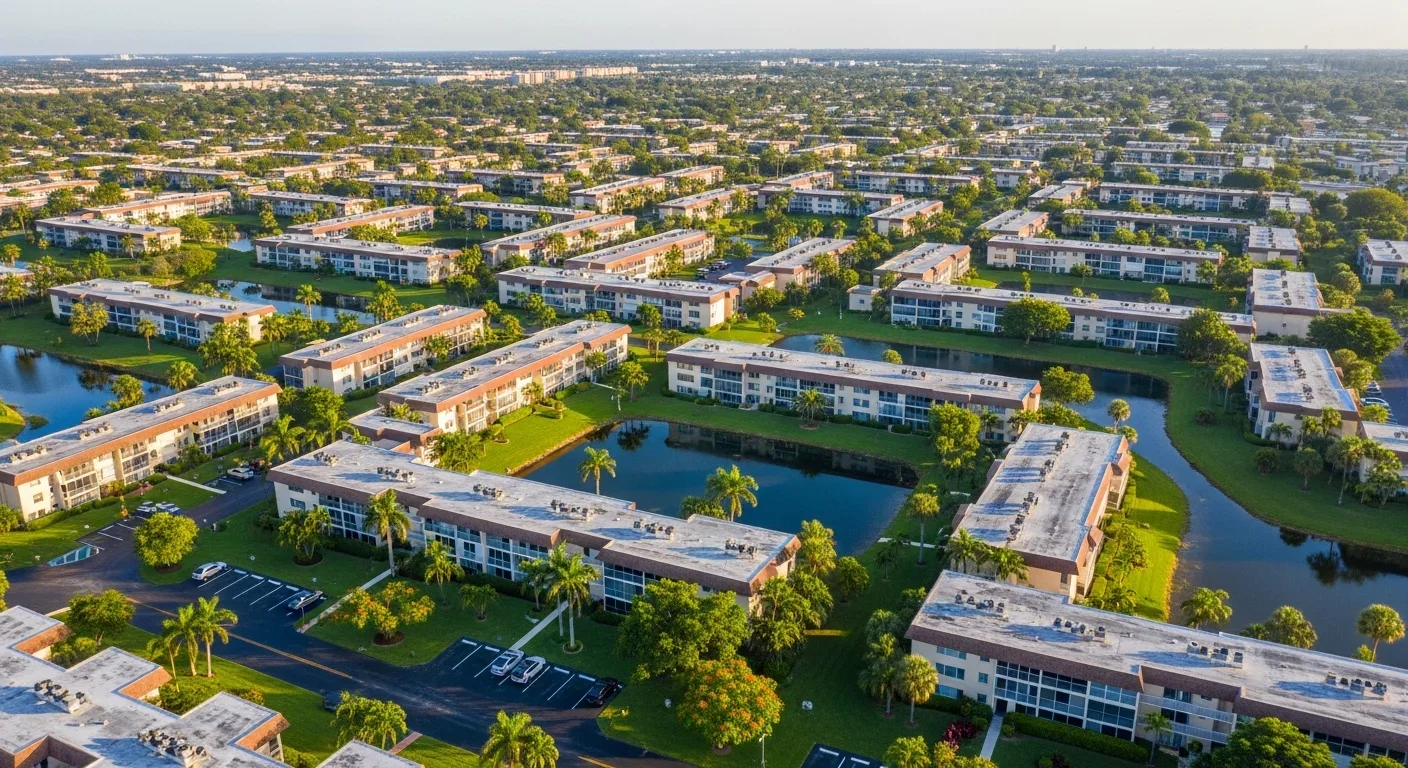
Lauderhill's Inverrary corridor — built predominantly in the 1970s with CBS construction
— faces some of the highest mold risk in inner Broward County.
Lauderhill's Defining Challenge
Closed-Unit & Condo Mold: The Inverrary Problem
If there is one mold scenario that defines Lauderhill, it is closed-unit condensate mold
in Inverrary's seasonal communities. Thousands of units sit unoccupied for months while
fan-coil systems cycle humid subtropical air — and silent HVAC drip-pan overflows feed
hidden mold colonies that grow unchallenged until the owner returns.
Closed-Unit Fan-Coil Condensate
Castle Gardens, International Village, and Environ host large populations of seasonal and part-time residents. When units sit closed for months, fan-coil air handlers continue cycling humidity — and clogged drip trays overflow into wall assemblies without anyone present to notice. By the time owners return in October or November, mold has colonized HVAC closets, adjacent walls, and sometimes entire bathrooms. This pattern repeats every year for units without remote monitoring or quarterly checks.
Cross-Unit Water Migration
A plumbing failure in an upper unit sends water through shared floor/ceiling assemblies into the unit below. In Lauderhill's 1970s-era condo buildings, these assemblies lack modern waterproofing membranes. By the time the leak is reported and HOA-arranged access occurs, water has saturated CBS cavities on both sides of the shared assembly — and mold has colonized hidden spaces that neither unit owner can see. Inverrary community managers routinely face 48–72 hour coordination delays before a remediator can enter.
The 14-Day Seepage Exclusion
Many Florida insurance policies contain a 14-day seepage/leakage exclusion — if the insurer determines water accumulated gradually rather than from a sudden event, mold coverage is denied. In Lauderhill condos, slow leaks through shared plumbing often go undetected for weeks because they first damage the unit below, not the source unit. Palm Build documents the moisture source and timeline from day one to counter seepage arguments — connecting discovered mold to a specific and sudden triggering event.
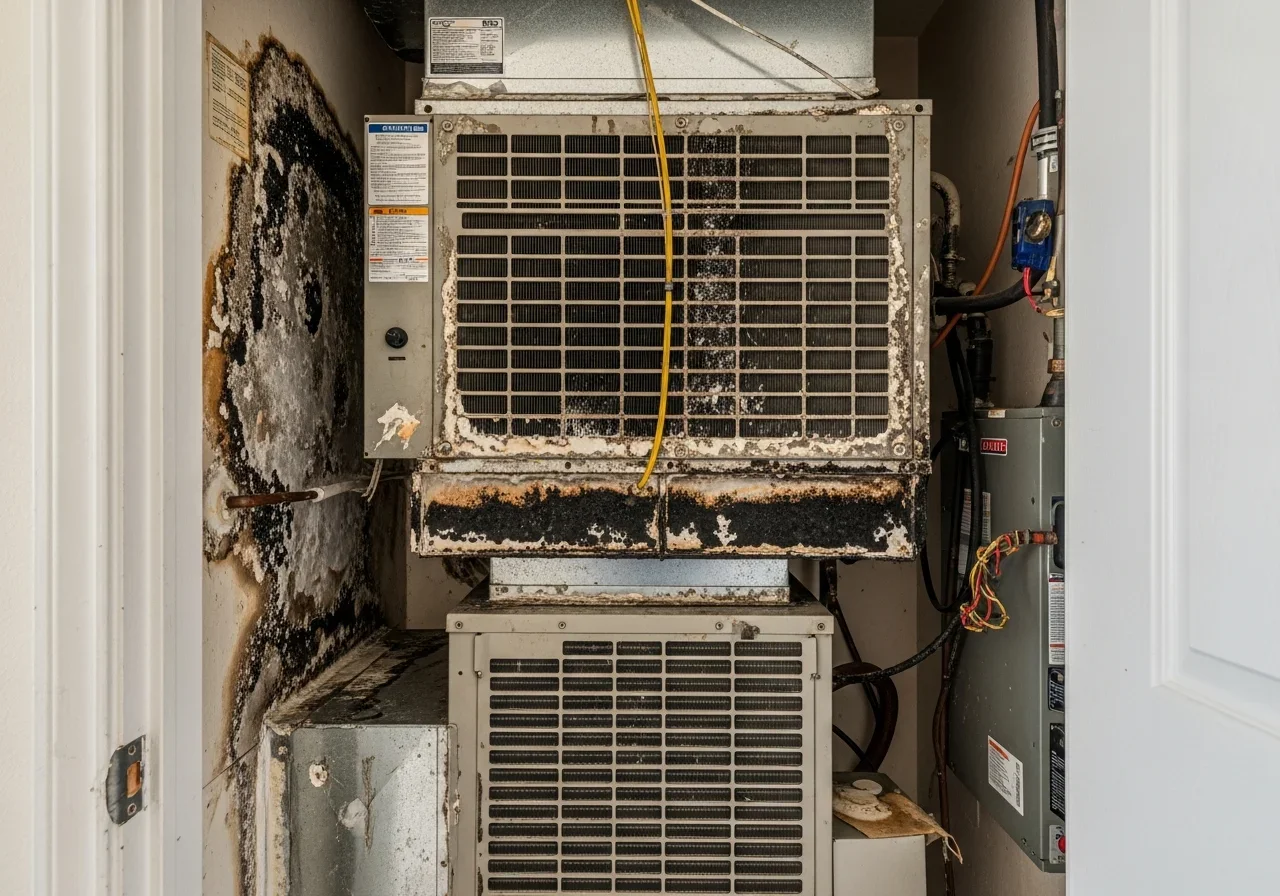
Fan-coil condensate mold in an Inverrary condo — the unit sat closed for three
months before the owner returned to discover HVAC closet contamination.
Signs of HVAC Condensate Mold in Lauderhill Condos
Musty odor in HVAC closet or from supply vents when system runs
Visible black or green discoloration around supply vent grilles or on drip pan
Damp or staining below the air handler unit on the closet floor
Recurring condensate overflow that trips the float switch and shuts off AC
Allergy symptoms that worsen when the AC is running
Visible mold on insulation lining inside the air handler cabinet
Water staining on drywall adjacent to HVAC closet
Humidity readings above 55% inside a closed, air-conditioned unit
Palm Build's Inverrary Condo Approach
Document every unit independently with thermal imaging and moisture mapping
Establish containment protecting all adjacent units from spore migration
Coordinate with HOA for access scheduling and common-element scope
Create parallel documentation for both HO-6 and master policy claims
Timeline and source documentation to counter 14-day seepage exclusion
HVAC system cleaning and drip-pan treatment to prevent recurrence
Independent post-remediation clearance for each affected unit
Recommendations for remote humidity monitoring in seasonal units
FL Regulatory Landscape
Mold Licensing in Florida: What Lauderhill Residents Need to Know
Florida has one of the strictest mold regulatory frameworks in the country. Under DBPR Chapter 468, Part XVI, the state requires separate licenses for mold
assessment and mold remediation — and explicitly prohibits the same company from
performing both on the same project within 12 months.
This separation prevents conflicts of interest: the company that finds the mold cannot
profit from removing it. Florida mold assessors must carry $1 million in general
liability insurance, and remediators must demonstrate financial responsibility. Both
licenses require continuing education. In Lauderhill's Inverrary condo communities,
this independent verification is especially important for HOA liability protection —
associations need documentation from licensed parties for their own insurance records.
Verify DBPR mold remediator license before hiring any company
Assessor and remediator MUST be separate licensed entities
Same company cannot assess and remediate within 12 months
Post-remediation clearance must come from a different licensed assessor
Check license status at myfloridalicense.com
Palm Build Credentials
DBPR-licensed mold remediator — Florida compliant
IICRC S520 certified remediation protocols
CBS construction and Inverrary condo mold expertise
Full liability insurance and workers' comp coverage
Works with independent FL-licensed assessors for clearance
Broward County ePermits OneStop permit coordination
Red Flags to Watch For
No DBPR mold license or won't provide license number
Same company offers to assess AND remediate your mold
Offers to "spray and seal" without removing contamination
Won't set up containment barriers or HEPA filtration
Claims "no license needed" in Florida (false)
IICRC S520 Protocol
Our Lauderhill Mold Remediation Process
Professional mold remediation follows a strict sequence defined by the IICRC S520
standard and Florida DBPR regulations. Here is exactly what happens when Palm Build's
licensed team arrives at your Lauderhill property.
01
Assessment & CBS Moisture Mapping
Day 1
02
Containment & Multi-Unit Protection
Day 1–2
03
HEPA Air Filtration
Continuous
04
Material Removal & HEPA Vacuuming
Days 2–4
05
Antimicrobial Treatment & Source Resolution
Days 4–5
06
Independent Verification & Clearance
Day 5–6
01
Assessment & CBS Moisture Mapping
Day 1
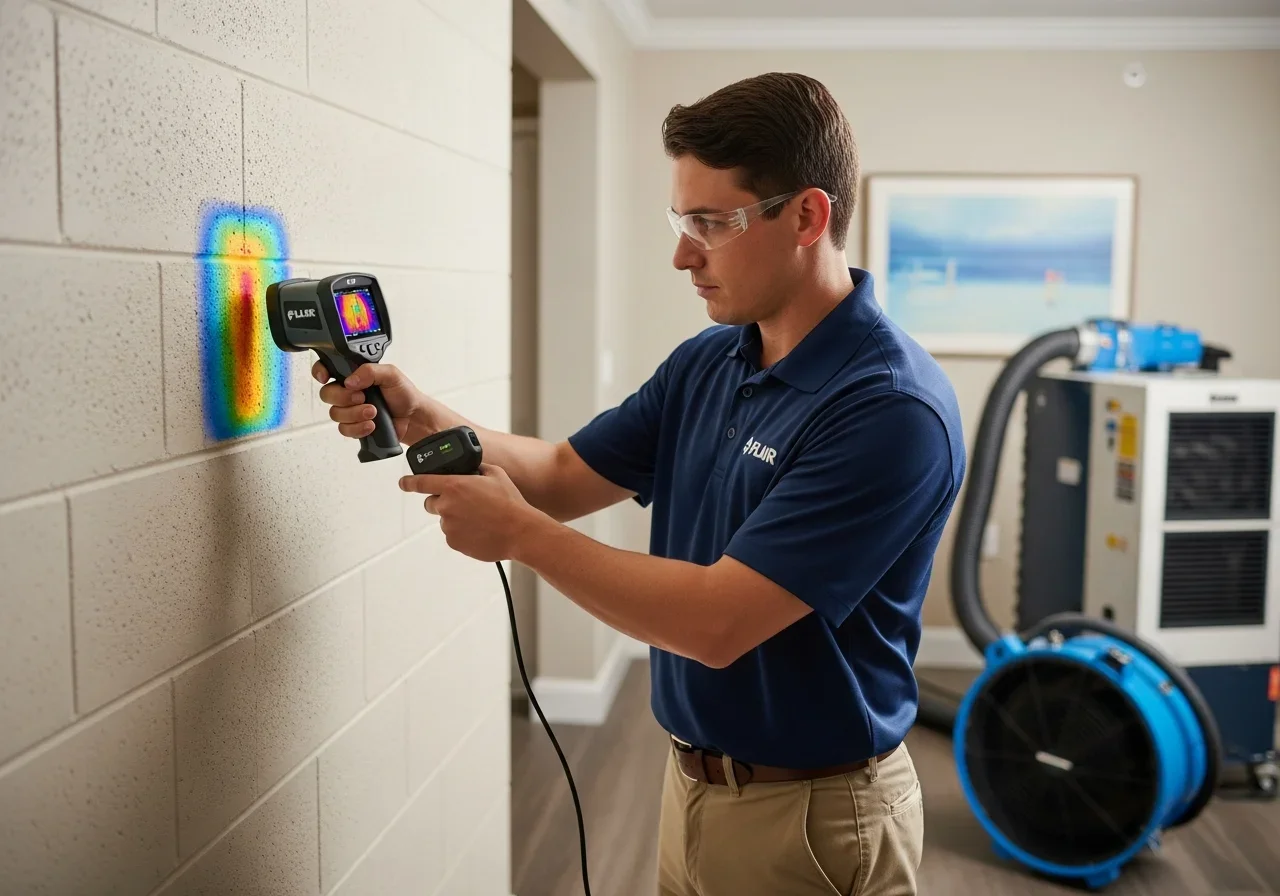
Florida-licensed assessors use thermal imaging (FLIR) and professional moisture meters to map every affected cavity. In Lauderhill's CBS construction, thermal imaging is essential — moisture behind stucco is invisible to the eye but shows as temperature differentials. Florida law requires a separate licensed assessor for the initial report.
02
Containment & Multi-Unit Protection
Day 1–2
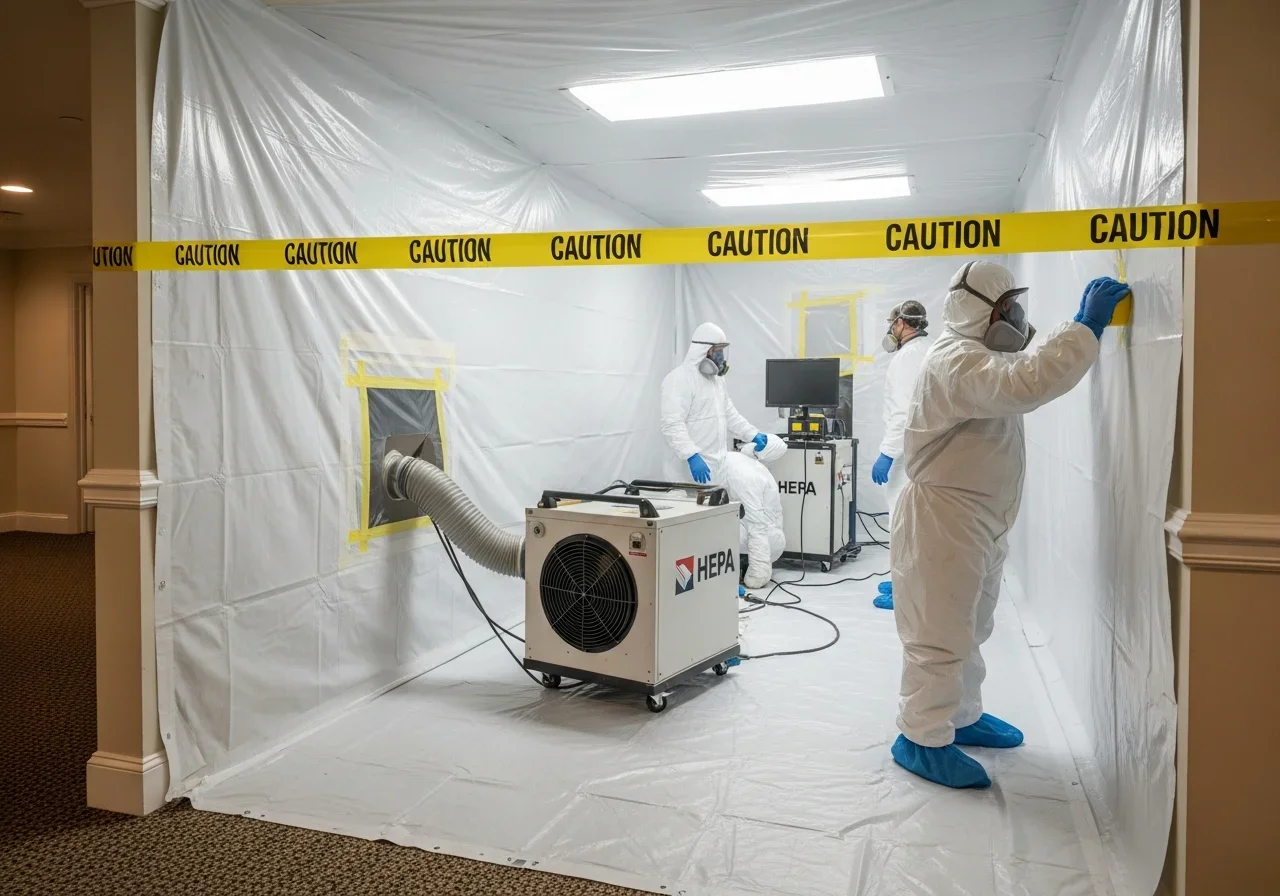
Polyethylene sheeting and negative air pressure with HEPA scrubbers prevent spore migration. In Lauderhill's Inverrary condo buildings, containment protects adjacent units and limits HOA liability exposure. Fan-coil HVAC systems are isolated to prevent duct-distributed contamination throughout the building.
03
HEPA Air Filtration
Continuous
HEPA filtration runs throughout the project, capturing spores down to 0.3 microns. In condo units with shared HVAC or ductwork, the entire system is isolated and filtered separately to prevent recontamination of cleaned areas and cross-unit spore migration through Inverrary condo air handling systems.
04
Material Removal & HEPA Vacuuming
Days 2–4
Mold-affected drywall, insulation, and furring strips are removed per IICRC S520. CBS block is non-porous and can be treated in place — a critical distinction in Lauderhill where every wall is concrete block. Salvageable surfaces are HEPA-vacuumed and media blasted. All removed materials are double-bagged for disposal.
05
Antimicrobial Treatment & Source Resolution
Days 4–5
EPA-registered antimicrobials with residual protection applied to all CBS block surfaces, furring channels, and adjacent materials. The moisture source must be eliminated — whether fan-coil condensate overflow, plumbing riser failure, stucco intrusion, or cross-unit migration. We coordinate with HVAC and plumbing contractors as needed.
06
Independent Verification & Clearance
Day 5–6
Post-remediation air quality testing by an independent DBPR-licensed mold assessor confirms spore counts have returned to acceptable levels. Florida law requires this clearance come from a different licensed assessor than the remediator. Complete documentation provided for insurance, real estate, and Inverrary HOA records.
Why Containment Matters in Inverrary Buildings
Disturbing mold without proper containment sends billions of spores airborne — and in
Lauderhill's Inverrary condo buildings, shared fan-coil systems and open corridors can
distribute those spores to every adjacent unit within minutes. Our containment
protocol ensures mold stays isolated during removal.
1
Sealed Barriers
Polyethylene sheeting floor-to-ceiling on CBS walls and unit perimeter
2
Negative Pressure
HEPA scrubbers pull air through containment — spores cannot escape
3
HVAC Isolation
Fan-coil system sealed to prevent spore distribution through shared air handling
4
Adjacent Unit Protection
Shared walls sealed with additional containment barriers
In Lauderhill, mold risk never fully stops — it peaks from June through October and
shifts to HVAC condensate and closed-unit discovery during the dry season. Knowing your
highest-risk months helps you prevent damage before it requires remediation.
Jan
65% RH
January
Low — Dry Season
Driest month. HVAC condensate mold risk remains. Ideal time for preventive inspections in Inverrary condo common areas before snowbirds return.
Feb
63% RH
February
Low — Dry Season
Lowest humidity of the year. Existing mold goes dormant but does not die — spores remain viable waiting for moisture. Seasonal residents return to some units.
Mar
66% RH
March
Low-Moderate — Transition
Humidity begins rising. AC systems cycling up after any winter reduction may develop condensate leaks. Condo HVAC drain inspections recommended.
Apr
69% RH
April
Moderate
Pre-wet-season plumbing failure risk peaks as water heaters and supply lines reach failure thresholds. Inverrary seasonal residents begin departing — units sitting vacant in rising humidity.
May
73% RH
May
High — Wet Season Onset
Wet season begins. First afternoon thunderstorms stress Lauderhill's aging roof edges and stucco. C-13/C-14 canal system begins operating at elevated capacity. Closed units accumulate humidity.
Jun
79% RH
June
Very High — Hurricane Season
June averages 9.55 inches of rain in Broward. Wind-driven rain through stucco cracks and aging window seals. The April 2023 historic event (25.91 inches) showed how quickly Lauderhill's drainage system gets overwhelmed.
Jul
80% RH
July
Very High — Peak Hurricane
Wettest months of the year. Canal corridor properties at highest flood risk. Most Inverrary seasonal units are unoccupied — fan-coil condensate overflows go undetected. Mold colonization accelerates in closed units.
Aug
81% RH
August
Very High — Peak Hurricane
Peak hurricane season with highest rainfall volumes. CBS wall saturation from recurring storms. Closed units in Castle Gardens and International Village accumulate weeks of untreated moisture.
Sep
81% RH
September
Very High — Hurricane Season
September through October combine for 10+ inches of rainfall. Continued flood zone pressure. Any water intrusion in occupied units from summer storms shows as mold by September if not dried properly.
Oct
79% RH
October
High — Hurricane Season End
Wet season winding down. Seasonal residents begin returning to Inverrary — discovering mold that developed in closed units over the summer. HOA inspections often trigger remediation referrals.
Nov
73% RH
November
Moderate — Post-Storm Discovery
Return season for seasonal residents. Hidden mold behind walls, in HVAC closets, and under flooring surfaces in November inspections. Sometimes 60–90 days after the original water event.
Dec
67% RH
December
Low-Moderate — Discovery Season
HOA annual inspections and board meetings surface hidden damage. Humidity drops enough for mold to slow but not stop. Remediation projects discovered in December often trace back to June–September water events.
Reading the risk calendar:
Hover over any month to see the primary mold risk for that period. Bars indicate relative
risk level (1 bar = low, 4 bars = very high). The June–October peak aligns with
Lauderhill's hurricane season and Inverrary's closed-unit season — the combination that
drives the most severe mold discoveries.
Mold in Lauderhill Homes
Lauderhill Mold Remediation: What We See
These are the most common mold presentations we encounter in Lauderhill's CBS concrete
block condos and single-family homes — from hidden Inverrary wall cavity contamination
and fan-coil HVAC mold to thermal imaging detection and post-remediation clearance
testing.
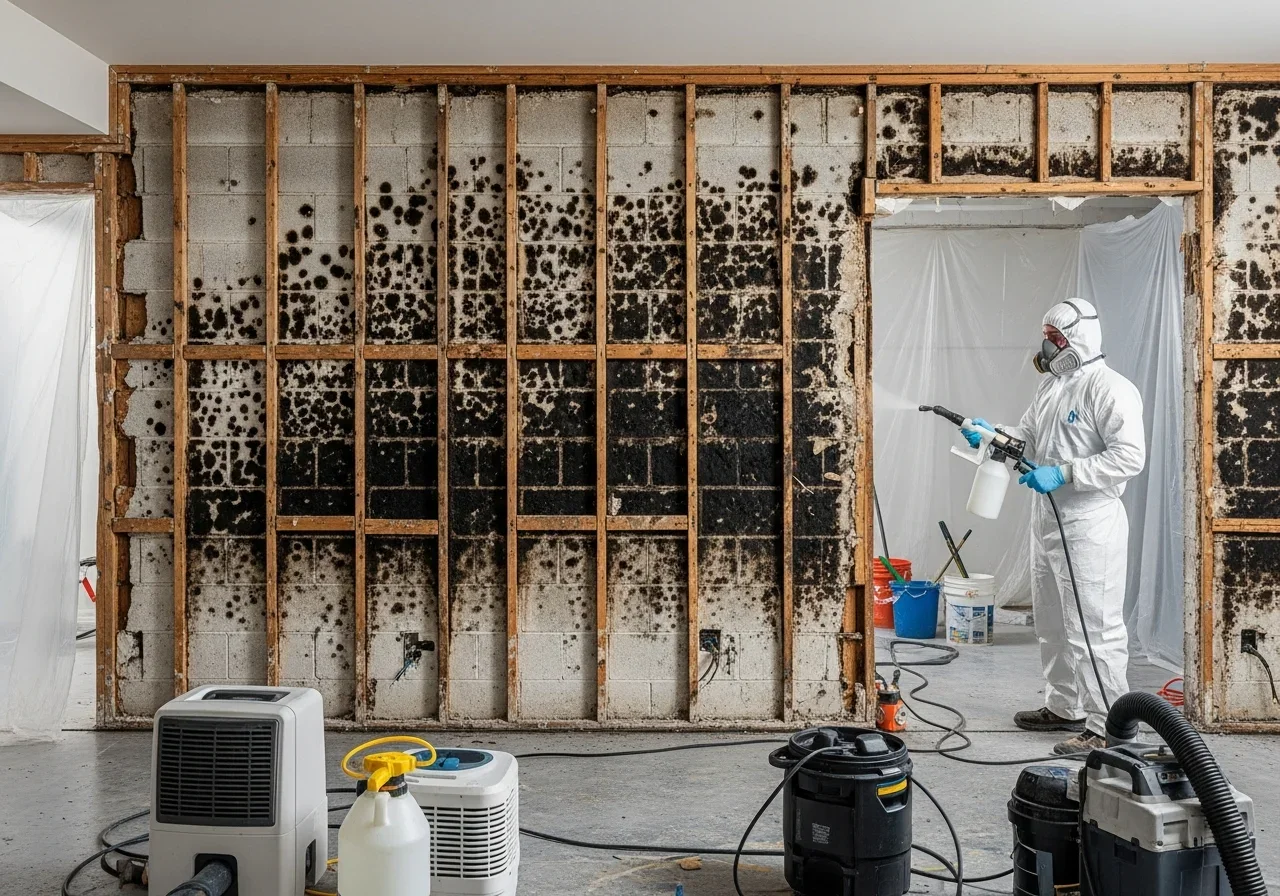
CBS wall mold — extensive colonization discovered behind drywall in a 1970s-era Inverrary condo built without modern vapor retarders
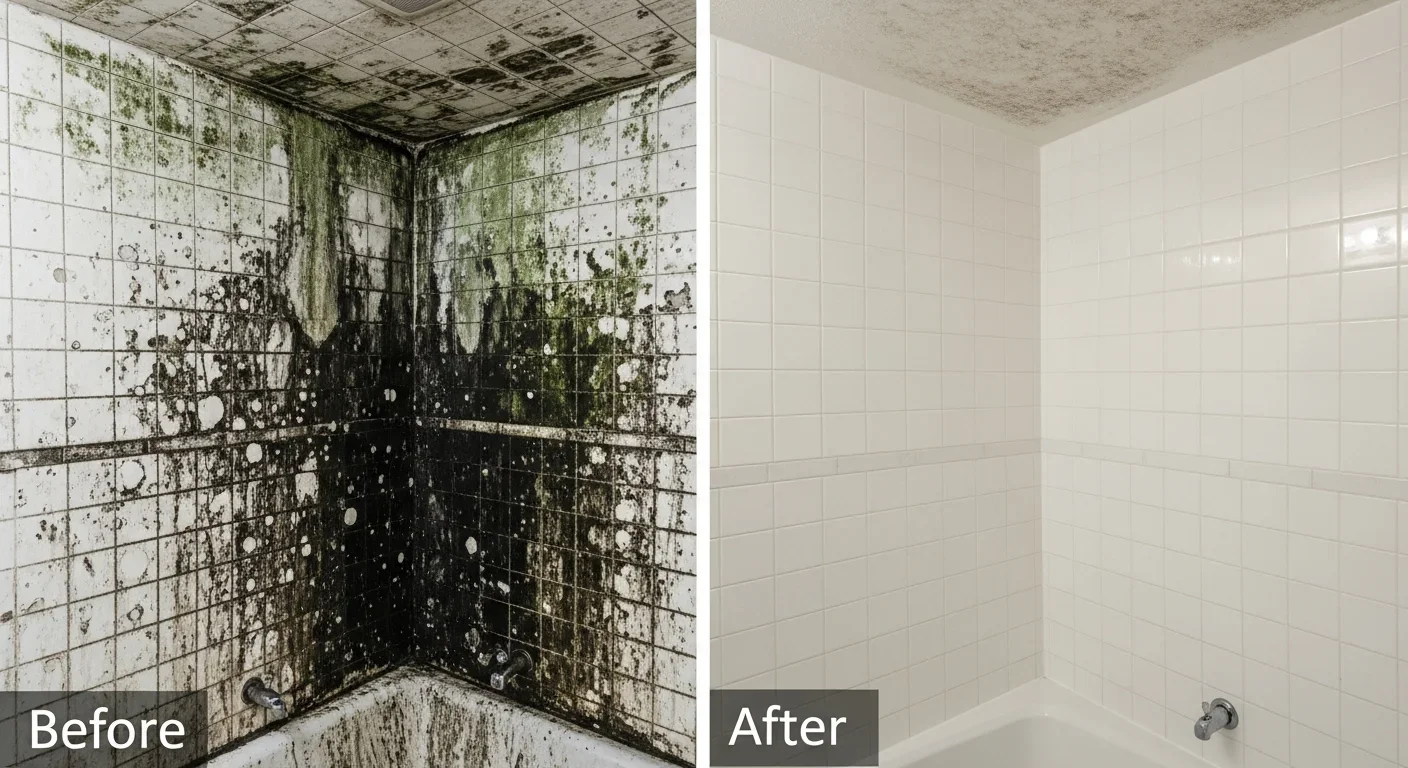
Full bathroom remediation — from active mold growth to clearance-verified clean surfaces with antimicrobial treatment
FLIR thermal imaging reveals moisture invisible to the eye — essential in Lauderhill's CBS construction where mold hides behind stucco
Independent post-remediation air quality testing confirms spore counts have returned to acceptable levels — required by Florida law
Lauderhill Pricing
Mold Remediation Costs in Lauderhill, FL
Costs vary by contamination size, materials affected, and whether Inverrary condo
multi-unit coordination is needed. Condo remediation often costs more due to containment
requirements, adjacent-unit protection, and HOA scheduling constraints.
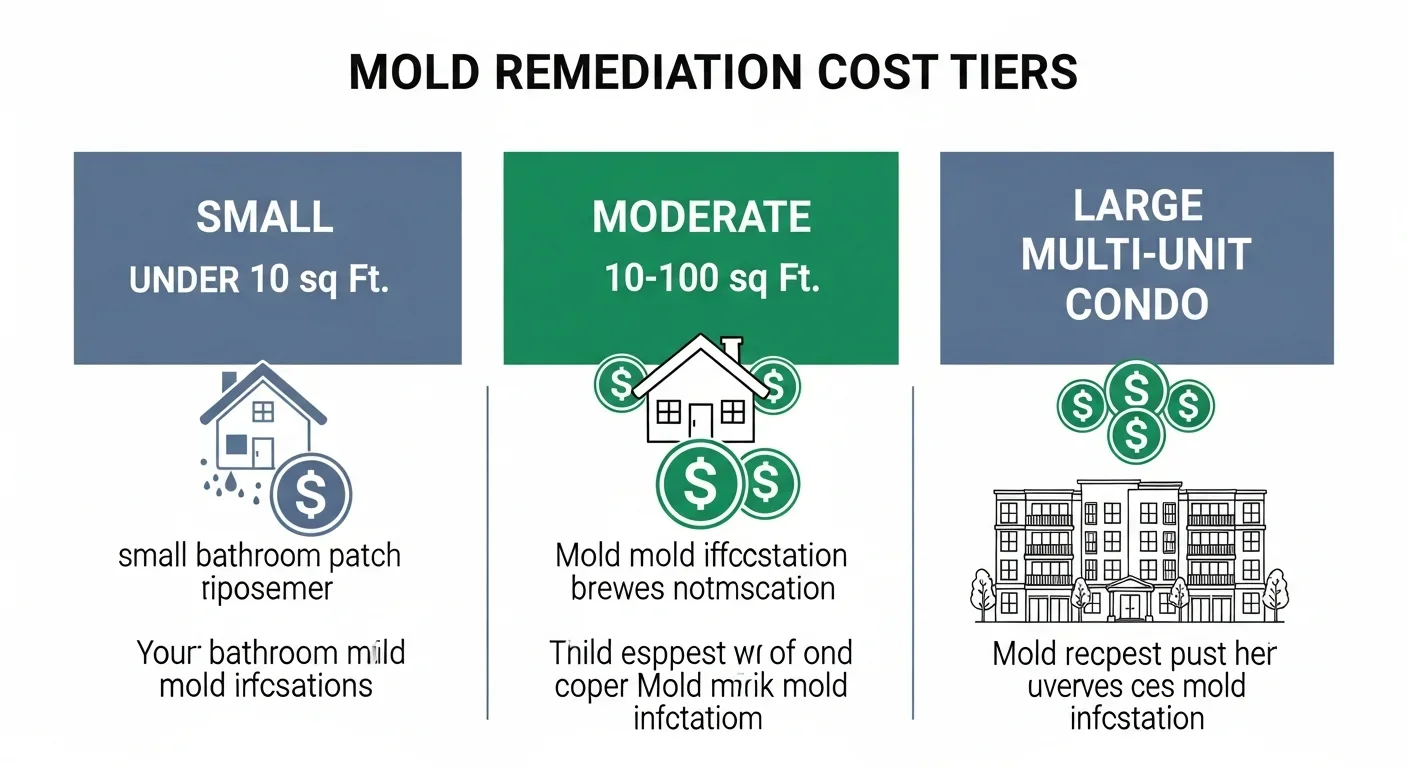
Small Area (Under 10 sq ft)
Bathroom, under-sink, window frame, or single surface
$500 – $2,000
Typical timeline: 1–2 days
Moderate (10–100 sq ft)
CBS wall cavity, HVAC system, fan-coil closet, or condo shared wall
$2,000 – $6,000
Typical timeline: 2–4 days
Large / Multi-Unit Condo
Multi-room or cross-unit Inverrary remediation with reconstruction
$6,000 – $25,000
Typical timeline: 5–14 days
Why Inverrary Condo Mold Costs Run Higher
Multi-unit remediation adds complexity at every step: containment must protect adjacent
units, HOA coordination adds scheduling overhead, CBS construction requires specialized
demolition techniques, and Florida's mandatory separate-assessor requirement adds
independent testing costs for each affected unit. However, proper remediation prevents far
more expensive structural damage and health liability — and stronger documentation
supports better insurance outcomes for all parties.
Insurance Navigation
Mold Insurance Claims in Lauderhill, FL
Mold coverage in Florida is limited and has become more restrictive following recent
insurance reforms. In Lauderhill's Inverrary condo market, the intersection of mold
sublimits, seepage exclusions, and HO-6 vs. master policy disputes makes proper
documentation essential from day one.
Mold resulting from a covered sudden water event (burst pipe, appliance failure) is typically covered up to policy mold sublimits of $10,000–$25,000
Florida's 14-day seepage/leakage exclusion: if the insurer determines water accumulated gradually rather than from a sudden event, mold coverage is denied entirely — the most common denial trigger in Lauderhill condos
Mold from gradual moisture, HVAC condensation, fan-coil drip overflow, or long-term stucco intrusion is almost always excluded from standard policies
Inverrary condo cross-unit migration creates gray zones: HO-6 policies cover unit interior improvements, master policies cover common elements — the shared wall between two units is often disputed
Florida's 1-year claim filing deadline is strictly enforced — delayed reporting from HOA disputes or slow leak discovery in closed seasonal units can void otherwise valid claims
Some Florida carriers offer mold endorsements for additional premium — Inverrary condo owners should ask about expanded coverage before they need it, especially for fan-coil condensate risk
Inverrary Condo Alert: Proving the Water Event
In Lauderhill condos, the 14-day seepage exclusion is the most common reason mold
claims are denied. Fan-coil condensate overflows in closed units go undetected for
months — and when discovered, the insurer argues it was "gradual." For cross-unit
plumbing leaks, the leak often damages the unit below before the source unit knows
about it, further delaying reporting. Palm Build documents moisture source, entry
point, and timeline from our first visit to establish the sudden-event connection
insurers require.
Palm Build's Approach to Lauderhill Mold Claims
When mold results from a covered water event, our documentation connects the mold to the
original loss — moisture maps, timeline photos, and remediation scope all formatted for
the adjuster. For Inverrary condo claims, we create parallel documentation for HO-6 and
master policy claims simultaneously. We understand Florida's post-AOB reform
requirements and strict 1-year filing deadline. For non-covered mold, we provide
transparent pricing and financing options.
In a city where Inverrary condo mold from closed-unit condensate and cross-unit water
migration is the defining remediation challenge, you need a team with Florida licensing,
CBS construction expertise, and multi-unit coordination experience. National franchises
lack all three.
Florida-Licensed Mold Remediators
DBPR-licensed under Chapter 468, Part XVI. We coordinate with independent licensed assessors for every project — meeting Florida's strict separation of assessment and remediation requirements. Verify our credentials at myfloridalicense.com before you hire anyone.
IICRC S520 Certified
Every crew lead holds current Mold Remediation Specialist (MRS) certification. We follow the S520 standard for containment, removal, and clearance verification — the industry benchmark that governs every step of our process in Lauderhill.
Inverrary Condo Specialists
Multi-unit containment, HOA coordination, parallel HO-6 and master policy documentation — we built our process around Lauderhill's Inverrary condo market. Castle Gardens seasonal units, International Village shared risers, Environ HOA access workflows — we handle the complexity.
CBS Construction Expertise
We understand how moisture behaves in concrete block wall cavities — the invisible environment where most Lauderhill mold hides. FLIR thermal imaging, non-destructive detection, and CBS-specific remediation protocols are standard on every project. Fan-coil and HVAC condensate systems get full treatment.
Broward Permit Coordination
When mold remediation requires structural rebuild, we handle Broward County's ePermits OneStop process for all permit-required reconstruction. No subcontracting, no handoffs, no permit delays — from remediation through finished surfaces.
Independent Clearance Verification
We do not clear our own work. Every Lauderhill project concludes with post-remediation air quality testing by an independent DBPR-licensed assessor — meeting Florida law requirements and providing documentation for insurance, real estate, and Inverrary HOA records.
Palm Build's Florida-licensed team brings condo-specific containment, HEPA filtration,
and multi-unit coordination to every Lauderhill Inverrary project.
Common Questions
Lauderhill Mold Remediation FAQ
Does Palm Build hold a Florida mold remediator license?
Yes. Palm Build holds the required Florida mold remediator license under Chapter 468, Part XVI of Florida Statutes. You can verify our license at the Florida DBPR portal (myfloridalicense.com) by searching our company name. We recommend verifying any mold contractor's license before signing a remediation agreement.
How do I know if the mold in my Lauderhill condo is dangerous?
All mold growth in a living space should be taken seriously. Visible mold is never safe to ignore. Stachybotrys (commonly called black mold) is not always identifiable by color alone — accurate identification requires lab analysis by a licensed mold assessor. If you see visible growth, smell persistent musty odors, or experience unexplained respiratory symptoms, call us for an assessment.
What is the difference between mold assessment and mold remediation in Florida?
Florida law requires these to be separate: mold assessment (inspection, sampling, laboratory analysis) must be performed by a licensed mold assessor, and mold remediation (physical removal and treatment) by a licensed mold remediator. The same company cannot perform both on the same project without specific exemptions. This protects homeowners from conflicts of interest.
How long does mold remediation take in a Lauderhill condo?
Contained jobs (under 10 sq ft) typically take 1–2 days. Moderate remediation (10–100 sq ft) takes 2–5 days. Extensive jobs with multi-room or multi-unit involvement can take 5–15 days. Independent clearance testing adds 24–48 hours for sample laboratory turnaround. We provide a detailed timeline estimate after initial assessment.
Can mold grow in a closed-up Lauderhill condo with no visible water damage?
Yes — and it is one of the most common mold scenarios in Lauderhill's Inverrary-area communities. When a unit sits closed with reduced HVAC activity during South Florida's wet season, indoor humidity can reach 80–90%. At those levels, mold colonizes soft furnishings, wood cabinetry, HVAC duct liners, and porous building materials without any water event. If you own a unit that sits unoccupied for extended periods, a preventive inspection at season's end is worthwhile.
Does my Lauderhill homeowners insurance cover mold remediation?
Coverage depends on the source of moisture. Mold from a sudden, accidental covered water loss (like a burst pipe) may be covered under standard HO-3 or HO-6 mold provisions — but sub-limits of $5,000 to $10,000 are common and often insufficient. Mold from gradual leaks, condensation, or humidity is typically excluded. We document the moisture source from the first assessment so you have the factual basis for your claim.
What is the Florida deadline for filing a mold-related insurance claim?
Florida Statute 627.70132 requires notice of claim within 1 year of the date of loss for most residential property claims, and supplemental or reopened claims within 18 months. If mold is discovered months after a water event, the clock runs from when you knew or should have known about the condition. Document your discovery date and file immediately.
Does Palm Build handle mold in all Lauderhill ZIP codes?
Yes — we serve 33311, 33313, 33319, and 33351. Our Deerfield Beach team covers all of Lauderhill including Inverrary, International Village, Castle Gardens, Boulevard Woods, Broward Estates, and the Canal District corridor.
Trusted Vendors
Trusted local pros in Lauderhill
Outside our restoration scope, these are the vetted, licensed contractors we trust
alongside our work. Personally evaluated, reference-checked, and recommended by Palm
Build.