Lauderhill's Inverrary master-planned community — with International Village, Castle Gardens, Environ, and Lakes of Inverrary — is one of Broward County's most layered HOA restoration environments. Closed-unit 1970s CBS construction traps humidity and drives recurring mold; layered sub-community and master-association governance means every project requires dual-board approval. Palm Build navigates multi-party insurance claims, master-policy and HO-6 coordination, and post-Surfside compliance from our Deerfield Beach hub, approximately 15 miles away.
Deerfield Beach Office — ~15 miles to Lauderhill 15-20 min Response IICRC Certified
Why Lauderhill Demands Specialized HOA Restoration
Lauderhill is one of central Broward County's most HOA-dense cities. Inverrary's
master-planned condo villages, Boulevard Woods, and a dozen other association-governed
communities mean nearly every restoration project here involves multi-party board
approval, shared-wall water migration in 1970s closed-unit construction, and
multi-carrier insurance coordination. General contractors who treat this like
single-family work create billing disputes, compliance gaps, and mold that comes back.
Inverrary: Lauderhill's Master-Planned Condo Core
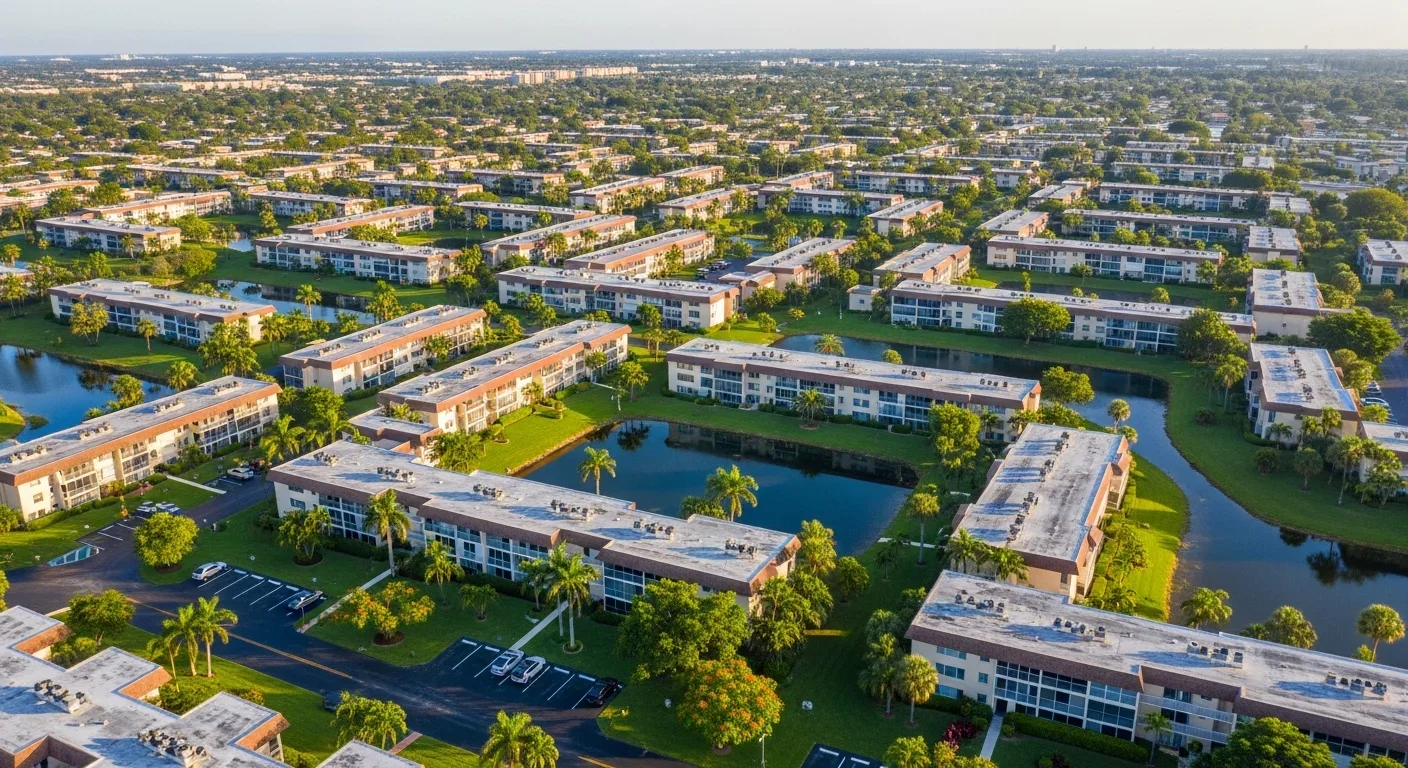
Inverrary — Lauderhill's signature master-planned community — was developed in the 1970s as a collection of closed-unit condo villages and golf communities: International Village, Castle Gardens, Environ, and Lakes of Inverrary. Each sub-community has its own HOA board, governing documents, and insurance structure nested beneath the Inverrary master association. Closed-unit construction traps humidity in wall cavities, making recurring mold a structural fact of life — not an occasional event. A single water loss here routinely triggers multiple insurance claims and multi-association approvals that general contractors are not equipped to handle.
Every Neighborhood Answers to an Association
From Inverrary's layered master and sub-associations to Boulevard Woods, Wimbledon, Cricket Club, and Broward Estates, nearly every residential property in Lauderhill operates under some form of HOA governance. Restoration here means coordinating board approval, obtaining association documentation, and managing access within communities that control access, enforce architectural standards, and require proper insurance documentation before a single wall can be opened.
Florida's post-Surfside legislation (SB 4-D and SB 154) requires milestone inspections at 25 and 40 years for buildings over three stories, plus mandatory Structural Integrity Reserve Studies affecting associations broadly. Broward County's 40-year recertification program adds a county-level layer for applicable buildings. For Lauderhill's 1970s CBS condo stock, SIRS reserve obligations are already in effect — and any restoration contractor must understand how their scope intersects with these reserve and inspection requirements to properly advise the board.
~15 Miles from Our Deerfield Beach Hub
Palm Build's South Florida Operations Hub in Deerfield Beach is approximately 15 miles from Lauderhill — a 15 to 20 minute dispatch. When water crosses unit boundaries in an Inverrary closed-unit condo or a pipe fails in Boulevard Woods, our crews arrive with multi-unit coordination capabilities, truck-mounted extraction, and commercial drying equipment. In Lauderhill's 70–75% humidity, mold colonization begins within 24–48 hours — and in closed-unit construction that timeline is even more consequential.
Inverrary's 1970s closed-unit condo villages — International Village, Castle Gardens,
Environ, and Lakes of Inverrary — are among Lauderhill's most complex HOA restoration
environments.
HOA Community Profiles
Lauderhill HOA Communities: Restoration Risk Profiles
Every HOA community in Lauderhill has a distinct restoration dynamic — shaped by
building age, construction type, governance structure, and canal/rain hydrology. Here is
what drives HOA restoration complexity in each.
Inverrary
Master-planned condo & golf community Critical
Built: 1970sGovernance: Master association + sub-associations per villageComposition: Low-/mid-rise closed-unit condos, golf villas
Lauderhill's most complex HOA restoration environment. Inverrary is a layered governance structure — a master association overseeing individual sub-community boards in International Village, Castle Gardens, Environ, and Lakes of Inverrary. Closed-unit CBS construction traps humidity, making recurring mold in wall cavities and HVAC chases the dominant damage pattern. A single inter-unit water loss triggers multiple HO-6 claims plus a master-policy claim for shared structural elements. Restoration work requires coordination at both sub-community and master-association level.
Primary risk: Closed-unit mold, inter-unit water migration, layered board approval
One of the oldest and densest condo sub-communities within Inverrary. 1970s closed-unit construction means shared CBS walls are the primary pathway for inter-unit water migration. Aging plumbing and HVAC condensate overflows are the most frequent damage sources. Dual-layer board approval (sub-board and master association) is required for reconstruction. Many units are owned by seasonal residents, adding coordination complexity when a loss occurs during summer vacancy.
Castle Gardens is another 1970s closed-unit condo community within Inverrary. CBS construction with flat or low-pitch roofs is prone to roof membrane deterioration and ponding during Lauderhill's heavy rain seasons. Aging HVAC condensate lines and shared plumbing risers drive most water damage events. The C-13/C-14 canal basin means canal-driven flooding during significant storms can affect ground-floor units. HVHZ standards govern all restoration work under the City of Lauderhill Building Division.
Environ's mid-rise condo buildings represent the higher end of Lauderhill's vertical condo stock. At three to four stories, buildings approaching the 40-year mark are subject to Broward County's 40-year recertification and Florida's post-Surfside milestone inspection requirements for buildings over three stories. Vertical inter-unit water migration is more pronounced here than in the two-story sub-communities. Master policy and HO-6 claim coordination is standard for any multi-floor loss event.
Primary risk: Vertical water migration, 40-year recertification, milestone inspections
Boulevard Woods
HOA neighborhood Elevated
Built: 1970s-1980sGovernance: Neighborhood HOAComposition: Single-family CBS ranch homes
Boulevard Woods is a single-family HOA neighborhood with CBS construction from the 1970s and 1980s. The HOA governs exterior standards, common area maintenance, and approves all exterior restoration work. Aging barrel tile or flat roofs and original plumbing are the primary risk factors. Canal proximity in parts of the neighborhood means that prolonged rain events can elevate groundwater and push water toward foundations. HOA approval is required for all exterior repairs and replacements.
Primary risk: Aging roofing, original plumbing, canal-proximity flooding, HOA approval
These Lauderhill HOA communities share the central-Broward canal/rain flooding profile driven by the C-13/C-14 basin. Lauderhill holds a CRS Class 7 rating, giving qualified properties a 15% flood insurance discount — but prolonged heavy rain events still drive canal flooding in lower-lying areas. Aging 1970s–1980s construction with original plumbing and HVAC means infrastructure failures are common. HOA approval required for all restoration scope that affects shared or exterior elements.
Primary risk: Canal/rain flooding, aging infrastructure, HOA approval requirements
Multi-Unit Water Migration
How Water Crosses Unit Boundaries in Lauderhill Condos
In Lauderhill's Inverrary-area condo communities — closed-unit CBS buildings where
humidity has no natural escape path — water damage almost never stays in one unit.
Shared wall cavities, stacked plumbing risers, and aging HVAC chases create migration
pathways that turn a single-unit problem into a multi-party insurance event. Each
affected unit has a different owner, a different carrier, and a different claim.
Vertical Migration Through Floors
3+
Insurance claims per vertical event
A pipe burst in an upper Inverrary condo unit sends water cascading through the floor assembly to the unit below. In Lauderhill's low- and mid-rise CBS buildings, water penetrates concrete slabs via cracks, plumbing penetrations, and construction joints — reaching lower units within hours. The source-unit owner has one HO-6 carrier. The unit below has another. The shared floor/ceiling assembly is a common element covered by the master policy. Three parties, three documentation packages, one restoration project.
Horizontal Migration Through Shared Walls
2-4
Adjacent units at risk
Lauderhill's closed-unit CBS condos — International Village, Castle Gardens, and others in Inverrary — share party walls between adjacent units. These CBS walls with drywall finishes are not waterproof. Water from one unit's leak migrates horizontally through the block to the adjacent unit. In closed-unit construction where humidity has nowhere to escape, this horizontal migration often goes undetected until mold colonies are established on both sides of the wall.
HVAC Condensate & Closed-Unit Mold
24-48 hrs
Until mold colonization
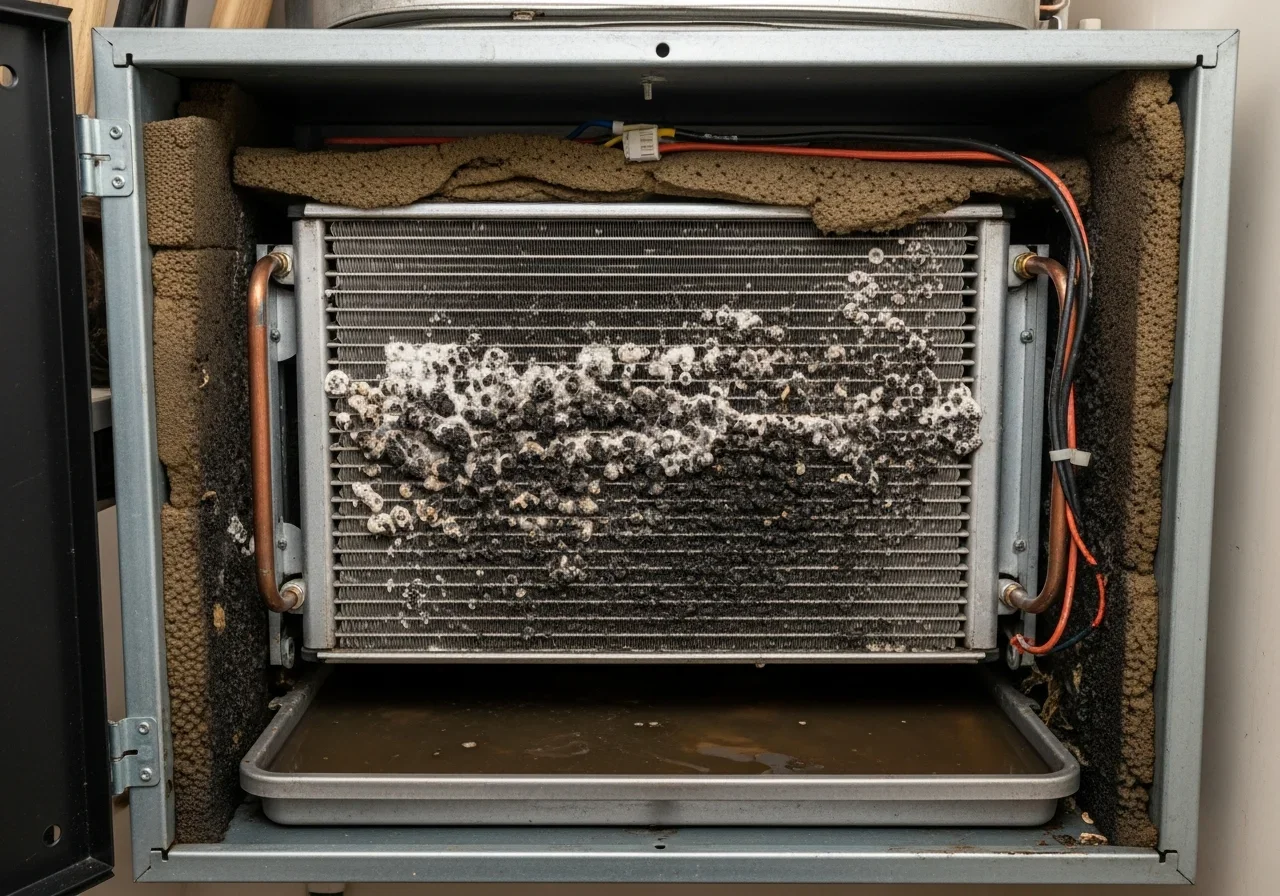
HVAC condensate overflows are the single most common source of water damage calls in Lauderhill's 1970s condo communities. Air conditioning systems running 10–11 months per year produce enormous condensate volumes. In Inverrary's aging buildings, clogged drain lines, cracked drip pans, and oversized units create standing moisture in air handlers — moisture that feeds mold colonies distributed through shared chases to multiple units. Closed-unit construction traps the resulting humidity, accelerating colonization beyond the standard 24–48 hour window.
Shared Plumbing Riser Failures
All
Units on the riser stack at risk
Lauderhill's 1970s CBS condo buildings share plumbing risers — vertical supply and waste lines serving stacked units. When a riser fails, water enters every unit along that stack. The riser itself is a common element (master policy), but interior damage in each unit is an individual HO-6 claim. Galvanized and cast iron pipes in buildings now 50+ years old are at or past their expected service life. In Inverrary's sub-communities, riser replacements are increasingly a reserve-funded capital project.
Real Scenario: Pipe Burst in an Inverrary Condo
Source unit
Source unit — HO-6 policy covers interior damage and liability
Unit below
Victim unit — separate HO-6 carrier, separate adjuster, separate claim
Shared wall/floor
Common element — master policy claim, association responsibility
Hallway/common area
Association property — master policy, all owners share cost via dues
This is a typical Tuesday in Lauderhill. Palm Build coordinates
all parties as a single integrated project — separate documentation for each carrier, unified
restoration execution, one team managing the complexity.
Common HOA Property Damage
Damage Types Driving HOA Restoration in Lauderhill
Lauderhill's 1970s closed-unit condo stock, subtropical humidity, and dense HOA
governance create damage patterns that require multi-party coordination from the first
hour. These are the six most common damage types we restore in Lauderhill HOA
communities.
Most Common
Inter-Unit Water Migration
The #1 HOA restoration trigger in Lauderhill. A pipe burst, toilet overflow, or appliance failure in one Inverrary condo unit sends water through shared floor assemblies and CBS walls into adjacent and lower units. Closed-unit construction accelerates horizontal migration — humidity trapped in wall cavities feeds mold colonies before either unit owner realizes the water has spread. Each unit files a separate HO-6 claim while the association handles common-element damage through the master policy.
Affected communities: Inverrary (all sub-communities), International Village, Castle Gardens, Environ, any multi-story CBS condo
Very Common
HVAC Condensate in Aging Buildings
HVAC condensate overflows are the most common source of water damage calls in Lauderhill's 1970s condo communities. Air conditioning systems running 10–11 months per year produce enormous condensate volumes. In Inverrary's aging buildings, clogged drain lines, cracked drip pans, and oversized units create standing moisture in air handlers — water that feeds mold colonies distributed through shared chases to neighboring units. Closed-unit construction means that mold established in one unit's air handler can spread behind shared walls before the source is identified.
Affected communities: International Village, Castle Gardens, Environ, Lakes of Inverrary, all buildings with aging HVAC
Common
Shared Plumbing Riser Failures
Lauderhill's 1970s condo buildings have shared plumbing risers — vertical supply and waste lines serving stacked units. When a riser fails, water enters every unit along that stack. The riser is a common element (master policy), but interior damage in each unit is an individual HO-6 claim. Galvanized and cast iron pipes in buildings now 50+ years old are at or past their expected service life. Riser replacements are increasingly a reserve-funded capital project in Inverrary associations.
Affected communities: Inverrary sub-communities, all multi-story 1970s CBS condo buildings
Seasonal (June-November)
Hurricane Wind-Driven Rain
Hurricane and tropical storm wind-driven rain breaches building envelopes through window seals, balcony doors, and exterior wall joints. In Lauderhill's HVHZ environment (design wind ~170 mph), building envelope integrity is paramount. Flat-roof and low-pitch roof systems common in 1970s CBS construction are vulnerable to membrane failure during sustained wind events. In a hurricane, multiple units in a single building can experience water intrusion simultaneously, creating a mass restoration event requiring immediate multi-unit mitigation.
Affected communities: All Lauderhill condo and HOA communities, especially buildings with original windows or roofing
Seasonal / Storm Events
Canal & Stormwater Flooding
Lauderhill sits within the C-13/C-14 canal basin. During significant rain events, the canal network can back up and push water toward ground-floor units and common areas in lower-lying communities. Lauderhill's CRS Class 7 rating reflects strong stormwater management infrastructure, but prolonged heavy rainfall can still overwhelm retention capacity. HOA-maintained drainage infrastructure, common area landscaping, and shared drainage elements are association responsibility, while individual unit damage falls to unit-owner policies.
Post-Surfside milestone inspections and Broward County's 40-year recertification program are identifying concrete spalling, rebar corrosion, and waterproofing membrane failure in Lauderhill's aging condo buildings. For mid-rise Inverrary buildings over three stories, milestone inspections are now a legal requirement. SIRS reserve obligations affect all associations. Repair is an association responsibility funded through reserves or special assessments — and all restoration work must meet HVHZ requirements and City of Lauderhill Building Division standards.
Affected communities: Environ (mid-rise) and any Inverrary buildings over 3 stories approaching inspection milestones
Inverrary's 1970s closed-unit condo villages — each with its own sub-community board
beneath the Inverrary master association — make it Lauderhill's most layered HOA
restoration environment.
Multiple sub-community associations
Each with its own board and governing documents
Developed in the 1970s
Decades of deferred maintenance
Low-/mid-rise closed-unit construction
Trapped humidity drives recurring mold
Layered governance
Sub-community boards + Inverrary master association
SIRS reserve obligations
Post-Surfside reserve studies affect all associations
Aging HVAC & plumbing
#1 source of water damage in the community
Featured Community
Inverrary: One Community, Many Associations
Inverrary is the most complex HOA restoration environment in Lauderhill — and one of
the most layered in central Broward County. A 1970s master-planned community of
closed-unit condo villages and golf sub-communities, each operating under its own
governance structure beneath a master association umbrella. There is no single
"Inverrary restoration" — every sub-community requires its own board engagement,
governing document review, and insurance coordination.
Layered Board Approval at Every Level
Inverrary restoration is not approved by one board — it is approved by two. The sub-community board (International Village, Castle Gardens, Environ, or Lakes of Inverrary) must approve the scope first, then the Inverrary master association reviews any work affecting shared common elements or the community's overall architectural standards. A contractor who skips the master-association layer discovers the problem when reconstruction is stopped mid-project. Palm Build navigates both layers from the first notification.
Closed-Unit Mold Is Structural, Not Incidental
Inverrary's closed-unit CBS construction was designed to seal interiors from the subtropical climate — which it does, at the cost of trapping humidity when water enters. When a pipe fails or HVAC condensate overflows in a closed-unit building, the moisture has nowhere to evaporate. Mold colonizes in 24–48 hours behind drywall, inside wall cavities, and in HVAC plenums. In the 50+ years since these buildings were constructed, many have had multiple undocumented water events — meaning mold remediation often reveals prior damage during the current scope.
Every Sub-Community Has Different Governing Documents
International Village, Castle Gardens, Environ, and Lakes of Inverrary each operate under their own declaration, bylaws, and rules — separate from the Inverrary master documents. The coverage boundary between master policy and HO-6 may be defined differently in each. A restoration contractor billing the wrong carrier because they assumed one community's rules apply to another creates disputes that can delay projects for months. Palm Build reviews the specific governing documents for each sub-community before determining scope.
Aging Infrastructure Meets Modern Code Requirements
Lauderhill is in the HVHZ (High-Velocity Hurricane Zone), and all reconstruction must meet HVHZ standards regardless of the building's age. Florida/Broward Product Approval or Miami-Dade NOA is required for exterior products. TAS 201/202/203 impact testing applies. City of Lauderhill Building Division permits are required with Broward County NOC documentation. For 1970s buildings that predate modern HVHZ code, any significant restoration may trigger ordinance-and-law upgrades — a cost that Florida's Ordinance-and-Law coverage (25% of dwelling by default) may offset, but must be planned for.
How We Manage HOA & Condo Restoration in Lauderhill
HOA restoration in Lauderhill requires steps that single-family projects do not:
multi-unit assessment, governing document review, layered board approval, multi-carrier
coordination, HVHZ compliance, closed-unit mold protocols, and resident communication
across dozens of stakeholders.
01
Emergency Response & Board Notification
Hours 1-4
Immediate dispatch from our Deerfield Beach hub — approximately 15 miles from Lauderhill — for mitigation: water extraction, board-up, or mold containment. Simultaneous notification to the property management company and the relevant HOA board president. Florida law and most governing documents authorize emergency mitigation without a board vote. For Inverrary sub-communities, we coordinate with both the sub-community management and the master association emergency contacts for immediate access.
02
Multi-Unit Damage Assessment
Days 1-3
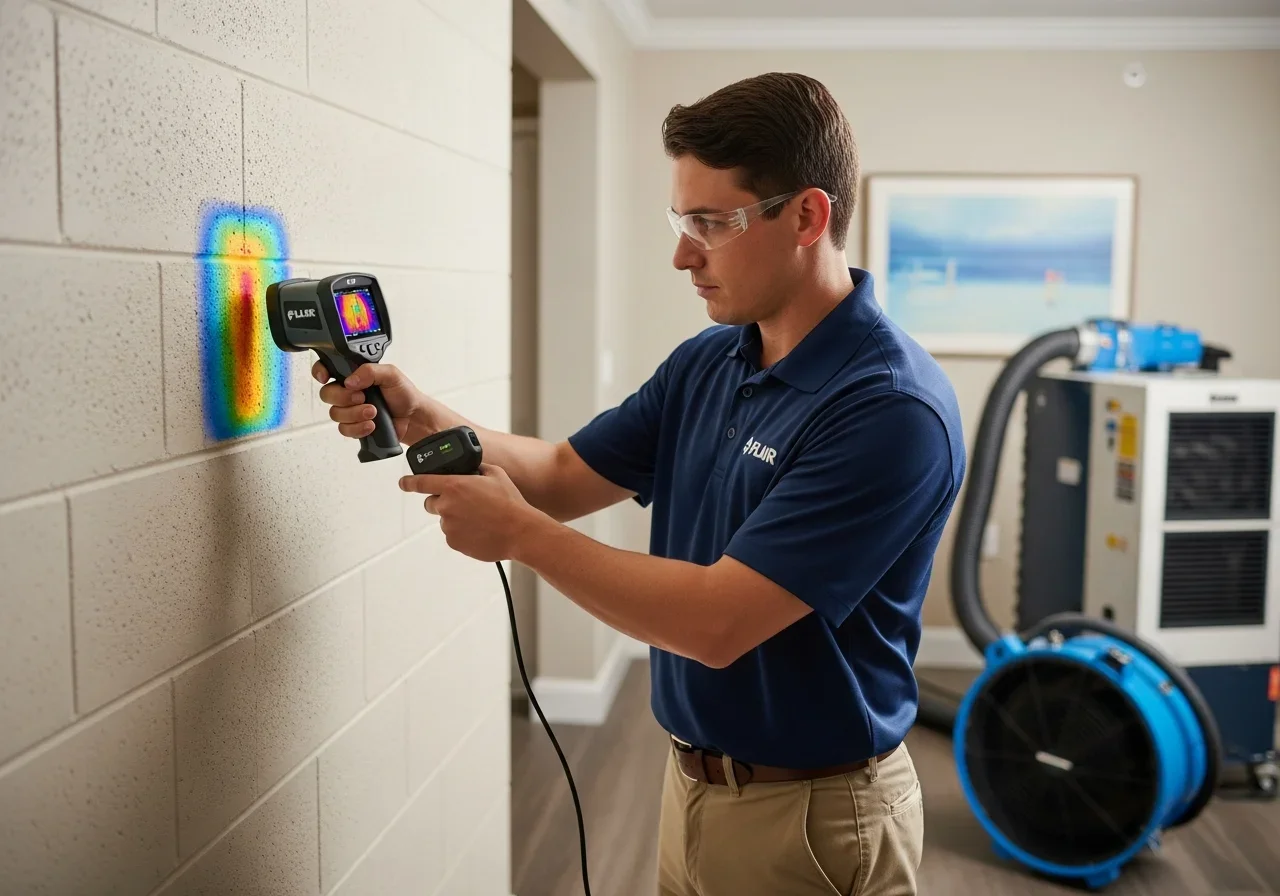
Systematic assessment of all potentially affected units — not just the unit where damage is visible. In Lauderhill's closed-unit CBS condo buildings, water migrates vertically through floor assemblies, horizontally through shared CBS walls, and through aging HVAC chases. We use thermal imaging and moisture mapping to identify every affected space before hidden moisture creates mold in Lauderhill's 70–75% humidity. Each unit receives individual documentation for its HO-6 claim.
03
Insurance Coordination (Master + Unit Policies)
Days 2-10
We review the association's declaration and Florida Statute 718 to determine the responsibility split between master policy and individual HO-6 coverage. In Inverrary, where each sub-community may define the coverage boundary differently, getting it wrong means billing the wrong carrier. We prepare separate documentation packages for the master policy carrier and each affected unit owner's HO-6 carrier — coordinating multiple simultaneous claims as one integrated project.
04
Board Approval & Reconstruction Planning
Days 5-15
Most Lauderhill condo and HOA boards must approve restoration work exceeding dollar thresholds in their governing documents. Florida's condo law imposes specific notice requirements: 48-hour notice for regular meetings, 14-day notice for special meetings at certain expenditure levels. For Inverrary sub-communities, approval may be required at both sub-community and master-association level. Palm Build prepares board-ready documentation — detailed scopes, estimates, timelines, and compliance certifications — and coordinates with property managers to secure approval at the earliest legally permissible meeting.
05
Restoration with Minimal Resident Disruption
Weeks 2-8
Phased restoration within the community's allowed work hours. For Inverrary's closed-unit condo buildings: careful containment protocols to prevent mold spore spread during demolition, HEPA air scrubbing throughout, and coordination with building management for access to shared mechanical areas. All reconstruction meets HVHZ code requirements — Florida/Broward Product Approval or Miami-Dade NOA for exterior products, TAS 201/202/203 impact testing — and City of Lauderhill Building Division permit standards.
06
Walkthrough, Claims Closeout & Board Report
Project Completion
Walk-through with property manager, board representative, and each affected unit owner. Separate completion documentation for the master policy carrier and all individual HO-6 carriers. City of Lauderhill Building Division final inspections completed. HVHZ compliance verified. Warranty documentation provided to both the association and individual unit owners. Board meeting presentation of completed work available upon request — including before/after documentation and cost reconciliation. Broward County NOC recorded.
Florida Condo Insurance Structure
Master Policy vs. HO-6: The Lauderhill Condo Insurance Guide
This is the question every Lauderhill condo owner asks after damage. In Inverrary's
sub-communities, each village may define the boundary between "common element" and
"unit" differently. A gated HOA like Boulevard Woods creates a completely different
insurance dynamic than a closed-unit mid-rise in Environ. Florida Statute 718 provides
baseline definitions, but your association's declaration can modify them. Palm Build
reviews both before work begins.
Master Policy (Association Responsibility)
Covers common elements and building structure per F.S. 718 and your declaration
Roof, exterior walls, and building envelope (CBS structure)
Shared plumbing risers, main water supply lines, fire suppression
Common areas: lobbies, hallways, pools, clubhouse, parking
Structural framing, foundation, and load-bearing elements
Building HVAC systems, mechanical rooms, shared equipment
Waterproofing membranes, balcony structural elements
Unit-specific plumbing fixtures and supply lines from shutoff
Improvements and upgrades beyond original spec
Loss assessment coverage (for HOA special assessments)
Critical for Lauderhill condo owners: Florida Statute 718.111(11) requires associations to maintain property insurance on common elements.
However, the exact boundary varies by declaration. Some buildings use "bare walls-in" coverage
(owner responsible for everything inside the studs); others use "all-in" coverage (master policy
covers interior finishes to original spec). In Inverrary's sub-communities, each village operates
under its own declaration — International Village, Castle Gardens, Environ, and Lakes of Inverrary
may each define this boundary differently. Post-Surfside legislation (SB 4-D and SB 154) has
imposed mandatory Structural Integrity Reserve Studies and milestone inspections for buildings
over three stories — meaning associations must fund reserves for structural repairs, which affects
special assessment exposure for every unit owner. Always verify your declaration's coverage boundary and reserve status. Palm Build reviews both the declaration and Florida statute before beginning work to ensure
the correct carrier is billed for each scope item.
HOA Restoration Costs
Who Pays for What in Lauderhill HOA Restoration
The most contested question in every Lauderhill condo restoration project: who pays? The
answer depends on Florida Statute 718, your specific declaration, and whether the
damaged element is a "common element" or "unit." Getting this determination wrong means
the wrong insurance carrier gets billed — and someone pays out of pocket for work that
should have been covered.
Personal property and contentsVaries by coverage limits
Covered by individual HO-6 policy up to coverage limits; deductible applies per event
Disputed / Declaration-Dependent
Drywall between studs and unit boundaryDepends on "bare walls-in" vs "all-in"
Original-spec fixtures vs. upgradesMaster policy vs HO-6
Balcony structural vs. surface finishesVaries by declaration
HVAC components in shared mechanical spaceUnit vs common element
The exact split depends on your association's declaration — Inverrary's sub-communities (International Village, Castle Gardens, Environ, Lakes of Inverrary) may each define the boundary differently. Palm Build reviews the governing documents before work begins.
Need a cost determination for your Lauderhill HOA project?
Call (754) 600-3369 — we review your
declaration and provide carrier-specific scope breakdowns before work begins.
Multi-Party Insurance Navigation
Navigating HOA Insurance Claims in Lauderhill
HOA insurance claims in Lauderhill are fundamentally different from single-family
claims. Multiple carriers, disputed coverage boundaries, layered board approval, board
transparency requirements, and special assessment exposure create a claims environment
where a wrong determination costs thousands. Palm Build manages the insurance complexity
so the board and unit owners can focus on recovery.
3-8+
Carriers per event
Multi-Carrier Coordination
A single water event in a Lauderhill condo building can involve the master policy carrier (potentially Citizens Property Insurance) plus multiple different HO-6 carriers for individual unit owners. Each carrier sends different adjusters, requires different documentation formats, operates on different timelines, and uses different pricing databases. Without a single coordinating party, the project fractures into disconnected repairs that do not align at shared boundaries — especially in Inverrary's closed-unit buildings where the shared wall is literally the boundary.
4+
Sub-community declarations in Inverrary
Coverage Boundary Disputes
The most contentious issue in Lauderhill condo restoration: where does the association's responsibility end and the unit owner's begin? Florida Statute 718 provides baseline definitions, but each declaration modifies them. "Bare walls-in" versus "all-in" coverage determines who pays for drywall, original-spec flooring, and standard fixtures. In Inverrary, where International Village, Castle Gardens, Environ, and Lakes of Inverrary each operate under their own declaration, getting this wrong on a multi-unit loss is expensive.
6+
Adjusters on complex events
Multiple Adjusters, One Project
When the master policy carrier sends one adjuster and multiple HO-6 carriers each send their own, you have several adjusters viewing the same damage from different angles with different scopes. Without unified project management, each adjuster approves different work — creating scope gaps at boundaries (nobody pays for the drywall between units) and scope overlaps (both carriers paying for the same plumbing repair). Palm Build provides a single unified scope with carrier-specific breakdowns.
Citizens
Common master carrier
Citizens Property Insurance Complexities
Many Lauderhill condo associations carry their master policy through Citizens Property Insurance — Florida's insurer of last resort. Citizens has specific documentation requirements, pricing guidelines, and approval timelines that differ from private carriers. When the master policy is through Citizens and individual HO-6 policies are through private carriers, the documentation burden increases substantially. Palm Build maintains carrier-specific documentation templates.
$$$
Special assessment risk
Special Assessment Exposure
When master policy coverage is insufficient or the association's deductible is high, the board levies a special assessment on all unit owners. Post-Surfside SIRS reserve requirements have increased this pressure — associations must now fund structural reserves, reducing available funds for damage claims. Unit owners may face both their HO-6 deductible and a special assessment from the same event. Loss assessment coverage on the HO-6 policy can offset this, but many Lauderhill condo owners do not carry adequate limits.
Full
Board documentation
Documentation for Board Transparency
Florida condo law requires financial transparency. Board members must be able to demonstrate that restoration expenditures were reasonable, competitively priced, and properly authorized. Palm Build provides detailed documentation packages for board records: itemized scopes, competitive pricing justification, progress photos, change order documentation, and final cost reconciliation — protecting board members from unit owner challenges and future audit questions.
HOA Restoration Gallery
HOA & Condo Restoration Work in Lauderhill
From multi-unit water extraction in Inverrary's closed-unit buildings to HEPA-filtered
mold remediation in 1970s CBS condos, every image below represents the specialized HOA
restoration work Palm Build performs in Lauderhill's association-governed communities.
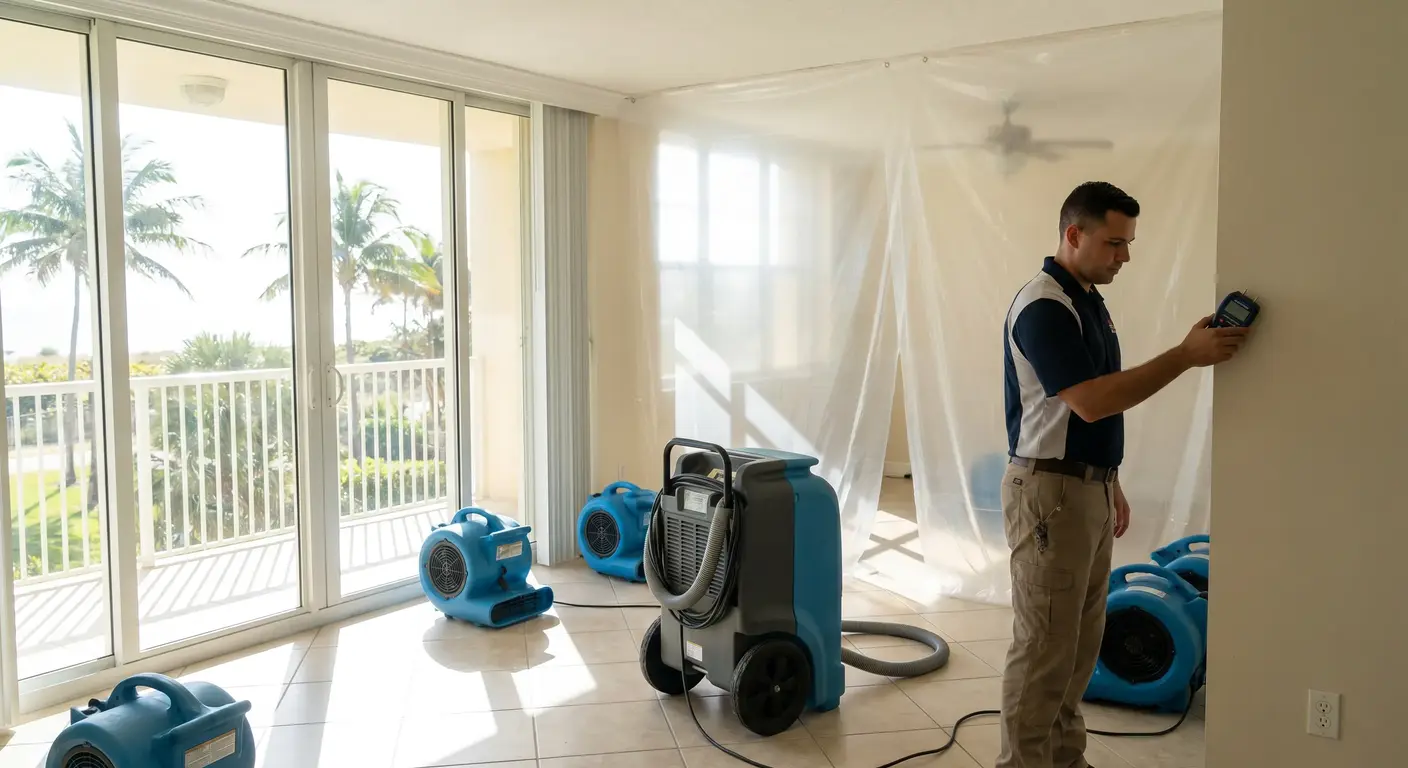
Multi-unit water extraction in a Lauderhill condo — coordinating drying across shared structural assemblies between closed-unit CBS walls.
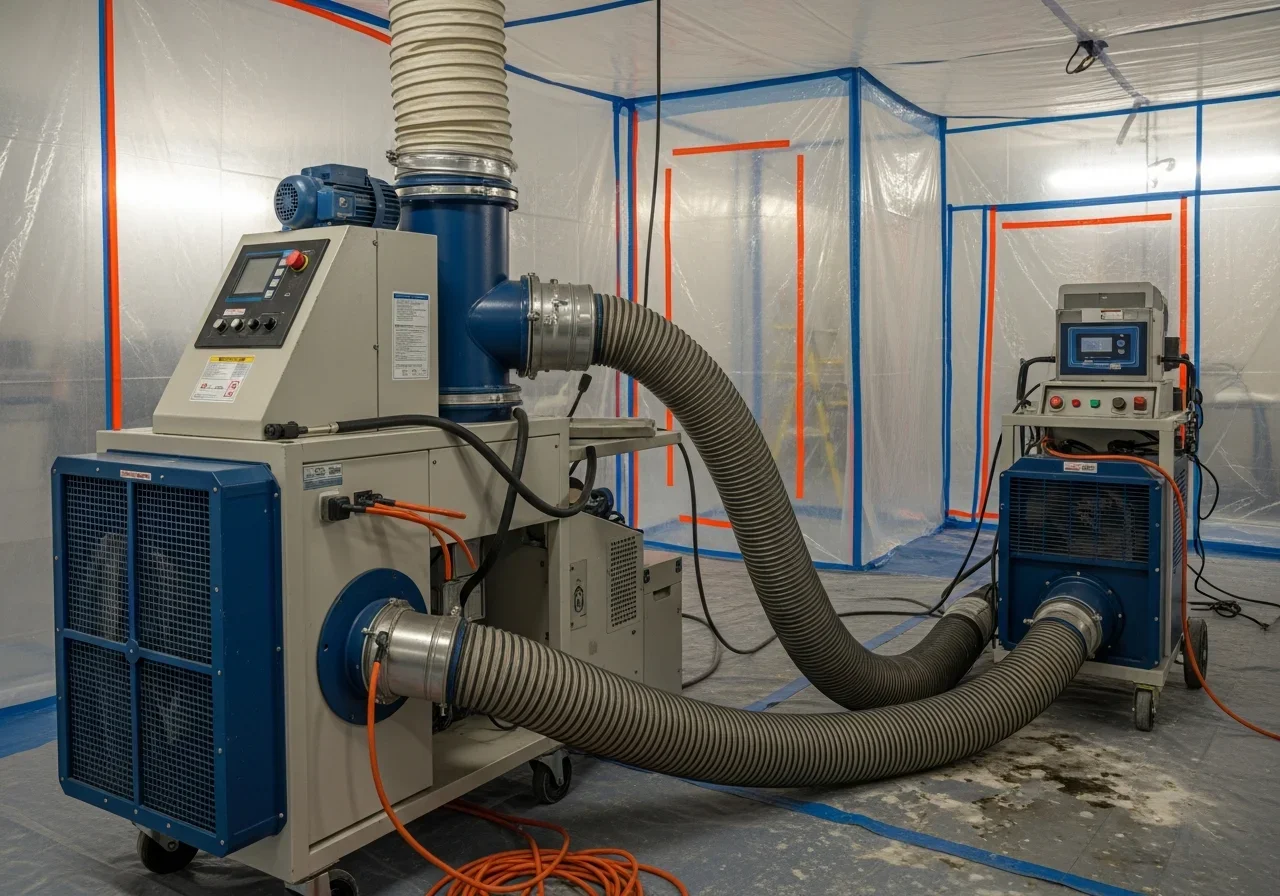
Commercial LGR dehumidifiers and HEPA air scrubbers deployed in an Inverrary condo unit — essential in closed-unit construction where humidity has no natural escape path.
HVAC condensate overflow — the #1 source of water damage calls in Lauderhill's 1970s condo communities, where closed-unit construction accelerates mold colonization.
Thermal imaging identifies hidden moisture behind shared CBS walls — critical for mapping the full extent of inter-unit water migration in closed-unit Inverrary buildings.
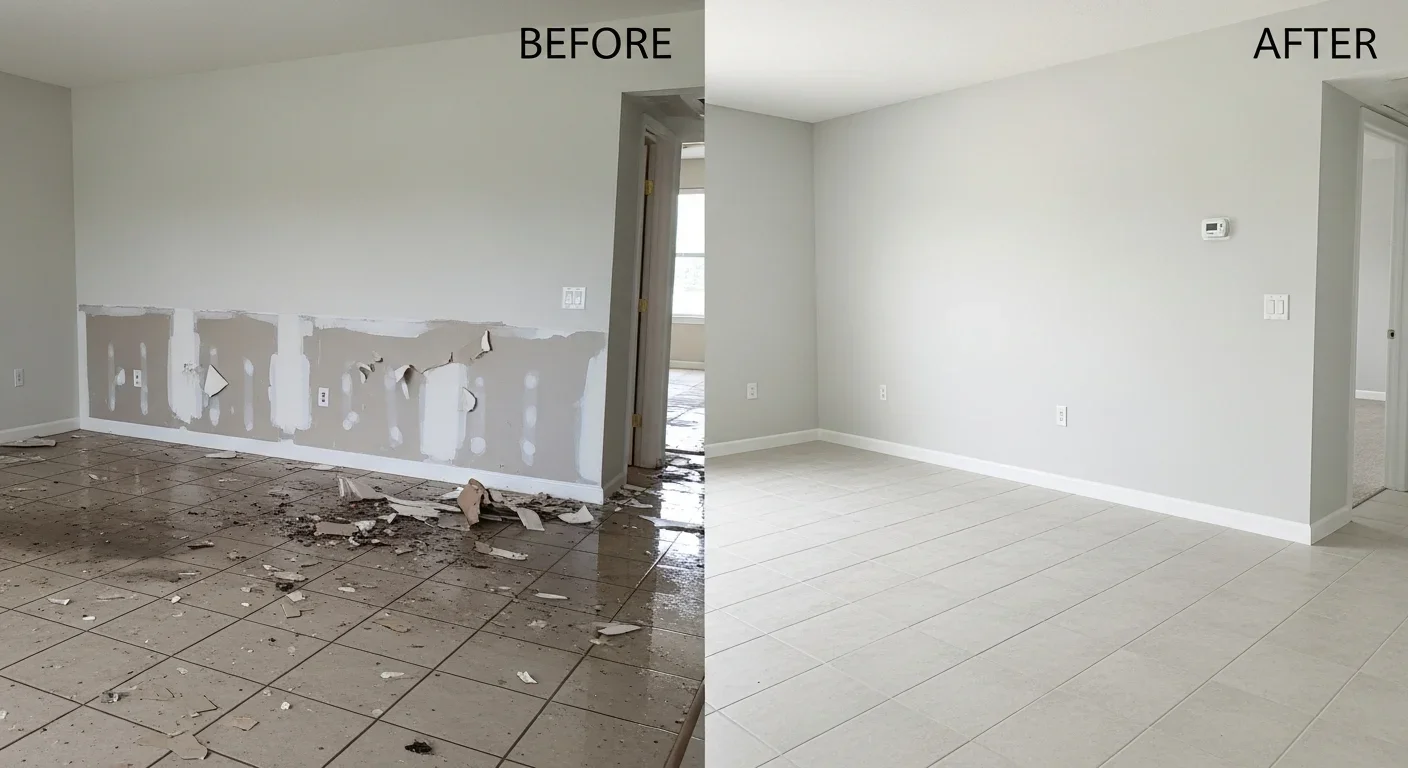
Complete restoration from water-damaged to move-in ready — documented for both the master policy carrier and the affected unit owner's HO-6 claim.
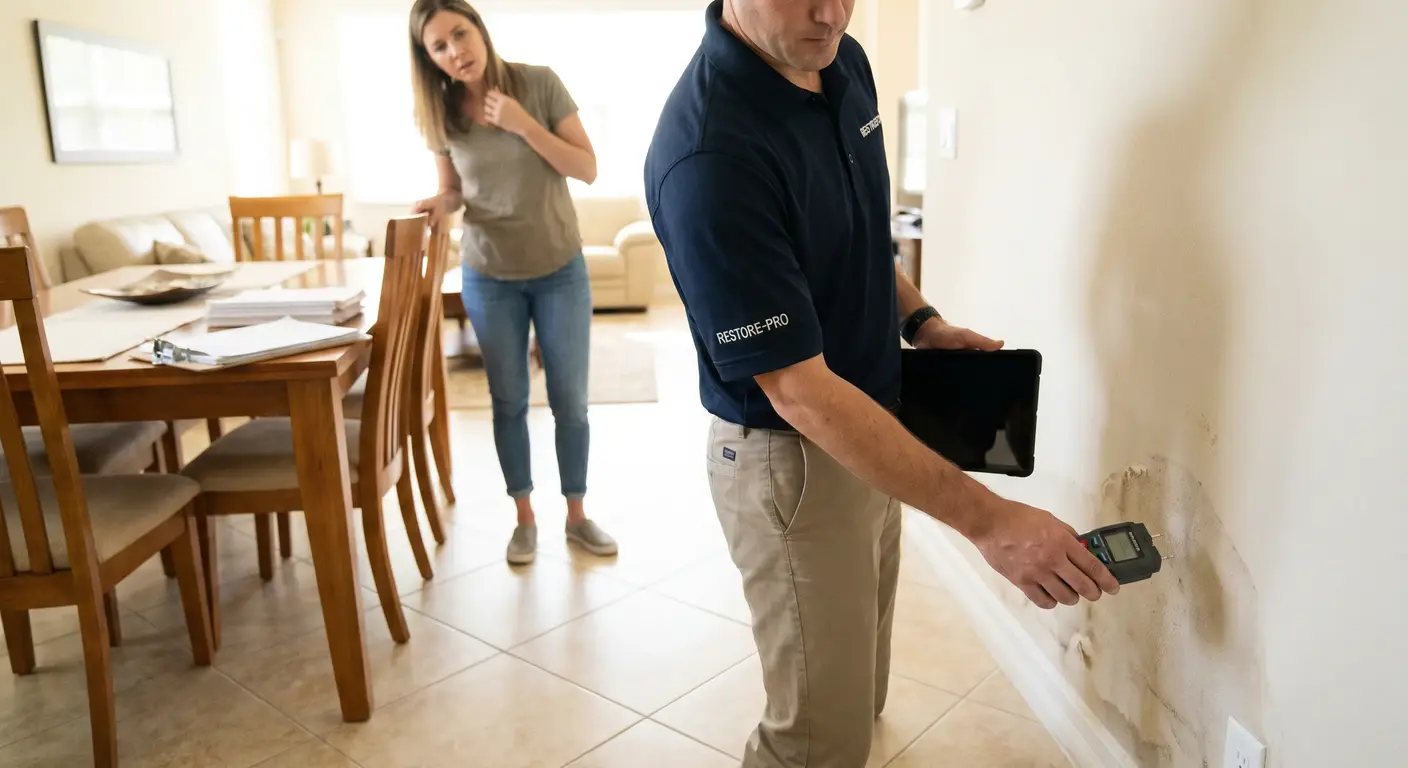
Insurance claims consultation in Lauderhill — preparing carrier-specific documentation for the master policy and individual HO-6 claims simultaneously.
The Palm Build Difference
Why Lauderhill HOA Communities Choose Palm Build
Lauderhill's HOA-dense landscape needs a restoration partner that understands layered
board governance, multi-carrier insurance, closed-unit mold protocols, post-Surfside
compliance, and the unique dynamics of communities like Inverrary, Boulevard Woods, and
Wimbledon. Here is what distinguishes Palm Build.
Board Communication Experience
We understand how Lauderhill condo and HOA boards operate — statutory notice requirements, meeting procedures, expenditure approval thresholds, and the documentation formats boards need. For Inverrary's layered governance structure, that means engaging both the sub-community board and the master association. For Boulevard Woods and other single-layer HOAs, it means knowing their architectural review requirements. We prepare board-ready packages, attend meetings when requested, and coordinate with property management firms throughout the project.
Multi-Unit Coordination
When water damage affects multiple units in an Inverrary condo building, Palm Build serves as the single point of contact for the property manager, master policy carrier, and all affected unit owners. We deploy simultaneous crews to all affected units, coordinate drying across shared structural assemblies, manage access for occupied and vacant units (including seasonal residents), and keep every stakeholder informed through regular progress updates. Closed-unit buildings require HEPA containment protocols during demolition to prevent mold spore spread.
Dual Insurance Navigation
We manage both the master policy claim and all individual HO-6 claims as one unified project. Each carrier receives carrier-specific documentation — separate scopes, separate photos, separate communication — while the physical restoration is coordinated as a single project. When the master carrier is Citizens Property Insurance and unit owners have policies through multiple different private carriers, this coordination is what prevents scope gaps and billing disputes.
HVHZ & Post-Surfside Compliance
All of Broward County falls within the High-Velocity Hurricane Zone. Every reconstruction project must meet HVHZ code requirements — Florida/Broward Product Approval or Miami-Dade NOA for exterior products, TAS 201/202/203 impact testing, City of Lauderhill Building Division permits, and Broward County NOC documentation. For Inverrary's mid-rise buildings now subject to milestone inspections at 25 and 40 years, we coordinate with the association's structural engineer to ensure restoration work addresses inspection items within the required code framework.
Closed-Unit Mold Protocols
Lauderhill's closed-unit CBS condo construction creates an above-average mold risk environment. In standard construction humidity can dissipate; in closed-unit buildings it concentrates behind drywall and in HVAC chases. Palm Build's mold remediation protocols for Lauderhill condo projects follow IICRC S520 and include HEPA containment, negative air pressure, post-remediation clearance testing, and documentation for the HO-6 carrier. We do not cut corners in a construction type that creates hidden mold faster than almost any other in South Florida.
~15 Miles Away in Deerfield Beach
Our South Florida Operations Hub in Deerfield Beach is approximately 15 miles from Lauderhill — a 15 to 20 minute dispatch. We respond to HOA and condo emergencies in Lauderhill with truck-mounted extraction, commercial drying equipment, and multi-unit coordination capabilities. In condo water events in closed-unit construction, every minute of delay means more hidden wall cavity moisture and more mold risk — and in Lauderhill's 70–75% humidity, that window closes fast.
Common Questions
Lauderhill HOA & Condo Restoration FAQ
Answers to the questions we hear most from Lauderhill HOA boards, property managers, and
condo unit owners about restoration in Inverrary and other association-governed
communities.
Who pays for restoration in a Lauderhill condo — the unit owner or the HOA?
Under Florida Statute 718, the condo association's master policy covers common elements — roof, exterior walls, shared plumbing risers, and common areas — while unit owners cover interior finishes through their HO-6 policy. The exact boundary depends on your association's declaration. In Inverrary's sub-communities, International Village, Castle Gardens, Environ, and Lakes of Inverrary each operate under their own declaration — some use 'bare walls-in' coverage (owner responsible for everything inside the studs) while others use 'all-in' coverage (master policy covers interior finishes to original spec). Palm Build reviews your specific governing documents and Florida Statute 718 before work begins to ensure the correct party is billed for each scope item.
How does water damage spread between units in Inverrary and other Lauderhill condos?
In Lauderhill's closed-unit CBS condo buildings — especially Inverrary's 1970s construction — water migrates through several primary pathways: vertically through floor assemblies to units below, horizontally through shared CBS party walls to adjacent units, and through aging HVAC chases and shared plumbing risers. Closed-unit construction is especially vulnerable because humidity cannot dissipate — moisture trapped behind drywall and in wall cavities accelerates mold colonization well beyond the standard 24-48 hour window. A pipe burst in one unit can damage adjacent and lower units within hours, with each requiring separate HO-6 documentation. Palm Build deploys teams to all affected units simultaneously.
Does Palm Build work with HOA boards for approval in Lauderhill?
Yes. We understand that Lauderhill HOA and condo restoration requires board approval before significant reconstruction — and in Inverrary's sub-communities, that means engaging both the sub-community board (International Village, Castle Gardens, Environ, or Lakes of Inverrary) and the Inverrary master association when work affects shared common elements. Florida law authorizes immediate mitigation (water extraction, board-up, mold containment) without a full board vote for emergencies. We begin protecting the property immediately while preparing board-ready scopes, estimates, timelines, and compliance certifications for reconstruction approval at the earliest legally permissible meeting.
How do post-Surfside inspection requirements affect Lauderhill condos?
Florida's post-Surfside legislation (SB 4-D and SB 154) requires milestone inspections at 25 and 40 years for buildings over three stories, plus mandatory Structural Integrity Reserve Studies (SIRS) affecting all condo associations. Broward County's existing 40-year recertification program remains in effect for applicable buildings. Most of Lauderhill's Inverrary stock is low-rise (2-story), so not every building is in the milestone window — but Environ's mid-rise buildings at three to four stories do qualify. SIRS reserve obligations affect all associations regardless of building height, which can create special assessment pressure when a major water or mold loss occurs. Palm Build coordinates with association engineers to ensure restoration scope addresses any items flagged in structural inspections.
How do master policy and HO-6 claims work together in Lauderhill condos?
A single water event in a Lauderhill condo can trigger multiple insurance claims simultaneously: a master policy claim for building and common-area damage, plus individual HO-6 claims for each affected unit's interior. In Inverrary, where a pipe burst can affect units across multiple floors and adjacent walls, you may have the master policy carrier — possibly Citizens Property Insurance — plus several different HO-6 carriers, each requiring separate documentation, separate scopes, and separate adjuster communication. Palm Build provides carrier-specific documentation packages and coordinates all claims as a single integrated restoration project, preventing the scope gaps and billing disputes that occur when each carrier adjudicates in isolation.
What Lauderhill HOA communities does Palm Build serve?
We serve all HOA-governed communities in Lauderhill including Inverrary and its sub-communities (International Village, Castle Gardens, Environ, Lakes of Inverrary), Boulevard Woods, Wimbledon, Cricket Club, Broward Estates, and every other association-governed property in the city. From closed-unit condo villages to single-family HOA neighborhoods — we handle the unique access, approval, and insurance requirements of each community type.
Why is mold such a significant risk in Lauderhill condo buildings?
Lauderhill's Inverrary community was built in the 1970s using closed-unit CBS construction — a design that seals interiors from the subtropical climate but also traps humidity when water intrudes. In standard construction, moisture can dissipate through wall assemblies; in closed-unit buildings it concentrates behind drywall and in HVAC plenums. Combined with Lauderhill's 70-75% ambient humidity and 60+ inches of annual rainfall, any undiscovered moisture source becomes a mold source within 24-48 hours. Palm Build follows IICRC S520 mold remediation protocols with HEPA containment, negative air pressure, and independent clearance testing — and documents everything for the HO-6 carrier.
How quickly can Palm Build respond to a condo emergency in Lauderhill?
Our South Florida Operations Hub in Deerfield Beach is approximately 15 miles from Lauderhill, giving us a 15 to 20 minute dispatch for HOA and condo emergencies. We respond with truck-mounted extraction, commercial drying equipment, and the multi-unit coordination that closed-unit condo buildings require. For Inverrary community access, we coordinate with sub-community management and the master association emergency contacts to ensure immediate entry without delay.
Trusted Vendors
Trusted local pros in Lauderhill
Outside our restoration scope, these are the vetted, licensed contractors we trust
alongside our work. Personally evaluated, reference-checked, and recommended by Palm
Build.
HOA or Condo Damage in Lauderhill? We Handle the Complexity.
From Inverrary's layered sub-community governance to Boulevard Woods HOA approvals to multi-carrier insurance coordination across closed-unit 1970s CBS condos, Palm Build manages the full complexity of Lauderhill HOA restoration — dispatched from ~15 miles away in 15 to 20 minutes.