Fire & Smoke Damage Cleanup in Lauderhill, Florida
From Inverrary's closed-unit condo communities — International Village, Castle Gardens, Environ, Lakes of Inverrary — to Boulevard Woods and Broward Estates single-family CBS homes, Palm Build's IICRC-certified team handles structural fire damage, soot removal from concrete block and stucco, smoke odor elimination in humid wall cavities, and full code-compliant reconstruction. Palm Build responds from our Deerfield Beach office in 15–20 minutes with insurance coordination from the first call.
Deerfield Beach Office — ~15 miles to Lauderhill 15-20 min Response IICRC Certified
Why Lauderhill Homes Face Unique Fire & Smoke Risks
Lauderhill is one of central Broward County's most condo-dense cities — built almost
entirely during the 1970s with closed-unit construction across the Inverrary
master-planned community. International Village, Castle Gardens, Environ, and Lakes
of Inverrary share walls, HVAC plenums, and plumbing stacks that accelerate fire and
smoke spread between units. Aging 50-year-old electrical systems combined with
year-round AC demand and South Florida's 70–75% humidity create conditions where
fire events escalate faster than in newer or single-family-dominated cities.
Aging Electrical in Lauderhill's 1970s Inverrary Condos
Critical
Lauderhill's housing stock was built almost entirely during the 1970s construction boom, leaving a city of CBS condo communities — International Village, Castle Gardens, Environ, Lakes of Inverrary — with 50-year-old plumbing risers and electrical systems designed for minimal appliance loads. These panels now power central AC running 10–11 months per year, modern kitchens, and home offices. Closed-unit condo construction means work orders for electrical upgrades require HOA coordination, and deferred maintenance is common. Federal Pacific-era panels that fail to trip during overload remain in many Inverrary buildings. The combination of age, condo bureaucracy, and constant South Florida cooling demand creates persistent electrical fire risk across the entire city.
Inverrary Closed-Unit Condos: Smoke Migration in 1970s Buildings
Critical
Lauderhill is dominated by Inverrary — a 1970s master-planned community of closed-unit condos with shared HVAC plenums and plumbing stacks. International Village, Castle Gardens, and Environ alone contain thousands of units across dozens of low-rise buildings. When fire breaks out in one unit, smoke reaches neighboring units in minutes through shared air handlers and corridor penetrations. Older buildings may lack adequate fire stopping between units. Seasonal occupancy patterns mean units sit dormant for months, then draw full electrical load when owners return — stressing connections that corroded during humid summer months.
Closed-Unit Construction and Trapped Humidity
High
Lauderhill's closed-unit condo architecture was designed for privacy, not ventilation. Interior units share walls on multiple sides, limiting airflow and trapping South Florida humidity. When fire damage occurs, smoke infiltrates hollow CBS block cores and becomes locked in place by 70–75% ambient humidity. The moisture continuously activates odor compounds, causing the smell to surge and recede for months after the original event — even after visible soot is cleaned. This makes smoke odor elimination in Lauderhill condos significantly more demanding than open-construction single-family work.
Kitchen Fire Risk in Condo Communities
High
Kitchen fires are the leading cause of residential fires throughout South Florida. In Lauderhill's Inverrary condo communities, kitchen fires in one unit send protein soot through shared HVAC returns and corridor gaps to multiple neighboring units within minutes. Protein soot from cooking fires is nearly invisible but extremely pungent and bonds chemically to CBS stucco surfaces. Open-concept condo floor plans allow smoke to spread across the entire living space before the source is identified. Wet-season months bring increased lightning risk that adds to the electrical fire baseline year-round.
Space Heater Fires During Cold Snaps
Moderate
January and February cold snaps push overnight temperatures into the 30s–40s, prompting Lauderhill residents — particularly in Inverrary's older condo buildings — to deploy portable space heaters. These heaters are placed near drapes and bedding in units without central heating. Multiple heaters on 1970s circuits overload connections that have never been updated for modern loads. The combination of aging wiring in 50-year-old condo buildings and unfamiliar heating equipment creates a seasonal fire spike in the first two months of the year.
Palm Build dispatches from our Deerfield Beach HQ to Lauderhill fire emergencies in
15–20 minutes
Lauderhill Fire Risk at a Glance
1970s Inverrary condo buildings with aging electrical panels and shared HVAC
Closed-unit construction traps smoke in CBS cavities and shared corridors
Kitchen fires spread protein soot to multiple condo units via shared HVAC plenums
Soot penetrates CBS concrete block wall cavities invisibly
70–75% humidity traps and re-releases smoke odor for months post-fire
Neighborhood Fire Risk Profiles
Fire Risk by Lauderhill Neighborhood
Every Lauderhill neighborhood carries its own fire risk profile based on construction
era, building type, and condo vs. single-family density. Understanding which risks apply
to your property helps us respond with the right equipment and multi-unit coordination
protocols from the first call.
International Village
Critical
Early 1970s · Condo Complex
Shared HVAC plenums, aging window and slider seals
One of the original Inverrary condo communities built in the early 1970s. Shared HVAC air handlers distribute smoke across multiple units within minutes of a kitchen fire. Aging window and slider seals fail under hurricane-season wind pressure, allowing wind-driven rain and smoke migration. Units may have gone through multiple ownership cycles with inconsistent electrical upgrades. HOA coordination is required before access to common-area electrical or mechanical rooms affected by fire.
Castle Gardens is a 55+ community within Inverrary with intermittent occupancy during summer months. Units that sit dormant for extended periods develop hidden plumbing leaks and HVAC mold — then draw sudden full electrical load when owners return in fall. The combination of aging panels and unexpected surge demand creates elevated fire risk during occupancy transitions. A kitchen fire in one Castle Gardens unit commonly requires smoke remediation across four to eight adjacent units due to closed-unit building design.
Environ
High
1970s–1980s · Condo Clusters
Elevator shaft smoke migration, shared wall humidity
Environ is a cluster of mid-rise condo buildings within Inverrary where elevator shafts act as vertical smoke pathways. The chimney effect draws smoke upward from the fire floor to every level above. Shared CBS walls between units allow both moisture and smoke infiltration through mortar joints and penetrations around plumbing and electrical runs. South Florida humidity causes moisture to continuously trap and re-release smoke odor compounds inside these cavities after the fire is out.
Lakes of Inverrary sits adjacent to the canal and lake network along the C-13 basin, adding moisture and humidity pressure to already-aging 1970s CBS structures. Flat-roof membrane failures after storm events create water intrusion that compounds fire restoration — wet building assemblies resist smoke-odor elimination and accelerate mold growth alongside soot. Wind-driven rain during hurricane season exploits stucco cracks and aging window seals to penetrate building envelopes already compromised by fire damage.
Boulevard Woods
High
1970s–1980s · Single-Family CBS
Roof soffit intrusion, aging electrical panels, kitchen fire risk
Boulevard Woods neighborhoods — East, North, and West — are among the few large single-family CBS pockets in Lauderhill. Homes from this era carry 1970s electrical panels that may include Federal Pacific or Zinsco models known for failure to trip during overload. Soffit and fascia failures after summer storms create entry points for wind-driven rain that compounds fire damage recovery. Kitchen fire risk is consistent with the South Florida pattern — protein soot on CBS stucco requires enzymatic cleaning that differs from surface wiping.
Wimbledon
Moderate
1970s–1980s · Condo Community
Flat-roof ponding, HVAC closet moisture, AC condensate
Wimbledon is a condo community with flat-roof low-rise buildings where ponding after heavy rain events can compound post-fire water damage. HVAC closets accumulate moisture in South Florida humidity, and when fire or smoke infiltrates HVAC ductwork, the contamination spreads throughout every connected unit. Intermittent occupancy in some units means smoke-odor complaints may surface weeks after the fire event, once an owner returns and activates the air conditioning.
Broward Estates contains some of the oldest single-family CBS homes in Lauderhill, with 1960s stock that predates significant electrical code updates. Cast-iron drain line aging creates slab-adjacent moisture that compounds any fire restoration. Older homes may still carry original 100-amp panels with limited capacity for modern loads including central AC, EV chargers, and upgraded appliances. Electrical fires from overloaded panels are the primary risk in this neighborhood.
Cricket Club sees more moderate fire risk from its CBS condo construction, but a pattern of delayed reporting means small kitchen smoke events escalate to mold claims before remediation begins. South Florida humidity at 70–75% means that soot on CBS walls retains moisture and feeds mold on fire-weakened surfaces within 24–48 hours. Prompt response and immediate HEPA-vacuuming prevent Category 1 smoke events from becoming full mold remediation projects.
Condo Fire Risk
How Fire & Smoke Spread in Lauderhill Condo Buildings
Lauderhill has one of the highest condo concentrations in central Broward County.
Inverrary — International Village, Castle Gardens, Environ, and Lakes of Inverrary —
contains thousands of closed-unit condos built in the 1970s. When fire starts in one
unit, smoke reaches neighboring units in minutes through four primary pathways — each
requiring different remediation approaches.
Lauderhill's Inverrary condo communities represent the city's highest-density fire
spread risk — closed-unit 1970s construction with shared HVAC and plumbing
Most Inverrary condo buildings in Lauderhill share HVAC plenums between units. When fire breaks out, smoke particles are immediately drawn into the HVAC return and distributed to every connected unit — often contaminating four to ten units from a single kitchen fire. If the system is not shut down within minutes, smoke infiltrates ductwork throughout the building, requiring complete duct cleaning in every affected unit. In Lauderhill's 55+ communities at Castle Gardens and International Village, residents may not recognize smoke from a distant unit until contamination is widespread.
Elevator Shafts & Stairwells in Inverrary Mid-Rise Buildings
Elevator shafts act as vertical smoke highways in Lauderhill's Inverrary-area mid-rise condo buildings. The chimney effect draws smoke upward through the shaft, contaminating every floor above the fire. Stairwell pressurization systems in older 1970s buildings may be inadequate or non-functional, allowing smoke to enter every stair landing and adjacent hallway. Environ and Lakes of Inverrary buildings with central elevator cores are particularly susceptible to vertical smoke migration from a single-floor fire event.
Inadequate Fire Stopping in 1970s Construction
Condo buildings constructed before the 2001 Florida Building Code update may lack adequate fire stopping between units — the fireproof materials that seal gaps around pipes, wires, and ducts where they pass through shared CBS walls and floors. These gaps allow smoke and eventually flame to migrate between units through penetrations. Many Inverrary buildings were constructed in the 1970s–1980s, and decades of plumbing, electrical, and HVAC modifications may have compromised whatever fire stopping originally existed between unit boundaries.
Multi-Party Insurance Complexity in Lauderhill Condos
Condo fire damage in Lauderhill triggers one of the most complex insurance scenarios in Florida. Your HO-6 unit-owner policy covers interior improvements and contents. The HOA master policy covers common elements and structural components. Adjacent units damaged by smoke from your fire file claims against their own policies — but may subrogate against yours. Palm Build coordinates documentation for all parties simultaneously from the Inverrary buildings, ensuring nothing falls through the gaps between coverage layers.
Palm Build Multi-Unit Condo Response
We deploy separate teams to the fire-origin unit and smoke-affected units
simultaneously. The origin unit gets full structural fire restoration. Adjacent units
get soot testing, surface cleaning, HVAC duct sanitation, and odor treatment — all
documented separately for each unit owner and the HOA master policy claim. We
understand Inverrary's management structure and Florida condominium association
compliance requirements for multi-unit restoration events.
Fire restoration is more complex than water or mold because it involves multiple damage
types simultaneously — structural fire damage, soot contamination, smoke odor, and water
from fire suppression. Our six-step process addresses all four in a coordinated sequence
tailored to Lauderhill's CBS condo construction and Broward County HVHZ code
requirements.
01
Emergency Board-Up & Securing
Hours 1-4
We secure your Lauderhill home or condo against weather, theft, and further damage — boarding windows, tarping any roof damage, and securing doors. In South Florida, where afternoon thunderstorms develop daily from May through October, an unsecured fire-damaged building can sustain significant additional water damage within hours. For Inverrary condo units — International Village, Castle Gardens, Environ — we coordinate with HOA management and building security for access to common areas affected by smoke. Palm Build dispatches from our Deerfield Beach office to any Lauderhill address in 15–20 minutes.
02
Damage Assessment & Soot Classification
Day 1-2
Our IICRC-certified team performs a comprehensive walk-through documenting every affected area with photos, video, and moisture readings. We classify the fire and soot type — protein from kitchen fires, natural from wood, synthetic from plastics — and assess structural integrity of CBS block walls and concrete tie-beam systems. For Lauderhill condos, we assess adjacent units for smoke migration through shared HVAC plenums and elevator shafts. Documentation is formatted exactly how Broward County adjusters and Florida insurance carriers expect to receive it.
03
Structural Cleaning & Soot Removal
Days 2-8
Professional soot removal uses chemistry matched to the specific soot type. HEPA vacuuming removes loose particulate, chemical sponges lift embedded residue, and wet cleaning with specialized detergents addresses remaining contamination on stucco walls, tile, cabinetry, and structural members. Lauderhill's CBS construction requires specialized techniques to clean porous stucco without damaging the finish. Kitchen fire protein soot — the most common type across Lauderhill's condo communities — requires enzymatic cleaners that break down the grease-based compounds bonded to every surface.
04
Smoke Odor Elimination
Days 5-14
Smoke odor elimination in Lauderhill requires multiple techniques due to the 70–75% year-round humidity. Thermal fogging penetrates CBS wall cavities where smoke becomes trapped in hollow block cores. Ozone treatment handles sealed and evacuated spaces — particularly effective for Inverrary condo units with sealed boundaries. Hydroxyl generation treats occupied areas where homeowners or workers need to be present. Complete HVAC duct cleaning is mandatory — systems run year-round in South Florida, continuously circulating residual smoke particles. Expect 2–3 additional treatment cycles compared to dry-climate restoration.
05
Content Cleaning & Pack-Out
Days 3-14
Salvageable contents are inventoried, photographed, packed, and transported to our climate-controlled facility for professional cleaning. Furniture, electronics, clothing, documents, and personal items each require specific cleaning protocols. South Florida humidity makes prompt content removal critical — items left in a smoke-damaged, humid environment deteriorate rapidly. Our detailed inventory becomes part of your insurance documentation for both restoration and replacement claims across Lauderhill's HO-6 and master policy landscape.
06
Code-Compliant Reconstruction
Weeks 2-8+
Once cleaning and odor treatment are verified complete, we handle full reconstruction: drywall, stucco repair, tile, cabinetry, painting, electrical, plumbing, and finish work. Lauderhill falls within Broward County's HVHZ, requiring all reconstruction to meet current Florida Building Code — impact-rated windows and doors rated to TAS 201/202/203, upgraded electrical to current NEC standards, and Broward/Florida Product Approval on all exterior components. Design wind speed is approximately 170 mph for Lauderhill properties. We manage the full permitting process through the City of Lauderhill Building Division with Broward County Notice of Commencement, including HOA architectural review for condo reconstruction.
Understanding the Damage
Five Types of Fire Damage in Lauderhill CBS Homes
Fire damage is never just one thing. A single fire event creates five distinct damage
types that each require different remediation techniques, timelines, and expertise.
Addressing only the visible damage while ignoring smoke in CBS wall cavities or moisture
from firefighting leads to persistent odor, hidden mold, and insurance disputes months
later.
Structural Char Damage
Direct flame contact chars wood roof trusses, cabinetry, framing within CBS walls, and any wood structural elements. In Lauderhill's CBS construction, the concrete block walls themselves rarely fail from fire — but the wood roof truss system above is extremely vulnerable. Charred trusses must be evaluated by a structural engineer before any weight is placed on the roof system. Interior framing around doors, windows, and closets within CBS walls is also wood and chars readily. Inverrary's 1970s-era buildings may have original truss systems with aging metal plates and connectors more susceptible to fire and humidity damage.
Professional Remediation Approach
Structural assessment first, then removal of all charred material below salvageable depth. Replacement of compromised trusses, framing, and structural elements to current Broward County code — impact-rated components, HVHZ-compliant fasteners, and current-code tie connections.
Soot & Smoke Film
Soot is the black or yellowish residue deposited on every surface exposed to smoke. In Lauderhill's CBS condo buildings, soot bonds aggressively to porous stucco finishes and penetrates tile grout lines throughout the home. Kitchen fires — the leading cause in Lauderhill's condo communities — produce protein soot that is nearly invisible but extremely pungent and bonds chemically to every surface. Synthetic soot from burning plastics is sticky, black, and toxic. Each type requires completely different cleaning chemistry — using the wrong approach sets stains permanently into CBS stucco surfaces.
Professional Remediation Approach
HEPA vacuuming for dry soot, chemical sponges for medium contamination, enzymatic cleaners for protein soot, solvent-based cleaners for synthetic residue. Stucco requires specialized CBS cleaning techniques; tile grout requires pH-neutral cleaners to avoid discoloration.
Smoke Infiltration in CBS Wall Cavities
This is the most insidious fire damage in Lauderhill's CBS construction. Smoke infiltrates the hollow cores of concrete block walls through microscopic cracks, mortar joints, and penetrations around electrical outlets and plumbing. Once inside, smoke becomes trapped — invisible from the surface but actively releasing odor compounds for months. In Lauderhill's 70–75% humidity, moisture continuously activates these odor compounds, causing the smell to surge and recede with weather changes. Inverrary's closed-unit condo design concentrates this effect: fewer air-exchange points mean longer smoke retention inside wall cavities.
Professional Remediation Approach
Thermal fogging injection into block cavities, partial demolition for heavily contaminated sections. Moisture probes verify cavity dryness before sealing. Multiple odor verification tests over 2–4 weeks confirm elimination rather than masking.
Water Damage From Fire Suppression
Fire hoses deliver 150–250 gallons per minute. Residential sprinklers deliver 17+ gallons per minute and may run for 30 minutes before shutoff. This water saturates drywall, carpet, insulation, and personal property — and on Lauderhill's slab-on-grade condo construction, it pools across tile and terrazzo floors with nowhere to drain. The water seeps into CBS wall cavities, under baseboards, and through floor-to-wall joints. Within 24 hours in South Florida's humidity, trapped moisture feeds mold on fire-weakened surfaces — turning a fire restoration into a simultaneous mold remediation event.
Professional Remediation Approach
Truck-mounted extraction, moisture probe injection into CBS walls, commercial dehumidification, and coordinated drying alongside fire remediation. Treated as an integrated project, not separate scope. In multi-unit Inverrary buildings, adjacent units receive moisture assessment even if they show no visible water.
Persistent Smoke Odor
Smoke odor is the last fire damage to resolve and the hardest in South Florida's climate. Odor molecules bond chemically to every porous surface — stucco, grout, concrete, fabric, and HVAC components. In 70–75% humidity, moisture traps and re-releases these molecules continuously. Year-round HVAC operation circulates residual particles through every room. Even after visible soot is removed and surfaces look clean, odor persists until treated at the molecular level. HVAC ductwork is the most common source of recurring odor after surface cleaning — particularly in Lauderhill condos where shared air handlers distribute smoke particles to multiple units.
Professional Remediation Approach
Thermal fogging for CBS cavities, ozone for sealed spaces, hydroxyl generation for occupied areas, complete HVAC duct cleaning and coil sanitization. Multiple treatment cycles are standard in Lauderhill's climate. Each cycle verified with 48-hour sealed tests before sign-off.
Lauderhill Pricing
Fire Damage Restoration Costs in Lauderhill
Fire restoration costs in Lauderhill run higher than national averages due to Broward
County HVHZ building code requirements, CBS condo construction complexity, multi-party
HOA coordination, and elevated South Florida material and labor costs. The good news:
fire is one of the most comprehensively covered perils under Florida homeowners
insurance — coverage disputes are rare compared to water or mold claims.
Smoke-Only Damage (No Structural Fire)
Smoke infiltration from adjacent Inverrary unit, nearby fire, or contained incident
$5,000 - $25,000
Common in Lauderhill condos — especially Inverrary communities where smoke travels through shared HVAC plenums and elevator shafts to adjacent units. Includes surface cleaning, soot removal, odor treatment, duct cleaning, and content restoration. No structural work required. A kitchen fire in one International Village or Castle Gardens unit often means smoke cleanup in four to eight neighboring units. HOA coordination adds documentation overhead even when structural damage is minimal.
Small Contained Fire (Kitchen, Bathroom)
Soot cleanup, odor elimination, minor repairs, HVAC cleaning
$15,000 - $45,000
Includes protein or synthetic soot removal from CBS surfaces, thermal fogging for odor in wall cavities, complete duct cleaning, and cosmetic repairs. South Florida humidity requires additional odor treatment cycles. Broward County HVHZ code compliance adds 10–15% for any permit-required work. Kitchen fires — the leading cause in Lauderhill condos — usually keep structural damage contained but smoke spreads throughout the unit and into shared building systems.
Moderate Fire (Multi-Room)
Structural cleaning, CBS wall remediation, full odor treatment, partial rebuild
$45,000 - $120,000
Includes structural assessment, multi-room soot and smoke remediation, water extraction from fire suppression, content pack-out, and partial reconstruction to current Broward County HVHZ code including impact-rated components with TAS 201/202/203 testing compliance. Inverrary condo units may require adjacent-unit remediation coordination with HOA. Boulevard Woods and Broward Estates single-family homes may require full electrical panel upgrades during reconstruction. Design wind of approximately 170 mph applies to all Lauderhill rebuilds.
Major Structural Fire
Extensive damage, roof truss involvement, full code-compliant reconstruction
$120,000 - $350,000+
Full structural rebuild to current Florida Building Code for the HVHZ: impact-rated windows and doors, reinforced roof connections, upgraded electrical to NEC, and current insulation requirements. Lauderhill CBS structure usually survives but roof trusses, interior framing, and all finishes require full replacement. Permitting through the City of Lauderhill Building Division with Broward County Notice of Commencement adds timeline. HOA architectural review required for Inverrary condo reconstruction.
Important: These ranges reflect typical Lauderhill
projects. Actual costs depend on fire severity, soot type, number of affected rooms or units,
content damage, and reconstruction scope. Palm Build provides detailed, line-item estimates
formatted for your insurance carrier within 48 hours of initial assessment.
Seasonal Patterns
Lauderhill Fire Risk Calendar
Unlike northern cities with fire risk driven by heating season, Lauderhill's peak fire
period is November through March — driven by holiday cooking, space heater use during
cold snaps, and the seasonal return of residents to Inverrary condos that have sat
dormant for months. Year-round electrical fires from aging 1970s panels add a constant
baseline risk throughout the calendar year.
November - March
Holiday Cooking & Seasonal Occupancy Return
Peak Season
November through March is Lauderhill's fire peak. Holiday cooking — unattended stovetops, cooking oils left on heat, and candle use during gatherings — drives kitchen fires in the late fall months. In Inverrary's Castle Gardens and International Village, the pattern is compounded by seasonal residents returning to units that sat dormant all summer. Electrical systems go from zero to full-load overnight, stressing 50-year-old connections that may have corroded during the humid wet season. January and February cold snaps add space heater demand on circuits never designed for that draw.
Active months: Nov-Mar
Year-Round
Electrical Fires (Overloaded 1970s Panels)
High
Lauderhill's aging electrical infrastructure — 50-year-old condo buildings in Inverrary, single-family homes in Boulevard Woods and Broward Estates — creates fire risk every day of the year. Central AC systems running 10–11 months per year, aging HVAC condensate systems, and modern appliances on 1970s circuits maintain constant load stress. The busiest months for electrical fire calls are June through September when AC runs at maximum capacity — but aging panels and corroded connections can arc and ignite any time, especially in units that cycle from long dormancy to sudden full occupancy.
Active months: Jan-Dec (peaks Jun-Sep)
June - October
Lightning Strike Fires
Seasonal High
South Florida is the lightning capital of North America. Lauderhill averages 80–90 thunderstorm days per year, with lightning strikes igniting fires directly and causing power surges that overload already-stressed electrical systems. Lightning strikes to flat-roof and low-slope condo roofs can ignite membrane and insulation layers — less visible than attic fires in single-family homes but equally destructive. Whole-home surge protectors are uncommon in Lauderhill's 1970s construction, leaving building electrical systems vulnerable to surge-induced arc faults during peak wet-season storms.
Active months: Jun-Oct
January - February
Space Heater Fires (Cold Snaps)
Seasonal Moderate
Rare cold snaps push overnight temperatures into the 30s–40s, driving Lauderhill residents — particularly in Inverrary's 55+ Castle Gardens and International Village communities — to use portable space heaters. These heaters are placed too close to drapes and bedding in units without central heating. Multiple heaters overload 1970s circuits in buildings never designed for that electrical draw. The combination of the oldest wiring in the city's building stock and unfamiliar seasonal equipment creates a brief but dangerous fire spike in January and February each year.
Active months: Jan-Feb
Odor Elimination
Smoke Odor Challenges in Lauderhill's Humid Climate
Smoke odor is the most persistent aspect of fire damage — and South Florida's 70–75%
year-round humidity makes it significantly harder to eliminate than anywhere in the
country. Masking products do not eliminate smoke odor. They temporarily cover it.
Professional odor elimination requires treating the source at the molecular level using
methods matched to Lauderhill's CBS condo construction, year-round HVAC operation, and
closed-unit building design.
Thermal Fogging
Heated deodorizing agents are converted into a fog that penetrates materials the same way smoke did — through microscopic pores, cracks, and cavities. This is the most effective method for Lauderhill's CBS construction, where smoke becomes trapped in hollow concrete block wall cavities and porous stucco finishes. The fogging agent chemically neutralizes odor molecules rather than masking them. South Florida's 70–75% humidity demands more treatment cycles than dry climates — moisture traps and continuously re-releases odor compounds between treatments. Lauderhill's closed-unit Inverrary condo buildings have fewer air-exchange points, making cavity penetration deeper and more persistent.
Best for: CBS wall cavities, porous stucco, closed-unit condos, deep penetration in block construction
Ozone Treatment
Ozone generators create O3 — a highly reactive oxygen molecule that breaks down odor compounds at the molecular level. Ozone treatment is extremely effective but requires the space to be completely unoccupied (including plants and pets) during treatment. We use ozone for sealed, evacuated spaces like closets, interior rooms, and enclosed areas where concentrated treatment reaches maximum effectiveness. In Lauderhill's Inverrary and Wimbledon condos, ozone is ideal for treating individual units with sealed boundaries between floors and neighboring units.
Best for: Sealed spaces, condo units, heavy odor concentration areas
Hydroxyl Generation
Hydroxyl generators produce hydroxyl radicals — the same molecules that naturally purify outdoor air via sunlight — to break down odor compounds. Unlike ozone, hydroxyl treatment is safe for occupied spaces. We deploy these in areas where occupants or workers need to be present, and as continuous treatment during the multi-day cleaning process. Essential for Inverrary condo projects where adjacent units remain occupied, or when homeowners are coordinating insurance documentation and adjuster visits on-site throughout the restoration.
Best for: Occupied spaces, Inverrary condo buildings, ongoing treatment during active restoration
HVAC Duct Cleaning & Sanitization
Lauderhill homes run air conditioning year-round — meaning smoke and soot particles are drawn into the HVAC system and distributed to every room within hours of a fire. The ductwork becomes a smoke distribution network that continues circulating contamination with every cooling cycle. In Inverrary condo buildings with shared HVAC plenums, smoke travels through the system to units that never had direct fire exposure. Complete duct cleaning, coil sanitization, and filter replacement are mandatory steps. Skipping this step means odor returns within days of surface cleaning — a common callback issue when HVAC is not treated as part of the primary remediation scope.
Best for: All Lauderhill fire restorations — year-round AC operation and shared plenums make this mandatory
Lauderhill humidity factor: Expect 2–3 additional
odor treatment cycles compared to dry-climate restoration projects. Our verification process
includes 48-hour sealed tests after each treatment cycle to confirm odor elimination before
signing off — because in this humidity, odor that seems resolved can resurface when moisture
levels shift, especially in Inverrary's closed-unit buildings.
Insurance Coverage
Fire Insurance Claims in Lauderhill: What's Covered
Fire is one of the most comprehensively covered perils under Florida homeowners
insurance. Unlike water or mold damage — which face significant coverage restrictions in
Florida — fire claims under a standard HO-3 or HO-6 policy rarely face coverage
disputes. Lauderhill homeowners pay approximately $6,220 per year for Broward County
homeowners insurance, but fire coverage is fully included. Florida law gives you one
year from the date of loss to file under Fla. Stat. 627.70132.
Structural repair and reconstruction to pre-loss condition
Professional soot and smoke cleaning of all affected surfaces
Water damage from fire suppression (extraction and drying)
Contents restoration or replacement (furniture, electronics, clothing)
Additional Living Expenses (ALE) for temporary housing during restoration
Debris removal and hazardous material disposal
Code upgrades required during reconstruction (with ordinance-and-law endorsement)
Lauderhill Condo Fire Claims: Multi-Layer Coverage
Fire damage in Lauderhill condos — particularly Inverrary communities — triggers
multiple insurance layers simultaneously. Understanding which policy covers which
component prevents gaps in your claim and accelerates the restoration process.
HO-6 Unit Owner Policy
Interior improvements, personal contents, ALE, liability
Covers everything from the drywall inward: flooring, cabinets, appliances, paint, fixtures, and all personal property. In Lauderhill's Inverrary communities, the boundary between HO-6 and master policy is frequently contested — Palm Build creates documentation that clearly separates unit-interior vs. common-area damage from the first day.
HOA Master Policy
Common elements, exterior walls, roof, hallways, elevators
Covers structural components and common areas. In Lauderhill's CBS condo buildings, this typically includes the concrete block walls themselves and all shared mechanical systems including HVAC plenums and elevator equipment contaminated by smoke.
Adjacent Unit Claims
Smoke damage to neighboring units from fire in your unit
Neighboring unit owners file against their own HO-6 policies, which may subrogate against the fire-origin unit. In Inverrary buildings where a single fire can affect four to ten units, subrogate claims become complex quickly. Separate documentation packages for each unit are essential.
Palm Build Manages Your Fire Claim
We work directly with your insurance adjuster from the first inspection. Our fire damage
documentation — structural assessments, soot type classification, moisture readings,
photo evidence, and detailed scopes of work — is formatted exactly how Broward County
adjusters and Florida carriers expect to receive it. For Lauderhill condo fire claims,
we provide separate documentation packages for each affected unit owner and the HOA
master policy claim. With Florida's complex insurance landscape and AOB restrictions
since January 2023, having a restoration company that understands Lauderhill's condo
market gets your claim approved faster and for the full amount you're entitled to.
Lauderhill Fire Restoration: The Process in Action
From emergency board-up through full reconstruction, see how Palm Build restores
Lauderhill homes and Inverrary condos after fire and smoke damage.
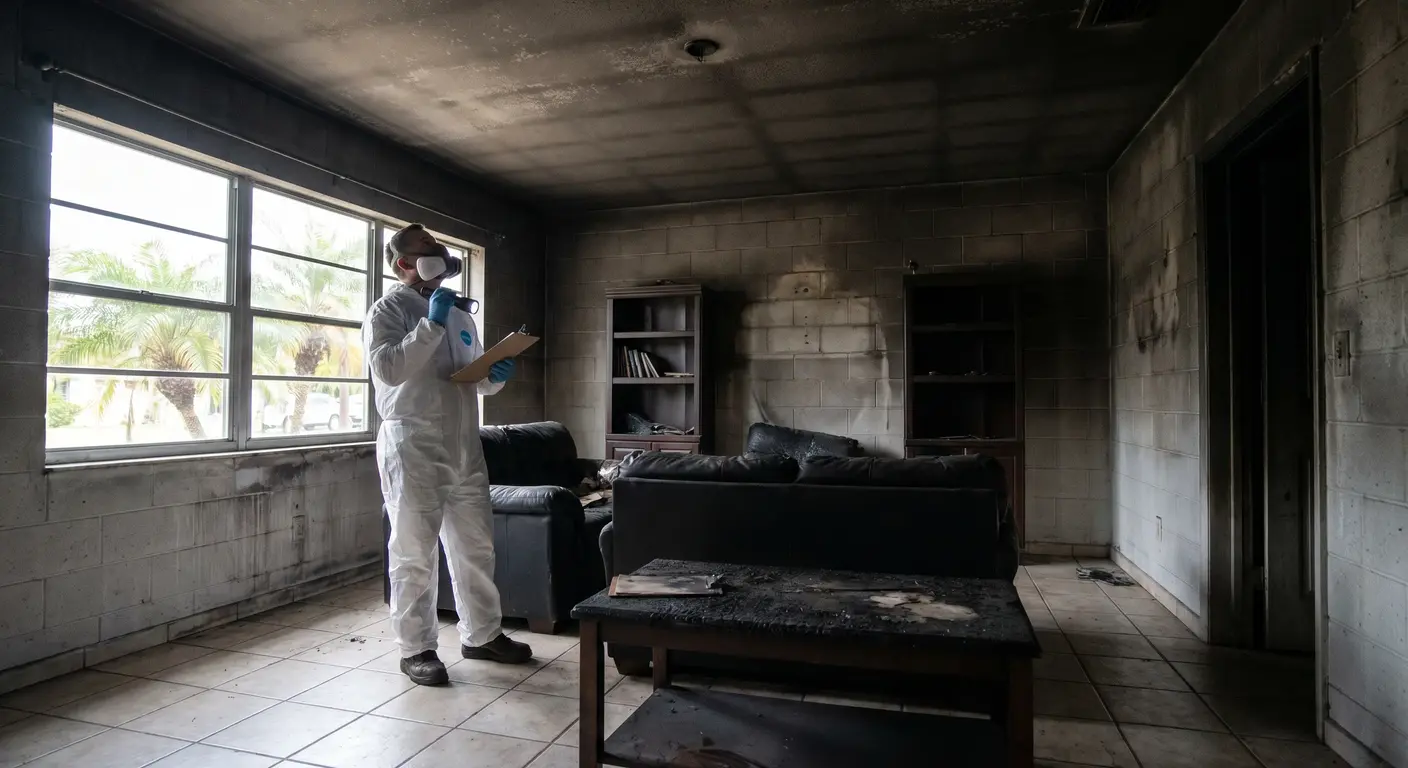
Emergency fire response at a Lauderhill CBS condo — soot stabilization and board-up within hours of the call
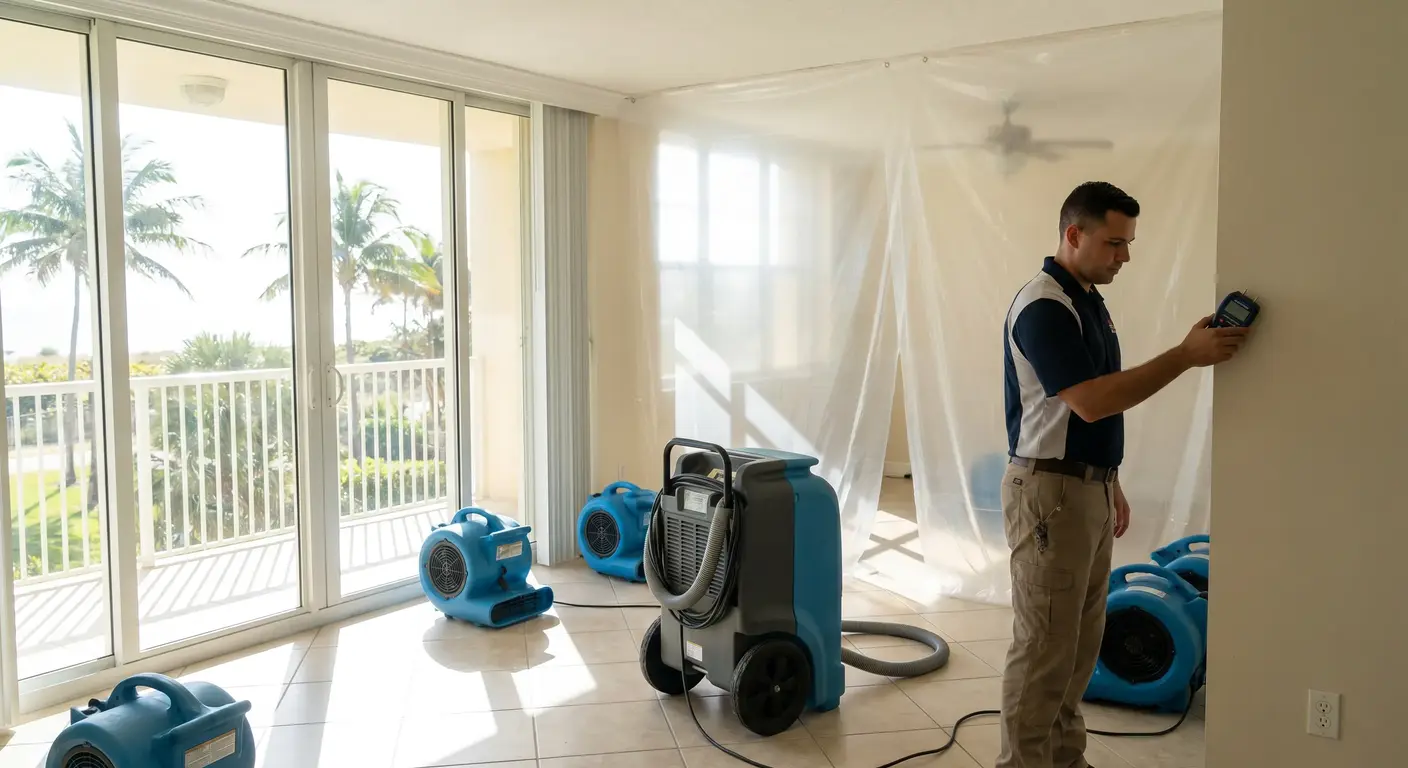
Typical 1970s Inverrary CBS condo building in Lauderhill — shared HVAC and closed-unit construction require specialized multi-unit smoke remediation
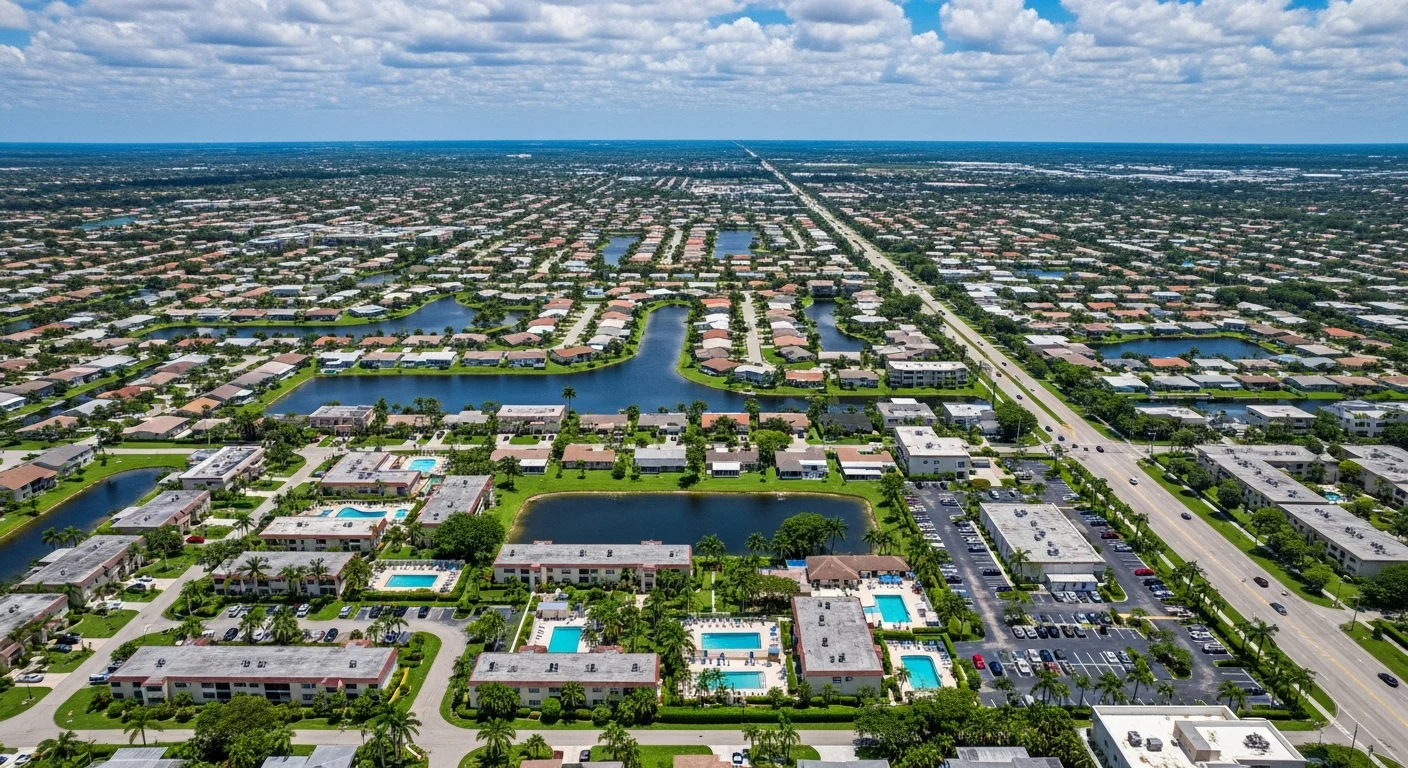
Palm Build dispatches from our Deerfield Beach office to Lauderhill fire emergencies in 15–20 minutes with full equipment
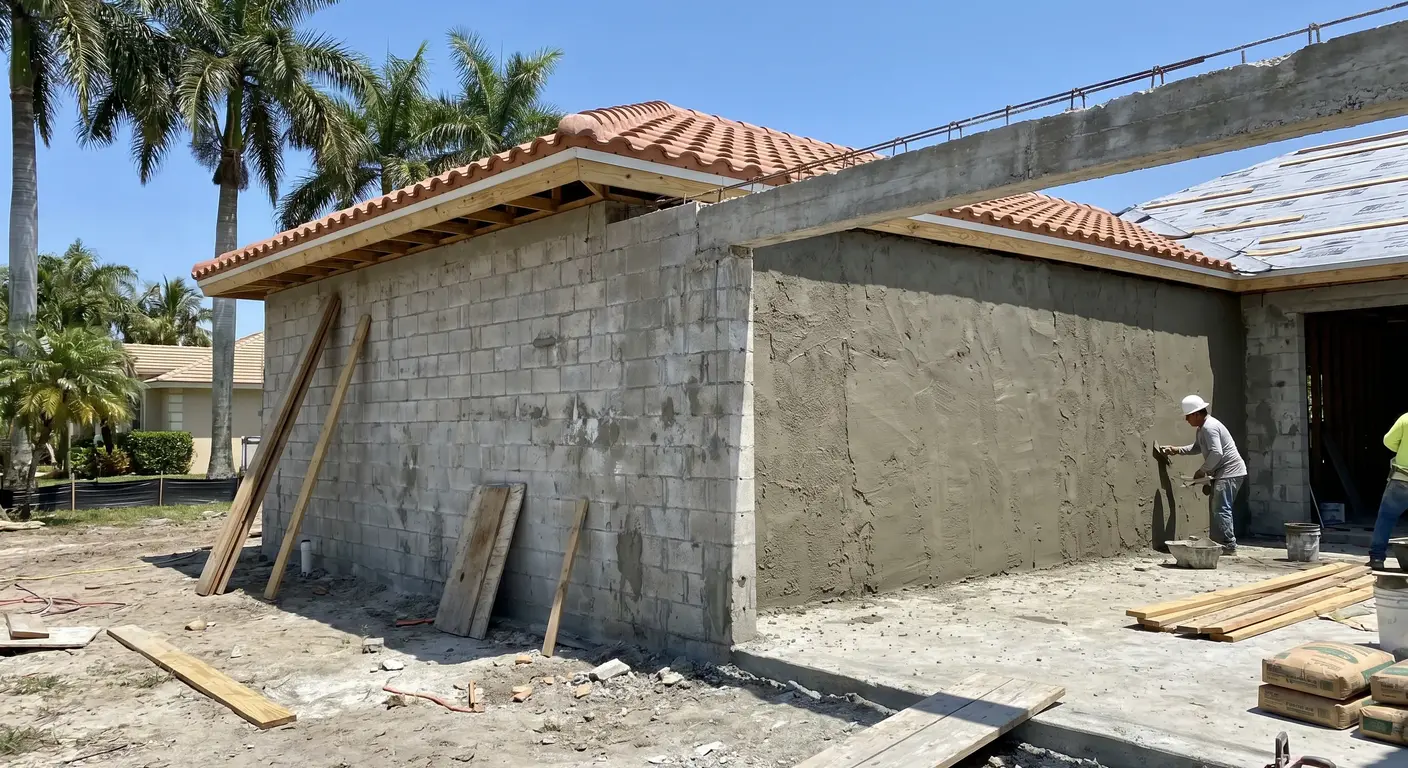
Full reconstruction to current Florida Building Code — impact windows, upgraded electrical, and HVHZ-compliant finishes
The Palm Build Difference
Why Lauderhill Homeowners Choose Palm Build After a Fire
Deerfield Beach HQ — 15-20 Minutes to Lauderhill
Palm Build dispatches to Lauderhill fire emergencies from our headquarters at 786 S Military Trail in Deerfield Beach, approximately 15 miles and 15–20 minutes away. We know Lauderhill's layout — from Inverrary's condo clusters to Boulevard Woods single-family homes — and respond with multi-unit documentation kits already loaded for the condo-heavy market. Board-up, soot stabilization, and water extraction begin the same hour you call, 24/7.
IICRC Fire & Smoke Certified
Every crew lead holds current IICRC Fire and Smoke Restoration Technician (FSRT) certification. We follow the S540 standard for professional fire and smoke damage restoration procedures — critical for both proper remediation and insurance claim documentation that Florida carriers require. Certification matters when your adjuster reviews the scope.
CBS Condo Construction Specialists
Lauderhill is built almost entirely from CBS (concrete block and stucco) closed-unit condos. Our team understands how smoke travels through block cavities in Inverrary buildings, how soot bonds to porous stucco, how to inject thermal fog into hollow cores, and how to rebuild to current Broward County HVHZ code standards — including TAS 201/202/203 impact-rated components at approximately 170 mph design wind speed.
Multi-Unit Inverrary Condo Fire Response
With Inverrary's International Village, Castle Gardens, Environ, and Lakes of Inverrary all containing closed-unit condo buildings, Lauderhill demands a restoration company that handles multi-unit fire scenarios. We deploy separate teams to fire-origin and smoke-affected units simultaneously, provide separate documentation for each unit owner and the HOA master policy claim, and coordinate with property management throughout.
Florida Insurance Documentation Experts
Florida's insurance landscape is uniquely complex — frequent carrier changes, AOB restrictions since January 2023, and strict documentation requirements under Fla. Stat. 627.70132. Our fire damage documentation is formatted exactly how Broward County adjusters and FL carriers expect to see it, reducing back-and-forth and getting your claim approved faster. For Lauderhill condo claims, we provide separate packages for HO-6 and master policy submissions.
Full Reconstruction to Current Code
From emergency board-up through final punch list, Palm Build handles the entire project. Lauderhill reconstruction must meet current Florida Building Code for the HVHZ: impact-rated windows and doors, reinforced connections, upgraded electrical to NEC, and current insulation requirements. We manage the full permitting process through the City of Lauderhill Building Division and Broward County Notice of Commencement — including HOA architectural review for Inverrary condo reconstruction.
Common Questions
Lauderhill Fire & Smoke Damage FAQ
How quickly can Palm Build respond to a fire in Lauderhill?
Palm Build's team dispatches from our Deerfield Beach office and arrives at Lauderhill properties in 15–20 minutes. We are available 24/7/365. For condo emergencies in Inverrary — International Village, Castle Gardens, Environ — we dispatch with multi-unit documentation kits, thermal fogging equipment, and HOA coordination protocols from the first call. In South Florida's 70–75% humidity, every hour of delay allows soot to bond more permanently to CBS stucco and smoke to penetrate further into hollow block wall cavities.
Why are Lauderhill's Inverrary condos at higher fire spread risk?
Lauderhill's Inverrary condo buildings were constructed in the 1970s with closed-unit design and shared HVAC plenums that distribute smoke from one unit to neighboring units within minutes. A kitchen fire in a single International Village or Castle Gardens unit commonly requires smoke remediation in four to ten adjacent units. Elevator shafts in taller Inverrary buildings create vertical smoke pathways that carry contamination to every floor above the fire origin. Buildings constructed before 2001 may also lack adequate fire stopping between units. Palm Build coordinates multi-unit response with separate documentation for each unit owner and the HOA.
Does homeowners insurance cover fire damage in Lauderhill?
Yes — fire is one of the most comprehensively covered perils under standard Florida HO-3 homeowners and HO-6 condo unit-owner policies. Coverage typically includes structural repair, soot and smoke cleanup, contents restoration, smoke odor elimination, water damage from fire suppression, temporary living expenses (ALE), and debris removal. Broward County homeowners average approximately $6,220 per year in premiums, but fire coverage is fully included. Florida law gives you one year from the date of loss to file an initial claim notice under Fla. Stat. 627.70132.
Why is fire damage in Lauderhill's CBS condo buildings different from wood-frame?
CBS (concrete block and stucco) construction in Lauderhill creates unique fire restoration challenges. Smoke infiltrates hollow concrete block wall cavities and becomes trapped — invisible from the surface but releasing odor compounds for months, especially in 70–75% humidity. Porous stucco finishes absorb soot deeply, requiring specialized cleaning chemistry. The good news: CBS walls rarely fail structurally in a fire, meaning the shell usually survives. But clearing smoke from block cavities often requires thermal fogging injection or partial demolition that wood-frame homes simply do not need.
Can smoke odor be eliminated from Lauderhill condos in this humidity?
Yes, but South Florida's 70–75% year-round humidity makes it significantly harder than in dry climates. Moisture traps smoke odor molecules and continuously re-releases them from porous surfaces like stucco, concrete block, and tile grout. Year-round HVAC operation circulates residual particles through ductwork and shared building plenums. Professional elimination requires thermal fogging for CBS wall cavities, ozone treatment for sealed spaces, hydroxyl generation for occupied areas, and complete HVAC duct cleaning. Expect 2–3 additional treatment cycles compared to dry-climate restoration. We verify with 48-hour sealed tests after each cycle before sign-off.
What are the fire insurance claim deadlines in Florida?
Florida Statute 627.70132 requires initial claim notice within 1 year of the date of loss, and supplemental claims within 18 months. Missing these deadlines can bar your claim entirely. Document damage immediately and file notice with your carrier same day. For condo unit owners in Lauderhill, you should notify both your HO-6 carrier and the HOA board — the association must report to its master policy carrier as well. Florida's SB 2-A (effective January 1, 2023) restricts post-loss assignment of benefits — you remain in control of your own claim.
Who is responsible for fire damage in my Lauderhill condo — me or the HOA?
The boundary between unit owner (HO-6) and association (master policy) coverage depends on your specific condo documents. Generally, associations cover common elements, exterior walls, roofs, and shared mechanical systems — including HVAC plenums contaminated by smoke from a fire in any unit. Unit owners cover walls-in improvements and personal contents. In Lauderhill's older Inverrary buildings — International Village, Castle Gardens, Environ — disputes about the HO-6 vs. master policy boundary are common. Palm Build creates parallel documentation for all parties from the first hour so emergency drying is not delayed.
What does Palm Build serve in Lauderhill for fire restoration?
We serve all of Lauderhill's neighborhoods and ZIP codes — Inverrary, International Village, Castle Gardens, Environ, Lakes of Inverrary, Boulevard Woods East/North/West, Broward Estates, Wimbledon, Cricket Club, and surrounding communities. Our Deerfield Beach team covers the full Lauderhill service area in 15–20 minutes. We also serve surrounding Broward County communities and are available 24/7 for emergency fire response.
Trusted Vendors
Trusted local pros in Lauderhill
Outside our restoration scope, these are the vetted, licensed contractors we trust
alongside our work. Personally evaluated, reference-checked, and recommended by Palm
Build.
Fire Damage in Lauderhill? We Respond in 15–20 Minutes.
Palm Build dispatches from our Deerfield Beach office to any Lauderhill address in 15–20 minutes with emergency board-up, soot stabilization, multi-unit condo coordination, and insurance documentation from the first call. South Florida humidity accelerates soot corrosion and smoke penetration by the hour — do not wait.