Key takeaways
- Charlotte's Piedmont red clay has an infiltration rate below 0.2 inches per hour and holds up to 55% moisture by volume — foundations stay saturated for days or weeks after rain.
- An estimated 70–90% of older Southeast homes have moisture-damaged insulation or active mold in their crawl spaces at first professional inspection.
- North Carolina does not license mold remediators. IICRC S520 certification (WRT, ASD, AMRT) is the only credential a homeowner can verify independently — and unlicensed operators skip containment, causing re-infestation within 12 months.
- NC homeowners insurance rates are up 44.4% cumulatively since 2020. Charlotte-specific rate increases ran 9.3% in 2025 and 9.2% in 2026 — documentation quality is now a claim-approval lever, not a nice-to-have.
- Standard homeowners policies carry $5,000–$10,000 mold sublimits. A full crawl space remediation in Myers Park or SouthPark easily exceeds that, leaving a $10,000–$40,000 coverage gap without careful scoping.
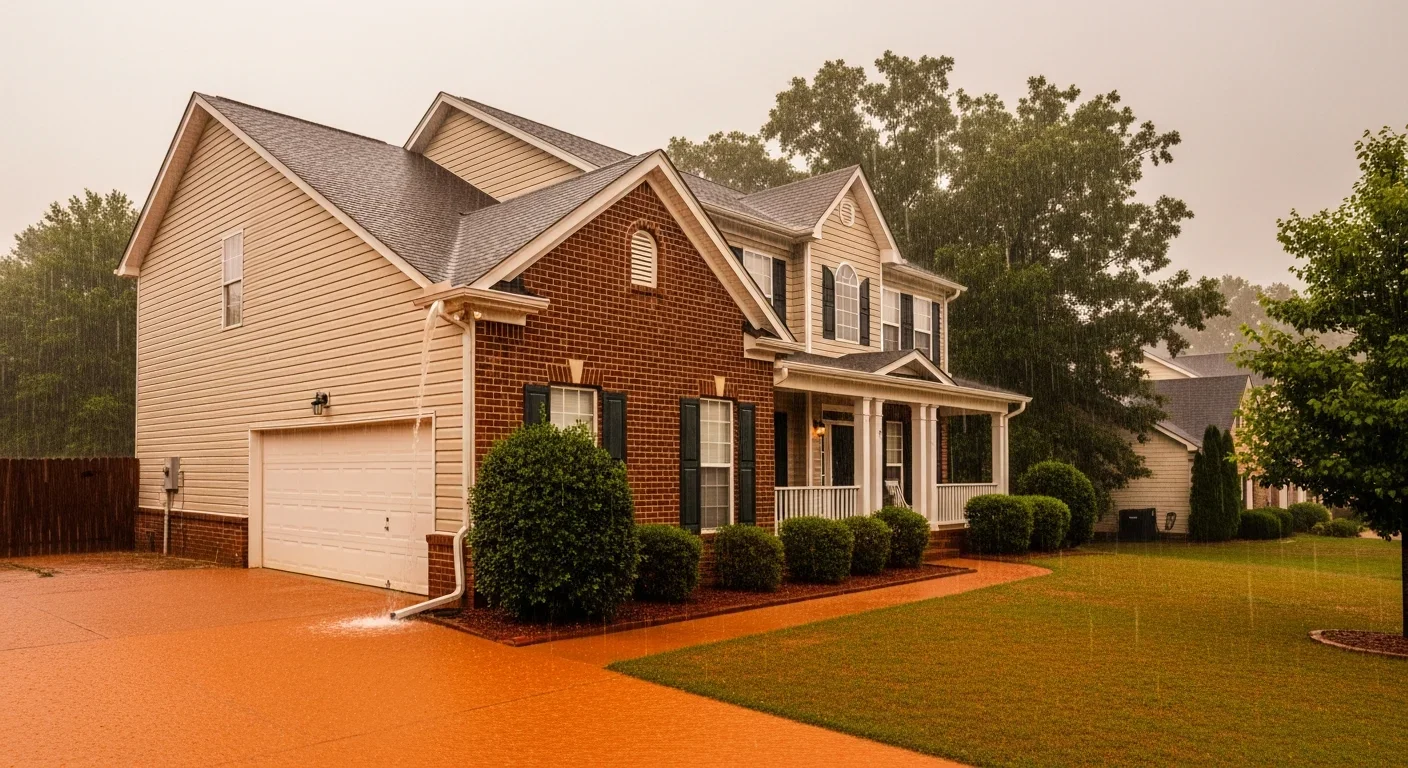
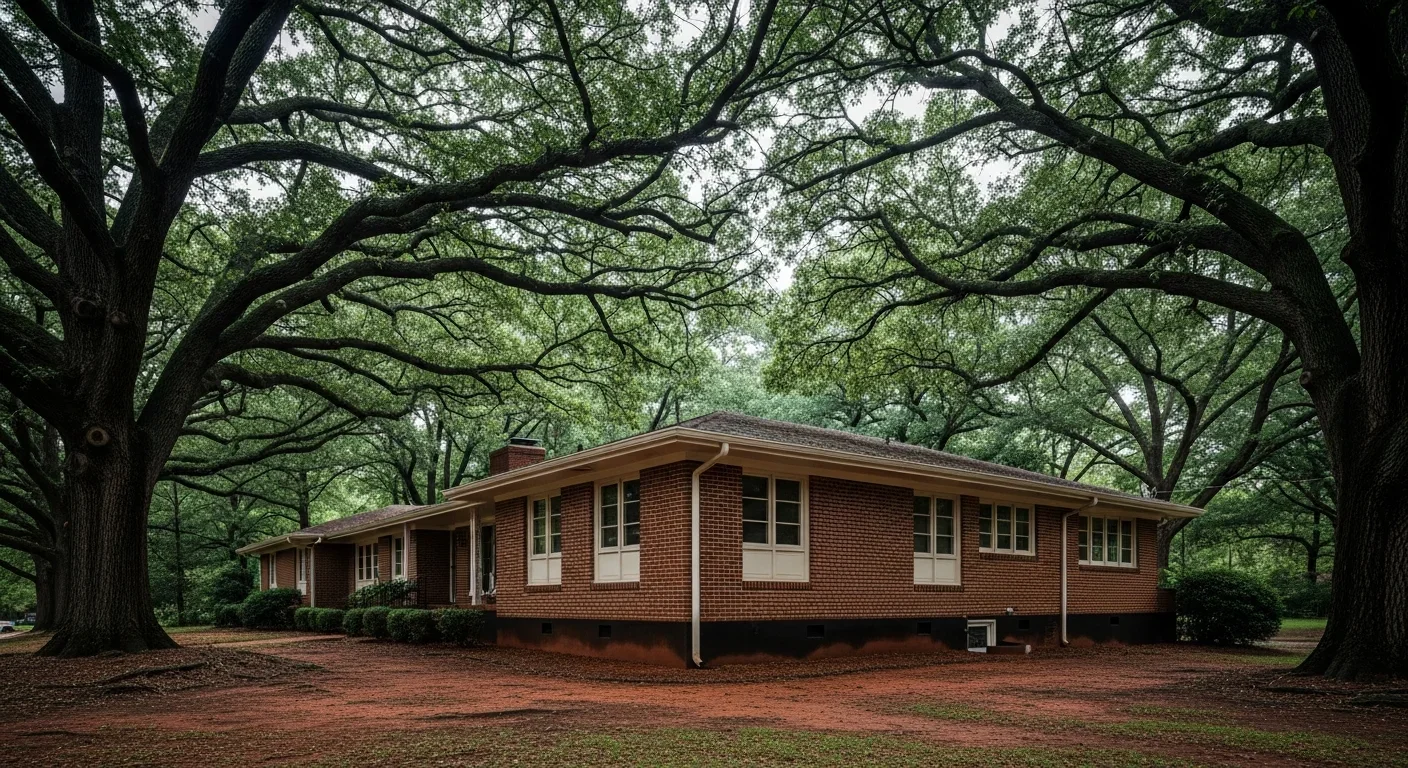
Charlotte has a mold problem the rest of the Southeast doesn't have quite the same way. It's not just the humidity — Atlanta and Columbia share that. It's the combination of Piedmont red clay soil that refuses to drain, a housing stock dominated by 1950s–1970s brick ranches sitting on vented crawl spaces, and an HVAC culture that oversized every unit so badly in the last century that most of the city's AC systems short-cycle themselves into being excellent mold generators. Layer in a 44% jump in homeowners insurance rates since 2020 and a state that does not license mold remediators, and you get the most expensive, most common, and most misdiagnosed restoration problem in Mecklenburg County. This is the honest version, neighborhood by neighborhood, standard by standard.
Charlotte population
977,740
+11.75% since 2020 — 6th fastest-growing city in the U.S.
Piedmont clay moisture capacity
55%
Cecil & Appling series soils hold water days-to-weeks after rain
NC HO rate increase
44.4%
Cumulative since 2020 per NC Rate Bureau — Charlotte ran 9.3% in 2025
Crawl space mold prevalence
70–90%
Of older Southeast homes at first professional crawl space inspection
- **Vented crawl spaces over red clay** — 70–90% of 1950s–70s brick ranches have active mold on joists or vapor barriers at first inspection
- **HVAC short-cycling** — oversized mid-century units fail to dehumidify because they cycle off before running long enough to pull moisture out of the air
- **Briar Creek & Little Sugar Creek floodplains** — Myers Park, Dilworth and Plaza Midwood homes carry real SFHA flood risk that most owners have not verified since the last FEMA map update
- **Polybutylene pipe in 1978–1995 construction** — a silent leak source that seeds mold behind drywall years before the homeowner smells anything
- **NC has no mold remediation license** — only IICRC S520 certification separates a competent remediator from a cleanup crew that will leave you with re-infestation in 6 months
- **Standard HO mold sublimits of $5,000–$10,000** — often a fraction of the actual remediation scope for an encapsulation-plus-remediation job
Why Charlotte Mold is a Geography Problem, Not a Humidity Problem
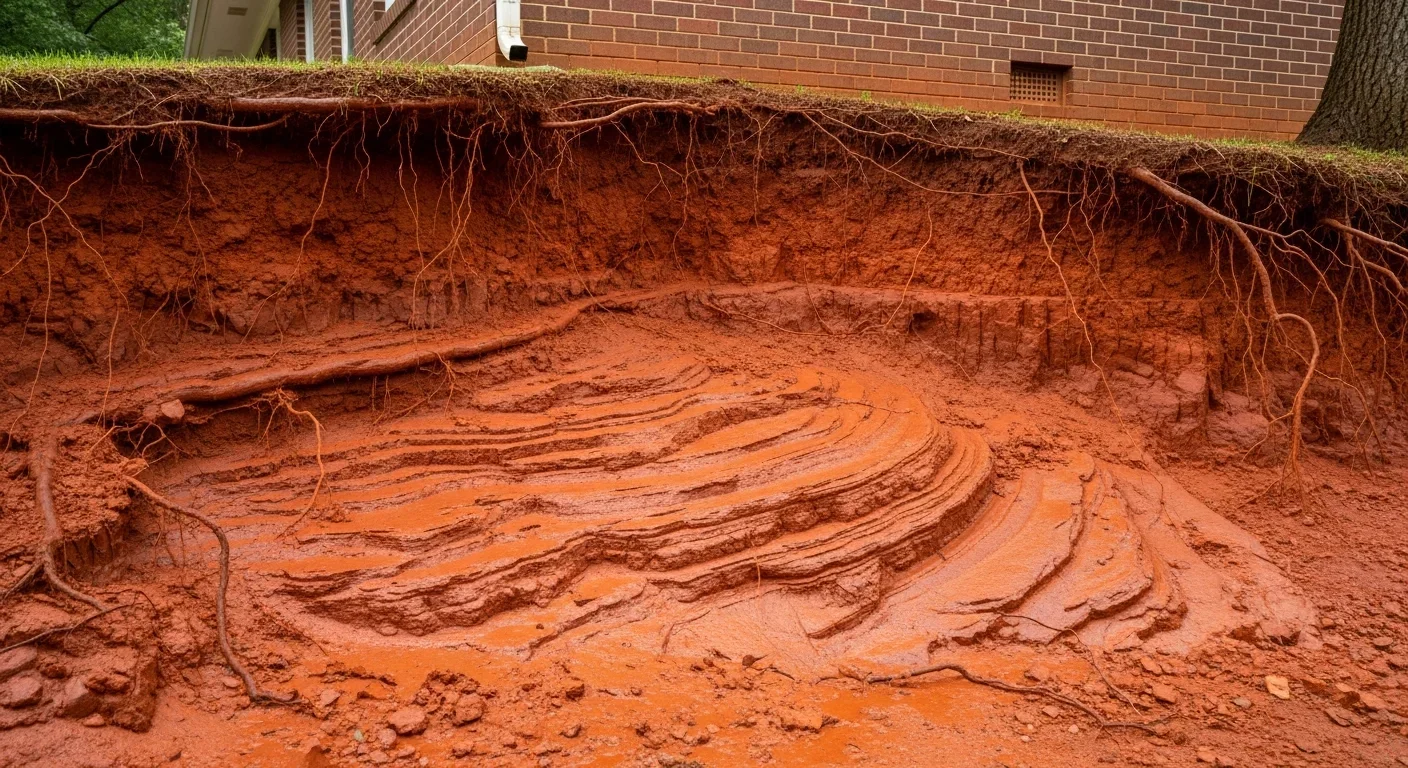
The standard restoration-industry explanation for Southeast mold is humidity. That's not wrong, but it's incomplete — and in Charlotte's case, misleading. The metros with the most intractable mold problems in the region aren't just the humid ones; they're the humid ones sitting on Piedmont clay. Cecil and Appling series soils have a water infiltration rate below 0.2 inches per hour — compared to 2+ inches per hour for sandy coastal soils — and can hold 55% moisture by volume before water starts pooling on the surface. That means when Charlotte gets a three-inch rain event, the water that falls near your foundation isn't percolating away the next day. It's still there a week later. It's still there two weeks later. And every day it's there, it's feeding humidity into your crawl space like a swamp.
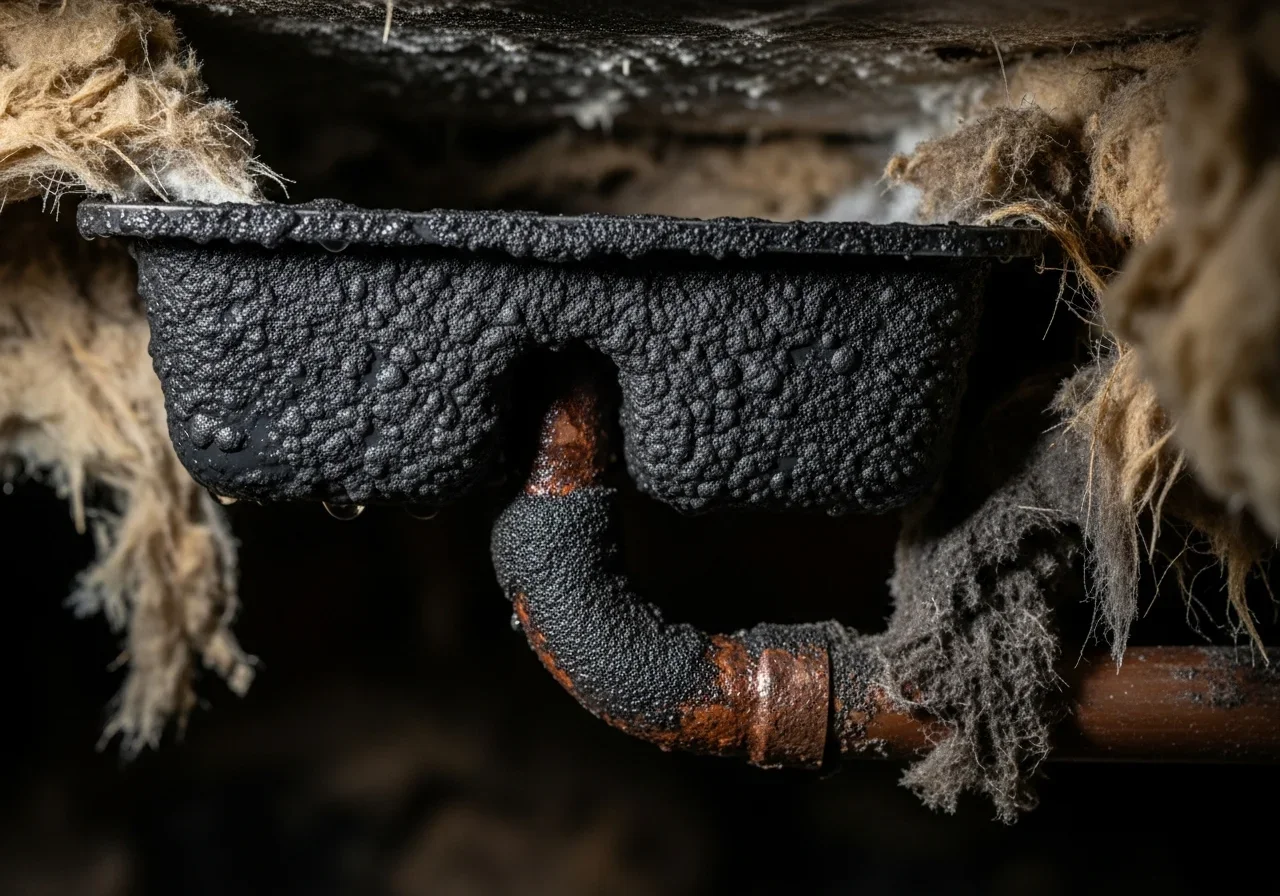
The second half of the problem is your HVAC system. For decades, Charlotte builders and contractors oversized air-conditioning units for peak 115°F days that almost never happen. In a normal 85°F summer day, those oversized units blast the temperature down to the thermostat setpoint in six or seven minutes, then shut off. Dehumidification — which is a function of runtime, not capacity — never gets a chance. Your thermostat says 72°F and the relative humidity in your living room is still 68%. In Myers Park, Eastover, and older SouthPark homes, this short-cycling has been quietly seeding mold in wall cavities, behind vinyl wallpaper, and in crawl space insulation for three decades. The homeowner doesn't know it until they sell and the inspection report lands.
Neighborhood-by-Neighborhood Mold Risk
Charlotte's neighborhoods were built in waves, and each wave has its own mold signature. Pre-WWII brick bungalows in Dilworth and Elizabeth carry old plumbing and Briar Creek proximity. 1920s–1960s Myers Park estates sit under enormous tree canopies that keep yards wet. 1970s–1990s SouthPark homes have the oversized-HVAC problem in its most advanced form. 2000s Ballantyne and Steele Creek have the opposite problem — new construction defects and engineered-wood subfloors vulnerable to any moisture intrusion. Here's a tour of the housing stock.
Myers Park, Eastover & Dilworth: The Briar Creek floodplain
Myers Park, Eastover, Dilworth and the western edge of Plaza Midwood sit along Briar Creek and Little Sugar Creek. First Street Foundation flood-risk data puts Myers Park's risk-carrying housing stock at 19.1%, and Briar Creek set a record crest of 8.5 feet near Independence Boulevard in 2024. The all-time record is 12.9 feet. For homeowners, that means every major rain event pushes the creek up against foundation walls and into vented crawl spaces. Combine that with the oak canopy — which is beautiful but keeps yards shaded, damp, and slow to dry — and you have the most predictable mold-risk geography in the city. A moisture meter on a Myers Park crawl-space joist in August will tell you everything you need to know.
SouthPark, Ballantyne & Steele Creek: The HVAC short-cycle problem
Move south and the risk profile shifts from surface water to interior humidity. SouthPark's 1970s–1990s traditional homes are where the oversized-HVAC legacy is most advanced. Ballantyne's 2000s-era slab construction layers a different problem on top — engineered wood subfloors that swell and delaminate at the first sign of a slow supply-line leak, polybutylene pipe settlements that left behind a forensic trail of slow leaks, and site drainage that pushes water toward houses instead of away. Steele Creek adds Catawba River tributary flooding to the mix — the June 2025 flash flooding that required water rescues from the mobile home park is a preview of what every intense-rain event in Steele Creek now looks like.
IICRC S520: The Only Standard That Matters in an Unlicensed State
Here is the thing that every Charlotte homeowner eventually learns the hard way: North Carolina does not license mold remediators. There is no state certification. There is no mandatory training. There is no licensing board to file a complaint with if your remediation goes wrong. NC DHHS and NC State University Extension both confirm that no federal or state certification program exists. This means anyone with a pressure washer and a logo can advertise themselves as a mold remediation company in Charlotte, and many do. The only credential that actually means anything is the IICRC S520 standard and its associated certifications — WRT (Water Restoration Technician), ASD (Applied Structural Drying), and AMRT (Applied Microbial Remediation Technician).
"There are no federal or state certification programs for companies or individuals providing mold remediation services in North Carolina. Consumers should verify contractor credentials independently and refer to IICRC S520 as the recognized industry benchmark."
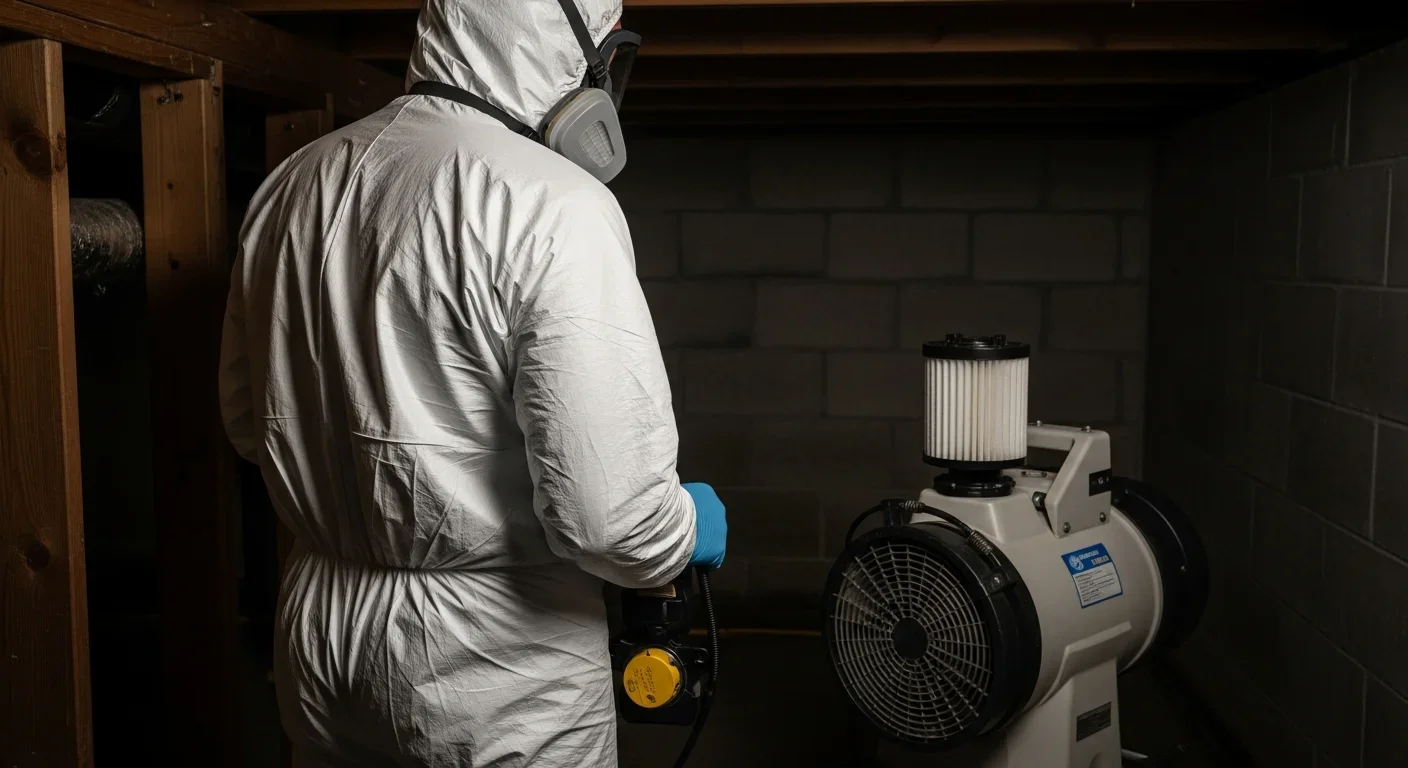
The practical consequence of NC's no-license reality is a bifurcated market. On one side, IICRC-certified crews set up negative-air containment, run HEPA air scrubbers, apply antimicrobial to structural framing, and verify their work with post-remediation clearance testing by an independent industrial hygienist. Their projects cost $4,000 to $12,000 for a typical crawl space or wall-cavity scope. On the other side, a cheaper class of operators skip containment entirely, fog the area with a chemical that kills visible mold on contact, and leave. Those projects cost $1,500 to $3,000 — and about 6 to 12 months later, the homeowner smells mold again, calls the phone number on the last invoice, and discovers the company has gone out of business or denies responsibility. You can't recover under warranty because there was no warranty. You can't file a license complaint because there is no license. You pay again.
What Containment Actually Looks Like
IICRC S520 defines three mold categories and prescribes specific containment protocols for each. Understanding the difference is how a homeowner interviews a prospective remediator and separates the real operators from the discount crews. Category designation is not a marketing term — it's a protocol gate.
| IICRC Category | Affected area | Containment requirement | Typical Charlotte cost |
|---|---|---|---|
| Category 1 | Less than 10 sq ft, surface only, non-porous materials | Local PPE, HEPA vacuum, wet wipe | $1,500–$4,000 |
| Category 2 | 10–100 sq ft, some porous materials, limited HVAC involvement | Negative-air machine, 6-mil poly barriers, HEPA filtration | $4,000–$12,000 |
| Category 3 | More than 100 sq ft, extensive porous materials, HVAC contamination | Full building negative-air, mandatory HVAC cleaning, industrial drying | $12,000–$40,000+ |
Charlotte Piedmont crawl spaces often present as Category 2 or 3 because of the compounding effect of clay-soil moisture, vented crawl space humidity, and HVAC short-cycle interaction.
- 1
Pre-remediation assessment and moisture mapping
An IICRC-certified technician maps the affected area with a thermal imaging camera and moisture meter, identifies the moisture source, and documents scope with photos. Without finding and stopping the source, every dollar of remediation is wasted.
- 2
Containment barriers and negative-air pressure
6-mil poly sheeting walls isolate the work area. A negative-air machine with HEPA filtration pulls air through the containment and exhausts outside, keeping mold spores from migrating into unaffected rooms during demolition.
- 3
Controlled demolition of affected materials
Porous materials — drywall, insulation, carpet, upholstery — are removed under containment and bagged for disposal. Semi-porous materials like wood framing are cleaned and treated in place.
- 4
HEPA vacuuming and antimicrobial application
Every surface in the containment receives a HEPA vacuum pass followed by EPA-registered antimicrobial. Framing members get a second pass after drying to below 15% moisture content.
- 5
Structural drying and humidity control
Commercial dehumidifiers and air movers pull moisture out of structural cavities until material moisture readings confirm the substrate is below the mold-growth threshold for seven straight days.
- 6
Post-remediation clearance testing
An independent industrial hygienist collects air samples and surface samples, compares them to baseline outdoor counts, and issues a clearance letter. Without this step — especially in an unlicensed state — you have no defensible evidence that the work was completed correctly.
Charlotte's Mold Calendar: When Risk Peaks Month by Month
Charlotte mold is seasonal, and the seasons are driven by tropical remnant rainfall layered on top of the Piedmont's natural humidity cycle. Understanding the calendar is how you predict when your crawl space is going to need attention — and when carriers expect claims to cluster.
March–April
Spring thaw and foundation saturation
Winter freeze-thaw cycles opened new micro-cracks in slab edges and crawl space masonry. Spring rains start filling them. First mold inspections of the year catch 20–30% of the annual case load here.
May–June
Humidity climbs, HVAC short-cycling begins
Ambient humidity rises into the 70s. Oversized HVAC systems start short-cycling and fail to dehumidify. Conditioned interior spaces begin accumulating moisture in wall cavities and under engineered-wood subfloors.
July–September
Tropical remnant season — peak amplification window
Debby (Aug 2024), Helene (Sept 2024) and similar systems drop multi-day rainfall totals. Red clay saturates. Crawl spaces take direct moisture hits. The July–September window drives 30–40% of annual mold calls and most of the largest projects of the year.
September–November
Post-storm discovery phase
Homeowners return to saturated building envelopes after tropical systems pass. Visible mold appears 7–14 days post-flood. First-post-storm professional inspections happen here and claim filings spike.
December–February
Interior detection and pre-sale inspections
Winter heating cycles concentrate indoor humidity problems and odor complaints. Real estate inspections catch crawl space issues that existed all summer but were unreported. Carrier scrutiny on timing is highest in this window.
NC Insurance Reality: The 44.4% Rate Jump and What It Means for Claims
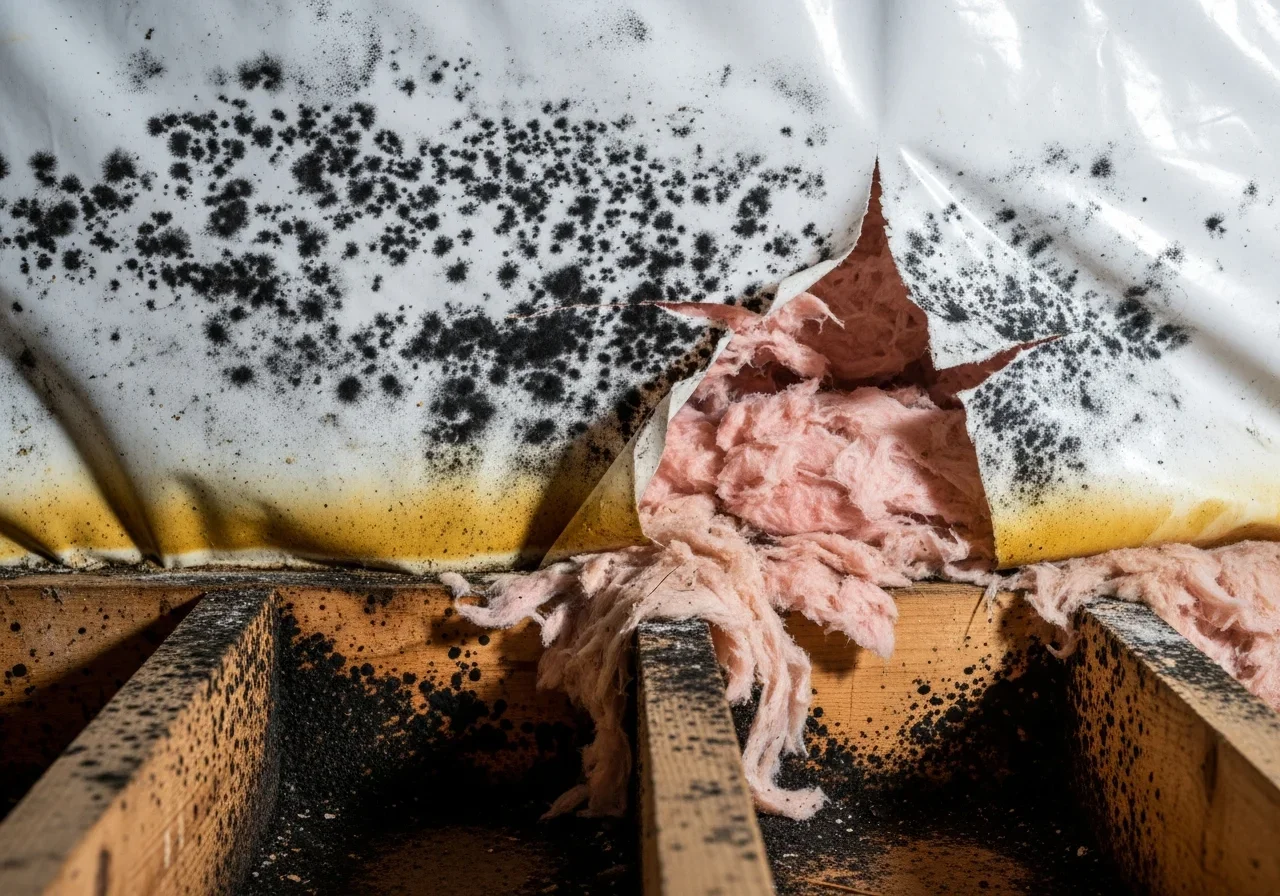
The North Carolina Rate Bureau's 2025 settlement raised base homeowners insurance rates by 7.5% in June 2025 and another 7.5% in June 2026. Charlotte-specific rates ran hotter — 9.3% in 2025 and 9.2% in 2026. Cumulative NC homeowners insurance rates are up 44.4% since 2020. The practical effect on mold claims is that insurance carriers are scrutinizing scope, cause of loss, and documentation at a level they were not five years ago. The days of a casual water-damage claim that quietly rolled a mold component into the scope are over. Carriers now expect a clear sudden-and-accidental proximate cause, detailed moisture documentation, and third-party post-remediation verification.
What carriers cover
- Sudden and accidental water events — a burst pipe, an overflowed washing machine, a roof failure during a storm
- Mold growth directly attributable to a covered water event, up to the policy sublimit
- Remediation performed by a documented, credentialed contractor with pre- and post-remediation evidence
- Contents damaged by mold growth within the sublimit, when listed on an inventory
- Structural repair of framing that required demolition as part of containment
What carriers exclude
- Long-term seepage, wear and tear, or moisture from deferred maintenance — the homeowner's responsibility
- Mold beyond the $5,000–$10,000 sublimit on standard HO-3 policies without a mold endorsement
- Work performed by an unlicensed or uncertified contractor without documentation
- Aesthetic repainting or cosmetic work not tied to a specific demolition trail
- Repeat remediation within 24 months if the first attempt was non-compliant
- IICRC S520
- The Institute of Inspection, Cleaning and Restoration Certification's professional mold remediation standard. Defines containment, demolition, cleaning, and clearance protocols by mold category.
- WRT / ASD / AMRT
- IICRC certifications: Water Restoration Technician (baseline), Applied Structural Drying (cavities and crawl spaces), and Applied Microbial Remediation Technician (actual mold work). The three credentials Charlotte homeowners should verify independently.
- NC Rate Bureau
- The state regulatory body that negotiates base homeowners insurance rates in North Carolina. 2025 settlement approved 7.5% June 2025 + 7.5% June 2026 increases; Charlotte rates ran 9.3% / 9.2%.
- FEMA CRS Class 2
- Charlotte-Mecklenburg holds a Community Rating System Class 2 rating from FEMA, which entitles qualifying SFHA property owners to up to 40% NFIP flood insurance discounts and 10% outside the SFHA.
- Piedmont Cecil & Appling soils
- The dominant clay soil series in Mecklenburg County. Infiltration rate below 0.2 inches per hour; 55% moisture capacity by volume. The geology-level reason Charlotte crawl spaces stay wet.
- Mold sublimit
- The maximum dollar amount a standard homeowners policy will pay for mold-related claims, typically $5,000–$10,000 on an HO-3. Homeowners can endorse the policy upward but most do not.
- Post-remediation clearance testing
- Air and surface sampling performed by an independent industrial hygienist after remediation is complete, compared against outdoor baseline counts. The only defensible proof-of-work in an unlicensed state.
- Conditioned crawl space
- A sealed, insulated, mechanically dehumidified crawl space built to post-2010 building science standards — the only long-term fix for Piedmont moisture infiltration. Alternative to the vented crawl space that defines most older Charlotte homes.
Your Charlotte Mold Remediation Checklist
- Inspect your crawl space personally (or hire an inspector) every spring and fall. Look for discolored insulation, standing water, visible mold on joists, and condensation on the underside of subfloors.
- Verify your HVAC system isn't short-cycling. A correct cycle on a 90°F afternoon is 20–40 minutes of continuous run, not 6 minutes on / 10 minutes off.
- Check your FEMA flood zone at msc.fema.gov. If you're in AE or A and haven't verified since the 2022 Wake County map update, you may have a Zone change you don't know about.
- Pull the last two years of your HVAC condensate pan and drain line. A clogged drain is the single most common mold source in Charlotte homes.
- Do not hire a mold company that will not give you IICRC S520 certifications for their technicians in writing. NC has no state license — the IICRC is your only credential check.
- Demand post-remediation clearance testing performed by a third-party industrial hygienist, not by the remediation company itself.
- Document everything with photos and moisture readings before, during, and after the work. NC insurance rate scrutiny is higher than it's ever been.
- If your home is near Briar Creek, Little Sugar Creek, McMullen Creek, or Steele Creek, add a creek-proximity disclosure to your homeowners inspection before any real estate transaction.
Frequently Asked Questions
What causes mold in Charlotte crawl spaces and why is it so common here? +
How much does mold remediation cost in Charlotte, NC, and does homeowners insurance cover it? +
How do I verify a Charlotte mold remediation company is legitimate if NC doesn't license them? +
My home flooded near Briar Creek or Little Sugar Creek — what's the mold timeline after water damage? +
What's the difference between mold in a 1950s Myers Park ranch and a Ballantyne new-build, and which costs more? +
Does my flood insurance cover mold remediation after a Briar Creek flood? +
I live in a gated community (Morrocroft, Challis Farm, Piper Glen) — do HOA rules affect mold remediation permitting? +
Charlotte NC Mold Remediation
Our dedicated Charlotte mold remediation pillar page with IICRC S520 protocol, service area detail, and emergency response.
Charlotte NC Crawl Space Cleanup
Piedmont crawl space encapsulation, vapor barriers, conditioned crawl space retrofits, and remediation.
Mold Remediation Cost 2026 Pillar Blog
The site-wide cost pillar — square footage brackets, IICRC category breakdown, and what insurance carriers actually reimburse in 2026.
Crawl Space Encapsulation Cost 2026
The long-term fix for Piedmont crawl space moisture — cost brackets, payback math, and retrofit specifics.
Charlotte NC — Emergency Water Damage Neighborhood Guide
The sibling Charlotte water damage blog — the neighborhood-level water event playbook.
Raleigh NC — Mold Remediation Cost Comparison Guide
Sibling NC mold blog focused on the Raleigh cost-comparison angle and the same NC licensing reality.
Charlotte Mold Problem? Call the Local NC Line Now
Palm Build Restoration runs IICRC S520-compliant mold remediation across Charlotte and the Piedmont, with third-party post-remediation clearance testing and HOA-coordinated permitting. Visit the Charlotte mold remediation pillar page for service detail or call the North Carolina line now.
Found this helpful? Send it to someone who needs it.