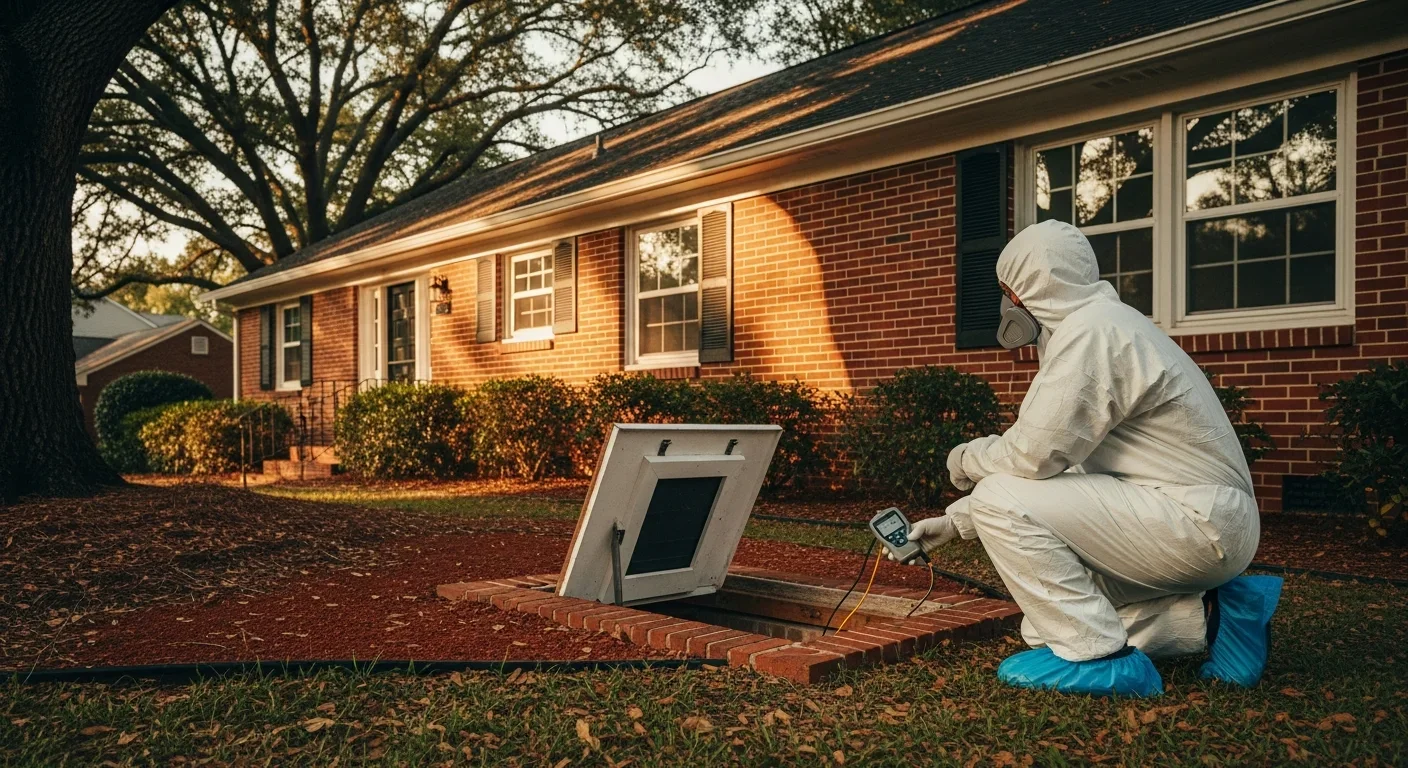
Key takeaways
- IICRC S520 mold categories (1, 2, 3) are the primary cost driver — not square footage. Category 1 runs $1,500–$4,000, Category 2 runs $4,000–$10,000, Category 3 runs $10,000–$25,000+.
- North Carolina does not license mold remediators. Unlicensed 'budget' quotes of $1,500–$3,000 skip containment and HVAC inspection, and re-infestation within 6–12 months is the norm.
- Post-remediation clearance testing by an independent industrial hygienist costs $300–$600 and is the only defensible evidence of completed work in an unlicensed state.
- Raleigh's July 19, 2022 FEMA flood map update changed zone designations for properties near Crabtree Creek, Walnut Creek and Neuse River — if you haven't re-verified since, your coverage gap may be larger than you think.
- NC homeowners insurance rates are increasing 7.5% in June 2025 and another 7.5% in June 2026. Documentation quality is now the deciding factor in whether a mold claim gets approved or scaled back.
Every mold remediation blog on the internet quotes the same hand-waving range: 'between five hundred and six thousand dollars, depending on severity.' That is useless information. In Raleigh, the actual number depends on exactly four things — the IICRC S520 category of the mold, the square footage of the affected porous materials, whether your HVAC system is involved, and whether you live in a 1920s Hayes Barton home with plaster walls and lath or a 2015 Brier Creek slab-on-grade ranch with engineered-wood subfloor. This guide gives you the real cost brackets for all four of those axes, explains why the cheapest quote you receive is almost always the most expensive one you will pay, and walks you through how NC's no-license reality shapes the entire pricing market.
Raleigh population
491,730
+5.1% since 2020; capital city of North Carolina
Median home value
$450,000
Supports higher scope projects — and higher carrier scrutiny
Mold cost range (real)
$1.5k–$40k
IICRC Category 1 through Category 3 + HVAC + historic complications
NC HO rate increase
+7.5% x2
June 2025 and June 2026 per the NC Rate Bureau 2025 settlement
- **Category 1 (<10 sq ft)** — $1,500–$4,000. Local cleanup on non-porous surfaces, no containment barriers required.
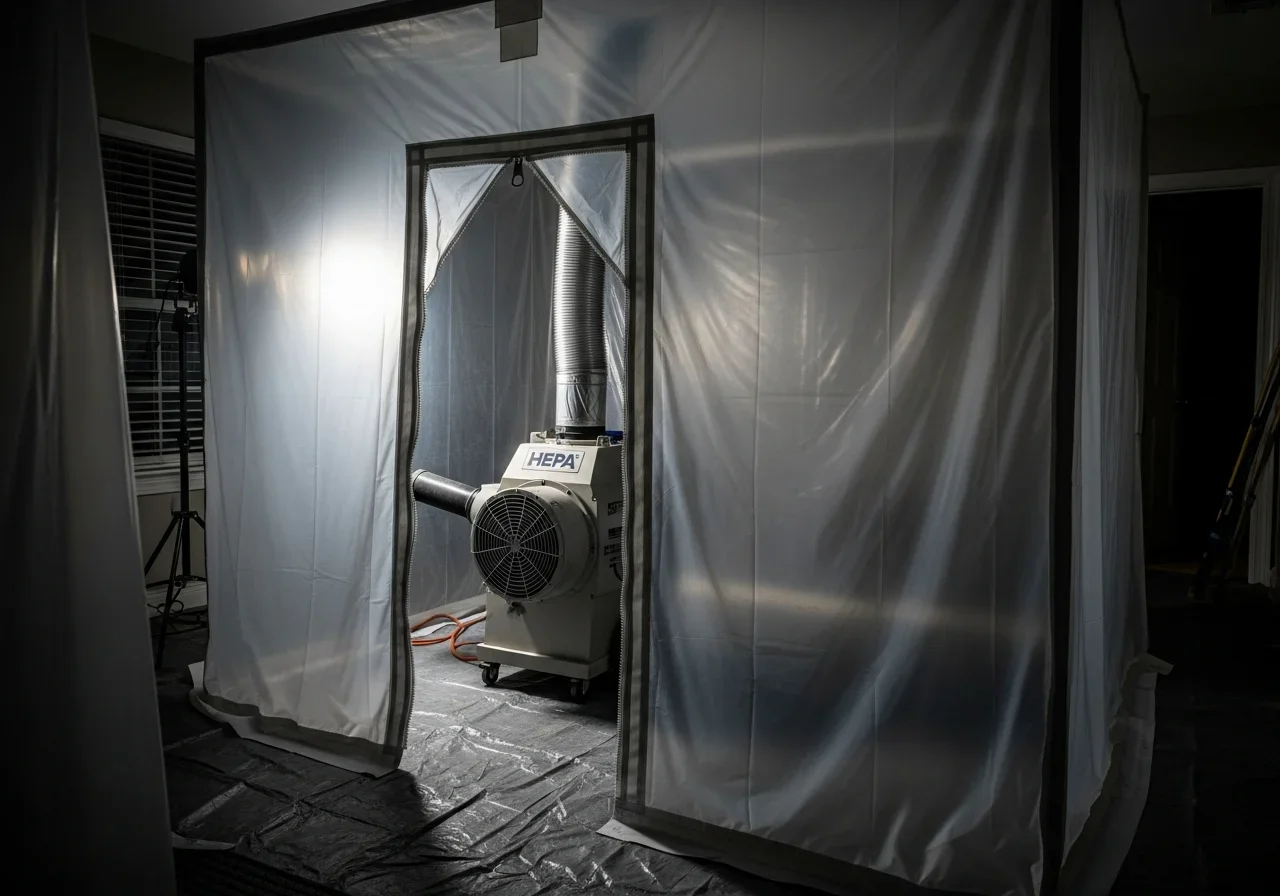
- **Category 2 (10–100 sq ft)** — $4,000–$10,000. Negative-air machine, plastic containment, limited HVAC inspection, some porous-material removal.
- **Category 3 (>100 sq ft)** — $10,000–$25,000+. Full building negative-air, mandatory HVAC cleaning, industrial drying, post-remediation clearance testing.
- **Historic home complications** — add $3,000–$10,000. Lath and plaster demolition, lead paint abatement, asbestos testing in pre-1980 materials.
- **HVAC system contamination** — add $1,500–$5,000. Duct cleaning, coil replacement, air handler decontamination.
- **Crawl space encapsulation retrofit** — add $5,000–$15,000. The only long-term fix for Piedmont crawl space moisture, often paired with remediation.
IICRC S520 Categories: Why Category Drives Cost More Than Square Footage
The single most misunderstood thing in mold remediation pricing is that 'bigger equals more expensive.' It's true in a narrow sense — more square footage means more labor and materials — but the real price driver is the IICRC S520 category of the contamination. A 200-square-foot Category 2 project in a vented crawl space will cost less than a 50-square-foot Category 3 project that involves HVAC system contamination. The category defines the containment protocol, the PPE requirement, the drying equipment, the disposal stream, and whether post-remediation clearance testing is mandatory. Understanding the category is how you read a quote and decide whether it's honest.
"The S520 standard defines mold remediation categories based on affected area and building material involvement. Category 1: less than 10 square feet, non-porous surfaces, localized. Category 2: 10–100 square feet, some porous materials, limited HVAC involvement. Category 3: more than 100 square feet, extensive porous materials, potential HVAC system contamination."
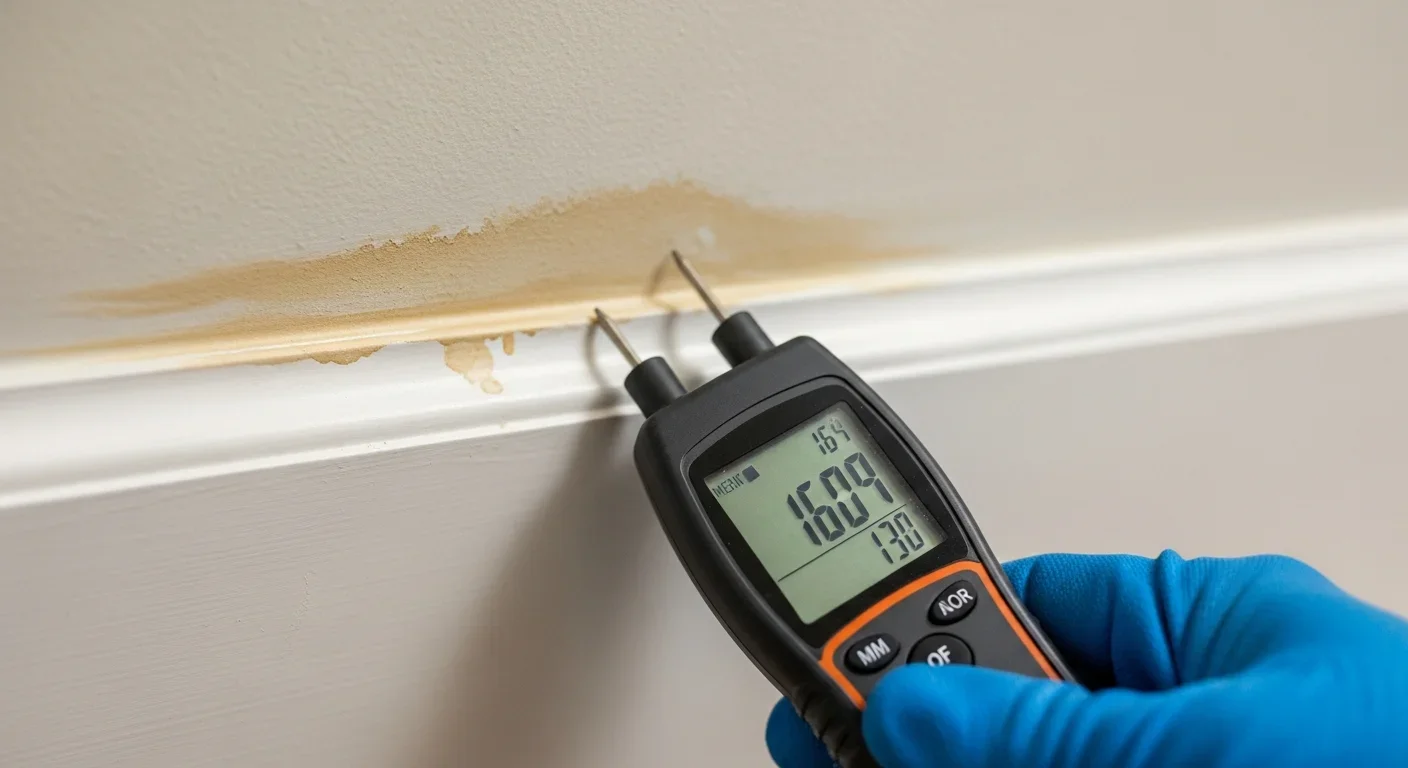
| IICRC Category | Affected area | Containment | Raleigh cost range |
|---|---|---|---|
| Category 1 | <10 sq ft, non-porous only | Local PPE, HEPA vacuum, wet wipe | $1,500–$4,000 |
| Category 2 | 10–100 sq ft, some porous materials | Negative-air machine, 6-mil poly barriers, HEPA filtration | $4,000–$10,000 |
| Category 3 | >100 sq ft or HVAC involvement | Full building negative-air, HVAC cleaning, industrial drying | $10,000–$25,000 |
| Category 3 + historic home | >100 sq ft with lath/plaster, lead, asbestos | All of Cat 3 plus specialty abatement | $18,000–$40,000+ |
Category drives cost more than square footage. A 50 sq ft Category 3 HVAC contamination project costs more than a 200 sq ft Category 2 crawl space job.
The Six Cost Drivers Nobody Wants to Explain
When you receive a mold remediation quote in Raleigh, the line items are not arbitrary — each one corresponds to a specific piece of IICRC S520 protocol or a specific piece of equipment that's running on the clock. The cheap quotes that homeowners love are cheap because they omit one or more of these cost drivers. The expensive quotes that homeowners question are expensive because they don't. Here are the six drivers, what they cost, and what happens if a contractor skips them.
What an IICRC-compliant quote includes
- **Containment barriers** (6-mil poly, tape, zipper doors) — $800–$2,000
- **Negative-air machine** with HEPA filtration for 5–10 days — $2,000–$4,000
- **Pre-remediation air sampling** baseline — $200–$400
- **Post-remediation clearance testing** by third-party industrial hygienist — $300–$600
- **HVAC system inspection and cleaning** when involved — $1,500–$5,000
- **Structural drying** to below-mold-growth moisture threshold for 7+ consecutive days — $2,000–$5,000
- **Antimicrobial application** with EPA-registered product — $300–$800
- **Documentation package** for insurance claim — included
What the cheap budget quote omits
- Containment — none. Spores migrate to unaffected rooms during demolition.
- Negative air — a shop vac with a HEPA bag. Not even close.
- Testing — none. You have no baseline and no clearance, so no defensible proof.
- HVAC inspection — skipped. The same spores are now in your ductwork ready to re-seed.
- Drying — a single dehumidifier for two days. The substrate never reaches the moisture threshold.
- Antimicrobial — a retail spray that kills surface mold but does nothing for airborne spores.
- Documentation — a single invoice that won't support an insurance claim.
- Warranty — verbal, often expires before the company does.
Raleigh Neighborhoods: Where Cost Varies by Housing Stock
Raleigh's housing stock spans 120 years, and each era carries different mold risk and different remediation complications. The 1906–1932 historic homes of Boylan Heights, Glenwood, Cameron Park and Hayes Barton have lath and plaster walls, original plumbing retrofit histories, and in some cases lead paint that requires specialty abatement. The 1980s–1990s growth-era subdivisions in North Hills, Brier Creek and Hedingham have different problems — newer construction with slab foundations, engineered wood subfloors, and HVAC systems that were just old enough to start failing the humidity-control challenge. Here's the neighborhood tour.
Historic district homes: the lath-and-plaster tax
If your home is in Boylan Heights, Cameron Park, Historic Oakwood, Hayes Barton, or within the Capitol Square Historic District, the remediation process is more complicated and more expensive than the same job in a 1990s subdivision. Lath and plaster walls don't demo cleanly — the demolition process creates more dust and requires more aggressive containment. Pre-1980 homes may contain lead paint in older trim work, which triggers EPA RRP (Renovation, Repair and Painting) Rule requirements and lead-safe work practices. And any exterior-visible work or permit-triggering interior work has to pass through the Raleigh Historic Development Commission, which typically adds two to four weeks to the project timeline. All of this adds $3,000 to $10,000 to an otherwise standard remediation scope.
Growth-era subdivisions: engineered wood and stacked plumbing
North Hills, Brier Creek and the 1980s–2000s subdivisions have a different complication. Engineered wood subfloors — plywood or OSB — swell and delaminate at the first sign of moisture, which means a small supply-line leak in a bathroom can compromise the structural subfloor across a much wider area than the visible mold would suggest. Replacement isn't optional once the substrate has swelled beyond 3% moisture content. In multi-family buildings like the North Hills mid-rise condos, stacked plumbing means a leak in a second-floor unit causes cavity moisture three floors below — and the containment has to cover all three units. These aren't complications you can scope over the phone.
NC Has No Mold License. Here's What That Means for Your Wallet.
North Carolina does not license mold remediators. There is no state certification. There is no mandatory training. There is no board to file a complaint with if the work goes wrong. NC DHHS and NC State University Extension both state explicitly that no federal or state certification programs exist for mold remediation services. In practice, this means the Raleigh mold market is bifurcated between IICRC-certified professionals who operate to S520 standards voluntarily, and a shadow market of unlicensed operators who compete on price by skipping the parts of the protocol you can't see.
- IICRC S520
- The Institute of Inspection, Cleaning and Restoration Certification standard for professional mold remediation. Defines categories, containment protocols, PPE, drying requirements, and documentation. The only meaningful benchmark in an unlicensed state.
- WRT / ASD / AMRT
- IICRC credentials: Water Restoration Technician (baseline drying and mold prevention), Applied Structural Drying (cavities and crawl spaces), Applied Microbial Remediation Technician (actual mold work). Verify all three in writing.
- Category 1 / 2 / 3
- IICRC S520 severity categories driven by affected area and porous-material involvement. Category drives cost more than raw square footage.
- Clearance testing
- Air and surface sampling performed by an independent industrial hygienist after remediation, compared against outdoor baseline counts. The only defensible proof of completed work in NC. Costs $300–$600.
- Raleigh UDO
- Raleigh's Unified Development Ordinance, which defines Special Flood Hazard Areas across the Neuse River, Crabtree Creek and Walnut Creek watersheds — more than 23 square miles of floodplain inside the city limits.
- NC Rate Bureau
- The state regulatory body that negotiates base homeowners insurance rates. 2025 settlement approved 7.5% June 2025 + 7.5% June 2026 rate increases, with cumulative NC HO rates up 44.4% since 2020.
- HVAC system contamination
- When mold spores enter the air handler, coil, or ductwork — often during an attempted remediation without containment. Adds $1,500–$5,000 to scope and typically upgrades the project to Category 3.
- Historic Development Commission
- Raleigh's commission that reviews work in local historic districts. Adds 2–4 weeks to remediation project timelines in Boylan Heights, Oakwood, Cameron Park and other historic overlays.
Wake County & Raleigh UDO: Floodplain Rules That Affect Your Scope
The City of Raleigh's Unified Development Ordinance identifies more than 23 square miles of floodplain within Raleigh's jurisdiction, spanning the Neuse River, Crabtree Creek, and Walnut Creek watersheds. FEMA's July 19, 2022 flood map update for Wake County reshuffled zone designations for thousands of properties — some moved into the Special Flood Hazard Area, some moved out, and most homeowners never checked. If your remediation project is on a property that sits inside the SFHA, there are permit implications and insurance implications that change the scope significantly.
The most consequential rule is the substantial improvement threshold. If your post-loss repair and remediation cost equals or exceeds 50% of the building's pre-loss market value and the property sits in a mapped flood zone, the entire structure may need to be brought up to current Base Flood Elevation during rebuild. This turns a mold remediation project into a foundation-level building code project — often adding $50,000 to $150,000 in scope that most homeowners discover only when the permit reviewer flags it at submission. Pulling your FEMA flood zone at msc.fema.gov before work starts is a five-minute task that can save a hundred thousand dollars in scope surprises.
"The City of Raleigh identifies more than 23 square miles of floodplain within its jurisdictional area across three major watersheds — the Neuse River, Crabtree Creek, and Walnut Creek. Special Flood Hazard Areas are defined by FEMA maps, city drainage-basin studies, site-specific flood studies, and flood-hazard soils."
- **Neuse River watershed** — southeastern Raleigh and Wake County; slower-onset flooding but larger inundation footprint
- **Crabtree Creek watershed** — northwestern Raleigh through North Hills and Anderson Drive; fast creek rise during intense rain events
- **Walnut Creek watershed** — southern and southeastern Raleigh; urban creek flooding that often doesn't reach FEMA's modeled thresholds but still causes crawl space saturation
- **23+ square miles** of total floodplain inside Raleigh jurisdiction per UDO
- **July 19, 2022** — effective date of the latest FEMA flood map update for Wake County; re-check zone designations if you haven't since then
The Raleigh Mold Season Timeline
Mold cost in Raleigh is seasonal because mold amplification is seasonal. The same job in March will cost less than the same job in September because by September the contamination has moved further, the porous materials have absorbed more, and the clearance thresholds are harder to hit. Understanding the seasonal curve helps you time inspections and claims strategically.
March–April
Spring inspection window (cheapest to fix)
Winter moisture accumulated in crawl spaces is discoverable and still localized. Category 1 and Category 2 projects are most common in this window. This is the cheapest time to remediate because the contamination hasn't amplified yet.
May–June
Humidity climbs, HVAC systems begin short-cycling
Indoor humidity rises above 60% and mold growth on porous substrates accelerates. Small leaks that would have been Category 1 in March become Category 2 by June.
July–September
Tropical remnant season — peak amplification
Multi-day rain events saturate Crabtree Creek, Walnut Creek and the Neuse River watersheds. Category 3 post-flood projects cluster here, and remediation costs jump 30–50% compared to the same job in spring.
September–November
Post-storm discovery — most expensive window
Homeowners return to saturated building envelopes and discover visible mold. Remediation is now Category 3 in most cases, HVAC systems are contaminated, and clearance testing thresholds are hardest to achieve. Average project cost is 2x the spring equivalent.
Six Steps to Reading a Mold Remediation Quote Like a Pro
- 1
Check that the quote specifies an IICRC S520 category
If the quote doesn't say 'Category 1,' 'Category 2,' or 'Category 3,' it hasn't been scoped. Category definition is the starting point of any legitimate scope — without it, the price is arbitrary.
- 2
Verify the containment protocol is listed as a line item
6-mil poly, negative-air machine with HEPA filter, and zipper door access. If those three aren't in the quote, your project doesn't have containment and the price is artificially low.
- 3
Look for post-remediation clearance testing from a third party
Independent industrial hygienist, not the remediation company itself. $300–$600. Without it, there's no defensible proof the work was done — and your insurance claim suffers.
- 4
Confirm HVAC system handling
Was your HVAC system inspected? Is duct cleaning in the scope? If HVAC was involved and not addressed, the remediation will fail because the ductwork is re-seeding the space with spores.
- 5
Check the documentation package promised for the insurance carrier
Photos, moisture readings, pre- and post-testing, category determination, scope justification. This package is the difference between a paid claim and a scaled-back claim under NC's elevated carrier scrutiny.
- 6
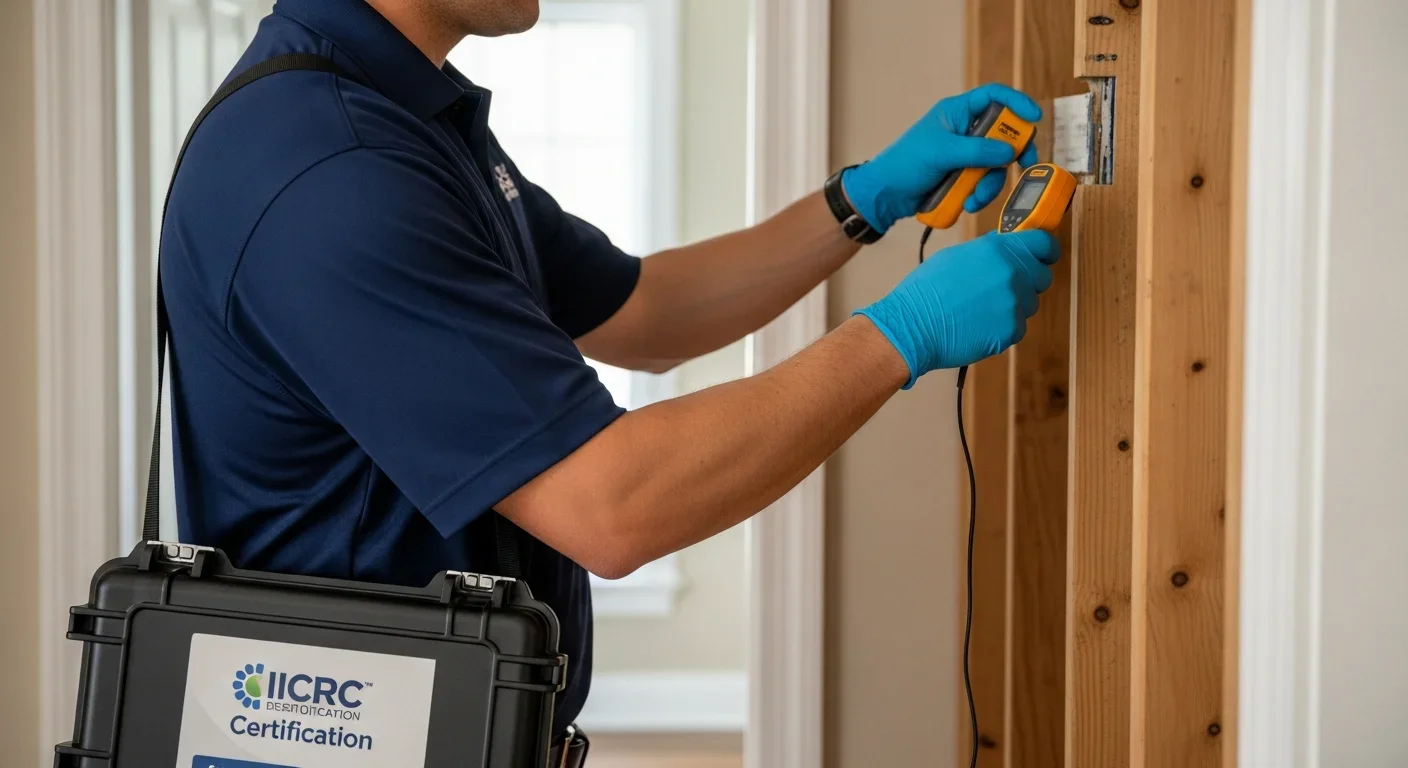
Verify IICRC WRT, ASD and AMRT credentials for the assigned technicians
In writing, for the specific technicians who will be on site. NC has no state license — IICRC is the only credential check you have. If a company won't put it in writing, they don't have it.
- Get at least three quotes, and do not automatically take the cheapest one. In Raleigh mold, cheap is a cost-shifting strategy, not a discount.
- Verify IICRC S520 category in writing on each quote. If it's not there, reject the quote.
- Demand IICRC WRT, ASD, and AMRT credentials for the specific technicians assigned to your job — in writing, before signing.
- Require third-party post-remediation clearance testing from an independent industrial hygienist, not the remediation company.
- Do not start work without a written documentation package plan that supports an insurance claim.
- Check your FEMA flood zone at msc.fema.gov before filing. The July 2022 Wake County map update changed designations for many properties.
- Pull your insurance declarations page and find your mold sublimit. If it's the default $5,000–$10,000, consider an endorsement before your next renewal.
- Photograph everything before, during, and after. NC carrier scrutiny is at an all-time high.
Frequently Asked Questions
How much does mold remediation cost in Raleigh, NC? +
Why is the cheapest Raleigh mold quote usually the most expensive one I'll pay? +
Does homeowners insurance cover mold remediation in Raleigh? +
What's the difference between a $2,500 Raleigh mold quote and a $12,000 quote on the same job? +
How long does mold remediation take in Raleigh? +
Do I need post-remediation clearance testing? +
Is it true that the July 2022 FEMA flood map update changed things in Raleigh? +
Raleigh NC Mold Remediation
Our dedicated Raleigh mold remediation pillar page with IICRC S520 protocol, service area detail, and emergency response.
Raleigh NC Water Restoration
Water damage mitigation for Crabtree Creek, Walnut Creek and Neuse River corridor properties.
Mold Remediation Cost 2026 (site-wide pillar)
The site's top-ranked cost pillar blog with 28,000+ monthly impressions — the authoritative cost reference.
Raleigh NC — Flood-Prone Neighborhoods & Water Damage
Sibling Raleigh blog covering flood zones, Crabtree Creek, and the July 2022 FEMA map update.
Charlotte NC — Mold Remediation Piedmont Humidity Guide
Sibling NC mold blog focused on Charlotte's crawl space risk and the same unlicensed-state reality.
Humidity Mold Risk: FL, NC, SC
The regional humidity-mold pillar blog covering the three-state service area.
Need a Real Raleigh Mold Remediation Quote? Skip the Phone Number Roulette
Palm Build Restoration runs IICRC S520-compliant mold remediation across Raleigh and the Triangle. Category determination, containment, clearance testing, and documentation that supports your claim. Visit the Raleigh mold remediation pillar page for full service detail or call the NC line now for an on-site assessment.
Found this helpful? Send it to someone who needs it.