Reconstruction Services in Lighthouse Point, Florida
Lighthouse Point is a compact, 2.31-square-mile canal community on the Intracoastal Waterway — and its mid-century CBS concrete block stucco homes, Special AE Flood Zone designation, and Broward County HVHZ building code requirements create reconstruction complexities that demand coastal expertise. Whether a storm surge event damages your Hillsboro Isles canal-front home, a barrel tile roof fails in a Venetian Isles estate, or a kitchen fire reveals decades of hidden salt-air corrosion in a Coral Key Harbor property, every Lighthouse Point rebuild must meet current Florida Building Code, navigate the City of Lighthouse Point Building Division permit process, and address the coastal conditions that define this market. Palm Build responds from our Deerfield Beach headquarters — 10 minutes away — in 20-30 minutes.
Deerfield Beach — 10 minutes from Lighthouse Point 20-30 min Response IICRC Certified
Why Lighthouse Point Reconstruction Demands Local Knowledge
Lighthouse Point is a compact, 2.31-square-mile canal community on the Intracoastal
Waterway — and its CBS concrete block stucco homes, Special AE Flood Zone designation,
salt-air corrosion profile, and HVHZ building code requirements create reconstruction
complexities that out-of-area contractors routinely underestimate. Here is what makes
reconstruction here different.
CBS Concrete Block Stucco Expertise for Waterfront Homes
Lighthouse Point's housing stock is overwhelmingly CBS concrete block stucco — mid-century single-family homes built from the 1950s through 1980s on the city's finger-isle canal network. CBS reconstruction is fundamentally different from wood-frame work. Water migrates through porous concrete block via capillary action, often saturating areas far from the visible damage. Stucco systems require multi-coat application over proper moisture barriers. Salt-air from the Intracoastal and nearby Atlantic accelerates corrosion of embedded metal components, HVAC coils, and plumbing fixtures. Generic contractors who treat CBS like wood-frame construction create problems that surface months later.
Coastal Flood Zone & Storm Surge Expertise
Most of Lighthouse Point sits in FEMA's Special Flood Hazard Area (AE) designation — where Intracoastal surge, king-tide flooding, and heavy rainfall converge. Post-storm reconstruction here is not just about repairing what broke. When reconstruction costs exceed 50% of the structure's pre-damage market value, the entire building must meet current flood-zone elevation standards. For Lighthouse Point's canal-front and Intracoastal-adjacent homes, this can mean significant scope changes. Palm Build evaluates the substantial improvement threshold before construction begins and coordinates ordinance-and-law coverage for code-mandated elevation work.
Stucco Texture Matching for Mid-Century Canal Homes
Lighthouse Point homes span decades of stucco application techniques — skip trowel, sand finish, knockdown, and smooth — that vary between neighborhoods and sometimes between walls on the same home due to previous repairs. Precise texture matching during reconstruction is critical for visual consistency and, in canal communities like Venetian Isles and Hillsboro Isles, for maintaining the premium waterfront character that supports the city's $688K median home value. We document existing textures before demolition, replicate them during the three-coat stucco process, and color-match using base mix rather than paint over mismatched texture.
Florida Building Code Mastery — HVHZ Standards
Every Lighthouse Point reconstruction must meet current Florida Building Code at its highest tier — the High-Velocity Hurricane Zone. This means impact-rated windows and doors on all new or replacement openings, hurricane straps at every roof-to-wall connection, wind-resistant roof coverings, product approval (Florida/Broward Product Approval or Miami-Dade NOA), and large- and small-missile impact testing per TAS 201/202/203 for all exterior components. Design wind for Broward County is approximately 170 mph. For homes built before 2002, these requirements didn't exist at construction — Palm Build closes that gap without failed inspections.
City of Lighthouse Point Building Division Experience
We navigate the City of Lighthouse Point Building Division and Broward County NOC process on every reconstruction project. Permits covering structural, plumbing, electrical, roofing, and mechanical work. Notice of Commencement filing with Broward County Records. Individual trade inspections at each phase. Impact window product approval verification per Florida/Broward Product Approval or Miami-Dade NOA. Our established process with local inspectors means fewer delays, fewer correction notices, and faster project completion.
Dispatched from Deerfield Beach — 20-30 Minutes Away
Palm Build responds to Lighthouse Point from our South Florida Operations Hub at 786 S Military Trail in Deerfield Beach — approximately 10 minutes north. Our team arrives in 20-30 minutes for emergency mitigation and maintains daily project-manager presence throughout reconstruction. Hillsboro Isles, Venetian Isles, Coral Key Harbor, and every canal street in Lighthouse Point are a short drive from our front door.
Neighborhood Profiles
Lighthouse Point Neighborhood Reconstruction Guide
Every Lighthouse Point neighborhood has a distinct construction profile shaped by when
it was built, its proximity to the Intracoastal and canal network, and the code
standards in effect at the time. During reconstruction, these differences determine
scope, cost, and code compliance requirements. Here is what we encounter in each area.
Hillsboro Isles
1960s-1980s|CBS Canal-Front Single-Family
Deep-water canal-front homes with docks and seawalls built to mid-century standards. Original stucco with no vapor retarder behind CBS block — moisture migrates freely through wall cavities from humidity and salt-air exposure. Aging aluminum window seals failing from salt and UV deterioration. Canal-adjacent grade puts these homes in high-exposure AE flood zone territory. Post-storm reconstruction frequently triggers the 50% substantial improvement threshold, requiring full flood-zone elevation compliance. Salt-air corrosion of A/C coils, electrical fixtures, and embedded metal is a recurring hidden-damage driver.
FEMA Zone: AE
Venetian Isles
1960s-1970s|CBS Finger-Isle / Intracoastal
Intracoastal-adjacent and finger-isle homes with premium mid-century CBS construction. Salt-air corrosion is most aggressive here — A/C coils, copper plumbing, electrical panels, and dock hardware all corrode faster than inland properties. Original single-pane aluminum windows require impact replacement per current HVHZ code during reconstruction. Older CBS block may show efflorescence and moisture absorption above replacement thresholds. Tidal flooding and storm surge exposure highest among Lighthouse Point neighborhoods given Intracoastal proximity.
FEMA Zone: AE
Coral Key Harbor
1970s-1980s|CBS Single-Family / Canal Network
Canal-centric neighborhood with a mix of original CBS homes and partially renovated properties showing mismatched stucco textures from previous repairs. Polybutylene plumbing in 1970s-80s builds creates catastrophic burst risk. Original electrical panels (Federal Pacific, Zinsco) in older homes are known failure-prone brands. Many homes lack hurricane straps at roof-to-wall connections. Reconstruction expands scope when demolition reveals absent moisture barriers, deteriorated tie beams, and termite damage to embedded wood components including window bucks and door frames.
FEMA Zone: AE
Lighthouse Point — Mainland Grid Streets
1960s-1990s|CBS Ranch Homes (non-canal)
Interior grid-street homes not on canals, but still in Broward HVHZ and subject to the same impact-window, hurricane-strap, and roofing-attachment requirements as waterfront properties. Many have barrel or flat-tile roofs approaching underlayment replacement age. Pre-2002 builds lack hurricane straps and have original single-pane windows requiring impact replacement per code during reconstruction. Aged CBS with no moisture barriers is the universal hidden condition revealed during demolition.
FEMA Zone: X / AE (varies)
Lighthouse Point Specialty
CBS Concrete Block Reconstruction in Lighthouse Point
CBS concrete block stucco is the dominant construction method across every Lighthouse
Point neighborhood — from Hillsboro Isles canal-front homes to the mainland grid
streets. Reconstructing CBS walls requires masonry expertise, proper moisture
management, salt-air corrosion awareness, and stucco application skills that wood-frame
contractors simply do not possess. Here is how Palm Build handles CBS reconstruction
from damaged block through finished stucco.
Step 1
Block Assessment
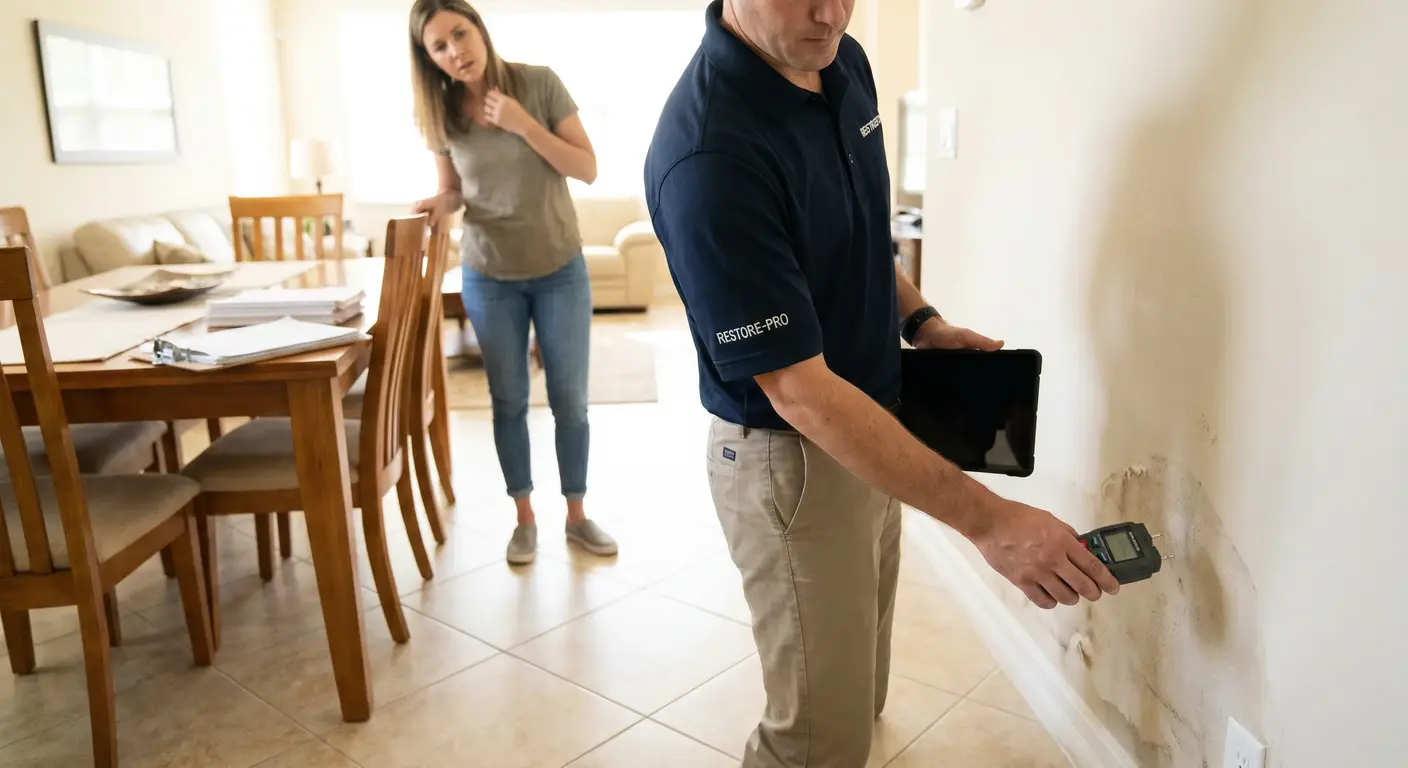
After damage, CBS block in Lighthouse Point must be evaluated for structural integrity, moisture absorption, salt-air corrosion damage, and efflorescence (white mineral deposits indicating long-term water migration). Fire-damaged block is checked for spalling — surface flaking caused by heat expansion. Water-damaged block is tested for moisture content at multiple depths using penetrating and non-penetrating meters. Blocks absorbing above 12% moisture content by weight may need replacement rather than drying. In Lighthouse Point's mid-century homes from the 1960s-1980s, the original block may also show deterioration from decades of salt-air cycling without proper barriers.
Step 2
Block Replacement & Repair
Damaged CBS blocks are cut out and replaced with matching units — standard 8x8x16 CMU in most Lighthouse Point homes. New block is tied into existing wall with rebar and mortar, maintaining structural continuity. In load-bearing walls, temporary shoring is required during block replacement. Lighthouse Point's 1960s-80s homes often used non-standard block sizes or configurations that require sourcing from specialty masonry suppliers or custom cutting to maintain wall alignment. Salt-air-exposed block near canal or Intracoastal frontage may require additional anti-corrosion treatment at rebar embedments.
Step 3
Moisture Barrier Installation
This is the step that separates proper CBS reconstruction from shortcuts that cause future damage. Original 1960s-80s Lighthouse Point CBS homes were built without vapor retarders between block and stucco — moisture migrated freely through the wall assembly, accelerated by salt air from the Intracoastal and canal network. During reconstruction, a proper moisture barrier (fluid-applied or sheet membrane) is installed over the block before stucco application. This single upgrade prevents the moisture-migration and salt-air infiltration problems that caused many of the original damage issues in Hillsboro Isles and Venetian Isles canal homes.
Step 4
Stucco Texture Matching
Lighthouse Point stucco reconstruction follows a three-coat system: scratch coat (bonded to lath over the moisture barrier), brown coat (leveling layer), and finish coat (textured to match existing). Matching stucco texture is critical in Lighthouse Point — homes from the 1960s through 1980s feature different textures (skip trowel, sand finish, knockdown, smooth) that vary between canal streets and sometimes between walls on the same home due to previous repairs. We document the existing texture pattern and replicate it precisely. Color matching uses the same base mix, not paint over mismatched texture. For homes in Venetian Isles and Coral Key Harbor, precise matching preserves the premium waterfront character that supports Lighthouse Point's $688K median home value.
Step 5
Hidden Conditions in Lighthouse Point CBS
Demolition of CBS walls in Lighthouse Point's older homes routinely reveals conditions invisible from the exterior: no insulation (pre-1979 energy code), corroded or absent tie beams — especially in salt-air-exposed canal-front walls — aluminum wiring in 1960s-70s builds (fire hazard), polybutylene plumbing running through block cavities, and termite damage to embedded wood elements (window bucks, door frames, furring strips). Salt-air corrosion of A/C coil mounts, copper plumbing fittings, and electrical fixtures embedded in CBS block is particularly common in homes directly on Hillsboro Isles and Venetian Isles canals. Each discovery expands reconstruction scope and triggers an insurance supplement filing.
Step 6
Code-Compliant CBS Assembly
The finished CBS wall assembly in a Lighthouse Point reconstruction meets current Florida Building Code at the HVHZ level: structural block with proper reinforcement, moisture barrier, three-coat stucco system, and continuous insulation to meet Florida Energy Code R-values where required. Impact-rated windows are installed with proper anchorage into the CBS wall, not just surface-mounted. All exterior products carry Florida/Broward Product Approval or Miami-Dade NOA with TAS 201/202/203 impact testing certification. The result is a wall system designed for Broward County's approximately 170 mph design wind load — outperforming the original construction in every measurable way.
Reconstruction Timeline
The Lighthouse Point Reconstruction Process
From damage assessment through final City of Lighthouse Point Building Division
inspection, here is how Palm Build manages reconstruction — including HVHZ compliance,
flood-zone evaluation, salt-air corrosion remediation, and specialty material sourcing.
01
Damage Assessment & Scope Development
Days 1-5
We walk through the property with you and your insurance adjuster to document every damaged element. Xactimate-based estimates match the format carriers use — eliminating format disputes. For Lighthouse Point's CBS homes, we include line items for code-required upgrades (impact windows per Florida/Broward Product Approval or Miami-Dade NOA, hurricane straps, enhanced electrical), barrel tile roofing with full underlayment replacement, moisture barrier installation behind stucco, salt-air corrosion damage to HVAC and fixtures, and any flood-zone compliance work triggered by the 50% substantial improvement threshold. The substantial damage calculation is completed upfront — not after construction begins.
02
Permits & Code Compliance Planning
Days 5-15
City of Lighthouse Point Building Division permits are submitted covering all trades. Notice of Commencement is filed with Broward County Records. Florida Building Code HVHZ compliance is verified for every element — impact ratings (TAS 201/202/203), wind-load calculations for approximately 170 mph design wind, structural connection details. The substantial improvement rule is evaluated: if reconstruction costs exceed 50% of the structure's pre-damage market value, full flood-zone compliance is required. For Lighthouse Point's AE-zone canal-front and Intracoastal-adjacent homes, this can trigger elevation requirements. All product approvals (Florida/Broward Product Approval or Miami-Dade NOA) are confirmed before ordering impact windows and doors.
03
Demolition & Discovery
Days 10-20
Damaged materials are removed to clean substrate. This is when hidden conditions emerge: polybutylene plumbing in 1970s-80s homes, aluminum wiring in the oldest builds, absent moisture barriers behind stucco, corroded tie beams, salt-air-damaged A/C mounts and embedded metal, mold behind CBS walls from chronic humidity. Impact windows are ordered immediately — lead times run 6-10 weeks for custom sizes on mid-century openings. Barrel tile is sourced to match existing profiles. Insurance supplements are filed for every hidden condition discovered during demolition.
04
Structural & Rough-In
Weeks 3-8
CBS block replacement, structural reinforcement, electrical rough-in, plumbing rough-in, and HVAC modifications are completed and inspected. HVHZ code upgrades happen here: hurricane straps at every roof-to-wall connection, impact window rough openings prepared for proper anchorage into CBS walls, upgraded electrical panels with whole-house surge protection, GFCI protection throughout, arc-fault breakers, and moisture barrier installation behind new stucco. Each trade is inspected separately by the City of Lighthouse Point Building Division. Salt-air corrosion damage to embedded metal components — rebar, tie-beam hardware, window frame anchors — is corrected at rough-in stage.
05
Finishes & Specialty Work
Weeks 6-14
Three-coat stucco application with texture matching to Lighthouse Point's 1960s-1980s era patterns. Barrel tile roofing with HVHZ-rated attachment and full underlayment replacement. Flooring installation on CBS slab — tile, luxury vinyl, or terrazzo restoration for vintage canal-front homes. Drywall over CBS block interior walls with proper furring and insulation. Impact window and door installation with proper CBS anchorage and Florida/Broward Product Approval or Miami-Dade NOA-compliant hardware. Cabinet, countertop, and fixture installation with corrosion-resistant materials appropriate for Lighthouse Point's coastal salt-air environment. Interior and exterior painting with elastomeric coatings suited to Florida's humidity.
06
Final Inspections & Turnover
Project Completion
Final electrical, plumbing, mechanical, and building inspections by the City of Lighthouse Point Building Division. All HVHZ compliance elements are verified — impact ratings, structural connections, product approval documentation, flood-zone compliance if applicable. The final walkthrough with the homeowner confirms every item in the scope is completed to satisfaction. A completion certificate and all compliance documentation are provided to your insurance carrier for final payment release.
Reconstruction Triggers
Types of Reconstruction Needs in Lighthouse Point
Reconstruction in Lighthouse Point is triggered by different damage types — each with
its own scope, code implications, and insurance considerations. The coastal location
adds storm surge, saltwater extraction, and salt-air corrosion layers that inland
Broward markets do not face.
Most Common
Post-Storm & Hurricane Reconstruction
Storm and hurricane damage in Lighthouse Point typically presents as barrel tile roof failures (uplift, underlayment breach, ridge cap displacement), impact window seal failures, stucco cracking from debris impact, and water intrusion through compromised building envelopes. Storm surge from the Intracoastal adds a saltwater contamination layer to standard wind damage — saturating CBS walls, corroding HVAC and plumbing components, and requiring Category 3 protocols for affected materials. Post-storm reconstruction is where the substantial improvement rule most frequently triggers: a major hurricane can push reconstruction costs past the 50% threshold, requiring full HVHZ and flood-zone code compliance.
Frequent
Post-Water Damage Reconstruction
Water damage reconstruction in Lighthouse Point is driven by CBS-specific behavior: water migrates through porous concrete block via capillary action, saturating areas far from the entry point. Canal-adjacent and Intracoastal-front homes face recurring surge and tidal flood exposure. Polybutylene plumbing failures (common in 1970s-90s homes throughout Hillsboro Isles and Coral Key Harbor) cause catastrophic pipe bursts. Post-water reconstruction includes CBS block drying verification, moisture barrier installation, stucco replacement, drywall over CBS block, and flooring on slab — and in AE-zone homes exceeding the 50% substantial improvement threshold, flood-zone elevation compliance.
Frequent
Storm Surge & Saltwater Intrusion Reconstruction
Lighthouse Point's Intracoastal frontage and Special AE Flood Zone designation make storm surge a distinct reconstruction category. Saltwater intrusion is classified as IICRC Category 3 (black water) — all porous materials in contact must be removed and replaced, not dried in place. Salt deposits corrode A/C coils, copper plumbing, electrical components, and embedded metal in CBS walls. Post-surge reconstruction includes comprehensive salt-remediation protocols, anti-corrosion treatment of remaining metal structural elements, and CBS wall assessment for salt-driven efflorescence and moisture damage beyond the visible waterline.
Frequent
Post-Fire Reconstruction
Fire-damaged CBS homes require structural evaluation of the block itself — heat causes spalling (surface flaking) and can compromise compressive strength. Smoke damage penetrates CBS pores and requires professional cleaning or block replacement. In Lighthouse Point's premium canal-front homes, full fire reconstruction includes structural assessment, hazardous material abatement (asbestos in pre-1980 homes), code upgrades to current HVHZ standards (impact windows, hurricane straps), and complete interior rebuild. Salt-air corrosion of existing metalwork may be revealed during fire-damage demolition.
Notable
Mold-Related Reconstruction
Lighthouse Point's coastal subtropical climate — persistent humidity above 60%, South Florida's May-October wet season regularly exceeding 80% humidity, near-constant A/C operation — creates ideal mold growth conditions. When mold colonizes CBS walls, remediation often requires removing stucco and interior finishes to treat the block surface and interior cavities. Post-mold reconstruction includes moisture barrier installation, proper ventilation upgrades, HVAC condensate-drain correction, and materials rated for Florida's coastal humidity environment.
Notable
Aging Infrastructure Reconstruction
Lighthouse Point's 1960s-80s homes often reveal hidden infrastructure failures during any reconstruction project: polybutylene plumbing (catastrophic burst risk), aluminum wiring (fire hazard), Federal Pacific or Zinsco electrical panels (known failure-prone brands), no hurricane straps, no moisture barriers, single-pane aluminum windows, and salt-air-corroded embedded metal components. When reconstruction for one issue exposes these conditions, scope expands. Palm Build documents each discovery, files insurance supplements for covered items, and provides transparent cost breakdowns for items outside coverage.
Florida Building Code — HVHZ
Broward County HVHZ Code Compliance During Lighthouse Point Reconstruction
Lighthouse Point sits in Broward County where the Florida Building Code is enforced at
its highest tier — the High-Velocity Hurricane Zone. Every reconstruction project must
meet current code, not the code the home was originally built under. Design wind is
approximately 170 mph. All exterior products require Florida/Broward Product Approval or
Miami-Dade NOA. The City of Lighthouse Point Building Division issues permits for all
trades, and a Notice of Commencement must be recorded with Broward County Records before
any work begins.
Code Upgrade Requirements
Impact-rated windows and doors on all new or replacement openings — Florida/Broward Product Approval or Miami-Dade NOA required
Typically required for: Pre-2002 homes
Hurricane straps at every roof-to-wall and wall-to-foundation connection
Typically required for: Pre-2002 homes
Wind-resistant roof covering with full underlayment replacement — HVHZ attachment requirements
Typically required for: Pre-2007 homes
Large- and small-missile impact testing per TAS 201/202/203 for all exterior components
Typically required for: All HVHZ reconstruction
Whole-house surge protection and upgraded electrical panel
Typically required for: Pre-2008 homes
GFCI outlets in all habitable areas
Typically required for: Pre-2014 homes
Arc-fault circuit interrupter (AFCI) breakers for all living spaces
Typically required for: Pre-2008 homes
Flood elevation compliance in FEMA SFHA zones (if 50% threshold exceeded)
Typically required for: All ages in AE flood zones
What Requires Permits vs. What Does Not
Work ItemPermit Required
Structural wall removal or modificationYes
Electrical panel upgrade or rewiringYes
Plumbing rerouting or pipe replacementYes
Impact window and door installationYes
Roof replacement or repairYes
HVAC system replacementYes
Interior painting (no structural changes)No
Cabinet replacement (same footprint)No
Flooring replacement (no subfloor work)No
Fixture replacement (same location)No
Substantial Improvement Rule (50%)
If reconstruction costs exceed 50% of the structure's pre-damage market value, the
entire building must meet current Florida Building Code — including flood
elevation requirements in FEMA Special Flood Hazard Areas. In Lighthouse Point,
where canal-front homes in Hillsboro Isles, Venetian Isles, and Coral Key Harbor
sit in AE flood zones, this can mean elevating the structure to Base Flood
Elevation (BFE) plus the required freeboard. Palm Build evaluates the 50%
threshold during scope development — before construction begins — and coordinates
with your insurance carrier on ordinance-and-law coverage for these mandatory
upgrades.
Product Approval Requirements
In the HVHZ, all exterior products — impact windows, doors, roofing systems, and
cladding — must carry Florida/Broward Product Approval or Miami-Dade NOA with TAS
201/202/203 large- and small-missile impact testing certification. This applies to
every replacement opening in a Lighthouse Point reconstruction. Palm Build
verifies product approval documentation before ordering any exterior component and
provides the approval numbers to the City of Lighthouse Point Building Division at
permit application.
Lighthouse Point Flood Zones
Flood Zone Compliance During Reconstruction
Lighthouse Point's Intracoastal Waterway frontage, 2.31-square-mile canal network, and
Special AE Flood Zone designation place the majority of the city within FEMA Special
Flood Hazard Areas. During reconstruction, flood-zone compliance becomes critical when
the substantial improvement threshold is exceeded — and for mid-century canal-front
homes, the gap between existing construction and current elevation requirements can be
significant.
AE (Special Flood Hazard Area — Canal & Intracoastal)Canal-adjacent and Intracoastal-front properties in Hillsboro Isles, Venetian Isles, and Coral Key Harbor. Mandatory flood insurance required for federally-backed mortgages. Most of Lighthouse Point falls within this designation.
Lowest floor (including basement) must be at or above Base Flood Elevation. If the substantial improvement threshold is exceeded, full elevation compliance is required. Flood vents required in enclosed areas below BFE. Storm surge and tidal flooding from the Intracoastal Waterway and Atlantic influence both the AE boundary and BFE values.
Base Flood Elevation
6-10 feet NAVD88 (varies by location — verify with City of Lighthouse Point floodplain administrator)
X (Minimal Flood Hazard)Areas outside the 100-year floodplain on the Lighthouse Point mainland grid streets. Lower risk but not zero risk — these areas can still experience drainage flooding during major storm events and Broward County canal overflow.
Inland grid streets not directly on canals or Intracoastal
Reconstruction Requirement
No flood elevation requirements during reconstruction. Standard HVHZ Florida Building Code applies. Flood insurance not required by lenders but recommended given proximity to AE-zone areas and canal network.
Base Flood Elevation
N/A
The 50% Substantial Improvement Calculation in Lighthouse Point
This single calculation determines whether your Lighthouse Point reconstruction is a
straightforward rebuild or triggers full flood-zone elevation compliance. Getting it
wrong is extremely expensive — both directions. Underestimating triggers code
violations; overestimating inflates costs unnecessarily.
Property appraisal (pre-damage market value of the structure only, not land — critical for Lighthouse Point's $688K median home values)
Total reconstruction cost estimate including all trades, materials, HVHZ code upgrades, and salt-air corrosion remediation
If total cost exceeds 50% of appraised structure value = substantially damaged
Entire building must meet current flood-zone requirements including elevation to BFE plus freeboard
Cumulative tracking: multiple projects within any 10-year period are aggregated
Palm Build evaluates this threshold before reconstruction scope is finalized — never after construction begins
Lighthouse Point Pricing
Reconstruction Costs in Lighthouse Point
Lighthouse Point reconstruction costs reflect Broward County HVHZ code requirements, CBS
construction complexity, barrel tile roofing, coastal salt-air corrosion remediation,
and AE flood zone compliance. Current residential reconstruction costs in Lighthouse
Point average $180-$350 per square foot — driven by HVHZ-rated materials, specialty CBS
labor, coastal conditions, and regulatory compliance. These ranges reflect actual South
Florida project costs for insurance-funded restoration work.
Minor Reconstruction
Stucco repair, flooring, paint in 1-2 rooms
$15,000 - $40,000
Includes HVHZ-rated materials and City of Lighthouse Point permit fees
Moderate Reconstruction
Kitchen/bath rebuild, multiple rooms, CBS wall repair
$40,000 - $100,000
Impact windows with Florida/Broward Product Approval, hurricane straps, code upgrades included
Major Reconstruction
Structural rebuild, barrel tile roof, full HVHZ code hardening
$100,000 - $250,000+
Full FBC/HVHZ compliance, flood-zone elevation compliance if triggered
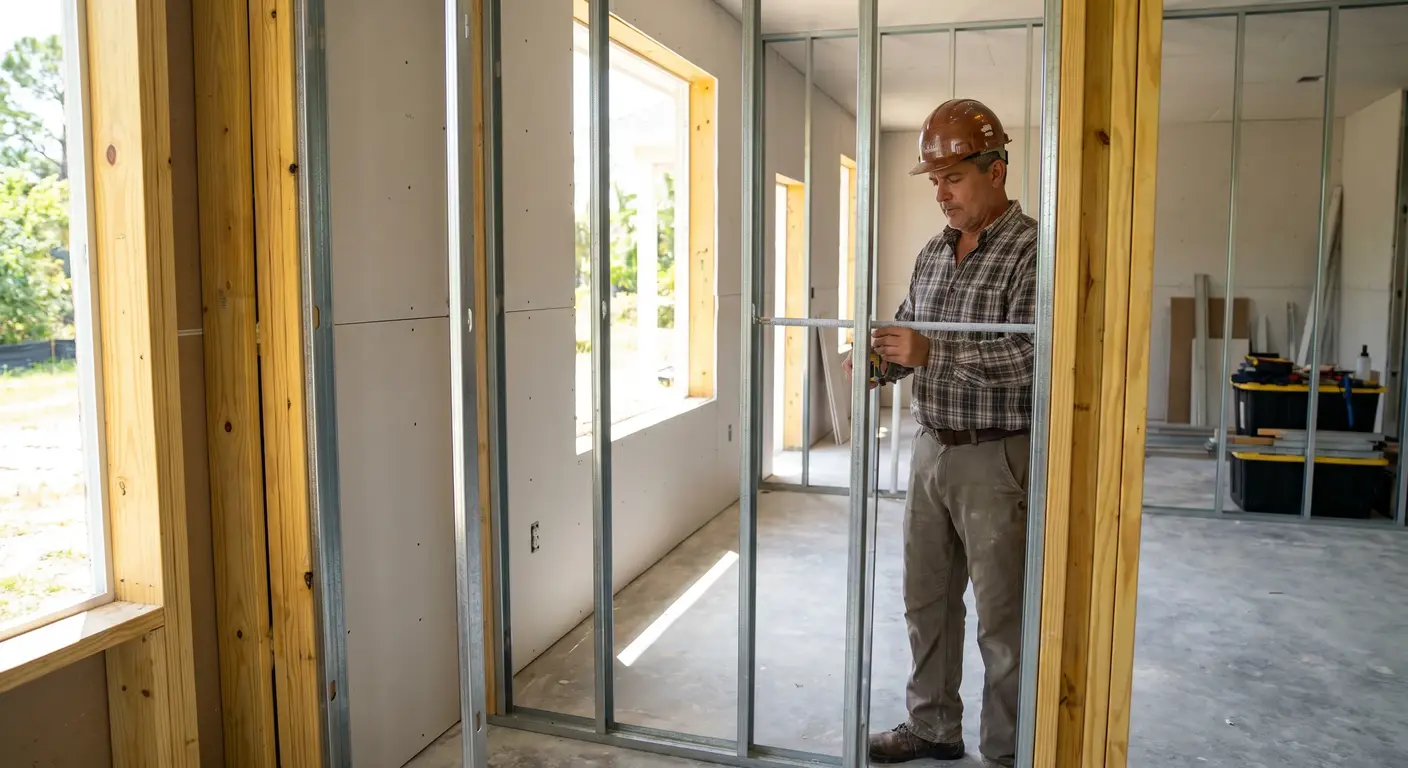
Active reconstruction project in Lighthouse Point — every element rebuilt to current Florida Building Code HVHZ standards
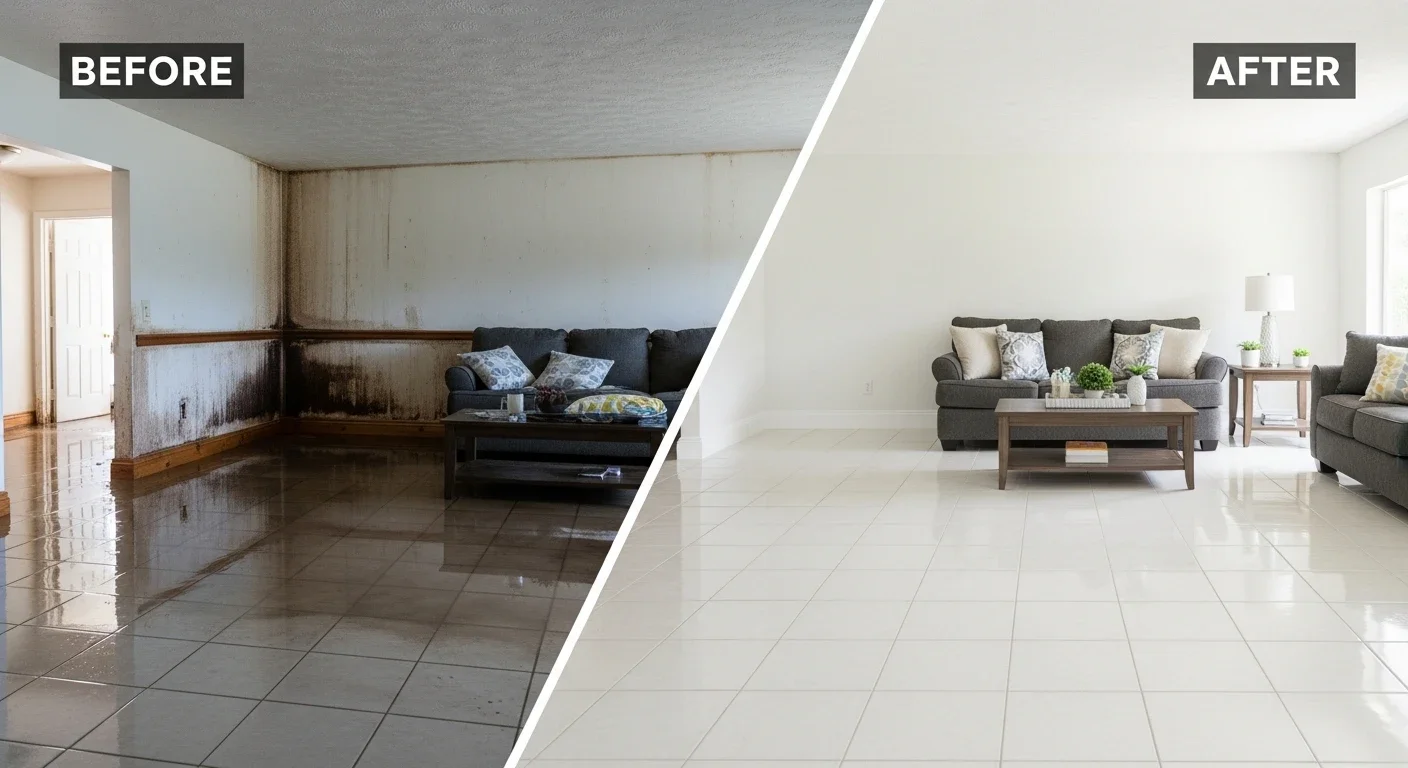
Complete bathroom reconstruction in Lighthouse Point — from water-damaged CBS walls to finished modern space
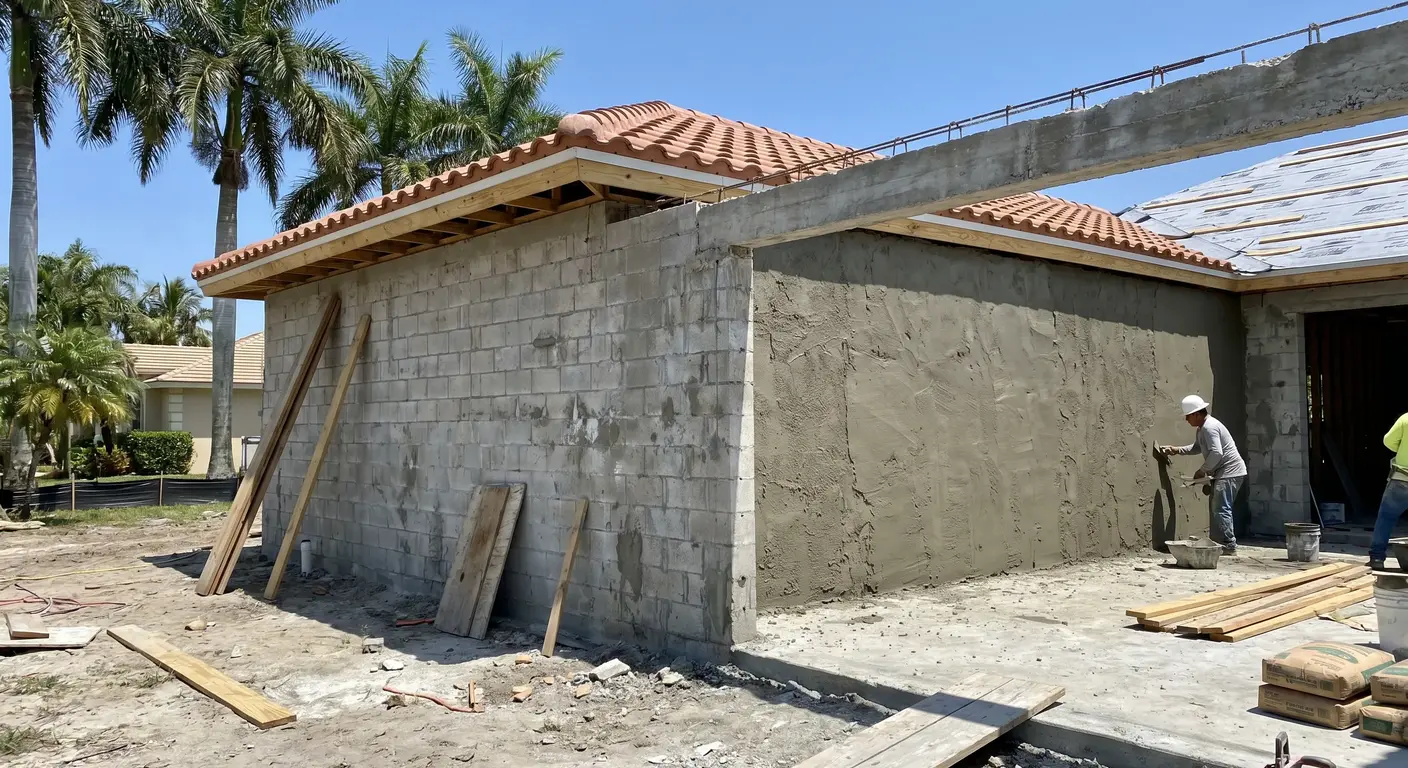
Typical Lighthouse Point CBS canal-front home — the dominant construction style across the city's finger-isle neighborhoods
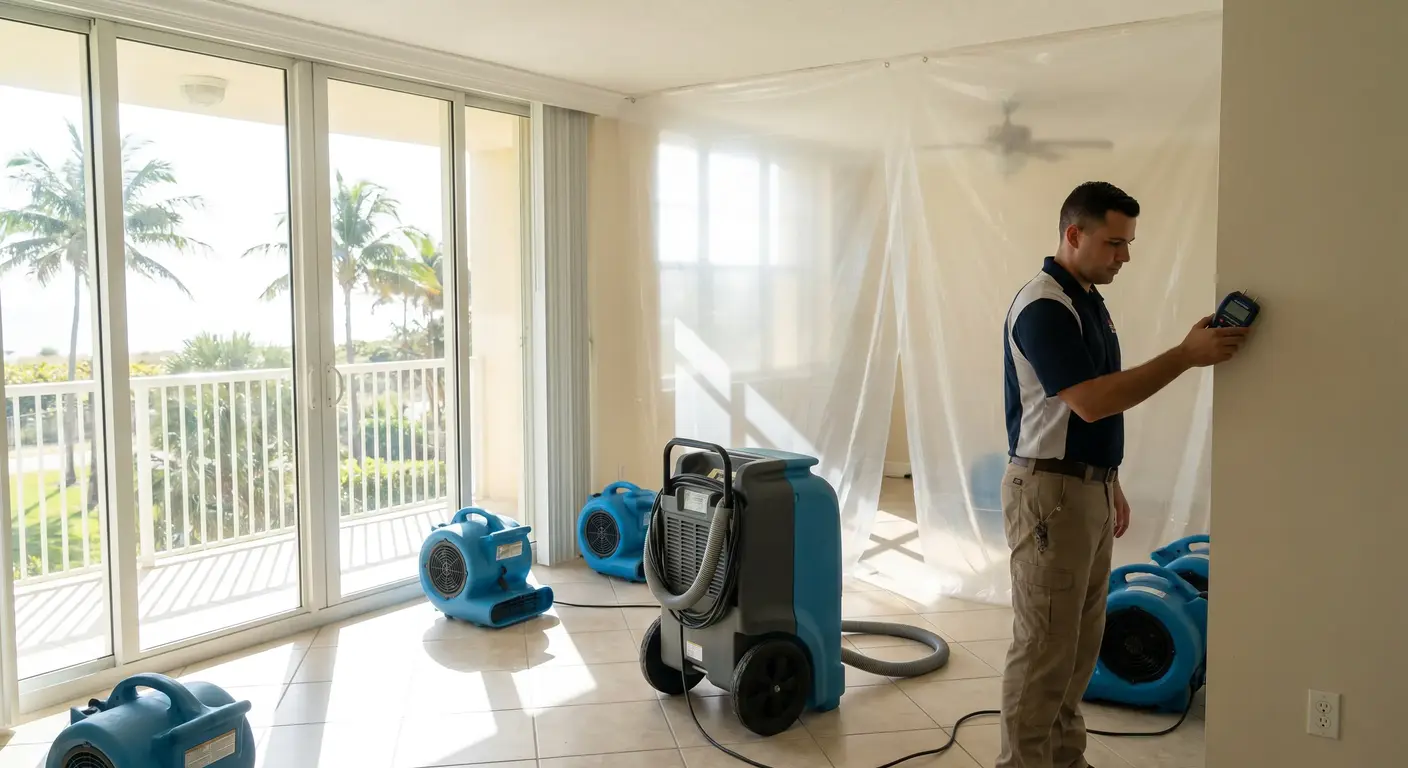
Lighthouse Point waterfront reconstruction — CBS stucco repair, impact windows, and salt-air corrosion remediation
Insurance Coverage
What Insurance Covers for Lighthouse Point Reconstruction
When reconstruction follows a covered loss (fire, sudden water damage, wind, storm
surge, etc.), your homeowners policy covers the cost of returning your home to pre-loss
condition. In Lighthouse Point, the ordinance-and-law endorsement is the single most
critical policy add-on — it covers the mandatory HVHZ code upgrades that bring older
homes up to current Florida Building Code standards during reconstruction. Florida law
(Fla. Stat. 627.70132) requires claims within 1 year of loss.
Structural repair and rebuild to pre-loss condition (CBS walls, stucco, framing, seawall-adjacent foundations)
Flooring on slab, cabinetry, countertops, and finish materials matching pre-loss quality
Drywall over CBS block interior walls with proper furring and insulation
Electrical, plumbing, and HVAC repair or replacement — including salt-air corrosion damage to A/C coils and fixtures
Impact window/door and exterior stucco restoration to current HVHZ Florida Building Code
City of Lighthouse Point Building Division permits and Broward County NOC filing fees
Temporary living expenses during reconstruction (Additional Living Expense / ALE)
Hidden damage discovered during demolition (polybutylene plumbing, mold behind CBS walls, corroded embedded metal)
Barrel tile roof replacement with full underlayment when damaged by covered peril
Critical Policy Endorsements for Lighthouse Point
Ordinance & Law Coverage
Covers the cost of code-required upgrades that exceed pre-loss construction standards. In Lighthouse Point, the gap between mid-century construction and current HVHZ Florida Building Code is significant — impact windows with TAS 201/202/203 certification, hurricane straps, enhanced electrical systems, and potential flood elevation compliance. Without this endorsement, mandatory code upgrades come out of pocket. Florida law automatically includes it at 25% of the dwelling limit (Coverage A) unless the policyholder signed a written rejection. On a $688,000 Lighthouse Point home, 25% equals approximately $172,000 in code-upgrade coverage.
Replacement Cost Value (RCV)
Pays to replace damaged items with new items of like kind and quality — critical for Lighthouse Point homes with specialty materials like barrel tile roofing, terrazzo floors, and CBS stucco systems. ACV (Actual Cash Value) depreciates materials, leaving you with a fraction of replacement cost for 40-60 year old construction materials. Given the premium waterfront market values in Lighthouse Point, RCV coverage ensures the full cost of modern equivalent materials at a mid-century property.
Additional Living Expense (ALE)
Covers temporary housing during reconstruction. Lighthouse Point and coastal Broward rental markets average $2,500-$4,500/month for comparable single-family homes. Major reconstruction can take 12-20 weeks. Ensure your ALE limit covers your expected timeline — some policies cap ALE at 12 months or a dollar limit that may not reflect current coastal South Florida rental rates.
Palm Build Manages the Entire Florida Claims Process
Florida's insurance market is complex — carrier exits, premium increases averaging
$6,220/year in Broward County, and AOB reform (SB 2-A) have created a challenging
claims landscape. Our reconstruction estimates are written in Xactimate — the same
software your carrier uses. We coordinate directly with your adjuster throughout
reconstruction, handling supplements for hidden damage discovered during demolition
and code-required upgrades covered by your ordinance-and-law endorsement.
Why Lighthouse Point Homeowners Choose Palm Build for Reconstruction
Single-Source: Mitigation Through Rebuild
No handoffs between companies. Our mitigation and reconstruction teams work as one unit. Reconstruction planning begins during the drying phase — not after it ends. In Lighthouse Point's coastal subtropical climate where mold colonizes exposed materials within 24-48 hours and salt air accelerates corrosion of exposed metal, this overlap prevents secondary damage that expands scope and cost.
HVHZ Florida Building Code Experts
Lighthouse Point sits in Broward County where Florida Building Code enforcement requires HVHZ compliance — approximately 170 mph design wind, TAS 201/202/203 impact testing for all exterior products, and Florida/Broward Product Approval or Miami-Dade NOA on every window and door. Our team understands the requirements that out-of-area contractors miss: impact ratings, product approval verification, enhanced structural connections, barrel tile attachment methods, flood-zone compliance triggers, and the inspection protocol that the City of Lighthouse Point Building Division enforces. We get it right the first time.
Coastal Salt-Air & Storm Surge Specialists
Lighthouse Point's Intracoastal Waterway location creates damage drivers that inland Broward contractors do not encounter: storm surge saltwater contamination requiring Category 3 remediation protocols, salt-air corrosion of A/C coils, copper plumbing, electrical components, and embedded metal in CBS walls. We assess corrosion damage comprehensively during demolition and address it before reconstruction locks it inside new finishes.
CBS Construction Specialists
CBS concrete block stucco is the dominant construction in every Lighthouse Point neighborhood. We understand CBS behavior during and after damage — moisture migration through porous block, stucco texture matching for 1960s-1980s era canal homes, structural evaluation of fire-damaged block, and the critical importance of moisture barriers that original construction omitted. Generic wood-frame contractors treat CBS like drywall on studs. We do not.
Dispatched from Our Deerfield Beach Hub — 10 Minutes Away
Palm Build responds to Lighthouse Point from our South Florida Operations Hub at 786 S Military Trail in Deerfield Beach — approximately 10 minutes north. Our team arrives in 20-30 minutes for emergency response. During reconstruction, our project managers maintain daily site presence. Hillsboro Isles, Venetian Isles, Coral Key Harbor, and every canal street in Lighthouse Point are a short drive from our front door.
Insurance Coordination Throughout
Our Xactimate-based estimates match the format insurance carriers use — eliminating format disputes and reducing approval timelines. We coordinate directly with your adjuster on initial scope, file supplements for hidden damage discovered during demolition (salt corrosion, polybutylene plumbing, absent moisture barriers), and document all HVHZ code upgrades for ordinance-and-law coverage claims. The 50% substantial improvement calculation is completed during scope development, not after construction begins.
Common Questions
Lighthouse Point Reconstruction FAQ
What is the substantial improvement rule and how does it affect my Lighthouse Point reconstruction?
Florida's substantial improvement rule states that if reconstruction costs exceed 50% of the structure's pre-damage market value, the entire building must be brought into compliance with current Florida Building Code — including flood-zone elevation requirements in FEMA Special Flood Hazard Areas. Most of Lighthouse Point sits in the Special AE Flood Zone, where canal-front and Intracoastal-adjacent homes face this trigger after major storm events. For mid-century canal homes, full compliance can mean elevating the structure to Base Flood Elevation (BFE) plus the required freeboard. Palm Build evaluates the 50% threshold early in the reconstruction planning process and coordinates with your insurance carrier on ordinance-and-law coverage for mandatory code upgrades.
Does Palm Build handle CBS concrete block stucco reconstruction in Lighthouse Point?
CBS concrete block stucco is our primary construction expertise in South Florida — and Lighthouse Point's housing stock is overwhelmingly CBS, from 1960s Hillsboro Isles canal-front homes to 1980s Venetian Isles estates. CBS reconstruction differs fundamentally from wood-frame work: water migrates through porous concrete block via capillary action, salt-air from the Intracoastal accelerates corrosion of embedded metal components, stucco systems require multi-coat application with proper moisture barriers, and structural evaluation of the block itself is necessary after fire or severe water damage. We handle all CBS-specific reconstruction including block replacement, stucco texture matching for mid-century era homes, and moisture barrier installation to current Florida Building Code specifications.
How does HVHZ affect reconstruction requirements in Lighthouse Point?
Lighthouse Point is in Broward County's High-Velocity Hurricane Zone (HVHZ) — the most demanding building code tier in Florida. Design wind is approximately 170 mph. All exterior products — windows, doors, roofing systems, and cladding — must carry Florida/Broward Product Approval or Miami-Dade NOA with TAS 201/202/203 large- and small-missile impact testing certification. Hurricane straps are required at every roof-to-wall connection. These requirements apply to every replacement opening and all new structural work during reconstruction — not just to new construction. For pre-2002 homes, this creates a significant gap between original construction and current code that must be closed during any covered reconstruction.
What permits are needed for reconstruction in Lighthouse Point?
The City of Lighthouse Point Building Division requires permits for all structural, electrical, plumbing, roofing, and mechanical work during reconstruction. A Notice of Commencement must be filed with Broward County Records before any work begins. Individual trade inspections (electrical rough-in, plumbing rough-in, framing, roofing, final) are scheduled through the city. Impact window installations require separate product approval verification (Florida/Broward Product Approval or Miami-Dade NOA with TAS 201/202/203 certification). Palm Build handles the entire permit process from application through final inspection.
Does insurance cover Florida Building Code upgrades during Lighthouse Point reconstruction?
Standard homeowners policies cover reconstruction to pre-loss condition. Code-required upgrades — impact windows with TAS 201/202/203 certification, hurricane straps, enhanced electrical systems, and potential flood elevation — that exceed pre-loss specifications are covered by an ordinance-and-law endorsement. Florida law automatically includes this endorsement at 25% of the dwelling limit (Coverage A) unless the policyholder signed a written rejection. On a Lighthouse Point home at the $688,000 median value, 25% equals approximately $172,000 in code-upgrade coverage. Palm Build separates covered reconstruction from code-upgrade line items in Xactimate, maximizing your ordinance-and-law claim.
How long does reconstruction take in Lighthouse Point?
Minor reconstruction (stucco repair, flooring in 1-2 rooms): 2-4 weeks. Moderate reconstruction (kitchen/bath rebuild, multiple rooms, CBS wall repair): 6-12 weeks. Major reconstruction (structural rebuild, barrel tile roof replacement, full HVHZ code upgrades): 12-20 weeks. Storm surge reconstruction with saltwater extraction, Category 3 material replacement, and potential flood elevation: 16-24+ weeks. Lighthouse Point timelines are affected by impact window lead times (6-10 weeks for custom sizes on mid-century openings), City of Lighthouse Point permit processing, barrel tile sourcing, and HVHZ product approval confirmation.
What does reconstruction cost in Lighthouse Point?
Minor reconstruction ranges from $15,000-$40,000. Moderate reconstruction (kitchen/bath, multiple rooms) ranges from $40,000-$100,000. Major reconstruction with full HVHZ code upgrades ranges from $100,000-$250,000+. Storm surge reconstruction with Category 3 protocols, salt-air remediation, and potential elevation ranges from $60,000-$200,000+. Lighthouse Point costs reflect Broward County HVHZ requirements, CBS construction complexity, coastal salt-air corrosion remediation, and specialty materials. Impact windows cost $800-$1,500 per opening. Barrel tile roofing with proper HVHZ attachment runs $450-$750 per square (100 sq ft).
How does storm surge reconstruction differ from standard water damage in Lighthouse Point?
Storm surge from the Intracoastal Waterway is classified as IICRC Category 3 (black water) contamination — all porous materials in contact must be removed and replaced, not dried in place. This is fundamentally different from Category 1 burst-pipe losses. Salt deposits left after surge evaporation corrode A/C coils, copper plumbing, electrical components, and embedded metal in CBS walls over time. Post-surge reconstruction in Lighthouse Point includes comprehensive Category 3 remediation protocols, anti-corrosion treatment of remaining structural metal elements, CBS wall assessment for salt-driven efflorescence, and insurance documentation that separates wind damage from flood damage — since separate policies typically apply. Flood coverage requires NFIP or private flood insurance; standard homeowners policies do not cover flood losses.
Trusted Vendors
Trusted local pros in Lighthouse Point
Outside our restoration scope, these are the vetted, licensed contractors we trust
alongside our work. Personally evaluated, reference-checked, and recommended by Palm
Build.
Need Reconstruction After Damage in Lighthouse Point?
Palm Build handles the full rebuild from our Deerfield Beach hub — 10 minutes from Lighthouse Point — through final City of Lighthouse Point Building Division inspection. One team, CBS concrete block expertise, HVHZ compliance, coastal salt-air remediation, and insurance coordination throughout.