LIGHTHOUSE POINT FL — CONTENTS RESTORATION SERVICES
Contents Restoration in Lighthouse Point, Florida
Lighthouse Point's seawalled, canal-front estates along the Hillsboro Inlet and Intracoastal Waterway hold some of Broward County's most valuable residential contents — custom furnishings, original art, boat-adjacent equipment, and irreplaceable family collections. When saltwater intrusion, surge, or storm damage reaches these waterfront homes, belongings deteriorate fast in South Florida's 70-75% humidity. Palm Build's Deerfield Beach team arrives in 20-30 minutes with documented pack-out, climate-controlled transport, and specialized restoration that treats salt contamination before it permanently destroys what the water reached.
Deerfield Beach — 10 minutes from Lighthouse Point 20-30 min Response IICRC Certified
Why Lighthouse Point Contents Need Specialized Restoration
When saltwater intrusion pushes through a seawall into your Hillsboro Isles estate, an
HVAC failure soaks the lower level of your Venetian Isles home, or hurricane winds drive
rain through your Coral Key Harbor property, the structure gets immediate attention —
but your furnishings, art, and waterfront possessions are quietly deteriorating. In
Lighthouse Point, where coastal humidity accelerates every form of damage and saltwater
adds a layer of corrosion that inland cities never face, professional contents
intervention on day one saves belongings that would be total losses by day three.
70-75% Humidity Shrinks the Salvage Window
24-48 hrs
Critical salvage window
Most restoration guides cite 72 hours as the critical window for contents salvage. In Lighthouse Point, that window collapses to 24-48 hours. Year-round humidity of 70-75% — regularly spiking above 80% in summer — accelerates mold colonization on wet fabrics, documents, and wood surfaces to a fraction of the standard timeline. Smoke residue reacts with the coastal salt air to form chemite, a permanent corrosive compound, within 72 hours. Electronics circuit boards begin corroding within hours of saltwater exposure. The practical result is that contents left untreated for even two days in a damaged Lighthouse Point waterfront home may cross from restorable to total loss.
Saltwater Intrusion Destroys Contents Differently
Zone AE
Lighthouse Point's flood designation
Lighthouse Point sits along the Hillsboro Inlet and the Intracoastal Waterway, with nearly every home in Hillsboro Isles, Venetian Isles, and Coral Key Harbor fronting a saltwater canal behind seawalls and private docks. When surge overtops a seawall or canal water pushes through dock-level doors, salt crystals embed deep in wood grain, fabric fibers, and electronics circuit boards — continuing to corrode and degrade materials for months even after items appear dry. Standard freshwater cleaning cannot reach embedded salt. Contents from waterfront-canal homes require professional desalination protocols before any standard restoration can begin.
HVAC Failures: A Silent Contents Threat
#1
Non-storm contents damage source
HVAC condensate overflows are a significant source of contents damage calls across Lighthouse Point. Air conditioning systems running 10-11 months per year in South Florida produce enormous volumes of condensate. Clogged drain lines and cracked drip pans in single-family waterfront estates can saturate furnishings, flooring, and personal property — often while residents are away or aboard their boats. Unlike salt-flood damage, HVAC water is typically freshwater classified as Category 1 or 2, but in Lighthouse Point's humidity it reaches mold threshold within 24 hours if untreated. Ground-floor and lower-level contents in homes with dock-level garage entries face compound exposure from both HVAC and seawall-adjacent flooding.
Waterfront-Estate Contents: High Value, High Stakes
$688K
Lighthouse Point median home value
Lighthouse Point is a community of affluent single-family waterfront estates, not high-rise condos — and the contents inside these homes reflect that. Custom solid-wood furnishings, original art and sculpture, marine electronics, dock-adjacent equipment, nautical collections, and designer textiles represent per-home contents values that can run well into six figures. When saltwater flooding or fire damage strikes a Hillsboro Isles or Coral Key Harbor estate, the belongings at risk are irreplaceable in ways that exceed their insurance valuation. This is why professional contents restoration — with desalination capability, art conservation protocols, and climate-controlled storage — is not optional in Lighthouse Point.
Lighthouse Point waterfront estates along the Hillsboro Inlet and Intracoastal face
saltwater surge that embeds salt crystals in furnishings and electronics — ongoing
corrosion that only professional desalination stops.
Neighborhood Contents Risk Profiles
Lighthouse Point Contents Damage Risk by Neighborhood
Every Lighthouse Point neighborhood has a different contents risk profile — shaped by
proximity to the Hillsboro Inlet, canal frontage, HVAC infrastructure, and the value of
waterfront-estate belongings. Here is what threatens the contents of your waterfront
home.
Canal-front homes in this Intracoastal-adjacent neighborhood face direct saltwater intrusion during surge events. Ground-floor furnishings, dock-adjacent equipment, and lower-level storage all face salt contamination requiring desalination protocols not needed in inland neighborhoods.
Seawall overtopping — saltwater floods interior spaces and contaminates contents
Homes on internal canal fingers face seawall overtopping during significant storm surge. When canal water breaches the seawall, it reaches living spaces directly, exposing custom furnishings, electronics, and art to saltwater contamination. Salt crystals continue corrosion after apparent drying.
Canal flooding plus dock-adjacent contents exposure to surge and salt air
Canal-front estates here hold high-value contents including marine electronics, nautical equipment, and waterfront furnishings. Surge events and king tides push saltwater through dock-level entries into garages and ground-floor rooms, reaching items with significant replacement values.
Hillsboro Inlet Waterfront
Critical
Built: 1950s-1970sType: CBS/stucco, Inlet-facing lots with seawalls
Direct Inlet exposure — highest saltwater surge and salt-air corrosion risk in the city
Homes along the Hillsboro Inlet face the most direct saltwater and wind exposure in Lighthouse Point. Even without a flooding event, chronic salt-air corrosion accelerates deterioration of electronics, metal furnishings, and art. Any storm event brings Category 3 saltwater into living spaces through Inlet surge.
Canal overflow and HVAC condensate — freshwater and mixed-source flooding
Interior streets away from direct canal frontage face lower surge risk but are still vulnerable to canal overflow in major rain events and the ever-present HVAC condensate failure threat. Flood events here may involve mixed freshwater and canal water, requiring Category 2-3 cleaning protocols.
Dock & Boathouse-Adjacent Contents
High
Built: All erasType: Waterfront estates with dock structures
High-value marine equipment and boating accessories — salt exposure is constant
Marine electronics, navigation systems, fishing equipment, and boating gear stored in dock-adjacent areas or garages face chronic salt-air corrosion under normal conditions. Any flood event dramatically accelerates damage to circuit boards, metal components, and waterproof cases. Dock-stored items often represent $10,000-$50,000+ in replacement value.
Unique to Lighthouse Point
Saltwater vs. Freshwater Contents Damage in Lighthouse Point
Lighthouse Point's seawalled canal homes along the Hillsboro Inlet and Intracoastal
Waterway mean most flood events introduce saltwater into living spaces — a fundamentally
different damage mechanism than freshwater. Salt doesn't just wet your belongings; it
embeds in them and continues destroying materials for weeks, months, even years after
the item appears dry. Here is how saltwater damage compares to freshwater across every
major contents category for Lighthouse Point waterfront estates.
Hardwood Furniture
Freshwater Damage
70-85% salvage
Controlled drying and refinishing typically restores solid wood. Standard dehumidification removes trapped moisture from grain. 70-85% salvage rate with prompt treatment.
Saltwater Damage
50-65% salvage
Salt crystals embed deep in wood grain during saturation at Lighthouse Point's canal-front and seawall-adjacent homes. As furniture dries, salt crystallization causes internal cracking and warping that standard drying cannot prevent. Custom hardwood pieces and antique furniture require full desalination soak before any drying can begin — skipping this step results in furniture that appears restored but cracks and splits within weeks as salt continues to expand.
Electronics & Circuit Boards
Freshwater Damage
45-65% salvage
Freshwater residue leaves mineral deposits that can be cleaned with ultrasonic baths and compressed air drying. Components dried within 48 hours before corrosion progresses have reasonable restoration prospects.
Saltwater Damage
30-50% salvage
Salt creates an electrolytic solution on circuit boards that causes aggressive galvanic corrosion — eating through copper traces, solder joints, and chip pins within hours. Even after drying, residual salt continues corroding components when humidity rises. Every circuit board must be desalinated in deionized water baths, then ultrasonically cleaned. Smart home systems, marine electronics, dock controls, and waterfront-estate home theater equipment along the Hillsboro Inlet and Intracoastal all require this treatment after any saltwater exposure.
Documents & Photographs
Freshwater Damage
55-80% salvage
Freshwater-soaked documents can be frozen within 48 hours and vacuum freeze-dried with 55-80% success rates. Ink may run, but paper fibers remain structurally sound for freeze-drying recovery.
Saltwater Damage
40-65% salvage
Salt water causes paper fibers to weaken and become brittle as salt crystallizes during drying. Photographs develop white salt bloom across image surfaces. Documents must be rinsed in deionized water to remove salt before freeze-drying — adding a critical step that further narrows the treatment window. Family photographs and property records in Lighthouse Point waterfront homes need emergency extraction within 24 hours of saltwater exposure to prevent permanent salt-bloom damage.
Upholstered Furniture & Textiles
Freshwater Damage
75-90% salvage
Professional extraction, ozone treatment, and commercial laundering restore most freshwater-damaged fabrics. Padding and cushion cores can be dried in dehumidification chambers. 75-90% salvage rate for clothing and linens.
Saltwater Damage
40-60% salvage
Salt crystals embed throughout fabric weave, padding layers, and cushion foam — areas unreachable by surface cleaning. Salt weakens fabric fibers, dulls colors, and creates a permanent gritty texture. Full immersion desalination is required for any salvage attempt. In Lighthouse Point waterfront estates, upholstered furniture and designer textiles from saltwater flood zones require disassembly to desalinate each component separately — frame, padding, springs, and fabric — before any standard cleaning.
Saltwater-damaged contents? Time is critical. Call (754) 600-3369 for emergency contents assessment in Lighthouse Point.
Our Deerfield Beach team is 10 minutes from Lighthouse Point and responds in 20-30 minutes
with desalination-capable pack-out and transport.
Our Lighthouse Point Contents Process
6-Step Contents Restoration Process for Lighthouse Point Homes
A professional pack-out is not simply moving belongings out of a damaged home. It is a
documented, tracked, insured process that preserves your property and protects your
insurance claim — critical in Lighthouse Point where humidity and saltwater exposure
make every hour count for waterfront-estate contents.
01
Inventory & Documentation
Day 1
02
Professional Pack-Out
Days 1-3
03
Climate-Controlled Transport
Days 2-4
04
Specialized Restoration
1-6 Weeks
05
Climate-Controlled Storage
During Structural Work
06
Coordinated Return & Placement
After Structural Completion
01
Inventory & Documentation
Day 1
Our South Florida team arrives in 20-30 minutes from our Deerfield Beach hub — just 10 minutes from Lighthouse Point — and begins a room-by-room inventory of every item in the affected area. Each piece is photographed in place, cataloged with detailed condition notes, and assigned a tracking barcode. For Lighthouse Point waterfront homes where seawall overtopping, canal flooding, or HVAC failures may have reached multiple rooms or dock-level areas simultaneously, this initial inventory can take a full day. The inventory becomes the foundation of your insurance claim, with cloud-based access for you and your adjuster from any device.
02
Professional Pack-Out
Days 1-3
Every item is packed using category-specific materials: acid-free tissue for documents and photographs, custom crating for art and fragile collectibles, anti-static wrap for electronics and marine equipment, garment boxes for clothing, and protective wrap for furniture. In Lighthouse Point waterfront estates, we pay special attention to high-value furnishings, original art, dock-adjacent marine equipment, and nautical collections that require individual handling and conservation-grade protection. Salt-contaminated items from canal-adjacent rooms receive separate packaging and priority processing. Each box is barcoded, labeled with its processing destination, and photographed before transport.
03
Climate-Controlled Transport
Days 2-4
Contents are transported in climate-controlled vehicles to our Deerfield Beach restoration facility — a 10-minute drive from Lighthouse Point. Temperature and humidity control during transit is critical in South Florida: a standard moving truck in summer heat can exceed 150 degrees internally, and ambient humidity accelerates mold growth on compromised items within hours. Items requiring emergency stabilization — water-saturated documents needing immediate freeze-drying, salt-exposed electronics needing urgent desalination — travel first and are processed same-day.
04
Specialized Restoration
1-6 Weeks
Each item receives category-appropriate treatment. Smoke-damaged contents go through ozone treatment, ultrasonic cleaning, or chemical sponging. Water-damaged items enter controlled drying environments — freeze-drying chambers for documents, dehumidification rooms for furniture. Salt-contaminated items from Lighthouse Point canal flooding receive desalination treatment before any standard restoration. Electronics are disassembled, ultrasonically cleaned, and tested at the component level. Marine equipment is assessed for corrosion and treated with appropriate desalination and protective coatings. Art and collectibles receive conservation-grade stabilization and cleaning. Throughout the process, status updates flow to your tracking dashboard.
05
Climate-Controlled Storage
During Structural Work
While your Lighthouse Point home undergoes structural restoration — which can take weeks to months for significant water, fire, or hurricane damage — your restored contents remain in our climate-controlled Deerfield Beach facility. Temperature stays at 65-75 degrees, humidity at 45-55%, with 24/7 security monitoring. This is essential in South Florida, where a standard storage unit regularly exceeds 120 degrees. For waterfront estate homeowners waiting for insurance approvals after significant Intracoastal surge events, this protection prevents the secondary damage that would undo all restoration work.
06
Coordinated Return & Placement
After Structural Completion
When your Lighthouse Point home's structural restoration is complete, our team delivers and places every item in its original location. We don't drop boxes — we unpack, position, and arrange belongings according to the original room layout documented during inventory. Electronics are reconnected, artwork rehung, furniture positioned precisely, and marine equipment returned to dock-adjacent storage areas. Final photographs document restored condition for insurance records. You walk through each room to confirm satisfaction. Items that could not be restored to pre-loss condition are documented with before-and-after photos supporting replacement cost claims.
Different damage types require different restoration approaches. In Lighthouse Point,
where saltwater flooding, coastal humidity, and HVAC failures create overlapping damage
patterns in waterfront estates, understanding the type of contamination determines which
items can be saved and which protocols to apply.
Water-Soaked Contents
Salvage window: 24-48 hours
Common sources: HVAC condensate overflow, supply line burst, canal flooding, seawall overtopping, hurricane rain intrusion, appliance failure
Hardwood furniture swells, veneers delaminate, upholstery padding absorbs and holds contaminated water
Documents and photographs begin mold colonization within 24 hours in Lighthouse Point humidity
Electronics circuit boards corrode — never power on wet electronics before professional cleaning
Marine equipment and dock electronics face accelerated corrosion from any water contact
Lighthouse Point note: Lighthouse Point's canal-front waterway exposure means HVAC condensate failures and seawall overtopping are the two most common water damage sources for residential contents. Dock-level and ground-floor rooms are most vulnerable to mixed freshwater/saltwater events.
Smoke & Soot-Damaged Contents
Treatment within 72 hours prevents permanent damage
Common sources: Kitchen fire, electrical fire, wildfire smoke intrusion, candle fire, dryer fire
Smoke deposits acidic soot film on every surface — progressive etching damages finishes, fabrics, and metals
Textiles absorb smoke odor deep into fibers — home washing permanently sets soot into fabric
Electronics accumulate conductive soot deposits causing intermittent failures and eventual short circuits
Smoke residue reacts with Lighthouse Point coastal humidity to form chemite, a permanent corrosive compound
Lighthouse Point note: Lighthouse Point's coastal humidity accelerates the chemical reaction between smoke residue and moisture. Chemite formation begins within 72 hours — making immediate pack-out essential after any fire event in a waterfront home where humidity is elevated year-round.
Mold-Contaminated Contents
Mold begins in 24-48 hours at Lighthouse Point humidity
Common sources: Untreated water damage, HVAC failures, prolonged power outage during hurricane, hidden leaks behind walls
Fabrics and clothing develop visible mold colonies — spores embed in fibers and spread to adjacent items
Documents and books grow mold on paper surfaces and bindings, staining permanently if untreated
Leather furniture, shoes, and bags are highly susceptible to mold colonization in humid coastal conditions
Stored items in garages and lower-level storage areas face chronic moisture exposure from canal proximity
Lighthouse Point note: Lighthouse Point's 70-75% baseline humidity means mold doesn't need a catastrophic water event to damage contents. Prolonged power outages after hurricanes remove air conditioning — the barrier between coastal humidity and your belongings — and contents begin deteriorating within 24 hours of power loss.
Salt-Contaminated Contents
Corrosion begins immediately; desalination required before any restoration
Common sources: Hillsboro Inlet surge, Intracoastal flooding, seawall overtopping, canal water intrusion, hurricane storm surge
Wood furniture — salt crystals embed in grain, causing cracking and warping for months after apparent drying
Electronics — salt creates electrolytic solution on circuit boards, causing aggressive galvanic corrosion
Fabrics — salt weakens fibers, dulls colors, creates permanent gritty texture unreachable by standard cleaning
Metal components — hinges, fixtures, dock hardware, and art frames corrode aggressively from embedded salt
Lighthouse Point note: Saltwater contamination is Lighthouse Point's defining contents challenge. Seawalled canal homes along the Hillsboro Inlet and Intracoastal mean most significant flood events introduce saltwater into ground-floor and dock-level living spaces — unlike inland cities where freshwater protocols suffice. Every salt-exposed item needs desalination before standard restoration can begin.
Cost Analysis
Contents Restoration vs. Replacement Costs
Professional contents restoration typically costs 25-40% of full replacement value — a
savings that benefits both you and your insurance carrier. For Lighthouse Point
homeowners dealing with saltwater flooding, HVAC failures, or hurricane damage, this
translates to tens of thousands saved on every claim. Insurance carriers actively prefer
restoration over replacement when restoration is feasible.
Category
Replacement Cost
Restoration Cost
You Save
Living Room Furniture Set
Solid hardwood and custom-upholstered sets from Lighthouse Point waterfront estates restore well; desalination is required if exposed to canal water before drying begins
$8,000 - $30,000
$2,000 - $7,000
60-75%
Home Electronics Package
Smart home systems, home theater, marine electronics — ultrasonic cleaning and desalination before corrosion sets saves most components
$5,000 - $25,000
$1,500 - $6,000
55-75%
Clothing & Textiles (household)
Highest salvage rate of all categories — ozone treatment and commercial laundering restore most fabrics; saltwater exposure requires desalination pre-treatment
$10,000 - $30,000
$2,000 - $6,000
70-80%
Documents & Photographs
Family photos and property records from Lighthouse Point waterfront estates — freeze-drying within 48 hours is critical; salt-exposed documents need deionized rinse first
Irreplaceable
$500 - $3,000
Priceless
Art & Collectibles
Oil paintings, sculptures, nautical artwork, and antiques in Lighthouse Point estates respond well to conservation-grade restoration — far less than replacement or auction value
$5,000 - $150,000+
$1,000 - $20,000
50-85%
Full Home Pack-Out + Restoration
Whole-home contents restoration including climate-controlled storage during structural work — covered by Coverage C; waterfront-estate values make comprehensive documentation essential
$50,000 - $200,000+
$10,000 - $40,000
50-70%
Living Room Furniture Set
Replace
$8,000 - $30,000
Restore
$2,000 - $7,000
Savings
60-75%
Solid hardwood and custom-upholstered sets from Lighthouse Point waterfront estates restore well; desalination is required if exposed to canal water before drying begins
Home Electronics Package
Replace
$5,000 - $25,000
Restore
$1,500 - $6,000
Savings
55-75%
Smart home systems, home theater, marine electronics — ultrasonic cleaning and desalination before corrosion sets saves most components
Clothing & Textiles (household)
Replace
$10,000 - $30,000
Restore
$2,000 - $6,000
Savings
70-80%
Highest salvage rate of all categories — ozone treatment and commercial laundering restore most fabrics; saltwater exposure requires desalination pre-treatment
Documents & Photographs
Replace
Irreplaceable
Restore
$500 - $3,000
Savings
Priceless
Family photos and property records from Lighthouse Point waterfront estates — freeze-drying within 48 hours is critical; salt-exposed documents need deionized rinse first
Art & Collectibles
Replace
$5,000 - $150,000+
Restore
$1,000 - $20,000
Savings
50-85%
Oil paintings, sculptures, nautical artwork, and antiques in Lighthouse Point estates respond well to conservation-grade restoration — far less than replacement or auction value
Full Home Pack-Out + Restoration
Replace
$50,000 - $200,000+
Restore
$10,000 - $40,000
Savings
50-70%
Whole-home contents restoration including climate-controlled storage during structural work — covered by Coverage C; waterfront-estate values make comprehensive documentation essential
How the Pack-Out & Inventory Process Works in Lighthouse Point
The pack-out is the most critical phase of contents restoration — it determines whether
items survive the process and whether your insurance claim is properly supported. In
Lighthouse Point, where saltwater flooding from the Hillsboro Inlet and Intracoastal
reaches high-value waterfront-estate furnishings and art, the pack-out must be precise,
documented, and fast.
Step 1
Room-by-Room Photography
Every room is photographed from multiple angles before any item is touched. This establishes the baseline condition and original placement that insurance adjusters require. In Lighthouse Point waterfront estates, we photograph dock-adjacent storage areas, lower-level rooms with direct canal exposure, and any areas with visible saltwater contact marks — documentation that proves the scope and source of damage from the first hour.
Step 2
Individual Item Inventory & Barcode Tagging
Each item receives a unique barcode, condition assessment, and damage-type classification (water-soaked, smoke-damaged, salt-contaminated, mold-affected). Items from canal-adjacent or dock-level rooms are flagged for salt contamination regardless of visible damage — the salt crystallization process begins before it is visible to the eye. High-value art, custom furniture, and marine equipment are flagged for priority processing. This inventory becomes the backbone of your insurance claim — every line item is defensible.
Step 3
Category-Specific Packing
Documents and photographs go in acid-free containers. Electronics receive anti-static wrap. Original artwork gets conservation-grade crating with padding designed to prevent secondary damage during transport. Custom and antique furnishings receive individual wrapping with protective padding. Salt-contaminated items from canal-flood areas are packed separately to prevent cross-contamination during transport and storage. Marine electronics are wrapped in anti-static material and flagged for priority desalination.
Step 4
Insurance Documentation Package
While our crew packs, our documentation team compiles the insurance-ready inventory package: item list with photographs, condition assessments, damage classification, estimated restoration cost vs. replacement cost, and recommended treatment protocol. For Lighthouse Point waterfront estates where per-home contents values can be substantial, this package is uploaded to our cloud system, where you and your adjuster can access it in real-time from any device.
Step 5
Climate-Controlled Transport to Deerfield Beach
Packed contents are loaded into climate-controlled vehicles and transported 10 minutes to our Deerfield Beach restoration facility. Temperature control during transit prevents the secondary damage that occurs when compromised items sit in a standard truck in South Florida heat — interior temperatures can exceed 150 degrees, accelerating mold growth and salt crystallization in every item. Salt-contaminated pieces are prioritized for same-day desalination processing on arrival.
Every item is photographed, barcoded, and packed with category-specific materials before
climate-controlled transport to our Deerfield Beach facility — 10 minutes from
Lighthouse Point waterfront estates.
Climate-Controlled Storage
Why Climate-Controlled Storage Is Mandatory in South Florida
Restoring damaged contents is only half the job — protecting them during the weeks or
months of structural restoration is equally critical. In Lighthouse Point, where coastal
humidity destroys already-compromised materials faster than almost anywhere, storing
restored contents in any uncontrolled environment undoes all restoration work within
days.
What Happens Without Climate Control in Lighthouse Point
Mold colonization within 24-48 hours. Wood warps and cracks. Electronics corrode. Photographs stick together permanently. Salt crystallization in already-contaminated items accelerates.
Moving Truck / GarageExtreme Risk
Temp: 130-160+ degrees FHumidity: Uncontrolled
Higher temperatures than storage units. Metal truck interiors amplify heat. Items left in truck overnight can suffer catastrophic secondary damage, especially salt-contaminated waterfront-estate contents.
Power outage or structural damage removes air conditioning — the only barrier between Lighthouse Point's coastal humidity and your contents. Mold begins within 24 hours. Residual salt accelerates corrosion further.
Optimal range for all contents categories. Prevents heat-driven warping, adhesive failure, and accelerated chemical reactions on smoke-damaged items. Halts the salt crystallization cycle that continues in warmer environments.
Humidity: 45-55%
Below mold growth threshold, above the level that causes over-drying and cracking of wood and leather. Maintained by commercial dehumidification systems designed for South Florida conditions — critical for Lighthouse Point's coastal humidity reality.
24/7 Security Monitoring
Video surveillance, access control, and alarm systems protect your belongings throughout the storage period. Full insurance coverage on all stored contents, including high-value waterfront-estate furnishings and art.
No Additional Charge During Active Restoration
Climate-controlled storage is included during the active structural restoration period. For Lighthouse Point homeowners dealing with extended timelines after Intracoastal surge events or major hurricane losses, this removes a significant financial concern while protecting irreplaceable contents.
Insurance & Documentation
Contents Insurance Claims in Lighthouse Point
Your homeowner's insurance covers contents restoration — but the quality of
documentation determines whether you receive a full payout or a disputed partial
settlement. In Lighthouse Point, where saltwater flooding, canal events, and hurricanes
generate contents claims with high per-item values in the Broward County market,
thorough documentation is the difference between a smooth claim and months of
back-and-forth with your carrier.
Coverage C: Personal Property
Your HO-3 homeowner's policy includes Coverage C for personal property — covering restoration or replacement of contents damaged by covered perils (water, fire, wind, etc.). In Lighthouse Point, where saltwater flooding, HVAC failures, and hurricanes are the primary damage sources, Coverage C is the portion of your policy that pays for contents restoration. Lighthouse Point's high-value waterfront estates often carry significant Coverage C limits, but many homeowners are underinsured relative to the actual replacement value of custom furnishings, original art, and marine equipment accumulated in a premium waterfront home.
Replacement Cost vs. Actual Cash Value
Your policy either pays replacement cost (what a new equivalent item costs today) or actual cash value (replacement cost minus depreciation). Replacement cost policies pay significantly more, but require you to actually replace or restore the item before receiving the full payout. This is why professional contents restoration documentation matters — it proves restoration was attempted and provides the detailed cost records that trigger replacement cost payment. Without professional documentation, many Lighthouse Point homeowners receive only the depreciated ACV payment on high-value pieces that could have been restored.
Restoration vs. Replacement: What Adjusters Want
Insurance carriers prefer restoration over replacement when restoration costs less — because it reduces their payout. This alignment works in your favor: when professional restoration costs 25-40% of replacement value, the carrier approves the work quickly, and you get your belongings back rather than starting over. Palm Build's documentation standards meet every major carrier's requirements. Our detailed inventory, condition assessments, restoration scope, and cost estimates provide adjusters with exactly what they need to approve claims without dispute.
What Adjusters Need from Lighthouse Point Claims
Broward County adjusters handling Lighthouse Point contents claims require: complete room-by-room inventory with photographs, damage classification for every item (water, smoke, salt, mold), restoration cost estimates vs. replacement cost estimates, chain-of-custody documentation showing who handled each item, before-and-after photographs of restored items, and climate-controlled storage records. For waterfront estates with high-value art and custom pieces, provenance documentation supporting replacement value claims is also important. Palm Build generates this entire documentation package automatically through our barcode tracking and cloud inventory system.
Need help with a contents insurance claim?
Palm Build's documentation meets every major carrier's requirements. We work directly with
your adjuster to expedite approval.
From canal-front estates in Hillsboro Isles to waterfront homes in Venetian Isles and
Coral Key Harbor, Lighthouse Point contents restoration requires understanding the
unique saltwater damage patterns in each neighborhood. Here is what professional
contents restoration looks like in Broward County's premier waterfront city.
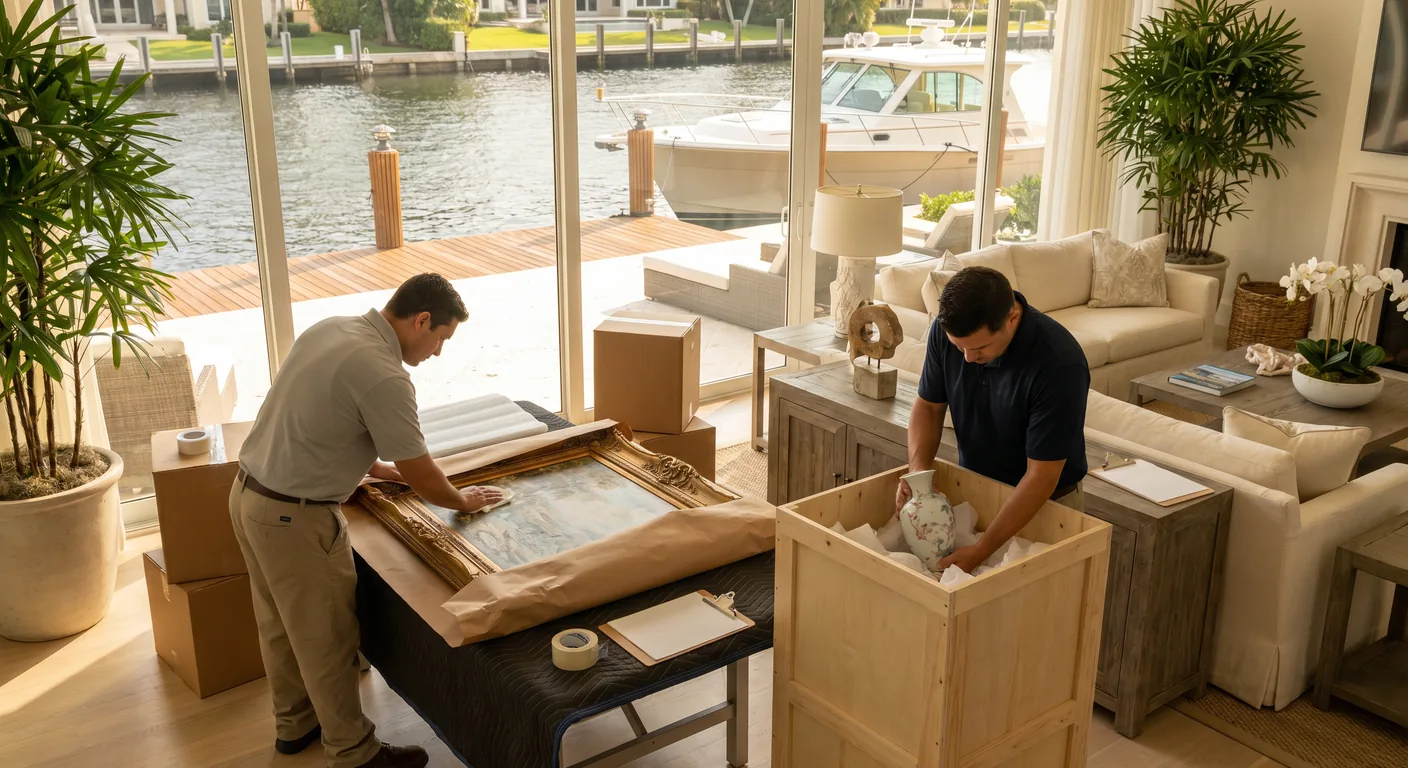
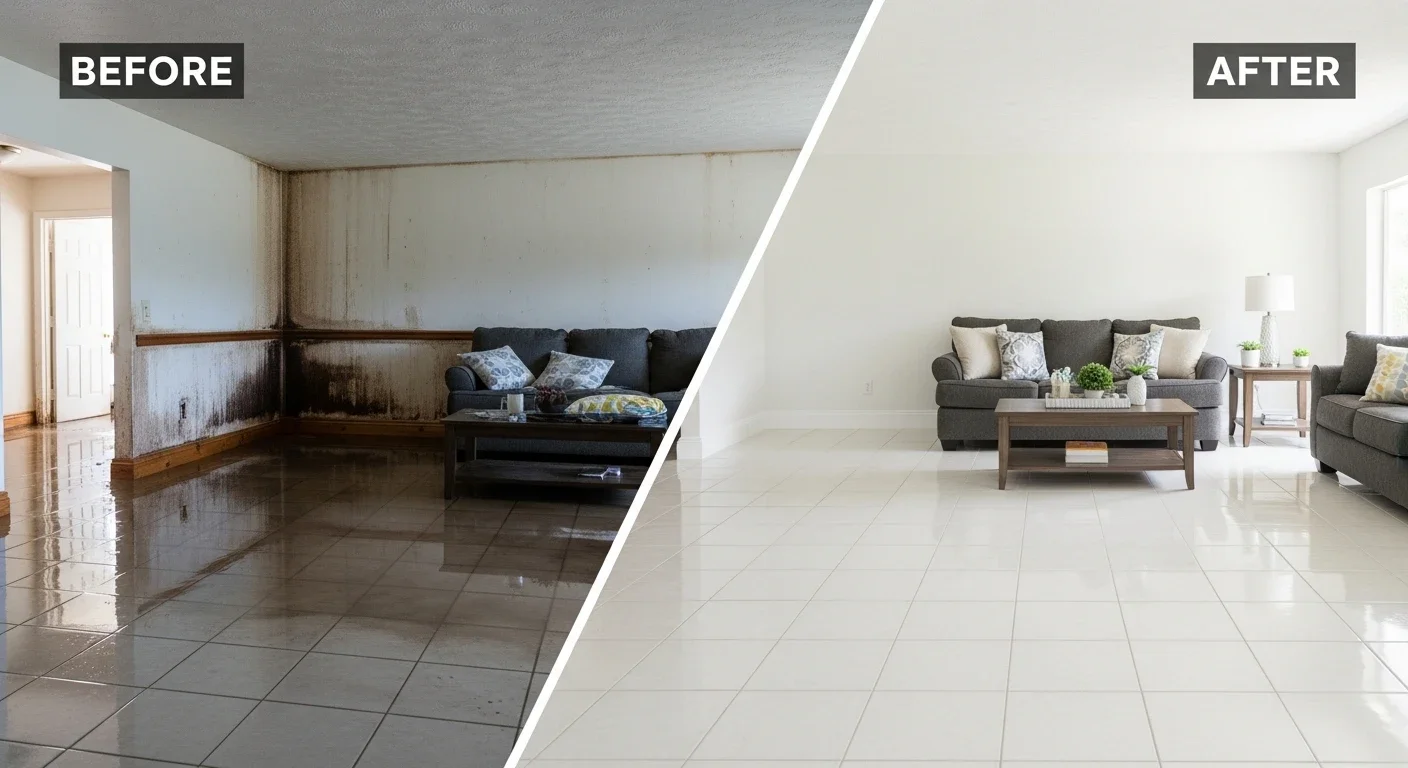
Water-damaged Lighthouse Point waterfront home: full contents pack-out with salt desalination, professional restoration, and return to pre-loss condition after Intracoastal canal flooding.
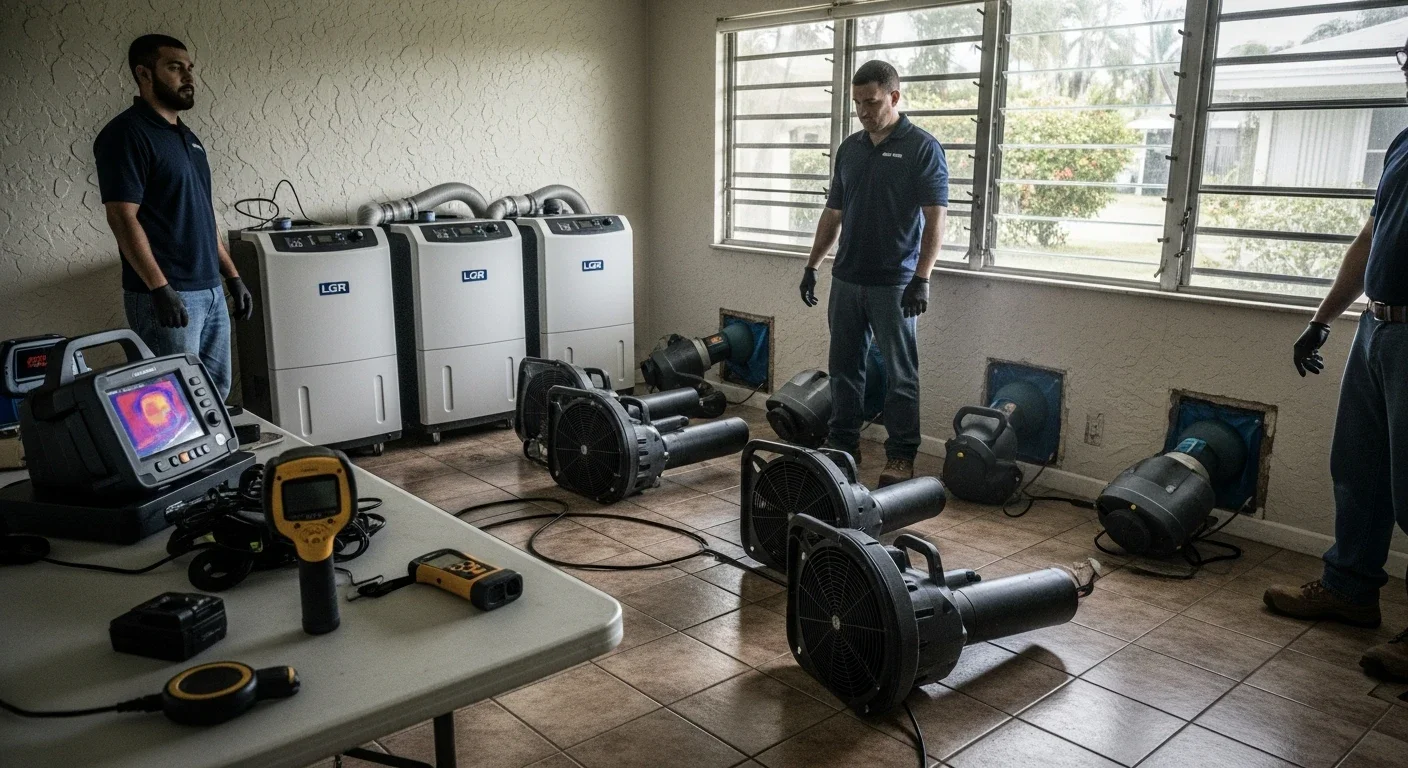
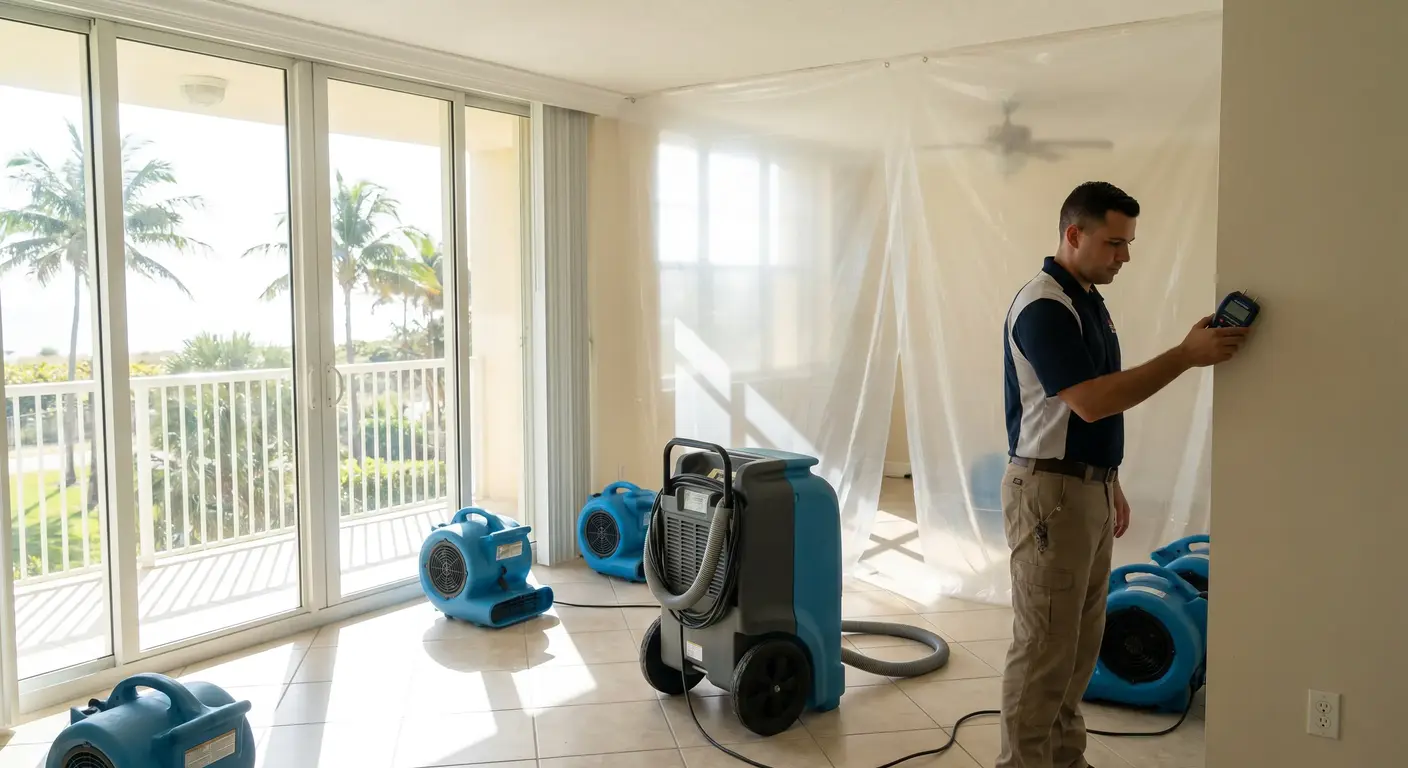
Structural drying equipment in place while waterfront-estate contents are inventoried and staged for climate-controlled transport to our Deerfield Beach facility.
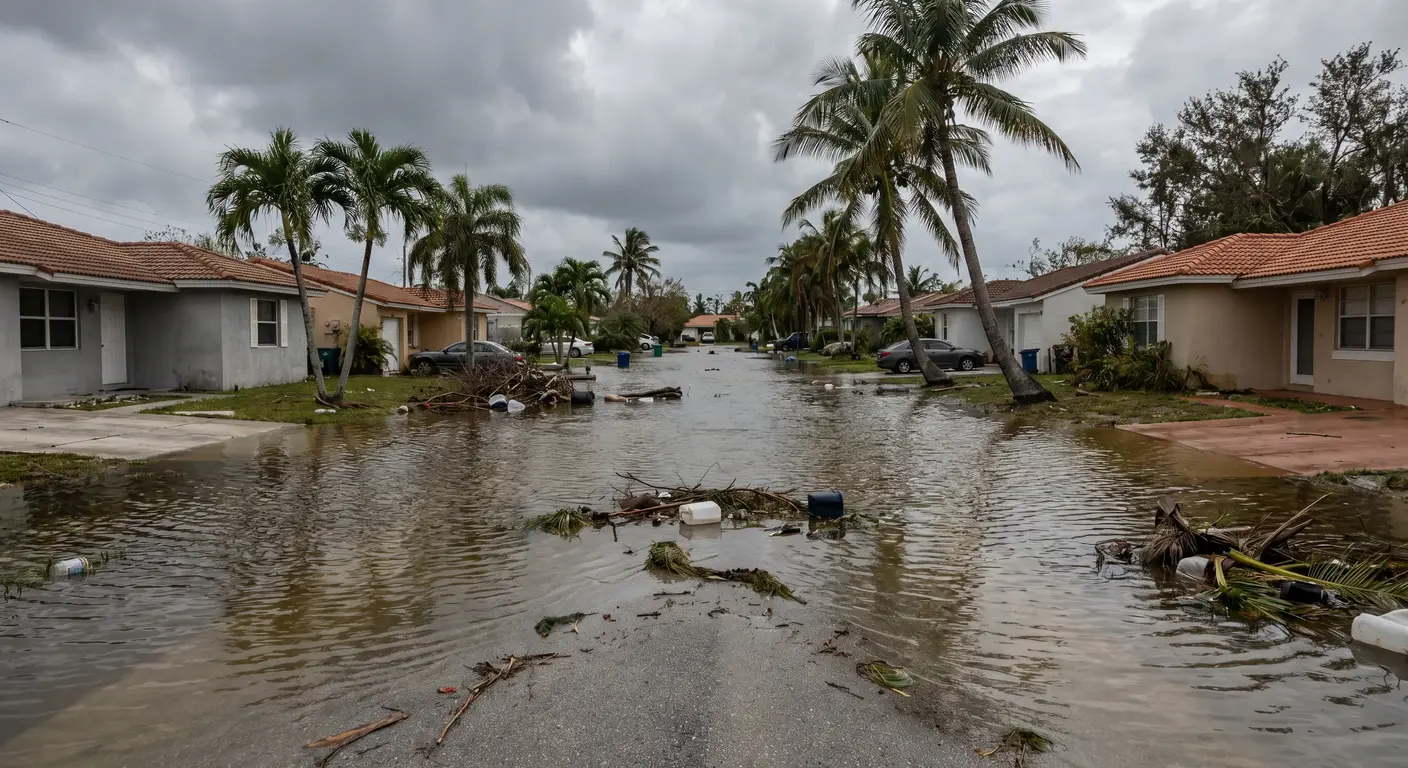
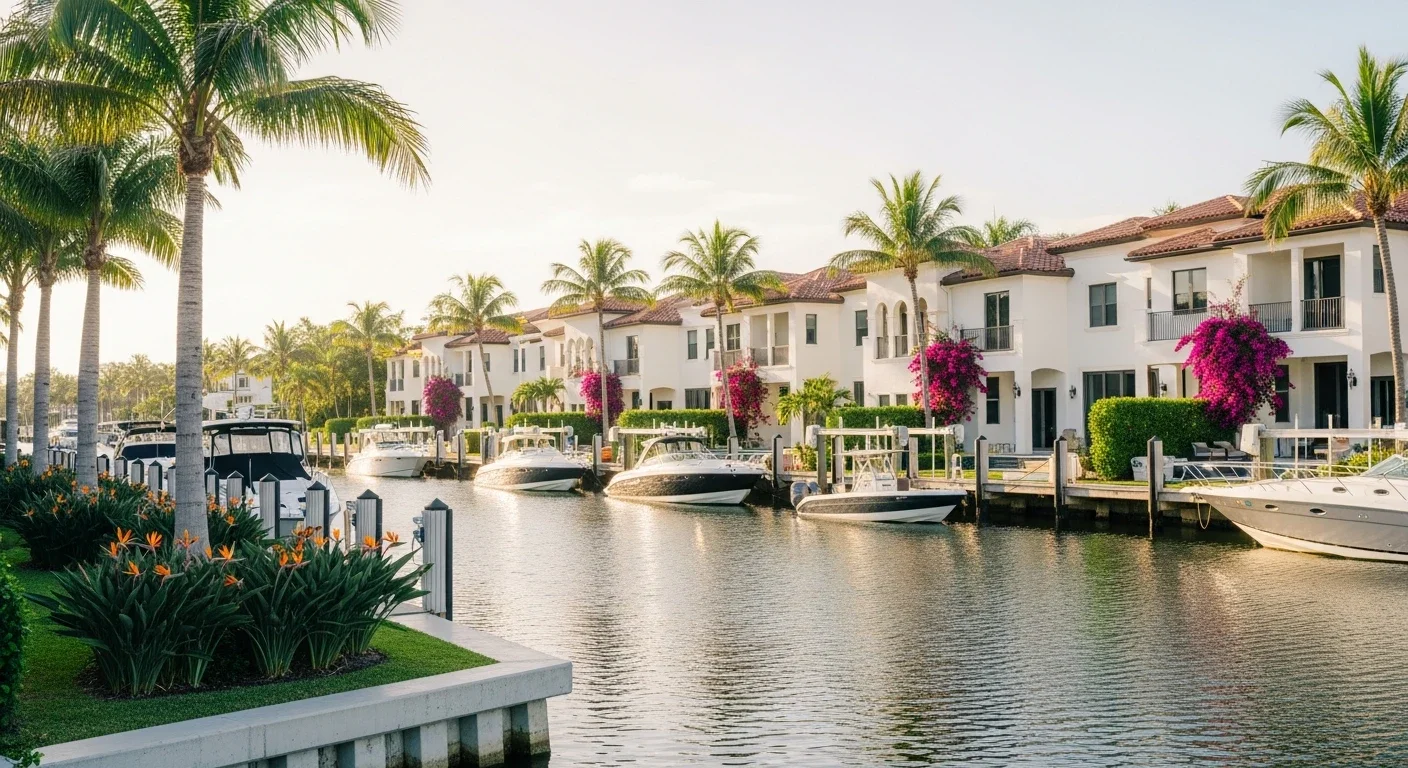
Lighthouse Point canal-front home with seawall and private dock — ground-floor and dock-level contents in these Zone AE properties face direct saltwater intrusion risk during surge events.
Lighthouse Point multi-unit restoration: coordinated contents pack-out across affected units, with individual item tracking so each owner has separate insurance documentation.
The Palm Build Difference
Why Lighthouse Point Homeowners Choose Palm Build for Contents Restoration
Most restoration companies in Lighthouse Point subcontract contents work to third-party
vendors — creating delays, documentation gaps, and lost items. Palm Build handles
contents restoration in-house with a dedicated South Florida team, a purpose-built
climate-controlled facility 10 minutes from Lighthouse Point, and a tracking system that
keeps you and your insurance adjuster informed at every stage.
10 Minutes from Lighthouse Point — 20-30 Minute Response
Our contents restoration team operates from our Deerfield Beach facility, just 10 minutes from Lighthouse Point. When your Hillsboro Isles waterfront home takes canal water, your Venetian Isles estate suffers seawall overtopping, or your Coral Key Harbor property sustains fire damage, our crew arrives in 20-30 minutes to begin inventory and pack-out. Local presence means faster response, lower transport costs, and a team that already knows Lighthouse Point's neighborhoods, the seawalled canal construction, the saltwater flood patterns, and the types of high-value contents in each community.
Insurance-Ready Documentation System
Every item is photographed, cataloged, barcoded, and tracked through our cloud-based inventory system from first touch to final placement. Your insurance adjuster gets real-time access to the complete contents list, restoration progress, and before-and-after documentation. This level of detail is what separates a smooth, fully-paid claim from a disputed one — and it's why adjusters working Lighthouse Point and the Broward County market refer homeowners to our contents services for waterfront-estate losses.
Climate-Controlled Facility Built for South Florida
Lighthouse Point's coastal heat and humidity can cause catastrophic secondary damage to contents in any uncontrolled environment. Standard storage units regularly exceed 120 degrees. Our Deerfield Beach facility maintains optimal temperature (65-75 degrees) and humidity (45-55%) across separate zones: freeze-drying chambers for documents, dehumidification rooms for furniture, ozone chambers for textiles, and ultrasonic cleaning stations for electronics and marine equipment. This is not optional in South Florida — it is the difference between saving and losing your belongings.
One Team from Pack-Out to Return
We handle every step from initial inventory through final placement in your restored home. No handoffs to third-party movers, no gaps in chain of custody, no items lost between companies. One team, one tracking system, one point of contact from the day we pack your Lighthouse Point home to the day we return every item to its original location. For waterfront estate homeowners dealing with complex claims involving multiple damaged areas, this continuity eliminates the finger-pointing that plagues multi-vendor contents jobs.
Saltwater Desalination Capabilities
Lighthouse Point's Hillsboro Inlet and Intracoastal canal system mean most significant flood events introduce saltwater into homes — requiring desalination protocols that most restoration companies don't offer. Our facility includes deionized water baths for electronics desalination, immersion tanks for furniture and textile desalination, and controlled rinsing systems for documents and photographs. This capability is essential for contents from Hillsboro Isles, Venetian Isles, Coral Key Harbor, and every other canal-adjacent Lighthouse Point neighborhood.
Experience with High-Value Waterfront-Estate Contents
Lighthouse Point's waterfront estates hold contents that require a premium approach to contents restoration: custom hardwood furnishings, original art and sculpture, marine electronics, nautical collections, and designer pieces with significant replacement values. Our team is trained to handle these categories with conservation-grade care — custom crating for art, individual assessment for antiques, priority desalination for electronics, and thorough documentation supporting high-value insurance claims. We treat Lighthouse Point estate contents the way their owners expect them to be treated.
Common Questions
Lighthouse Point Contents Restoration FAQ
How does saltwater flooding from the Hillsboro Inlet damage Lighthouse Point home contents?
Saltwater is far more destructive to personal property than freshwater. When the Hillsboro Inlet surges or Intracoastal water overtops seawalls along Hillsboro Isles, Venetian Isles, and Coral Key Harbor, salt crystals embed in wood grain, fabric fibers, and electronics circuit boards within hours. These crystals continue causing corrosion and degradation for weeks even after items appear completely dry. Standard freshwater cleaning techniques cannot reach embedded salt. Salt-exposed contents require professional desalination protocols — deionized water baths for electronics, immersion desalination for wood and textiles, controlled rinse-and-freeze procedures for documents and photographs — before any standard restoration begins. This is the core difference between a coastal Lighthouse Point contents claim and an inland one.
What happens to high-value waterfront-estate furnishings and art after a saltwater flood?
Custom solid-wood furniture and upholstered pieces from Lighthouse Point waterfront estates face a two-stage threat: initial water saturation, then ongoing salt crystallization as items dry. Without professional desalination, salt expansion causes internal wood cracking, veneer separation, and permanent gritty texture in fabrics — often weeks after the flood. Original art and oil paintings exposed to salt-laden moisture require emergency stabilization and conservation-grade treatment to prevent irreversible paint layer damage. Marine electronics and smart home systems near dock levels are highly vulnerable to galvanic corrosion from the salt electrolyte solution left on circuit boards. The key in every case is rapid professional intervention before the drying-and-crystallization cycle sets in.
Why is the contents salvage window shorter in Lighthouse Point than in other areas?
Most restoration guides cite 72 hours as the critical window for contents salvage. In Lighthouse Point, that window shrinks to 24-48 hours for two compounding reasons. First, year-round 70-75% humidity — regularly spiking above 80% in summer — accelerates mold colonization on wet fabrics, documents, and wood surfaces far faster than drier markets. Second, saltwater exposure introduces a corrosion clock that runs simultaneously: salt on electronics circuit boards begins galvanic corrosion within hours, smoke residue reacts with coastal humidity to form chemite, and salt crystallization inside wood grain and fabric fibers begins the moment water starts evaporating. Contents from dock-adjacent or seawall-level rooms that appear merely damp may already have active corrosion in progress.
How does the pack-out process work for a Lighthouse Point waterfront estate?
For a Lighthouse Point waterfront estate, our pack-out follows six documented steps: room-by-room photography establishing original condition and placement; individual item inventory with barcode tagging and damage-type classification; category-specific packing using acid-free tissue for documents and photographs, anti-static wrap for electronics and marine equipment, custom crating for art and fragile collectibles; insurance-ready documentation compiled in real time to our cloud system; climate-controlled transport to our Deerfield Beach facility — a 10-minute drive; and priority staging of salt-contaminated items for same-day desalination processing. You and your insurance adjuster have real-time access to the complete inventory. Items from dock-level or ground-floor rooms are flagged for salt contamination regardless of visible damage.
Is contents restoration covered by my Lighthouse Point homeowner's insurance?
Yes — Coverage C (personal property) on your HO-3 homeowner's policy covers restoration or replacement of contents damaged by covered perils. Insurance carriers prefer professional restoration over replacement when restoration costs less, typically saving 50-70% compared to replacement value. Palm Build documents each item with photographs, condition assessments, restoration scope, and cost estimates that support your contents claim. For Lighthouse Point waterfront homeowners — where per-home contents values can run well into six figures given high-value furnishings, original art, and marine equipment — thorough documentation is the difference between a full payout and a disputed partial settlement. Under Florida Statute 627.70132, claims must be filed within 1 year of the date of loss, with supplemental claims within 18 months.
Why is climate-controlled storage especially critical for Lighthouse Point contents?
Lighthouse Point's 70-75% average humidity and temperatures regularly exceeding 90 degrees create conditions where already-compromised contents deteriorate rapidly in any uncontrolled environment. Inside a standard storage unit in South Florida, temperatures can exceed 130-150 degrees Fahrenheit. For waterfront-estate contents — solid hardwood furniture, oil paintings, handcrafted items, marine electronics — these conditions accelerate every form of secondary damage: wood warping and cracking, adhesive failure on veneers, mold on textiles and documents, and corrosion on metal components and circuit boards. Our Deerfield Beach climate-controlled facility maintains 65-75 degrees and 45-55% humidity — optimal conditions for every contents category during the weeks or months your home undergoes structural restoration.
What about dock-adjacent and marine equipment stored in my Lighthouse Point home?
Many Lighthouse Point homes store dock-adjacent equipment indoors or in garages: marine electronics, navigation equipment, fishing gear, kayaks, paddleboards, and boating accessories. These items are already subject to chronic salt-air corrosion in normal conditions; a saltwater flood event dramatically accelerates that damage. Marine-grade electronics still require the same desalination treatment as home electronics — the fact that a device is marine-rated means it tolerates salt better in operation, not that it survives immersion without professional cleaning. Our pack-out team identifies and flags dock-adjacent equipment for priority desalination and testing. Items that cannot be restored are documented with before-and-after photographs to support replacement cost claims.
How does Lighthouse Point's CRS Class 7 rating affect my insurance and contents claim?
Lighthouse Point participates in FEMA's Community Rating System at Class 7, which can mean up to a 15% discount on National Flood Insurance Program premiums for qualifying properties in Special Flood Hazard Areas. For contents claims specifically, the flood documentation the city maintains under its CRS program — flood zone maps, elevation certificates, canal maintenance records — is often helpful in supporting the damage scope to your adjuster. Note that NFIP flood policies and standard homeowners policies have separate Coverage C provisions; flood insurance covers contents under a separate dwelling and contents policy structure, while your HO-3 covers sudden and accidental non-flood water damage (burst pipes, HVAC failures). Palm Build navigates both claim types.
Trusted Vendors
Trusted local pros in Lighthouse Point
Outside our restoration scope, these are the vetted, licensed contractors we trust
alongside our work. Personally evaluated, reference-checked, and recommended by Palm
Build.
Contents Damaged in Lighthouse Point? Don't Discard Anything Yet.
Professional contents restoration saves Lighthouse Point waterfront homeowners thousands by restoring high-value furnishings, art, and belongings that appear lost after saltwater flooding or storm damage. Palm Build's pack-out, desalination, and climate-controlled storage services are covered by your insurance.