Quick Answer
Both saltwater intrusion and Category-3 (grossly contaminated) floodwater are handled as the most severe water classification under IICRC S500, but they damage belongings in different ways. Saltwater leaves dissolved salts behind that continue corroding metal, circuits, and fasteners long after drying — so electronics, appliances, and metal furniture face a tighter salvage window. Category-3 (sewage or floodwater) contamination makes porous items like upholstered furniture, mattresses, and particleboard almost always unsalvageable due to pathogen exposure. Hard goods, sealed containers, and non-porous surfaces are often recoverable from both, especially with fast professional intervention and climate-controlled storage.
Key takeaways
- Saltwater and Category-3 floodwater are both treated as the most severe water classification under IICRC S500 — contents affected by either require professional assessment, not a DIY dry-out.
- Salt accelerates corrosion by leaving conductive residue behind: electronics, metal appliances, and hardware face a shorter salvage window with saltwater than with standard freshwater flooding.
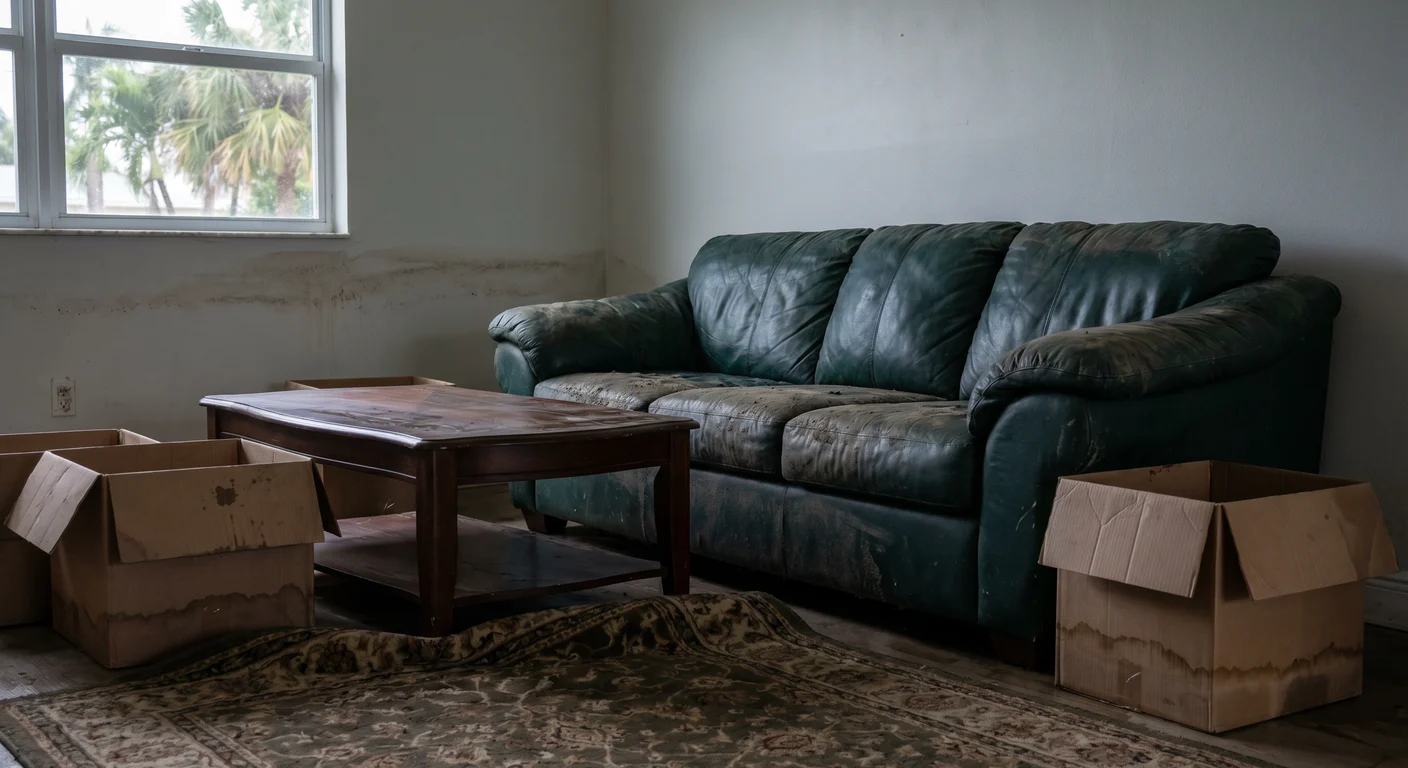
- Porous and upholstered contents — mattresses, sofas, particleboard furniture, and carpet — are typically unsalvageable after Category-3 exposure; hard goods, sealed containers, and ceramics are often recoverable.
- Speed is the defining variable: pack-out and professional cleaning within the first 24–48 hours dramatically improves outcomes for electronics and hard goods in coastal South Florida flooding.
- Climate-controlled storage is not optional after a coastal flood — South Florida's ambient humidity will re-damage cleaned contents that are stored in a standard garage or warehouse while repairs are underway.
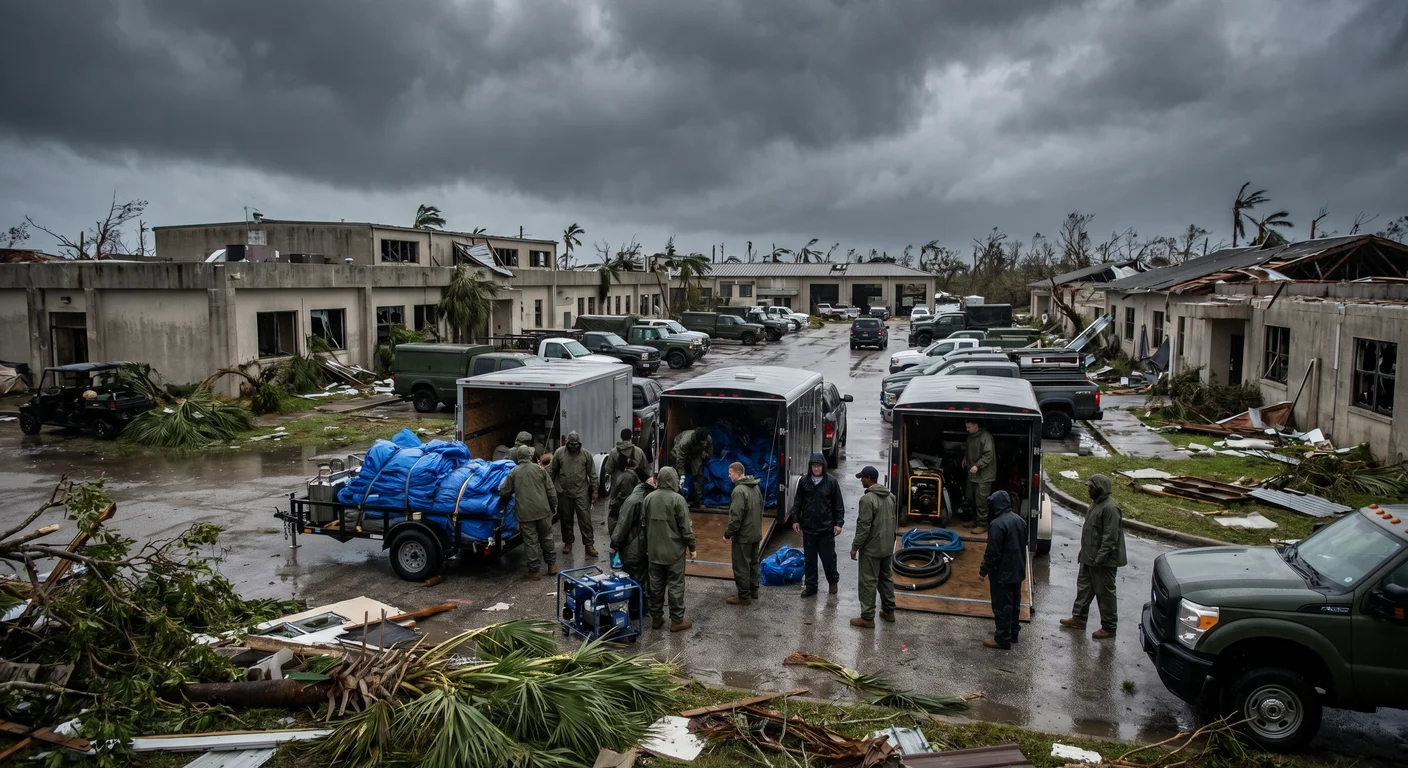
When storm surge or a Category-3 flood event hits a South Florida home, two questions tend to dominate: how bad is the structure, and what can be saved? The answer to the second question depends on knowing exactly what kind of water touched your belongings — because saltwater intrusion and Category-3 floodwater attack furniture, electronics, documents, and personal property through different mechanisms, on different timelines. Understanding those differences is what separates a contents crew that recovers 70% of a home's belongings from one that writes everything off. This guide covers what each water type does to the most common contents categories, what is typically salvageable versus what is likely a total loss, and why the clock starts the moment the water recedes — not the moment the adjuster arrives.
Window for professional intervention that most improves electronics and metal goods salvage outcomes
24–48 hrs
IICRC S500 classification for saltwater, sewage, and grossly contaminated floodwater — the most severe category
Cat 3
Design wind speed in the HVHZ (Broward + Miami-Dade), which shapes the storm-surge risk profile for the cluster cities
~170–175 mph
Saltwater AND Category-3 floodwater require professional pack-out assessment — neither should be DIY dried in place
Both
How Water Is Classified — and Why Both Types Land in Category 3
The IICRC S500 standard classifies water damage on a three-category scale based on contamination level. Category 1 is clean water from a supply line or rain that did not contact contaminated surfaces. Category 2 (gray water) carries some contamination — a dishwasher overflow, for example. Category 3 is grossly contaminated water: sewage, floodwater that has contacted soil and drainage systems, and seawater. Both storm-surge saltwater and Category-3 floodwater land in that top tier, meaning the contents protocol is the most aggressive level — full personal protective equipment, no dry-in-place for porous materials, and documented disposition of everything affected.
What often confuses homeowners is the assumption that saltwater is somehow cleaner than sewer-contaminated water because it comes from the ocean. In terms of biological contamination, ocean water near a coastline that has just moved through streets, storm drains, and neighborhood infrastructure is not clean seawater — it picks up everything in its path. But even setting biology aside, saltwater presents a separate physical threat that pure Category-3 floodwater typically does not: dissolved salt that remains behind after the water dries and keeps actively corroding whatever it touched.
How Saltwater Damages Belongings Differently
When freshwater floods a home and then drains or is extracted, the primary ongoing damage risk is mold from residual moisture. When saltwater floods a home, a second threat persists: the salt stays. As the water evaporates, dissolved sodium chloride and other minerals crystallize on every surface they touched — inside wood grain, behind circuit boards, on metal fasteners, in fabric fibers. Those salt deposits are hygroscopic, meaning they pull ambient moisture back out of the air, keeping the material slightly damp in South Florida's humidity even after it appears dry. They are also electrochemically active, accelerating galvanic corrosion on any metal surface they contact.
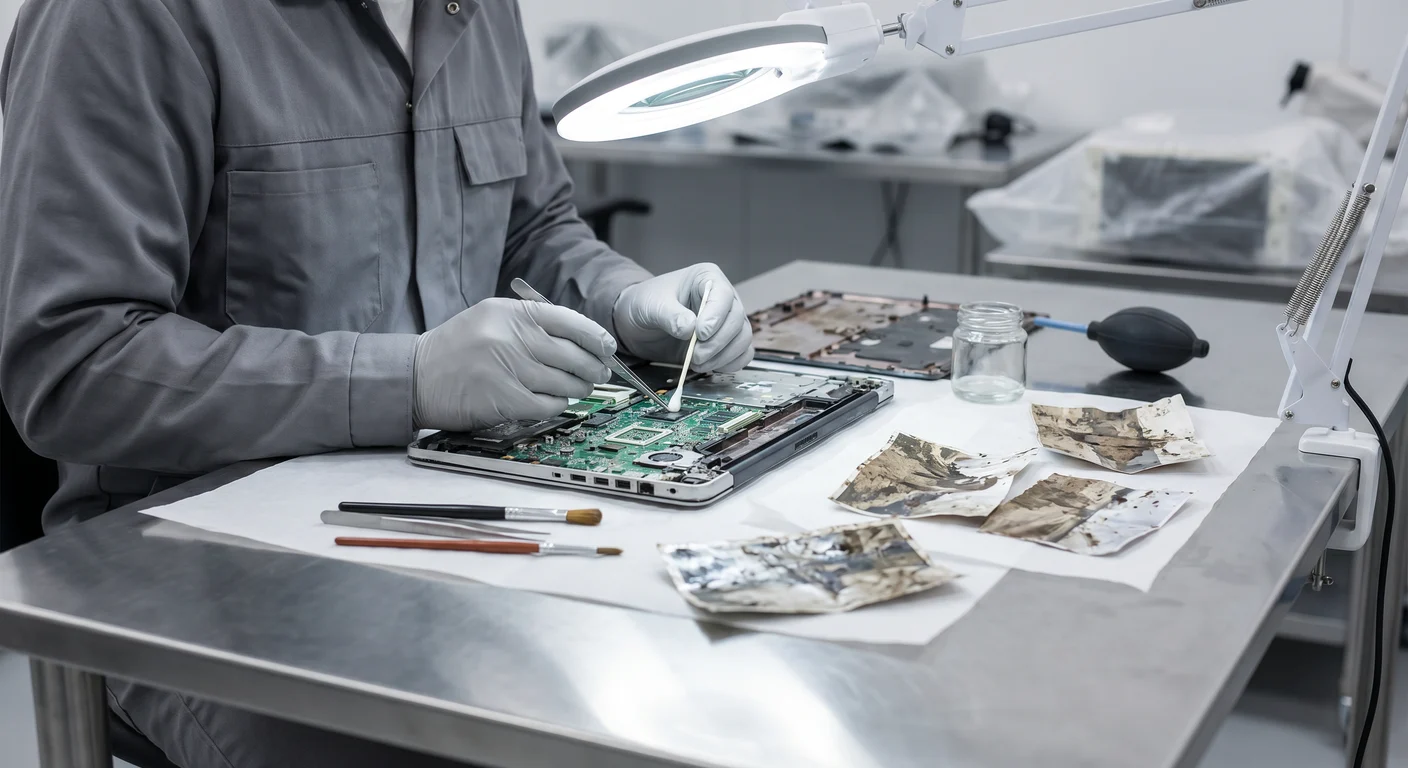
For coastal communities like Dania Beach and Hallandale Beach — both right on the Broward coast with storm-surge exposure — this salt persistence means the contents damage timeline is compressed compared to an inland freshwater flood. A metal appliance that might survive a 36-hour window for extraction and cleaning in a freshwater event may begin to show irreversible pitting corrosion within 24 hours of saltwater contact. The same principle applies to electronics: circuit board corrosion from salt accelerates dramatically compared to fresh contaminated water, which is why the pack-out and professional cleaning window is tighter in coastal flooding scenarios.
Material-by-Material: What Is Salvageable and What Is Not
The single most useful framework for a contents assessment after either water type is not the brand or the price of an item — it is the material category. The IICRC S500 standard distinguishes between non-porous, semi-porous, and porous materials because those categories determine whether contamination can be physically removed or whether it has penetrated too deeply to clean. Here is how the most common household content categories typically break down after saltwater intrusion or Category-3 floodwater.
| Material / Item Type | Saltwater Outlook | Category-3 (Non-Saltwater) Outlook | Key Variable |
|---|---|---|---|
| Metal appliances (stainless, aluminum) | Often salvageable with fast intervention; corrosion begins quickly | Often salvageable; contamination is surface-level on non-porous metal | Contact time and speed of professional cleaning |
| Electronics (powered off, not submerged) | Salvageable window is narrow — 24 hrs or less is ideal | Salvageable if fast; contamination corrosion is slower without salt | Whether power was off; time to professional board cleaning |
| Hard goods (ceramics, glass, sealed plastics) | Generally salvageable — non-porous, surface contamination only | Generally salvageable with professional cleaning | Completeness of surface decontamination |
| Wood furniture (solid hardwood, sealed) | Case-by-case; salt penetrates grain; refinishing often needed | Case-by-case; swelling and staining common but often repairable | Saturation depth and finish integrity |
| Particleboard / MDF furniture | Typically total loss — swells, delaminates, salt locks in | Typically total loss — absorbs contaminated water and swells | Almost always non-salvageable regardless of speed |
| Upholstered furniture (sofas, chairs) | Total loss — foam and fabric absorb contamination throughout | Total loss — Category-3 soaks through batting and foam | Cannot be decontaminated to a health-safe standard |
| Mattresses | Total loss — porous core cannot be cleaned to a safe standard | Total loss — same reasoning as upholstered furniture | Always replace after Category-3 or saltwater contact |
| Clothing and linens | Often salvageable — professional laundering removes salt and contamination | Salvageable with professional laundering in most cases | Material type and color-fastness; delicates need pack-out review |
| Documents and photos | Salvageable with rapid air-drying or freeze-drying; salt staining likely | Salvageable with professional intervention; contamination complicates handling | Speed and whether paper has not yet dried into a fused block |
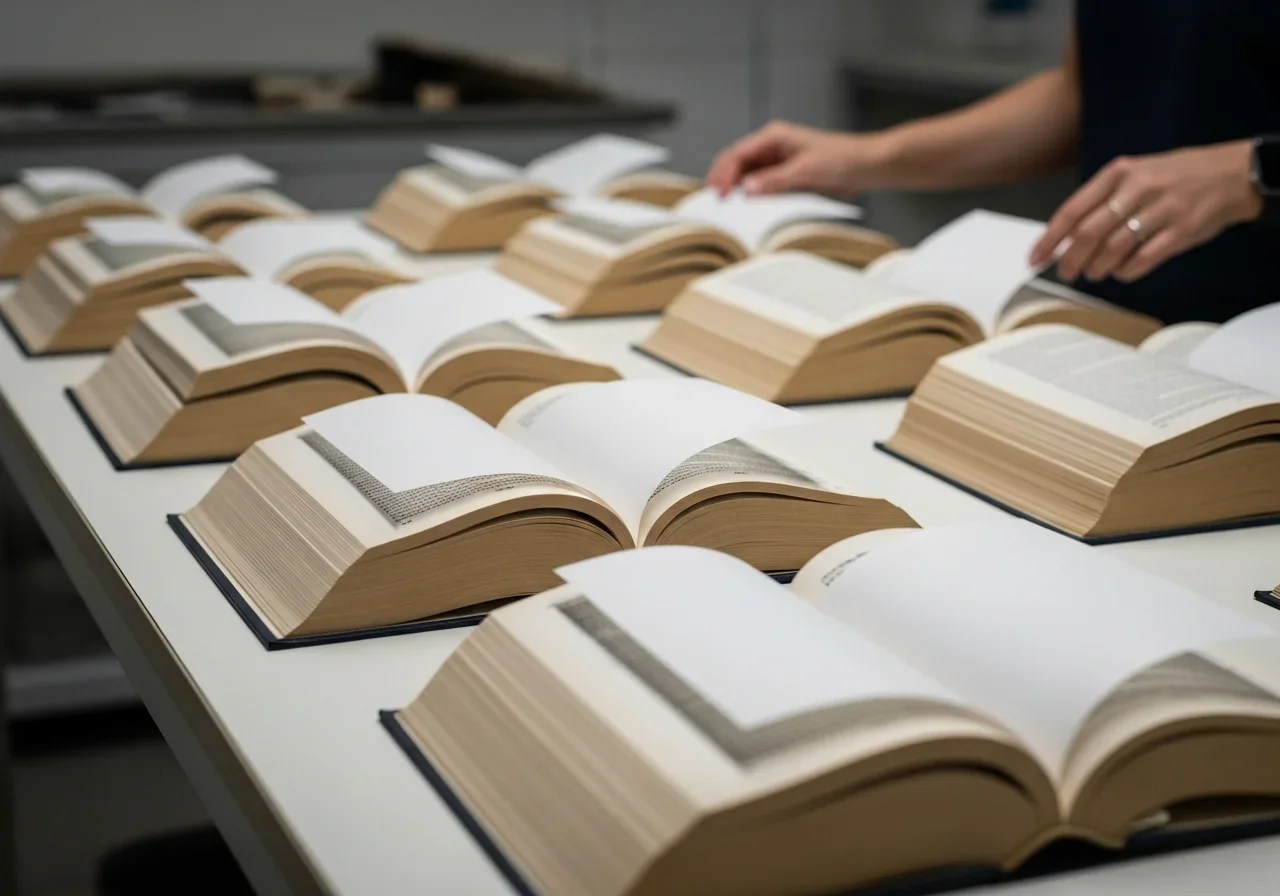
| Books | Spine and binding swell; salt staining; often partial loss | Typically partial to total loss for anything fully saturated | Sentimental items worth professional freeze-dry attempt |
Salvage outlook by material type after saltwater or Category-3 floodwater exposure. Outcomes are case-by-case and depend on saturation level, contact time, and speed of intervention.
Why Speed Is the Deciding Variable in Coastal Florida
Across both water types, the single variable that most affects how much is ultimately recovered is elapsed time between flooding and professional intervention. For saltwater events at coastal communities like Lighthouse Point, a barrier island community with direct Atlantic exposure, and Aventura in Miami-Dade County with Intracoastal waterway access on multiple sides, that window is compressed by the salt chemistry described above. But the ambient conditions of South Florida itself also work against any delay: average relative humidity in Broward and Miami-Dade hovers in the 70–80% range even in the dry season, which means that in the hours and days after flooding, any surface that was not fully dried and dehumidified is already in prime mold-growth territory.
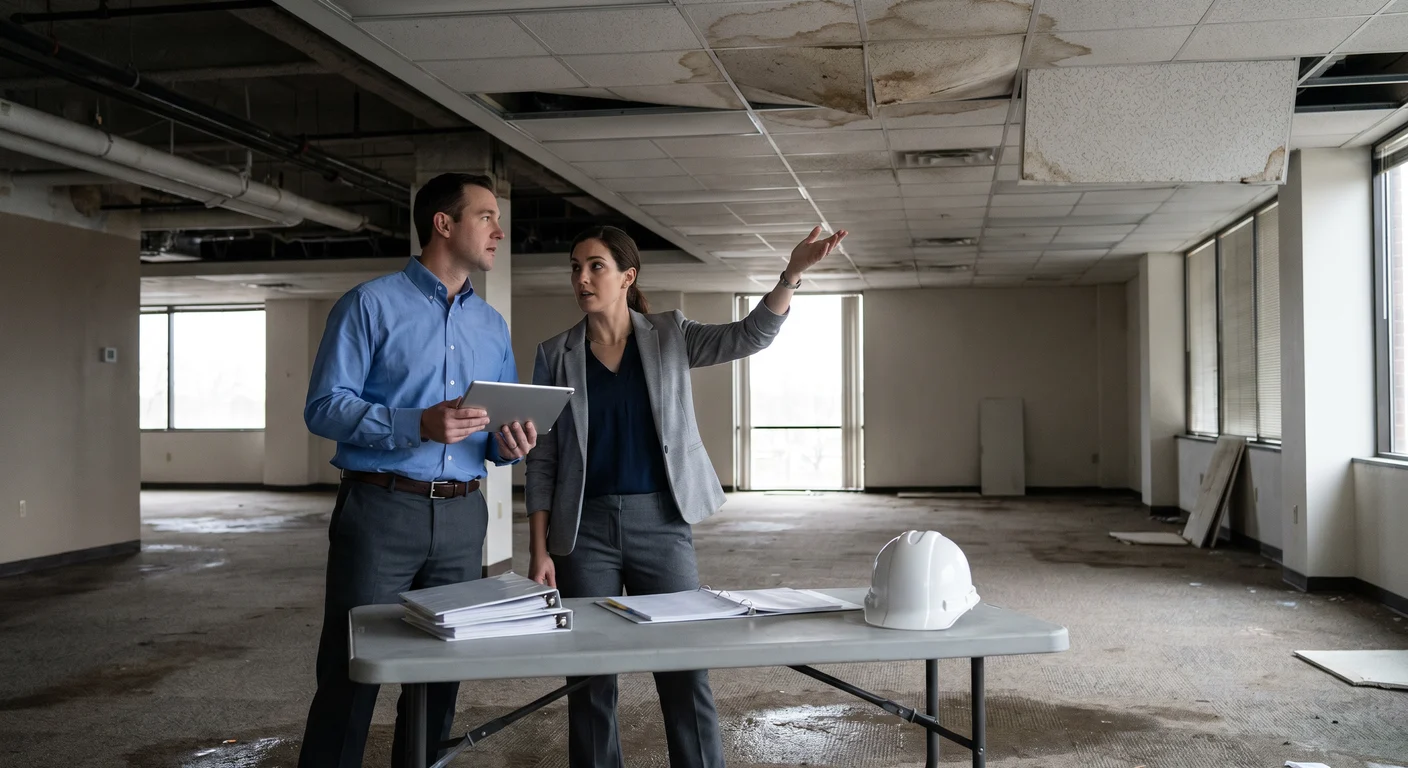
The practical implication is that waiting for an adjuster before beginning contents restoration can cost more in total losses than it saves in claim management. Most insurance policies require that you take reasonable steps to mitigate further damage — which means extracting and protecting contents is both permitted and expected. A professional pack-out to climate-controlled storage preserves the items and creates the documented inventory your adjuster needs. Leaving contents in a humid, contaminated space to wait for an inspection that is days away is almost always the more expensive option.
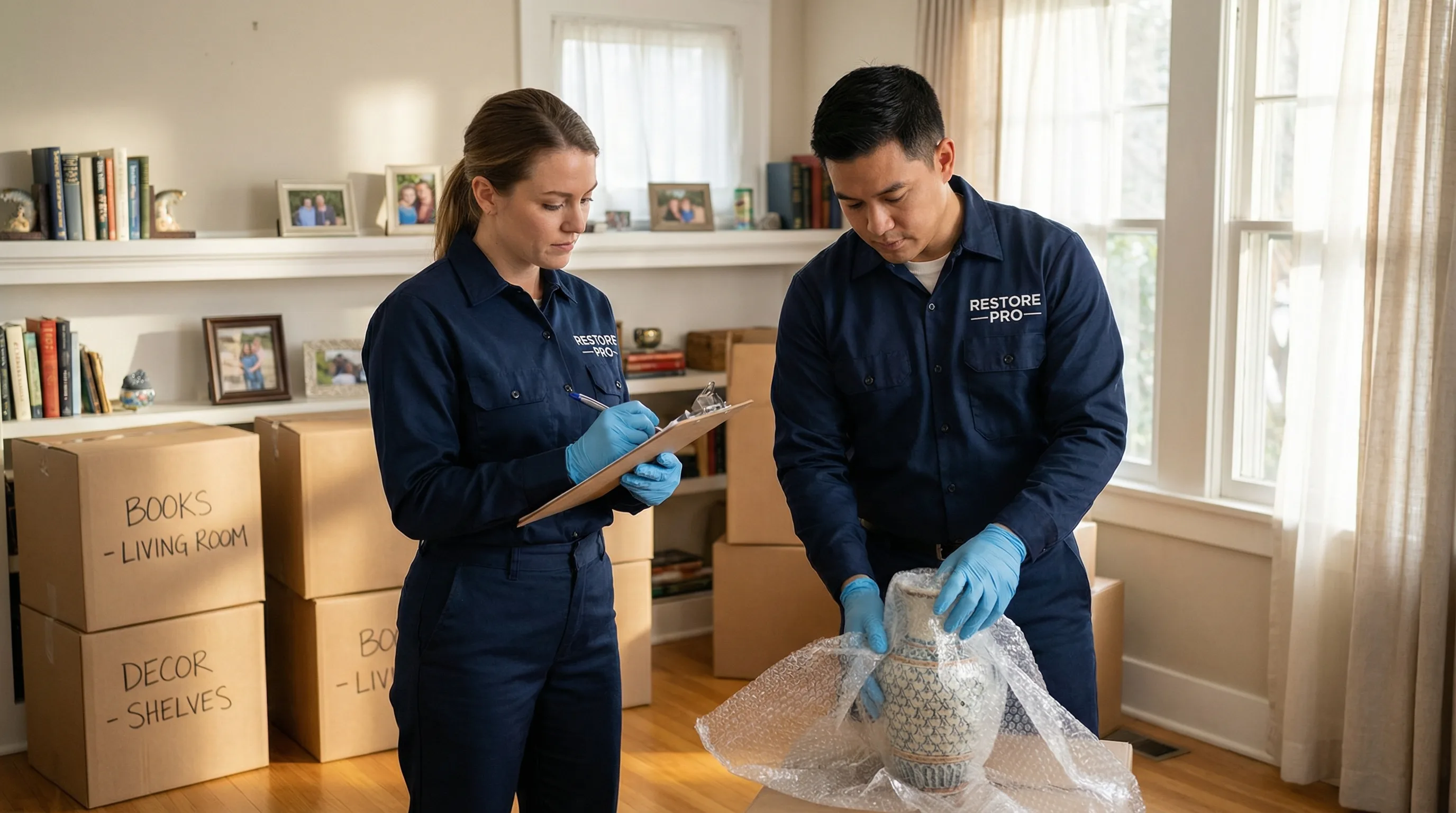
The Pack-Out and Cleaning Process for Category-3 Contents
For either water type at the Category-3 level, IICRC S500 guidance is consistent: porous materials that cannot be decontaminated must be disposed of, non-porous and semi-porous items that can be cleaned require systematic decontamination, and everything needs documentation. In practice, a professional contents team working a coastal South Florida loss will move through a contents job in recognizable phases.
- 1
Triage and documentation on site
Every item is photographed and categorized before it moves. This creates the evidence trail for your insurance claim — item-by-item condition, water line marks, salt deposits, and material type. Nothing is disposed of without documentation.
- 2
Pack-out to climate-controlled facility
Salvageable items are packed, barcoded, and transported to a climate-controlled warehouse. In South Florida, this step is non-negotiable — ambient humidity at 75–80% will undo any cleaning done on site if items are stored locally without humidity control.
- 3
Professional cleaning by material type
Hard goods and non-porous items are cleaned and decontaminated. Clothing and linens go through professional laundry. Electronics and sensitive items are assessed and, where appropriate, cleaned by specialists. Documents and photos may be freeze-dried or air-dried under controlled conditions.
- 4
Salt removal for saltwater-affected items
For items touched by saltwater, the cleaning process adds a specific desalination step — rinsing and treating surfaces to remove the salt crust and residue that would otherwise keep corroding the item in storage. This matters most for metals, appliances, and hard-plastic goods with metal fasteners.
- 5
Storage, inventory management, and pack-back
Cleaned items remain in climate-controlled storage until the structure is dried and rebuilt. A barcoded inventory lets the crew pack everything back to the correct rooms — important in multi-room losses. Final pack-back is the completion of the contents restoration cycle.
For water restoration on the structure side, the parallel process is extracting water, drying materials to measured targets, and verifying before rebuilding. Contents restoration and structural restoration run concurrently: the pack-out happens while the structure is being dried and repaired, so there is no holding pattern where either process waits on the other.
Why Climate-Controlled Storage Is Not Optional in South Florida
This point deserves its own section because it is consistently underestimated by homeowners and sometimes by adjusters who are accustomed to drier climates. After a coastal Florida flood event, the structure of your home is undergoing active drying — dehumidifiers running, windows potentially open for airflow, ambient humidity in the building elevated from the flood itself. Any contents left in that environment will either re-absorb moisture or be exposed to mold growth from contaminated surfaces that are still being remediated.
The same risk applies if cleaned items are returned to a neighbor's garage, a self-storage unit without climate control, or an outbuilding on the property. South Florida's ambient relative humidity — consistently in the high 70s — is above the threshold at which mold can grow on previously contaminated materials. Climate-controlled storage at controlled humidity (typically below 55%) is the only environment where cleaned contents can safely wait for pack-back without risking re-damage.
Frequently Asked Questions
Is saltwater damage worse than regular Category-3 floodwater for my belongings? +
Can electronics be saved after saltwater flooding in South Florida? +
What items should I never try to salvage myself after a Category-3 flood? +
How does the pack-out process work for a coastal flood loss? +
Do I need to wait for my insurance adjuster before starting contents restoration? +
Related Guides & Next Steps
Contents Restoration
Professional pack-out, climate-controlled storage, and contents cleaning after flood, fire, or storm loss across South Florida.
Contents Restoration — Dania Beach, FL
Pack-out and contents cleaning for Dania Beach coastal flooding and storm-surge losses.
Contents Restoration — Hallandale Beach, FL
Contents restoration services for Hallandale Beach homes and condos after coastal water events.
Contents Restoration — Lighthouse Point, FL
Pack-out and saltwater contents recovery for Lighthouse Point barrier-island properties.
Contents Restoration — Aventura, FL
Contents restoration for Aventura (Miami-Dade) high-rise and Intracoastal-area flood losses.
IICRC S500: Standard for Professional Water Damage Restoration
The industry consensus standard for water damage restoration — the framework that defines Category 1/2/3 classification and contents protocols.
Saltwater or flood hit your belongings? Get them out now.
Palm Build's contents restoration team handles pack-out, climate-controlled storage, and professional cleaning for South Florida coastal flood losses — with full chain-of-custody documentation for your insurance claim. For saltwater and Category-3 losses, every hour counts. See our contents restoration services or call for immediate dispatch.
Found this helpful? Send it to someone who needs it.