HOA & Condo Restoration in Lighthouse Point, Florida
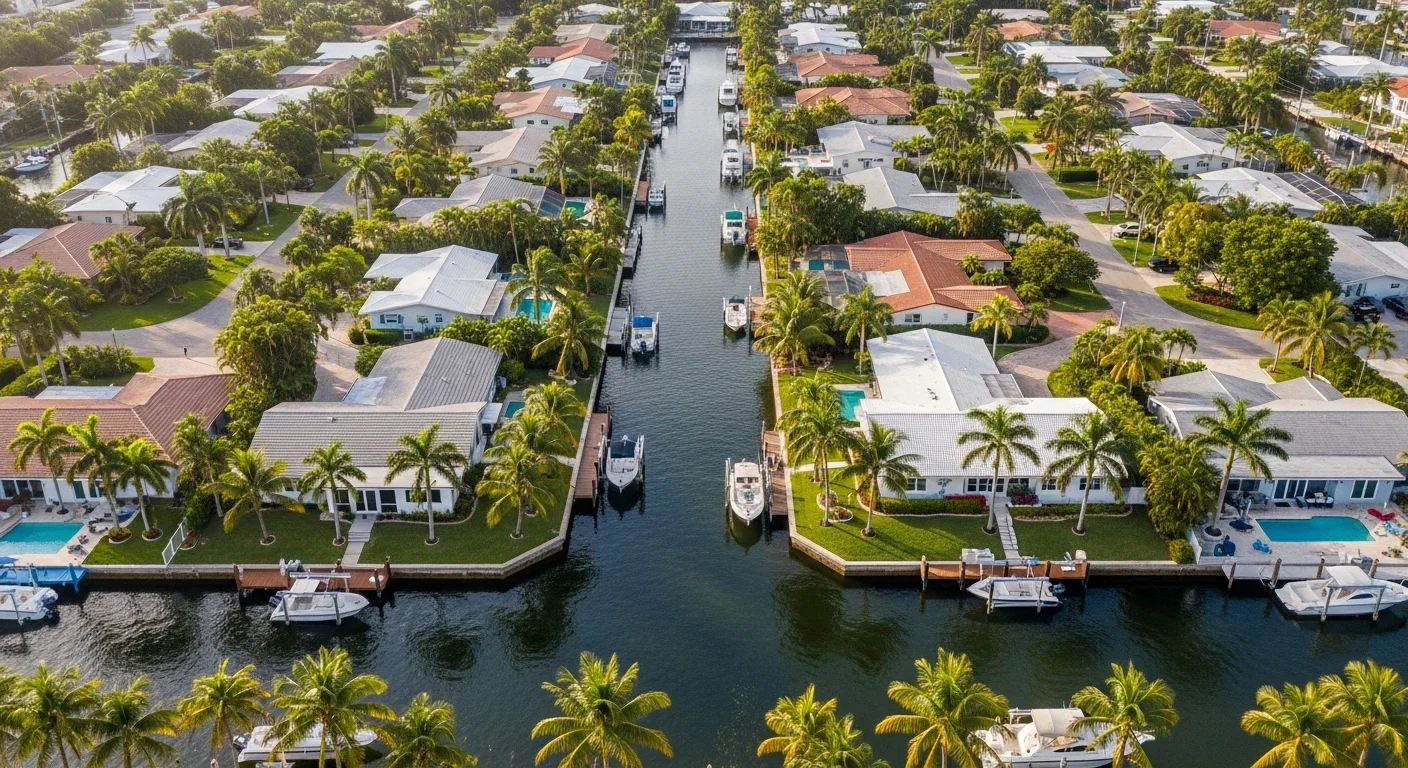
Lighthouse Point is a waterfront canal-home city where most HOA neighborhoods — Hillsboro Isles, Venetian Isles, and Coral Key Harbor — sit in FEMA Special Flood Hazard Area Zone AE, inches from the Hillsboro Inlet and Intracoastal. A single storm event can activate a homeowner policy, a flood policy, and an HOA master policy simultaneously — each with a different carrier, different adjuster, and different documentation requirement. Palm Build's Deerfield Beach team responds in 20–30 minutes with the multi-policy coordination that canal-home and waterfront HOA restoration demands.
Deerfield Beach — 10 minutes from Lighthouse Point 20-30 min Response IICRC Certified
Why Lighthouse Point Demands Specialized HOA Restoration
Lighthouse Point is one of Broward County's most distinctive restoration markets — a
small coastal city where nearly every home sits on a navigable saltwater canal with a
private dock. Hillsboro Isles, Venetian Isles, and Coral Key Harbor are
deed-restricted waterfront HOA communities where restoration work must satisfy both
the homeowner's carrier and the association's architectural review board. Zone AE
flood exposure, salt-air corrosion, and Intracoastal tidal flooding create damage
patterns that general contractors are simply not equipped to handle.
Lighthouse Point's Waterfront HOA Reality
Lighthouse Point is a predominantly single-family waterfront city — not a condo tower corridor. Hillsboro Isles, Venetian Isles, and Coral Key Harbor are deed-restricted canal-home associations where most properties sit on navigable saltwater canals with private docks and seawalls. Every exterior restoration project — dock repair, seawall work, stucco replacement — requires architectural review board approval before a nail is driven. These are not simple single-owner repairs; they are HOA-governed projects with shared common elements and multi-party sign-off.
Every Canal-Front Neighborhood Answers to an Association
From Hillsboro Isles' waterfront estate lots to Venetian Isles' canal-lined streets to Coral Key Harbor's boating community, virtually every residential neighborhood in Lighthouse Point operates under HOA governance. Associations control architectural standards, common-area seawalls, dock structures, and landscaping — and they must approve all restoration work that affects common elements or the community's visual standards. Restoration here means navigating board approval, not working around it.
Zone AE Flood Exposure + Salt-Air Corrosion
Much of Lighthouse Point is designated FEMA Special Flood Hazard Area (Zone AE) — real tidal and Intracoastal flooding risk, not just rain. The city participates in the NFIP Community Rating System at roughly Class 7, which earns homeowners a premium discount but signals genuine recurring-flood terrain. Salt air off the Hillsboro Inlet and Intracoastal accelerates corrosion on dock hardware, AC condenser coils, seawall fasteners, and building envelope metal components — driving restoration complexity that inland communities simply do not face.
~10 Miles / 20–30 Min from Our Deerfield Beach Hub
Palm Build's South Florida Operations Hub in Deerfield Beach is approximately 10 miles from Lighthouse Point — a 20–30 minute response for most addresses. When Intracoastal flooding breaches a Hillsboro Isles ground floor or a storm surge event saturates a Coral Key Harbor waterfront property, our teams arrive with truck-mounted extraction, commercial drying equipment, and HOA-specific documentation within the first response window. In South Florida's 70–75% humidity, mold colonization begins within 24–48 hours.
Lighthouse Point's canal-lined waterfront HOA communities — Hillsboro Isles, Venetian
Isles, and Coral Key Harbor — require specialized restoration expertise that accounts
for salt-air exposure, Zone AE flooding, and architectural review board approval.
HOA Community Profiles
Lighthouse Point HOA Communities: Restoration Risk Profiles
Every HOA community in Lighthouse Point has a distinct restoration dynamic — shaped by
waterfront exposure, flood zone designation, construction era, and governance structure.
Here is what drives HOA restoration complexity in each.
Hillsboro Isles
Waterfront SFH Canal-Home HOA Critical
Built: Mid-century, ongoingGovernance: Deed-restricted HOA with architectural review boardComposition: Single-family CBS waterfront canal homes
The flagship Lighthouse Point waterfront HOA — deed-restricted canal-home community where virtually every property faces FEMA Zone AE flood exposure, salt-air corrosion, and HOA architectural review requirements. Storm surge and tidal Intracoastal flooding are the primary damage drivers. All exterior restoration work (stucco, dock repair, seawall, roof) requires ARB approval. Dual-policy events (homeowner + flood policy) are common, requiring coordinated documentation for both carriers simultaneously.
Built: Mid-century, ongoingGovernance: HOA with architectural standardsComposition: Single-family CBS canal-front homes
A premier Lighthouse Point canal-home community with navigable waterway access and private dock infrastructure. Salt-air exposure accelerates deterioration of dock hardware, AC condenser coils, and seawall components. King-tide events push canal water to ground-floor elevation. HOA governing documents require board-approved contractors and materials matching community standards for all visible exterior work. NFIP flood policy coordination is the norm for ground-floor water damage.
Primary risk: King-tide flooding, salt corrosion on dock/seawall hardware, HOA contractor approval
Coral Key Harbor
Waterfront SFH HOA Critical
Built: Mid-century, ongoingGovernance: HOA with common-area seawall and dock oversightComposition: Single-family boating community homes
Coral Key Harbor is a boating-oriented canal-home community where association governance extends to common-area seawalls, shared dock structures, and waterway access. Water intrusion events here often involve two damage pathways: Intracoastal tidal flooding from below and HVAC condensate or plumbing failure from within. The HOA's seawall and dock infrastructure is a common element — master-policy responsibility — while interior home damage falls to individual homeowner coverage.
Primary risk: Tidal/Intracoastal flooding, shared seawall responsibility, dual-pathway water intrusion
Intracoastal/Canal-Front Associations
Waterfront HOA neighborhoods High
Built: 1960s–2000sGovernance: Neighborhood HOAs with waterway covenantsComposition: Mixed canal-front SFH and waterway-adjacent properties
Canal-front neighborhoods throughout Lighthouse Point where the HOA governs exterior aesthetics and common waterway infrastructure. Compound flooding risk when tidal surge from the Hillsboro Inlet coincides with heavy rain — canal systems back up and push water into ground-floor spaces and garage levels. FEMA Zone AE designation adds insurance coordination complexity. HOA approval is required for any exterior restoration visible from the canal or street.
Primary risk: Compound tidal/rain canal flooding, FEMA Zone AE complexity, exterior HOA approval
Small Low-Rise Condo Associations
Low-rise condo communities (2–3 stories) High
Built: 1970s–1990sGovernance: Condo associations per FL Stat. 718Composition: Low-rise CBS condo buildings
A handful of small low-rise condo associations exist in Lighthouse Point — typically 2–3 story CBS buildings that fall below the milestone inspection threshold (over three stories). FL Stat. 718.111(11) governs master policy requirements. Inter-unit water migration through shared walls and plumbing is the primary restoration pattern — a pipe failure in one unit affects adjacent and below-grade units. Master policy + individual HO-6 coordination applies. Salt-air exposure on building envelopes accelerates aging.
Primary risk: Inter-unit water migration, shared plumbing failures, master vs. HO-6 coverage boundary
Inland CBS Single-Family HOAs
Non-waterfront HOA neighborhoods Elevated
Built: 1960s–1990sGovernance: Neighborhood HOAs with architectural standardsComposition: Single-family CBS ranch and two-story
Lighthouse Point also contains inland CBS single-family HOA communities away from the canal network. These neighborhoods face aging HVAC systems, roof underlayment failure, and plumbing-age water damage. While they lack the salt-air and tidal exposure of canal-front communities, HOA architectural standards still govern exterior restoration. Insurance coordination is simpler — typically single homeowner policy — but board approval for exterior work remains required.
Primary risk: Aging HVAC/plumbing, roof underlayment failure, HOA exterior approval
Multi-Source Water Damage
How Water Enters and Spreads in Lighthouse Point HOA Properties
Lighthouse Point's canal-home reality means water damage arrives from multiple
directions simultaneously — tidal Intracoastal surge from below, HVAC condensate and
plumbing failures from within, and salt-air corrosion working silently on every exposed
metal surface. In Zone AE communities like Hillsboro Isles and Coral Key Harbor, a
single storm can trigger homeowner, flood, and HOA master policy claims at the same
time.
Tidal and Intracoastal Ground-Floor Intrusion
Zone AE
Flood zone classification
In Lighthouse Point's Zone AE communities — Hillsboro Isles, Venetian Isles, Coral Key Harbor — tidal surge from the Hillsboro Inlet and Intracoastal pushes water to ground-floor and garage-level elevations. When king tides coincide with heavy rain, canal systems back up faster than drainage infrastructure can handle. Ground-floor living spaces, garages, and mechanicals flood with a combination of freshwater and saltwater — requiring different remediation protocols than a standard pipe burst.
Horizontal Migration Through Shared Walls (Low-Rise Condos)
2-3
Adjacent units at risk
In Lighthouse Point's small low-rise condo associations, shared CBS walls between adjacent units are not waterproof — water from one unit migrates horizontally through the block to neighboring units. A pipe failure or HVAC overflow in one unit can saturate the shared wall cavity and reach adjacent units before anyone notices moisture on the surface. Each unit may have a different HO-6 carrier, requiring separate documentation for what is physically one moisture event.
HVAC Condensate in Aging Canal-Home Systems
24-48 hrs
Until mold colonization
Canal-front homes in Lighthouse Point run air conditioning 10–11 months per year in South Florida's subtropical climate. Salt-air accelerates corrosion in condensate drain lines and drip pan hardware — clogged lines and failing pans create standing water that feeds mold colonies in 24–48 hours. In low-rise condo buildings, shared HVAC chases can distribute mold spores to adjacent units before the source unit shows visible damage.
Canal-Side and Seawall Moisture Pathways
Common
Seawall-linked moisture source
Homes and condo units adjacent to navigable canals face a moisture pathway unique to Lighthouse Point: saltwater wicking through aging seawall structures, dock foundation penetrations, and ground-level slab joints. In communities like Coral Key Harbor where association-owned seawalls are a common element, seawall deterioration can introduce moisture into multiple adjacent properties simultaneously — a common-element repair funded through HOA reserves or master policy, not individual homeowner coverage.
Real Scenario: Canal Surge + Interior Pipe Failure
Homeowner Policy
Covers pipe failure, HVAC overflow, interior water damage from above-grade sources
Flood Policy (NFIP/Private)
Covers ground-floor inundation from canal/tidal surge — separate carrier, separate adjuster
HOA Master Policy
Covers shared seawall, dock structures, common areas — association responsibility
Architectural Review Board
Approves all exterior scope before reconstruction begins — adds timeline to every project
This is a typical storm season in Lighthouse Point. Palm Build
coordinates all parties as a single integrated project — separate documentation for each carrier,
unified restoration execution, one team managing the complexity.
Common HOA Property Damage
Damage Types Driving HOA Restoration in Lighthouse Point
Lighthouse Point's Zone AE waterfront exposure, salt-air environment, and dense HOA
governance create damage patterns that require multi-party coordination from the first
hour. These are the six most common damage types we restore in Lighthouse Point's
association-governed communities.
Most Common
Tidal and Canal Flooding (Zone AE)
The #1 HOA restoration trigger in Lighthouse Point. Most of the city sits in FEMA Special Flood Hazard Area Zone AE — where Intracoastal surge and king-tide canal overflow push water to ground-floor and garage-level elevations. Hillsboro Isles, Venetian Isles, and Coral Key Harbor are especially exposed. A single tidal event triggers homeowner policy claims for above-grade damage AND flood policy claims for ground-level inundation — each with a different carrier, different adjuster, and different documentation standard.
Affected communities: Hillsboro Isles, Venetian Isles, Coral Key Harbor, all Zone AE waterfront HOAs
Very Common
HVAC Condensate in Salt-Air Environments
Air conditioning systems running 10–11 months per year produce enormous volumes of condensate. In Lighthouse Point, salt-air corrosion accelerates deterioration of condensate drain lines, drip pan hardware, and AC coil connections — producing standing moisture that feeds mold colonies within 24–48 hours. Canal-front homes face higher corrosion rates than inland properties. HVAC-origin water damage in low-rise condo buildings can distribute mold spores through shared mechanical chases to adjacent units.
Affected communities: All Lighthouse Point HOA communities, especially canal-front properties
Seasonal (June-November)
Hurricane Wind-Driven Rain and Storm Surge
Lighthouse Point's position on the Hillsboro Inlet and Intracoastal makes it highly exposed to Atlantic hurricane and tropical storm track. Wind-driven rain breaches window seals, door thresholds, and building envelope joints in CBS homes. Storm surge pushes Intracoastal water into canal networks, amplifying flood levels beyond typical tidal range. HVHZ design wind of approximately 170 mph governs all reconstruction; Florida/Broward Product Approval or Miami-Dade NOA required for replacement windows and doors.
Affected communities: All Lighthouse Point waterfront and canal-front HOA communities
Ongoing / Cumulative
Salt-Air Corrosion on Seawalls, Docks, and Building Envelope
Salt air off the Hillsboro Inlet attacks every exposed metal surface — seawall tie-backs, dock cleats and hardware, AC condenser coil fins, railings, window frame fasteners, and roof flashing. This slow-motion damage is invisible until a restoration event reveals corroded components behind stucco or under decking. In Hillsboro Isles and Venetian Isles HOAs, association-owned common infrastructure (seawalls, shared docks) reaches end-of-life faster than inland equivalents. Restoration scopes must account for pre-existing corrosion damage to avoid claim disputes.
When Broward County wet-season storms drop large rainfall volumes, canal systems throughout Lighthouse Point back up and overflow into adjacent properties — especially when king-tide conditions are already elevating canal levels. The April 2023 historic Broward County flood demonstrated the compound risk: over 25 inches in 24 hours overwhelmed drainage and pushed water into ground floors across Zone AE communities. HOA-maintained drainage infrastructure and seawalls are common-element responsibility under master policy.
Affected communities: All Zone AE canal-adjacent HOA neighborhoods
Increasing (Post-Surfside context)
Aging CBS Structure and Waterproofing Failure
Lighthouse Point's mid-century CBS homes are approaching 50–60 years old in many neighborhoods. Stucco waterproofing membrane failure, cracked CBS block joints, and aging roof underlayment allow water infiltration that worsens with each storm season. While most Lighthouse Point HOA properties are 1–2 story single-family (below the milestone inspection threshold for buildings over three stories), SIRS reserve studies under post-Surfside legislation affect community associations broadly — associations must fund reserves for structural maintenance, which affects every homeowner's special assessment exposure.
Affected communities: All mid-century CBS communities across Lighthouse Point
Hillsboro Isles — Lighthouse Point's premier waterfront HOA — where deed-restricted
canal homes, private docks, and Zone AE flood exposure converge to create
restoration complexity that requires specialized HOA expertise.
Deed-restricted waterfront SFH HOA
Architectural review board governs all exterior work
Mid-century canal-home community
Ongoing seawall + dock maintenance cycle
FEMA Special Flood Hazard Area (Zone AE)
Tidal and Intracoastal surge exposure
CRS Class 7 participation
NFIP premium discount for participating homeowners
Hillsboro Isles: Waterfront HOA, Two Claims, One Project
Hillsboro Isles is the flagship example of Lighthouse Point's HOA restoration
challenge — a deed-restricted waterfront community where canal-front homes carry Zone
AE flood exposure, salt-air corrosion, and architectural review board requirements on
every exterior repair. A single storm event can trigger a homeowner policy claim AND a
flood policy claim simultaneously, with different adjusters, different coverage
scopes, and different documentation needs. There is no standard Hillsboro Isles
restoration — every property faces its own combination of HOA constraints and
insurance complexity.
Every Repair Requires Architectural Review Board Approval
Hillsboro Isles is a deed-restricted HOA — exterior restoration work requires approval from the architectural review board before work begins. Replacing storm-damaged stucco, repainting after water intrusion, or repairing a seawall all fall under HOA purview. A restoration contractor that starts work without board clearance creates compliance violations, potential fines for the homeowner, and work-stoppage disputes. Palm Build prepares board-ready documentation — scopes, materials specs, contractor credentials — to clear approval efficiently.
Zone AE Flooding Creates Multi-Coverage Complexity
Because most of Lighthouse Point sits in FEMA Special Flood Hazard Area Zone AE, a single storm event often triggers two separate claims: a homeowner policy claim for wind-driven rain or plumbing loss, and a separate flood policy claim (NFIP or private flood) for ground-floor inundation from canal overflow or tidal surge. These policies have different coverage scopes, different adjusters, and different documentation standards. Without a contractor who understands both, scope gaps appear at the boundary — and neither carrier covers what falls between them.
Salt-Air Corrosion Extends Damage Scope Beyond the Obvious
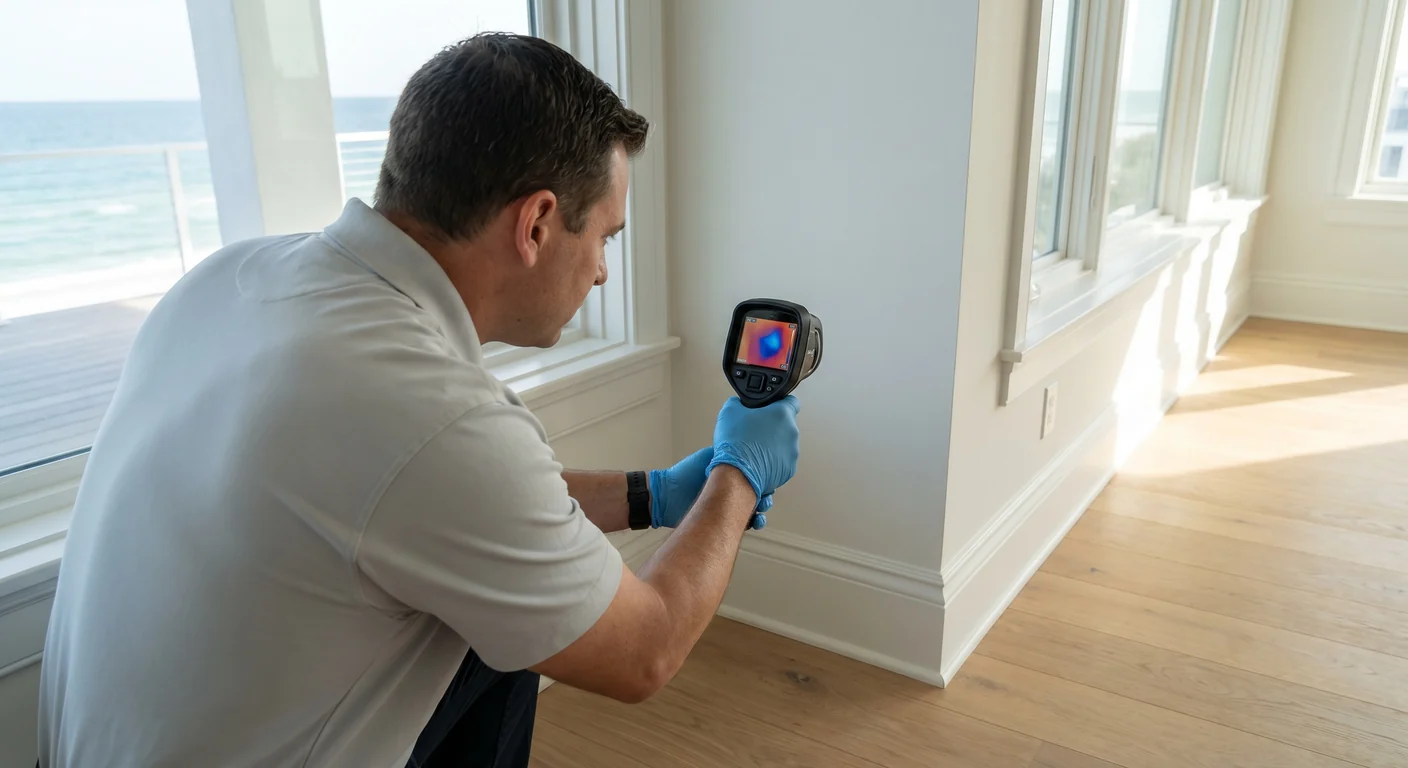
In Hillsboro Isles and Venetian Isles, salt air off the Hillsboro Inlet attacks every metal surface — dock hardware, seawall tie-backs, AC condenser coils, railings, fasteners, and window frames. A water intrusion event that looks contained to interior drywall may have accelerated hidden corrosion in the building envelope. Thermal imaging and moisture mapping reveal the full scope; a visual-only assessment misses months of pre-existing salt damage that will cause a claim dispute if left undocumented before work begins.
Boat-Access and Canal-Front Logistics Require Planning
Many Hillsboro Isles and Coral Key Harbor homes are accessible from the canal side — docks, seawalls, and waterfront structures require restoration crews that understand marine environments. Coordinating dock removal or temporary protection, managing debris near active waterways, and scheduling work around tidal windows adds complexity that inland HOA restoration does not require. Palm Build coordinates access logistics, HOA notification, and tidal scheduling as part of the project plan.
How We Manage HOA & Condo Restoration in Lighthouse Point
HOA restoration in Lighthouse Point requires steps that single-family projects don't:
multi-policy documentation, governing document review, board and ARB approval,
canal-front access logistics, HVHZ compliance, and resident communication across
multiple stakeholders — all while managing Zone AE flood claims alongside standard
homeowner coverage.
01
Emergency Response & Board Notification
Hours 1-4
Immediate dispatch from our Deerfield Beach hub — approximately 10 miles from Lighthouse Point, 20–30 minutes to most addresses — for mitigation: water extraction, board-up, or mold containment. Simultaneous notification to the property management company and HOA or condo board president. Florida law and most governing documents authorize emergency mitigation without a board vote. For Hillsboro Isles, Venetian Isles, and Coral Key Harbor, we coordinate canal-side property access, dock protection, and waterfront safety for our responding crews.
02
Multi-Source Damage Assessment
Days 1-3
Systematic assessment of all potentially affected areas — not just where damage is visible. In Lighthouse Point's Zone AE communities, water enters from multiple directions simultaneously: tidal surge from below, plumbing or HVAC failure from within, and salt-air corrosion damage that predates the event. We use thermal imaging and moisture mapping to identify every affected space before hidden moisture creates mold in South Florida's 70–75% humidity. Canal-front properties receive seawall and dock inspection as part of the initial scope.
03
Multi-Policy Insurance Coordination
Days 2-10
We review the governing documents and Florida Statute 718 to determine the responsibility split between master policy, individual homeowner policy, and NFIP or private flood policy. In Lighthouse Point's Zone AE waterfront HOAs, a single storm event can simultaneously activate the homeowner policy (above-grade plumbing/HVAC), flood policy (ground-floor tidal surge), and HOA master policy (seawall, common dock, common areas) — three separate carriers with different adjusters, documentation requirements, and coverage scopes.
04
ARB Approval & Reconstruction Planning
Days 5-15
Lighthouse Point's waterfront HOAs — Hillsboro Isles, Venetian Isles, Coral Key Harbor — require architectural review board approval before visible exterior reconstruction begins. Florida condo law imposes specific notice requirements for associations governed under FL Stat. 718. Palm Build prepares board-ready documentation — detailed scopes, materials specifications, contractor credentials, and compliance certifications — and coordinates with property managers to secure ARB approval at the earliest opportunity.
05
Restoration with Waterfront Awareness
Weeks 2-8
Phased restoration within the community's allowed work hours. For canal-front properties in Hillsboro Isles and Coral Key Harbor: dock and seawall access coordination, tidal-window scheduling for below-grade work, and marine-environment waste management. All reconstruction meets HVHZ code requirements — approximately 170 mph design wind, Broward County NOC, Florida/Broward Product Approval or Miami-Dade NOA for exterior products. Broward County building division inspections coordinated throughout.
06
Walkthrough, Claims Closeout & Board Report
Project Completion
Walk-through with property manager, board representative, and all affected homeowners. Separate completion documentation for the homeowner policy carrier, flood policy carrier, and HOA master policy carrier. Broward County building department final inspections completed. HVHZ compliance verified. Warranty documentation provided to both the association and individual owners. Board meeting presentation of completed work available upon request — including before/after documentation, carrier-specific cost reconciliation, and reserve expenditure summary.
Florida Condo Insurance Structure
Master Policy vs. HO-6: The Lighthouse Point Condo Insurance Guide
This is the question every Lighthouse Point condo and HOA homeowner asks after damage.
In Hillsboro Isles and Coral Key Harbor waterfront HOAs, the boundary between HOA
common-element responsibility and individual homeowner responsibility may include shared
seawalls, dock structures, and canal-adjacent common areas that inland communities never
face. Florida Statute 718 provides baseline definitions, but your association's
declaration can modify them. Palm Build reviews both before work begins.
Master Policy (Association Responsibility)
Covers common elements and building structure per F.S. 718 and your declaration
Roof, exterior walls, and building envelope (CBS structure)
Shared plumbing risers, main water supply lines, fire suppression
Common areas: waterways, shared dock structures, seawalls, clubhouse
Structural framing, foundation, and load-bearing elements
Building HVAC systems, mechanical rooms (where shared)
Waterproofing membranes, balcony structural elements
Canal-side common infrastructure, shared waterway access points
Unit-specific plumbing fixtures and supply lines from shutoff
Improvements and upgrades beyond original spec
Loss assessment coverage (for HOA special assessments)
Critical for Lighthouse Point HOA homeowners: Florida Statute 718.111(11) requires condo associations to maintain property insurance on common
elements. However, in Lighthouse Point's waterfront HOAs, the definition of "common element"
can extend to shared seawalls, dock structures, and canal-adjacent infrastructure — responsibilities
inland HOAs simply do not carry. Post-Surfside legislation (SB 4-D and SB 154) has imposed mandatory
structural reserve studies (SIRS) and milestone inspections for buildings over three stories.
Most Lighthouse Point HOA properties are 1–2 story single-family — below the milestone threshold
— but SIRS reserve requirements affect community associations broadly, increasing special assessment
exposure for every member homeowner. Always verify your declaration's coverage boundary and reserve study status. Palm Build reviews both the declaration and Florida statute before beginning work to ensure
the correct carrier is billed for each scope item.
HOA Restoration Costs
Who Pays for What in Lighthouse Point HOA Restoration
The most contentious question in every Lighthouse Point HOA restoration project: who
pays? The answer depends on Florida Statute 718, your specific declaration, whether the
damaged element is a common element or individually owned, and — unique to Lighthouse
Point's Zone AE communities — whether the damage source was tidal flooding (flood
policy) or an above-grade event (homeowner policy). Getting this determination wrong
means the wrong carrier gets billed and someone pays out of pocket.
Association (Master Policy)
Shared seawall repair or replacement$15,000 - $80,000+
Common dock structure restoration$8,000 - $40,000
Common area water damage restoration$10,000 - $50,000
Building envelope waterproofing repair$20,000 - $120,000
Personal property and contentsVaries by coverage limits
Covered by individual homeowner or HO-6 policy up to coverage limits; deductible applies per event
Flood Policy (NFIP / Private Flood) — Zone AE
Ground-floor inundation from tidal/canal surgeNFIP building: up to $250K
Ground-floor personal propertyNFIP contents: up to $100K
Structural components at/below BFEPrivate flood: varies by policy
Post-flood mold remediation (ground level)Depends on flood vs. homeowner scope
Lighthouse Point's Zone AE designation means many ground-floor loss events trigger a separate flood policy claim alongside the homeowner policy. Palm Build documents both simultaneously to prevent coverage gaps.
Need a cost determination for your Lighthouse Point HOA project?
Call (754) 600-3369 — we review your
declaration and provide carrier-specific scope breakdowns before work begins.
Multi-Party Insurance Navigation
Navigating HOA Insurance Claims in Lighthouse Point
HOA insurance claims in Lighthouse Point are fundamentally different from inland
single-family claims. Zone AE flood policy, disputed coverage boundaries between HOA
master and individual homeowner policies, board transparency requirements, and special
assessment exposure create a claims environment where a wrong determination costs
thousands. Palm Build manages the insurance complexity so the board and homeowners can
focus on recovery.
2+
Policies per Zone AE event
Flood Policy + Homeowner Policy: Two Claims, One Event
In Lighthouse Point's Zone AE communities — Hillsboro Isles, Venetian Isles, Coral Key Harbor — a single storm event typically triggers both a homeowner policy claim (for above-grade wind-driven rain or plumbing damage) and a separate flood policy claim (for ground-floor tidal surge inundation). Each policy has a different carrier, different adjuster, different coverage scope, and different documentation standard. Without a contractor who manages both simultaneously, scope gaps emerge at the boundary between flood and non-flood damage — and neither carrier covers what falls between them.
3
Policies in complex events
Coverage Boundary: HOA vs. Homeowner vs. Flood
The most contentious issue in Lighthouse Point HOA restoration: which scope belongs to which policy? Florida Statute 718 provides baseline definitions for condo associations, but waterfront HOA declarations add layers — shared seawalls and docks are common-element responsibility, while individual dock accessories may be homeowner-owned. Ground-floor flood damage from tidal surge goes to flood policy; ground-floor pipe damage goes to homeowner policy; shared seawall failure goes to master policy. Getting this wrong is expensive for every party.
3+
Adjusters on complex events
Multiple Adjusters, One Waterfront Property
A storm event at a Hillsboro Isles canal-front property may bring three adjusters to the same address: homeowner policy adjuster, NFIP flood adjuster, and HOA master policy adjuster for the shared seawall. Without unified project management, each adjuster approves different work, creating scope gaps at boundaries — nobody covers the transition zone between ground-floor flood damage and above-grade water intrusion. Palm Build provides a single unified scope with carrier-specific breakdowns and manages all adjuster communications.
Citizens + NFIP
Common carrier combination
Citizens Property Insurance + NFIP Coordination
Many Lighthouse Point HOA associations carry master policy coverage through Citizens Property Insurance — Florida's insurer of last resort. Individual homeowners may carry private flood or NFIP policies. When the master policy is through Citizens and individual homeowners have separate flood policies through NFIP, the documentation burden multiplies. Citizens has specific documentation requirements and approval timelines that differ from private carriers. Palm Build maintains carrier-specific documentation templates for both.
$$$
Special assessment risk
Special Assessment Exposure in HOA Communities
When HOA master policy coverage is insufficient or the association's deductible is high — common in waterfront communities with higher-than-average seawall and common-infrastructure replacement costs — the board levies a special assessment on all members. Post-Surfside SIRS reserve requirements have increased this pressure, as associations must now fund structural reserves, reducing available funds for damage claims. Loss assessment coverage on homeowner HO-6 policies can offset a member's share, but many owners don't carry adequate limits.
Full
Board documentation
ARB Documentation for Board Transparency
Florida condo and HOA law requires financial transparency. Lighthouse Point association boards must demonstrate that restoration expenditures were reasonable, competitively priced, properly authorized, and compliant with ARB aesthetic standards. Palm Build provides detailed documentation packages for board records: itemized scopes, competitive pricing justification, materials specifications matching ARB requirements, progress photos, change order documentation, and final cost reconciliation — protecting board members from homeowner challenges and future audit questions.
HOA Restoration Gallery
HOA & Condo Restoration Work in Lighthouse Point
From Zone AE tidal flood extraction in Hillsboro Isles to thermal imaging in Venetian
Isles canal homes, every image below represents the specialized HOA restoration work
Palm Build performs in Lighthouse Point's waterfront association-governed communities.
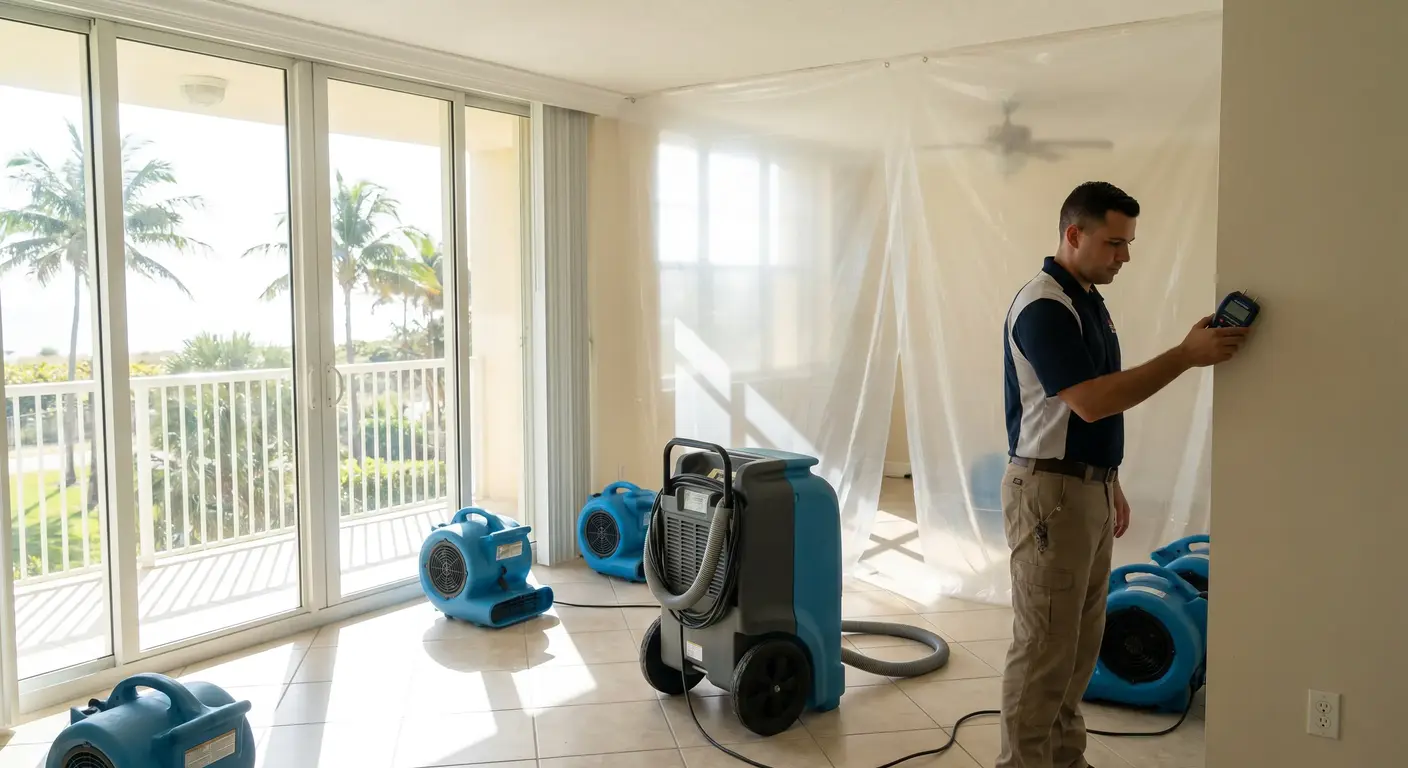
Water extraction at a Lighthouse Point waterfront HOA property — coordinating documentation for both homeowner and flood policy carriers simultaneously.
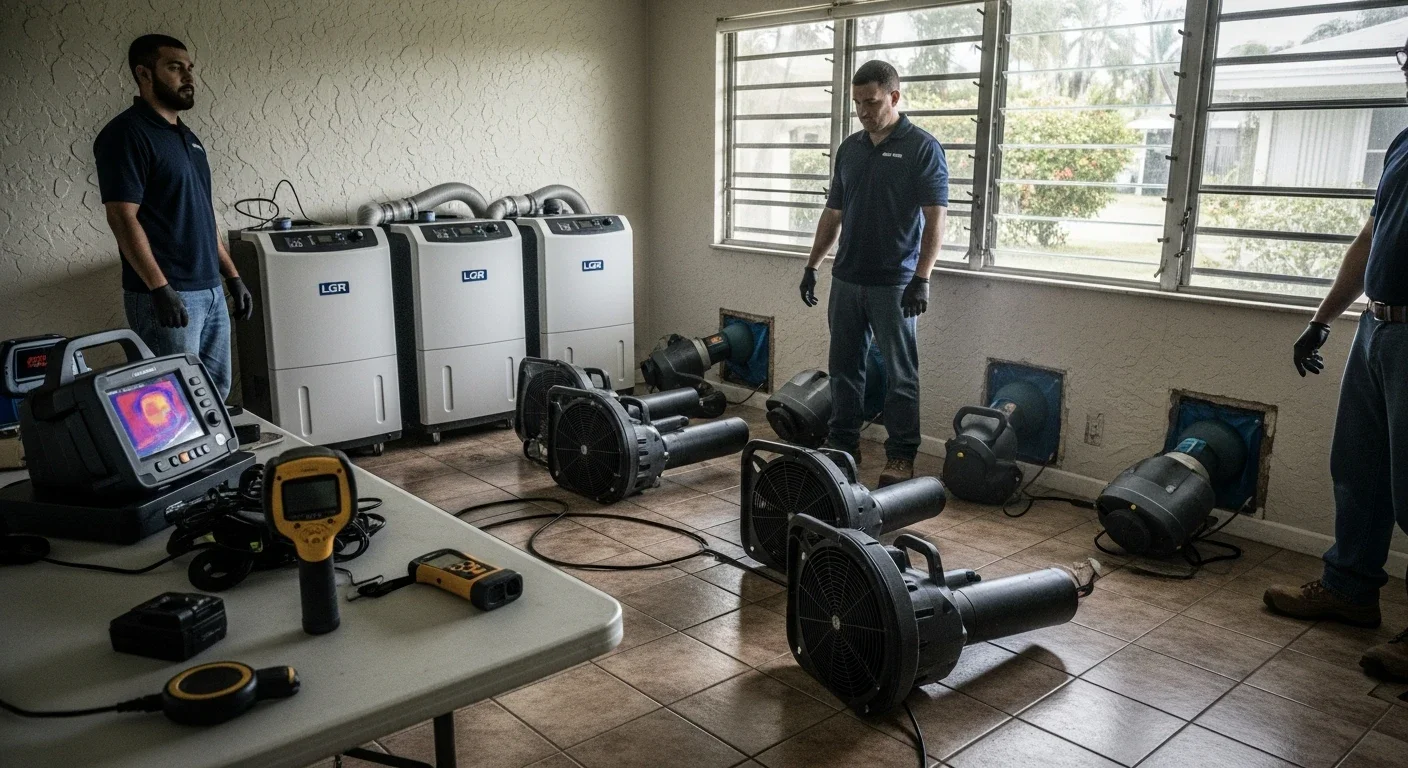
Commercial LGR dehumidifiers and air movers deployed in a Lighthouse Point canal-home — pulling moisture from CBS walls and slab-on-grade floors in South Florida humidity.
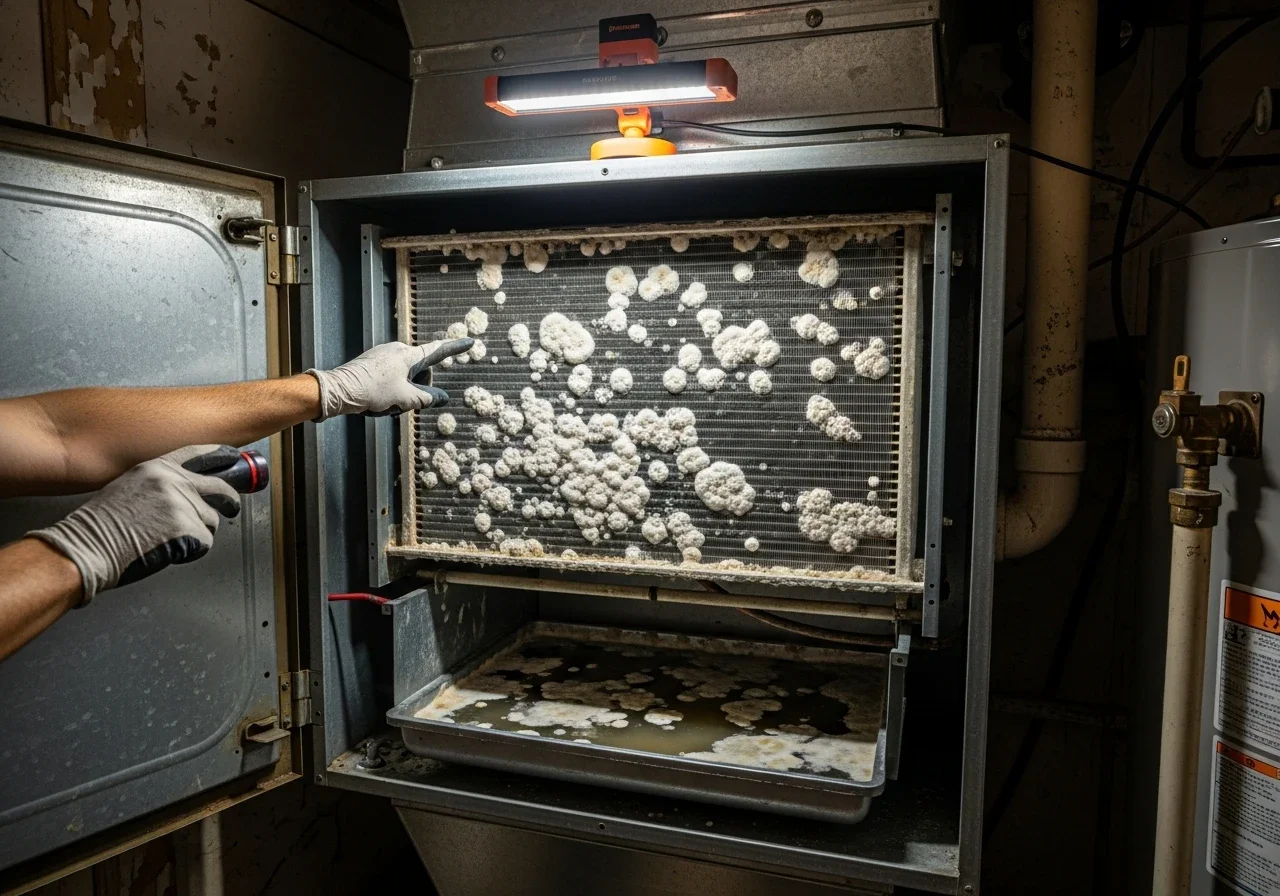
HVAC condensate overflow — a common source of water damage calls in Lighthouse Point HOA communities, especially where salt-air accelerates drain line and drip pan deterioration.
Thermal imaging identifies hidden moisture behind CBS walls and under slab-on-grade — critical for mapping Zone AE tidal intrusion that travels farther than visible damage suggests.
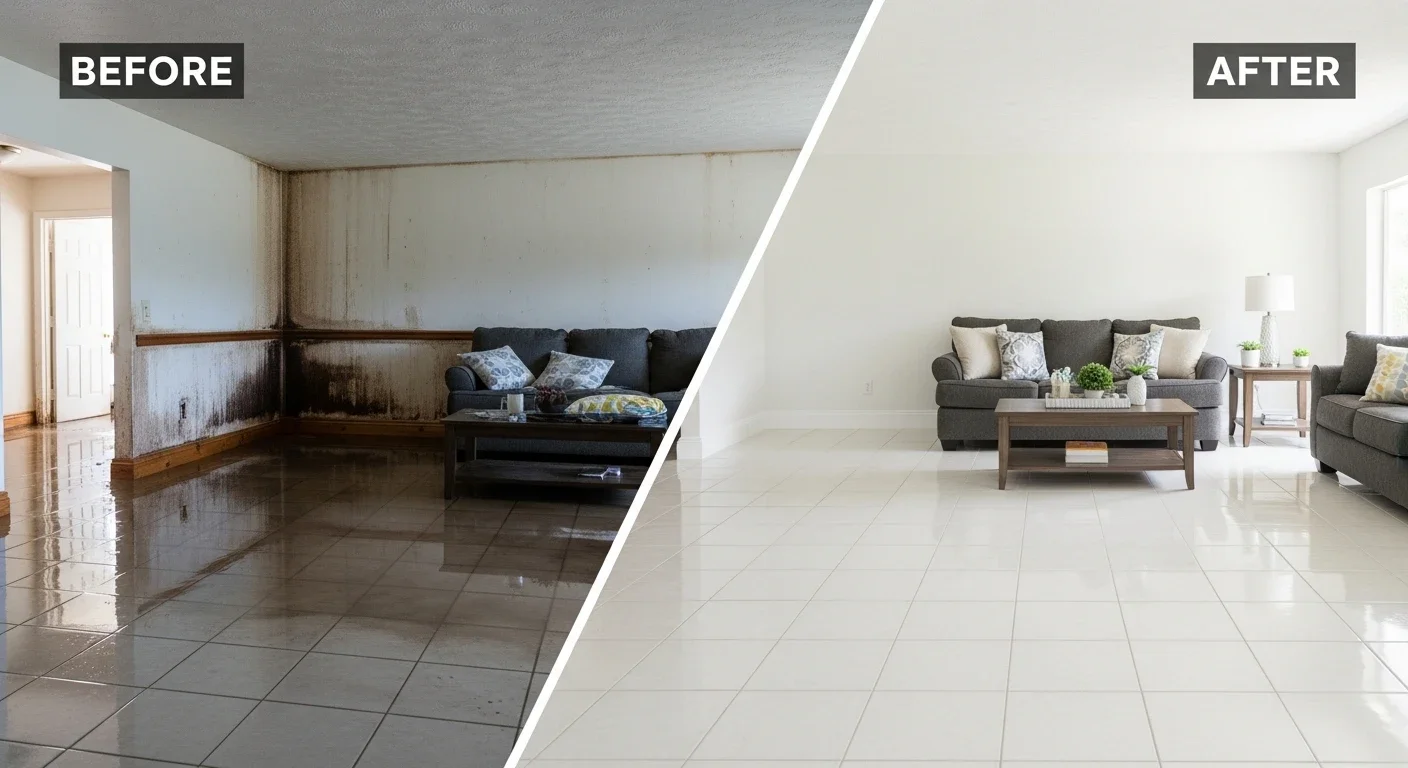
Complete restoration from water-damaged to move-in ready — documented separately for the homeowner policy carrier and the NFIP flood policy carrier.
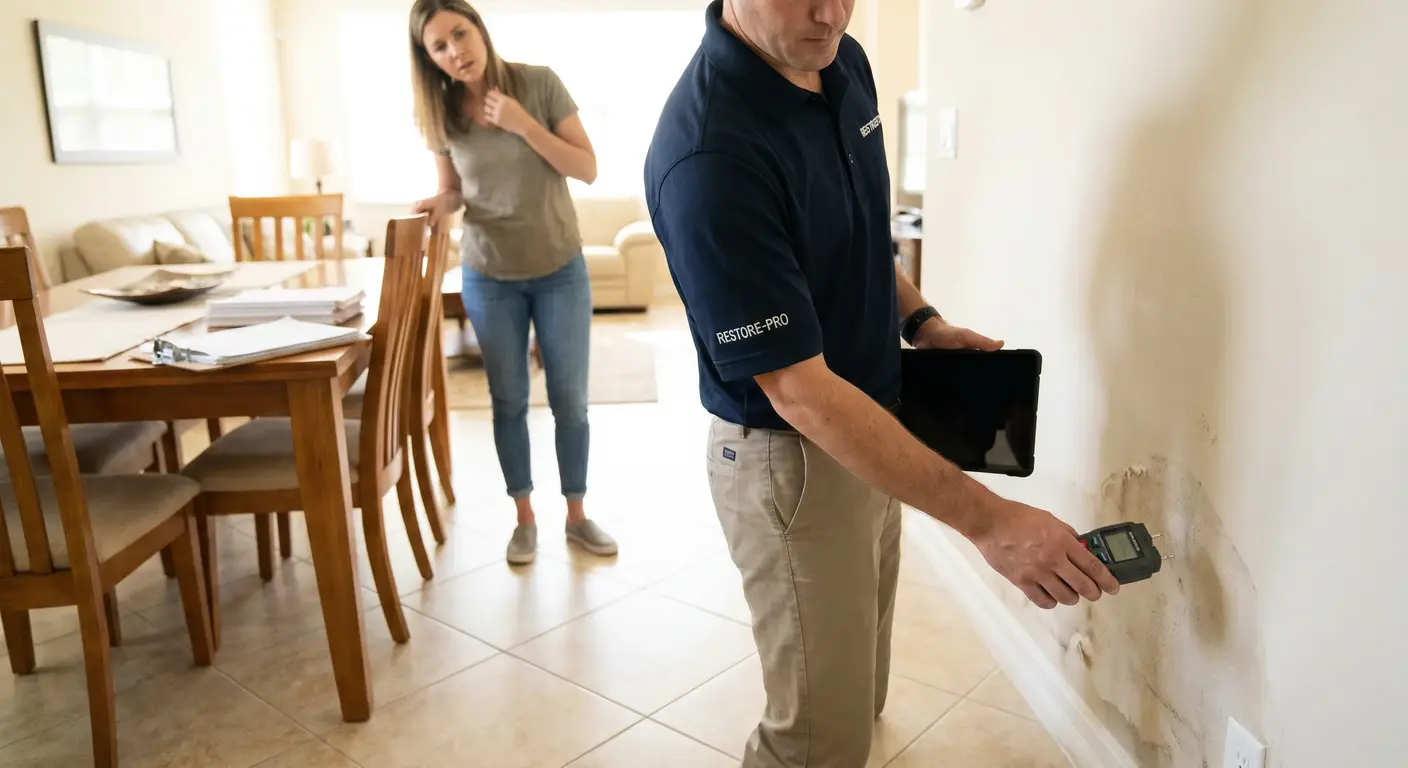
Multi-policy insurance consultation — preparing carrier-specific documentation for homeowner policy, flood policy, and HOA master policy claims as one integrated project.
The Palm Build Difference
Why Lighthouse Point HOA Communities Choose Palm Build
Lighthouse Point's waterfront HOA landscape needs a restoration partner that understands
board governance, Zone AE multi-policy insurance, ARB approval processes, canal-front
access logistics, and the unique dynamics of communities like Hillsboro Isles, Venetian
Isles, and Coral Key Harbor. Here is what distinguishes Palm Build.
HOA Board and ARB Communication Experience
We understand how Lighthouse Point waterfront HOA boards operate — statutory notice requirements, meeting procedures, ARB approval timelines, expenditure thresholds, and the documentation formats associations need. From Hillsboro Isles' architectural review board to Venetian Isles' waterfront covenant standards, we prepare board-ready packages, attend meetings when requested, and coordinate with property managers to keep restoration moving through the approval process efficiently.
Multi-Policy Zone AE Coordination
When a Lighthouse Point canal-home event triggers homeowner, flood, and HOA master policy claims simultaneously, Palm Build serves as the single point of contact for all carriers and adjusters. We deploy extraction and documentation simultaneously, manage flood-vs-homeowner scope boundaries to prevent coverage gaps, and keep every stakeholder — homeowner, board president, property manager, and all carriers — informed through regular project updates.
Dual and Triple Insurance Navigation
We manage homeowner policy claims, NFIP or private flood policy claims, and HOA master policy claims as one unified project. Each carrier receives carrier-specific documentation — separate scopes, separate photos, separate communication — while the physical restoration is coordinated as a single project. This simultaneous management is essential in Zone AE communities where the same event produces multiple claims across policies that must not overlap or leave gaps.
HVHZ & Coastal Broward Compliance
All of Broward County falls within the High Velocity Hurricane Zone. Every reconstruction project must meet HVHZ code requirements — approximately 170 mph design wind, Florida/Broward Product Approval or Miami-Dade NOA for exterior products, TAS 201/202/203 impact testing. All work is permitted through the City of Lighthouse Point Building Division with Broward County NOC. Most Lighthouse Point HOA properties are 1–2 story single-family, so we frame SIRS reserve study requirements for the board rather than milestone inspections at the property level.
Canal-Front and Waterfront Access Protocols
Lighthouse Point canal-home restoration requires marine-environment awareness that most restoration contractors lack. Our crews coordinate dock-side access, tidal-window scheduling for below-grade seawall work, debris management near active waterways, and canal-side safety protocols. For gated or deed-restricted communities, we maintain HOA contractor registration and pre-authorization to ensure rapid, compliant access on emergency calls.
~10 Miles Away in Deerfield Beach — 20–30 Min Response
Our South Florida Operations Hub in Deerfield Beach is approximately 10 miles from Lighthouse Point — a 20–30 minute response to most addresses. We respond to HOA and waterfront-home emergencies with truck-mounted extraction, commercial drying equipment, and the multi-policy documentation capabilities that Zone AE canal-home events demand. In South Florida's 70–75% humidity, mold colonization begins within 24–48 hours — speed of response directly limits total claim scope.
Common Questions
Lighthouse Point HOA & Condo Restoration FAQ
Answers to the questions we hear most from Lighthouse Point HOA boards, property
managers, and waterfront homeowners about restoration in association-governed canal-home
communities.
Who pays for restoration in a Lighthouse Point waterfront HOA — the homeowner or the association?
Under Florida Statute 718, a condo association's master policy covers common elements — roof, exterior walls, shared plumbing, common areas, and in Lighthouse Point's waterfront HOAs, shared seawalls and dock structures. Individual homeowners cover interior finishes through their HO-6 or homeowner policy. However, the exact boundary depends on your specific association's declaration. Some use 'bare walls-in' coverage (homeowner responsible for everything inside the studs); others use 'all-in' coverage (master policy covers interior finishes to original spec). Palm Build reviews your governing documents and Florida Statute 718 before work begins to ensure the correct carrier pays for each scope item.
How does Zone AE flood exposure change the insurance picture for Lighthouse Point HOA homeowners?
Because most of Lighthouse Point sits in FEMA Special Flood Hazard Area Zone AE, a single storm event often triggers two separate claims: a homeowner or HO-6 policy claim for above-grade damage (wind-driven rain, plumbing failure, HVAC overflow) and a separate flood policy claim (NFIP or private flood) for ground-floor inundation from canal overflow or Intracoastal tidal surge. These policies have different coverage scopes, different adjusters, and different documentation requirements. Without a contractor who manages both simultaneously, scope gaps appear at the boundary — and neither carrier covers what falls between them. Palm Build documents flood-source vs. non-flood-source damage from the first hour.
What is Lighthouse Point's CRS Class 7 rating and how does it affect my NFIP policy?
Lighthouse Point participates in FEMA's Community Rating System (CRS) at approximately Class 7, which means qualifying properties in Special Flood Hazard Areas may receive up to a 15% discount on National Flood Insurance Program (NFIP) premiums. CRS participation reflects the city's investment in canal maintenance, drainage infrastructure, and floodplain management. While this discount helps with premiums, it also signals that Lighthouse Point is genuinely high-flood-frequency terrain — and that restoration contractors need real Zone AE experience, not just general flood-damage familiarity.
Does Palm Build serve waterfront HOA communities in Lighthouse Point?
Yes. We serve all HOA-governed communities in Lighthouse Point including Hillsboro Isles, Venetian Isles, and Coral Key Harbor — the city's three primary waterfront canal-home HOA neighborhoods — as well as smaller Intracoastal-adjacent associations, low-rise condo associations, and inland CBS single-family HOA communities throughout Lighthouse Point. We handle the unique architectural review board, canal-access, and multi-policy insurance requirements of each community.
What approval is required before restoration can begin in Hillsboro Isles or Coral Key Harbor?
Hillsboro Isles, Venetian Isles, and Coral Key Harbor are deed-restricted HOA communities with architectural review boards that must approve visible exterior restoration work before it begins. This includes stucco repair, exterior painting, dock and seawall work, and roofing. Florida law authorizes emergency mitigation — water extraction, board-up, mold containment — without a board vote, so we protect the property immediately. For reconstruction, Palm Build prepares board-ready documentation: detailed scopes, materials specifications matching HOA standards, contractor credentials, and compliance certifications. We coordinate with property managers to secure ARB approval at the earliest opportunity.
How does salt-air corrosion affect restoration scope in Lighthouse Point canal-home HOAs?
Salt air off the Hillsboro Inlet and Intracoastal attacks every exposed metal surface in Lighthouse Point — dock hardware, seawall tie-backs, AC condenser coil fins, window frame fasteners, roof flashing, and railings. This accelerated corrosion is often invisible until a restoration event reveals corroded components behind stucco or beneath decking. A visual-only assessment misses months of pre-existing corrosion damage that will cause a claim dispute if left undocumented before work begins. Palm Build uses thermal imaging and physical inspection to document salt-air corrosion as part of every initial assessment in waterfront HOA communities.
How quickly can Palm Build respond to a waterfront HOA emergency in Lighthouse Point?
Our South Florida Operations Hub in Deerfield Beach is approximately 10 miles from Lighthouse Point — a 20–30 minute response to most addresses. We respond to HOA and canal-home emergencies with truck-mounted extraction, commercial drying equipment, and the multi-policy documentation capabilities that Zone AE waterfront events demand. In South Florida's 70–75% humidity, mold colonization begins within 24–48 hours — every minute of delay after water intrusion increases total claim scope.
How do post-Surfside reserve requirements affect Lighthouse Point HOA associations?
Post-Surfside legislation (SB 4-D and SB 154) requires mandatory structural reserve studies (SIRS) and milestone inspections at 25 and 40 years for buildings over three stories. Most Lighthouse Point HOA properties are 1–2 story single-family homes, placing them below the milestone inspection threshold. However, SIRS reserve study requirements affect community associations broadly — associations must now fund reserves for structural maintenance, seawall repairs, and common-infrastructure replacement. This increases special assessment exposure for every member homeowner when an unplanned restoration event occurs. Loss assessment coverage on homeowner policies can offset individual exposure, but many owners do not carry adequate limits.
Trusted Vendors
Trusted local pros in Lighthouse Point
Outside our restoration scope, these are the vetted, licensed contractors we trust
alongside our work. Personally evaluated, reference-checked, and recommended by Palm
Build.
HOA or Waterfront Property Damage in Lighthouse Point? We Handle the Complexity.
From Hillsboro Isles canal-home flooding to Venetian Isles salt-air corrosion to Coral Key Harbor seawall and dock claims, Palm Build navigates Zone AE flood policy, master policy coordination, ARB approvals, and multi-unit documentation — all from 20–30 minutes away in Deerfield Beach.