Quick Answer
A pack-out is the systematic removal of your belongings from a damaged property so restoration can proceed without risking further harm to your contents. Crews photograph and barcode every item, load them into climate-controlled trucks, and store them in a secured, humidity-controlled facility while your home or building is dried, deodorized, or rebuilt. In South Florida's year-round heat and humidity, climate-controlled storage is not optional — ambient conditions outside a controlled environment can cause secondary mold, rust, and warping before the restoration work is even finished. The process ends with a pack-back, returning every catalogued item once the space is cleared.
Key takeaways
- A pack-out removes your belongings from the loss site so restoration can proceed unimpeded — items are inventoried, barcoded, and transported under a documented chain of custody.
- Climate-controlled storage is essential in South Florida because the region's year-round humidity causes secondary mold, rust, and warping in uncontrolled environments within days.
- Every item receives a barcode tag at pickup; digital inventory software tracks condition, location, and cleaning status so nothing is lost or disputed at pack-back.
- Many household contents — furniture, documents, art, electronics — can often be restored with professional cleaning; climate control preserves that salvageability window.
- The pack-out is coordinated with your insurance claim: the full inventory becomes the scope document, and a structured chain-of-custody record protects both you and your insurer.
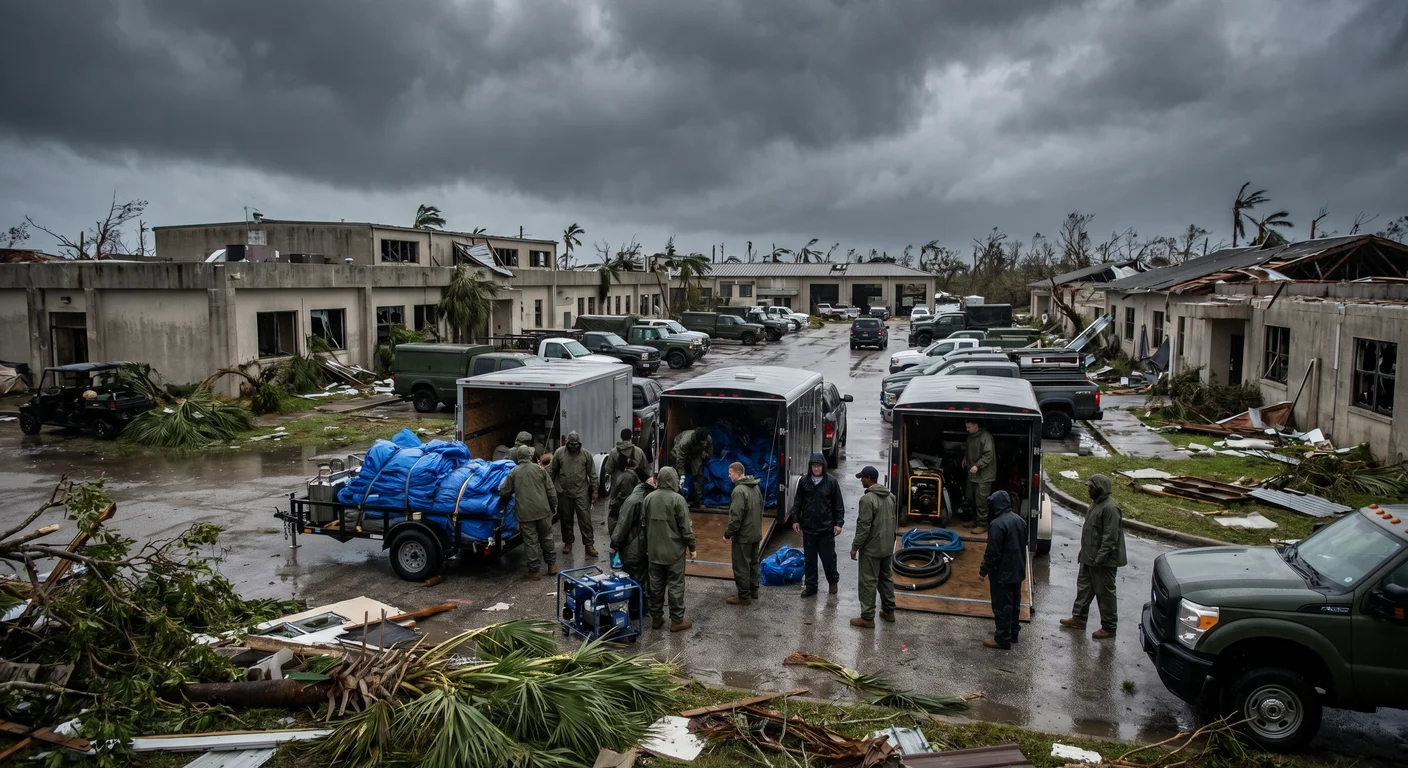
After a flood, fire, or major water loss, the last thing most homeowners think about is their belongings — the focus goes to stopping the damage and calling the adjuster. But what happens to your furniture, documents, clothing, and valuables while the restoration crew is tearing out wet drywall and running industrial driers? If your contractor handles it right, a pack-out removes your belongings from the loss site before they become a secondary casualty, stores them safely in a climate-controlled facility, and returns them — every catalogued item — once the space is ready. Here is how the process actually works, why climate control is non-negotiable in South Florida, and what a professional pack-out looks like from the first barcode scan to the final pack-back.
Window to begin contents removal before secondary mold risk rises sharply in a water-damaged space
24–48 hrs
Year-round relative humidity in much of Broward County — why uncontrolled storage accelerates damage
70–90%+
Of pack-out items should be barcoded and photo-documented for insurance and chain-of-custody
100%
Climate-controlled, secured warehouse where your belongings are cleaned, stored, and tracked until pack-back
1 facility
What Is a Pack-Out — and When Is One Needed?
A pack-out is the organized removal of a property's contents so that structural restoration — drying, demolition, deodorization, or reconstruction — can proceed safely and completely. Without a pack-out, crews either work around furniture and belongings (slowing the job and increasing risk of contamination) or your items absorb additional water, smoke odor, or airborne mold spores throughout the restoration period. A good contents restoration program treats the pack-out as a protective move, not an afterthought.
Pack-outs are triggered most commonly by water losses (flooding, storm surge, burst pipes), fire and smoke events, and significant mold discoveries that require full-room remediation. The decision isn't all-or-nothing: on smaller losses, crews may remove only specific rooms or categories of items. On larger events — multi-room floods, whole-home smoke saturation, or a loss requiring extended rebuild — a full-property pack-out protects everything while the building is in a vulnerable, open-wall state.
The Pack-Out Process, Step by Step
A professional pack-out follows a disciplined sequence. The goal is twofold: protect every item from further harm, and create a documented record that survives the insurance claim process. Cutting corners on documentation is where disputes start — and where homeowners lose.
- 1
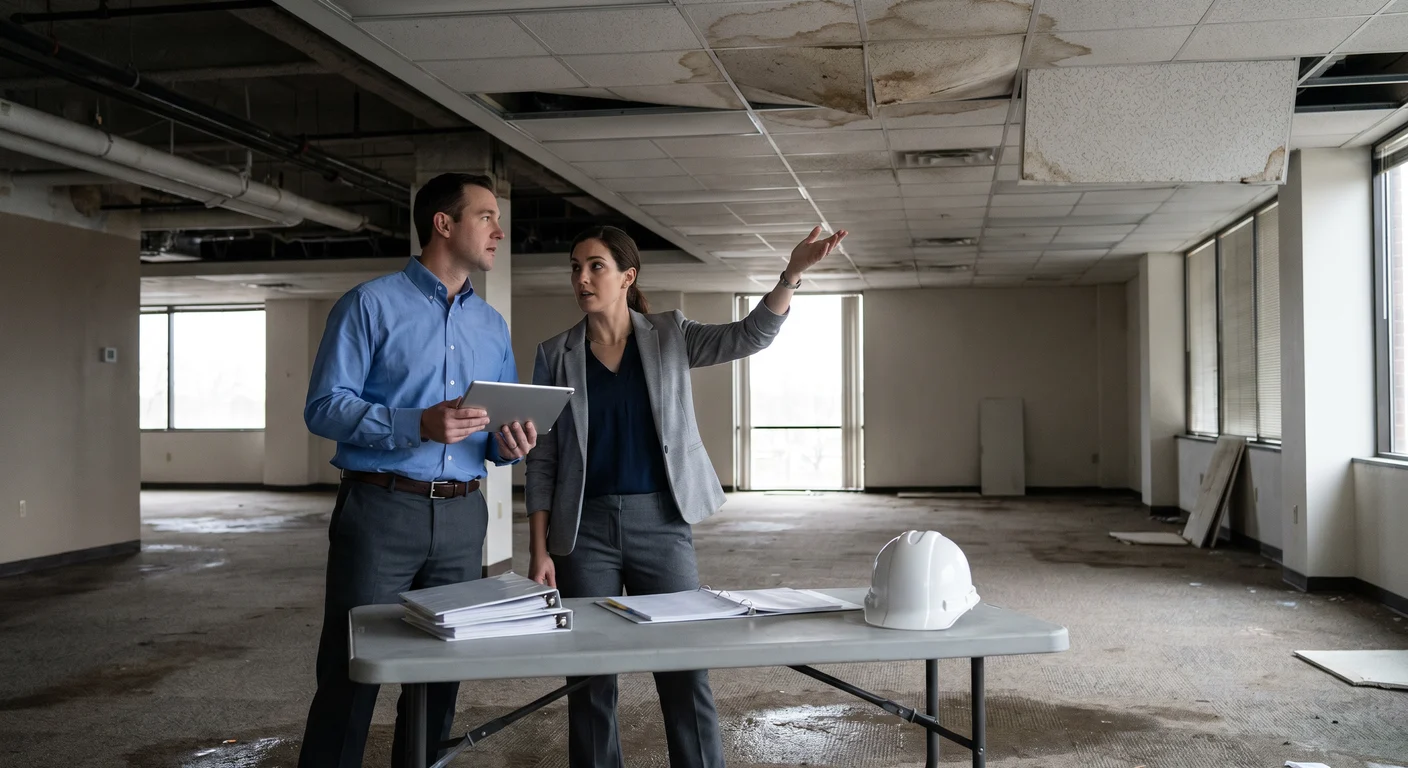
Pre-pack assessment and loss documentation
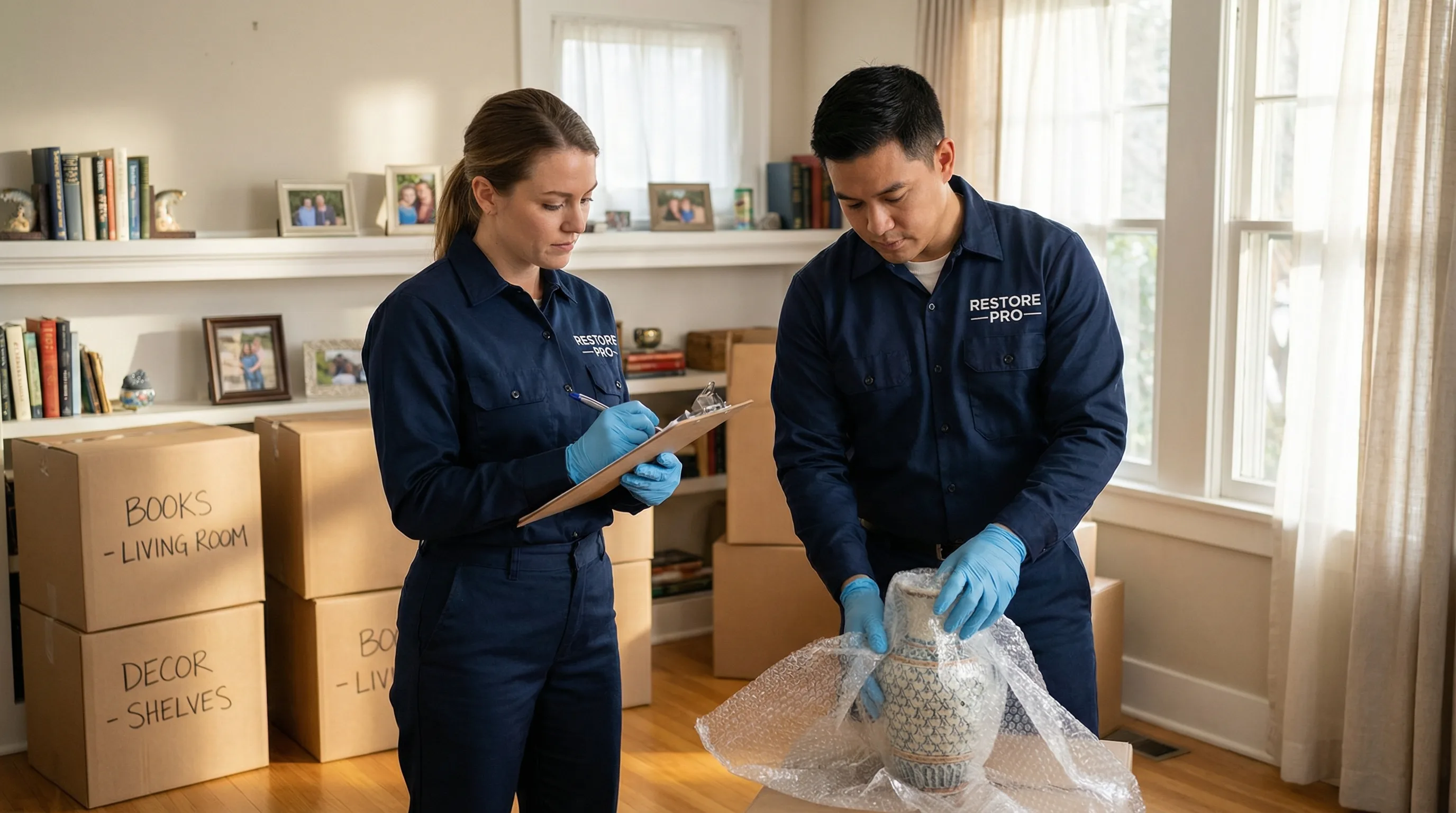
Before anything is moved, the crew photographs the loss scene — room by room, item by item. Pre-pack photos document the condition of your belongings at the moment of pickup, establishing a before-state that protects you and your insurer from disputes later.
- 2
Inventory and barcoding
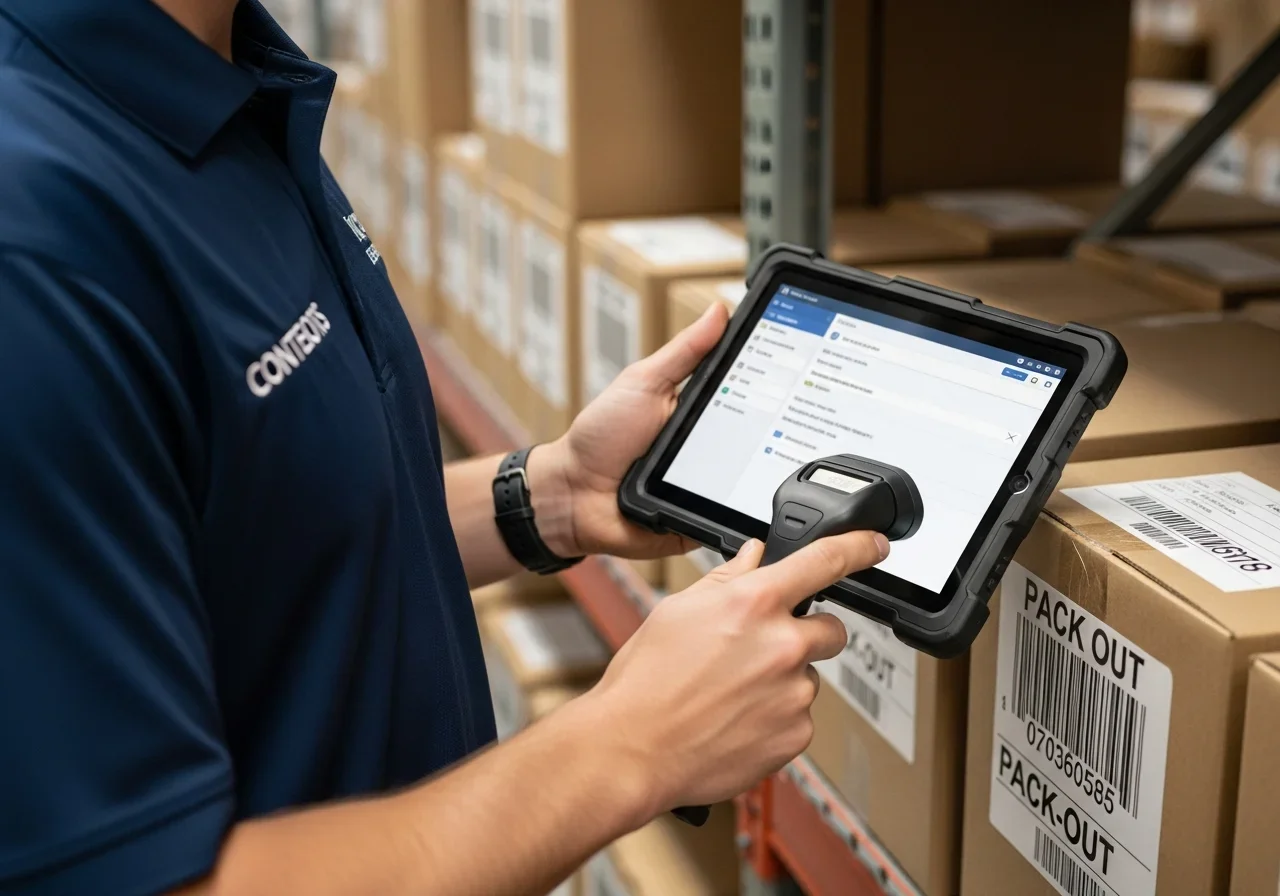
Every item receives a barcode label tied to a digital inventory entry that captures its description, condition notes, location of origin, and photos. Furniture gets tagged on the frame; boxes of smaller items are sealed and tagged as units. Nothing leaves the property without a barcode on record.
- 3
Packing and containerization
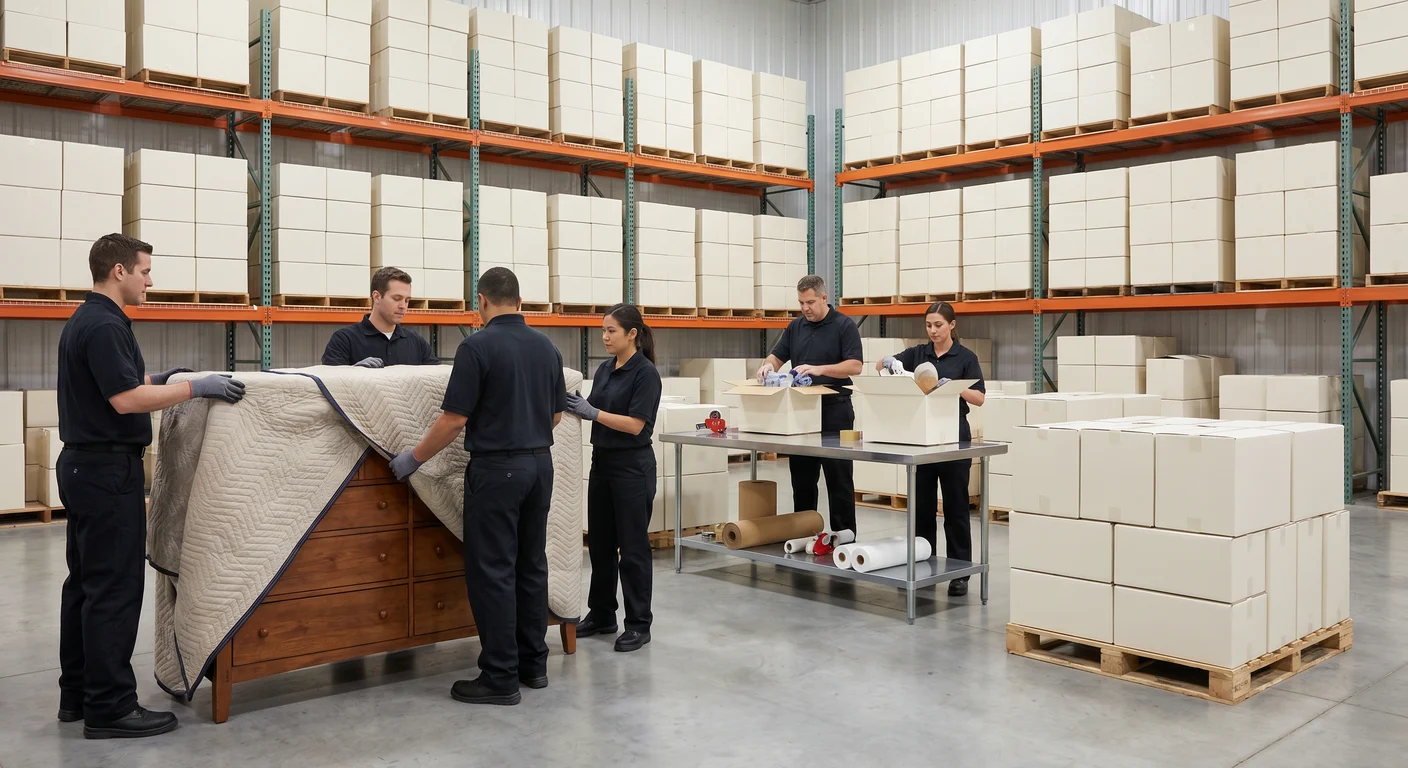
Fragile items are wrapped in protective materials; larger furniture is padded and shrink-wrapped. Items are loaded systematically — heavy items braced, fragile items cushioned — into climate-controlled trucks. Separation by room or unit keeps the pack-back organized.
- 4
Transport to climate-controlled facility
The truck maintains a temperature-stable, humidity-controlled environment during transit. In South Florida, where the outside air in summer is both hot and saturated, the transit environment matters: contents that sweat in an uncontrolled cargo van for an hour can begin secondary damage before they arrive.
- 5
Intake, cleaning, and restoration at the facility
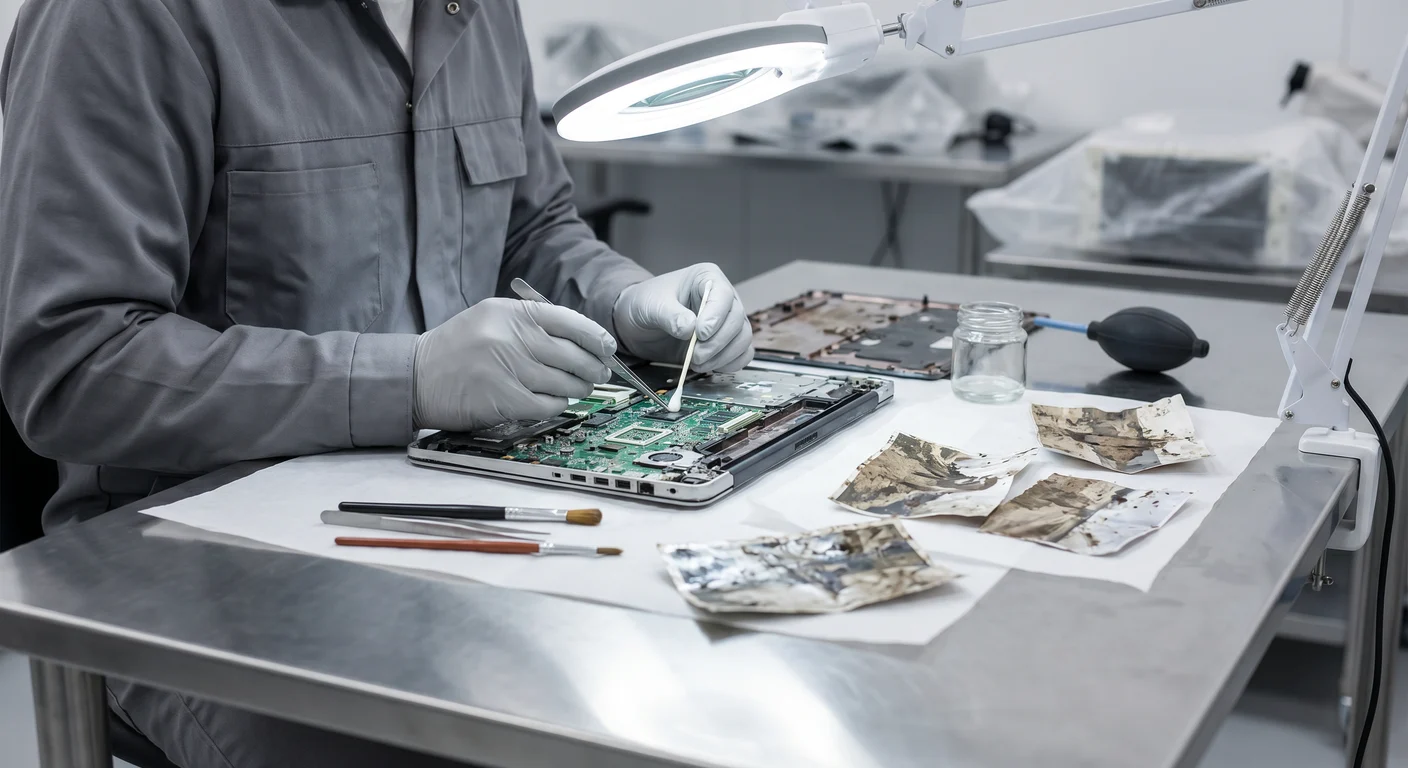
At the warehouse, items are unpacked and assigned storage locations tracked in the inventory system. Cleanable contents — furniture, hard goods, some soft goods — go through professional cleaning: ultrasonic cleaning for hard items, dry cleaning or laundering for textiles, ozone or thermal fogging for smoke odor. Documents and photos may go to a specialist for drying or freeze-drying.
- 6
Climate-controlled storage during restoration
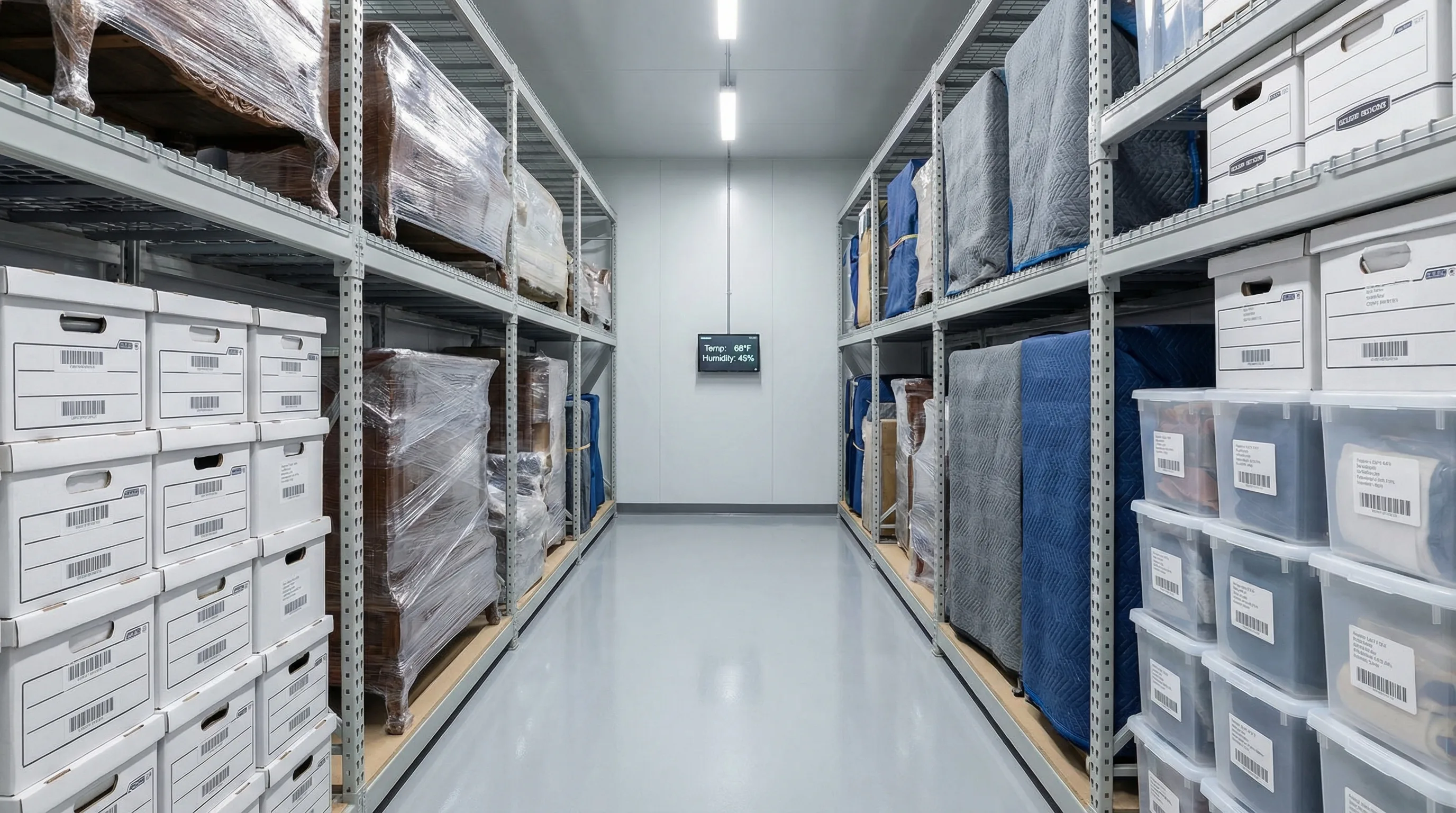
Items are held in a temperature- and humidity-controlled warehouse until the loss site is cleared for occupancy. In Broward County's climate, this means an actively conditioned space — not a garage or self-storage unit — that keeps relative humidity at levels that prevent secondary mold and rust while items are waiting.
- 7
Pack-back and return
Once the property passes inspection and is ready for occupancy, items are scanned out of inventory, loaded back in reverse order, and returned to their original room locations. A final walkthrough confirms every barcoded item is accounted for.
Why Climate Control Is Non-Negotiable in South Florida
South Florida sits in a subtropical climate where outdoor relative humidity regularly runs above 70% and can spike higher during and after storm events. That ambient moisture does not just feel uncomfortable — it is biologically active. Mold spores germinate on damp porous materials (wood, paper, upholstery, drywall) when humidity sustains the surface moisture they need to colonize. Contents that come out of a flooded room with elevated moisture content and are placed into an uncontrolled storage environment can develop secondary mold growth within days — damage that was fully preventable.
The same climate creates corrosion risk for metals, electronics, and art. Unprotected steel furniture hardware and electronics left in humid air oxidize faster than they would in a drier climate. Wood furniture that absorbed water during the loss continues to warp and crack if it is not dried and then held in a stable humidity environment. For homeowners in Margate, Tamarac, and surrounding Broward communities, understanding this dynamic helps explain why contents restoration in Margate and contents restoration in Tamarac require actively conditioned storage — not just any covered space.
What Can Actually Be Saved?
One of the most common questions homeowners ask is whether it is worth packing out items that look damaged. The answer is usually: let professionals assess it before deciding, because many contents are more salvageable than they appear — especially with fast intervention.
Hard goods — solid wood furniture (not particleboard), ceramics, metal items without active rust, hard plastic — respond well to professional cleaning when addressed quickly. Electronics are case-by-case: powering off immediately and getting them to a restoration technician within hours dramatically improves the outcome, but electronics submerged in contaminated water face a harder path. Soft goods like upholstered furniture and mattresses depend heavily on the contamination category and how long they were wet. Documents and photographs, surprisingly, can often be recovered — freeze-drying is an established technique for wet paper and photographs when they reach a document-recovery specialist quickly. For homeowners in Oakland Park and Lauderhill, where storm-related losses can involve both flood water and wind-driven rain, the mix of contamination categories makes professional triage especially important.
Often salvageable with fast, professional response
- Solid wood furniture — professional cleaning and controlled drying
- Hard goods (ceramics, glassware, non-rusted metals)
- Photographs and documents — freeze-drying or desiccant drying
- Upholstered items exposed to clean water, treated quickly
- Electronics powered off immediately and professionally cleaned
Often at higher risk / harder to restore
- Particleboard and MDF furniture — swells and delaminates when wet
- Mattresses and pillows saturated with contaminated water
- Porous items submerged in Category 3 or saltwater
- Electronics that ran powered while submerged
- Paper and fabric with active mold growth beyond early stages
The IICRC's standards distinguish between different categories of water contamination — clean water, gray water, and heavily contaminated (Category 3) — and these classifications directly affect what can be salvaged. Salt-laden floodwater and sewage-affected water are treated as Category 3 under these standards, which typically means porous materials that absorbed that water are considered non-restorable. A trained technician can make that determination on-site; the key is not to assume either way without a professional assessment.
How Pack-Outs Connect to Your Insurance Claim
For most homeowners, a pack-out is insured under the contents coverage portion of their homeowner's or renter's policy — but the connection between the pack-out and the claim goes deeper than just coverage. The inventory the pack-out crew creates becomes the contents portion of your adjuster's scope. Every item that is documented, assessed, and assigned a cleaning or replacement cost flows directly into the loss settlement. An undocumented pack-out — items moved to a neighbor's garage without a formal inventory — leaves that scope blank, and things that don't make it into the adjuster's scope often aren't compensated.
A professional contents company coordinates directly with adjusters, TPAs, and insurance programs. They understand how to photograph condition, how to write cleaning-versus-replacement assessments in the format adjusters use, and how to flag disputed items for supplemental review. On larger losses — apartment complexes, commercial buildings, multi-unit condos — that coordination at scale is part of what a contents restoration program provides. The documentation discipline also protects you: if an item is damaged in storage or during the pack-back, the pre-pack photos and the barcode chain-of-custody are the record that resolves the dispute.
Furniture, Documents, and Irreplaceables: Category-Specific Notes
Different item categories need different handling during a pack-out, and a trained contents crew adjusts their approach accordingly.
| Category | Primary concern | Professional handling approach |
|---|---|---|
| Solid wood furniture | Water absorption, warping, finish damage | Dry in climate-controlled environment; furniture cleaning and refinishing |
| Upholstered furniture | Water contamination, odor, mold in fabric/foam | Assessment for category of water; extraction and cleaning or disposal |
| Documents and paper | Water damage, mold, fragility when wet | Freeze-drying or desiccant drying; specialist referral for archive materials |
| Photographs | Adhesion, emulsion damage, mold | Rinse (if dirty), air-dry or freeze-dry immediately; digital recovery possible |
| Electronics | Corrosion, short-circuit, mineral deposits | Power off immediately, professional ultrasonic or dry-ice cleaning |
| Clothing and textiles | Contamination, odor, mildew | Ozone treatment and laundering or specialist dry cleaning |
| Art and collectibles | Surface damage, media sensitivity | Specialist conservator referral; climate-controlled storage required |
Pack-out handling by contents category — general guidance (outcomes are case-by-case and depend on contamination level, time, and item construction).
Documents deserve special attention in South Florida, where many homeowners maintain original paper records — property deeds, insurance policies, wills, mortgage documents — in file cabinets that become submerged during flooding. Wet paper is extremely fragile and bonds to itself as it dries, permanently destroying content if not addressed properly. If your documents were submerged, do not try to peel apart wet pages — place them in sealed bags and keep them cold (a refrigerator or freezer slows further damage) until they can reach a document-recovery specialist. Freeze-drying is the established method for salvaging significant volumes of wet paper.
Frequently Asked Questions
How long does a pack-out take, and can I stay in my home during it? +
Is a pack-out covered by homeowners insurance? +
Why can't I just store my things in a regular self-storage unit? +
What happens if something is damaged or lost during the pack-out? +
How do I know I'll get all my items back? +
Related Guides & Next Steps
Contents Restoration Services
Professional pack-out, cleaning, climate-controlled storage, and pack-back across South Florida.
Contents Restoration — Margate, FL
Pack-out and climate-controlled contents restoration serving Margate and northwest Broward County.
Contents Restoration — Tamarac, FL
Full contents recovery for Tamarac homeowners and businesses after water, fire, or storm losses.
Contents Restoration — Oakland Park, FL
Inventory, cleaning, and climate-controlled storage for Oakland Park residential and commercial losses.
Contents Restoration — Lauderhill, FL
Pack-out and restoration services for Lauderhill, including apartment complexes and HOA communities.
IICRC — Contents Cleaning & Restoration Standards
The Institute of Inspection Cleaning and Restoration Certification sets the industry standards for professional contents restoration practices.
Your belongings deserve the same care as your building.
Palm Build's contents restoration team handles pack-outs, climate-controlled storage, and full pack-back across Broward County — with barcode inventory, insurance-ready documentation, and 24/7 response. Learn more about our contents restoration services or call to start a claim.
Found this helpful? Send it to someone who needs it.