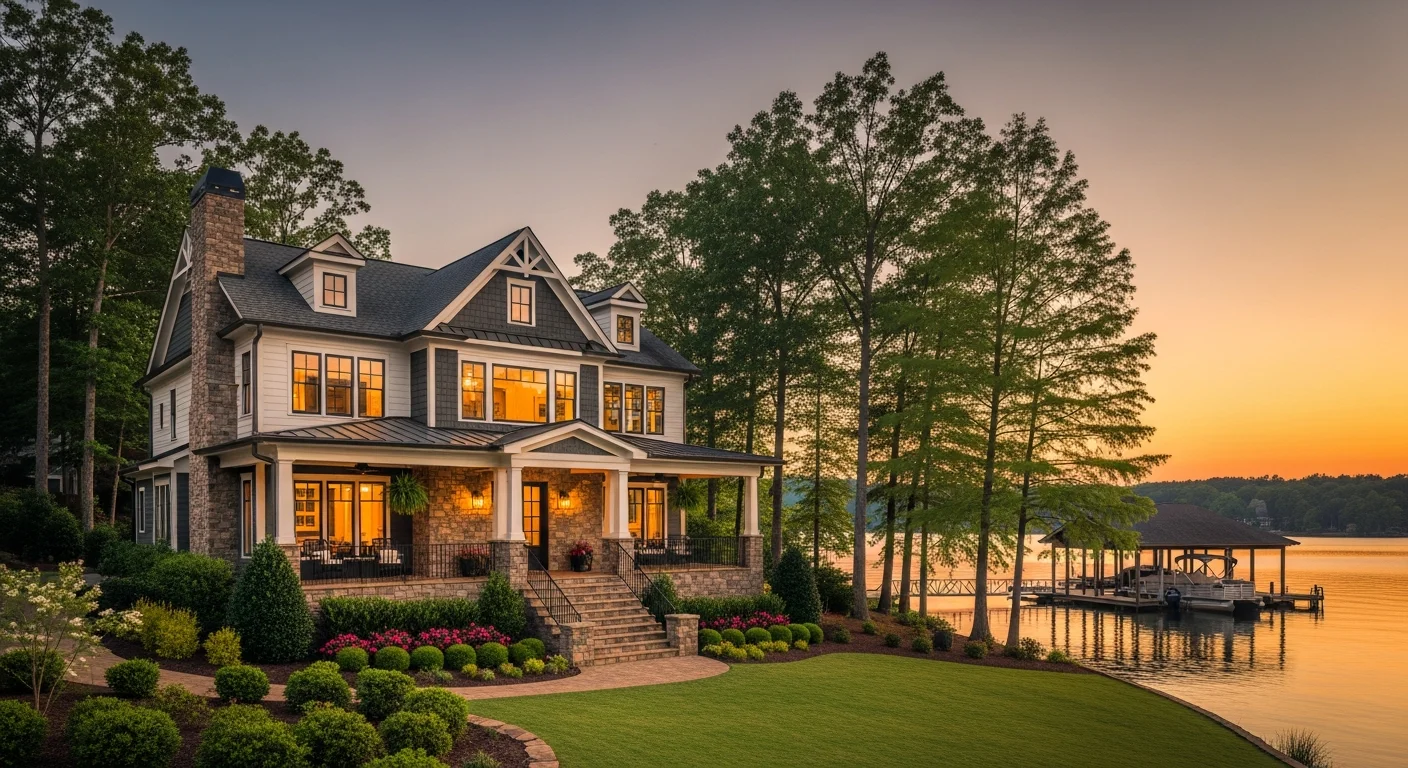
Lake Norman's shoreline humidity, 2000s-era vented crawl spaces, and a 5-month high-humidity window from May through October make Mooresville one of the most mold-vulnerable communities in the Charlotte metro. Palm Build's IICRC S520-certified team provides professional containment, remediation, and prevention for Iredell County homes — with documentation your insurance carrier requires.
Approximately 30 miles — Mooresville, NC 35-45 min Response IICRC Certified
Lake Norman's shoreline humidity, boom-era vented crawl spaces, and Piedmont clay soil
converge to create some of the highest sustained mold risk in the Charlotte metro. Four
reinforcing factors drive the problem — and understanding them is the first step toward
permanent remediation.
Lake Norman Humidity Corridor
520 mi
Shoreline generating humidity
Lake Norman's 32,510 acres of surface water and 520 miles of shoreline generate localized humidity that consistently exceeds inland Piedmont readings. Properties within two miles of the shoreline operate in a permanently elevated moisture environment — crawl spaces never fully dry during the 5-month humidity window.
5-Month High-Humidity Window
>80%
Crawl space RH (May-Oct)
From May through October, outdoor dew points in the Lake Norman corridor exceed 65°F continuously. Vented crawl spaces sustain relative humidity above 80% during this window — well past the 60% threshold where mold growth shifts from gradual to exponential. Aspergillus and Penicillium can double colony size every 24 to 48 hours.
Boom-Era Vented Crawl Spaces
~2004
Median construction year
Mooresville's median construction year is approximately 2004 — the peak of the Lake Norman building boom. The vast majority of homes from this era sit on vented crawl space foundations that channel warm, humid lake air directly onto cooler wood surfaces. These vents were standard practice, but in Mooresville's humidity environment they function as moisture delivery systems.
Red Clay Soil Moisture
<0.2 in/hr
Clay soil drainage rate
Iredell County's Piedmont red clay drains at less than 0.2 inches per hour. After a thunderstorm, saturated clay pushes ground moisture upward into crawl spaces for days. Combined with lake-effect humidity entering through vents, these crawl spaces become permanent incubators for mold colonization on floor joists and subflooring.
Neighborhood-Level Intelligence
Mooresville Neighborhood Mold Risk Profiles
Mold risk across Mooresville's Lake Norman communities follows predictable patterns
based on proximity to the shoreline, housing era, crawl space design, and lot grading.
Here is what our remediation teams encounter in the neighborhoods we serve most
frequently.
The Point
High Risk
Built: 1990s-2010s
Primary risk: Lakefront exposure, premium crawl spaces over clay, high water table
Common damage: Crawl space mold on joists, HVAC condensation, subflooring decay
Waterlynn
High Risk
Built: 1990s-2000s
Primary risk: Lakefront lots, aging crawl space vents, elevated water table year-round
Common damage: Aggressive crawl space mold, joist structural damage, standing water events
Morrison Plantation
High Risk
Built: 2000s-2010s
Primary risk: Boom-era vented crawl spaces, lot grading issues on clay
Common damage: Chronic crawl space moisture, insulation contamination, musty HVAC delivery
Churchill Estates
High Risk
Built: 1980s-1990s
Primary risk: Older vented crawl spaces, original deteriorated vapor barriers
Common damage: Exposed soil in crawl space, floor joist mold, subflooring delamination
The Harbour at the Pointe
High Risk
Built: 2000s-2010s
Primary risk: Premium lakefront, high-value finishes over moisture-prone foundations
Common damage: Hidden colonization beneath hardwood, HVAC cross-contamination
Langtree
Moderate
Built: 2005-2015
Primary risk: Vented crawl spaces, proximity to lake corridor humidity
Common damage: Crawl space mold, HVAC duct condensation, attic moisture intrusion
The Farms
Moderate
Built: 2000s-present
Primary risk: Mixed crawl space and slab construction, drainage challenges on clay
Common damage: Post-rain moisture intrusion, bathroom mold, crawl space colonization
Huntington Woods
Moderate
Built: 1990s-2000s
Primary risk: Wooded lots retaining moisture, tree canopy trapping humidity
Common damage: Canopy-trapped humidity, slow-drying crawl spaces, insulation mold
Pier 33 Condos
Moderate
Built: 2000s
Primary risk: Multi-unit construction, shared HVAC systems, lake proximity
Common damage: Unit-to-unit mold spread via ductwork, interior wall condensation
Blackberry Creek
Low-Moderate
Built: 2010s-present
Primary risk: Newer construction with some encapsulation deficiencies
Common damage: Incomplete encapsulation failures, HVAC condensate line issues
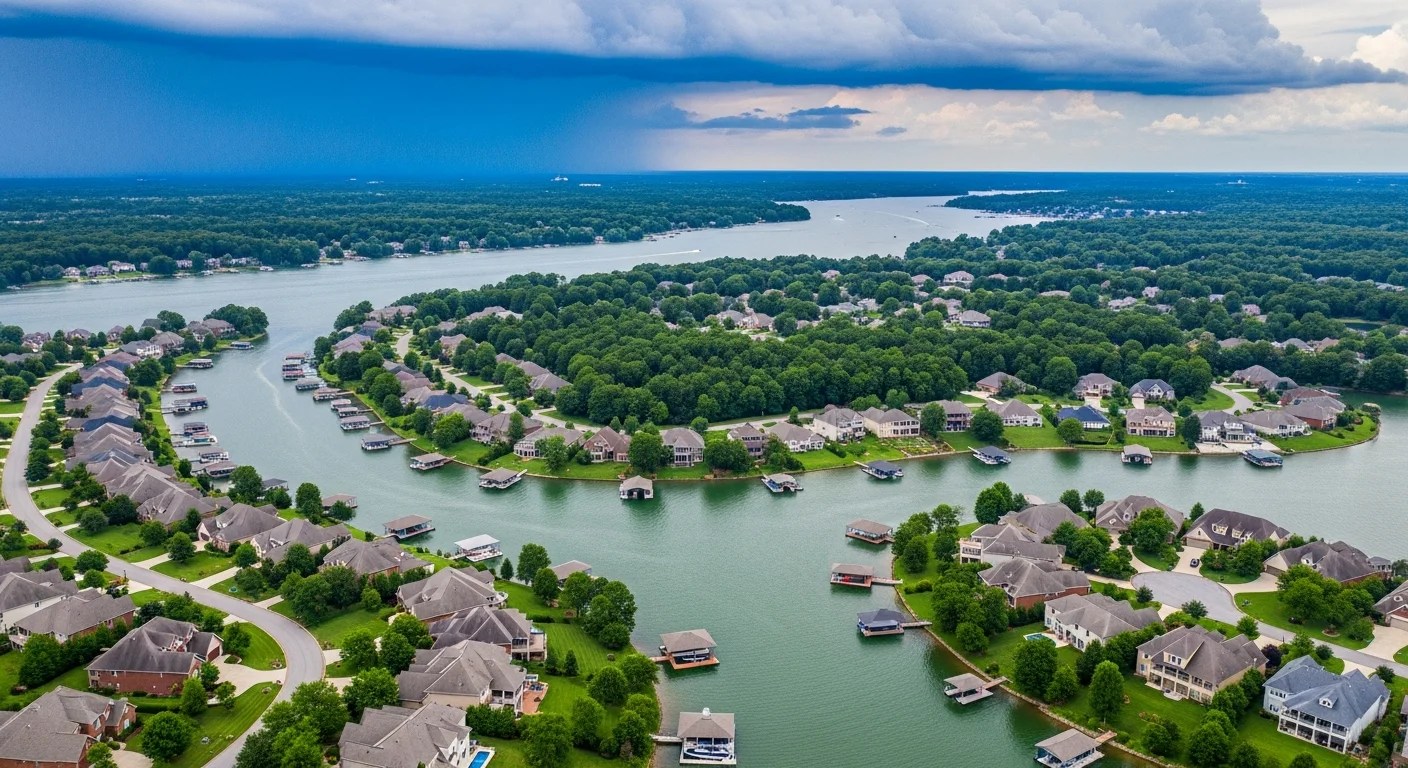
Mooresville's residential communities wrap around Lake Norman's southern shore — placing
thousands of homes within the lake's elevated humidity corridor.
Mooresville's #1 Mold Problem
Crawl Space Mold: The Hidden Crisis Under Lake Norman Homes
The overwhelming majority of mold remediation projects in Mooresville involve crawl
spaces. The mechanism is relentless: vented crawl space foundations — standard for the
Lake Norman boom era — channel warm, humid air from the lake corridor into cooler
subsurface environments. When outdoor dew points exceed 65 degrees Fahrenheit from May
through October, that air condenses on floor joists, ductwork, and subflooring.
North Carolina building code now explicitly allows closed (encapsulated) crawl spaces as
an alternative, requiring a Class I vapor barrier covering 100% of the earth floor,
mechanical dehumidification maintaining RH below 60%, and a mandatory 3 to 4 inch
termite inspection gap. Average encapsulation cost in the Mooresville market runs $5,000
to $12,000 for the encapsulation alone, with complete moisture remediation reaching
$15,000 to $25,000+.
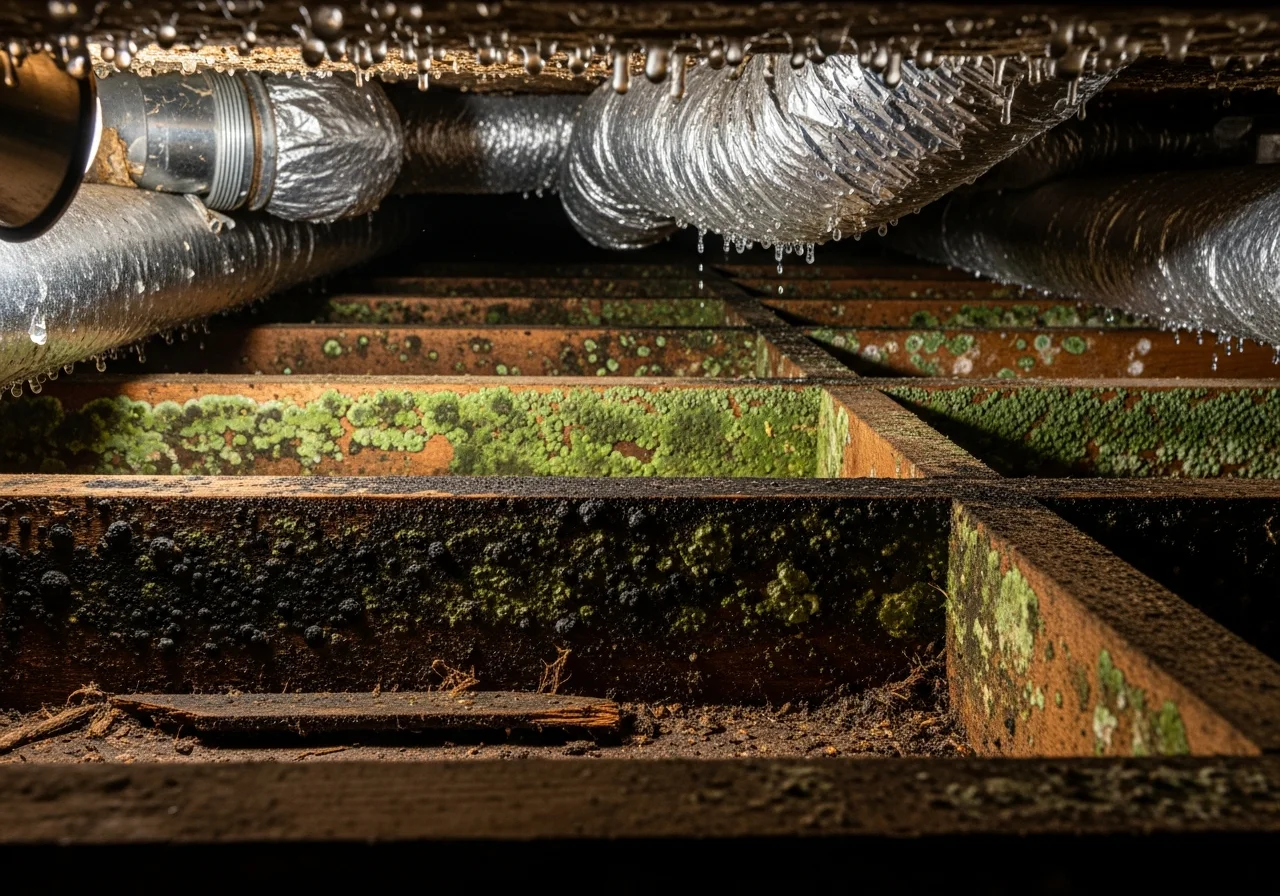
Before: Active mold colonization on floor joists and subflooring in a vented
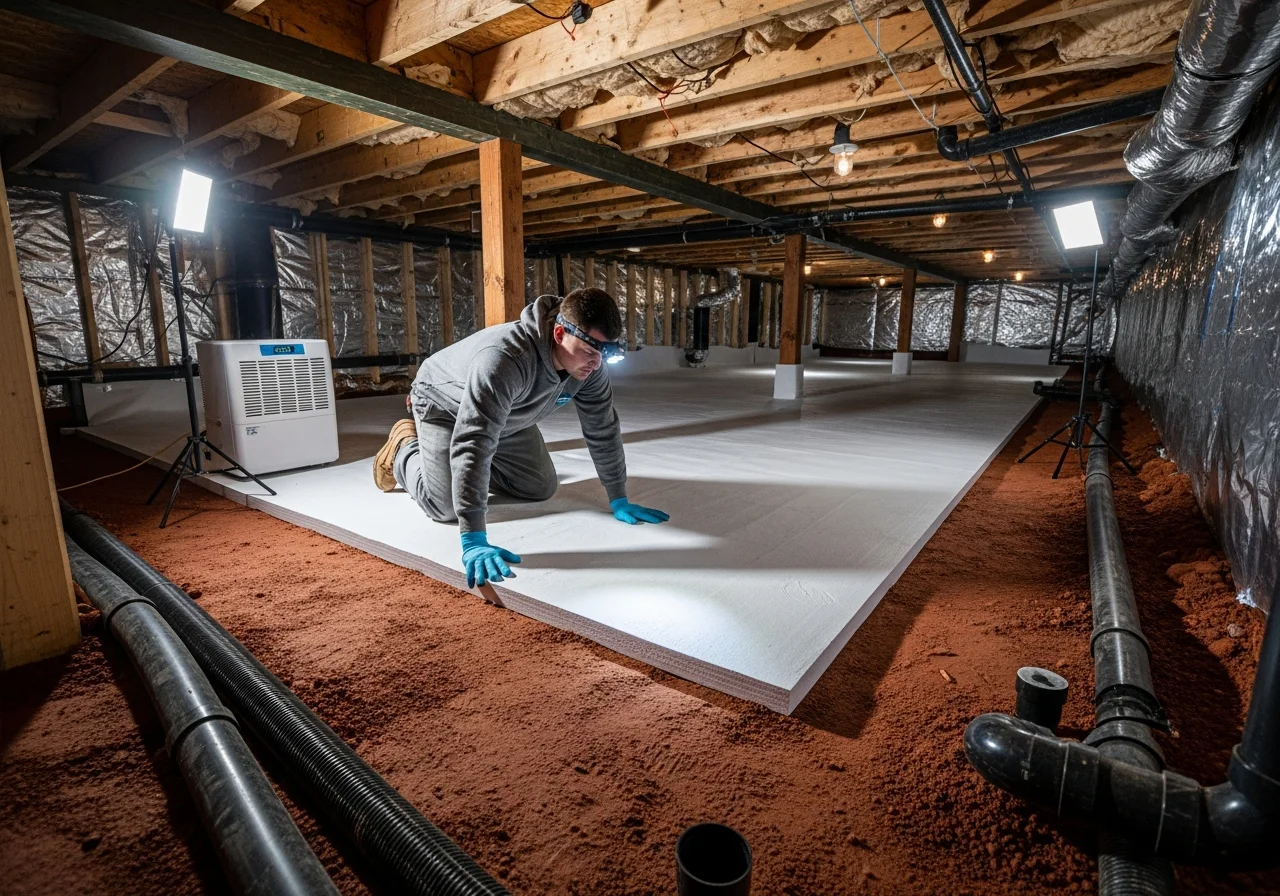
Mooresville crawl space during the summer humidity windowAfter: Encapsulated crawl space with Class I vapor barrier and mechanical
dehumidification maintaining 45-55% RH year-round
IICRC S520 Protocol
Our Mooresville Mold Remediation Process
Professional mold remediation follows a strict sequence defined by the IICRC S520
standard. Here is exactly what happens when Palm Build's certified team arrives at your
Mooresville property.
01
Assessment & Testing
Day 1
02
Containment Setup
Day 1-2
03
HEPA Air Filtration
Continuous
04
Removal & Cleaning
Days 2-4
05
Antimicrobial Treatment
Days 4-5
06
Clearance Verification
Day 5-6
01
Assessment & Testing
Day 1
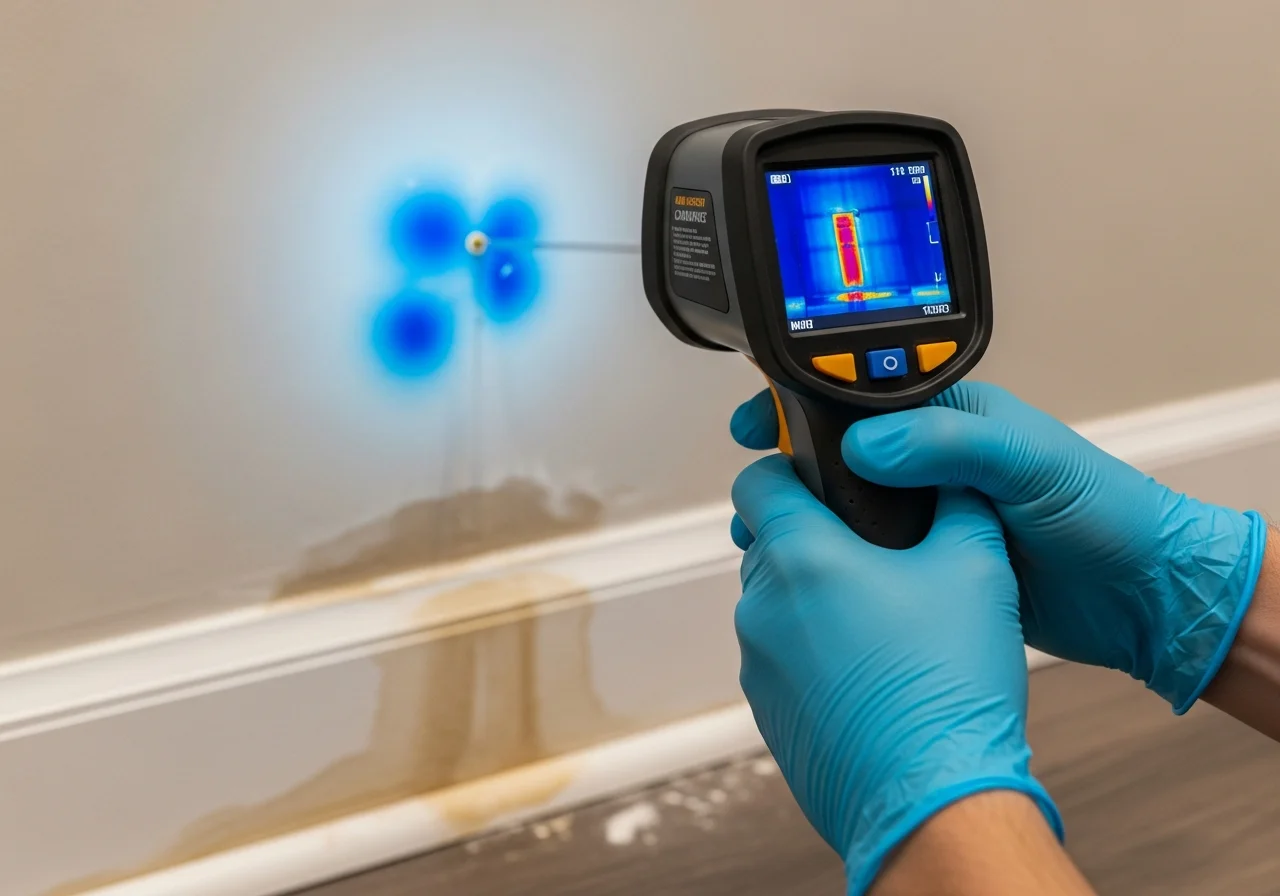
Comprehensive visual inspection, moisture mapping with infrared cameras, and air quality sampling. We identify the moisture source driving the mold — not just the visible colonization — and classify contamination per IICRC S520 Condition categories. For Mooresville homes, this nearly always includes a full crawl space inspection.
02
Containment Setup
Day 1-2
Sealed polyethylene containment barriers isolate affected areas. HEPA air scrubbers create negative air pressure to prevent cross-contamination. For crawl space work, we establish containment at all access points and HVAC penetrations.
03
HEPA Air Filtration
Continuous
HEPA filtration runs 24 hours per day throughout the project, capturing spores down to 0.3 microns. Air scrubbers remain operational until post-remediation clearance testing confirms acceptable spore levels in both the work zone and living areas.
04
Removal & Cleaning
Days 2-4
Contaminated materials are removed using controlled demolition. Salvageable wood surfaces are cleaned with HEPA vacuuming, wire brushing, and media blasting. Non-salvageable materials — insulation, vapor barrier remnants, severely decayed wood — are double-bagged in 6-mil poly for disposal.
05
Antimicrobial Treatment
Days 4-5
EPA-registered antimicrobial agents are applied to all treated surfaces. For Mooresville crawl spaces, this includes every joist face, subfloor panel, sill plate, and foundation wall within the remediation scope. Treatment prevents regrowth during reconstruction.
06
Clearance Verification
Day 5-6
Independent third-party post-remediation air quality testing confirms spore counts have returned to acceptable levels relative to outdoor baseline. Visual inspection verifies all contamination addressed. Clearance documentation provided for your records, insurance carrier, and future real estate transactions.
Why Containment Matters
Disturbing mold without proper containment sends billions of spores airborne —
potentially contaminating previously clean areas of your home. In Mooresville's Lake
Norman homes, where HVAC ductwork often runs through the crawl space, uncontained
remediation can spread contamination to every room in the house.
1
Sealed Barriers
Polyethylene sheeting floor-to-ceiling at all containment zones
2
Negative Pressure
HEPA scrubbers pull air inward through containment
3
PPE Protocol
Full Tyvek, respirators, goggles for all crew members
Costs in the Lake Norman market are driven by three factors: extent of colonization,
whether crawl space work is involved, and whether structural materials need replacement.
These ranges reflect real-world project costs in Mooresville and the Lake Norman
corridor — not national averages.
Insurance reality check: Standard NC HO-3 policies cap
mold coverage at $5,000 to $10,000 as a sublimit — and only when mold resulted from a covered
peril like a burst pipe. Chronic crawl space mold from Lake Norman humidity and clay soil is
excluded as gradual damage. A comprehensive crawl space remediation in The Point, Morrison Plantation,
or Waterlynn can reach $25,000 to $40,000. The gap is your responsibility.
Seasonal Mold Risk Calendar
When Mold Risk Peaks in Mooresville
Mold risk in Mooresville follows seasonal patterns driven by Lake Norman's moisture
influence, the Piedmont's rainfall cycle, and the 5-month humidity window that defines
the aggressive mold growth season from May through October.
January - February
Frozen Pipe Bursts Feed Winter Mold
Mooresville's winter lows dip into the mid-20s. Burst pipes in crawl spaces and attics saturate building materials. If drying is delayed beyond 48 hours, mold colonization begins. Homes in Churchill Estates and Huntington Woods with 1990s-era polybutylene plumbing are highest risk for catastrophic pipe failure.
March - April
Spring Rain Activates Crawl Spaces
Spring rains saturate Iredell County's clay soil and crawl space moisture climbs sharply. Homeowners in Morrison Plantation, The Farms, and Churchill Estates first notice musty smells as dormant mold colonies reactivate. Foundation vents begin channeling increasingly humid air into subsurface environments.
May - June
Humidity Window Opens at 65°F Dew Point
Outdoor dew points cross 65°F and stay there through October. Lake Norman's surface water amplifies ambient humidity across the southern Iredell corridor. HVAC condensate drain failures begin as AC ramps to full load. Vented crawl spaces cross 80% RH and mold growth shifts from gradual to aggressive.
July - August
Peak Mold Growth Season
Summer humidity routinely exceeds 75% outdoors in the Lake Norman corridor. Unencapsulated crawl spaces sustain 80 to 90% relative humidity continuously. Aspergillus and Penicillium can double colony size every 24 to 48 hours. This is when the most aggressive structural damage accumulates on floor joists and subflooring.
September - October
Hurricane Remnants and Tropical Moisture
Tropical systems bring multi-day rainfall events. Lake Norman water levels fluctuate with Duke Energy management. Any storm-driven water intrusion not dried within 48 hours becomes a full mold event. Pre-existing crawl space moisture compounds with storm water, creating the year's most severe remediation scenarios.
November - December
Discovery Season and Winterization
Crawl space mold is most often discovered during fall inspections, real estate transactions, or winterization. Closing windows concentrates indoor air quality problems. The stack effect pulls contaminated crawl space air into heated living spaces as the temperature differential increases — Lake Norman homes with open floor plans amplify this effect.
NC Regulatory Landscape
Mold Licensing in North Carolina: What Mooresville Homeowners Must Know
North Carolina has no state-specific mold remediation license requirement. The NC State University Extension Healthy Homes program confirms: "No federal or
state certification programs exist for companies or individuals providing mold
remediation services."
In a Lake Norman market saturated with handyman services advertising mold removal,
this regulatory gap means anyone can legally offer mold remediation in Mooresville
without training, equipment, or accountability. The accepted industry benchmark is
IICRC certification — specifically the BSR-IICRC S520 standard for professional mold remediation and the Mold Remediation Specialist (MRS) credential, which requires documented field experience and a proctored examination.
Verify IICRC S520 certification for any mold company you hire
Ask for MRS (Mold Remediation Specialist) credentials by name
Confirm the company carries liability insurance and workers comp
Structural repair requires separate NC general contractor licensing
Never hire the same company for both testing and remediation
Licensed NC general contractor for structural repairs
Full liability insurance and workers' comp coverage
35-45 minute response from Charlotte operations hub
Red Flags to Watch For
No IICRC certification or won't provide proof
Offers to "spray and seal" without removing contaminated material
Won't set up containment barriers or HEPA filtration
Same company does testing AND remediation (conflict of interest)
Quotes a price without seeing the crawl space in person
Our Work
Mooresville Mold Remediation: Before and After
Active mold colonization on floor joists — typical of Mooresville vented crawl spaces during the May-October humidity window
After: Encapsulated crawl space with Class I vapor barrier and permanent dehumidification maintaining 45-55% RH
Infrared thermal imaging reveals hidden moisture — critical for identifying the full extent of mold damage before remediation
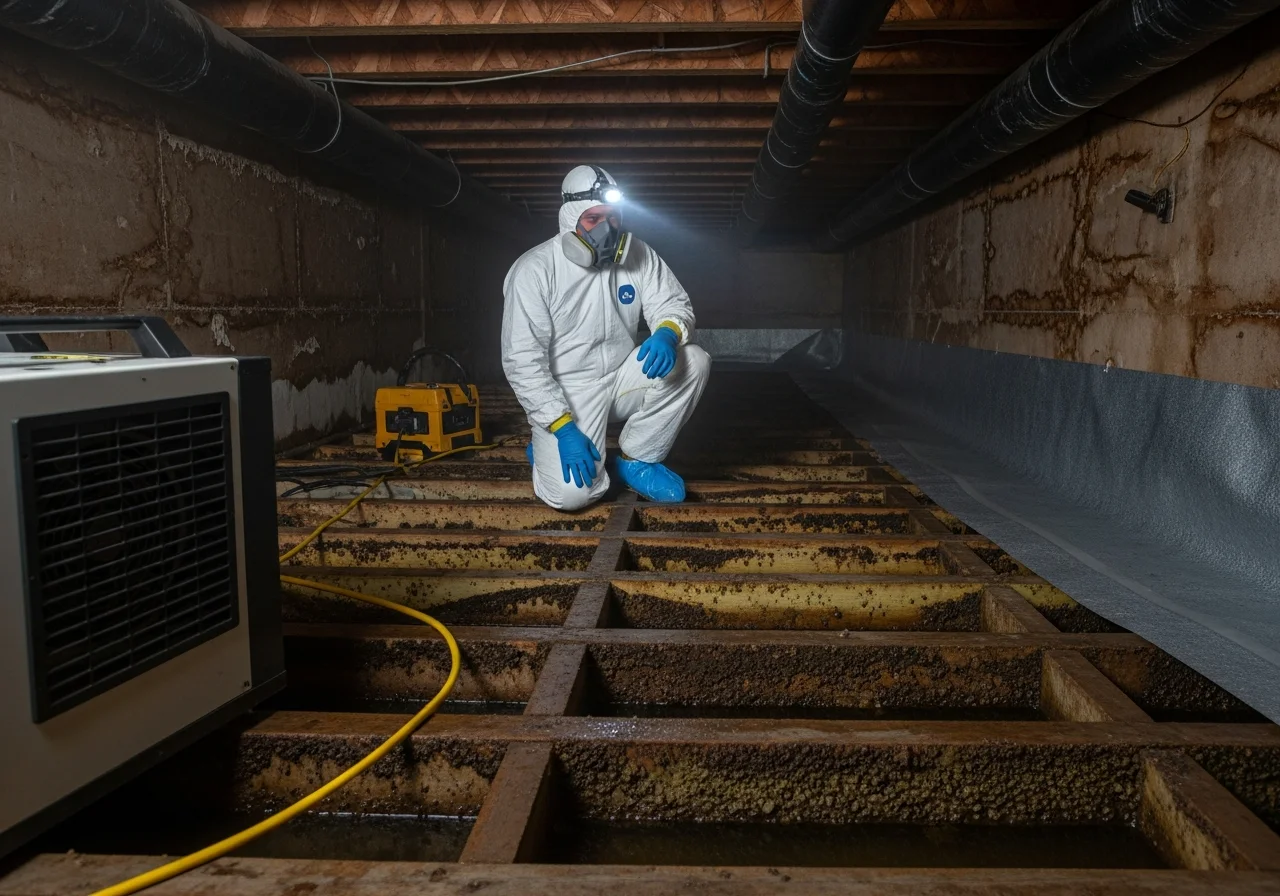
Mooresville's premium Lake Norman homes require remediation protocols that protect high-value finishes while eliminating moisture sources
The Palm Build Difference
Why Mooresville Homeowners Choose Palm Build for Mold
In a state with no mold licensing requirement and a Lake Norman market saturated with
handyman services advertising mold removal, credentials and local expertise separate
professional remediation from cosmetic cleanup that allows mold to return within months.
IICRC S520 Certified
Every crew lead holds current Mold Remediation Specialist (MRS) certification. We follow the S520 standard for containment, removal, and clearance verification — the industry benchmark in a state with no mold licensing requirement.
35-45 Minute Response
When mold is discovered during a water damage event, speed matters. Our crews reach Mooresville from our Charlotte operations hub in 35 to 45 minutes to begin containment and prevent further colonization spread.
Lake Norman Expertise
We understand Lake Norman's localized humidity patterns, Iredell County's clay soil dynamics, and the specific crawl space designs common in the 2000s boom-era construction that dominates Mooresville. Our protocols account for the lake corridor's unique moisture environment.
Licensed NC General Contractor
When mold has damaged structural members — joists, sill plates, subflooring — we handle the structural repair under our NC contractor license. No subcontracting, no handoffs, no gaps between remediation and reconstruction.
Insurance Coordination
When mold results from a covered water event, our documentation connects the mold to the original loss. Moisture maps, timeline photos, air quality testing, and scope of work — all formatted for your adjuster and structured to maximize your covered recovery.
Permanent Moisture Elimination
We do not just remove mold — we eliminate the moisture source driving it. Encapsulation, drainage correction, dehumidification, and vent sealing ensure mold does not return after remediation. For Lake Norman homes, this is the only approach that provides lasting results.
Common Questions
Mooresville Mold Remediation FAQ
Does North Carolina require a mold remediation license?
No. North Carolina has no state-specific mold remediation license requirement. The IICRC S520 standard and Mold Remediation Specialist (MRS) certification are the accepted industry benchmarks. Any contractor can legally advertise mold removal in Mooresville without training or credentials. Always verify your contractor holds current IICRC certification at iicrc.org before hiring.
How much does mold remediation cost in Mooresville?
Contained interior mold remediation in Mooresville typically ranges from $3,700 to $11,900. Crawl space mold remediation with encapsulation — the most common project type in the Lake Norman corridor — ranges from $13,600 to $40,200 or more depending on square footage, structural damage, and whether drainage work is needed. Premium lakefront homes in The Point or Waterlynn often fall at the higher end due to larger crawl spaces and high-value finishes.
Why is crawl space mold so common in Mooresville?
Mooresville has a perfect convergence of mold risk factors: Lake Norman generates localized humidity that exceeds inland Piedmont levels, the majority of homes were built in the 2000s with vented crawl space foundations that channel humid air onto cooler wood surfaces, and Iredell County's red clay soil drains at less than 0.2 inches per hour. Vented crawl spaces in the Lake Norman corridor routinely exceed 80% relative humidity from May through October — well above the 60% threshold where mold growth accelerates exponentially.
How fast does mold grow after water damage in Mooresville?
Mold can begin growing within 24 to 48 hours of sustained moisture on building materials. Mooresville's warm, humid climate — especially during the May through October window — accelerates this timeline. A crawl space with elevated humidity from a spring rainstorm can develop visible mold colonies within two to three weeks if the moisture source is not addressed.
Does homeowners insurance cover mold remediation in Mooresville?
NC standard HO-3 policies typically have mold coverage sublimits of $5,000 to $10,000, and only when mold results from a covered sudden event like a burst pipe. Chronic crawl space mold caused by humidity and clay soil moisture — the most common scenario in Mooresville — is typically excluded as gradual damage. A comprehensive crawl space remediation in the Lake Norman corridor can reach $25,000 to $40,000, leaving a significant gap that is the homeowner's responsibility.
Can I stay in my home during mold remediation?
For small contained areas such as a single bathroom or section of wall, yes — provided proper containment and negative air pressure are maintained. For large-scale remediation involving multiple rooms, HVAC contamination, or full crawl space work, temporary relocation is recommended. Palm Build establishes sealed containment barriers and operates HEPA air scrubbers continuously to prevent cross-contamination during the process.
What is the difference between a vented and encapsulated crawl space?
Vented crawl spaces have foundation vents that channel outdoor air beneath your home — a design that works in dry climates but creates a chronic moisture factory in the Lake Norman corridor. Encapsulated crawl spaces seal those vents, cover the earth floor with a Class I vapor barrier, and use mechanical dehumidification to maintain humidity below 60%. North Carolina building code now explicitly allows encapsulated crawl spaces as an alternative. Average encapsulation cost in Mooresville runs $5,000 to $12,000.
What areas of Mooresville does Palm Build serve for mold remediation?
We serve all of Mooresville and southern Iredell County including The Point, Morrison Plantation, The Farms, Langtree, Waterlynn, Pier 33, Churchill Estates, Blackberry Creek, Huntington Woods, The Harbour at the Pointe, and all Lake Norman shoreline communities. Our Charlotte operations hub is approximately 30 miles south with 35 to 45 minute response times.
Mold Problem in Mooresville? Get a Professional Assessment.
Palm Build's IICRC S520-certified mold remediation team provides same-day inspections, professional containment, and complete remediation with documentation your insurance carrier accepts. Serving all Lake Norman communities.