Fire & Smoke Damage Cleanup in Mooresville, North Carolina
From Lake Norman's premium waterfront estates to Morrison Plantation's family neighborhoods, Palm Build's IICRC-certified team handles structural fire damage, soot removal, smoke odor elimination, and full reconstruction — with 35-45 minute emergency response from our Charlotte operations hub and insurance coordination from the first call.
Charlotte NC — 30 miles, ~35-45 min 35-45 min Response IICRC Certified
After a Fire in Mooresville, Every Hour of Delay Costs You
The fire department puts out the flames — but that's when the real damage clock starts.
Soot, smoke residue, and fire-suppression water are all actively damaging your
Mooresville home right now. In premium Lake Norman properties, the difference between a
$20,000 restoration and a $80,000 rebuild often comes down to how fast professional
mitigation begins. Here's the timeline of escalating damage inside your home.
0 – 4 Hours
Soot Acidification Begins
Within hours of a fire, soot residue starts producing sulfuric and hydrochloric acid on every surface it contacts. In Mooresville's Lake Norman homes with premium finishes — granite countertops, stainless steel appliances, brass hardware, marble tile — this acid etching can cause irreversible damage. The humid microclimate around Lake Norman accelerates this reaction because airborne moisture bonds with soot compounds to intensify the corrosion. Every hour of delay at this stage turns a cleanable surface into one that must be replaced.
24 – 72 Hours
Smoke Penetration Deepens
Smoke odor molecules — measured in microns — continue migrating deeper into porous materials for days after flames are extinguished. In Mooresville homes built during the late 1990s and 2000s with engineered hardwood, drywall, and carpet padding, smoke infiltrates through every layer. Premium lake homes with open floor plans and cathedral ceilings are especially vulnerable because smoke traveled freely through these large volumes during the fire. After 72 hours, odor elimination requires significantly more intensive treatment and the costs can double or triple.
24 – 48 Hours
Mold Growth From Suppression Water
Fire hoses deliver 150 to 250 gallons per minute, and that water saturates your Mooresville home from top to bottom. With Iredell County's clay-heavy soil under crawl spaces, water pools rather than draining. In Mooresville's humid subtropical climate, mold spores begin colonizing wet building materials within 24 to 48 hours. Now you're dealing with fire damage, water damage, and mold risk simultaneously — three damage clocks ticking at once. Professional mitigation must address all three from the first hour.
1 – 2 Weeks
Permanent Odor Embedding
If smoke residue isn't professionally treated within the first two weeks, odor compounds become permanently embedded in insulation, ductwork, wall cavities, and subfloor materials. At this stage, cleaning alone won't resolve the problem — affected materials must be physically removed and replaced. For Mooresville homeowners, this can mean tearing out custom cabinetry, specialty flooring, and built-in features that would otherwise have been salvageable with prompt professional treatment.
Emergency Fire Restoration
Palm Build dispatches from our Charlotte office — 30 miles south of Mooresville — with
a typical response time of 35-45 minutes. We begin emergency board-up, soot
stabilization, and water extraction simultaneously, stopping all three damage clocks
at once. For Lake Norman properties, we coordinate through HOA gates and private road
access to eliminate delays.
Emergency fire damage assessment begins within hours of the call for Mooresville
homeowners
Local Risk Factors
Fire Risks Specific to Mooresville & Lake Norman Homes
Mooresville's housing stock — from premium Lake Norman estates built in the 2000s to
older downtown homes and growing condo communities — creates distinct fire risk
profiles. Understanding which risks apply to your neighborhood ensures your restoration
company knows exactly what they're dealing with from the first call.
Electrical Fires in Late-90s/2000s Construction
High
Mooresville's building boom from the late 1990s through the 2010s produced thousands of homes in subdivisions like Morrison Plantation, The Farms, and Waterlynn. Homes from this era commonly have aluminum-to-copper wiring connections that corrode over time, Federal Pacific or Zinsco breaker panels that fail to trip under overload, and service panels undersized for today's demands — electric vehicles, home offices with multiple monitors, and whole-house smart systems. These electrical issues create conditions for fires that smolder behind walls for hours before detection, producing extensive smoke damage throughout the home before flames become visible.
Peak season: Year-round
Kitchen Fires in Premium Lake Homes
Most Common
Lake Norman's upscale homes in communities like The Point, Northington, and Pinnacle feature chef-grade kitchens with commercial ranges, built-in grills, and high-BTU burners. These powerful appliances produce intense heat that can ignite grease, cabinetry, and range hoods faster than standard residential equipment. The protein soot from cooking fires is the most difficult type to remediate — it produces an invisible, chemically bonding residue with an extremely pungent odor that penetrates every surface in the home. Open floor plans common in these lake homes mean kitchen fire smoke travels rapidly through the entire living space.
Peak season: Year-round
Multi-Unit Fire Spread in Condos & Townhomes
Specialized
Mooresville's growing inventory of condominiums and townhomes — Pier 33 Condos on the lake, Blackberry Creek, and newer mixed-use developments along Highway 150 — create elevated fire spread risk through shared walls, connected attic spaces, and common HVAC chase ways. A fire originating in one unit can push smoke and heat through these shared cavities into adjacent units, affecting multiple families and complicating insurance claims. Restoration in multi-unit buildings requires coordinating with the HOA, multiple carriers, and adjacent unit owners simultaneously.
Peak season: Year-round
Heating-Related Fires (November – February)
Seasonal High
Mooresville winters drive a significant increase in residential fire calls. Space heaters placed too close to furniture or curtains, overloaded electrical circuits from holiday lighting in lakefront homes with extensive exterior decorations, wood-burning fireplaces in older downtown homes with original masonry chimneys, and HVAC system malfunctions in aging furnaces all contribute. Mooresville's fire data follows the national pattern: residential fires spike sharply from November through February, with the holiday period being the highest-risk window for cooking fires, candle fires, and electrical overloads.
Peak season: Nov – Feb
Downtown Mooresville Older Home Risk
High
Downtown Mooresville and surrounding neighborhoods contain homes built from the 1940s through 1970s with original electrical systems, knob-and-tube wiring in pre-1950s construction, and plaster-and-lath walls that can conceal fire spread. These older homes also often have upgraded kitchens and added circuits without corresponding service panel upgrades, creating dangerous overload conditions. The combination of old wiring and modern electrical demand is one of the most common fire causes in Mooresville's established neighborhoods.
Peak season: Year-round
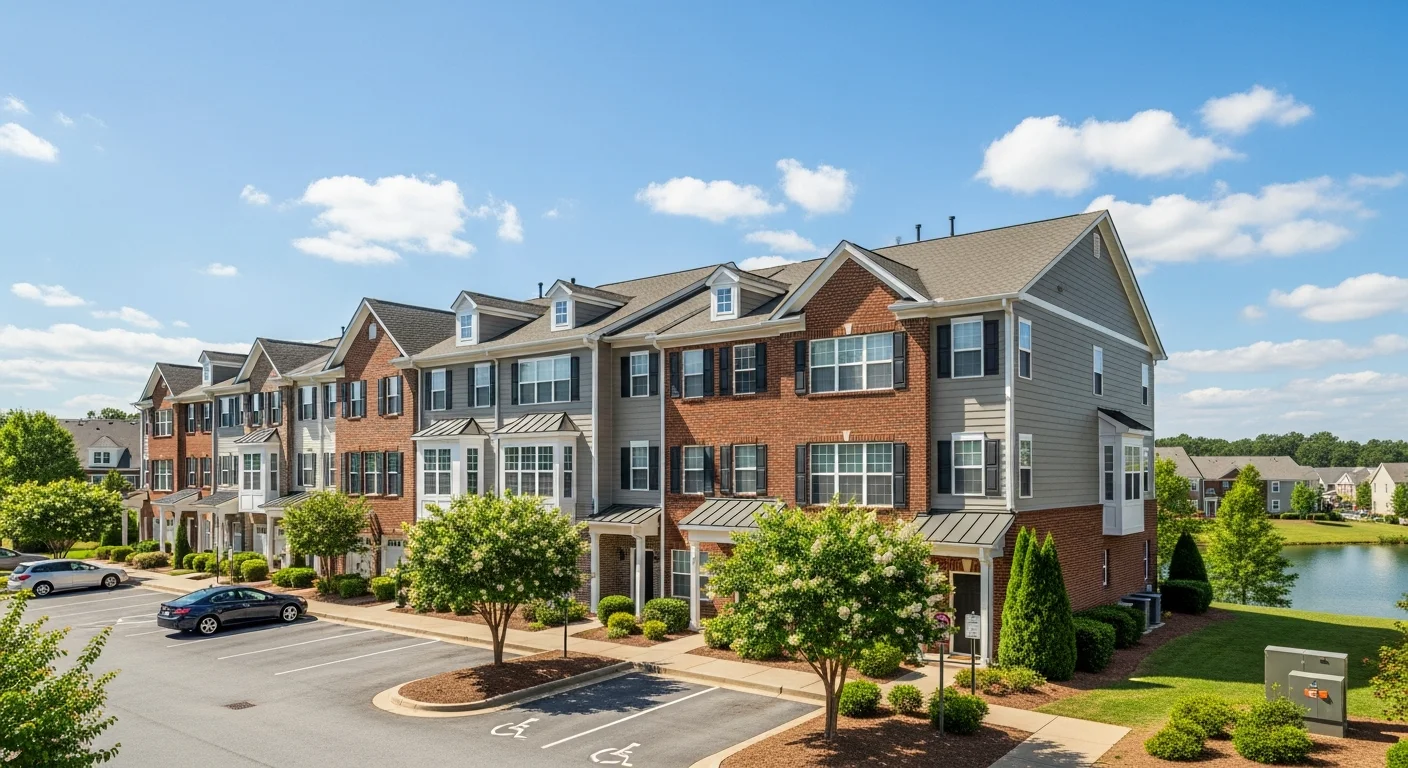
Mooresville's growing townhome and condo communities present unique fire spread risks
through shared walls and common attic spaces
Understanding the Damage
The Science of Soot: Why Fire Type Determines the Restoration Approach
Not all fire damage is the same. The materials that burned determine what kind of soot
your Mooresville home is coated with — and that determines the cleaning chemistry,
equipment, and timeline required. Using the wrong cleaning approach doesn't just fail —
it permanently sets stains and drives odors deeper into materials. Here's what each soot
type looks like and how our IICRC-certified technicians treat it.
Protein Residue (Kitchen Fires)
The most common fire type in Mooresville homes, particularly in Lake Norman's premium kitchens with commercial-grade ranges. Protein fires from cooking produce an almost invisible, yellowish residue with an extremely pungent odor that penetrates every surface in the home — traveling far beyond the kitchen through open floor plans and HVAC systems. The residue appears nearly invisible on light surfaces but bonds chemically rather than sitting on top. Standard household cleaning products and DIY attempts will spread the residue, set the stain permanently, and drive the odor deeper into materials. This is the soot type Mooresville homeowners most frequently mishandle before calling a professional.
Professional Cleaning Approach
Requires enzymatic cleaners and specialized degreasing agents. Thermal fogging with protein-specific solutions is typically needed for odor elimination. Multiple treatment cycles are standard in open-concept Lake Norman homes where smoke traveled throughout large volumes.
Dry Soot (Wood, Paper, Cotton)
When Mooresville homes with hardwood framing, wood trim, and cellulose insulation burn, they produce dry, powdery, gray-black soot. This type is lightweight and easily disturbed by air currents — it distributes throughout the entire home via forced-air HVAC systems within hours. In Mooresville's newer construction with central air, soot from a fire in one room contaminates ductwork and coats surfaces in every room the system serves. Dry soot is the most responsive to professional cleaning when addressed promptly, but it smears and sets permanently if wiped with wet cloths or standard cleaning products. The critical rule: never wipe dry soot before HEPA vacuuming.
Professional Cleaning Approach
HEPA vacuuming first to capture loose particulate, followed by dry chemical sponge treatment, then wet cleaning with specialized detergents. All HVAC ductwork must be professionally cleaned to prevent redistribution.
Synthetic Soot (Plastics, Polymers)
Modern Mooresville homes — especially post-2000 construction in Morrison Plantation, The Farms, and Waterlynn — contain significant amounts of synthetic materials: engineered wood flooring, spray foam insulation, PVC trim, synthetic carpeting, and plastic fixtures. When these materials burn, they produce thick, black, oily soot that is the most difficult to remove. Synthetic soot smears aggressively when touched, adheres to every surface with near-permanent tenacity, and contains toxic compounds including hydrogen cyanide and dioxins. This is the most hazardous soot type for both occupants and restoration technicians, requiring full PPE and specialized ventilation during cleanup.
Professional Cleaning Approach
Requires solvent-based cleaners specifically formulated for petroleum-based residues. Multiple cleaning passes are standard. Full PPE including respiratory protection is mandatory. Often requires more aggressive methods including media blasting on hard surfaces.
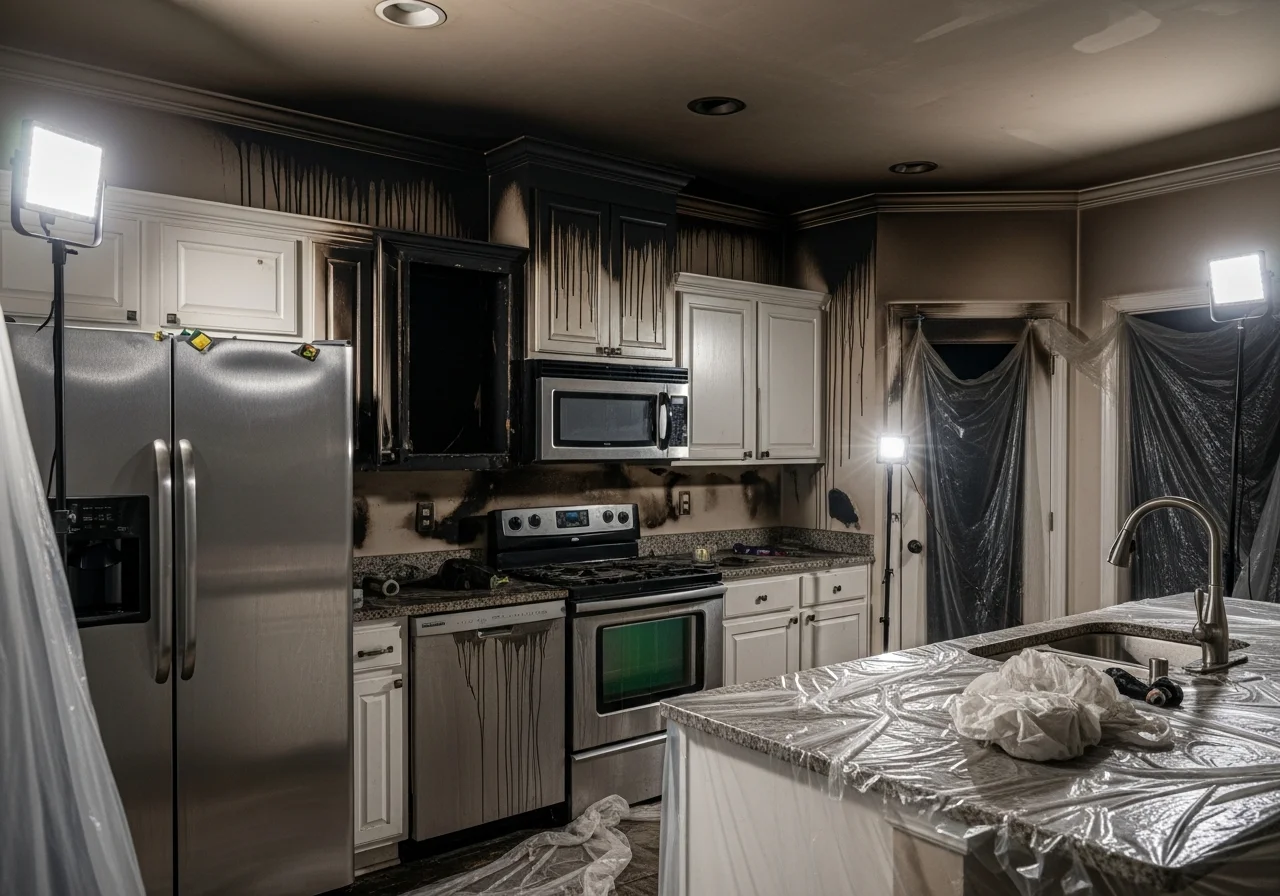
Kitchen fire soot requires immediate professional treatment — amateur cleaning attempts
permanently set protein residue into surfaces
Our Fire Restoration Process
How We Restore Mooresville Homes After Fire Damage
Fire restoration is more complex than water or mold because it involves multiple damage
types simultaneously — structural fire damage, soot contamination, smoke odor, and water
from fire suppression. Our 8-step process addresses all four in a coordinated sequence
tailored to Mooresville's construction types and Lake Norman's climate conditions.
01
Emergency Board-Up & Securing
Hours 1-4
We secure your Mooresville home against weather, theft, and further damage. This includes boarding windows, tarping damaged roof sections, and securing doors. Mooresville's afternoon thunderstorms and proximity to Lake Norman's humid weather patterns make this step critical — an unsecured fire-damaged home can sustain thousands in additional water damage from a single storm. For gated Lake Norman communities like The Point, we coordinate access with HOA security to avoid any delays.
02
Damage Assessment & Documentation
Day 1-2
Our IICRC-certified team performs a comprehensive walk-through documenting every affected area with photos, video, and moisture readings. We classify the fire type (protein, dry, synthetic), assess structural integrity, identify hidden damage behind walls and in attic spaces, and create a detailed scope of work. This documentation becomes the foundation of your insurance claim — formatted exactly how adjusters expect to see it. For Mooresville's premium lake homes, we document specialty finishes and custom materials that require sourcing from specific vendors.
03
Water Extraction & Structural Drying
Days 1-5
Fire suppression water is addressed simultaneously with soot stabilization. We extract standing water, deploy commercial dehumidifiers and air movers, and monitor drying with daily moisture readings. In Mooresville homes built on crawl spaces over Iredell County's clay soil, water pools rather than draining — requiring targeted crawl space extraction to prevent secondary mold growth that can begin within 24-48 hours in this region's humid conditions.
04
Soot & Smoke Removal
Days 3-10
Professional soot removal uses chemistry matched to the specific soot type identified during assessment. HEPA vacuuming removes loose particulate, chemical sponges lift embedded residue, and wet cleaning with specialized detergents addresses remaining contamination. Every surface in the affected area is treated — walls, ceilings, trim, cabinetry, fixtures, and structural members. Mooresville homes with engineered hardwood, granite countertops, and premium cabinetry require specialized techniques to clean without damaging these high-value materials.
05
HVAC & Ductwork Cleaning
Days 5-8
Forced-air HVAC systems — standard in virtually all Mooresville homes — distribute soot and smoke throughout the entire ductwork network within hours of a fire. Every register, return, supply line, and the air handler itself must be professionally cleaned and sanitized. Skipping this step means soot will recirculate through your home for months, recontaminating cleaned surfaces every time the system runs. We use HEPA-filtered negative air machines and mechanical agitation to remove all soot from ductwork.
06
Smoke Odor Elimination
Days 5-14
Smoke odor elimination is a multi-step process using thermal fogging, ozone treatment, and hydroxyl generation — matched to the specific materials and construction in your Mooresville home. Lake Norman homes with cathedral ceilings, open floor plans, and large square footage require extended treatment cycles. We verify odor elimination with independent testing before closing walls or applying final finishes — because paint and drywall seal odors in permanently if they're not fully eliminated first.
07
Reconstruction & Final Restoration
Weeks 2-8+
Once cleaning and odor treatment are verified complete, we handle full reconstruction: drywall, flooring, cabinetry, painting, electrical, plumbing, and finish work. For Mooresville's premium lake homes, this includes sourcing specialty materials — hardwood species, stone countertops, custom cabinetry — to match or exceed the original quality. Palm Build manages the entire project from emergency board-up through final punch list, eliminating the need for homeowners to coordinate multiple contractors.
08
Final Inspection & Insurance Closeout
Project End
We perform a comprehensive final walk-through with the homeowner, verifying every item in the scope of work is complete. Air quality testing confirms no residual smoke odor or particulate. We compile all documentation — before/after photos, moisture logs, material receipts, and inspection reports — and submit the final package to your insurance carrier for claim closeout. This thorough documentation process ensures no supplemental items are missed.
The Hidden Damage
Water Damage From Firefighting: Often Worse Than the Fire Itself
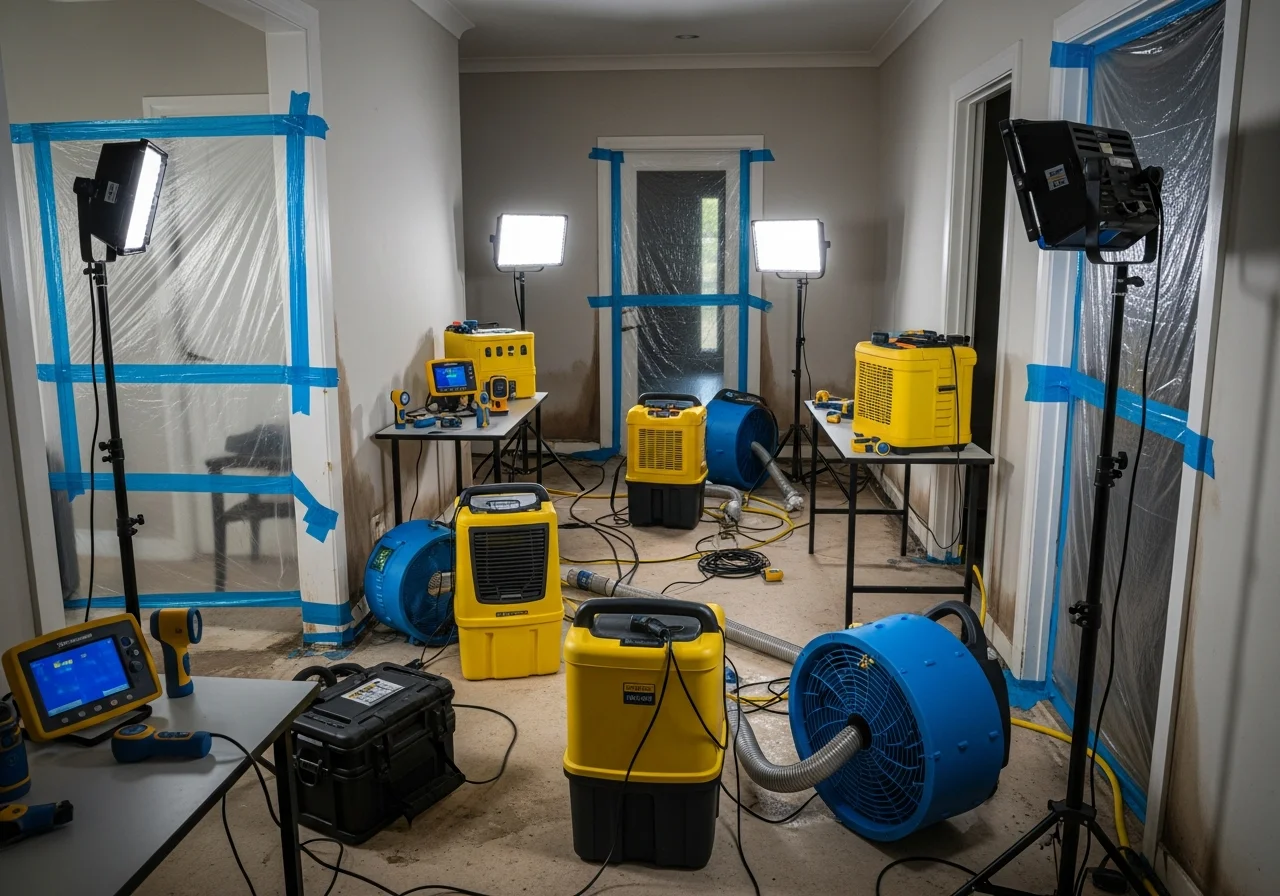
Commercial dehumidifiers and air movers deployed for structural drying after fire
suppression
Many Mooresville homeowners are shocked to discover that fire suppression causes more
damage to their home than the fire itself. A single fire hose delivers 150 to 250
gallons of water per minute. Residential sprinkler heads — increasingly common in
newer Lake Norman developments — activate at 17 gallons per minute and may run for 30
minutes or more before being shut off. That water saturates drywall, subfloors,
insulation, and personal property — and it all flows downward through the structure,
damaging floors below the fire origin.
In Mooresville's crawl space homes — which make up a significant portion of the
housing stock — fire suppression water pools underneath the house on top of Iredell
County's red clay soil that holds moisture for weeks. Within 24 to 48 hours in the
Lake Norman area's humid climate, this water begins feeding mold growth on the same
wooden structural members that may have been weakened by heat. You're now dealing with
fire damage, water damage, and mold risk simultaneously — and the restoration approach
must address all three from day one to prevent compounding costs.
Palm Build's fire restoration team handles water extraction and structural drying as
an integrated part of the fire cleanup process — not as a separate project that adds
weeks and thousands to your timeline. Our technicians are cross-trained in both fire
and water damage restoration, so one team manages the entire scope from the first hour.
How We Permanently Eliminate Smoke Odor in Mooresville Homes
Smoke odor is the most persistent aspect of fire damage — and the most common reason
homeowners call back months after a fire. Masking products, candles, and consumer ozone
machines do not eliminate smoke odor. They temporarily cover it. Professional odor
elimination requires treating the source at the molecular level using one or more of
these methods, matched to the specific materials, volume, and construction type in your
Mooresville home.
Thermal Fogging
Heated deodorizing agents are converted into a fog that penetrates materials the same way smoke did — through microscopic pores, cracks, and cavities. This is the most effective method for Mooresville homes with porous materials like hardwood, textured drywall, and the stone or brick accent walls popular in Lake Norman homes. The fogging agent chemically neutralizes odor molecules rather than masking them. In open-concept lake homes with cathedral ceilings, we use extended fogging cycles and multiple application points to ensure the fog reaches the same heights and volumes the original smoke traveled through.
Best for: Porous materials, cathedral ceilings, open floor plans, Lake Norman premium homes
Ozone Treatment
Ozone generators create O3 — a highly reactive oxygen molecule that breaks down odor compounds at the molecular level. Ozone treatment is extremely effective but requires the space to be completely unoccupied during treatment, including pets and plants. We use ozone for sealed, evacuated spaces like master closets, wine cellars, bonus rooms, and enclosed areas where concentrated treatment achieves maximum effectiveness. Many Lake Norman homes have dedicated wine rooms, home theaters, and sealed storage spaces that respond exceptionally well to targeted ozone treatment.
Best for: Sealed spaces, heavy odor concentration, unoccupied areas, enclosed rooms
Hydroxyl Generation
Hydroxyl generators produce hydroxyl radicals — the same molecules that naturally purify outdoor air via sunlight interaction — to break down odor compounds continuously. Unlike ozone, hydroxyl treatment is completely safe for occupied spaces. We deploy these units in areas where homeowners, restoration workers, or insurance adjusters need to be present. This is particularly valuable for Mooresville projects where the homeowner is on-site coordinating insurance decisions, selecting replacement materials, or overseeing contents pack-out. The units run continuously throughout the multi-week restoration to maintain air quality and provide ongoing odor treatment.
Best for: Occupied spaces, ongoing treatment during restoration, large open areas
Mooresville Pricing
Fire Damage Restoration Costs in Mooresville
Fire restoration costs vary dramatically based on fire severity, affected area, and
construction type. Mooresville's mix of premium Lake Norman homes with custom finishes
and established neighborhoods with standard materials means costs span a wide range. The
Iredell County market's building material costs averaging $175-$240 per square foot and
the complexity of matching specialty finishes in lake homes affect the reconstruction
portion significantly. The good news: fire is one of the most comprehensively covered
perils under North Carolina homeowners insurance.
Minor Fire (Kitchen/Contained)
Smoke and soot cleanup, minor drywall repair, odor treatment
$5,000 - $18,000
Common in Mooresville kitchen fires with limited flame spread but extensive smoke travel through open floor plans
Moderate Residential Fire
Structural damage, full-room restoration, soot + odor + water
$18,000 - $65,000
Typical for single-room fires with significant smoke damage and water from suppression in Mooresville homes
Major Structural / Lake Home Fire
Multi-room, roof damage, premium material replacement, full reconstruction
$65,000 - $300,000+
Lake Norman premium homes with custom finishes, large square footage, and specialty materials push costs higher
Why Mooresville Fire Costs Vary So Widely
The range reflects Mooresville's diverse housing market. A contained kitchen fire in a
Morrison Plantation home with standard finishes may cost $8,000-$12,000 to restore. The
same fire in a waterfront home at The Point with imported tile, custom cabinetry, and
specialty hardwood flooring could cost $25,000-$40,000 due to material sourcing and the
precision required for high-end finish matching. In all cases, prompt professional
response keeps costs at the lower end of each range by preventing secondary damage from
soot acidification and moisture.
Insurance Coverage
Fire Insurance Claims in Mooresville: What's Covered
Fire is one of the most comprehensively covered perils under North Carolina homeowners
insurance policies. Unlike water or mold damage, fire claims rarely face coverage
disputes — your policy is designed for exactly this situation. Mooresville homeowners
near Lake Norman typically carry higher dwelling coverage limits due to elevated home
values, which means fire restoration coverage is usually robust. Here's what a standard
HO-3 policy covers for fire damage.
Structural repair and reconstruction to pre-loss condition
Professional soot and smoke cleaning of all affected surfaces
Water damage from fire suppression (extraction and structural drying)
Contents restoration or replacement (furniture, electronics, clothing, art)
Additional Living Expenses (ALE) for temporary housing during restoration
Debris removal and hazardous material disposal
Building code upgrades required during reconstruction (with ordinance-and-law endorsement)
Landscaping and exterior damage from fire department access and suppression
Palm Build Manages Your Mooresville Fire Claim
We work directly with your insurance adjuster from the first inspection. Our fire damage
documentation — structural assessments, soot type classification, moisture readings,
photo evidence, and detailed scopes of work — is formatted exactly how North Carolina
carriers and their adjusters expect to receive it. For Mooresville's premium lake homes
with higher policy limits and specialty materials, our detailed documentation of custom
finishes and replacement costs ensures your claim fully reflects the actual restoration
scope. This reduces back-and-forth and gets your claim approved faster.
ALE Coverage: Temporary Housing During Restoration
Most Mooresville homeowners must vacate during fire restoration due to air quality
concerns. Your policy's Additional Living Expenses (ALE) provision covers temporary
housing, meals, and other costs above your normal living expenses for the duration of
the project. For Lake Norman families, this often means rental homes in the area so
children can maintain school enrollment at Mooresville Graded School District. Palm
Build provides realistic timeline estimates to help you and your adjuster plan ALE
coverage appropriately.
Our Work
Mooresville Fire Restoration: The Process in Action
From initial damage assessment through final reconstruction, every phase of fire
restoration is documented and executed to return your Mooresville home to pre-loss
condition or better.
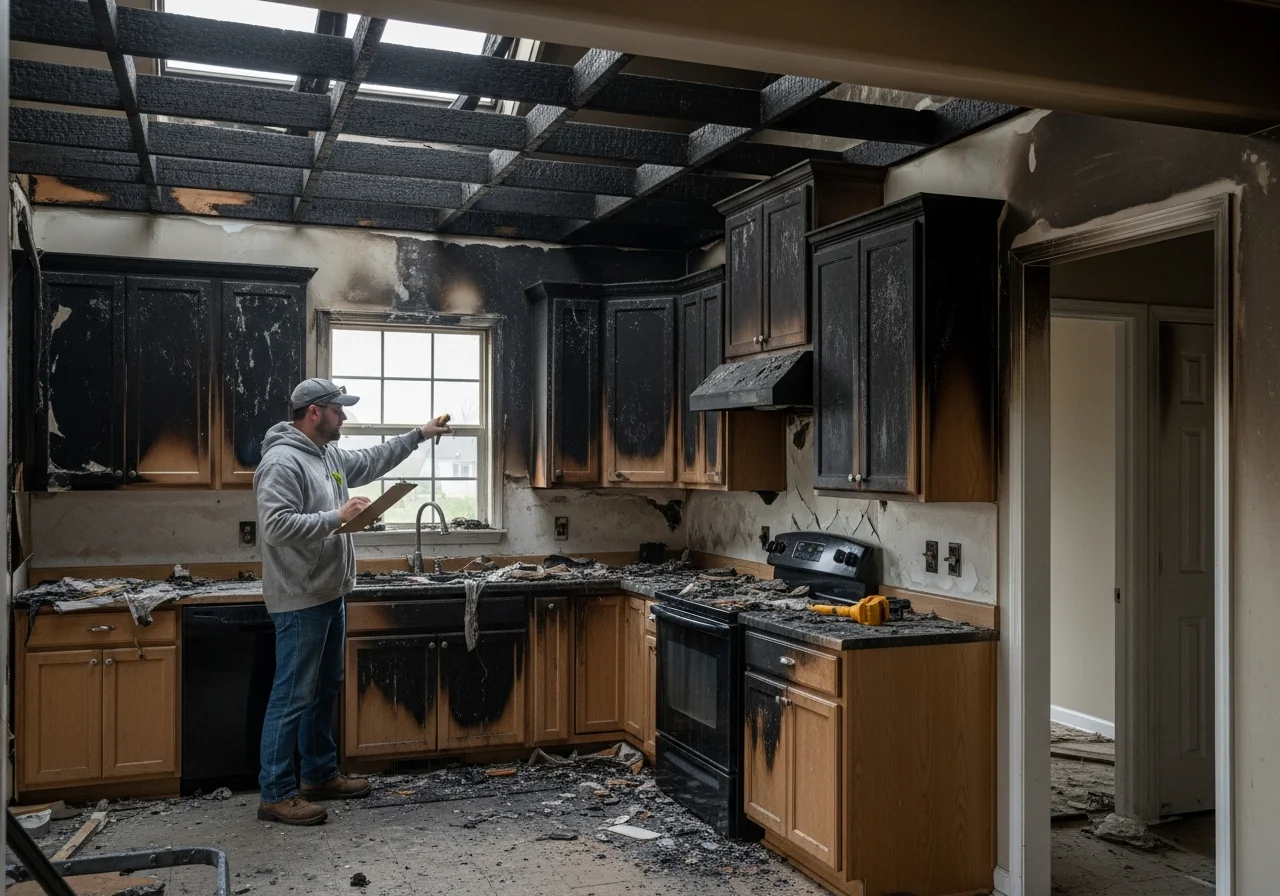
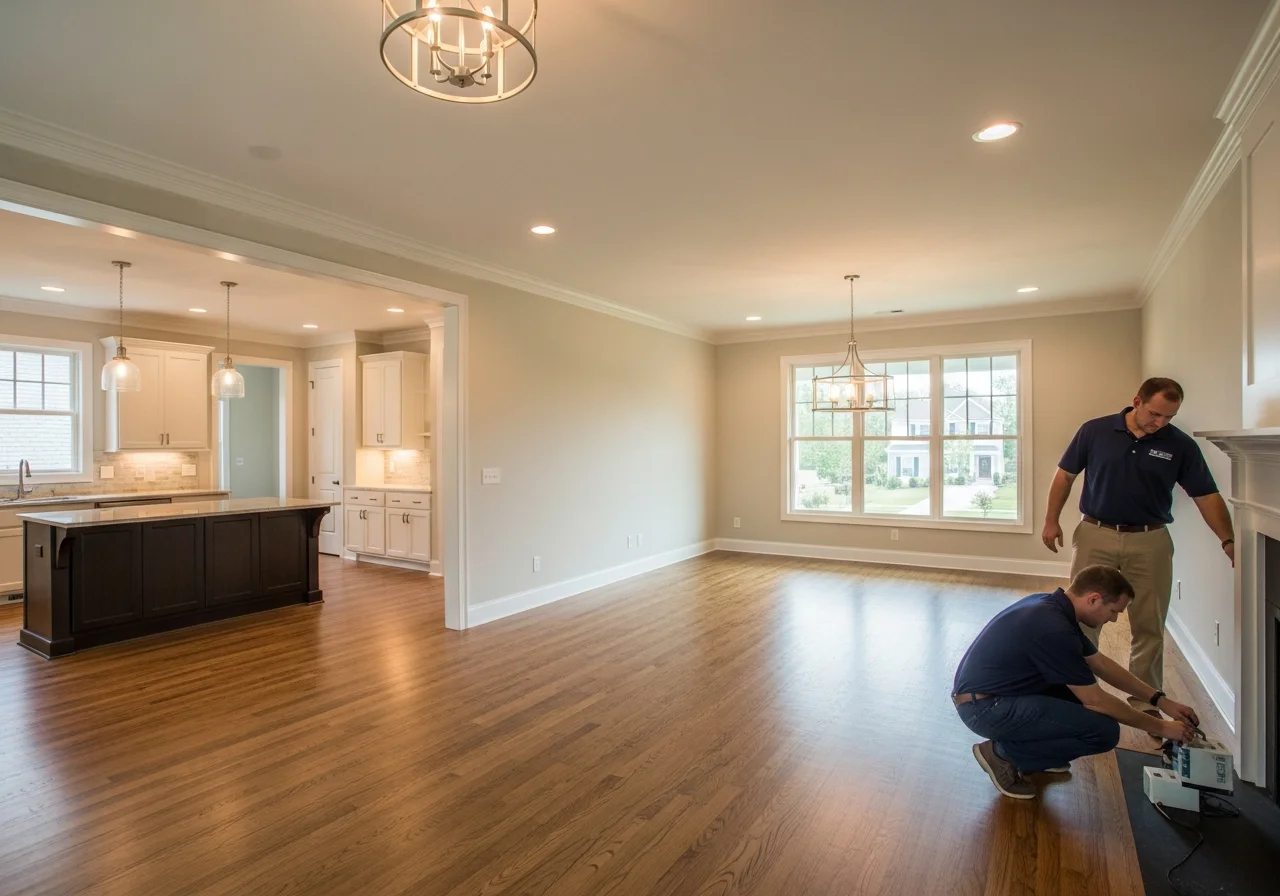
Initial fire damage assessment — documenting soot patterns, structural integrity, and moisture levels
Kitchen fire soot damage — protein residue coating cabinets, countertops, and ceiling surfaces
Commercial drying equipment addresses fire suppression water damage simultaneously with soot cleanup
After: Fully restored with new finishes, cabinetry, and premium materials matching original quality
The Palm Build Difference
Why Mooresville Homeowners Choose Palm Build After a Fire
35-45 Minute Emergency Response to Mooresville
Our Charlotte operations hub on Crompton Street is approximately 30 miles from Mooresville, providing 35-45 minute emergency response. We're familiar with Lake Norman's gated communities, private roads, and HOA access protocols — no delays navigating to your property. Board-up, tarping, and soot stabilization begin the same night.
IICRC Fire & Smoke Certified Technicians
Every crew lead holds current IICRC Fire and Smoke Restoration Technician (FSRT) certification. We follow the S540 standard for professional fire and smoke damage restoration procedures. Our team understands the chemistry of different soot types and matches cleaning approaches to the specific materials in your Mooresville home.
Multi-Damage Expertise (Fire + Water + Mold)
Fire projects always involve water damage from suppression and frequently involve mold risk in the Lake Norman area's humid climate. Our technicians are cross-trained in fire, water, and mold restoration — one team manages the entire scope without handoffs between contractors. This integrated approach saves weeks and eliminates coordination gaps that lead to secondary damage.
Insurance Documentation for Premium Claims
Fire claims involve the most comprehensive insurance documentation of any restoration type. Our soot classification, structural assessments, and scope-of-work documentation are formatted exactly how North Carolina carriers expect to receive them. For Mooresville's premium lake homes with higher policy limits, we provide detailed documentation of specialty finishes, custom materials, and vendor sourcing requirements to ensure your claim fully reflects the actual restoration scope.
Full Reconstruction — Emergency Through Punch List
From emergency board-up through final paint and finish work, Palm Build handles the entire project in-house. For Lake Norman homes with custom finishes, we source matching hardwood species, stone countertops, specialty tile, and custom cabinetry to restore your home to its original quality. No subcontractor handoffs, no coordination gaps, no quality inconsistencies between mitigation and reconstruction phases.
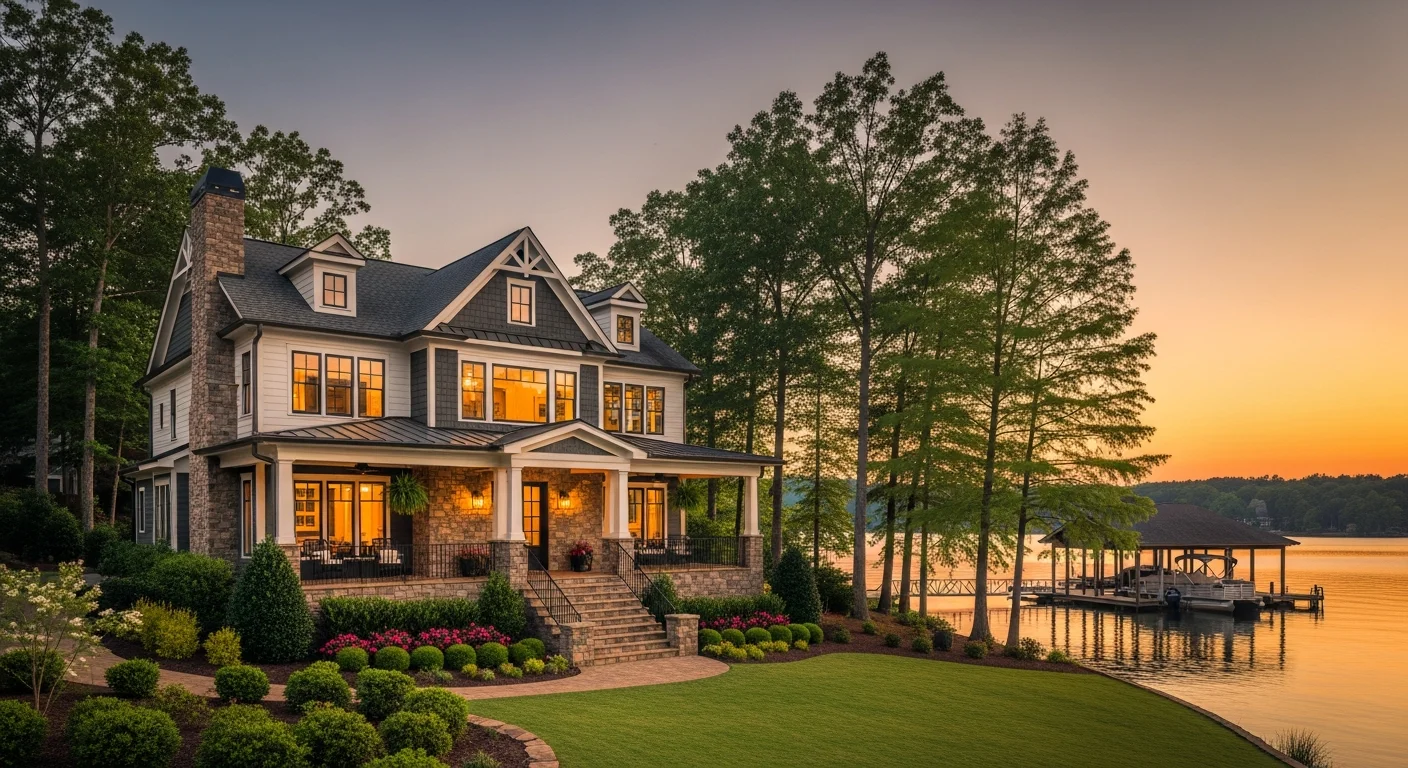
Palm Build specializes in restoring Lake Norman's premium homes with the precision and
material quality these properties demand
Common Questions
Mooresville Fire & Smoke Damage FAQ
How quickly can Palm Build respond to fire damage in Mooresville?
Palm Build dispatches from our Charlotte operations hub on Crompton Street, approximately 30 miles south of Mooresville. Emergency response time is typically 35-45 minutes depending on traffic and the specific Mooresville neighborhood. We begin emergency board-up, soot stabilization, and water extraction simultaneously upon arrival. For Lake Norman waterfront properties, we coordinate access through HOA gates and private roads to avoid delays.
Why does soot need to be cleaned immediately after a fire in Mooresville?
Soot becomes increasingly acidic within hours of a fire. The compounds in soot — sulfuric acid, hydrochloric acid, and other corrosives — begin etching into metal, glass, granite, marble, and hardwood surfaces. In Mooresville's Lake Norman homes with premium finishes like stainless steel appliances, marble countertops, and hardwood floors, this acidification can cause permanent damage within 24-72 hours. The combination of Mooresville's humid lake-effect climate and residual moisture from firefighting accelerates this chemical reaction significantly.
Does homeowners insurance cover fire damage restoration in Mooresville?
Yes. Fire damage is one of the most comprehensively covered perils under standard North Carolina homeowners insurance policies (HO-3). Coverage typically includes structural repair, soot and smoke cleanup, contents restoration or replacement, temporary living expenses (ALE), and debris removal. Mooresville homeowners with lake properties often carry higher dwelling coverage limits due to elevated home values, which means your fire restoration coverage is typically robust. Palm Build handles insurance documentation and adjuster coordination from the first call.
How do you remove smoke odor from a Mooresville home permanently?
Smoke odor elimination requires treating the source at the molecular level, not masking it. We use three professional methods matched to the materials and construction in your Mooresville home: thermal fogging (heated deodorizers that penetrate the same way smoke did), ozone treatment for sealed evacuated spaces, and hydroxyl generation for occupied areas during restoration. Lake Norman homes with open floor plans and cathedral ceilings require extended treatment cycles because smoke travels throughout these large volumes and embeds in vaulted ceiling materials that are difficult to reach.
What about water damage from firefighting in Mooresville?
Fire suppression frequently causes more damage than the fire itself. A single fire hose delivers 150-250 gallons per minute. In Mooresville homes — many of which are built on crawl spaces over Iredell County's red clay soil — this water pools underneath the house and begins feeding mold growth within 24-48 hours. Palm Build handles water extraction and structural drying as an integrated part of fire restoration. Our technicians are cross-trained in fire, water, and mold remediation, so one team manages the entire scope.
How long does fire damage restoration take in Mooresville?
Timeline depends on severity. A contained kitchen fire with smoke damage may take 1-3 weeks. A moderate residential fire affecting multiple rooms typically requires 4-8 weeks. Major structural fires involving roof damage or multi-story involvement can take 3-6 months including full reconstruction. Mooresville's premium lake homes with custom finishes, specialty materials, and large square footage tend toward the longer end of these ranges due to material sourcing and the precision required for high-end restoration.
Can smoke-damaged contents in my Mooresville home be saved?
Often yes. Professional contents restoration can save many items that appear severely damaged. The salvageability depends on the type of fire (protein, synthetic, natural material), duration of smoke exposure, and whether soot has been sealed in by moisture or amateur cleaning attempts. Electronics, upholstered furniture, clothing, and documents can frequently be restored through ultrasonic cleaning, ozone treatment, and specialized laundering. Palm Build inventories all contents and provides salvage-vs-replacement recommendations before any work begins.
Do Mooresville condo and townhome fires require special restoration approaches?
Yes. Multi-unit properties like Pier 33 Condos, Blackberry Creek townhomes, and other Mooresville attached-wall communities present unique challenges. Fire and smoke can spread through shared walls, common attic spaces, and connected HVAC systems, affecting multiple units even when the fire originated in only one. Restoration requires coordinating with the HOA, multiple insurance carriers, and adjacent unit owners simultaneously. Palm Build has extensive experience with multi-unit fire projects and manages the complex coordination these projects require.
Fire Damage in Mooresville? Every Hour Counts.
Soot becomes permanently damaging within hours. Palm Build's team responds from Charlotte in 35-45 minutes with emergency board-up, soot stabilization, and water extraction — plus insurance documentation from the first call.