(888) 245-5155
Call Now 24/7
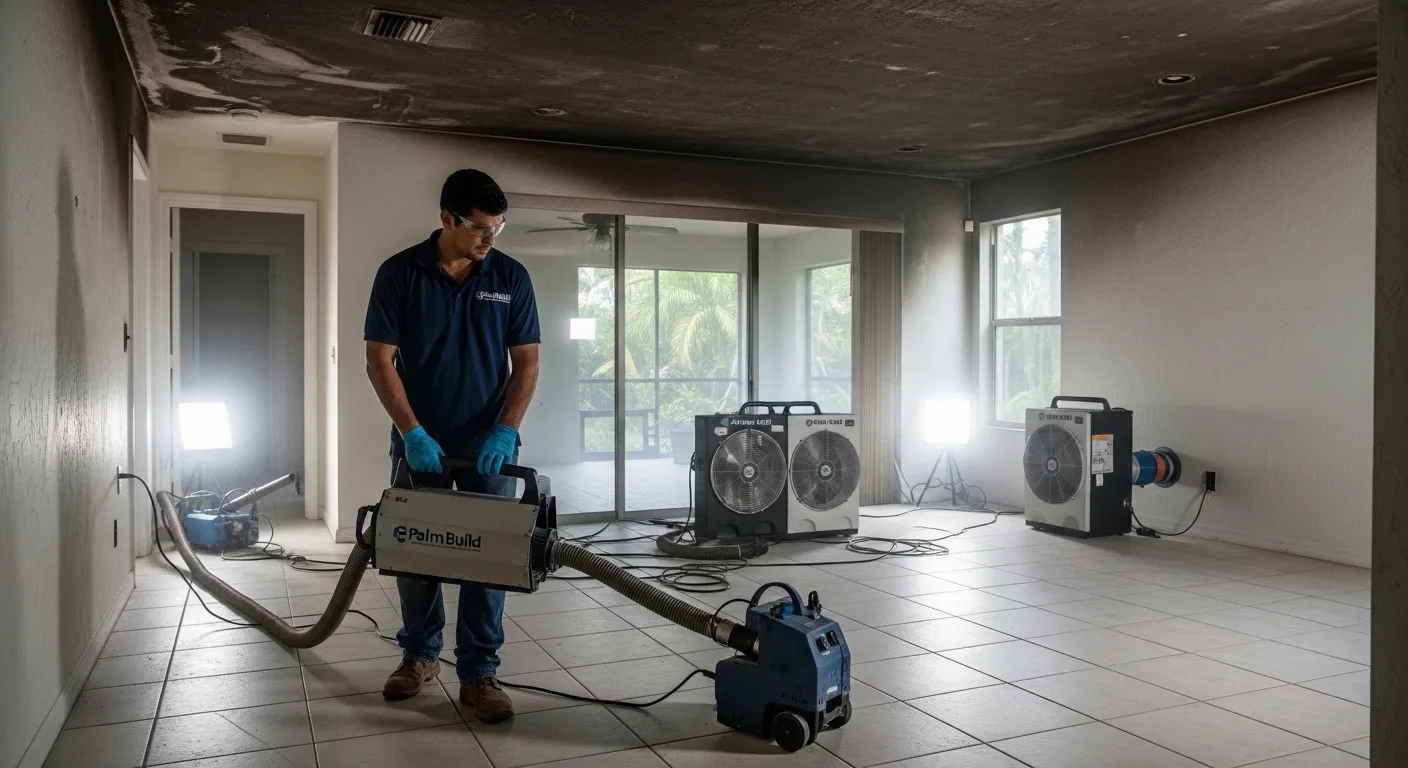
Palm Build fire and smoke restoration team responding to fire damage at a CBS stucco home in Boynton Beach, Florida with tropical landscaping
BOYNTON BEACH FL — 24/7 FIRE & SMOKE RESPONSE

Fire & Smoke Cleanup in Boynton Beach, Florida

From Leisureville's 1960s wiring to Hunters Run's multi-unit condos, Boynton Beach's aging electrical systems and sealed CBS stucco construction create both elevated fire risk and complex smoke remediation challenges. Palm Build's IICRC-certified team responds in 30-45 minutes from Deerfield Beach — extracting soot from concrete block cavities, eliminating smoke odor trapped behind stucco walls, and coordinating your insurance claim from the first call.

Deerfield Beach — 20 Minutes from Boynton Beach 30-45 min Response IICRC Certified

30-45 min

Emergency Response

24/7

Dispatch Available

IICRC

Certified Technicians

A Boynton Beach Story

"A Kitchen Fire in My Canyon Isles Townhome Just Changed Everything."

A kitchen fire in your Canyon Isles townhome — grease on the stove ignites, flames reach the cabinets before you can react. The fire department arrives in 8 minutes, but those 8 minutes leave your kitchen charred and the rest of the home filled with smoke. The ceiling is black with soot. The smell has already reached the bedrooms upstairs. Every surface is coated with an invisible film of acidic residue.

In Boynton Beach's year-round humidity, that soot begins etching metal, glass, and stainless steel within hours. The fire suppression water is pooling on the slab-on-grade foundation with nowhere to drain — and in 60-80% humidity, mold can start colonizing wet, heat-weakened surfaces within 24 hours. You're now facing fire damage, smoke damage, water damage, and mold risk simultaneously.

This is the call Palm Build's Deerfield Beach team answers every week from Boynton Beach homeowners. We respond in 30 to 45 minutes, arriving with emergency board-up equipment, extraction units, soot stabilization supplies, and the insurance documentation expertise your carrier needs from day one.

What Fire Damage Restoration Costs in Boynton Beach

Contained

Kitchen fire cleanup — grease fire, stovetop, limited cabinet damage

$3,000 – $8,000

Moderate

Single room fire — structural char, smoke throughout home, water from suppression

$8,000 – $25,000

Severe

Multi-room or structural fire — roof truss damage, full reconstruction required

$25,000 – $75,000+

24/7 Emergency Fire Response

Every hour of delay after a fire increases permanent damage. Call now for immediate dispatch from our Deerfield Beach office.

(754) 600-3369

Local Risk Factors

Fire Risks Specific to Boynton Beach Homes

Boynton Beach's housing stock — from 1960s CBS block homes in Leisureville and Boynton Heights to gated communities and large condo complexes — creates distinct fire risk profiles that determine the restoration approach your home will need.

Aging 1960s Wiring in Leisureville & Boynton Heights

High

Boynton Beach's oldest neighborhoods — Leisureville and Boynton Heights — were built in the early 1960s with electrical systems designed for a single window AC unit and basic appliances. Decades of panel upgrades, added circuits, and DIY modifications have created mismatched wiring hidden inside CBS block walls. Electrical fires in these homes smolder behind concrete block for hours before detection, filling wall cavities with smoke residue that requires partial demolition to reach and clean.

Peak season: Year-round
Holiday Cooking Fires — December Peak

Most Common

Cooking fires are the number one cause of residential fire calls in Boynton Beach. The December holiday season brings the annual peak — more meals, more deep-frying, more unattended stovetops. In Boynton Beach's open-concept CBS homes, kitchen smoke travels rapidly through the entire living area and into HVAC ductwork, contaminating rooms far from the fire origin within minutes. A single grease fire can deposit soot on every surface in the home via the central AC system.

Peak season: Nov – Feb peak

Overloaded Circuits in Older Homes

High

Many Boynton Beach homes built before 1980 have 100-amp or 150-amp electrical panels now powering modern appliances, multiple AC zones, pool pumps, and EV chargers. Circuit overloads cause arcing inside walls — sparks that ignite insulation, wood framing around windows, and debris trapped in CBS cavities. These fires start hidden and spread before smoke detectors activate, making the resulting damage far more extensive than a visible kitchen fire.

Peak season: Year-round

Condo Fires Cascade in Hunters Run & Aberdeen

High

Boynton Beach's large condo communities — Hunters Run, Aberdeen, Leisureville — include buildings from the 1970s and 1980s with shared electrical risers and HVAC plenums. A fire in one unit pushes smoke through ductwork, elevator shafts, and utility chases into dozens of neighboring units. Condo fire restoration involves HOA coordination, multi-unit smoke remediation, and Florida condominium association compliance — far more complex than single-family restoration.

Peak season: Year-round

CBS Stucco Traps Smoke — Ventilation Harder

Structural

Boynton Beach's predominant CBS (concrete block and stucco) construction with impact windows creates homes that are essentially sealed boxes. When a fire occurs, smoke has no natural ventilation path. It permeates every crevice, fills hollow block cavities, saturates attic insulation through ceiling penetrations, and embeds in the porous stucco texture. Wood-frame homes breathe — CBS homes trap. This makes smoke remediation in Boynton Beach significantly more labor-intensive than in other markets.

Peak season: Year-round

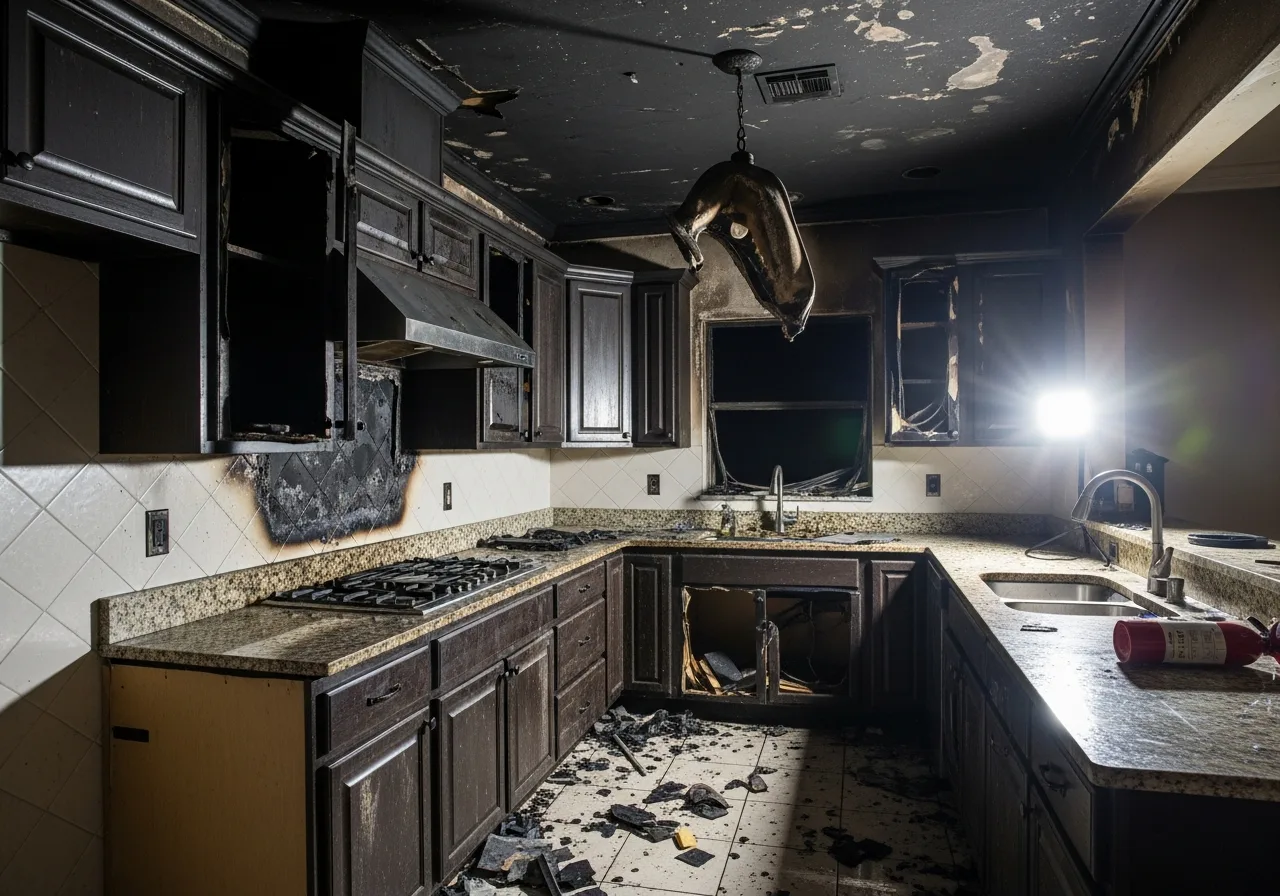
Fire-damaged kitchen in a Boynton Beach FL CBS stucco home with charred cabinets and heavy soot
Kitchen fire damage in a Boynton Beach CBS home — grease fires spread soot through the entire HVAC system within minutes.

Why Speed Matters

After a Fire in Boynton Beach, Every Hour of Delay Costs You

The fire department puts out the flames — but that's when the real damage clock starts. In South Florida's humid subtropical climate, soot corrosion, smoke penetration, and mold from fire-suppression water all accelerate dramatically. The difference between a $15,000 restoration and a $60,000 rebuild often comes down to how fast professional mitigation begins.

CRITICAL FACTOR 1

Soot Sets Permanently Within 24-72 Hours

Boynton Beach's year-round humidity — averaging 74% — accelerates the chemical reaction between acidic soot and household surfaces. Soot residue that might take days to cause permanent etching in dry climates begins damaging stainless steel appliances, marble countertops, chrome fixtures, and glass within hours in South Florida's moisture-laden air. After 72 hours, most porous surfaces are permanently stained.

CRITICAL FACTOR 2

Acidic Smoke Residue Etches Glass and Metal

Smoke from residential fires produces sulfuric and hydrochloric acid compounds that actively corrode metal fixtures, etch glass surfaces, and dissolve finishes. In Boynton Beach's humid environment, these acids remain chemically active longer than in dry climates — continuing to damage surfaces for days after the fire. Every hour without professional neutralization increases the scope of permanent damage and the cost of replacement versus restoration.

CRITICAL FACTOR 3

Secondary Water Damage From Firefighting

A single fire hose delivers 150-250 gallons per minute. On Boynton Beach's slab-on-grade CBS foundations, that water pools across tile floors with nowhere to drain and seeps into hollow concrete block cavities. In 60-80% ambient humidity, mold colonization begins within 24 hours on heat-weakened, waterlogged surfaces. You're now facing fire damage, water damage, and mold risk simultaneously.

CRITICAL FACTOR 4

Smoke Odor Penetrates CBS Block Walls

Boynton Beach's CBS (concrete block and stucco) construction means smoke infiltrates hollow block cores and becomes trapped — invisible from the surface but actively releasing odor compounds for weeks or months. Unlike wood-frame homes where walls can be opened for cleaning, CBS remediation requires specialized injection techniques or partial demolition. The longer smoke sits in block cavities, the more deeply it bonds to the porous concrete.

30-45 Min Emergency Response

Palm Build dispatches from our Deerfield Beach office within 30-45 minutes to any Boynton Beach address. We begin emergency board-up, soot stabilization, and water extraction simultaneously — stopping all three damage clocks at once. Call now for immediate response.

Emergency fire damage in a Boynton Beach FL CBS stucco home kitchen
Emergency board-up and soot stabilization secure your Boynton Beach home within hours of the fire

Understanding the Damage

The Science of Soot in CBS Stucco Homes

Not all fire damage is the same. The type of materials that burned determines what kind of soot your Boynton Beach home is coated with — and that determines the cleaning chemistry, equipment, and timeline required. Using the wrong approach on stucco, tile, or CBS surfaces doesn't just fail to clean — it can permanently set stains and drive odors deeper into porous materials.

Protein Soot (Cooking Fires)

The most common fire type in Boynton Beach homes. Protein fires from cooking produce an almost invisible, yellowish residue with an extremely pungent odor that penetrates every surface — often far beyond the kitchen. In Boynton Beach's CBS homes with tile floors and porous stucco walls, the residue spreads rapidly and bonds chemically to textured surfaces. Protein soot is nearly invisible on light-colored stucco and tile but discolors significantly over time. Standard household cleaning products spread the residue and set the stain permanently.

Professional Cleaning Approach

Requires enzymatic cleaners and specialized degreasing agents. Thermal fogging with protein-specific solutions is typically needed for odor elimination in CBS wall cavities.

Synthetic Soot (Plastics & Polymers)

Modern Boynton Beach homes contain significant synthetic materials: engineered flooring, foam insulation, PVC trim, synthetic carpeting, and plastic fixtures. When these materials burn, they produce thick, black, sticky soot that is extremely difficult to remove. In CBS construction, synthetic soot penetrates the porous stucco finish and becomes trapped in concrete block cavities. This is the most hazardous soot type, containing toxic compounds including hydrogen cyanide and dioxins. The oily residue smears when wiped, driving contamination deeper into porous stucco texture.

Professional Cleaning Approach

Requires solvent-based cleaners formulated for petroleum-based residues. Multiple cleaning passes on stucco surfaces are standard. Full PPE is critical due to toxic compounds.

Wet Soot (Low-Heat, Smoldering Fires)

Low-temperature, smoldering fires — common in electrical fires that start inside CBS wall cavities in Boynton Beach's older homes — produce wet, sticky, thick soot with a pungent, acrid smell. This soot type is the most difficult to clean because it smears on contact. In Boynton Beach's humid environment, wet soot absorbs atmospheric moisture and remains tacky longer than in dry climates, making cleanup timing even more critical. CBS stucco's textured surface traps wet soot in every pore and crevice.

Professional Cleaning Approach

HEPA vacuuming is counterproductive for wet soot (it smears). Requires chemical sponges followed by specialized wet-cleaning with degreasing agents. Multiple applications on stucco textures.

Dry Soot (Fast, High-Heat Fires)

Fast-burning, high-temperature fires that consume wood, paper, and natural materials produce dry, powdery, gray-black soot. This type is lighter and easily disturbed by air movement — it spreads throughout the entire home via the central AC system that runs year-round in Boynton Beach. Soot from a fire in one room can contaminate ductwork and distribute residue to every room within hours. The tile and terrazzo floors common in Boynton Beach homes are more forgiving than carpet, but dry soot settles into grout lines and textured stucco surfaces.

Professional Cleaning Approach

HEPA vacuuming first (never wipe dry soot — it smears), followed by chemical sponge treatment, then wet cleaning with appropriate detergents. Tile grout requires specialized extraction.

Our Fire Restoration Process

6 Steps to Restore Your Boynton Beach Home After Fire Damage

Fire restoration is more complex than water or mold because it involves multiple damage types simultaneously — structural fire damage, soot contamination, smoke odor, and water from fire suppression. Our process addresses all four in a coordinated sequence.

Step 01 Hours 1-4

Emergency Board-Up & Securing

We secure your Boynton Beach home against weather, theft, and further damage. This includes boarding windows, tarping damaged roof sections, and securing doors. In South Florida, where afternoon thunderstorms develop daily from May through October, an unsecured fire-damaged home can sustain thousands in additional water damage from a single storm passing through exposed roof trusses and stucco openings.

Step 02 Hours 1-8

Water Extraction From Firefighting

Fire suppression water is addressed immediately and simultaneously with board-up. On Boynton Beach's slab-on-grade CBS foundations, firefighting water pools across tile floors with nowhere to drain and seeps into hollow concrete block cavities. We extract standing water, set up commercial dehumidifiers, and begin structural drying — preventing the mold growth that starts within 24 hours in South Florida's humidity.

Step 03 Days 2-7

Soot & Smoke Removal

Professional soot removal uses chemistry matched to the specific soot type. HEPA vacuuming removes loose particulate, chemical sponges lift embedded residue, and wet cleaning with specialized detergents addresses remaining contamination. Every surface is treated — stucco walls, ceilings, tile, cabinetry, fixtures, and structural members. Boynton Beach's CBS construction requires specialized techniques to clean porous stucco without damaging the finish.

Step 04 Days 5-14

Structural Cleaning & Deodorization

Smoke odor elimination uses thermal fogging for CBS wall cavities, ozone for sealed spaces, and hydroxyl generation for occupied areas. For Boynton Beach's concrete block construction, we use injection techniques to treat smoke trapped inside hollow block cores — a step unnecessary in wood-frame homes but critical for achieving complete odor elimination in South Florida CBS construction. Multiple deodorization cycles are standard for sealed impact-window homes.

Step 05 Days 3-14

Contents Pack-Out & Cleaning

Salvageable contents are carefully packed, inventoried, and transported to our cleaning facility. Smoke-damaged clothing, electronics, documents, and furniture receive specialized treatment — ultrasonic cleaning for hard goods, ozone chambers for soft goods, freeze-dry technology for documents. Each item is photographed and cataloged for insurance documentation, with detailed replacement cost vs. restoration cost analysis.

Step 06 Weeks 2-8+

Reconstruction

Once cleaning and odor treatment are verified complete, we handle full reconstruction: drywall, stucco repair, tile, cabinetry, painting, electrical, plumbing, and finish work. Florida Building Code requires all reconstruction to meet current code standards — meaning electrical, plumbing, hurricane strapping, and impact-window requirements may all apply to fire reconstruction in Boynton Beach, potentially adding scope but significantly improving your home's resilience.

Odor Elimination

Why Smoke Odor Won't Leave Your Boynton Beach Home Without Professional Treatment

CBS stucco homes with impact windows are essentially sealed boxes in South Florida. Smoke odor gets trapped in wall cavities, HVAC ductwork, and attic insulation — with no natural ventilation path to dissipate. "Painting over" smoke smell does not work. The odor compounds continue releasing through fresh paint for months. Professional elimination requires treating the source at the molecular level using methods matched to Boynton Beach's CBS construction.

What Does NOT Work

Painting over smoke-contaminated surfaces, air fresheners, scented candles, household cleaning sprays, and "odor eliminators" from hardware stores. These mask the smell temporarily — the odor returns within days or weeks as compounds continue releasing from contaminated CBS block, stucco, and ductwork. Sealing smoke into walls with paint creates long-term off-gassing that is harder to remediate later.

Thermal Fogging

Heated deodorizing agents are converted into a fog that penetrates materials the same way smoke did — through microscopic pores, cracks, and cavities. This is the most effective method for Boynton Beach's CBS construction, where smoke becomes trapped in hollow concrete block wall cavities and porous stucco finishes. The fogging agent chemically neutralizes odor molecules rather than masking them. Multiple applications are often needed for CBS homes where smoke has penetrated the full wall assembly.

Best for: CBS wall cavities, porous stucco, deep penetration in block construction

Ozone Treatment

Ozone generators create O3 — a highly reactive oxygen molecule that breaks down odor compounds at the molecular level. Ozone treatment is extremely effective but requires the space to be completely unoccupied (including plants and pets) during treatment. We use ozone for sealed, evacuated spaces like closets, interior rooms, and enclosed areas where concentrated treatment can reach maximum effectiveness. In Boynton Beach's sealed impact-window homes, ozone is particularly effective for treating individual rooms.

Best for: Sealed rooms, impact-window homes, heavy odor concentration

Hydroxyl Generation

Hydroxyl generators produce hydroxyl radicals — the same molecules that naturally purify outdoor air via sunlight — to break down odor compounds. Unlike ozone, hydroxyl treatment is safe for occupied spaces. We use this method in areas where occupants or workers need to be present, and as continuous treatment during the multi-day cleaning process. This is valuable for Boynton Beach projects where the homeowner is coordinating insurance and contents decisions on-site, or in condo buildings where adjacent units remain occupied.

Best for: Occupied spaces, condo buildings, ongoing treatment during restoration

The Hidden Damage

Water Damage From Firefighting: Often Worse Than the Fire Itself

Many Boynton Beach homeowners are shocked to discover that fire suppression causes more damage to their home than the fire itself. A single fire hose delivers 150 to 250 gallons of water per minute. A residential sprinkler head activates at 17 gallons per minute and may run for 30 minutes or more before being shut off. On Boynton Beach's slab-on-grade construction, that water pools across tile floors with nowhere to drain.

In Boynton Beach's CBS homes, fire suppression water seeps into hollow concrete block cavities through cracks in stucco and around window and door frames. The water becomes trapped inside these walls — invisible from the surface but creating a perfect environment for mold growth in South Florida's 74% average humidity. Within 24 hours, hidden moisture begins feeding mold on surfaces already weakened by heat. You're now dealing with fire damage, water damage, and mold risk simultaneously.

Combined fire + water claims are more complex than either alone — separate damage categories, different coverage sections, different documentation requirements. Palm Build's fire restoration team handles water extraction and structural drying as an integrated part of the fire cleanup process — not as a separate project. Our technicians are cross-trained in both fire and water damage restoration, so one team manages the entire scope.

Boynton Beach Water Restoration Services

Boynton Beach Pricing

Fire Damage Restoration Cost Breakdown

Fire restoration costs in Boynton Beach run higher than the national average due to CBS construction complexity, Florida Building Code upgrade requirements, sealed impact-window homes requiring more deodorization cycles, and South Florida's humidity accelerating secondary damage. The good news: fire is one of the most comprehensively covered perils under FL homeowners insurance.

Emergency Board-Up & Tarping

$500 – $2,000

Securing windows, doors, and roof penetrations against weather and theft. Essential in South Florida where afternoon storms can develop daily.

Smoke & Soot Cleanup

$2,000 – $6,000

Professional soot removal, chemical cleaning of all surfaces, HEPA vacuuming. CBS stucco requires more labor-intensive cleaning than wood-frame due to porous texture.

Content Cleaning & Pack-Out

$1,000 – $5,000

Inventory, pack-out, specialized cleaning of salvageable contents — clothing, electronics, documents, furniture. Ultrasonic, ozone, and freeze-dry treatments.

Structural Reconstruction

$10,000 – $50,000+

Drywall, stucco repair, tile, cabinetry, electrical, plumbing, painting. Florida Building Code requires reconstruction to meet current standards including wind mitigation.

Why Boynton Beach Fire Restoration Costs More

CBS Construction = More Labor

Concrete block and stucco construction requires specialized soot removal techniques, injection-based deodorization, and more intensive structural cleaning than wood-frame homes.

Sealed Homes Need More Deodorization

Impact windows and sealed stucco envelopes trap smoke odor inside the home. Expect 2-4 deodorization cycles versus 1-2 in naturally ventilated homes.

Humidity Accelerates Secondary Damage

Boynton Beach's 60-80% humidity means fire suppression water creates mold risk within 24 hours. Simultaneous water mitigation adds scope but prevents exponentially larger costs later.

Insurance Navigation

Navigating Fire Insurance Claims in Boynton Beach

Fire damage is typically well-covered — but the details of your claim determine whether you receive full compensation or a fraction of your actual costs. These are the key issues every Boynton Beach homeowner faces when filing a fire damage claim.

Fire Damage: Well-Covered Under HO-3

Fire is one of the most comprehensively covered perils under a standard Florida HO-3 homeowners policy. Unlike water or mold damage — which face significant coverage restrictions in Florida — fire claims rarely face outright coverage disputes. Your policy covers structural repair, soot/smoke cleanup, contents replacement, and additional living expenses (ALE) during restoration.

Depreciation Disputes: ACV vs. RCV

The biggest source of fire claim disputes isn't coverage — it's valuation. Your carrier may pay Actual Cash Value (ACV, which deducts depreciation) rather than Replacement Cost Value (RCV). On a 20-year-old Boynton Beach kitchen with original cabinets, the depreciation deduction can be 40-60% of replacement cost. RCV policies pay the depreciated amount upfront, with the balance paid after you complete the repair. Understand which type you carry before the fire happens.

Code Upgrade Costs

Florida Building Code requires fire reconstruction to meet current standards — including wind mitigation, impact-rated windows, and updated electrical. These upgrades cost more than replacing what was there. Standard HO-3 policies may not cover code upgrade costs unless you carry an Ordinance or Law endorsement. In Boynton Beach's older CBS homes, code upgrades can add 15-30% to reconstruction costs.

ALE Timeline Disputes

Additional Living Expenses (ALE) covers hotel, rental housing, and meals while your home is being restored. But carriers cap ALE at a percentage of dwelling coverage (typically 20-30%) and dispute the restoration timeline. A carrier may argue your Boynton Beach home should be restored in 6 weeks when CBS fire reconstruction realistically takes 8-12 weeks. Document every delay.

FL 1-Year Claim Filing Deadline

Florida Statute 627.70132 requires property insurance claims to be filed within 1 year of the date of loss. Supplemental claims must be filed within 18 months. Miss these deadlines and your claim is permanently barred — no exceptions. Fire damage is immediately obvious, but secondary damage (hidden smoke, mold from fire suppression water) may not be discovered for weeks.

AOB Prohibition: Payments Through You

Since January 2023, Florida's Assignment of Benefits reform means restoration contractors can no longer receive direct payment from your insurer. All payments flow through you, the policyholder. This makes thorough documentation and clear communication with your carrier more critical than ever. Palm Build provides complete Xactimate-formatted documentation that your carrier can process efficiently.

Palm Build Manages Your Fire Claim Documentation

We work directly with your insurance adjuster from the first inspection. Our fire damage documentation — structural assessments, soot type classification, moisture readings, photo evidence, and detailed scopes of work — is formatted in Xactimate exactly how South Florida adjusters and carriers expect to receive it. With Florida's complex insurance landscape, having a restoration company that understands FL-specific documentation requirements gets your claim approved faster.

Insurance Claims Guide

Our Work in Boynton Beach

Fire Restoration: The Process in Action

Fire-damaged kitchen in a Boynton Beach FL CBS home with charred cabinets and heavy soot on stucco walls
Kitchen fire damage with charred cabinets and soot coating on stucco surfaces
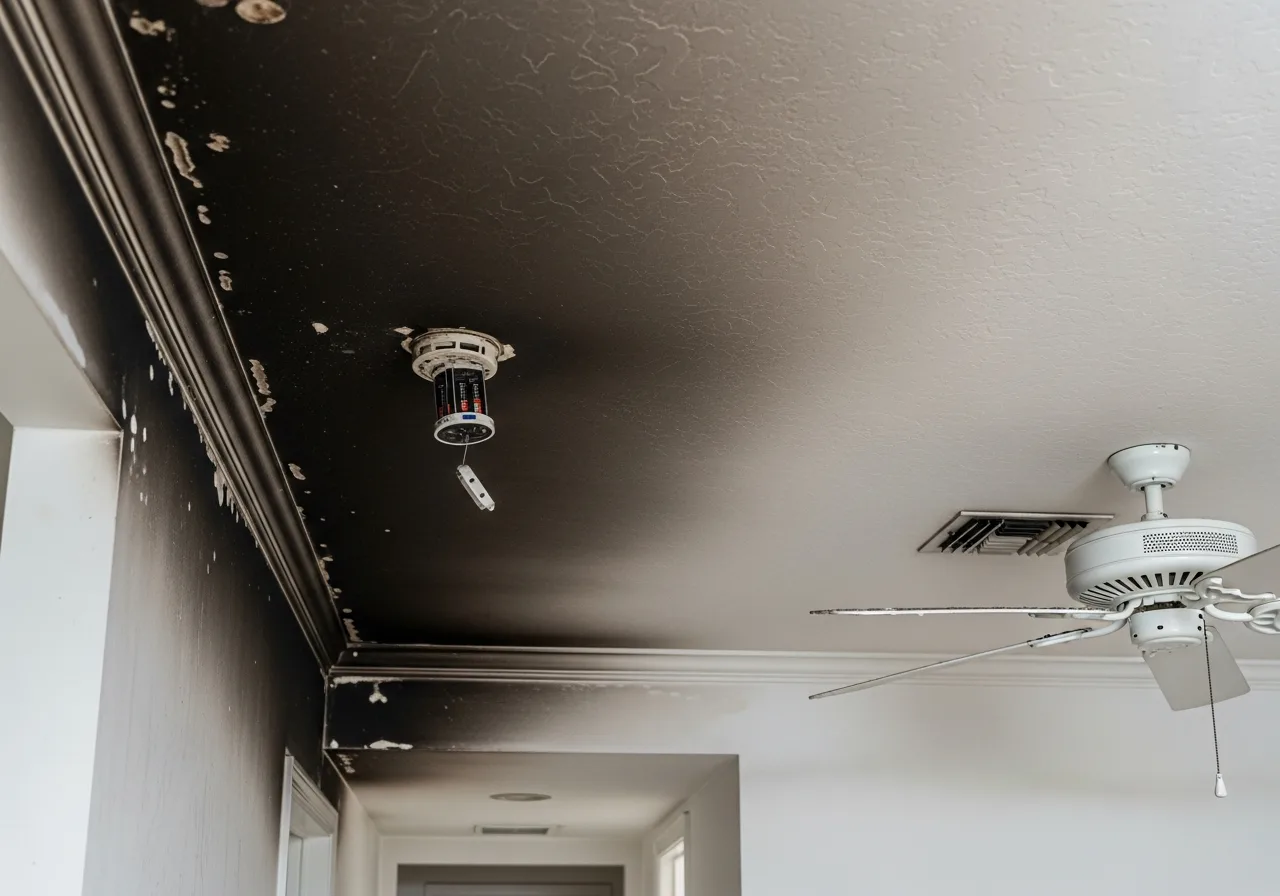
Smoke damage on ceiling and walls of a Boynton Beach home showing discoloration and soot patterns
Heavy smoke damage on ceiling — soot distributed throughout the home via HVAC ductwork
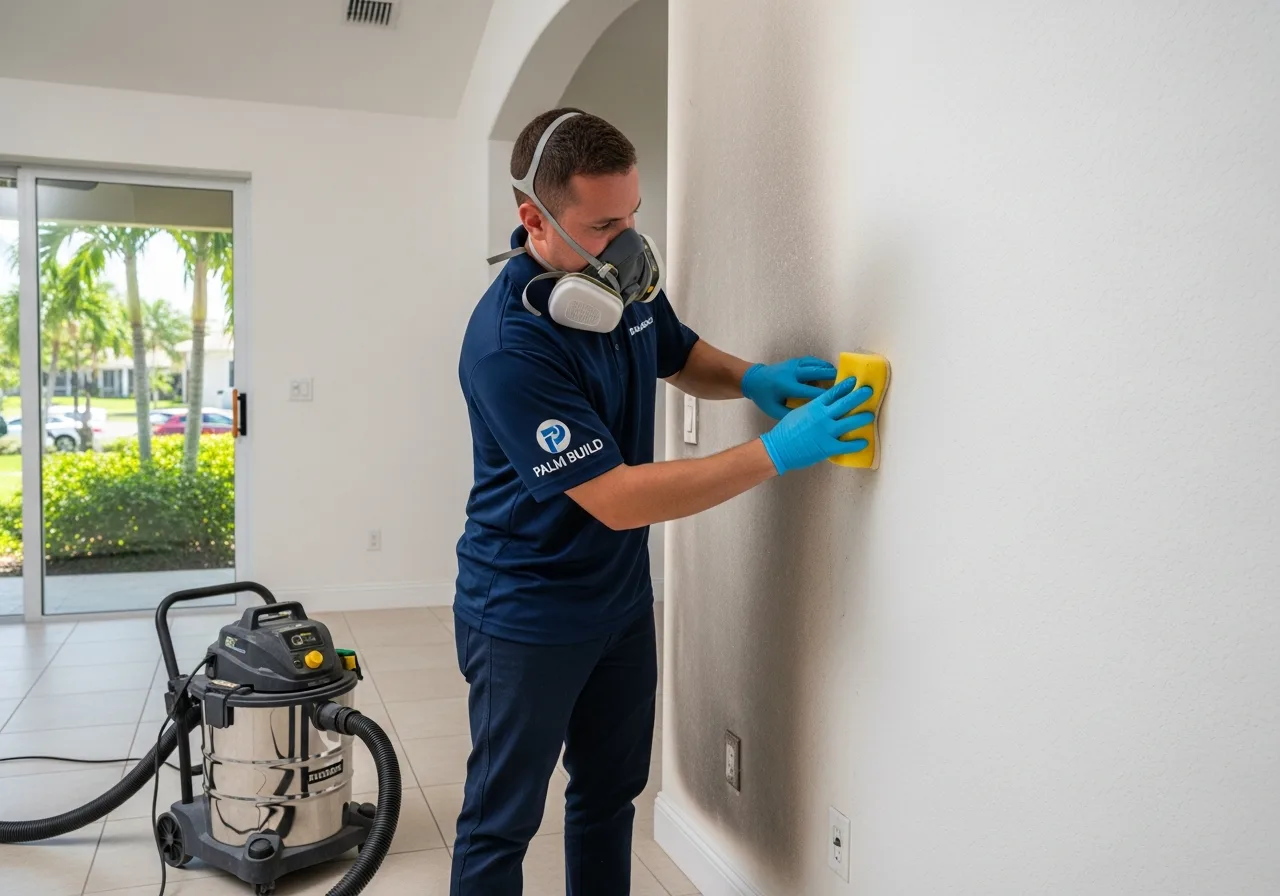
Palm Build restoration team performing fire damage cleanup in a Boynton Beach Florida home
Professional soot removal with HEPA vacuums and chemical sponges on tile and stucco
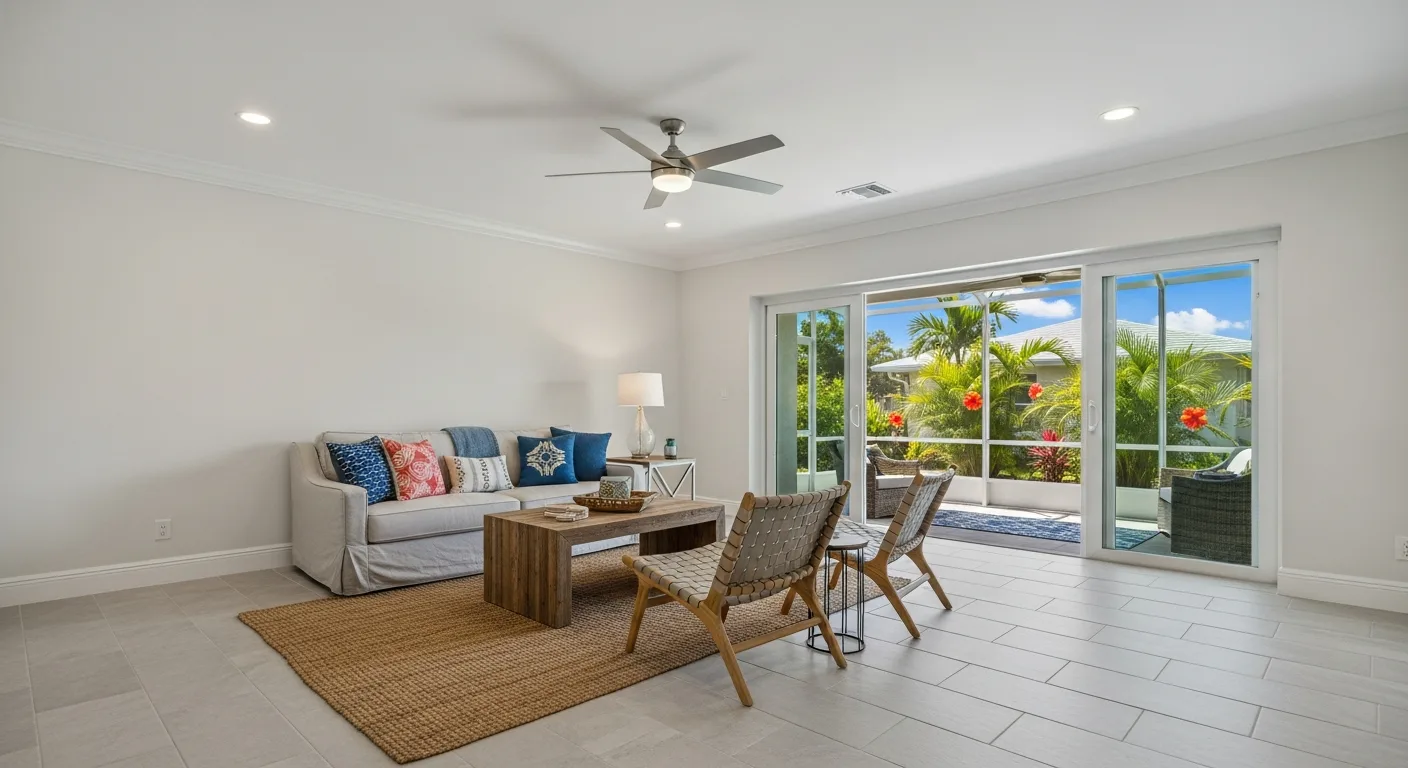
Beautifully restored living room in a Boynton Beach CBS home after complete fire damage reconstruction
After: Fully restored with new finishes, paint, and repaired stucco — zero trace of damage

The Palm Build Difference

Why Boynton Beach Homeowners Choose Palm Build After a Fire

National franchises send you their nearest available crew. Palm Build sends you a team that already knows your neighborhood, your construction type, and your insurance carrier's requirements.

30-45 Minute Response

Our Deerfield Beach operations hub is 20 minutes from any Boynton Beach address. When you call at 2 a.m., we answer — and a fully equipped truck is rolling within minutes. Board-up, tarping, and soot stabilization begin the same night, not the next business day.

IICRC FSRT Certified

Every Palm Build crew lead holds current IICRC Fire and Smoke Restoration Technician (FSRT) certification. We follow the S540 standard for professional fire and smoke damage restoration — critical for both proper remediation and insurance claim documentation that South Florida carriers accept without dispute.

Handle Fire + Water Simultaneously

Fire suppression water creates a second damage layer that most companies treat as a separate project. Palm Build's cross-trained technicians handle soot stabilization and water extraction in a single coordinated response — one team, one scope, one insurance claim. This saves weeks and thousands in duplicated mobilization costs.

Insurance Documentation Experts

Florida's insurance landscape is uniquely complex — frequent carrier changes, AOB regulations, and strict documentation requirements. Our fire damage documentation is Xactimate-formatted with structural assessments, soot classification, moisture readings, and photo evidence exactly how South Florida adjusters and carriers expect to receive it.

Know Boynton Beach Construction

From Leisureville's 1960s CBS block homes with original wiring to Hunters Run's aging condo infrastructure to Canyon Isles' Mediterranean townhomes — we work in these neighborhoods every week. We know how smoke travels through CBS cavities, how soot bonds to stucco, and how to remediate block walls without unnecessary demolition.

Contents Restoration Capability

Our contents division handles pack-out, inventory, specialized cleaning, and return of salvageable belongings. Ultrasonic cleaning for hard goods, ozone chambers for soft goods, freeze-dry technology for documents and photos. Each item is photographed and cataloged with replacement cost vs. restoration cost analysis for your insurance claim.

Common Questions

Boynton Beach Fire & Smoke Cleanup FAQ

How quickly can Palm Build respond to fire damage in Boynton Beach?
Palm Build responds to fire and smoke emergencies in Boynton Beach within 30-45 minutes from our Deerfield Beach operations hub at 5051 NW 13th Ave. South Florida's year-round humidity — averaging 74% in Palm Beach County — accelerates soot corrosion on metal, glass, and stone surfaces and drives smoke compounds deeper into CBS wall cavities with every passing hour. Our crews arrive with emergency board-up materials, soot stabilization equipment, and water extraction tools to prevent secondary damage from compounding the original fire loss.
Does homeowners insurance cover fire damage in Boynton Beach?
Yes. Fire is one of the most comprehensively covered perils under standard Florida HO-3 homeowners policies. Coverage typically includes structural repair, smoke and soot cleanup, contents restoration, debris removal, and Additional Living Expenses (ALE) for temporary housing while your home is being restored. However, depreciation disputes are common in Boynton Beach — insurers may attempt to depreciate CBS block walls, tile roofing, and other long-life materials that were damaged but not at end-of-life. Palm Build documents pre-loss condition thoroughly and works directly with your adjuster to ensure fair replacement-cost settlements.
Why is smoke odor so difficult to remove from CBS stucco homes in Boynton Beach?
Boynton Beach's predominant CBS (concrete block and stucco) construction creates a sealed building envelope that traps smoke in ways wood-frame homes do not. Smoke infiltrates hollow concrete block cavities through electrical penetrations, plumbing chases, and micro-cracks in mortar joints — then has nowhere to escape. Porous stucco exterior finishes absorb soot compounds at depth. Standard ventilation cannot reach these trapped pockets. Palm Build uses thermal fogging to penetrate block cavities, hydroxyl generators for continuous odor neutralization, and in severe cases, controlled demolition of select wall sections to access and treat contaminated cavities directly.
What about water damage from firefighting efforts in Boynton Beach homes?
Fire suppression water is a major secondary damage source in Boynton Beach, where virtually all homes sit on slab-on-grade foundations. A single fire hose delivers 150-250 gallons per minute, and on a flat concrete slab that water pools across tile and terrazzo floors with no natural drainage path. It seeps into CBS wall cavities through the base of block walls, saturates baseboards, and in Boynton Beach's 74% average humidity, creates ideal mold conditions within 24 hours. Palm Build treats fire and water damage as one coordinated project — extracting standing water, injecting moisture probes into block walls, and deploying commercial dehumidification while simultaneously addressing soot and smoke contamination.
Can personal belongings and contents be salvaged after a fire in Boynton Beach?
Many contents can be professionally restored after fire and smoke exposure, depending on the fire type and duration of smoke contact. Protein soot from kitchen fires bonds chemically to fabrics and upholstery but responds well to enzymatic cleaning when treated quickly. Synthetic soot from burning plastics and electronics is more corrosive and requires ultrasonic cleaning for hard goods and specialized ozone treatment for soft goods. Electronics, documents, photographs, and artwork each require specific restoration protocols. Palm Build inventories all contents on-site, separates salvageable from non-salvageable items, and coordinates with specialty restoration partners for high-value or sentimental pieces.
Why are older Boynton Beach neighborhoods like Leisureville at higher risk for electrical fires?
Leisureville (built in the 1960s) and Boynton Heights (1950s-60s) contain some of Palm Beach County's oldest residential wiring — 60+ year-old electrical systems that were never designed for modern load demands. Original aluminum wiring, outdated Federal Pacific panels, and degraded insulation on copper conductors create arc fault and overload risks that increase every year. Many of these homes have had piecemeal electrical additions over decades without full rewiring. When these systems fail, fires often start inside walls where they burn undetected before breaking through. Post-fire, Palm Build coordinates with licensed electricians to ensure all reconstruction meets current Florida Building Code electrical standards.
How is fire damage handled in Boynton Beach condo communities like Hunters Run and Aberdeen?
Multi-unit condo fires in communities like Hunters Run and Aberdeen create complex multi-party damage scenarios. Fire in one unit generates smoke damage across shared walls, HVAC ducts, and common areas — potentially affecting dozens of units and multiple insurance policies. The condo association's master policy covers common elements and structural components, while individual HO-6 policies cover unit interiors and personal property. Palm Build has extensive experience navigating these multi-party claims, coordinating with association management, and ensuring that shared-wall remediation is completed consistently across all affected units rather than piecemeal by individual owners.
How long does full fire restoration take in a Boynton Beach home?
Timeline depends on fire severity, but a typical Boynton Beach residential fire restoration follows this progression: emergency board-up and stabilization within hours, soot and smoke remediation over 3-7 days, structural assessment and engineering review in week two, permitting through Palm Beach County (2-4 weeks), and reconstruction spanning 4-12 weeks depending on scope. Total timeline for moderate fire damage runs 8-16 weeks. Florida Building Code requires all reconstruction to meet current standards — meaning fire-damaged areas may need upgraded electrical, impact-rated windows, and current insulation requirements, which adds scope but significantly improves your home's resilience and value.

Fire or Smoke Damage in Boynton Beach? Every Minute Counts.

South Florida's humidity drives smoke deeper into CBS wall cavities and accelerates soot corrosion by the hour. Palm Build's Deerfield Beach team responds to Boynton Beach in 30-45 minutes with emergency board-up, soot stabilization, water extraction, and insurance documentation from the first call.

30-45 min Response IICRC Certified