Quick Answer
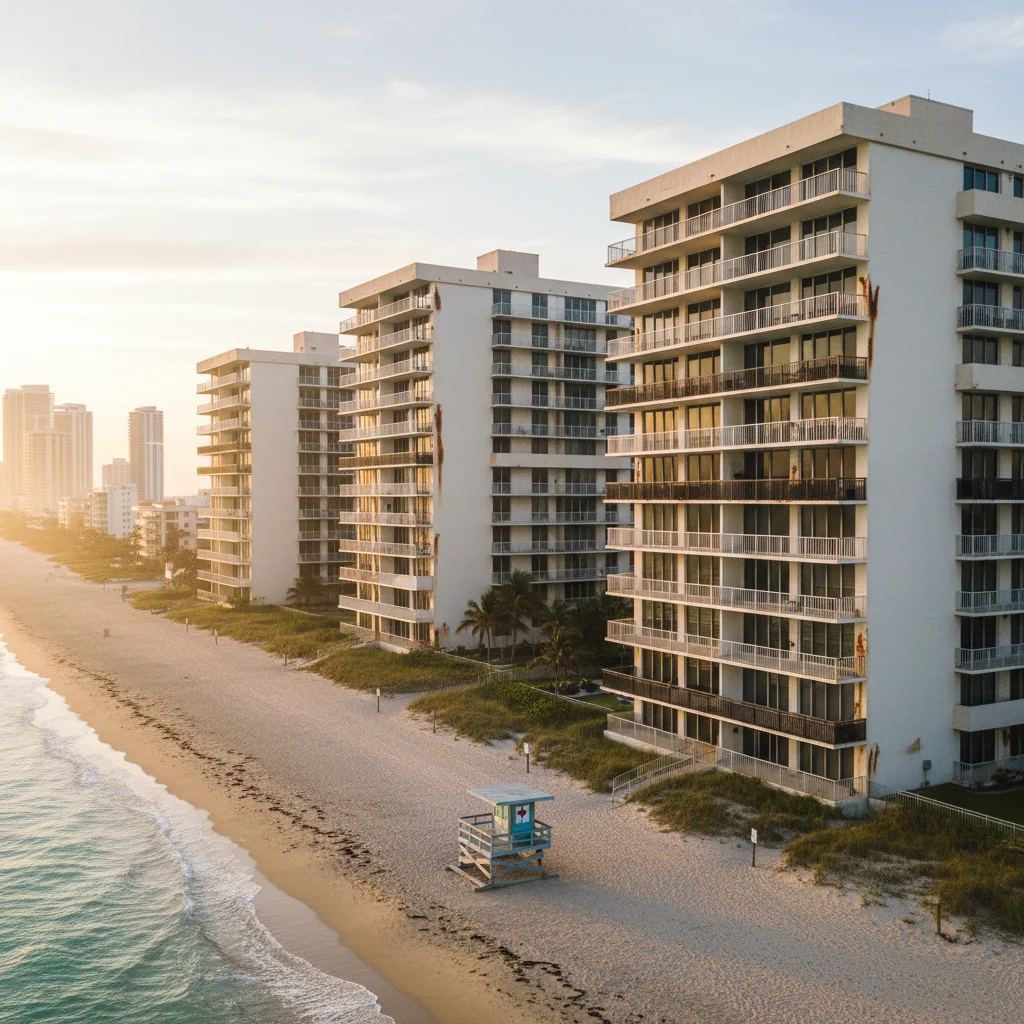
South Florida holds the largest concentrated water-damage exposure in the U.S.: roughly two-thirds of Miami-Dade, Broward, and Palm Beach condos three stories or taller predate 1990, and Florida's SB 4-D milestone-inspection law is forcing thousands to disclose decades of hidden damage — concrete spalling, aging plumbing, and balcony intrusion. Special assessments now run $30,000 to over $200,000 per unit.
Key takeaways
- Roughly two-thirds of Miami-Dade, Broward, and Palm Beach condominium buildings three stories or taller were built before 1990 — and Florida's SB 4-D milestone-inspection law has forced thousands of them to disclose decades of hidden water and structural damage for the first time.
- Coastal condos within three miles of the shoreline must complete a milestone inspection by December 31 of the year they turn 25; inland buildings at 30 years. Buildings 30 years or older as of July 1, 2022 were required to complete an inspection by December 31, 2024, and a Structural Integrity Reserve Study (SIRS) by December 31, 2025.
- The most common hidden water damage findings in aging South Florida condos are concrete spalling with corroded rebar, original galvanized or polybutylene plumbing past its service life, balcony slab and roof deck water intrusion, building envelope failures around sliding glass doors, and chronic HVAC condensate leaks in vertical chases.
- Special assessments for SB 4-D-driven structural repairs are running $30,000 to over $200,000 per unit on coastal buildings, and individual unit-level water damage restoration projects routinely exceed $20,000 once concealed mold, structural framing, and shared-system damage are factored in.
- Water damage inside an aging condo is rarely a single-unit problem. Restoration crews must coordinate with the HOA, the building engineer, neighboring units, and the master insurance policy — which is why an IICRC-certified team with commercial and HOA experience is the difference between a 14-day project and a 6-month dispute.
If you own, manage, or are buying a condominium unit in a South Florida building constructed before 1990, you are sitting inside the largest concentrated water damage exposure in the United States. Roughly four years after the Surfside collapse of Champlain Towers South — and following the passage of Florida's SB 4-D, SB 154, HB 1021, and HB 913 — milestone inspections and Structural Integrity Reserve Studies (SIRS) are now mandatory for every condominium and cooperative three stories or taller, and the results are uncovering decades of concealed structural water damage on a scale the industry has never had to mobilize for. This guide explains the legal landscape, what's actually failing inside these buildings, what unit owners and HOA boards should do this year, and what a professional commercial restoration response looks like inside an aging condo tower.
South Florida condo units in buildings 30+ years old
~1 million
Miami Herald and Florida DBPR estimates — Miami-Dade, Broward, and Palm Beach counties alone contain roughly one million condominium units in associations whose buildings are 30 years or older and now subject to mandatory milestone inspections under SB 4-D
Special-assessment range per unit
$30K–$200K+
Florida Engineering and HOA industry reports — average per-unit special assessments tied to milestone-inspection structural and water-intrusion findings in coastal South Florida buildings have ranged from $30,000 to well over $200,000, with several oceanfront towers issuing assessments above $300,000 per unit
SIRS deadline for legacy buildings
Dec 31, 2025
Florida Statute §718.112 — unit-owner-controlled associations existing on or before July 1, 2022 were required to complete an initial Structural Integrity Reserve Study by December 31, 2025; reserves for the nine SIRS-mandated structural components can no longer be waived or reduced by vote
The Surfside Reckoning: How a Single Collapse Rewrote Florida Condo Law
On June 24, 2021, the 12-story Champlain Towers South in Surfside partially collapsed, killing 98 people. The investigation by the National Institute of Standards and Technology (NIST) is ongoing, but the documentary record made clear that the building's pool deck slab, planter waterproofing, and substructure had been telegraphing failure for years. Internal engineering reports as far back as 2018 had flagged "major structural damage" to the pool deck and "abundant cracking and spalling" in the parking garage. Water had been working on that concrete for four decades, and the board's decisions on when and how to fund the repair sit at the center of the post-Surfside legislative response.
In the weeks after Surfside, the Florida Legislature held a special session and passed SB 4-D, which Governor DeSantis signed on May 26, 2022. SB 154 in 2023 refined the framework. HB 1021 in 2024 added director-education, transparency, recordkeeping, and DBPR-reporting requirements. HB 913 in 2025 made further administrative adjustments. The net result is the most aggressive condominium safety and reserve-funding regime any U.S. state has ever enacted — and it is forcing every coastal association in South Florida to confront, in writing, what is happening inside its walls.
Florida's New Condo Safety Framework, In Plain Language
| Requirement | Who is covered | Deadline / cadence | Source |
|---|---|---|---|
| Phase 1 Milestone Inspection | All condo & co-op buildings 3+ stories | By Dec 31 of the year the building turns 30 (or 25 if within 3 miles of the coast) | Florida Statute §553.899 |
| Phase 2 Milestone Inspection | Any building where Phase 1 finds substantial structural deterioration | Within set timeframes after Phase 1 report | Florida Statute §553.899 |
| Re-inspection cadence | All milestone-required buildings | Every 10 years after initial inspection | Florida Statute §553.899 |
| Structural Integrity Reserve Study (SIRS) | All condo & co-op buildings 3+ stories | Initial by Dec 31, 2025 for legacy buildings; every 10 years after | Florida Statute §718.112(2)(g) |
| Reserve-waiver prohibition | Unit-owner-controlled associations | Effective Dec 31, 2024 — no waiver/reduction of SIRS reserves | Florida Statute §718.112(2)(g)(2) |
| DBPR online reporting | All condo & co-op associations | Online account required as of July 1, 2025 | HB 1021 (2024) |
| Director education | All condo & co-op board members | Initial certification + annual continuing education | HB 1021 (2024) |
The Seven Hidden Water Damage Risks Inside Aging South Florida Condos
When milestone inspectors, structural engineers, and restoration teams open up the building envelope of a 35-to-55-year-old coastal Florida condo, the same patterns appear in nearly every project. None of these are visible from the lobby or from inside a unit. All of them produce hidden water damage that compounds for years before anyone files a claim.
- 1
Concrete spalling with corroded rebar
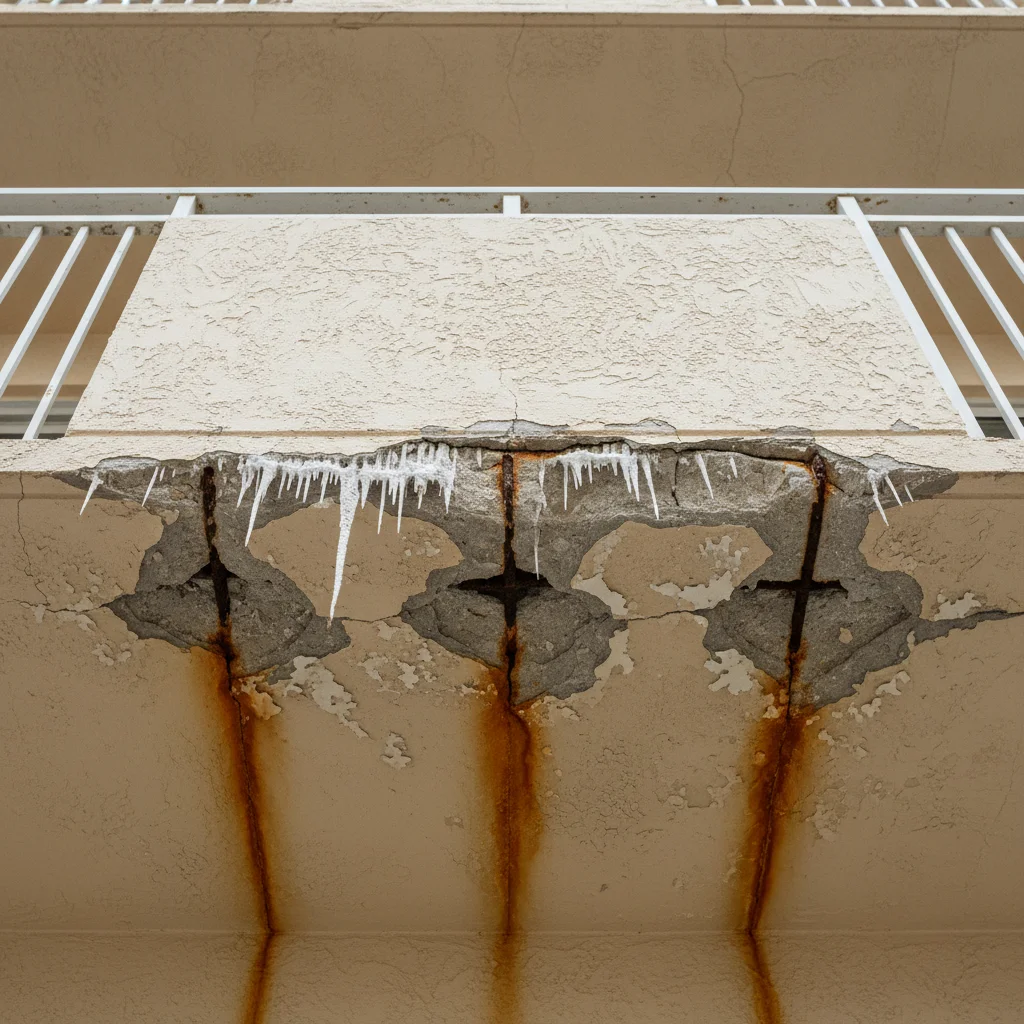
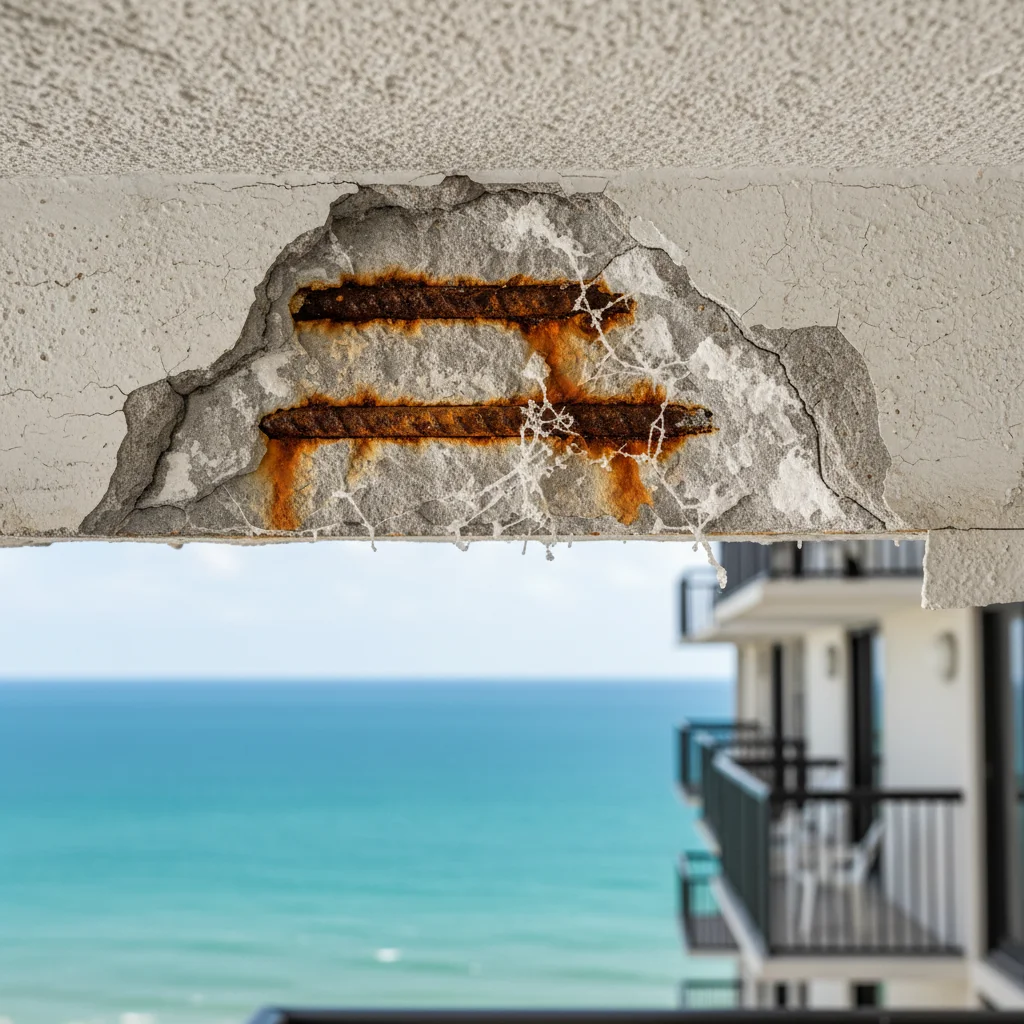
The defining failure mode of coastal Florida concrete. Salt-laden air drives chloride ions through the concrete cover until they reach the embedded carbon-steel rebar. The rebar starts to corrode, and because rust occupies roughly six times the volume of intact steel, it cracks the concrete from the inside out. Once a horizontal crack opens, water accelerates the cycle. Balcony slabs, walking decks, and parking-garage soffits show this first.
- 2
Original galvanized and polybutylene plumbing
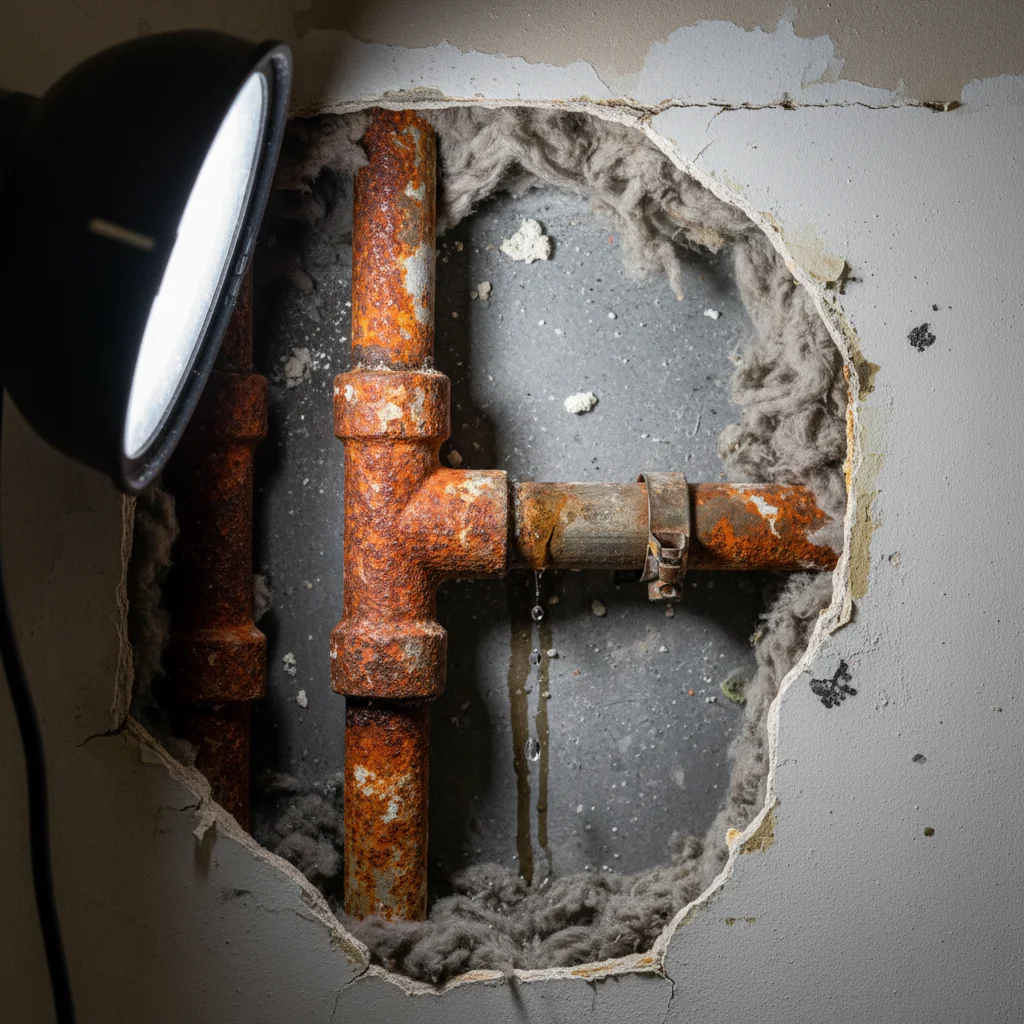
Condos built between roughly 1965 and 1985 frequently used galvanized steel supply piping; many 1978–1995 buildings used polybutylene. Galvanized fails by interior corrosion and pinhole leaks. Polybutylene fails through chemical degradation from chlorinated water — the failure mode that produced the 1995 class-action settlement. Both materials are now decades past their reliable service life, and both fail inside chases where leaks run unseen for weeks.
- 3
Balcony slab and walking-deck waterproofing failures
The waterproof membrane under tile or topping on a balcony or walkway has a service life of 15 to 25 years. Most original South Florida condo membranes are now on their second or third generation of failure. Water penetrates the topping, sits against the structural slab, and accelerates the rebar corrosion cycle from above. Tell-tale signs: hairline cracks tracking along grout lines, efflorescence bleed at slab edges, and "hollow" sounds when a tile is tapped.
- 4
Roof and roof-deck failures
Built-up tar-and-gravel and single-ply modified-bitumen roofs typical of 1970s–80s South Florida condos last 20 to 30 years. Most have already been replaced once and many are due again. Sub-roof water intrusion routinely reaches top-floor ceilings, vertical drywall chases, and elevator equipment rooms long before it shows up as a stain in a penthouse unit.
- 5
Building-envelope failures around sliding doors, windows, and façade joints
Original aluminum sliding glass doors on oceanfront balconies were never sealed for the modern wind-driven-rain standard. Wind-blown rain enters at the head, jambs, and threshold during every named storm and most summer thunderstorms. Sealant joints between dissimilar materials — stucco-to-concrete, concrete-to-aluminum, balcony-to-wall — fail on a 10-to-15-year cycle. Each failure feeds chronic concealed wetting.
- 6
Vertical chases, stack risers, and shared mechanical shafts
In a high-rise condo, plumbing and HVAC risers travel inside vertical shafts that pass through every floor. A pinhole leak on floor 14 follows gravity down through the shaft, soaking the back side of drywall on floors 12, 8, and 4 before anyone in those units notices a stain. These leaks are the single biggest source of multi-unit water claims in aging South Florida buildings.
- 7
Chronic HVAC condensate failures
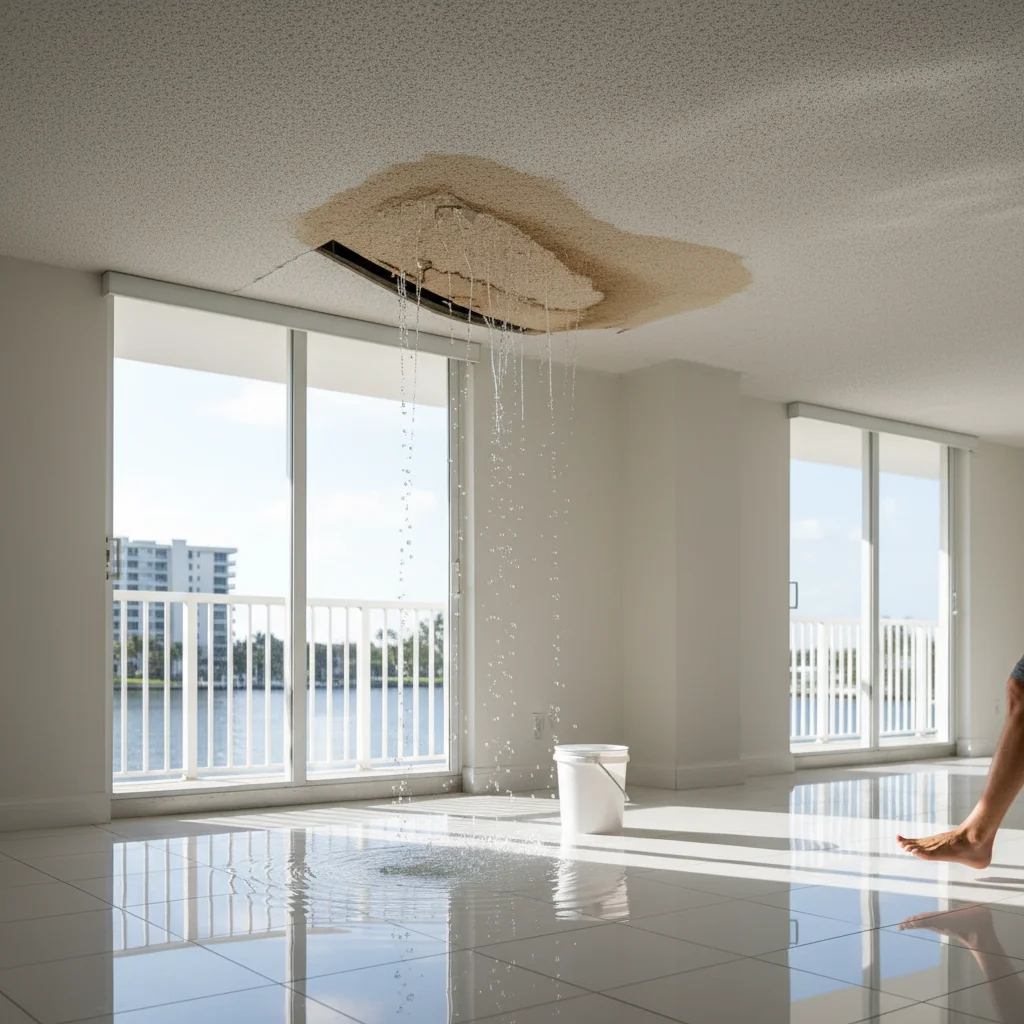
Florida's 70%+ ambient relative humidity means a single air handler can produce 5 to 10 gallons of condensate per day. Clogged drain pans, corroded coils, and disconnected secondary drains spill that water into ceiling assemblies and wall cavities. In aging condos with original ductwork inside soffits or chases, the leak path runs unseen for weeks before a downstairs neighbor sees the stain — the exact pattern that produces the 24-to-48-hour mold window.
What This Costs in the Real World
Florida's reserve-waiver prohibition is the single biggest financial change in the condo industry since the original Condominium Act. Boards that legally waived structural reserves for years are now required to assess unit owners for both the deferred work and the forward funding. The numbers below reflect what HOA boards across Miami-Dade, Broward, and Palm Beach are issuing in 2024–2026.
| Project type | Typical cost (per unit) | Notes |
|---|---|---|
| Phase 1 milestone inspection (per building) | $5K–$50K total | Cost spread across all units; ~$50–$1,000 per unit in larger buildings |
| Concrete restoration / spalling repair | $15K–$80K | Highly variable; oceanfront buildings on the higher end |
| Full balcony rebuild (per balcony) | $25K–$60K | Membrane, slab edge, railings, structural overlay |
| Re-piping (entire building) | $10K–$30K per unit | Galvanized or polybutylene replacement with PEX or copper |
| Roof replacement (per unit share) | $5K–$20K | TPO or modified-bitumen on a typical 60-unit building |
| Water-loss restoration (single unit) | $8K–$45K | Extraction, drying, demo, mold remediation, framing replacement |
| Total special assessment (coastal building) | $30K–$200K+ | Common for 1970s–80s oceanfront towers; some over $300K |
For Unit Owners: A 2026 Reality Check
If you own a unit inside an aging South Florida condo, the milestone-inspection era has changed the calculus in three ways: you are likely to receive a substantial special assessment, your unit policy and the master policy interact in ways that depend on cause-of-loss, and any water event inside your unit may now interact with an active structural-repair project on the building. The checklist below is what a properly informed owner should be doing this year.
- Read your association's most recent milestone-inspection report and SIRS in full. If you have not received them, request them in writing. Both are public records to unit owners under Florida Statute §718.111(12).
- Confirm what original construction materials the building used — galvanized vs. copper vs. polybutylene supply piping, cast-iron vs. PVC drains, built-up vs. single-ply roof, original aluminum vs. impact-rated sliding doors.
- Verify your HO-6 unit policy includes adequate dwelling coverage ("walls-in" or studs-in, depending on bylaws), loss-assessment coverage of at least $50,000 (more for coastal buildings), and water-backup coverage.
- Photograph and video every wall, ceiling, fixture, floor, and balcony at least once a year so you have a pre-loss baseline if a unit-from-above leak ever drops into your space.
- Sign up for any water-monitoring or shutoff system the association allows — smart leak sensors at the toilet supply, dishwasher, washer, and water heater are the single highest-leverage prevention step inside an individual unit.
- If you see ceiling or wall staining, smell musty odors, or notice spalling on your balcony soffit, report it in writing to the building manager the same day. Your written report is what triggers the master-policy timeline.
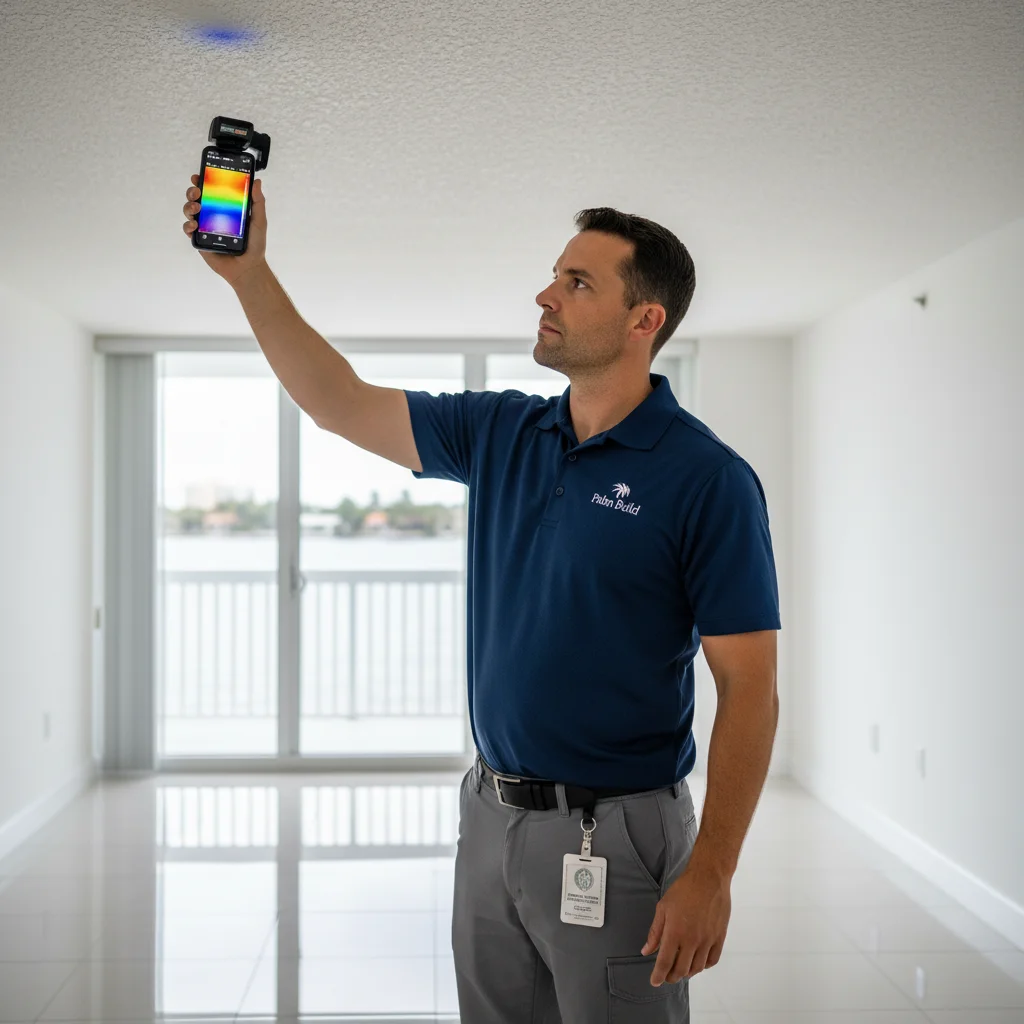
- Get a contractor-grade infrared thermal scan of your unit once every two to three years — a 30-minute scan finds concealed wet drywall, failed window flashing, and cold-spot leaks behind tile long before the stain shows up.
For HOA Boards: The New Playbook
HOA boards in aging South Florida buildings now operate under a strict statutory framework. The board is personally exposed if it fails to commission a required milestone inspection or SIRS, fails to fund the SIRS-required reserves, or makes a discretionary call to defer documented structural water damage. The eight steps below summarize the recurring playbook on every successful 2024–2026 rehabilitation project the Palm Build commercial team has supported.
- 1
Confirm your milestone and SIRS status — in writing
Pull the building's certificate of occupancy and confirm the exact date of the milestone deadline. Verify the Phase 1 inspection report and SIRS have been filed with the DBPR's online portal. If either is missing, the board is out of compliance — fix that before anything else.
- 2
Treat every water-intrusion finding as a phased project
An aging condo never has just one problem. Phase the work around shared building systems: re-pipe the risers before refinishing the corridors; replace the roof before remediating top-floor ceilings; rebuild balconies before painting facades. Sequencing saves money and avoids tearing out new finishes to access old defects.
- 3
Stand up a dedicated structural-repair line item
Reserves for the nine SIRS components are now legally protected. Operating funds, special assessments, and lender-backed lines of credit fund the rest. Boards that pre-arrange a structural-repair financing facility before assessments hit avoid the doom loop of unit owners selling, mortgages declining, and Fannie Mae blacklisting the building.
- 4
Vet contractors for IICRC, GC, and large-loss capability
A repair scope inside an aging coastal condo bundles concrete restoration, waterproofing, plumbing, finishes, abatement, and mold remediation. Boards that hire single-trade vendors end up coordinating six contractors and three insurance carriers. A general-contractor restoration partner with IICRC certification, mold remediation licensing, and large-loss handling experience is the right scope match.
- 5
Engineer the insurance claim, don't just file it
Building water losses in aging structures almost always trigger coverage debates around "resulting damage" versus excluded long-term deterioration. Get an engineer's opinion on cause-of-loss, sequence the documentation, and submit a single coordinated claim with the master-policy carrier. Palm Build's insurance restoration process is built around that workflow.
- 6
Communicate, communicate, communicate
Unit owners pay for everything in the end. Boards that publish a milestone-and-SIRS dashboard, send monthly construction-status updates, and host quarterly owner meetings keep approval and special assessments moving. Boards that go silent face owner lawsuits.
- 7
Document every step for the next milestone cycle
Florida law now requires re-inspection every 10 years. The records you keep on this cycle — engineer reports, scope letters, change orders, payment applications, completion photos — become the baseline for the next cycle. Treat the documentation as a permanent asset, not a project deliverable.
- 8
Train new directors, every year
HB 1021 requires director education. Use it. The single biggest preventable failure inside aging-condo HOA work is a new board reversing the prior board's contractor decisions and re-starting the scope. Continuity is a structural asset.

What a Professional Restoration Response Looks Like Inside an Aging Condo
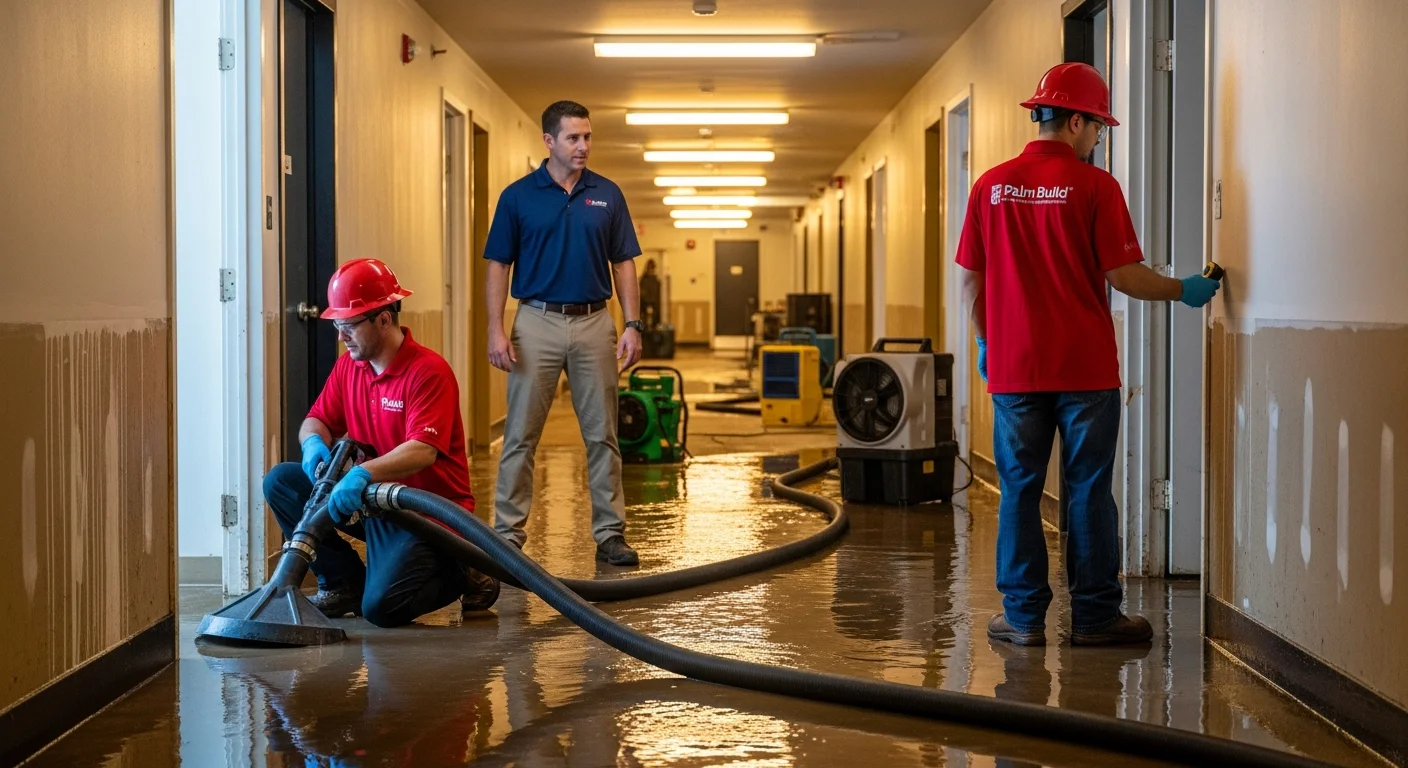
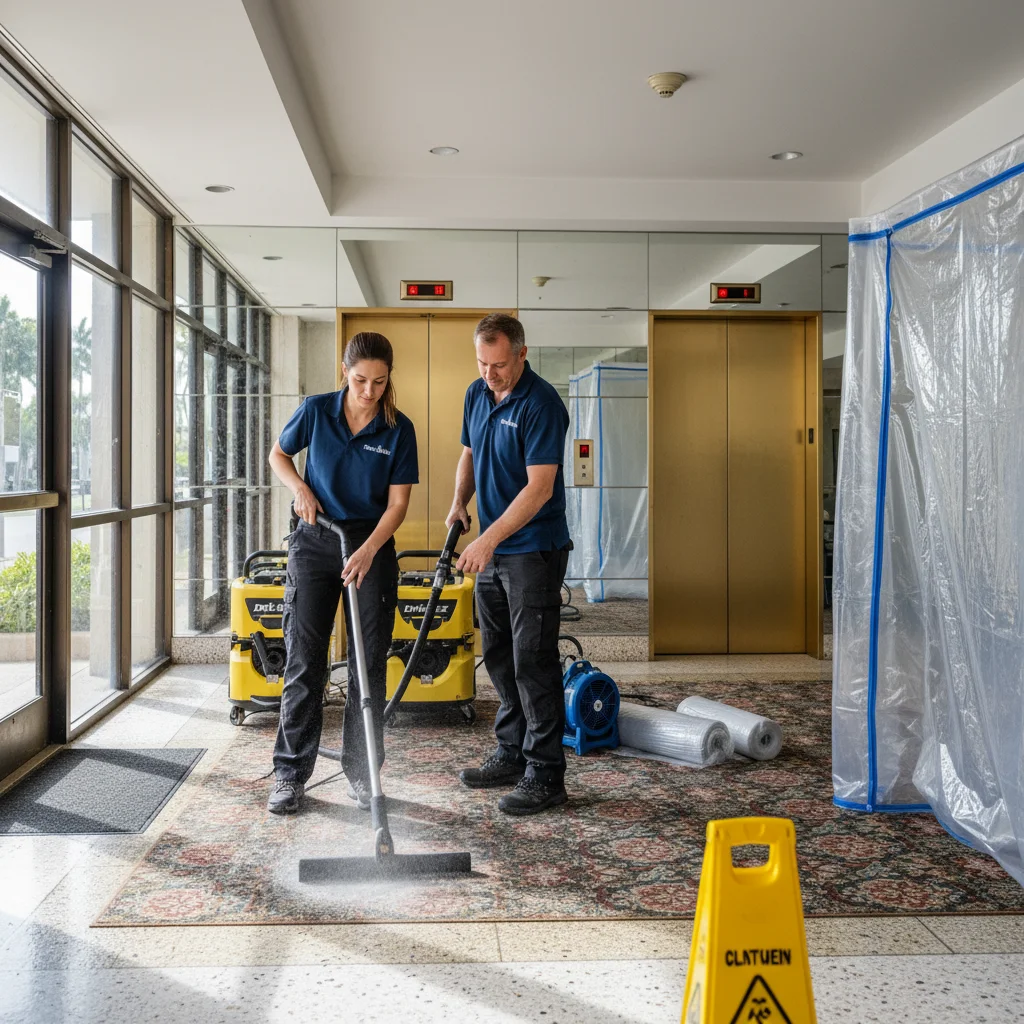
Restoration inside a high-rise condominium is fundamentally different from a single-family-home water loss. The water source is often a shared building component, the affected area routinely spans multiple units, common-element finishes must match across floors, and every move has to coordinate with the master insurance policy and the building manager. The comparison below shows the difference between a typical handyman or single-trade response and a full IICRC-certified restoration deployment.
Handyman / single-trade response
- Visible damage is patched — wet drywall is replaced, ceiling is repainted, tile is regrouted
- No moisture meter, no thermal scan, no documentation of dry standard before reconstruction
- Concealed wetting inside chases, wall cavities, and adjacent units is missed
- Mold colonies start within 24–48 hours behind the patched surface
- Unit owner pays out of pocket; master-policy claim is never properly triggered
- Second failure shows up 6–18 months later, typically in a neighboring unit
IICRC-certified Palm Build response
- Cause-of-loss investigation first — thermal scan, moisture mapping, source isolation
- Containment, extraction, structural drying to documented IICRC S500 dry standard
- Cross-unit assessment with the building manager and master-policy adjuster
- Antimicrobial application and mold-clearance testing inside affected cavities
- Coordinated reconstruction matching original finishes; line-item insurance documentation
- Project file becomes part of the building's permanent milestone record
City-Specific Notes: Where the Risk Concentrates
Aging-condo water damage risk is not evenly distributed across South Florida. The combination of vintage, distance from the shoreline, soil type, and storm-surge exposure produces hot zones. The three highest-density inventories sit in three different coverage profiles.
Miami-Dade County
Miami Beach (especially South-of-Fifth, Mid-Beach, and North Beach), Sunny Isles, Bal Harbour, Surfside, and Aventura concentrate the densest stock of pre-1990 oceanfront towers. Salt-air corrosion is most aggressive here, and the milestone-inspection caseload is the largest in the state. Many associations are still working through Phase 1 findings.
Broward County
Hollywood Beach, Fort Lauderdale (Galt Ocean Mile, Bayshore), Pompano Beach, Wilton Manors, and Hallandale Beach hold an enormous mid-rise inventory built between 1970 and 1985. Many of these buildings sit on shallow water-table soils, which amplifies parking-garage moisture and slab-on-grade issues. The Broward inventory is also where polybutylene plumbing is most concentrated.
Palm Beach County
Boca Raton, Highland Beach, Delray Beach, and Singer Island contain a meaningful share of the 1980s mid-rise stock. Risk here is slightly lower than Miami-Dade or Broward because the buildings are on average a few years younger and slightly inland-set — but storm-surge exposure during named hurricanes still concentrates damage on the oceanfront.
Frequently Asked Questions
Does Florida SB 4-D apply to my condo building? +
Who pays for water damage inside an aging condo unit — the owner or the HOA? +
What is a Structural Integrity Reserve Study (SIRS) and why does it matter? +
How much should I expect to pay in a special assessment? +
Is it still safe to buy an older South Florida condo? +
What are the warning signs of hidden water damage in an aging condo? +
How fast does mold start after a water leak in a Florida condo? +
Does my standard HO-6 policy cover water damage from a neighbor's unit above me? +
Related Resources
Commercial Restoration
Full-service commercial and HOA restoration across Florida — large-loss capable, IICRC-certified, master-policy claim experienced, with 24/7 emergency response.
HOA Services
Dedicated restoration support for South Florida condo and co-op boards — milestone-coordinated scopes, shared-element loss handling, multi-unit deployment.
Large Loss Handling
Multi-million-dollar restoration projects, multi-unit coordination, complex insurance claims, and long-duration construction across high-rise and commercial properties.
Florida Homeowners Insurance Crisis (2026 Update)
How Florida's hardening insurance market is changing water claim outcomes — and what to do before you file.
HOA Water Damage: Who Pays?
The full breakdown of unit-owner vs. master-policy responsibility, with the Florida-specific declarations rules that most owners never read.
Signs of Hidden Water Damage
The early-warning catalog every condo owner should walk through twice a year — walls, ceilings, floors, balconies, and HVAC.
South Florida's aging-condo problem is not going to resolve quickly. The buildings are old, the laws are now strict, the reserves cannot be waived, and the salt air keeps working. What can change quickly — within a single project — is how a board, an owner, or a property manager responds to a water event inside one of these buildings. The difference between a $12,000 single-unit drying job and a $250,000 multi-unit mold and structural project is almost always the speed and discipline of the first 24 hours: cause-of-loss isolation, master-policy notification, IICRC-certified extraction and drying, written documentation, and coordinated reconstruction. Palm Build's commercial and HOA team has spent the last four years building the playbook for exactly that response across Miami-Dade, Broward, and Palm Beach. If you're an owner, a board member, or a property manager inside an aging South Florida condo and you want a second set of eyes on what you're seeing, we're a phone call away.
Aging South Florida condo with water damage, milestone findings, or a special assessment in motion? Call us before you sign anything.
Palm Build's commercial restoration and HOA team responds 24/7 across Miami-Dade, Broward, and Palm Beach with IICRC-certified extraction, structural drying, mold remediation, full master-policy documentation, and large-loss reconstruction — the playbook built for aging high-rise buildings under Florida's new milestone-inspection framework.
Found this helpful? Send it to someone who needs it.