Storm & Hurricane Damage Restoration in Jupiter, Florida
Jupiter sits in a 170+ mph wind contour zone where the Loxahatchee River meets the Atlantic. From Hurricane Nicole's surge to the April 2023 EF-2 tornado in nearby Palm Beach Gardens, storm damage in Jupiter goes beyond roof tiles — wind-driven rain penetrates CBS wall cavities, salt surge corrodes infrastructure, and 1980s-era homes bear the brunt. Palm Build deploys emergency tarping, extraction, and full reconstruction.
Deerfield Beach — Rapid Response to Jupiter Under 60 min Response IICRC Certified
Jupiter's position at the northern tip of Palm Beach County, where the Loxahatchee River
meets the Atlantic at Jupiter Inlet, creates a uniquely dangerous convergence of storm
risks. The 170+ mph wind contour, coastal surge exposure, and a housing stock that spans
from 1980s pre-code construction to modern impact-rated estates mean every storm
produces a wide spectrum of damage across the town.
170+ MPH Wind Contour Zone
170+
MPH wind zone
Jupiter falls within Florida's highest wind speed design zone — the 170+ mph contour per ASCE 7 and the Florida Building Code. This means buildings must be designed to withstand sustained winds well above Category 4 hurricane levels. However, homes built before the 2002 Florida Building Code overhaul — common in Jonathan's Landing, The Bluffs, and older Jupiter neighborhoods — predate these standards and remain significantly more vulnerable to wind damage, roof tile failure, and wind-driven rain intrusion through wall and window assemblies.
Loxahatchee River & Atlantic Convergence
3 water
convergence zones
Jupiter sits at the confluence of the Loxahatchee River, the Intracoastal Waterway, and the Atlantic Ocean at Jupiter Inlet. During hurricanes and tropical storms, storm surge funnels up the Inlet and Loxahatchee, flooding waterfront properties in Admirals Cove, Pennock Point, and the Jupiter Riverwalk area. Simultaneously, wind-driven rain from the Atlantic hammers east-facing structures. This dual-threat exposure — surge from below and wind-driven water from above — is unique to Jupiter's geography.
Hurricane Nicole & EF-2 Tornado History
2022-23
Recent events
Hurricane Nicole made landfall as a Category 1 in November 2022, pushing abnormal storm surge up Jupiter Inlet and causing significant erosion and flooding. In April 2023, an EF-2 tornado touched down in nearby Palm Beach Gardens — just minutes south of Jupiter — destroying homes and demonstrating that tornado risk extends well beyond traditional Tornado Alley. Jupiter's flat terrain and coastal moisture provide the instability that fuels both tropical cyclones and embedded tornadoes.
1980s-Era Homes With Aging Roof Assemblies
40+ yr
Aging roof stock
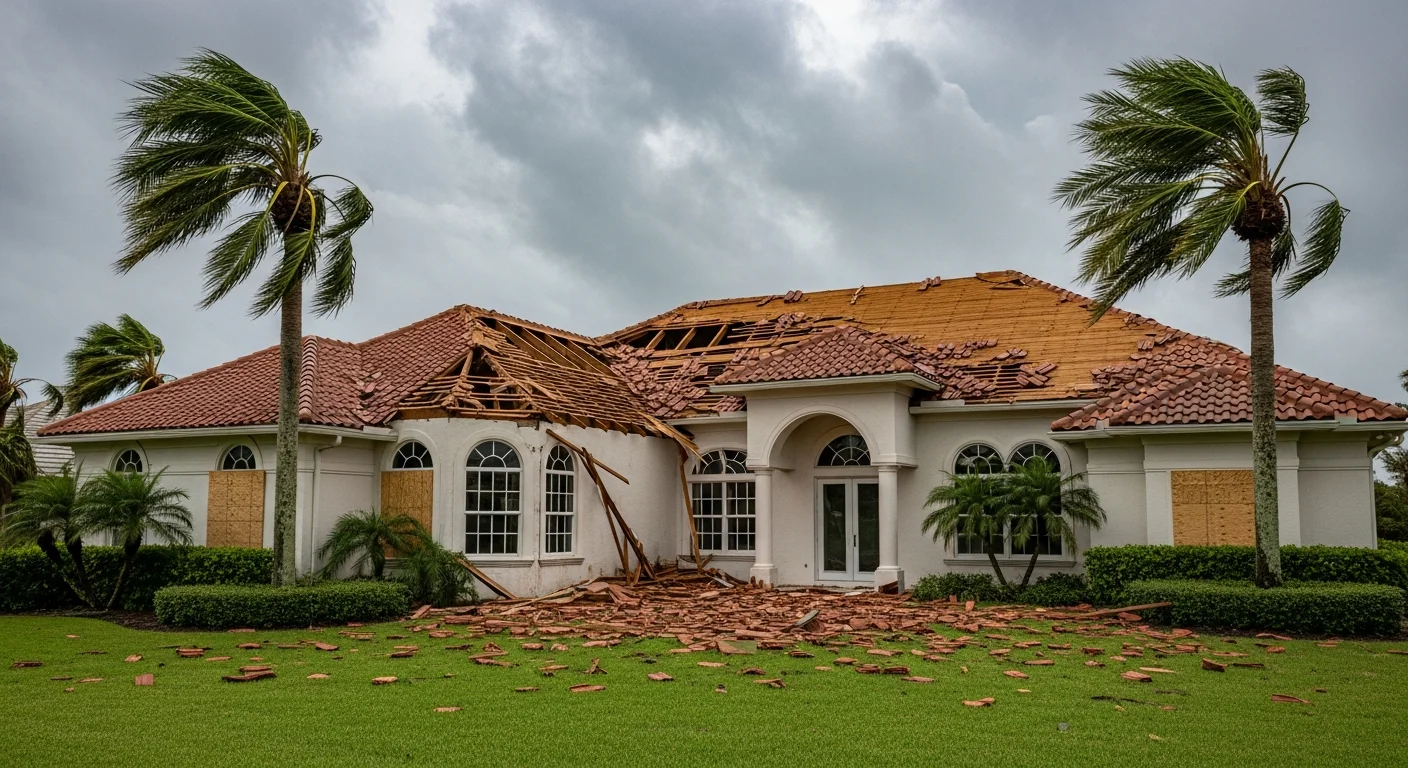
Many Jupiter neighborhoods — including Jonathan's Landing (1986), The Bluffs (1983), and older sections of Jupiter Farms — were built with construction standards that predate modern hurricane codes. Aging barrel tile roofs, deteriorating underlayment, non-impact-rated windows, and original roof-to-wall connections make these homes disproportionately vulnerable to wind damage. When a 40-year-old barrel tile roof loses tiles in a storm, the compromised underlayment beneath allows immediate water intrusion into the roof deck and living space.
Jupiter's 170+ mph wind zone and coastal exposure create compound storm damage scenarios
— wind removes roof tiles while surge floods lower levels simultaneously.
Neighborhood Storm Risk Assessment
Jupiter Neighborhood Storm Damage Risk Profiles
Storm vulnerability in Jupiter varies dramatically by neighborhood. Waterfront estates
in Admirals Cove face surge threats that inland Jupiter Farms properties never see,
while 1980s communities like The Bluffs have construction vulnerabilities that modern
homes in The Heights don't share. Here's what Palm Build's technicians encounter in each
area.
Admirals Cove
1988–2010s · Luxury CBS stucco, barrel tile, waterfront estates
Waterfront estates face direct Intracoastal surge during hurricanes. Barrel tile roofs on exposed lots lose tiles in 100+ mph gusts. Salt spray corrodes exterior fixtures and HVAC components within hours of a coastal storm event.
Jonathan's Landing
1986–2000s · CBS stucco, barrel tile, golf course community
Original 1986 sections predate modern hurricane codes. Aging barrel tile underlayment fails during storms, allowing water intrusion. Waterfront lots along the Intracoastal experience surge flooding. Interior lots face wind-thrown tree damage from mature landscaping.
Abacoa
1998–2010s · Mixed CBS — townhomes, condos, single-family
High Risk
Primary Storm Risks
Multi-unit wind-driven rain intrusion, shared-wall water migration
Common Damage Patterns
Townhome and condo construction means storm damage to one unit cascades through shared walls. Wind-driven rain penetrates at roof-wall junctions and window assemblies. Higher density increases the number of claims per storm event.
Jupiter Country Club
2007–present · Modern CBS stucco, concrete tile, impact glass
Moderate
Primary Storm Risks
Wind damage to luxury finishes, lanai screen enclosure destruction
Common Damage Patterns
Modern code-compliant construction handles wind well, but lanai screen enclosures are destroyed in even moderate tropical storms. Premium finishes — imported tile, hardwood, custom cabinetry — sustain expensive water damage when any breach occurs.
The Bear's Club
1999–present · Ultra-luxury custom CBS, barrel tile, estate homes
High Risk
Primary Storm Risks
Premium material vulnerability, large roof spans, landscaping debris
Common Damage Patterns
Estate homes with 8,000-15,000+ sq ft have massive roof spans that collect debris impact and wind uplift forces. Custom Italian marble, exotic hardwood, and designer interiors mean any water intrusion from roof breach results in six-figure restoration costs.
The Bluffs
1983–1990s · CBS stucco, concrete tile, ocean-adjacent
Critical
Primary Storm Risks
Pre-code construction, coastal wind exposure, salt air deterioration
Common Damage Patterns
Among the oldest Jupiter communities, The Bluffs has homes with original 1980s roof assemblies and non-impact windows. Ocean proximity means maximum wind speeds during coastal storms and chronic salt air deterioration of fasteners and flashing.
Jupiter Farms
1970s–present · Mixed — CBS, frame, metal roof, large lots
High Risk
Primary Storm Risks
Mature tree canopy wind-throw, longer emergency response times, rural exposure
Common Damage Patterns
5+ acre lots with dense mature tree canopy create extreme wind-thrown tree risk. Rural character means longer response times. Mixed construction types — some frame homes remain — face higher wind damage rates than CBS construction.
The Heights at Jupiter
2018–present · New construction CBS, impact glass, modern code
Moderate
Primary Storm Risks
Lanai and screen enclosure damage, new landscaping debris
Common Damage Patterns
Built to current Florida Building Code with impact-rated openings, these homes perform well structurally. Primary storm damage involves screen enclosures, exterior finishes, and young landscaping that becomes airborne debris.
Pennock Point / Jupiter Inlet Colony
1960s–2000s · CBS, barrel tile, direct oceanfront and Inlet-adjacent
Critical
Primary Storm Risks
Maximum storm surge exposure, coastal erosion, salt damage
Common Damage Patterns
The most storm-surge-vulnerable area in Jupiter. Hurricane Nicole (2022) caused significant erosion and flooding here. Homes face direct Atlantic surge, Inlet surge, and maximum wind exposure simultaneously during hurricanes.
River Bridge / Riverside
1990s–2000s · CBS stucco, concrete tile, Loxahatchee River-adjacent
High Risk
Primary Storm Risks
Loxahatchee River flooding, wind-driven rain, tree debris
Common Damage Patterns
Properties along the Loxahatchee River experience flooding when storm surge pushes up from Jupiter Inlet and combines with heavy rainfall runoff. Mature tree canopy along the river creates wind-thrown tree hazards during tropical storms.
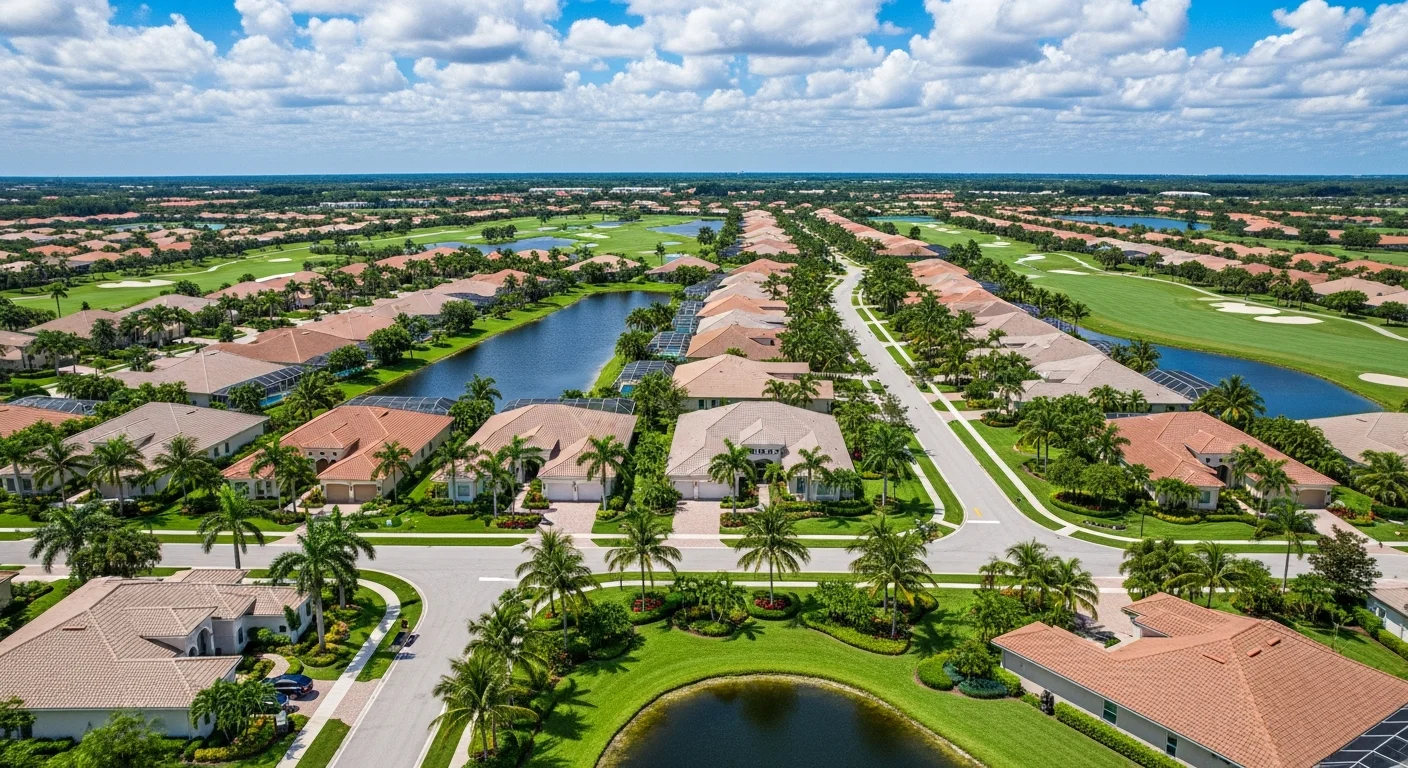
Jupiter's gated communities face varying storm risks — waterfront estates in Admirals
Cove and Jonathan's Landing are exposed to Intracoastal surge, while inland communities
contend with wind-thrown tree damage.
Our Process
7-Step Storm Damage Restoration for Jupiter Homes
Storm restoration in Jupiter requires specialized protocols for CBS stucco construction,
saltwater contamination, and Florida Building Code compliance in the 170+ mph wind zone.
Here's how Palm Build restores storm-damaged Jupiter homes from emergency response
through final reconstruction.
01
Emergency Tarping & Board-Up
Under 60 minutes
Call (754) 600-3369 any time. Our Deerfield Beach team dispatches immediately to Jupiter with tarps, plywood, and emergency stabilization materials. For barrel tile roofs — the dominant system in Admirals Cove, Abacoa, and Jupiter Country Club — we apply heavy-duty shrink-wrap tarping that seals around tile profiles and withstands subsequent rain events. Board-up services for broken windows and doors prevent further wind and rain intrusion. Emergency tarping costs are covered under your insurance policy as part of your mitigation obligation.
02
Debris Removal & Safe Access
Day 1-2
Fallen trees, displaced roof tiles, screen enclosure wreckage, and wind-scattered materials must be cleared before restoration can begin. In Jupiter Farms with its dense mature canopy, tree removal from structures requires coordination with licensed arborists and sometimes structural engineers. All debris is documented with photographs before removal for insurance purposes. We coordinate with Jupiter's municipal debris removal schedule for curbside pickup.
03
Water Extraction
Day 1-3
Wind-driven rain intrusion, roof breach flooding, and storm surge all require immediate water extraction. Truck-mounted extractors remove standing water at up to 30 gallons per minute. For Jupiter's CBS stucco homes, water that has penetrated through cracked stucco or displaced roof tiles becomes trapped inside the hollow concrete block cavity — invisible from the surface but devastating if not addressed. Saltwater intrusion from surge requires Category 3 contamination protocols.
04
Structural Assessment & Documentation
Day 2-4
FLIR thermal imaging reveals hidden moisture inside CBS block cavities and behind intact stucco. Pin and pinless hygrometers map moisture levels at every affected surface. We assess roof deck integrity, wall structure, window assemblies, and electrical systems. For homes in Jupiter's 170+ mph wind zone, we evaluate roof-to-wall connections and impact-rated opening integrity. All findings are documented in insurance-ready format from the first hour.
05
Structural Drying & Dehumidification
3-7 days
Commercial LGR dehumidifiers pulling 15-30 gallons per day and high-velocity air movers create a controlled drying environment. Jupiter's year-round 80%+ ambient humidity means standard air drying cannot achieve target moisture levels. For CBS block walls, we use directed heat drying and wall cavity injection systems that deliver warm dry air directly into hollow block cores. Daily moisture readings track progress until all materials reach dry standard.
06
Mold Prevention Treatment
During drying
In Jupiter's tropical climate, mold colonizes wet building materials within 48-72 hours. EPA-registered antimicrobial agents are applied to all affected surfaces during the drying process. We treat CBS block cavities, slab-to-wall junctions, attic spaces, and HVAC systems to prevent secondary colonization. This step is critical after storm damage — the combination of tropical humidity and wind-distributed organic debris creates ideal conditions for rapid mold growth.
07
Full Reconstruction
2-12 weeks
Roof repair or replacement, stucco restoration, drywall, flooring, cabinetry, electrical, and paint — Palm Build manages the entire reconstruction from emergency tarping through final inspection. For Jupiter's luxury homes, we match existing high-end finishes: natural stone, custom millwork, designer tile, and specialty coatings. All work meets current Florida Building Code requirements for the 170+ mph wind zone, including hurricane-rated windows and reinforced roof connections.
Jupiter-Specific Threat
Saltwater vs Freshwater Flooding in Jupiter
Jupiter's position at the confluence of Jupiter Inlet, the Intracoastal Waterway, and
the Loxahatchee River means many storm flooding events involve saltwater — which is
dramatically more destructive than freshwater. Understanding the difference determines
whether materials can be dried and salvaged or must be demolished and replaced.
Freshwater Flooding
Rain overflow, pipe bursts, HVAC condensation
Drywall & Insulation
Absorbs water, weakens structurally. Can be dried and salvaged if treated within 48 hours.
Mold risk in 48-72 hours
Concrete Block (CBS)
Absorbs moisture into porous cavities. Requires cavity injection drying but no permanent material damage.
Drying: 5-10 days
Electrical Systems
Minimal corrosion risk with prompt drying. Circuits and outlets can typically be dried and reused.
Inspection required before re-energizing
Metal Fasteners & Flashing
Minimal corrosion from clean freshwater. Standard drying prevents oxidation.
No long-term impact if dried promptly
Saltwater Flooding
Storm surge, Inlet overflow, Intracoastal breach
Drywall & Insulation
Salt crystallization creates ongoing deterioration even after drying. Full removal and replacement required — no salvage possible.
Immediate demolition required
Concrete Block (CBS)
Salt migrates deep into porous block and continues to draw moisture (hygroscopic). Can cause efflorescence, spalling, and rebar corrosion for years.
May require block replacement
Electrical Systems
Rapid corrosion of copper wiring, outlets, breakers, and panels. Salt residue continues corroding even after drying. Full replacement typically required.
Replace — do not attempt to dry and reuse
Metal Fasteners & Flashing
Accelerated corrosion of hurricane straps, roof clips, nail plates, and flashing. Salt crystallization weakens connections over time — a hidden structural risk.
Inspection and replacement of corroded fasteners
Why This Matters in Jupiter
Homes in Admirals Cove, Pennock Point, Jupiter Inlet Colony, and along the Loxahatchee
River are most exposed to saltwater surge during hurricanes. Insurance adjusters treat
saltwater damage differently — it's classified as Category 3 (grossly contaminated) under
IICRC S500 standards, which mandates demolition of all porous materials rather than
drying. The cost difference between freshwater and saltwater restoration on the same home
can be 2-3x. Palm Build documents water source and contamination level from the first hour
to ensure your claim reflects the true scope of damage.
Building Code Context
Jupiter's 170+ MPH Wind Zone Explained
Understanding Jupiter's wind zone classification is essential for both storm
preparedness and post-storm restoration. Here's what the 170+ mph contour means for your
home, your roof, your windows, and what's required when Palm Build reconstructs storm
damage.
What Is the 170+ MPH Wind Contour?
Florida's Building Code references ASCE 7 wind speed maps to determine design wind speeds for every location. Jupiter falls within the 170+ mph contour — the highest category — meaning structures must be engineered to resist sustained winds of 170 mph with 3-second gusts exceeding 200 mph. This is equivalent to a strong Category 5 hurricane. The standard applies to all new construction and major renovations in Jupiter since the 2002 Florida Building Code took effect.
What This Means for Roof Systems
In the 170+ mph zone, roofs must be attached with enhanced nailing patterns (8d ring-shank nails at 4" spacing), hurricane straps or clips connecting every rafter to the wall plate, and sealed roof decking. Barrel tile — the dominant roofing system in Jupiter — must be mechanically fastened (not mortar-set) and installed with high-wind clips. Homes built before 2002 typically lack these features, making their roofs the weakest link during a hurricane.
Impact-Rated Openings Are Required
All windows, doors, sliding glass doors, and garage doors in Jupiter's wind zone must be impact-rated or protected by approved shutters. Impact-rated glass withstands large missile impact (a 2x4 board traveling at 50 fps) followed by sustained wind pressure cycling. Older Jupiter homes with original single-pane or non-impact windows are vulnerable to breach during hurricanes — and once one opening is breached, internal pressure can lift the entire roof structure.
Risk Category II — Standard Occupancy
Jupiter homes fall under Risk Category II, which is standard occupancy. This means the 170+ mph base wind speed applies directly without additional importance factors. Essential facilities like hospitals and fire stations (Risk Category IV) have even higher design requirements. When Palm Build reconstructs storm damage in Jupiter, all work must meet or exceed the current 170+ mph wind zone requirements — even if the original home was built to weaker standards.
The Substantial Improvement Rule
When storm damage restoration costs exceed 50% of the building's market value, the
Substantial Improvement rule under the National Flood Insurance Program may trigger —
requiring the entire structure to be brought up to current Florida Building Code
standards, not just the damaged areas. In Jupiter's flood zones, this can add
significant cost to a restoration project but also dramatically improves the home's
future storm resilience. Palm Build identifies Substantial Improvement triggers early
and documents them for your insurance claim to ensure code upgrade costs are covered
under your ordinance-and-law endorsement.
Cost Transparency
Storm Damage Restoration Costs in Jupiter
Jupiter's coastal location, luxury housing stock, and 170+ mph building code
requirements mean storm restoration costs run above national averages. Barrel tile
roofing, CBS stucco construction, and the potential for saltwater contamination all
affect pricing. Here's what to expect.
Standard Storm Damage
Emergency Tarping (Roof)
Depends on roof size, pitch, and number of breach points. Covered by insurance.
$500 – $2,500
Minor Wind Damage — Siding, Fascia, Soffit
Localized damage to exterior finishes, no structural impact
$2,000 – $6,000
Screen Enclosure Replacement
Full lanai/pool cage rebuild common after tropical storm or hurricane winds
$3,000 – $12,000
Barrel Tile Roof Repair (Partial)
Tile replacement, underlayment repair, flashing work on damaged sections
$2,500 – $8,000
Major Storm / Hurricane Damage
Hurricane Roof Replacement (Full)
Full barrel tile or concrete tile reroof to current 170+ mph code standards
$20,000 – $60,000+
Wind-Driven Rain — Multi-Room Intrusion
Extraction, CBS block drying, drywall replacement, premium finish restoration
$10,000 – $40,000+
Saltwater Surge Damage
Cat 3 protocols, full demo of porous materials, electrical replacement, reconstruction
$25,000 – $100,000+
Tree Impact — Structural Damage
Tree removal, structural repair, roof/wall reconstruction, full interior restoration
$15,000 – $75,000+
Average Jupiter Storm Restoration
$8,000 – $35,000
Typical wind damage with roof breach, water intrusion, and partial reconstruction. Major
hurricane events with saltwater surge can exceed $100,000 for luxury waterfront homes.
Jupiter's $525K median home value and premium finishes mean even moderate damage involves
costly material replacement. Free assessments — call (754) 600-3369.
Hurricane Insurance Guide
Storm Damage Insurance for Jupiter Homeowners
Florida's property insurance market is the most complex and expensive in the nation.
Hurricane deductibles, separate flood policies, strict filing deadlines, and the 2023
AOB reform fundamentally affect how Jupiter homeowners navigate storm damage claims.
Hurricane Deductibles: 2-5% of Dwelling Value
Florida policies carry separate hurricane deductibles calculated as a percentage of your dwelling coverage — not the loss amount. On Jupiter's $525K median home value, that's $10,500 to $26,250 out of pocket before the insurer pays on a hurricane claim. For luxury estates in Admirals Cove or The Bear's Club insured at $2M-$10M+, hurricane deductibles can reach $50,000 to $500,000. The hurricane deductible applies once per storm season, not per event.
Jupiter median hurricane deductible: $10,500 – $26,250. Know yours before storm season.
1-Year Claim Filing Deadline
Under Fla. Stat. 627.70132, initial property insurance claims must be filed within 1 year of the date of loss. Supplemental claims must be filed within 18 months. These are hard deadlines — a late claim is legally barred regardless of merit. In Jupiter, where seasonal residents may not discover storm damage for months, this deadline is especially dangerous.
If your damage occurred more than 10 months ago, act now.
Wind vs. Flood: Different Policies, Same Storm
Standard HO-3 homeowner policies cover wind damage (roof, siding, windows, fallen trees) but explicitly exclude flood damage (rising water, storm surge). In Jupiter, a single hurricane can cause both — wind damage from above and saltwater surge from Jupiter Inlet and the Intracoastal. Wind damage files through your homeowner's carrier. Flood damage files through your NFIP or private flood policy. Palm Build documents damage by cause to ensure each claim is filed under the correct policy.
Many Jupiter homeowners lack flood coverage despite coastal surge exposure.
AOB Reform: You Control Your Claim
Since January 1, 2023, post-loss Assignment of Benefits is prohibited for residential property insurance in Florida. Homeowners must manage their own claims. Palm Build provides all documentation — moisture maps, thermal imaging reports, drying logs, photo evidence, Xactimate estimates — formatted for your adjuster. We work as your documentation and restoration partner while you retain full control of your insurance claim.
Palm Build provides documentation; you manage your claim directly with your carrier.
Seasonal Storm Risk Guide
When Jupiter Homes Are Most at Risk for Storm Damage
Jupiter faces year-round storm threats, but the risk profile shifts dramatically across
seasons. Understanding your seasonal exposure helps you prepare your home — and respond
faster when damage occurs.
Hurricane Season
June – November (Peak: Aug – Oct)
CRITICAL
Hurricane & Tropical Storm Damage
PEAK
Jupiter's 170+ mph wind zone places it in the direct path of Atlantic hurricanes. Hurricane Nicole (Nov 2022) pushed surge up Jupiter Inlet, causing significant flooding and erosion. Storm surge, wind-driven rain, and debris impact can damage homes simultaneously across multiple systems — roof, walls, windows, and foundation.
Tornado Risk (Embedded & Supercell)
ELEVATED
Hurricanes and tropical storms spawn embedded tornadoes as they cross the coastline. The April 2023 EF-2 tornado in nearby Palm Beach Gardens and the October 2024 EF-3 in Avenir during Hurricane Milton demonstrate that tornado risk in the Jupiter area is real and recurring. Tornadoes cause localized but intense damage — complete roof removal, wall collapse, and debris impalement.
Saltwater Storm Surge
PEAK
Jupiter Inlet, the Loxahatchee River, and the Intracoastal Waterway funnel storm surge inland during hurricanes. Saltwater surge is classified Category 3 under IICRC standards — requiring demolition of all porous materials, not just drying. Waterfront properties in Admirals Cove, Pennock Point, and Jupiter Inlet Colony are most exposed.
Call Volume: Highest — emergency tarping, water extraction, structural stabilization, full reconstruction
Thunderstorm Season
May – October
HIGH
Severe Thunderstorms & Microbursts
HIGH
Jupiter receives 61.75 inches of annual rainfall, with 70% concentrated in the wet season. Afternoon thunderstorms produce straight-line winds exceeding 70 mph, large hail, and intense lightning. Microbursts — localized downdrafts — can cause hurricane-force wind damage in narrow corridors.
Lightning Strikes
HIGH
South Florida is the lightning capital of the United States. Lightning strikes cause electrical surges that damage HVAC systems, electronics, and wiring. Direct strikes to roofs or trees can cause fires and structural damage. Jupiter homes should have whole-house surge protection.
Call Volume: High — roof damage, lightning-related fire, flash flooding
King Tide & Dry Season
November – April
MODERATE
King Tides (Sept – Nov overlap)
ELEVATED
King tides in September through November raise canal and Intracoastal levels, reducing drainage capacity. When king tides coincide with tropical weather systems, the flooding compound effect can push water into low-lying properties along the waterways. Climate change is increasing king tide frequency and height.
Nor'easters & Cold Front Winds
MODERATE
Nor'easters and strong cold fronts produce sustained winds of 30-50 mph with gusts to 60+ mph. While weaker than hurricanes, these events strip barrel tiles from aging roofs, topple weakened trees, and drive rain through compromised envelope systems. Cumulative damage from multiple cold front events can be significant.
From emergency roof tarping to completed interior restoration — see how Palm Build
handles storm and hurricane damage in Jupiter's coastal communities and luxury homes.
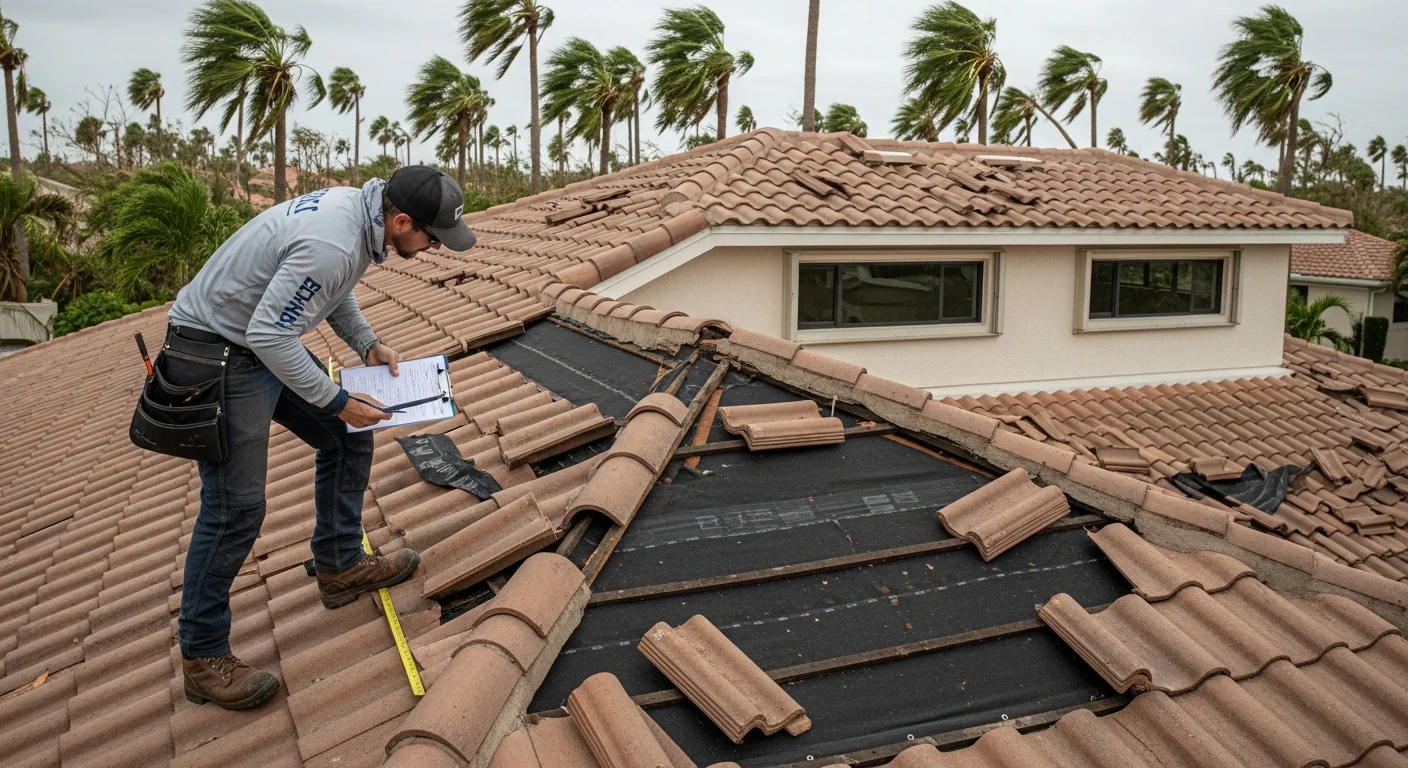
Barrel tile roof inspection after hurricane winds — displaced tiles expose the underlayment beneath, allowing water intrusion into the roof deck and living space.
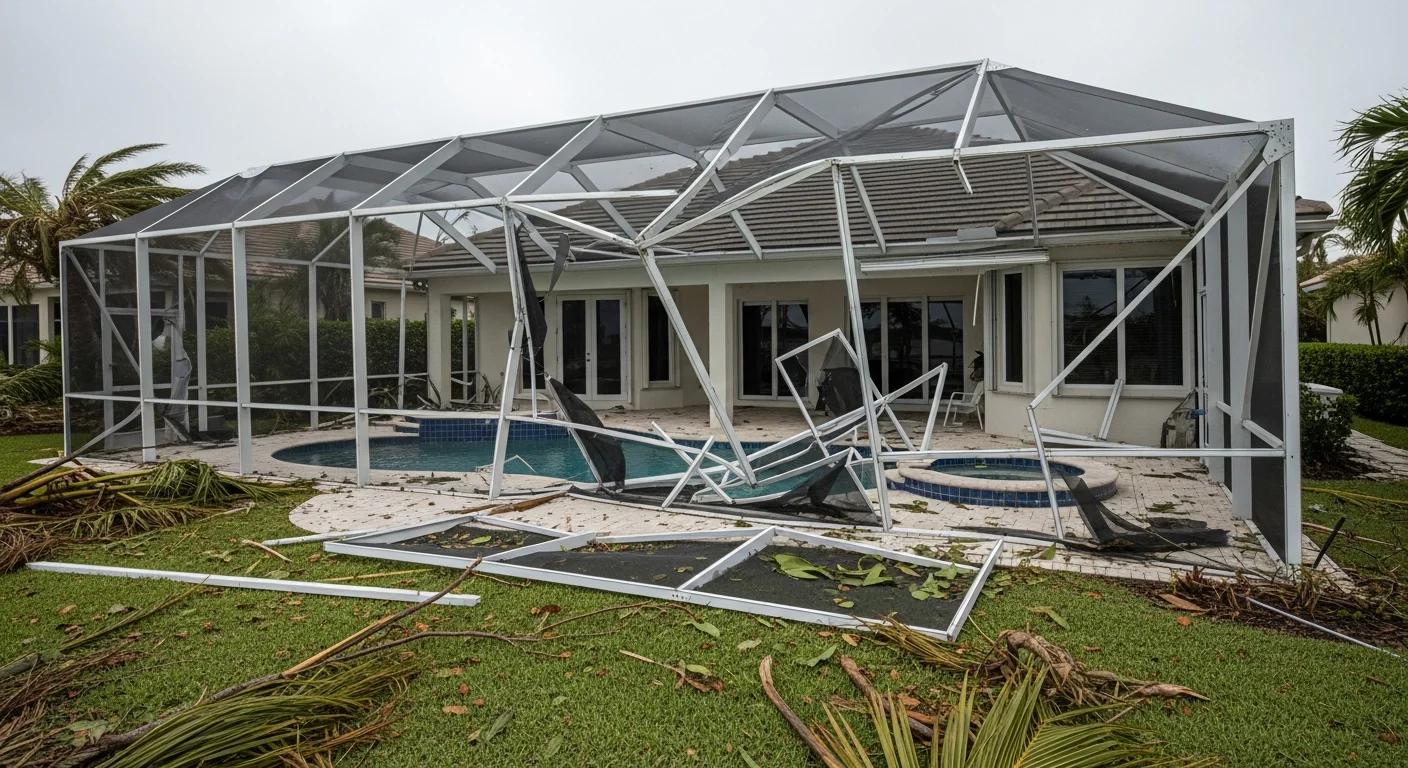
Screen enclosures are among the first casualties in Jupiter hurricanes. Twisted aluminum framing and torn screens require complete replacement after even moderate tropical storm winds.
Completed restoration: new premium flooring, repainted walls, and restored architectural details — returned to pre-loss condition matching Jupiter luxury home standards.
Why Choose Palm Build
Why Jupiter Homeowners Trust Palm Build for Storm Damage
Under 60 Minutes to Jupiter
Our Deerfield Beach operations hub puts us within fast response range of every Jupiter community — from Admirals Cove and Jonathan's Landing to Jupiter Country Club and Jupiter Farms. We dispatch locally with pre-loaded storm response equipment. Our crews carry pre-registered gate access credentials for major Jupiter gated communities.
IICRC Certified Storm Restoration
Every crew lead holds current IICRC Water Restoration Technician (WRT) and Applied Structural Drying (ASD) certifications. Our technicians are trained specifically for CBS stucco construction, barrel tile roof intrusion, saltwater contamination protocols, and the critical difference between Category 1 freshwater and Category 3 saltwater damage.
Insurance Documentation From First Response
Moisture maps, FLIR thermal imaging, daily drying logs, photo documentation, and scope-of-work estimates — all in Xactimate format for your adjuster. Under Florida's 1-year claim deadline and the post-2023 AOB reform, thorough documentation from day one is the foundation of a successful claim. We work with Citizens, Universal, Heritage, American Integrity, and all FL carriers.
170+ MPH Wind Zone Code Expertise
All reconstruction meets current Florida Building Code for Jupiter's 170+ mph wind zone — hurricane-rated windows, enhanced roof-to-wall connections, sealed roof decking, and mechanically fastened tile. We understand the Substantial Improvement rule and how it triggers full code-compliance upgrades during major restoration projects.
Saltwater Damage Specialists
Jupiter's coastal and Intracoastal exposure means storm surge events often involve saltwater contamination. Our team follows IICRC S500 Category 3 protocols — full demolition of porous materials, antimicrobial treatment, and reconstruction — with documentation that distinguishes saltwater from freshwater damage for proper insurance classification.
Gated Community & HOA Experience
Jupiter's gated communities — Admirals Cove, Jonathan's Landing, Jupiter Country Club, The Bear's Club, The Bluffs — require coordinated access, HOA notification, and architectural review compliance. Our team manages multi-gate access, board communications, and exterior finish matching to meet community standards.
Palm Build crews respond to Jupiter storm emergencies in under 60 minutes from our
Deerfield Beach hub — with pre-registered gate access for Admirals Cove, Jonathan's
Landing, Jupiter Country Club, and other major gated communities.
Common Questions
Jupiter Storm & Hurricane Damage FAQ
How quickly can Palm Build respond after a storm in Jupiter?
Our Deerfield Beach operations hub dispatches crews to Jupiter in under 60 minutes. For major hurricane events affecting multiple properties, we activate our catastrophe response protocol with additional equipment and personnel. Our crews carry pre-registered gate access credentials for gated communities including Admirals Cove, Jonathan's Landing, and Jupiter Country Club to eliminate security delays during emergencies.
What does Jupiter's 170+ mph wind contour zone mean for my home?
Jupiter falls within Florida's highest wind speed design zone — the 170+ mph contour per ASCE 7 and the Florida Building Code. Homes built or renovated after 2002 must meet these stringent standards with hurricane-rated windows, reinforced roof-to-wall connections, and impact-resistant openings. However, homes built in the 1980s and 1990s — common in Jonathan's Landing, The Bluffs, and older sections of Jupiter — predate these codes and are significantly more vulnerable to wind damage, roof tile loss, and wind-driven rain intrusion.
What's the difference between saltwater and freshwater storm damage?
Saltwater damage from storm surge or Intracoastal Waterway flooding is classified as Category 3 (grossly contaminated) and is far more destructive than freshwater. Salt corrodes metal fasteners, electrical systems, and HVAC components. It also crystallizes inside porous materials like concrete block and drywall, creating ongoing deterioration even after drying. Homes near Jupiter Inlet, the Loxahatchee River, and the Intracoastal face this dual threat during hurricanes — wind damage from above and salt surge from below.
Can I return home after evacuation and begin cleanup before calling a restoration company?
After a hurricane evacuation, do not enter rooms with sagging or wet ceilings, standing water deeper than a few inches, or visible structural damage. Document all damage with photos and video before moving anything. Your insurance policy requires you to mitigate further damage, which means calling a professional restoration company immediately. Moving debris or discarding damaged materials before documentation can jeopardize your insurance claim.
Is barrel tile roof damage more expensive to repair than shingle damage?
Yes. Barrel tile replacement in Jupiter typically costs $800-$1,500 per square (100 sq ft) compared to $350-$700 for architectural shingles. Barrel tile is the dominant roofing system in Jupiter's communities — Admirals Cove, Abacoa, Jupiter Country Club — and individual tiles crack or dislodge during high winds. The underlayment beneath barrel tile is the true waterproofing layer, so even a few displaced tiles can allow significant water intrusion into the roof deck and attic space.
How do hurricane/windstorm deductibles work in Jupiter?
Florida policies carry separate hurricane deductibles of 2-5% of your dwelling coverage amount — not the loss amount. On Jupiter's $525K median home value, that's $10,500 to $26,250 out of pocket before the insurer pays anything on a hurricane claim. For luxury estates in Admirals Cove or The Bear's Club insured at $2M-$10M+, hurricane deductibles can reach $50,000 to $500,000. The hurricane deductible applies once per storm season, not per event.
How long does storm damage restoration typically take in Jupiter?
Emergency tarping and water extraction: 1-2 days. Structural drying: 3-5 days. Roof repair: 1-4 weeks depending on contractor availability after a major storm. Full reconstruction: 4-12 weeks. After major hurricane events, timelines extend significantly due to contractor demand, material supply constraints, and the sheer volume of claims being processed across Palm Beach County. Starting mitigation immediately prevents secondary mold damage that can double restoration costs and timelines.
What should I do about tree damage to my Jupiter home?
Fallen trees on structures require professional removal to prevent further damage. Do not attempt to remove trees from roofs or walls — improper removal can cause the structure to shift or collapse. Document the damage thoroughly before any tree work begins. Tree removal from structures is typically covered under your homeowner's policy as part of the storm damage claim. Palm Build coordinates with licensed arborists and structural engineers to safely remove trees and assess underlying structural damage.
Trusted Vendors
Trusted local pros in Jupiter
Outside our restoration scope, these are the vetted, licensed contractors we trust
alongside our work. Personally evaluated, reference-checked, and recommended by Palm
Build.
Every hour an exposed roof or broken window goes unprotected, water damage compounds in Jupiter's tropical humidity. Palm Build's South Florida team provides emergency tarping, water extraction, and structural stabilization — 24/7, with insurance documentation from the first call.