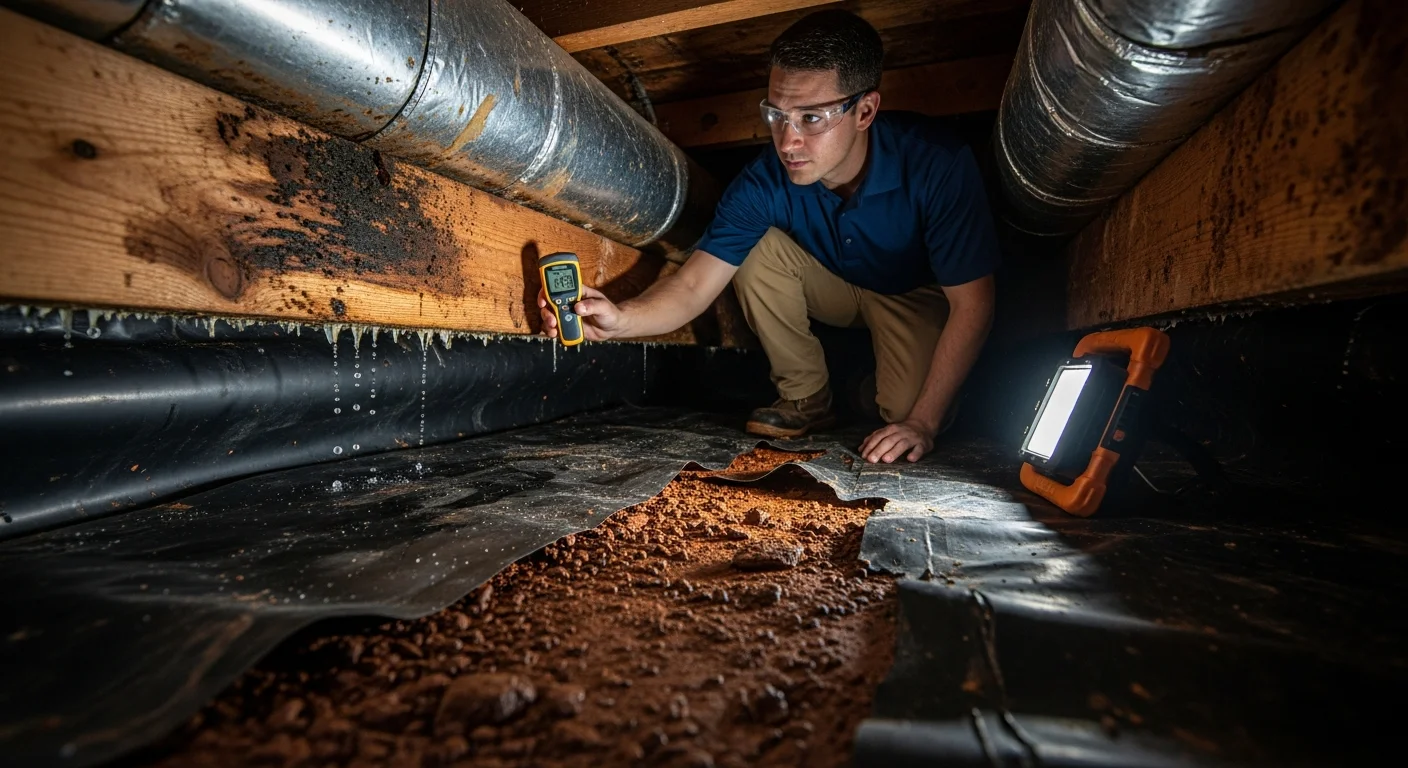
Palm Build technician inspecting mold growth on floor joists in a crawl space beneath a Morganton NC foothills home with moisture meter and LED work lights
MORGANTON NC — IICRC-CERTIFIED MOLD REMEDIATION

Mold Remediation in Morganton, North Carolina

Burke County's foothills humidity, clay soil moisture, and crawl space construction create some of the highest baseline mold risk in western North Carolina. Palm Build's IICRC-certified technicians provide containment, removal, and prevention — with the credentials that matter in a state with no mold licensing requirement.

Serving Morganton from Charlotte, NC Same-day response Response IICRC Certified

Same-day response

Emergency Response

24/7

Dispatch Available

IICRC

Certified Technicians

Why Mold Thrives Here

Morganton's Perfect Storm for Mold Growth

Four factors converge in Burke County to create some of the highest baseline mold risk in western North Carolina. Understanding why mold grows so quickly is the first step toward permanent remediation — not just cosmetic cleanup.

70-90% Summer Humidity

70-90%

Summer RH levels

Morganton's humid subtropical climate pushes overnight humidity to 70-90% from May through September, feeding crawl space condensation and driving mold colonization on structural components throughout the foothills.
Foothills Clay Soil

<0.2 in/hr

Clay drainage rate

Burke County clay holds moisture against foundations for 3-5 days after rain, draining at less than 0.2 inches per hour. This slow-release soil moisture continuously feeds crawl space humidity — even weeks after the last storm.

Vented Crawl Space Design

70-90%

Crawl spaces with issues

Pre-1980 vented crawl spaces introduce humid outdoor air directly beneath the home. Warm, moist air contacts cooler surfaces and condenses on floor joists, ductwork, and insulation — creating persistent moisture that feeds mold year-round.

Aging Housing Stock

~1970

Avg build year

With the average build year around 1970, Morganton's homes have endured decades of moisture cycling, deteriorating vapor barriers, and failing foundation vents. These accumulated moisture failures create ideal conditions for mold colonization.

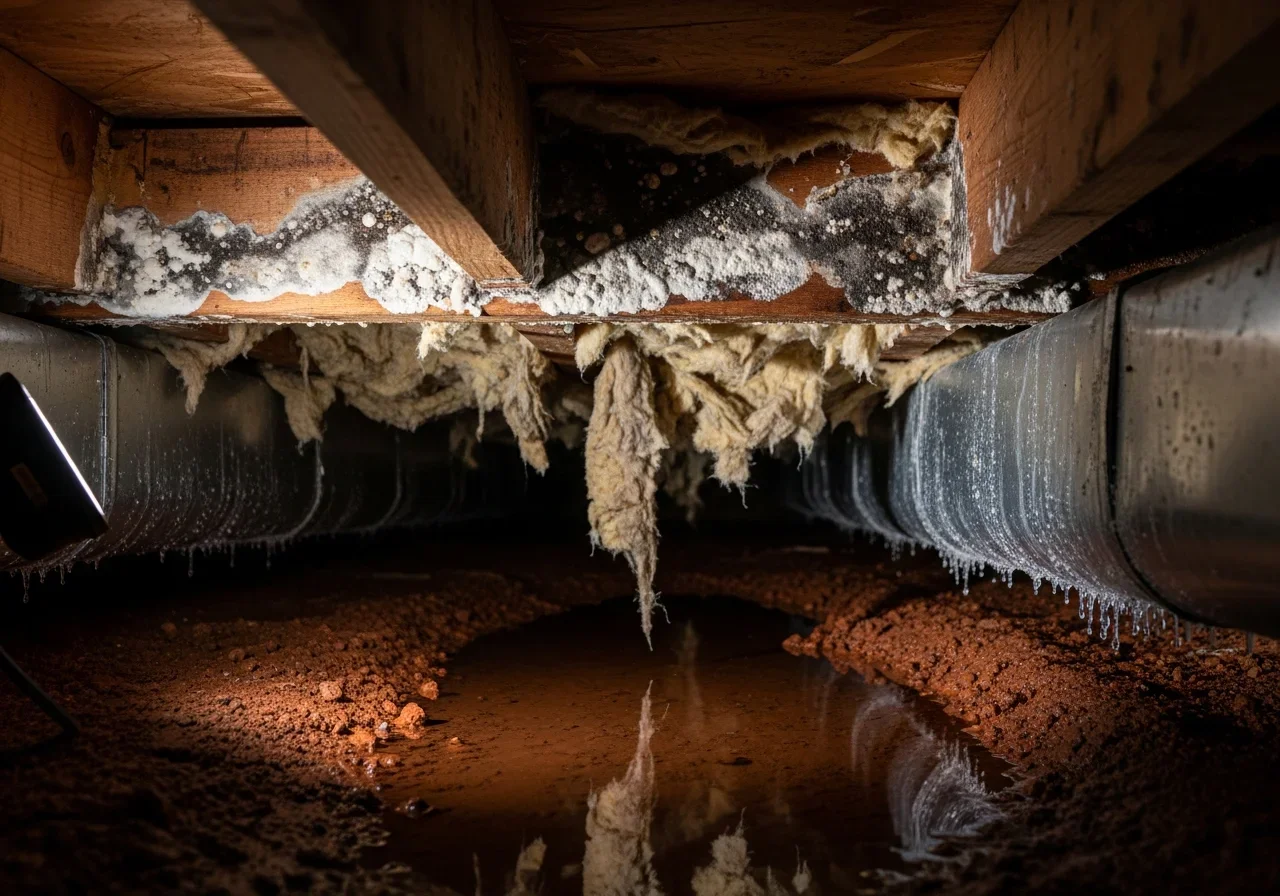
Mold growth and moisture damage on crawl space floor joists beneath a Morganton NC home with red clay soil and deteriorated vapor barrier
Burke County's clay soils and vented crawl spaces create persistent moisture conditions that drive mold colonization on structural components throughout the foothills.
Morganton's #1 Mold Problem

Crawl Space Mold — Morganton's Most Common Problem

If there is a single mold problem that defines Burke County, it is crawl space mold. The combination of clay soil, vented crawl space design, and foothills humidity creates conditions where mold growth is not a question of if — it is a question of when.

The moisture cycle is straightforward: rain saturates Burke County's clay soil, which holds water against your foundation for 3-5 days. That ground moisture evaporates into the crawl space through gaps in the vapor barrier. Warm, humid outdoor air enters through foundation vents and condenses on cooler surfaces — floor joists, ductwork, subfloor panels. The stack effect then pulls that mold-laden air upward into your living space. An estimated 40% of indoor air in tested homes entered from the crawl space.

Crawl space humidity (vented) 70-90% RH
Safe humidity threshold <60% RH
After encapsulation 45-55% RH
NC Crawl Space Guide
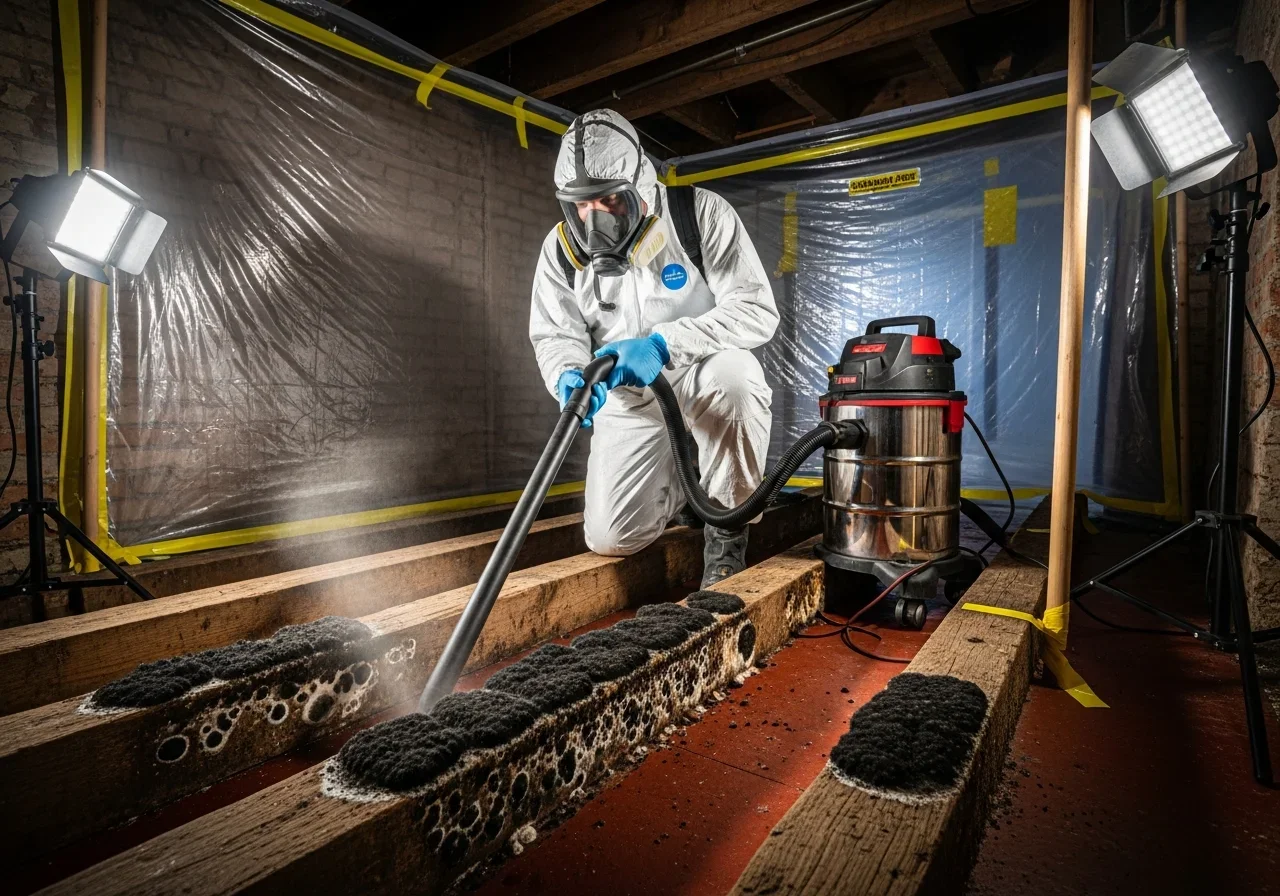
HEPA vacuuming mold from crawl space floor joists in a Morganton NC home during professional remediation
HEPA vacuuming crawl space mold from floor joists
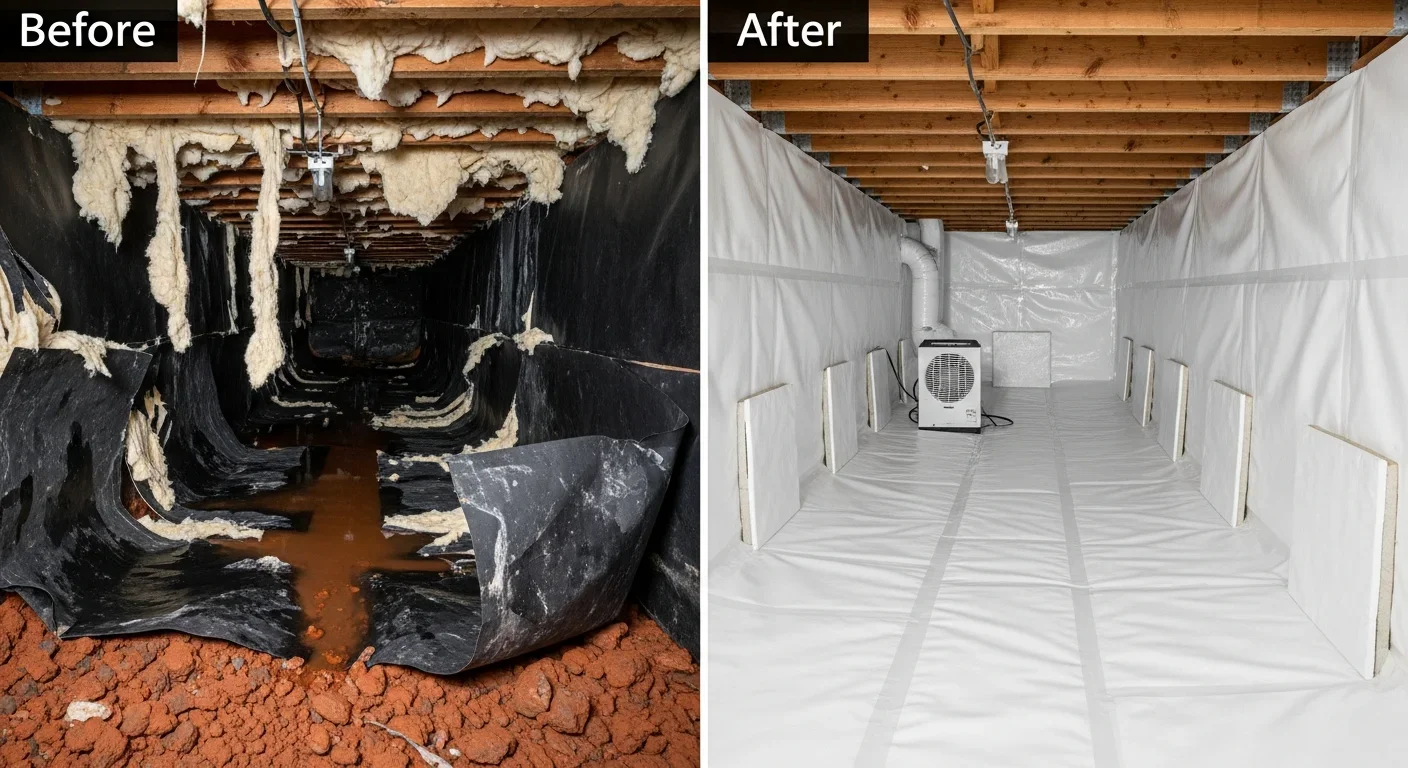
Before and after crawl space encapsulation in a Morganton NC home showing transformation from moisture-damaged to clean sealed crawl space
Before and after — crawl space encapsulation stops the moisture cycle
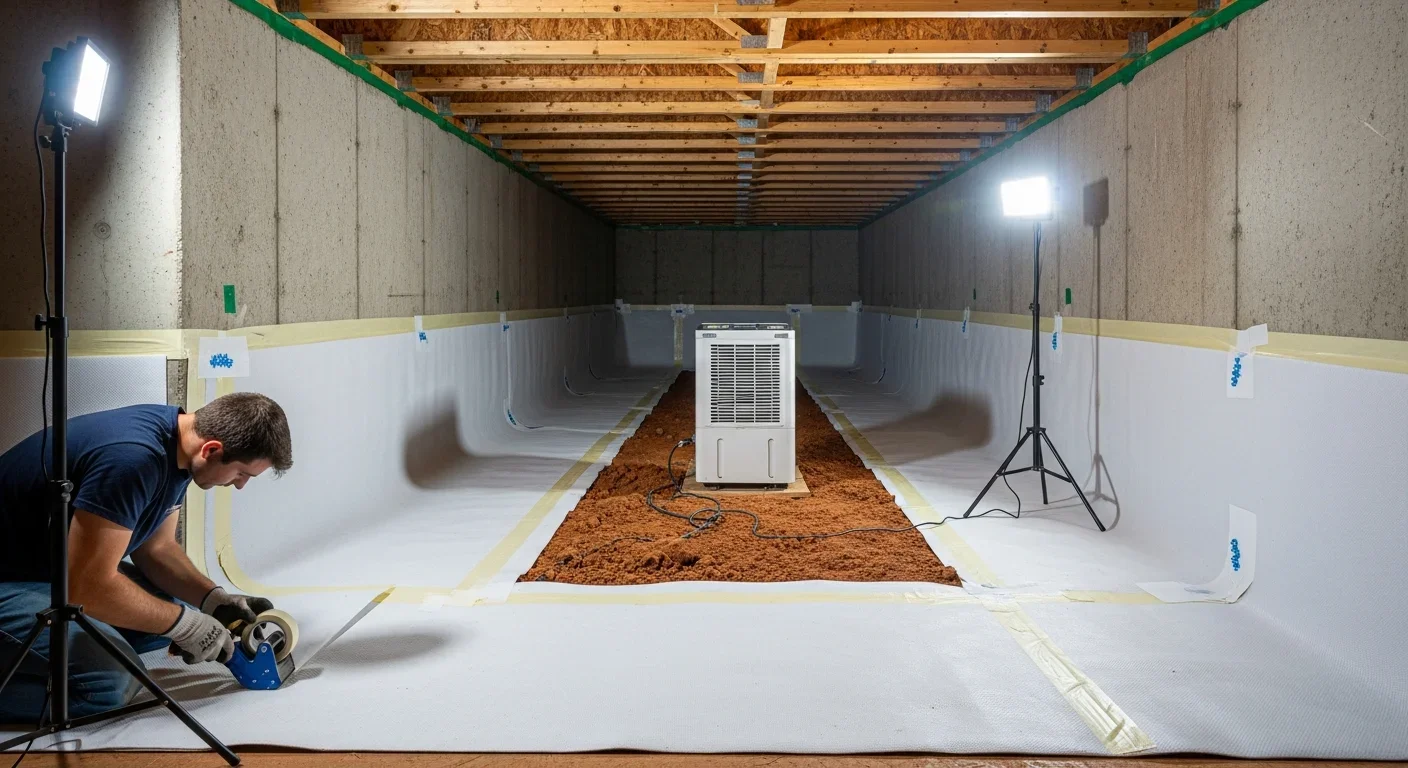
Professional vapor barrier installation in a Morganton NC crawl space with white reinforced polyethylene being sealed to foundation walls
New vapor barrier installation over red clay soil
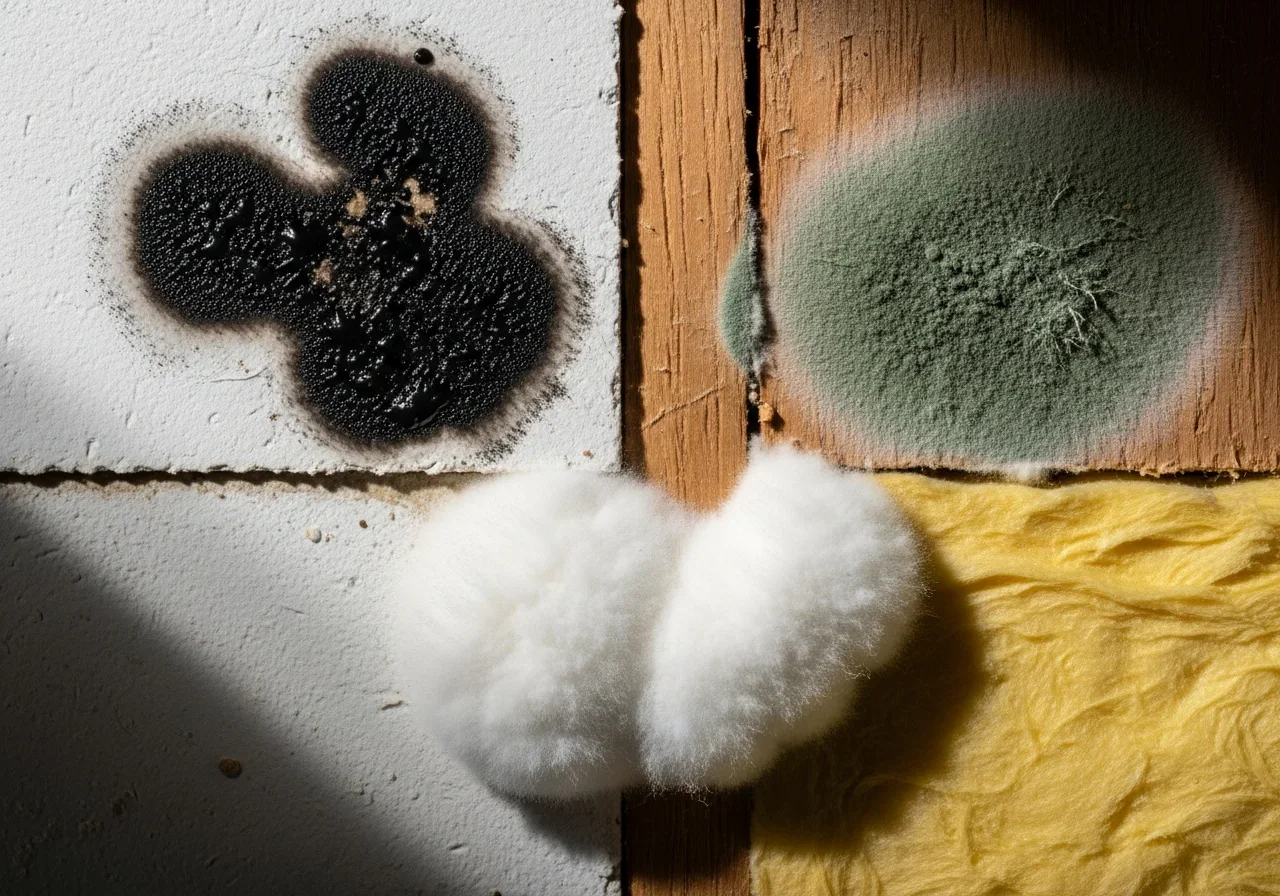
Close-up of different mold species on building materials including Stachybotrys on drywall and Aspergillus on wood framing
Multiple mold species commonly found in Burke County homes

NC Regulatory Landscape — Unique Feature

How to Vet a Mold Contractor in North Carolina

This is the section most Morganton mold remediation pages do not include — because most competitors would rather you not ask these questions. North Carolina has no state certification program for mold remediation companies or individuals. NC State Extension and NC DHHS both confirm this plainly.

That does not mean standards do not exist. It means the burden of credential verification falls entirely on you. The accepted industry benchmark is IICRC certification — specifically the BSR-IICRC S520 standard for professional mold remediation procedures and the Mold Remediation Specialist (MRS) certification, which requires verifiable field experience and a proctored examination.

In practice, IICRC S520 defines exactly how containment, air filtration, material removal, antimicrobial treatment, and clearance verification should be performed. A company that cannot articulate these protocols should not be remediating mold in your home.

Credential Verification Checklist

Ask for IICRC certification — specifically the S520 Mold Remediation Specialist credential
Verify the certification is current (IICRC certifications expire and must be renewed)
Ask what containment protocol they follow — the answer should reference ANSI/IICRC S520
Confirm they use HEPA-filtered air scrubbers and negative air pressure during work
Ask about post-remediation verification — who performs it, and is it independent?
Request proof of liability insurance covering mold remediation work
Be wary of companies that test and remediate — there is a conflict of interest
Check NC DHHS guidance on hiring a mold consultant for additional verification steps

Palm Build Credentials

  • IICRC S520 certified remediation protocols
  • Mold Remediation Specialist (MRS) certified crew leads
  • Licensed NC general contractor for structural repairs
  • Full liability insurance and workers' comp coverage
  • Welcome independent post-remediation verification

Red Flags to Watch For

  • No IICRC certification or will not provide proof
  • Offers to "spray and seal" without removing contamination
  • Will not set up containment barriers or HEPA filtration
  • Same company does testing AND remediation (conflict of interest)
  • Quotes a price without inspecting the property first

Neighborhood-Level Intelligence

Morganton Neighborhood Mold Risk Profiles

Mold risk in Morganton varies significantly by neighborhood based on housing age, foundation type, proximity to water, and lot drainage. Here is what our technicians see across Burke County.

In-Town Older Stock (1940s-70s)

High Risk

Foundation: Vented crawl space

Primary risk: Chronic crawl space moisture from decades of clay soil exposure and deteriorated vapor barriers

Common species: Aspergillus, Penicillium, Cladosporium — occasionally Stachybotrys on long-saturated materials

Southpointe

Moderate

Foundation: Mixed crawl/slab

Primary risk: Gutter overflow and grade-level moisture feeding foundation dampness

Common species: Aspergillus, Penicillium on subfloor and joists

East Shores / Waters Edge

High Risk

Foundation: Crawl space/daylight basement

Primary risk: Elevated water table and lake-adjacent humidity keeping subfloor assemblies damp

Common species: Cladosporium, Aspergillus — heavy on seasonal condensation surfaces

The Meadows

Moderate

Foundation: Vented crawl space

Primary risk: Aging plumbing leaks feeding hidden moisture behind walls and under cabinets

Common species: Penicillium, Aspergillus — often behind cabinetry and vanities

Rodgers Estates (newer)

Low-Moderate

Foundation: Modern sealed foundation

Primary risk: Tight building envelope trapping HVAC condensation and shower moisture

Common species: Cladosporium on HVAC registers, Aspergillus in wall cavities

Lake James Corridor

High Risk

Foundation: Daylight basement/crawl space

Primary risk: Hillside seepage, hydrostatic pressure on basement walls, wooded lot shade

Common species: Multiple species — persistent moisture environments support diverse colonization

IICRC S520 Protocol

Our Morganton Mold Remediation Process

Effective mold remediation follows ANSI/IICRC S520 protocols — not shortcuts. Here is exactly what Palm Build's process looks like in a Burke County home.

01

Assessment & Moisture Mapping

Day 1

Our technicians inspect the entire property using moisture meters, infrared cameras, and visual examination. NC Extension guidance emphasizes finding the moisture source first — before sampling, before remediation. We identify what is feeding the mold: crawl space vapor barrier failure, plumbing leak, roof intrusion, or HVAC condensation.

02

Containment & Negative Air

Day 1-2

We isolate the affected area using polyethylene sheeting and establish negative air pressure with HEPA-filtered air scrubbers. This prevents mold spores from migrating to unaffected areas during removal — critical in Morganton homes with shared HVAC systems that can spread contamination through ductwork.

03

HEPA Vacuuming & Surface Removal

Days 2-3

All mold-affected surfaces are HEPA vacuumed to capture loose spores. Porous materials with embedded mold growth (drywall, insulation, carpet) are removed and disposed of. Non-porous and semi-porous materials are cleaned using appropriate antimicrobial agents.

04

Antimicrobial Treatment

Days 3-4

EPA-registered antimicrobial products are applied to all affected and adjacent surfaces. In crawl spaces, this includes floor joists, subflooring, sill plates, and foundation walls — the structural components most vulnerable to Burke County persistent moisture.

05

Moisture Source Correction

Days 4-5

This is where remediation becomes prevention. Depending on the moisture source, we address vapor barrier repair or replacement, crawl space encapsulation, drainage improvements, plumbing repairs, or HVAC condensation management. Without this step, mold returns.

06

Post-Remediation Verification

Day 5-6

After remediation, we verify clearance through visual inspection and moisture readings. For projects where third-party testing was performed pre-remediation, we recommend independent post-remediation air sampling by a qualified indoor environmental professional.

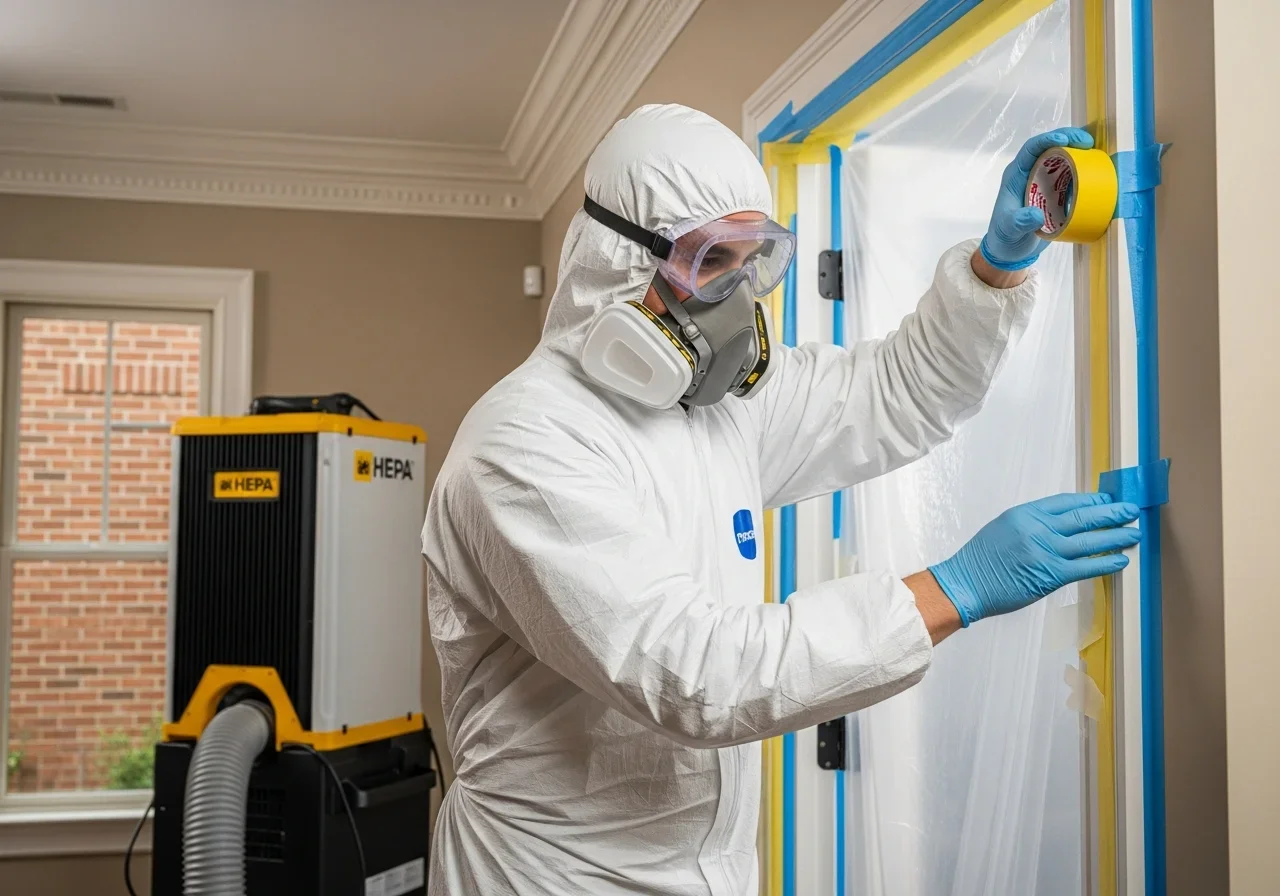
Palm Build technician in Tyvek suit setting up mold containment with plastic sheeting and HEPA air scrubber in a Morganton NC home

Why Containment Matters in Burke County

Disturbing mold without proper containment sends billions of spores airborne — potentially contaminating previously clean areas of your home. Morganton's shared HVAC systems can spread spores through ductwork to every room. Our containment protocol ensures mold stays isolated during removal.

1

Sealed Barriers

Polyethylene sheeting floor-to-ceiling

2

Negative Pressure

HEPA scrubbers pull air through containment

3

PPE Protocol

Full Tyvek, respirators, goggles for all crew

4

Decontamination

Air lock entry/exit with HEPA decon chamber

Schedule Mold Assessment

Seasonal Mold Risk Calendar

When Mold Risk Peaks in Morganton

Mold growth in Morganton follows predictable seasonal patterns driven by the foothills climate. Understanding when your home is most vulnerable helps you catch problems early.

January - March

Winter Condensation and Hidden Moisture

Cold exterior surfaces meet warm interior air, creating condensation on windows, pipes, and uninsulated walls. Crawl spaces stay damp from fall and winter rainfall on clay soil. Mold growth slows but does not stop — existing colonies survive and wait for warmer conditions.

April - June

Spring Activation — Mold Season Begins

Rising temperatures and spring rain wake dormant mold colonies. Crawl space humidity climbs as warm, moist outdoor air enters through foundation vents. This is when musty odor complaints spike in Morganton homes. Allergy symptoms attributed to spring allergies may actually be indoor mold exposure.

July - September

Peak Mold Season

Overnight humidity hits 70-90% in the foothills. Vented crawl spaces become incubators. Any moisture event — a plumbing leak, storm-driven rain, HVAC condensation — triggers rapid mold colonization within 24-48 hours. August brings 5.6 inches of rainfall adding ground moisture pressure.

October - December

Late-Season Moisture and Pre-Winter Risk

December brings the second-highest rainfall at 5.5 inches. Saturated clay soil continues feeding crawl space moisture even as temperatures drop. Homes closed up for winter trap humidity indoors. This is the last opportunity to address crawl space moisture before freeze-thaw cycling begins.

Know Your Enemy

Common Mold Species Found in Morganton Homes

Burke County's foothills humidity and crawl space prevalence create conditions that support multiple mold species simultaneously. Here are the four types we encounter most frequently during Morganton remediation projects.

Aspergillus

High

Appearance: Yellow-green to black, granular texture

Common locations: Wood framing, insulation, HVAC systems, window sills

The most common indoor mold found in Morganton homes. Multiple species with varying health impacts — Aspergillus niger and A. fumigatus are the most concerning, capable of causing serious respiratory infections. Frequently found on crawl space floor joists and in HVAC systems where condensation provides consistent moisture.

Penicillium

Moderate

Appearance: Blue-green, fuzzy, often circular colonies

Common locations: Behind wallpaper, insulation, water-damaged drywall, crawl spaces

Spreads rapidly in water-damaged materials and produces large volumes of airborne spores. Common in Burke County crawl spaces where paper-faced insulation contacts moisture. Known to produce mycotoxins that cause respiratory irritation and allergic reactions. Often found behind cabinetry and vanities in The Meadows neighborhood.

Cladosporium

Moderate

Appearance: Olive-green to brown, powdery or suede-like texture

Common locations: HVAC ducts, window frames, bathroom ceilings, crawl space joists

Thrives at a wide temperature range and is frequently the first colonizer after humidity events. Particularly prevalent in HVAC systems in Rodgers Estates and newer Morganton homes where it feeds on dust and organic debris. A major trigger for asthma and allergic rhinitis.

Stachybotrys (Black Mold)

Severe

Appearance: Dark black-green, slimy or wet appearance

Common locations: Chronically wet drywall, ceiling tiles, crawl space subfloor

The species that generates the most concern. Stachybotrys chartarum produces trichothecene mycotoxins associated with serious health effects. Requires prolonged saturation of cellulose materials to colonize — not just humidity. In Morganton, most commonly found in older in-town homes with chronic plumbing leaks and in Lake James corridor properties with persistent moisture.

Do Not Attempt DIY Removal

Disturbing mold without proper containment releases millions of spores into the air, spreading contamination to previously clean areas. Bleach kills surface mold on non-porous materials but does not eliminate mold rooted in porous materials like drywall, wood, or insulation. Professional remediation with containment, HEPA filtration, and antimicrobial treatment is the only way to safely and completely resolve a mold problem.

Our Work

Morganton Mold Remediation Gallery

HEPA vacuuming mold from crawl space floor joists in a Morganton NC home during professional remediation
HEPA vacuuming crawl space mold from floor joists — capturing spores down to 0.3 microns
Before and after crawl space encapsulation in a Morganton NC home showing transformation from moisture-damaged to clean sealed crawl space
Before and after — crawl space encapsulation stops the moisture cycle permanently
Professional mold remediation containment barrier with HEPA air scrubber in a Morganton NC home
Sealed containment with negative air pressure prevents cross-contamination during removal
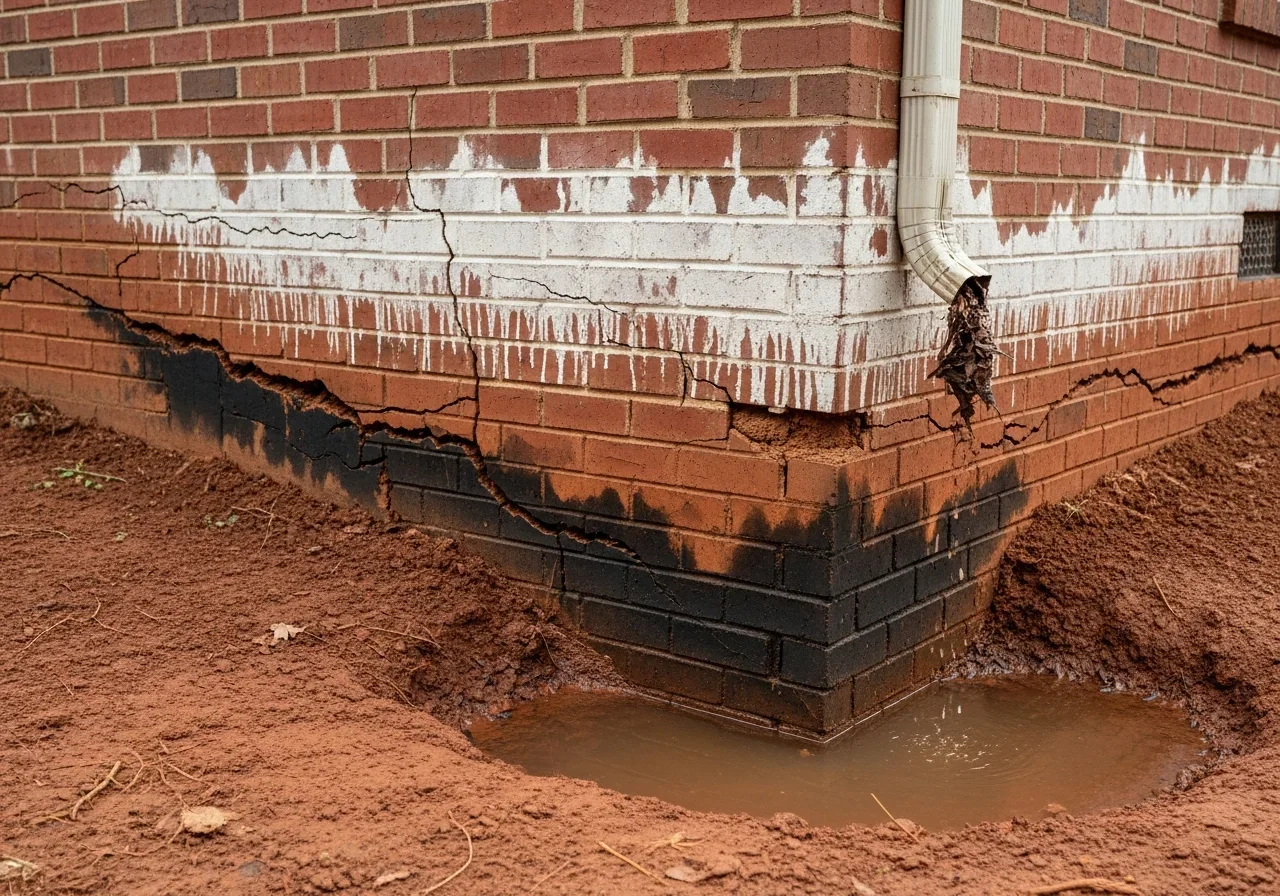
Foundation water damage and moisture intrusion signs on a Morganton NC home showing efflorescence and staining
Foundation moisture intrusion signs — early detection prevents extensive mold damage

Morganton Pricing

Mold Remediation Costs in Morganton

Costs depend on contamination size, accessibility (crawl space work costs more than open-room work), and whether structural materials need replacement. These ranges reflect Burke County project costs — not national averages.

Standard Mold Remediation

Small area (under 10 sq ft): $500 - $1,500
Single room: $1,500 - $5,000
Containment and HEPA setup: $500 - $2,000
Post-remediation testing: $300 - $600
Typical project range: $2,500 - $8,000

Crawl Space / Whole House

Crawl space mold remediation: $3,000 - $12,000
Multi-room remediation: $5,000 - $15,000
Structural wood replacement: $2,000 - $8,000
Encapsulation (prevention): $3,500 - $10,000
Complex project range: $8,000 - $30,000+

Factors That Affect Your Morganton Mold Project Cost

Contamination size and location
Whether crawl space is involved
Structural damage requiring repair
HVAC system contamination
Type of mold species present
Insurance coverage and sublimits
Need for encapsulation after remediation
Third-party clearance testing

Burke County homes average $4,500-$8,500 for typical crawl space mold remediation — largely driven by accessibility challenges and clay soil moisture corrections required.

Insurance Navigation

Mold Insurance Claims in Burke County

Mold coverage in North Carolina is limited and varies significantly by carrier and policy. Most Morganton homeowners discover their coverage gaps only after filing a claim. Understanding your mold policy provisions before you need them can save thousands.

Mold resulting from a covered sudden water event (burst pipe, appliance failure) is typically covered up to policy sublimits

NC standard policies often cap mold coverage at $5,000-$10,000 — Burke County crawl space remediation frequently exceeds this

Gradual moisture damage — long-term crawl space humidity, slow leaks, chronic condensation — is almost always excluded

Pre-existing mold discovered during renovation, inspection, or real estate transaction is not covered

Carriers may deny claims if you failed to report water damage within 24-48 hours or did not mitigate promptly

Some carriers offer mold endorsements for additional premium — ask your agent about expanded coverage before you need it

Key Insurance Points for Morganton Homeowners

Document the moisture source immediately — your adjuster needs to see that mold resulted from a sudden event, not gradual neglect. Request a copy of your policy's mold sublimit before remediation begins. Palm Build provides insurance-ready documentation including moisture readings, affected area measurements, and photo/video evidence from the first visit.

Insurance Claims Guide

Common Questions

Morganton Mold Remediation FAQ

Does North Carolina require mold remediation licensing?
No. NC has no state certification for mold remediation. The industry standard is IICRC certification — specifically the S520 Mold Remediation Specialist credential.
How do I know if I have mold in my Morganton home?
Common signs include persistent musty odors, visible discoloration on walls or ceilings, unexplained allergy symptoms, and condensation on windows or pipes. Burke County crawl space mold is often invisible from the living space.
Should I test for mold before remediation?
When visible mold exists, the priority is finding and fixing the moisture source. Testing is useful for hidden mold, insurance documentation, or post-remediation verification.
How much does mold remediation cost in Morganton?
Standard mold remediation ranges from $2,500 to $8,000. Crawl space projects typically run $3,000 to $12,000. Burke County homes average $4,500-$8,500 for crawl space mold remediation.
Will mold come back after remediation?
Only if the moisture source isn't fixed. Palm Build's process includes moisture source correction — crawl space encapsulation, drainage improvements, or dehumidifier installation.
How long does mold remediation take?
Small areas: 1-2 days. Crawl spaces: 3-5 days. Multi-room: 1-2 weeks. Add time for encapsulation or structural repair if needed.
Is black mold more dangerous than other types?
All mold should be treated seriously. Stachybotrys produces mycotoxins, but Aspergillus and Penicillium can also cause significant health effects. Color is not a reliable indicator of toxicity.
Does Palm Build serve all of Burke County?
Yes. We serve Morganton and all of Burke County including Southpointe, East Shores, The Meadows, Brookstone, Waters Edge, Rodgers Estates, Glen Alpine, Drexel, and surrounding communities.

Mold in Your Morganton Home? Get Expert Help.

Palm Build's IICRC-certified technicians provide full containment remediation, moisture source correction, and post-remediation verification for Burke County homes. Call now for a mold assessment.

Same-day response Response IICRC Certified

More in Morganton

Other Palm Build Services in Morganton, NC