(888) 245-5155
Call Now 24/7
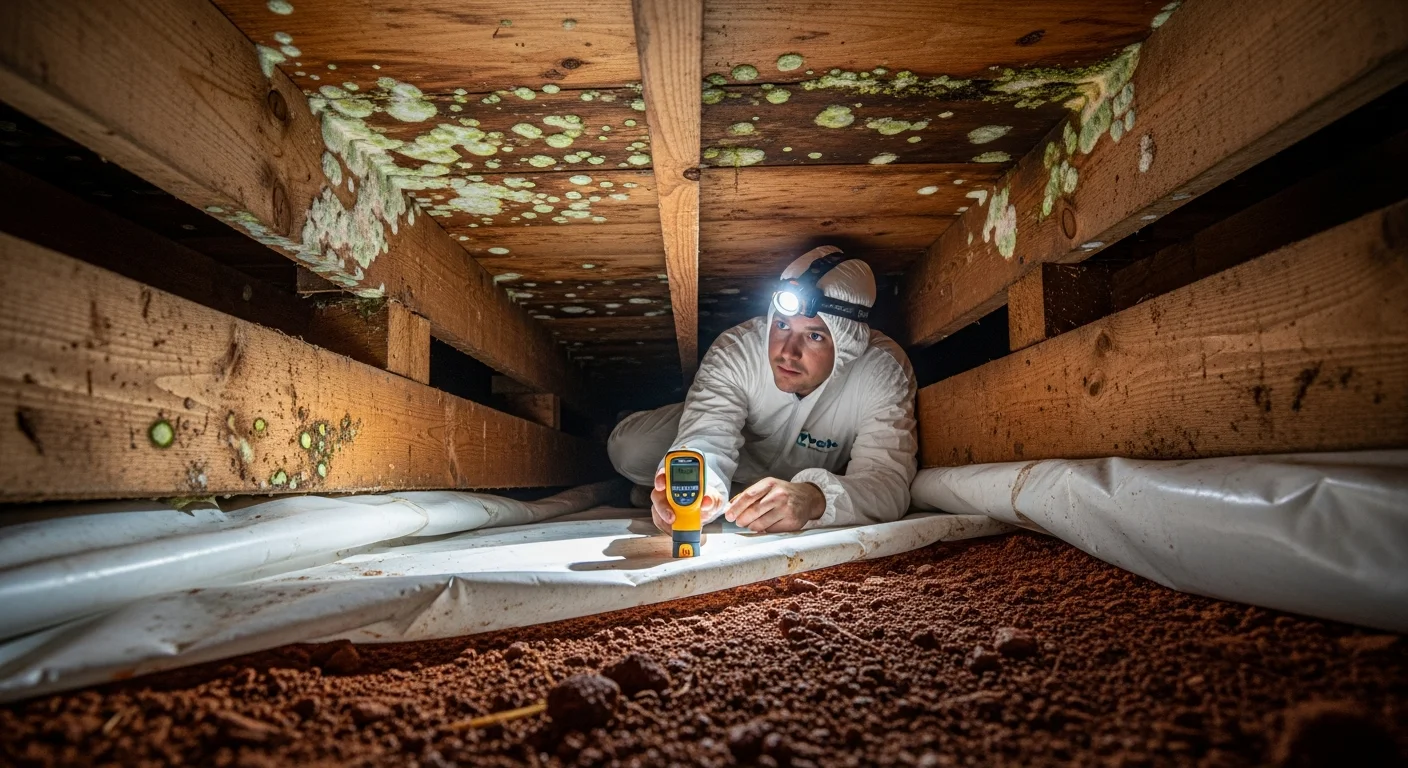
Palm Build mold remediation technician in full PPE entering a crawl space beneath a brick colonial home in Huntersville, North Carolina with red clay soil visible
HUNTERSVILLE NC — IICRC S520 MOLD REMEDIATION

Mold Remediation in Huntersville, North Carolina

From Northstone crawl spaces to Birkdale townhomes, Palm Build delivers IICRC S520-certified mold remediation from our Charlotte operations hub — because North Carolina doesn't require a mold license, and Huntersville homeowners deserve a contractor who exceeds the standard the state never set.

18 miles — Huntersville, NC 35-55 min Response IICRC Certified

35-55 min

Emergency Response

24/7

Dispatch Available

IICRC

Certified Technicians

Local Risk Factors

Why Huntersville Has a Mold Problem Most Residents Don't See

Huntersville grew 20-fold in three decades, building thousands of homes on a construction model that was standard for the era and catastrophic for mold: vented crawl space foundations poured directly on Piedmont red clay soil. Add subtropical humidity and a state with zero mold licensing, and the result is predictable.

Piedmont Red Clay Soil

<0.2 in/hr

Clay drainage rate

Huntersville sits on heavy montmorillonite-rich red clay with infiltration rates below 0.2 inches per hour. After rain, saturated clay holds 40-60% moisture by volume and evaporates it upward into crawl spaces for 10-14 days — feeding mold colonization from below.

Crawl Space Construction Era

40-50%

Pre-2010 homes with crawl spaces

Approximately 40-50% of Huntersville's pre-2010 housing stock has vented crawl space foundations. Traditional vented design draws humid outside air underneath the home during summer months when dew points exceed 65°F — creating a chronic moisture factory where relative humidity routinely exceeds 80% from May through October.

20-Fold Growth, Now Aging

15-35 yr

Critical age window

Huntersville grew from 3,014 residents in 1990 to nearly 70,000 today. Most homes were built 1990-2009 — now entering the critical 15-35 year window when vapor barriers degrade, HVAC condensate drains clog, plumbing fails, and the crawl space moisture cycle accelerates mold growth on aging building materials.

No State Mold License Required

None

NC mold licensing requirement

North Carolina has zero state mold licensing — no training mandate, no certification requirement, no exam, no oversight body. Anyone with a truck and a spray bottle can advertise mold remediation in Huntersville. This puts the burden of contractor vetting entirely on you, the homeowner.

Restoration technician in Tyvek suit inspecting moisture and mold on floor joists inside a Huntersville NC crawl space with red Piedmont clay visible
Huntersville's clay soils and vented crawl space construction create the exact conditions mold needs to thrive — our technicians find active mold in the majority of unencapsulated crawl space inspections.

Neighborhood Intelligence

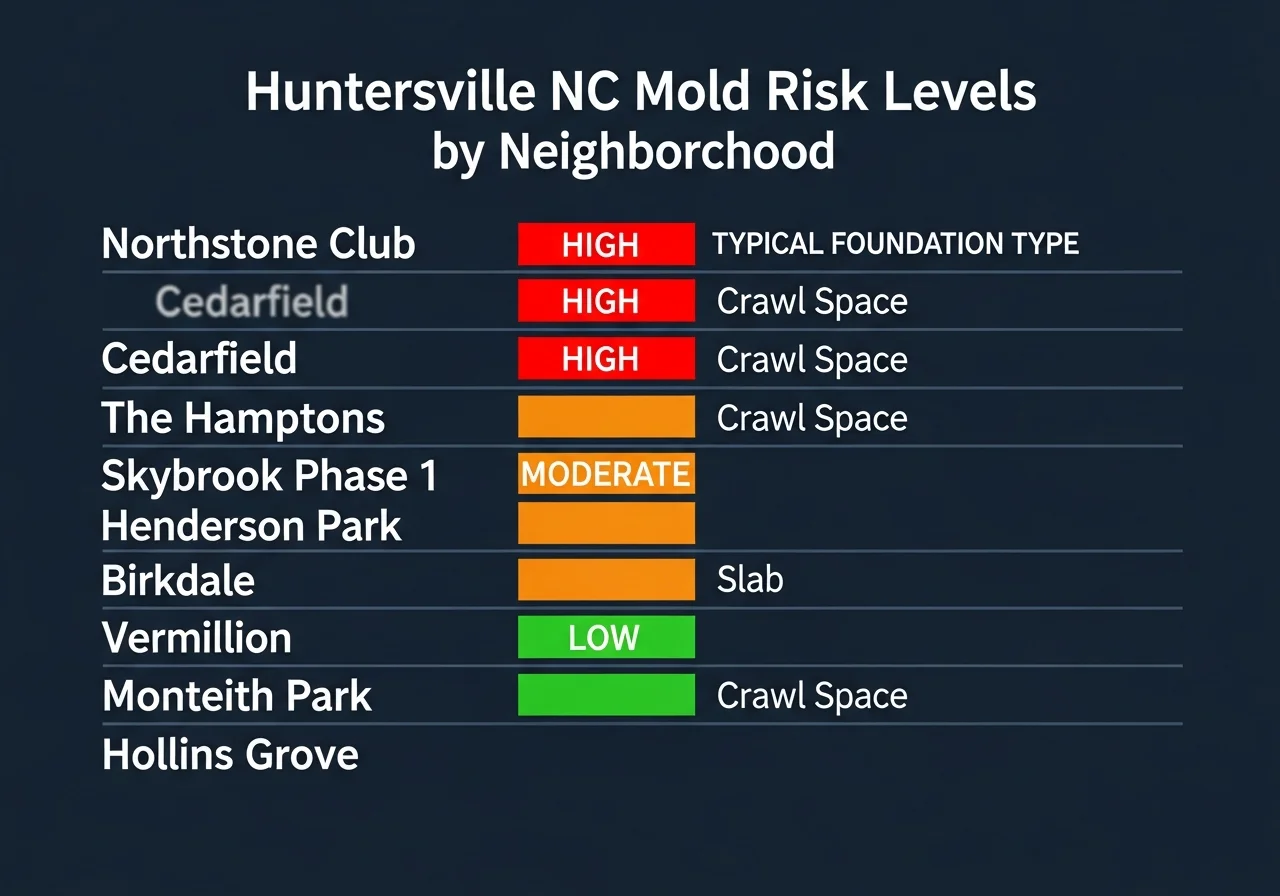
Huntersville Neighborhood Mold Risk Profiles

Mold risk in Huntersville varies by neighborhood age, foundation type, lot grading, and proximity to water features. These profiles are based on our remediation experience across Huntersville's major communities.

NeighborhoodEra BuiltFoundationPrimary Mold Risk
Northstone Club1997–2008Crawl space; some walk-outHighest risk: clay soil moisture intrusion into crawl spaces, aging vapor barriers, mold on floor joists and subfloor panels. Walk-out basements show efflorescence and mold on block walls.
Cedarfield1995–2007Crawl spaceHigh risk: Torrence Creek proximity compounds clay soil drainage. Flooding events push standing water into crawl spaces. Mold on fiberglass insulation and ductwork common.
The HamptonsLate 1990s–2005Crawl spaceHigh risk: mature tree canopy slows evaporation from clay soil. Crawl space humidity stays elevated longer after rain events. Paper-backed insulation failures widespread.
Skybrook (Phase 1)1992–2005Crawl spaceHigh risk: oldest homes in Huntersville’s growth era. Original vapor barriers degraded or displaced. HVAC systems at end-of-life with condensate line failures feeding mold.
Birkdale / Birkdale Village2000–2010Mix: crawl + slabModerate risk: townhomes with shared crawl spaces create multi-unit mold events. HOA coordination required — one unit’s moisture problem becomes the building’s mold problem.
Vermillion2005–2013Slab (primary)Lower crawl space risk, but HVAC condensate overflow and bathroom exhaust failures cause attic and interior wall mold. Mold under vinyl plank flooring from vapor transmission.
Monteith Park2008–2015SlabLower risk: newer construction with better moisture management. Primary exposure is HVAC condensate and post-storm moisture intrusion.
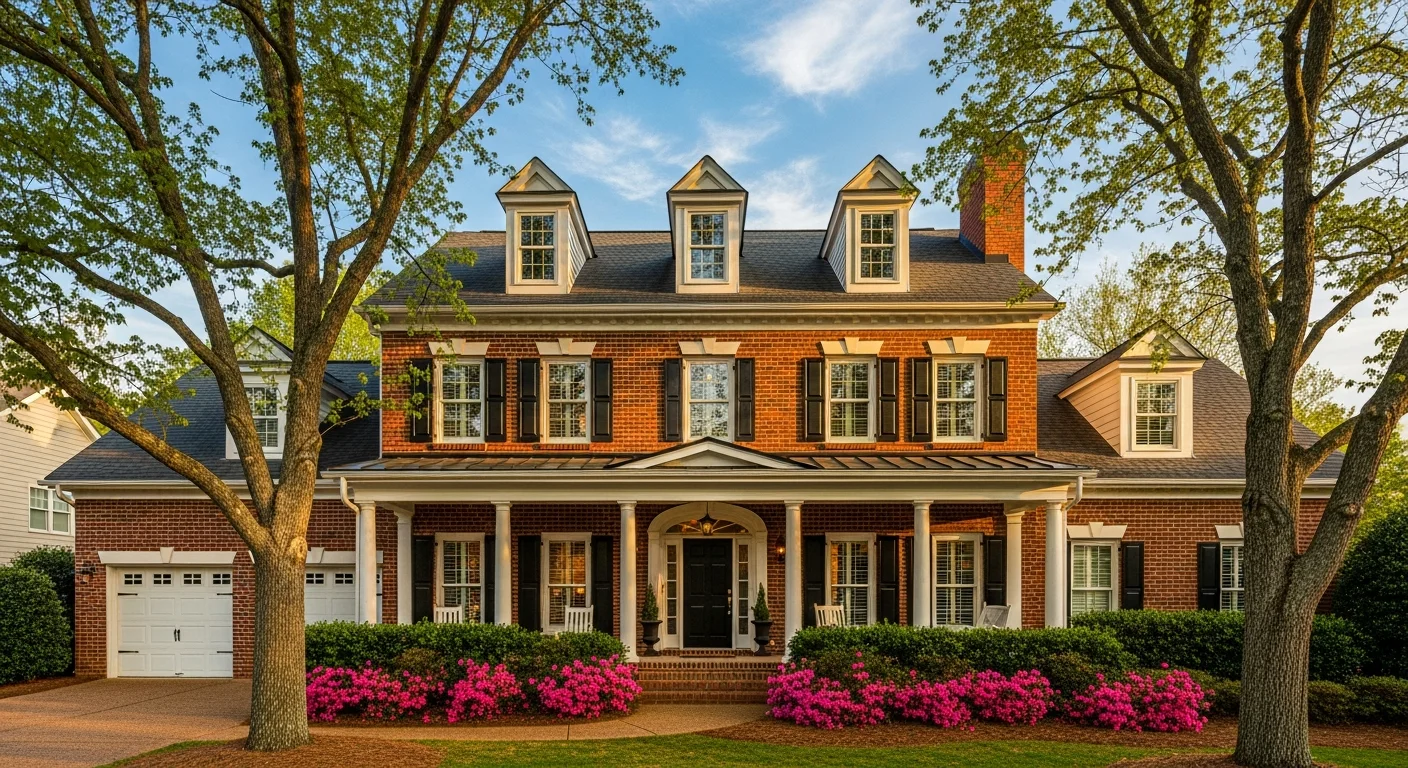
Traditional brick colonial home in the Northstone neighborhood of Huntersville NC with mature oak trees and manicured HOA landscaping
Northstone's full-brick colonials are among Huntersville's most valuable homes — and their crawl space foundations on Piedmont clay make them the highest-risk neighborhood for chronic mold growth.

IICRC S520 Process

Our Huntersville Mold Remediation Process

Mold remediation is not mold removal. Remediation is an engineered process governed by IICRC S520 — the standard North Carolina should require but doesn't. Here's exactly what a Palm Build mold remediation project looks like in Huntersville.

Independent Mold Assessment

We never test and remediate on the same project. An independent certified assessor collects air samples, surface samples, and moisture readings to identify species, concentration, and source conditions. For crawl space homes, the assessment includes full moisture mapping of clay soil, vapor barrier condition, joists, subfloor, and HVAC ductwork.

Engineering Controls and Containment

Before disturbing a single spore, we isolate the affected area with polyethylene barriers, negative air pressure via HEPA air scrubbers exhausting to the exterior, and critical barriers at every penetration point. For crawl space projects, containment includes sealing the access and floor penetrations to prevent spore migration into the living space.

Source Identification and Moisture Elimination

Mold is a moisture problem. In Huntersville, the source is usually crawl space humidity from clay soil vapor transmission, plumbing failure, or bulk water intrusion from grading failures. We identify and correct the source as part of every project — often including crawl space encapsulation with vapor barrier, dehumidification, and drainage correction.

HEPA Vacuuming and Antimicrobial Treatment

All affected surfaces are HEPA-vacuumed before wet cleaning. EPA-registered antimicrobial agents are applied appropriate to the substrate. Affected porous materials that cannot be cleaned to standard — drywall, insulation, carpet padding — are removed under containment. In crawl spaces, this frequently includes all fiberglass batt insulation and deteriorated vapor barriers.

Structural Material Removal (When Required)

Mold that has penetrated porous materials beyond the surface must be removed. In Huntersville, this commonly includes water-damaged drywall, paper-backed insulation, OSB subfloor panels with through-penetration mold, and in severe cases, structural joist material that has lost integrity. All removed material is bagged inside containment.

Air Scrubbing and Drying

HEPA air scrubbers run continuously throughout remediation and for 24-48 hours after the final cleaning pass. Commercial dehumidifiers bring ambient humidity below 50% — the threshold below which mold cannot actively grow. For Huntersville’s summer conditions with outdoor humidity exceeding 70%, this requires significant dehumidification capacity.

Post-Remediation Verification (PRV)

The independent assessor returns to verify clearance criteria: visual inspection, air sampling confirming spore counts at or below outdoor baseline, and moisture readings confirming source elimination. Only after independent PRV passes do we release containment. This step separates professional remediation from cosmetic cleanup.

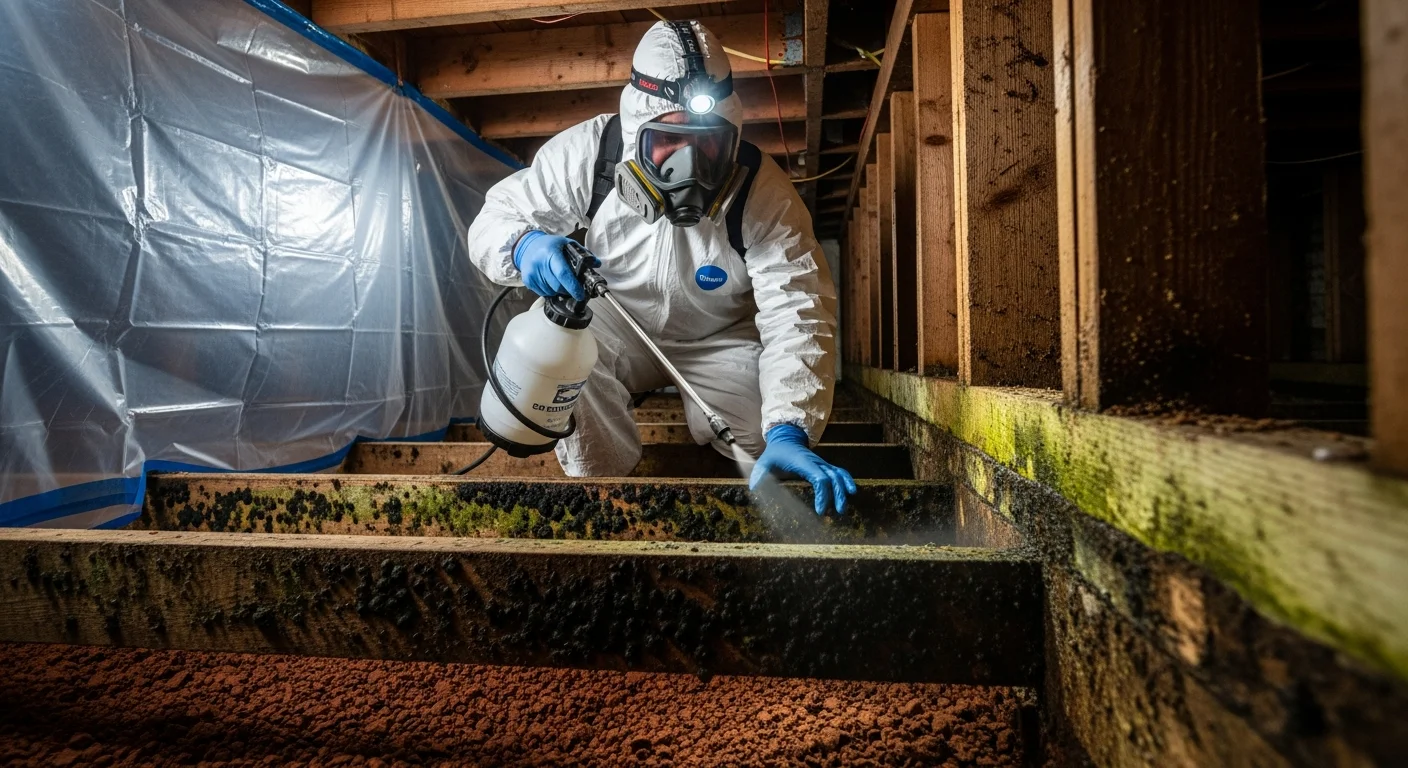
Palm Build mold remediation technician in full PPE treating mold contamination inside a Huntersville NC crawl space
Full containment with HEPA air scrubbers and negative pressure — this is the standard North Carolina doesn't require but Huntersville homeowners deserve.

Cost Transparency

Mold Remediation Costs in Huntersville

Costs are driven by three factors: extent of colonization, whether crawl space work is involved, and whether structural materials need replacement. These ranges reflect real-world project costs in the Huntersville and Lake Norman market.

Contained Interior Mold

  • Independent mold assessment $400 - $800
  • Containment and air scrubbing $500 - $1,500
  • Remediation (single room/area) $1,500 - $5,000
  • Drywall/material replacement $1,000 - $4,000
  • Post-remediation verification $300 - $600
Total typical range $3,700 - $11,900

Crawl Space Mold Remediation

  • Full crawl space assessment $600 - $1,200
  • Crawl space mold remediation $3,000 - $12,000
  • Insulation removal and replacement $1,500 - $4,000
  • Vapor barrier/encapsulation $4,000 - $12,000
  • Structural joist repair (if needed) $2,000 - $8,000
  • Dehumidification system $1,500 - $3,000
Total complex range $12,600 - $40,200+

Insurance reality check: Standard NC HO-3 policies cap mold coverage at $5,000 to $10,000 as a sublimit — and only when mold resulted from a covered peril like a burst pipe. Chronic crawl space mold from humidity and clay soil is excluded as gradual damage. A comprehensive crawl space remediation in Northstone or Cedarfield can reach $25,000 to $40,000. The gap is your responsibility.

Seasonal Mold Risk Calendar

When Mold Risk Peaks in Huntersville

Mold risk in Huntersville follows seasonal patterns driven by the Piedmont's rainfall cycle, humidity, and the age-related failure modes of homes built during the 1990-2009 growth era.

January - February

Frozen Pipe Bursts Feed Winter Mold

Huntersville's January lows average 29°F. Burst pipes in crawl spaces and attics saturate building materials. If drying is delayed beyond 48 hours, mold colonization begins. Homes with polybutylene plumbing from the 1990-2005 era are highest risk.

March - April

Peak Rainfall Activates Crawl Spaces

March is Huntersville's wettest month at 4.3 inches. Spring rains saturate clay soil and crawl space moisture climbs sharply. Homeowners in Northstone, Cedarfield, and The Hamptons first notice musty smells during this window as dormant mold reactivates.

May - June

Humidity Transition and HVAC Failures

Outdoor humidity crosses 60% and stays there. HVAC condensate drain failures begin as AC systems ramp to full load. Clogged condensate lines overflow into attics, walls, and crawl spaces — feeding mold growth that may not be discovered for weeks.

July - August

Peak Mold Growth Season

Summer humidity routinely exceeds 70% outdoors. Unencapsulated crawl spaces sustain 80%+ relative humidity continuously. This is when crawl space mold growth is most aggressive — Aspergillus and Penicillium can double colony size in 24-48 hours under these conditions.

September - October

Hurricane Season and Storm-Driven Mold

Tropical remnants bring flooding risk. Hurricane Helene (Sept 2024) crested Mountain Island Lake 12 feet above target. Any storm-driven water intrusion that isn't dried within 48 hours becomes a mold event. Post-hurricane mold claims overwhelm the market.

November - December

Discovery Season and Winterization

Crawl space mold often discovered during fall inspections or winterization. Closing windows concentrates indoor air quality problems from crawl space mold. The stack effect pulls more crawl space air into heated living spaces as the temperature differential increases.

Huntersville NC seasonal mold risk calendar showing month-by-month mold growth patterns driven by humidity and rainfall
Mold risk in Huntersville peaks from May through October when sustained humidity drives aggressive colonization in crawl spaces and HVAC systems.

Consumer Protection

NC's Mold Licensing Gap — What Huntersville Homeowners Must Know

North Carolina has no state mold licensing requirement. No training mandate. No certification requirement. No exam. No continuing education. No oversight body. Any contractor with a truck and a spray bottle can advertise mold remediation services in Huntersville.

Compare this to states like Texas (licensed mold assessors and remediators), Florida (licensed mold assessors and remediators), and Louisiana (licensed mold remediation contractors). In those states, performing mold remediation without a license is a criminal offense. In North Carolina, it's Tuesday.

In a town where the median home value sits at $539,000 and 40-50% of pre-2010 homes have crawl space foundations on moisture-retaining Piedmont clay, this is not an academic concern. It's a financial and health risk that plays out in Huntersville homes every week.

Verify IICRC S520 certification for all on-site technicians
Demand independent mold assessment — never let the same company test and remediate
Require written remediation protocol referencing IICRC S520 and EPA guidelines
Confirm containment and HEPA air filtration are part of the scope
Insist on post-remediation verification by an independent party
Ask for mold-specific pollution liability insurance — standard GL often excludes mold

Palm Build Credentials

  • IICRC S520 certified remediation protocols
  • Independent third-party testing on every project
  • Licensed NC general contractor for structural repairs
  • Full liability insurance with mold-specific coverage
  • Post-remediation clearance by independent assessor

Red Flags to Watch For

  • No IICRC certification or refuses to provide proof
  • Offers to "spray and seal" without removing contaminated material
  • No containment barriers or HEPA filtration in scope
  • Same company does mold testing AND remediation
  • Quotes a flat price without inspecting the property

Insurance Guide

Mold Insurance Coverage Gaps in Huntersville

Huntersville homeowners pay an average of $2,150/year for homeowners insurance. Standard NC HO-3 policies cap mold coverage at $5,000 to $10,000 as a sublimit. A crawl space mold remediation with encapsulation can reach $25,000 to $40,000. Here's what's covered and what isn't.

Sudden and accidental mold from a covered peril (burst pipe, appliance failure) — typically covered up to mold sublimit ($5K-$10K)

Chronic crawl space mold from humidity, clay soil moisture, and degraded vapor barriers — excluded as gradual damage on virtually all NC policies

Mold from slow or hidden plumbing leaks — usually excluded once the insurer determines the leak was gradual rather than sudden

Crawl space encapsulation as part of mold remediation — typically excluded as an upgrade or maintenance item, not a repair

Structural joist repair from long-term mold damage — often denied when the insurer attributes damage to ongoing moisture, not a single event

Post-flood mold (from rising water) — requires separate NFIP or private flood insurance; standard HO-3 excludes flood entirely

Supplemental mold endorsement ($25K-$50K coverage) available from some carriers for $50-$150/year additional premium

Palm Build documents every mold project for insurance purposes from day one \u2014 moisture maps, air sampling results, photo evidence, and daily work logs formatted for adjuster workflows. Even within restrictive mold sublimits, proper documentation maximizes your covered amount. For the full claims process, see our insurance restoration process guide.
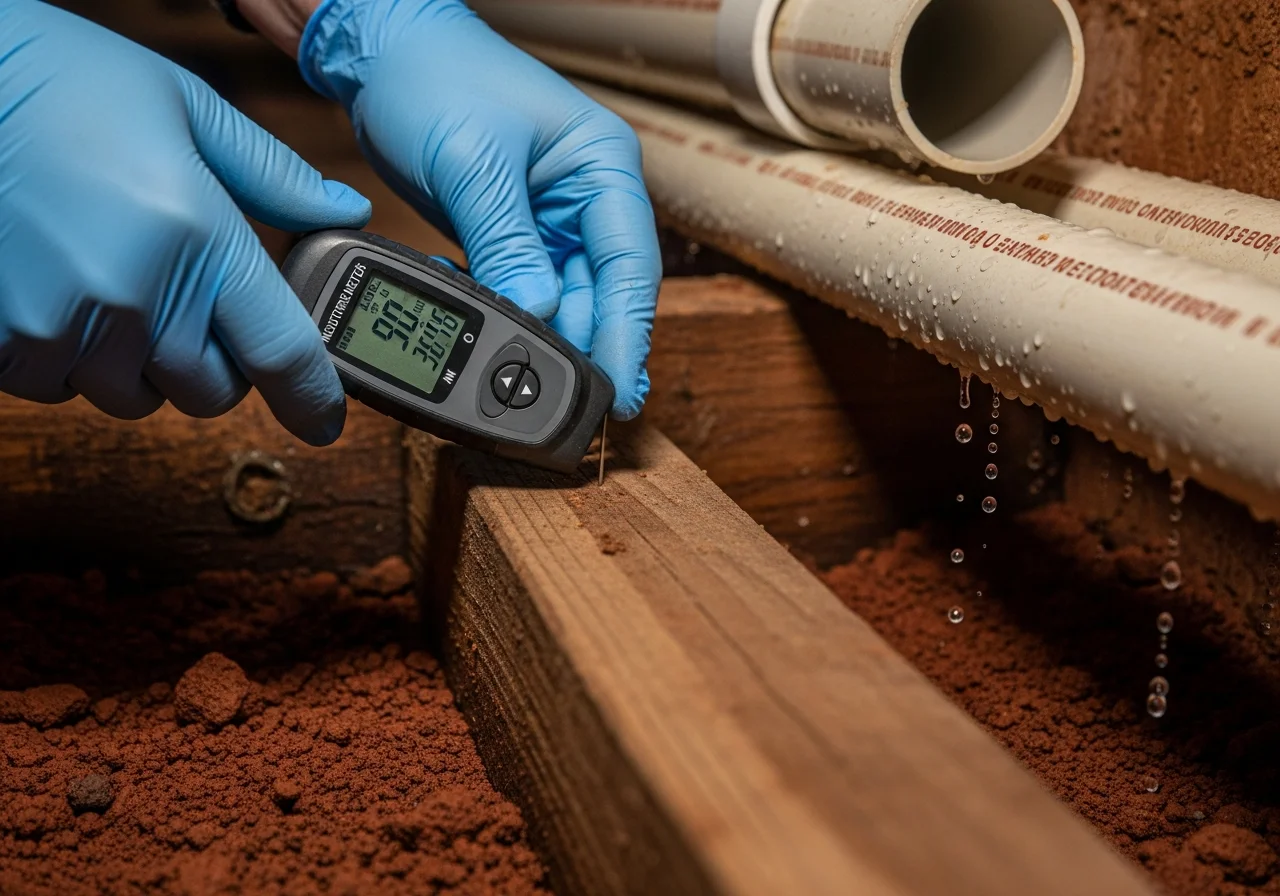
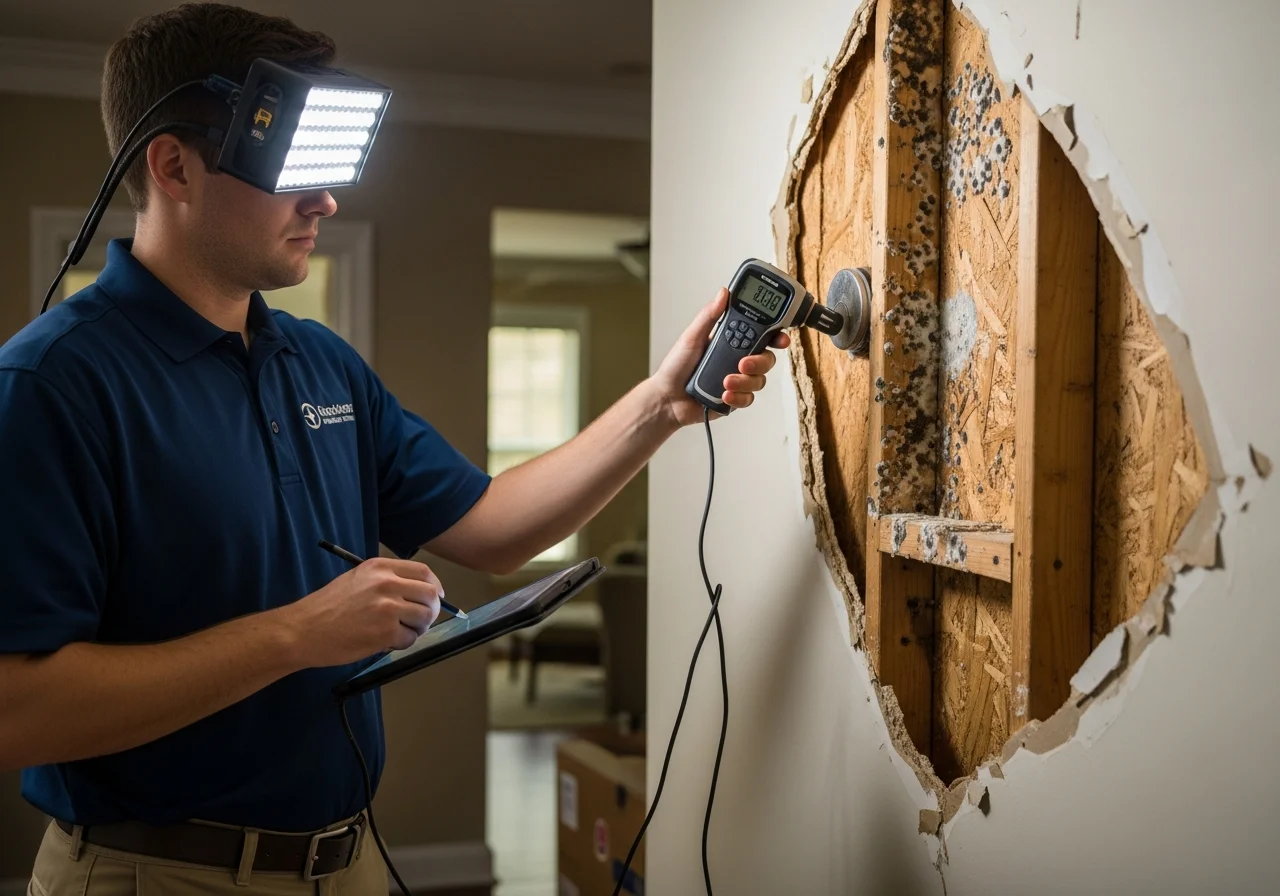
Close-up of professional pin-type moisture meter being used on floor joists during a Huntersville NC mold assessment showing elevated moisture readings
Pin-type moisture meters measure structural wood moisture content \u2014 readings above 19% indicate conditions favorable for mold growth. This documentation supports your insurance claim.

Our Work

Huntersville Mold Remediation: Before and After

Restoration technician inspecting mold growth on floor joists inside a Huntersville NC crawl space with red Piedmont clay visible
Before: Active mold colonization on floor joists in a Huntersville crawl space on Piedmont clay soil
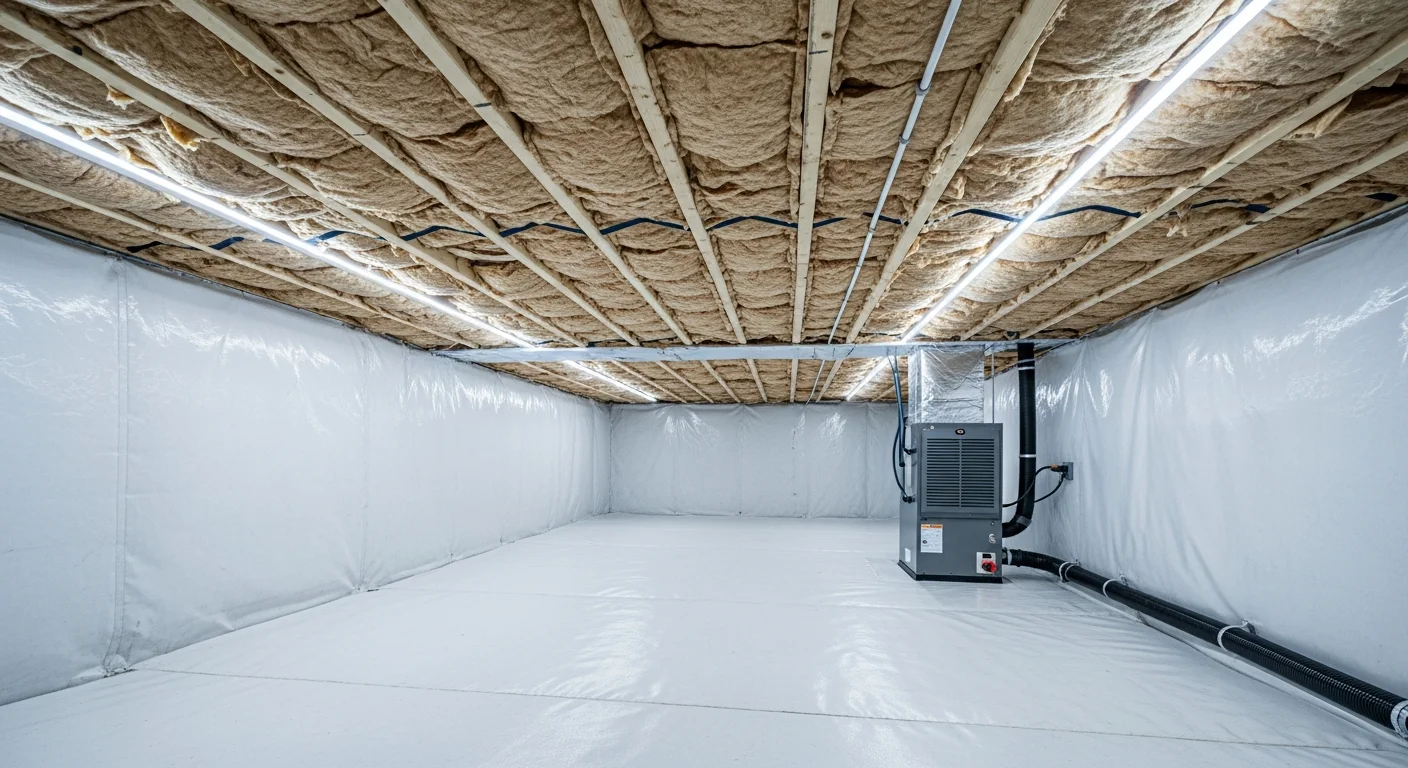
Completed crawl space encapsulation with white vapor barrier and dehumidification system installed in a Huntersville NC home
After: Full encapsulation with vapor barrier and dehumidification system — moisture problem permanently solved
Palm Build technician conducting mold assessment and air quality testing inside a Huntersville NC home
Independent mold assessment with air sampling — identifying species, concentration, and source conditions
Mold remediation technician in full PPE treating contaminated surfaces inside a Huntersville NC crawl space
IICRC S520 remediation in progress — full PPE, HEPA filtration, and contained work area

Species Identification

Types of Mold We Remediate in Huntersville Homes

Species identification matters because different molds require different remediation approaches and present different health risks. Here are the species we most commonly encounter in Huntersville homes and crawl spaces.

Aspergillus

The most common genus in Huntersville crawl spaces and HVAC systems. Multiple species with varying health risks, from allergenic (A. flavus) to potentially toxigenic (A. fumigatus). Thrives on wood, insulation, and ductwork. Frequently colonizes HVAC evaporator coils and drain pans.

Cladosporium

Ubiquitous outdoor mold that colonizes damp interior surfaces when humidity exceeds 60%. Common on window frames, bathroom ceilings, and crawl space joists. Usually dark olive-green to brown. Allergenic but rarely toxigenic. Its presence indoors indicates a sustained humidity problem.

Stachybotrys chartarum ("Black Mold")

Requires very wet conditions (water activity above 0.93) and cellulose-rich materials. Most often found on water-damaged drywall, wet OSB subfloor panels, and saturated paper-backed insulation. Produces mycotoxins (satratoxins) presenting serious health concerns with chronic exposure.

Penicillium

Fast-growing blue-green mold that colonizes within 24-48 hours of moisture exposure. Common after plumbing failures, HVAC condensate overflows, and in crawl spaces with degraded vapor barriers. Spreads rapidly through HVAC ductwork via airborne spore dispersal.

Chaetomium

Cellulose-loving mold that produces musty, earthy odors. Found on water-damaged drywall, wet carpet backing, and structural wood with chronic moisture exposure. Its presence almost always indicates a long-term moisture problem — frequently found where crawl space moisture has migrated upward for months or years.

Palm Build technician conducting mold species identification and assessment in a Huntersville NC home
Species identification drives the remediation protocol \u2014 different molds require different containment levels, PPE, and cleaning approaches.

Why Palm Build

Why Huntersville Homeowners Choose Palm Build for Mold

National franchises have a presence in the Lake Norman market. But none of them will tell you what we just told you: North Carolina has no mold license, your crawl space is likely feeding your mold problem, and your insurance probably won't cover most of the work.

IICRC S520 Certified on Every Project

Every mold remediation project follows the full S520 protocol: independent assessment, written remediation plan, engineering controls, containment, HEPA air filtration, post-remediation verification. In a state with zero oversight, we hold ourselves to the national standard.

Charlotte-Based, Huntersville-Focused

Our Crompton Street operations hub puts us within 35-55 minutes of any Huntersville address via I-77. We respond 24/7 for mold emergencies tied to active water events.

Crawl Space Expertise Built for Huntersville

We understand the Piedmont clay moisture cycle, the vented-to-sealed crawl space conversion, the joist repair and sister work that crawl space mold requires, and the encapsulation systems that permanently solve the moisture source.

HOA Process Fluency

We carry COI documentation, understand architectural review processes, and coordinate with property management companies across Huntersville's HOA communities — Birkdale, Northstone, Skybrook, Cedarfield, The Hamptons, and more.

Insurance Documentation from Day One

Moisture maps, air sampling results, photo evidence, and daily work logs — all formatted for the adjuster workflow. We help maximize your coverage even within restrictive mold sublimits on NC policies.

Full-Service Capability

From mold assessment coordination through remediation, structural repair, crawl space encapsulation, and interior reconstruction. One company, one project manager, no vendor handoffs.

Common Questions

Huntersville Mold Remediation FAQ

Does North Carolina require a mold remediation license?
No. North Carolina has no state mold licensing requirement. Anyone can advertise mold services without certification or oversight. Insist on IICRC S520 certification and independent testing from any contractor.
How much does mold remediation cost in Huntersville?
Contained interior mold remediation typically ranges from $3,700 to $11,900. Crawl space mold remediation with encapsulation ranges from $12,600 to $40,200 or more. Insurance mold sublimits of $5,000-$10,000 rarely cover crawl space work.
Does homeowners insurance cover mold in Huntersville?
Only if mold resulted from a sudden covered peril like a burst pipe. Chronic crawl space mold is excluded as gradual damage. Covered claims are typically capped at $5,000-$10,000 sublimits on NC policies.
How fast does mold grow after water damage in Huntersville?
Mold can begin colonizing within 24 to 48 hours of sustained moisture. In Huntersville's humid climate, visible growth can appear within 3 to 7 days.
Is the black mold in my crawl space dangerous?
Not all dark mold is Stachybotrys, and not all Stachybotrys produces dangerous mycotoxin levels. Any crawl space mold is problematic because 40-60% of first-floor air comes from the crawl space. Get it professionally tested.
Should I test for mold or just remediate?
Always test first through an independent assessor. Testing identifies species, quantifies concentration, and maps contamination extent. Never let the same company test and remediate — that's a conflict of interest.
How long does mold remediation take in Huntersville?
Interior remediation takes 3 to 5 days. Full crawl space remediation with encapsulation takes 5 to 10 days. HOA approval in Huntersville communities can add 1 to 3 weeks.
Does Palm Build do mold testing?
We coordinate testing through independent certified assessors — we never test and remediate on the same project. This IICRC best practice eliminates conflict of interest and ensures objective results.
Can I stay in my home during mold remediation?
For contained single-room projects, yes. For extensive or crawl space remediation, we recommend 3-5 days of temporary relocation, especially for those with respiratory sensitivities.
What makes Huntersville mold problems different from other areas?
Huntersville's combination of Piedmont clay soil, vented crawl space construction in 40-50% of pre-2010 homes, and subtropical humidity creates persistent conditions for mold growth. The state's lack of mold licensing adds contractor risk.

Mold in Your Huntersville Home? Get a Certified Assessment.

Palm Build delivers IICRC S520-certified mold remediation across Huntersville — from crawl space mold in Northstone to attic mold in Vermillion. Independent testing, full containment, post-remediation verification. The standard NC never set, we exceed every day. Call now.

35-55 min Response IICRC Certified