(888) 245-5155
Call Now 24/7
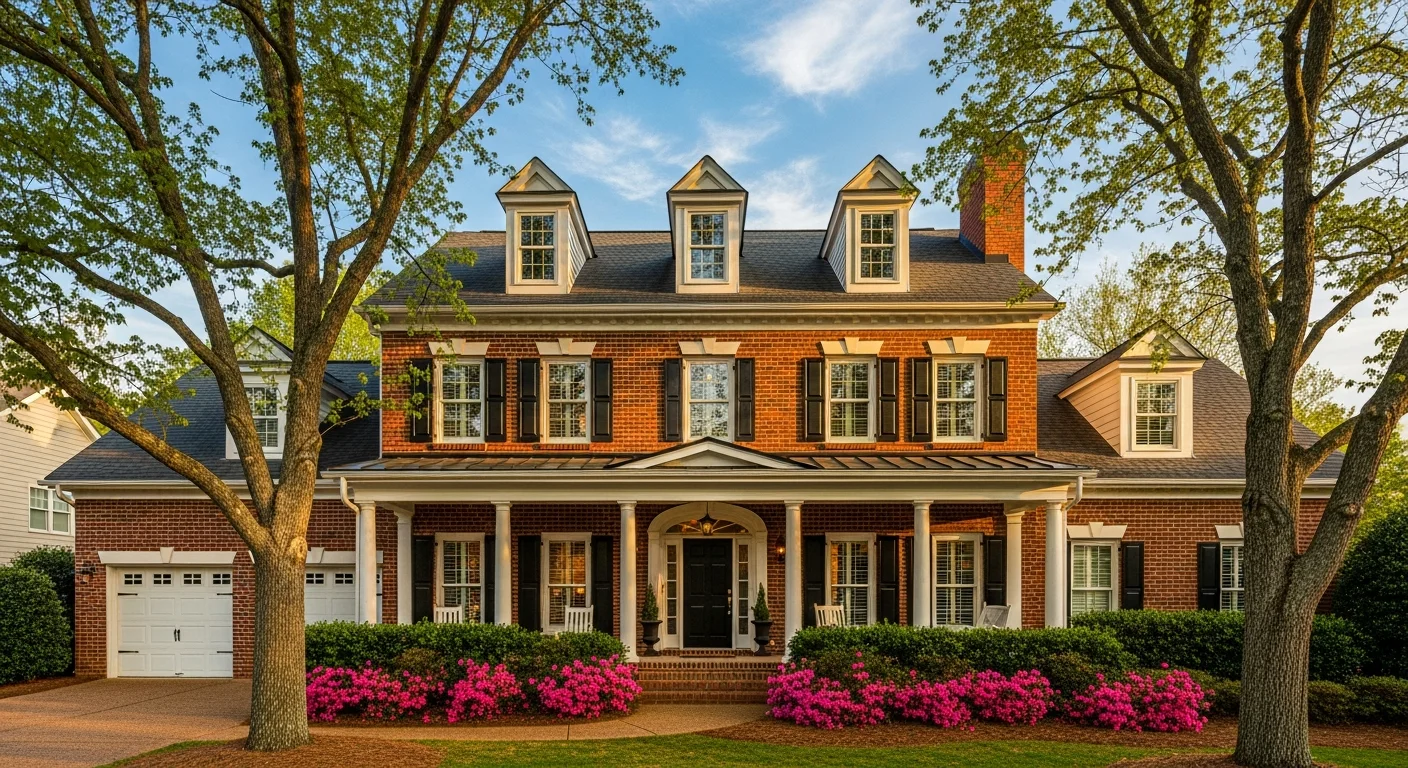
Palm Build fire restoration crew assessing smoke damage at an affluent brick colonial home in a Huntersville NC HOA neighborhood with mature landscaping
HUNTERSVILLE NC — 24/7 FIRE & SMOKE RESTORATION

Fire & Smoke Damage Cleanup in Huntersville, North Carolina

From Birkdale's townhome kitchens to Northstone's full-brick colonials, Palm Build responds from our Charlotte operations hub with emergency board-up, soot stabilization, smoke odor elimination, and full reconstruction — navigating Huntersville's HOA requirements and insurance coordination from the first call.

18 miles — Huntersville, NC 35-55 min Response IICRC Certified

35-55 min

Emergency Response

24/7

Dispatch Available

IICRC

Certified Technicians

Local Risk Factors

Why Huntersville Homes Face Specific Fire & Smoke Damage Risks

A kitchen grease fire during holiday cooking. A space heater left running overnight during a January cold snap. A dryer vent clogged with lint in a townhome laundry closet. Huntersville's specific housing stock, demographics, and geography create fire risk patterns that differ from Charlotte's urban core and from smaller rural towns surrounding the Lake Norman corridor.

Aging Electrical in 1990-2009 Homes

Critical

Huntersville exploded from 3,014 residents in 1990 to nearly 70,000 today. That 20-fold growth produced a concentrated band of homes built between 1990 and 2009 — housing now 17 to 36 years old. Original electrical panels handling loads they were never designed for, HVAC systems with degraded wiring, and water heaters past their 12-15 year lifespan create the conditions for electrical fires. Neighborhoods like Northstone (1997-2008), Cedarfield (1995-2007), and The Hamptons (late 1990s-2005) are in the core risk window.

Holiday Cooking Fires (Nov-Dec Peak)

Critical

Kitchen grease fires are the most common residential fire type in Huntersville. Huntersville's $539K median home value means kitchens often feature granite, custom cabinetry, and professional-grade ranges — materials that react differently to protein soot. Thanksgiving deep fryers and Christmas cooking drive a sharp November-December spike. A dried Christmas tree can fully engulf a room in under 30 seconds.

Dryer Vent Fires in Townhome Communities

High

Clogged dryer exhaust vents cause a disproportionate number of fires in Huntersville's townhome and attached-home communities, where dryer venting often runs long distances through interior walls. Birkdale's townhome sections and Monteith Park's new urbanist attached homes see higher rates of dryer-related fires than detached single-family neighborhoods. Shared-wall construction means fire and smoke migrate between units rapidly.

Heating Equipment Fires (Jan-Feb Cold Snaps)

High

Space heaters, fireplace embers, and furnace malfunctions peak during Huntersville's January-February cold snaps when temperatures drop into the 20s. Many Huntersville homes have gas fireplaces installed during original construction that have never been professionally inspected or serviced in 20+ years. Space heaters drawing 1,500 watts on aging wiring compound the seasonal spike.

Pre-1960 Pottstown Wiring Hazard

Moderate

Huntersville's oldest neighborhood — the Pottstown area — contains pre-1960 homes that may still have knob-and-tube wiring, a known fire hazard. Knob-and-tube wiring was not designed for modern electrical loads and degrades with age, particularly where insulation has been added over exposed wiring runs. These homes may also contain asbestos in insulation and siding, complicating fire restoration.

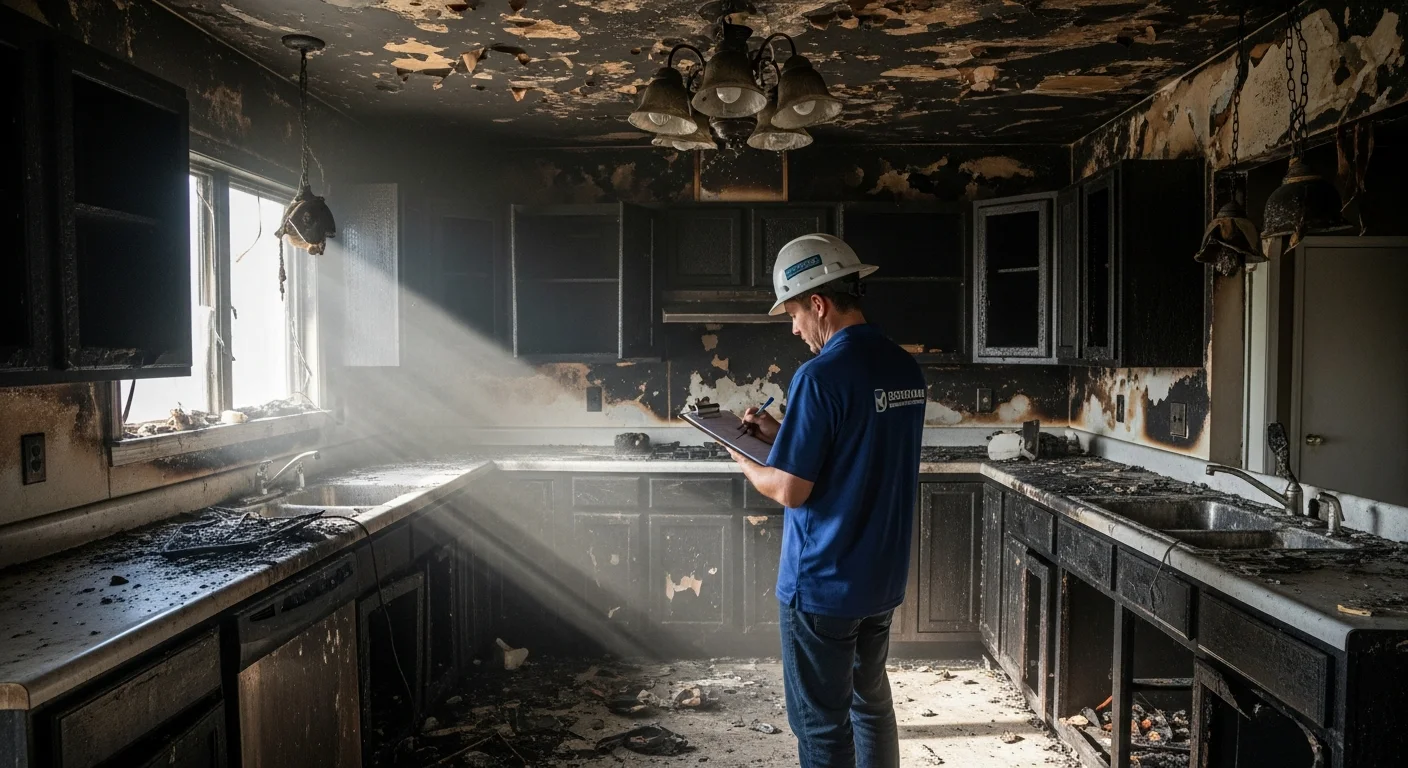
Fire-damaged kitchen in a Huntersville NC home showing charred cabinets and soot-stained walls from a grease fire
Kitchen grease fires are the most common fire type in Huntersville — protein soot requires specialized cleaning protocols

Huntersville Fire Risk at a Glance

  • Median home value $539K with premium finishes at stake
  • Most homes built 1990-2009 with aging electrical and HVAC
  • Nov-Dec peak risk from holiday cooking and Christmas trees
  • Townhome communities with shared-wall smoke migration
  • Pre-1960 Pottstown area with knob-and-tube wiring hazard
Neighborhood Fire Risk Profiles

Fire Risk by Huntersville Neighborhood

Fire risk in Huntersville correlates directly with housing age, construction type, and density. The concentrated construction boom between 1990 and 2009 means entire neighborhoods are aging into fire risk simultaneously — and each community presents distinct challenges for restoration.

Birkdale / Birkdale Village

High

2000-2010 · Townhomes, attached, detached

Dryer vent fires in attached units; shared-wall smoke migration

Dryer venting runs long distances through interior walls in townhome sections. Shared-wall construction allows fire and smoke to migrate between units. Multi-unit HOA coordination required for exterior restoration.

Northstone Club

High

1997-2008 · Full brick colonial, detached

Aging electrical panels; brick veneer absorbs smoke deeply

Original electrical panels handling modern loads. Full brick veneer absorbs smoke several inches deep, requiring extended treatment cycles. HOA architectural review required for all exterior restoration.

Skybrook

High

1992-2017 · Mix of frame and brick veneer

Older Phase 1 homes with original electrical and HVAC

Phase 1 homes (1992-2000) have original electrical and HVAC systems past their designed lifespan. Holiday cooking fires in gourmet kitchens with professional-grade ranges. Wide age range means varying fire risk by section.

Glenwyck

Moderate

1998-2006 · Colonial frame, vinyl/brick

Aging electrical and HVAC; storm-damaged roofing

2023 storm damage weakened roofing on some homes. Fire risk compounds when electrical systems are compromised after storms. All original HVAC systems are past expected lifespan.

Stonegate Farms

Moderate

2000-2008 · Traditional frame, brick accents

Gas fireplace maintenance neglect; original HVAC past lifespan

Original HVAC systems past expected lifespan. Gas fireplace inserts installed during construction have often never been professionally inspected. HOA exterior matching requirements for restoration.

Pottstown area

Critical

Pre-1960 · Mixed older construction

Knob-and-tube wiring; no fire stops between wall cavities

Huntersville's oldest neighborhood with potential knob-and-tube wiring — a known fire hazard. Older framing lacks modern fire stops between wall cavities. Potential asbestos in insulation and siding complicates restoration.

Monteith Park

Moderate

2008-2015 · New urbanist attached/detached

Shared-wall smoke migration; long dryer vent runs

Attached units with shared-wall smoke migration potential. Long dryer vent runs through interior walls. Newer construction but approaching first major maintenance window for HVAC and water heaters.

Understanding the Damage

Types of Fire and Smoke Damage in Huntersville Homes

Fire damage is not a single category. The type of fire determines the soot, the penetration depth of smoke, the structural impact, and the restoration approach. Each type demands a different protocol — and Huntersville's housing stock produces all of them.

Kitchen Fires (Grease and Cooking)

The most common residential fire type in Huntersville. Grease fires produce protein-based soot that is nearly invisible when fresh but oxidizes to a yellow-brown varnish within days, permanently staining cabinets, countertops, and painted surfaces. Huntersville's $539K median home value means kitchens often feature granite, custom cabinetry, and stainless steel — all of which react differently to protein soot. Holiday cooking fires peak sharply in November and December.

Professional Remediation Approach

Immediate protein soot neutralization with specialized chemistry for each surface type. Thermal fogging for odor penetration through kitchen HVAC connections. Full contents assessment for salvageability vs. replacement.

Electrical Fires

Homes built 1990-2005 with original electrical panels handling modern loads are the primary risk group. Electrical fires often smolder inside walls for hours before detection, producing acrid synthetic soot that penetrates deeply into framing and insulation. These fires frequently cause more hidden damage than visible flame damage. Neighborhoods like Northstone (1997-2008), Cedarfield (1995-2007), and The Hamptons (late 1990s-2005) are in the core risk window.

Professional Remediation Approach

Thermal imaging to identify hidden heat damage. Tear-out of affected wall cavities. Synthetic soot removal with solvent-based cleaners and HEPA filtration. Full electrical system evaluation before reconnection.

HVAC and Dryer Fires

Clogged dryer exhaust vents and degraded HVAC wiring cause a disproportionate number of fires in Huntersville's townhome communities, where dryer venting runs long distances through interior walls. Birkdale's townhome sections and Monteith Park's attached homes see higher rates. Shared-wall construction means smoke migrates to adjacent units through wall cavities and attic spaces.

Professional Remediation Approach

Multi-unit smoke assessment for attached homes. HVAC duct cleaning across all connected units. Dryer vent inspection and clearing as part of prevention. Coordinated HOA documentation for multi-unit claims.

Heating Equipment Fires

Space heaters, fireplace embers, and furnace malfunctions peak during January-February cold snaps when temperatures drop into the 20s. Many Huntersville homes have gas fireplaces installed during original construction that have never been professionally serviced in 20+ years. Space heaters drawing 1,500 watts on aging circuits compound the risk.

Professional Remediation Approach

Assessment of all heating equipment and electrical connections. Soot type identification (mixed natural and synthetic common). Crawl space inspection for fire suppression water pooling on red clay soil.

Christmas Tree and Candle Fires

December is Huntersville's single highest-risk month. Dried Christmas trees can fully engulf a room in under 30 seconds, producing devastating, fast-spreading fires with mixed soot types. Candle fires near window treatments and holiday decorations peak during December. The speed and intensity of tree fires means these events often produce the most severe structural damage.

Professional Remediation Approach

Rapid soot stabilization across all rooms — tree fires produce massive smoke volumes that contaminate the entire home. Emergency water extraction from fire suppression. Full structural assessment for compromised framing.

Water Damage From Fire Suppression

Fire suppression frequently causes more water damage than the fire itself. A single fire hose delivers 150-250 gallons per minute. In Huntersville's crawl space homes built on Piedmont clay soil, fire suppression water pools under the house and feeds humidity and mold growth within 24-48 hours. This water must be extracted and the structure dried before reconstruction can begin.

Professional Remediation Approach

Truck-mounted extraction deployed simultaneously with soot stabilization. Commercial dehumidifiers and air movers in crawl space and living areas. Moisture monitoring until structural drying targets are met.

Our Fire Restoration Process

How We Restore Huntersville Homes After Fire Damage

Fire restoration involves multiple damage types simultaneously — structural fire damage, soot contamination, smoke odor, and water from fire suppression. Our seven-step process addresses all four in a coordinated sequence tailored to Huntersville's housing stock, HOA requirements, and Mecklenburg County code.

01

Emergency Response and Board-Up

35-55 Minutes

Call (704) 464-0121 any time, day or night. Our crew dispatches from our Crompton Street hub and arrives at your Huntersville home within 35 to 55 minutes. First priorities: secure the structure with board-up and tarping to prevent weather intrusion, shut off utilities if the fire department hasn't already, and begin emergency water extraction from fire suppression — a single fire hose delivers 150-250 gallons per minute.

02

Damage Assessment & Insurance Documentation

Day 1-2

Comprehensive assessment using thermal imaging to identify heat damage behind walls, moisture meters to map fire suppression water, and air quality testing to determine smoke contamination levels in every room — including the attic, crawl space, and HVAC system. Documentation is formatted for insurance adjusters from the start. For Huntersville's HOA communities, we simultaneously begin architectural review documentation.

03

Soot Stabilization and Removal

Days 2-8

Soot becomes increasingly acidic within hours of a fire. On metal fixtures, glass, marble, and granite — materials found throughout Huntersville's premium kitchens — acidic soot causes permanent etching if not neutralized quickly. Our IICRC-certified technicians identify the soot type (protein, synthetic, natural, or combination) and apply the correct cleaning chemistry. Dry soot requires dry sponge removal first; wet or oily soot from grease fires requires chemical solvents.

04

Smoke Odor Elimination

Days 5-14

Smoke odor is a molecular penetration problem — smoke follows air currents through every gap, seam, and HVAC duct, depositing compounds inside wall cavities, attic insulation, and carpet padding. We use thermal fogging (replicating smoke's penetration path), ozone treatment for sealed spaces, and hydroxyl generation for occupied areas. For Huntersville's brick veneer homes in Northstone and Skybrook, smoke penetrates several inches into masonry — requiring extended treatment cycles.

05

Water Damage Mitigation

Days 1-7

Fire suppression water must be extracted and the structure dried before reconstruction. In Huntersville's crawl space homes, fire hose water pools on red clay soil beneath the house and feeds mold growth within 24-48 hours. We deploy truck-mounted extraction, commercial dehumidifiers, and air movers simultaneously with soot cleaning — these processes run in parallel to compress your timeline and reduce secondary damage.

06

Contents Cleaning and Restoration

Days 3-14

Smoke-damaged contents — clothing, furniture, electronics, documents, photographs — are inventoried, packed, and transported to our facility. Ultrasonic cleaning for electronics and hard goods, ozone chambers for soft goods, document freeze-drying for papers and photographs. We provide a detailed inventory with pre-cleaning and post-cleaning photos for your insurance claim.

07

Structural Reconstruction

Weeks 2-8+

Full rebuild: framing, drywall, electrical, plumbing, flooring, cabinetry, painting, and finish work. For Huntersville's HOA communities, we match exterior materials, paint colors, and architectural details to HOA standards and manage the architectural review submission. NC General Contractor licensing covers projects exceeding $30,000. Mecklenburg County fire restoration permits can be processed without full plan review for residential code work.

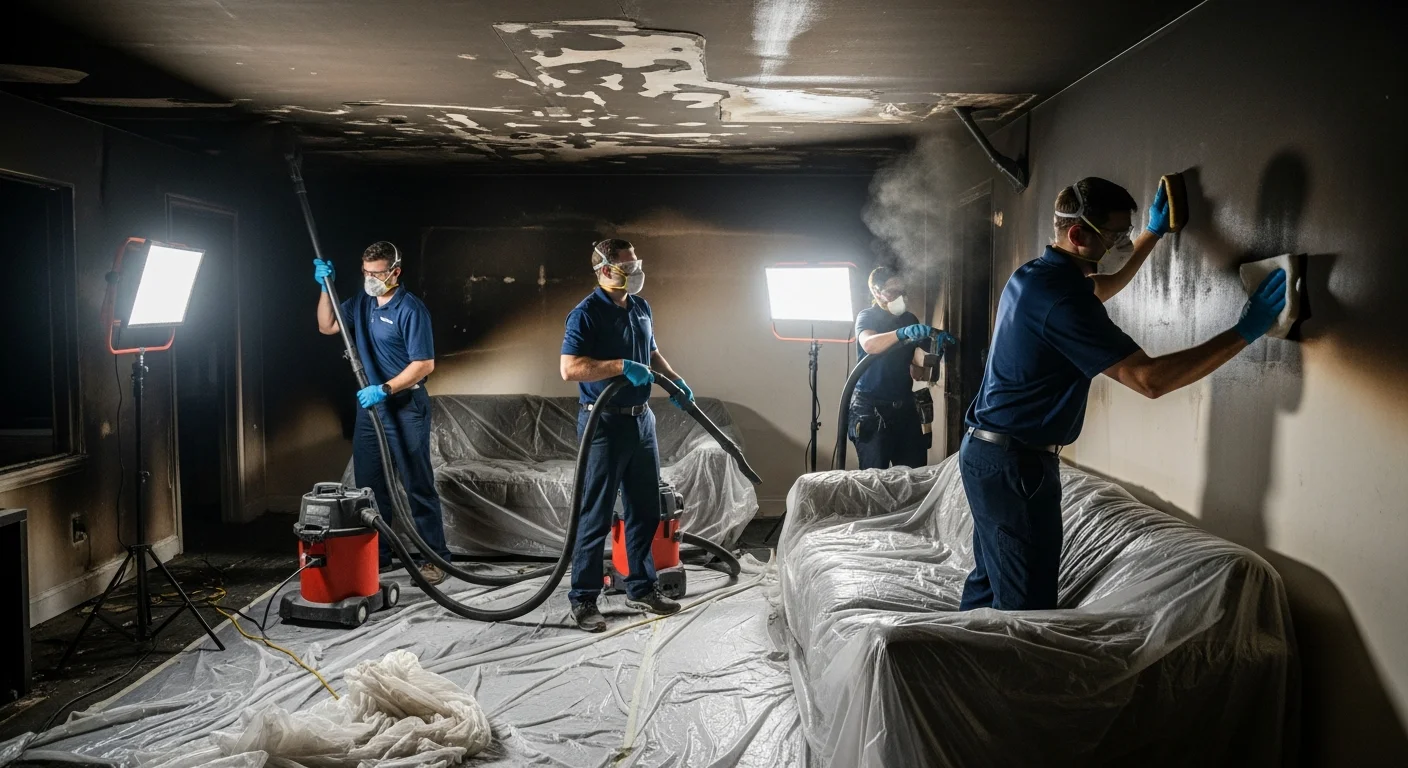
Palm Build technician in protective gear performing soot removal and cleaning on walls inside a fire-damaged Huntersville NC home
Soot type determines cleaning method — our IICRC-certified technicians identify protein, synthetic, and natural soot and apply the correct chemistry for each surface material.

Huntersville Pricing

Fire Damage Restoration Costs in Huntersville

Fire restoration costs in Huntersville reflect the town's affluent housing stock, premium finishes and custom materials, and North Carolina labor costs. These ranges are based on real-world project costs in the Huntersville and Lake Norman market. Fire damage is one of the most comprehensively covered perils under standard homeowners insurance.

Contained Fire (Kitchen / Single Room)

Emergency board-up, soot cleaning, odor elimination, minor reconstruction

$12,500 - $44,500

Includes emergency board-up and tarping ($500-$2,500), soot and smoke cleaning ($3,000-$8,000), smoke odor elimination ($1,500-$5,000), fire suppression water extraction ($1,500-$4,000), single-room reconstruction ($5,000-$20,000), and contents cleaning ($1,000-$5,000). Kitchen grease fires in Huntersville's premium homes often involve granite, custom cabinetry, and stainless steel requiring specialized cleaning.

Moderate Fire (Multi-Room)

Structural cleaning, full odor treatment, partial rebuild with HOA coordination

$45,000 - $120,000

Multi-room soot and smoke remediation, water extraction from fire suppression, contents pack-out, and partial reconstruction to Mecklenburg County code. HOA architectural review for exterior materials adds timeline but not cost — we include this coordination as standard. Brick veneer homes in Northstone and Skybrook require extended smoke treatment cycles.

Major Structural Fire (Whole Home)

Full demolition, reconstruction, HOA coordination, NC GC licensed

$75,500 - $378,000+

Emergency stabilization ($2,500-$8,000), full-home smoke remediation ($8,000-$25,000), structural demolition ($5,000-$20,000), full reconstruction ($50,000-$250,000+), contents restoration ($10,000-$75,000), and HOA coordination included. Projects exceeding $30,000 require NC General Contractor licensing, which Palm Build holds. Most significant fire losses in Huntersville's $539K homes exceed this threshold.

NC General Contractor licensing matters: North Carolina law requires a General Contractor's license for any project exceeding $30,000. Most significant fire restoration projects in Huntersville's $539K homes will exceed this threshold. Hiring an unlicensed contractor voids your warranty protection and creates insurance complications. Palm Build holds the required NC GC license for fire restoration of any scale.

Important: These ranges reflect typical Huntersville projects. Actual costs depend on fire severity, soot type, number of affected rooms, content damage, and reconstruction scope. Palm Build provides detailed, line-item estimates formatted for your insurance carrier within 48 hours of initial assessment.
Seasonal Patterns

Huntersville's Seasonal Fire Risk Calendar

Fire risk in Huntersville follows distinct seasonal patterns driven by weather, heating demand, holiday activity, and vegetation cycles. Understanding when your home is most vulnerable helps prevent fires — and helps you recognize when to call for professional restoration if one occurs.

January - February

Heating Equipment Fires Peak

High

Huntersville's January lows average 29 degrees with freeze-thaw swings between the 20s and 50s. Space heaters, portable electric radiators, and gas fireplaces run at maximum capacity. Homes in Northstone, Skybrook, and The Hamptons with original gas fireplace inserts — many never serviced since installation — are at elevated risk. Electrical fires from overloaded circuits (space heaters drawing 1,500 watts on aging wiring) compound the seasonal spike.

Active months: Jan-Feb

March - May

Electrical Storm Fires

Moderate

Spring thunderstorms bring lightning strikes that can ignite attic insulation, damage electrical panels, and cause power surge fires. Huntersville's mature tree canopy in established neighborhoods like Northstone and The Hamptons creates elevated lightning strike risk. Post-storm electrical fires sometimes ignite hours after the storm passes, when damaged wiring arcs under restored power.

Active months: Mar-May

June - August

HVAC and Electrical Load Fires

Moderate

Peak AC demand pushes aging HVAC systems to their limits. Homes built 1990-2005 with original air handlers, compressors, and electrical panels are running equipment past its designed lifespan under maximum load. Dryer fires spike when families run more laundry loads. Outdoor grilling fires peak in HOA communities where covered patios and outdoor kitchens are common.

Active months: Jun-Aug

September - October

Dry Fall Vegetation and Transitional Fires

Low-Moderate

October and November mark Huntersville's driest months. Accumulated leaf litter, dry pine straw mulch beds (standard in HOA landscaping), and low humidity create exterior fire conditions. The transition from AC to heating means HVAC systems fire up after months of dormancy — dust accumulation on heat exchangers and burners causes first-start fires and smoke events.

Active months: Sep-Oct

November - December

Peak Risk: Holiday Cooking, Christmas Trees, Candles

Critical

November and December are Huntersville's highest-risk months. Thanksgiving and Christmas cooking fires — particularly deep fryer and grease fires — spike sharply. Christmas tree fires, while less common, are catastrophic: a dry tree can fully engulf a living room in under 30 seconds. Candle fires peak in December. The convergence of cooking, decorations, heating equipment, and extended indoor activity makes the holiday season the most dangerous fire period in Huntersville.

Active months: Nov-Dec

Huntersville-Specific Challenges

HOA, Multi-Unit & Commercial Fire Restoration in Huntersville

Huntersville's governance structure, community types, and commercial corridors each create distinct fire restoration challenges that require local expertise beyond standard franchise playbooks.

HOA Coordination for Fire Restoration

Nearly every neighborhood in Huntersville is governed by an active HOA with architectural review requirements. After a fire, exterior restoration — roofing materials, siding, paint colors, brick veneer, trim profiles, and landscaping — must match HOA standards and pass architectural review before work begins.

Palm Build handles HOA coordination as a standard part of our Huntersville fire restoration service. We photograph existing exterior materials before demolition, source matching materials from the same manufacturers and product lines, prepare architectural review submissions with material specifications and color samples, and manage the approval timeline in parallel with insurance processing — not sequentially, which would add weeks to your project.

Applicable communities: Birkdale, Northstone, Skybrook, Glenwyck, Stonegate Farms, Monteith Park

Shared-Wall Fire Risk: Townhomes and Attached Homes

In Huntersville's townhome and attached-home communities — particularly Birkdale's townhome sections and Monteith Park — fire in one unit almost always produces smoke damage in adjacent units through shared wall cavities, attic spaces, and HVAC penetrations.

Palm Build coordinates multi-unit assessments with the HOA and property management company, ensuring all affected units are identified and documented for insurance purposes. We deploy separate teams to fire-origin and smoke-affected units simultaneously and provide separate documentation for each unit's insurance claim.

Applicable communities: Birkdale townhomes, Monteith Park attached units

Commercial Fire Restoration Along NC 73 and Beatties Ford

Properties along Beatties Ford Road near the McGuire Nuclear Station area, the NC 73 commercial corridor, and Huntersville's business park areas contain commercial buildings that require specialized fire restoration.

Commercial fire restoration demands larger-scale structural assessment, hazardous material considerations, and commercial insurance processes. Palm Build holds NC General Contractor licensing required for commercial fire restoration projects exceeding $30,000 and manages the full Mecklenburg County commercial permitting and inspection process.

Applicable communities: NC 73 corridor, Beatties Ford Rd, Huntersville business parks

Pre-1960 Pottstown Homes: Fire Prevention Priority

Huntersville's oldest neighborhood — the Pottstown area — contains pre-1960 homes that may still have knob-and-tube wiring, a known fire hazard in aging Piedmont homes. If you own a pre-1960 home in the Pottstown area and haven't had a full electrical inspection, this is the single most important fire prevention step you can take. Knob-and-tube wiring was not designed for modern electrical loads and degrades with age, particularly where insulation has been added over exposed wiring runs.

Insurance Coverage

Fire Insurance Claims in Huntersville: What's Covered

Fire damage is the best-covered peril on a standard North Carolina homeowners policy (HO-3). Unlike water damage — where coverage is riddled with exclusions for flooding, gradual damage, and mold sublimits — fire damage coverage is broad and comprehensive. Huntersville homeowners pay approximately $2,100-$2,400 annually, with NC premiums rising 44.4% from 2020 to mid-2025.

Structural fire damage (framing, drywall, roofing, electrical, plumbing) under Dwelling Coverage (A)

Smoke and soot damage to the structure and contents — even in rooms where no flame was present

Fire suppression water damage (from fire hoses and sprinklers) as part of the fire loss

Additional Living Expenses (ALE) for temporary housing, meals, and related costs while your Huntersville home is uninhabitable

Contents replacement or restoration under Personal Property Coverage (C), typically 50-70% of dwelling coverage

Debris removal, usually up to an additional 5% of dwelling coverage — important for structural fires

Code upgrade costs (Ordinance or Law coverage) — may require a separate endorsement, relevant for Pottstown-area pre-1960 homes

May require additional endorsement

Landscaping and exterior structures (fences, sheds, detached garages) — separate sublimits, typically 5-10% of dwelling coverage

May require additional endorsement

Common Huntersville Carriers

State FarmNC Farm BureauErie InsuranceAllstateNationwideAuto-Owners

Palm Build Manages Your Fire Claim

We work directly with your insurance adjuster from the first inspection. Our documentation — thermal imaging, moisture maps, soot classification reports, air quality readings, room-by-room photos, and daily progress logs — is prepared in the format adjusters expect, reducing delays and disputes. For Huntersville's HOA communities, we provide documentation that satisfies both insurance requirements and architectural review standards simultaneously.

Insurance Claims Guide

Our Work

Huntersville Fire Restoration: The Process in Action

From emergency board-up through full reconstruction, see how Palm Build restores Huntersville homes after fire and smoke damage.

Severe fire and smoke damage in a Huntersville NC kitchen showing charred cabinets and soot-covered walls before restoration
Before: Kitchen fire damage — charred cabinets, soot-covered walls, and melted countertop from a grease fire
Palm Build fire restoration technicians performing soot removal and cleaning inside a fire-damaged Huntersville NC home
In progress: IICRC-certified soot stabilization and removal using chemistry matched to soot type
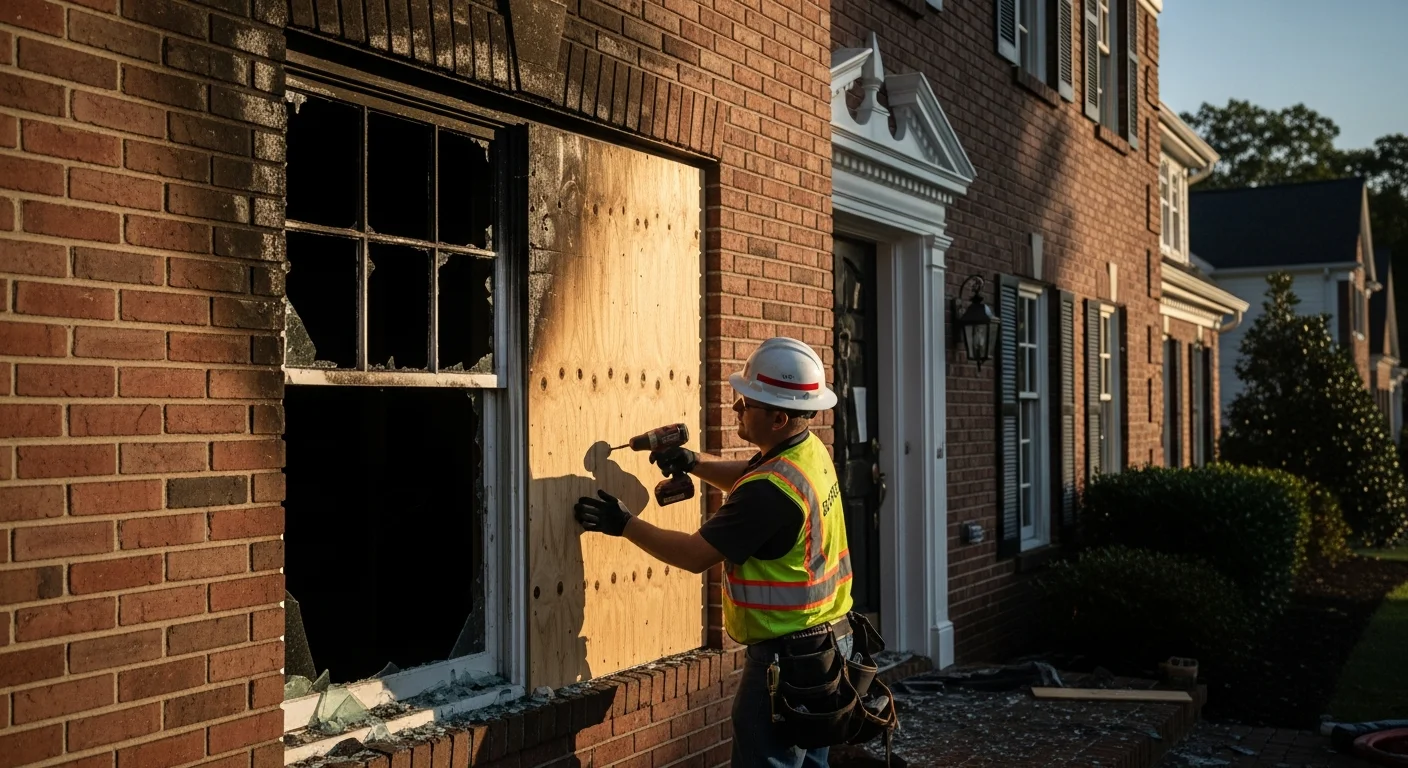
Emergency board-up and securing of a fire-damaged home in a Huntersville NC neighborhood
Emergency board-up secures the structure against weather intrusion and unauthorized entry within hours
Restored brick colonial home in the Northstone neighborhood of Huntersville NC after Palm Build fire restoration
After: Fully restored Northstone brick colonial with matched exterior materials meeting HOA standards

The Palm Build Difference

Why Huntersville Homeowners Choose Palm Build After a Fire

National franchises serve the Lake Norman market — ServPro and Restoration 1 operate from Charlotte. But fire restoration in Huntersville requires understanding which neighborhoods have shared-wall construction, knowing that Mecklenburg County processes fire permits without full plan review, and navigating HOA architectural review.

Charlotte Hub — 35-55 Minutes to Huntersville

Our Crompton Street operations hub puts us within 35-55 minutes of any Huntersville address via I-77, with crews responding 24/7/365. No franchise sub-contracting — our own IICRC-certified teams handle every project from emergency response through final reconstruction.

IICRC Fire & Smoke Certified

Every crew lead holds current IICRC Fire and Smoke Restoration Technician (FSRT) certification and follows the S540 standard for fire and smoke damage restoration — critical for both proper remediation and insurance claim documentation that NC carriers require.

NC General Contractor Licensed

Required for fire restoration projects exceeding $30,000 — which covers most significant fire losses in Huntersville's $539K homes. Many restoration companies in the Lake Norman area cannot legally perform reconstruction at this scale. Palm Build holds the full NC GC license.

HOA Coordination as Standard Practice

We handle architectural review submissions, material matching, and property management coordination for every Huntersville project. This is not an add-on — it is built into our process because virtually every Huntersville home requires it. We work in Birkdale, Northstone, Skybrook, Glenwyck, Stonegate Farms, and Monteith Park.

Insurance Documentation From Hour One

Thermal imaging, soot classification, moisture mapping, air quality readings, and room-by-room photography produced in the format adjusters expect. We work with every major carrier writing policies in Mecklenburg County — State Farm, NC Farm Bureau, Erie Insurance, Allstate, Nationwide, and Auto-Owners.

Fire and Water Handled Simultaneously

Fire suppression water must be extracted and dried while soot stabilization occurs. Running these processes in parallel compresses your timeline and prevents secondary mold growth in Huntersville's crawl space homes built on red clay soil. We don't wait — extraction, drying, and soot work run concurrently.

Common Questions

Huntersville Fire & Smoke Damage FAQ

How fast can Palm Build respond to a fire emergency in Huntersville?
Our Charlotte-based team typically arrives in Huntersville within 35 to 55 minutes via I-77 from our Crompton Street operations hub. We dispatch 24/7/365 — call (704) 464-0121 any time.
Does homeowners insurance cover fire damage in Huntersville?
Yes — fire damage is one of the most comprehensively covered perils under standard NC homeowners policies (HO-3). Coverage typically includes structural repair, soot and smoke cleanup, contents restoration, temporary living expenses, and debris removal.
How long does fire damage restoration take in Huntersville?
Small contained kitchen fires may take 1 to 3 weeks. Moderate residential fires typically require 4 to 8 weeks. Major structural fires can take 3 to 6 months. HOA architectural review in Huntersville communities may add 2 to 4 weeks.
Can smoke damage be cleaned without replacing everything?
Often yes. Professional soot and smoke cleaning can restore many materials that appear destroyed. The key factors are fire type, duration of soot contact, and whether incorrect cleaning has driven soot deeper into surfaces.
How do you remove smoke odor from Huntersville's brick veneer homes?
Brick absorbs smoke several inches deep. We use thermal fogging, ozone treatment, and hydroxyl generation to neutralize odor at the molecular level. Most Huntersville brick homes require multiple treatment cycles.
What about water damage from firefighting?
Fire suppression often causes more water damage than the fire itself. A single fire hose delivers 150-250 gallons per minute. In Huntersville's crawl space homes, this water pools on clay soil and begins feeding mold growth within 24-48 hours. We handle fire and water damage simultaneously.
Does Palm Build handle HOA coordination for fire restoration in Huntersville?
Yes. We handle architectural review submissions, material matching, and property management coordination for virtually every Huntersville project. We work in Birkdale, Northstone, Skybrook, Glenwyck, Stonegate Farms, and most other Huntersville HOA communities.
Do I need to leave my home during fire restoration?
For most fire damage projects, yes. Smoke residue contains toxic compounds. Your insurance ALE coverage pays for temporary housing during restoration.

Fire Damage in Huntersville? Every Hour Counts.

Soot becomes permanently damaging within hours. Palm Build responds to Huntersville fire emergencies in 35-55 minutes with emergency board-up, soot stabilization, water extraction, and insurance documentation from the first call.

35-55 min Response IICRC Certified