(888) 245-5155
Call Now 24/7
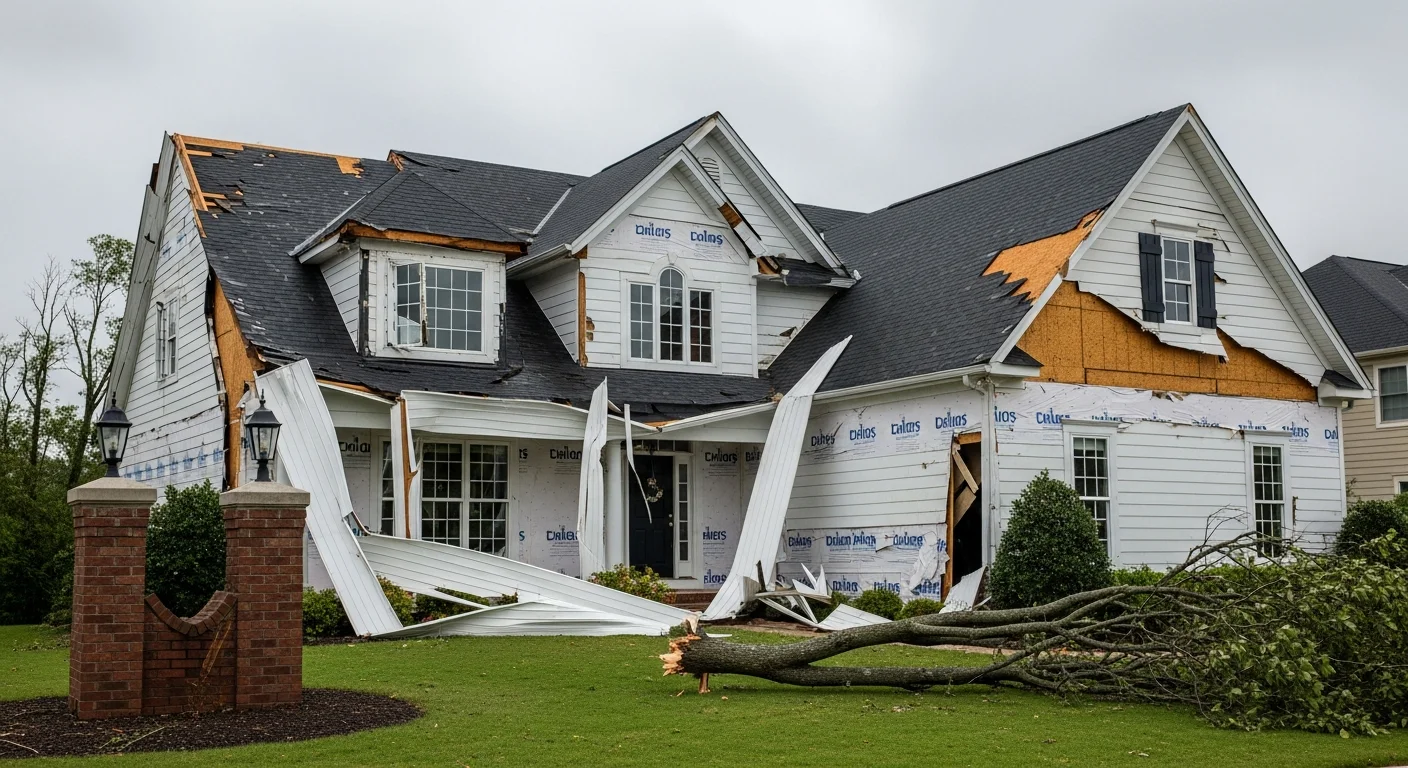
Massive oak tree uprooted by storm winds crashed onto the roof of a residential home in Huntersville North Carolina with damaged shingles and broken limbs visible
HUNTERSVILLE NC — 24/7 STORM DAMAGE RESPONSE

Storm, Wind & Hurricane Damage Restoration in Huntersville, North Carolina

From the 2023 EF-0 tornado that tore through Glenwyck and Stonegate Farms to Hurricane Helene's 50 mph gusts and mandatory evacuations — Huntersville absorbed 46 severe weather warnings in a single year. Palm Build responds from our Charlotte operations hub with emergency tarping, structural stabilization, and full restoration.

18 miles — Huntersville, NC 35-55 min Response IICRC Certified

35-55 min

Emergency Response

24/7

Dispatch Available

IICRC

Certified Technicians

Local Risk Factors

Why Huntersville Takes More Storm Hits Than You Think

Huntersville's position in the western Piedmont — where warm Gulf moisture collides with cold fronts from the Appalachians — creates a convergence zone for severe thunderstorms, microbursts, and tornadoes. Pair that with a town built around mature oak canopy, and a single storm can generate dozens of simultaneous property damage events.

EF-0 Tornado — August 2023

EF-0

Confirmed tornado

A confirmed EF-0 tornado touched down in west Huntersville along Beatties Ford Road on August 7, 2023, carving through Glenwyck and Stonegate Farms. Roofing was torn from homes, mature hardwoods snapped at the trunk, and fences were flattened — most residents had no warning until the damage was done.

46 Severe Weather Warnings in 12 Months

46

Warnings in 12 months

The Huntersville area recorded 46 severe weather warnings in a single year — tornadoes, severe thunderstorms, and flash floods. Between August and September 2023 alone, three separate thunderstorm events drove wind speeds above 60 mph across the Lake Norman corridor. January 2024 brought an 85 mph severe thunderstorm line stronger than a Category 1 hurricane.

Hurricane Helene — September 2024

50 mph

Hurricane Helene gusts

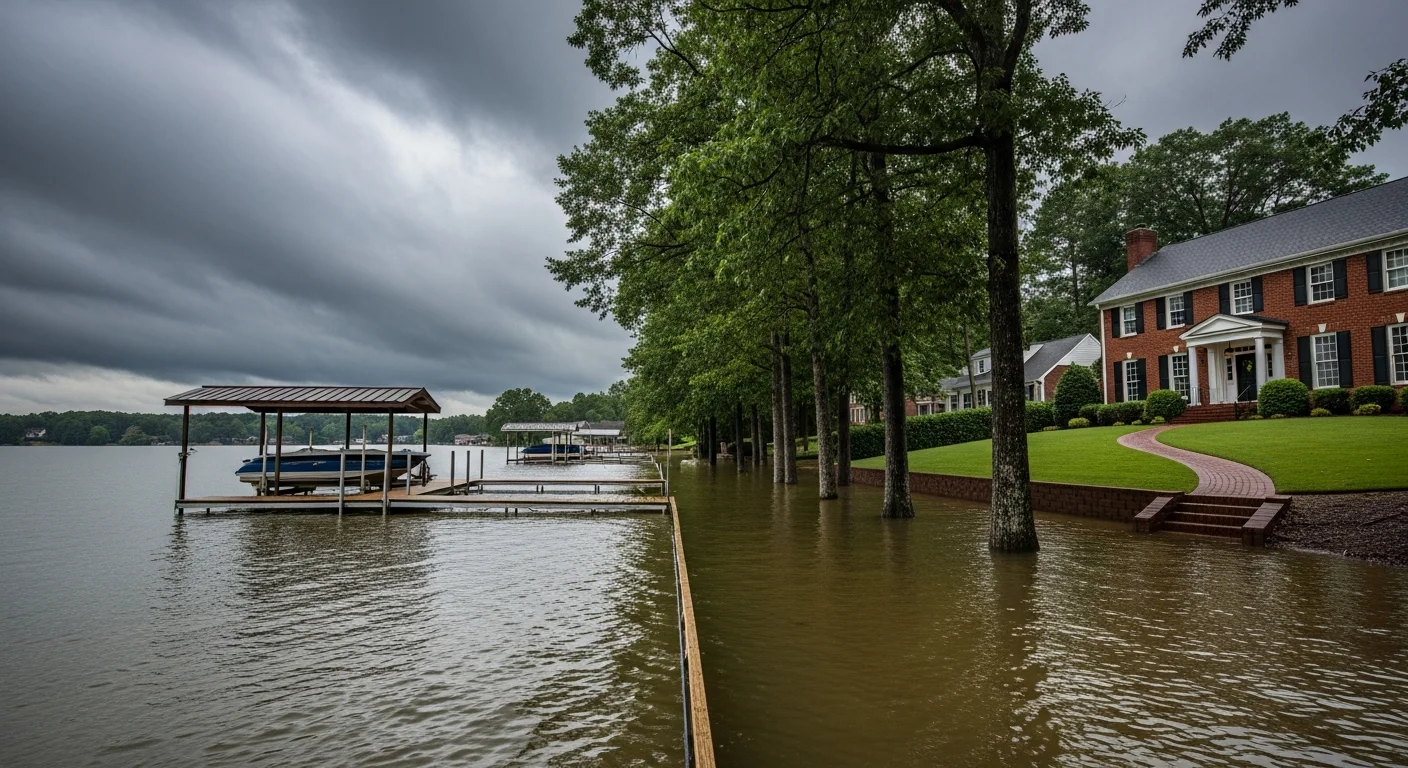
Hurricane Helene dumped 4 inches of rain on Mecklenburg County with sustained gusts of 50 mph. Mountain Island Lake crested at 107.9 feet — nearly 12 feet above target — triggering mandatory evacuations along south Huntersville lakefront neighborhoods. Over 105,000 Duke Energy customers lost power across the county.

35-55 Minute Response From Charlotte Hub

35-55 min

Response to Huntersville

Palm Build dispatches emergency crews from our Crompton Street operations hub in Charlotte via I-77. Our 35-55 minute response time to any Huntersville address means your home is protected with emergency tarping before the next rain — not waiting days for an overbooked contractor after a major storm event.

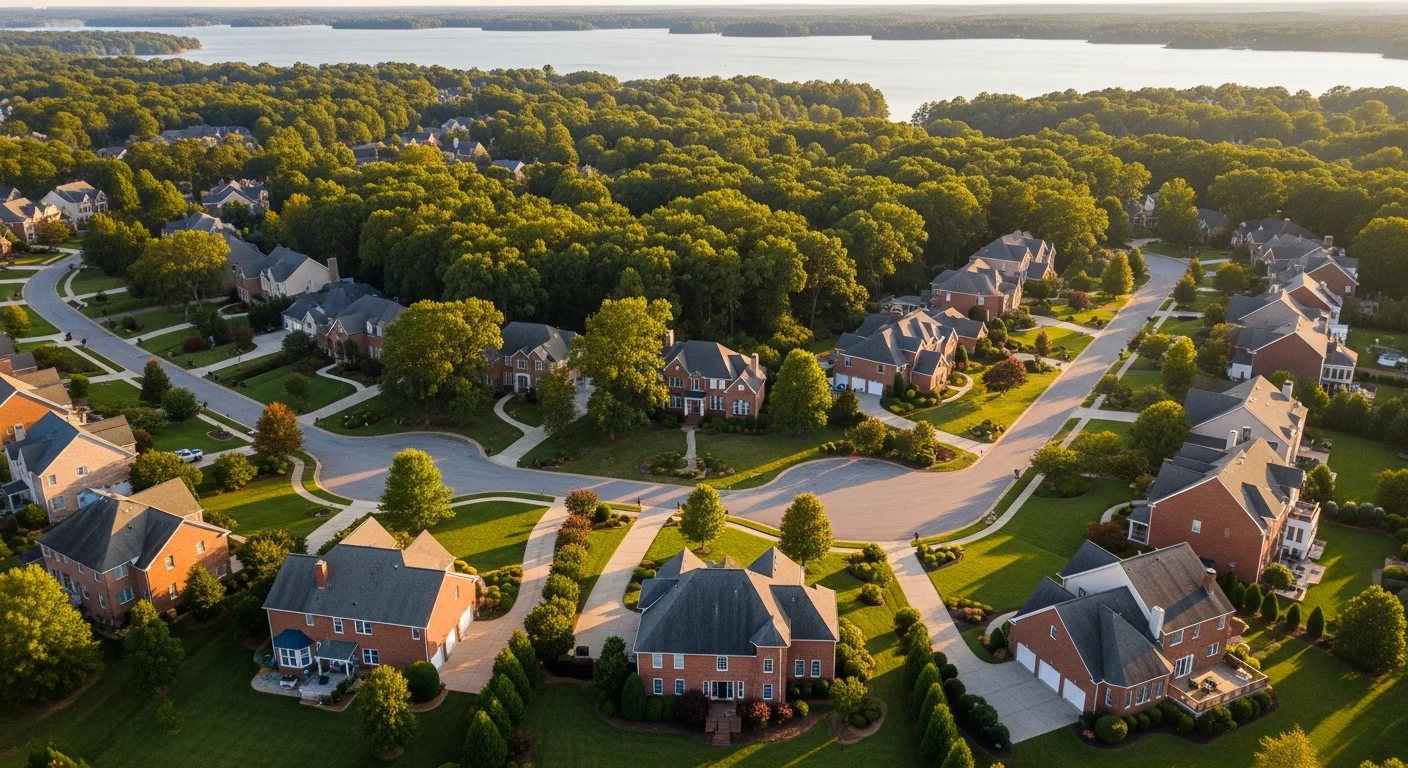
Aerial view of established Huntersville NC neighborhoods with dense mature tree canopy near Lake Norman showing the scale of storm-vulnerable residential areas
Huntersville's dense mature tree canopy — planted when these neighborhoods were built in the 1990s and 2000s — is the single largest source of storm damage to homes across the Lake Norman corridor.

Neighborhood Risk Profiles

Storm Damage Risk by Huntersville Neighborhood

Huntersville's most established and desirable neighborhoods carry the highest storm damage risk — the oldest roofing, the largest trees, and the most saturated clay soil. The same mature canopy that makes these neighborhoods beautiful makes them dangerous during severe weather.

Glenwyck / Stonegate Farms
Tornado track + tree strikes Direct EF-0 path (Aug 2023); aging 25+ yr roofing

Confirmed tornado damage, mature oak failures on clay soil

Critical
Riverside / Lake Drive Corridor
Flood + wind exposure Mountain Island Lake flood zone

Mandatory evacuations during Hurricane Helene (2024)

Critical
Northstone Club
Wind + tree damage Heavy canopy, tight-lot configuration

Clay soil root instability, aging architectural shingles

High
The Hamptons
Tree strikes + aging roof Massive mature oaks, roofing at end of life

Heavy canopy on clay soil, late 1990s-2005 construction

High
Skybrook
Wind + tree damage (older phases) 30+ year canopy in Phase 1; EF-0 passed nearby

Original phases most vulnerable with aging roofing

High
Cedarfield
Tree strikes + flooding Torrence Creek proximity adds flood risk

Mature canopy on large lots, maximum tree-strike exposure

High
Birkdale / Birkdale Village
Concentrated wind damage Townhome shared walls; one breach affects multiple units

Moderate tree canopy but concentrated construction

Moderate
Vermillion / Monteith Park
Wind-driven water infiltration Newer construction, slab-on-grade exposure

Current building codes but less canopy protection

Moderate

August 7, 2023 — Confirmed EF-0 Tornado

The Tornado That Tore Through Glenwyck and Stonegate Farms

On August 7, 2023, the National Weather Service confirmed an EF-0 tornado touched down in west Huntersville along Beatties Ford Road. The tornado tracked through Glenwyck and Stonegate Farms — communities built in the late 1990s and early 2000s with the dense tree canopy that defines Huntersville's residential character. Most residents had no warning until the damage was already done.

EF-0

Confirmed tornado

65-85 mph

Wind speeds

Aug 2023

Beatties Ford Rd

$539K

Median home value

Roofing Torn From Homes

EF-0 winds between 65-85 mph stripped shingles, cracked ridge vents, and lifted flashing around chimneys and skylights. Exposed roof decking allowed immediate water intrusion into attic space — some homes had rain pouring directly into living areas within minutes.

Mature Hardwoods Snapped and Uprooted

The tornado passed through neighborhoods carved from wooded lots in the late 1990s and early 2000s. Oaks and sweetgums — 60-100+ years old with massive canopies — were snapped at the trunk or uprooted from saturated clay soil, crushing roofs, vehicles, fences, and severing utility lines.

Amplified Canopy Damage

Huntersville's dense suburban canopy amplified wind damage far beyond what bare-lot communities experience. Every falling tree became a projectile. Every uprooted root ball tore up driveways, sidewalks, and utility connections. Secondary water damage from rain entering breached roofs exceeded the initial structural damage within hours.

Insurance: What You Need to Know

Tornado damage is classified as wind damage under standard HO-3 homeowners policies. However, wind/hail deductibles in NC are often percentage-based — commonly 1-2% of dwelling coverage. On Huntersville's median $539K home, a 2% wind deductible is nearly $11,000 out of pocket.

The Lesson From August 2023

Huntersville is not in Tornado Alley. But its position in the western Piedmont — where warm Gulf moisture collides with cold fronts from the Appalachians — creates conditions for the occasional tornado the National Weather Service classifies as rare but the insurance claims data says otherwise. The EF-0 event demonstrated that dense suburban canopy amplifies tornado damage exponentially. If your roof, siding, or windows sustained storm damage, call (704) 464-0121 immediately — exposed building envelope leads to water intrusion and mold growth within 24 to 48 hours.

Types of Storm Damage

How Storms Damage Huntersville Homes

Storm damage in Huntersville follows patterns shaped by the town's housing stock, its mature tree canopy, and the specific storm types that hit the western Piedmont. Understanding what you are dealing with determines the urgency, the restoration approach, and how your insurance claim should be filed.

High

Roof Damage From Wind and Fallen Trees

The most common storm damage in Huntersville. Straight-line winds above 60 mph and tornado-force gusts strip shingles, crack ridge vents, lift flashing around chimneys and skylights, and drive rain into exposed decking. When mature oaks drop limbs or uproot entirely, they punch through roofing systems into attic space. Huntersville's 1990s-2000s architectural shingle roofs — many now 25-35 years old — are approaching or past their rated wind resistance.

High

Siding and Exterior Wall Damage

Vinyl siding from the 1990s and early 2000s becomes brittle with UV exposure and age. Wind-driven debris — branches, gutter sections, fence panels — punctures or tears siding panels, creating openings for water infiltration behind the wall assembly. Fiber cement siding in newer Huntersville homes (Vermillion, Monteith Park) performs better but remains vulnerable to direct tree strikes.

Critical

Tree and Limb Strikes

Huntersville's defining storm damage signature. Neighborhoods were carved from wooded lots in the 1990s-2000s, and the remaining hardwoods — primarily oaks, sweetgums, and tulip poplars — are now 60-100+ years old with massive canopies. A single mature oak limb can weigh over 2,000 pounds. When these trees fail in high wind, they destroy roofing, crush gutters, crack foundation walls, sever utility lines, and flatten fences and outbuildings.

Moderate

Window and Door Failure

Wind-driven debris and pressure differentials during severe storms crack or shatter windows, especially in homes with original 1990s-era single-pane or early double-pane units. Once a window fails, the building envelope is breached — wind-driven rain enters wall cavities, ceiling voids, and living space within minutes.

Moderate

Gutter and Soffit Destruction

Ice, wind loading, and falling branches tear gutters from fascia boards, collapse downspout systems, and rip soffit panels free. Without functioning gutters, subsequent rain drives water directly against foundations — accelerating crawl space moisture problems that are already endemic in Huntersville's clay-soil neighborhoods.

Critical

Flood Damage From Mountain Island Lake

Hurricane Helene demonstrated that south Huntersville faces catastrophic flood risk when Duke Energy releases water through Cowan's Ford Dam. Mountain Island Lake crested at 107.9 feet — nearly 12 feet above target — forcing mandatory evacuations. This is storm damage compounded by flood damage, which requires separate insurance coverage and specialized Category 2-3 water remediation protocols.

Wind damage to vinyl siding on a Huntersville NC home after severe thunderstorm showing torn and buckled panels with exposed house wrap
Wind-driven debris tears aging vinyl siding from Huntersville homes — every breach in the building envelope allows water infiltration behind the wall assembly.
Storm Restoration Process

How We Restore Huntersville Homes After Storm Damage

Every Huntersville storm damage project follows our proven restoration protocol — adapted to the specific vulnerabilities of Lake Norman corridor construction, HOA architectural requirements, and local insurance documentation standards.

01

Emergency Tarping & Board-Up

Hours 1-4

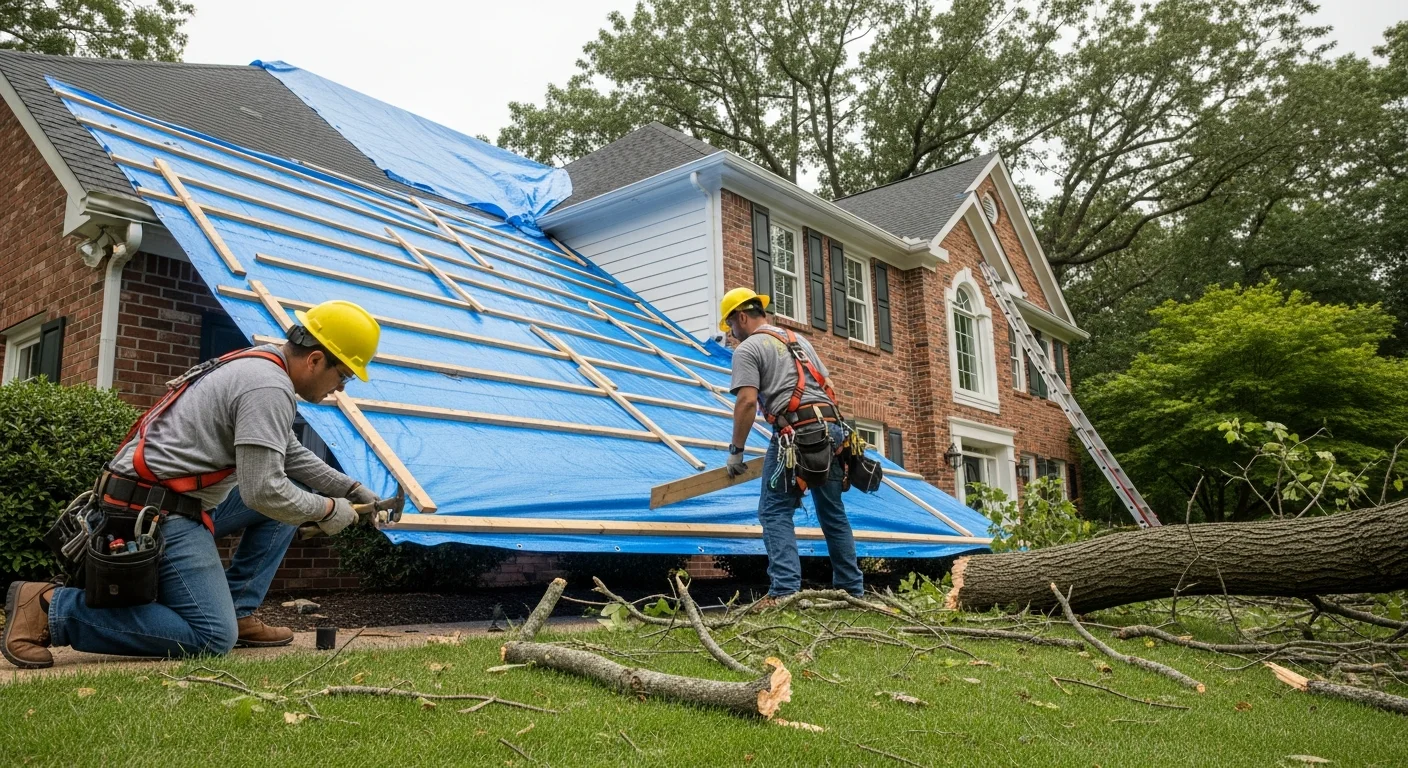
Heavy-duty polyethylene tarps are mechanically fastened to sound roof decking using furring strips and screws — not weighted with sandbags. Shattered windows and breached walls are secured with structural-grade plywood. This stops the damage cascade and satisfies your insurance policy's duty to mitigate further loss. During major storm events, we triage by severity: active water intrusion and structural instability take priority.

02

Damage Assessment & Documentation

Days 1-3

Comprehensive documentation of all storm damage — thermal imaging for hidden moisture migration, detailed room-by-room cataloging, and cause-specific classification (wind vs. flood, covered vs. excluded). Our Xactimate-formatted scope of work is written in the same software your insurance adjuster uses, eliminating translation friction during the claims process.

03

Water Extraction & Structural Drying

Days 1-7

Truck-mounted extraction removes standing water at 25+ gallons per minute. For Huntersville homes where storm water has migrated through roof breaches into attic insulation, wall cavities, and crawl spaces, we deploy targeted extraction and commercial dehumidification systems monitored with daily moisture readings until all materials reach dry standard.

04

Structural Repair & Roofing

Weeks 2-4

Roof replacement or repair, framing reconstruction, window and door replacement, siding repair, soffit and gutter reinstallation. For tree-strike damage, this phase includes structural engineering assessment if trusses, rafters, or load-bearing walls were compromised. Huntersville's HOA communities require architectural review — we handle documentation and coordinate approval timelines.

05

Interior Restoration

Weeks 4-8

Drywall replacement, insulation, painting, flooring repair, trim work, and all interior finishes affected by water intrusion through the storm-breached envelope. Final moisture verification confirms all materials are at or below dry standard before any finish materials are installed.

06

Final Inspection & Claim Closeout

Week 8+

Mecklenburg County building inspections verify all structural, electrical, mechanical, and plumbing work meets current code. We conduct a final walkthrough with you, address punch-list items, and coordinate directly with your insurance adjuster for claim closeout — every restoration item documented against the original scope of work.

Huntersville Pricing

Storm Damage Restoration Costs in Huntersville

Storm damage costs vary enormously depending on severity. A few missing shingles is a different conversation than a mature oak through your roof truss system. These ranges reflect real-world project costs in the Huntersville and Lake Norman market.

Standard Storm Damage

$8,500 - $34,500

  • Emergency tarping and board-up: $500 - $2,500
  • Roof repair (partial shingle replacement): $2,000 - $8,000
  • Siding repair and replacement: $1,500 - $6,000
  • Window replacement (per unit): $500 - $2,000
  • Gutter and soffit repair: $1,000 - $4,000
  • Interior water damage from roof breach: $3,000 - $12,000
Major Tree Strike

$33,500 - $127,000+

  • Emergency tree removal from structure: $3,000 - $15,000
  • Full roof replacement (Huntersville avg.): $12,000 - $35,000
  • Structural framing repair (trusses/rafters): $5,000 - $25,000
  • Attic and insulation replacement: $3,000 - $10,000
  • Full interior restoration: $10,000 - $40,000
  • Structural engineering assessment: $500 - $2,000
Compound (Wind + Flood)

$50,000 - $200,000+

  • Wind damage to roof and structure
  • Flood damage from Mountain Island Lake
  • Dual insurance claims (homeowners + flood)
  • Complete interior gut and rebuild
  • Foundation and crawl space restoration
  • Extended timeline: 12-24+ weeks

Seasonal Risk

Huntersville Seasonal Storm Damage Calendar

Huntersville's storm exposure is not seasonal — it is year-round. Severe thunderstorms peak May through September, but the January 2024 event that produced 85 mph winds proves that catastrophic wind damage can arrive in any month.

Jan - Mar

Winter Storms & Straight-Line Winds

January 2024 brought an 85 mph severe thunderstorm line — stronger than a Category 1 hurricane — that hammered the Lake Norman corridor. Ice storms load mature hardwood limbs beyond structural limits. Huntersville's mature oaks and sweetgums in Northstone, The Hamptons, and Cedarfield see the worst winter tree-on-structure damage.

Apr - May

Peak Severe Weather — Tornadoes & Hail

The most dangerous window for Huntersville. Gulf moisture collides with Piedmont cold fronts, producing supercell thunderstorms with large hail, 60+ mph straight-line winds, and tornadoes. Hail events peak in frequency during this two-month window, degrading Huntersville's aging 1990s-era architectural shingle roofs.

Jun - Aug

Afternoon Thunderstorms & Tornadoes

Daily convective thunderstorms produce localized but intense wind and hail events. The August 7, 2023 EF-0 tornado that struck Glenwyck and Stonegate Farms hit during this exact pattern. Microbursts — concentrated downdrafts at 60-80 mph — are a particular risk for Huntersville's tree-heavy neighborhoods.

Sep - Oct

Hurricane Remnants & Tropical Flooding

Peak window for tropical storm remnants tracking through the Piedmont. Hurricane Helene struck in September 2024 — 50 mph gusts, 4 inches of rain, Mountain Island Lake crested 12 feet above target, mandatory evacuations in south Huntersville, 105,000+ lost power across Mecklenburg County.

Nov - Dec

Late-Season Severe Thunderstorms

The secondary severe weather window. Huntersville remains vulnerable to strong thunderstorms well into December. Saturated fall soil conditions make mature trees more susceptible to wind-throw even during moderate storms. Three separate 60+ mph events hit the Lake Norman corridor in this window in 2023.

Year-Round

Mature Tree Canopy — Constant Hazard

Huntersville's defining storm damage factor operates year-round. The town's 60-100+ year old oaks, sweetgums, and tulip poplars have massive canopies. A single mature oak limb weighs over 2,000 pounds. Every wind event above 40 mph puts these trees in play — and Huntersville's clay soil promotes the shallow root systems that fail first.

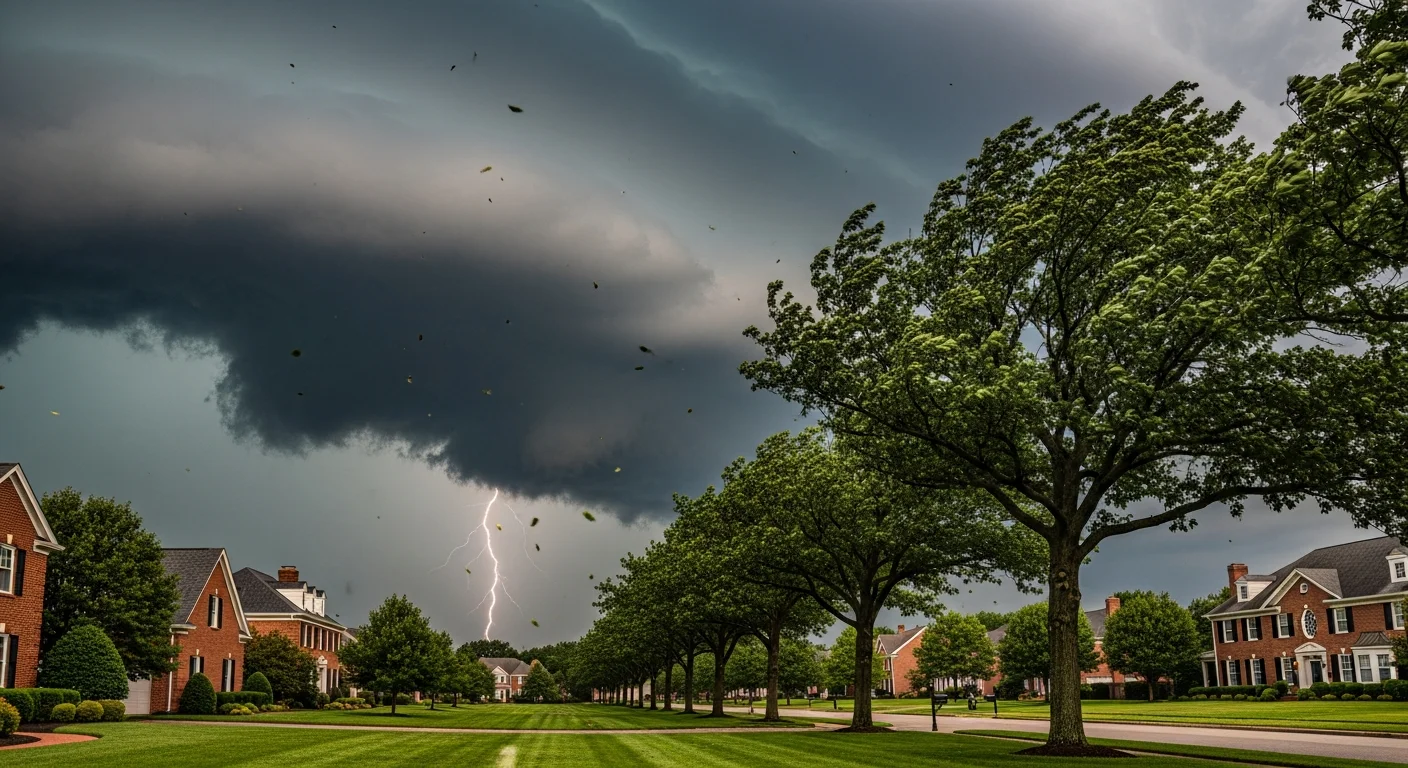
Severe thunderstorm approaching Huntersville NC with dark clouds over residential neighborhoods and Lake Norman corridor
Severe storms approach Huntersville from the west — the Piedmont convergence zone creates year-round severe weather risk that peaks in spring and late summer.

Insurance Guide

Storm Damage Insurance Claims in Huntersville

Storm damage insurance claims in Huntersville are more complex than most homeowners expect. Wind and hail damage is covered under standard HO-3 policies, but your deductible structure, coverage limits, and exclusions determine how much of your restoration is actually paid by insurance.

Wind and hail damage to roofing, siding, windows, and structural elements is covered under standard HO-3 homeowners policies

Tree removal from the structure is typically covered; tree removal from the yard is often limited to $500-$1,000 per tree

Additional living expenses (ALE) are covered if storm damage renders the home uninhabitable — hotel, meals, rental housing

Emergency tarping and board-up costs are covered as mitigation expenses — your policy requires you to prevent further damage

Flood damage from Mountain Island Lake and Torrence Creek overflow requires separate NFIP or private flood insurance — NOT covered under standard homeowners policies

Wind/hail deductibles in NC are often percentage-based (1-2% of dwelling coverage) — on a $539K home, that can exceed $10,000 out of pocket

Cosmetic damage exclusions on some NC policies mean the insurer only pays for functional impairment, not matching — new shingles may not match the rest of the roof

Pre-existing wear exclusions allow insurers to depreciate or deny claims if roofing was already past expected lifespan — critical for Huntersville's 25-35 year old roofs

Wind Damage vs. Flood Damage: The Helene Problem

Hurricane Helene produced compound damage in south Huntersville: wind damage to roofing and trees combined with catastrophic flood damage from Mountain Island Lake. Wind damage is covered by homeowners insurance, but flood damage requires separate coverage. Many flooded properties carry FEMA Zone X designations — meaning no flood insurance was required by their lender. Palm Build documents every damage element by cause so wind claims and flood claims are each filed correctly with the appropriate carrier.

We Work With Your Adjuster

Palm Build provides detailed, timestamped documentation — thermal imaging, moisture data, cause-specific damage classification, and Xactimate-formatted scope of work — the exact information adjusters from State Farm, NC Farm Bureau, Erie Insurance, Allstate, and Nationwide need to process your Huntersville storm claim.

Storm Damage in Huntersville

What Storm Damage Looks Like Across the Lake Norman Corridor

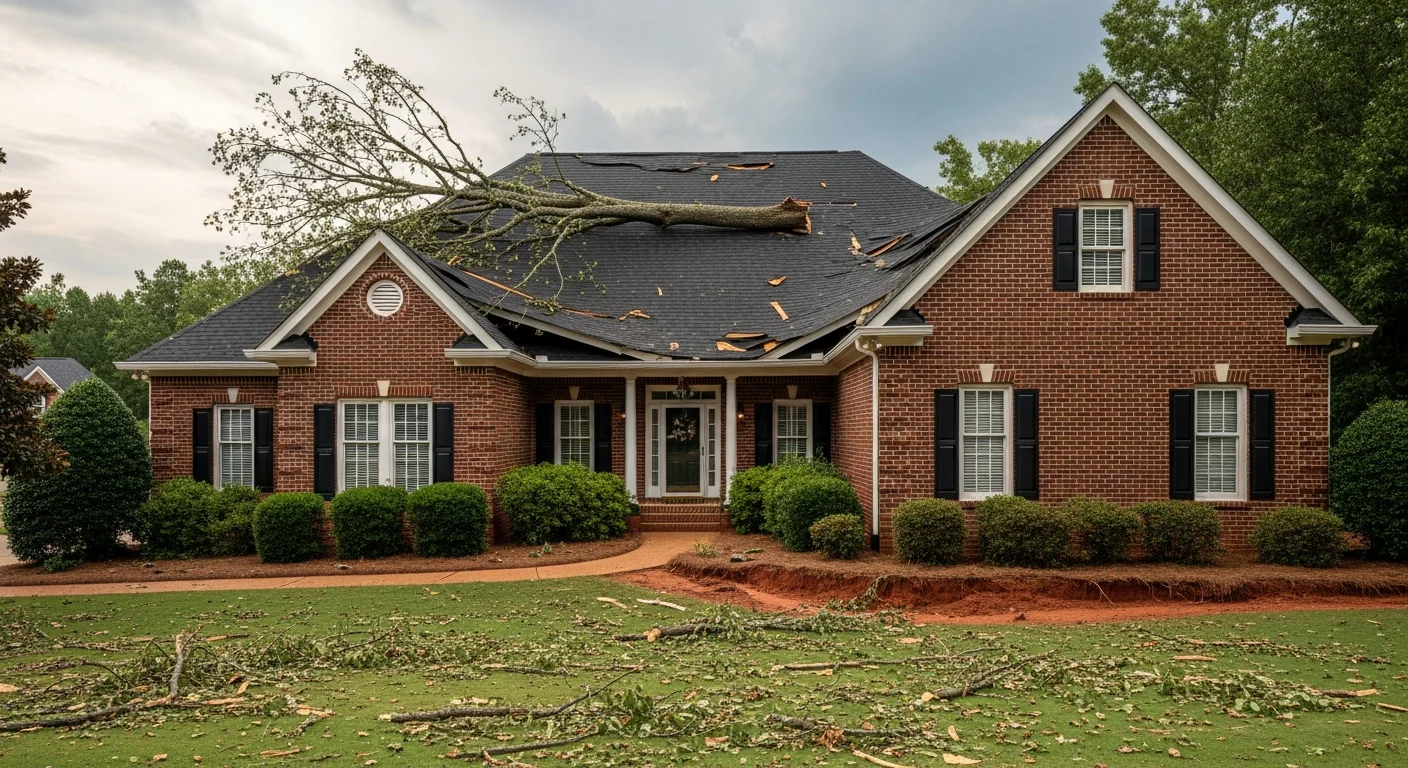
Mature oak tree crashed onto residential roof in Huntersville NC after severe thunderstorm showing shingle and structural damage
Mature oak strike in a Huntersville neighborhood — the tree punched through roof decking into the attic space
Emergency roof tarping being performed on a storm-damaged home in Huntersville NC with heavy-duty polyethylene tarp secured to roof decking
Emergency tarping within hours of the storm — mechanically fastened to sound decking, not loose-laid
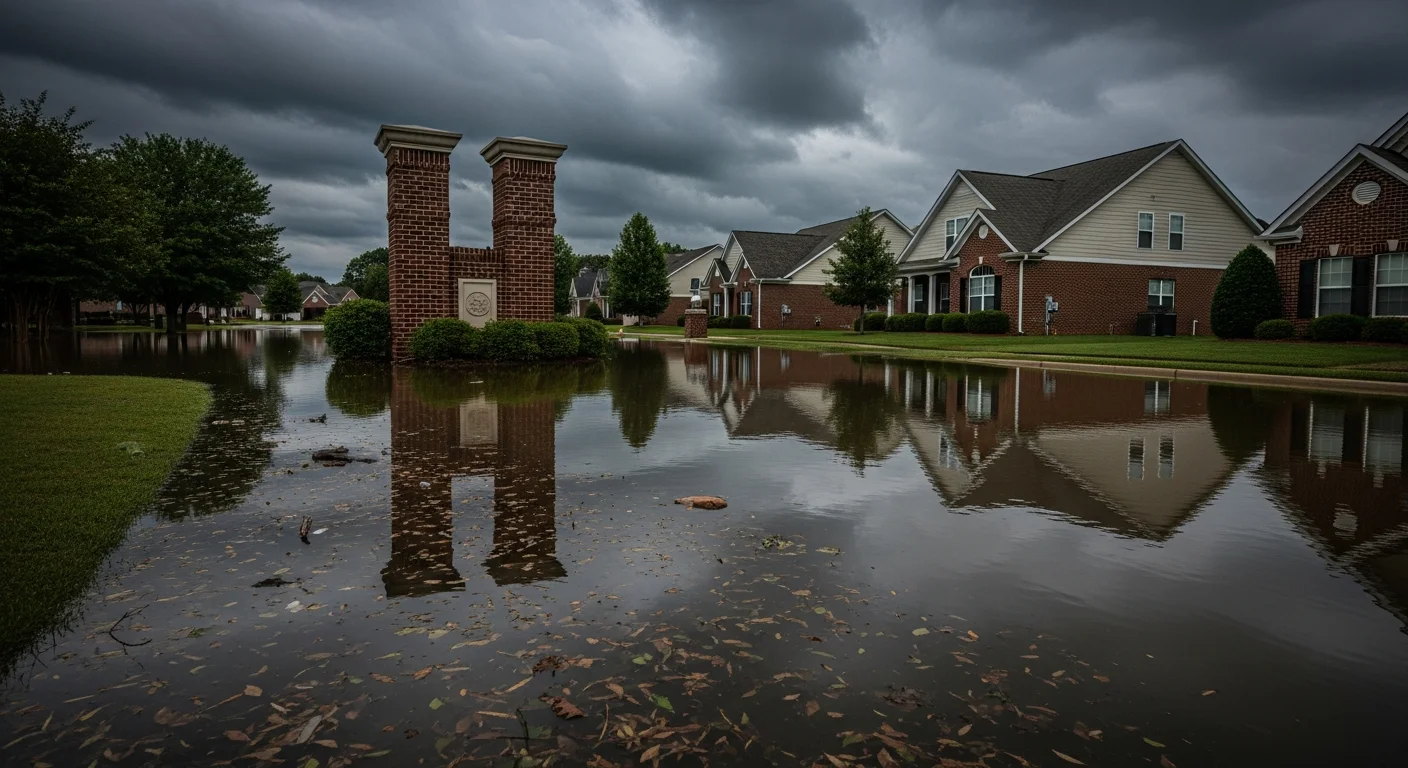
Flash flooding on a residential street in a Huntersville NC HOA neighborhood after severe thunderstorm with standing water across roadway
Flash flooding in a Huntersville HOA neighborhood — pre-2007 storm infrastructure often cannot handle peak rainfall
Mountain Island Lake floodwater reaching homes along the south Huntersville NC lakefront during Hurricane Helene September 2024
Mountain Island Lake flooding during Hurricane Helene — water crested nearly 12 feet above target level

The Palm Build Difference

Why Huntersville Homeowners Choose Palm Build After Storms

After a major storm, door-knockers and out-of-state roofing crews descend on the Lake Norman corridor within 48 hours. Palm Build is the opposite — a Charlotte-based restoration company with a permanent operations hub, licensed crews, and a reputation we are building project by project.

35-55 Minute Emergency Response

Our Charlotte hub dispatches emergency crews to Huntersville within 35-55 minutes via I-77 — 24/7/365. During major events, we activate catastrophe response with additional crews. Your home is protected before the next rain, not waiting days for an overbooked contractor.

NC Licensed General Contractor

NC general contractor licensing for restoration and reconstruction projects exceeding $30,000 — no subcontractor delays or coordination gaps between mitigation and rebuild phases. Emergency tarping through final paint, all under one roof.

IICRC WRT & FSRT Certified

Every crew lead holds current IICRC Water Restoration Technician and Fire/Smoke Restoration Technician certifications. Storm damage crosses both specialties — wind, water, and sometimes fire from lightning strikes.

Huntersville-Specific Knowledge

We know which neighborhoods have 30-year-old roofing approaching failure. We know which streets flood when Mountain Island Lake rises. We know the mature oaks in Northstone, The Hamptons, and Cedarfield are beautiful — and dangerous during every wind event.

Xactimate-Native Insurance Coordination

Direct work with State Farm, NC Farm Bureau, Erie Insurance, Allstate, Nationwide, and all major NC carriers. Our scopes are written in Xactimate — the same software your adjuster uses — eliminating translation friction during claims.

HOA Coordination Experience

Exterior storm damage repairs in Huntersville's HOA communities require architectural review committee approval. We handle documentation, material specifications, and color-match requirements so your reconstruction meets community standards on schedule.
Common Questions

Huntersville Storm Damage FAQ

How fast can Palm Build respond to storm damage in Huntersville?
Our Charlotte-based team typically arrives in Huntersville within 35 to 55 minutes via I-77 from our Crompton Street operations hub. We dispatch 24/7/365 — call (704) 464-0121 any time.
Does homeowners insurance cover storm damage in Huntersville?
Standard HO-3 policies cover wind damage including tree strikes, roof damage, and siding damage. Wind/hail deductibles in NC are often percentage-based (1-2% of dwelling coverage). Flood damage from Mountain Island Lake requires separate flood insurance.
How long does storm damage restoration take in Huntersville?
Emergency tarping happens within hours. Full restoration typically takes 4 to 8 weeks for moderate damage and 8 to 16 weeks for catastrophic tree-strike or structural damage.
Should I get an emergency tarp before my insurance adjuster visits?
Yes. Your policy requires you to mitigate further damage. If you wait and rain causes additional water damage, the insurer can deny coverage for the secondary damage. Emergency tarping costs are typically covered as part of your claim.
Is tornado damage covered by insurance in North Carolina?
Yes. Tornado damage is classified as wind damage and is covered under standard HO-3 policies, including structural repair, tree removal from the structure, and additional living expenses if the home is uninhabitable.
A tree fell on my house — what do I do first?
Ensure everyone is safe and evacuate if the structure is unstable. Call 911 for immediate hazards. Then call (704) 464-0121 for emergency tarping and stabilization. Do not attempt to remove the tree yourself.
Do I need flood insurance in Huntersville?
If you are near Mountain Island Lake, Torrence Creek, or the Catawba River, yes. Hurricane Helene proved that FEMA Zone X properties can flood catastrophically. Standard homeowners insurance does not cover flood damage.
How do I avoid storm-chaser contractors?
Verify NC general contractor licensure, demand proof of insurance, never sign an Assignment of Benefits form, get all agreements in writing, and never pay more than a reasonable deposit before work begins.

Storm Damage in Huntersville? We're on Our Way.

Palm Build responds to Huntersville storm damage emergencies in 35-55 minutes with emergency tarping, structural stabilization, water extraction, and insurance-ready documentation. Call our local line now — we answer 24/7.

35-55 min Response IICRC Certified