Fire & Smoke Damage Cleanup in Cornelius, North Carolina
From kitchen fires in Peninsula subdivision homes to electrical failures in aging 2000s-era panels, Palm Build's IICRC-certified team handles structural fire damage, soot removal, smoke odor elimination, and full reconstruction — with insurance coordination from the first call and 30-45 minute response from Charlotte.
25 minutes from Charlotte office 30-45 min Response IICRC Certified
Cornelius's Lake Norman corridor housing — built predominantly between 1998 and 2015 —
creates distinct fire risk profiles shaped by open floor plans, aging subdivision-era
electrical systems, dense townhome communities, and high-end kitchen finishes.
Understanding your neighborhood's specific risks helps you prepare and ensures your
restoration company responds with the right approach from the first call.
Open Floor Plan Smoke Spread
59%
Single-family homes
Cornelius's post-2000 subdivision homes — The Peninsula, Jetton Cove, Westmoreland — feature the open-concept layouts that buyers love and smoke exploits. When a fire starts in the kitchen of a modern Cornelius home, there are no walls to contain the smoke. Within minutes, soot and combustion byproducts travel through the entire living space, coating every surface from the great room to the master suite. These open designs mean a contained kitchen fire can produce whole-home smoke damage that costs five to ten times more to remediate than the fire damage itself.
Subdivision-Era Electrical Aging
20-25 yrs
Wiring age
The majority of Cornelius housing was built between 1998 and 2010, which means the electrical systems in neighborhoods like Westmoreland, Smithville, and Bailey's Glen are now 15-25 years old. Original arc-fault breakers from that era have known failure rates, aluminum-to-copper connections in service panels corrode over time, and outdoor GFCI outlets exposed to Lake Norman humidity degrade faster than inland installations. Electrical fires in these homes typically start behind walls, smoldering for hours before detection — producing extensive smoke damage before flames become visible.
Attached Garage & Townhome Fire Risk
39%
Shared-wall housing
Nearly 40% of Cornelius housing consists of townhomes, condos, and attached-unit communities — Antiquity, Crown Harbor, Robbins Park. Attached garage fires in these developments are particularly dangerous because fire and smoke can travel through shared walls, attic spaces, and common HVAC plenums into adjacent units. A single garage fire in a Cornelius townhome community can produce smoke damage in three to five units simultaneously, creating complex multi-party insurance claims involving both individual homeowners policies and the HOA master policy.
Kitchen & Cooking Fires
#1
Fire cause nationwide
Cornelius's high-end kitchens — gas ranges, large vent hoods, open shelving — are beautiful but fire-prone. Cooking fires remain the leading cause of residential fires nationwide, and Cornelius homes with premium kitchen finishes face higher restoration costs when they occur. Protein soot from cooking fires produces an almost invisible, chemically bonding residue that standard cleaning cannot remove. In an open-concept Cornelius home, kitchen fire smoke travels through the entire living area within minutes, contaminating surfaces in rooms far from the fire origin.
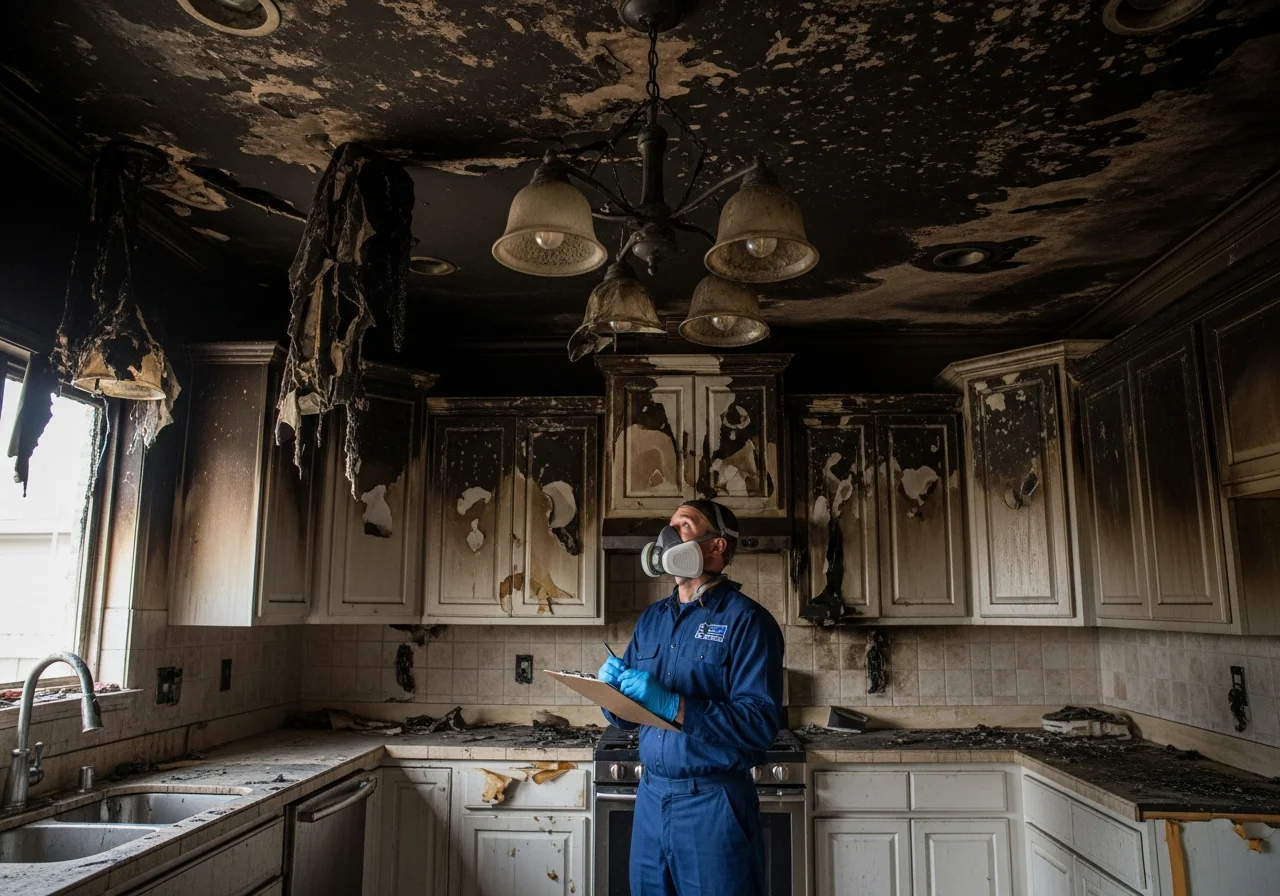
Kitchen fire assessment in a Cornelius subdivision home — open floor plans mean smoke
damage extends far beyond the fire origin into every connected living space.
Understanding the Damage
Types of Smoke & Fire Damage in Cornelius Homes
Not all fire damage is the same. The type of materials that burned determines the soot
composition, cleaning chemistry, and restoration timeline required. Using the wrong
approach doesn't just fail to clean — it can permanently set stains and drive odors
deeper into materials. Here are the six damage types we encounter in Cornelius
restoration projects.
Wet Smoke Residue
Produced by slow, smoldering fires with low heat — common in Cornelius homes when upholstered furniture, synthetic carpeting, or rubber materials burn incompletely. Wet smoke creates thick, sticky, black residue with an intensely pungent odor. It smears easily when touched and is extremely difficult to clean because it bonds aggressively to surfaces. In Cornelius homes with textured ceilings and porous surfaces, wet smoke requires multiple cleaning passes with solvent-based agents.
Dry Smoke Residue
Produced by fast, high-temperature fires — typically when natural materials like wood framing, paper, and cotton burn quickly with good airflow. Dry smoke creates powdery, fine, gray-black soot that is lighter and easier to clean than wet smoke but spreads further through HVAC systems. In Cornelius homes with forced-air heating and cooling, dry soot distributes throughout the entire ductwork system within hours, coating surfaces in every room.
Protein Residue
The most deceptive smoke damage type and extremely common in Cornelius's kitchen-fire calls. Protein fires from cooking produce an almost invisible, yellowish film with an overwhelming odor that penetrates every surface. The residue is nearly invisible on light-colored walls and ceilings but discolors dramatically over time. Standard cleaning products spread the residue and set the stain permanently — protein soot requires enzymatic cleaners and thermal fogging for complete removal.
Fuel & Oil Smoke
Caused by furnace puffbacks, fuel oil ignition failures, or HVAC malfunctions. When a furnace misfires, it expels a burst of oily soot through the duct system, coating every room connected to the HVAC. In Cornelius homes with crawl-space furnace installations — common in the older Smithville and Westmoreland neighborhoods — puffback soot travels through floor registers and deposits a fine, oily film on all horizontal surfaces throughout the home.
Tear Gas & Chemical Residue
Fire suppression systems, dry chemical extinguishers, and fire retardant chemicals leave corrosive residues that must be professionally removed. In Cornelius townhome and condo communities like Antiquity and Crown Harbor, automatic sprinkler systems and fire suppression chemicals can cause as much interior damage as the fire itself — water damage combined with chemical residue on every surface the system reached.
Soot in HVAC Systems
Cornelius's reliance on central HVAC means soot from any fire type enters the duct system and recirculates throughout the home. Even a small kitchen fire can distribute microscopic soot particles into every room through supply and return vents. Professional fire restoration in Cornelius always includes HVAC duct cleaning and filter replacement — skipping this step means soot continues to redeposit on cleaned surfaces for months after the fire.
Our Fire Restoration Process
How We Restore Cornelius Homes After Fire Damage
Fire restoration is more complex than water or mold because it involves multiple damage
types simultaneously — structural fire damage, soot contamination, smoke odor, and water
from fire suppression. Our process addresses all four in a coordinated sequence.
01
Emergency Board-Up & Securing
0-4 hours
We secure your Cornelius home against weather, theft, and further damage within hours of your call. This includes boarding windows, tarping damaged roof sections, and securing doors. With Lake Norman's afternoon thunderstorms common from May through September, an unsecured fire-damaged home can sustain thousands in additional water damage from a single storm. Our Charlotte-based crews reach Cornelius in approximately 30 minutes via I-77.
02
Damage Assessment & Documentation
Day 1
Our IICRC-certified team performs a comprehensive walk-through documenting every affected area with photos, video, thermal imaging, and moisture readings. We classify the fire type (protein, wet, dry, synthetic), assess structural integrity, and create a detailed scope of work. This documentation is formatted exactly how insurance adjusters expect to see it — reducing back-and-forth and accelerating claim approval for Cornelius homeowners.
03
Water Extraction from Firefighting
Day 1-2
Fire suppression water is addressed simultaneously with soot stabilization. We extract standing water, set up commercial dehumidifiers and air movers, and monitor drying daily. In Cornelius's humid Lake Norman climate, secondary mold growth can begin within 24-48 hours in crawl spaces and wall cavities already weakened by fire damage — making rapid water extraction critical to preventing a second restoration problem.
04
Smoke & Soot Removal
Day 2-7
Professional soot removal uses chemistry matched to the specific soot type identified during assessment. HEPA vacuuming removes loose particulate, chemical sponges lift embedded residue, and wet cleaning with specialized detergents addresses remaining contamination. In Cornelius's open-concept homes, every surface in connected living spaces is treated — walls, ceilings, trim, cabinetry, fixtures, and structural members throughout the entire open area.
05
Odor Elimination
Day 5-14
Smoke odor elimination treats the source — not just masks the smell. We use thermal fogging with heated deodorizing agents that penetrate the same way smoke did, ozone treatment for sealed spaces, and hydroxyl generation for occupied areas. Cornelius homes with high-end finishes — hardwood floors, granite countertops, custom cabinetry — require careful chemical selection to eliminate odors without damaging premium materials.
06
Structural Reconstruction
2-8 weeks
Once cleaning and odor treatment are verified complete, we handle full reconstruction: drywall, flooring, cabinetry, painting, electrical, plumbing, and finish work. For Cornelius homes in HOA-governed communities, all exterior restoration work meets community architectural standards and covenant requirements. We coordinate directly with HOA architectural review committees to ensure compliance.
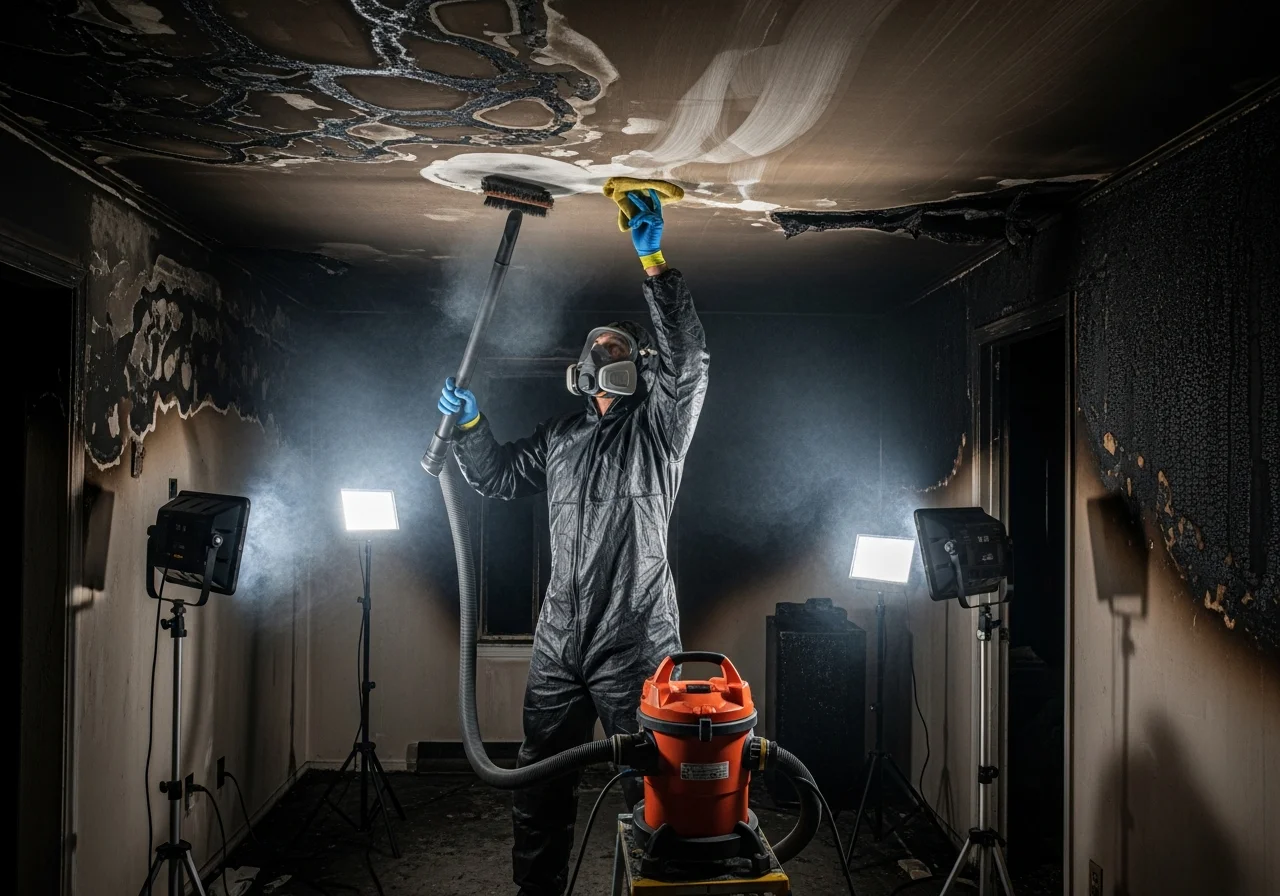
IICRC-certified technicians performing soot removal in a Cornelius home — chemistry is
matched to the specific soot type for effective, damage-free cleaning.
Neighborhood Intelligence
Cornelius Neighborhood Fire Risk Profiles
Fire risk in Cornelius follows predictable patterns based on neighborhood age,
construction type, electrical system generation, and housing density. Here's what we see
in the communities where we respond most frequently.
The Peninsula
High Risk
Built: 2000s-2015
Large lakefront homes with complex HVAC creating extensive smoke distribution
High-end kitchen finishes increasing restoration costs after cooking fires
Multi-level open layouts allowing rapid smoke penetration through entire home
Jetton Cove
Moderate
Built: Late 1990s-2008
Traditional Georgian-style homes with enclosed rooms containing fire better
Aging electrical panels approaching 20-25 year service window
Crawl space furnace installations with puffback risk
Antiquity
High Risk
Built: 2000s-2010
Attached townhome units with fire spread through shared walls and attics
Multi-party insurance claims involving HOA master policy
Common HVAC plenums distributing smoke to adjacent units
Westmoreland
High Risk
Built: Late 1990s-2005
Oldest electrical systems in Cornelius subdivisions nearing failure
Original arc-fault breakers with known reliability issues
Aging HVAC systems with higher furnace puffback probability
Smithville
High Risk
Built: 1970s-1990s
Oldest housing stock in Cornelius with legacy electrical wiring
Outdated circuit breaker panels not designed for modern load demands
Space heater reliance in inadequately insulated older construction
Bailey's Glen
Moderate
Built: 2005-2015
Active adult community with cooking fire risk from unattended kitchens
Single-level homes with rapid smoke spread through open layouts
Dense multi-unit layout with fire spread risk between neighboring homes
Limited emergency vehicle access in tight community streets
Shared-wall construction requiring multi-unit smoke damage assessment
Robbins Park
Moderate
Built: 2000s-2010
HOA restrictions on exterior restoration materials and timelines
Newer construction but approaching 20-year electrical service window
Attached garage fire risk with direct interior access doors
Cornelius Pricing
Fire Damage Restoration Costs in Cornelius
Fire restoration costs vary dramatically based on fire severity, affected area, and
construction type. Cornelius's high-end finishes and HOA architectural requirements can
increase reconstruction costs compared to standard construction. The good news: fire is
one of the most comprehensively covered perils under NC homeowners insurance.
Minor / Kitchen Fire
Smoke and soot cleanup, odor elimination, minor repairs
$3,000 - $15,000
Contained cooking fires with limited structural damage. Protein soot cleanup throughout open living areas, thermal fogging for odor elimination, repainting affected rooms, and replacing damaged fixtures. Common in Cornelius kitchens with gas ranges and high-end finishes that require careful cleaning chemistry.
Moderate Residential Fire
Structural damage, multi-room restoration, full odor treatment
$15,000 - $50,000
Fires affecting one or more rooms with structural damage — wall, ceiling, or floor replacement, full soot remediation, HVAC duct cleaning, comprehensive odor elimination, and moderate reconstruction. Typical for electrical fires in Cornelius subdivision homes where smoldering behind walls produces extensive smoke damage before detection.
Major Structural Fire
Multi-room damage, roof involvement, full reconstruction
$50,000 - $200,000+
Significant structural fire requiring extensive reconstruction — roof repair, multiple room gut-and-rebuild, complete HVAC replacement, full electrical rewiring, and premium finish restoration. In Cornelius HOA communities, exterior reconstruction must match community architectural standards. Townhome fires affecting multiple units can multiply these costs across units.
Insurance Coverage
Fire Insurance Claims in Cornelius: What's Covered
Fire is one of the most comprehensively covered perils under North Carolina homeowners
insurance policies. Unlike water or mold damage, fire claims rarely face coverage
disputes — your policy is designed for exactly this situation. However, smoke-only
claims (without visible fire damage) can sometimes be disputed by carriers, making
thorough documentation of the fire origin critical for full claim approval.
Structural repair and reconstruction to pre-loss condition
Professional soot and smoke cleaning of all affected surfaces
Water damage from fire suppression (extraction and drying)
Contents restoration or replacement (furniture, electronics, clothing)
Additional Living Expenses (ALE) for temporary housing during restoration
Debris removal and hazardous material disposal
Building code upgrades required during reconstruction (with ordinance-and-law endorsement)
Cornelius HOA & Townhome Fire Claims
Fire damage in Cornelius townhome and condo communities like Antiquity, Crown
Harbor, and Robbins Park often involves both the individual homeowner's HO-6 policy
and the HOA's master insurance policy. Determining which policy covers structural
elements versus interior finishes requires careful review of the community's
declarations and the master policy. Palm Build coordinates with both carriers to
ensure complete coverage.
Palm Build Manages Your Fire Claim
We work directly with your insurance adjuster from the first inspection. Our fire damage
documentation — soot type classification, structural assessments, moisture readings,
photo evidence, and detailed Xactimate scopes of work — is formatted exactly how
carriers expect to receive it. This reduces back-and-forth and gets your claim approved
faster.
Why Cornelius Homeowners Choose Palm Build After a Fire
30-Minute Cornelius Response
Our Charlotte-based operations hub dispatches emergency crews to Cornelius via I-77 in approximately 30 minutes. Board-up, tarping, and soot stabilization begin the same night — not the next business day. During major events, we activate additional crews from our multi-state operations network.
IICRC Fire & Smoke Certified
Every crew lead holds current IICRC Fire and Smoke Restoration Technician (FSRT) certification. We follow the S540 standard for professional fire and smoke damage restoration procedures — including soot classification, cleaning chemistry selection, and odor elimination protocols specific to each fire type.
Multi-Damage Expertise
Fire projects always involve water damage from suppression and often involve mold risk in Cornelius's humid Lake Norman climate. Our technicians are cross-trained in fire, water, and mold restoration — one team manages the entire scope without handoffs between separate contractors.
Insurance Documentation Specialists
Fire claims involve the most comprehensive insurance documentation of any restoration type. Our soot classification reports, structural assessments, and Xactimate scope-of-work documentation are formatted exactly how NC carriers expect to see them — reducing back-and-forth and accelerating claim approval.
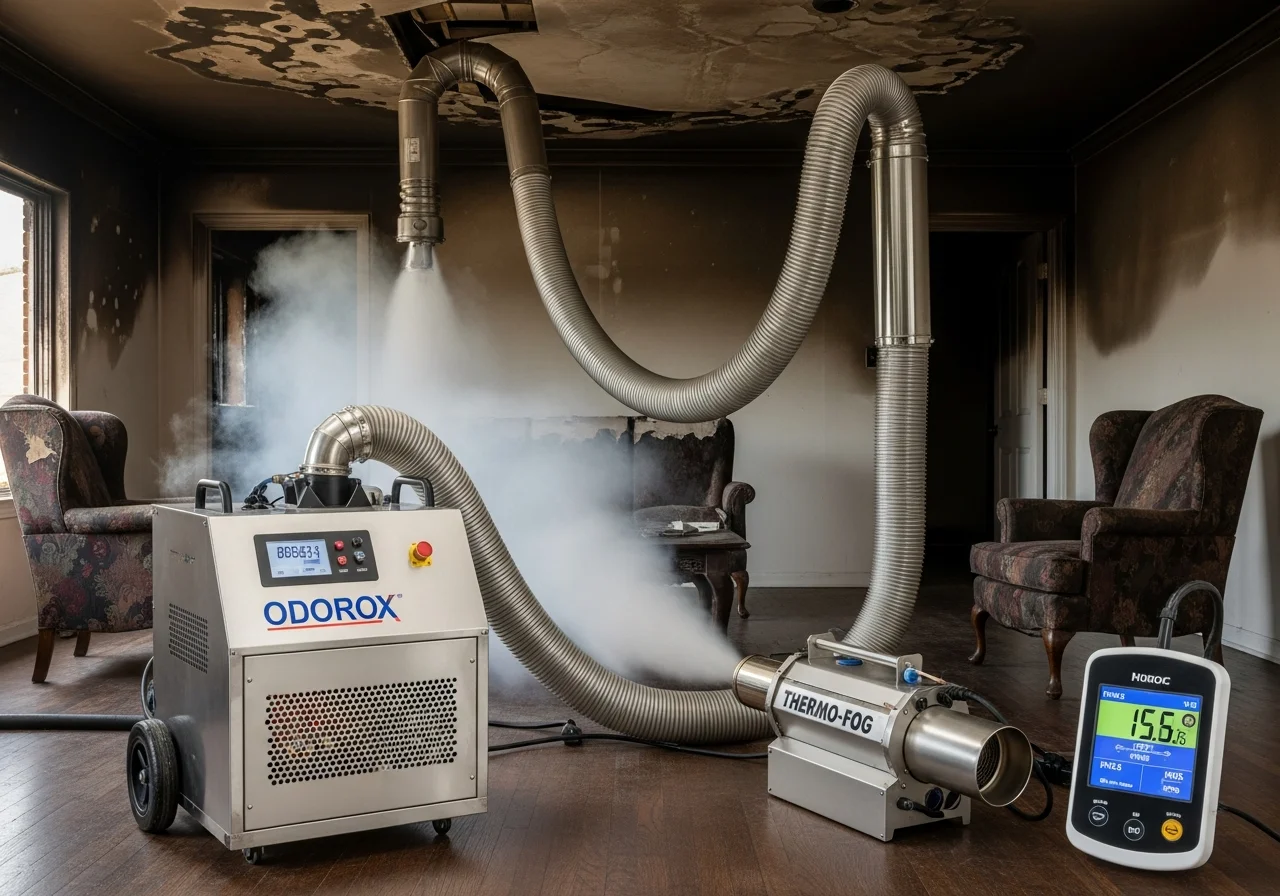
Thermal fogging and hydroxyl generation equipment deployed for complete smoke odor
elimination in a Cornelius home.
Our Work
Cornelius Fire Restoration: The Process in Action
From initial damage assessment through complete reconstruction, here's what Palm Build's
fire restoration process looks like in Cornelius homes.
Kitchen fire damage assessment in a Cornelius subdivision home with heavy soot on all surfaces
Professional soot removal in progress — HEPA vacuuming followed by chemical sponge treatment
Thermal fogging equipment deployed for complete smoke odor elimination throughout the home
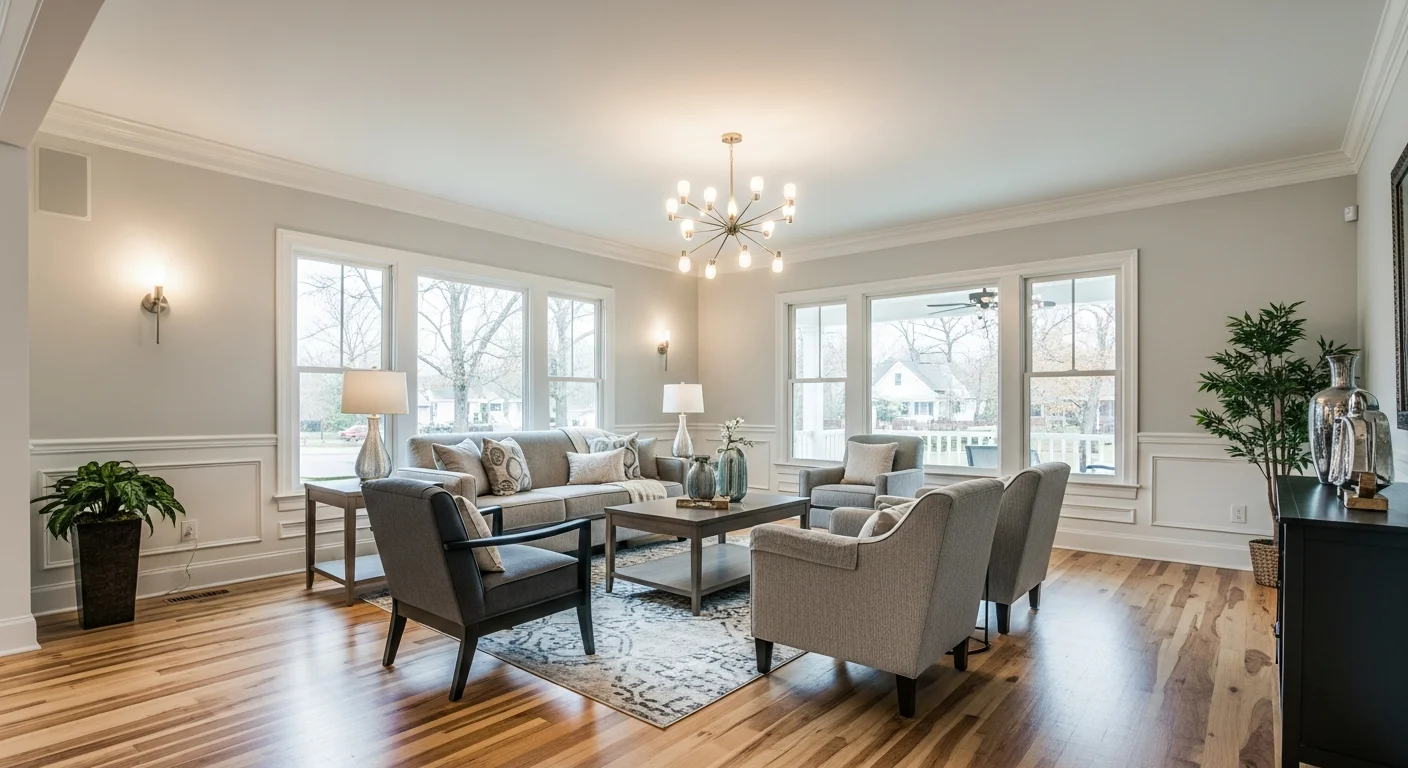
After: Fully restored with new drywall, paint, flooring, and trim matching original specifications
Common Questions
Cornelius Fire & Smoke Damage FAQ
How quickly can Palm Build respond to a fire in Cornelius?
Our Charlotte-based team typically arrives in Cornelius within 30 to 45 minutes from our Crompton Street operations hub. Speed matters — soot becomes increasingly acidic within hours and causes permanent etching on countertops, appliances, and fixtures if not neutralized. Smoke odor penetrates deeper into materials with every passing day. Call (704) 464-0121 any time — we dispatch 24/7/365.
Why do kitchen fires spread so fast in Cornelius subdivision homes?
Most Cornelius homes built during the late 1990s and 2000s feature open floor plans with vaulted ceilings, great rooms connecting to kitchens, and second-floor lofts. These architectural features — desirable for daily living — create unobstructed pathways for smoke and heat to travel rapidly through the entire home. A grease fire that would be contained to a closed kitchen in an older home can deposit soot on every surface of a 3,500 square foot open-plan home in The Peninsula or Rockridge Shores within 10 to 15 minutes.
Does homeowners insurance cover fire damage in Cornelius?
Yes — fire damage is one of the most comprehensively covered perils under standard NC homeowners policies (HO-3). Coverage typically includes structural repair, contents restoration, smoke and soot cleanup, temporary living expenses (Additional Living Expenses / ALE), and debris removal. For condo owners in Cornelius communities like Blue Stone Harbor or Jetton Cove, your HO-6 policy covers your unit's interior and personal property; the HOA master policy covers common elements and the building envelope.
What about smoke damage in adjacent condo or townhome units?
In Cornelius' shared-wall housing — townhomes at Patrick's Purchase, condos at Blue Stone Harbor, and apartments throughout the corridor — smoke from a fire in one unit travels through common framing cavities, shared HVAC plenums, plumbing chases, and electrical penetrations into adjacent units. These adjacent units often have no visible fire damage but suffer significant smoke odor contamination. Each unit typically files a separate claim, and Palm Build coordinates between multiple carriers to ensure every affected unit's scope is documented properly.
How do you remove smoke odor from a Cornelius home?
Smoke odor elimination requires treating the source — not masking it. Depending on the fire type and materials affected, we use thermal fogging, ozone treatment, and hydroxyl generation. For Cornelius homes with engineered hardwood, fiber cement siding, and spray-foam insulated attics — common in the 2000s building era — we use combination approaches since smoke penetrates porous engineered materials differently than solid wood. Soft contents like clothing, upholstery, and drapes often require specialized ozone chamber treatment or professional laundering.
Are electrical fires becoming more common in Cornelius?
Electrical systems in Cornelius homes are now 20-25 years old — the age when original builder-grade components begin to degrade. Modern households draw significantly more power than when these homes were built: EV chargers, home offices with multiple monitors, smart home systems, and kitchen appliance upgrades all increase load on circuits designed for 2000-era usage. Arc-fault failures at aging connections, overloaded breakers, and degraded aluminum-to-copper splice points are increasingly common fire ignition sources in Cornelius subdivisions.
How long does fire damage restoration take in Cornelius?
Small contained kitchen fires with limited smoke spread may take 1-2 weeks for cleanup and restoration. Moderate fires affecting multiple rooms typically require 4-8 weeks including reconstruction. Major structural fires can take 3-6 months for full rebuild. In HOA-governed Cornelius communities, exterior reconstruction must match approved color palettes and materials, which can affect material sourcing timelines.
What should I do immediately after a fire in my Cornelius home?
After the fire department clears the property: document all damage with photos and video before touching anything, do not attempt to clean soot yourself (improper cleaning drives soot deeper into surfaces), do not turn on the HVAC system (it will spread smoke contamination), contact your insurance company to open a claim, and call Palm Build at (704) 464-0121 for emergency board-up and soot stabilization. Every hour that soot sits on surfaces makes permanent damage more likely.
Fire Damage in Cornelius? Every Hour Counts.
Soot becomes permanently damaging within hours. Palm Build's Charlotte team responds to Cornelius in 30-45 minutes with emergency board-up, soot stabilization, and smoke odor treatment — plus insurance documentation from the first call.