Storm, Wind & Hurricane Damage Restoration in Cornelius, NC
Lake Norman's open water fetch amplifies wind speeds across Cornelius' lakefront subdivisions, making communities like The Peninsula, Crown Harbor, and Rockridge Shores particularly vulnerable to storm damage. Palm Build's Charlotte team responds in 30-45 minutes with emergency tarping, water extraction, and full reconstruction.
25 minutes from Charlotte office 30-45 min Response IICRC Certified
Cornelius's position on Lake Norman, mature tree canopy, and subdivision-era
construction create a storm vulnerability profile that differs significantly from
Charlotte's urban core or the Piedmont's rural areas. Understanding these local factors
helps you prepare before storm season and respond faster when damage occurs.
Lake Norman Wind Fetch
50+ mph
Storm gusts
Cornelius sits on the eastern shore of Lake Norman — North Carolina's largest man-made lake at over 32,000 acres. When severe storms approach from the west or southwest (the predominant storm track), winds accelerate across the open water surface with no obstruction. By the time these winds reach Cornelius's lakefront neighborhoods — The Peninsula, Jetton Cove, Crown Harbor — they've gained significant energy. Homes along Jetton Road and Peninsula Club Drive experience measurably higher wind speeds than inland neighborhoods just a mile east.
Mature Tree Canopy Risk
40+ yrs
Tree age
Cornelius's established neighborhoods feature large oaks, pines, and hardwoods that predate the subdivisions built around them. In neighborhoods like Westmoreland, Smithville, and The Peninsula, mature trees tower over rooflines. When saturated soil from heavy rain loosens root systems in Cornelius's red clay, the entire tree can topple onto homes, vehicles, and power lines. A single mature oak weighing 10,000-20,000 pounds can cause $50,000 or more in structural damage.
Vinyl Siding Vulnerability
60%+
Homes with vinyl
The majority of Cornelius's subdivision-era housing (1998-2015) uses vinyl siding — affordable, low-maintenance, but vulnerable to high winds. Vinyl siding panels interlock but are not fastened at the bottom, creating a wind-catch point that allows strong gusts to peel entire sections away from the house wrap underneath. Once siding is compromised, wind-driven rain contacts the sheathing directly, creating water intrusion paths that lead to hidden mold growth behind exterior walls.
Tropical Remnant Exposure
3-5/yr
Tropical impacts
Cornelius is positioned in the Piedmont storm corridor where weakened tropical systems from both the Atlantic and Gulf of Mexico track inland. Remnants of hurricanes and tropical storms bring sustained winds, heavy rainfall, and occasional tornado activity to the Lake Norman area. Recent events — Hurricane Helene (September 2024), Tropical Storm Debby (August 2024) — demonstrated that Cornelius receives significant impacts from tropical systems that many homeowners don't expect to reach this far inland.
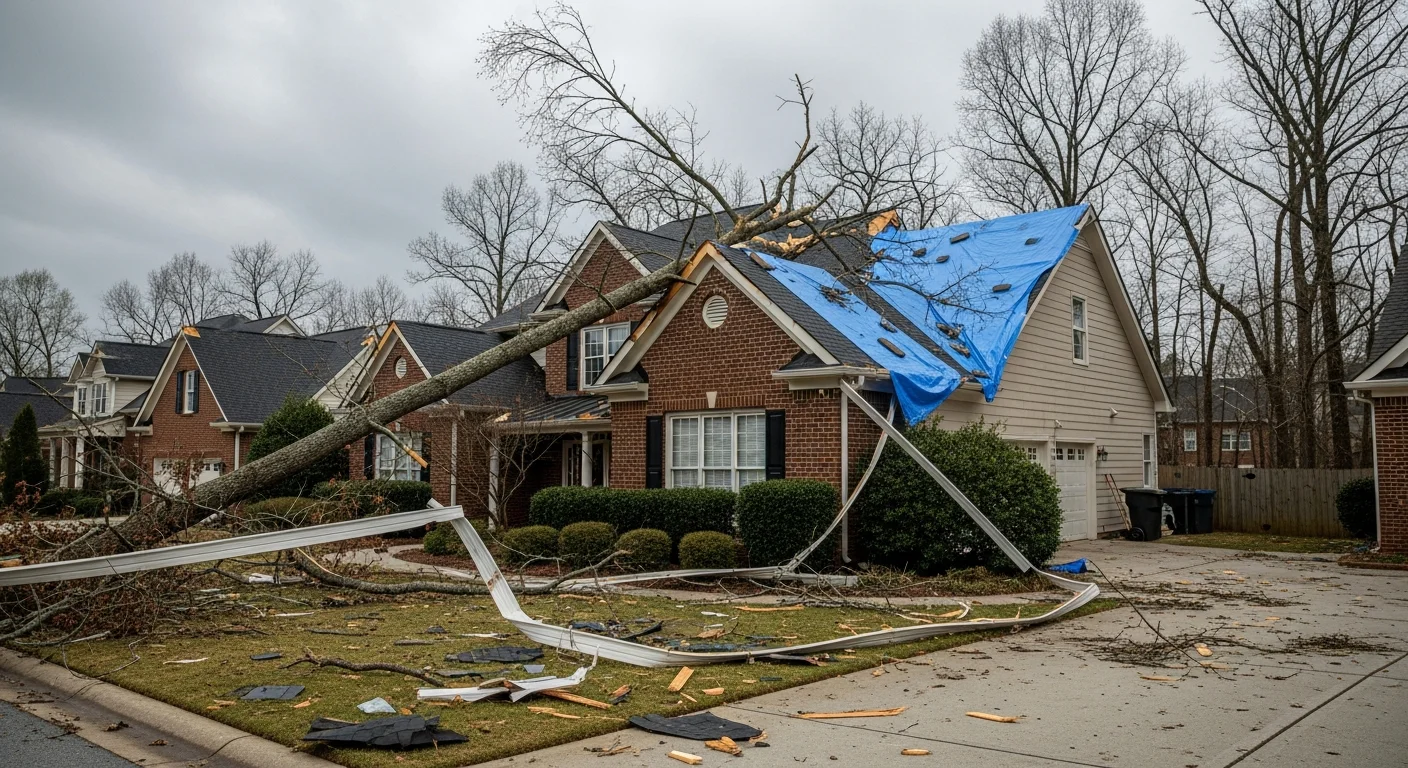
Mature tree damage on a Cornelius home — Lake Norman's wind fetch and saturated clay
soil create treefall risk during severe storms.
Types of Storm Damage
How Storms Damage Cornelius Homes
Severe weather damages Cornelius homes in six distinct ways — and most major storms
trigger multiple damage types simultaneously. Understanding the full scope of storm
damage is critical for both emergency response and insurance claims, because different
damage types may be covered by different policies.
Roof Wind Damage
High winds peel shingles, lift flashing, and crack ridge vents — creating entry points for water that may not become visible for days or weeks. Cornelius's subdivision-era homes with architectural shingle roofs from the late 1990s and early 2000s are approaching the end of their 20-25 year warranty period, making them particularly vulnerable to wind lift. Lake Norman's wind fetch amplifies gust speeds on lakefront properties, increasing the likelihood of shingle failure during severe storms.
Siding & Fascia Damage
The vinyl and fiber cement siding common on Cornelius subdivision homes is vulnerable to wind damage in distinct ways. Vinyl panels interlock but aren't bottom-fastened, allowing strong gusts to peel entire sections away. Fiber cement board is more rigid but can crack from flying debris impact. Once siding is compromised, wind-driven rain penetrates directly to house wrap and sheathing, creating hidden water intrusion behind exterior walls that leads to mold growth if not addressed quickly.
Tree Impact Damage
Cornelius's mature oaks, pines, and hardwoods create the neighborhood character that residents love — and the greatest storm liability. A single fallen tree can destroy a roof section, crush vehicles, sever power lines, and create immediate water intrusion exposure. In neighborhoods like Westmoreland and Smithville where trees predate the subdivisions, root systems compete with foundation footings, and saturated clay soil during heavy storms dramatically increases treefall probability.
Hail Damage
Severe thunderstorms crossing Lake Norman frequently produce hail that damages roofing materials, gutters, siding, and soft metals. Hail damage to asphalt shingles creates bruising that accelerates granule loss and shortens roof life — even when the damage isn't visible from the ground. Cornelius homes with aging roofs already near end-of-warranty are particularly vulnerable because hail impact on compromised materials causes disproportionate damage.
Water Intrusion
Wind-driven rain enters through any compromise in the building envelope — damaged shingles, cracked siding, failed window seals, or lifted flashing. In Cornelius's open-concept homes, water intrusion through a single roof penetration can travel through wall cavities and ceiling spaces, appearing as damage in rooms far from the actual entry point. Thermal imaging is essential for identifying the full extent of storm water migration in these homes.
Gutter & Downspout Damage
Heavy winds and falling limbs detach, crush, and misalign gutters and downspouts — redirecting roof runoff against foundations and into crawl spaces. In Cornelius's clay soil environment, compromised gutters concentrate water flow at foundation perimeters, accelerating erosion and increasing crawl space moisture intrusion. This secondary damage often goes unnoticed until foundation moisture causes interior problems weeks or months after the original storm.
Recent Storm Impact
Cornelius's Recent Severe Weather Events
The Lake Norman corridor is experiencing an intensifying severe weather pattern.
Tropical remnants reaching farther inland, severe thunderstorms with increasing
frequency, and winter ice events have created a compounding damage cycle that affects
Cornelius neighborhoods more severely each year. Here are the major weather events
shaping Cornelius's restoration landscape.
Hurricane Helene Remnants
Catastrophic
September 27, 2024
Hurricane Helene's remnants brought sustained winds exceeding 50 mph and heavy rainfall to the Lake Norman corridor. Cornelius experienced widespread tree damage, power outages lasting 3-5 days in some neighborhoods, and significant roof and siding damage across The Peninsula, Jetton Cove, and Westmoreland. Lake Norman's water level rose significantly, and wave action from the prolonged wind event damaged lakefront docks, retaining walls, and shoreline landscaping. The combination of saturated soil and sustained winds toppled mature trees throughout established neighborhoods.
Tropical Storm Debby
Significant
August 5-9, 2024
Tropical Storm Debby brought multi-day heavy rainfall to the Lake Norman area, saturating the red clay soil that underlies most of Cornelius. This saturation event was particularly consequential because it weakened tree root systems and raised the water table in the weeks before Hurricane Helene arrived less than two months later. Cornelius neighborhoods on low ground — portions of Smithville and areas near McDowell Creek — experienced yard flooding and crawl space water intrusion during the multi-day rainfall.
Tropical Depression Chantal
Moderate
July 2025
Chantal's remnant moisture combined with a stalled frontal boundary to produce severe thunderstorms across the Lake Norman area with localized damaging winds and heavy rainfall. Several Cornelius neighborhoods experienced downed trees and localized power outages. The event reinforced the pattern of tropical moisture contributing to severe local storms even when the parent system doesn't make a direct impact — a pattern climate scientists expect to intensify in coming years.
Severe Thunderstorm & Ice Storm Events
Recurring
2023-2025 (Recurring)
The Lake Norman corridor has experienced an increasing frequency of severe thunderstorm events producing damaging winds, large hail, and occasional tornado warnings. Winter ice storms — while less frequent — cause catastrophic tree damage when ice loading snaps limbs and topples trees weakened by previous wind events. Cornelius's mature canopy creates a compounding vulnerability: each storm event weakens trees that become more susceptible to failure in subsequent storms, creating an escalating damage cycle across established neighborhoods.
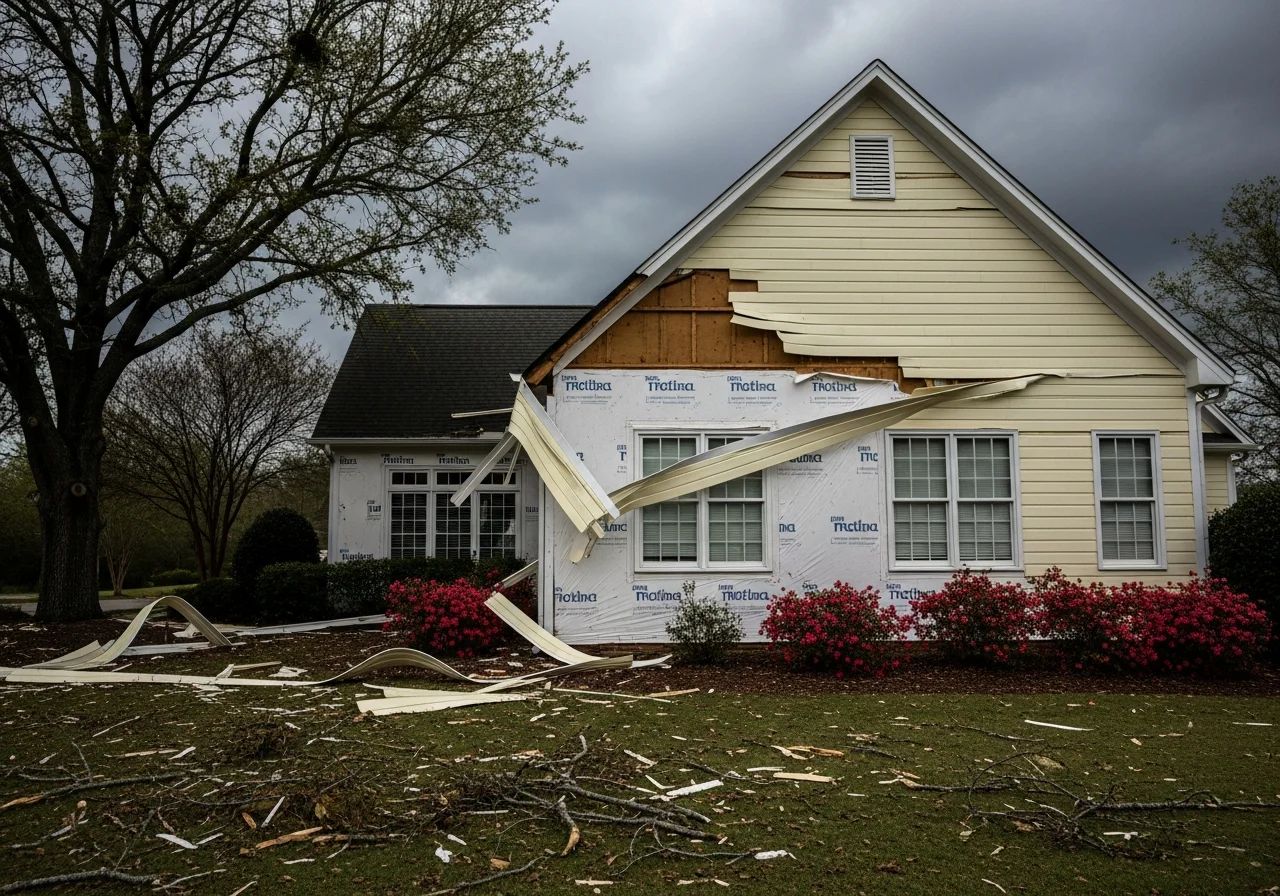
Vinyl siding torn from a Cornelius home during severe wind event — once the building
envelope is compromised, wind-driven rain creates secondary water damage behind the
walls.
Storm Restoration Process
How We Restore Cornelius Homes After Storm Damage
Storm restoration requires coordinating emergency response, water mitigation, tree
removal, structural repair, and insurance claims simultaneously. Here's our proven
process from the first call through final closeout.
01
Emergency Tarping & Board-Up
Hours 1-4
We secure your Cornelius home against further weather damage and intrusion within hours. Damaged roof sections are tarped with reinforced polyethylene, broken windows are boarded, and exposed openings are sealed. This step is critical before Lake Norman's next storm can compound the original loss — and it's covered by your insurance policy as part of your duty to mitigate further damage.
02
Damage Assessment & Documentation
Days 1-3
Comprehensive documentation of all storm damage — wind, water, tree impact, hail, and structural. We photograph every affected area, map moisture intrusion with thermal cameras, classify damage by cause (wind vs. flood, covered vs. excluded), and create a detailed Xactimate scope of work. This cause-specific documentation is essential for filing claims correctly and maximizing coverage.
03
Water Extraction & Structural Drying
Days 1-7
Storm damage in Cornelius almost always includes water intrusion — through damaged roofs, broken windows, or wind-driven rain. We extract standing water, set up commercial dehumidifiers and air movers, and monitor drying daily. For Cornelius homes with crawl spaces on clay soil, we address sub-floor water simultaneously to prevent secondary mold growth within the 24-48 hour critical window.
04
Debris Removal & Tree Clearing
Days 2-7
Fallen trees are removed from structures using cranes and rigging when necessary. We coordinate with arborists for damaged trees still standing that pose hang-back risk. Debris is cleared and hauled. For Cornelius homes in HOA communities, we work within community regulations and coordinate with the management company on common-area tree removal responsibilities.
05
Structural Repair & Reconstruction
Weeks 2-12
Once the property is dried, secured, and cleared, we begin full reconstruction: roof replacement or repair, siding restoration, window installation, drywall, flooring, painting, and finish work. For Cornelius HOA communities, all exterior work meets architectural review committee standards including approved colors, materials, and design specifications.
06
Final Inspection & Closeout
Week 12+
Mecklenburg County inspections verify all structural, electrical, mechanical, and plumbing work meets current building code. We perform a final walk-through with the homeowner and provide complete documentation for insurance closeout including all receipts, inspection reports, and warranty information for materials and workmanship.
Storm Vulnerability Map
Cornelius's Most Storm-Vulnerable Neighborhoods
Storm damage in Cornelius concentrates in predictable patterns based on Lake Norman wind
exposure, tree canopy density, housing age, and construction type. Knowing your
neighborhood's specific vulnerability helps you prepare before storm season and respond
faster when damage occurs.
The Peninsula
Critical
Built: 2000s-2015
Direct Lake Norman wind fetch exposure on three sides
Large roof footprints with complex valleys and flashing points
Mature lakefront trees on saturated clay soil with treefall risk
Jetton Cove
High Risk
Built: Late 1990s-2008
Lake-adjacent wind exposure along Jetton Road corridor
Aging architectural shingle roofs entering 20-25 year failure window
Traditional roof styles with multiple penetration points
Antiquity
High Risk
Built: 2000s-2010
Attached townhome units with shared-roof wind vulnerability
Multi-party damage claims when storm affects connected units
Dense lot layout limiting emergency equipment staging
Westmoreland
High Risk
Built: Late 1990s-2005
Mature tree canopy with trees predating subdivision development
Oldest vinyl siding in Cornelius approaching replacement age
Power outage vulnerability from overhead utility lines through canopy
Smithville
High Risk
Built: 1970s-1990s
Oldest housing stock with aging roofing and siding materials
Largest and most mature trees in Cornelius creating highest treefall risk
Legacy construction with less wind-resistant building techniques
Bailey's Glen
Moderate
Built: 2005-2015
Newer construction with better wind ratings but vinyl siding exposure
Active adult community requiring rapid response for resident safety
Single-level homes with reduced structural wind resistance
Crown Harbor
Moderate
Built: 2005-2012
Lake-adjacent location with partial wind fetch exposure
Multi-unit close-lot layout with cascading tree damage risk
HOA exterior material standards affecting restoration timeline
Robbins Park
Moderate
Built: 2000s-2010
Interior location with partial canopy protection from direct wind
HOA architectural requirements for exterior restoration
Subdivision drainage infrastructure aging with increased storm intensity
Cornelius Pricing
Storm Damage Restoration Costs in Cornelius
Storm restoration costs vary dramatically based on damage severity, roof age, tree
involvement, and whether water intrusion is included. Wind damage is well-covered by
standard homeowners insurance in North Carolina. After major events affecting the Lake
Norman area, contractor demand and material supply constraints can increase costs and
extend timelines.
Minor Storm Damage
Missing shingles, siding sections, minor tree limb damage
$2,000 - $10,000
Isolated wind damage to roofing materials, partial siding loss, or minor tree limb impact without structural compromise. Includes emergency tarping, shingle replacement, siding repair, and gutter realignment. Common after standard severe thunderstorms crossing the Lake Norman area.
Moderate Storm Damage
Partial roof replacement, tree on structure, water intrusion
$10,000 - $50,000
Significant roof damage requiring partial replacement, tree impact on the structure requiring crane removal and structural repair, or widespread siding loss with resulting water intrusion and interior damage. Typical for Cornelius homes during tropical remnant events or severe derecho-type storms. Water mitigation costs add significantly when intrusion is not addressed within 24 hours.
Major Storm / Hurricane Event
Full roof replacement, structural damage, multi-system failure
$50,000 - $250,000+
Catastrophic storm damage requiring full roof replacement, major structural repair from tree impact or wind load failure, comprehensive water damage restoration, and full reconstruction. During events like Hurricane Helene, contractor demand surges and material supply constraints can extend timelines. Cornelius HOA communities may face additional delays for architectural committee approval.
Critical Insurance Distinction
Wind Damage vs. Flood Damage: Why It Matters for Your Claim
This is the single most important insurance concept for Cornelius storm damage. Wind
damage and flood damage from the same storm are covered by different policies, filed as
separate claims, and often adjusted by different adjusters. Documenting damage by cause
— not just by room — is critical for maximizing your coverage. Palm Build's
documentation process classifies every item of damage by its cause to ensure correct
claim filing.
Wind Damage (Homeowners Policy)
Roof damage from wind, fallen trees, flying debris
Siding, window, and door damage from wind pressure
Rain water entering through wind-created openings
Structural damage from wind load or fallen trees
Emergency tarping and board-up costs
Temporary living expenses if home is uninhabitable
Flood Damage (Separate Flood Policy)
Rising water from creeks, Lake Norman overflow, or storm surge
Groundwater entering through foundation or crawl space
McDowell Creek and tributary flooding
Sewer backup from overwhelmed storm systems
Surface water accumulation from impervious runoff
NOT covered by standard homeowners — requires NFIP or private flood
NC Wind/Hail Deductible Warning
Many North Carolina homeowners policies include a separate wind/hail deductible —
typically 1-2% of the dwelling coverage amount — which is significantly higher than
the standard deductible. For a Cornelius home insured at $500,000, a 2% wind/hail
deductible means $10,000 out-of-pocket before coverage begins. Check your declarations
page before storm season. Palm Build's detailed documentation helps ensure every
covered item is captured in the claim scope to maximize recovery above the deductible.
Why Cornelius Homeowners Choose Palm Build After Storms
30-Minute Cornelius Response
Our Charlotte-based operations hub dispatches emergency crews to Cornelius via I-77 in approximately 30 minutes. During major events affecting the Lake Norman corridor, we activate catastrophe response with additional crews from our multi-state operations network. Pre-storm clients get priority dispatch.
IICRC WRT & FSRT Certified
Every crew lead holds current IICRC Water Restoration Technician and Fire/Smoke Restoration Technician certifications. Storm damage crosses both specialties — wind, water, and sometimes fire from lightning or downed power lines. Our technicians are trained for the multi-damage scenarios that severe storms create.
Cause-Specific Documentation
Our damage assessment classifies every item by cause — wind vs. flood vs. tree impact vs. hail — ensuring each claim is filed with the correct policy. This documentation approach is particularly critical for Cornelius homes affected by Lake Norman-area storms where wind and water damage overlap. We recover significantly more for homeowners than generic damage reports.
Full-Scope Project Management
Storm restoration involves emergency response, water mitigation, tree removal, structural repair, and reconstruction — often managed simultaneously. Palm Build coordinates all phases as a single project with one point of contact. For Cornelius HOA communities, we handle architectural committee coordination and ensure all exterior work meets community standards.
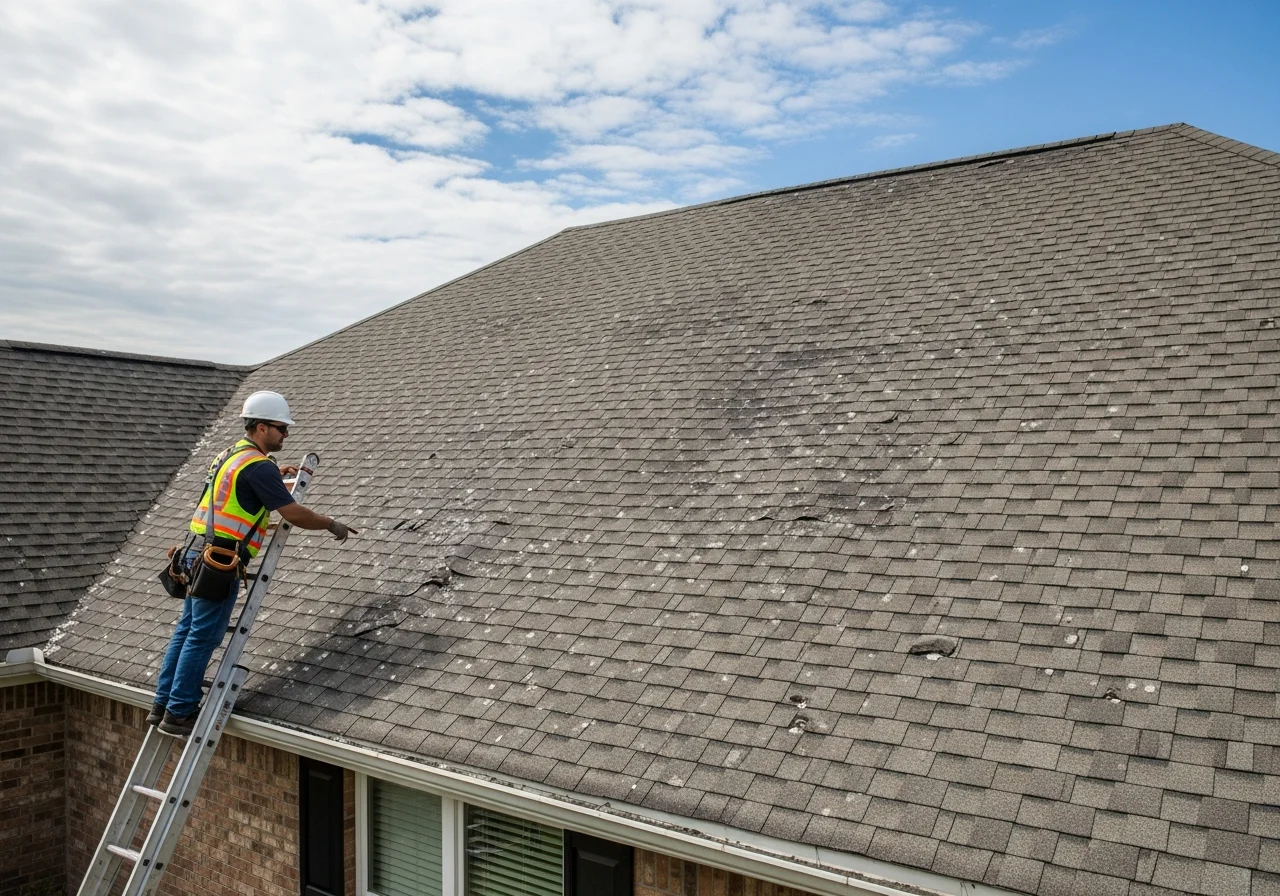
Professional roof inspection for hail and wind damage — thorough documentation ensures
every covered item is captured in the insurance claim.
Common Questions
Cornelius Storm Damage FAQ
Why is Cornelius more vulnerable to storm damage than other Charlotte suburbs?
Lake Norman's 32,510-acre surface creates a wind fetch — an unobstructed distance over which wind gains speed and energy. Storms approaching from the west cross the lake and arrive at Cornelius' eastern shore with higher wind speeds than they carry inland. Lakefront neighborhoods like The Peninsula, Crown Harbor, Harborside, and Rockridge Shores experience the most intense exposure. Add mature hardwood canopy that has grown for 25 years since subdivision clearing, and you have significant tree-fall risk during every major storm event.
Does insurance cover storm damage in Cornelius?
Yes — wind and hail damage are covered perils under standard NC homeowners policies (HO-3). However, flood damage from rising water — including lake level increases and stormwater backup — requires separate NFIP or private flood insurance. This distinction matters in Cornelius, where lakefront properties can experience both wind damage and water intrusion from the same storm. Palm Build documents damage by cause to ensure each claim is filed correctly.
How do I handle a storm damage claim with my HOA in Cornelius?
Most Cornelius subdivisions — The Peninsula, Bailey's Glen, Antiquity, Preston at the Lake, and others — have active HOAs with exterior standards. Storm damage repairs must use approved colors, materials, and architectural details. For condo communities, the HOA master policy covers the building envelope while your HO-6 covers interior damage. Palm Build coordinates with HOA architectural review committees to ensure repairs meet community standards while being fully documented for your insurance claim.
What kind of roof damage do Cornelius homes typically sustain?
The dominant roofing material in Cornelius is architectural shingles installed during the late-1990s to mid-2000s building boom — many now at or past their 20-25 year rated service life. Hail causes granule loss and bruising that weakens the shingle's waterproofing layer. High winds lift and crease shingle tabs, breaking the adhesive seal. Tree impacts cause punctures, structural rafter damage, and complete section removal. After any significant storm, we recommend a professional roof inspection even if no damage is visible from ground level.
Should I tarp my roof before filing an insurance claim?
Yes — and you should do it immediately. Your insurance policy requires you to mitigate further damage, and emergency tarping costs are covered as part of your claim. Every hour that a damaged roof is exposed to rain creates additional water damage inside the home — wet insulation, saturated drywall, and potential mold growth that escalates your total loss. Call Palm Build at (704) 464-0121 for emergency tarping 24/7. We document the roof damage before tarping as evidence for your claim.
How does hail damage differ from wind damage for insurance purposes?
Both hail and wind are covered under standard NC homeowners policies, but they affect roofs differently and require different documentation. Hail causes circular impact marks, granule displacement, and bruising visible on close inspection. Wind lifts shingle edges, breaks adhesive bonds, and causes creasing along attachment points. When a Cornelius neighborhood sustains hail damage, entire streets are often affected — your insurer may already have adjusters in the area. Palm Build's inspection identifies all damage types and documents each separately for maximum claim accuracy.
What should I do immediately after a storm damages my Cornelius home?
Document all damage with photos and video before moving anything. Cover exposed areas with tarps if it is safe to do so — do not walk on a damaged roof. Do not enter rooms with sagging or wet ceilings. Move valuables away from leak areas. Contact your insurance company to open a claim. Call Palm Build at (704) 464-0121 for emergency tarping and water mitigation. Do not hire tree removal until the insurance adjuster has documented fallen trees on the structure.
What areas around Cornelius does Palm Build serve for storm damage?
We serve all of Cornelius and the greater Lake Norman corridor including The Peninsula, Jetton Cove, Bailey's Glen, Antiquity, Crown Harbor, Rockridge Shores, Preston at the Lake, Westmoreland, and Beverly. We also serve nearby Davidson, Huntersville, and Mooresville. Our Charlotte operations hub is approximately 25 minutes from central Cornelius.
Storm Damage in Cornelius? Don't Wait for the Next Rain.
Every hour an exposed roof goes unprotected, water damage compounds. Palm Build's Charlotte team responds to Cornelius in 30-45 minutes with emergency tarping, water extraction, and structural stabilization — 24/7, with insurance documentation from the first call.