Key takeaways
- Rock Hill is in York County, SC — not Charlotte. SC LLR contractor licensing is mandatory, and NC-only contractors cannot legally perform fire and smoke restoration work in Rock Hill.
- The city's dominant housing stock is 1960s–70s brick ranches with vented crawl spaces, aluminum-wiring-era electrical (1965–73), and mid-century HVAC ductwork that distributes smoke through the entire home.
- Catawba River proximity and Piedmont humidity pre-saturate drywall and framing with moisture, making smoke odor molecules bond deeper and last longer than fires in drier climates.
- IICRC S700 defines four primary smoke deodorization methods — ionic, ozone, hydroxyl, thermal fogging — and a competent restorer chooses between them based on material type, penetration depth, and whether the structure is occupied.
- SC does not license fire and smoke specialists specifically — IICRC FSRT (Fire & Smoke Restoration Technician) and OCT (Odor Control Technician) are the only credentials a homeowner can verify independently.
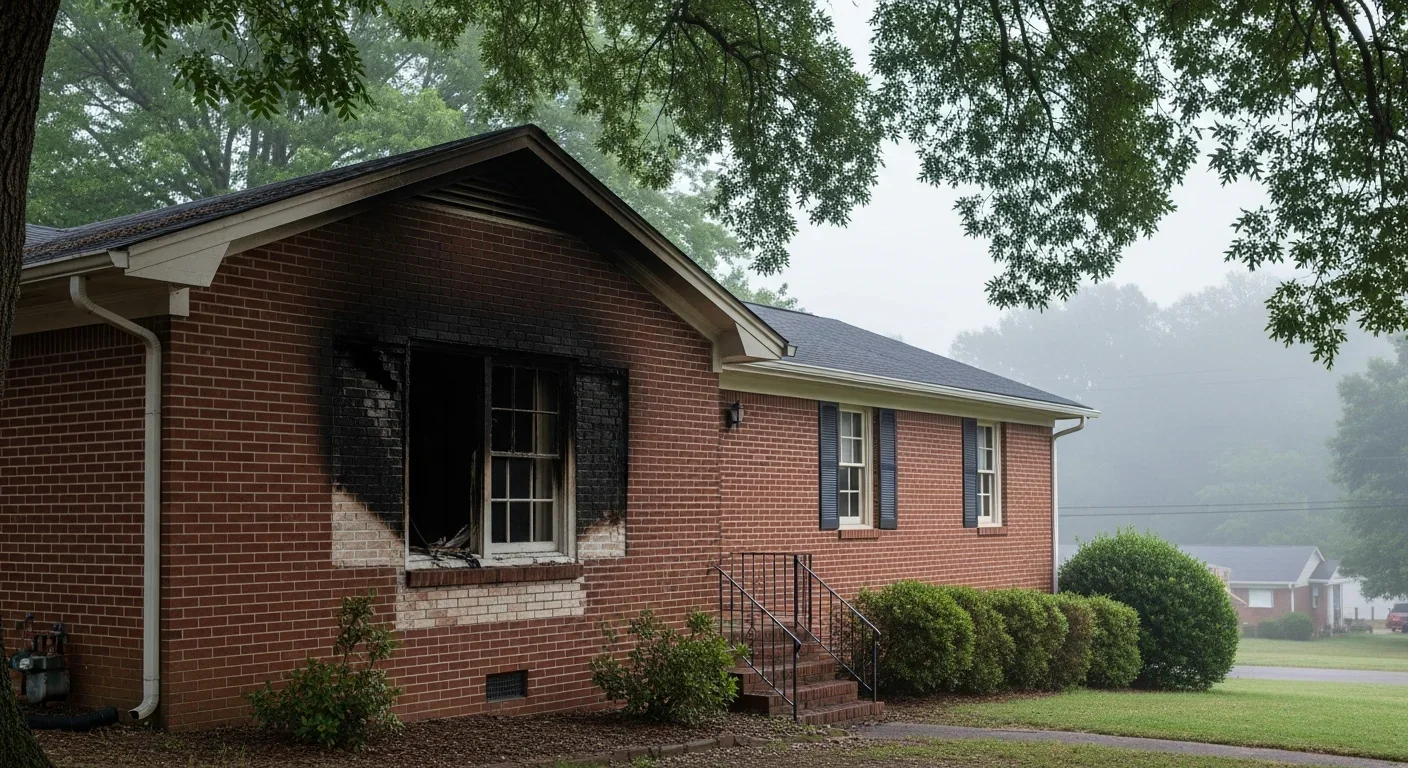
Smoke odor removal is the hardest problem in the entire restoration industry, and Rock Hill makes it harder than almost anywhere else in the Southeast. You have a housing stock built in the 1960s and 70s — brick ranches with vented crawl spaces, mid-century drywall that has been slowly absorbing Piedmont humidity for 55 years, aluminum-era electrical wiring that turned every kitchen fire into an extended smoldering event, and HVAC ductwork that was never designed to be cleaned from the inside. You have Catawba River proximity that keeps indoor humidity elevated and helps smoke molecules bond more aggressively to porous surfaces. And you have a South Carolina contractor licensing reality that eliminates every Charlotte-based restoration company from legally working your claim. This is the honest version, neighborhood by neighborhood, IICRC S700 protocol step by step — and the reason why the smoke odor in your house might not actually go away just because the fire is out.
Rock Hill population
~76,370
4th largest city in SC, York County — 50% growth since 2000
Median home value
$295k–306k
Highest in 29732 ZIP — affluent northeast Rock Hill
Dominant housing era
1960s–70s
Full-brick ranches over vented crawl spaces — the smoke-trap era
Aluminum wiring era
1965–73
Widespread installation in Rock Hill ranches — fire cascade amplifier
- **York County, SC** — NOT Charlotte, NOT NC. SC LLR contractor license mandatory.
- **1960s–70s brick ranch inventory** — vented crawl spaces, galley kitchens, mid-century HVAC ductwork
- **Aluminum wiring (1965–73)** — widespread in Rock Hill ranches; oxidizes over time and creates cascade failures during kitchen fires
- **Catawba River humidity** — pre-saturates porous materials, increases smoke molecule bonding depth
- **IICRC S700 standard** — four deodorization methods (ionic, ozone, hydroxyl, thermal fogging) with different use cases
- **IICRC FSRT + OCT credentials** — the only meaningful credential check in a state without fire-specific licensing
Why Rock Hill Smoke Damage Is Harder Than Inland Carolinas Smoke Damage
Smoke odor is a chemistry problem, and chemistry is affected by environment. When a fire happens in a dry, cool climate, the volatile organic compounds from combustion — the molecules that cause odor — land on dry surfaces and can often be cleaned with surface deodorization and light containment. When a fire happens in Rock Hill, those same molecules land on drywall, framing, and HVAC ductwork that have been absorbing moisture from the Piedmont humidity corridor for decades. Pre-saturated porous materials bond more aggressively with smoke VOCs, trap them deeper in the substrate, and release them more slowly during humidity cycles after remediation. The same fire that would have been cleaned up in a week in Phoenix takes three weeks in Rock Hill and requires twice the deodorization protocol to stay gone.

The second half of the problem is the housing stock itself. Rock Hill is dominated by 1960s and 70s brick ranches — one-story, three bedrooms, galley kitchens six to eight feet from the living room, central HVAC with ductwork that runs through the crawl space and attic. When a kitchen fire starts in one of those homes, the smoke doesn't stay in the kitchen. It migrates through the return-air ductwork into every room. It settles on 55-year-old plaster ceilings that have absorbed moisture every summer since they were installed. It finds its way into the vented crawl space, where the moist air holds it indefinitely. Cleaning the visible soot off the walls is the easy part. Getting the odor out of the substrate is the thing that separates legitimate restoration from cosmetic work.
Neighborhood-by-Neighborhood Smoke Damage Risk
Rock Hill's neighborhoods were built in waves, and each wave carries its own smoke damage signature. Old Town and Downtown were built in the 1890s–1950s with plaster walls, knob-and-tube wiring in the oldest homes, and multi-story structures that complicate fire containment. College Downs, Southside and the Winthrop adjacent neighborhoods were built in the 1950s–70s during the brick ranch era — the core of Rock Hill's smoke damage reality. Newer communities like Riverwalk and Sweetwater Plantation layer modern construction on top, with sealed building envelopes that trap smoke inside longer during an active fire. Here's the tour.
College Downs & Southside: The brick ranch core
College Downs and Southside are where Rock Hill's smoke damage problem is most concentrated. These neighborhoods were built in the 1950s–70s with full-brick veneer over wood framing, vented crawl spaces on Piedmont red clay, and the galley-kitchen ranch floor plan that puts the cooktop six to eight feet from the living room. Kitchen fires in these homes spread rapidly because the open floor plan offers no structural break between the fire origin and the adjacent spaces, and the mid-century HVAC return ductwork pulls smoke through the entire house within minutes. Add the aluminum wiring from 1965–73 installation era, and you have the single highest-frequency smoke damage pattern in Rock Hill. The January 2024 storm and the April 2024 hailstorm that damaged many Southside roofs added another layer — compromised roof membranes that let moisture into attics where smoke had previously settled, compounding the odor problem with water intrusion.
Winthrop University adjacent: cooking fires and rental density
The neighborhoods around Winthrop University have a different smoke damage profile driven by occupancy rather than housing stock. Winthrop awards nearly 1,300 degrees annually and the surrounding rental market concentrates student cooking fires, electrical overloads from older academic buildings, and faculty housing fires in historic Craftsman and Victorian bungalows. The historic homes in this area have original plaster walls and lath that absorb smoke deeply and resist standard cleaning — any restorer working a Winthrop-adjacent fire needs to be thinking about historic material preservation, lead paint considerations, and the York County permit process before they start demolition.
The Post-April 2024 Hailstorm Complication
Rock Hill took a significant hailstorm hit in April 2024 that compromised roofs across Southside, College Downs, and parts of the Winthrop-adjacent neighborhoods. Insurance carriers paid out roof replacements through 2024 and into early 2025, but the secondary effects of pre-existing roof compromise are still showing up in smoke damage claims a year later. A hail-compromised roof membrane lets moisture into attics and wall cavities, which pre-saturates the framing and insulation above the living space. When a kitchen fire happens in a home with a compromised roof, the smoke rises into a pre-moistened attic and bonds to framing even more aggressively than in an intact structure. This is not a theoretical risk — it is the pattern we are actively seeing in 2026 Rock Hill fire claims.
IICRC S700 Smoke Odor Protocol: The Four Deodorization Methods
The IICRC S700 standard is the professional benchmark for fire and smoke damage restoration, and it defines four primary smoke deodorization methods. A competent restorer does not choose one — they combine two, three, or all four in sequence based on the material types affected, the penetration depth, and whether the structure is occupied during remediation. Here is what each method does and when it's appropriate.
"Smoke odor removal requires a phased approach: dry removal of loose soot, molecular deodorization of porous substrates, sealing of impacted structural materials, and post-remediation verification through humidity-cycle testing. No single method addresses every phase — combination treatment is the standard."
| Method | How it works | Best for | Occupied-space safe? |
|---|---|---|---|
| Ionic deodorization | Negative ion generation neutralizes organic odor molecules on surface contact | Light-to-moderate smoke, polishing finish after primary treatment | Yes — continuous background use |
| Ozone treatment | O3 oxidizing gas breaks odor molecules at the chemical level; most aggressive | Wall cavities, HVAC ductwork, unoccupied structures | No — full evacuation required |
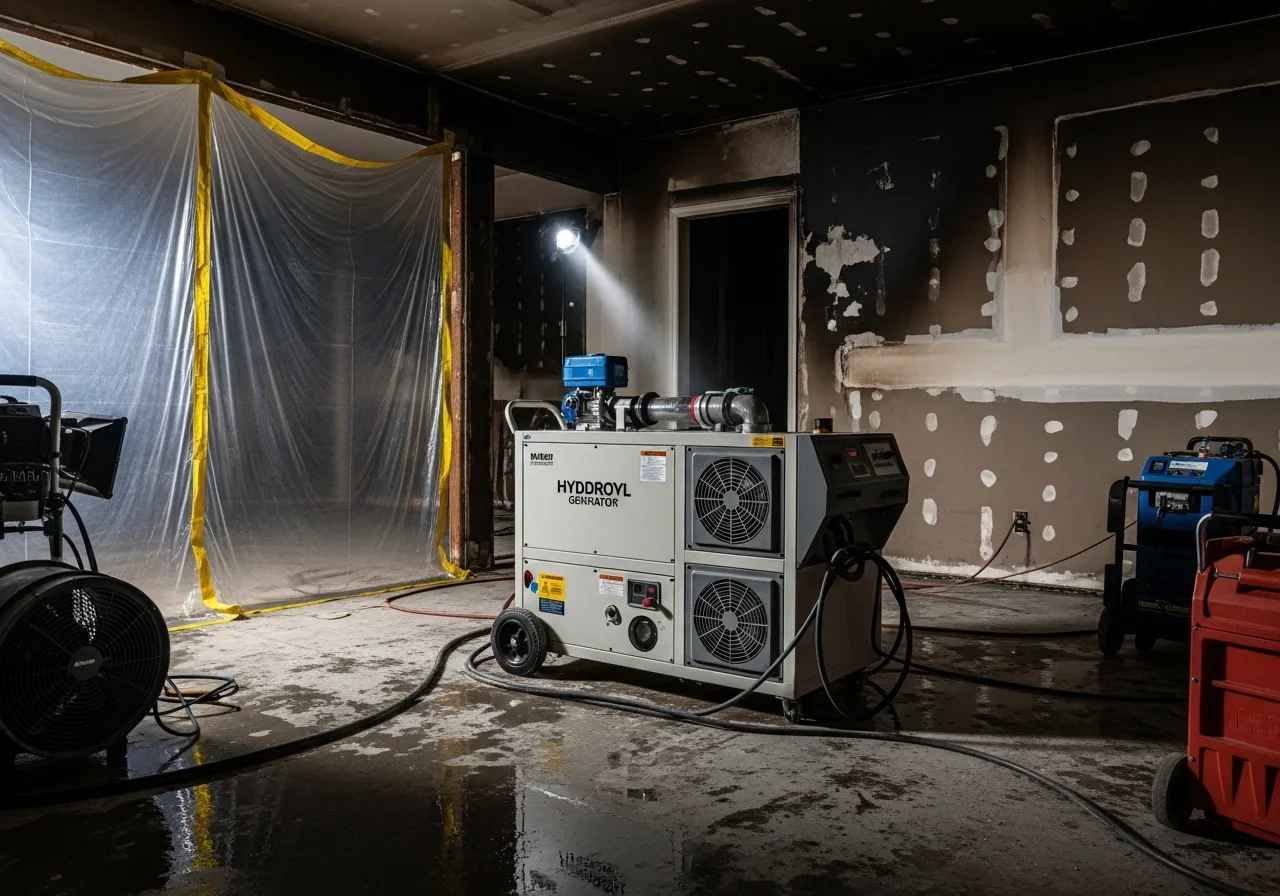
| Hydroxyl generators | UV light + humidity generates hydroxyl radicals that oxidize odor over 24–72 hours | Occupied homes, sensitive materials, electronics, most common method | Yes — the occupied-space workhorse |
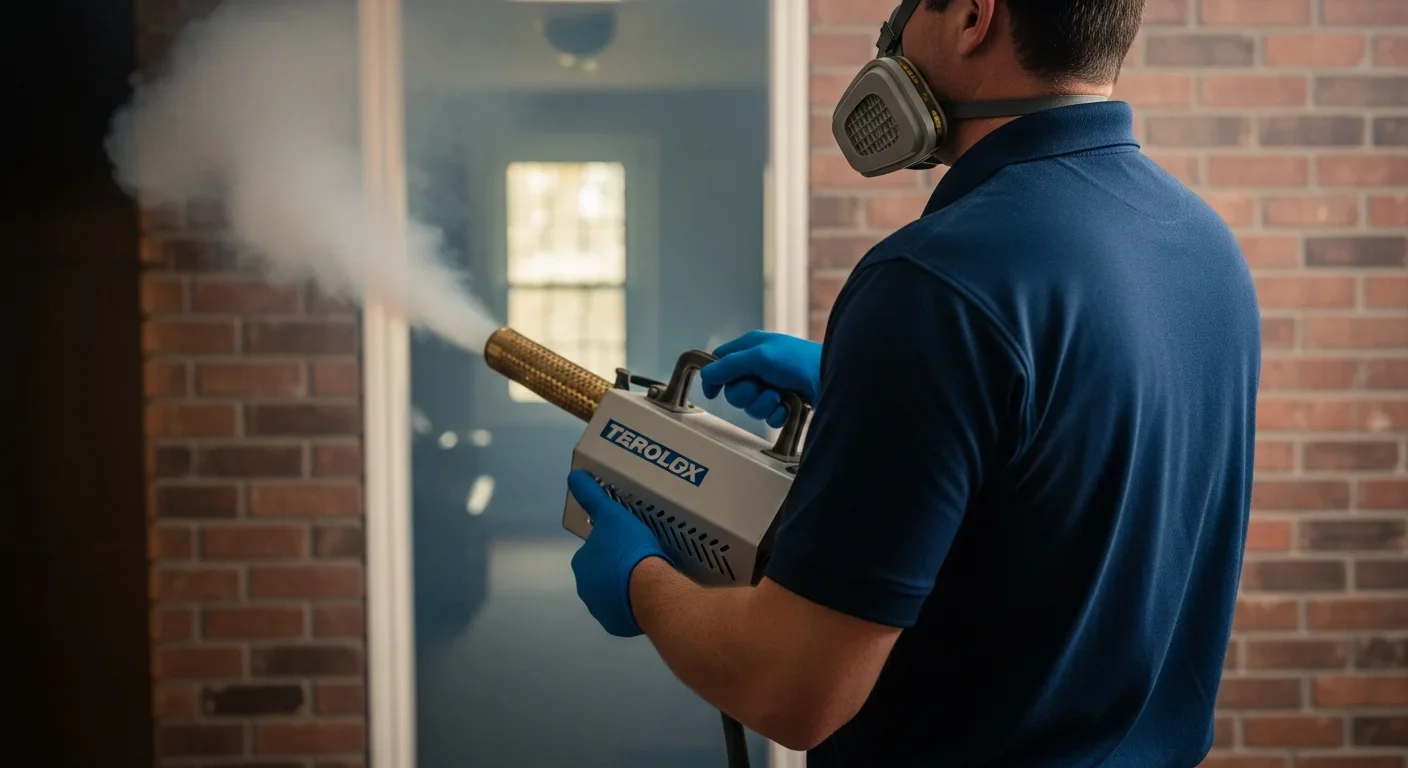
| Thermal fogging | Heated aerosol sealant penetrates porous materials and binds odor molecules in place | Upholstery, soft contents, deep wood framing penetration | No — ventilation required after |
Most Rock Hill smoke damage projects use a three-method combination: dry cleaning + hydroxyl generation + odor-sealing primer on framing. Ozone is reserved for wall cavities and ductwork. Thermal fogging targets contents pack-out.
- 1
Assess smoke type and penetration depth
Protein fires (kitchen grease), natural fires (wood/cellulose), and synthetic fires (plastics, electronics) leave different residues. Depth is measured with odor sampling in each affected room and a systematic walkthrough with the homeowner.
- 2
Establish containment with negative-air pressure
HEPA-filtered negative air machines prevent cross-contamination of unaffected areas during demolition. In multi-story Old Town homes, containment extends to shared chimneys and stairwells that can carry smoke vertically.
- 3
Remove loose soot from hard surfaces
Dry chemical sponges and HEPA vacuums lift loose particulate before any wet cleaning touches the surface. Wet cleaning soot without dry removal first permanently sets it into grout, porous sealers, and unsealed wood — the single most common amateur mistake.
- 4
Deploy molecular deodorization
Hydroxyl generators run 24–72 hour cycles on the main affected areas. Ozone is scheduled for unoccupied periods on wall cavities and HVAC ductwork. Thermal fogging targets upholstery and contents in climate-controlled storage.
- 5
Seal porous substrates with odor-blocking primer
Exposed framing members, bare drywall behind removed finishes, and subfloor cavities receive an odor-sealing primer that chemically binds residual VOCs into the substrate. Without this step, humidity cycles re-release odor into the air.
- 6
Verify with humidity-cycle testing
Post-remediation odor sampling is conducted before and after a deliberate humidity spike in the space. An honest restorer returns after the first significant weather change to re-verify — Piedmont weather changes are the real test, not the clipboard check on the last day of the job.
The Catawba River Humidity Problem: Why Rock Hill Smoke Comes Back
Here's the pattern we see repeatedly in Rock Hill smoke damage work. A fire happens in May. The restoration company cleans it up in June. The homeowner moves back in and everything smells fine through July. In early August — during the hottest, most humid week of the summer — the odor returns. The explanation is not that the restoration was incomplete in a lazy sense; it's that the cleaning was done without accounting for the humidity cycle. Smoke VOCs bind to porous materials when the material is dry and release when the material absorbs moisture. If the remediation didn't include odor-sealing primer on the substrate, every humidity spike cycles the odor back into the air.
Why competent Rock Hill restoration works
- Dry soot removal before any wet cleaning touches porous surfaces
- Multi-method deodorization (hydroxyl + ozone + thermal fogging) matched to specific materials
- Odor-sealing primer applied to all bare framing and substrate before cosmetic work
- Post-remediation humidity-cycle verification, not just a sign-off inspection
- HVAC ductwork cleaning as a standard line item, not an add-on
- IICRC FSRT and OCT credentials verified in writing
Why cheap Rock Hill smoke 'cleanup' fails
- Pressure washer and degreaser on porous stucco and brick — permanently sets the soot
- A single ionic air purifier rented for three days — inadequate for CBS or plaster substrate
- No odor-sealing primer — humidity cycles re-release odor within 6–12 weeks
- HVAC system never cleaned — ductwork becomes a permanent odor reservoir
- No humidity verification — job 'complete' before the first August heat wave
- No written IICRC credentials — in an unlicensed specialty, no credential means no accountability
SC LLR Licensing & Fire/Smoke Credentials: A Glossary
- SC LLR
- South Carolina Department of Labor, Licensing, and Regulation. Administers the Residential Builders Commission, which licenses residential contractors. Verification at llr.sc.gov.
- Residential Builders License
- The SC LLR license category required for general residential restoration work performed in the state valued over $5,000. NC general contractor licenses do not substitute.
- IICRC S700
- The Institute of Inspection, Cleaning and Restoration Certification standard for professional fire and smoke damage restoration. Defines categories of smoke damage, deodorization methods, containment protocols, and documentation requirements.
- IICRC FSRT
- Fire & Smoke Restoration Technician — the IICRC certification that proves competency in fire and smoke assessment, cleanup, and restoration protocols. A meaningful credential in a state without fire-specific licensing.
- IICRC OCT
- Odor Control Technician — the specialized IICRC certification for odor removal work. The gold standard for smoke odor jobs in Rock Hill's humidity-preserved substrate.
- Aluminum wiring (1965–73)
- The installation window during which aluminum branch circuit wiring was widely used in Rock Hill ranch homes. Oxidizes at connection points over decades, creating high-resistance junctions and secondary ignition risk during fires.
- Hydroxyl generator
- A deodorization device that uses UV light and humidity to generate hydroxyl radicals which oxidize odor molecules over 24–72 hours. Safe for occupied spaces — the workhorse of IICRC S700 smoke odor work.
- Thermal fogging
- A deodorization method that uses heated aerosol to penetrate porous materials and bind smoke odor molecules. Used on upholstery, contents, and deep wood framing. Requires evacuation and post-application ventilation.
Rock Hill Smoke Damage Recovery Timeline
Smoke damage is a time-sensitive problem. Soot becomes more reactive with each hour. Porous materials absorb more VOCs. HVAC systems, if left running, continue distributing the contamination. Here is the sequence a competent IICRC S700-certified crew follows during a typical Rock Hill recovery.
Hour 0–2
Fire out, scene stabilized, HVAC off
Fire department releases scene. The first restoration crew turns off HVAC at the breaker panel, establishes containment on unaffected rooms, and photographs everything for documentation.
Hour 2–12
Water mitigation from suppression
Fire suppression water is extracted before it wicks into porous materials and compounds the smoke damage with water contamination. Commercial dehumidifiers deploy.
Hour 12–24
Dry soot removal from hard surfaces
Dry chemical sponges and HEPA vacuums lift loose particulate from stainless, glass, tile, sealed cabinetry. Delay past 24 hours and the residue starts acid-etching metal surfaces.
Day 2–3
Contents pack-out to climate storage
Upholstery, clothing, paper goods, electronics are inventoried and moved to climate-controlled off-site storage for thermal fogging and specialized cleaning.
Day 3–7
Primary deodorization phase
Hydroxyl generators run 24–72 hour cycles on sealed rooms. Ozone is scheduled for unoccupied periods on wall cavities and HVAC ductwork. Containment is maintained throughout.
Day 7–14
Substrate sealing and cosmetic work
Odor-sealing primer is applied to exposed framing, subfloor, and bare drywall. Cosmetic finish work begins only after the substrate is sealed.
Day 14–21
Verification and humidity-cycle testing
Post-remediation odor sampling is performed before and after a deliberate humidity spike. The honest restorer schedules a follow-up verification after the first significant Piedmont weather change.
Your Rock Hill Smoke Damage Checklist
- Turn off the HVAC at the breaker panel the moment the fire is out. Do not run it again until a certified technician has inspected and cleaned the ductwork.
- Document everything — rooms, contents, structure, exterior — before any cleanup touches the site. Photos are your claim's best friend.
- Verify SC LLR Residential Builders license at llr.sc.gov before accepting any fire restoration quote. NC contractors cannot legally work on your Rock Hill home.
- Ask any prospective restorer for IICRC FSRT (Fire & Smoke Restoration Technician) and OCT (Odor Control Technician) credentials in writing. These are your only credential check in SC.
- Do not attempt to clean soot from porous surfaces yourself. Wet cleaning without dry removal first permanently sets the residue.
- If your home has aluminum wiring from the 1965–73 era, demand a post-fire aluminum wiring inspection as part of the scope, not just a breaker continuity test.
- Schedule a humidity-cycle verification for August after a spring or early-summer remediation. The real test is the first heat wave, not the sign-off inspection.
- Notify your SC homeowners insurance carrier within the first 24 hours. SC claim scrutiny is higher than it's been in years — timing and documentation matter.
Frequently Asked Questions
How long does smoke odor last in a Rock Hill home if the fire was contained to the kitchen? +
Can standard cleaning remove smoke odor, or do I need specialized equipment? +
Will my homeowners insurance cover smoke damage restoration in Rock Hill? +
What's the difference between ozone and hydroxyl generators for smoke odor removal? +
Do I need to replace drywall after a kitchen fire in Rock Hill? +
Why should I hire an IICRC-certified contractor instead of a Charlotte-based company? +
How does Rock Hill's humidity make smoke odor worse than in other cities? +
Rock Hill SC Fire & Smoke Cleanup
Our dedicated Rock Hill fire and smoke restoration pillar page with IICRC S700 protocol, SC LLR license info, and 24/7 emergency response.
Rock Hill SC Reconstruction Services
Post-fire rebuild, aluminum wiring replacement, and York County permit coordination.
Deerfield Beach FL — Fire & Smoke Restoration Coastal Guide
Sibling fire/smoke blog — same IICRC S700 protocol, different coastal environment with CBS-block and salt-corrosion complications.
Indian Land SC — Water Damage Cross-Border Guide
Sibling SC blog covering the same SC LLR licensing reality applied to water damage work in Lancaster County.
Fire Damage Restoration Cost
The site-wide cost pillar blog — square footage brackets, deductible math, and what SC carriers actually reimburse in 2026.
Humidity Mold Risk: FL, NC, SC
The regional humidity pillar blog explaining why Piedmont and coastal climates compound restoration problems.
Rock Hill Smoke Damage That Keeps Coming Back? Call the SC-Licensed Specialists
Palm Build Restoration holds current SC LLR Residential Builders licensing and IICRC FSRT/OCT certifications across our technician roster. We handle Rock Hill smoke damage from the dry-soot phase through humidity-cycle verification — the part of IICRC S700 protocol that most competitors skip. Visit the Rock Hill fire & smoke pillar page or call the local NC/SC line now.
Found this helpful? Send it to someone who needs it.