Key takeaways
- Florida Statute § 627.70132 gives you one year from the date of loss to file a fire claim — and 18 months for supplemental claims. The clock does not stop for out-of-town condo owners.
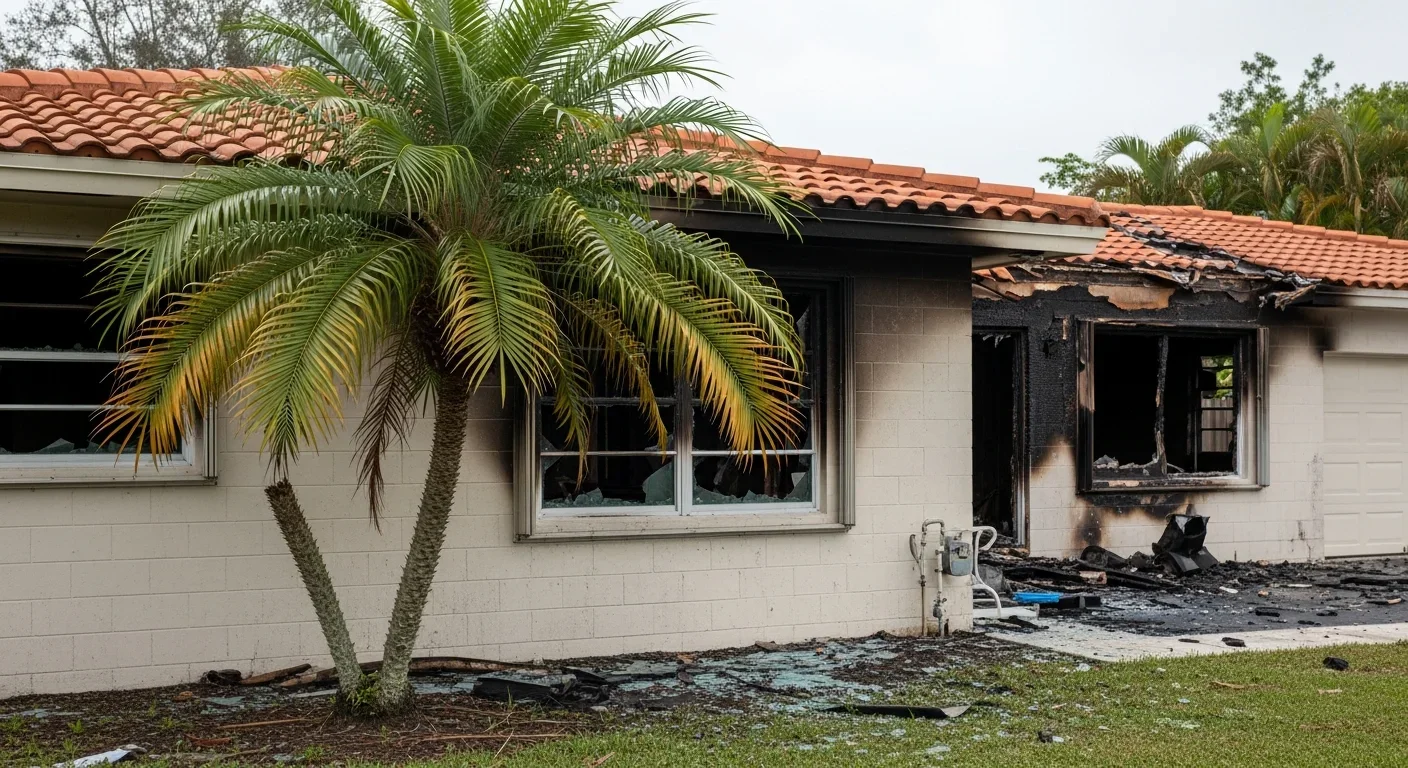
- Deerfield Beach's CBS-block and stucco construction absorbs smoke odor into the concrete core. Surface-only cleaning fails within weeks when the block releases odor back into the air.
- Century Village East, Crystal Lake, Hillsboro Cove and other 55+ condo communities face a stack-effect fire dynamic where smoke migrates vertically through stairwells and HVAC, affecting 3–5 floors above the fire origin.
- Coastal salt air pre-corrodes copper wiring in homes within 3 miles of the Atlantic. Post-fire electrical repairs almost always require replacement-level work, not surface cleanup.
- Broward County FBC triggers Type X fire-rated drywall when damage affects more than 25% of wall or ceiling area — and the Substantial Improvement Rule kicks in at 50% of building market value for any SFHA property.
A fire in Deerfield Beach is never just a fire. Your home is concrete block with stucco skin. Your condo building runs year-round HVAC that moves smoke through shared ductwork and stairwells. Your electrical wiring has been quietly corroding in salt air for years before the fire ever started. Your insurance carrier — if it's still in Florida at all — is counting down a one-year statute clock that began the moment the smoke detector went off. This guide is the honest version of what Deerfield Beach fire and smoke restoration actually looks like, neighborhood by neighborhood, code by code, deadline by deadline — and how to keep any of it from making you pay twice.
Population (2026 est.)
92,373
23% of residents age 65+ — the highest senior cohort in coastal Broward
FL claim filing deadline
1 year
Fla. Stat. § 627.70132 — supplemental claims allowed for 18 months
Average FL HO premium
$6,112
Broward County 2024 — up 31% since 2022 amid insurer exits
Century Village East
8,508 units
Deerfield's largest 55+ condo community — galley kitchens 6–8 ft from living rooms
- **CBS block + stucco substrate** — smoke odor VOCs penetrate several millimeters into concrete block and require substrate sealing, not surface cleaning
- **Year-round HVAC + salt aerosol** — pre-fire electrical corrosion means post-fire repairs are almost always replacement-level, not continuity-test
- **Stack-effect condos** — smoke from a ground-floor fire migrates vertically through stairwells and HVAC to 3–5 floors above in Crystal Lake, Hillsboro Cove, Century Village East
- **Fla. Stat. § 627.70132 one-year clock** — starts at the moment of loss with no good-faith extension for out-of-town owners
- **Substantial Improvement Rule** — a fire in a SFHA property that crosses 50% of building value triggers a flood-elevation rebuild, often adding $50k–$150k to scope
- **DBPR Chapter 468 split** — mold assessment and mold remediation must be performed by different licensees on the same property
Why Deerfield Beach Fires Look Nothing Like Inland Florida Fires
Deerfield Beach sits on a strip of coastal Broward between the Hillsboro Canal and Pompano Beach, and almost every home in the city is built from concrete masonry units — CBS block — with a stucco skin and a slab-on-grade foundation. There are no basements. Mechanical systems live at floor level. Roofs are flat built-up membrane or barrel tile. The dominant housing cohort was built between 1970 and 1995, which means year-round HVAC running in 70–75% humidity has been slowly corroding every electrical panel in town for two or three decades. When fire damage happens here, none of the national-chain restoration playbooks work without heavy modification.

The city's housing profile splits cleanly into three risk zones. Coastal single-family homes in The Cove, Deerfield Island and Lakeview sit within three miles of the Atlantic and take the full corrosion load on their service entrances and HVAC condenser units. Mid-rise and low-rise condo communities like Century Village East, Crystal Lake, Hillsboro Cove and Deer Creek concentrate thousands of compact units with shared walls, galley kitchens, and 1970s-era electrical panels that were built before the first AC compressor had ever run continuously for thirty years. Newer gated communities like Heron Landing and Ocean Vue layer impact-rated windows and sealed building envelopes on top of the same coastal substrate — which means smoke and combustion gases stay trapped inside longer when a fire starts.
The CBS Block + Stucco Smoke Absorption Problem
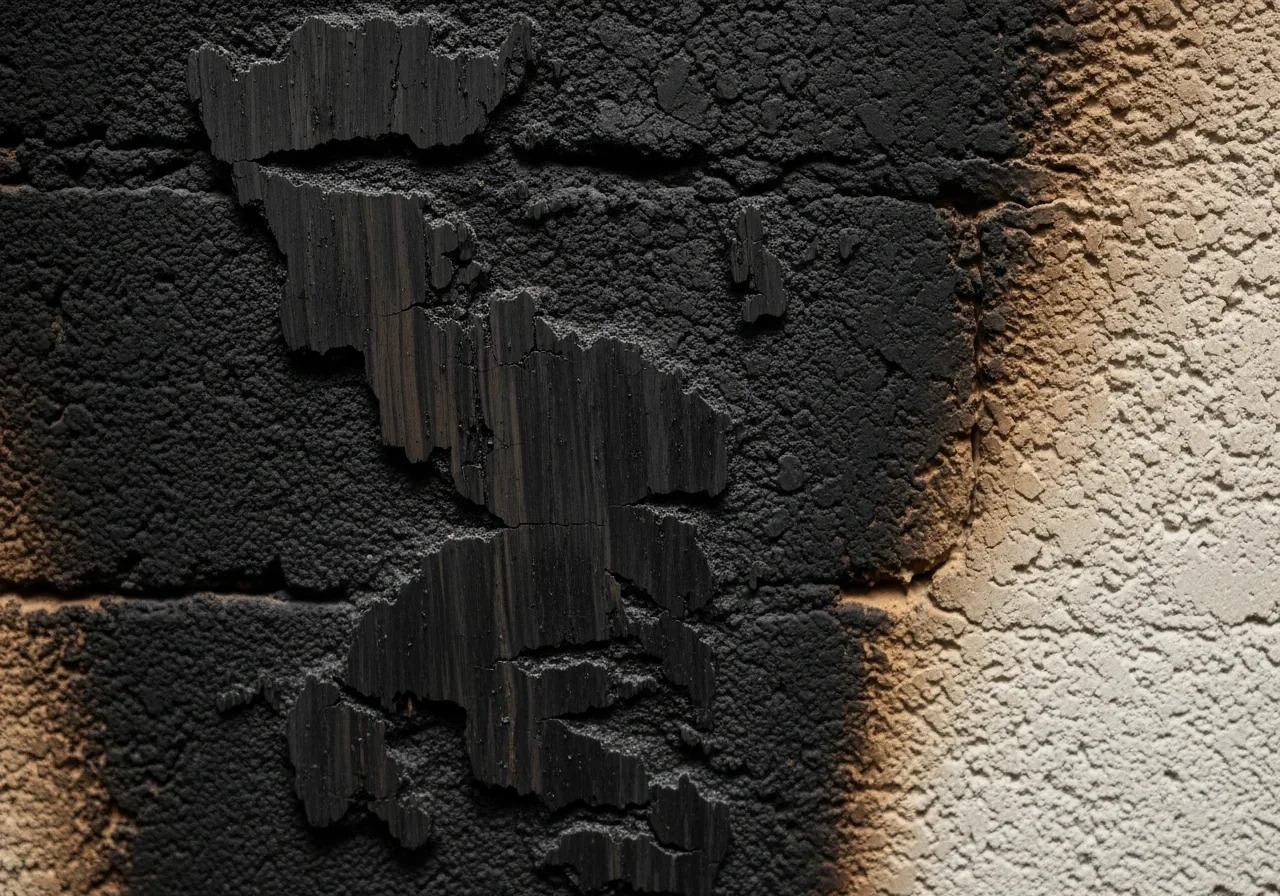
Drywall absorbs smoke into its paper face and a millimeter or two of gypsum core. CBS absorbs smoke into a ten-centimeter-deep concrete matrix. The difference matters because smoke odor is molecular, not dust — the volatile organic compounds from combustion bond to porous surfaces and then slowly release back into the air for months. On stucco and concrete block, that release window is measured in seasons, not weeks. Any restorer who promises to 'clean the soot off the block' without doing an odor-sealing primer is setting you up for a recall in three months when your living room starts smelling like the fire again during a heat wave.
Do — In the first hour
- Call 911 if fire is active. Get everyone out. Take pets.
- Take photos of everything — the structure, the rooms, the damaged contents, the exterior, the salt-corroded service entrance.
- Call Palm Build for local Florida emergency response. Start the documentation clock.
- If the building is a condo, notify your HOA property manager immediately — the master policy may kick in alongside your HO-6.
- Pull up your insurance declarations page and find the date of loss field. Write it down. That's your one-year deadline.
Don't — Ever
- Walk through soot-coated rooms without PPE. Combustion residue is carcinogenic and gets tracked into unaffected areas.
- Run your HVAC system. It will distribute smoke through every duct in the building and contaminate rooms the fire never touched.
- Sign an Assignment of Benefits form. Post-2023 Florida law eliminated AOB on new policies — a contractor asking for one is operating on a template from 2019.
- Wait for the insurance adjuster before calling a restoration company. The adjuster documents loss. The restoration company mitigates loss. They are different jobs with different timelines.
- Start wiping down surfaces with household cleaner. You will permanently set the soot into any porous material you touch.
"Initial and reopened fire claims must be filed within one year of the date of loss. Supplemental claims must be filed within 18 months. A claim filed after these deadlines is barred from coverage."
Neighborhood-Specific Fire Risk: A Visual Tour
The restoration approach changes block by block. A fire in a 1970 canal-front Cove home is an electrical-system job. A fire in a Century Village East condo is a smoke-migration job. A fire in a Crystal Lake mid-rise is a stack-effect job. Here's a tour of the communities we see most often.
Century Village East: The 8,508-unit kitchen fire factory
Century Village East has more active fire calls per year than any other Deerfield Beach community, and the reason is structural. Each compact unit has a galley kitchen 6–8 feet from the living room, shared party walls with neighboring units, and a 1970s electrical panel that was not built to handle four decades of continuous HVAC load. When a range fire starts in one unit, it spreads laterally through the shared wall cavity faster than the single-family-home playbook anticipates — and because the 55+ demographic tends to have slower reaction times, the ignition-to-full-involvement window is compressed. Any restorer working a Century Village fire needs to be thinking about the neighboring units on both sides, the unit above, and the HOA's shared ductwork before they think about contents cleaning.
Crystal Lake & Hillsboro Cove: Stack-effect smoke migration
Crystal Lake and the older Hillsboro Cove towers introduce a vertical smoke dynamic that suburban single-family restoration crews miss. Heat from a ground-floor kitchen fire drives combustion gases up through the stairwell and the HVAC return ducts at velocities well above natural convection — the stack effect. The result is smoke contamination three to five floors above the fire origin, sometimes in units whose occupants had no idea a fire had occurred downstairs until they noticed the acrid taste in their coffee the next morning. Assessment has to cover the whole vertical column, not just the fire unit. Thermal imaging of duct runs. Odor sampling in the stairwell. Negative-air containment on every floor the smoke touched.
The First 72 Hours: An Emergency Response Timeline
Smoke damage behaves like a chemistry experiment. In the first hour, combustion residue is still loose and cleanable. By hour 24, it's starting to acidify the metal surfaces it landed on — plumbing fixtures, doorknobs, appliance trim. By hour 48, porous materials have absorbed VOCs into their core. By hour 72, if the HVAC ran during or after the fire, those VOCs have moved into rooms the fire never touched. Here is the clock your restoration crew is racing.
Hour 0–1
Fire out. Safety clear. Documentation begins.
Fire department releases the scene. The first restoration crew through the door photographs everything, turns off the HVAC at the breaker, and establishes containment on any unaffected rooms. This is also the hour to start the Fla. Stat. § 627.70132 one-year clock on the claim.
Hour 1–4
Stabilization and board-up.
Broken windows are boarded. Tarping protects roof penetrations. Security is re-established. For condo buildings, the HOA property manager is notified and access to adjacent units is requested. Valuables and irreplaceable contents are inventoried for priority salvage.
Hour 4–12
Water mitigation from suppression.
Fire suppression water is extracted before it wicks into CBS block and subfloor cavities. Commercial dehumidifiers and air movers are deployed. This is the step that prevents mold from becoming a second, separate claim under Florida's DBPR-licensed mold remediation rules.
Hour 12–24
Soot surface removal from hard finishes.
Dry chemical sponges lift loose soot from stainless, glass, tile, and sealed cabinetry while the particulate is still non-reactive. Waiting past hour 24 means the residue starts acid-etching anything it touched.
Hour 24–48
Contents pack-out to climate-controlled storage.
Anything porous — upholstery, clothing, paper goods, electronics — leaves the scene for off-site restoration in a controlled environment. A contents inventory is matched against the insurance schedule for the eventual claim.
Hour 48–72
Structural deodorization phase one begins.
Hydroxyl generators start 24–72 hour runs on sealed rooms. HVAC ductwork is inspected for smoke penetration. On CBS walls, odor-sealing primers are applied before any cosmetic drywall work.
Day 4+
Scope negotiation with the insurance carrier.
Broward County FBC code upgrades — Type X drywall, Substantial Improvement Rule if applicable — are documented. Palm Build coordinates with the adjuster, the HOA master policy carrier (if a condo), and the homeowner's HO-3 or HO-6. The scope becomes a claim, not a cleanup.
IICRC S700 Smoke Odor Protocol: Why Surface Cleaning Fails
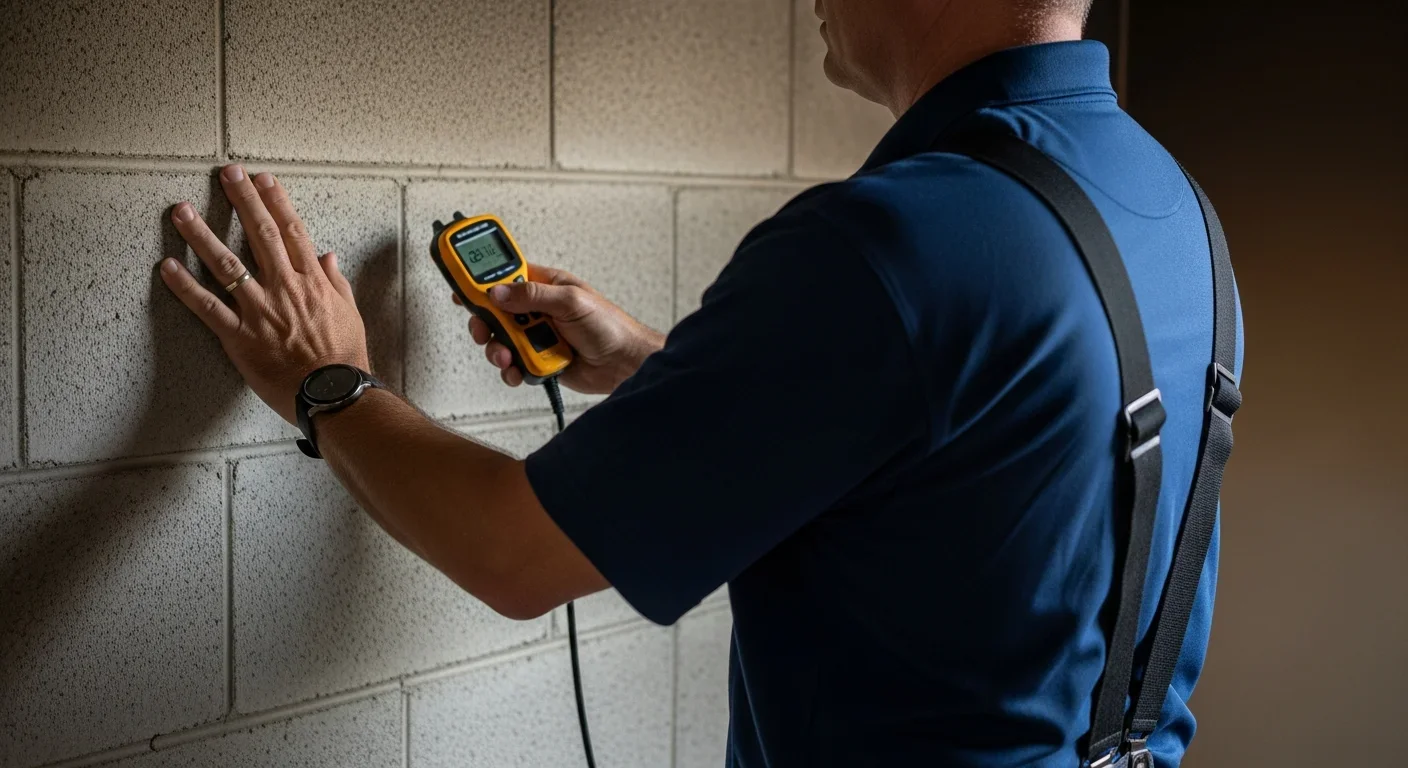
Smoke odor restoration is the hardest problem in the restoration industry. Water damage is visible and measurable — moisture meters tell you when a material is dry. Smoke odor is molecular, and the only honest test is whether the odor comes back the first time humidity or temperature spikes. The IICRC S700 standard defines four primary deodorization methods, each with a specific use case, and a competent restorer chooses between them based on the materials affected, the size of the space, and whether the structure is occupied during remediation.
- 1
Assess the smoke type and penetration depth
Protein fires (kitchen grease), natural fires (wood/cellulose), and synthetic fires (plastic, foam, electronics) leave different residues that demand different cleaning chemistries. Depth is measured with odor sampling and a systematic room-by-room survey.
- 2
Establish containment and negative air pressure
HEPA-filtered negative air machines prevent cross-contamination of unaffected areas. In condos, containment extends into shared corridors and stairwells whenever the stack effect carried smoke vertically.
- 3
Remove heavy soot from hard surfaces
Dry chemical sponges and HEPA vacuums lift loose particulate before any liquid cleaning touches the surface. Wet cleaning soot without dry removal first permanently sets it into grout, porous sealers, and unsealed wood.
- 4
Deploy molecular deodorization
Hydroxyl generators for occupied spaces. Ozone for unoccupied spaces and hard-to-reach cavities. Thermal fogging for deep penetration into upholstery and soft contents. Ionic deodorization as a supplemental polish.
- 5
Seal porous substrates with odor-blocking primer
On CBS block, stucco, and any bare framing exposed by drywall removal, a specialty primer chemically binds residual VOCs into the substrate. Without this step, every humidity spike re-releases odor into the air.
- 6
Verify and sign off
Post-remediation odor sampling and a humidity-cycle verification test confirm the work. An honest restorer will come back after the first significant weather change to re-verify — not hand you a clipboard and leave.
Deodorization method comparison
| Method | Best for | Safe for occupied spaces? | Typical duration |
|---|---|---|---|
| Hydroxyl generator | Occupied homes, sensitive materials, electronics | Yes | 24–72 hours per room |
| Ozone | Unoccupied structures, wall cavities, HVAC ducts | No — evacuation required | 4–24 hours |
| Thermal fogging | Upholstery, soft contents, deep wood penetration | No — ventilation required after | 2–4 hours + dwell |
| Ionic deodorization | Light smoke, polishing finish after primary method | Yes | Continuous background |
| Odor-sealing primer | CBS block, stucco, bare framing, subfloors | Yes | Applied once; permanent |
Choose by material type, occupancy status, and penetration depth. Most Deerfield Beach CBS-block fires require at least three methods in combination.
Florida Insurance Reality: The One-Year Clock
The Florida fire claim landscape changed meaningfully in the last three years, and most homeowners — especially snowbirds and Deerfield's large out-of-town condo owner population — have not kept up. Three rule changes in particular govern how your claim gets paid, how fast it has to happen, and what documentation decides whether you get the cost of rebuilding or a depreciated payout that leaves you underwater.
- Fla. Stat. § 627.70132
- Florida's one-year claim filing deadline statute. Initial and reopened fire, hurricane and windstorm claims must be filed within 12 months of the date of loss; supplemental claims within 18 months.
- AOB reform (effective Jan 1, 2023)
- Florida eliminated Assignment of Benefits for new homeowner policies. You can no longer sign over your insurance proceeds directly to a contractor. The contractor works for you; your carrier reimburses you for their invoice.
- Substantial Improvement Rule
- If post-loss repair cost exceeds 50% of the structure's pre-loss market value and the structure sits in a Special Flood Hazard Area, the entire building must be brought up to current Base Flood Elevation — a $50,000–$150,000 scope addition on some Deerfield properties.
- Type X fire-rated drywall
- 5/8-inch gypsum board with glass fibers and additives that resist fire for 60+ minutes. Broward County FBC requires it for any wall or ceiling assembly where more than 25% of the area is being replaced post-fire.
- DBPR Chapter 468 Part XVI
- Florida's mold licensing statute. Any post-fire mold remediation in Deerfield Beach must be performed by a DBPR-licensed mold remediator. The same licensee cannot perform both assessment and remediation on the same property.
- HO-6 vs. master policy
- Condo owners carry HO-6 (personal unit) policies. The HOA carries a master policy covering shared structure. After a condo fire, both policies may respond — and coordinating the two is where most Deerfield claims stall for months.
- Citizens Property Insurance
- Florida's state-backed insurer of last resort. As of Jan 2025, Citizens holds approximately 10.8% of Broward County homeowner policies. Claims handling with Citizens follows slightly different timelines than private carriers.
- IICRC S700
- The Institute of Inspection, Cleaning and Restoration Certification standard for professional fire and smoke damage restoration. Defines deodorization methods, material handling, and documentation protocols.
Broward County FBC: The Rebuild Code That Changes Your Scope
Broward County adopts the Florida Building Code with local amendments, and the post-fire rebuild rules are stricter than most homeowners realize. Two specific thresholds dramatically change the scope and cost of your restoration the moment the damage crosses them, and a competent restorer needs to be watching both from day one — not discovering them three weeks into the job.
- Photograph everything visible — rooms, contents, structure, exterior — before any cleanup touches the site.
- Find your insurance declarations page and note the date-of-loss field. Start a countdown from today for the Fla. Stat. § 627.70132 one-year deadline.
- Do not sign an AOB. Post-2023 Florida law eliminated them on new policies. A contractor asking for one is working from an outdated template.
- Turn off the HVAC at the breaker panel. Do not run it again until a restoration crew has inspected and cleaned the ductwork.
- If you live in a condo, notify your HOA property manager in writing — the master policy and your HO-6 need to be coordinated from hour one.
- Pull your FEMA flood zone designation for your address at msc.fema.gov. If you are in AE, VE or A, the Substantial Improvement Rule is live.
- Ask any restorer you interview whether they hold IICRC FSRT (Fire & Smoke Restoration Technician) and OCT (Odor Control Technician) certifications. If they do not, keep interviewing.
- Do not start cleaning or discarding damaged items on your own. Every item you touch before documentation is a dollar subtracted from your eventual claim.
Frequently Asked Questions
How long does smoke odor removal take in a Deerfield Beach condo if the fire started in a neighboring unit? +
What does Florida law say about my deadline to file a fire damage claim, and can I reopen it later? +
Will my homeowners insurance cover the electrical system replacement if my kitchen fire was caused by an aging AC unit? +
Do I need to hire a separate licensed mold remediation company after my fire, or can the restoration contractor handle it? +
My Century Village East condo was damaged by fire — does the HOA master policy or my personal HO-6 policy cover it? +
How do you clean smoke residue from CBS concrete block walls without damaging the stucco? +
What is the Substantial Improvement Rule, and why did my fire damage claim suddenly require a flood elevation upgrade? +
Deerfield Beach Fire & Smoke Cleanup
Our dedicated Deerfield Beach fire and smoke restoration pillar page with service area detail and emergency response.
Deerfield Beach Reconstruction Services
Post-fire rebuild, Broward FBC Type X drywall, Substantial Improvement Rule compliance.
Fort Lauderdale FL — 48-Hour Mold Window Guide
Sibling coastal Florida guide — the mold risk window that starts the moment fire suppression water hits your CBS block.
Rock Hill SC — Fire & Smoke Odor Removal Guide
Sibling fire/smoke blog for the Carolinas side of our service area — same IICRC S700 protocol, different regional code.
Fire Damage Restoration Cost
Our cost pillar blog — square-footage brackets, deductible math, and what Florida carriers actually reimburse.
Florida Homeowners Insurance Crisis & Water Damage Claims 2026
The broader Florida insurance rate environment that shapes every Deerfield Beach fire claim in 2026.
Deerfield Beach Fire & Smoke Emergency? Start the Clock With the Local Line
Palm Build Restoration runs 24/7 emergency response across Deerfield Beach and coastal Broward County. IICRC-certified, DBPR-coordinated, and fluent in the Fla. Stat. § 627.70132 one-year clock. Call the Florida line now or visit the Deerfield Beach fire & smoke pillar page for the full service detail.
Found this helpful? Send it to someone who needs it.