Hurricane storm damage to a CBS stucco home in Oakland Park FL showing wind damage to barrel tile roof and Broward County residential neighborhood
OAKLAND PARK FL — 24/7 HURRICANE & STORM DAMAGE RESPONSE

Storm & Hurricane Damage Restoration in Oakland Park, FL

Oakland Park sits in central Broward County with a housing stock whose median build year is 1972 — aging CBS concrete block and barrel tile roofs that face approximately 170 mph HVHZ design wind loads and canal-and-rain flooding driven by the Middle River and inland waterways. With roughly 40% of the city in FEMA Special Flood Hazard Areas and documented events including 12.92 inches of rain in 48 hours in November 2023, storm damage here is recurring and complex. Palm Build responds from our Deerfield Beach headquarters — 15 to 20 minutes away — with emergency tarping, wind-driven rain extraction, canal-flood cleanup, and full HVHZ-compliant reconstruction.

Deerfield Beach Office — ~6 miles to Oakland Park 15-20 min Response IICRC Certified

15-20 min

Emergency Response

24/7

Dispatch Available

IICRC

Certified Technicians

Storm Vulnerability Profile

Why Oakland Park Properties Face Significant Hurricane and Storm Damage Risk

Oakland Park sits in central Broward County, approximately 6 miles inland from the Atlantic coast — shielded from direct ocean exposure but not from the forces that make South Florida hurricanes so destructive. The city's aging CBS construction stock, its extensive canal network, the Middle River, and its position in the HVHZ mean that every tropical system brings a combination of wind damage to tile roofs, wind-driven rain intrusion through aging stucco, and canal-and-stormwater flooding that overwhelms drainage infrastructure built for a different era.

Palm Build responds to Oakland Park from our Deerfield Beach headquarters — approximately 6 miles away, typically 15 to 20 minutes via I-95 or Federal Highway. Our crews are trained in HVHZ rebuild standards, City of Oakland Park permit requirements, and the specific moisture dynamics of mid-century CBS and stucco construction.

~170 mph

HVHZ design wind

~40%

City in FEMA SFHA

1972

Median home built

15-20 min

Response from HQ

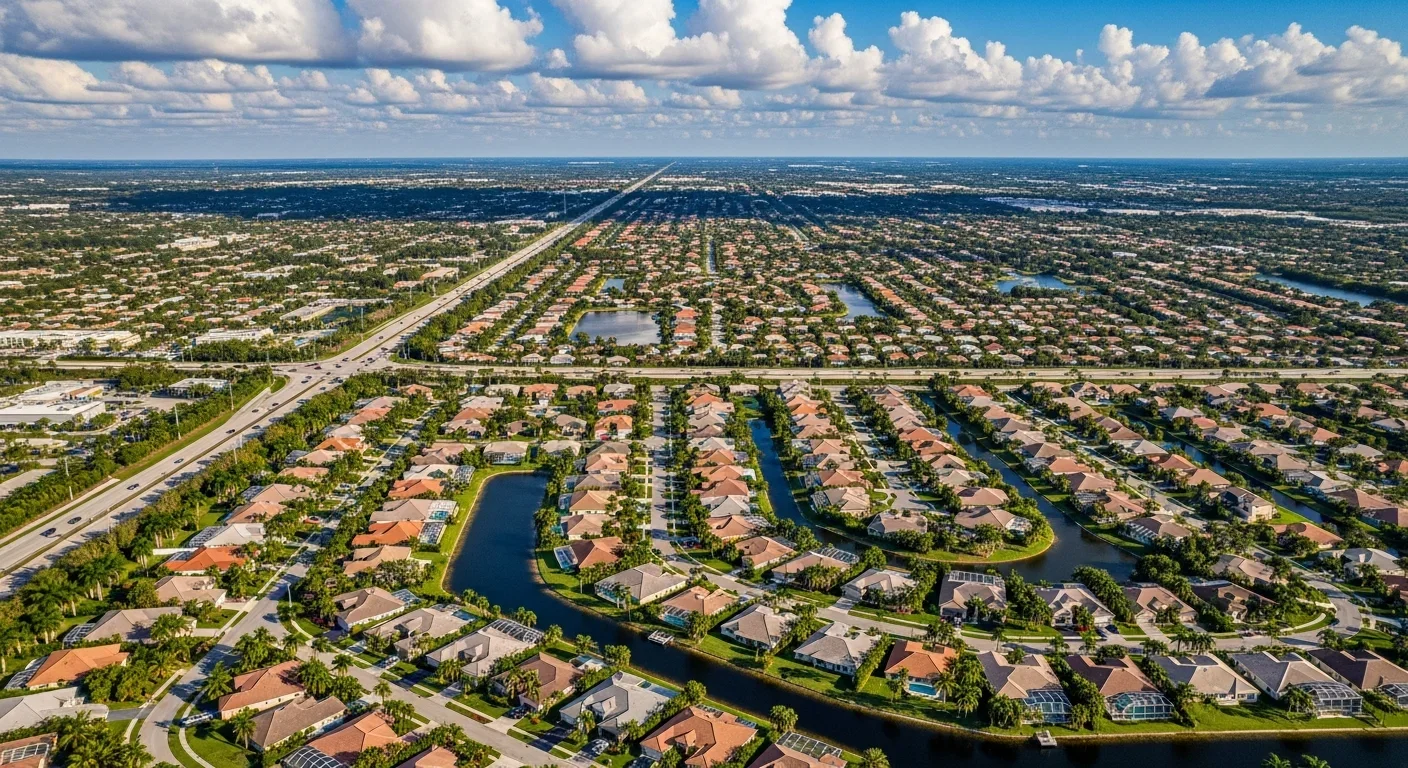
Aerial view of Oakland Park FL showing central Broward County neighborhoods, inland canal network, and Middle River drainage system
Oakland Park's canal network and Middle River provide drainage — but during intense rainfall events these same waterways overflow into residential neighborhoods

~40% of Oakland Park in FEMA Flood Hazard Areas

Approximately 40% of Oakland Park lies within FEMA-designated Special Flood Hazard Areas (Zones AE and AH). The Middle River and the city's inland canal network are the primary flooding drivers — when extreme rainfall saturates the shallow Biscayne aquifer, the entire canal system backs up and overflows into neighborhoods. In November 2023, NWS Miami recorded 12.92 inches of rainfall on Oakland Park in just 48 hours, sending water into hundreds of homes across the city.

HVHZ: Design Wind ~170 mph for All Broward Properties

Oakland Park falls within the High Velocity Hurricane Zone (HVHZ) — Broward County's mandatory high-wind construction regime. All exterior products must meet Florida/Broward Product Approval or Miami-Dade NOA, pass large- and small-missile impact testing (TAS 201/202/203), and comply with Florida Building Code 8th Edition (FBC 2023, ASCE 7-22). Design wind is approximately 170 mph for Risk Category II structures. Permits for storm-related reconstruction go through the City of Oakland Park Building Division plus Broward County Notice of Commencement.

Oldest Housing Stock in the Batch — Median Build Year 1972

Oakland Park has the oldest housing stock of any city in our South Florida service cluster, with a median construction year of 1972. Nearly 80% of the city's homes were built between 1950 and 1989 — CBS concrete block with stucco exteriors, slab-on-grade foundations, and barrel or flat tile roofs that are now 40 to 70+ years old. Aging underlayment on these roofs is the primary hidden-damage failure point after wind events. Cast-iron drain-line failures and aging galvanized plumbing compound interior water damage after storms.

Middle River and Canal Network: The Recurring Flash Flood Pattern

Oakland Park is laced with the Middle River and its tributary canals, which provide drainage — but become flood vectors during intense rain events. Unlike coastal Broward cities whose flooding character is driven by ocean exposure, Oakland Park experiences canal overflow, wind-driven rain intrusion, and stormwater system overload during tropical systems. The shallow Biscayne aquifer limits soil absorption capacity, meaning already-saturated ground produces rapid ponding and flash flooding with each subsequent rainfall event during hurricane season.

Neighborhood Storm Risk Profiles

Oakland Park Neighborhoods: Storm and Flood Risk by Area

Storm damage in Oakland Park concentrates along predictable patterns tied to housing age, proximity to the Middle River and inland canals, and construction type. Wind damage to aging barrel tile roofs and stucco exteriors affects nearly every neighborhood. Canal-adjacent areas like Sleepy River and Middle River Homes carry additional flash-flooding exposure. Understanding your neighborhood's specific risk profile determines your insurance needs and the type of storm restoration your property will require.

North Andrews Gardens

High Risk

Wind Primary — Aging Roof & Window Risk

North Andrews Gardens consists largely of 1950s through 1970s single-story CBS stucco homes with aging barrel tile or flat tile roofing. The primary storm threat is wind: displaced tiles expose deteriorated underlayment, and wind-driven rain penetrates through hairline stucco cracks and around aging window frames. Repeated roof leaks over multiple storm seasons cause hidden moisture accumulation behind walls — a pattern that accelerates mold colonization in this neighborhood's dense construction. Post-storm inspections with thermal imaging are critical because visible damage on the exterior rarely captures the full water intrusion scope.
Lloyd Estates

High Risk

Wind and Plumbing — Mixed Damage Risk

Lloyd Estates shares the mid-century construction profile of neighboring North Andrews Gardens: CBS walls, aging stucco, and 50-plus-year-old plumbing systems that stress under the pressure fluctuations of a tropical storm. Wind events bring tile displacement and window-sealant failures; subsequent rain intrusion activates dormant plumbing deficiencies. Slow post-storm seeps behind cabinetry and inside walls go undetected for weeks, particularly in the wet-season environment where ambient humidity is already at 70-75%. Early moisture mapping is essential in Lloyd Estates properties.

Sleepy River

High Risk

Canal-Adjacent — Flash Flooding and Drainage Risk

Sleepy River sits adjacent to the inland canal and waterway network that drains central Oakland Park. During intense rainfall events — like the 12.92 inches NWS Miami recorded in 48 hours in November 2023 — these canals overflow into adjacent residential yards and streets. Stormwater drainage in this area can be overwhelmed quickly given the shallow Biscayne aquifer and high water table beneath Oakland Park. Properties in Sleepy River may face both exterior wind damage and interior water intrusion from canal-adjacent flooding during major tropical events.

Middle River Homes

High Risk

River-Adjacent — Flooding and Groundwater Risk

Middle River Homes borders the Middle River itself — the primary waterway draining this section of central Broward County. River-adjacent properties experience amplified flooding risk when prolonged tropical rainfall raises river levels above bank capacity. The shallow Biscayne aquifer means groundwater is always close to the surface; heavy rain raises the water table further, causing moisture wicking through slab foundations even in structures without direct river contact. Combined wind and water damage is common here during tropical systems of any intensity.

Lake Emerald

Moderate

Condo Community — Shared Systems and HOA Coordination Risk

Lake Emerald is a condo-dominated community with shared plumbing stacks, common-area roof decks, and multi-unit building systems. Wind damage to roofing or exterior openings in one unit creates cross-unit water losses that travel through ceilings and shared walls into adjacent and lower-floor units. HOA master policy coverage versus individual HO-6 policy is a major complexity after storm events here. Containment to prevent cross-unit contamination and multi-party coordination with both owners and the association are required for proper restoration.

Royal Palm Acres

Moderate

Interior Wind — Stucco Intrusion Risk

Royal Palm Acres is a mix of mid-century single-family homes with CBS and stucco exteriors. The neighborhood sits in central Oakland Park away from direct canal exposure, so primary storm risk is wind: barrel tile displacement, stucco crack water infiltration, and aging sealant failure around windows and doors. Slow hidden intrusion behind stucco finishes is the characteristic damage pattern — moisture trapped between the exterior stucco and interior drywall creates conditions for rapid mold colonization in the tropical humidity of a post-storm period without air conditioning.

Evacuation Zones & Storm Damage Risk

Oakland Park Evacuation Zones: Inland Low-Risk with Real Flood Exposure

Oakland Park is an inland Broward County city — most of its neighborhoods fall in lower-priority evacuation zones or are generally not subject to mandatory evacuation orders. But lower evacuation risk does not mean lower storm damage risk. The city's canal network, the Middle River, and roughly 40% of the city in FEMA Special Flood Hazard Areas mean that canal overflow, wind-driven rain, and stormwater flooding are real threats during every significant tropical system — regardless of whether an evacuation order applies to your neighborhood.

Canal and Stormwater Flooding

Primary flood threat for inland Oakland Park

Areas most exposed: Sleepy River, Middle River Homes, canal-adjacent streets throughout central Oakland Park, and any property near the city's network of inland drainage canals

Primary threat: Canal overflow and stormwater system overload during intense tropical rainfall. The shallow Biscayne aquifer limits soil absorption — when the water table is already high from prior rain, additional rainfall has nowhere to go. November 2023 brought 12.92 inches to Oakland Park in 48 hours, flooding streets and homes across the city.

Insurance impact: FEMA AE and AH zones cover roughly 40% of Oakland Park. Flood insurance is required for federally-backed mortgages in SFHA zones. Canal overflow damage is excluded from standard homeowners policies — only a separate NFIP or private flood policy covers it. Wind damage from the same storm is filed separately with your homeowners carrier with the applicable hurricane deductible.

Restoration Reality

Canal-overflow water in Oakland Park typically tests as Category 1 or Category 2 (freshwater or lightly contaminated) under IICRC S500 standards — significantly less aggressive than coastal-city saltwater protocols. However, wind damage, tile displacement, and wind-driven rain intrusion through aging stucco occur simultaneously. Dual-claim documentation separating wind damage from water damage is essential.

Wind and Rain Intrusion

The universal Oakland Park storm damage pattern

Areas most exposed: All Oakland Park neighborhoods with aging barrel tile roofs — North Andrews Gardens, Lloyd Estates, Royal Palm Acres, and the broader 1950s-1980s CBS residential stock throughout the city

Primary threat: Wind uplift displacing barrel tiles and exposing deteriorated underlayment beneath. Wind-driven rain enters through hairline stucco cracks, failed window sealant joints, and around aged door frames. CBS concrete block walls dry 20-40% slower than wood-frame — trapped moisture behind stucco is the leading hidden-damage pattern in Oakland Park homes.

Insurance impact: Wind damage is covered under your Florida homeowners policy with a 2-5% hurricane deductible. On a $352,600 median Oakland Park home, that is $7,000-$17,600 out of pocket before your wind claim begins. All wind-related restoration must meet City of Oakland Park Building Division permit requirements and HVHZ standards.

Restoration Reality

Wind-driven rain intrusion through Oakland Park's aging CBS walls requires thermal imaging to locate — standard visual inspection misses 60-80% of actual moisture penetration. Palm Build maps every affected area with professional moisture meters before scoping the repair, preventing costly re-openings and scope creep during insurance adjusting.

FEMA Zone X Properties: Lower Regulatory Risk, Real Damage Exposure

Properties in FEMA Zone X (minimal flood hazard) in Oakland Park are not required to carry flood insurance. But the April 2023 event that brought 15-25 inches of rain to metro Broward, the November 2023 event that put 12.92 inches on Oakland Park in 48 hours, and the June 2024 event with another 15-20 inch total prove that Zone X properties flood too when rainfall intensity exceeds the design capacity of the stormwater system. Over 25% of NFIP flood insurance claims nationally come from properties outside Special Flood Hazard Areas. Flood insurance for Zone X properties is available at Preferred Risk rates through the NFIP — a fraction of the cost of an uninsured flood loss.

Schedule a pre-storm property assessment

Types of Storm Damage

How Hurricanes Damage Oakland Park Homes

Hurricane and storm damage in Oakland Park manifests in six distinct ways — and tropical systems trigger multiple damage types simultaneously. The city's aging CBS construction with barrel tile roofs, its canal-and-river drainage network, and its position deep in Broward County's inland corridor create a damage profile that demands specialized knowledge of each category, its insurance coverage, and the correct remediation protocol.

High

Barrel Tile Roof Displacement and Underlayment Failure

Oakland Park's barrel tile roofs — dominant on the city's mid-century CBS housing stock — survive hurricane winds intact at the tile level. The failure point is the waterproof underlayment membrane beneath the tiles. After decades of UV exposure and tropical heat cycling in a home built in the 1960s or 1970s, underlayment dries out and cracks. Hurricane winds momentarily lift tiles; wind-driven rain penetrates the compromised membrane; tiles reseat after the storm. The result is $15,000-$50,000+ in hidden interior water damage that goes undetected for weeks without a professional post-storm inspection using thermal imaging. This is the number-one hidden-damage pattern in Oakland Park.

High

CBS Wall Wind-Driven Rain Intrusion

Oakland Park's CBS concrete block and stucco construction resists wind loading well — but wind-driven rain at tropical-storm or hurricane intensity penetrates through hairline stucco cracks, mortar joint failures, and deteriorated window sealant joints. In a city where most homes were built before 1980, these vulnerabilities are widespread. CBS walls trap moisture between the exterior stucco and interior drywall and dry 20-40% slower than wood-frame construction. Post-storm thermal imaging of every exterior wall is essential — visible surface damage represents only a fraction of actual water intrusion in mid-century Oakland Park homes.

High

Canal Overflow and Flash Flooding

Oakland Park is an inland city whose flooding is driven by canal overflow, stormwater system overload, and the high water table of the shallow Biscayne aquifer — not ocean exposure. When rainfall intensity exceeds the drainage capacity of the Middle River and the city's inland canal network, water backs up into streets, garages, and living spaces. The November 2023 event brought 12.92 inches in 48 hours; April 2023 brought 15-25 inches to metro Broward. Canal overflow water in Oakland Park typically tests as Category 1 or 2 under IICRC standards — freshwater or lightly contaminated — but rapid extraction is essential to prevent mold colonization within 24-48 hours in tropical humidity.

Moderate

Middle River Flooding and Groundwater Wicking

Properties near the Middle River face amplified flooding risk when prolonged tropical rainfall raises river levels. Because the Biscayne aquifer is shallow beneath Oakland Park, heavy rain also raises the water table — causing moisture to wick upward through slab foundations even in structures without direct riverfront exposure. This groundwater contribution to interior moisture is often overlooked during post-storm assessments, and it extends structural drying times significantly for affected properties in Middle River Homes and other river-adjacent neighborhoods.

Moderate

Tree and Debris Impact Damage

Oakland Park's mature tropical tree canopy — royal palms, ficus, live oaks, and Australian pines — becomes a significant debris source in hurricane and tropical storm-force winds. Fallen trees crush roofing, screen enclosures, lanais, and vehicles. Flying debris can break windows, including impact-rated glass at high velocity. Landscaping debris clogs storm drains and amplifies neighborhood flooding. In Oakland Park's denser residential areas, where mature trees are close to structures, tree-related structural damage often equals or exceeds direct wind damage.

Moderate

Window and Opening Failure

Many Oakland Park homes built before the 2002 Florida Building Code update retain non-impact-rated windows or aging accordion and panel shutters. When a window fails from flying debris or sustained wind pressure, interior pressurization results — uplift forces created by wind entering through an open breach can lift the roof from the inside. Accordion shutter track corrosion and slider hardware failure are common in South Florida's humidity. All post-storm window or opening replacements in Oakland Park must meet HVHZ requirements: Florida/Broward Product Approval, TAS 201/202/203 impact testing, and City of Oakland Park Building Division permits.

Hurricane Restoration Process

How We Restore Oakland Park Homes After Hurricane Damage

Hurricane restoration in Oakland Park requires navigating barrel tile roof repair, CBS wall drying, canal-flooding documentation, and dual wind/flood insurance claims simultaneously. Here is our proven six-step process from first call through final City of Oakland Park inspection.

01

Emergency Tarping and Board-Up

Hours 1-4

We secure your Oakland Park property against further weather exposure immediately. Displaced barrel tiles are tarped with reinforced polyethylene rated for South Florida wind loads, failed windows are boarded, and compromised doors are sealed. Palm Build responds from our Deerfield Beach headquarters — approximately 6 miles from Oakland Park — in 15 to 20 minutes. Emergency tarping is covered by your insurance policy as part of your duty to mitigate further damage, and it must be documented from the first hour to protect your claim.

02

Damage Assessment and Water Category Testing

Days 1-3

Full documentation of all storm damage classified by cause: wind damage (tiles, stucco, windows), wind-driven rain intrusion through CBS walls, and canal or stormwater flooding (Category 1-2 freshwater or lightly contaminated). In Oakland Park, we test flooding water on-site using IICRC protocols — canal overflow water typically tests as Category 1 or 2, unlike coastal-city events where contamination classifications are more severe. We photograph every affected area, map moisture with thermal cameras, and create separate scopes for wind claims (homeowners policy) and flood claims (NFIP or private flood policy).

03

Water Extraction and Dehumidification

Days 1-10

Storm damage in Oakland Park almost always includes water intrusion — through displaced barrel tiles, failed windows, or canal-and-stormwater flooding. We extract standing water, classify contamination, and begin appropriate drying protocols. Commercial dehumidifiers and high-velocity air movers bring relative humidity below 60% to prevent mold colonization in the tropical post-storm environment. Oakland Park's year-round 70-75% outdoor humidity means equipment sizing must compensate for the ambient moisture load — under-powered drying is a primary cause of secondary mold damage after storm events here.

04

Structural Drying and Mold Prevention

Days 3-14

CBS concrete block walls retain moisture 20-40% longer than wood-frame construction — a critical factor in Oakland Park where the median home was built in 1972 and many walls have never been professionally dried. Without power (common after hurricanes), air conditioning stops and mold colonization begins within 24-48 hours in the tropical humidity. We deploy industrial desiccant dehumidifiers, establish negative air pressure containment in affected zones, and monitor moisture levels twice daily. HEPA air scrubbing removes airborne mold spores throughout the drying period.

05

Full Structural Reconstruction

Weeks 2-16

Once the property is dried, decontaminated, and cleared, we begin reconstruction to current Florida Building Code standards. Barrel tile roof repair or replacement, stucco restoration on CBS walls, interior drywall and flooring replacement, electrical and plumbing repairs, and painting. All materials and installation must meet HVHZ requirements for Oakland Park: Florida/Broward Product Approval or Miami-Dade NOA for exterior products, TAS 201/202/203 impact testing compliance, and design wind of approximately 170 mph for Risk Category II structures. All structural work requires permits through the City of Oakland Park Building Division.

06

Final Inspection and Insurance Closeout

Week 16+

City of Oakland Park Building Division inspections verify all structural, electrical, mechanical, and plumbing work meets current HVHZ code. We perform a final walk-through with the homeowner and provide complete documentation for insurance closeout — including all invoices, permits, inspection records, code compliance certificates, and warranty information. For hurricane claims involving both wind and flood policies, we coordinate dual-claim closeout to ensure maximum recovery from both carriers. Florida law (Fla. Stat. 627.70132) gives you 1 year to file the initial claim notice and 18 months for supplemental claims.

Oakland Park Pricing

Storm Damage Restoration Costs in Oakland Park, FL

Hurricane restoration costs in Oakland Park are driven by barrel tile roof systems, CBS wall drying complexity, and South Florida labor costs. After major storms, contractor demand and material shortages across Broward County increase costs 20-40% and extend timelines by months. Understanding your out-of-pocket exposure starts with understanding your hurricane deductible.

Roof Repair and Minor Wind Damage

Displaced barrel tiles, flashing repair, shutter damage, screen enclosure, soffit

$8,000 - $25,000

Barrel tile + underlayment replacement adds 20-30% vs. shingle roofs

Wind/Rain Intrusion Restoration

Window failure, stucco breach, water extraction, CBS wall drying, partial rebuild

$15,000 - $50,000

CBS walls dry 20-40% slower than wood-frame — extends timeline and cost

Canal and Stormwater Flooding

Category 1-2 water extraction, structural drying, content removal, partial rebuild

$15,000 - $50,000

Separate flood policy required — homeowners excludes flood

Combined Wind and Flood Damage

Full tile-roof replacement, CBS wall drying, water extraction, full interior rebuild

$40,000 - $150,000+

Dual claims: wind (homeowners) + flood (NFIP/private)

Hurricane Deductible Calculator: Oakland Park

The median home value in Oakland Park is approximately $352,600. At a 2% hurricane deductible, that means $7,052 out of pocket before your wind claim pays anything. At 5%, it is $17,630. Broward County homeowners premiums average approximately $6,220 per year. This deductible applies per hurricane event — not annually. If two storms hit in one season (as Frances and Jeanne did in 2004), you pay the deductible twice. Many Oakland Park homeowners are surprised by this number when they file their first hurricane claim — Palm Build helps you understand your exact exposure before storm season.

Hurricane Season Calendar

Oakland Park Hurricane Season: June Through November

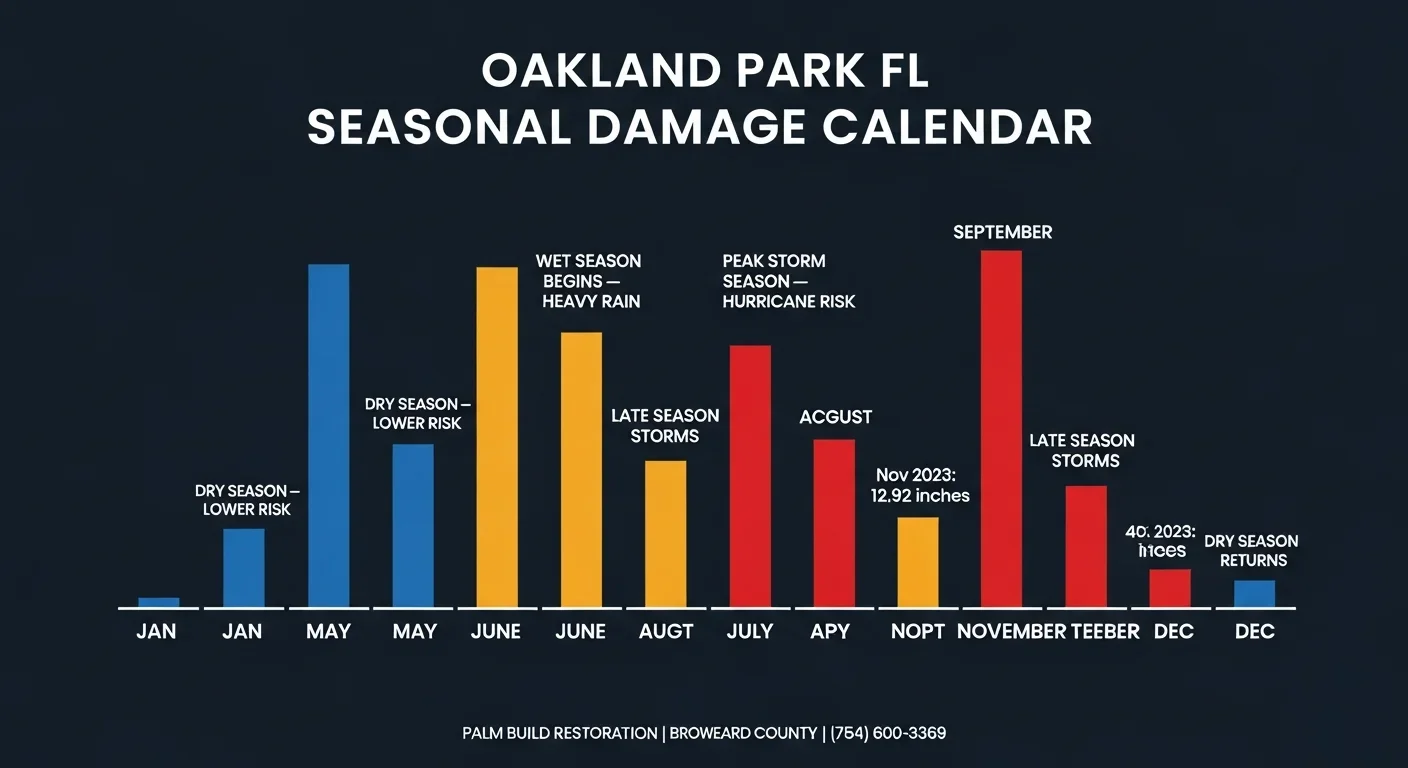
Atlantic hurricane season runs June 1 through November 30, with peak activity concentrated in September and October. For Oakland Park homeowners — with approximately 40% of the city in FEMA flood hazard areas and a housing stock with a median build year of 1972 — understanding the seasonal risk curve determines when to complete preparations and when to have your restoration company on speed dial.

June

Low-Moderate

Hurricane season begins June 1. Early-season storms are typically disorganized but produce heavy rainfall and localized canal flooding in Oakland Park. June averages 9.55 inches of rainfall — the highest monthly total in the city. Afternoon thunderstorms become daily events. This is the last window to complete roof inspections, verify insurance policies, and install shutter hardware before activity ramps up. The June 2024 event deposited 15-20 inches on parts of metro Broward in under two days.

July

Moderate

Tropical development increases as ocean temperatures rise. Severe thunderstorm events become common across Broward County, producing wind gusts capable of displacing barrel tiles on Oakland Park roofs. The high water table and saturated soil from June rainfall mean that July storms compound on already-wet ground — stormwater systems have less margin before canal overflow begins. Roof leaks that were dormant during dry season now activate.

August

High

August averages 7.89 inches of rainfall, and peak Atlantic hurricane development shifts closer to Florida. Tropical systems can produce days of continuous rainfall before the center arrives — saturating Oakland Park's soil, raising the Biscayne aquifer water table, and taxing the Middle River and canal drainage network. Preparation transitions from planning to execution: shutters should be accessible and your restoration contact secured before activity peaks.

September

Peak

Statistically the most dangerous month for South Florida hurricanes. September averages 8.02 inches of rainfall, and every neighborhood in Oakland Park is at peak flood and wind-damage exposure. The combination of saturated ground from months of wet-season rain, the highest-frequency storm development, and the risk of rapid intensification in the warm Gulf and Atlantic waters makes September the month to have your restoration company on speed dial.

October

Peak

October rivals September for hurricane activity frequency. Hurricane Wilma made Florida landfall on October 24, 2005, causing widespread damage across Broward County — including significant tile roof displacement and wind-driven rain intrusion in central Broward cities like Oakland Park. Late-season storms can intensify rapidly and approach from unexpected angles. October averages 7.37 inches of rainfall on top of an already-saturated wet-season base.

November

Low-Moderate

Season officially ends November 30 but late-season events remain possible and can be significant. November 2023 brought 12.92 inches of rain to Oakland Park in just 48 hours — flooding homes, overwhelming drainage, and producing some of the worst non-hurricane flooding the city had seen in years. Do not lower your guard until December, and file all storm-related insurance claims before the one-year Florida statutory deadline.

Seasonal storm damage calendar showing hurricane risk timeline for Oakland Park FL homeowners in Broward County
Oakland Park hurricane season spans June through November — peak risk months are September and October, but documented flooding events have occurred as late as November

Aging Infrastructure Amplifies Every Storm Season

Oakland Park's housing stock has a median construction year of 1972. That means most homes in the city were built 50+ years ago — before modern wind-load engineering standards, before HVHZ construction requirements, and before the waterproof underlayment materials now required beneath barrel tile roofs. Each hurricane season that passes without a full roof inspection increases the probability that a moderate wind event will create a major interior water loss. Pre-season inspections in Oakland Park are not optional — they are the most cost-effective storm protection available.

Call (754) 600-3369 for pre-season assessment

FEMA Flood Zone Guide

FEMA Flood Zones in Oakland Park: AE, AH, and Zone X

Oakland Park is an inland city with flood risk driven by canal overflow, Middle River flooding, and stormwater system capacity limits — not ocean exposure. Approximately 40% of the city lies within FEMA-designated Special Flood Hazard Areas, primarily AE and AH zones. Your FEMA zone determines whether flood insurance is mandatory, what your premiums will cost, and how your property is likely to flood during a tropical event.

AE Zone — Special Flood Hazard Area

Canal corridors, Middle River adjacencies, Sleepy River, low-lying sections of North Andrews Gardens and Lloyd Estates

AE zones face a 1% annual chance of flooding (100-year floodplain) with published base flood elevations. In Oakland Park, AE zones follow the Middle River, the city's inland canal network, and low-elevation residential corridors across central and eastern parts of the city. Properties must be built to or above BFE. Flood insurance is mandatory for federally-backed mortgages in AE zones. In Oakland Park, AE zone flooding is driven by canal overflow and stormwater overload — freshwater or lightly contaminated Category 1-2 water under IICRC standards. The November 2023 event (12.92 inches in 48 hours) produced AE-zone flooding across multiple Oakland Park neighborhoods.

Flood insurance mandatory. AE construction standards apply. Canal-overflow flooding excluded from homeowners policies.

AH Zone — Shallow Flooding Areas

Interior Oakland Park neighborhoods with limited drainage capacity and low elevation

AH zones face shallow flooding (typically 1-3 feet) during extreme rainfall events when stormwater drainage infrastructure is overwhelmed. In Oakland Park, AH zones cover interior residential areas where street drainage has limited capacity. The shallow Biscayne aquifer beneath Oakland Park limits soil absorption — when the water table is already elevated from prior rainfall, ponding begins quickly in AH-designated areas. Flood insurance may not be required by mortgage in AH zones but is strongly recommended given the city's documented flooding frequency. AH-zone flooding is freshwater Category 1 unless contamination is present.

Flood insurance recommended even if not required. Shallow flooding from stormwater builds up quickly.

Zone X — Minimal Flood Hazard

Higher-elevation Oakland Park neighborhoods away from direct canal and river exposure

Zone X properties in Oakland Park have lower regulatory flood risk and flood insurance is not required for federally-backed mortgages. But the April 2023 event (15-25 inches across metro Broward), the November 2023 event (12.92 inches in Oakland Park in 48 hours), and the June 2024 event (15-20 inches) proved that Zone X properties flood during extreme rainfall when the city's stormwater capacity is exceeded. Over 25% of NFIP flood insurance claims nationally come from properties outside Special Flood Hazard Areas. Zone X properties still face full wind damage exposure under HVHZ requirements.

Flood insurance not required but available at Preferred Risk rates. Wind coverage remains essential for all Oakland Park properties.

The 50% Rule: Substantial Damage Triggers Full Code Compliance in Oakland Park

For properties in FEMA Special Flood Hazard Areas, the 50% rule is critical: if storm damage repair costs equal or exceed 50% of the pre-damage market value of the structure, the property is "substantially damaged" and must be brought into full current-code compliance — including flood elevation requirements. In Oakland Park, where many properties are in AE or AH zones and the housing stock dates from the 1960s-1980s, a major storm event can push a repair scope over the 50% threshold and trigger full elevation and code-upgrade requirements. Palm Build documents all damage with this threshold in mind, ensuring scope is accurate and insurance claims capture the full compliance cost.

Critical Insurance Distinction

Wind vs. Flood Insurance: Oakland Park's Most Expensive Misunderstanding

This is the single most important insurance concept for Oakland Park storm damage. Wind damage and flood damage from the same hurricane are covered by different policies, carry different deductibles, and are filed as separate claims. In a city where approximately 40% of properties lie in FEMA flood hazard areas and canal overflow is a documented recurring event, most major tropical systems produce both wind and flood damage simultaneously — making proper damage classification the difference between full recovery and financial loss.

Wind Damage (Homeowners Policy — Hurricane Deductible)

Barrel tile displacement from wind uplift and flying debris
Window, shutter, and door damage from wind pressure or impact
Rain water entering through wind-created openings
Stucco and CBS structural damage from wind load or debris
Emergency tarping and board-up costs (duty to mitigate)
ALE (Additional Living Expenses) if home is uninhabitable
FL Hurricane Deductible: 2-5% of insured value. On an Oakland Park home at the $352,600 median = $7,052-$17,630 out of pocket before wind coverage begins.

Flood Damage (Separate NFIP or Private Flood Policy)

Canal overflow flooding from the Middle River and inland canal network
Stormwater backup through drains overwhelmed by extreme rainfall
Groundwater intrusion through slab from elevated water table
Sewer backup from overwhelmed municipal systems
NFIP max dwelling coverage: $250,000 (verify adequacy for your home value)
NOT covered by standard homeowners — requires separate flood policy
NFIP 60-Day Rule: Proof of loss must be filed within 60 days of the flood event. Missing this deadline can void your entire flood claim.

Claim Deadline Alert: File Both Claims Simultaneously

After a hurricane in Oakland Park, you may need to file two separate claims: wind damage to your homeowners carrier and flood damage to your NFIP or private flood carrier. Each has different deadlines, deductibles, and adjusters. The NFIP 60-day proof-of-loss deadline is the most critical — miss it and your entire flood claim can be denied. Florida law (Fla. Stat. 627.70132) also requires filing your homeowners claim notice within 1 year of the date of loss. Palm Build documents all damage by cause from day one, creating separate wind and flood scopes that align with each policy's requirements — recovering significantly more than generic damage reports that do not distinguish damage sources.

Get help with your hurricane claim

Storm Damage in Oakland Park

What Hurricane Damage Looks Like in Oakland Park, FL

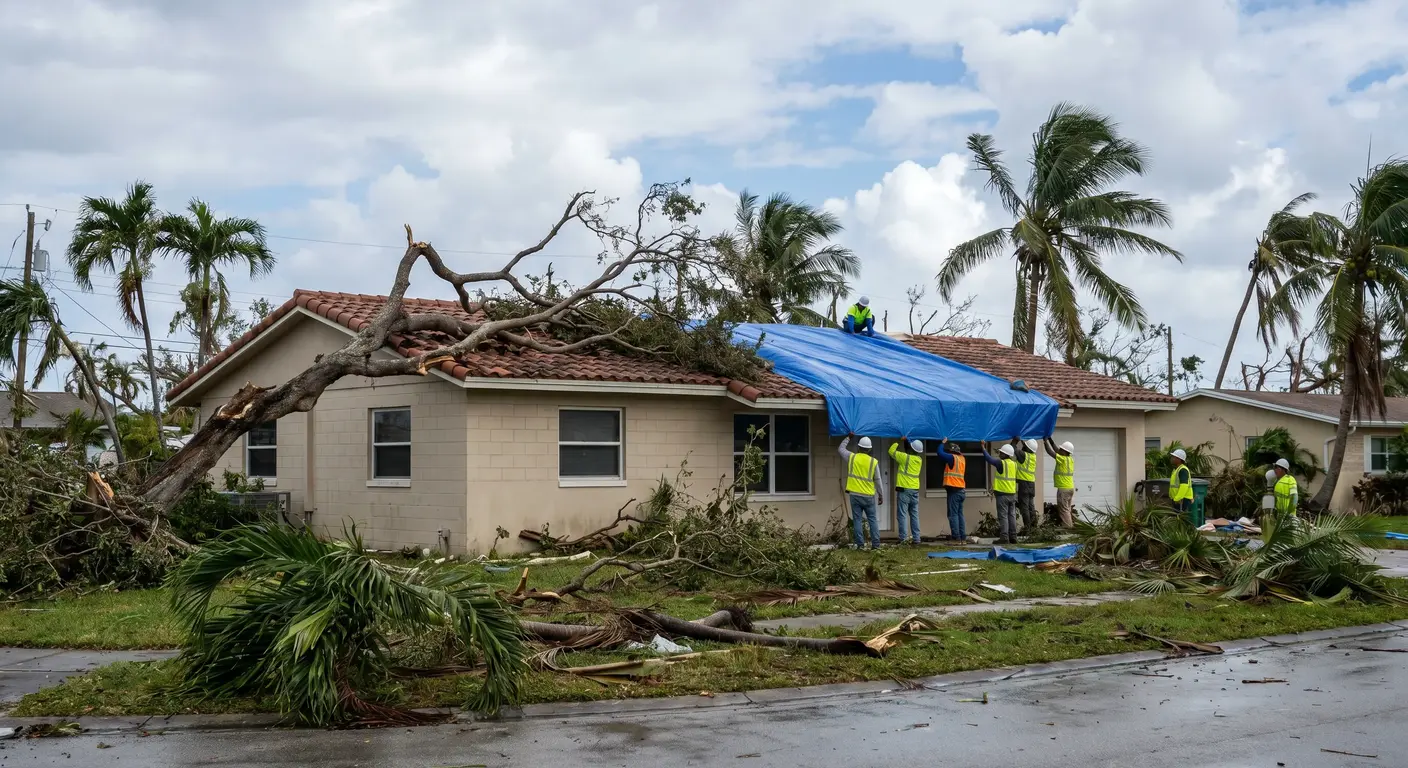
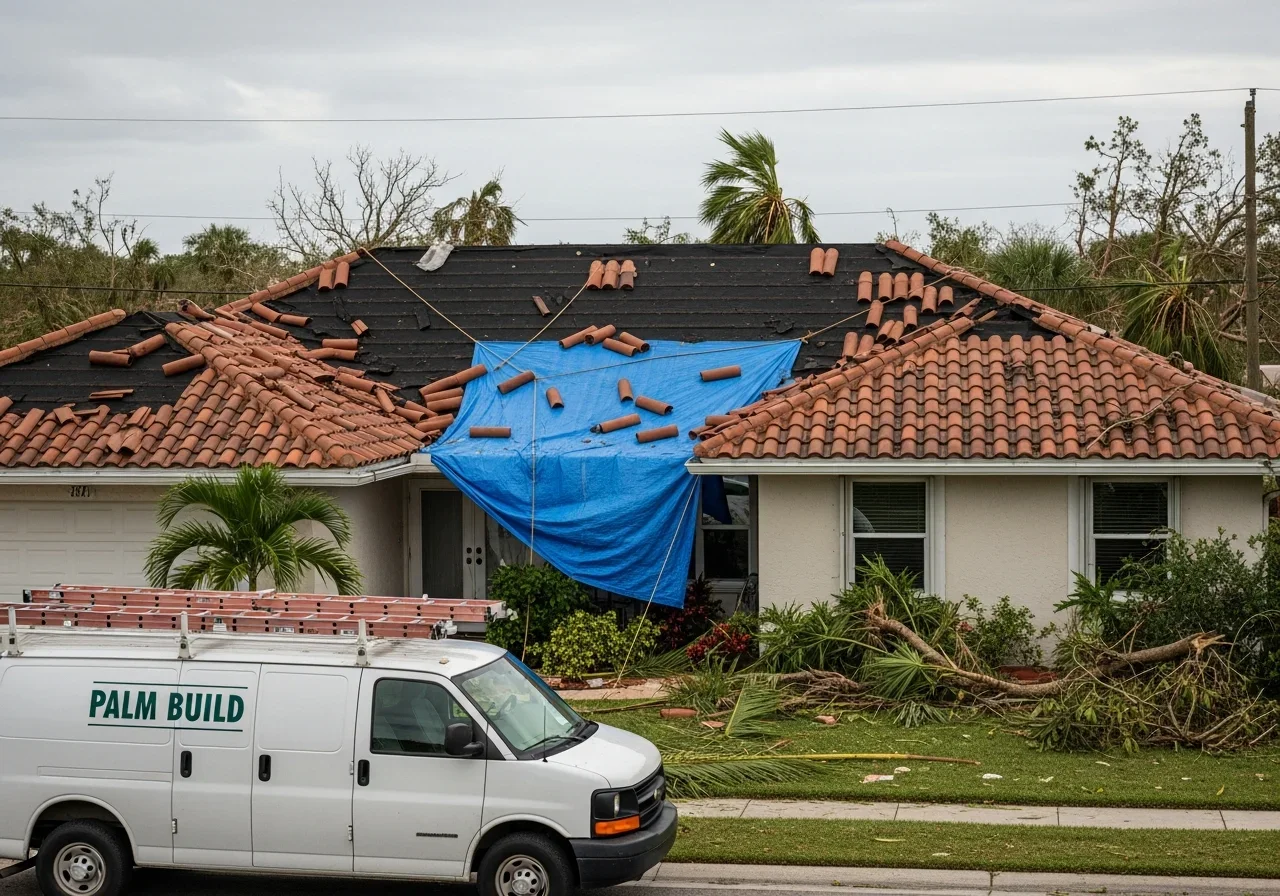
Hurricane storm damage to a mid-century CBS stucco home in Oakland Park FL showing wind damage to barrel tile roof and stucco exterior
Wind damage to Oakland Park's aging mid-century housing stock — barrel tile displacement and stucco cracking are the most common storm damage patterns in the city
Barrel tile roof wind damage on an Oakland Park FL stucco home with displaced tiles and exposed underlayment after a tropical storm
Displaced barrel tiles expose deteriorated underlayment — the number-one hidden storm damage pattern in Oakland Park CBS construction
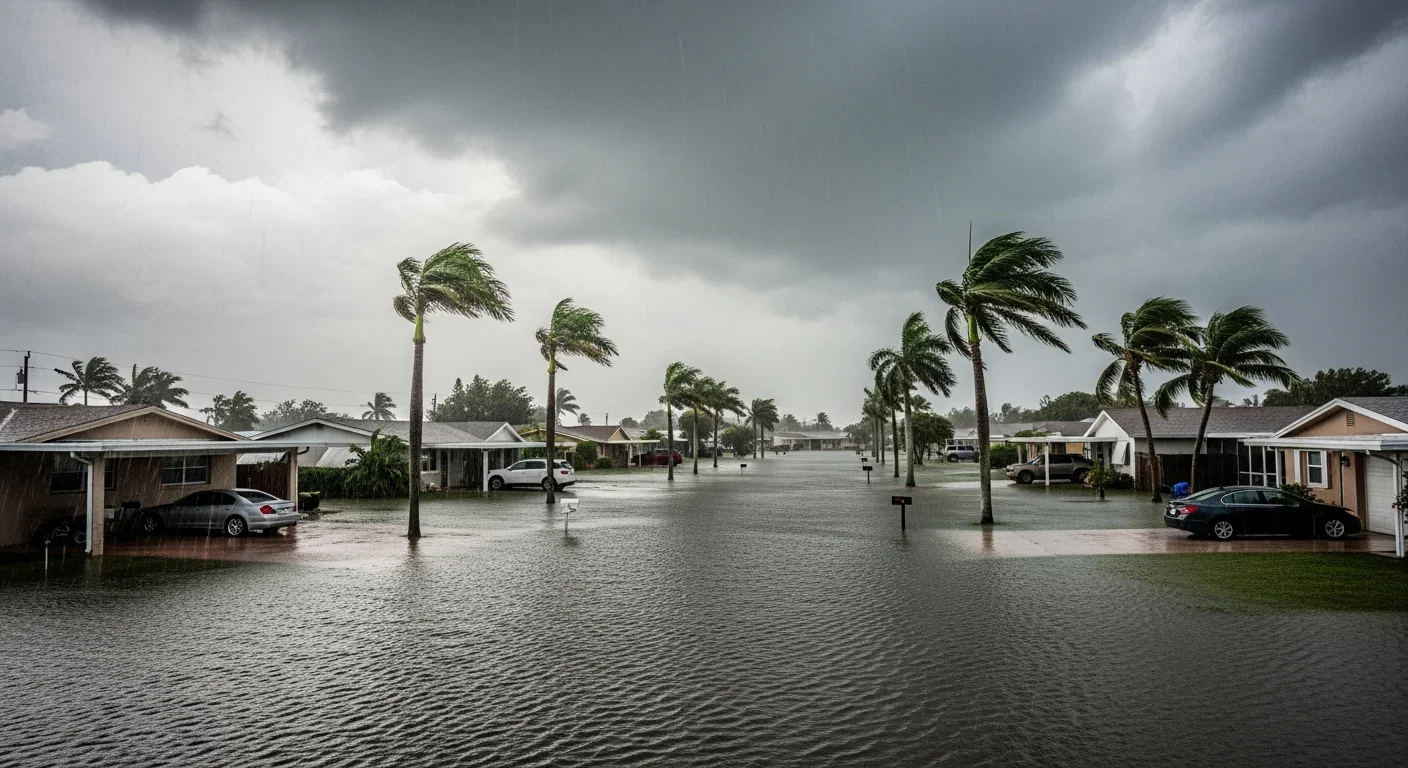
Flash flooding on an Oakland Park FL residential street during extreme rainfall with canal overflow and standing water covering road and yards
Canal overflow and stormwater flooding in Oakland Park — the city received 12.92 inches in 48 hours in November 2023
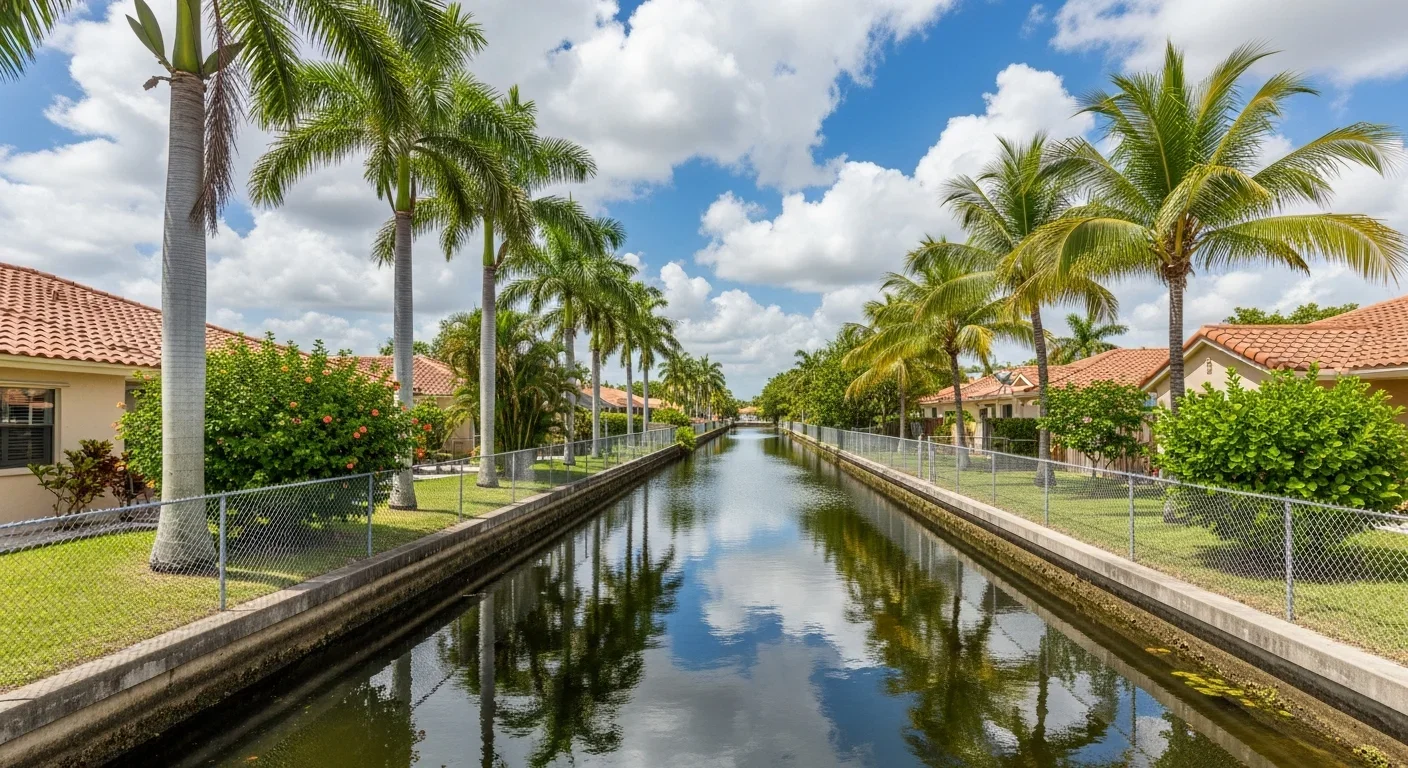
Canal running through an Oakland Park FL residential neighborhood with single-story stucco homes and palm trees lining the banks
Oakland Park canal network — drainage infrastructure that becomes a flood driver when rainfall exceeds capacity during tropical events

The Palm Build Difference

Why Oakland Park Homeowners Choose Palm Build After Hurricanes

15-20 Minute Response from Our Deerfield Beach HQ

Palm Build responds to Oakland Park from our South Florida Operations Hub at 786 S Military Trail, Deerfield Beach, FL 33442 — approximately 6 miles away. Typical drive time via I-95 or Federal Highway is 15 to 20 minutes under normal conditions. We are not driving in from another county or a distant metro market. During major hurricane events, we activate catastrophe response with pre-positioned crews and equipment across central Broward. Pre-storm clients receive priority dispatch ahead of the general queue.

IICRC Certified — Oakland Park's Aging CBS Stock Is Our Specialty

Every crew lead holds current IICRC Water Restoration Technician and Fire/Smoke Restoration Technician certifications. Our South Florida teams are specifically trained in the moisture dynamics of mid-century CBS construction — Oakland Park's dominant building type. CBS concrete block walls retain moisture 20-40% longer than wood-frame; aging barrel tile underlayment fails in non-obvious ways; and stucco crack water infiltration requires thermal imaging to locate accurately. We understand this city's building stock because we restore it regularly.

Dual-Claim Documentation (Wind and Flood)

Our damage assessment classifies every item by cause — wind vs. canal overflow vs. stormwater flooding vs. debris impact — ensuring each claim is filed with the correct policy. In Oakland Park, where wind damage goes through homeowners (with 2-5% hurricane deductible) and flood damage requires a separate NFIP or private flood claim, dual-documentation recovers significantly more for homeowners than generic damage reports that do not distinguish damage sources.

Barrel Tile and CBS Construction Expertise

Oakland Park's dominant building type — mid-century CBS concrete block with barrel tile roofing — requires specialized storm restoration knowledge. We understand underlayment failure patterns beneath barrel tiles, moisture dynamics inside CBS walls, and stucco crack assessment to locate hidden water intrusion. All reconstruction meets HVHZ requirements: City of Oakland Park Building Division permits, Florida/Broward Product Approval or Miami-Dade NOA, TAS 201/202/203 impact testing, and the approximately 170 mph design wind standard for Broward County.

Florida Insurance Navigation

We understand Florida's complex insurance landscape: Citizens depopulation, hurricane deductible percentages (2-5% of insured value), NFIP proof-of-loss deadlines (60 days), assignment of benefits reforms under SB 2-A (Jan 1, 2023), and the 1-year and 18-month filing deadlines under Fla. Stat. 627.70132. Palm Build coordinates with your carrier, your adjuster, and if needed your public adjuster to maximize claim recovery while keeping restoration moving forward.

Full Reconstruction — Emergency Through Final Inspection

From emergency tarping through code-compliant final reconstruction, one company handles everything. We maintain relationships with barrel tile suppliers, CBS masonry contractors, and licensed subcontractors who prioritize our projects during post-hurricane demand surges. Tile roof repair, stucco restoration, impact window replacement, and full interior rebuild — all coordinated through a single project manager with City of Oakland Park and Broward County permit expertise.

Common Questions

Oakland Park Hurricane Damage FAQ

How quickly can Palm Build respond after a hurricane in Oakland Park?
Palm Build responds from our South Florida Operations Hub in Deerfield Beach — approximately 6 miles from Oakland Park, typically 15 to 20 minutes via I-95 or Federal Highway. We operate 24/7/365 with fully equipped emergency response vehicles. During major hurricane events we activate catastrophe response with pre-positioned crews across central Broward. Pre-storm clients receive priority dispatch. Call (754) 600-3369 any time.
Does my homeowners insurance cover hurricane damage in Oakland Park?
Wind damage is covered under your Florida homeowners policy with a separate hurricane deductible of 2-5% of insured value. On a home at Oakland Park's median value of approximately $352,600, that is $7,052-$17,630 out of pocket before wind coverage begins. Canal overflow and stormwater flooding require a separate NFIP or private flood policy — standard homeowners policies exclude flood entirely. After a major storm, you typically need to file two separate claims with different carriers, each with different deadlines and deductibles.
Does Oakland Park flood during hurricanes?
Yes — and the flooding is canal-and-rain driven, not ocean-related. Approximately 40% of Oakland Park lies in FEMA Special Flood Hazard Areas (Zones AE and AH). The Middle River and inland canal network overflow when rainfall exceeds drainage capacity. The shallow Biscayne aquifer beneath the city limits soil absorption, so already-saturated ground produces rapid canal overflow and stormwater system overload. The November 2023 event brought 12.92 inches in 48 hours; April 2023 brought 15-25 inches to metro Broward. Both AE-zone and Zone X properties have flooded during extreme events.
Why are barrel tile roofs in Oakland Park vulnerable to storm damage?
Oakland Park's barrel tile roofs — dominant on the city's 1960s-1980s CBS housing stock — resist wind loads at the tile level. The failure point is the waterproof underlayment membrane beneath. After 40-50 years of UV exposure and tropical heat cycling, underlayment deteriorates and cracks. Hurricane winds momentarily lift tiles; wind-driven rain penetrates the compromised membrane; tiles reseat post-storm. The result is $15,000-$50,000+ in hidden interior water damage that goes undetected without a professional post-storm inspection using thermal imaging.
What HVHZ standards apply to hurricane reconstruction in Oakland Park?
Oakland Park is in Broward County's High Velocity Hurricane Zone (HVHZ). All exterior product replacements must carry Florida/Broward Product Approval or Miami-Dade Notice of Acceptance (NOA) and pass TAS 201/202/203 large- and small-missile impact testing. Design wind is approximately 170 mph for Risk Category II structures under ASCE 7-22 and Florida Building Code 8th Edition. Permits for structural reconstruction go through the City of Oakland Park Building Division with a Broward County Notice of Commencement.
What are Florida's insurance claim deadlines for hurricane damage in Oakland Park?
Florida law (Fla. Stat. 627.70132) requires you to file your initial claim notice within 1 year of the date of loss, and supplemental claims within 18 months. For hurricane losses, the date of loss is tied to NOAA event verification. Separately, NFIP flood claims require proof of loss within 60 days. Missing either deadline can void coverage. Palm Build's documentation process is built to support your filing timeline from the first hour on-site.
How does CBS wall construction affect storm damage and drying in Oakland Park?
CBS concrete block and stucco construction dominates Oakland Park's housing stock. While CBS walls resist wind loading better than wood frame, they trap moisture between exterior stucco and interior drywall when wind-driven rain penetrates through hairline cracks, mortar joint failures, or deteriorated sealants. CBS walls also dry 20-40% slower than wood-frame construction. Post-storm thermal imaging of exterior walls is essential — visible damage captures only a fraction of actual water intrusion in Oakland Park's mid-century CBS homes.
How long does hurricane damage restoration take in Oakland Park?
Emergency tarping and water extraction: 1-2 days. Structural drying (CBS walls): 5-14 days depending on moisture levels and Oakland Park's year-round 70-75% humidity. Barrel tile roof repair: 3-8 weeks depending on material availability and City of Oakland Park Building Division permit processing. Full reconstruction: 8-20 weeks. After major Broward County hurricanes, timelines extend significantly due to contractor demand, material shortages, and permitting backlogs.
Trusted Vendors

Trusted local pros in Oakland Park

Outside our restoration scope, these are the vetted, licensed contractors we trust alongside our work. Personally evaluated, reference-checked, and recommended by Palm Build.

View all trusted vendors in Oakland Park
plumbing

John the Plumber, Inc.

Pompano Beach, FL

John the Plumber is the oldest vendor on Palm Build's directory — John Krobatsch's 1979 third-generation Pompano Beach family shop carries three active Florida CFC licenses (CFC057705/057318/057704), 1,975 Google reviews at 4.9 stars (the largest absolute sample on our list), a BuildZoom score of 116 placing it in the top 2% of 191,428 FL contractors, and BBB A+ Accredited since 9/7/2022.

4.9 · 1,975 reviews View profile
plumbing

Mainline Plumbing Service, Inc.

Pompano Beach, FL

Mainline Plumbing, AC & Electrical is the only multi-trade vendor on Palm Build's directory — three active Florida state licenses under one entity (plumbing CFC1429264, air conditioning CAC1823791, electrical EC13003477), one truck dispatched for all three scopes, 4.8 stars across 854 Google reviews, and a 24/7 live-answering line behind the standard Monday–Saturday 8:00 AM – 7:00 PM dispatch window.

4.8 · 854 reviews View profile
plumbing

West End Plumbing

Sunrise, FL

West End Plumbing has been BBB A+ Accredited since January 14, 2011 — fifteen unbroken years — and operates from a Sunrise HQ that puts every truck within a 30-minute drive of central Broward and the Palm Beach county line. Founded in 1980 and run today by Adam Stricker as A & I West End Plumbing, Inc. under Florida CFC1427334, they cover all of Broward and most of Palm Beach — the widest single-trade footprint of any plumber on the Palm Build directory.

4.8 · 251 reviews View profile

Hurricane Damage in Oakland Park? We Are 15 Minutes Away.

Palm Build responds to Oakland Park from our Deerfield Beach headquarters with emergency tarping, professional water extraction, and HVHZ-compliant reconstruction — 24/7, with insurance documentation from the first call. Canal flooding, tile roof damage, and wind-driven rain intrusion are all within our scope.

15-20 min Response IICRC Certified