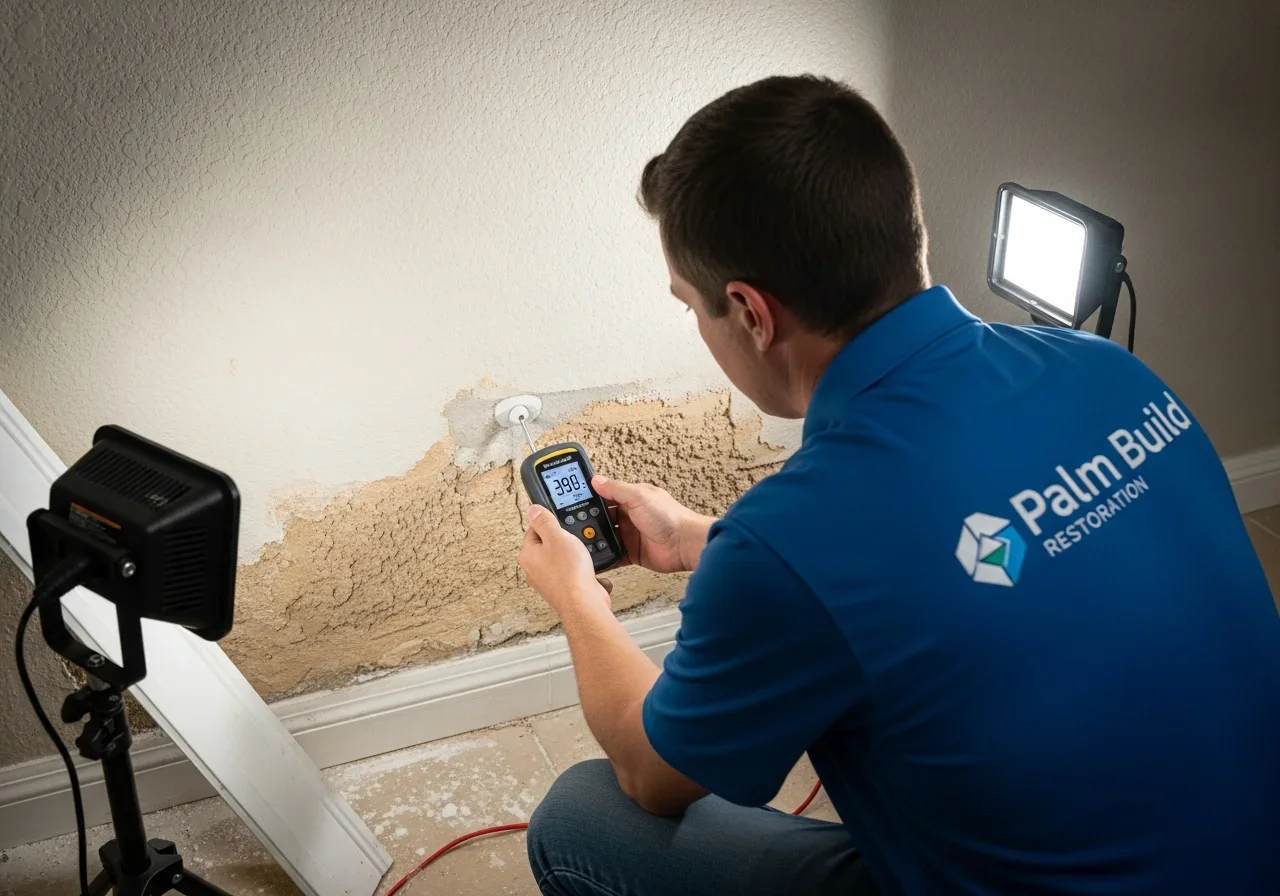
Wellington's year-round humidity, CBS construction, and aging housing stock create ideal conditions for hidden mold — behind cabinets, inside block wall cavities, and throughout HVAC systems. Palm Build's Florida-licensed remediators use containment, HEPA filtration, and post-remediation clearance testing to eliminate mold at its source.
~40 miles — Deerfield Beach, FL 45-60 min Response IICRC Certified
Wellington's combination of relentless subtropical humidity, CBS block construction that
traps moisture in wall cavities, aging polybutylene plumbing prone to hidden leaks, and
year-round HVAC condensation in unconditioned attics creates some of the highest
residential mold risk in Palm Beach County. Understanding these four factors is the
first step toward permanent remediation — not just cosmetic cleanup.
Year-Round Humidity (74%+)
74%+
Year-round RH levels
Wellington averages 74%+ relative humidity throughout the year, rarely dropping below 65% even during winter dry season. With 61.75 inches of annual rainfall feeding the water table and saturating soil around foundations, indoor environments without properly maintained dehumidification consistently exceed the 60% threshold where mold actively colonizes drywall, wood framing, and insulation.
CBS Block Cavity Moisture Traps
1980-2009
Peak CBS construction era
The majority of Wellington homes built between 1980 and 2009 use CBS (concrete block and stucco) construction. While structurally sound, CBS walls create cavities between the exterior block and interior drywall where moisture accumulates invisibly. Hairline stucco cracks from decades of thermal expansion admit wind-driven rain, trapping water in wall cavities where mold colonies grow undetected behind intact finishes.
Aging Plumbing — Polybutylene Risk
20-45 yrs
Average home age
Thousands of Wellington homes built in the 1980s and early 1990s contain original polybutylene (PB) plumbing — a material prone to micro-fractures and fitting failures after prolonged chlorine exposure. These slow, hidden leaks inside wall cavities and under slabs create the persistent moisture that feeds mold colonies for months before any visible sign appears. Re-piping hasn't reached every home.
HVAC Condensation in Unconditioned Attics
10-11 mo
AC runs per year
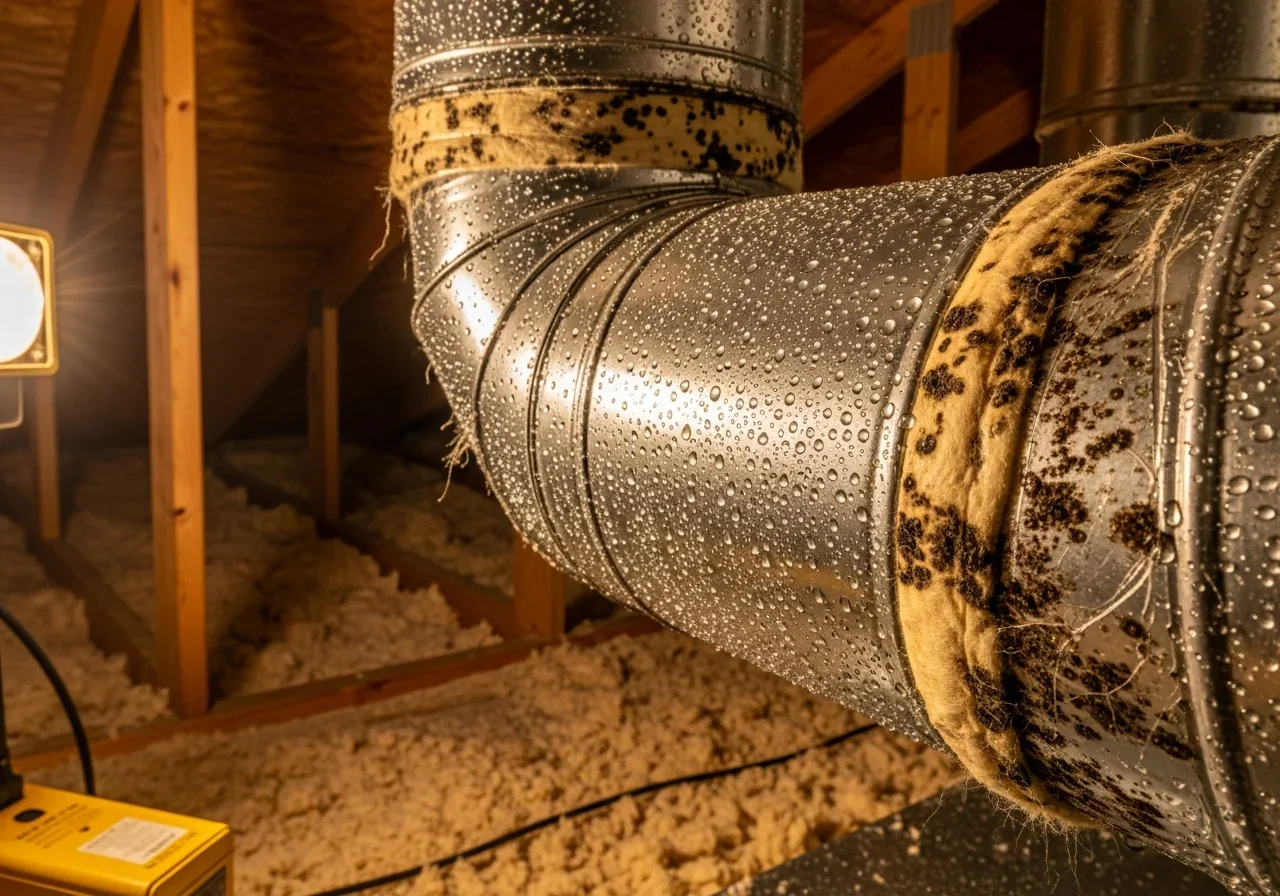
Wellington's air conditioning runs 10-11 months per year, generating constant condensation on evaporator coils, drip pans, and ductwork routed through unconditioned attics. When cold supply air meets 140°F+ attic temperatures, condensation saturates duct insulation and drips onto roof decking. Clogged condensate drain lines and oversized AC units that short-cycle without dehumidifying are the #1 hidden moisture source in Wellington homes.
HVAC condensation mold in a Wellington attic — one of the most common hidden mold
sources in South Florida homes with ductwork routed through unconditioned spaces.
Know The Signs
Warning Signs of Mold in Wellington Homes
Mold contamination in Wellington rarely announces itself with obvious damage. In CBS
block homes with central HVAC routed through unconditioned attics, mold grows silently
inside wall cavities, ductwork, and above ceiling lines for months — until health
symptoms or visible damage force a professional inspection.
Musty Odors When the AC Cycles On
Most Reported
The most reported first sign in Wellington homes. When mold colonizes inside the air handler, evaporator coil housing, or ductwork routed through unconditioned attics, every room carries a musty or earthy smell each time the system cycles. Many Wellington residents grow accustomed to the odor — guests and visitors often detect it immediately.
Dark Spots Behind Cabinets & Baseboards
Advanced
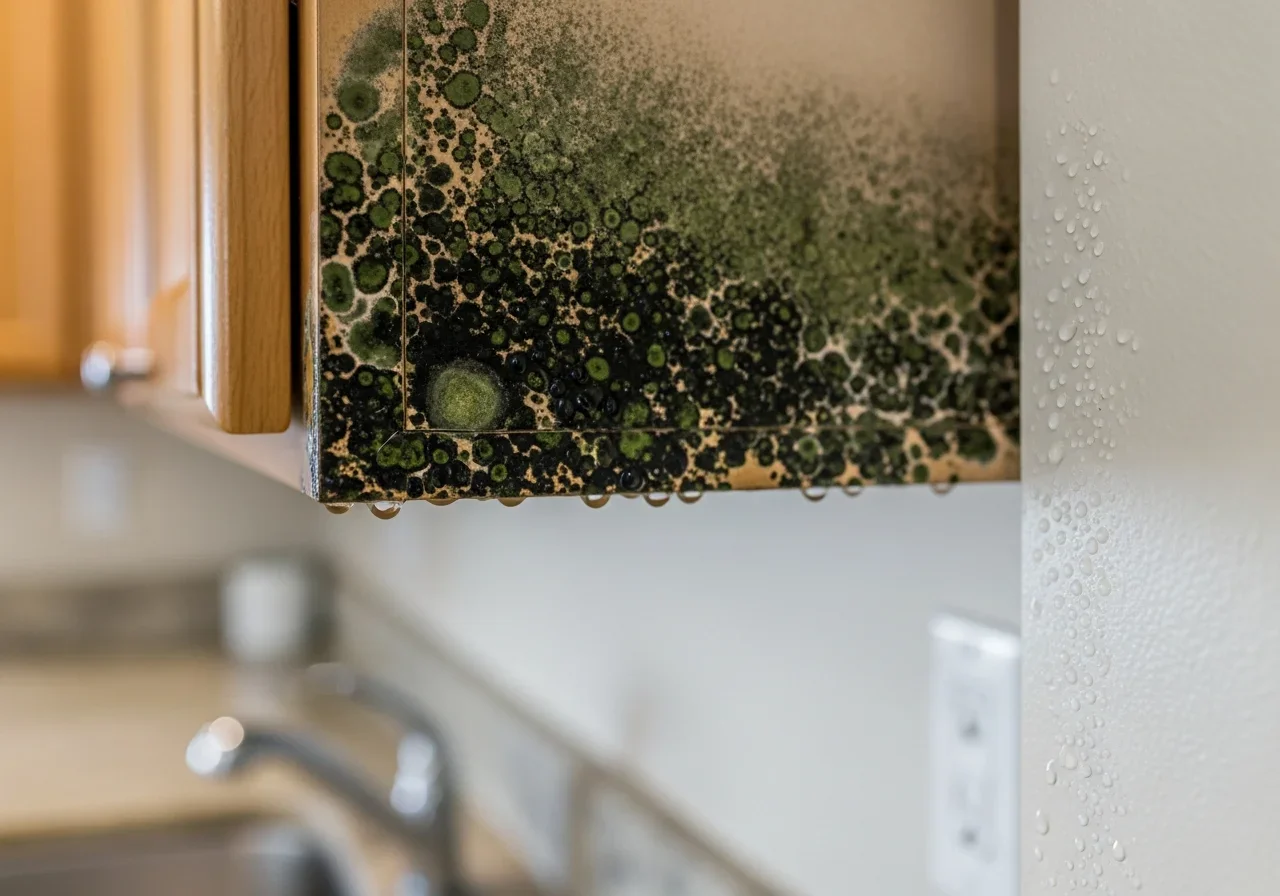
Dark green, black, or gray spotting on drywall behind kitchen cabinets, vanities, or along baseboards indicates active mold growth. In Wellington's CBS homes, mold often appears first at the base of exterior walls where moisture wicks through the slab-to-block junction — the dark, humid gap between cabinetry and CBS walls is a prime colonization site.
Respiratory Symptoms That Worsen Indoors
Health Risk
Persistent sinus congestion, throat irritation, watery eyes, or worsening allergies — particularly when spending time indoors — can signal elevated airborne mold spore levels. Symptoms that improve when you leave the home and return when you come back are a strong indicator of indoor air quality contamination requiring professional assessment.
HVAC Register Condensation
Early Warning
Water droplets or moisture rings around supply registers and return grilles indicate excessive humidity or HVAC issues. In Wellington homes, this often signals an aging or oversized AC unit that short-cycles without properly dehumidifying — creating condensation that feeds mold inside the duct system and at register boot connections.
CBS Wall Discoloration Patterns
Structural
In Wellington's CBS block homes, horizontal discoloration along exterior-facing walls — especially below window sills and at the base where block meets slab — signals moisture wicking through the concrete and stucco assembly. This moisture feeds mold colonies on the backside of drywall inside wall cavities where they are invisible from the living space.
Peeling Paint & Attic Access Hatch Stains
Early Warning
Paint that bubbles, peels, or blisters on ceilings near attic access points and along exterior-facing walls signals trapped moisture. Brown or yellowish staining around attic access hatches is especially common in Wellington homes — indicating condensation in the unconditioned attic space is migrating through the ceiling assembly and creating mold-friendly conditions.
Hidden mold behind cabinets in a Wellington CBS home — invisible until professional
inspection or renovation reveals the colony.
When to Call Immediately
If you see mold covering more than 10 square feet, mold on AC registers or inside
air handlers, discoloration on multiple CBS walls after heavy rain, or a musty odor
from every vent in the home — do not attempt DIY cleanup. Contact a DBPR-licensed mold remediation professional and document everything for your insurance claim.
Wellington Equestrian Properties
Equestrian Property Mold: Risks No Other Remediator Addresses
Wellington is internationally recognized as an equestrian capital — and the village's
horse properties introduce mold risks that standard residential remediation companies
rarely encounter. Barn condensation, tack room humidity, seasonal vacancy patterns, and
high-value contents create a unique remediation profile that demands specialized
experience.
01
Barn & Stable Condensation Mold
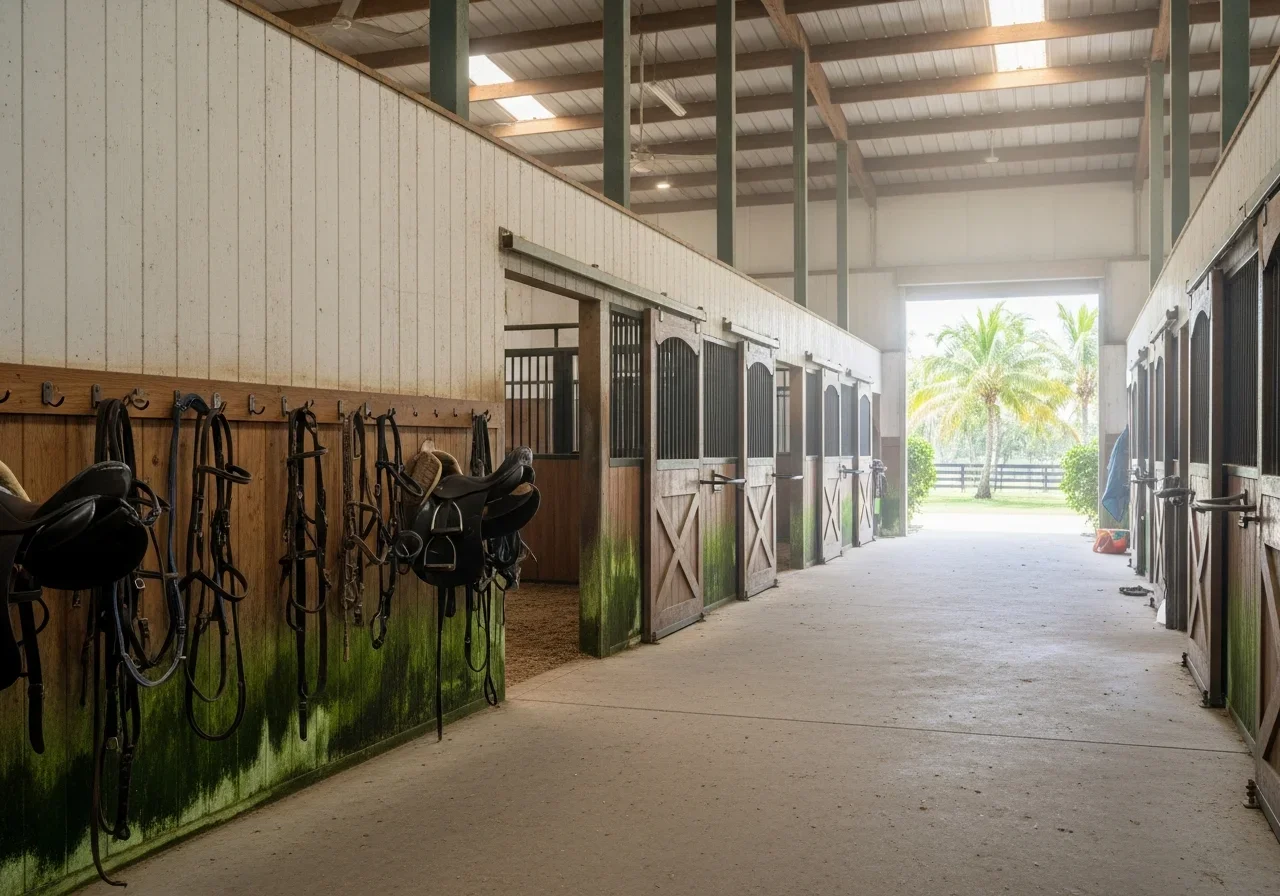
Metal-roofed barns throughout Wellington's equestrian corridor experience condensation on the underside of roofing panels every morning during summer months. Without proper vapor barriers, this condensation drips onto wood trusses, framing, and stored feed — creating persistent mold colonies on structural elements that can compromise barn integrity and contaminate feed.
Insulated metal roofing panels and ridge ventilation dramatically reduce condensation cycling.
02
Tack Room & Climate-Controlled Storage
Tack rooms require consistent temperature and humidity control to protect saddles, bridles, and leather equipment worth tens of thousands of dollars. Window AC units and portable dehumidifiers in these spaces frequently fail, cycle inefficiently, or can't overcome the humidity load — creating the moisture swings that trigger rapid mold growth on walls, ceilings, and stored goods.
Mini-split systems with dedicated dehumidification maintain stable tack room conditions far better than window units.
03
Seasonal Occupancy Gaps
Wellington's snowbird population and seasonal show circuit (October-April peak) mean many equestrian properties see reduced activity during summer months. When climate control systems in barns, guest houses, and accessory buildings are scaled back — or AC setpoints raised to 82-85°F — humidity-driven mold growth accelerates unchecked. Slow leaks and AC failures during absence go unnoticed for weeks.
Smart humidity monitors with remote alerts can catch problems while you are away from the property.
04
High-Value Contents Protection
Wellington equestrian properties contain high-value contents that mold contamination can destroy: custom saddles ($5,000-$50,000+), leather tack collections, horse blankets and therapeutic equipment, vintage carriages, and artwork in attached residences. Mold remediation in these environments must account for contents protection, specialized cleaning, and documentation for insurance claims on high-value personal property.
Contents inventories with photo documentation before and after remediation protect high-value claims.
Condensation-driven mold on barn framing at a Wellington equestrian property — metal
roof condensation cycling is the primary driver during Florida's humid summer months.
We've remediated mold in Wellington barns, tack rooms, and attached living quarters —
understanding the unique moisture dynamics of metal-roofed agricultural buildings,
seasonal occupancy patterns, and high-value contents protection requirements. Standard
residential companies don't have this experience.
Professional mold remediation in Florida follows a strict 6-step sequence defined by
IICRC S520 standards and DBPR regulations. Florida uniquely requires separate licensed
entities for assessment and remediation — ensuring unbiased oversight at every stage.
01
Inspection & Moisture Mapping
Day 1
02
Moisture Source Identification
Day 1
03
Containment Construction
Days 1-2
04
Mold Removal & Material Demolition
Days 2-4
05
Air Scrubbing & Drying
Days 3-5
06
Post-Remediation Clearance Testing
Days 5-7
01
Inspection & Moisture Mapping
Day 1
We use infrared thermal imaging and professional-grade moisture meters to map every affected area — including inside CBS wall cavities, above ceiling lines, and inside HVAC plenums. This comprehensive mapping determines the full scope of contamination before any containment is built, preventing the costly surprises of under-scoped projects.
02
Moisture Source Identification
Day 1
Mold always has a water source. We identify it — whether it's a clogged AC condensate line, polybutylene plumbing failure, stucco intrusion, or roof leak — and coordinate repair before remediation begins. In Wellington homes, the most common sources are HVAC condensation in unconditioned attics and moisture wicking through aging CBS block walls.
03
Containment Construction
Days 1-2
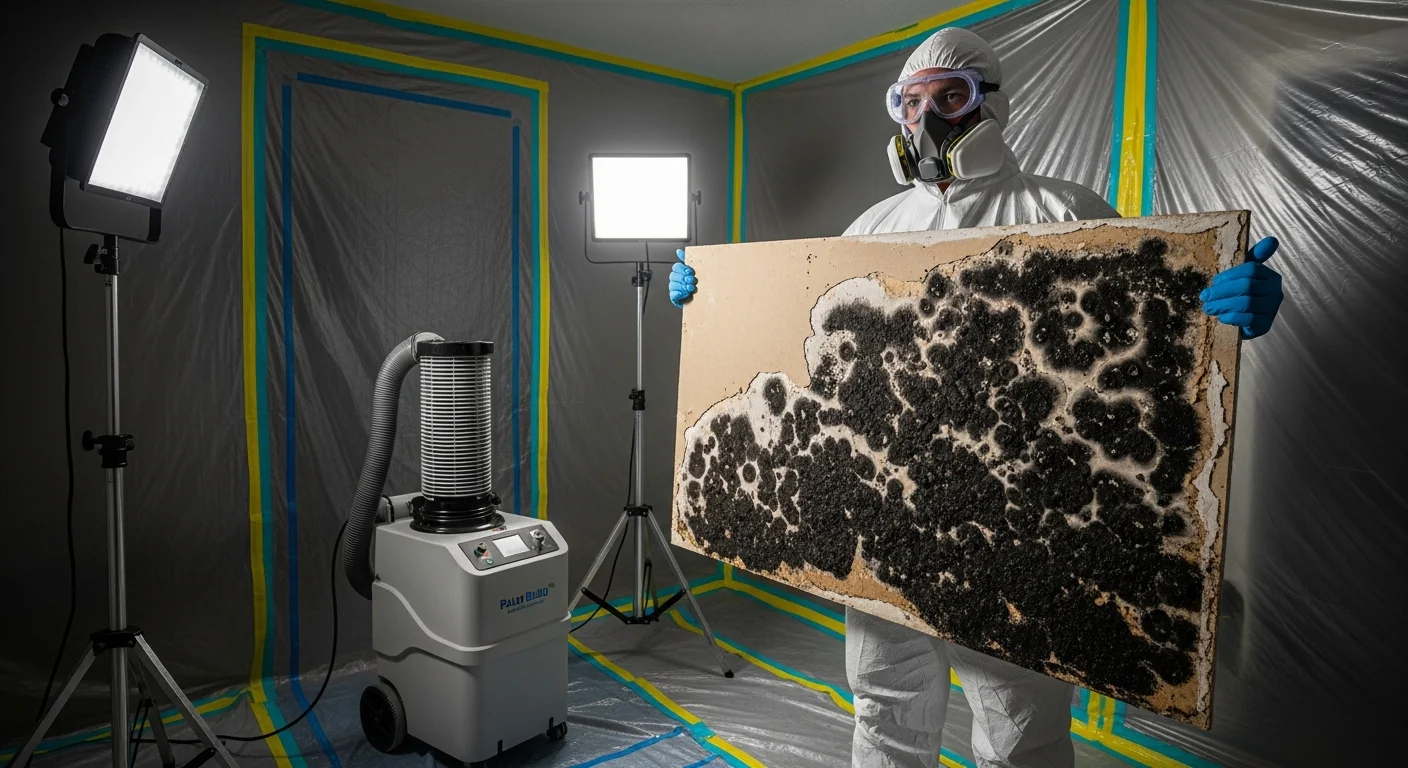
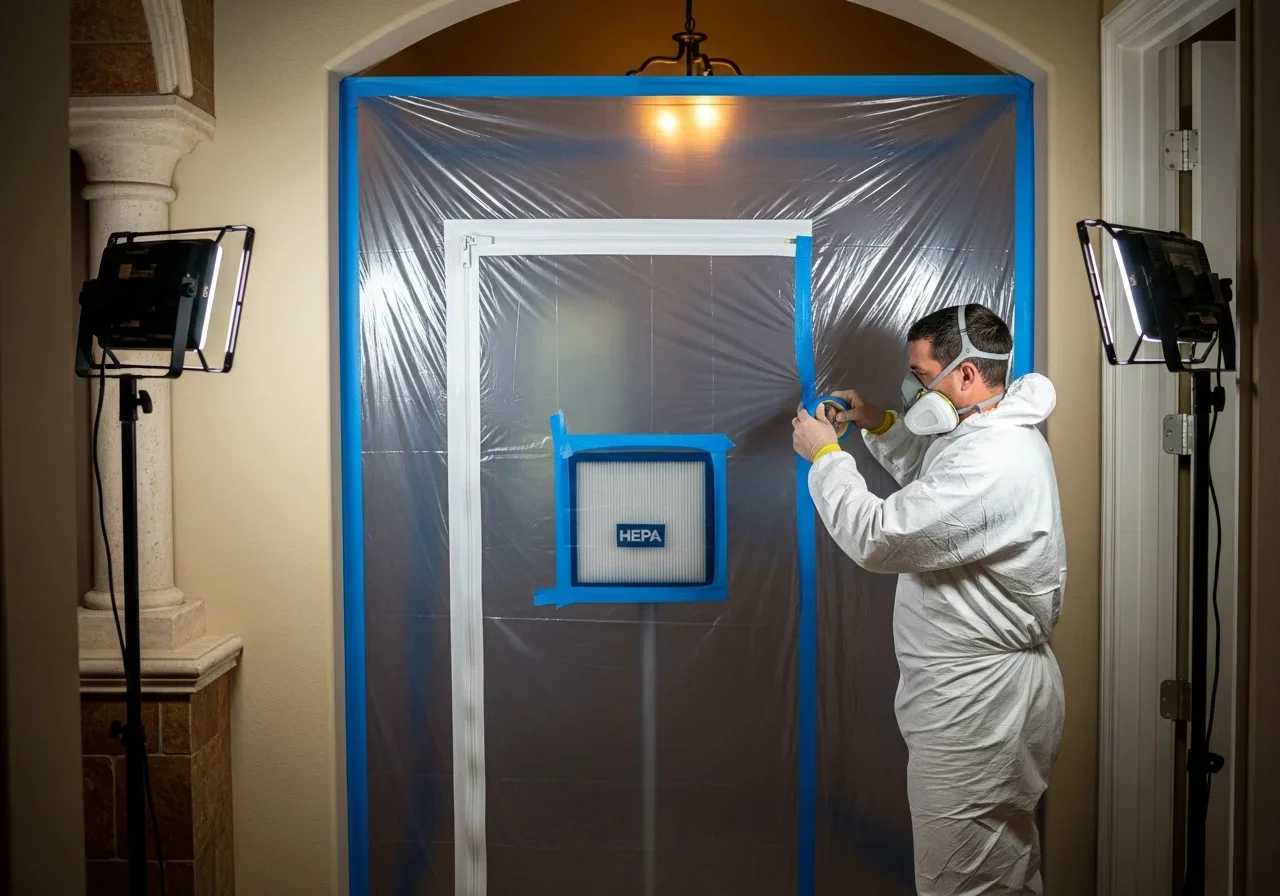
We build physical containment barriers using 6-mil polyethylene sheeting and establish negative air pressure with HEPA-filtered air scrubbers. This prevents mold spores from spreading to unaffected areas during demolition. In Wellington homes with central HVAC, we seal the AC system to prevent duct-borne contamination throughout the house.
04
Mold Removal & Material Demolition
Days 2-4
Contaminated porous materials — drywall, insulation, carpet, baseboards — are removed and double-bagged inside containment per IICRC S520 protocol. Non-porous surfaces like CBS block, metal framing, and concrete are treated with antimicrobial agents. HEPA vacuuming captures settled spores on all remaining surfaces.
05
Air Scrubbing & Drying
Days 3-5
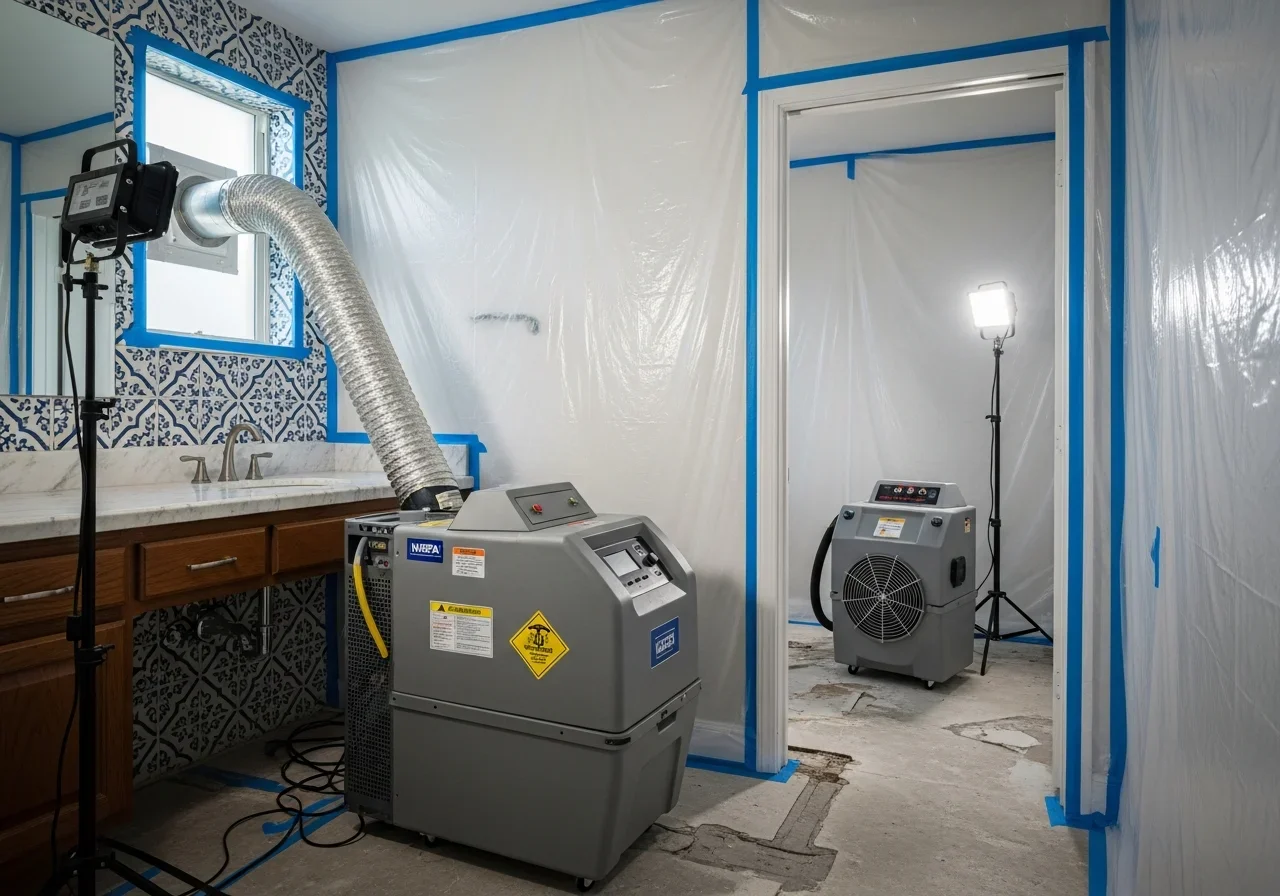
HEPA air scrubbers run continuously during and after remediation to capture airborne spores. Commercial dehumidifiers bring moisture levels below the thresholds required for clearance testing. In Wellington's persistent humidity, this step typically runs 48-72 hours — rushing it leads to failed clearance tests.
06
Post-Remediation Clearance Testing
Days 5-7
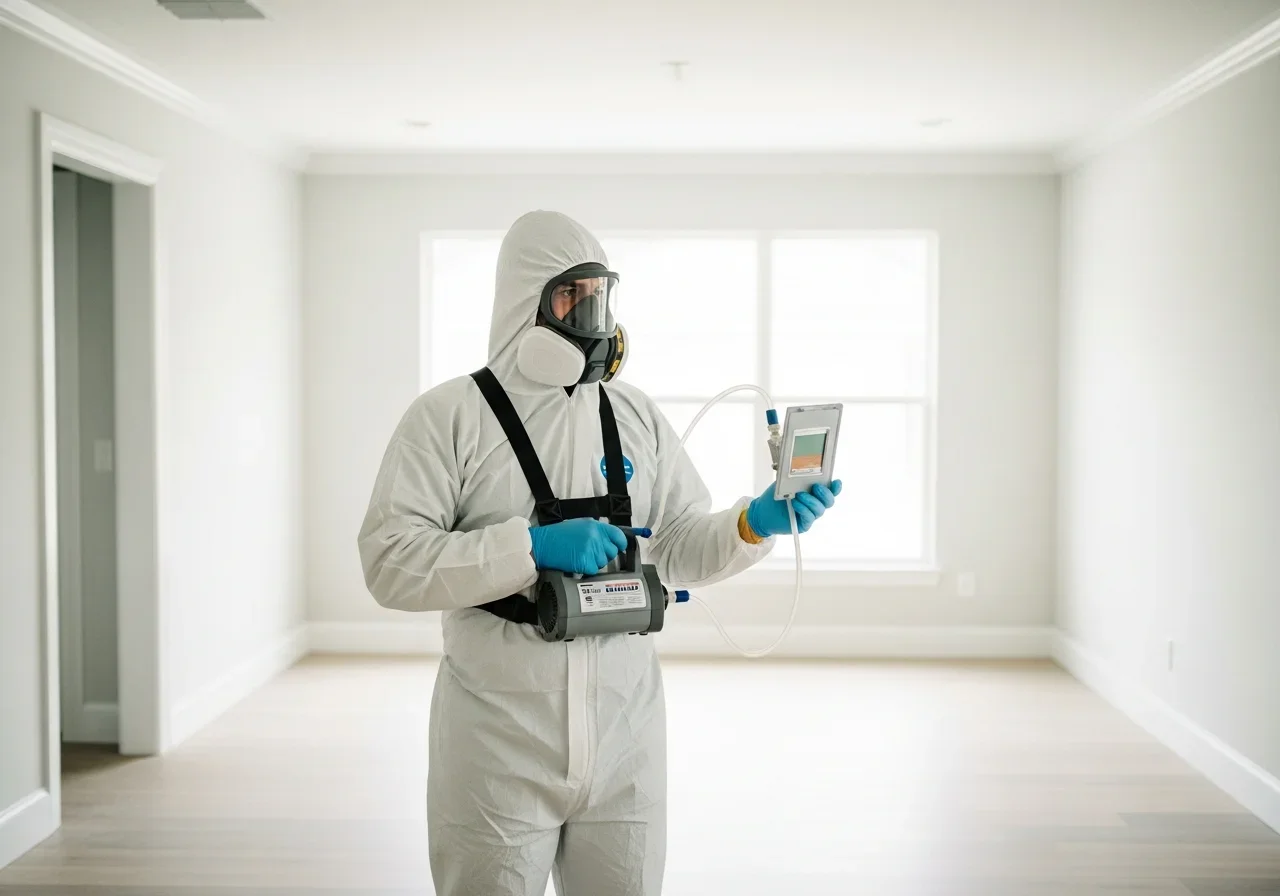
An independent Florida-licensed mold assessor conducts post-remediation verification including visual inspection and air quality sampling. Florida law requires that this assessor be independent from Palm Build — ensuring unbiased results. We don't consider the job complete until clearance is achieved and documented.
Why CBS Wall Cavity Remediation Requires Expertise
Wellington's CBS block construction creates wall cavities where mold grows behind
intact drywall — invisible from the living space. Remediating CBS wall cavity mold
requires careful drywall removal to access the block surface, antimicrobial treatment
of the concrete block, moisture source repair, and proper drainage planning before
reconstruction.
1
Targeted Access
Strategic drywall removal to access CBS block face without unnecessary demolition
2
Block Surface Treatment
Antimicrobial treatment of concrete block and cavity surfaces
3
Moisture Source Repair
Stucco crack sealing, flashing repair, or plumbing fix before closing the wall
4
Vapor Management
Proper vapor barriers and drainage planning to prevent recurrence in the cavity
Costs depend on contamination scope, materials affected, accessibility, and whether the
moisture source requires separate repair. Wellington's high-end finishes and CBS block
construction add complexity — and cost — compared to standard drywall-only remediation.
Every Palm Build proposal includes detailed line-item pricing with no hidden fees.
Small / Single Area
Bathroom, closet, single window sill, or small wall section
$1,500 - $5,000
Bathroom mold behind vanity
Small closet wall section
Single window sill area
Minor surface contamination
Standard containment setup
Standard Room / Multi-Room
Kitchen cabinet mold, multiple bathrooms, single HVAC return plenum
$5,000 - $15,000
Kitchen cabinet wall mold
Multiple bathroom walls
Single HVAC return plenum
Moderate CBS wall cavity access
Multi-room containment zones
Multi-Room / Structural
Full HVAC system, multiple CBS wall cavities, attic roof decking
Wellington homes — particularly in Olympia, Binks Forest, and the equestrian corridor —
feature high-end finishes including custom cabinetry, stone countertops, designer
flooring, and crown molding. Reconstruction after mold remediation must match these
finishes exactly, which increases material costs and requires skilled finish carpentry.
Equestrian property remediation adds complexity with barn-specific structural materials
and the need to protect high-value contents during the process. Independent clearance
testing by a licensed mold assessor is billed separately (typically $300-$600 for
residential).
Our Work
Wellington Mold Remediation Gallery
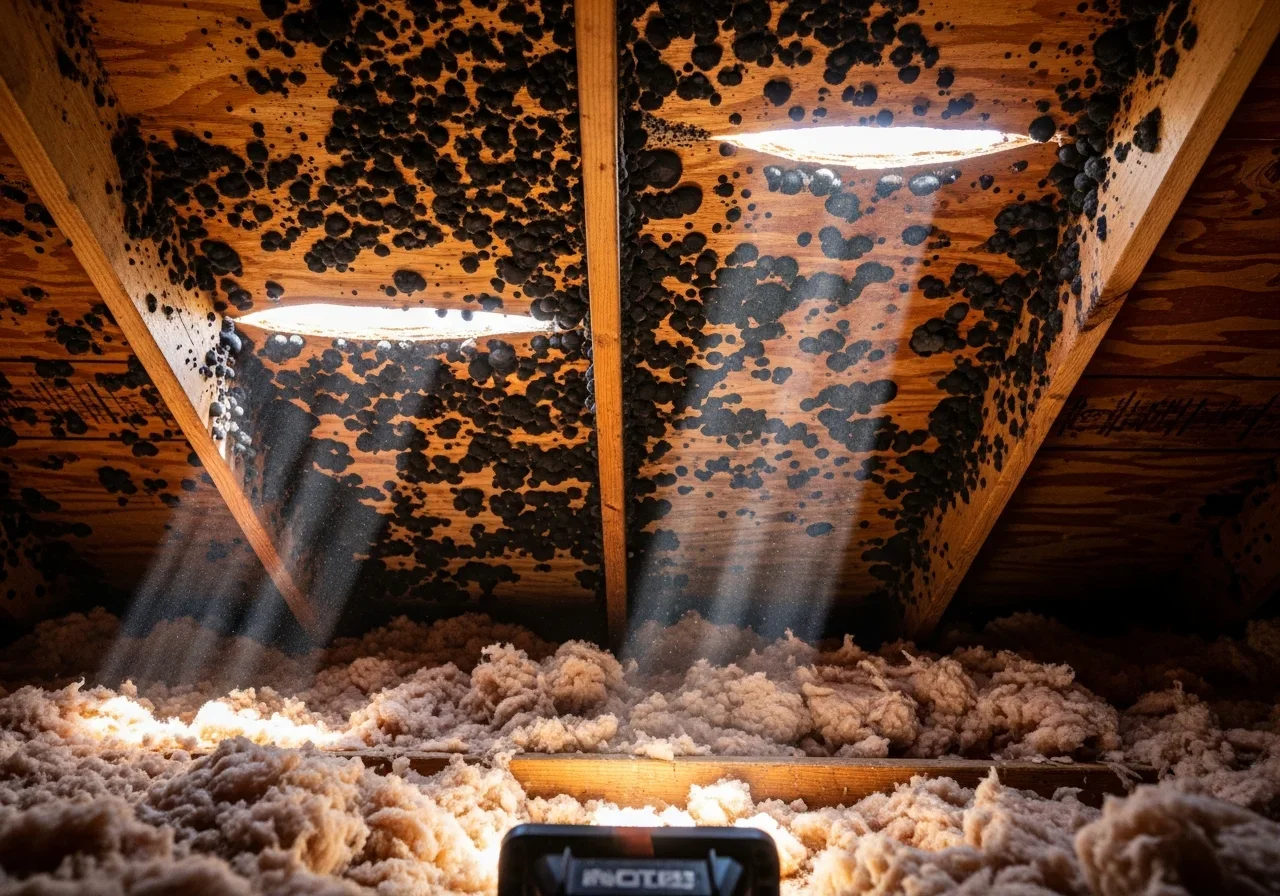
Attic roof deck mold — inadequate ventilation combined with Wellington humidity creates rapid colonization on plywood decking
HEPA air scrubbers in containment — continuous filtration captures airborne spores during active remediation
Moisture mapping CBS block walls — identifying hidden moisture behind intact drywall is critical for accurate scoping
FL Regulatory Landscape
Mold Licensing in Florida: What Wellington Residents Must Know
Florida has one of the strictest mold regulatory frameworks in the country. Under Chapter 468, Part XVI of the Florida Statutes (administered by DBPR), the
state requires separate licenses for mold assessment and mold remediation — and
explicitly prohibits the same company from performing both on the same project within
12 months.
This separation of assessment and remediation prevents conflicts of interest: the
company that finds the mold cannot be the same company that profits from removing it.
Florida mold assessors must carry $1 million in general liability insurance, and mold
remediators must demonstrate proof of financial responsibility. Both licenses require
continuing education and are publicly verifiable. The Florida Department of Health
does not recommend routine mold species testing — the emphasis is on identifying and
eliminating the moisture source.
Verify DBPR mold remediator license before hiring any company
Assessor and remediator MUST be separate licensed entities
Same company cannot assess and remediate within 12 months
Written remediation protocol required before work begins
Post-remediation clearance must come from a different licensed assessor
Check any license at myfloridalicense.com — free public lookup
Palm Build Credentials
DBPR-licensed mold remediator — Florida compliant
IICRC S520 certified remediation protocols
CBS construction and equestrian property expertise
Full liability insurance and workers' comp coverage
Works with independent FL-licensed assessors for clearance
Red Flags to Watch For
No DBPR mold license or won't provide license number
Same company offers to assess AND remediate your mold
Offers to "spray and seal" without removing contamination
Won't set up containment barriers or HEPA filtration
Claims "no license needed" in Florida (false — it's state law)
Insurance Navigation
Mold Insurance Claims in Wellington
Mold coverage in Florida is limited, capped, and has become more restrictive following
recent insurance reforms. Understanding your policy's mold sublimits, the connection
between water damage claims and mold coverage, and Florida's strict filing deadlines can
save Wellington homeowners thousands.
Mold resulting from a covered sudden water event (burst pipe, appliance failure) is typically covered up to your policy mold sublimit
Florida policies typically cap mold coverage at $10,000-$25,000 — Wellington remediation projects frequently exceed these limits due to CBS wall complexity and high-end finish reconstruction
Mold from gradual moisture, chronic humidity, HVAC condensation, or long-term stucco intrusion is almost always excluded from coverage
Citizens Property Insurance (Florida's insurer of last resort) has some of the lowest mold sublimits in the market — often $10,000 or less
Florida Statute 627.70132 requires policyholders to report claims within specific timeframes — delayed reporting is one of the most common reasons mold claims are denied
Prompt mitigation (starting cleanup within 24-48 hours of discovery) is required to maintain coverage — carriers can deny claims for delayed response
Mold coverage often depends on whether the underlying water damage was properly and promptly dried — connecting mold to a covered water event is critical for claim approval
Moisture mapping and documentation — critical evidence for mold insurance claims in
Wellington
Water Damage Connection Is Key
In Florida, mold coverage almost always depends on whether the underlying water damage
was a covered peril and whether it was promptly addressed. If a burst pipe caused
water damage that was properly dried and documented, subsequent mold may be covered.
But if mold resulted from gradual humidity, deferred HVAC maintenance, or slow stucco
intrusion — it's typically excluded. Documentation connecting mold to a specific
covered water event is the single most important factor in claim approval.
Palm Build's Insurance Documentation
We document mold origin, moisture source, timeline, and scope with the detail Florida
adjusters require. Our team understands post-AOB reform requirements and works
directly with adjusters to connect mold to covered water events when applicable —
providing timestamped photos, moisture readings, and detailed scope formatted for
carrier review.
Why Wellington Property Owners Choose Palm Build for Mold
Florida DBPR Licensed
Palm Build holds an active Florida DBPR mold remediation license and every crew lead carries current IICRC Mold Remediation Specialist (MRS) certification. We comply with Florida's strict separation of assessment and remediation requirements — and our license is publicly verifiable at myfloridalicense.com.
Containment & Clearance Protocols
Every Wellington project follows IICRC S520 containment standards: sealed polyethylene barriers, HEPA negative air pressure, HVAC isolation, and controlled material removal. We don't consider any project complete until an independent FL-licensed mold assessor issues a written clearance report confirming spore levels have returned to acceptable thresholds.
Equestrian Property Experience
Wellington's equestrian properties require remediation approaches that standard residential companies don't offer. We've worked in barns, tack rooms, feed storage areas, and attached living quarters — understanding the unique moisture dynamics of metal-roofed structures, seasonal occupancy patterns, and high-value contents protection requirements.
Insurance Documentation Excellence
We understand Florida's post-AOB reform claim requirements, mold coverage sublimits, and the critical connection between water damage claims and mold coverage. Our documentation packages include timestamped photos, moisture readings, scope details, and coordination with independent assessor reports — formatted for carrier review and claim approval.
Moisture Source Resolution
We don't just remove mold — we identify and coordinate repair of the moisture source that caused it. Whether it's polybutylene plumbing failure, HVAC condensation, stucco intrusion, or roof leak, the water problem gets solved before we close containment. This is how you prevent mold from returning to your Wellington home.
Wellington-Area Response Time
Our Deerfield Beach operations center is approximately 40 miles from Wellington. We provide same-day assessments for mold concerns throughout Wellington, Olympia, Stonegate, and the equestrian corridor — with containment and remediation crews available to mobilize within 45-60 minutes for urgent situations.
Common Questions
Wellington Mold Remediation FAQ
How do I know if I have mold in my Wellington home?
The most common early signs are a persistent musty or earthy odor (especially when the HVAC cycles on), visible discoloration on baseboards or walls, condensation on windows or supply registers, and unexplained respiratory symptoms that improve when you leave the home. In Wellington's CBS block homes, mold frequently grows inside wall cavities where it is invisible from the living space — professional moisture mapping and inspection are often the only way to confirm hidden contamination.
Is mold remediation required to be done by a licensed company in Florida?
Yes. Florida directly regulates mold remediation under Chapter 468, Part XVI of Florida Statutes. Both mold assessors and mold remediators must hold active licenses issued by the Florida Department of Business and Professional Regulation (DBPR). The assessor who writes the remediation protocol and performs clearance testing must be independent from the company performing the remediation. Always verify license status on the DBPR website before hiring.
How much does mold remediation cost in Wellington, FL?
Wellington mold remediation typically ranges from $1,500 to $12,000 for single-area to moderate residential projects. Large-scale projects involving multiple CBS wall cavities, full HVAC duct systems, or attic roof decking can reach $12,000 to $30,000. Extensive whole-home remediation or equestrian property projects can exceed $30,000 to $60,000+. Costs depend on contamination scope, material types, accessibility, and whether the moisture source requires separate repair.
Does homeowners insurance cover mold remediation in Florida?
Florida homeowners policies typically include limited mold coverage, usually capped at $10,000 to $25,000. Coverage generally applies only when mold results from a covered sudden and accidental water event such as a burst pipe. Mold from gradual moisture, deferred maintenance, or chronic humidity is usually excluded. Florida law requires claim notice within specific timeframes — delayed reporting is a common reason for denial. Review your declarations page for your specific mold coverage limits.
Can mold grow inside CBS concrete block walls?
Absolutely. CBS (concrete block and stucco) construction — the dominant building method in Wellington from the 1980s through 2009 — creates cavities between the exterior block and interior drywall. When moisture enters through stucco cracks, plumbing leaks, or condensation, it becomes trapped in these cavities where mold colonizes the backside of drywall, paper facing on insulation, and organic debris. The mold is invisible from the living space and can only be detected through moisture meters, thermal imaging, or invasive testing.
How does Palm Build handle mold in Wellington's equestrian properties?
Wellington's equestrian properties present unique mold challenges including barn framing contamination from metal roof condensation, tack room mold from inadequate climate control, and feed storage areas where organic materials accelerate growth. Palm Build has experience remediating these structures — we adapt containment and treatment methods to barn construction, address the specific moisture dynamics of metal-roofed agricultural buildings, and coordinate with property managers on seasonal timing to minimize disruption to equestrian operations.
Should I get mold testing before remediation?
The Florida Department of Health does not recommend routine mold testing for species identification — the emphasis is on identifying and eliminating the moisture source. However, a professional mold assessment by a licensed mold assessor is valuable for documenting contamination scope, creating the written remediation protocol required by Florida law, and establishing baseline conditions for post-remediation clearance comparison. For insurance claims, pre-remediation assessment documentation is often essential for claim approval.
How long does mold remediation take in a Wellington home?
Most Wellington residential mold remediation projects take 3 to 7 business days from containment setup through clearance testing. Small single-area projects may complete in 2-3 days. Large projects involving multiple rooms, HVAC systems, or CBS wall cavities can take 7-14 days. Post-remediation air scrubbing in Wellington's humid climate typically runs 48-72 hours before conditions are suitable for clearance testing. Equestrian property projects vary based on structure size and accessibility.
Trusted Vendors
Trusted local pros in Wellington
Outside our restoration scope, these are the vetted, licensed contractors we trust
alongside our work. Personally evaluated, reference-checked, and recommended by Palm
Build.
Suspect mold in your Wellington home? Get a professional assessment.
Palm Build's Florida-licensed mold remediation team serves Wellington with containment protocols, HEPA filtration, and post-remediation clearance testing. We address the moisture source first — because mold always comes back if the water problem isn't solved.