Mold Remediation in Valdese, North Carolina
With a median home build year near 1970, predominantly vented crawl spaces, clay-heavy subsoils that hold moisture long after rain stops, and lake-adjacent neighborhoods along Lake Rhodhiss — Valdese has every ingredient for persistent, year-round mold pressure. North Carolina has no state mold license requirement, which means any contractor can call themselves a remediator. Palm Build's IICRC S520-certified team delivers professional containment, full remediation, and post-clearance verification — with documentation your insurer accepts.
Same day / next day
Emergency Response
24/7
Dispatch Available
IICRC
Certified Technicians
Mold Problem in Valdese? Call for Same-Day Response.
Palm Build's Charlotte team reaches Valdese with IICRC S520-certified mold remediation for Burke County homes — crawl spaces, basements, lake-area humidity, and older construction. Same-day assessment available.
Why Valdese Has a Mold Problem
Valdese's Crawl Space Mold Guide: Four Converging Risk Factors
Mold in Valdese is not a storm-event problem — it is a year-round structural pressure built into the housing stock and the soil. Understanding the four converging factors explains why this market has persistent mold demand regardless of weather.
Clay Soil Moisture Retention
Burke County's clay-heavy subsoil is one of the most documented moisture retention environments in NC — USDA NRCS guidance describes dense clay layers as having slow to very slow water infiltration rates. After any significant rainfall event, moisture lingers around Valdese foundations and migrates upward into crawl space assemblies for days, sometimes weeks. There is no fast-draining sandy substrate here.
Vented Crawl Spaces in Older Homes
Vented crawl spaces were standard NC construction practice through the 1990s. In Valdese, where the median home build year is near 1970, most of the housing stock has vented crawl spaces that allow outdoor air to circulate freely. During warm seasons, humid outdoor air (often 70–90% relative humidity in the foothills) enters the crawl space, meets the cooler surfaces inside, and condenses directly on wood framing and subfloor — regardless of whether it rained recently.
Year-Round Mold Pressure Window
In Valdese's foothills climate (~47 inches of annual rainfall, warm summers), the crawl space environment typically exceeds the 60% humidity threshold where mold colonizes wood framing for five to seven months of the year — March through September. The CDC confirms mold can begin growing within 24–48 hours of sustained moisture exposure. In a vented crawl space on clay soil, that exposure is nearly continuous during the warm season.
Lake Rhodhiss Adds Humidity Loading
Homes in The Settings of Lake Rhodhiss, Lake Rhodhiss Estates, and the gated Lake Vista community face an additional layer: open-water humidity from Lake Rhodhiss itself. Lake-adjacent air consistently carries higher moisture content than inland sites, meaning crawl spaces in these communities experience elevated ambient humidity even during relatively dry weather periods. Seasonal-use homes are particularly at risk when left without active climate control.
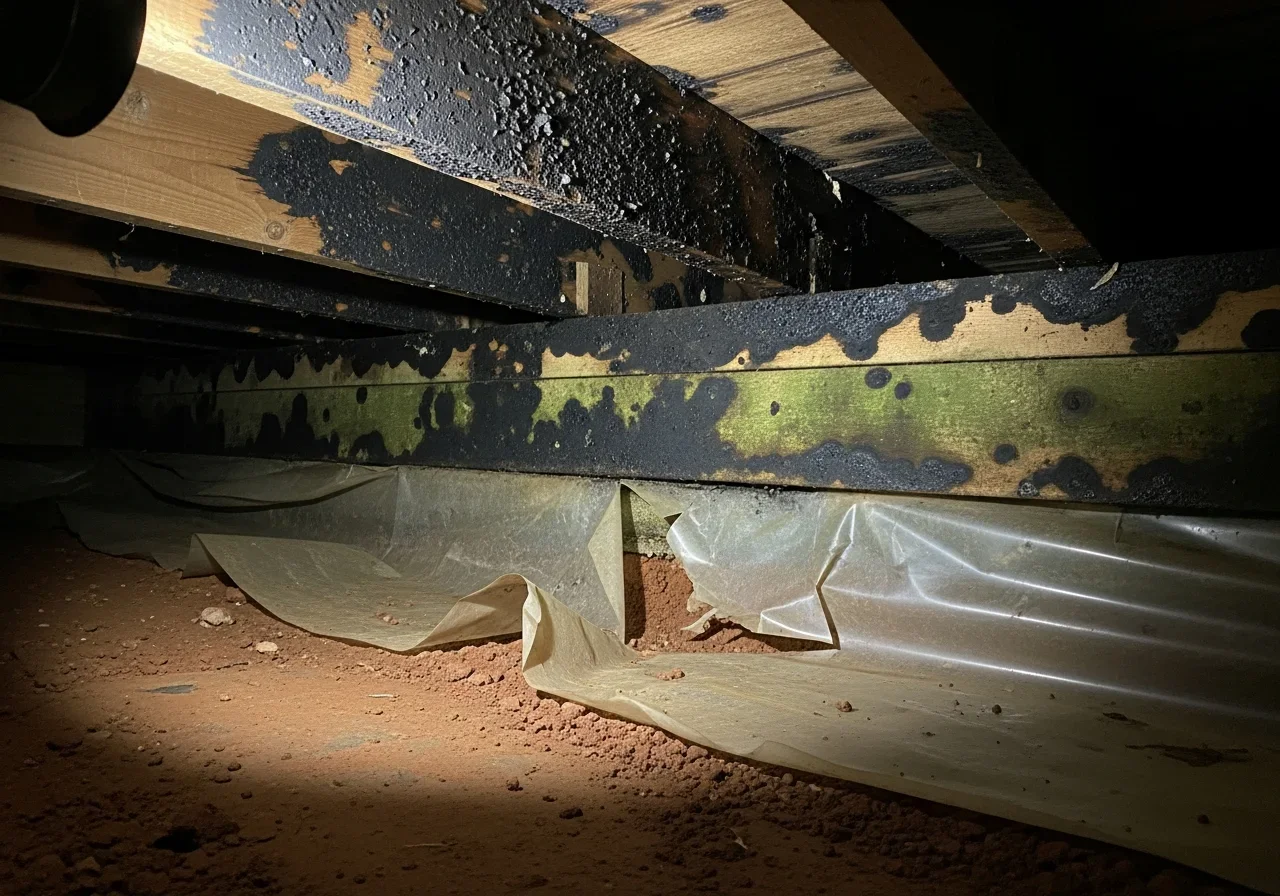
Crawl space joist mold — the most common mold loss type in Valdese's older housing stock
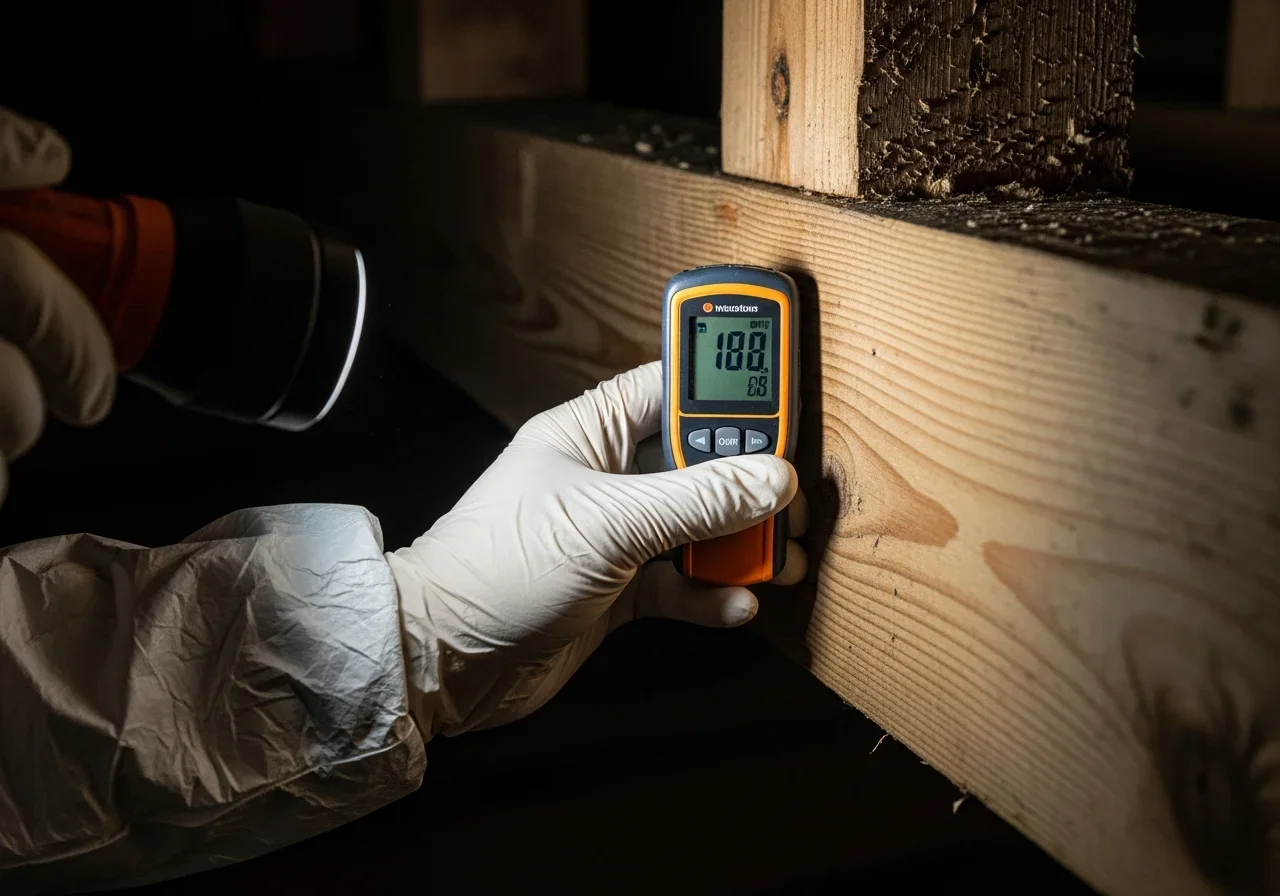
IICRC S520 assessment — moisture meter readings establish baseline before remediation scope is set
The Stack Effect: Crawl Space Mold Becomes Whole-Home Air Quality
Air moves upward through Valdese homes via the "stack effect" — pulling crawl space air through subfloor penetrations, HVAC returns, and gaps in floor assemblies into living areas above. Mold spores colonizing crawl space framing in a Valdese home are distributed through every room every time the HVAC system runs. The musty smell homeowners notice when seasonal humidity rises is not a cosmetic issue — it is an air quality warning. Burke County's Zone 2 radon classification (moderate potential, 2–4 pCi/L per EPA) makes comprehensive crawl space air quality management doubly important.
Mold Risk by Neighborhood
Valdese Neighborhood Mold Risk Guide
Mold risk in Valdese is not uniform — it varies by build era, foundation type, lake proximity, and HOA construction type. Know your neighborhood's specific risk profile.
Holly Hills
Est. 1967–1996
Build era spans 50+ years — original 1967 homes may have no vapor barrier and decades of absorbed seasonal moisture in framing. The 60%+ humidity threshold for mold colonization is consistently exceeded in these vented crawl spaces March through September.
Valdese Central (Historic Downtown)
Est. Pre-1960s–1990s
Oldest building stock in Valdese. Mixed masonry, wood framing, and basement construction with minimal to no vapor management. Long history of seasonal moisture cycling has predisposed exposed framing to fungal colonization over decades.
Ramblewoods
Est. 1976–2025
Older 1970s–1980s sections carry full crawl space mold risk — vented spaces, limited vapor barriers, clay-soil moisture. Newer sections have better moisture management but slab-moisture migration under LVP is a documented mold risk when leaks go undetected.
The Settings of Lake Rhodhiss
Est. Mixed
Lake-adjacent homes carry elevated ambient humidity year-round from open-water exposure. Even without rainfall, lake-area crawl spaces and basements experience condensation cycles that keep wood moisture above mold colonization thresholds through most of the warm season.
Lake Rhodhiss Estates
Est. Mixed
Similar lake-proximity profile — higher crawl space humidity loading than inland Valdese properties. Seasonal-use homes are highest risk: uninhabited periods without climate control allow humidity to build unchecked inside crawl spaces.
Lake Vista / Lake Vistas (Gated)
Est. Mixed
Gated lake community — high-end finishes require controlled remediation protocols. Wind-driven moisture from lake surface during storms accelerates exterior envelope moisture loading. Seasonal use patterns create extended mold-growth windows when homes are unoccupied.
High Peak Mountain
Est. c. 1990
Slope terrain keeps ground moisture around foundations longer after heavy rain. Daylight basements face hydrostatic moisture intrusion that supports mold growth on concrete block, drywall, and stored contents in lower levels.
Stonehaven
Est. 1982–1987
1980s-era condo construction — shared assemblies mean one unit's moisture event can create mold conditions in adjacent units without them being aware. HVAC condensate and upstairs plumbing failures are the primary introduction points.
Morgan Trace & Lady Slipper
Est. 1998–2018
Townhome shared walls — water and moisture migrate between units. Delayed reporting in shared assemblies is common because unit owners assume the problem originated elsewhere. HVAC closet moisture and bathroom fan failures are frequent mold origins.
Springwood
Est. 1998–2016
Newer construction with better moisture management, but HVAC condensation and bath fan exhaust failures can produce concealed mold behind finishes. LVP flooring can trap moisture from under-slab events in this newer stock.
Waterside
Est. 2014–2024
Newest Valdese community. Slab foundations with LVP flooring — any undetected slow leak beneath the slab or at plumbing penetrations can produce mold under flooring before it becomes visible. HVAC condensate lines should be inspected annually.
Seasonal Mold Calendar
When Valdese Homes Are Most at Risk for Mold
Mold risk in Valdese follows rainfall and temperature — peak June through September, with a spring opening window in March. Click any month for details.
Peak Season: Jun–Sep
Four consecutive extreme mold-risk months. Burke County's clay-soil moisture retention and foothills humidity make June through September the highest-risk window for crawl space and basement mold establishment in Valdese.
Discovery Window: Oct–Nov
Homeowners most commonly discover summer crawl space mold in October and November when windows close for fall and musty odors recirculate through the HVAC system.
Best Prevention: Mar–Apr
Pre-summer inspection and vapor barrier assessment in March–April can prevent the bulk of the season's mold growth. The cost of prevention is always less than summer remediation after establishment.
NC Licensing Reality
No NC Mold License Exists — What to Ask Instead
NC DHHS and NC State University Extension both confirm: there is no state mold certification or license requirement in North Carolina. Any contractor can legally call themselves a "mold remediator." Here is how to tell the difference.
The Problem with "Any Contractor Can Do It"
In a market without licensing requirements, homeowners in Valdese and Burke County are left without a regulatory floor. A contractor with zero mold training can legally perform "mold remediation" — often limited to spraying bleach and repainting, which kills surface mold temporarily but does not remove the source, the mycotoxins, or the moisture conditions that allowed colonization.
Inadequate remediation leaves mold spore counts elevated in your home, creates conditions for rapid re-colonization, and produces no documentation your insurer will accept. The IICRC S520 standard exists precisely because regulators have not stepped in to define minimum practices in most states including NC.
The Valdese Homeowner's Credential Checklist
- Ask for current IICRC technician certification cards — not just a business license or a contractor's license
- Ask specifically about IICRC S520 (mold remediation standard) and WRT/ASD (water damage) certifications
- Ask for a written remediation protocol before work begins — what will be contained, removed, treated, and verified
- Ask whether post-remediation clearance testing will be performed and by whom (should be an independent third-party assessor)
- Ask for a written scope of work with specific square footage and material quantities — vague proposals should raise concerns
- Verify IICRC certification status at iicrc.org — certificates can be verified online by technician name
IICRC Standards Applied on Every Valdese Job
Standard for Professional Mold Remediation
The primary mold remediation standard — defines containment setup, work practices, protective equipment, material removal protocols, and post-remediation verification requirements.
Standard for Professional Water Damage Restoration
Applied when mold follows a water loss — governs extraction, drying, documentation, and the interface between water restoration and mold remediation scope.
Water Damage Restoration Technician
Technician-level certification for water damage work — the baseline credential for any technician performing extraction or structural drying on a Valdese water loss.
IICRC S520 Process
How Palm Build Remediates Mold in Valdese Homes
A six-step IICRC S520-compliant process — built for Burke County crawl spaces, older wood framing, and lake-area humidity conditions.
Assessment & Moisture Mapping
IICRC-certified technicians document the full extent of mold growth and moisture intrusion using moisture meters, thermal imaging, and spore sampling where scope warrants. In Valdese's older homes, this always includes the crawl space — mold visible in living areas almost always has a larger hidden source below.
Containment Setup
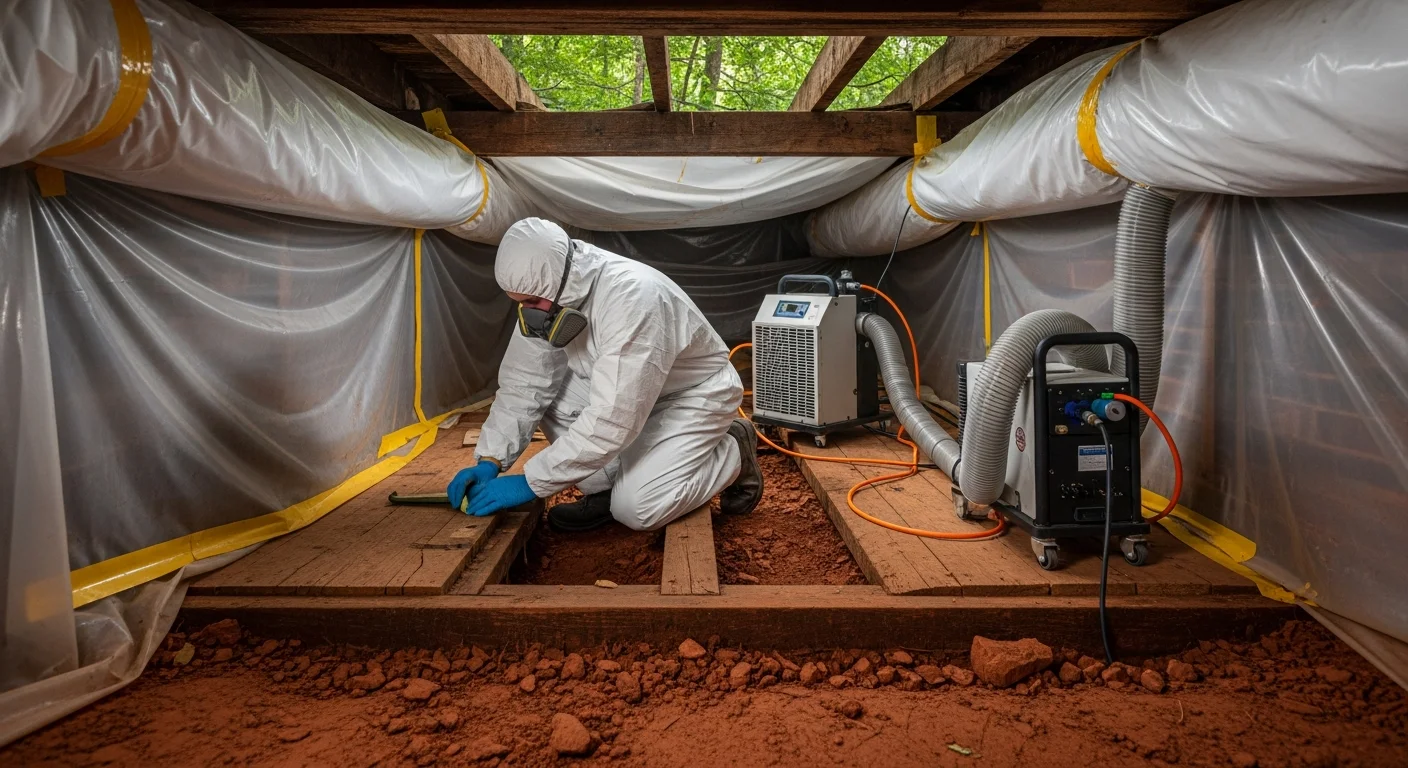
Polyethylene barriers and negative air pressure containment are established per IICRC S520 protocols to prevent cross-contamination to unaffected areas. For crawl space work in Valdese homes, negative air machines pull air out from the work zone so spores are not drawn upward through the stack effect into living areas during remediation.
HEPA Air Filtration
HEPA filtration equipment is staged throughout the work zone. In NC's humid climate, airborne spore counts elevate significantly during material removal — HEPA air scrubbers capture spores that are disturbed during work so they cannot re-settle in the home.
Mold Removal & Material Disposal
Contaminated materials — drywall, insulation, vapor barriers, and in severe cases framing members — are removed, bagged, and disposed of per IICRC S520 protocols. Salvageable wood framing is HEPA-vacuumed and sanded to remove surface mold; wood that cannot be safely remediated is replaced.
Antimicrobial Treatment & Encapsulation
Antimicrobial treatments are applied to all affected and exposed surfaces. In Valdese's crawl space environments, this includes framing, subfloor, and foundation walls. Encapsulation of remediated framing creates a barrier against future mold colonization when paired with upgraded vapor control.
Post-Remediation Verification
Post-remediation clearance testing by an independent assessor confirms that spore counts have returned to pre-mold or normal outdoor levels. This documentation is what your insurer, future buyer, or lender will request. Palm Build coordinates independent verification for every job where scope warrants.
Cost Guide
Mold Remediation Costs in Valdese, NC
Typical cost ranges for Burke County mold remediation — based on mold type, extent, and foundation type. Written estimates provided before any work begins.
$500 – $2,000
Surface MoldLocalized mold on drywall, tile grout, or bathroom surfaces — limited to one area, no structural involvement.
$2,000 – $8,000
Crawl Space MoldCrawl space framing and subfloor remediation — the most common loss type in Valdese's older housing stock. Cost varies with severity and square footage of affected framing.
$5,000 – $15,000
Multi-Area MoldCrawl space plus living area involvement, wall cavity mold from hidden leaks, or extensive HVAC system mold requiring duct cleaning.
$15,000 – $40,000+
Severe / StructuralStructural framing replacement, full crawl space encapsulation, multi-room or multi-unit (Stonehaven, Morgan Trace) mold with major demolition and rebuild scope.
Valdese-Specific Cost Factors
- Lake Rhodhiss area homes require extended dehumidification time due to higher ambient outdoor humidity — this extends labor and equipment days
- Older Holly Hills and Valdese Central homes may have legacy framing that requires replacement rather than surface remediation, increasing scope substantially
- HOA and condo properties (Stonehaven, Morgan Trace) require multi-unit coordination and documentation — administrative scope adds cost
- Post-remediation clearance testing by an independent assessor adds $300–$600 but is essential for insurance documentation and resale protection
- Vapor barrier replacement after crawl space remediation adds $1,500–$4,000+ but is necessary to prevent re-colonization — do not skip it
Remediation Gallery
Mold Remediation in Valdese — From Containment to Clearance
Every stage of the IICRC S520 process, documented — containment, treatment, vapor barrier installation, and post-clearance verification.
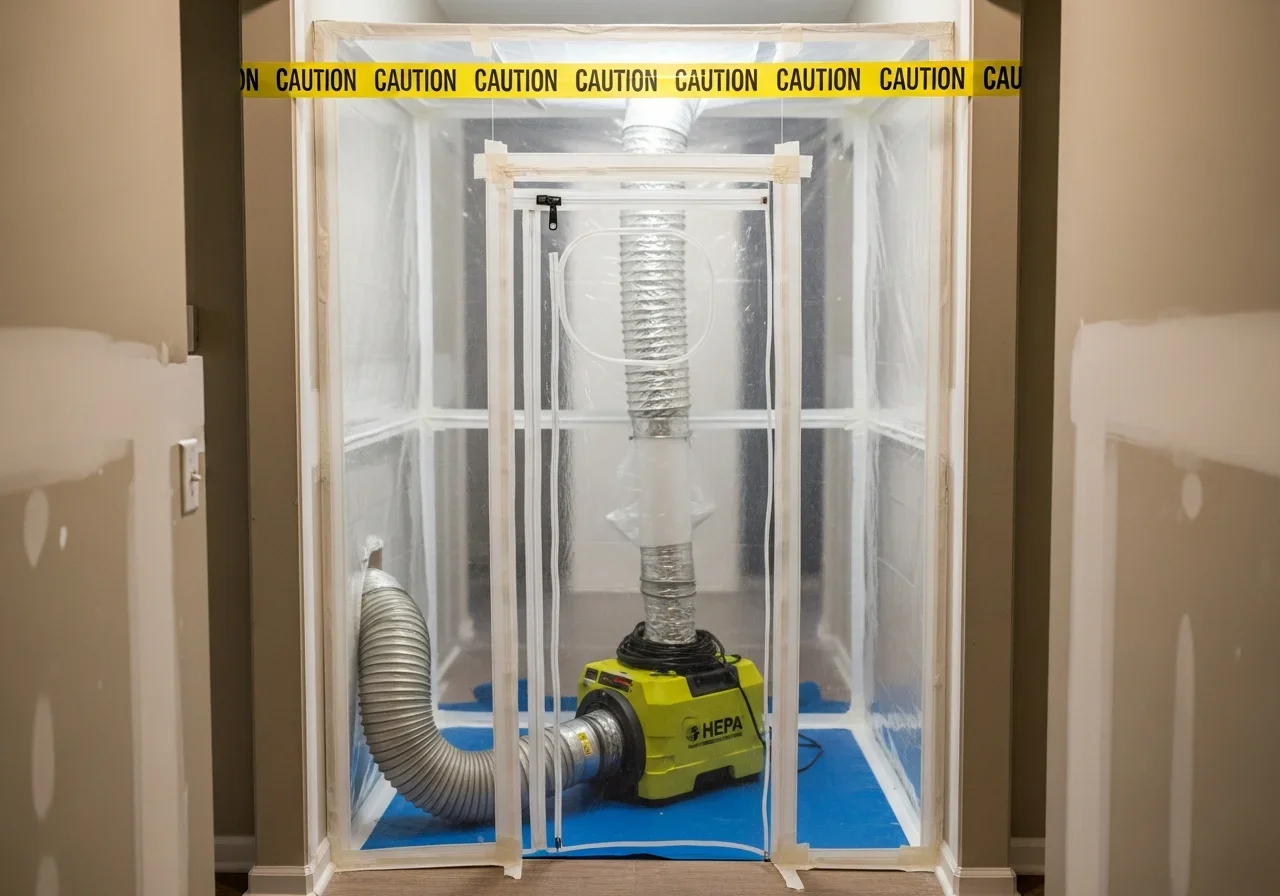
S520 Containment Setup
Polyethylene barriers and negative air pressure before remediation begins — preventing cross-contamination.
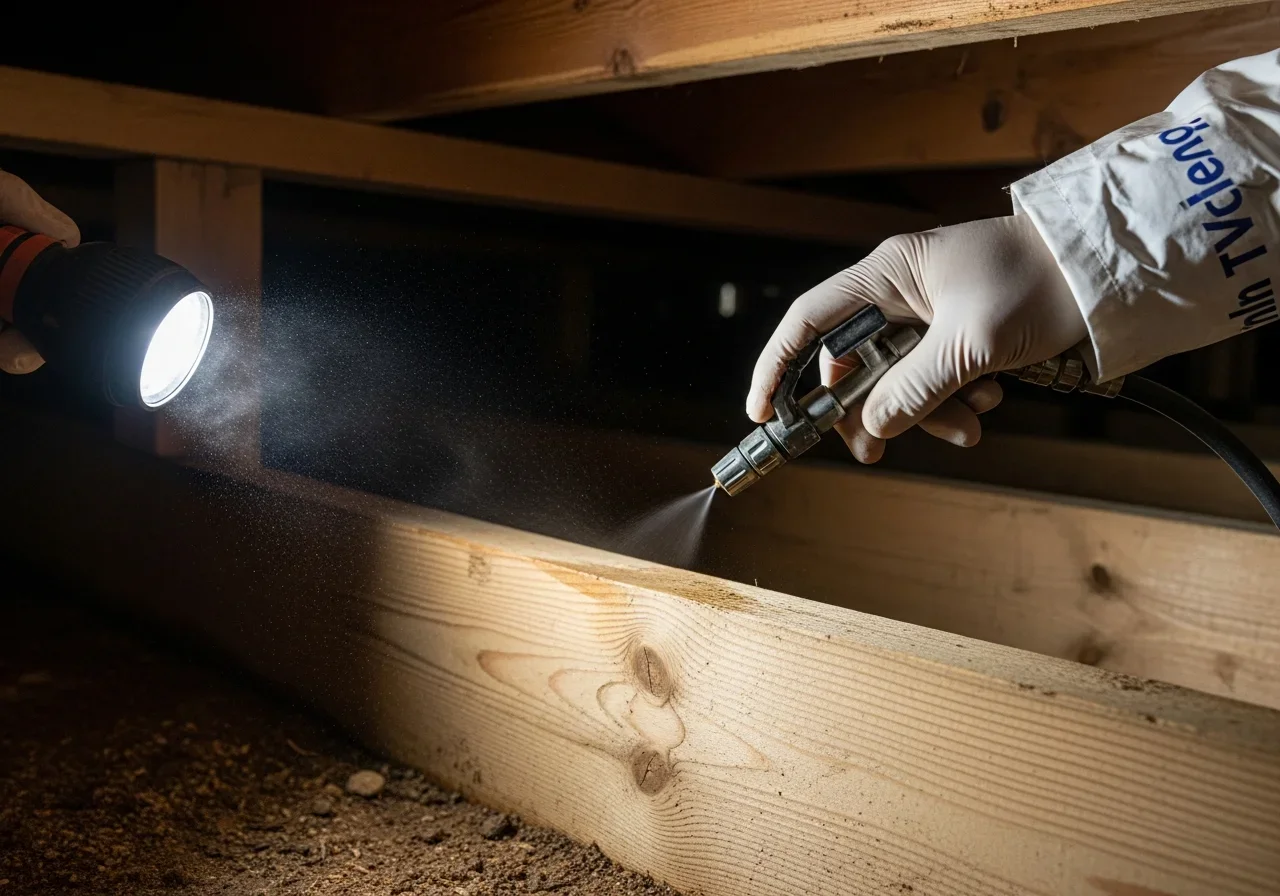
Crawl Space Antimicrobial Treatment
Antimicrobial application to remediated framing in a Valdese older-stock home — standard on every job.
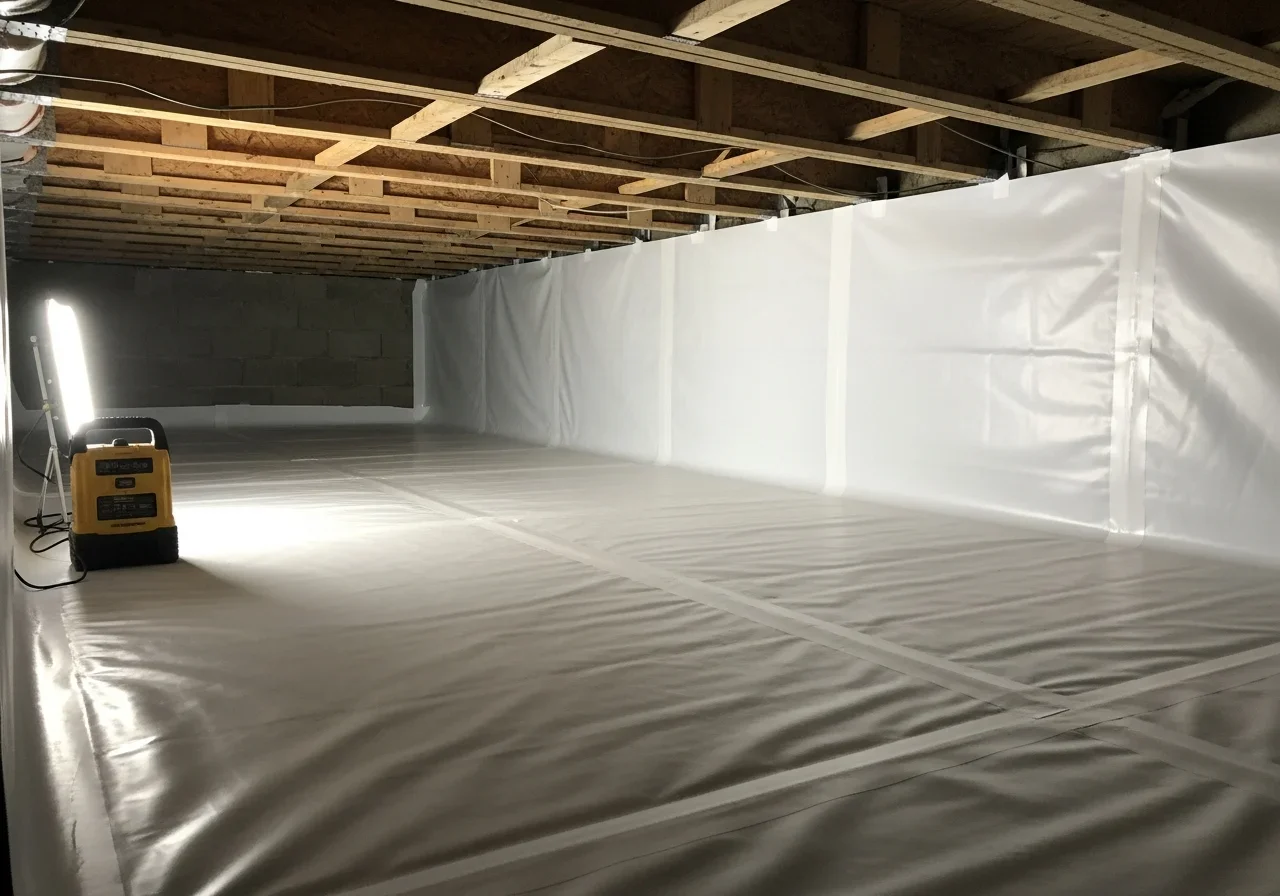
New Vapor Barrier Installation
Heavy-mil vapor barrier encapsulation after remediation — the final step that prevents re-colonization.
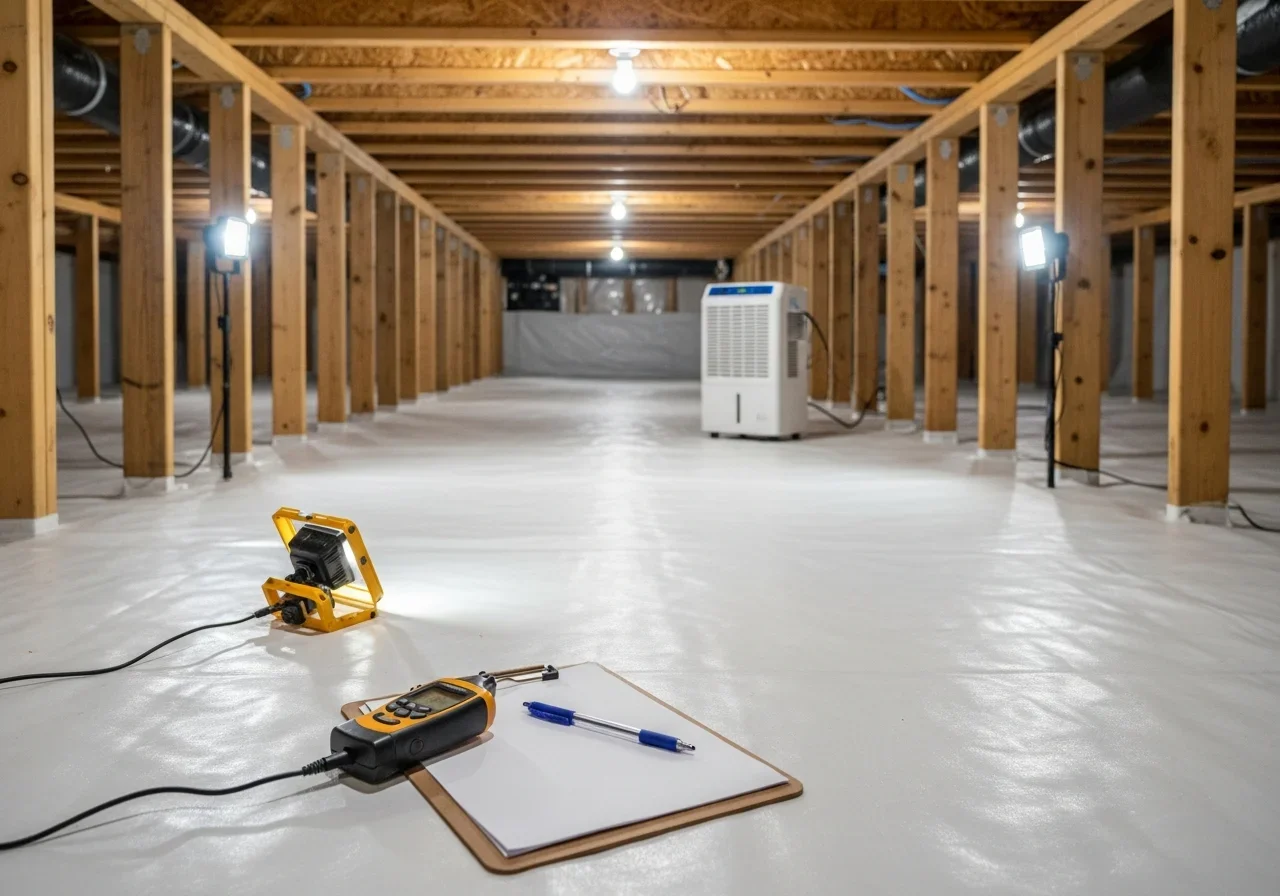
Post-Remediation Clearance Ready
Remediated and dried crawl space ready for independent clearance testing — documentation for insurer and future buyers.
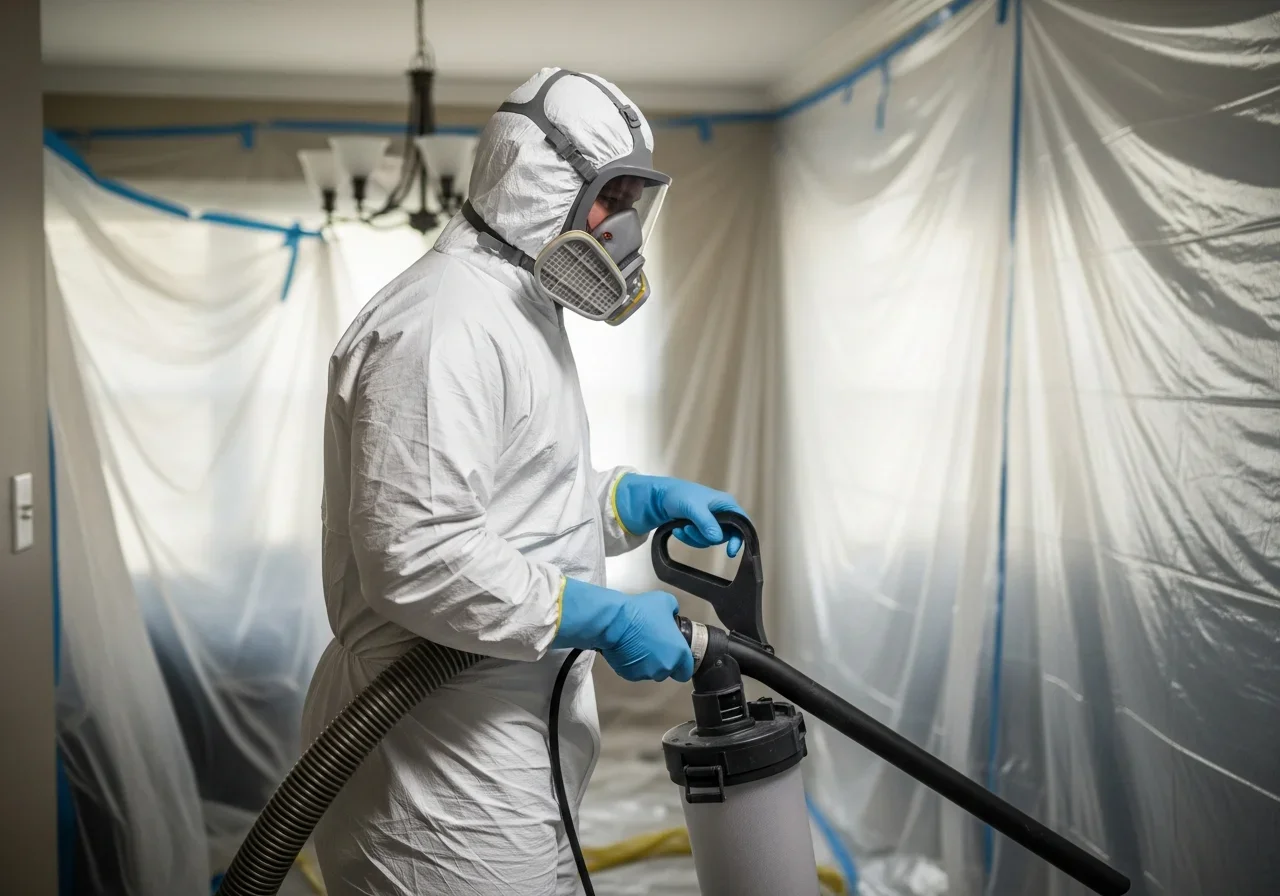
IICRC-Certified Technicians
Full PPE — respirator, Tyvek suit, gloves — per IICRC S520 worker protection requirements.
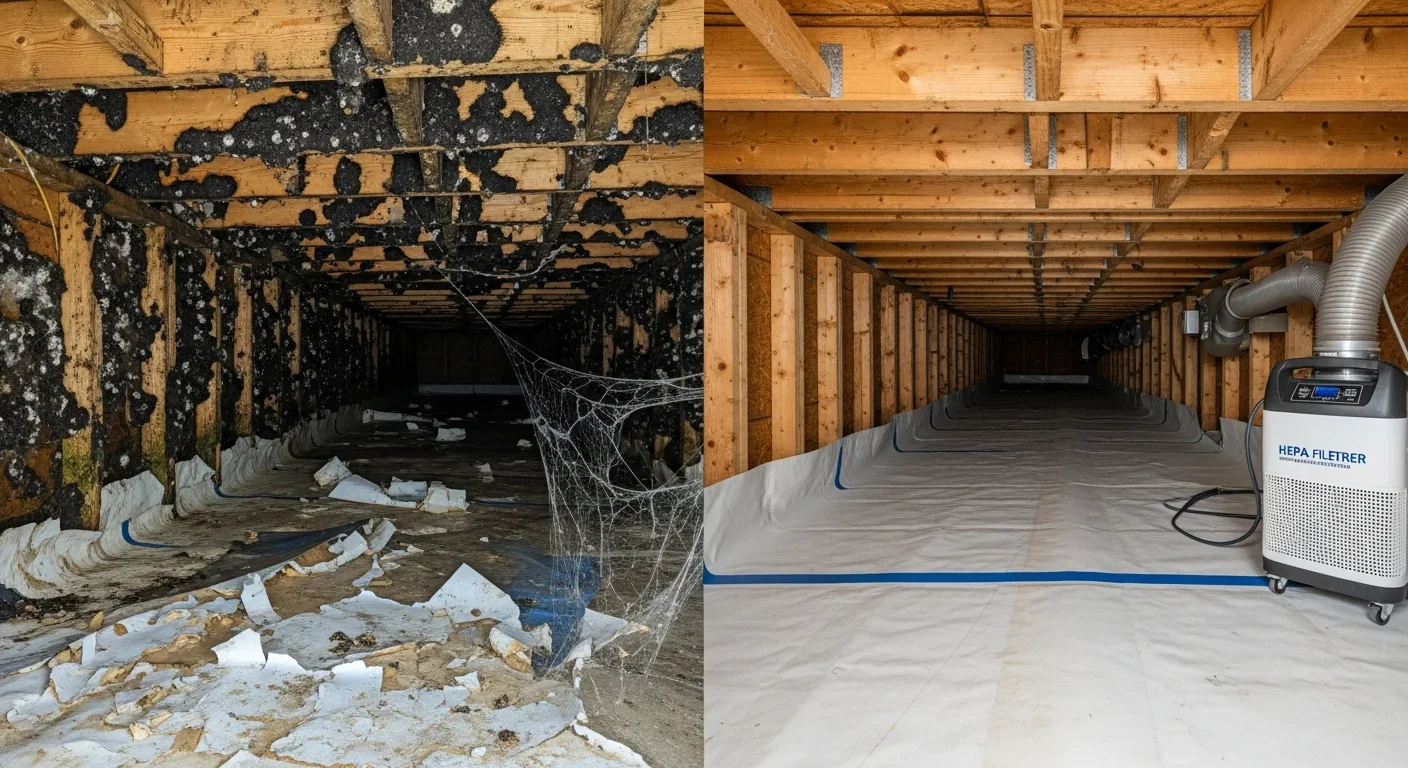
Before & After — Crawl Space Framing
Same joist face before and after HEPA vacuuming, sanding, and antimicrobial application.
Why Palm Build
Why Valdese Homeowners Choose Palm Build for Mold Remediation
IICRC-certified. Documentation-focused. Burke County-specific. In a market with no state licensing requirement, credentials and process are everything.
IICRC S520 Certified — The Only Standard That Matters in NC
With no state mold license requirement in North Carolina, IICRC S520 certification is the only credential that defines a minimum remediation standard. Palm Build holds current IICRC S520 certifications. Every Valdese mold job follows containment, removal, and post-clearance verification protocols as defined by the standard.
We Know Valdese's Specific Mold Environment
Burke County clay soils, vented crawl spaces in 1970s-era homes, lake-area humidity from Lake Rhodhiss — these are the specific conditions that drive mold in Valdese. Generic franchise protocols designed for slab-foundation Florida homes or Pacific Northwest basements don't map onto NC foothills crawl spaces. Our protocols do.
Same-Day Assessment Available
Mold in Burke County's warm, humid summers does not pause while you wait for an appointment. Palm Build offers same-day assessment for active water events that create immediate mold risk — 80–95 minutes from our Charlotte hub to Valdese when you need us now.
Independent Post-Clearance Verification
We coordinate independent third-party clearance testing on every job where scope warrants. This means a separate, unaffiliated assessor confirms spore counts have returned to acceptable levels — not us grading our own work. That documentation is what your insurer, future buyer, or lender will rely on.
Documentation Your Insurer Will Accept
NC insurance carriers have become significantly more demanding about remediation documentation as mold claims have increased. Palm Build produces a complete job documentation package: moisture assessments, scope of work, material disposal records, antimicrobial application logs, and clearance certificates. This is what gets claims approved.
NC Number, Burke County Knowledge
(704) 464-0121 reaches our Charlotte operations team — people who know Burke County's housing stock, Valdese's creek corridors, and NC's insurance landscape. Not a national call center. Not a franchise dispatcher. When you describe your situation, we understand what you're dealing with.
Mold found in your Valdese home? Call for same-day assessment.
IICRC S520 certified. Charlotte to Valdese in 80–95 minutes. 24/7 availability.
Common Questions
Frequently Asked Questions — Mold Remediation in Valdese, NC
Answers to the questions Valdese and Burke County homeowners ask most about mold remediation, crawl spaces, NC licensing, and insurance coverage.
More in Valdese
Other Restoration Services in Valdese, NC
Related Services