Pompano Beach's 70-75% year-round humidity, porous CBS concrete block construction, slab-on-grade foundations, and aging HVAC systems make it one of the highest mold-risk cities in Broward County. Palm Build's FL DBPR-licensed team provides professional containment, remediation, and prevention — with documentation your insurance carrier accepts.
Deerfield Beach — 5 Minutes from Pompano Beach Under 15 min Response IICRC Certified
Pompano Beach's specific combination of year-round subtropical humidity, aging CBS
concrete block construction without vapor retarders, near-constant AC operation, and
slab-on-grade foundations creates some of the highest baseline mold risk of any city in
Broward County. Understanding why is the first step toward permanent remediation — not
just cosmetic cleanup.
70-75% Year-Round Humidity
70-75%
Year-round RH
Pompano Beach sustains 70-75% relative humidity year-round — well above the 60% threshold where mold colonizes building materials. During the May-October rainy season, afternoon thunderstorms push outdoor humidity above 85%. Unlike northern cities where winter provides a dry respite, Pompano Beach's humidity rarely drops below 60% even in January. This constant moisture pressure means building materials in Pompano Beach never fully dry — walls, ceilings, and HVAC systems remain perpetually mold-ready.
HVAC Condensate Overflows — #1 Mold Trigger
10-11 mo
AC runs per year
HVAC systems in Pompano Beach run 10-11 months per year, generating constant condensation on evaporator coils, drip pans, and ductwork interiors. Clogged condensate drain lines that back up water into the drip pan are the single most common mold trigger we respond to. Salt air corrosion east of the Intracoastal accelerates drip pan failure. Oversized AC units that short-cycle never properly dehumidify — a chronic problem in older Pompano Beach homes with replacement units sized by rule-of-thumb rather than Manual J calculations.
CBS Block Walls Without Vapor Retarders
1960s-80s
Peak construction era
Pompano Beach's housing stock was built predominantly between the 1960s and 1980s using CBS (concrete block and stucco) construction — without the modern vapor retarders that current building codes require. These porous block walls absorb and retain moisture from driving rain through hairline stucco cracks created by decades of thermal cycling. Once moisture enters the wall cavity, it has no designed exit path, creating a dark, humid environment where mold thrives unseen for months.
Slab-on-Grade Moisture Trapping
Chronic
Slab moisture driver
Every Pompano Beach home sits on a slab-on-grade foundation — there are no basements here. Ground moisture migrates upward through the concrete slab via capillary action, a process called moisture vapor transmission. All that moisture exits upward, trapping under flooring and feeding mold along baseboards, beneath vinyl plank and tile, and inside the bottom plates of CBS walls. Homes built without proper sub-slab vapor barriers face this chronic moisture driver year-round.
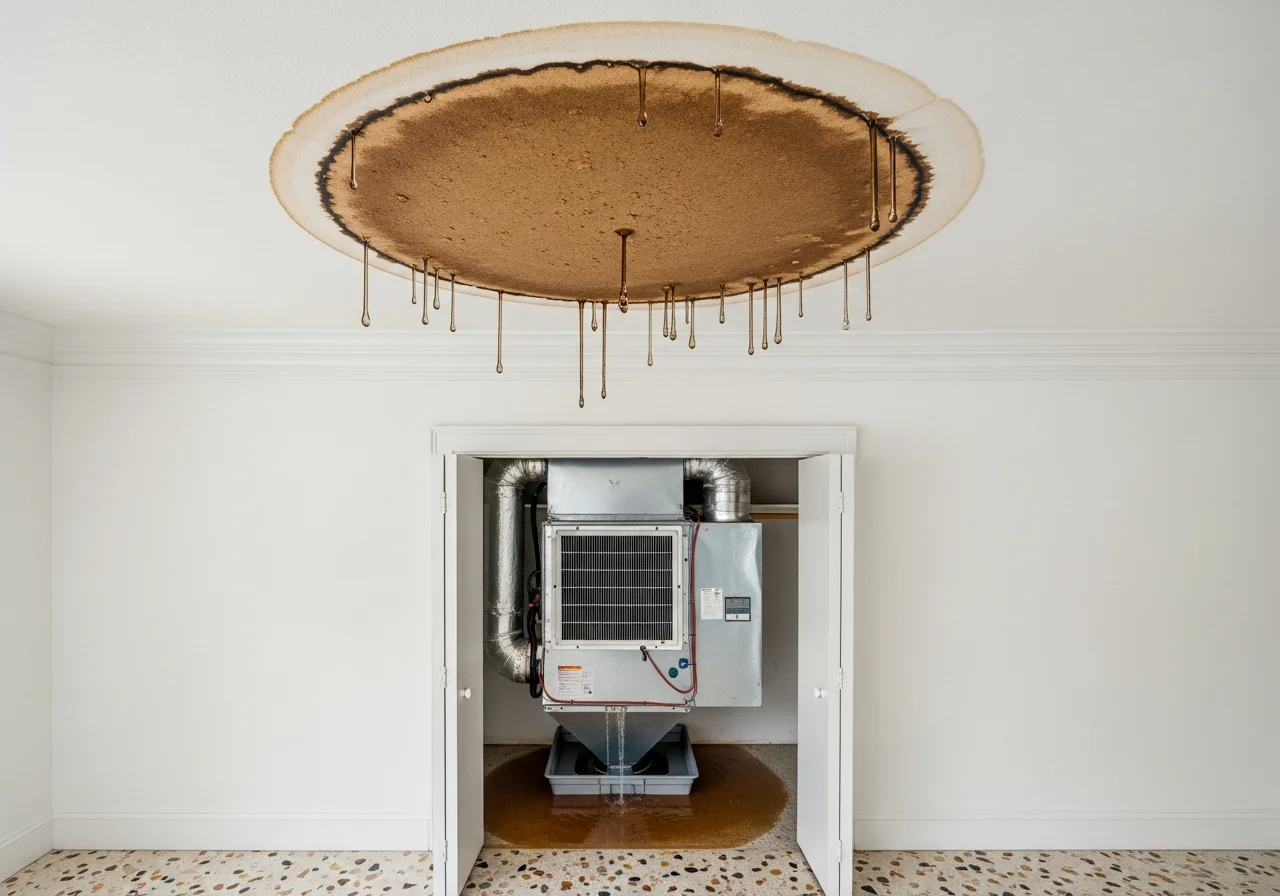
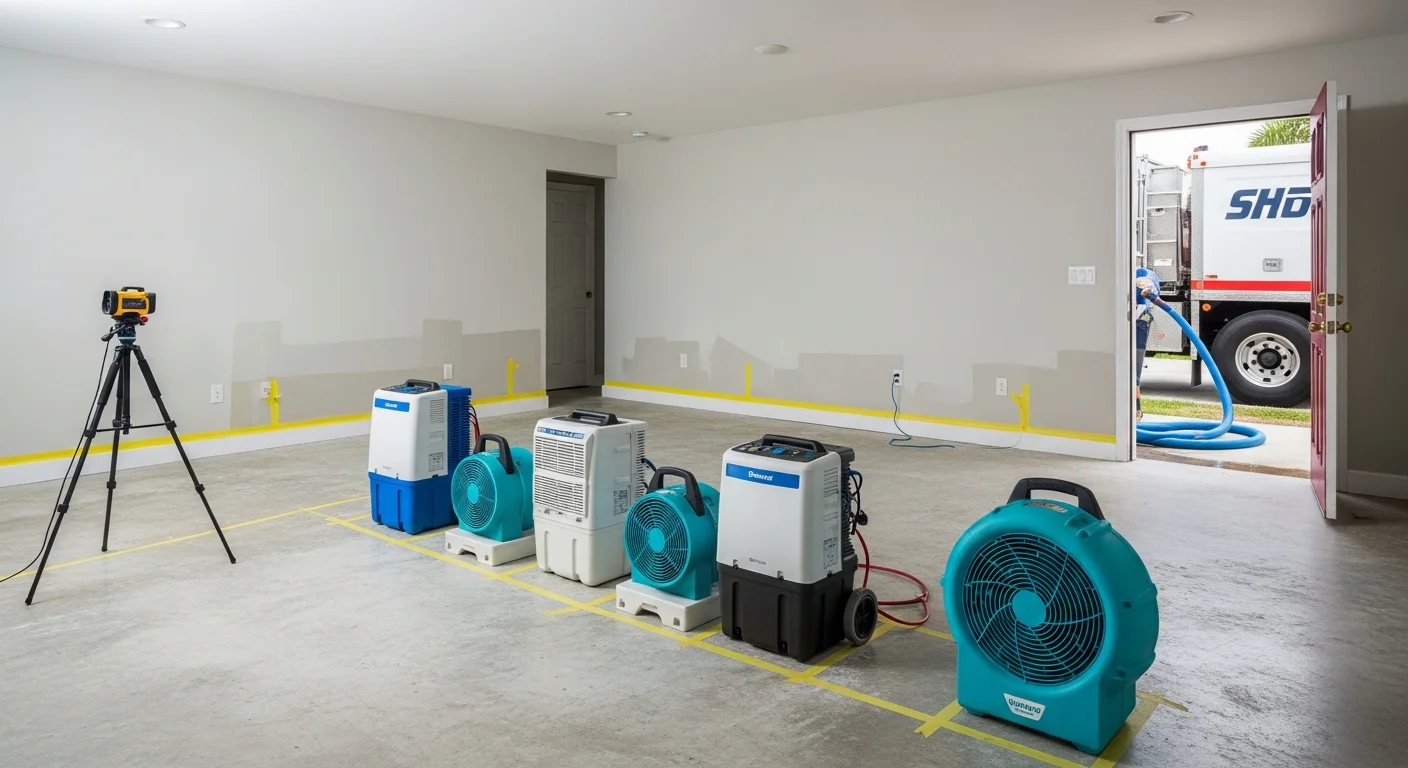
HVAC condensate overflow damage in a Pompano Beach home — clogged drain lines are the #1
mold trigger in a city where AC runs 10-11 months per year and 70-75% humidity never
lets building materials dry.
Neighborhood Risk Profiles
Mold Risk by Pompano Beach Neighborhood
Every Pompano Beach neighborhood has mold risk — but construction era, proximity to
water, and housing type create dramatically different risk profiles. Palm Aire's 100+
aging condo buildings, Leisureville's deferred-maintenance 55+ homes, and Old Pompano's
1950s housing stock face the highest baseline exposure.
Palm Aire
Critical Risk1970s-1980s | Condo community (100+ buildings)
Aging centralized and individual HVAC systems approaching end-of-life. Corroded drip pans, clogged condensate lines, and shared ductwork spread mold between units. CBS construction without vapor retarders. HOA maintenance varies widely between associations.
Leisureville
Critical Risk1960s-1970s | 55+ community (~1,600 homes)
Oldest housing stock in Pompano Beach. Original plumbing, HVAC, and window assemblies. Deferred maintenance and slow leak discovery in an aging population. CBS ranch homes with flat roof sections and minimal attic ventilation. Many units have never had ductwork replaced.
Oldest neighborhood in the city with the highest mold exposure rates. Original CBS block construction predating any vapor retarder standards. Aging cast iron drain lines corroding underground cause hidden water damage. Many homes lack modern hurricane-code windows, creating moisture entry points.
Hillsboro Shores
High Risk1960s-1970s | Waterfront condos and homes
East of the Intracoastal — constant salt air accelerates organic growth on exterior surfaces and corrodes HVAC copper components faster than inland neighborhoods. Elevated ambient humidity from proximity to the ocean and ICW. Wind-driven rain intrusion during nor'easters and tropical storms.
Harbor Village
High Risk1970s-1980s | Townhome community
Canal-adjacent location elevates ambient humidity around CBS structures. Shared walls between townhome units allow mold migration through block cavities. Aging roof systems with deteriorated underlayment allow attic moisture intrusion. HVAC systems past designed lifespan.
Garden Isles
High Risk1960s-1970s | Canal-front homes
Surrounded by canals on multiple sides — highest ambient moisture of any inland Pompano Beach neighborhood. Pre-1980 CBS construction with stucco micro-cracks from decades of thermal cycling. Slab moisture vapor transmission is acute due to high water table proximity.
Heron Bay
Elevated Risk2000s-2010s | Planned community
Newer construction but homes built during 2005-2012 may contain Chinese drywall that emits hydrogen sulfide, corrodes HVAC coils, and accelerates secondary mold growth. Energy-tight building envelopes trap moisture when HVAC dehumidification fails.
Mid-century CBS homes with original plumbing and aging HVAC systems. Flat roof sections with poor drainage create ponding water and roof leak mold. Interior humidity problems from undersized or failing AC units that cannot keep pace with Pompano Beach humidity loads.
Cypress Bend
Elevated Risk1980s-1990s | Gated community
CBS construction with aging barrel tile roofs — deteriorated underlayment allows water intrusion into attic spaces and wall top plates. HVAC systems in the 25-35 year range with degraded insulation and condensate components. Canal-adjacent units face elevated moisture.
Large neighborhood of single-family CBS homes with original construction. Vented attic spaces in Florida humidity allow condensation on roof decking. Many homes have had bathroom and kitchen remodels that altered ventilation without addressing moisture management.
Palm Aire's 100+ condo buildings represent the highest concentration of HVAC-related
mold risk in Pompano Beach — aging systems, shared ductwork, and CBS construction
without vapor retarders.
Pompano Beach Construction Risk
How CBS Concrete Block Walls Create Hidden Mold in Pompano Beach
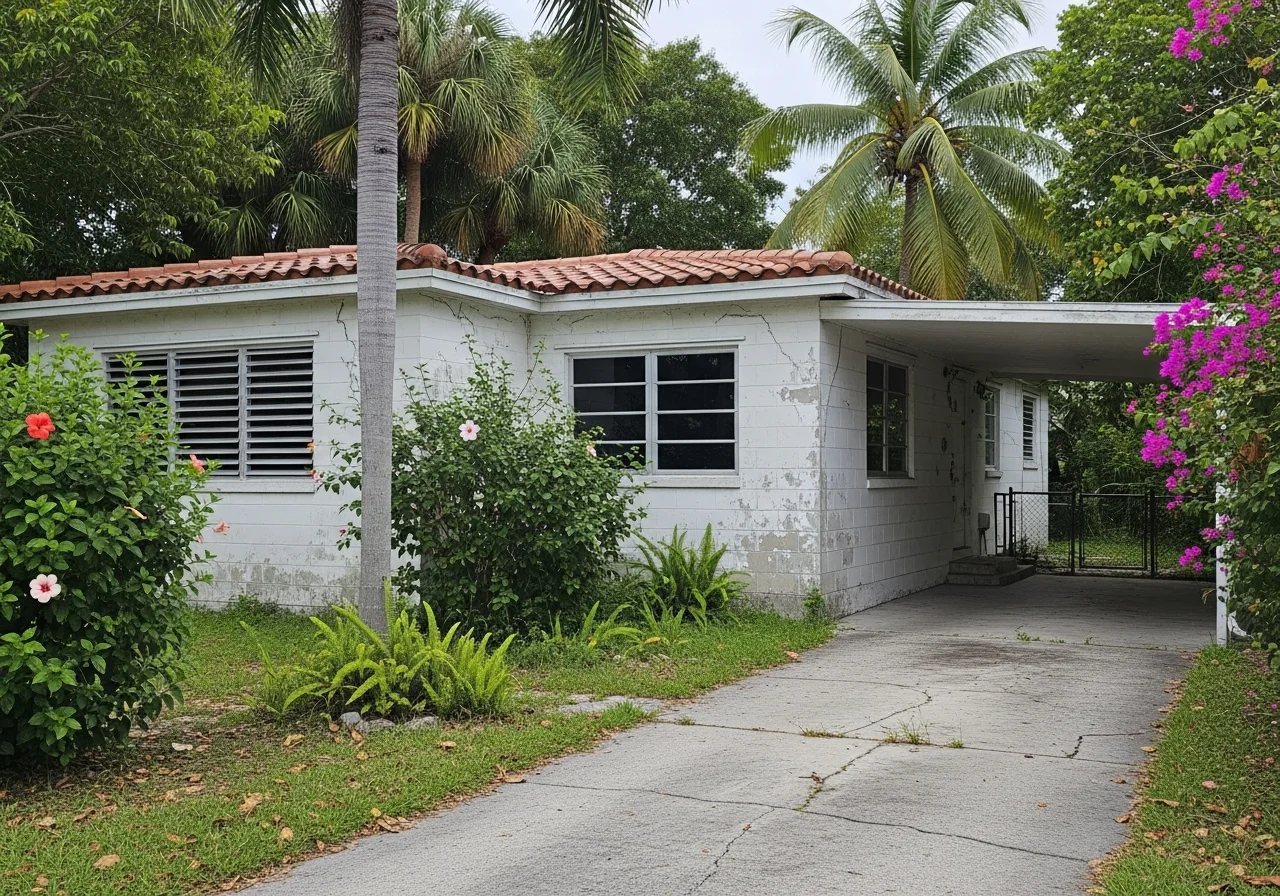
Nearly every home in Pompano Beach is built with CBS (concrete block and stucco)
construction — the dominant South Florida building method from the 1950s through the
1990s. Unlike wood-frame homes where moisture damage is visible quickly, CBS walls hide
mold inside hollow block cavities where it grows undetected for months.
The fundamental problem: Pompano Beach homes built in the 1960s-1980s were constructed without modern vapor retarders. Stucco was applied
directly over block, and drywall was attached to furring strips on the interior —
creating a wall assembly with no moisture management layer. Every rain event, every
humidity spike, every HVAC condensation cycle adds moisture that the wall cannot shed.
Stucco Crack Rain Intrusion
Decades of thermal cycling (daily heating and cooling of exterior stucco) and hurricane vibration create hairline cracks invisible to the naked eye. Every driving rainstorm pushes water through these micro-cracks into the block cavity. Without a vapor retarder, this water has no designed exit — it migrates inward, saturating the interior drywall from behind.
Block Cavity Moisture Trapping
CBS block walls have hollow cores that act as moisture reservoirs. In Pompano Beach's 70-75% humidity, moisture that enters the block cavity through stucco cracks or from slab capillary wicking cannot dry out. The trapped moisture creates a perpetually damp, dark environment — ideal conditions for mold colonization that can persist for months before any visible sign appears on the interior surface.
Thermal Bridge Condensation
When your AC cools interior surfaces to 72-76 degrees while exterior CBS walls absorb Florida's 90+ degree heat, the temperature differential creates condensation inside the wall assembly. This thermal bridge effect is most severe on south and west-facing walls that receive direct afternoon sun. The condensation feeds mold colonies that have already established from rain intrusion.
Invisible Interior Migration
Mold growing inside CBS wall cavities eventually migrates to the interior drywall face — but only after colonies are well established. The first signs are often musty odors from wall registers, dark spots behind furniture placed against exterior walls, or paint bubbling at wall bases. By the time visible mold appears on interior surfaces, the cavity contamination is typically extensive and requires professional remediation.
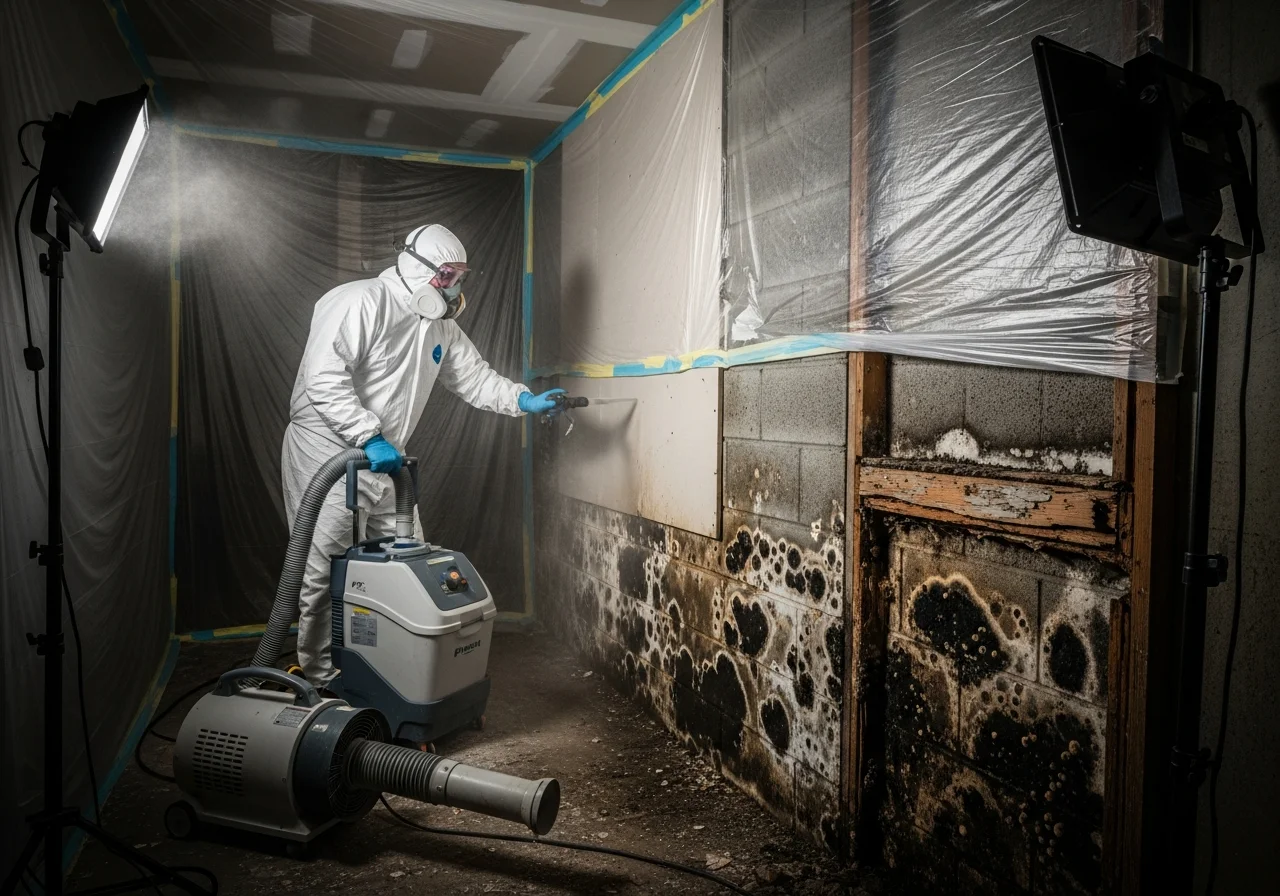
CBS wall cavity exposed during mold remediation — moisture trapped behind drywall in a
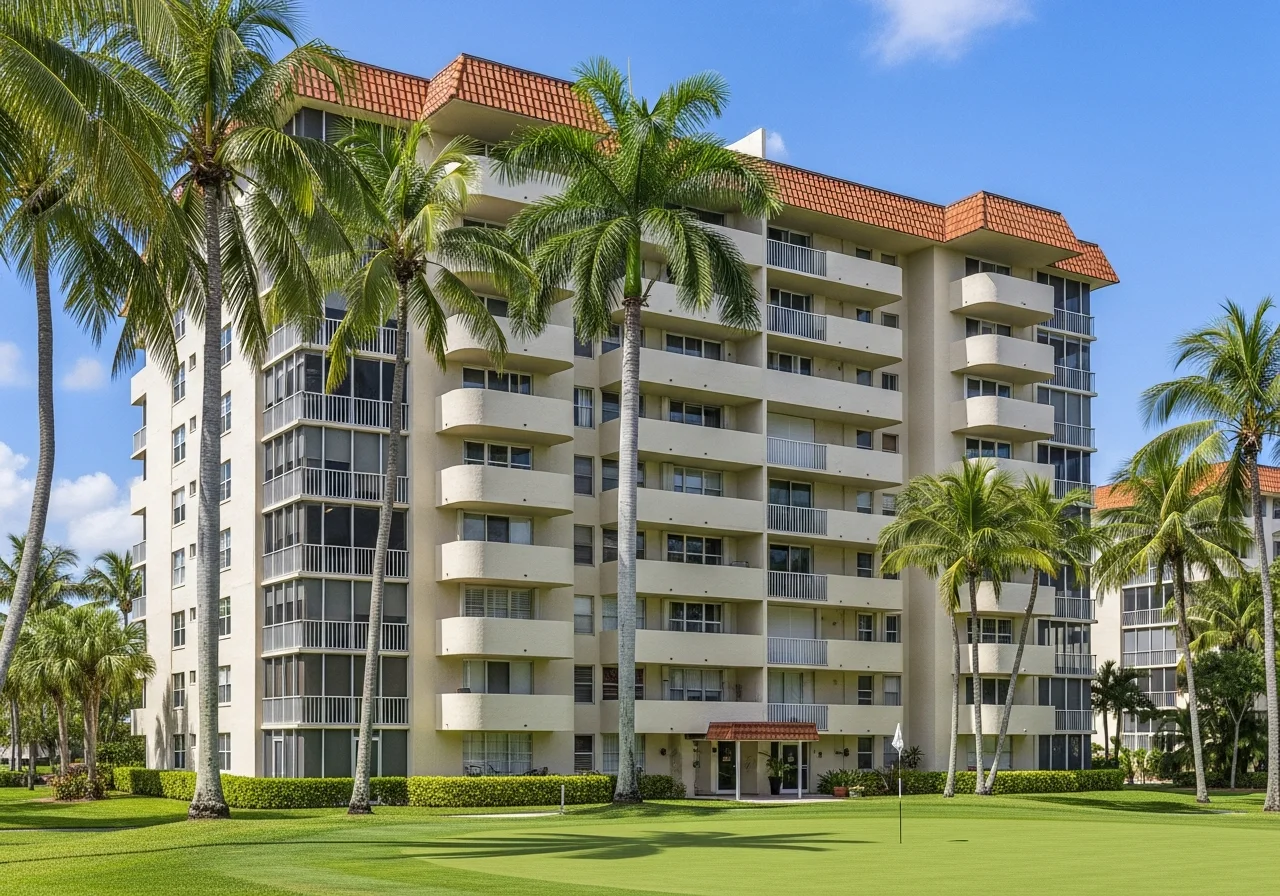
Pompano Beach home built without a vapor retarderTypical 1960s CBS ranch home in Old Pompano — the oldest housing stock in the city
with the highest mold exposure rates
Professional Detection Required
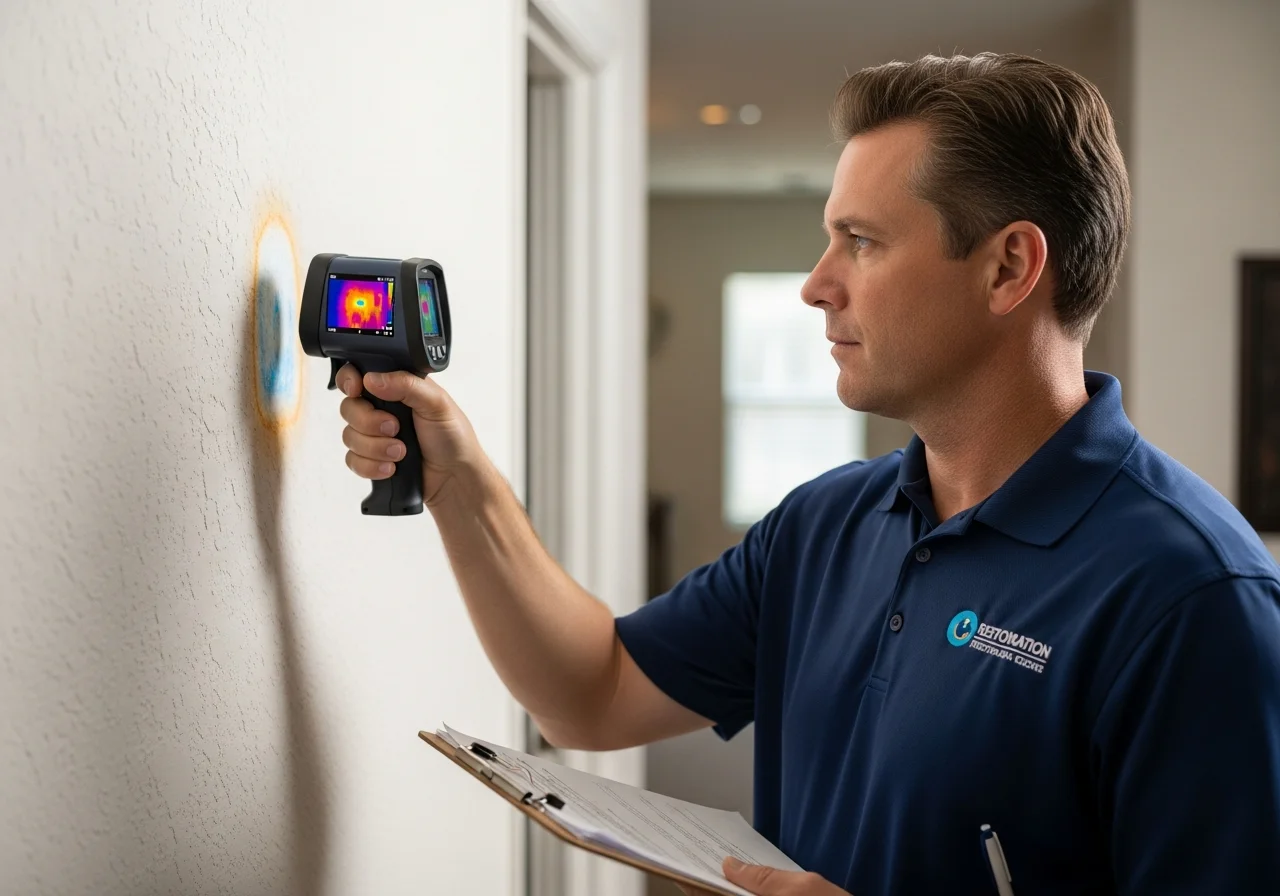
CBS cavity mold cannot be detected visually from the interior until colonies are
advanced. Palm Build uses infrared thermal imaging to identify moisture patterns
inside block walls without destructive investigation — mapping the full extent of
moisture intrusion before opening any walls. This prevents the common mistake of
cutting into contaminated walls without proper containment, which sends billions of
spores airborne.
IICRC S520 Protocol
Our Pompano Beach Mold Remediation Process
Professional mold remediation follows a strict sequence defined by the IICRC S520
standard and Florida DBPR regulations. Here is exactly what happens when Palm Build's
licensed team arrives at your Pompano Beach home.
01
Assessment & Moisture Mapping
Day 1
02
Containment Setup
Day 1-2
03
HEPA Air Filtration
Continuous
04
Removal & Cleaning
Days 2-4
05
Antimicrobial Treatment
Days 4-5
06
Clearance Verification
Day 5-6
01
Assessment & Moisture Mapping
Day 1
Comprehensive visual inspection, infrared thermal imaging of CBS walls, and air quality sampling. We identify the moisture source — HVAC condensate overflow, stucco crack intrusion, slab vapor transmission, or plumbing failure — and classify contamination level per IICRC S520. Florida law requires a separate DBPR-licensed mold assessor for the initial report.
02
Containment Setup
Day 1-2
Sealed polyethylene containment barriers isolate affected areas, including CBS wall cavities and HVAC system components. In Pompano Beach's 70-75% ambient humidity, containment must account for the elevated moisture pressure that accelerates spore dispersal outside the work zone. HEPA air scrubbers create negative air pressure to prevent migration to unaffected areas.
03
HEPA Air Filtration
Continuous
HEPA filtration runs throughout the project, capturing airborne spores down to 0.3 microns. In Pompano Beach homes with HVAC contamination — the city's #1 mold source — the entire duct system is isolated and filtered separately to prevent recontamination of cleaned areas during remediation. Multiple air scrubber stages maintain clean air outside containment zones.
04
Removal & Cleaning
Days 2-4
Contaminated materials are removed using controlled demolition. Affected drywall on CBS walls, contaminated HVAC components (evaporator coils, drip pans, ductwork sections), impacted insulation, and mold-damaged flooring from slab moisture are removed. Salvageable CBS block surfaces are HEPA-vacuumed and media blasted to remove embedded mold from block pores.
05
Antimicrobial Treatment
Days 4-5
EPA-registered antimicrobial agents are applied to all treated surfaces. For CBS construction, this includes interior block wall faces, window bucks, slab edges, and any areas where moisture intrusion was identified. HVAC components receive specialized coil and duct treatment. Chinese drywall-affected areas require additional decontamination protocols to address hydrogen sulfide residue.
06
Clearance Verification
Day 5-6
Post-remediation air quality testing by an independent DBPR-licensed mold assessor confirms spore counts have returned to acceptable levels. Florida's conflict-of-interest rule requires clearance from a different licensed assessor than the remediator. Complete documentation is provided for your records and insurance carrier.
Why Containment Matters in Pompano Beach's Climate
Disturbing mold without proper containment sends billions of spores airborne. In
Pompano Beach's 70-75% humidity environment, those spores find viable growth surfaces
within hours — and the HVAC system can distribute them to every room within minutes.
Our containment protocol ensures mold stays isolated during removal.
1
Sealed Barriers
Polyethylene sheeting floor-to-ceiling on CBS walls
Pompano Beach's climate and construction create five distinct mold scenarios — each
requiring different investigation and remediation approaches. HVAC condensate mold and
CBS wall cavity mold account for the majority of professional remediation projects.
HVAC Condensate Mold
Critical
The #1 mold trigger in Pompano Beach. AC systems running 10-11 months per year generate constant condensation. Clogged drain lines back up into the drip pan, salt air corrodes copper components east of the Intracoastal, and oversized units that short-cycle never properly dehumidify. Once mold colonizes the air handler, the blower fan distributes spores through ductwork to every room — often before visible signs appear. Palm Aire's 100+ condo buildings face this at scale.
CBS Wall Cavity Mold
High
Moisture enters concrete block walls through hairline stucco cracks from decades of thermal cycling. Without vapor retarders (absent in 1960s-1980s construction), water migrates inward and becomes trapped — creating a perpetually damp environment where mold thrives unseen. By the time musty odors or dark spots appear on interior surfaces, CBS cavity contamination is typically extensive. Requires infrared thermal imaging for non-destructive detection.
Post-Flooding Mold
High
Pompano Beach's low elevation, proximity to canals, and 62 inches of annual rainfall make flooding a recurring event. Whether from storm surge, canal overflow, or the routine street flooding that follows heavy afternoon thunderstorms, standing water inside a Pompano Beach home produces mold colonization within 24-48 hours. CBS block walls absorb floodwater through their porous structure, requiring professional extraction and drying.
Chinese Drywall Mold
Specialized
Homes built or renovated between 2005-2012 may contain Chinese drywall that emits hydrogen sulfide gas. This corrosive compound attacks HVAC evaporator coils, copper pipes, and wiring — creating conditions that accelerate secondary mold growth. Blackened AC coils, rotten egg odors, and recurring HVAC failures alongside mold indicate Chinese drywall involvement. Heron Bay and other 2000s-era developments in Pompano Beach are at risk. Requires specialized assessment before standard remediation.
Bathroom & Kitchen Mold
Common
Chronic moisture from showers, cooking steam, and plumbing leaks drives mold behind bathroom walls, under kitchen cabinets, and around toilets and tubs. In Pompano Beach's CBS construction, bathroom moisture migrates through block walls to adjacent rooms. Failed or missing exhaust fan ducting — common in 1960s-1980s homes — recirculates humid air into attic spaces or wall cavities instead of venting it outside.
Pompano Beach Pricing
Mold Remediation Costs in Pompano Beach
Costs vary by contamination extent, materials affected, and whether HVAC system work is
needed. Florida insurance policies often cap mold coverage at $10,000 — full HVAC mold
remediation and CBS wall restoration in Pompano Beach frequently exceed these limits.
Small / Contained Area
Bathroom, closet, single wall section, window frame
$2,500 - $8,000
Moderate / Multi-Room
Multiple rooms, CBS wall cavities, attic, flooring
Air handler, evaporator coil, ductwork contamination
$5,000 - $15,000
Why Pompano Beach Mold Costs Run Higher Than National Averages
South Florida mold remediation costs typically exceed national averages due to several
Pompano Beach-specific factors: CBS (concrete block and stucco) construction requires
specialized demolition and restoration techniques that wood-frame specialists lack. HVAC
system contamination — the most common mold type in Pompano Beach — adds air handler,
evaporator coil, and ductwork scope to the project. Florida's mandatory separate-assessor
requirement adds independent testing costs at both pre- and post-remediation phases. Homes
built between 2005-2012 may require Chinese drywall assessment, adding specialized testing
costs. However, proper remediation prevents far more expensive structural damage, health
consequences, and property value losses.
Year-Round Risk
Pompano Beach Mold Risk Calendar
Unlike northern cities where winter freezing halts mold growth, Pompano Beach never
drops below mold-favorable conditions. The risk ranges from elevated to critical — it is
never low. Understanding the seasonal peaks helps time preventive maintenance and
recognize when emergency response is most likely needed.
January - April
Elevated RiskDry Season
Pompano Beach's 'dry season' is relative — humidity still averages 60-70%, well above the 60% mold threshold. Lower rainfall reduces new moisture intrusion, but existing moisture inside CBS walls and HVAC systems continues feeding active colonies. This is the best window for planned remediation and preventive HVAC maintenance before the rainy season amplifies every moisture problem.
May - June
High RiskRainy Season Onset
Daily afternoon thunderstorms begin dumping 6-10 inches of rain per month. Humidity spikes to 75-85%. HVAC condensate volume surges as AC systems work harder against rising heat and humidity. Clogged drain lines that survived the dry season overflow under increased load. Stucco cracks that were dormant begin actively wicking rainwater into CBS wall cavities. This is when dormant mold colonies explode into visible contamination.
July - October
Critical RiskPeak Hurricane & Mold Season
Maximum mold risk. Hurricane season brings wind-driven rain that penetrates stucco at angles normal rainfall cannot. Power outages disable AC, causing indoor humidity to spike above 80% within hours. Flooding from storm surge, canal overflow, or overwhelmed drainage saturates slab-level construction. HVAC systems running at maximum capacity generate the most condensation. Post-storm mold blooms can appear within 48-72 hours throughout an entire home.
November - December
Moderate RiskTransition Season
Rainfall decreases but humidity remains 60-70%. Mold colonies that established during the rainy season continue growing — they do not die when rain stops. Temperature drops slightly reduce HVAC runtime, slowing new condensate production. This is a secondary window for remediation, but any mold that grew during May-October must be professionally removed — it will not resolve on its own.
Mold Does Not Die in Pompano Beach's "Dry Season"
Active mold colonies that established during the rainy season continue growing
through winter — Pompano Beach's humidity never drops low enough or long enough to
kill established mold. The dry season slows new colony formation but does not
reverse existing contamination. Professional remediation is required to eliminate
mold regardless of season.
FL Regulatory Landscape
Florida Mold Licensing: What Pompano Beach Homeowners Must Know
Florida has one of the strictest mold regulatory frameworks in the country. Under DBPR Chapter 468, Part XVI, the state requires separate licenses for mold
assessment and mold remediation — and explicitly prohibits the same company from
performing both on the same project within 12 months.
This conflict-of-interest separation — often called the "Chinese wall" rule — prevents
the company that finds the mold from profiting by removing it. Florida mold assessors
must carry $1 million in general liability insurance, and mold remediators must
demonstrate proof of financial responsibility. Both licenses require continuing
education and are enforced by the Department of Business and Professional Regulation
(DBPR). In Broward County, where Pompano Beach's extreme humidity makes mold
ubiquitous, unlicensed operators are unfortunately also common — verify credentials
before hiring anyone.
Verify DBPR mold remediator license before hiring any company
Assessor and remediator MUST be separate licensed entities
Same company cannot assess and remediate within 12 months (Chinese wall)
Post-remediation clearance must come from a different licensed assessor
Check license status at myfloridalicense.com — free and instant
Full liability insurance and workers' comp coverage
Coordinates with independent FL-licensed assessors for clearance
Deerfield Beach hub — under 15 minutes from all Pompano Beach neighborhoods
Red Flags to Watch For
No DBPR mold license or refuses to provide license number
Same company offers to assess AND remediate your mold
Offers to "spray and seal" without removing contamination
No containment barriers or HEPA filtration during work
Claims "no license needed" in Florida (false)
Insurance Navigation
Mold Insurance Claims in Pompano Beach
Mold coverage in Florida is limited and has become more restrictive following recent
insurance reforms. Understanding your coverage — including the $10,000 typical cap,
post-AOB reform changes, and strict filing deadlines — can save Pompano Beach homeowners
thousands.
Mold resulting from a covered sudden water event (burst pipe, appliance failure) is typically covered up to your policy's mold sublimit
Most Florida policies cap mold coverage at $10,000 — HVAC mold and CBS wall remediation in Pompano Beach frequently exceed this limit
Mold from gradual moisture, humidity, HVAC condensation, slab vapor transmission, or long-term stucco intrusion is almost always excluded
Chinese drywall-related mold claims (2005-2012 homes in Heron Bay and other developments) have specific exclusions in many Florida policies
Florida's 1-year claim filing deadline (Fla. Stat. 627.70132) is strictly enforced — delayed reporting can void otherwise valid claims
Some Florida carriers offer mold endorsements for additional premium — ask your agent about expanded coverage before you need it
Post-AOB reform (2023 SB 2-A) changed claim assignment rules — but professional documentation connecting mold to a covered water event remains critical for successful claims
Palm Build's Approach to Pompano Beach Mold Claims
When mold results from a covered water event, our documentation connects the mold to the
original loss — moisture maps, infrared thermal images, air quality reports, and
remediation scope all formatted for the adjuster. We understand post-AOB reform
requirements, Florida's strict 1-year claim deadline, and Broward County-specific claim
patterns. For mold not covered by insurance (HVAC condensation, humidity, gradual
moisture), we provide transparent pricing and financing options.
These are the most common mold presentations we encounter in Pompano Beach's CBS
concrete block homes — from HVAC system contamination and CBS wall cavity mold to slab
vapor-driven baseboard damage.
HVAC condensate overflow — clogged drain lines back up into ceilings and walls, the #1 mold trigger in Pompano Beach homes
CBS wall cavity mold — moisture trapped behind drywall in a 1970s Pompano Beach home built without vapor retarders
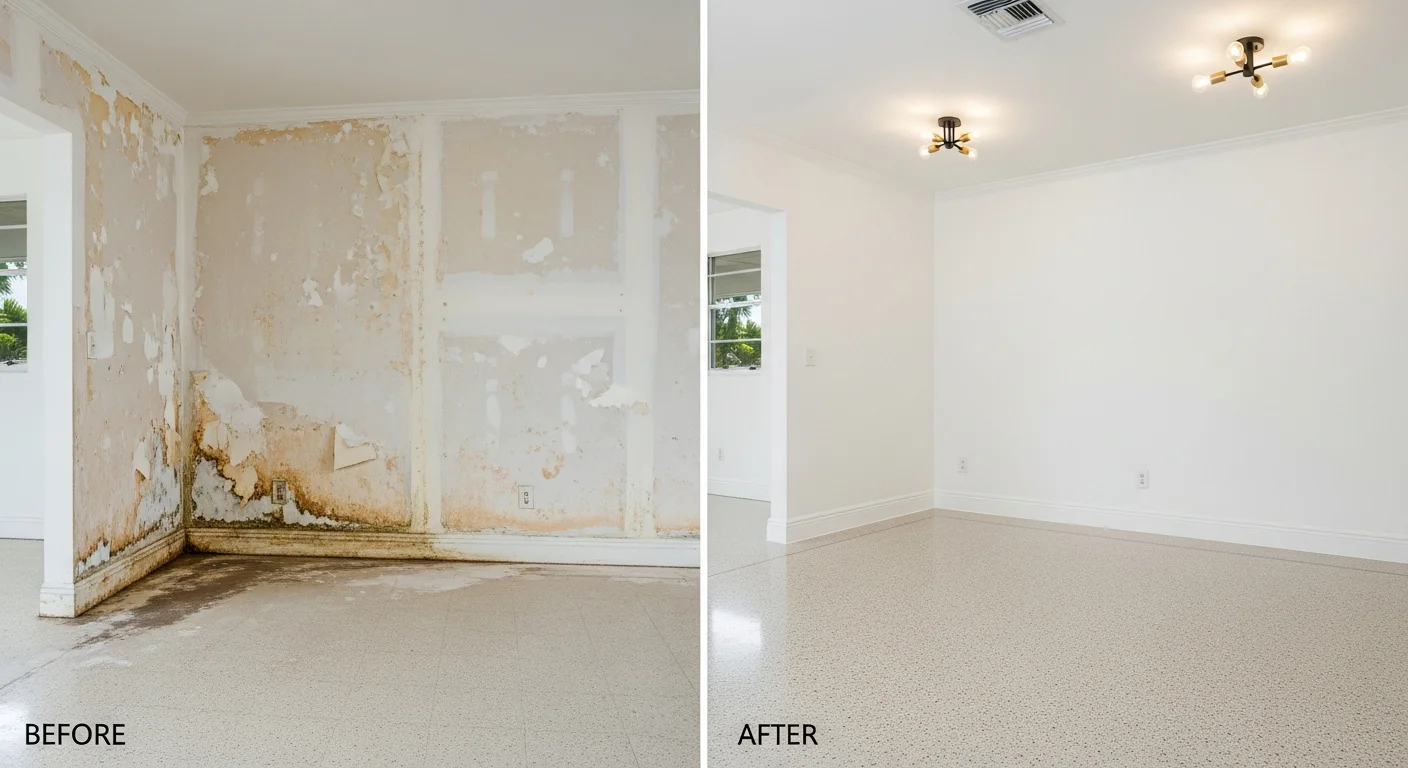
Before and after — water damage and mold restoration in a Pompano Beach home following HVAC failure and CBS wall contamination
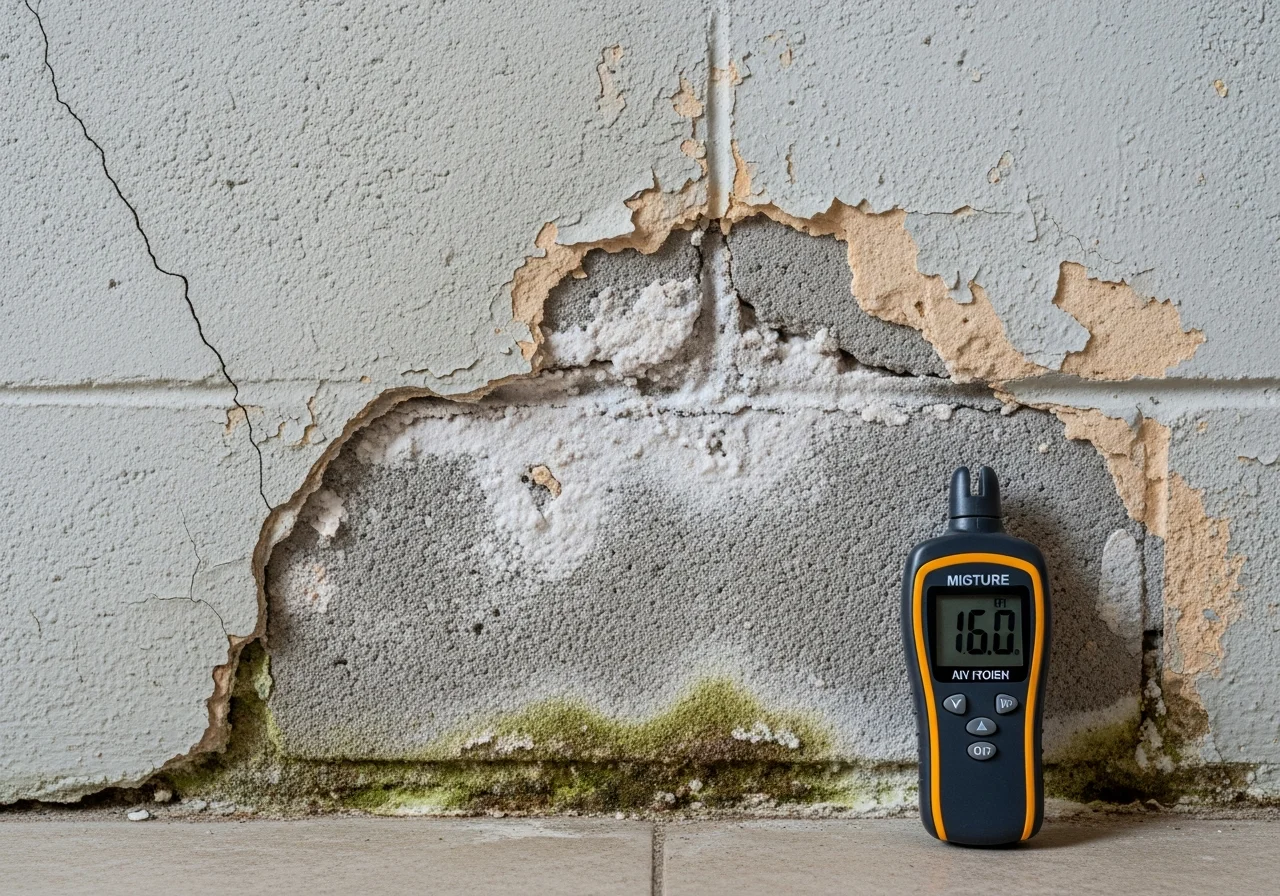
Infrared thermal imaging reveals hidden moisture patterns inside CBS block walls without destructive investigation
The Palm Build Difference
Why Pompano Beach Homeowners Choose Palm Build for Mold
Under 15 Minutes from Pompano Beach
Our South Florida Operations Hub at 786 S Military Trail, Deerfield Beach is under 15 minutes from every Pompano Beach neighborhood — Palm Aire, Leisureville, Old Pompano, Hillsboro Shores, Harbor Village, Garden Isles, Heron Bay, and everywhere in between. Same-day mold inspections for urgent situations.
IICRC AMRT Certified
Every Palm Build crew lead carries current IICRC Applied Microbial Remediation Technician (AMRT) certification — the industry gold standard for mold remediation. Our protocols follow IICRC S520 standards for professional mold remediation in every Pompano Beach project.
FL DBPR Licensed
Palm Build holds a Florida DBPR mold remediation license and complies fully with Chapter 468, Part XVI requirements. We coordinate with independent DBPR-licensed assessors for the conflict-of-interest separation Florida law mandates — the same company cannot assess and remediate on the same property within 12 months.
CBS Construction Specialists
Pompano Beach is built on CBS concrete block — and we specialize in it. We understand stucco crack moisture intrusion patterns, CBS wall cavity mold, slab vapor transmission, thermal bridge condensation, and the specific remediation and restoration techniques required for block construction that wood-frame specialists miss. Infrared moisture mapping identifies hidden contamination without destructive investigation.
HVAC Mold Expertise
Pompano Beach's #1 mold source is the HVAC system. We remediate air handlers, evaporator coils, drip pans, and duct systems, then address the root cause — drain line blockage, pan corrosion, unit sizing, condensation patterns — so mold does not return after remediation. Palm Aire condo associations rely on our HVAC mold expertise.
Insurance Documentation
We understand Florida's post-AOB reform claim requirements, the 1-year filing deadline, and mold coverage sublimits. Our documentation connects mold to the original water event with moisture maps, infrared thermal images, air quality reports, and scope details formatted for your Broward County adjuster.
Common Questions
Pompano Beach Mold Remediation FAQ
Why is mold so common in Pompano Beach homes?
Pompano Beach sustains 70-75% relative humidity year-round — well above the 60% threshold where mold colonizes building materials. The city's housing stock is predominantly CBS (concrete block and stucco) construction from the 1960s-1980s, built without modern vapor retarders. These porous block walls absorb and retain moisture from driving rain, while slab-on-grade foundations force all ground moisture upward through capillary action. Add HVAC systems running 10-11 months per year generating constant condensation, and Pompano Beach creates mold-favorable conditions 365 days a year. Salt air east of the Intracoastal accelerates organic growth on exterior surfaces.
What is CBS wall mold and why is it Pompano Beach's biggest hidden problem?
CBS (concrete block and stucco) walls are porous — they absorb rainwater through hairline stucco cracks created by decades of thermal cycling and hurricane vibration. Once moisture enters the block cavity, it becomes trapped between the exterior stucco and interior drywall, creating a dark, humid environment where mold thrives unseen. In Pompano Beach homes built in the 1960s-1980s without vapor retarders, this moisture has no designed exit path. Mold can grow inside CBS wall cavities for months before musty odors or visible damage alert homeowners. Professional infrared moisture mapping is required to identify CBS cavity mold without destructive investigation.
Does Florida require a mold remediation license?
Yes. Florida has one of the strictest mold regulatory frameworks in the country. Under DBPR Chapter 468, Part XVI, mold assessors and mold remediators must hold separate state licenses. A conflict-of-interest rule (the 'Chinese wall') prohibits the same licensee from performing both assessment and remediation on the same property within 12 months. Post-remediation clearance must come from a different licensed assessor than the remediator. Always verify your contractor's DBPR license at myfloridalicense.com before hiring.
How much does mold remediation cost in Pompano Beach?
Pompano Beach mold remediation typically ranges from $2,500 to $8,000 for small contained areas (bathroom, closet, single wall section). Moderate projects involving multiple rooms or CBS wall cavities run $8,000 to $20,000. Extensive whole-home remediation with HVAC system contamination can reach $20,000 to $50,000+. HVAC-specific mold remediation averages $5,000 to $15,000. Pompano Beach costs run higher than national averages due to CBS construction complexity, HVAC scope, mandatory independent clearance testing, and the prevalence of Chinese drywall in homes built between 2005-2012.
Does homeowners insurance cover mold remediation in Pompano Beach?
Most Florida homeowners policies cap mold coverage at $10,000 — often insufficient for full CBS wall and HVAC remediation in Pompano Beach homes. Mold resulting from a covered sudden water event (burst pipe, appliance failure) has better coverage prospects. Mold from gradual moisture, humidity, HVAC condensation, or long-term maintenance issues is almost always excluded. Florida's 1-year claim filing deadline is strictly enforced. Post-AOB reform (2023 SB 2-A) changed claim assignment rules. Palm Build's documentation connects mold to the original water event for maximum claim support.
What is Chinese drywall and does it cause mold in Pompano Beach?
Chinese drywall was installed in Pompano Beach homes built or renovated between 2005 and 2012 during the construction boom. This defective drywall emits hydrogen sulfide gas that corrodes copper pipes, HVAC evaporator coils, and wiring. The corroded HVAC components trap moisture and create conditions that accelerate secondary mold growth. If your Pompano Beach home has unexplained copper corrosion, rotten egg odors, blackened AC coils, or recurring mold alongside HVAC failures, Chinese drywall assessment is recommended before standard mold remediation.
Why does Palm Aire have such a serious mold problem?
Palm Aire contains over 100 aging condo buildings with centralized and individual HVAC systems approaching or past their designed lifespan. Corroded drip pans, clogged condensate lines, and degraded evaporator coil insulation create building-wide mold contamination when one unit's HVAC failure distributes spores through shared ductwork or plenum connections. The community's 1970s-1980s CBS construction lacks modern vapor retarders, and shared walls allow mold to migrate between units through block cavities. HOA-managed HVAC maintenance varies widely between associations.
What areas of Pompano Beach does Palm Build serve for mold remediation?
We serve all of Pompano Beach and Broward County from our Deerfield Beach operations hub — under 15 minutes from every Pompano Beach neighborhood. Coverage includes Palm Aire, Leisureville, Hillsboro Shores, Harbor Village, Garden Isles, Old Pompano, Heron Bay, Cresthaven, Cypress Bend, Mainlands, Palm-Aire Village, and all surrounding communities. Same-day mold inspections for urgent situations.
Trusted Vendors
Trusted local pros in Pompano Beach
Outside our restoration scope, these are the vetted, licensed contractors we trust
alongside our work. Personally evaluated, reference-checked, and recommended by Palm
Build.
Mold Problem in Pompano Beach? Get a Professional Assessment.
Palm Build's DBPR-licensed mold remediation team provides same-day inspections, professional containment, and complete remediation with documentation your insurance carrier accepts. From our Deerfield Beach hub, we're under 15 minutes from every Pompano Beach neighborhood.