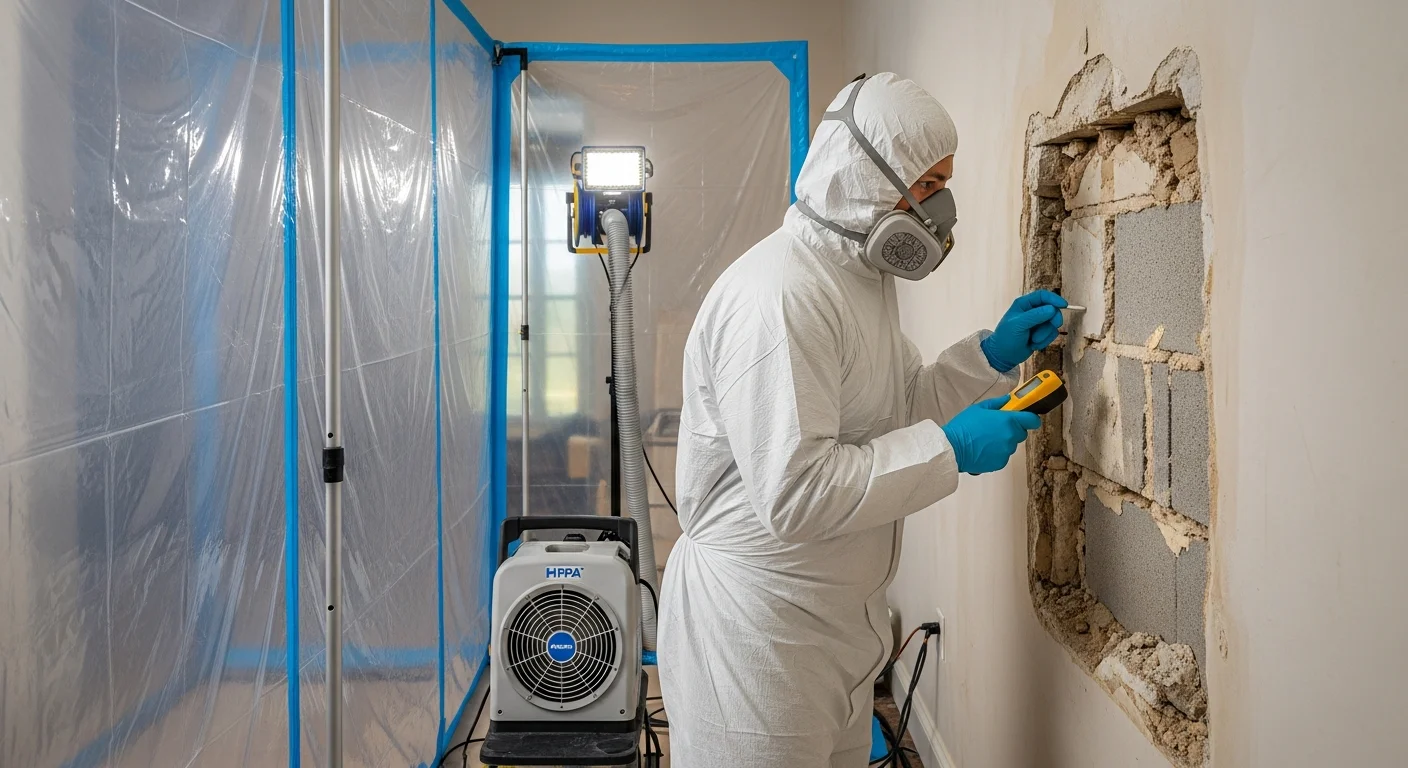
Mold Remediation in Palm Beach, Florida
Palm Beach's seasonal residency cycle, barrier island humidity, and legacy building envelopes create ideal conditions for mold to develop undetected during the summer months. Palm Build's Florida-licensed mold remediators use IICRC S520 protocol to assess, contain, and clear mold in estates, condos, and seasonal homes across the island.
35-45 min
Emergency Response
24/7
Dispatch Available
IICRC
Certified Technicians
Local Mold Risk Factors
Why Palm Beach Properties Are Prone to Mold
Palm Beach's mold risk is driven by a convergence rare in any single market: year-round coastal humidity, predictable seasonal vacancy, aging CBS building envelopes, and HVAC systems that go dormant during the island's most humid months. When any moisture event occurs here, colonization begins within 24–48 hours.
Seasonal Vacancy + Tropical Humidity
Palm Beach's snowbird population closes properties from May through October — six months during which indoor humidity can exceed 85% in sealed buildings. Without active HVAC dehumidification, mold can colonize HVAC fan-coil units, wall cavities, closets, and sub-floor assemblies within days. By the time a homeowner returns in November, a localized HVAC issue has often become a whole-room remediation event. This is Palm Beach's most common and most preventable mold scenario.
CBS Construction Traps Moisture Invisibly
Concrete block and stucco (CBS) construction — standard throughout Palm Beach — retains moisture in porous block cores for weeks after any water intrusion event. When tropical humidity combines with that trapped moisture, mold colonizes the space between the exterior CBS block and interior drywall or plaster without any visible surface indicator. The first sign is often odor or health symptoms rather than visible growth — by which point contamination is typically extensive and requires FLIR thermal imaging to fully map.
HVAC Systems Are Palm Beach's Primary Mold Vector
Every property on the island relies on air conditioning year-round. Fan-coil units in condos and central air handlers in estates develop condensate accumulation in the evaporator coil, drip tray, and condensate drain line — especially when running in economy mode or off during vacancy. Contaminated coils distribute mold spores throughout the ductwork and living space when the system restarts at full capacity in the fall. HVAC inspection before any seasonal re-opening is not optional on this island.
Salt Air Accelerates Envelope Failure
Ocean and Intracoastal salt air corrodes window hardware, HVAC intakes, and metal building components faster than in inland markets. Corroded window frames develop gaps and failed seals that admit moisture into wall cavities. Salt-laden condensation on HVAC components promotes corrosion-associated biofilm growth. In pre-1960s estates with older metal flashings and lime-based plaster, the salt environment creates hidden moisture pathways that modern FLIR scanning can detect but standard visual inspection misses entirely.
Seasonal Vacancy Guide
The Palm Beach Seasonal Vacancy Mold Playbook
Most Palm Beach mold events are predictable and preventable. A closed estate or condo during the island's six-month wet season, with HVAC in economy mode and no human oversight, is the formula for a November remediation call. This guide breaks down what to do at each phase of the annual cycle.
May — Departure
Pre-Closure Checklist: Prevent Mold Before It Starts
- Set HVAC to 78–80°F with continuous fan — never turn the system OFF completely
- Enable humidity control or dehumidifier mode if your unit supports it; target ≤60% RH
- Flush all HVAC condensate drain lines with diluted bleach solution
- Inspect and clear condensate drip trays — clogged trays overflow into wall cavities
- Shut off secondary water systems: irrigation, pool fill valves, outdoor shower lines
- Check all under-sink supply lines and appliance water connections for slow drips
- Document bathrooms, HVAC closets, and under-sink areas with dated photos
June – October — Vacancy
Remote Monitoring: Staying Alert From Away
- Install humidity and temperature sensors — set alerts at ≥65% RH or ≥85°F interior
- Use a property management service with physical check-ins every 2–4 weeks
- Enable water leak detection sensors under sinks, behind appliances, and at water heaters
- Review monitoring alerts promptly — HVAC failure + Palm Beach summer = mold within days
- After any tropical weather event, check in with your property manager for visual inspection
- If HVAC failure is detected remotely, dispatch a licensed contractor immediately — do not wait for seasonal return
September – October — Pre-Season
Before Re-Opening: Licensed Assessment First
- Schedule a licensed Florida mold assessor (Chapter 468, Part XVI) before restarting HVAC
- Do not run contaminated HVAC systems — they distribute spores throughout the building
- The assessor's protocol report defines remediation scope and is required before any licensed remediator may begin
- Have an HVAC technician inspect coils, drip trays, and drain lines before the assessor visits
- Verify all supply lines, appliance connections, and irrigation systems before re-pressurizing
- Review any monitoring service alerts and anomalies from the summer period
November – December — Re-Opening
Discovery and Immediate Response Protocol
- If you detect musty odor, visible staining, or health symptoms — do not run HVAC systems
- Photograph all visible mold or suspected mold with dated timestamps before any cleaning
- Call Palm Build at (754) 600-3369 immediately — we coordinate licensed assessment scheduling
- Do NOT apply bleach or household cleaners to CBS block, plaster, or wood surfaces
- Surface treatment on porous materials does not eliminate hyphal penetration and may mask contamination from the assessor
- File insurance notice immediately if a covered water event is the likely cause — Florida's 1-year claim deadline runs from the date of loss, not discovery
Mold Risk by Neighborhood
Palm Beach Mold Risk Patterns by Area
Mold risk on Palm Beach island varies based on proximity to water, building era, and occupancy patterns. Tap any neighborhood to see the primary risk and most common discovery locations.
Common Questions
Mold Remediation FAQ for Palm Beach Homeowners
Trusted local pros in Palm Beach
Outside our restoration scope, these are the vetted, licensed contractors we trust alongside our work. Personally evaluated, reference-checked, and recommended by Palm Build.
Borkat Plumbing Services, LLC
Miami, FL
Miami's licensed plumber for the four-county reach Palm Build can't always cover ourselves — Miami-Dade, Broward, Palm Beach, and the Florida Keys, owner-led by Boris Inclan with an OSHA-disciplined crew.
Copperhead Plumbing LLC
West Palm Beach, FL
West Palm Beach's veteran-owned plumber Palm Build calls when the scope runs north of Boynton — Palm Beach County and northern Broward, owner-led by Nicholas P. Miller on a single Florida CFC1431257 license.
Dee Maria Plumbing, Inc.
West Palm Beach, FL
Plumbing West Palm Beach since September 1981 — the only Trusted Vendor on Palm Build's list with 44 years of continuous local service and a Florida-issued gas appliance, equipment, and piping installer license.
Flamingo Plumbing & Backflow Services
West Palm Beach, FL
The only Rinnai-installing tankless specialist in Palm Build's directory with 'Backflow' as a top-line brand-name specialty — Paul Shaughnessy's two-office West Palm Beach + Palm City shop has 813+ Google reviews at 4.9 stars and a Treasure Coast dispatch posture no other vendor on our list has natively.
Mold in Your Palm Beach Property? Call Before You Reopen.
Palm Build's Florida-licensed mold remediators bring IICRC S520 protocol, luxury-finish preservation, and independent clearance testing to every Palm Beach job — estates, condos, and seasonal residences.